Molly White and Mitch Jackson Discuss Trump's $1.4 Billion from Crypto Profits
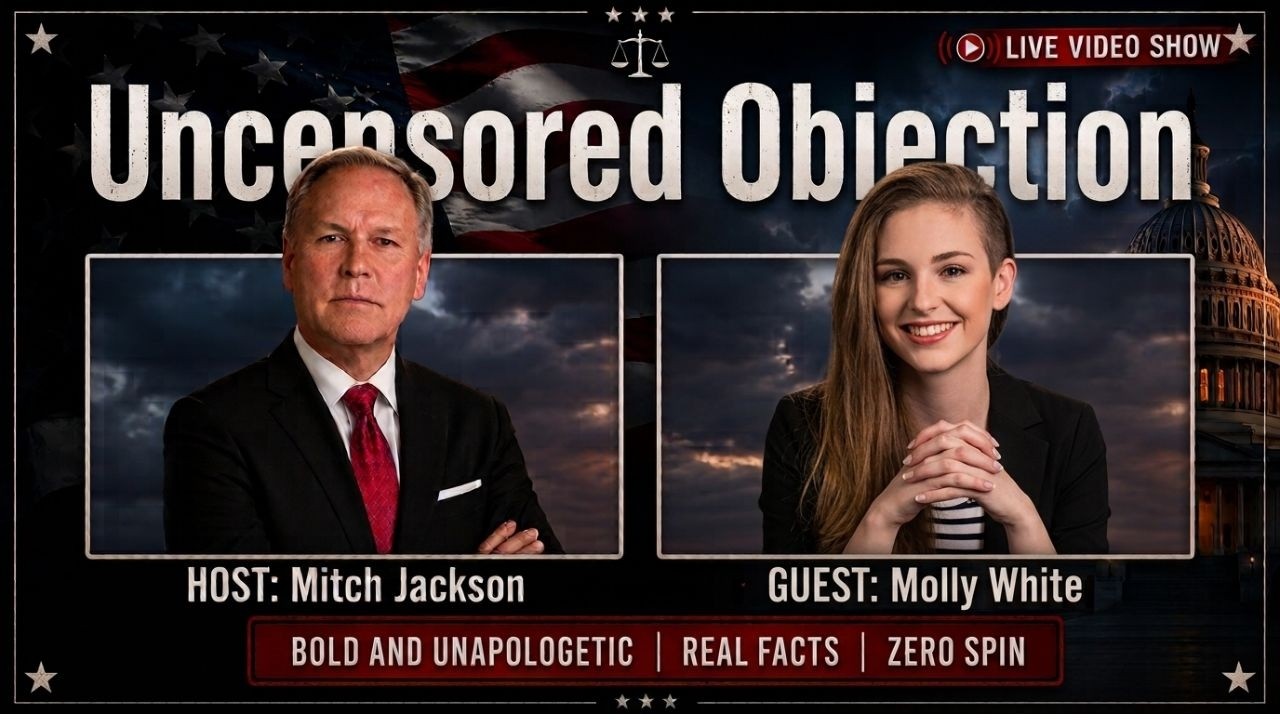
Molly White discusses a 900-page financial disclosure showing Trump and his family earned roughly $1.4 billion from crypto, including $635 million from Trump and Melania tokens that collapsed 95-98% in value. While 58 wallets profited over $1 billion, roughly 764,000 wallets lost most or all their funds. White outlines how insider token launches use bots to give early buyers massive advantages, and how UAE investments in Trump-linked crypto projects coincided with the administration's approval of advanced AI chip sales to the region.
Chapters
Oh, it's good to be here. There's a lot going on, and thanks everyone for being here today. $1.4 billion in crypto profits by Trump and his family over the past year. I've got the definitive expert on the show, someone who I follow literally every single day, Molly. And, uh, to get things started, we're gonna talk about the report that came out yesterday. We're going to tap into Molly's expertise, her knowledge as to what's going on. What do all of these interesting crypto terms actually mean for the everyday consumer. And what does this mean for you as, as an everyday American? What should you know? So what I want to do, Molly, is give you a proper introduction. It's going to be short and sweet, to the point. But Molly White writes about cryptocurrency industry and the technologies, uh, publication called Citation Needed. She is my go-to expert when it comes to getting questions to crypto and technology. And it's, it's a relationship that we started a couple years ago, and I'm really glad Molly agreed to be on the show today. She regularly appears in media, speaks at major conferences including South by Southwest and Web Summit. She guest lectures at universities including Harvard, MIT, and Stanford, and advises policymakers and regulators globally. She's been in the New York Times, the Guardian, Rolling Stone, Bloomberg, Businessweek, among other publications. But today, everybody, we've got Molly all to ourselves. Molly, it's good to see you.
You too.
So let's dive right in. Talk to us a little bit about yesterday's report, the $1.4 billion. Does it cover all of the profits, or is there probably still some stuff out there that we don't know about?
Yeah, it is definitely an incomplete, uh, report as far as looking at the full picture of what Trump, and especially if you extend it to his family, uh, what they have made from the crypto industry. Um, so the report really focuses on income. Um, we see, you know, that he's made money from royalty payments through licensing agreements, for example, with his meme coin. Um, he's made money from token sales for the World Liberty Financial cryptocurrency project that he and his family started, and so on. But it doesn't do a great job of covering his um, equity in various businesses. There's sort of limited estimates in there, and a lot of entries are missing estimates, or, you know, it says that valuations can't be ascertained. I think that appears more than 100 times in the document, including for the equity in the company from which he made that $635 million. So you would think that might be a substantial holding that's not being reported. Um, and then of course it doesn't extend to his family members. And so, you know, all of the Trump sons are heavily involved in the crypto sector. Melania Trump is involved to some extent, and some of those are reported in this filing. But for the most part, the family's crypto wealth is not included here.
We're talking about a report that's over 900 pages long. I don't know if you've had a chance to go through it or if you've just summarized it, but There's a lot of information there. And one of the things that concerns me, Molly, is every time Trump's asked about these crypto investments or his companies, I don't know, I'm not really sure. Really? I made that much money? How much money did I make? Oh, I'm fantastic. It's complicated stuff, right? Have you had a chance to go through all of the entire report or?
I've been through the majority of it. I mean, line by line with every purchase and sale of his stock trading, not exactly, but you know, I've definitely honed in on the crypto end of things and those businesses. The majority of those 900+ pages are, you know, he's essentially day trading his, his, uh, you know, his stock portfolio is just, uh, they're buying and selling stocks many times a day. I mean, and I think CBS News reported on this earlier this year, but something like 63 trades per trading day from the Trump investment accounts. So it's, it's not even like a normal— I mean, most people private citizens are not trading that often. Um, and so I think that's really the bulk of it is that those, those trading, uh, activities.
Molly, we're already getting a lot of questions from the different platforms we're pushing out to, and I want everyone to know that, uh, if your question is applicable to what Molly and I are talking about, I do want to bring them in and I'll ask your questions for you. So ask them in the comments, share this out on the different platforms, everyone.. And if you have friends that want to catch the recorded version of today's show, we'll make sure that happens too. Molly drops just a lot of wisdom over on Citation Needed. Kind of screwed that up at the beginning of the show, Molly, so I apologize for that. But what a, what a wonderful resource where you deep dive. Well, why don't you tell me what you've been doing over the past, let's just say, year and a half on Citation Needed with respect to the topic of today's conversation, because I think it's really impressive.
Yeah, well, I mean, practically everything I've been doing at Citation Needed over the past year or two has been to do with this, because the degree to which the crypto industry and the political administration here in the US is becoming inextricably intertwined is really the big story, I think. And so I've been spending a lot of my time lately following the extent of the crypto industry's political influence, including through campaign finance. They are heavy, heavy spenders in campaigns, both in 2024 and also in the midterms. So I track that very closely at a project called Tech Influence Watch, which is at influence.citationneeded.news. I also do a lot of work trying to track Trump's business interests in the crypto sector and beyond, because the extent to which he has been enriching himself through the presidency has been pretty obvious, I think, even, you know, prior to these financial disclosures. Through these huge deals that are being signed. I mean, the Wall Street Journal reported earlier this year on the $500 million investment by the United Arab Emirates into the World Liberty Financial platform. Much of that revenue goes directly into Trump's pocket and is likely reflected in the $260+ million, quote unquote, equity sales that are shown in this document but are not, you know, the buyer is not disclosed. So we just assume that's the UAE. Um, but you know, this is kind of the big story.
I think it is the big story. And you know what was disclosed, and maybe we could just start with this particular topic, is there was a conversation about 58 wallets showing a profit, I think something like over a billion dollars combined, with 764,000 wallets losing a lot of money, if not all of their money. Can you explain to everyday Americans what these wallets are and what this means and how does that happen? How do you have some people making retirement amount of money where you got other people losing everything?
Yeah, so in the crypto sector, a wallet is sort of like an account, uh, if you think of it in the terms of, you know, like a brokerage account or something like that. Your wallet is where you are buying and selling cryptocurrencies, and it's common to have multiple accounts, especially if you're trading across multiple networks, but you can sort of think of it as that. And, you know, it's kind of the same way that something like stock trading works. Some people buy high and sell low, some people buy low and sell high, and, you know, who makes the money depends on when you buy and when you sell. But unlike stock trading, it's not well regulated, especially since Trump took office and has really deregulated the sector quite dramatically. And there's quite a lot—
And what could go wrong? What could go wrong with that? Yeah. I mean, that's a soundbite, but that's important. That's like one reason I did a 180 on my interest in Web3 and crypto was the deregulation aspects of this administration.
Right. I mean, it is, I think it is, you know, one of the reasons American financial markets are very strong is because they are very well regulated. People trust that, you know, sure, you might lose money if you make a bad pick in the stock market, but chances are you're not gonna be completely swindled by a publicly listed stock that is gone through the scrutiny that the SEC requires, that files disclosures that you can read. Many people don't, but you can. But that kind of transparency and oversight really does not apply in the crypto sector where there is, I mean, half the time you don't even know who's issuing the token that you're buying, you know, who's behind it. There's no real oversight to make sure that the people who are selling these tokens actually follow through on what they've promised. There's very little in the way of recourse if your tokens are stolen or if you're defrauded. And so it's largely why the crypto sector is viewed as such a wild west where, you know, maybe you'll make money if you make a lucky trade, but you also are really running the risk of having everything stolen from you or, you know, inadvertently picking a project that turns out to be an outright fraud or something like that. And it's very common in these markets for early investors or people who launch these tokens to make all the money and pretty much everyone else who buys in to lose the money. And that's really what's happened with these Trump tokens.
So, which leads to one of the great questions coming in about sniping. What is sniping? What is insider trading, using the term loosely, when it comes to, say, these 58 wallets and this particular, you know, transactions we're talking about? Does that all come into play, or generally speaking, is that something the consumer needs to know about?
Absolutely. I mean, sniping is a very common practice in the crypto world. It's, you know, it's one of those things that probably should be illegal, but it's treated like it's an everyday, you know, business, uh, opportunity in the crypto world. And, you know, the same thing is sort of true of insider trading, which is illegal. I mean, it's illegal to do insider trading, uh, you know, in especially in securities markets, which, you know, I guess we're now under this new regime, not clear if crypto is a security, but, you know, the idea is basically that when it comes to sniping, it refers to using automated tools like trading bots to buy up tokens basically immediately upon launch with the idea that if you can be one of those really early buyers and amass a significant quantity of tokens, then when everyone else piles in to try to get rich off these tokens, you're the one selling to them and, you know, they're your exit liquidity essentially. And some projects will even snipe their own tokens, which is when you get into the sort of insider trading end of things, which is, you know, you know the token's gonna launch, you know what the token address is gonna be, you can acquire those tokens sometimes in ways that makes it look organic, like there's demand for the token, even though it's just you or other people that you know buying up all those early tokens. And it's extremely common in crypto. You know, insiders are often the ones profiting from these crypto token projects.
And we're talking about this happening within seconds or milliseconds, right? Oftentimes.
Yeah. I mean, it's faster than a human could trade it. That's why it's bots that are doing this.
Right. And so, so that answered 2 or 3 questions. This isn't something like I've been involved in traditional IPOs where, you know, you're waiting for it to drop. There's a lot, there's literally months of paperwork to get going and everything happens in the public sector. In the public market and things happen good or bad. What Molly's talking about, everyone, literally happens within seconds. And it's my understanding, Molly, that things are set up behind the scenes that will allow someone who's early, who's a friend of the family, for example, right, or a business partner, to have what I would consider an improper advantage over leveraging the transaction than then maybe you and I might be coming in later that afternoon to try to take advantage of an investment. Is that a fair statement?
Right, yeah. So for example, if you're friends with someone who's launching a crypto project and they tell you the token address before it's publicly advertised, then you get the opportunity to snap up those tokens before anyone else would even know that that was the token that they were looking for. Um, they wouldn't have that information, they would have no way of getting that information, but you as an insider or someone who knows an insider would be able to have that advantage. And that's unfortunately very common.
You know, it's very common. And I read someplace, and I think you probably know this number better than I do, but I read someplace where the 764,000 wallets that lost money, a large percentage of those wallets were somehow calibrated to be elderly or senior citizens or retirement accounts, something along those lines. Do you have any statistics or information that backs that up, or, or what are your thoughts on who was— who were the victims or the people that lost money in all of these wallets?
Yeah, well, I mean, I don't have the, the data backing up that research, um, but, you know, the, the, the belief is that a lot of the people who bought the Trump token are people who are not active cryptocurrency traders. So, you know, these were not crypto degens who were day trading tokens every day and buying the latest meme coin. These are often brand new crypto wallets that were not active traders previously. You know, Trump and his businesses have done a lot of work to try to make it easy for people who don't trade crypto to buy these tokens with, you know, a credit card or debit card or something like that. So, you know, you don't need to have that technical knowledge to be able to get involved. And, you know, the idea is that these were just sort of everyday people, probably fans of the president, who thought that, you know, this is his business venture. He's going to make us all rich because he's launching this token. They bought probably a relatively small amount of the token. And I mean, you know, compared to an institutional trader or something like that, for an individual, it could be a very significant amount of money. And those were the people who lost the money. It was mostly the insiders who, you know, bought a lot of tokens all at once early who profited at the expense of those 764,000 wallet holders.
What are some of the challenges that people would have who have wallets that might feel something improperly was done, but they're not sure what to do next?
Well, there's a lot of challenges. Um, so one of the challenges is, you know, it sort of depends who you're trying to sue. For example, if you're trying to find recourse, so if you were hoping maybe you could sue the holders behind those 58 wallets, you'd have to figure out who those people are. Which is challenging. You know, you— there is, you know, the, the sort of idea that crypto is untraceable is not necessarily accurate. It is both highly traceable and also challenging to trace at the same time, um, because crypto is pseudonymous. So your wallet is just a random string of characters, and it can be very challenging to connect that string of characters to an actual person. Um, there are, you know, analysis firms and, and certainly government tools to do so that do so with varying degrees of success. And if you have, you know, subpoena power and you can ask one of the crypto exchanges who registered for an account there, you know, you can have more luck. But it is challenging to do. And a lot of legal advocates and even law enforcement have, you know, have trouble doing that kind of tracing. Then— oh, go ahead.
Oh, no, I'm trying to monitor. I'm listening to what you're saying because I'm a big fan. I'm fanboying out everybody because Molly is definitely the guru when it comes to this stuff. And she set me straight so many times on this stuff, you guys. I really value what she has to say. Um, along those lines, somebody mentioned— happens to be a lawyer I know— everyone needs to understand, you might lose $20 grand, for example, in what we're talking about, but if it costs you $50,000, $60,000, or $100,000 in litigation and legal fees to do this, even with a law firm that handles these things on a contingency, you're not going to want to go down that path. And that's why regulation and safety protocols are so important, so that the the consumer knows this is happening in the first place, right?
Right. Ideally, you wouldn't, you know, wait for the consumer to be defrauded to actually take action. The idea is that you prevent the fraud from taking place, and then, you know, the little old lady who decided she was going to try something because President Trump promoted it doesn't have to try to track down one of these people and spend potentially tens of thousands or more on litigation.
The, uh, the little old lady that bought the Trump coin or the Melania meme coin, and I want to transition over to the meme coins, where in, uh, at least the post I wrote today, I talked about, and you know this better than I do, the Trump coin and Melania coin, like depreciating 95, 98% in value since, since they were dropped. Can you talk a little bit about what meme coins are, what these two particular coins are, and what you've observed over the last year and a half since they've dropped.
Yeah, so a meme coin is essentially a crypto token distilled to its most base value where there's really no project there. You know, there's no business, there's nothing generating revenue, there's no sort of reason for the token to be worth anything besides the fact that it's associated with a concept. So it might be the Trump coin, which is associated with Trump, or, you know, you might have heard of Dogecoin, which is associated with a meme about a dog. There's all different kinds of them. I mean, there's hundreds and hundreds of thousands of these things, but there's sort of no financial purpose to them besides the fact that people bet that if they, you know, buy them at a certain price, they might later be able to offload them to other people for a higher price because, you know, enough people buy this token, the price goes up. Unfortunately, most meme coins follow a very similar trajectory, which is that there's often an early spike in interest, um, and the size of that spike depends a lot on how much interest can be generated. So if you're the president, you can generate potentially a lot of interest, um, and that's what happened with this token, which rose as high as $75 per coin, um, very shortly after it was launched. And then pretty much since then, day over day, has decreased almost exclusively in value, and it's now trading at below $2, which is, I think, a 98% decrease. The Melania token, very similar trajectory, a little bit less interest to begin with and a little bit lower price now, but pretty much the same story where, you know, the people who are able to buy it really early and the people who launched the token, such as President Trump, made significant amount of money off of it, $635 million according to this disclosure from the Trump coin alone. Um, but pretty much everyone else who bought it lost money on the token.
Having, you know, spent a lot of time in the space, being an expert in this space, um, what do you feel would be the upside to these people hanging on to these coins hoping it's— they're going to come back in value? Do you think that's ever going to happen?
Well, it's really common in the crypto sector for people to have this viewpoint that, you know, you can't lose if you never sell, if you just hold on to the token forever, you never actually realize those losses, then you haven't lost money. And they just sort of hold on to this hope that something will happen and the token price will go back up and they'll be able to at least recoup what they put into it, if not make a profit. Unfortunately, that rarely happens. Um, these tokens, you know, they'll have fluctuations, but it's not a fluctuation from $2 back to $75. It's a fluctuation from $2 to $2.02 or something like that. Um, and, you know, Trump has made several efforts to try to breathe back some life into these tokens. He keeps throwing these galas where, you know, if you buy enough tokens, you'll get an invitation to the party and you can come rub elbows with Trump and it'll be great. And, you know, even those have not done very much to, uh, help the token price. And so I think a lot of people who are still holding that token either don't feel like it's even worth selling it because all they have is a couple dollars worth of it, so what's the point, or they're holding on to that hope that, you know, a miracle is going to happen and this token is going to go back up.
That's right. Trust me, a miracle is going to happen. You guys don't— nothing to worry about here. You brought up these events that Trump has sponsored or held where people are showing up, spending money, you know, to sit at the head table, get a picture, whatever it may be. You've written about these. Talk to us a little bit about, you know, look, I personally think it's a big grift. I'll just say that's my opinion. It's not necessarily Molly's. It really upsets me as a lawyer. But Molly, you know, who are some of the people being invited to these things? Who are some of the people that you've researched that are donating money to the cause? And who are some of these people sitting on the board of directors of some of these companies? It's really— it's really disgusting to see, read some of the stuff I'm reading.
Yeah.
So I told Molly this. I was on a run. I called her. I said, Molly, I just finished your article. I feel dirty. I feel it's disgusting what's going on. Thanks for ruining my day.
I know, I feel like I need to publish something more upbeat just so that you can listen to it.
No, no, no, I want to know the facts. So share that theme with this audience so they can understand exactly what's going on.
Yeah, so I mean, the biggest buyer for the first meme coin event was a man named Justin Sun who runs the Tron cryptocurrency network. Um, he is not a U.S. citizen. He could not support Trump in his campaigns because of that. But he has funneled quite a lot of money to Trump through these various ventures. He purchased a significant amount of the Trump meme coin and a significant amount of the World Liberty financial token. We're talking more than $100 million combined of the two and was, you know, the top attendee of this, this event that was hosted based on how much Trump token you held. And, you know, Justin Sun, like many of the other people who have contributed either to Trump's campaign or made business deals that are valuable to Trump, has enjoyed quite a significant turnaround in his fortunes in the US recently. I mean, he used to not even step foot in the US for a number of years where— because he was, I believe, under, you know, he had the concern that he might be arrested if he set foot in the United States. He even gave up a spot on a space flight that he had spent, I think, $20+ million to buy because he didn't want to come to Texas to get on the space flight. He's now been in the United States multiple times, including at these events at the White House or at Trump's golf course. He— the SEC case against his— him personally and his venture was settled for a mere $10 million, even though not only did it allege violations of securities laws that the SEC has since taken a, you know, step back from. It also alleged outright fraud. You know, it was claiming that he was actually manipulating markets and so on and so forth. So Justin Sun may be one of the few people who actually got what he paid for when it comes to these crypto tokens, because I don't think he was after, you know, the token price going up. I think he wanted to get some money to Trump and then reap the benefits. Many of the other attendees were also just wealthy individuals, many from outside of the United States based on my analysis. They were buying these tokens via platforms that are not available to US traders, suggesting that they're not US residents. And many of them were people who wanted to just sort of be seen in the vicinity of Trump, whether it was an influencer or someone running a crypto project that they wanted to get some eyes on, you know, free marketing, show up at the White House. So it's kind of a mix of attendees, I would say, you know, various people looking for different things.
So one of my investigators did some research when that initial dinner went down, Molly, as to who was invited. And it may have been a list we saw on your site or maybe somebody else's site. And I got to tell everybody, it was— it really made me feel icky. Like, I wouldn't want a majority of these people living next door to me for, for all the details that are public information, much less rubbing elbows with the guy that's supposed to be representing all Americans and making important decisions, both regulatory decisions and security, national security decisions. Um, what do you see, any type of improvement when it comes to regulations that will, uh, disclose the true facts and/or protect the public's interest when it comes to cryptocurrency moving forward? Or do you see us kind of going a different direction right now?
Right now I would say we're going in a pretty bad direction when it comes to crypto regulation. Um, the SEC, like I said, has pretty much stepped away from enforcement, uh, in the crypto sector completely. They are pretty much saying that this is going to go over to the CFTC, which is the commodities regulator. Um, this is something that the crypto industry has been pushing for for years. They've always wanted the CFTC to be their regulator because it's a smaller agency, it has fewer enforcement resources, it's just sort of less, uh, capable of enforcing regulations in particularly strong ways. And so that was, I think, a big victory for the crypto sector. Certainly, there's also a CFTC commissioner right now. There's only one, even though there's supposed to be five, who is a Trump loyalist. And so, you know, pretty much any company that ends up in front of the CFTC, I think, is going to be in pretty good hands from their perspective. There was definitely some good reporting recently about how the CFTC brass, you know, the top brass has been pressuring lower-level employees to essentially look away from crypto-related enforcement, especially when it comes to prediction markets, to fast-track approvals, especially for companies that are connected to the Trump family in some way, which many of these prediction markets are. Um, so I think that the state of regulation when it comes to crypto right now is pretty dire. Uh, there's very little happening. When you see one of the very few enforcement actions announced by the SEC or the CFTC, it's usually a, you know, pretty slam dunk. Like, this guy who nobody knows about managed to convince, you know, 6 elderly people to give him $10 million and he bought himself a Lamborghini. Or, you know, it's like, it's something like that. It's not something that's really doing much to help with consumer protection or, you know, broadly improve the state of the crypto markets, you know, just in general.
Yeah, it's kind of the Wild West, and I don't see it getting any better either from a legal standpoint, at least with respect to the people and the politicians I'm talking to. Hey, Molly, if you got just a couple of more minutes, we have two themes that seem to be coming up in the thread that I think are relevant. Great questions. And one has to do with money coming over from the Middle East, especially at the beginning of Trump's presidency, with respect to AI computer chip transition transactions. Can you talk a little bit about that? And then the second question is something about a, uh, a new bank, crypto-focused bank by the Trump family, if you have any thoughts on that. So two good questions.
Thank you. Yeah, so, um, one of the issues— I sort of alluded to this earlier— but, um, there has been significant investment from the United Arab Emirates in various Trump Trump-related crypto projects. So for example, UAE made a $2 billion investment into the Binance cryptocurrency exchange, which is the largest global cryptocurrency exchange. And that was denominated in USD-1, which is the stablecoin issued by the Trump family's World Liberty Financial token or World Liberty Financial project. And there was really no reason for them to use that token at the time. Basically nobody was using it. Um, other than that, by choosing that token, the Trump family now gets to take that $2 billion actual dollars and earn interest on those reserves for as long as that investment stays in USD-1. And that's a significant amount of money. I mean, even if we're talking like money market fund levels of interest, when you're talking about $2 billion, that's a significant amount of money. Um, then it was reported in, uh, like I said, the Wall Street Journal, that the UAE made a $500 million investment into World Liberty Financial directly, taking a 49% stake in the company. And this is the equity investment that's reported on the financial disclosures. As far as I can tell, that's what that is. Like I said, the actual investor is not named in these disclosures. It's not the most transparent document in the world. But I mean, that's a significant amount of money, and it came right before the White House approved the sale of very advanced AI chips to the UAE, which had previously been denied to them out of concern that they might fall into the wrong hands or that they would enable, you know, very powerful, you know, technological capabilities that were concerned, they were concerned about going to the UAE. There's also been similar patterns with Saudi Arabia, which have made, You know, there were millions or billions of dollars in investments into Jared Kushner's firms, but more directly, there were investments into David Sacks' Kraft Ventures. He is the— he was the AI and crypto czar. He eventually overstayed his limit on that position. And so now he is one of the leaders of the science advisory councils of the president. And then there's the partnership between the, you know, a state-length firm and the Trump Organization to build a resort that will be tokenized, you know, put on the blockchain essentially, and shares of it will be sold to investors. And similarly, we saw these, you know, very beneficial deals happening with the Trump family. And there was afterwards an agreement that the US will sell F-35 fighter jets to Saudi Arabia. Again, those had been denied for a long time out of fears that they might fall into the wrong hands, advanced military technology, you know, concerns that they would end up with China via the Saudis. But those concerns apparently evaporated after those deals. So there's been this—
So politically correct. Those concerns have apparently evaporated. It's amazing what $2 billion will help evaporate.
Yeah, it'll really smooth the rails for those types of deals.
So, but before you— I'm sorry to interrupt you, but I'm looking at the questions. And so with all of these investments, with the 49% interest, with— because of cryptocurrency, do we know who all the players are in the background? I mean, this is— absolutely not.
I mean, the $500 million deal with the UAE was only— it was not something that Trump disclosed. It was not through any sort of, you know, Office of Government Ethics disclosure filing like the one that we saw come out yesterday. This came out because The Wall Street Journal was able to do some digging and figured out what was going on there. Um, these types of disclosures, they show income to the president. They don't show necessarily the source of the income. It just says, you know, there was an equity sale, but not to whom. I mean, Justin Sun's name does not appear on this form, even though the hundreds of millions of dollars that Justin Sun spent on Trump-linked tokens happened during the time period that this disclosure covers. So So these are not— I mean, the Trump Organization has tried to boast that this is the most transparent any president has ever been, that kind of thing. It's not a transparent document by any stretch.
No. And it's interesting. I think we all would like to know who's investing, financing, doing business with the person in charge of running the country.
Right. And then, of course, there's his family members who are attending conversations, policy conversations, despite not having formal roles at the White House, which means that they don't have to file even this fairly minor disclosure. So, you know, we're seeing, for example, Polymarket and Kalshi, two of the prediction market firms, naming Donald Trump Jr. to their boards, presumably not because he's a business genius. I don't think it's, you know, his bona fides that got him on that role. But because they thought that he would be a conduit to friendlier political outcomes. And it seems like he has been.
Can you, can you explain just briefly, are you pressed for time?
Because no, I don't know.
I mean, can you explain briefly what those two markets are that you just referenced? The bet, I don't want to use betting markets, prediction markets.
They're called prediction markets because they don't want to call them gambling. But, um, it's essentially a platform where you can go and bet on, uh, the outcome of an event. Bet. So, you know, is the sports team going to win their game today? Or is this candidate going to be elected to, you know, the Kentucky Senate or something like that? They are essentially—
Will we bomb Iraq?
Yes.
Will we invade Argentina?
Right. They are essentially gambling platforms, but they don't call themselves that because that would subject them to a different regulatory regime. And so instead they are calling themselves prediction markets, which is supposed to be some sort of a, you know, similar to like a futures market and regulated by the CFTC, which is again run by a Trump loyalist who has been very favorable to prediction markets, even going so far as to intervene in lawsuits being filed by state regulators against these companies in their states, um, trying to enforce the longstanding rules on gambling especially when it comes to the sports markets on these platforms that really do resemble just a traditional sportsbook.
So I guess what I'm hearing is if you've got inside information about something the government may be doing, like I said, it's war-related, it's investment-related, it's whether or not they're going to approve contracts for a tech company or enter into a new business relationship with the XYZ company, you can predict on these platforms what's going to happen. And I think there's been some reporting about a lot of money being made by some people. I don't know if it's been determined who these people are, where they're placing millions of dollars in bets or in predictions 15 minutes before Trump posts on his platform that that's what the government's going to do. That's interesting.
Yeah, there have been a number of cases even charged with, for example, a member of the military who used insider access to place bets on Venezuela-related prediction markets. Um, there was a case against a Google engineer who used his access to internal search data to make predictions about what would be like the most searched term on Google for that year. Um, and you know, it's, it's interesting to see because when in the past when things like that happened, when there were traders who were doing things they weren't supposed to do on CFTC-regulated markets, typically the CFTC would, would bring action against the markets because markets under the commodities regime, there's sort of this expectation that these markets need to regulate themselves. They need to police the activity that's happening on these markets. And if they don't, they answer to the CFTC for that. But what we've seen since the Trump administration, is enforcement actions against the individuals who have made these trades, but no action against the markets for not— for failing to prohibit that type of behavior. Um, and the most egregious one is when it comes to Polymarket, which is actually an offshore, uh, prediction market that is not supposed to be accessible offshore. Yeah, well, no, yes and no. It's headquartered in New York, but in 2021 it was, um there was a settlement between Polymarket and the CFTC that there was a fine and they were prohibited from serving US customers. Despite that, they are widely used by US customers because they make no real effort beyond just a very simply bypassed IP restriction to prevent US traders from using the market. There was a recent, um, report about billions of dollars of trading coming from US customers on Polymarket.. And despite the fact that every, you know, it's an open secret, everyone knows that Americans are widely using these platforms. There's been no action against Polymarket from the CFTC for failing to prevent US traders from using the platform. And in fact, the CFTC has approved Polymarket to reenter the US with a new trading platform that they will be allowed to openly market to US customers.
I think I would predict that that'll probably happen.
Yes.
Um, wrapping things up, are you planning on writing about the, uh, the Trump company bank crypto conversation that I'm seeing, or is that something that's just so far out it's probably not worth talking about?
No, it's worth talking about. Um, there has been a raft of these banking charters being approved by the Office of the Comptroller of the Currency for various crypto firms that want to essentially be able to do similar things to banks. Um, they're not necessarily the same thing as a full banking charter, but they do offer these companies access to certain activities, offer access to banking rails. Um, and one of the companies applying for one of these charters is a Trump company, which is, you know, supposedly being regulated by an agency that Trump himself oversees.. And so, you know, what are the chances that that license is going to be denied, right?
Yeah, like I said, I'll be making my prediction as soon as we go out there. Um, will— with this bank, I don't know if you've looked into it, but with this banking concept, would our tax dollars be potentially exposed to help bail out bad deals, bad debts, and things like that?
So at the current moment, no, probably not. Um, so the— like I said, it's sort of a modified version of these banking charters. They've called it like a skinny master account and things like that. But one of the things that would not do is give these companies access to the emergency credit window and those types of things that are essentially available to banks if, you know, they make a bad bet and there's a bank run or something like that, you know, that essentially bails them out. So it has not gone that far yet. But it's concerning, I would say, that it has even gone this far. And, you know, I would not be surprised to see the crypto industry pushing for even more robust banking charters going forward.
It's like the normalization of crypto banking, right?
I mean, this— what they have done already would be unheard of 2 years ago, right? That is— you would never have thought this would happen 2 years ago. And now it's like, oh yeah, that's You know, that's just what they're up to.
It's become normalized. It's just, you know, talking about this stuff is now normal. Molly, this has been fantastic. Really appreciate it. And I encourage everyone, you know, check out Molly's platforms, specifically Citation Needed. Molly, if anyone would like to reach out, and I want you to know that I know it can't be easy, at least over the last couple of years, talking about this stuff. I'm sure there's a lot of people that, you know, are not happy about some of the thoughts that you have. I experienced that too. My community and I, we got your back. I want you to know that you're doing the right thing. So thank you for all that you do. If people want to stay connected with you, what's the best way to go about it?
Yeah, so you can find me at CitationNeeded.News. That's my newsletter and all of my contact info, social media, etc. is linked from there. So you can just find it through there probably.
And I'm looking real quick. I've got friends that are like, do you offer keynote speaking? Do you do speaking at events? Selectively?
Rarely, but occasionally. You like to, or? Not really, but I will do it occasionally. Feel free to ask, and I'll at least listen.
All right, so reach out to Molly and ask yourself. All right, Molly, that was fantastic. I really appreciate you. Always here for you. And for everyone watching, both live and recorded, support what Molly's doing. Touch base with me over on her Citation Needed website. And between now and the next show, everyone, just do the right thing. Register to vote, vote in the midterms, and never stop making each day your masterpiece. Molly, thanks very much. I really appreciate it.
Thank you.
All right, stick around for a second. Bye-bye, everybody.
More from Mitch
Ty Cobb and Mitch Jackson discuss today's Birthright Citizenship SCOTUS decision
