Ty Cobb and Mitch Jackson discuss today's Birthright Citizenship SCOTUS decision
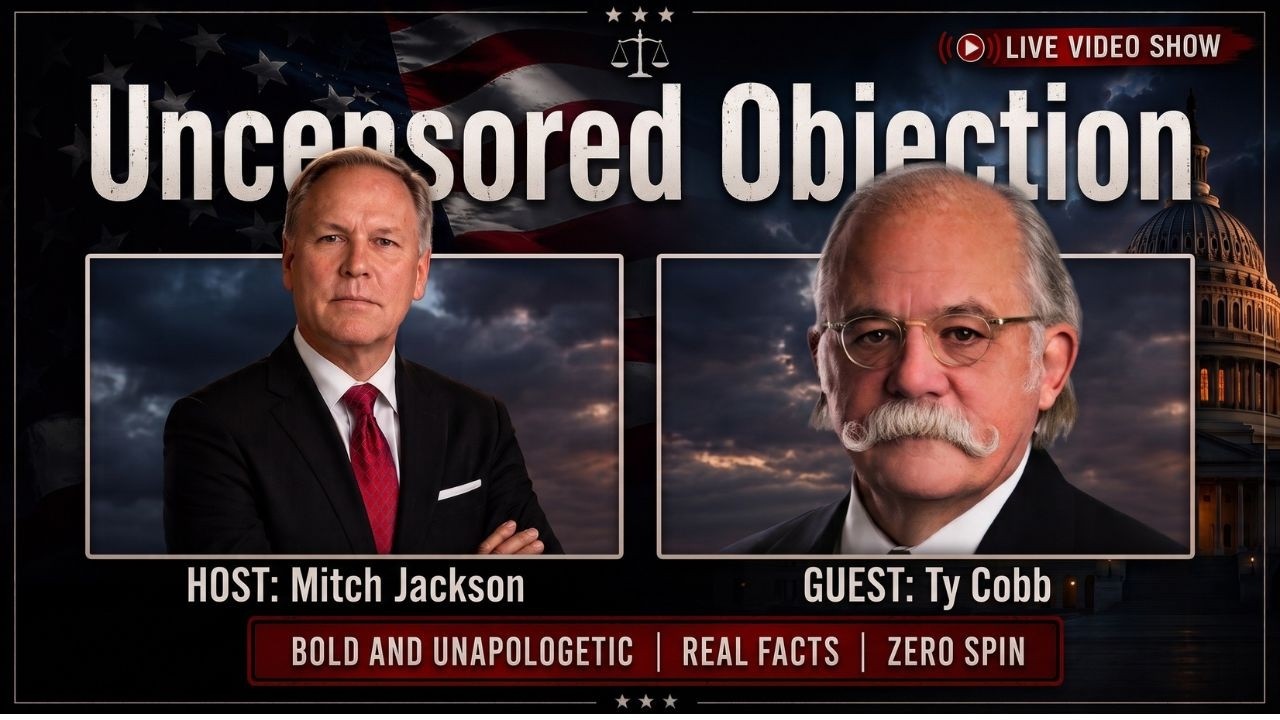
Ty Cobb, a former federal prosecutor, breaks down the Supreme Court's 6-3 decision upholding birthright citizenship. The ruling split 5-4 on constitutional grounds, signaling what Cobb calls a fragile balance that could allow future amendments to limit citizenship. He traces the decision's roots from Dred Scott through the 14th Amendment and explains why the vote breakdown matters.
Chapters
You here, this is Uncensored Objection live video. We are talking about the breaking news this morning on birthright citizenship. Ty, it's good to see you this morning.
Mitch, thanks so much for having me on. I really admire your work and your, uh, energy and enthusiasm on these things as well as your expertise. So let's go.
Listen, before we dive in, everyone over on Substack, Facebook, LinkedIn, wherever you're watching today's show, We will be monitoring the comments. Ask your questions, especially over on Substack. I'll incorporate your questions to Ty, and we're going to have some fun today. But Ty, let me first give you a proper brief introduction. You're an award-winning lawyer. You're a former high-ranking federal prosecutor who now handles complex litigation matters. You represent public officials, you represent Fortune 500 companies, and in the past you were special counsel to the president of the United States. You appear regularly on major news outlets such as ABC, CBS, NBC, NPR, BBC, and other top shows. And I'm sharing that context with our audience type because I want them to know that you've been around the block, you've rubbed elbows with some of the most powerful and influential business CEOs, politicians, and frankly lawyers. Some might even be sitting on the United States Supreme Court right now. So I can't think of anybody I'd rather have on the show today. Let's start off with your impression of what went down this morning with Trump versus Barbara.
I think we should all be relieved that, you know, Chief Justice Roberts definitively made plain that, you know, people born in the United States, no matter who their parents are, if they're born here, they are citizens, as we have long believed and as the Supreme Court, I think, thought it settled in 1898. And as Justice Roberts reaffirmed today, so I think that's good. I was startled a little bit that it was only 5 to 4 on the unconstitutionality of Trump's executive order attempting to impose his racist policies. I think the— now, while the decision itself is 6 to 3, Kavanaugh only voted to strike it down on legal grounds. Meaning statutory grounds, not constitutional grounds. So it's 5 to 4 on the Constitution. That means, you know, one new Supreme Court justice could change the balance and this perhaps could get revisited, which I think we should all be concerned about. And remember the, remember the motto that, you know, should guide us all, which is the eternal vigilance is the price of liberty.
Vigilant we are. I've got a couple of questions already, Ty, with respect to the case. Maybe if you wouldn't mind just sharing with everyone a little brief history about what this case was all about and is all about for people that aren't aware of the facts and the underlying history with birthright citizenship.
Certainly. So the history of birthright citizenship was really never in question until the Dred Scott decision. Prior to the Dred Scott decision, in the 1870s, I believe it was. The, the, you know, presumption consistent with what the founders presumed at the time they created the Constitution was that if you were born here, you were a citizen, which went back to an ancient British concept of, you Citizenship goes with the land where you're born. So if you're born on the land, you're a citizen of whatever country that land is in. In Dred Scott, the Supreme Court grotesquely analyzed it differently and suggested that because Blacks were from Africa and not the United States, and that was their heritage, that they could not be citizens. That was short-lived. The 14th Amendment was drafted to overturn that in large part, and it did. And in 1898, there was a case, I think it's Wong— was it Wong Sun Ark? Is that correct?
Correct.
And involving some Asian citizens in San Francisco who had a child. They were— the citizens were here lawfully. The analysis of the Supreme Court was, again, if you're born here, you're a citizen here. That was the opinion that was reaffirmed by Chief Justice Roberts today. The distinction this time, which Trump tried to take advantage of, was a focus on citizens who are illegally here. If they're illegally here, their children should be banned. And that, that is, you know, tens of thousands of children a year over time. And, you know, it's a considerable number of people who are already in the United States. The executive order was not to apply to people who had previously been born, but was intended to apply to people born 30 days after the execution of the order., and thus, moving citizenship's, uh, status from the Constitution into the, uh, delivery room, um, which, uh, would have been, uh, shocking, impossible, heart-wrenching, and un-American. And thank goodness, um, you know, we can all have a sigh of relief that, uh, the Chief Justice and, uh, 4 of his colleagues found that unconstitutional, and the Chief Justice and 5 of his colleagues found it illegal, and that is not the case now. And Everybody can go back to enjoying life, you know, unafraid of, unafraid of the specter of this executive order which has been hanging over us since Trump's first day in office.
It's interesting because back, one of the issues that were, that has been discussed over the years was the Citizenship Clause in the 14th Amendment, and it talks about people born or naturalized in the United States and subject to the jurisdiction are citizens of the United States. And I think subject to the jurisdiction is what the phrase that was at issue people were discussing and analyzing with this particular court. Maybe talk a little bit about subject to the jurisdiction, why that's such an important phrase in the 14th Amendment. And you mentioned Kavanaugh. Kavanaugh kind of went down a different path. How might that path affect all of us moving forward? Because I'm not sure this really is a done dish issue based upon what Congress might be able to do next at some point in the future. Your thoughts?
I couldn't agree with you more. There's certainly room for mischief. You can bet that Stephen Miller is already at work and has Mitch Jackson on the phone trying to figure out how can we get rid of people of color. We need to stay on top of our game and make sure that we take advantage of the mass deportation options that sadly the Supreme Court gave the administration earlier this month. So I do think this decision, I think 6-3 on striking down the order is a good result. It should have been 9-0. I don't think really, frankly, this is a difficult legal issue. I mean, the 14th Amendment either means what it says or it doesn't. And I think it pretty clearly does mean what it says, although frankly, only 5 justices went that route. There are opportunities, at least by Kavanaugh's analysis, for Congress to limit citizenship going forward. And Gorsuch's opinion, which frankly more thoughtful, I think, than Kavanaugh's concurrence. I mean, it's certainly more intellectually interesting.
What do you mean by that?
So Gorsuch, you know, who concluded that the 14th Amendment did not preclude, you know, did not preclude denying citizenship to the children of people who were here illegally. He He took a— I mean, he did honor the 14th Amendment. He did conclude that it really does stand for something, but his view was it didn't stand for this. And he was pretty expansive in terms of his interpretation of what Congress's power might be within the Constitution to create the mischief that we all now fear. Kavanaugh sort of laid out the fact that it was a possibility. I don't think he was as expansive in terms of laying out why or how that might happen. But I think Gorsuch is probably worth reading if you really want to understand the opportunities for mischief. I think the Gorsuch concurrence— I mean, the Gorsuch, I'm sorry, dissent is probably more insightful in terms of where the future problems could be.
And I want everyone to notice and know, because I'm looking at the comments, Ty, that this decision just came down this morning. It's almost 200 pages, you know, long. And so Ty and I have done our best to kind of dive into it, try to digest exactly what happened, what's been said, what are the thoughts of the different justices. And so that's the premise upon which we're answering our question, your questions on is this early analysis of Supreme Court decision. Ty, you said something that ties into a couple of questions I'm seeing over on— I think LinkedIn is where they're coming in from. So hello, LinkedIn. Everyone share this out. If you're on LinkedIn, hit the share button. If you're on Substack, hit the share button. Facebook, hit the share button. Let's bring everyone into the conversation. You mentioned Stephen Miller. And I don't see this issue as being an issue that Trump's been worried about over the last 30 years of his career while he's out playing golf and building buildings or doing whatever it is the guy does when he's when he's not working. I need to fix citizenship rights. Right. I just don't see that as being a top priority for him. Somebody planted a seed in him to make this a huge issue. Talk a little bit about Stephen Miller's influence, maybe whether it's regarding pushing this particular issue and case over the years or maybe some other things that are going on in the Oval Office.
Well, I think you've struck on what is a really important a foundational piece of who is Trump. Trump is not somebody who is a philosopher, a thinker. He doesn't have passionate views about anything other than, you know, how to manipulate people's impressions of himself and his own self-aggrandizement and wealth accumulation. Stephen Miller, Steve Bannon, you know, Mike Davis, who people suggest has an outside outsized influence over Gorsuch on legal matters. Those are sort of the people that, you know, fire up Trump when it comes to these racist anti-immigrant policies that He's used to try to, you know, retain power, gain more power, and, you know, be the constant focus of the perception that he's somehow saving America from having its blood tainted by immigrants. It's a sick thought. It's a sick series of policies. You know, keep in mind that the wall, while offensive to many, was in response to what, you know, quite likely, I think, and quite rightly, people viewed as a problem, which was the lack of enforcement of immigration standards that resulted in, you know, many, many people coming into the United States who wouldn't ordinarily qualify and never being removed. But, you know, Trump's, you know, woven a political chip around a handful of murderers and rapists. He wants you to think anybody who comes across the border and has brown skin is a murderer and a rapist, and that's just not true. You know, I mean, certainly murderers and rapists and felons and people who have committed violent offenses should not be allowed into the United States if they're not otherwise citizens. And that needed to stop. But the wall was a huge political success for Trump. And then his talk about the wall and his anti-immigrant policies, you know, helped drive him to victory over Hillary Clinton. So he's not letting go of that because he sees it as foundational. And, you know, sadly, we've gone way beyond the wall now to policies that I think you just can't— you can't look at them as anything other than virtually Aryan policies. You know, I mean, you go back to the '30s in Berlin where, you know, people just sort of fell in line and accepted that, accepted accepted, you know, the policies of Hitler and Himmler and Göring and others as normal, you know, when they were eliminating Jewish rights and when they were isolating workers, where they were basically doing everything they could, you know, to spread their sort of fascist authoritarian instincts. And that's what's going on here. I mean, and I think while birthright citizenship, we should all be relieved about, one thing we saw yesterday, probably more important was the, in some ways, was the Mississippi ballot case, where the Supreme Court stood up to Trump in connection with his attacks on elections. Those attacks on elections are gonna continue, and he uses immigration as a foil in those attacks, suggesting that we have a bunch of undocumented, illegally here people who are voting. They're not. I mean, there's no evidence of that. I mean, one statistic I saw this week that I think is, uh, helps put all this in perspective is since 1980, there have been 77 cases of unlawful ballots, uh, determined. 77 out of billions. Okay. Um, there have been 97 of the January 6 people that Trump pardoned who've been rearrested. Uh, so I mean, compare those two numbers and, and ask yourself What is really shocking? You know, it's not voter fraud because there's just no evidence of it. Bill Barr told Trump, you know, in 2020, there is no, in 2021, there is no evidence, you know, that there was anything wrong with the election. There is no evidence of voter fraud. Trump went 0 for 64 in the false claims that he made, but he's still making those claims today. And a large part of that centers around illegal immigrants that he pretends are out there, you know, vast— counting vast votes, vast numbers of votes, and changing elections. That's just not true. So that— that's— those are the things that Stephen Miller and Steve Bannon and Mike Davis are thinking about today, trying to figure out how can we, you know, ramp up mass deportations of the people that were allowed to deport, and what can we do congressionally to try to thread this needle that Kavanaugh and Gorsuch identified.
I'm glad you brought up Congress again because that seems to be the focus. People are surprised, Ty. They thought this was done. And when you and I mentioned Congress, the questions I'm seeing are especially around Substack. What do you mean? What can Congress do? What could happen next? And I want people to understand that the 18th Amendment of the United States Constitution was an amendment that, that made alcohol illegal. The 21st Amendment Mitch Jackson Jr.: once again reinstated the legality of alcohol. We had 2 amendments in our United States Constitution about alcohol, right? People need to appreciate the fact that if we can have 2 amendments about alcohol, certainly somebody can bring a proposal for an amendment on this type of birthright citizenship issue. Talk to us a little bit about how that works. If you do know what the numbers are with respect to a majority type of vote in the House, in the Senate, you can share that too. But I'd like our viewers to know how that works in Congress if an amendment is brought and what happens next.
Well, so I mean, to put it very simply, you know, Kavanaugh basically took the position that Congress could create exceptions. Um, Gorsuch I think agrees with that. Certainly I know Alito and Thomas, uh, swear by that. And, and Congress has enormous powers under Article 1, and they do have the power to legislate and to do many, many things. They're restrained, like the presidency, only by the Constitution in terms of the limits of their power. So under the analysis that was articulated briefly by Kavanaugh today—
you're using the terms generously.
Yeah, exactly. But the theory is that Congress can create these exceptions. So if Congress wanted to pass voting rights legislation and say that people who were here as the offspring of illegal immigrants, people not in the country legally, are not eligible to vote, well, that's a law that would have to be tested, and the constitutionality of that would have to be ruled on. 5 justices, I think, say that's— I mean, clearly 5 justices say that's unconstitutional. Whether Kavanaugh would accept that or not, his concurrence actually suggests he might. And that's where the mischief, I think, lies, is Mitch Jackson, you know, today directing his staff to draft legislation that would try to enact the executive order that was struck down, you know, probably so. You know, I mean, the energy behind— in the White House is not diminished about this. And frankly, they're probably more angry about it today and more determined to do what they can to try to make this policy a reality.
You know, with this particular Congress that's sitting today, people need to be aware that it's a dangerous situation, in my opinion. In other words, You know, this is something that we really need to pay attention to is who is representing us in the House of Representatives and over in the Senate. And, Ty, that's one reason you and I have talked in the past about why I'm so adamant about getting out the vote in the midterms, why we need people, those 90 million eligible voters that sat on the sidelines in 2024, we need them to show up and vote in the midterms. We need a blue wave, in my opinion, so that that congressional body that may be asked by a rogue congressperson to bring this bill forward will look at it reasonably and intelligently, and that particular bill for a new amendment will never see the light of day. At least that's what I'm hoping happens. So people need to understand that elections have consequences, I guess is what, what I'm trying to say. And we're seeing those consequences today with last week's rulings on immigration by the Supreme Court. I like the fact that we're, we're generating interest. That's probably, uh, someone from the Oval Office calling you right now. And, uh, but you know what, you, you have the stage. We're not going to let anybody else into the show. But elections have consequences, and that's what I want people to understand, is that they need to share their voice. These people, Ty, are working for us. I mean, theoretically our taxpayer dollars are paying their salaries. Uh, they're in there to answer our questions. I've got a couple of shows coming up where I'm going to be talking with some very well-known journalists, Ty, about, you know, about how things are going during press conferences and why aren't journalists pushing back and what are the different dynamics that, that are, that exist that are prohibiting that from happening, right? There's a whole nother story there. But talk to us a little bit about What we're seeing right now with the Supreme Court, with the justices who are nominated and eventually appointed and are sitting on the Supreme Court, these decisions are happening because of probably a process that started a long time ago. There's a game plan here, right? In other words, people— well, I'll let you go ahead and share your thoughts on that. It takes a little bit of time to become known as a judge or a justice. It takes a little bit of time to have your name considered to be a possible appointee for the United States Supreme Court. And then you have to have the right people in place, including the right president, to make that nomination. You know, this doesn't happen overnight.
No, I think that's true. I think that if you can get to 30,000 feet to look at the Supreme Court, which is very difficult in today's environment where, you know, the media every day creates heroes and devils. And demonizes justices one day and shouts their praises the next. And frankly, you know, what's happening with the media and the Supreme Court is in large part a Trump victory because Trump, you know, has the media, you know, helping him denounce, you know, an important American institution. And I think that is— I think that's sad that the level of respect for the Supreme Court has diminished greatly in the past 10 years, thanks almost exclusively to Trump and the right-wing Congress. I do think that if you go back in time, when I was in college, the war in court was in full swing. There was a, you know, very, very strong 7-justice majority that routinely ruled in favor of the expansion of individual rights and liberties. You know, anti-corruption legislation, environmental legislation, you know, routinely went a liberal route. You know, that generated a great deal of consternation. The court gradually changed and became more balanced. Now we have, you know, a decided 6-3 majority on the court. And there are 3 justices who have proved themselves this term and recently to actually be swing votes. And those 3 justices are the Chief Justice, Justice Barrett, and then Justice Kavanaugh. Justice Kavanaugh, less so than Barrett and Roberts, finds himself in the center on occasion. He was there today, although halfway there, I guess, on the, on the Birthright Citizenship case. He was there with, with Justice Roberts on the Cook case yesterday. Roberts, though, I think, did yeoman's work in the last two days. He was one of the two conservatives who voted for the state of Mississippi in connection with the mail-in ballots case. And he wrote the opinion keeping Lisa Cook alive and preventing Trump from interfering with the Fed. And, you know, he wrote decisively and without any hubris, fanfare, or bells and whistles today, in an informative constitutional analysis of, you know, why Americans, why Americans who are born here are citizens and can't be excluded the way that the president wants. So I think, I think you've seen Roberts really sort of emerge in a way that is much more assertive. This term than historically. But I think the times call for that. You know, the polarization of the country, you know, the obvious fraying of relationships on the Supreme Court today that is unusual with justices actually taking each other on from time to time. Most recently, Sotomayor and Alito had a sharp exchange. On the bench after Sotomayor decided to read her dissent publicly, which her chambers had informed Justice Alito's chambers would be the case, as is the norm, but Justice Alito apparently didn't get the message, and he was surprised, and, you know, and sort of abruptly reacted, so I do think you're seeing an evolution of the court, but I think, you know, this is an evolution that happens every year, actually almost every case, because, you know, these cases are not cookie-cutter cases. You know, if it takes 194 pages to explain a decision, as it did today in the Birthright Citizenship, you have to accept the fact that this is complicated. Likewise with the Mississippi case, you know, there really was no precedent of consequence, um, you know, for that, uh, for that decision. They had to basically take it, and weave back through history constitutionally, you know, what was expected, um, uh, and, and what are the competing interests. I mean, you know, making sure that every vote is counted, uh, you know, clearly that, that theme won. Um, so I, I think, I think there's a lot going on. There's all— but there's always a lot going on. Um, and I think, I think we can now almost certainly assume that Alito and Thomas you know, will do whatever they can to articulate Trump's passion. Gorsuch, I think, has a quirkier way of going back and forth. I don't think he's, he's necessarily as much in the tank and he's much more creative thinker, I think. And then you've got Kavanaugh, who, you know, wrestles with these things and, you know, ends up oftentimes unpredictably on, on one side or another.
It's a lot more complicated than I think what a lot of people are talking about on social media. And you and I started our practices well before the internet, well before social media. And we both know that even the most, uh, straightforward cases can be challenging. There are issues in the background that people just don't understand, whether they're procedural or evidentiary issues, or the credibility of a key witness who's telling the truth, but nobody believes what this person's going to say anyway. Because of their history. These things are complicated, but you know what's not complicated is watching the separation of powers come into play. And looking over at the comments, uh, maybe just share a little bit about how Trump signed this executive order. So it came from the executive office, right? Through the concept of separation of powers, this is where we ended up today.
Yes, I think, um, typically You know, these constitutional cases don't arise in connection with the acts of the president. Typically, they arise from the consideration of a statute passed by Congress and, you know, signed by the president and enacted into law. And the constitutionality of the statute is considered. What you have seen in the last several years because of Trump Trump and his team have analyzed the Constitution to a fare-thee-well, you know, down to every semicolon and conjunction, and are looking at every seam, every potential opportunity to expand presidential power. We have seen this president litigate like no other president in history. We have seen this president unlawfully defy court orders. We've seen him issue executive order after executive order, assuming powers that he clearly doesn't have and being knocked down, as he was in the tariffs case, as he was in the National Guard case, as he was today on birthright citizenship. But that's not going to stop them at all. They will continue to try to rule as lawlessly as they can get away with. And it requires the court under the separation of powers to step up in large part because this Congress under Mitch Jackson and the conservative Republicans has been neutered by cowardice and greed. You know, they will take no action contrary to, you know, what their leader desires. And they've demonstrated that, you know, it's shocking. All you have to do is look at who has been nominated and confirmed. If you've got Pete Hegseth, you know, Tom Tillis, I saw, was regretting his vote for Hegseth, but he had the opportunity to vote against him. He's the reason we have Hegseth. It's just too little, too late. Same thing with Bill Cassidy. And RFK Jr. You know, he's solely responsible for RFK Jr. and he regrets it now. But he knew at the time that this man was unqualified and deranged and would be bad for the country and could result in the deaths of thousands of people, as he is now doing, given the USAID cuts, you know, the Ebola pandemic that's going on in Africa and could spread elsewhere in the world. And, and internally in the United States where we're seeing, you know, sort of quirky medicines approved and important medicines not approved. It's just, you know, we are in real danger because the Trump administration has no respect for the American people. They only— they're only interested in using their power, accumulating power, and, and as we saw this week with the mining deal that he and Lutnick negotiated secretly with Kazakhstan, uh, trying to accumulate enormous wealth for themselves. Um, and, and that's of course only one of many examples on the, on the, uh, corruption, uh, starting with the Qatari plane, the UAE investment in the, in the Trump's crypto industry, um, $500 million in exchange for our most sensitive AI chips, uh, something you know much more about than I do. Um, and, you know, and $1.8 billion in taxpayer money, uh, for a slush fund for, you know, the January 6th people. So I think it's just startling. We're being overwhelmed. That's the point of this, you know. I mean, the Kazakhstan deal alone would have gotten any other president impeached, but it's just one of many things, and it had a 48-hour shelf life in terms of the front page. So it's really— we are under assault, and I think the one place that we need to be particularly vigilant, as I said before, is elections, because he's coming for those elections. You know, he tried to outlaw mail-in balloting. You know, Judge Talwani shut down the executive order that he issued to the Postal Service not to allow the mailing of mail-in ballots in states where they refused to produce the voter rolls, which every court that has considered the issue has said They're under no obligation to do so because of the federal government's lack of a role in how the states conduct elections. And you've seen these exercises with ICE, the National Guard, and DHS in various cities, most notably Minneapolis, where we have two murder victims, Renee Goode and Alex Petty, who, you know, whose murderers are well known, uh, well known to the government, but have gone, have gone untouched and unprosecuted. So the level of tyranny is, is palpable, uh, and it's extreme, and, and it's never been this way in the country before. And the elections are only a speed bump in their mind, and they're, they're out to, out to destroy them any way they can. And if they can't do it through executive order and legislation they will do it with the National Guard and the military and, you know, whatever forces they can bring to bear to disrupt and interfere with the election. So I think we have to really, really be on guard about that.
In the last few minutes of today's show, Ty, everything you just covered are the reasons why I decided to jump on Substack and start writing. And all of those issues you talked about, I've done deep dives on because I don't think the general public is well-informed as to what's really happening. When you've got big corporations controlling mass media and dictating what everyone sees on their, on their phone screens or on their television, they're not getting the facts. They're getting sound bites that attract commercials and raise revenue. And it's important for everyone to, to pull back the curtain and see exactly what's going on, which is what I try to do all the time on Substack. And that's how you and I met, Ty, is through these articles. Look, I'm— you're getting a lot of love over on Substack. I just want you to know that. And that's important to know that people respect the fact that you're standing up, you're speaking out, and you're sharing truth. And you're doing it with experience, context. In other words, you rubbed elbows with Trump and the Trump administration. You were in it for a little while, right? Until you weren't. Talk to us a little bit about what you feel he's going through right now, what's happening in the Oval Office right now this morning, uh, with both he and his team with respect to the birthright citizenship decision that came out just a couple of hours ago.
So I, I think interestingly that they're probably not talking much about the birthright citizenship case because he, he'll, he views that as a loss and he doesn't really he doesn't really deal with defeats or bad news. I mean, he doesn't wanna hear about it, okay? I mean, he gets it, he's angry. I mean, he's very irritated with both Barrett and Kavanaugh because they were his appointments. And he doesn't understand why they didn't do what he wanted because he thinks anybody that he puts anywhere is a servant of his, not somebody who's an independent actor. But I think what's going on in the White House right now is, you know, his, you know, Trump whisperers are trying to calm him down and pump him up, telling him what a great victory they got in the campaign finance case today. And they did get a big victory. Sadly, it's a victory that the Constitution quite likely requires, you know, in terms of First Amendment limitations on expression. But, but, you know, it's, it's a real, real benefit to the Republicans, just like yesterday in the slaughter case, you know, where the, you know, the right to, you know, fire most executive officials, most, most of the officials in the executive branch who report to the president was, was reasserted in Humphrey's Executor, which was a badly decided decision. Everybody knew it was badly decided. It's, you know, people have talked about it for, you know, for for 90 years since it was decided as something that would likely be overruled. Finally, it was overruled. So now, but notwithstanding the fact that, you know, the Constitution required it and sadly it was coming, you know, it does, it does enable Trump to continue to rid the government of, of people, you know, which has obviously worked to our detriment as the FBI is down a couple of thousand agents, including, you know, most of the leadership of the FBI. Same thing in the Pentagon. You know, they were down dozens of generals and admirals, not because of, you know, competence issues, but because of the fact that, A, they were exceedingly competent. People followed them, believed in them, understood that they were real leaders. But they weren't— they didn't step in line for Hegseth. They didn't have his bloodlust or his hubris. And they weren't there to toe the line for him. They were there to honor their oath that they took to the country. So I think, I think that they're, they're telling his— Trump's people are telling him today about what a great week it was because of Slaughter and because of the campaign finance case today. And, you know, he will come out of it today with, you know, significant statements, some of which we may see at 4:00 a.m. today when he lashes out at Barrett and Kavanaugh and Roberts, but many of which will just, you know, reassert the fact that he's the president, he can fire whoever he wants, and that the Republicans, you know, have a, you know, $282 million edge in war chest right now over the Democrats in terms of money that they can now bring to bear in coordination with the campaigns that they couldn't do yesterday.
You know, maybe he can fire whoever he wants, but as an American citizen, we can vote for whoever we want.. And I want everyone to under—
and I was gonna say, and then that person now, you know, when— I mean, the one, the one interesting aspect of the Slaughter case, which is not enough of a silver lining for me, I mean, I'm, I'm sad about the result even though I understand the constitutional issue, um, but the one silver lining is it makes it easier for, um, whoever is able to replace Trump, uh, as a Democrat to get rid of the, you know, Ned Martins of the world, the Bill the Bill Pulte's of the world, the incompetent people that Trump has scattered throughout the government. So, yes, it gives him power now, but it makes it slightly easier to erase some of the damage that he's done, even though I think generations, it'll take us at least two generations, frankly, to restore the country back to the aspirational inclusive country that it once was.
Well, you know what? For those of us that have kids and grandkids, we're going to, we're going to keep throwing punches. We're in the fight right now for the next couple of generations. That's why Ty and I are here today. That's why you see us doing what we're doing. Ty, you brought up, and we weren't going to talk about this today, but the campaign finance case. And people are interested in that. What went down? What happened? And why is it such an important case?
So it was a pretty straightforward case about I mean, I guess the easiest way to summarize it, which may not be elegant, is that there was a restriction on giving to campaigns in coordination with the campaign so that there were, you know, there are various limitations, but But people could give as much as $4 million historically to support a campaign as long as it wasn't— as long as the use of those funds weren't coordinated with the campaign. The bar on that coordination was erased today. And so there's a lot of money on the sidelines that campaigns weren't able to coordinate with the donors that they now can. And I, you know, it's actually more complicated than that, a little bit more nuanced than that. But I think in simple terms, that's what it is. It's really, you know, Citizens United expanded, you know, in terms of breaking down the restrictions on funds that are donated and the limits on funds that are donated. So it reasserts the rights of donors and free expression, but it does so, I think, at the expense of corrupt campaigning.
Wrapping things up, Colleen's been asking a lot of questions today over on Substack. She asked a good question. We'll wrap it up with this question. It's, do you think SCOTUS is committed to democracy? And do you read opinions I get the question is, do you feel like the Supreme Court is committed to protecting American democracy today?
I do. And I think they take that— I think they take that role seriously. I think, you know, people can quarrel about Justice Thomas and Justice Alito, you know, and some of the far-out decisions they write in terms of, right-wing philosophy. But if you look at Justice Alito in particular over time, he's written some very consequential opinions on Americans and liberty that, you know, that are foundational. Now, I'm not a fan of either of them, but I don't quarrel with their fundamental integrity. I think that we have a system which is not perfect. We've got a Constitution and several amendments that have tried to give us the boundaries of what it is to— what has to be done in order to protect Americanism and our culture and our values. But those documents, as we've seen in the last several years, and particularly in the last 18, 19 months, are inadequate when you're up against somebody who is truly evil and truly wicked in the presidency. When you have somebody who is fundamentally corrupt, cruel, and a malignant narcissist, you know, the Constitution as a document is inadequate to restrain him, which again takes us back to Congress. Which is missing in action and was the intended vehicle to save us from an evil president. When they wrote the Constitution, they wrote it in a way that presumed that Congress would intervene and help us avoid some of the tragic consequences of somebody like Trump. Congress has shirked that duty. I think the— staying with the separation of powers, that the court has stepped up, that, you know, I don't think— I'm certainly not happy with every opinion they write, but I think they have, you know, in the tariff opinion and the National Guard opinion and the opinion on birthright citizenship today, in the Lisa Cook decision yesterday, they have tried to withstand Trump.
The tariff decision?
And yeah, the tariff decision. I think they've tried to withstand Trump. To the extent that the Constitution permits. And I think they're going to be further tested because Trump's not done and elections are the current target.
Last week I wrote an article about term limits for the Supreme Court justices. I think with the name, Ty Cobb, let me throw you a curveball. I'm sure you can hit it. What are your thoughts on term limits for Supreme Court justices?
So I think it's a worthwhile thing for us all to be discussing. I'm not sure that I favor or disfavor them, frankly. I think, and it's hard to do, I'd have to see sort of what the final proposal— I think you proposed an 18-year term, is that correct?
18-year with each president being able to nominate—
No more than 2?
Yeah, 2 per term.
Right. So I think those are reasonable limitations. And I think we do need to think about it because certainly, you know, we have a number of instances we can easily point to of Supreme Court justices who were not well at the time that they were still serving and some question as to whether or not they, you know, they had their full faculties. You know, there are existing provisions that, you know, could deal with that, but they aren't enforced. So I do think it's worth— I think it's worth having that discussion and/or setting an age limit as an alternative to term limitations. So if somebody is appointed in their late 30s, you know, they maybe they could serve till they were 80 or 75 and avoid the limitation. I think all those things are important to discuss because, you know, one thing we know is our democracy is in flux. We have an executive who's trying to accumulate all the power under the Constitution and within the country for himself in a tyrannical, fascist way. We have to resist that in whatever way we can. If that requires having term limits for the Supreme Court, something we should consider, because our sole focus today and going forward should be what can we do to save our democracy and restore the values, the freedoms, and the liberties that we had 18 months ago?
Yeah, and I think the answer to that, the short-term answer is to show up, register, and vote in November, everybody. Let's do what we can to do all the things that Ty was kind enough to jump on today's show and talk about. Ty, this has been a wonderful conversation. The audience appreciated it on all the different platforms we're on. I want everyone to stay connected. Where would you like people to connect with you if they'd like to reach out and follow up with any political or legal needs or interview needs? What's the best platform for you?
Yeah, so I'm on Substack, but I'm not prolific. I do a lot of curating and isolated commentary. I'm on Facebook where I have a number of people that I follow who I think do do an excellent job of articulating, uh, the challenges that we're up against and the atrocities that, uh, need to be called out. So I think Facebook and Substack, um, you know, I should— I can be found there, and people should feel free to, you know, call me out. I get, I get, uh, I get challenged there, you know, a dozen times a day on both, both sites. So, uh, and I'm, I'm happy to respond. And, and, and frankly, you know, I, I do better with criticism than I do with praise. So don't hesitate.
You know what? Me too. And that's why we do what we do. Ty Cobb, this has been a wonderful conversation. Thanks everyone for joining us on all the platforms. Enjoy, vote, and continue to make each day your masterpiece. Ty, thanks a lot. Stick around for just a second. Bye-bye, everybody.
Sure. Thanks, Mitch Jackson.
You're welcome.