Could Chronic Inflammation Be the Missing Link?
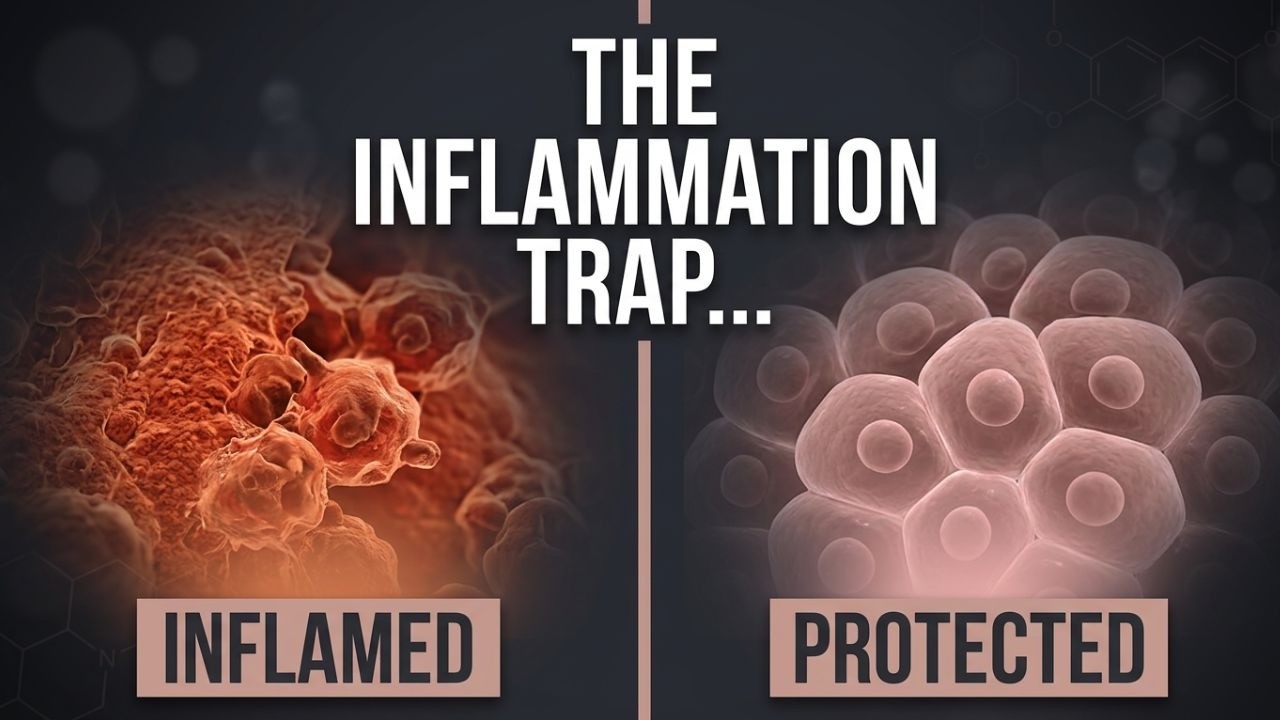
Dr. John Gilday and David Roberts of Mara Labs discuss how chronic inflammation may underlie many diseases. They developed stabilized sulforaphane after David's wife's breast cancer diagnosis, and describe products designed to support the body's detoxification pathways. A single 10 mg sulforaphane dose reduced IL-6 inflammation markers by 28 percent.
Chapters
Tune in for a fascinating conversation with two founders of Mara Labs, Dr. John Gilday and David Roberts. They have such an inspiring, incredible origin story for this company, and they're on a mission to really impact lives with supplements in a way that is often not able to be done and harnessed looking at, you know, harnessing the power of these powerful ingredients that we'll dig into in the podcast, not only being taken but being bioavailable and actually usable in a way that misses the mark with most other supplementation. There's some pretty fascinating tidbits in here. There's also a complete discount code. You'll hear the link at the end of the episode, and you can of course find it in the show notes as well. But Pretty interesting stuff. Let's dig in. So, I am very excited to have this conversation today. I feel like I'm going to leave it so so much more educated, empowered, and with so much insight. So thank you for being here, gentlemen. It's a pleasure having you.
Thank you so much for having us.
Yeah, for sure.
So we're going deep on a few different topics I want to lead this conversation in, but I wanted to just set the foundation. You both started— or David, you're— you had an experience that ultimately led you all to create Mara Labs. I would love for you to tell us a little bit about both of your journeys and what led to where you are today and the impact that you all are having.
Yeah, I mean, my journey started when my wife was diagnosed with breast cancer in 2012. And that very same week, a mutual friend introduced me to John and his wife Heather. And, and so for probably a span about 5 years I emailed or called John every day except Sunday and asked him questions about cancer, sort of, yeah, because he's sort of an expert. But yeah, basically we were able to grow Mara cancer cells in our lab and put 60 different substances like supplements on them to see what directly killed her cancer cells. And so sulforaphane, which is the good molecule from broccoli, was number 3 in directly killing her type of cancer. And so of course I went out to buy some, but I, all I could find was this precursor molecule called glucoraphanin. So if you have a head of broccoli, you start chewing it. In that head of broccoli, there's the glucoraphanin, which is the precursor to sulforaphane, and you start chewing it and you break the cell wall down, which releases an enzyme that converts the glucoraphanin into sulforaphane. You swallow it, you get the benefit, but if you try to harness it and put it in a capsule, it degrades quickly within hours. And so historically it's not been shelf stable, which is why all the broccoli supplements on the market, even still except two, ours and one from France called Prostaphane, have the precursor molecule because it's stable. And so we've basically, we're able to figure out how to stabilize it. John figured it out. So basically I started growing broccoli sprouts for Mara. The joke is enough for about 10 families because we would We would, uh, juice them every day. And so it was, you know, these towers of broccoli sprouts in our kitchen. But, you know, at the time my kids were 1 and 3, and, you know, it's kind of a pain to do that. And so if you travel, it's hard to travel with them. If it's summertime, they can mold. And so basically, I think we were at lunch and I was like, John, it's so hard to grow these things. It'd be really kind of not thinking he would do anything, but I was saying, you know, it would be really nice to have a stable form of this. And so like maybe 2 or 3 years later, we're at lunch again and he's like, I stabilized it. And we're like, whoa. And so we sent it out to testing and sure enough, he had stabilized sulforaphane. And so at that time we were with a different supplement company that we had started. And so we weren't necessarily looking to bring another supplement to market, but Mara was like, we have to get this to market. And so she basically started looking into raising the seed money for getting the sulforaphane to market as a supplement. And unfortunately, a few months later, she took a turn for the worse and died. And so after that, we took the seed money and we just were like, we're doing this. And so we named it Mara Labs in her memory. So that's sort of the story. Wow.
Well, thank you for sharing that. I'm so sorry for your loss, but your dedication to your wife and to helping even other people is extraordinary for sure.
Thank you very much.
Okay, so Dr. Gilday, I would love for you to kind of take us along on your journey that led you here. What made you interested in cancer, in sulforaphane, and the stability? Were you trying to solve a specific scientific question that kind of led you down this road?
Yeah, I think our, our stories are just about 10 years shifted. And so my wife got breast cancer right while I was doing my postdoc on cancer metastasis. And so I typically trained researcher. And so because I wasn't really happy with what was being offered to me, if you really look at the statistics and stuff, I was like, well, I'm gonna do something different. And so that was when I started getting interested in natural compounds. And I was doing the same thing. I grew my wife's cancer in, in cell culture and started putting compounds on them and, and found a number of natural compounds. And she fortunately is doing really well. And, but that's what changed my mind about natural compounds and how effective they are. And so since then, I wanted to find natural compounds that could get to actually to the site of cells that could change the physiology, the cell physiology. And that's been sort of my focus ever since then. So forophane doesn't have a problem with bioavailability, but many of the compounds that we were searching did have a problem with getting past the enterocytes, the lining of the intestine. And so because of that, we developed a patent-pending carrier molecule to get things past the intestine. So the beauty of that one is that it's able to carry a lot of different natural natural compounds that have activity. And so the next thing we focused on were things that work synergistically with each other. So there are, you know, major pathways that are central to almost all chronic disease. And we're very interested in compounds that affect those, you know, the big 12 or so that I'm always focused on. And whenever possible, we want two different mechanisms to affect one particular pathway.. And even though you can't achieve what you normally can in cell culture, with 2 compounds in synergy, you're able to at least get enough there that it affects the cell physiology. So that's sort of some of my background, and I've been very interested in trying to produce supplements or formulate supplements that, you know, me and my family and our friends would want to take. And so we're very fortunate in that. Right from sourcing the material to making the pill and putting in the bottle all happens in one place. And so when you have the— all the people aligned together, that can really happen. And pretty hard to do that if you're separated all over the place. This person makes the compound, this other place isolates it, the other person puts it in the bottle. And so all being under one roof is kind of one of our big central features where You know, you can trust everybody that you're looking at every day.
Yeah, I love that. So I want to almost think about the disease process before it manifests in like a nameable disease process. Like, what do you guys have a theory as to what's going on in our body, in our cells, years before, hey, we get a stamped diagnosis of what might be happening? Are there common threads between those subsequent diseases that show up and manifest later?
Yeah, that's a good question. Yeah, we both have ideas.
Yeah, we'll probably both, um, I'll give you my 30,000-foot view. I think it's the combination of the nutrient density in our food slowly going down and the number of toxins that are being found more and more in our food. And that combination always manifests the same way in that you get genomic instability. And that is reactive oxygen species, genomic instability. Lack of production of, of energy. And so your body goes into salvage mode and starts turning off functions. And so I think that's the driving factor for most of disease progression. And depending what you have a predisposition for, you know, everybody has SNPs, genetic small changes that predispose you to what disease state it'll end up looking like. And I love my wife's analogy. She talks about all the time. She's a biology teacher in high school, helps me try to make things more coherent, understandable. So she says that your predisposition to disease in terms of SNPs put you a certain distance from the edge of a cliff, and your lifestyle, how you eat, your stress, everything else pushes you further away from that cliff or brings you closer to that cliff.. And so easy way for me to understand that everything is manipulatable and you can, you can change your trajectory even if you have a frankly diagnosed disease through supporting cellular function.
Another good analogy is the kitchen sink analogy and the kitchen sink stop is stopped up and the degree of the how the stoppage depends on, you know, what's clogging it. And then the levels rise and you really don't notice it until it overflows. And then it's like the— you've been diagnosed with a disease. And so, you know, cellularly taking care of things keeps that, that level down. So, you know, either it's flowing properly or just is not clogged up at all. So yeah, there's another way to look at it.
I love that. And so you mentioned reactive oxygen species, like to the lay listener, that's sort of you can categorize that as a type of inflammation, right? Do you all, when you're thinking about this, do you all think that inflammation is a driving cause leading up to disease? Do you think it's a symptom of something deeper going on? Both? Yeah.
I mean, inflammation is the driving cause of all disease. And so I think that's, if you, even it's chronic inflammation. So I mean, if you think about, there are two types of inflammation. We need inflammation, right? It's basically an immune response. So if you cut your— you have a cut, let's say, on your finger or your arm, that there's an immune response that is activated that basically leads to healing that cut. It's needed, but it's short-lived. But then there's the chronic always-on inflammation. Like, you know, when we were talking about— Joan was talking about food. There's the saying, never buy food from the place you buy gas. That's Michael Pollan. And then it goes to the processed food idea. If you're buying food from a box, and so with that type of food, your gut lining can be inflamed all the time. And so that's this always-on inflammation that's low-grade. It's like a smoldering rug, you know, versus a fire that you throw gas on, it goes whoosh. And that's the acute versus like the smoldering. That's sort of long-lived. And so that chronic inflammation is a driving cause of disease.
Why do you think there's so much diversity in people's kind of reactivity to inflammation? Like I always tell listeners, look, I am an inflamed person. I have to work all day, every day to manage my inflammation. Meanwhile, my husband has never been inflamed a day in his life. That man has never woke up puffy. That just does not experience it whatsoever. I'm curious of y'all's theories on that. I say y'all because I'm from Texas, but I'm curious.
Yeah, yeah, yeah.
I think everybody has vulnerabilities for sure. And if you think about your immune system, his immune system seems to take a big hit before it turns on. He probably, when he gets sick, he's probably feels sick for a day or so and gets over it and you're done. It's amazing that there's some people that have that. It's like someone who's built to live in, you know, adversity. I guess that's a way to think about it. And then because everything is on a spectrum, when you look at many people in any kind of clinical study, you find out, and maybe this is just a general principle, but I see it all the time because I've done a number of clinical studies, is whatever you're trying to measure, there's always 15% or so people in that study that react the opposite. So in one case, it's really good to lower the amount of sugar you take. Maybe your husband might be that way. If he actually restricts his, his sugar, then he starts getting sick. You know, like he manages sugar really well. So he needs some extra sugar. He's probably super active. I think in every metric there's there's a spectrum and there's the opposing group. So I just know for myself, I'm opposite to other people in a couple of different ways. And in one way, I was an outlier in my own study where I started— studied salt sensitivity. So took high salt on one arm of the study, low salt in the other arm of the study. And my blood pressure went up by more than 12 millimeters mercury on the low-salt arm of the study. So I guess I'm one of those few people that got to define a new disease state, which is— we called inverse salt sensitivity. But it's, it's because if you have your eyes open and you know that there are these people out there that react opposite, then you know that every person is individual. And that's, that's why there is personalized medicine, is that you can line up all those ways that they're backwards and, and say, you know, you need to eat a little bit more sugar, you need to eat a little bit of rice before you go to bed. And surprisingly, suddenly, like, they sleep better. You're like, oh, okay, well, there it is.
Yeah. Yeah. I mean, another way to— going on with the sink analogy, your husband may have sort of wider pipes, and so that it doesn't get stopped up as easily. And so it's just like you said, everyone's different. And so it's— it just is what it is.
Yeah, it is. But yeah, what a time to be alive. At least we have personalized medicine now. 30 years ago, it would have been real tough for me, real easy for for him though. Lucky.
Yeah.
So I wanna think a little bit about detox and I want to transition the conversation a little bit. You know, I feel like this is a very big word that's in vogue right now, but I would love to know what the concept of detox actually means to you both.
I mean, I really like talking about barriers. This is one of my favorite topics and I think it became solidified quite a while ago when we were both involved in a, a new startup supplement company, we were studying gut barrier function and seeing how important that was. But when you read some of the newer reviews about the, the hallmarks of health, one of the newest ones is barriers. So if you're able to isolate off the different compartments in your body, if you do have an inflammation or something, it'll stay in its localized area. And that ends up being super important because a lot of how your body functions is based on barriers. Like you have to create, you know, a sodium barrier between the outside and inside of your cells in order to drive nutrient uptake. That's the, that's the sort of the driving force for nutrient uptake. And so I like to start with your outside and inside world. So I think both your skin and your small and large intestines being a barrier. Is the place to start with talking about toxins. So using your, your husband as an analogy, he probably has an incredible barrier. So he can eat a bunch of crappy stuff. And if you have a really great barrier intact, you have receptors that take in the stuff that you need. But if all the other stuff just goes by you, then you didn't absorb the toxins in the first place. So they don't affect that person. And then the same thing, the twofold component of toxins is that your kidney ends up doing The opposite. Your body takes up the nutrients, it makes metabolic waste, and then once again you have to reuptake the things that are useful, and your kidney does that. And then all the metabolic products go out in your kidney, so you reuptake it again. So if you just happen to be really good at making a barrier and taking up just the nutrients in your digestive tract and then doing it again in your kidney, you can tolerate way higher doses of toxins than the next person. And opposite to that, if you have disrupted barriers, then everything that you eat that's a toxin, then it's going to end up getting into your system and it's going to affect, you know, all the different cells and the ways that, you know, each tissue talks to each other. So that person is going to have a lot more difficult time.
Yeah, I mean, I think another way that's actually really good.
I have to—
That was so good. Another way to think about it is there's 3 phases of detoxification, uh, phase 1, phase 2, phase 3. And, and so when you are faced with a toxin, and, and it's not just your liver, your liver does a lot of detox, but it's really every cell in your body. You basically, you know, the phase 1 is transforming the toxin in some ways. In some cases, it can transform it to be more toxic, but the purpose is then, you know, basically in phase 2, you want to make it water-soluble, so it goes into the serum and then gets either comes out in your urine for excretion or your feces. And so that's phase 3. And so that's sort of a way to think, another way to think about detox is in those stages.
Yeah. So that's the mechanism of detox. Do you think avoiding toxins is enough anymore? Is that even possible or do we need to be working on those 3 phases?
Yeah, it's both. Yeah. Yeah. But you, I mean, so you wanna be detoxing, but I mean, John says, says this all the time. It's if you're not mitigating, if you're not lessening your toxic burden, it's, you're sort of a losing battle. And so, I mean, just we talk a lot about microplastics and so, and there was that Netflix documentary, I don't know if you saw it on microplastics that came out in March. Yeah, it's, it's not super scientific, but it is entertaining. It showed basically 6 couples. Who had trouble getting pregnant, and they're linking high microplastics exposure to infertility. And they basically mitigated microplastics in the homes as well as some other kind of toxins, and 3 of them got pregnant. But basically the whole idea of— I mean, toxins are everywhere. If you think of your cleaning supplies, you look at your dishwasher, your washing machine, you look at just the air you breathe, the water you drink if you live in the city and you're on municipal water. And the food you eat. We just talked about that with processed foods. You have GMOs, genetically modified organisms, like corn, and you get high fructose corn syrup, canola, canola oil, soybeans, you get soybean oil, and the list goes on and on and on and on. And those processed foods, especially with most processed foods having GMOs, you get exposed to glyphosate, which is the active ingredient in Roundup, which messes with your microbiome. And so, yeah, it's a cascade. I mean, you think about your meats and if some people still eat tuna, you know, or tuna is a top feeder, so it's high in mercury versus sardines, which are small fish, which are low in mercury. And so, yeah, you want to be both mitigating toxins, get decreasing them in your house as well as detoxing. And I'd say the two big things you can do is sleep with a HEPA filter in your room. That will get a lot of the microplastics out, but just also other things that are in there. And then having an reverse osmosis filter on your drinking water. It can be as simple as a $300 RO filter on your kitchen sink, or you can have a $5,000 one on your house. But doing those two things will get you pretty far down the road.
Anything to add, Dr. Gilday?
The general idea of the fact that our food system changed so dramatically since the 1900s is sort of a central feature that helps— at least helps me understand where to try and get my food. So if you think about what changed is massive, you know, single crops that cover most of America, those kind of 4 things that most farmers are farming. If you avoid those 4 things, you're going to avoid most of the problems. And, and so every food that is dependent on them would also be trouble. And so we often sit down with people and say, they'll ask us, well, can you show us an example of what you would get from the grocery store? And our answer always shocks people as we say, we only buy product, we buy cleaning products and paper products from the grocery store. We get all of our food from people we can look into their eyes. And so that takes a long time to develop those relationships with all the people that grow your food. But You know, that's the person that you can trust. They put the seeds in the ground, they grow it up, they nurture it, and then they hand it to you. You take it, you eat it, you're guaranteed that you're going to miss most of the trouble part of our food system. And that's an extreme version of it, but as close to that as you can get is the best, is, you know, organic produce. Try and get grass-fed beef, grass-fed lamb, and chicken and eggs. Do the very best you can because that, you know, your, your basic food staples are what you should be eating.
What are the four? Corn, soy, what else?
Uh, so the sugar is sugar beets, corn, soy, sugar beets, and wheat.
Wheat, right?
Yes.
The one we probably don't eat a lot of, so we don't even think about it anymore, at least not traditional conventional wheat. And I think too, like, going back to what David said, people underestimate the value of air filters and water filtration because that's something you can put into place, not think about for a while, and reap the benefits of day in and day out to lower that overall burden. And then obviously meeting farmers takes a little longer, but hey, you can start with the air, water, move to food, and, and do your best in a layered format. Um, talk with me a little bit about Nrf2, if that plays a role in kind of detox and neutralizing oxidative stress.
Yeah. So NRF2 pathway, NRF2 basically is one of the central pathways and it's responsible for a lot of things actually, but it's responsible for what we were just talking about with detox and specifically phase 2 detox. And we're, it's near and dear to our hearts because our sulforaphane from the broccoli supplement that we sell, Broccoli, is the best natural molecule at turning on Nrf2. And so, but it's also important with the antioxidant response element. It's, it's central to what John was talking about with the gut barrier function with tight junctions. And so it does a lot of things. And so, but with detox, it is responsible not for phase 1 or 3, but it is responsible for phase 2 detoxification. So it is basically that the NRF2, it's a pathway, but basically I think John can talk about the mechanism if we want.
Yeah, yeah.
But it's the cell and it basically gets released into the nucleus and then in the nucleus it basically turns on different genes that then can produce, let's say with the antioxidant response element, it turns on the genes that turn on 200 different antioxidants. So if you think about, you know, vitamin C, which is itself an antioxidant, one vitamin C molecule can neutralize a pro-oxidant. But with sulforaphane specifically in this pathway, once it's turned on, it actually turns on over 200 different antioxidants that gets spit out and produced over just with one, with one dose of sulforaphane gets turned on for over 72 hours. And so it's sort of a master, it's kind of a master antioxidant in that scenario.
I love that. Anything to add, Dr. Bilodei? That was an amazing explanation.
Maybe just a little bit of mechanism in that it's a strange transcription factor. I mean, transcription factors turn on genes, so they sit down in the promoter of genes and turn them on. And it's a pretty interesting mechanism that the default state of NRF2 is that it gets degraded. So there's basically none in your body normally, very, very low. And then what ends up happening is sulforaphane gets in between a whole complex that is involved in getting rid of Nrf2. And so it allows Nrf2 to accumulate. And so that's been something that was just recently discovered is that it isn't that, that it's bound and then it's released to go and do its function. It's taken away from being degraded and then your body can make more of it. It's always trying to make more of it, but then it can make more of this transcription factor. But then there's a whole bunch of things that happen after it's made. You have to add some phosphorylation to it from a pathway in order for it to make it into the nucleus. It has to sit down on the promoter, and then it also has to— it will sit down on its own promoter. So after it's turned on and makes gene products, again, like enzymes that are made to degrade reactive oxygen species. It's interesting that one enzyme will, will turn over tens of thousands of them per second. And so we have 200 of them. So it's affecting every form of reactive oxygen species and reactive nitrogen species. But then it also gets exported back out of the nucleus. And the reason that we pay a lot of attention to that is that our other supplements are all known to enhance Nrf2. And so they're synergistic with it in that if you have a separate mechanism that's inducing a particular pathway, then it has the potential for those two things to be synergistic, not additive. A lot of times it's one plus one, and then you get, you know, twofold. But in our case, every one of our supplements that we've released so far has ability to turn on Nrf2 and a bunch of other pathways as well, turning it on more strongly. And so I guess I would, I would say maybe just to mention something that probably no one thinks about is that you were talking about inflammation. The transcription factor that turns on inflammation is called NF-kappa-B, but sulforaphane actually covalently turns off that system. It actually binds to a protein that's in that complex called NF-kappa-beta. To just a subunit of it and turns it off. So because it's covalent, it's a very strong turnoff. And then another pathway that is in, in the same is called STAT3. Sulforaphane, even though it's the best at inducing Nrf2 and all those detox pathways, it's also very good at anti-inflammatory. And that's why a lot of times when we talk to people, you say get sulforaphane. Of course, that's a good baseline. But as soon as you add curcumin to it, curcumin is the best. Anti-inflammatory compound, but then it also affects Nrf2. And those two together are very synergistic and really get at the heart of a lot of dysfunction that's common in people nowadays.
Yeah. Early on when we first started the company, you know, we made the first bottles and we were all taking it internally and we're like, your joints stop— did your joints stop hurting?
Yeah.
Did you? Yeah, mine did too. And so there's this big question of like, it seemed to work like overnight. And so we wanted to see how quickly does it actually work. And so we designed this kind of a preclinical trial of friends and family where basically we found that sulforaphane would decrease the pro-inflammatory marker IL-6 about 28% in 24 hours with one dose of 10mg.
No pain.
No. So that's enough where you can feel the difference in that inflammation and the pain, basically. And so if you add curcumin to that, And there's, I think there isn't there a study on equating that to the sulforaphane curcumin to like ibuprofen?
Yeah, just curcumin.
Just curcumin. So yeah, basically ibuprofen.
That's not even a bioavailable one.
Yeah. And so I mean, talking about natural, you know, anti-inflammatories and pain, you know, if somebody is looking for some, something other than ibuprofen, the sulforaphanes, the broccoli, curcumin, the issue, you know, with we haven't, we've kind of touched on this some, but the issue with curcumin is less than 1% gets through the gut barrier. And that was number 2 in directly killing Morris type of cancer. Sulforaphane was 3. And so a lot of the things we studied back, what was that, 14 years ago, was how do you read all these papers about the amazing benefits of curcumin, but it's on cells and culture in the lab, and you're like, well, how do I know when I take a curcumin supplement it's doing that, and you don't because it's not. And so what we— basically all of our supplements are designed to get through the gut barrier to the cells so that it impacts the biology. So it basically makes a biologically relevant difference, and it influences these pathways that John's talking about. And so with curcumin and NF-kappa-B, which is the holy grail of anti-inflammation, it's what pharmaceutical companies, the pathway they're going after when they're creating pharmaceutical that's an anti-inflammatory. So curcumin's the natural, best natural molecule at that pathway. But together, the, the, you know, somebody's like, well, you know, I could pick 2 supplements from your stack, what would they be? It would be curcumin. It'd be curcumin and broccoli because those 2 cover such a vast amount of different things.
And I love too that, I mean, the underscore of so much of this conversation goes back to the the concept that it doesn't matter, like the ingredient itself is great, but if it's not in a bioavailable form, it's not going to do you any good. So what Mara Labs has been able to do is bridge that gap between these incredible ingredients, but also making them actually able to be usable for people when a lot of them apparently aren't, correct?
Yeah, that's correct. And so we have, um, a GLP-1 alternative for people who are coming off GLP-1s if they want to have something that's more natural or they can't take GLP-1s for some reason. And we're not like saying don't take a GLP-1 because you have to talk to your doctor about that. But basically part one of it has 3, 3 ingredients and one of them is EGCG, which is from the good molecule in green tea extract. And so that again is not bioavailable, but when you attach it to our patent-pending carrier molecule, it basically smuggles it through the gut barrier so that it's 250 times— not percent, times— more bioavailable than regular green tea. And so that's huge because what that molecule does is it impacts— it does a lot, actually, but from a weight standpoint, it impacts your ghrelin, which is your hunger hormone. And so You know, you can eat, like with a GLP-1, typically you can't eat because you're, you're still full because your gut motility slowed down. With our supplement, it's called GL Perfect. You basically, you can eat, but you're just not walking around hungry. So you stop the snacking basically.
Incredible. Anything that you want to add, Dr. Gilday? I don't want to cut you off before I just keep asking questions and picking Al's brain.
Yeah, we brought up GL Perfect and That was one of those things where when I started looking at the 3 ingredients, all the parts of, of how it functions, I was kind of blown away that there are 26 different mechanisms of adiposity that are central to so many disease states. Because, you know, being overweight and metabolism being off is central to so many of at least American, you know, standard American diet, and it affected 26 different mechanisms between the 3 of them. Really blew me away, like the, the ability to mobilize fat from your stored fat faster, the ability to sequester into your muscles and lower blood sugar in so many different ways. I think it's for most people that are probably around my age, around 60, you really notice that your metabolism is starting to slow down. And just that little bit of push that makes you able to keep your weight a little bit easier. And then also just the fact that you're not lugging around 20 extra pounds, you're more likely to get out and exercise some more and sort of getting outside. And you just see that over and over again that somebody just has that little bit of edge. Maybe it makes you more like a 53-year-old in, in the desire to go work out, you know, as opposed to— I have the problem of I used to be an athlete, so I'll overdo it, and then it'll be like 4 days when I can work out again because I'm so sore. Yeah, it's just one of those things that any advantage can really help, and, and in that area, most people can notice it in a relatively short period of time.
I'm so curious to— you probably haven't done this, but gosh, I would love the data if you ever end up doing it. You know, we have so much data at Modern Thyroid Clinic, probably the largest dataset in the world of thyroid patients on GLPs. And I am a data miner and just a nerd. And so we found that after even microdoses of a GLP, one dose, it's lowered inflammatory markers. I'd be so curious if you guys could do before and after even just hs-CRP with GL Perfect and see if you can capture any data too. That would be fascinating. And you'll— if you do, you have to keep me posted because I just am always on the journey to explore the benefits of influencing GLP without, like, irrespective of weight loss. Sure, there are so many.
Yeah, yeah, yeah, yeah.
I think probably a fun thing to bring up that most people miss is that You know, the L cells in the terminal ileum in the colon where GLPs are made, it's actually a precursor protein that makes GLP-1 and 2, GLP-2. And so when you activate it through its normal receptor function instead of making, you know, an agonist that is not degraded, I always like to mention that originally it came from a Gila monster. The GLP-1 came from a Gila monster, you know, that this Strange peptide that wasn't broken down. But anyways, when, when you stimulate the L cell appropriately, you make GLP-1 and you get all the bonuses of a GLP that is the metabolic shift that happens. And then you also get GLP-2, but GLP-2 is the component that restructures your intestine. So you make the connective tissue that's surrounding your intestines, stimulates the nervous system that's surrounding your intestines. And so a lot of people forget that. The normal induction of GLP-1 actually also induces GLP-2. And you can heal your intestine over time by, by doing it. And if you want to tie it back to old-timey nutrition, is that, that old-fashioned thing that people used to do is to take bitters before you eat is actually the, the thing that turns on that pathway. So berberine is a bitter and turns on GLP-1 by that mechanism.
I was just wondering if you guys combine like your Berberine with the GL Perfect often for that kind of reaction.
Well, Berberine is one of the three molecules in GL Perfect. Yeah, for that reason. But, and also, I mean, I think the other neat factor to talk about is one of the kind of things that can have— can happen. It doesn't have to happen, but when you're on a GLP-1 is muscle loss. Unless you're taking a lot of protein and doing a lot of resistance training, you're going to have up to 40% muscle loss in the literature. And so that's going the opposite direction because you want to be— if you're, if you're wanting to lose weight, you want to gain muscle, right? And so with Geoperfect, the 3 ingredients, it's, it's AGCG from green tea, berberine that's bioavailable, and then alpha-lipoic acid. All three of those help with the enzyme that help degrades the muscle called myostatin. And so it's protective. So if you take our product, it's protective.
I love that. Fascinating.
Yeah.
I know we've talked a little deeply about the GL Perfect, but I kind of want to go back and highlight briefly like Broccoli Elite and Curcui Elite and just talk with people about one, Who should, because you said pretty much everyone should be taking these, is there any class of symptoms that should highlight people, yeah, I should really try that. Like for me, I'm an inflamed person. I know what that feels like, cuz I've spent my whole life feeling like that. A lot of people aren't really aware, hey, maybe I struggle with inflammation. Maybe I have this, my kitchen sink is full, right? I'd love for you to highlight for people who could benefit from this and maybe when they start it, a week, a month, 6 months in, what they could expect? Not to put you guys on the spot.
It's such an interesting question.
Oh yeah, we have lots. Okay, you go ahead.
Yeah, I was trying to think about in preparation for this. I've heard so many times when I sit down with people to help because you're doing thyroid health and, you know, expert in that particular area. I can't even tell you how many times people said my numbers are normal. You know, even after they do the extended panels and things, and, and even the nutrients that are involved in thyroid health. And it's often super eye-opening to people that the thyroid just makes the power bank. It doesn't even make thyroid, it makes the precursor to thyroid, and that it has to go out into the tissue to make the active form. And then just like insulin, there's an equivalent to insulin resistance and there's thyroid resistance. There's multiple receptors. There's, you know, reverse T3 and aspects of aging and inflammation that affect that pathway really dramatically. And so I can't tell you how many people that I sat down with that said exactly this. I have brain fog. I have low energy in the afternoon. I thought for sure it was thyroid. I got tested. I saw no, no help whatsoever. And then you basically would give this person sulforaphane and curcumin and suddenly the thyroid hormones that they're making start working. And so they stop getting tired in the afternoon and they stop having the brain fog or migraines or a lot of the things that are kind of stereotypically thought of being a thyroid issue. So I guess that would be a repeated thing that I've seen so many times. And it's, it's often as you're aging or going through menopause or, or these, these different difficult times in life where your stress levels go up a little bit more and you're aging that they reveal themselves. And this is just a pushback with those two compounds. You can push unclog the sink as it were for a lot of the, the function of thyroid hormones. So I, I think that would be one that I've seen many, many times. Yeah.
And I mean, the biggest testimonial we get is pain. Basically, people who were in pain, no longer in pain. That's typically broccoli because it's our bestseller, but with curcumin as well. And then we get sort of the range of things. You know, there is one of my favorite papers is out of Johns Hopkins on sulforaphane and autism. And basically these older young men who typically don't get better. On broccoli sprout beverage with a certain amount of sulforaphane in it for 12 weeks. And their autistic scale scores, their two different scale scores they used in the paper, improved on average 30%. So that's children who weren't speaking all of a sudden start speaking. And so, you know, because broccoli is a supplement, I can't say that it does anything for any disease state because that's illegal. But yeah, that paper does exist. And so I think the other thing we're really excited about because it's such an issue right now. And it's an issue for hormone health as well is, is microplastics. And so we just launched a product that actually can get microplastics, not just out of your gut and binding them, but out of your cells. So basically the life— when microplastics get through your gut barrier, they can get into your cells and they get engulfed in these things called lysosomes. And then they, like the kitchen sink analogy, in that cell, the lysosomes are the digestive center. They're like the kitchen sink, but you can't digest a microplastic. And so they get stuck. And so when you take, and then they can cause cellular dysfunction and cellular death. It's a big issue. And so with Microplastic Supplement, basically it's sulforaphane-based, but that has a couple other things in it. It actually can cause the lysosomes to bind the cell wall. It's called exocytosis, and it releases the microplastic into the extracellular space, and then you can get it into your lymph, into your bile, and then excrete it into your feces. And so that's a study that a gentleman out of North Dakota did without our knowledge, but we're best friends with him now because he— we're like, this is an amazing study. And so the supplement, it's called MicroplastX, X at the end. And yeah, it's a fantastic option if somebody's— people are worried about— because the issue with microplastics is they are porous, and so they actually can contain tens of thousands of different toxins, most of which is like these plasticizers, like BPA, which is an endocrine disruptor. It's a, it's an estrogen-mimicking compound. And so If you have a lot of that in your cells and in your, in your body, um, you're— it disrupts your normal hormone function. It's very— it's so— it can be caught. The reason why young girls are growing into puberty earlier and boys are going into puberty later, and women have irregular menstruation, there's infertility, men have poor testosterone and a low sperm count. And so all of that can be related to these microplastics in our bodies. It's with hormones being a signal, you know, that this estrogen, it's, it's telling your body to do certain things. But if you have this estrogen mimic, it's like a second signal. It's like having a television show, two television shows actually, on top of each other. You may or may not be able to tell what the show is because you can recognize maybe some characters, but you're not going to know the lot of the show. And so it's similar with having these two estrogen and estrogen mimicking compound on top of each other. So if you can basically again mitigate, lessen your exposure, most of your microplastics is in the area that you breathe over 50%. So that HEPA filter in your room at night, super important. And then taking this supplement to get rid of them. So those are some things we're excited about.
That is so cool. I have so much to say, but I— studies come to my inbox, you know, once a month on hypothyroidism and Hashimoto's linked to microplastics, those sorts of things. So that's what an incredible feat there that you all have accomplished. And, you know, I'm so kind of delighted that you dug into thyroid a little bit. I usually don't expect my people that I'm interviewing to know and go super specific on that, but you know, just to go back to what Dr. Gilday was saying as well, so much of the pervasive thyroid conditions that are happening, at least in America, in my data pool, are due to lack of conversion. They are— people are, again, they're producing enough thyroid hormones, they're producing enough inactive T4, but they have difficulty activating it, just as you said. And things like antioxidants, combating inflammation, setting your physiology up for success is such a huge way to take all of that crude oil hormone and make it into usable gasoline. And I think so much of your supplements are targeted at doing just that. Now, that extrapolates to so many other systems in our body, but for thyroid specifically, not only can it help to activate thyroid hormones, but inflammation is directly linked to Hashimoto's. So again, I'd be so curious if you guys ever do a study on, hey, put these people on Broccoli CurcuiElite and test their Hashimoto's antibodies on day zero before they start and every 90 days thereafter, because I think you might find some pretty cool and surprising things. So again, if you do, you have to keep me posted because I'd love to know. But it is, and that benefit can be again extrapolated to so many other health conditions. Fascinating, fascinating stuff, gentlemen. I love it.
Yeah, I— my wife, because she's a teacher, has connections to so many people. So we've actually seen that conversion multiple times where a person has Hashimoto's and they went on sulforaphane and their titers went away. So yeah, pretty dramatic. Sometimes my wife is so familiar with the symptoms of Hashimoto's, sometimes she ends up getting them diagnosed because that she knows it looks like, and then through conversations she'll just hand her— them a bottle of sulforaphane, and the inflammation, that decreases right away, and they feel better, and then they'll stick to it long enough to change the immunology. So that, that for sure happens, but we haven't done that study.
Yeah, I love it. Well, I'll certainly let you know if I start seeing some patterns at Modern Thyroid Clinic and our patients who use your supplements, because I'm sure there will be plenty after this interview. I would love for you to tell listeners where they can find out more about Mara Labs, where they can buy these, you know, impactful supplements, where they can find you on social, all the things.
Yeah, so we are at mara-labs.com and on social it's @dmorlabs and, uh, on Facebook and Instagram and, uh, I believe TikTok as well. And so, and then if you go to our website, we have a special landing page for your listeners. It's mora-labs.com/mccall, M-C-C-A-L-L. And basically, if you use that, the discount code McCall at checkout, you'll get 25% off for this first week once this, this podcast is released. Then after that, 15% off.
I love that. Thanks, guys. I appreciate you guys doing that.
Yeah, absolutely. Well, let me just say real quick. So we've talked a lot about a lot of things. I will say none of our supplements have any fillers or flow agents, so it's just the compounds. And then we have a 100-day money-back guarantee. So basically we just talked about how everyone's different. We know our supplements work. Sometimes people are like, it didn't work for me, which is fine. If you just want to try it, the burden, there's no burden. If it doesn't work for you, just let us know and we'll give you 100% of your money back. No questions asked.
I love that. I was just about to say too, is there anything else that listeners should know or do you feel like you guys covered it all? That's so great to know.
Can't think of anything.
No, no. It's just, yeah, the reason we made the supplements is because we wanted to take them. Right? And then we're like, we're like, we want these things for ourselves and our families and we're offering it to you guys. And so it's just the whole impetus of the company is a win-win. We want people to enthusiastically purchase our supplements because they work so well.
I love it. Okay. Well, thank you guys for your work, for making such an impact and taking your own journey and applying it to the journey of so many other people and how it can help us on our own Well, healthspan/lifespan. So thank you. This has been an incredible conversation, just as I had anticipated. And I can't wait to share your message.
Well, thank you so much for having us. It's been a great conversation.
Yeah, thank you so much.
More from McCall





Is It ADHD or Your Hormones? The Thyroid & Perimenopause Connection with Dr. Jolene Brighten





Still Sick on Thyroid Medication? – The Shocking Truth Doctors Aren’t Explaining with Elle Russ