Your Gut Might Be Blocking Your Hormones
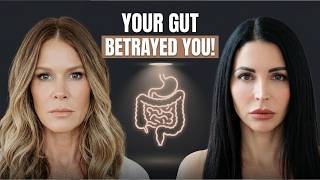
Dr. Cassie Smith, an endocrinologist, explains how gut inflammation and dysbiosis create hormone resistance, blocking thyroid, sex hormones, cortisol, and insulin from entering cells. She outlines testing approaches and strategies like time-restricted fasting and sauna to reduce inflammation and restore hormonal balance.
Chapters
Today we are talking to Dr. Cassie Smith, who is board certified in both endocrinology and the founder of Modern Endocrine and chief medical officer of Ren Thyroid, as well as the chief clinical director at Modern Thyroid Clinic. We are going into how our gut impacts so many parts of our physiology. Let's dig in. We are chatting today with my very dear friend and our Chief Clinical Director at Modern Thyroid Clinic, Dr. Cassie Smith, who's also the founder of Modern Endocrine. And today you guys might recognize her because she's been on the podcast a couple of times before this. We love having her on the podcast. She is filled with a a wealth of knowledge and expertise, but today we're talking about something super, super special. So she has a book coming out very soon. Actually, it just came out by the time that this podcast launches, and it is called Fix Your Gut, Fix Your Hormones: The Critical Connection Your Doctor Is Missing and Why You Still Feel Bad Despite Normal Labs. So we are talking all things gut, how it integrates to our hormones, our health, our longevity, all the things. So Dr. Smith, thank you so much for being here today.
Thanks for having me. I love being on your show. I know we've been on each other's a few times, but it's always such good conversation.
It really is. So tell me a little bit, like, open up the conversation and lay a little bit of a foundation on how your gut is connected to your hormones. Like, big picture, this is not a conversation most people are having or even really consider? Where do you think we should start building out this concept?
Yeah, great question. So I think the reason that I wrote this book was because, you know, you and I have talked about this. Even though I went to fellowship and I'm an endocrinologist and I really understand hormones and I understand metabolism, I still had these people that even though I fixed their thyroid and I fixed their hormones, there's still this subset of people, and especially women, who were doing everything right. Tight and their labs look perfect and still they don't feel well. Right. And so you and I know a lot of times that can be thyroid related. But even when we were fixing their thyroid and addressing their thyroid, keeping their T3 levels really high and their reverse T3 low, I still just had this subset of women that didn't feel well and they weren't getting to where they wanted to be. And so a few years ago, I really started to try to figure out why. And I did a lot of research and it led me to the gut. And then as I researched the gut more and more, I just realized, you know, the gut is where all disease processes begin because our gut is what drives so much inflammation. And so when we think about inflammation, you know, in general, there's so many things that cause inflammation, but a lot of it begins in our gut. And when we are highly inflamed, we know that then hormones, even though we're giving people the right thyroid medication, we're giving them estrogen, testosterone, those hormones can't get into the cell and actually work because there is resistance to those hormones and those receptors when we're inflamed. And so that's why I kind of got down this path of, oh my gosh, how does your gut affect this, right? And as you look at every single hormone— thyroid, estrogen, testosterone, cortisol, GLP-1, everything— it all— all of those hormones require a receptor, and they require different micronutrients and cofactors to be able to be taken into cells. But when we're inflamed because our gut is out of balance, none of those hormones are going to be able to enter the cell correctly. And so that's what kind of sparked this book and just trying to show people that, hey, it's, it's not you. And it's— yes, your labs may be normal, but there's something else that a lot of us are missing because they don't teach us about this in school, right? They don't teach us about this in not even an endocrinology fellowship. I have a metabolism fellowship and nobody talks about your gut and nobody talks about the inflammation that your gut can, you know, can cause when you have dysbiosis, or out-of-balance bacteria.
I love it. So I think the best way to unpack this conversation is probably similar to how it is in your book, but let's take it like system by system. Let's start with reproductive hormones, right? Like estrogen, progesterone, testosterone. Do your hormones impact your gut? Does your gut impact your hormones? Is this a bidirectional relationship?
It's a great question. It is a bidirectional relationship. And so your hormones can affect your gut, but your gut affects your hormones. And so then we get into this big vicious cycle. And actually every hormone in our body works together as well. So we'll break it down and we'll talk about our sex hormones, right? Our estrogen, our progesterone, our testosterone. But keep in mind that those also affect our insulin and affect our cortisol, right? So our progesterone is highly tied to our cortisol and our estrogen is highly tied to our insulin levels. So everything all works together, which is why it's so important. But from a sex hormone perspective, you know, women especially, our patients, a lot of them are in this perimenopausal era, right? We're in our mid to late 30s. We start losing our testosterone. We lose that first, and then we start losing our progesterone, late 30s, early 40s, and then we slowly lose our estrogen as well. And that creates a lot of issues. You and I know this, right? A lot of different symptoms, just a lot of different feelings. But when our hormone levels are out of balance, that can cause issues with, with inflammation. But inflammation can be driving some of that out of balance as well. So this is where it's really important. If you go to your provider and say, hey, I have X, Y, and Z symptoms, and they check your labs and they say, well, your hormones are off, and they give you a hormone to replace what labs are low or deficient, even if you give someone that hormone, if the hormone can't be accepted into the cell, right, if the cell can't take that hormone in because there is resistance from inflammation, then it doesn't matter. You're giving somebody a hormone, they're going to continue to have the same symptoms and they're going to think, well, that hormone isn't the reason I'm having the symptoms, right? And so I think that's what's really important as well. If we think, you know, if you're a woman listening to this and you're thinking, wow, in my, you know, later 30s I stopped sleeping as well and my body stopped looking the same. And, you know, I started having more mood issues. Well, what happened before that, right? What happened in our 20s and our early 30s? Most of us are very stressed. Most of us are putting our family and our friends and our job and our husbands in front of ourselves. And so we have all this stress from life, right? Higher cortisol levels, stress, etc., that is affecting our gut. And so a lot of us end up kind of just slowly over time destroying our gut microbiome, not realizing it, but we do. And we end up with symptoms like acid reflux, or bloating after we eat, or we have random food cravings and we just think, oh, that's part of life, right? But it's really not. Or we're severely constipated. And so these are slow symptoms that, hey, I'm doing something that maybe is affecting my gut and my microbiome, right? And so as we disrupt our microbiome, then our microbiome also will disrupt our hormone production, if that makes sense.
No, absolutely. And so Tell me, early stages, if someone feels like, one, they're worried about their hormones, two, they're worried about their gut health, what are the telltale signs that they need to look deeper? And what would the first steps in looking deeper to solve and address or begin to address this bi-directional, potentially dysfunctional relationship?
Yeah, I think that's a good question. So I think if you're listening to this and you're somebody who you feel like something's not right, you know, like, I feel like I just don't feel well, and you've been told your labs are normal, but you know something's not, then I would say take inventory of that, right? I have a list in my book of like 30 symptoms that are all very common symptoms that get mislooked by providers because from a gut perspective, a lot of times we have symptoms from lots of different areas and we don't tie it back to our gut, right? So we can have issues with depression, anxiety, we can have issues with dry skin, we can have issues with acne, we can have rashes, we can have issues with, you know, real GI type symptoms, so bloating and acid reflux. But also our gut is affecting so many other things— our skin, our mood, also our insulin levels. So if we're having food cravings, if we're gaining weight, if we're, you know, we've been told our insulin levels are high and our cortisol levels are high, and you're like, how? Because I eat well and I exercise. So all these things can actually be signs that you're having issues with your gut, right? And then if you're somebody who does struggle with thyroid issues, you've been working with, you know, somebody great like Modern Thyroid Clinic, and you're like, dang it, my levels look good, but I'm still struggling with symptoms, that can be a sign that, hey, even though we're appropriately managing your thyroid and giving you the hormone that you need, it's just not able to go into the cell and work because we have some inflammation from our gut that's affecting that, right? So I think if you're listening to this and you have 5 or 6 different symptoms that maybe don't seem like they're all related, but, you know, I mentioned them. So the anxiety, the depression, the skin issues, the bloating, the constipation, anything like that— hormone imbalances, cortisol irregularities, weight gain, brain fog, sleep issues. Like, if these things are all happening and nobody can put the pieces together, then you need to be thinking, okay, maybe I have a gut issue. Maybe I need to go look at the root cause, which is my gut, and then figure out, okay, what actually is my gut affecting? Is it affecting my insulin and my cortisol, my sex hormones, etc.? And so then once you look at that and you know what's going on with your gut, with gut testing, right, you can do different types of gut tests, then that will help you go back to the root cause and say, okay, how do I lower my inflammation? How do I fix these labs that although I— maybe they're told they're normal, you and I know that even though sometimes your labs are normal, they're not optimal. And I think that is where people need to really start is like, hey, let's take inventory of symptoms. Let's actually do a test and see like what is going on with my gut and then let's start fixing that. I think that's really important.
I love it. So, so incredibly valuable. Talk with me too about hormones, like reproductive hormones impacting gut. Are there certain times in women's lives where they might be more vulnerable to hormone issues, then subsequently causing gut issues?
Yeah, that's a great question. So, you know, I start off in the book talking about like, what is a microbiome? And I explain to you what is our microbiome and then how we end up here as women, or just men as well. But unfortunately, our gut is impacted in so many ways in modern society, right? A lot of people aren't breastfed, or maybe you have— you were born via C-section instead of vaginal birth. And so there's so many things that just from the very beginning of life, some of some of them you don't even have control over, affect what lives in your gut, right? But then as we develop through life, if we take antibiotics, if we take birth control, depending on, you know, how many times we've had children, all these changes in hormones can affect our gut. And so women, especially when we are having changes in hormone levels— so let's say maybe you got really stressed, right? You were super stressed in your 30s, something terrible happens, a death in the family, or, you know, you go through a divorce, something like that where you're really stressed, stress, chronic stress actually affects your gut because you are— your vagus nerve talks to your entire body, right? And so your brain, when your brain senses stress, your vagus nerve will sense that and it will tell your gut, oh my gosh, something wrong is— is something's wrong, right? And then that will affect your microbiome. And so when we are chronically stressed, we actually negatively impact our gut. And in doing that, we end up killing good bacteria and bad bacteria proliferate or overgrow. And when that happens, those bad bacteria send signals to our body, right? So when bad bacteria are overgrown and we eat food, the bad bacteria eat that food, they digest it, and they make something called lipopolysaccharide, which is a toxin. It's an endotoxin. So it's toxic to our body, which then causes our gut lining to slowly break down. We end up with something called leaky gut. So that's where, you know, this buzzword everyone talks about, leaky gut. All that is, is when our bad bacteria have outgrown our good bacteria and our bad bacteria are releasing these toxins into our body that are putting little holes into our gut. And then when we eat, those holes in our gut allow food to leave our gut and enter our bloodstream. We have immune cells around our gut, right, that keep us safe in case we accidentally eat bad food. But when we're constantly getting food leaving our gut from this, these holes, right? Then our cytokines or our immune system is constantly under alert and it's like, oh my gosh, what's wrong? And then that is sending signals to our brain to make more cortisol, which is our stress hormone. We end up making more insulin, which is the hormone that makes us store food as fat instead of utilizing it as muscle. And then this high cortisol and high insulin, both of those things affect our hormones directly by high cortisol lowers progesterone. And high insulin lowers estrogen. So our body's ability to actually make hormones, make estrogen, make progesterone, make testosterone decreases when we're chronically stressed because also our adrenal gland has to utilize energy to make cortisol. When our body feels stressed, then our adrenal gland has to make cortisol. And actually women make a lot of their testosterone in their adrenal glands. So this is why a lot of women in their 30s and 40s have low testosterone because our adrenal has used all of its energy to make cortisol. So we're not making pregnenolone and we're not making testosterone. And so this is how it all kind of relates. But people just— nobody puts this together for us and nobody says, hey, you know, what is the actual driving point of why your testosterone is low or why your progesterone is low or why your estrogen is low? We as a society just think, oh, this is part of life, right? This is how we're supposed to live. But in actuality, that stress from 5, 10 years ago, that chronic stress has actually been affecting slowly over time your cortisol and your insulin, which has been driving down your estrogen and progesterone. And as those hormone levels are lower— low progesterone, low estrogen, low testosterone— that negatively impacts your gut as well. So it will change what bacteria can grow and what bacteria actually work in your GI tract. And so that's just making this, this system even worse, if that makes sense. So you get into this cycle And it's not good. Yeah.
And I mean that, you know, to just re-emphasize and put a pin in it, that leads to metabolic dysfunction, right? We start inappropriately gaining weight, holding on to weight, storing weight around our midsection from insulin resistance, from low estrogen absorption, and it just spirals really, really quickly from a hormone standpoint. But now we've entered into the metabolic standpoint.
Yeah. And a lot of people listening to this, you know, that see you and see me, these women, they feel so bad because doctors have made them feel like it's their fault. Like, oh, you you must be doing something wrong, right? And you get to this point metabolically, hormonally, where it's not your fault. It's just nothing is working correctly. You're in this vicious cycle of like, hey, my cortisol has been high for a long time, it's driving down my progesterone. Now my insulin's high, which is driving down my estrogen. Everything I eat, no matter how good it is, is being stored as fat instead of being able to be utilized as energy. You know, we eat and our insulin's high, so everything just stored in our fat cells. Then we're hungry 3 hours later, so we're eating again. And it's like, even if you have this amazing willpower of, I'm going to try to, you know, starve myself, everything that you're eating is going and being stored as fat. And then that, oh my gosh, I'm hungry, but I don't want to eat, drives our cortisol up even further, which then lowers our progesterone. And, and this whole thing is happening at the same time. This is lowering how much our T3, how much our T4 is converting to T3, or it's also lowering how much our T3 can actually be moved into cells. So if somebody is seeing, you know, you or I, and we're giving them T3 to try to help, if their cortisol is really high and they're super stressed and they have a lot of inflammation from their gut and their insulin's high, that T3 that we're giving them, it can't always go into the cell. So this is why you and I know sometimes you have to give people more T3 than you would think they actually need, because even though their levels are appropriate or even maybe higher, doesn't mean it's going into the cell, right? And so there's just so many things that these women have working against them. Like, their, their hormones are there, but they can't be utilized, right? And then, so I'm talking about T3. If we're giving someone T3, it's there, but it can't be utilized. And then we have too much insulin, and we have too much cortisol. So we have to figure out how do we lower that? Well, typically the way our body would naturally lower that is by making more estrogen and progesterone and testosterone, right? Those are calming hormones. But our body can't do that because it's in this cycle of we have this bad bacterial overgrowth And these bad bacteria don't allow us to circulate and metabolize our estrogen correctly and our progesterone. And then we're utilizing all of our energy so we're not making testosterone. So just it's this big mess that, again, nobody explains to patients. A lot of providers don't understand. And so then the patient is left thinking, wow, I'm a failure. Like, you know, I've done what I'm, what I'm told and I just, I can't get better. And it's because nobody has broken down for them, hey, we need to actually go to your gut and start fixing things there so that things can naturally start fixing themselves. Right. And we don't have to just keep pushing and pushing and pushing with all these hormones because we know even if we give you hormones, if they can't get into the cell and work, it doesn't matter. Right.
Interesting. So for thyroid, what do you feel like most people need to start at? Do you feel like they need to start with gut health, gut function? Do you feel like they need to start with thyroid first and then work on gut? Both simultaneously. I'm curious how this plays out clinically for you.
Yeah, I think with thyroid disease, you know, I'm very passionate about that, just like you. I think that with these people, they feel so bad by the time they actually get diagnosed because they've been to 3 or 4 providers who don't understand thyroid. And so they've just been suffering for a really long time. I think when you have thyroid issues, I would do them simultaneously. I mean, get on some T3. Right, at least to give your body some T3 to be able to try to use, right? I would rather you to have some to be able to try to use, you know, and maybe we have to give you higher levels, but at least there's some there for the receptor to take in if it can. But at the same time, I do feel like you need to be working on your inflammation, right? You need to be working on your gut. And interestingly, and you know this too, when you treat people with thyroid disease and you give them appropriate amounts of T3 and you start doing things to help lower their inflammation, right? Like you and I both, we highly believe in microdose GLP-1s, which lower inflammation. And you start fixing their antibody levels, lower their antibody levels, lower their gluten intake. Anytime you start doing anything to lower their inflammation levels and they have T3 available, then they're going to be able to actually utilize it. Magical things start happening, right? They start feeling better, their bowel movements get better. And anything we can do to lower inflammation and get C3 into the cell so that the body has energy to work is going to downstream affect, impact positively cortisol levels, insulin levels, hormone levels, right? So thyroid is, is very important because thyroid hormone is needed by every cell in the body, right? It's, it's one of those hormones that is just very, very important. Like, it's almost ground zero. So I would say if you struggle with thyroid issues, you should do them simultaneously. Unless you're some lucky person that, you know, has maybe been seen by Modern Thyroid Clinic and you're, you're great, right? You feel good, your, your labs are good, but you probably didn't start that way, right? Most thyroid patients start unfortunately very inflamed at a deficit because they've struggled with it for so long because of the miscommunication and misinformation by providers.
Yeah, absolutely. And you kind of touched on this a little bit, but take me to— for people who are listening who maybe haven't heard a lot of our content and other podcasts, take me through how gut health impacts Hashimoto's.
Oh my gosh, so much, right? So if you're listening to this and you have any autoimmune condition, right, you have Hashimoto's, you have Crohn's, you have rheumatoid arthritis, whatever autoimmune condition, right? An autoimmune condition is where your body inappropriately attacks itself, right? And so for whatever reason, your body is inappropriately attacking itself, and we believe that to be inflammatory-based, right? And so with Hashimoto's, a lot of times those elevated TPO antibodies are mimicked by gluten, right? And so we have issues with gluten, which is a product that unfortunately is everywhere in American food, right? So wheat, rye, barley, oats. But when we eat those things, our body is like, ah, freaks out. And our body ends up actually attacking our thyroid as well when we have high amounts of gluten, right? And so when you have Hashimoto's, even after you remove gluten from your diet, you're going to have so much inflammation, right? That is what Hashimoto's is. Your body is attacking your thyroid. And so we need to, with Hashimoto's, definitely look at somebody's gut because the best way to get Hashimoto's in remission and under control is by lowering inflammation, right? When we lower those TPO antibodies and we get our inflammation level down, then obviously that thyroid hormone that we're giving someone can then be taken into the cell and utilized, right? Because remember, with thyroid issues and with, with hypothyroidism, a lot of times it is an inflammation issue. It's that we can't get that hormone into the actual cell, into the receptor. Why is that? Well, sometimes it's because we don't have enough hormone, right? When our thyroid gland is destroyed and because we— our, our body's been attacking our thyroid and it can't make the thyroid hormone, that could be a reason. But if you're giving somebody thyroid hormone in the form of T4, maybe it's that the T4 can't convert to T3, which is what happens with millions and millions of people in this country because most providers are taught that you treat hypothyroidism with T4. The problem with that is you have to have somebody healthy enough to take T4 and convert it to T3. If you have any sort of gut issue, that's not going to happen. Most of our T4 is converted to T3 in our gut. So when you have a lot of inflammation, that conversion doesn't happen. And then if you are lucky enough to be a patient who's seeing a provider that gives you T3, that T3 then has to go to the cell and actually be taken into the cell to be able to be used. And when you have inflammation, when you have high cortisol, when you have high insulin, when you have high TPO antibodies, and there's all this inflammation, that T3 can't be brought into the cell. So there's so many issues with hypothyroidism. And then when you add Hashimoto's on top of that, meaning your body's attacking your thyroid and, and causing all this inflammation, those patients, you know, they start even more at a deficit. Because when you have Hashimoto's, almost all of the time you're going to have higher insulin levels and you're going to have high cortisol levels because you have this war going on in your gut right, which starts some of this, I believe. So you have this war in your gut where the bad bacteria are making the LPS and, you know, your bad bacteria. A lot of times people with Hashimoto's— I talk about this in the book— they have certain bacteria in their gut that are overgrown. So they have more of certain bad bacteria. And a lot of these bad bacteria produce more LPS, cause more inflammation. And so it's just, again, it's this cycle of their TPO antibodies are higher, their insulin's higher, their cortisol's higher. Until you address that, you're going to be throwing T3 at them in large amounts and they're still going to tell you like, I don't feel better, right? Or they don't— they may feel better, but they don't feel amazing. And that's frustrating as the provider because you're like, oh my gosh, you know, giving you 90 milligrams of Rem Thyroid or, you know, 120 milligrams, a lot of T3, and you don't feel better and your labs are getting better, but you don't actually feel it. And the reason is because of all the inflammation, which is why, you know, you and I believe you really have to monitor those antibody levels too, because we wanna make sure we're making progress lowering those levels.
For sure. And you know, I love that you keep talking about and emphasizing inflammation because I think it's so missing from so much of the conversation. And I know you and I talk about it a lot, I mean, I talk about it all the time because I struggle with inflammation myself. Right. And I think it's this abstract thing that people aren't aware of that impacts their everyday, how they feel and their physiology. Talk to me about some of your favorite ways to reduce inflammation, including gut and outside of gut, all the, all the tools you have in your toolbox that you like to use.
Yeah, I think that's a good point. I think a lot of people, you know, if you're listening to this and you think of inflammation, it would be interesting for people to just take like 30 seconds and think to themselves, what do I think inflammation really means? Right? Because to your point, before I started writing the book, I had a different perspective of what it means now. But I would say anything that makes you not feel 100%, you know, anything that just makes you feel not wonderful is inflammatory-based. So like if you can't get your rings off, right, that's actual physical inflammation, right? If you feel bloated, that's inflammation. But if you're brain foggy or you're, you know, you sleep an appropriate amount of time and you wake up and you're tired, I mean, these are all things that are inflammatory based, right? And in addition to like a lot of people say, okay, well, I eat really well, right? I eat great, I drink green smoothies, I do all the things I'm supposed to. But it's not just about what you eat. It's again, that stress. Like, what are you thinking? What are you putting on your body? You know, how are you talking to yourself? How are you treating yourself? And so I think, you know, I continue to learn more and more about inflammation myself as I get older, which is kind of nice, right? But I think just listening to yourself and a lot of patients, by the time they get to you and I, they've just kind of learned not to listen to themselves because they've seen so many doctors that have just negated everything that they've said and made them feel like they're crazy. And so I think a lot of people listening to this probably don't even realize how inflamed they are or how bad they feel because they've just been told that everything's fine and it's all in their head, right? But I think for me, some of my favorite things to do just to help with inflammation— I love— I don't, I don't love doing super long fasts, but you know, you and I have talked about this, like, you know, 14, 16-hour fasts every day. I think that's good to give your body some time to rest and digest. The older I get too, the more like my feeding window has changed. Like my husband hates this, but like if I lived by myself and didn't have anyone else to make happy, I would love to eat at like 9:30 or 10 and then like 4 and I would be good for the day, right? Like, so just giving my body that like rest, eating during daylight hours, I think that that helps me a ton. Not snacking late at night. I also love saunas, like doing a sauna 3 or 4 times a week. I really love that. Like, that just helps me feel less inflamed, less puffy. I actually love rebounding. It seems silly, but like when I first wake up in the morning, I love rebounding and like doing lymphatic brushing. That helps me as well. And then lots of hydration, I have found, helps me, like especially when I'm traveling. If I'll just drink a ton of water, people think, oh my gosh, when you drink a ton of water, you'll have to go to the bathroom more. And that's not It's not always the case if you're hydrating yourself appropriately. So I think those are just some of the things I really like, you know, to do is the fasting, the sauna, just makes me feel better. Also just stretching, walking, seeing the sun. Sleeping is another one too, actually. That's a big one. And I think, you know, I used to have this mindset of like, oh, you have to work all the time and, you know, work, work, work. And I used to sleep like 6 hours a night and now I sleep like 8 or 9, and I feel like if I don't sleep 8 or 9, I'm like so puffy.
Yeah, we, we struggle with a lot of the same things, especially like when we travel. We talk about this a lot, right? And I think a lot of other people struggle with it too. They just don't have it named and earmarked as inflammation. So this is incredibly empowering. I want to circle back on one little thing before we talk about your book, but you hinted a couple times at the usage of GLPs for inflammation, for metabolic dysfunction. I'd love to hear how you see them fitting into this conversation, fitting into the gut hormone connection.
Yeah, and I put a little bit of this in my book too. I mean, I really feel like if you take one medication that changed more of my patients' lives than any other medication in the world so far, it would be be GLP-1s. Now, it also depends on how you dose them and how you use them, right? So I'm not giving people massive doses of GLP-1s. I actually did studies on GLP-1s in fellowship, right? So I did studies on Ozempic, and I can tell you that when these drugs were made for people with diabetes, they were made to be taken in very supra therapeutic doses, meaning much higher doses than our body naturally makes. When you give them to people in much lower doses. So physiologic doses, doses like our body makes. And there's a whole section of my book about GLP and how your gut, when it's dysbiotic and when it's inflamed, how it changes how our body makes GLP towards the negative, right? When you give somebody back GLP in tiny doses, sometimes it will lower inflammation markers astronomically, sometimes in weeks. Like, and I know this because we check labs, like we do CRP levels, we do insulin levels. And I mean, people who have CRP levels of 5, 10, you are inflamed, like so inflamed. And the number one thing that you've got to do to help those people feel better is to lower their inflammation, because it doesn't matter how much T3 I give you, how much estrogen, testosterone, every hormone you can think of, it doesn't matter. All you're going to do is start having bad side effects because I'm giving you more and more and you're body can't utilize the hormone the way it needs to. Right. And so one of the things I put in my book for providers, for patients as well, but for providers is, you know, I really try to hammer— sometimes it's not always about pushing higher doses of things. It's about trying to figure out why what you're giving someone isn't working correctly. Because if you just keep pushing higher and higher doses of hormones, this is where hormones get bad raps and this is where they get bad names. And this is where people, oh my gosh, this hormone causes X, Y, and Z. No, it's not that hormone. It's just that the hormone you were given to you wasn't appropriately dosed. Right. So with GLP-1s, using very, very small doses helps lower insulin levels very quickly. And when we lower insulin levels and we lower inflammation, guess what? Now, okay, so we don't have as much insulin. Great. When we're eating, our food's actually being utilized by muscle and going to our liver and then And now that we're not so inflamed and our insulin is not so high, sometimes that drives our cortisol down. It brings up our estrogen. Now our estrogen levels are going up. That helps our good gut bacteria grow. And so there's so many good things about GLP-1s with your gut. Now, if you give them in really high doses, then there are obviously negative things, right? Can cause you to be nauseous. It can slow down gastric emptying. But we don't see those things at Modern Endocrine. I mean, I've given thousands of people microdosed GLP-1s, and we just don't have the side effects that people talk about. And maybe it's because of the dosing, but I feel like if it's done correctly, it definitely helps improve your gut health much quicker because again, the main driver and issue here is inflammation. And these medications are so powerful at lowering inflammation and breaking that cycle, right?
So you can begin the rebuilding. And I've seen it break that cycle and reduce, you know, a CRP from 11 to under 4 in one microdose injection. Like, I mean, it's just— and that's right what patients say. They're like, in 48 hours my inflammation was gone. So I echo everything, everything you just said. I want you to talk with us about your book. Tell us anything that we haven't talked about that maybe we should know and just tell us, hey, where can we find it? Where can we buy it? Where can people follow you, your book journey, your podcast, all the things?
Yeah. So I think, you know, we covered a lot about the book, but it's just what I did was I tried to put everything in there that like I would have wanted to know 10 years ago. And I tried to do it in a way where it was beneficial for everyone. It's beneficial for patients, it's beneficial for providers. You know, you and I kind of talked about this. I was gonna maybe get it published, but they wanted to make it like 2 or 3 books, and I was like, people don't want 2 or 3 books, they just want one book. And so it kind of starts off with just like, what is your microbiome, why is it important, how do we feed it? And then there's a chapter, a chapter about every hormone that you have, about your thyroid, about your estrogen and your progesterone and your testosterone. And so people can actually, like, if they're struggling with a certain hormone or cortisol or insulin, they can just go to that chapter. And then there's sections in the book where I talk about the most common hormonal issues that people struggle with. So I have an entire PCOS chapter because I think that PCOS is so poorly treated in this country, and the way we treat it actually worsens your gut. So I have an entire chapter on PCOS, infertility, and menopause. And then towards the end, I just try to put everything together and say, okay, now that you have all information, you're completely like probably stressed out and overwhelmed. How do we start doing tiny little things to make it better? Right. And so I want it to be a book that you can go back to no matter where you are in your medical journey and just be able to say, okay, this is what's going on. And I tried to make it where people could understand too what we're talking about, but in, you know, very layman's terms so that you understand as a patient, like, this is what's going on. So when you go to talk to your provider about it, you can have, you know, this information and say, hey, look, this is what I think is going on. Does this make physiological sense and what can we do about it? So I just hope that it's very helpful for people to feel more validated and then be able to take control of their health and get better. And from a provider perspective, if you're a provider, then I hope it gives you some information about, wow, you know, how can I really help make my patients better? So that's the book and it's coming out on April 7th. So we'll be able— you'll be able to get it on Amazon. So we'll get you the link and you can purchase it on Amazon. And as far as my podcast, it's called Hormones, Metabolism, and You. I've had you on there several times, so you can get it, you know, anywhere you get podcasts. I'm on social media at Modern Endocrine_— give a lot of good information that's free. And I don't know, I just— I think this will be the hill that I die on. I know yours is, you know, thyroid. And I think mine is just, you really gotta at least know what's going on in your gut and start trying to fix that or make that better. Because I really think that a lot of the reason people are— still don't feel well, and that, you know, hormones have this, this bad name and reputation, is because there are so many people that are pushing higher and higher and higher doses of them when people don't feel well because we're not taking a step back and saying, well, why aren't they feeling well, right? Obviously they have enough hormone there. Why is it not actually going to the cell and working, right? And until we get people to realize that and do that, we're gonna have a lot of people that, that don't feel well and that have bad side effects too, right?
Well, thank you so much for this conversation. Thank you for the work that you've put into this. I know you already change lives literally every day. I'm so excited to watch this book unfold and change so many more. So thanks for coming, Dr. Smith. It was lovely talking with you again.
Thank you for having me. Yes. And I appreciate all the work you guys do at Modern Thyroid too. So happy to be a part of it. Change thousands of people's lives. And I'm excited for your book too next year.
More from McCall





Is It ADHD or Your Hormones? The Thyroid & Perimenopause Connection with Dr. Jolene Brighten





Still Sick on Thyroid Medication? – The Shocking Truth Doctors Aren’t Explaining with Elle Russ