Your Home Could Be Affecting Your Health More Than You Realize
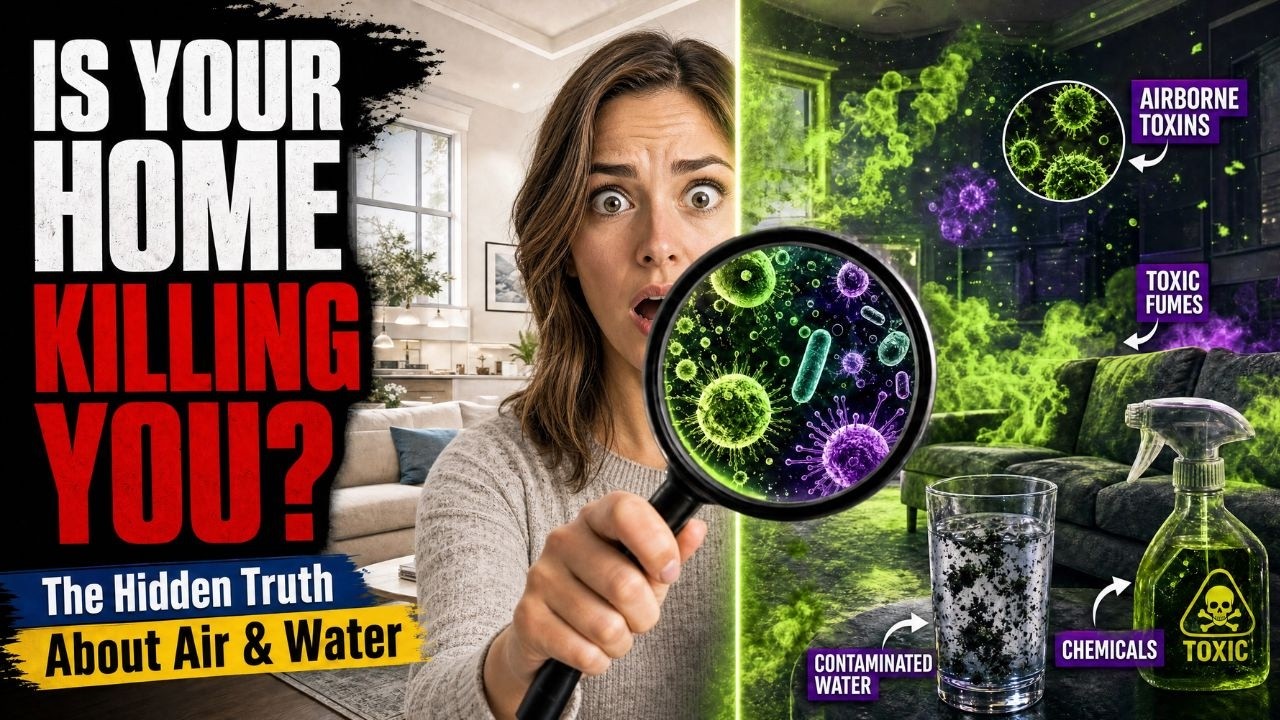
Helen Cristoni, Senior Vice President of Ideal Living, explains how tap water contaminants like arsenic and chloramines concentrate during cooking and damage gut health and fertility, while indoor air traps wildfire smoke and off-gassing from gas stoves for years. She recommends reverse-osmosis systems, shower filters, and HEPA purifiers with heavy carbon media to remove toxins.
Chapters
Today we are talking with my dear friend Helen Cristoni, who is the senior vice president at Ideal Living, which holds brands like AquaTru, Air Doctor. Most of you have heard of all of these. Uh, we are talking about understanding what your water source is like locally for you. How do you find that information? How do you find information on air quality locally? What steps can you do to ensure that Passively every day while you're living your life, your family is exposed to cleaner air and water, which you guys hear me talk about this so often. It is foundational and it's something that you can set up and never think about again. So let's dig in. I'm so, so incredibly excited to share this conversation with you. Helen has a really, really impactful story, a journey of her own. She is dedicated to this mission through and through. So let's dig in.
Helen, thank you so much for coming on the podcast. I am so excited to dig deep into your passions, your work, It is so meaningful, and I just value you so much as a leader and as another human. So thank you for taking the time to chat today. Thank you.
Thank you for having me on, and I'm really so excited that we have this moment to connect.
I know, me too. I'm so curious, and I've never asked you this in real life when we've spent time together, how did you get into this field? Is there a story behind it that kind of nudged the universe, nudged you along in this direction?
Yeah, you know, so I worked at Ideal Living, which is kind of like the parent company of Air Doctor and AquaTru, 25 years ago in the very beginning of my career. And I worked with the founder, Peter Spiegel, in product development. To make a long story short, I had this like passion addiction to beauty. And so I went and left and went into the beauty business for like 10 years. And found myself just kind of a victim of my own toxic burden from that environment. And so I had a bunch of health issues. I had very early menopause.
I was—
I learned that I was postmenopausal at like 42 years old. And the only reason I even knew is because I had severe osteoporosis and I'm a runner and my body started breaking. Like I had 2 hip fractures within 3 months. I had my ribs break. And so I was like, what is going on? In your 30s? No, this is my early 40s. Like, I'm just breaking. I'm like 56 now. So this is some time ago. And so, you know, and I called Peter because he's this like OG, practiced and studied Chinese medicine and acupuncture, and he knows so much about all this stuff. And I was like, you know, Peter, like, I'm having these health issues and I'm so freaking out, you know, like, I'm breaking, I'm like this broken pelvis, that broken pelvis. And he was like, you need to make sure you are purifying your air and you're purifying your water. And, and so, you know, cut to a couple years after that, I find myself in this like non-compete in beauty. And I had gotten very disillusioned with beauty over that time period and kind of realized what, how big a part of the problem I was. And so I came on board and, you know, just kind of casual. But then when I started learning about, and this is, you know, 7 years ago, I think I started really learning about the science and totally geeking out because of my personal story and realizing that women specifically and homemakers just are not understanding what's going on in their houses, what they're putting on their bodies, what their kids are breathing, you know, and like what people are drinking, what you're making food with. And I was like, oh my gosh, we need to talk about this. And so I just started talking about it, and here we are.
I love it. What a story. I echo this so often, but I think as a society, we're so adapted and accustomed to thinking, oh my gosh, we have to eat organic, we really have to be mindful of what we're eating. And it's true, we do. But I think we've undercut and discounted the things that we're doing all day, every day— breathing, drinking water— and these like hidden environmental exposures that are 24 hours a day. I would love for you to talk a little bit about that and just extrapolate on it because I don't think people know and appreciate the value.
So like my really big aha moment was when I ran my water report. And so for people listening, I, we have a site called ismywatersafe.com and you just go and you put in your zip code and it'll like run your water report for your municipality. And when I did that for the first time, like 6 years ago, I was just shocked at what was in my water. Like I, it bent my brain that I had like at that time it was like 13 contaminants over the health guidelines and everything caused cancer, you know? And now flash forward 6 years. So funny. Like I just ran it again this year to kind of refresh my slides cuz I'm out educating and I have things like arsenic, for instance, in my water in Los Angeles, in the foothills here. Used to be 200 times the health guidelines. Now it's well over 1,000 times the health guidelines. And this is not just me. This is all over the United States of America that we have arsenic, which is natural. This isn't just even additive. This is a natural thing that occurs in our environment due to all the horrific wildfires and disasters we've had. You know, it's increasing the arsenic. And people aren't thinking about it. When you look at stuff like, you know, what causes like infertility and heart disease and all these things, it's like arsenic, arsenic, arsenic. No one's talking about it. But what I think the big misconception is, is everyone goes to their tap, they fill up a pot, they put it on the stove. And what happens is all the contaminants that are in your water. And at this point in the podcast, if you've run your water report, you're probably like, oh snap, I've got like 20, you know, things in my water that cause cancer. Those all like 2 or 3 times, they multiply 2 to 3 times when they hit heat. So you're cooking, you're thinking we're programmed, we're boiling, it's clean. That arsenic in my water, that's at 2,000. Now it's at 6,000 times the health guidelines. So I have like arsenic mac and cheese, arsenic pasta, arsenic steamed organic vegetables, you know, like we're so contaminated when we cook and So that was my big like, wow. Like no mom wants to be serving this to their kids and their family. And that was really a big thing, which people don't know. So if you hear anything today, like contaminants do not boil out, they concentrate, and it's a real big problem for us.
Wow. And talk with me. So, you know, it's so fascinating because even myself, I'm guilty of, I purify my water. I do that I drink every day, but I don't necessarily think about the water I'm boiling for my kids' gluten-free mac and cheese or soup or veggies, whatever it is. And so basically we have to back up and retrace our steps a little bit deeper.
Yeah, it's more important actually. Like, we are ingesting so much of these things in all of our meals. And, and look, like I always try to say like I'm not really a fear tactic person, but I think like every mom out there cooking for her family needs to know that that water from the tap, it, this con— it really gets soaked up by our food and it's concentrated. And so I think it's just for moms out there, it's a big— or women that prepare food for anybody or men, like it's something that nobody really knows about. And it was a big thing for me. And so really just purifying what you drink and what you make food with. Is such a big change agent in our health. You know, if you just take care of it at home and most of the time we're using this and we're really being conscious, then it's going to set us up as a position of strength when we're out in the world, you know, when we're like having dinner out and that's fine. You know, the 80/20 rule, but what we do at home is so, so, so, so key to our health.
Yeah.
I always tell my patients, do what you can when you can so that when you can't, you don't have to. You know, it doesn't have to be this huge black and white thing that you have to stress over all the time. Talk with me too about water filters. Like, I know they're not all created equal. I know that I'm not gonna go buy a Brita and use that in my house. I'd love for you to talk with me about the complexity of that.
You know, so there's different types of water filtration and I'm now of the camp We are AquaTru, which is one of Ideal Living's companies. It's a 4-stage reverse osmosis water purifier and kind of our claim to fame is we were the first countertop reverse osmosis. So if like you're renting, if you live in an apartment, you know, you could just pour tap water in and get pure water out. So we now have things for under the sink all over the house. You know, the brand's evolved, but there's different levels of water, water filtration. So a pitcher filter like Brita, Look, it's better than nothing. And it's a single carbon filter and it's basically created to remove lead and remove chlorine and some chloramines from the water, which is important. Those are disinfectant byproducts. We don't want them chewing up our gut, but it's a very basic filter. When you go to like the attachment to the faucet on your sink or our refrigerator, it gets a little marginally better because you need pressure to really purify water. So like if you're somewhere and you need to pour something, like ditch the pitcher, go to the fridge, right? Like you're gonna get a better purified water from the fridge. But ultimately we wanna be removing all of the contaminants from the water. And that is exactly what reverse osmosis does. So like at Aquachew, we have a pre-filter and a sediment filter, then it goes through RO. And what does it even mean? So reverse osmosis, it separates the contaminated water from the purified water. And trust me, you want to be throwing out that contaminated water. Like that is why I think RO is so great. It used to get a bad rap because there's a little bit of wastewater you have to throw away, but I don't think with, you know, 23 contaminants that cause cancer in our water, we should be worried about like, let's just rinse and repeat with some little filter. Like I want it removed. I could put it in a non-edible plant. I could fill a vase of flowers with it. There's all kinds of things I can do. But not give it to myself or my family for sure.
Absolutely. And talk with me a little bit about shower contaminants and how that impacts people's health, because I don't think we think a lot about that either. We think about always drinking, consuming, but I think there's another layer that people might wanna be aware of.
Yeah, I mean, we— our water's treated with chlorine and chloramines. A lot of people don't know what chloramines are, so I'll dip into that a little bit. It's a combination of chlorine in ammonia, and it's found in cities. So like Miami, Los Angeles, a lot of the major cities in Texas, Washington, DC, like these major cities use chloramine to disinfect the water and it is really harsh. And so what it's doing is it's like breaking down the moisture barrier on our skin. You have a lot of people that suffer from skin irritation, eczema, psoriasis. It's only going to enhance and irritate those conditions. And also like taking a shower is basically the equivalent of drinking 8 glasses of tap water. So no one would be like, hey, I'm going to sit and drink like 8 glasses of like chlorine straight up water. You would not do that. And so I think just understanding how much you're actually absorbing— our skin's our biggest organ and then the steam we're inhaling, all of this stuff is not ideal. So a shower filter is really, really, really easy to put on, easy to use. And like once you start using shower filtration, you will not go back.
Yeah. Talk with me a little bit about— because I want to talk about air too.
Sure.
But I want you to tell me if people are getting started on this journey, a stepwise approach of maybe like the top 3 things they should consider. And then also on the flip side of that, in a perfect world, what would people be doing?
Well, from the water perspective, I think that, look, like if you can afford whole house reverse osmosis filtration, great. But I mean, that's like a $20,000 investment. Many people just don't have that kind of money they want to invest in their home. Typically people will prioritize something like a kitchen remodel or a bathroom, right, before they go in and they put a whole house RO in. So absolutely, it's so important. Like if you have a family, we have great under-the-sink units that make it really easy for a house. And, and they're not, they're a couple hundred dollars, right? They're not very expensive, but the health impact is is very meaningful. So cook and drink purified water. And then also if you have a whole house system, that's not necessarily reverse osmosis. Like there's a lot of like what I like to call rinse and repeat whole house systems. Great. Awesome. But at the, at your drinking and cooking place, you want to make sure that that water is RO purified and very important. So then when you go to the, into the bathroom, I love a shower filter. I mean, you know, all the money that we're spending on shampoos, conditioners, soaps, our hair. I mean, our hair dye, all the things that we do, it's like a game changer. And so if, um, you're a woman out there and, you know, you love going to the salon, it definitely will pay back dividends. Not to mention, like, the health impact. The absolute, like, I think from a contaminant, like, microplastics is a really big conversation. We have to start looking at plastic. And so it's not if we just stop drinking out of plastic, and we're all guilty, we grab an iced tea, like, I do it all time and I catch myself like I'm water Helen, you know, when I catch myself going for a plastic bottle and I'm like, you've got to stop, you know, like pick the glass. And so really try and look for glass while you're out. And also make sure like when we're grocery shopping, we should have our head on a swivel that we are like really understanding what is in plastic, because that's another place like in our homes where we can make some really big changes is just Looking for things like make sure they're in cardboard, make sure they're in some sort of non-plastic type container, and then we're really gonna start reducing our microplastics intake.
Right. And you know, I get studies in my inbox every day for thyroid and at least 2 to 4 times a month I see new studies about hypothyroidism linked to plastics, Hashimoto's linked to plastics. And that's like one little view. I can't imagine the extrapolated data across diseases. It's gotta be enormous.
I mean, they're— microplastics are everywhere, so they're finding them. I mean, it's a big issue with fertility, major issue with our heart health, cognitive issues. I mean, so finding them in all kinds of gross places in our body, like we're filled with microplastics. And so really it's a huge issue for our health. So like I said, when we're out, when we're shopping or we're buying things, especially in the grocery store, things that we're physically consuming. Just be aware.
Absolutely.
And it's those little consistent changes that you make that you can just replicate over and over and over again. You buy a different kind of mac and cheese for your kids. You still buy a mac and cheese, you have it on occasion, but you buy the same kind next time as you did this time. And you just— it's an evolution that happens slowly. I want to switch a little. Anything else that people should know about the water aspects that maybe I haven't asked, maybe I'm completely unaware of myself?
Yeah, I think it's really the gut health, the gut health piece. We have so many issues with gut health here, and so much of it has to do with us ingesting so much of the chlorine and chloramine because we're disinfecting our guts literally. So really, I think it's something that people need to keep in mind. And also, I always like to mention our fur babies. It's really important that our animals are having purified water too, or filling up their bowls. And healthy animals are great. Sick animals are expensive. Expensive, so we need to take care of them also. So I think just remember, contaminants don't boil out. Check your water. Is my water safe? And then start making these little changes.
I love that. Okay, I want to switch to air. This is like something I honestly feel pretty passionate about because I'm in the business of making people feel better with very low energy input into feeling better, and I feel like this is one of the easiest ways. People can make a dramatic improvement in their health and exposure is by passively sitting around and breathing clean air all day. So I'd love for you to talk a little bit. I know we focus so much on outdoor air. Even my car has like an air pollution monitor and it will clean it in the car, right? Like, it's great. But then we go into our house where we spend 18 hours a day and we don't really give it a lot of thought. I'd love for you to speak to that conversation a little bit.
Yeah. So indoor air is super— what happens is the air from outside comes inside and it basically gets stopped, like stuck in our homes. And so all the pollution from outside the roadways outside, any disasters that are happening, those contaminants come in and they stick and they can last for years. And so I like to always, since I've been in the seat, really educating on air quality. There has been disasters that have affected over 150 million people as it relates to air quality. And it's wild. Well, I started adding it up, you know, thinking like how many people have really been affected. And first of all, having a really great medical-grade air purifier is something that everyone should have in case of an emergency because when you need one, you can't buy one. And as a company, like for instance, last year we put 20,000 units into the community here at in Los Angeles at our cost, and we gave away thousands more. We were bringing trucks in for people, like they just could not get their hands on air purifiers. And so it's one of those things when you should have one so you can quickly create like a safe room environment in your house in the event of emergency. But in addition to that, you know, these contaminants, they stick. So last year's wildfires, we'll be living with those contaminants for 3+ years in our homes. Up to 1,000 miles from the event site. So, and these were really nasty, like, um, benzene and all kinds of things. And a HEPA filter is gonna do absolutely nothing for those contaminants. And so like grabbing a HEPA filter on Amazon or something that, you know, is just a single type of purification is really only half of an air purifier. So when you're looking at air purification, we need to really have carbon, thick, heavy carbon that pulls all these VOCs out out of the air. And that is the kind of like, you know, you were saying the disconnect about water. Like I go to my kitchen, I fill up my pot. This is the disconnect with air purification because people think, oh, I have a HEPA filter.
Cool.
But it's not, we need these carbon filters because the biggest threats are these gases, things in our home. So making sure that you have a really heavy, like a pound plus carbon filter in your air purifier, very important. And then also when you're looking at air purification for the HEPA, you want an Ultra HEPA filter. So HEPA, and I'm getting a little geeky here, but HEPA is the standard is it removes down to 0.3 microns. Ultra HEPA removes down to 0.003 microns. Like, why is this important? People see 0.3, 0.1, 0.003. The reason why 0.003 is important is because of virus. And so you need a really heavy-duty HEPA purifier to remove viruses from the air. And this is what keeps our fam— like families healthy during flu and cold season. Like they go to school, they come home, we're at work, we come home. We wanna make sure our air purifier is trapping viruses, gases. The really small stuff is what really, really can do some harm to us as far as our health.
Yeah. That's so crazy that it gets stuck in our homes. And I think too, like, it's getting worse, not better, because our homes are getting more insulated. They're made to be energy efficient. We really lock everything in and then it never escapes.
Yeah. I mean, it really does get trapped. I just learned that actually last year. Like I went to hear someone speak after the LA fires, you know, professor works at university in Colorado and it was really eye-opening for me to hear that these really, these contaminants from fires, they just last for so long. And so we are like here in the LA area, we're going to be dealing with this for years. You know, we're going to be dealing in this toxic soup. So it's very important. Like you stay vigilant. You need to continue to clear the, clean the air in your home because weather happens, you know, they're getting these lots cleared. It's just kicking up all these contaminants and they're continuing to just travel through our environment. So, you know, and then you have the small stuff like pet dander and, you know, mold spores, not small at all. We should really pay attention to mold.
It's important.
But those are fairly easy to clean from the air. It's the gases that we also contaminate our own air with. Like every time you go to your gas stove, this is another thing. Like we all have these big, beautiful professional gas stoves with high BTU. How often do we turn on the vents?
And my vent just recirculates, like it goes through that little filter thing and then, oh, and it doesn't, it comes right back into the house.
My house.
Yeah.
Oh my gosh.
Okay.
Yeah. Like, so you need to be venting this gas. It's like pumping into your home and people are all like, you know, Air Doctor. One of the great things about Air Doctor is it cues you into the behavior in your home. So, you know, you have it on, it's got a little light and it actually gets really cranky. So like, for instance, every time I blow dry my hair and I put, you know, heat to hair product, I am emitting all kinds of volatile organic compounds into my environment, right? Like Hair is Hero, the air purifier's on, it has me. But like, she gets so mad, you know, every time I blow dry my hair. Also when I'm cooking, you know, it'll kick up, it'll let me know something's wrong with my air. And I think that like that peace of mind that you start to really understand the behavior in your home and you really realize like, wow, we pollute the air in our homes a lot. So I think that our products really interact with people we try and make them as affordable as possible so people can really have them in multiple rooms in the house. It's very important that you, you purify in your bedroom. I always say where you sleep and where you gather, those are the two most important places.
Absolutely. Yeah. It's so interesting. I mean, I'll make something in the kitchen, not burning it, not doing anything crazy. And my air doctor that is on the absolute other side of my house upstairs, in a game room will, will kick on. And I'm like, I didn't— don't smell anything, had no idea that these things are circulating. And it really does speak to we're just passively walking around and we're not informed enough to know, right?
Yeah. And I think it's like, I love the behavioral because then, you know, like, I mean, if your kids are playing with something or your dog's into something, you know, you're really clued into, hey, this is probably not good for me. And the blow— blow drying your hair is a perfect example. Not good for me. I'm off-gassing all that stuff. I shouldn't be breathing that stuff. And getting back to carbon, a lot of carbon filters in these air purifiers are glued on. They're like little cheap— carbon isn't regulated. And so you really wanna make sure you have something substantial. So if you open your air purifier and you see it's like a little film of nothing, it is nothing. You wanna really be able to see a nice thick carbon filter in there, because that is like, we're starting to say now in our marketing, like a HEPA purifier is only half an air purifier because it's these gases that are really doing damage. Like candles, food-grade paraffin, it's petroleum. We're literally like lighting petroleum in our homes. And everyone loves a beautiful candle, but you know, not when they're messing with our hormones and their endocrine disruptors and all these things.
So yeah, absolutely. So knowing that this is such a big piece of the puzzle— preventative health, maintaining your health, longevity, healthy aging, healthspan, lifespan— why do you feel like this is missing from the mainstream media conversation? But it also is— I mean, it also is missing in the medical kind of paradigm as well.
A lot of things are missing from the medical paradigm. A stat that I really I talk about frequently that you don't hear is that 1 out of every 2 men in the United States will develop cancer and 1 out of every 3 women. And we hear about the 1 in 8 for breast cancer and that men under 50, you're more at risk for prostate cancer. And we hear all these things, but we're not hearing the 1 outta 2 and the 1 outta 3. And so that is like, why isn't anybody, everybody talking about that? And when you start digging in and Unfortunately, like I've lost some people so dear to me to cancer. Only 10% have a gene. And so, you know, you go to your doctor and what do they ask you? They ask you, does cancer run in your family? I mean, okay. Yeah, it might, but only 10% of cancers today are associated with the gene and everything else is environmental. And so wherever we can reduce the toxic burden, especially in our homes, we're reducing that persistent toxic burden. And that is like a little bit of candle smoke, a little bit of microplastics, a little bit of tap water, a little bit of shower water, a little bit of contaminated air, you know, day after day, year after year accumulates. And so that is what we're trying to really educate on. Like if in our home where we spend 80% of our time in bed, if you, if you really make your bedroom a sanctuary, You've checked a big box. And then if you really are dealing with your sink and the water that you cook with and you drink with, you check another. And, you know, I really think it'll have a tremendous difference on people's health and longevity.
So I know you've talked a little bit about healthy home swaps. Anything like, think about it too from— I always like to break things down in a way that isn't overwhelming for people, right? Especially my, my people are tired, right? They're exhausted. They can barely get up and put pants on every day. So kind of taking them through the top 3 to 5 most important things that you would start with. I'd love to— for you to recommend some specific AquaTru products because it's so helpful when people can be like, okay, I'm going to go look for this. This is where I'd like to start. This resonates with me and it just gives them leverage.
Yeah, I mean, we have AquaTru Carafe and it's a little pitcher. You have a little glass pitcher which everyone really likes and it's It's really beautiful. You know, you could take it to your dinner table and it's easy. So I think Ocotu Craft is our best-selling product and it's a great place to start. And it's like making a cup of coffee. I mean, a pot of coffee. It's basically the same thing. So everyone knows how to do that. Check that box. And then where you sleep, people are really tired and they can only afford one product for air. I'd recommend the Air Doctor 4000 because you can push it around your house literally with like a finger. It's not heavy. It cleans up to 700 square feet. It's on these cute rollers. It comes in white, it comes in black, and it's a very easy, accessible air purifier. And so 700 square feet, it'll work about just any room. And the movability of it, I think, is really key to me. And I didn't really— it's so interesting because we have 5 or 6 models of Air Doctors. And I didn't realize how much I'd love how it rolled until I got it in my home and I was like, wow, I could like roll this through my living room to my dining room or across the hall into like, you know, the, like where we work out. So the, I think the Air Doctor 4000 is so awesome for that reason specifically. So you don't not have to like lugging this big thing around. And then I lately really big on organic sheets, organic bedding. We spend a lot of time in our home. So if it's like viscose, no, you know, like where we're sleeping should really be 100% organic cotton. It's 100% organic bamboo. Let's just make that bed as purified as possible because we're really spending most of our time there.
Yeah, absolutely. And even that extends to the mattress. It extends to Yeah. The pillow, right? All of that off-gassing, the air purifier can of course clean it up when it's circulating, but you're breathing it directly.
I mean, you're literally like in this like bubble in your bed and we wanna make sure that that bed is as pure as possible because we're really spending so much time there. And then of course there's the cleaning products are a big offender. If you can't pronounce something on the back of the bottle, you shouldn't be buying it. And you know, that's hard for people. It's hard for people to really kind of break up with their favorite cleaning products. I get it, but just one, I would, I would test, like there's a really great company called Truly Free Home. You know, they've got a lot of great cleaning products. We think they're amazing. They're great friends of our company. And so I think wherever you can in the home, make it a little cleaner. That is where I would go.
And yeah, then you rinse and repeat. You make the decision once. You rinse and repeat for the ongoing future. Next time you go to buy something, you make that decision once and it becomes— again, it becomes natural, it becomes habitual.
Yeah. And look, like if you're blow drying your hair, just make sure you have an Air Doctor close by and it'll just like suck all those contaminants out, you know? I mean, like there's some things that we're going to continue to do, right? So like we also have to be realistic. And so just think about placement and the learning. I think the behavior is so important. So just being aware you know, that's so key.
Yeah, I agree. I want you to tell us where people can find out more about Air Doctor, about AquaTru, about you, your mission. Any other tips too that, you know, I loved the, the website for analyzing your water. I literally did that at my parents' house a couple of weeks ago. I went and I'm like, this water is horrible. What is in here? And everything, everything was in there.
So yeah, ismywatersafe.com and isyourairsafe.com. We have one on the air side too. It's more about outdoor air. And I think like you can always— we're so social at Air Doctor and AquaTru, so you can find us at @airdoctor, @aquatru. And then I'm @helencristoni. And our, our mission is really that everyone has the right to pure air and pure water backed by actual science. So Air Doctor and Aquachew are two of the very few companies in the space. We post all of our NSF certification. We've spent money to validate all of our science. We are very transparent and tested and certified mean two completely different things. Tested typically means that you failed and certified typically means that you passed. And so I think really understanding that is there's so much smoke and mirrors in this industry, like especially in water. Like tested. You want to be certified.
I had no idea. That's—
yeah, like you want to make sure that people like with air, that they really have their certifications like CARB certification and NSF certifications for water. So we have everything on our website. Everything's posted. We're a highly transparent company and I'm always available. I always say that everybody can get me on my cell phone. I'm not kidding. But I'm always on. And yeah, I mean, everybody, like, honestly, but @HelenChristoni, DM me, ask me questions. We're always happy to help.
I love it. Well, thank you so much for spreading this. It's incredibly valuable information that everyone needs to hear, but certainly my people who have to work a little bit harder for their health. And thank you for your passion in doing it. And just, I know it impacts so many lives in a positive way.
Oh, thanks, McCall. It was so nice to spend time with you today.
More from McCall





Is It ADHD or Your Hormones? The Thyroid & Perimenopause Connection with Dr. Jolene Brighten





Still Sick on Thyroid Medication? – The Shocking Truth Doctors Aren’t Explaining with Elle Russ