
Moiz Ali sold Native for $100M and discusses what he learned. He runs a "hire fast, fire fast" culture, keeps customer service teams in-office, and warns that most D2C brands are dangerously dependent on Meta ads. He thinks grind culture is overrated and strong mentorship is underrated.
Chapters
Today I'm sitting down with Moiz Ali. Moiz built and sold Native to a $100 million deodorant brand to one of the biggest consumer conglomerates in just 2 and a half years. Moiz is a legend. We'll talk about why you should build a profitable product, not a brand, how to stay lean even as you scale to $100 million, and why chasing repeat customers is way more valuable than any vanity growth. Let's jump into it.
All right.
Moiz, first of all, thank you so much.
My pleasure.
Genuinely big fan of you and your work. Been following you a long time. Limited Supply, Native. And I do want to say thank you. Special shout out to Ramon who brought you here. So thank you, Ramon. So first of all, I just am excited to chop it up with you. And I think we don't have to go too much into the Native story because that's probably very well documented.
Yeah, yeah, I think so as well.
I've heard it many times. So I guess we'll just start with like Where are you right now? What are you up to?
Great question. Um, I think I'm up to a, uh, a bunch of random things. Uh, one is I'm trying to spend a lot more time with my family. And so, um, you know, I'm organizing, uh, family vacations on a monthly basis now. And I like, I've got to do all of the legwork of being like, okay, what flights do you, what time do you want to leave? What time do you want to leave? Where would you like to go? And then plan an itinerary for like 10 days for someone who's 1 year old and someone who's 89 years old.
Amazing. How many people in the family?
I think like 11 of us now are traveling. And so, um, it's been a lot of fun actually. And I don't think it seems like a silly thing, but it seems like, um, a small thing. And then I'm like, the amount of time it takes to like find a place that everyone's going to love, an itinerary that people are going to really enjoy. It takes so much time actually. And so I'd say I spend more time than I'd readily like to admit on planning vacations for other people. But then I'm still involved in e-commerce in random ways. Like I sit on the board of a company called Thrasio, which is an e-commerce aggregator.
You know, uh, it went bankrupt.
I wanna say in like 2014, or I'm sorry, 2024, maybe 2023. I joined the board right after it came outta bankruptcy and we've just had to rationalize that business.
Yeah. Thrasio, Amazon aggregator.
Yeah. Amazon aggregator that had brands from, um, This Mouths Hates, like, uh, which was a stain removal company, which just sold to Arm Hammer for $325 million maybe 2 weeks ago, to a nail clipper company.
And it's just in the Thrasio portfolio.
This is in the Thrasio portfolio right now. Well, you know, Miss Mouse isn't any longer because we sold the business. Yeah, yeah, yeah. But, you know, that was a really interesting experience because I'd never been part of an organization that had such formal management, like, you know, genuine CEOs, genuine CFOs who had a lot of work experience and a business that sort of wasn't headed in the right direction where we needed to turn the ship. And so I spent a bunch of time doing that as well over the past, I'd say, 24 months.
Huge. So what percent of your time is at Thrasio, Moiz?
It varies a lot. Like sometimes it's as little as like 4 hours a week and sometimes it's as much as 20 hours a week. Uh, based on like what we're doing and what we're, you know, are there any brands that are on fire, uh, like in a good way? Are there any brands that are on fire in a bad way? Or is there anything happening at the company? Like, you know, we were negotiating this transaction and that took a lot of board time. And so all over the place, but I'd say like post-transaction being closed, it's been quiet for 2 weeks because we were all busy for, you know, the last few months making sure this, uh, this transaction got through.
And I know you're still investing in your own capacity as well.
Yeah, that's right.
So what have you been up to in that space? Whatever you're allowed to share, obviously.
I'm allowed to share everything because it's all my own money. So like, you know, I don't, I have no preconceptions of that. Um, my last investment, I probably, I would say that like a post-Native, I think everyone who runs a business wants to start being an investor. And the way they start being an investor is by writing really small checks and trying to figure out what happens. And so I wrote, you know, anywhere between $25,000 and $100,000 checks or maybe $250,000 checks in, you know, 3 or 4 dozen companies, uh, right after And a lot of those businesses are coming to fruition or will be coming to fruition soon. Some of those businesses have disappeared and some are doing well and will continue to do well. I'd say probably in the last 3 or 4 years, I've got, uh, like I'm no longer interested in writing small checks that generate good outcomes, but good outcomes that aren't necessarily meaningful for me. Like if a $25,000 investment becomes $200,000, that's an amazing outcome. Like this is almost 10x'd. That, that's really spectacular. But at the same time, like I'm less interested in that type of outcome. And as a result, I'm probably less interested when they send out, when they send out investor updates. I'm less interested in the trajectory of the company. And so now I'm trying to write much larger checks, but far fewer of them. And so my last check was into Mercury, which was—
I saw you tweet about that.
Yeah. Which was a crazy—
That was hilarious, by the way.
I like, um, I just tweeted at the CEO and I was like, I use this product and it's amazing.
I want to, I want to invest $5 million. And I required no diligence.
And he gave me no diligence. He's like, are you serious? I was like, yeah. And probably like 2 months later, he's like, okay, we're raising from Sequoia. Or maybe I read something that they were raising from Sequoia and I was like, what's going on? Are you guys raising? And he's like, if you're interested, I will send you the doc. I'll connect you with someone on our team and send you the docs. And all of that happened. I had no diligence. I got the documents, I signed the documents and made the investment and seems to be going well so far.
I would think so. Yeah. Yeah.
Do you use Mercury at all?
Yeah, we do. Mercury and Ramp, by the way. Gotcha. Um, so, okay, so you're in, you're, you've got Thrasio board and you're making investments. Is there a third bucket or are those really the two pillars?
Those are probably the two pillars. I'd say I'm trying to figure out what I want to do with my other time. Like I got slightly excited about the mayoral race in New York City. I'd say last year I got— I shouldn't say slightly. I got very excited about it.
Everyone was pretty excited.
And so I did a bunch of—
Especially if you're a brown dude.
Yeah, that's right. Especially if you're a brown dude. And so I'd say that it's almost been 6 months or it's been 6 months since Suran was sworn in. And I'm trying to figure out what role, if any, do I want politics to plan my future.
Okay. Interesting. So I guess like you did what a lot of people want to do, which is have a headline exit.
Yeah.
And, you know, we already said, you know, the story itself is documented.
Yeah.
What was the feeling that you had when you made that exit?
Yeah.
And I've read somewhere that the money doesn't motivate you anymore. What motivates you is building.
Yeah, that's, um, I would say that the moment that I had that exit, um, there was somebody else in the room and they took a bunch of photos, When like the, you know, when we got on the closing call and the person and like everyone went around the room and said, yeah, we're closed. And that was a really amazing feeling because I was like, wow, okay, this business that we were building has now had an exit and an exit that we can be proud of. And that like, you know, is the exit that I in, in many ways wanted. Like I would say that in my, during my tenure in e-commerce, which was 20, you know, you said you were in e-commerce for about 10 years. We were at the cusp of people still raising a ton of money, but entering a phase where people were raising a lot less money.
Yep.
And potentially no money and people realized that, hey, I don't need VC investment, uh, to generate a great outcome if I don't wanna build, like, you know, Michael Dubin got that with a billion-dollar exit with Unilever and Dollar Shave Club. Like, you know, he raised a lot of money and he had this amazing exit. I would say that that happens far less today than it did 15 years ago, 'cause there's a lot less VC dollars coming into the business. But also I, I felt like I was paving my own way in e-commerce 'cause I was like, we're not gonna raise a lot of money because I don't understand why we would need this money. We are, we're a profitable business.
Exactly what do you need it for?
We don't have a ton of people. Like, you know, I talked to other people in e-commerce and they're Like, our team is 45. And I'm like, we have 4 people here. What are you guys doing with 45 people?
Literally.
Like, are you packing your own stuff? And they're like, no. I'm like, you have a, an operations department with this many people and you're selling 3 products? Like, what is, what is so complicated about this? And so I would say we were like early on in the e-commerce, if that's e-commerce 2.0, that e-commerce 2.0 curve.
Yeah.
There were other brands with us, like Tuft Needle was doing something like that.
Yep.
So was this guy named Jake at MVMT Watches. And I remember all of us would chat and we'd be like—
Is that cohort?
Yeah, it was that cohort where we're all like, what's going on with, like, you know, everyone else raised a ton of money. HonestCo is raising a ton of money. We're not doing any of this.
What are we doing here? Yeah, exactly.
Are we doing the right thing or are they doing the right thing? We have no idea.
Exactly.
And, you know, I would say that it was harder for us because, you know, everyone else was raising a lot of money and had a lot of, you know, big offices and, you know, everything looked fancy. And if you came to our office, when we sold our business, P&G came over to the office and they're like, I'd written the word Native with a Sharpie pen and just taped it to the front of the door because the office building was like, it costs $800 to make your name really nice on the office door and I was like, I'm not gonna pay $800.
Yeah. Yeah.
Like, what do I care what it looks like? A Sharpie pen is perfectly fine.
Totally.
And I was like, we're doing this. Honest Co's raising a ton of money. Who's right and who's wrong? And so I would say that when that happened, it was really incredible moment. 'Cause I was like, okay, I feel like I was right in all of the decisions I've made in the last 2 and a half years of not raising money and building a more frugal business.
Do you still have that mentality today?
I definitely have that mentality. I would say that like, um, you were, you were asking about the money.
Um, yes.
I would say that the, that elation lasts about 30 seconds. Like, I still remember the moment I was outside the Ferry Building, and I was looking at my phone constantly to see when the wire would hit. And it hit, and it like looked amazing because, you know, there was some, there was maybe like $20 million or $10 million in escrow. I don't remember how much. It's probably $10 million in escrow. And the rest of the money like hit my bank account. And I was like, oh my God, this is the largest sum of money I've ever seen on a bank account. And then I was like, okay, well, I— yeah, exactly. Like, this doesn't matter anymore. We're still going to go eat dinner at the exact same spot. My family had flown in. And we all celebrated and got like Thai food that day. And that was really great. And, you know, afterwards you're just like, okay, I'm gonna still live my life like the way that I liked living it, which is doing things that I like to do and not doing things that I did. You know, I was like, I didn't wanna raise a bunch of money and I didn't, you know, I was like, I'm gonna continue doing what I think is right for me. And so it wasn't that like, um, it wasn't that defining, I would say, which is disappointing cuz I, I really thought it would be such a change in my life. And, you know, Robin Williams has this great quote where he is like, I, I want everyone to get rich and famous so they can see how like disappointing it is or how pedestrian it is. And I certainly am not famous, but like I, I was wealthy or I felt like, well, I was wealthy and I was like, this is, he was right about that. But yeah, I think I continue to live my life that way. Like, you know, when I make invest, you know, I'm still very frugal when it comes to things.
You probably know a lot of people that have exited their businesses, right?
Yeah.
Is that the common feeling?
I would say it really depends on how you grew up and the chip on your shoulder. And there are people who are like, fuck this, I want that private jet. I want to go— like, they become Dan Bilzerian overnight. And honestly, I have no, like, judgment towards that. If that's the lifestyle you want, you should live it. You've worked really hard and earned something, like accomplished something that's really difficult to do. If you want that private jet and all those girls on the plane and, uh, you know, a villa in Ibiza, more power to you. That's amazing. I would say it's fewer people that want that than I've realized. Like, you know, I would've expected more people, including myself, frankly. I was like, That's what I want too.
Yeah. You're gonna get the yacht.
Look, I used to watch, uh, when we were selling the business, I'd watch like a clip of Wolf of Wall Street every day on the walk to work. And I'm like, this is gonna motivate me.
Yeah.
Like, uh, you know, Leonardo DiCaprio talking about money. He's like, I want you to solve your problems by becoming rich. And I was like, this is me. But like, you know, I, I would say that didn't happen post-exit. And I would say, oh, there's far more people that I've realized post-exit are like, okay, life is pretty ordinary than people who are like, I want that. You know, I want the yacht and the private jet and the women.
First of all, amazing. I was going to get into this later, but you brought it up, so I'm going to do it now. You brought up how you grew up and the chip on your shoulder. I was talking to one of my friends yesterday who, he runs a venture fund. He just raised, you know, tens of millions of dollars and they invest in early stage companies. And I asked him, you know, what do you look for? Like, what do you, you know, everyone's got a startup, right? Yeah. And he basically said that the only questions I ask now are about the founder. And he told me, you know, I go straight for, how did you grow up? Like, what was the environment you grew up? And what's the chip on your shoulder? Meaning like, why are you built this way? Or how are you built rather? And so I want to ask you that because clearly you're built differently. So what is the chip on your shoulder?
I think it must be really interesting to be like, to be pitching someone for money and they're like, how did you grow up? I'd be like, wait a second. This is the business I'm running. What are you talking about? How did I grow up? But I totally understand that. Like, I understand why he's asking that. You know, I grew up, My parents, I was born in Pakistan. We moved to the United States when I was 3. And, you know, we grew up certainly not dirt poor, but certainly not wealthy. My dad had his textile. He was an entrepreneur in many ways. Originally, he owned like a tea garden in Bangladesh. Then he started importing textiles to the United States. And somewhere in like the '80s or early '90s, you know, I get the way he tells it. I never verified any of these facts. The Chinese industry, like the Chinese textile industry, was opened up to the United States or like, you know, started selling them to the United States and it made it so that he could no longer be price competitive and his business basically went out of business. And then he bought a gas station. And so we all worked at this gas station growing up, like my brother did, I did, my parents did all the time. You know, if you put me in front of a gas station, if you put me in front of a Ruby register today, you know, by far the longest career I've ever had is gas station attendant. I'm 41 right now and, you know, I could run the cash register without looking at it today. Like, that is how good. Like, I remember the entire gas— like, you know, I remember that layout and I could run it right now. You know, I'd say that working at a gas station and seeing your parents work at a gas station and really try and give you a better life makes you realize how valuable hard work is and also how much you want to get out of this cycle of like working really hard to be able to provide for your family and not being able to enjoy time with your family. Like, I'd say one of the hard— like, you know, one of the things that I feel so guilty about today is my mom has a bad knee. And I think the reason that she has a bad knee is she stood at the counter every day for for 20 years working at a gas station. And, you know, I was probably too young to be able to do anything about it back then, but that's not the case today.
Yeah. Hey, I'm Anish, and I just want to quickly give you more context on the world of Elevator. Elevator Goods is where we build our brands from the ground up, owning the product operations and growth. Elevator Capital is where we invest in brands worth betting on, backing founders with capital, mentorship, and connections. Elevator Talks is where we document it all, sitting down with operators who've actually done it, going deep on their frameworks, their numbers, and the decisions they made to move the needle. Elevator Creators is where we help creators build brands, leveraging their audience and turning them into a real business. The Studio is our private members club with its first location in Hong Kong, built for founders and operators who want to be around people building at the same level. If you're building a brand and you want the systems and the playbooks to do so, you're in the right place. Check the link in bio to learn more. So last but not least, thank you so much. Please subscribe because that will help us a ton in getting you better guests and more wisdom and more value. We really appreciate it. And back to the show. Okay. So looking ahead now, you're obviously so active. Again, I follow you in multiple channels. I see what you tweet about. Like you're clearly in the game. You know, you're asking questions. Facebook was down the other day. I saw you post about that. That's right.
Yeah.
Yeah.
You'll still get charged is what I said. Yeah. The impressions won't appear, but you'll be charged.
And by the way, that was true.
Yeah.
So what are you seeing right now? You know, let's, and just for comparison, right? You started, I wouldn't say it was like you, like you said, e-com 2.0 was your cohort. I would certainly say it's kind of like 3.0, potentially even 4.0. Like the way I, the way I describe it in my head is like 3.0 is kind of post-COVID, but then certainly another inflection is kind of post-AI. Right. What are you seeing right now?
I think, um, one is certainly more competition and less nice guys. And the way I say that, the reason I say nice guys is Facebook used to do this thing where back in the day there'd be an outage and they were like, we're issuing you a refund or something. And then the other thing they would do, you started in 2015, you mentioned the next day your ads would be incredible. You're like, you had an outage yesterday. Today, I don't know what it was. They're like, we're going to be super kind and maybe not make money because we messed you up yesterday. Did you notice that?
I did. And by the way, something so funny, a couple days ago before the Facebook outage, I don't know if you also, you probably do, but Shopify went down.
Yeah. Yeah.
And what happened after that, like literally was the most unprecedented mind-blowing experience I've ever experienced myself in this industry, which was our Facebook ad account. All of our winners became losers. And I don't know if this was universal, but I, I did speak to a lot of people who had the same experience. And it truly shocked me. And we, you know, messaged our Facebook reps and they, we just couldn't help in any sense. But yeah, to your point, they don't really care anymore.
Yeah, they used to be a business where I felt like they were in it with you and like, yes, they were charging you. Like, you know, there was the toll that you paid Facebook, but, uh, they were in it with you. And then like, you know, when something happened, they were like, how do we make this right to the community? Those days are definitely behind us.
Yes.
I'm not sure, like, I don't know what version of e-commerce we're on. Like certainly 2.0, like, you know, was the era of Shopify. Shopify and Shopify growth. I think that might've existed in, you know, COVID was a lot of ups and downs and really cheap Facebook ads and it made and broke businesses, but it also like all evened out a few years later. You know, you were, if you did real, like, you know, you did well or you didn't do well, sort of the business became, uh, went to BAU as Facebook would say, uh, business as usual.
Yeah.
I think that like, so one, I've seen Facebook become a lot less reliable and I've had conversations with pretty senior level, uh, level people at Facebook where I'm like, The number one complaint everybody has in my industry, and I see, like, you know, I still look at ad accounts from a bunch of people that I have invested in. I'm like, is the volatility. Like, there's crazy vol going on in Facebook and it makes no sense, especially this year and probably since April. Like, the volatility has been bananas.
It's the craziest thing I've ever experienced.
Like, uh, it's a roller coaster. You're like, this is a great day and, um, tomorrow could be my worst day.
My business partner who's sitting right there, he was late. He literally tells me before he meets me in person, he checks our ROAS to know if I'm going to be in a good mood or a bad mood.
That's out of control. That is so funny. I was dating this one girl a long time ago who was a trader at Credit Suisse, and I was like, is your mood reflected on how you're doing that day? And she's like, it's 100% correlated.
Like, it has to be.
And no matter how old I get, I find I feel the same way where I'm like, okay, things are going— the market's up, I'm making a lot of money today, I'm having a great day. The market's down, I feel terrible. I'm like, and I don't even like, you know, I'm not selling, I'm not actively I'm not trading anything and I still am tied to the market in that way.
You're not operating a brand yourself right now?
Correct.
How many ad accounts do you have access to?
Maybe 10, maybe 15. I don't know.
Is that—
I look through like 5 ones that spend a lot.
Are you in every day though checking, or is it like periodically?
Every day.
Okay. So you're clearly interested in— Yeah.
It's Saturday and I've spent time already. Like, you know, I did it this morning.
Yeah.
And I will tomorrow. Like every morning I probably wake up at 6:00 AM and it's the first thing I look at, which is what does the vol look like today?
So what do you say to Businesses that are reliant on Meta?
I would say that you should just continue to be reliant on Meta is actually what I'd say. And for a few reasons, uh, that's a great question though. One is, uh, one of the other trends I've noticed is how much Facebook has almost come full circle. When I was running ads back at Native, I would do like a campaign, but I'd do one ad set, one ad, and I'd be able to control my spend on every single ad that way. And it's like, you know, people would be like, no, you have to do multiple ads in one ad set. And I was like, this doesn't make any sense. I've tried this. This is, you know, Facebook is optimizing the wrong ad and spending a ton of money on it. This makes no sense. Then there was a period in like 2023 and maybe 2024 and possibly 2025 too, or like, you know, early 2025 where you put a bunch of ads in one ad set and you let Facebook make the decision. And now I feel like we've gone back to a phase of, again, one where you're running a campaign, one ad in one ad set. Do you feel that way or not? Or do you have like a— sorry, tell me how you feel.
The problem is, as we've kind of discussed, it's changed so much. So I don't know how I feel. So, you know, I'm like you, I'm in the ad account every day, but I'm not the media buyer. And frankly, I've never done media buying, but I sit on the marketing side of the business and I'm in the ad account and I talk to our media buyers. And what freaks me out is the volatility and the changes. And then, like I said, winners become losers all of a sudden because something broke. And I don't know if you remember this, but also last Q4, like, you know, 6 months ago, AWS went down one day. Cloudflare went down one day.
Yes.
And I'm in this like constant constant state of like anxiety and panic. And yeah, the reason I'm asking you of the Facebook reliance question is because, you know, you've exited a business before. Now obviously your business had a tremendous retail footprint.
Sure.
Which is a huge differentiator. But I always hear today people say, you know, ditch the Facebook reliance, or if you want to exit one day, you can't be reliant on Facebook. First of all, I don't know if I agree with But second, I can't really imagine a world where I'm not reliant on Facebook because of how powerful it is. Like I've truly never seen a platform where you can scale from $10,000 a day to $100,000 a day to $1 million a day in ad spend the way they can do that.
Yeah.
So yes, you're reliant, but at the same time it works.
Yeah, I think, um, you're absolutely right. Like, you know, people would say this, it's not a new thing that people say in 2015, people would say that to me. They'd say, you're only good at this one thing and when it breaks, um, your business will be over. And that wasn't the case, but, uh, you know, certainly it was a fear of mine and part of the reason that we pushed to sell, 'cause we're like, okay, if this ever breaks, what will we do for this business? But, you know, those were early days with Facebook ads and like the benefit was they were cheaper probably and there was less competition. But the other thing was you didn't know where it was going to go. Like, was it going to continue to be as strong and as monopolistic towards people's eyes as it has been. Like, you didn't know that in 2015 and 2016. In 2025, the amount of time people spend on Instagram, like, you know, of course it's so, it's the dominant platform. And, you know, they're really good at now we've realized at mimicking other platforms such that other platforms have a really tough time like surviving. Like, Instagram was going to die if not for copying stories that, you know, that Snapchat had coming out with reels and, you know, You know, a very TikTok-esque experience was something that they adapted after TikTok was created. But yeah, I think that you're right. There's nowhere else that you can go to create something, to create a brand as valuable as you can with Facebook. And so your greatest strength is also your greatest weakness because that's what you're relying on. But there's literally no, like, you know, yes, I would love for, if someone came to me and said, I think you should be less reliant on Facebook, my first question would be, where should I go? And no matter what that person said, I'd be like, you're a fucking idiot. You know, like, I'd be like, no, that's not, uh, like that is not possible. There's nothing like it.
So you would invest in a company that's 100% Facebook Live, maybe not 100%, but it's their dominant channel by far?
Yes. Yes.
Okay.
I would say the hard part about e-commerce is the businesses that I would invest in are almost certainly the businesses that will never need investment. They figured out how to make it profitable. They have a repeat purchase rate, so their customers come back and this, the founder's earning money hand over fist and doesn't know what to do Or not even earning money hand over fist, but it's like, look, I can make $50,000 a month right now. If you give me all this money, what am I going to do with, like, you know, give me $1 million or $5 million. What am I going to do with that? Like the only thing I can think of is secondary, like take some secondary so that you can take a bigger swing at the business. And, you know, I would do that, but otherwise generally e-commerce businesses that are profitable often don't need any cash.
Yeah, it's actually so true. And it's a big, I think, myth that e-commerce businesses need cash because There's no reason that they shouldn't be profitable like within a year, in my opinion.
That's right.
Yeah. I'm seeing a lot of e-commerce businesses now. Their strategy is just get their target LOS as low as humanly possible. And sometimes that means their marketing spend is above 50% like of revenue, sometimes 60%, maybe even more. Is that an investable business?
That is a very, very scary business. I would say that there are businesses that I know of that spend—
But still profitable.
That have like, um, you know, ROASs of 0.5 and are still making money because they've got brick and mortar diversification. Like, you know, the honest answer to what should you do, uh, to diversify off Facebook? The only good answer to that actually is be in brick and mortar stores. And that's not really a diversification. You still need Facebook in order to drive that brick and mortar sale growth. But I think that if there was a business that, uh, spending 50 or 60% of their top line on— When you say 50 to 60%, do you mean overall business or 50 to 60% of their overall revenue or their D2C revenue?
Overall, $1 comes in, 50 cents goes to Facebook, maybe 60 cents.
You know, there's a great line in Star Wars where they say only a Sith speaks in absolutes. So I'm not crazy enough to say I would never invest in that business, but it'd have to be a really compelling business for me to, like, you know, if you're Casper Mattress or Nectar, like if you're running one of these furniture stores or mattress companies, it totally makes sense that you'd spend 50% of your revenue on marketing because your goods are probably 10% of the cost. And, you know, that margin that you're going to earn is such a big dollar. It's such a big N right there. And so I can understand, I can see them doing that. But in general, if you're like a CPG company, I think you should be anywhere between 25 and 33, maybe 25 and 40 these days, but not more than 40. And like, even today when people are above 40 in CPG, I'm like, this is a lot of gross year-over-year growth rate.
Yeah. But just again, just to clarify, like there's still profitable. Yeah, they can say like, and you had asked me who's my favorite episode I've done so far. Yeah, I won't say it again on camera, but like the person I mentioned, yeah, is a 60% ROAS or 60% marketing person, but he's making a ton of money.
You know, there's a lot of businesses that'll make a ton of money. Like, like, I don't know if that's a good— that's, that's great for him, but I don't think it's a great investment for you, which is he will make a ton of money, but at some someday that money will, you know, fall off of a cliff because people won't like that brand anymore, or like that, that is not a brand that has sustainable value. And I feel like there've been a lot of those actually in D2C where, you know, there's big CPG brands that grow and I'm like, this is a vitamin supplement business. And you can see, like, you know, the vitamin supplement businesses often go like this. And I feel like, um, whenever I see them, I'm really cautious because I'm like, I've seen a lot of vitamins be the hot trend and then sort of disappear right out of it, like disappear. Like we We, we completely forgot about that brand. And, you know, I don't think Athletic Greens is one, but what happened to Athletic Greens? Like, you know, they were huge 3 or 4 years ago. They were everywhere. Everyone was talking about them. You don't really hear, you don't see them on billboards in New York City any longer.
No, I Am 8 kind of came in and dominated.
That's right.
Yeah.
And so I think there are like, you know, if you're spending 50 to 60% of your top line on marketing, you can earn a ton of money. I just don't know if you have a sustainable brand because you should have enough repeat customers in even a VMS business like that where you're top line is growing exponentially as a result of your repeat customers coming in, the 50 to 60% is an insane number to spend on marketing.
What is a healthy profit margin for an e-commerce business in 2026?
I would say, uh, somewhere between, I'd say 20% is very healthy. 15% is good. You know, 10% is okay. 25% is exceptional.
Okay.
What do you think? Are those right? Are those numbers right or wrong?
It's, it's, well, first of all, 20%, 25%, of course, sounds exceptional. But realistically what I see more and more today, 'cause we also get a lot of pitch decks that people send us, send it our way. The average these days to me is like in between 10 to 15%.
Okay.
That's what I see.
Yeah, that seems good.
I'm just asking from your POV as someone who's writing $5 million checks. I know Mercury's obviously a sort of e-commerce business, different business, but you know, someone sends you, you know, a P&L or a pitch deck and they have a Meta-reliant business that does 10% net income, are you investing in that business if you like it?
I would say the one number I'd also want to see is what— well, I'd like to see growth. Like, what does your growth look like? And then what does your repeat purchase rate look like? Like, that number is the X factor that almost determines the decision of whether or not I'll invest.
And what's the healthy number for you in that for repeat purchase?
It really depends on category. Like, you know, I think if you're Casper Mattresses, like if you're Casper Mattresses, I'm not going to invest But I think theirs was like 14% or something like that.
Yeah.
Native's was north of 40%.
Yep.
And so I'd say that was hot. That's the high end and the low end. You know, there's a bunch of businesses in the middle. The one other thing that I'd like to mention about this is it's really easy to game that number, which is you lock people into subscriptions. You don't remind them that that subscription is about to renew. And all of a sudden you look like you have a really healthy flywheel. You acquire a customer and, um, you know, that customer becomes a repeat customer because they don't even know that they were subscribed. And then you didn't send 'em a reminder email and they got a second package. And now it looks like your repeat purchase rate has been juiced. So I'd say the other thing is, the other thing I look for is I don't mind you opting people into subscriptions, but I want to see that it's really clear. And I want to see that you're sending out a reminder email so that I know you're not operating one of these, like, I don't want to say it's scammy businesses, but one of these businesses that's really juiced your repeat purchase rate so that I can identify whether this is going to be a good investment or not.
I know exactly that you know what you're doing because that's so apt. Like the amount of people I know that run subscription businesses And the rule of thumb that I've heard is like, once you get the subscription, don't email that customer ever again.
Yeah, sure.
Not automated flows, not manual campaigns, just no more, nothing. And that's, that's the strategy. Just have them forget. Like, that's insane to me.
It's not only that, it's like a, um, you don't even want to send them the reminder email that your subscription is going to renew in 3 days. And that is like where I think you like cross the line. I always thought, like, I've never run this business and I think it's a really interesting idea, which is imagine you got people to subscribe, like let's say Native of, um, got people instead of subscribing to deodorant, got them to subscribe to a gift card. So I'm like, you know, you're gonna get a gift every, every month you pay me $20 and you get a $40 gift card. And, you know, you won't get anything in the mail to remind you to cancel that subscription. So you really have to be checking your credit card statement. You know, obviously we never did anything like that, but I wondered what would that business look like if I turned this physical product into, into a digital subscription for a gift card? That you could come and redeem on our site. And if you canceled your subscription, you'd get the value of the gift card. You could continue to use it, but you wouldn't get your cash back, for instance.
How do you see brands versus offers or brands versus products? I'll give you an example. A brand is, you know, like you said, maybe they raise money. This is e-com 2.0. But my point is they've got social media, they've got a PR team, they've got community, they've got all the messaging of of, you know, out of home and, you know, when a big cultural moment happens, they post like Nixon 5, whatever, right? Very outward. A product is just very sniper. They sell a product, there's nothing else on top of that.
Yeah.
My POV on this is that a lot of people think they're building brands when they should just focus on their one product, whatever it might be, and just scale that and not worry about forcing A social media strategy. Yeah. Like not all products need a social media strategy. Some things are just products.
Definitely. Uh, let me ask you one question on that. Do you think Native was a brand or a product?
That's an insanely good question. I think for Native it was a brand again, because you were not just an e-commerce, like one SKU product, especially now when I look at Native retail shampoo, deodorant, so many SKUs, flavors. I think Native even does like seasonal, you know, Uh, pumpkin spice, whatever. That's a brand. Yeah. Right. Okay.
Well, I've got, uh, you know, I've got multiple, many things to say to that, but, um, the first one will be when we sold the business, we only sold D2C. We didn't sell on Amazon and we only had one SKU, which was deodorant. We didn't have anything else.
I'm talking about Native today.
Today. Yeah. I guess like, you know, what I'd say is products morph into brands, but I think you're right in that a lot of people would be better served and make a lot more money for themselves and their families if they were just Like, we're this product company. I don't care about Instagram followers. I'm gonna build this product and I'm gonna sell it and I'm gonna make a bunch of money. And that's a perfectly great life for an income. But I think what a lot of people want is the same thing that governors want, which is to become president. And these people are like, I've got this product. You know what I can do more of? You know what will make this business better is if it's a brand. And they try and push that product into a brand like you're talking about. And it goes in the other direction. They're spending a ton of money and time trying to build something that like, you know, you're trying to fit a square peg into a round hole. And I'll give you an example of that. Like Thrasio had these nail clippers. I think I was meant— I said this to you. We had a brand that was nail clippers. And when I joined the board, I was like, what are we gonna do with this brand? And, you know, there was, we didn't have this, like this was one of the first meetings I joined and everyone sort of had a different POV. And I was like, you know what, like we're competing with Chinese manufacturers for nail clippers and we can be honest with ourselves. and say, okay, this is the revenue it's doing and this is the EBITDA it's doing, and that's a good business and we're gonna keep that. But like, we're not gonna build a brand around a nail clipper. Like, you know, other people may be able to and like, but it'd have to start from a very different genesis than us selling this brand of nail clippers on Amazon. People typing in nail clipper, like no one, you know, when you search for nail clippers, you're generally not typing in a brand on Amazon. And so I was like, we have to be honest with ourselves. This isn't a brand and this isn't scalable. And, you know, everyone got to that conclusion at some point. But I'd say that it was a little bit, you know, I, I, I, for me it was very clear that this was a product and not a brand. And I think there are often things, I think often it's black and white. This is a product and not a brand. And sometimes this is a brand and not a product. Like this is a brand with a gray product. I think there is still a lot of gray there. And in that gray, sometimes people falter and they say, I'm building a brand when they should be building products. But I'd say that in many cases, you could have told me that I was building a product at Native and I would've been like, I think the first year if you had asked me, I would've said, this is a product right now.
So you're saying, would you, would you say that when you sold Native, it was a product?
I would say that, um, we knew we were gonna be a brand is what I'd say. We, we weren't a brand yet probably, but we knew we were gonna be one.
You were a governor about to be a president.
Yeah. We came out, uh, like I did the pumpkin spice one and I was like, you know, I remember this team meeting and I was like, look, Tide, uh, launched in like 1946, Tide laundry detergent, and became the number one laundry detergent in 1948 and has never lost that mantle. And when you think about Tide, you think about your mom washing your clothes when you're a kid. you went out and played in the grass and they got dirty and she washed your clothes and they smell great and she folded them and put them in your drawer. And when you put them on, you know, you're reminded of your mother and your family. And I was like, that is what Native is gonna be in personal care. When you use this, you're gonna be reminded that your mother wants you to make good choices and your family wants you to make good, healthy choices in the same way that you go to Whole Foods and the same way that you use Tide, you're gonna use Native. And, you know, I knew that we had this ability and I, I wanted us to become that brand. But the hard part The hard part is when you're running a business with such few people and such little money, you know, you're blocking and tackling all of the daily problems. Do you have enough inventory? All of a sudden there, you don't have enough customer service people 'cause the brand is going well. You know, one of your trucks broke down and your inventory is lost. Your contract manufacturer wants to quit or has some sort of, you know, problem with stability. You know, there's so many problems you're dealing with. It's hard to focus on the brand sometimes. But, you know, I would tell, if I were counseling entrepreneurs who were young, I'd say focus on the product first and the brand will come. If you try and focus on the brand, you're just gonna spend all of your money in the wrong way.
So good. The, my whole strategy, 'cause I, I mentioned this to you, but we're, you know, kind of testing new concepts quite a lot. And a year ago, not even that long ago, my strategy was build a brand or attempt to build a brand, I should say, which means have a social media strategy, all that stuff. Now I'm like product all the way.
And actually, I'm curious, do you think that there's a cap No, I'm sure there is, but it's very large in a way where it's like, you know, generally uncapped. Like, yes, of course you're not going to build, you're not going to sell a billion dollars of a good, but you know, you can sell a couple hundred million dollars, no problem. But let me ask you one question. What is the, like, you, you know, you shifted from building brands to products, or that's how you think about it. What does that entail from a day-to-day perspective?
Yeah, so, Yeah, you know, so excellent question. It's cutting out a lot of noise. It's just focusing on one thing, which coming back to our earlier conversation is getting it right on Meta.
And does that mean that you make much faster choice? Like, you know, you're coming out with a brand name or like a product name and a product logo and, you know, font color and all that stuff. How long does it take you to make those when you're building products as opposed— is it a different time for products versus brands?
Oh, I mean, 30 minutes. Yeah. Okay. 30 minutes. Yeah. Yeah.
Like, good for you. I love it.
Like, I'll give you an example. So we had a concept, an apparel concept, which I'll tell you offline. It's still in testing right now. Thesis all the way up to functioning website, completely built off AI, 100% testing on Meta, 2 weeks. And the only reason it took 2 weeks, not 2 days, is because we had to form a company.
Yeah.
Because we didn't want to use one of our existing entities. So truly the bottleneck, the bottleneck was the state and then getting a credit card, which by the way, to this day, we've not gotten a credit card from Chase or Amex. They just take too long.
Yeah.
So we went with one of the fintech products that we referenced earlier.
Yeah.
But yeah, I mean, 2 weeks.
And then what is the, uh, how much money will you put behind something before you're like, is this successful or not?
So our framework is 1 month of testing, $500 a So $15 grand in ads. Yes. And then we put $25 into the bank account for buffer, you know, for subscriptions, you know, whatever. But yeah, basically $25K one month. And then at the end of that period, you look at how close were you? Like, 'cause I don't think you're going to get it right, right off the bat. But you look like, how close are we in striking distance here with some CRO, some AOV optimization, conversion rate. Can we get it there? If not, and if yes, keep going, put another $25K in. If no, kill it, move on. And that's my new strategy.
How often, or like how many kills have you had? How many brands have you killed?
So this is a new thing, but, uh, so far one we've killed or paused. I should say paused.
Yeah, sure.
Because we paused because we were far off. Like the CPM was like 4 times what I wanted. It was like a $200 CPM. I was like, the fuck is this?
Yeah.
I love that.
And like, you know, I feel like not enough people realize that with that type of testing, when I'm I'm testing, like, you know, when I used to test stuff and when I'm advising people on how to test stuff, I'm like, look, run some Facebook ads and do it for a month. And if your CPMs, if your CPA starts at $400 and it comes down to $100, but you need it to be at $40, you've made a bunch of progress. And there's probably a lot of things you can still optimize to get to $40 or close to $40. Like you're not out of the ballgame, but if you went from $400 to $375, you're probably out of the ballgame. Like this isn't the right product for you. Yeah.
Kill it. Yeah.
And there's a great, like I went to this dinner with, um, one of the guys who started, who was like incubating Hims. And he was the one who was like being interviewed during the dinner and he said something really interesting, which is he's like, I think people don't understand how much product matters and in e-commerce at least. And so when I'm investing, when we're thinking about incubating brand or investing in somebody, the first thing we wanna understand is what's this product and how is it gonna be different from the rest of the market? And I do think like there is an element of like, I'm all for let's hire like um, the poor broke people who grew up and have a real chip on their shoulder. There's some guy at Bear Stearns who's like, we want to hire that guy. But I, I'm also curious on like what you're going to sell. Uh, and like, you know, products are worth— yeah, I don't mean you in particular, but I also mean just in general, like, you know, products are worth testing the way that you're testing them. That's a great way to do it. And I feel like not enough people do that. Like, they're like, I've committed, I spent the last 2 years building this product. And I'm like, You are going to set yourself up for failure. You've invested so much time behind you. that you're gonna put this, you're gonna try and build this business for the next 8 months, even if it's not working. And you know, it's not working 6 months into it. Like, um, before Native, I was trying to launch, um, like a basically Expedia for home mortgages. And, um, you know, I probably spent 45 days building it and then 15 days testing it. And I was like, this sucks. It's hard. It's annoying. Nobody's giving us their information. That's a big deal. Um, I, and I stopped it 60 days into it. And I was like, what I was really proud of was I was just like, I've not invested so much time or dollars that I feel like I cannot shut this idea down. But if you've invested 2 years developing a product that you haven't brought to market yet, you're gonna feel like that idea is such a big— you've invested so much, it's gonna be hard for you to turn the keys off when you should.
It's the emotional baggage.
That's right.
You're gonna make mistakes because it's taking you so long.
That's right.
Yeah. Right now we're in the like test fast, fail fast, move on. No emotion. Yeah, just keep going and then don't worry about brand, just worry about product. The product hits, you'll know it. Yeah, it'll be super clear. Yeah. And then like you said, the governor, if he or she is successful, will become president. That's right. Naturally. Yes. Like Barack Obama became president. It was a foreseen, for, you know, a foregone conclusion. Could have seen it happen, right? Yeah. Dude just swam with the tide.
Yes, that's exactly, that's right.
Yes. Right. Like, yeah. And so that's, that's kind of our mentality right now.
That's amazing.
But I, the reason I asked you about the Facebook reliance is because Because that's something I'm personally nervous about is like how healthy or unhealthy or how investible or uninvestible. Not that you need investment, 'cause like you said, it's a profitable business, but at the same time, you don't wanna build trash.
Definitely. Um, nobody wants to build trash. I think that it's, everyone's been nervous about that since the beginning of time. Like no one's built a big D2C business without having a big reliance on Facebook. Like even if you go to Gruns or Athletic Greens or like, you know, Casper or Native, you know, when we were doing $100 million in revenue, You know, it's still primarily a Facebook ad business. And I think that like, that's just the way life is. I think there are better, you know, I think the world has caught up a little bit and that's been great for D2C businesses. Like Target is way like, is much more likely to take an early business, like to take a swing on early business today than they were 10 years ago. Like in 2015, I tried to get into Target and they're like, don't ever call this number again. They're like, don't come to Minnesota again. Don't even come to Minnesota. The state is off limits for you. You know, Walmart, like now takes bets on new businesses in a way that they didn't do 10 years ago. They were like, if something succeeds at Target, we'll bring it into Walmart. Now they're taking bets on new businesses and products are in Walmart before they're in Target. And that's amazing. And so I think the world has caught up and provided a little bit of diversification when it comes to those brick-and-mortar stores. It certainly depends on what you're selling, right? Like you can't be selling very high-end beauty products at Walmart. Like that probably isn't the right fit. But, you know, the world has caught up on taking those bets. And that's the diversification that we should be leaning into.
Slightly different question, but out of just genuine curiosity, feel free to ignore, but are you long Meta? Yes.
Meta is my largest stock. You know, like if I had to guess, because I don't know it on a dollar-by-dollar basis, I'd say I probably own $10 or $12 million of Meta stock.
Wow. And to this day, no foreseeable real challenger? No.
I think it's like, You know, that's right. I don't, I don't know what, you know, uh, we were talking about how our friend, uh—
I was just gonna bring this up.
Yeah. Was, uh, saying that Shopify has a real competitor when it comes to AI. You know, Facebook has network effects that are so impenetrable that it's really hard to— that said, everyone, like, you know, there's this network, you know, consistently there's been competitors that have sort of shot themselves in the foot. You know, Pinterest did that. Snapchat did that. I don't know where TikTok is going, but it feels like, you know, 2 years ago everyone was like, oh my God, uh, invest everything in TikTok. It's gonna give you a really good Q4. I didn't hear that much in 2023. 2025 of, you know, TikTok gonna give you a great Q4. What percentage of your business are TikTok versus Facebook?
So it's funny because yesterday I was interviewing, um, a founder whose business is majority TikTok and she's crushed it. Much younger, uh, skincare business, TikTok first. And she was like super confident in TikTok being the channel, which was basically her, her whole thing was like, I asked her, And I was literally about to ask you the same question. It's like, if you had to do it all over again, what's your first move? And her answer was, my first move is TikTok. You know, pick up the phone. I don't care how cringe it is. Film yourself, talk about a product, go from there. Just like build up the algo. That's great.
You know, I think that everyone, like, you know, everyone wants to say, hey, this is what I'd do again because it's working for them. And so that's a perfectly reasonable answer.
Of course. So if you had to do it all over again, I know you might not be in the mindset to redo it all over again. But let's wind back the clock, or let's say you were starting fresh. 2026, you know, Anthropic, the date, like the age of Anthropic and AI, Moiz Ali. You know, you've got limited cash in the bank. Let's say you've got, I don't know, under $100,000. Okay, what are you doing?
I'm almost certainly starting CPG. Like, I really like CPG 'cause there's repeat purchase rate and people are looking for new brands all the time. I'd say the difference here is, Um, I'd probably go into brick and mortar stores almost as soon as I humanly could. The first thing I would do after getting any sales on my D2C store is I'd go to, I'd hire a Target broker and a Walmart broker.
So just to clarify, because I got sidetracked, just being mind blown for a second. You would start the business, you would go right into Target and Walmart. First e-com. And then after validation, you'd call up Target, bang on the door.
Yeah. Really what I'd do is I'd say, okay, do I have a good product? Do I have a good product? Like, what is it? Like, you know, how many of my customers are coming back and do I need to change the product in any way? And the only way I can do that is by talking to my consumers. And so after I've done this for 6 months or 8 months and sold $1 million of diapers and emailed every single customer being like, hey, what do you think of this, um, product? Do you like it or do you not like it? What, what, what could we do to make it better? And then if those things I can do, I'm gonna start doing, then I'd go into Walmart and Target and be like, I've got this brand. And, uh, we're gonna make it big together.
Do Walmart and Target reps generally reply to— like, my perception these days is like they get so many inbounds.
Yeah.
They don't even reply to you these days.
I think sometimes they do, but I also think that there's a lot of brokers now that you can go to and you're gonna be like, hey, look, I've got this product. It's got— we're already selling on D2C. It's doing well. We've got this type of repeat purchase rate. We've solved all of these consumer issues. Here's the reason that Depends at Target doesn't work well, or here's why we think it can do better. How do I get this? And how do I pitch this to target. And so I think that like, there's still opportunities to do that. Like there are plenty of brokers that are like, someone's going to try and get your business or at least bring up the idea to a target buyer and then call you and be like, I brought it up. They're not interested. Or I brought it up and they are.
Are you in the phase of life where you would consider doing that all over again?
I absolutely would. Not with adult diapers. Um, but I, you know, adult diapers is a great look, uh, is a fantastic, fantastic, you know, it is in general.
Are you at the phase of life where you would be like, fuck it, I'm all Yes. Hands on keys.
Yes, definitely.
But why? 'Cause you just, we started the conversation.
Yeah.
You're, you're traveling with your family every month. That sounds way better.
Yeah, that is way better.
And you obviously don't need the money.
That's right. Um, you know, I really like building and I would say that like, look, you know, I, I really enjoy making things that people love and then running into those products in, uh, in the world. And I'd say that I don't feel like, you know, I don't feel that sense or like, uh, I, I'm ready to feel that sense of ownership again, and that sense of excitement again, and seeing people love a product that I'm building. And, you know, it's a real outlet for creativity. You know what you were talking about, that pumpkin spice thing? Like, that was something that we did. And we, um, or something that I, uh, you know, I did. And I went and I like made these insert cards that looked like the side of a Starbucks cup. Because back in 2015 and 2016, it was all about Starbucks and pumpkin spice. And so, um, you know, we put those insert cards anytime you bought a pumpkin spice, uh, deodorant. We made Like, there was this girl on our team who was going to Napa and she once brought this big hat to the office. And I was like, why do you have this big hat? She's like, I'm going on a date with this guy to Napa. And I was like, this is so basic. Like, you know, big hats at Napa. We're gonna create a rosé-scented deodorant. And, um, we ran out of the— we like, our manufacturer wasn't able to make it on time, so it got delayed and we ended up launching it June 21st, which was like the first day of summer. We, we didn't even realize it was the first day of summer. We just launched it because it was like Monday and we finally got it in stock. And we put— sent an email about And all of a sudden, like Vogue and the Today Show and, you know, 400 other publications, all of which we'd been knocking on the door for the last 2 years.
This whole time.
Yeah. Being like, hey, will you write about us? They all wrote about us in 24 hours. And it was so much fun. And, you know, it was just like kismet that that happened. We didn't think that we— we didn't realize we were even launching on the first day of summer. We were trying to launch it in May and it just got delayed. And all of a sudden we were having this like mini viral moment and it was such a a moment of joy and pride for my, for my team and for me to like come up with something from scratch, something as silly as a rosé scent and have it go somewhere. And so I really enjoyed that. Like that's a real, it gives me a lot of sense of purpose and satisfaction.
I mean, a lot of people would say that operating businesses is just enduring a lot of pain, but for you, it sounds actually like you really enjoy it.
I think, um, that, you know, for everyone, it's, there's gonna be some pain. Like, you know, there's no highs without lows. And Like, you know, when I talk to my, I'll talk to my, I remember talking to my mother about Native and I'll be like, we're having a terrible day today. And she's like, you know, you, you're gonna have terrible days. This isn't a W-2 job where you have a steady salary. You know, your, your income's gonna go up and down. And if you're not ready for that, you're not ready to be an entrepreneur. So you gotta be ready for that pain.
So let's just play this out. Yeah. Right. Let's just hypothetically. Sure. You're 41.
Yeah.
You throw yourself off the deep end again and you, you, you start a business.
Yeah.
Start a business. Okay, boom. Now you're in it.
Yeah.
As you know, all of a sudden years go by. Well, in your scenario, Native was like pretty quickly, but definitely let's just assume for a conversation that that kind of was an anomaly.
Yeah, absolutely.
Okay. What's the endgame? Because all of a sudden, let's just say another 5, 10 years pass and now you're 51.
Yeah.
Like what, like what are you, do you have an endgame or are you just going with the flow?
Um, I think my endgame would be, let me find somebody who I really love and who's going to be a great operator. to run this business and make it the business that it can be and should be with me helping to the extent that I can.
Okay. So you're starting, but you're hiring a CEO?
Yeah, but probably not in the first 5 years of the business, but probably in the next, within the first 10 years of the business where I'm like, this business has hit a scale and a velocity that it's legitimate. And, uh, we, I've de-risked a lot, but you're also gonna come in with a lot of care and, um, understanding and opportunity, and you're gonna to be, you know, uh, let's say I'm 51. I'm gonna be like, okay, I probably don't wanna work 18 hours a day. You don't wanna work 18 hours a day either, but you're ready to come in and say, I'm gonna bring a lot of energy to this project and I'm gonna make this really successful. And so I'd probably try and find somebody like that that I can be like, you're gonna run this and I can be your mentor and help you grow this. And that'd be really personally satisfying too.
Is the person you hire a seasoned executive that you pay a lot of money, or is it a young 20-year-old that's got incredible amounts of energy willing to run through walls and maybe not that much experience, but they'll figure it out?
Yeah, it's probably the latter. It's more the latter than the former, but I think there's a happy middle, which is it's probably someone who has some experience wherever they work. It doesn't have to be in e-commerce. It could be like, you know, they're in finance or they're in consulting and, you know, they're ready to learn and tackle problems and they come at those problems with like in earnest, uh, desire to, to solve them and not hubris. Like a seasoned executive is gonna come in and be like, this is how we did it over here. And this is how I'm gonna—
this is the only way I know what to do. I want $1 million a year.
That's right. And you know, I would say that the other thing I would structure in that compensation is heavy incentives, which is you should be making $1 million a year when you grow this business.
When you earn it.
Yeah. Like I'm not here to be like, you're gonna get paid $300,000, $150,000 bonus. You're not incentivized to cut staff when they should be cut because you're Like, it doesn't matter. Like the P&L, like, you know, that staff's in, that person's wages don't affect my bonus as much if I've hit my number.
And how would you structure it? Is it the incentive? Is it—
Yeah, probably percentage of EBITDA.
Oh, percentage of EBITDA.
Yeah. I'd be like, this is your, you know, this is the EBITDA, um, you're coming in with. And so you're gonna get paid this amount, which is gonna make you like, which is gonna make it feel like it's a full-time job and you're getting paid a good sal— a good but not great salary. And then every dollar of EBITDA you earn above the dollar you came in with, you're gonna get an X percentage with, or you're gonna get X percentage for, and then you're gonna be really incentivized to increase that EBITDA and keep expenses low because you're like, for every dollar I pay out, I lose 20 cents and I don't want, I wanna keep that 20 cents.
Is 10% of EBITDA fair?
Yeah, I, I, I think it depends on the scale of the business. Like, you know, if I was doing, if it was doing $1 million in EBITDA, you're, you're not gonna be happy getting paid $100K.
No.
And working all day, working really hard.
True.
But if it was doing $10 million in, uh, top, uh, $10 million in EBITDA, I'd say with 10% walking in is more than like, it's too much. So it really depends on where the business is at.
Okay, so you structure it based on—
Current EBITDA and future EBITDA.
And like also what you think that person should earn in total dollars kind of relatively speaking.
Yeah, at least today, not necessarily like, um, you know, 2 years from now the business is yours. You might have tripled the business. Yeah, you should be incentivized as fuck to triple the business, right? And get paid handsomely if you do. Yeah, yeah. What do you think of that? Like, how would you do it?
I literally, what I always tell that we're hiring is I want to pay you a fuckload of money. Yeah. I always tell people this. Yeah. On like their hiring call. I want to pay you an exorbitant amount of money. Yeah. Because if you, if I'm paying you an exorbitant amount of money, chances are I'm also getting paid.
Yes.
An exorbitant amount of money.
Yeah, that's right.
So our whole philosophy right now is bringing in young talent, sort of like giving, introducing them to the world of e-commerce, CBG, showing them what works, and then giving them 2 paths. Pathways. Pathway 1 is you take one of our businesses, grow it. Pathway 2 is go launch your own and let me invest in it. Yeah.
Where do you find that young talent?
Oh, that's such a good question. I don't think there's, we don't have like a, so far it's been happenstance. Yeah. Just through life.
Yeah.
You know, you just meet people along the way.
You find good talent and that person does something good.
But as I was telling you before we started rolling, like a big reason we started this podcast is to grow top of funnel awareness for anyone who's listening right now that is remotely interested in this, like, reach out.
Yeah.
You know, like, we want to talk to the best people. Yeah. And we will find a place for you in our organization. And if we don't have a place for you, we will tell you to start something and I will, I will give you money. Yeah. Right. Like, I will find money to give you to invest into you. Yeah. Like, I'm 33, so we're in slightly different phases of life, but like, my whole philosophy is money should never be the issue. If you're doing something good, you will find it. Like there's a plethora, right? I mean, Knicks game 4 or game 3 tickets were $10,000 just to enter the fricking building.
Yeah.
Right? So like clearly there's a plethora. People are spending that much on Knicks games. They'll invest in a young entrepreneur.
Yeah, that's a great point. Um, and yeah, I think the hard part is finding those good young entrepreneurs. I'd say in my entire career, you know, the number of people that I've, uh, worked with where I'm like, you are going to be able to run a business is probably a number I can count on one hand and still pick my Mm-hmm. Like, it's not that many people, like, you know, and it's amazing to identify that talent and see that talent and nurture it. 'Cause you're just like, this person is gonna become a successful, like, you know, you can see it 10 years in advance. You're like, you know, you're, you come at problems. Uh, like one of my worst traits is we raised $500,000 in Native and people would be like, hey Moiz, I've got a suggestion for you. And I'd be like, who the fuck are you to give me a suggestion? I'm in this business day after day. And in general, I found their suggestions to be a little bit silly because they were like, have you thought about influencer marketing? And I'm like, you think I'm not thinking about influencer marketing? Like, but you know, I came at it with a level of hubris that I really regret and wish I didn't have, especially 10 years ago. And I'm, you know, I would say that's a consistent fight or something that I'm fighting even today. But like seeing young entrepreneurs or people who are young working with me who come at problems and don't have that level of hubris, I'm like, you know, here's this thing. Have you thought about it this way? And they're like, I I haven't. Let me go think about it that way and come back to you. And then they do that work. It's so rare and such an amazing thing to see. And then also people who really understand business, like, you know, there are people, there are CEOs that I talk to where I'm like, I wanna invest, uh, you know, we're talking about investing in the business. And I'm like, how much revenue did you do yesterday? They're like, I don't know. And I'm like, you should know yesterday's numbers.
Oh my God.
Like, you know, you should know them.
Biggest red flag of all time.
You don't know last month's numbers. Like, you know, you don't know last quarter's numbers. How are you operating this business? You know, you're not thinking about the, like, the revenue enough. And, you know, you can just identify good talent when your people understand their numbers really well and they're like, here are the problems in my business and here are the problems that I think I can solve and here are the problems I want to solve, but I don't have the time to. And here are problems I probably don't know how to solve, like getting off of Facebook. Look, you know, if someone says, I never need to get off Facebook, we're gonna be great forever, I'm like, you're not even being honest with yourself. But, you know, you, when you see those entrepreneurs who are honest about like their problems and want to solve them and come at it with a level of humility, It's so exciting to see them succeed.
How many times a day at your peak in Native, or even today, but I'm assuming Native more relevant, did you as the owner check the bank account?
Not that often bank account, but I'd say revenue, probably like every 2 hours, every 2 hours of my waking hours, you know, like, um, so like, yeah, maybe even more, maybe a little bit more.
Yeah.
Because we, you know, we've been running a sale and I'm like, all right, let's see how it'll— then it'd be, you know, maybe every 30 minutes.
Yeah, I'm the same way.
Yeah.
Is that normal behavior?
I think so. You know, my bank account, I would check once in a while, but like, you know, the bank account is, it just tells a story of your past and not a story of your future. And you're like, you know, how your business is doing today and the revenue is telling the story of like, where's this business heading? And I remember when we were trying to sell Native, we did this deck and we're like, every month we grew the business between the day we launched and the day we sold it. And that was a really, you know, I was looking at that, I was like, I need to, I need to beat last month's numbers. And frankly, I was like so naive. I was like, this is what investors are going to require. This is what an outcome is going to require is only top up and to the right. And that's not the case. Like people are smart and realize that businesses go through ups and downs. And I wish I'd been more aware of that, but I'd say that, you know, multiple times an hour, probably during sales or something, I'd be checking top line. But every, you know, the bank account maybe once or twice a day.
Just come back to the hypothetical business and then I want to ask you a totally different question. Hypothetically, again, you're starting a new business. Is that because, like, would you do that because you want to start another business? Like you come, you know, you wake up one day, you say, hey, all right, I want to get back in the game.
Yeah.
Or it's because you just happen to see a, you know, have this aha moment of a brilliant idea and you're like, holy shit, that's so good. I have to do that.
I think it's probably more the second. And it's really just a, hey, the market is not serving these consumers. And in a way that's like terrible. Like, you know, these people are being underserved in a way that they're not like, you know, with Native, the reason The reason that we launched is because I couldn't find a natural deodorant that I wanted to use. And I was like, this is terrible. Like, you know, there's stuff where I've got to put, dip my finger into something and rub it under my armpits. Nothing at like Duane Reade or CVS or, uh, you know, Walmart or Target is natural except Tom's and it's really bad. Like, you know, sort of like, I don't like any of these options and I want this thing to exist in a way that would make me proud. And that was the genesis of it. And I think if I found something that was like that, I'd be back at it.
How do you look How do you look at hiring overseas? And I ask you, I feel that you've got a great perspective. Obviously you're from Pakistan. You live in New York. Do you look at, okay, especially if you're an American founder living in EST or whatever, hire domestically and pay, it's ungodly amounts these days to hire people in the US or hire overseas. You know, we're Hong Kong based. So I structure now my side of the business to be like very Asia based, like killers in India, Sri Lanka, Pakistan.
Yeah.
Philippines, wherever. I love that.
Does the time zone affect you at all or no?
Well, I'm Hong Kong based.
But look, you know, is India— where, what's the time zone difference between India and Hong Kong?
2 hours, 2 and a half hours. Okay.
Gotcha.
It's not so bad. Yeah. Yeah. How do you look at it?
Yeah, that's a great question. There was a time where at Native, uh, my CS team was like, we wanna work from home. And I was like, I have, you know, no problem working from home, you working from home, but I, I need to pay you Nevada salaries 'cause I can't pay you San Francisco salaries. salaries when I don't care where you work. But like, you know, if you're working from Nevada, you know, you probably wouldn't be getting paid as much as you are working in SF where things are so expensive. And, you know, I had to have that like, you know, conversation multiple times because everyone's just like, we want to work from home. This is CS. And I was like, no, you're part of the team and we want you here and you're the frontline of helping us succeed. When we have problems with our website or product or anything, oftentimes you guys are aware of it before where I am, uh, because customers have emailed about it. And so I need you next to me. And, uh, you know, that, like, everyone understood that. That was pre-COVID. I'd say post-COVID, it's been much, much tougher. You know, there's a lot of people who are like, I'm not gonna come. You know, there's a lot of good talent that's like, I'm not gonna come to an office. And I think also, you know, if you ask me, I would be like, I'm not sure I wanna go to an office. I'd like to spend time with traveling with my family. Like, you know, I'm in New York now, but I'm not, you know, I, I'm leaving New York in a couple days and I won't be back for some time. And so I think that I like the idea of being able to hire abroad. I worry about the time zone and culture and communication requirements. Like you have to overcommunicate when you're, um, not in a single building, in a single office space, but maybe that's okay. How's your experience been?
I have had majority positive experience so far. I think that the bang for buck you get hiring abroad and being able to find talent that's not exclusively in your city.
Yeah.
It's just more opportunity.
Yeah.
Like for the same price of an American salary, you could probably hire 3 people. And the way I see it is like, what's the ROI of that? Like one really good American person or 3 people and okay, fine. Maybe one of them suck, but 2 hit it or even one of the 3 deliver. It's kind of like playing roulette, right? Like if you place more numbers.
How do you like, um, filter out for people who care versus people who are just like, this is Yeah.
So new strategy is hire fast, fire fast. Like genuinely, if I see that you don't care, like just leave. Yeah. Just leave.
Do you try and filter for that before you hire?
Of course. But then at the end of the day, you'll never know until you really know. And so my strategy is just be super upfront, direct. Yeah. People don't like your working style, they're gonna tell you and they're, they're either, you're gonna see friction and they'll get fired or they'll quit. Yeah. I'm like extremely blunt.
Yeah.
I'm the most blunt I'm the most person you'll ever meet. blunt I've ever been in my life because I don't have time to waste. I just, if you're not doing the job, it frustrates the hell out of me. And that's wasting time.
Yeah. I think that like, um, we would, uh, you know, I would just, I would be very similar. I'd be like, look, this is a place where people want to win and work hard. And if like, you know, you're going to—
there's a lot.
Yeah. I was like, there's a lot of places where you can work and hide. You know, if that's what you're looking for, you should do that. Like there's so many places you can do that where, you know, you have a 9 to 5 job and you probably work half those hours and that's perfectly fine because you can hide and you have to prepare one report and your boss doesn't know you can use AI to do it. Like, go ahead and do, like, you should do that. Here you will not be able to hide. Like, I was like, I will Slack you at any time. And if you're not responding, like, you know, if you're, uh, if you're working from home one day and I huddle you, you better pick up that huddle really fast.
Instantly.
Yeah. Like, if you're like, oh, I'm just in the bathroom, I'm like, no, you weren't in the bathroom the one moment I Could not agree more.
Um, could not agree more.
And so, look, I, I, I would just go, go to people and be like, look, if you wanna hide, don't take this job. You're not gonna enjoy it. I'm not gonna enjoy it. We're both not gonna have a great experience. No one ever was like, yeah, that's what, that was my goal. I wanted to hide. But, um, you know, I, I wanted to do this. I wanted to be upfront. One of the great things Nick Sharma told me about, what Nick Sharma said is he's like, before I hire anybody, I'm there at a final interview and I say, here are all the reasons you should not take this job. So, you know, going in and like you and I have had this conversation where you're like, I told you why this was going to be, why you might not like this shop. You have to work hard. You have to be available on a weekend. You have to work on Friday night. And if you were not comfortable with that, this is an opportunity for you not to accept that offer.
Yeah. My last question, and then I want to go into like a rapid fire segment, is what keeps you up at night?
What keeps me up at night from an e-commerce perspective?
Yeah. I was going to say either personal or business, but let's start with business just so it's I would say, um, uh, businesses that I've invested in and their reliance on Facebook.
You know, one of the amazing things is I invested in this, um, these 2 girls who started this business called Pepper, which is like a women's underwear company. And I invested in them maybe 10 years ago. And I remember the first meeting we had, I was like, you know, what's your repeat purchase rate? Or like, what's your, like, looking at cohort retention? And they're like, we don't, I don't know what that means. And, uh, you know, they had like such, they were so green, but they were they were also like running as fast as they could, hitting walls and being like, we're gonna just try and run through these. So I invested anyway. And like, you know, I've had so many calls with them since then and now like they outclass me in so many different ways where I was like, 5 years ago we used to have these calls and you know, you'd be writing, you'd be taking notes and now you ask me questions and I'm like, I've never heard of any of these things that you're talking about. And it's really amazing to see them be so successful and so intelligent now. And so that trajectory has been really great to see. I'd say what keeps me up is from an e-commerce perspective, is the volatility in the market right now. Like, you know, especially these days, you know, Facebook—
The Facebook market? Yeah. Yeah.
Like not just the Facebook market, but in e-commerce, like, you know, Facebook is the backbone of e-commerce. You know, the volatility is going to destroy businesses that could be great businesses. I'd say the other things that keep me up from like an e-commerce perspective are, is Shopify the solution for the next 15 years or is it on its way out? Because I think that's a larger position of mine as well. And I think, you know, why would, like Shopify exists because it has some network effects of all of these apps that are being But can't those apps be done for a much, like, you know, through AI much faster? Like, is AI going to kill that software? And the other thing that, like, the, the one thing I hate in e-commerce is all of these, um, companies that are charging based on your revenue. You know, they're like, how many reviews do you have? I'm going to charge you based on the number of, like, reviews, like your revenue. Uh, I'm going to charge you. And I'm like, what do you care what my revenue is? You're providing the same software. It doesn't matter how much my revenue is. Fuck you.
Triple Whale does that and it drives me out of my mind.
Everyone does that. And I think that like, you know, except Judge.me, you know, Judge.me. Yeah.
We use Judge.me. You use Judge.me.
Yeah.
And so I'm like, Judge.me is the only people that have the TikTok review integration.
Is that right? They're the only people who have the TikTok review integration?
Based on my research.
Wow.
If someone knows another one, tell me. But basically, yeah, you, you're stupidest thing. So your Bizarre Voice reviews become your TikTok reviews that sync.
Wow.
So you need these 2 softwares that have hold you by the balls.
Wow.
And there's like their modes. But yeah, Judge.me is the only one that I saw could integrate with TikTok Shop.
You know, I like despise those, the businesses that are like, every dollar you do, we need to take a penny of it. And I'm like, for what? You're powering my reviews. You're powering nothing. Like, you know? And so I think a lot of those businesses are gonna be disrupted in the next 24 months. And I think they should be disrupted 'cause their business models are archaic.
Yeah. For me, what keeps me up at night is actually a little bit different. It's more macro.
Yeah.
It's more like AI bubble, stock market bubble. You know, black swan event of some macro geopolitics like consumer recession?
You know, I think that that would keep me up, except I think Donald Trump cares as much as we do to prevent that. And he will do anything to pump the US economy. And like him or hate him, like, I think that he, you know, I think that he'd like, you know, if gasoline was double what it is today, he'd be— he would have said, what does Iran need? Let's do it right now. And I think already he's come to the negotiating table because he's like, Americans don't have an appetite for $4 a gallon gasoline. gasoline going into November elections. Like, I think he's a pragmatist at least. And so whether you like him or hate him, I think that will— like, I'm less concerned about that right now. I'm concerned about inflation. I'm concerned about macroeconomic events, certainly. I think that we're trying to pump the US economy. Look, you know, 10 years ago people were like, we're due for a recession, or 5 years ago people said— still has not hit. And I don't know, I don't know how it's all going to shake out.
Yeah.
And it's also things I can't control as someone.
Yeah. Yeah. All right. So last question before we go to rapid fire. Actually a great question that I was told to ask. Because of Meta volatility, like what's your backstop? What are you doing differently to buffer around that?
Well, I'm not doing anything, but I'll tell you what other brands are doing.
Yeah. People you see.
Yeah. Yeah. I think that they're trying to find more marketing channels to work. Like I think it's a boon to TikTok Shop. Like people are like, people have heard your friend's story. That's like, I would start a TikTok Shop first and saying, and like Hudson at Comfort Story being like, TikTok Shop is amazing. It's gotten me so much in revenue. And so I would try, you know, like people have been doing since the dawn of social media, which, or dawn of social media advertising, I would try and diversify from, uh, from Facebook ads as well. I think my primary goal would be how do I get into brick and mortar stores? And that's why when you asked me, Yeah. what would I do when I launch a business? The first thing I'd try and do is say, let me diversify my revenue channel from Facebook by getting into brick and mortar stores. I'd do that, you know, almost as right outta the gate, like right outta the gate or as early as I humanly could to bring in that revenue. Like one of the things that I realized at Native was we were capped at D2C revenue and we were gonna hit that cap pretty soon before we expanded to brick and mortar stores. Like we were selling more deodorant on our website than Amazon was selling on their website. And we weren't gonna be able to double that on our website. Like there just weren't enough people interested in purchasing that, purchasing that product on the internet, waiting 4 to 7 days to get their product, you know, not being able to smell it until they got it or they ran out and they're like, I need this today. I'm gonna go to CVS and I'm gonna forget this brand. It's not available there. And so I think I would try and diversify channels right out of the gate or as early as possible into brick-and-mortar stores if I could. And if not, into other social media platforms. But you know, it's, it's really a function of like, what are you good at? Like I've met people who are really good at Google Ads or YouTube Ads. I've met really people who are really good at Facebook Ads. I've never met one person who's good at both of them. Like it is really hard to be good at multiple channels and TikTok is It's a very different channel than Facebook is.
Yeah. If someone pitches me on both, then I— Yeah.
You're just, you don't know, you're just trying to do too much at once.
It's like when once our Amazon agency started upselling me on TikTok, I was like, that's a disaster. Don't do that.
Yeah. And you're already spending, you're probably sending a lot of your good guys to figure out something else. Just focus on that one product.
Rapid fire questions.
Let's go.
Favorite brand right now?
Favorite brand right now. Uh, great question.
Oh, I like Tracksmith. Do you know Tracksmith.
I really like them. I'm not as big of a fan of Viore as everyone else is because these are all apparel brands. I like Alo. Who else is doing a really good job? There's a company that I've recently seen that sells banana water called Banana Agua. You can buy it online. It's like coconut water, but it's made only from bananas and it's fantastic. And I think they'll do really well. And I like, I always, these are smaller companies that I consume, but like Glow Nuts, which which are like low calorie donuts with like high protein. They're, uh, it's in the refrigerator. I like that brand too.
Favorite operator to learn from regardless of if you know them? Yeah. Yeah.
Great question. I really like listening to Hudson from Comfort because he's talking about a platform I don't understand. I really like talking to Roman, who we both know, uh, because he's just seen so much sitting, like, you know, he's also Hong Kong based and he's just like, you know, he was the first person who said, is Shopify going to die 5 to 10 years from now that I like That he might not have been the first person to say it, but the first person who said it that I listened to. And I was like, you know what? He, this guy understands this game as well as I do. He and I like shared a coworking space 10 years ago. I know him well and I know he knows what he's talking about. And so is there some truth to that? I really like talking to Ryan at Jolie. I don't talk to him often enough, but like, he's really built— Did you really? He's really built an amazing brand out of a category that didn't exist and like created this amazing category that now exists. And that's amazing to see.
So I guess those 3 Favorite software tool that you can't live without?
Favorite software tool that I can't live without. Okay, this is a good one. It's called Alfred, which is something no one's ever used. It's a, like, um, it replaces the Searchlight or whatever it's called, uh, the Finder, uh, on, um, Apple. And so I have a hotkey set and I just open it up and you can like type in something and it'll be a Google search. You can type in math and it'll do the Google math. You hit enter and it'll save the number. You can set up all of these favorites to make your, to basically never have to use a mouse. And, you know, I saw it a long time ago as like a productivity tool on like your desktop. And I saw this per— they have this, uh, one feature that says, how many times do you use Alfred every day? I think it's like a $3.99 download from the Mac App Store. And the person who was like pitching it was like, I use this like 40 times a day. And I was like, all right, let me try it. I probably use mine 100 times a day now.
Wow.
If I ever buy a new Mac, the first thing I do is download Alfred and set up my hotkeys.
Wow.
Really amazing. $3.99.
Downloading that immediately. Um, okay. Most overrated and most underrated founder habits.
Most overrated is this, like, I don't know, this silly grind culture where people are like, oh my God, look at me. I'm working at like 3 in the morning. And I'm like, you're not gonna be doing good work at that time. Like, you gotta stop doing this. And I don't think, you know, work-life balance is like a tricky thing to say, 'cause I'm, I expect you to work longer than 9 to 5 starting a new business. But if you're working till 3:00 AM every single day, you're not gonna be able to produce quality thinking at that level. So it was best and worst.
And most overrated, most underrated.
Most underrated is having really great mentors. In fact, one of the other guys that I really like learning from is this guy who invested in Native. His name's Nick Green. He was one of the co-founders of Thrive Market. And, um, on some, like, you know, once a month on a Sunday, I would call him and we'd both be at work because we'd work like half-day Sundays. And it was so great seeing someone who was you know, 5 years, maybe 3 years younger than me, but 5 years more advanced in terms of his e-commerce career or his e-commerce business at least. And trying to understand what he has seen and what, like, what corners I need to start seeing around. And in fact, he gave me this great advice once where he's like, everyone is pitching you on starting, launching influencer marketing or launching new, like new products. You have a diamond that has been unvarnished, like untouched. Like you haven't launched other products that haven't sold. You haven't started selling those channels. where you haven't had velocity. This is an incredible brand. And like, you should appreciate that because we have a brand that sells thousands of products and we never see somebody with this type of velocity on a single one. And so that mentorship was really helpful for me. I'd say that I had a few mentors when I was running Native and he was like, he was a great one to have.
That's amazing. Last one. What is one thing you know now that you wish you knew 10 years ago?
You know, this is a very corny thing to say, but I'd say the outcome matters so much less than the journey. Like, I still remember all of the people that I worked with and like a bunch of them are my close friends at Native. Like, we still get together a bunch and it's so much fun to hang out with them. I still remember a bunch of inside jokes that we told. Like, all of these things were so amazing. And, you know, people ask me all the time, do I regret exiting? Not a day goes by where I regret it, but I do regret not like having that sense of community that I had at work. And one of the amazing things when you've started your own business is you can work with people that you like to be around. You can be like, this person is great at working here. This person does great work, but I fucking hate them. And I can't work here if they're going to work here. And I get to make the decision that I'm going to stay. And so all of the people that were working there by the end of it were just people that I really, really liked. And I miss that every day that I wake up. I miss that sense of community every day I wake up.
Could not agree more. I mean, I, for me, like my wife always is like, why are you working so much? Whatever. Not in an annoying way, but just genuinely. And I always tell her, I'm not working. Like, I like this. I like getting on the phone with Leaf. I like this.
Yeah. Yeah. I'm actually just hanging out with friends at work.
I genuinely don't know what else I would be doing. Yes, it's stressful. Yes, it's volatile. Yes, it's all those things, but I don't know what else I would want to do with my time.
Yeah. I hear you every day that I look, I used to say that, um, when I was working a native. If a bus hit me, I would not go to the hospital. I'd go to work because it was so much fun. And nothing— look, we were unstoppable. Like together, this team of us run— like, you know, we were sitting in a conference room working out of like people's, uh, like conference rooms. We were unstoppable together when we were in that room together and all our, all of our heads were down working. And, you know, and this like sense of community every day. Appreciate your time. Thank you so much.
Thank you so much.
Yeah.
Loved it.
More from Moiz
S1 E1: Nik Sharma and Moiz Ali: Why Native Rejected Investors / The Power of Scrappy Branding / W...


Moiz Ali On Selling His Natural Deodorant To P&G For $100M, Investing In Manscaped, & Holding Cash
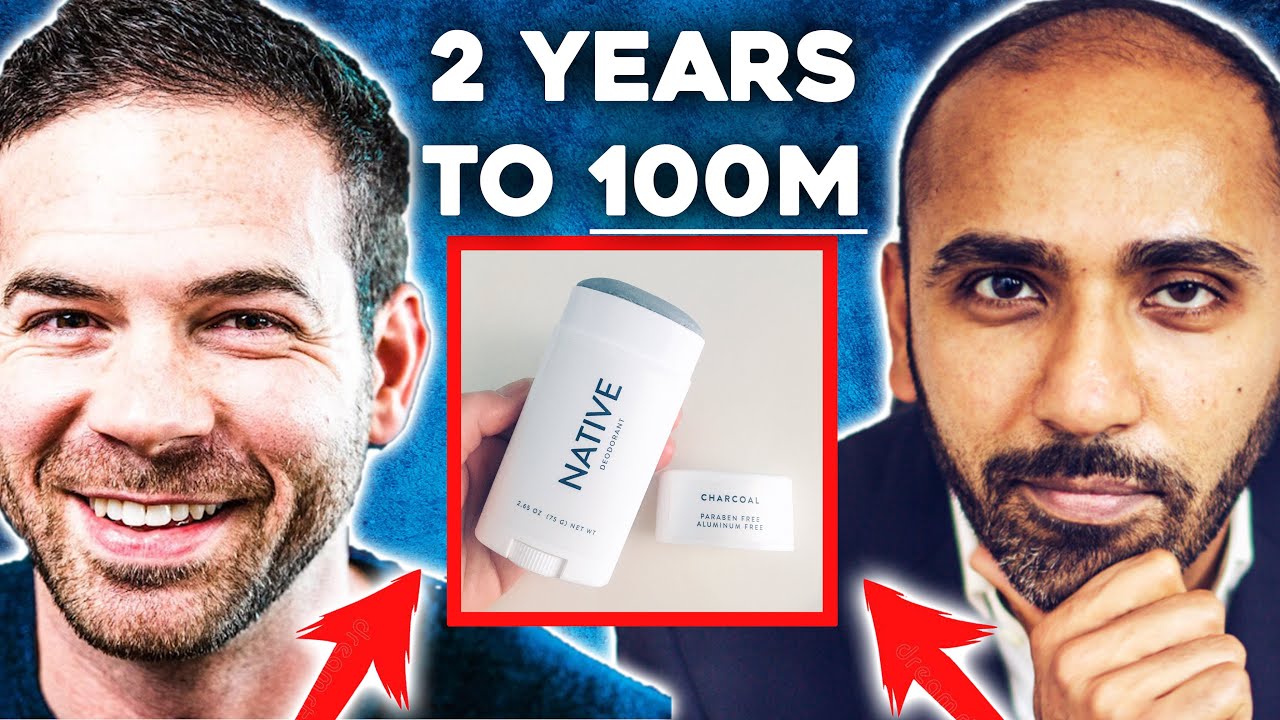

Selling DTC Startup for $100 million in 2 years! Native Deodorant CEO, Moiz Ali, Shares Their Story
