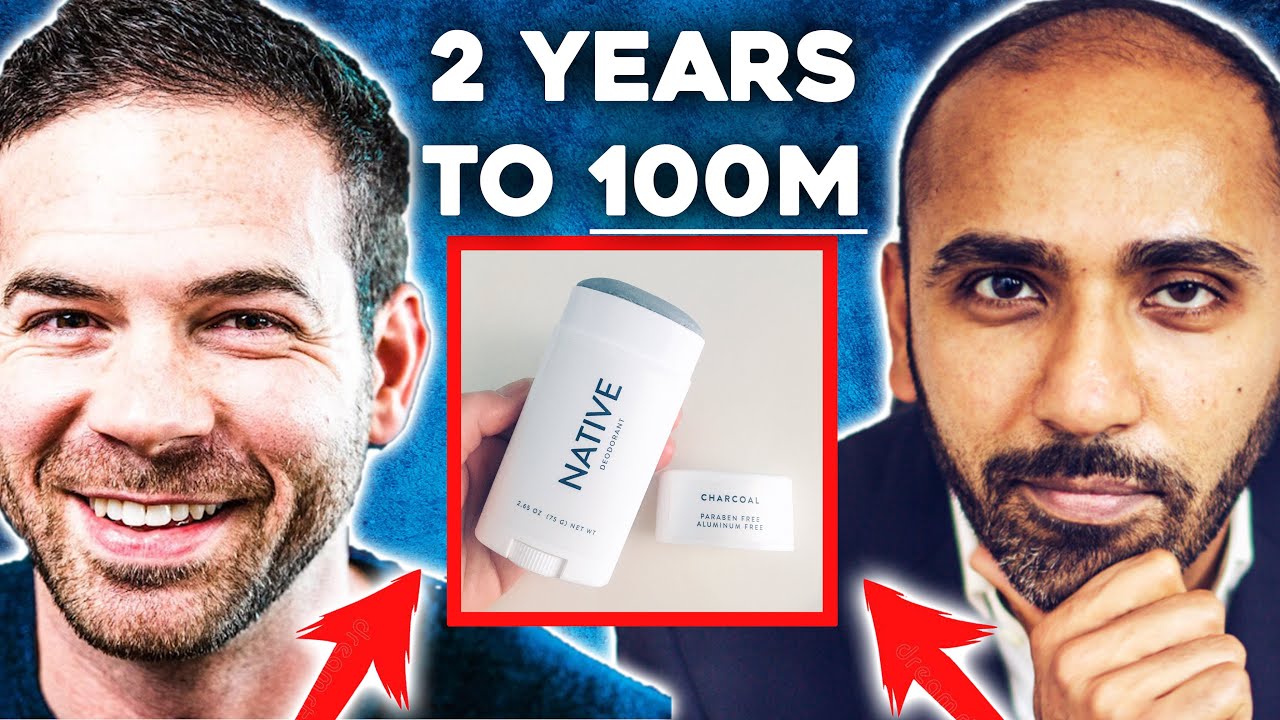
Selling DTC Startup for $100 million in 2 years! Native Deodorant CEO, Moiz Ali, Shares Their Story

Moiz Ali built Native deodorant from launch to a $100 million Procter & Gamble acquisition in two years, starting with just $300k in funding. He scaled from hundreds of units a week to tens of thousands a day by keeping the product simple, using pronounceable ingredients, and selling direct to consumers first before expanding to Amazon and retail.
Chapters
What's up guys? Welcome to another episode of That Creative Life with your girl, Sarah Dietschy. Today I have a very exciting guest we just met. He is the CEO of Native. Recently you sold your company for $100 million.
That's right.
Just a little bit of chump change.
Tiny bit.
Yeah, to P&G. So I'm very excited to chat with you. And just give me a little bit of a short bio to kick things off. Give some perspective for the listeners. And then we'll kind of get into it. What is Native? Who are you?
Sure.
Where are you based?
We're based in San Francisco. Native is— a personal care company. We sell safe, effective, non-toxic products that adults use in the bathroom every day. It took us 8 months to like nail that sentence down because that was like our mission statement. I love that.
I'm impressed.
I think it's changed, but like, I'm like, no, I like the old one. No, I'm impressed by that.
Yeah. Yes.
And so we launched the business in 2015. The first product that we launched was a deodorant. The deodorant took off. It was a natural deodorant. We sold it only online. Things went really well. We sold the business to Procter Gamble in 2017. Personally, like, I lived— I've lived in San Francisco for about 5 years now, lived in New York for about 6 years before that, was a lawyer by training for a couple of years, and worked as a lawyer in New York City before sort of delving into entrepreneurship. Wow.
Okay. Do you miss being a lawyer at all?
I do, actually. Like, people say that and like they expect the answer to be like, no, absolutely not. I do. One, Everyone, like, you know, I enjoy wearing suits, and I feel like, you know, when you're a lawyer, you get to get tailored in suits, and it looks like you're a real professional, you know. Like, I remember—
I feel like your parents are super proud of you.
Oh my god, yeah, my parents, like, I came home wearing a suit one day after work, and my dad, like, gave me a handshake, and he's like, oh my god, I'm so proud of you.
That's like one of the— it's lawyer, doctor, or like, what's— is it really only lawyer and doctors where your parents can, like, officially be proud of you?
Yeah.
Anything else, oh, you're a YouTuber. Cool.
Yeah, they just don't understand what any of that kind of stuff means.
Yeah, exactly.
And even when I sold my business, they're like, yeah, great job, we don't really care. Get out that suit, why don't you?
Exactly, exactly. So what was your business before Native? So you're a lawyer.
Yeah.
And then you kind of dove into entrepreneurship.
That's right. So I had a business based here in New York, and the way we positioned ourselves was like a flash sales site for hard liquor. We actually worked like 6 blocks from here at Canal. We worked out of like— there's a WeWork there now on Canal, and it used to be like another coworking space called New Work City, and that's where we worked out of, and it was fantastic.
It was a cheesy name.
It was a cheesy name, yeah, but it was a great community.
Yeah, yeah, yeah.
And so like, it was a flash sale site for hard liquor, and so what we did is we curated a bunch of like artisanal spirits that were being made in the United States, And then we spoke about the distilleries and we're like, hey, here's this master distiller that you've never heard of. Here's what makes this bourbon really special. It's made by this family that has been making bourbon illegally for 400 years and finally the great-great-grandson decided to get a license and sell this legally. And so, we grew that business for about 18 months, sold that business. I stayed on for about another year after the acquisition and then I moved to San Francisco.
OK. So what made that unique, that first business? So, you know, I guess essentially you're another middleman, right? But you're really storytelling to these places that need to buy alcohol. Is that what made you unique?
Yeah. So one, we're storytelling to the consumers to buy alcohol and we're like, hey, here's why this spirit is really special.
So it was directly to consumers, not like bars?
Correct. Yeah.
Gotcha, gotcha.
That's what made it— I think that's partly what made it unique. And I think at the time, like today, you can walk into almost any liquor store and find a great selection of spirits. In 2012 and 2013, when we had sort of gotten into the business, that was not the case. It was still like Jack Daniel's and Macallan dominating the shelves of liquor stores, and so we're like, here are all these tiny brands that have never gotten any shelf space, and like even when you go to the store, you have no idea why Finger Lakes Bourbon is going to be better than Jack Daniel's Bourbon, and you don't know that there's a story, and you don't know that there's like 6 guys working at the entire distillery, as opposed to the thousands that work at Jack Daniel's. And so I think that's what also made us special, where we were actually having— we had a direct line of communication with all of these distilleries. And we're like, tell us why you're doing this and why this is good.
Yeah, yeah, yeah. So why did you do that? Was being a lawyer not fun?
Being a lawyer is a little taxing. And you end up drinking a lot of alcohol.
Oh, so there's the bridge.
That's slightly the bridge. In reality, I think the bridge was we had sort of— my co-founder was a law school classmate of mine. And we had sort of thought of this business, um, and had the idea for years. And finally we're like, look, we don't think we're gonna be lawyers for the rest of our lives. Why don't we finally just quit and like take the plunge and see if we can make this a business and be entrepreneurs?
Interesting. What was it about New York that made you either stay here or move here? Where did you go to college, first of all?
I went to college at University of Florida.
Okay.
Um, and then I moved to New York. I went to law school and then I moved to New York after law school. And like New York was where all lawyers were moving to. Like, you know, if you go to— like, I went to law school in New England, and everyone sort of moves to New York afterwards because that's where all the jobs are, and that's where all the massive law firms are. So I feel like I followed like, you know, 50% of my class out here.
Okay, I didn't know that, huh? And then, so what was that moment? So you had a colleague, and you were like, hey, it's in the back of your mind, but I can imagine it's kind of hard to give up like a solid 9-to-5. You have a check coming in, you're good, you're like comfy in New York, things are good. I mean, what What was that moment?
Yeah, that's a great question. First, it's not 9 to 5, it's like 9 to 2 AM. Like, when you're an attorney, it's like rough.
Yeah.
I remember the first time I took home like one of those black Lincoln Town Cars, I was like, wow, I've made it. And then like the 10th night in a row, I was leaving the office at 4 AM. I was like, oh, the people in here are miserable. I thought they were like the, you know, elite members of New York City. Actually, they're the miserable citizens of New York City. And like what happened was, at some point I was like working and I realized that, you know, when you're an attorney, if you're a second-year attorney, it doesn't matter how good the quality of your work is, you're a second-year attorney. It's very hierarchical and not very meritocratic. And so I was like, I can't do this for another 10, like I don't wanna work for 10 years and work my ass off only to like be relegated to the year I graduated law school. And that was sort of like what pushed me over the edge.
Interesting, gotcha. You did that for a couple years. Did you sell it or did you hand it off to someone else?
No, we sold the business to a family office based in Atlanta that runs like, they used to own like Books-A-Million. In fact, they may still own it. I'm not really sure. They also own like TNT Fireworks. It's like this family office that owns a bunch of weird businesses.
Interesting. Well, good for them.
Yeah, yeah, they were fantastic people. Love those guys.
And then what was your problem with deodorant? You know?
Yeah, sure.
Okay, so Native obviously captures a lot of people's either hearts or minds, but what was the problem to solve?
Yeah, what deodorant do you use?
I use Dove. It's like the stuff that you put on at night, 'cause I need like the extra strength to not sweat.
Gotcha, okay.
Probably TMI for my peachy fam out there, but like I don't sweat, so it's great.
And when you read the back, have you read the back of it? Have you read the ingredient label? Probably not. Is it bad?
Is there a lot of stuff in there?
Do you try reading the ingredient label? And like, once you— once you flip over your deodorant, you're like, I see the problem.
I mean, honestly though, if they just kill my armpit buds or whatever makes me sweat, I'm fine with that.
Yeah, yeah, that's almost okay. I feel like that's the— kill is the operative word, and I don't know what they're doing, right? But like, in reality, for me, I was like, look, I bought Axe deodorant for my entire life until I started Native, and I was like, I'd buy it at Duane Reade, and I'd be like, I, I like flip it over, and I'm like, I'm an attorney, uh, I should be able to like speak English. I'm a smart dude.
Yeah.
Um, and I cannot pronounce a single one of these ingredients, uh, and that cannot be good for me. And like, um, you know, unlike, I don't know, unlike shampoo, which I wash out of my hair, or toothpaste, which I rinse out of my mouth, like deodorant stays on my body all day, every day.
Yeah.
And it has since I was like 14 years old, and it will until the day I die, basically. And so, I was like, if this is happening, I probably want to be able to pronounce the ingredients that are on the product I use every day.
That's gross. I need to go pick up some Native deodorant. Do you have like an extra strength Native deodorant? No.
So, one of the things that we wanted to do was like—
Chris Hall is over here in the corner just making faces like, oh, I didn't know Sarah sweated. Gross. I've never had a problem with smell, but sweat, I don't know. But they solved it. So if you have an extra— thank you, thank you. The smell was never the problem, but if you have an extra strength one.
So one of the things that we wanted to do, we don't have an extra strength one, and I'll tell you why. It's like, you know, when you walk down the oral care aisle, like when you walk down the toothpaste aisle, you're like, do I want Colgate ProClean Extra or ProClean 3D Whitening? And you're like, I don't know what any of these terms mean. And so we wanted to be like, okay, forget all of those choices. None of those choices mean anything, and no one knows how to navigate that aisle. I mean, it happens in like, you know, Degree as well. Do I want Degree or Degree Motion Sense? What is Motion Sense? I have no clue, and I'm in the industry.
Right. Toothpaste. It's crazy how many different versions. Yeah, but what's so crazy is all of the teeth whitening toothpastes made my teeth so sensitive that literally now I have to be the person who's like scrounging through the toothpaste aisle to find the one like basic one that doesn't have any Anything in it? And it's so hard to find just like a normal toothpaste.
Does that mean you— have you tried like Sensodyne? They all say—
It made my teeth even more sensitive.
Really?
Sensodyne killed my teeth. So, you guys are just gonna learn a lot about Sarah on this podcast, but when I was in 8th grade after I got my braces off, I went and got the teeth whitening thing done.
Yeah.
And you— it's basically like 3 rounds of 40 minutes under this like crazy laser thing where they're just like zapping your teeth to be whiter. And it hurt so bad. Like, the zingers that you got— I would recommend this to no one. I literally had to, like, get out of the chair in the middle of the second session because it was so brutal. My teeth are white, which is great, but it was insane. And it made my teeth sensitive from here on out. And when I tried the Sensodyne to kind of solve that, it escalated it somehow.
Oh, that's terrible.
I don't know. I saw that you guys have a toothpaste, so maybe I can try your toothpaste.
Yeah, and so our goal was like, look, we don't wanna like, we don't want this paradox of choice where when you walk down the toothpaste aisle, you're like, what should I be buying here? Like, I want white teeth and I don't want cavities, and like, you know, I want like—
Should be simple.
Yeah, exactly, like what else is there? Like, what does 3D ProClean Health mean? I have no, what does 3D mean? Like, it's a tooth, aren't they all like 3-dimensional? Why is it 3D? And so I was like, okay, we need to like get rid of all this choice and I'll make a really simple product. And so we don't have extra strength versions, we just have Native, and what happens is you just choose the scent that you like and that's the only choice that you make.
Cool. I think that's an interesting trend with direct-to-consumer brands is they really just, it might sometimes only be one product that they start with. And okay, how does that work? And you said you did a lot of A/B testing in the beginning with this with just a few customers and then you can build upon that, but it's interesting because there's There's so many options out there, and sometimes you can really cut through the clutter when you just have one really strong product.
Definitely. I think that's what Casper did a great job of, right? Like, when you go to the mattress store, they're like, uh, what firmness do you want? And you're like, what number? Like, what would I give you, a number? Like 17 firmness? Or no, I want 23 actually.
Exactly.
Uh, and Casper was like, look, everyone wants an easy-to-buy mattress, and we're gonna make that.
Yeah, and it's in a box.
Yeah.
Wow.
Yeah. And you don't have to go to the store and deal with like a delivery date. You order it online, it comes to you daily.
I will say though, I think I've been through 3 different of the direct-to-consumer brand mattresses. Oh really?
Which one did you settle on?
So I settled on— oh, I don't even know their name. Isn't that sad? They were such an obscure D2C Instagram ad brand that literally like my manager texted to me and was like, hey, this seems affordable for a king. It was like $900 for a king bed, and it had— it was the first one that actually had springs in it.
Oh, wow.
I just kind of need that old classic feel. I can't do the memory foam. So, I was like, oh, perfect. So, I don't even— it's like, is it Ali something? Something Ali? That's sad. I don't know. But the first one I actually got was Tuft Needle, and it was just too memory foamy for me. But they have that whole free return policy is so funny because who wants to go through the journey of returning that mattress? It's smart. It's like free returns, but you're never gonna use it probably.
Yeah, so you didn't return the 2 that you got?
No, I just gave it to a friend.
Okay, got it.
Yeah, yeah, yeah. I don't know what my point was for there. Oh yeah, you can really cut through all of this noise with one product, right? So what was the choice to explain? expand in toothpaste and these other products?
Uh, so basically we wanted to bring the same— like, one, there aren't a lot of, uh, brands in CPG that expand across categories today. Like, you know, Old Spice isn't going to be making a toothpaste anytime soon.
CPG is consumer packaged goods for the peeps who don't know.
And like, um, and neither will Dove, right? Like, Dove shouldn't make a toothpaste. And we thought we had this brand ethos that could extend that equity into other categories where we're like, look, We stand for simplicity and we stand for good ingredients, and that can affect body wash and that can affect toothpaste and that can affect shampoo and a bunch of other categories. And we don't stand for something like where we're like ultra manly scent, right? Which is what Old Spice stands for and probably fits perfectly into the body wash and deodorant space, but wouldn't fit well into the toothpaste space. So I think we have the brand equity and ethos to do that. And then we sort of saw the same problem in some of the those other categories as well, like oral care in particular, where we're like, there's a paradox of choice. I have no idea what I should be buying, and I want to remove that choice, and I want something that like works and sits on my counter and is made from ingredients that I'm not afraid of. And so that was sort of the mentality of extending categories.
You said in an interview that you were one of— Native was one of the top-selling brands on Amazon, but you you still had more sales on your website. Is that—
That's right. Native was like, Native is I think right now the number one selling deodorant on Amazon.
Amazing.
But like yeah, the website, the sales through our own website far and away eclipse the sales that we have through Amazon.
So what is your opinion on selling Amazon versus your normal website? Because I know a lot of startups, a lot of companies don't wanna give in to Amazon because they want their own data. They wanna keep the consumer data, right? 'Cause when you sell on Amazon, Amazon gets that, right?
Definitely.
So what have you seen some of the pros and cons of selling on Amazon versus selling on your own website?
Sure, so Amazon, like we only started selling on Amazon realistically in like, or like we gave into Amazon like a real effort in the last 6 months. So we haven't been on Amazon very long. I would say a few things. One is I understand where other brands are coming from. We have 3 million customers that have purchased from us from our own website. So we've got like a lot of consumer information, and we understand consumers in terms of when they wanna buy again. We understand how to communicate with consumers. And if we wanna try new things and A/B test products or get feedback from our consumers, it's not like we don't have a channel for that. We have 3 million people in the United States who have purchased from us through our own website. And so, you know, we can communicate with them relatively easily. I think at some point we were like, look, we wanna be on Amazon because one, some people just don't want to purchase products that are not on Amazon. And 2, even if you do, like, I'm probably more okay purchasing a Tuft Needle mattress from tuftandneedle.com than I am purchasing a deodorant because like this is a big purchase that I'm gonna make when I'm buying a mattress. I'm gonna buy it once and not repeatedly.
Deodorant is kind of something you buy with other stuff. Yeah, you put it in your Amazon cart, you move on.
Yeah, exactly. And like today, you know, 97% of deodorants are like around 97% of deodorants are still sold in brick-and-mortar stores. Like, the vast majority of sales still happen offline. And so at some point we're like, look, we have to cross the Rubicon of being a DTC-only brand to being a brand that is available wherever consumers want us to be.
Are you in brick-and-mortar at all?
Yeah, we're in Target and we're in Walmart now.
Wow.
In Target, like, Native Coconut Vanilla is the best-selling deodorant SKU at Target over the last 52 weeks, although we've only been there since September, so it's pretty good. Yeah, we were just in Walmart. We launched into Walmart like 6 months ago or so, and that's been going phenomenally well. And we're gonna expand into a bunch of other brick-and-mortar stores over the next 6 months.
I feel like CVS, Walgreens is the move. I feel like that's where I get all my deodorant. I'm like, I'm just there picking up a drink or something.
Yeah.
Oh, I need deodorant.
Yeah, that's very New York of you.
Yeah, that is probably more unique of New York because it's unique New York, unique New York. Sorry, just flashback to my 8th grade theater days. That was one of our warm-ups. You would probably know about that, Chris, with your theater stuff.
Unique New York?
Yeah, so you warm up because it's a tongue twister. So, you'd sit there and be unique— see, I'm already tongue twisted. New York, unique New York. Anyways, I mean, that's interesting that 97% of Is that deodorant or goods like that?
Deodorant.
Yeah, okay.
Deodorant category in particular.
So is that what you saw as kind of this white space to come in as a DTC brand? And 'cause you're seeing, oh, no one's buying Dove deodorant or anything else online, so we could be that brand.
Actually, I think that like the way we saw it was we need to make, like we wanna make products that are good for you and that are better for you to use and don't have these weird ingredients that you're gonna be, that you should be afraid of. And so we're like, okay, why don't we come in with a deodorant that works and that's made from ingredients people can pronounce? We don't have the bandwidth or the understanding of how to sell into Target and Walmart, and like Target and Walmart are gonna be like, we've never heard of this brand and no one else has, why do we start putting it on our shelves? So what we did is we're like, okay, great, let's make this a brand online if we can, and if we can, then we can— Then we can blast.
Yeah, exactly.
And so we like generate— we had a ton of momentum before like One, we sold the business, and then two, before we got into Target and Walmart. And, you know, but before we got— like, by the time we had those conversations with Target and Walmart, we're like, look, this is a brand that's doing tens of millions of dollars in revenue a year. We have a rabid— we have like a, you know, a very enthusiastic customer base. And our customer base is also millions of people at this point. And so it's a pretty easy conversation.
You have to prove your business to get more business.
Yeah, I think that's right. And that's hard to do.
It's like the chicken and the egg thing.
Yeah, exactly. So you're like, you got to start online. You're like, no one— who's gonna buy deodorant online? That doesn't happen. Can we sell in store? Not until you sell online.
Exactly. What's the experience been like with the acquisition in the past couple years? Are you working closely with Procter Gamble? Do you— did I— wow, I pronounced that weird. Procter Gamble, right?
That's right, yeah.
Sorry guys, P&G. They're based in Cincinnati, correct?
That's right.
So do you have like an apartment in Cincinnati? I do have a prominent Cincinnati. Okay, so what is that relationship like?
Not healthy.
I will say the downtown of Cincinnati is one of the cooler downtowns that I've experienced of cities I would never want to live in because it's so— it is pretty country, I feel like, but Cincinnati isn't all— I give them props.
Yeah, definitely.
They have some good restaurants.
They do. We were there on like a Thursday and randomly the Bengals were playing like the Ravens, I think, and we're like, oh, let's all go to the Thursday night football game.
Oh, so fun.
And it was like, you know, you can do that and it's like the stadium's downtown. You don't have like in San Francisco, if you want to go to Levi's Stadium, you have to drive like 2 hours.
Exactly. It's a really cool downtown.
Yeah, it is.
Yeah. So what, what is your, what is your experience been like? What is your involvement?
Yeah, we don't have like an office in Cincinnati. We still have our office in San Francisco. The team is the same team that it was pre-acquisition. We've like maintained a ton of independence.
Which is rare. I feel like.
I feel like I think it's rare, but I think it's becoming more common, which is like big brands, like what used to happen is these big brands would buy a small brand and they're like, look, we have all these synergies. We can get you into Target and Walmart. We can get you into our manufacturing capacity and save you money. We can expand your revenue through selling into different stores and we can get you cheaper television ads. So let's fold you into our parent company and take advantage of all those synergies. And I think that like what happened was that brands lost their DNA of what made them special and why they were working. And so now bigger brands like P&G are like, look, Actually, this brand might be able to do something special by itself.
Interesting.
And so let's let them have that type of— like, let's let them have their own DNA and do their own thing. And like, if you come to our office, our office has a completely different culture than when you go to Cincinnati. Like, everyone's very casual and like, you know, making jokes and talking about the TV, like whatever they watched on TV last night. And in Cincinnati, it's a bit more formal. And like—
Do they wear suits?
They don't wear suits.
Okay.
I think my parents would I'd love it if they did. But, um, but so like we have our own culture and our own DNA. We make our products through our own manufacturing lines and not through P&Gs. Like we, we sit pretty far apart from P&G. Um, and that just is—
Yeah. The first thing is, oh, you, you use their resources, especially for manufacturing. 'Cause I'm thinking, oh, they could probably do it cheaper. They could probably—
I'm sure they do it cheaper.
But just like the, conversation that we were having earlier with, oh, you exploring different packaging for your deodorant. Maybe let's try something that's a little bit farther away from plastic. Probably if you were in the fold of their process, it would be way harder to step back and say, hey, we want to try something different. So it's cool that you have that independence.
Yeah, I think it just gives us a lot more speed as well, where we're like, OK, great. You're working on paper packaging. We'll work on paper packaging, and we'll go do this as fast as we humanly can. And we sort of don't have the history or like the luggage or baggage that comes along with having a company that has 100,000 employees or that has $65 billion in revenue or that has like these brands that just have lived forever.
Just for some perspective, what are some brands under P&G?
Charmin toilet paper, Bounty paper towels, Tide laundry detergent, Secret deodorant, Gillette razor blades, like When you're shopping in CVS, they own a decent number of those. It's them, basically. Yeah, exactly.
So, what is the— I don't know how— what the right way to ask this question is, but companies that acquire brands that are on the same horizontal, so, or vertical, multiple deodorant brands, that would be the same horizontal, right? Am I saying that right?
Sure, yeah.
Yeah, yeah, so it's the same because vertical, it's like it's one brand having different verticals, it's different products, and then, but if it's the acquisition thing is, oh, you buy the same thing. So Coke owns all these different drinks, right? Coke isn't getting into the mattress business.
Yeah.
They own drinks.
Yes.
For companies like P&G, what is the advantage, disadvantage? Why do they acquire another deodorant brand when they have multiple deodorant brands?
Yeah, that's a great question, 'cause P&G has Secret, Old Spice, and Gillette. I think for us is we had a different value proposition than those brands offered, which was we were based on the idea that we have safe ingredients, and like that's what our DNA is. And like in the same way that people, like in the same way that Whole Foods grew up in the '90s and 2000s saying, hey, you should probably be careful about what you put in your body. Today, like the consumer says, okay, I'm careful about what I put in my body, I probably wanna be careful about what I put on my body as well. And so that shift represents a new type of thinking, and it's hard for, like, some brands may be able to stretch there. And since we've launched, you know, Secret has come out with a 0% aluminum deodorant, which, like, you know, somewhat towards, like, you know, the safer ingredients. But for Native, that's where we live. Like, that was where we were born. We stand for that value proposition, and it's like the first thing that we stand for. And so I think it's hard, like, you know, It's hard to be like, okay, great, there's a shift towards natural deodorants. Let's make— let's extend all of our brands there because some things just can't extend that way in the same way that like, you know, Coca-Cola stands for beverages, but it'd be hard for Coca-Cola to create alcohol. Like, you know, Coca-Cola just doesn't stand for alcohol. It might 20 years from now. But I think that like right now it'd be hard for them to stretch their brand towards that.
They stand for sugar.
Yeah, that's right.
So, your company didn't start off with VC money, correct?
That's right, yeah. Well, we started the business—
Or a small amount?
A very small amount, yeah.
So, what was that journey like?
Yeah, we— so we started in July 2015. We raised $50,000 in November from this guy named Weigo, who is the most—
Weigo?
Yeah, he's this Chinese guy. He's so funny. I'll tell you what, like when we were selling the business, And I like texted, you know, he didn't know we were selling it. I texted him and I was like, hey, I need to chat with you. And he's like, is this urgent? And I was like, yeah, I'm afraid it is. I gotta get you to sign all these docs. I have to tell you that we're selling the business. We're turn— like, you know, you need to do all this stuff.
Well, I'm sure he was kind of excited. His $50K probably went a decent way.
Yeah, his $50K turned into $1 million in like 12 months. But in any way, in any case, I called him and I was like, hey, we're selling the business. You know, I turned your $50K into $1 million. It's all— the things are great. I need you to sign these docs. And he's like, I'll never forget what he said to me. He said, the reason I asked you if this was urgent is because my wife just gave birth, but this is the best news I've heard all day. And I was like, you cannot say that.
Oh my gosh, this dude had a baby and made $1 million in the same day. What a legend.
I mean, he's a great guy. He's a fantastic guy. And like, So in any case, we raised $50,000 through him in November, and then another $250,000 from a VC fund called Azure, when we were doing about $100K a month or something.
Are they related to Microsoft?
No, they're not.
That's a weird name to have.
It is a weird name to have. And now I'm always like, you know, whenever I hear Azure, I'm like, which one are we talking about?
Exactly, exactly.
And so we raised that $300,000, like, sort of in the first year of the business, and then we raised another $200,000 when we had sort of— when we had a lot more more revenue when we were doing millions of dollars in revenue a month and the business was much safer.
But that's still so conservative compared to all these other DTC brands who are celebrating multiple rounds of $100 million.
Sure, yeah.
So it's interesting to hear that you went that route. Was there a certain reason, or was it purely, oh, I don't think we need this much money? I mean—
I think it was a few things. I think one, we raised the money early on because we're like, I'd never raised money before with my last business. And so I was like, can I successfully do this? Will anyone ever write me a check or not?
Yeah.
And it turned out the answer was yes, which was great. But then after that, we just had a great business that was generating a lot of cash and was making a lot of money, and so we didn't need the money. And like, all of the— like, you know, we had a really small team as well. In June of 2016, we were doing about $250K in revenue a month, and we had— like, that's when we hired our first employee. Wow.
So it was just—
It was just me.
Just you?
It was just me for the first, like, year of the business.
What?
And so, like, we hired our first employee, and people would be like— then we're like, okay, are you gonna fundraise? And I was like, I don't have time to go out there and, like, meet with all these people.
You're running a real business.
Yeah, I have to, like— we have all these customer service tickets, we have to manage our operations. We went from producing 500 units of deodorant a week to 21,000 a day, like, 18 months later. And so the business had just scaled significantly, and like, well, that's what we were focused on, and didn't really have the time or inclination to go out there and be like, hey, let's go, you know, try and raise a bunch of money.
So that second round then was when you were able to kind of catch your breath, and did you see something like, oh, this could help us buy a slew of Instagram and Facebook ads, or this could help us do XYZ? What was the reason for kind of that second round of—
The $250K?
Yeah.
Yeah, I think we were like, Well, one, it was like from a real VC fund as opposed to like an angel investor, and I think that was gonna be more challenging for us. 2, got along really well with that team, and I was like, you guys could be helpful just from having like being a great sounding board for my ideas and being like, is this realistic or is this not?
Yeah.
And then 3, I was like, yeah, we might need some of this cash. I'm not sure how we'll need it. Like, maybe we'll have to buy inventory and we can't afford it right now. And I think like, you know, when we— after we'd raised that $300K, I think it At one point, our cash balance dipped to like $200K, so we had actually spent $100,000 on inventory. But after that, we like, you know, we had millions of dollars, and like, you know, we were just making money. It was like a genuine business that was profitable and doing well.
Why is that so rare in Silicon Valley? It's so— when you say that, oh yeah, how did you do that?
Yeah, sure.
Because all these different companies, they're really raising money for the exit, right?
Yeah, I think it's like a cultural Like, you know, it's just cultural. Like, when you're in San Francisco, raising money is a sign of success. Getting a TechCrunch article is a sign of success, and both of those should be signs of success, but like, they're not as important as the ultimate outcome for that business.
I think it's overvalued.
Exactly, yeah.
Creating a successful business maybe should be the ultimate.
For sure, yeah, but it's a much longer game, right? Like, you can get 4 TechCrunch articles and raise 4 rounds of cash before you exit, and so you have 4 markers of success, and 4 parties, and 4 reasons people are celebrating you, as opposed to just that one when you exit your business. So I think that was like different, and like I think people have different mentalities. For me, you know, I was like, look, if I had a bunch of money, and if I was all like wealthy already, I'd be like, you know what, I'm gonna try and hit a home run, and try and make this a billion-dollar company, and like I can, I can like try and sleep with that.
Shoot for the moon.
Exactly.
Because you don't start a Silicon Valley startup to just build a company that makes $10 million, you know.
Yeah, exactly.
It's really for the big exit.
Yeah.
So, that's understandable.
And I understand how people even like tier their exits where they're like, you know what, I did good with this, I did good with this business, or I made a decent amount of money with this business, now I'm shooting for the home run, and maybe that's what will happen in my next business.
Right. What is next?
I'm not sure.
What do you see in this world? Is it another DTC? Do you want to maybe like, I don't know, you know, revolutionize the lawyer business?
Yeah. Any—
anything's—
lawyer business needs revolutionizing. Um, uh, but no, that's not for— definitely not the lawyer business. Yeah, exactly.
Sorry, Mom.
It's just too hard. Like, there's too many of them and they're like too stodgy and like, you know, they constantly reschedule meetings because they have other I can't do that anymore.
Back to commerce.
In reality, I'm not sure. I love ecommerce, and I love direct-to-consumer businesses, and I love like talking to entrepreneurs. And so I'm not sure if it's starting another direct-to-consumer business. I'm not sure if it's working at Native and making it much larger for a significant period of my life, or if it's something else. I recognize that at some point I have to make that decision. I have to make it sooner rather than later. But so far, like, I'm completely lost in terms of deciding what's next. Like, inertia is such a powerful force.
Right, right. I don't know if you have a TechCrunch article, but you're on the That Creative Life podcast.
So yeah, sign of success for sure. Definitely big deal.
How many employees work at Native now opposed to in the beginning when you were— because you said, how long was it just you?
It was a year. So June 2016, we hired our first employee. And it gets lonely. Yeah, I can imagine. Like, it gets really lonely.
So, how many people work there now?
Now, there's 17, and when we sold the business, there were 8. Wow.
Wow.
So, it was like a lean team when we like built the business.
Yeah. Interesting. How do you build a, like, a culture where people are like— it's 8 people. You obviously have a thriving business, but I'm sure those 8 people are very involved with everything. It's only 8 people. So, how do you build people who care enough to like maybe stay there past 6 PM?
Yeah, definitely. One is, I think, empowering them to make their own decisions, and sort of being like, hey, look, you don't need to ask me about this. Go do this thing yourself. Like, you're— like, we made the bet on you when we hired you, and not like— we're not gonna check the box every single time you want to do something new. So if you're hired, like, if you work here, you have the power to do basically whatever you want. want. Um, and then 2 is always giving them incredibly high level— like, the way I thought about it is I was like, look, if you think this is going to generate $100,000 in revenue for us next month, it's not important enough for us. Go find something that's more important and go fix that problem.
Mm-hmm.
Like, we gave— like, no one was trying to— no one was getting anybody's coffee, and no one was doing anything that was not incredibly highly valuable. Like, uh, there was low-hanging fruit, and that fruit was massive, and I was like, go harvest that. And so I think that made people excited.
So what's an example of that? Like an example of the low-hanging fruit?
So I think like what we did a terrible job of for a long time was our email marketing strategy. And we're like, look, we have these emails set up and no one's done anything about them since I set them up a year ago. And now we have all these new categories, so let's change the email marketing strategy. Look, if you purchase deodorant from us, we want to send you an email 90 days later saying, hey, you might be running out, because nobody knows when they're about to to run out until it's too late.
Right.
And so, like, people would go in and be like, great, I'm gonna create a— I'm gonna create an email marketing strategy around people who purchased once and say, hey, this is how we think we should email you, and the cadence of those emails and your interaction with them. Like, if you interact with them all the time, maybe we should email you once a week. And if you interact with them, you know, never, and you never open our emails, maybe we should only interact with you once a month or once every 2 months. And so we sort of changed those strategies, and people would come in and be like, I can own this entire thing and generate 7 figures in revenue a month for this business by owning the email strategy. And that was huge for us. And, you know, that was really valuable. And other people would come in and be like, great, you know what, we launched the seasonal scent for deodorant, which was fantastic. Let's launch 2 more seasonal scents next season instead of just having 1. Let's launch 3, create a $30 box for them instead of just having— instead of selling them individually. And, you know, seasonal scents represent a huge amount of our business. And so people would come in with these ideas, we'd execute them, and all of a sudden it would be a much bigger business. And I'm like, okay, that was a great idea, start coming out with a bunch more of those ideas. And they're like, we empowered people to make decisions.
That's great. Email marketing, social, TV— have you done TV? What was the evolution of marketing? Did it start on Instagram? Did it start on Facebook? Where did it start?
It started on Facebook. It actually started on Google. Then I went to Facebook, and then I went to Pinterest.
Google as in YouTube pre-rolls?
No, this was like in 2015.
Google AdWords?
Yeah, Google AdWords. You know, in 2015, like today Instagram is such a massive force in the United States, in the world actually. Like people take vacations to get Instagram photos. In 2015, it just wasn't like that. In 2015, it was just a lot more Facebook than it was Instagram, and so we spent a lot more time with Facebook, and it's evolved. that now we're doing direct mail and podcasts and television and Pinterest and Facebook and YouTube pre-roll. Like, now we're doing everything.
Kind of everything.
But you sort of start like evolving those marketing channels. And like, for entrepreneurs, you know, early on, the best thing to do is focus on the 1 or 2 channels that you think you can be good at. I've never met anyone who's really good at Google Ads and at Facebook Ads.
So what's the difference? Is it the creative? Is that the— the variable with Facebook?
Yeah, it's a couple things. One, it's definitely creative, but like Google is intent-driven, right? Like if you're buying Google AdWords, and people are saying, I'm looking for natural deodorant, you gotta win that, and you gotta captivate that consumer. But with Facebook, you actually have to create the demand. Like people aren't necessarily in, look at browsing history.
So you kinda have to maybe educate, hey, your deodorant has all these ingredients.
Exactly.
And we're the people who are gonna solve it.
Yeah, exactly. And it's like the movie Inception. Have you seen the movie Inception? I love that. You have to plant that seed in someone's head and be like, hey, look, your deodorant is probably not that good for you. You might wanna switch to something like Native because it's way better for you.
Right, right. So do you have a team of people? Did you have one person who is like the video person or the video photo word person? How did you break down that team for like creative for the ads?
I think now we're developing teams. I don't think we've had teams until you know, July 2019, basically. I think everyone was sort of pitching in, doing whatever they could. Like, you know, you get decent at Photoshop just because you start Googling things on Photoshop so often. You're like, okay, I know how to do this again. And like, the— our vice president of operations, she was great, and like, she made our labels because she was the only one who knew how to use Illustrator. And so we're like, great, you also will make labels. And so like, random stuff like that happened.
Yeah.
Today we're doing a better job. We have a creative director. When we shoot TV ads, you know, we're like professional about it, but back then we're like, let's like tape this together with duct tape and pray it doesn't fall apart.
That is amazing and proof of how far really a good idea can take you.
Definitely.
You had a seed of an idea. It's obviously something that people are connecting with, and it doesn't matter, like you didn't need a 100-person team. You didn't need to raise $500 million to make it work.
Definitely. I think like empowering people is incredibly valuable. Like, if you let people make their own decisions, you hire smart people and you let them make their own decisions, like, they can do— they can buy into an organization.
Right.
And like, people would come in on the weekends. I still get Slacks all the time on the weekends, and I'm like, wow, you guys are really dedicated to this organization. I'm sitting on a beach, give me a break. But like, they're fantastic, and it's because we hired people who like care.
Wow.
And that's really hard to do.
Yeah.
And that's, I think, one of the reasons we were so slow at hiring and bad at hiring is because we're like, you just don't seem like you care enough about this company. Right.
Well, that's— I mean, I'm forever interested by it because my entire career I have been a solo creator, and I think that's what a lot of people face. If you're a YouTuber or a podcaster or whatever you are, you get some traction as you and only you, and then once it starts building, oh my gosh, you have too much work. You need to delegate. How do I hire people? And When you're a quote unquote creative, you're not necessarily an operator. You don't know how to write down process. You don't know how to— it's a very difficult thing. So what were some of the things that, you know, you say you looked for people who were committed, but how did you gauge that? What were some of the questions maybe you would ask? Would you like check out their social media? Would you ask them personal questions? How did you gauge that when hiring?
Oh, there's almost like the simplest question in the world would be like, why do you wanna work here? Like, you're in San Francisco, the unemployment rate here is -10%. You could like, you know, you could work at any company you want to, and if you don't like the job, if you don't like what you do at Native, you could quit day 2 and find another job by the end of the day, you know? Like, why do you wanna work here out of all the other, out of all the places in the world that you can work at? And I think like, just judging people's enthusiasm was really, was a good barometer as to how interested they would be. Like, some people came in and they're like, I know everything about your brand. I really love this company. I love what you guys stand for. I use the product and I wanna be part of this. And some people would come in and be like, yeah, I can do customer service from 9 to 5. And, you know, I've done it before and I'm ready to do that. And like, that's good. And like, you know, now we have like 5 or 6 people interview you. And, you know, we have a good idea of like, you know, will you be a cultural fit or will you not be? And so I think those were— I think that was what was really helpful. But like the number one question we asked would be, why do you want to work here as opposed to all the other places you could work at? And if you don't know the brand and you don't care about it, like it's pretty obvious.
Yeah.
Does it get lonely? Like, you know, you were saying that you were a creator and that like early on you're sort of doing the whole thing. Does it get lonely doing that?
For sure it can, but it helps Honestly, it helped that I now have a boyfriend who's also a YouTuber.
Okay.
So, it makes it easier. Whatever I'm doing, you know, I'm working. I'm focused, but then it helps to like come home to someone who understands everything on a level to where all you have to say is a few words and they're like, I get it.
Yeah.
So, before that, it was kind of weird being in New York alone. Your friends are Basically, the only thing you do with them is collaborate and create, which I love. I mean, I love New York for the reason with when I'm hanging out with people, I'm creating. I mean, that is my type of friendship that I love, but sometimes when you go home at 9:00 PM and you're eating your takeout dinner, it's kind of like, okay, time to do the same thing over again. It can.
Yeah, definitely.
So, yeah, I think it's also just the self-awareness of like, what makes you happy. I mean, in the beginning, I felt the pressure of like, oh, I have to go hang out with these people. I need to go get like drinks with these people. I need to go to dinner with these people. That's what normal people do. You need, you know, like you need to do what normal people do with friends.
Sure.
And over the past year, I've just gained an enormous amount of awareness that I am, I'm Good with how I do things, and I enjoy my work, and I enjoy the process. So, I no longer kind of put that shame on me that I'm not doing what everyone else is doing. So, that's helped. Yeah.
It's great to be so comfortable in your own skin.
Yeah, and I think it takes people a while to understand that.
Definitely.
And it's definitely a journey, and so since you've lived in New York, you lived in San Francisco, it's so funny to to see a city that is more expensive than New York. I mean, San Francisco is crazy when it comes to rent and stuff. It is nuts. But like you just said, it really is this incubator for talent, for companies. You go there, if you're a coder, if you're a customer service ninja, you will get a job, right? It's not easy, but you can get a job there. So what is your perspective on The value prop of San Francisco?
Yeah, sure. It's incredibly expensive, and there's no doubt about that. It's an incredible place to live because, you know, I used to think, oh, it doesn't matter where you are. Like, you can launch this business in Birmingham, Alabama, and that may be true, but like, culture is everything. And like, San Francisco culture is about entrepreneurship and taking risks. And like, you know, if you're in San Francisco and you have a huge— and you're interviewing for a job you have a huge hole on your resume, and you're like, yeah, I spent 6 months trying to figure out what I wanted to do with the rest of my life, or I spent 6 months traveling, so I quit my job and I didn't wanna do anything else. No one's like, what? Why would you do that? I feel like if you did— if you tried to do that, if you were an attorney in New York and you do that, people would be like, you've gotta be kidding me.
What is this? Yeah.
Like, this is a huge gap on— it happened 3 years ago and this is still a huge gap on your resume. And in San Francisco, no one— like, no one would blink an eye. They'd be like, yeah. I completely understand that. And people are willing to take enormous risks. Like, in very few cities are people willing to take, you know, willing to give up steady paychecks and give up 9-to-5 jobs or prestigious jobs and say, you know what, none of— like, what I'm gonna do may not work out and might be really detrimental to the rest of my life, but it might work out and I'm willing to take that risk. In San Francisco, everyone is willing to take that risk.
So everyone's on the same page? Which helps, and that probably helps with the hiring process too. Everyone is on the same page.
That helps with the hiring process, and like, you know, it can be weird because like when we— when I hired our first employee, she's like, we were working, we were squatting out of a tiny conference room in somebody else's office, and she wasn't like, why are we working in this tiny conference room, just you and I? She's like, yeah, I get it, this is San Francisco. We work like— I will work anywhere. We'll work out of a Starbucks if we have to. And that's just what happens in People take risks and like you do what you need to in order to get the job done. And she would do that as well. And that's been like, that's really helpful in terms of like building the culture of like, we need to get this, like we need to build a big business and we want this to be really special.
Right. You don't have to answer this if it's uncomfortable, but for incentives for employees in the beginning, did you give everyone little slices of equity or did you give, like, you know, bonuses depending on their performance?
Yeah, it was more bonus-based. And the reason that we did that was one, we actually had the cash to give out bonuses.
Gotcha.
And like, you know—
I feel like incentives are different for everyone, right?
Yeah, that's right.
Right.
And like, even today, like today we give out bonuses based on so many things. Like, some people get bonuses based on the overall business, some people get bonuses based on their performance depending on who they are and what they affect in terms of the business. But in reality, it's like all over the place, and like, I understand why anyone would give out equity, and I understand why people would give out equity, and I understand why people would give out cash bonuses.
Yeah.
Um, for us, we went out with cash bonuses, in part because we had a little bit— like, when we raised that $250,000, it was through debt, and I was like, I don't know how this debt affects equity.
Right.
Um, and I also thought the business would just be around a lot longer independently, so I was like, OK, we'll go figure this stuff out later on. Um, but it was just cash bonuses. Including when we sold the business, there were cash bonuses all around.
Very cool. How does that affect when you're raising money? Because you kept it as a very, I mean, not a ton of employees, it was just you in the beginning. I can imagine that giving pieces of your company is scary, but there's moments where you need that first $50,000. You need that mentorship maybe from that one investor, right? And so, in the— I'm coming from the perspective of like, you know, someone who's on YouTube that might wanna build a business one day.
Yeah.
And soon. I'm sure a lot of people in my audience are very curious about startup world. That first $50,000, you know, it's a lot in the beginning. And so, is that percentage of what that angel investor— is that like a normal rate for a startup, or is that negotiable? Is that dependent on your relationship with the person? How does that conversation even start? Sure.
First, everything is negotiable. So when like someone expresses interest in your business and they say, hey, I want to invest $50,000, you know, they'll say, I want— for $50,000, I want X percentage of the business.
What is a typical— can you give like a ballpark?
So for us, that $50,000 bought 1% of the business early on. And so— but I don't think that there's a typical because it all depends on how big your business is. Had we, like, been, you know, a few stages earlier, I think $50,000 would have bought 3% or 5% of our business. And, like, you know, had we waited a year, $50,000 would have bought, you know, 1/10 of a percent of our business. So it really depends on—
It's the timing.
It's the timing and how much, like, momentum you already have. So if you've got revenue, and you've got a lot of revenue, and you've shown months of growth, you know, you're gonna have a lot more leverage than if you don't have any of any that. of those things. If you just come in and say, I have this idea, you don't really have a lot. And so $50,000— someone who's willing to put in $50,000 is taking an enormous risk.
Right.
But if someone comes in and puts $50,000 into a business that's already doing $300,000 in revenue a month, there's a lot less risk.
Yeah.
And so the amount of equity they get is commensurate with that risk. And for us, like, you know, that $50,000 was help— yeah, it was super helpful. And like getting to know this guy was super helpful. And then, look, what was even more helpful was understanding that we had external validation, that our idea was making sense, and that other people bought into it. Like, you know, selling deodorant online seems like, you know, people would be like, why would you ever do that? It's a, you know, it's a cheap product. It doesn't make any sense. The natural— like, one, one of our— one potential investor told us the entire natural deodorant industry is a $30 million a year industry. So why would we be interested in this business? You're gonna get a small percentage of a $30 million a year industry. And I'm like, we're already doing $30 million a year. So if it's $30 million a year, I'm 100% of the natural deodorant industry.
Right.
And so you just like, you know, you have these negotiations and like the, you know, we certainly negotiated, you know, our like the equity that we gave people as well. Oh, I'm sorry, the equity that we gave in return for investments with our investors. And really it's just, yeah, a function of leverage and how much do you like this person? Like when we made the decisions to, uh, like raise money, the number one thing was, can I call you and you will pick up? And like, you know, are you gonna be an asshole?
Even when you're having a baby, will you answer that text message?
And are you gonna be an asshole where like, I have bad news and I don't want to tell you? Or are you gonna be like the person that I get bad news and you're like, yeah, how do we fix this? Or are you gonna be like, well, you really are screwing with my $50,000, Moiz. I wish I could get it back. And I'm just gonna be like, I want to hide this from you actually. And so like all the people that we raised money from were very, very helpful, and no one was like, wow, this is bad news, I don't like this. Everyone was like, okay, great, there's a problem going on. What are the ways that we can talk about it and like think about it in a way that's helpful, and who can we connect you with that can help solve this problem?
Because it's so much more than money, right? You could raise $2 million from a Joe Schmo who's not even in your industry, or maybe $100,000 from someone who who really understands it, who can connect you to people who can help you. And so, it's really so much more than money. But thank you for sharing that, 'cause it, I mean, I think it really helps with perspective, 'cause a lot of people, I think, go into it blindly. And if you're not in San Francisco, if you don't have those mentors, you really don't even know where to start.
Definitely.
Right?
It is really hard when you, like, in San Francisco it's much easier, 'cause there are so many people whose full-time job it is, to go find companies to invest in. Um, and I would say, I would say it's 10% connections when we were raising money, and 90%, how do I get along with you? Like, if you're gonna be an asshole, and you can introduce me to Barack Obama, it's not gonna be great.
Exactly.
Um, so, like, I really just have to make sure I understand that we have a good relationship.
Right.
And if we do, things will work out. And if we don't, it'll be terrible every day.
Okay, last question. Um, so having experience in the direct-to-consumer sector, What are some companies right now that stand out to you and why?
There's so many.
I know there's so many, right?
There's so many. It's such a hot industry, and I think people have done amazing jobs. Like, you know, just walking around, I've seen so many pairs of Allbirds, and I'm like, these guys are amazing. Like, how did you make a shoe company? You know, it's hard. Like, Nike is a hard business to have. Like, those shoes are really good. Yeah, they were smart though.
They went the complete opposite Where forget support, it's just gonna feel like feathers on your feet. So I will say they're not the best if you have like a heavy walking day in New York because it doesn't— it lacks the support. However, if you like fly a lot, if you're not like— it really does help when you don't even feel the shoes on your feet, right?
Talking about flying a lot, I think Away Travel has done a fantastic job. Like, they're—
You're just naming all the brands that I am.
Yeah, they're like, they're brand geniuses. The girls that created Awake Travel are brand geniuses. Um, I think Buffy is a really good one, um, which is like this comforter company that people haven't heard of. Oh, like, that's growing a lot.
Is, uh, do they make sheets?
They make sheets as well.
Comforters?
Yeah, yeah, yeah. They make like, yeah, um, comforters and like duvet covers. And, um, they're doing really well. And like, they were— they're brand geniuses. They're like, look, try out our comforter at home. You don't even have to pay for it. If you, if you don't like it, in 30 days, you can send it back and we'll never charge you, or you can pay us in 30 days, which is like a unique model. And they've done really well for themselves. Glossier has done really well for themselves as well.
Like, crushing it.
When you see— Jeez Louise.
When you see the line.
Yeah, exactly.
They have a store really close to here.
Yeah, I think one of the brands that people don't appreciate enough is Rothy's, because like Rothy's has not raised as much money as like Allbirds or—
What is Rothy's? Is it shoes?
Yeah, it's like a women's shoe company, and what they actually do is They make women's shoes out of recycled plastic bottles, and you can like wash the shoes.
How do you spell that?
R-O-T-H-Y-S. R-O-T-H-Y-S. Yeah, Rothy's. And like, they haven't raised a ton of money, and they're building an amazing brand. And like, it's just under the radar 'cause they're not in TechCrunch articles as much as like the Allbirds and Awayes of the world.
Oh yeah, they're cute.
They've done a fantastic job in San Francisco. They're crushing it. I'm sure they're crushing it all over actually, but in San Francisco, they're all over the place. Yeah, I admire all of those brands. I also admire a bunch of— like, there's a mattress company called Nectar that came out of, like, nowhere, and it's now, like, the second best-selling mattress company.
Have they, like, partnered with brick-and-mortar stores, though? Is it, is it like a Sleep Mattress who made Nectar? 'Cause for some reason, I'm seeing them in stores.
I think they're in stores, but I think you can find, like, Casper in stores. Like, Casper is available at Target, and used to be available at West Elm. Didn't know that. A bunch of these mattress companies have partnered with brick-and-mortar retailers, but Nectar did not exist, I think, like 3 years ago.
Why are they special?
They just know how to— I don't know how they've been able to grow a business as well as they have. That's what's phenomenal about that business is they haven't raised a lot of money, and they've been phenomenally successful at growing their brand. That's special. That's so cool. those businesses are doing really, really well. And like, when I see them, I'm like awe-inspired because I'm like, you guys have created a household name or like, you know, a community, like a massive community in a very short period of time. And that's like, I think that's one of the things we always struggled with was like, we were always focused on like, how do we grow the sales of the company? And now we're like, okay, let's take a step back and make sure we understand what the company stands for and that we double down on things that it stands for.
It's being sales-driven versus brand-driven.
Yeah, exactly.
You know, you need both.
Yeah, absolutely.
You need to build brand, which maybe that's that one big TV commercial that pops off, but then maybe your sales-driven stuff is like, how can we fix our Instagram creative or Facebook creative? So there's so many different ways and strategies, and those are some great companies to look at and see what they're doing with, 'cause DTC is still, it's just beginning. I feel like it's just beginning, and it's interesting to see the players. I just discovered that the same dude who co-founded Warby Parker is the same dude—
From Harry's?
Yeah, yeah, from Harry's, who just sold for a billion dollars.
Yeah, $1.4 billion.
$1.4 billion. I'm telling you, this world is smaller than you think.
Yeah, it really is.
It's crazy, right? Well, thank you so much for being on. Is there anything you want to plug? Do you have a Twitter, an Instagram?
I have a Twitter. I'm @MoizAli, which is just my first and last name together.
Amazing. So it'll be in in the description below. Anything else you wanna put out in the world?
Thanks so much for having me, really appreciate this.
Thank you, it was so fun.
Love talking about ecommerce.
Yes, it's so fun. No, I think this is like super helpful to people because a lot of people aren't in San Francisco yet. They're not in New York yet, so that's why I love podcasts, YouTube videos, is you can meet the people where they are, right? And this was such a great conversation, so thanks for being on That Creative Life. Thank you very much. Yes, make sure guys to subscribe Subscribe so you get it in your feed every single Monday. Apple Podcasts, Spotify, Google Play, I could go on and on, everything's in the description below. Also there's a YouTube channel, youtube.com/thatcreativelife where I put out clips, behind the scenes stuff. You can join on my YouTube channel for the full video podcast, but hey, this will be in your feed every single Monday. Thank you so much.
Thank you again.
Bye guys.
More from Moiz

S1 E1: Nik Sharma and Moiz Ali: Why Native Rejected Investors / The Power of Scrappy Branding / W...


Moiz Ali On Selling His Natural Deodorant To P&G For $100M, Investing In Manscaped, & Holding Cash