Andre Miller on the Evolution of NBA Point Guards, Coaching In G League, & Cade Cunningham
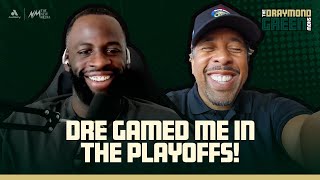
In this episode of the Draymond Green Show, former NBA point guard Andre Miller joins host Draymond Green for an in‑depth conversation that weaves together personal history, on‑court philosophy, and contemporary basketball analysis. Miller explains how he built his game by emulating a wide range of NBA stars—from Magic Johnson’s passing to Gary Payton’s defense—while developing a unique post‑up style that even forced rule changes. He recounts his durability, missing only six games in a 14‑year career, attributing it to a mental commitment to stay ahead of the competition and a relaxed off‑season routine that involved gaining weight, playing pickup ball, and gradually ramping up conditioning in August. Miller critiques modern load‑management practices, acknowledging the benefits of data‑driven monitoring but warning that year‑round basketball can increase injury risk for most players. He shares his unexpected foray into G‑League coaching, describing the challenges of staffing a Grand Rapids team and his aspirations to become an NBA head coach. The dialogue shifts to the evolution of point‑guard roles: Miller reflects on the pass‑first era of the early 2000s, his own 2002 assist‑leadership, and contrasts it with today’s shooting‑heavy, less‑traditional guards. He highlights current young talents he admires—Cade Cunningham, Jalen Brunson, Donovan Mitchell, Shai Gilgeous‑Alexander, Anthony Edwards, Giannis Antetokounmpo, Luka Doncic, and others—while noting a perceived decline in physicality. Miller also touches on his upbringing, Jesuit high school, and University of Utah experience, emphasizing the cultural shock and the support network that shaped him. Finally, he discusses the lack of All‑Star recognition despite impressive career totals, and both guests express mutual respect for each other's impact on the game. The episode is interspersed with promotional plugs for a Black Friday Game Day on Prime.
Chapters
Hey, Draymond Green here. Black Friday Game Day is coming to Prime with an epic day of live sports. Black Friday football is back with the Chicago Bears taking on the Philadelphia Eagles at 3:00 PM Eastern, followed by an Emirates NBA Cup doubleheader, Bucks-Knicks at 7:00 PM and Mavs-Lakers at 10:00 PM. And the whole day starts with the Capital One Skins Game as 4 elite PGA golfers meet with $4 million on the line. Black Friday Game Day, the Capital One Skins Game at 9:00 AM, Bears-Eagles NFL action at 3:00 PM. And the final night of Emirates NBA Group Play with Bucks-Knicks at 7:00 and Mavs-Lakers at 10:00, only on Prime. Man, such an honor to have this next guest on. It means so much to me when I look back on my journey in year 14 of my career. And right at the beginning of that, of the 14 years that I've been blessed to play in the NBA, will run up into this opponent with the Denver Nuggets. And the reality is, is the way he played the game at that point in his career, he'd take you to the post, he's getting everything around the rim. You know, he's, you know, we call it nashing it, you know, where you dribble the ball underneath the rim and keep your dribble. Jimmy Butler does a lot. He was famous for that. The moment you relax, he get a layup, he get an and one. Just herky-jerky, smart as hell. And so he was my ticket to get on the court because the game was so unorthodox that you wouldn't necessarily put guards on him. But Coach Jackson thought I could guard guards. And so he put me in the game to guard this next guest. And he hit the first game winner I've had hit on me. Oh. You know, he do stuff like go stand out of bounds underneath the rim. You go help, he come in, get a quick layup. Just witty, smart. And really showed me, like I've always been a high IQ basketball player, but he showed me right at the beginning of my career of what it meant to be a high IQ basketball player in the NBA. And I quickly learned that, oh, if I wanna be a high IQ basketball player, hang my hat on my basketball IQ. There's so much more that I need to learn. And it just motivated me. And the challenge to guard him, like again, that was my ticket onto the floor. So it was the only chance I had. And it was an unbelievable challenge. And so many people don't understand how good this next guest was. I'm honored to have on the Draymond Green Show, None other, 2002 assist leader in the NBA. You talking about when point guards really was like pass first and dropping dimes. Honored to have this next guest, the OG Andre Miller. The reason I wanted to do this interview so bad is because I don't feel like the respect is given from a basketball standpoint that should be given And I had the honor to play against the OG. First guy to hit a game winner on me, which, you know, I have this lock-in ability when it's a game winner on the line. And it's literally due to Draymond Green gaming me my rookie year and not having an answer. And also was one of the guys that when I first came into the league, the way I could get onto the court was, defensive stops. Coach Jackson as our coach. And this was the first matchup that he ever put me in on and like, "Yo, you gotta go stop him. Nobody else can stop him. See if you can do it." And just threw me into the fire. And I couldn't stop him, but I think I earned a little bit of respect. So I'm honored to have this next guest, the OG Andre Miller. What's up, man? How you doing? It's great to see you.
Thank you. Thank you. Thank you for having me. Yeah, thanks for having me.
Absolutely, man. I wanna, like I said, number one, I just, I wanna get right into you as a basketball player first and foremost. The way you played the game of basketball, like, and when I think of guys crafting their game, I always try to figure out like, how did you craft your game? Because there's, I've never played against an NBA player like you. That go to the post when they got, I mean, you would take me to the post. I think I probably got you by a couple inches and I definitely had you by 20 pounds, but you would take any guy to the post. One of the most interesting things that you did and just brilliant, like I also don't think you get enough credit for your brilliance as a basketball player, is when you would go stand underneath the rim out of bounds, wait for the guy to go help, come in and get the layup.
Yeah.
They changed the rule in the NBA because the OG would go stand out of bounds under the rim and get layup after layup. And now we can't stand out of bounds anymore. But I just wanted to ask like, how did you craft your game to become so good, so dominant But like, it wasn't just in your face like that. You just kinda used the game to get what you needed. Like, who helped you craft your game that way?
Man, I've been playing basketball probably since I was 5 or 6 years old. And man, I was always in front of the TV, man. I was always in front of the TV watching the Lakers, watching the Bulls, watching every NBA team growing up. You know, something that I dreamed of doing, you know, and basically was just copying every player that I saw, you know, and just, you know, putting it into my game. And, you know, it made the game easy. The first thing, I mean, I just started passing the ball. I was always a willing passer. And, you know, just growing up in Los Angeles, you know, you watching Showtime Lakers, you know, fast break basketball and Magic Johnson passing the ball and You know, I just want to be just like that. So, you know, my game is entirely a mix of all the players that I looked up to, you know, copied them, whether it be the post, watching Gary Payton, watching Adrian Dantley, Mark Aguirre, Kevin McHale, James Worthy. I mean, I tried to take something from every player that I watched and just apply it to my game. You know, it made the game simple for me and it, you know, transferred over into a long career in the NBA.
Absolutely. I think, you know, when you look at the game in the 2000s, early 2000s, the guard play that was in the NBA. And in 2002, you were the assist leader, you know, and, you know, such a special accomplishment. Like I said, you talking the likes of Steve Nash, you know, like, just dominant pass, and that's the era of like pass-first point guards. You know, it wasn't like where it is today where point guards aren't, most point guards aren't pass-first point guards. You led the NBA in assists when the league was, as a point guard, it was pass-first.
Yeah, Draymond Green.
What was that like?
Go ahead. I mean, it was like, you know, at that time you had to be, great at something. And, you know, I wasn't a killer 3-point shooter. You know, I thought I was a solid defender. And, you know, my thing in college was, you know, defense and passing the ball. And that's something that I took to the NBA was like, if I'm gonna get any respect from my peers, you know, walking into an NBA locker room with veterans, I got to be able to make these guys happy. You know, I got to lead with my practice habits and and my work ethic, and then when I'm on the court, you know, making guys' jobs easier. So I was able to play with some great shooters early on that made it a lot easy for me to just get those guys the ball and then knock down the shots. So, you know, I wanted to perfect that craft and wanted my teammates to enjoy playing basketball with me. So that's why I took on that craft.
You know, like I said, to start the show off, I think, you know, when I look around the NBA of guys that I played against, you're at the top of the list that like, you know, we always talk about, obviously you get the respect from the media, you get the respect from the fans, all those things. But we always talk about the respect from your peers. And you're one of the guys at the top of that list that obviously got the respect, you know what I'm saying? As like the NBA player you were, but not to the level of player that I know you were. You know what I'm saying? You're at the top of that list for me. Whenever I talk to guys, they like, "Yo, who was a guy that like you played against that you struggled against that, but nobody would think about?" And every time I mention your name, it's like a, "Really?" And then it's like, "Damn, you right. Like, I forgot about Draymond Green. I forgot he was doing this and doing that." And the moment you mentioned it to people, then it's like, oh, the light bulb go off. Like, "Oh yeah." But you know, When, and speaking of respect, you are one of the only player, or you are the only player in NBA history to have 16,000 career points, 8,000 assists, 1,500 steals, and yet never get in the All-Star Game, which I think is fucking blasphemous. But when you look back at your career and you point to one year, what was one year that you would point to that you would say, nah, that, if no other year, I should have been an All-Star in that year and I was snubbed?
I'll probably say my third year. I mean, my second and third year in the NBA, but especially my third year, the year I led league in assists. I mean, the NBA, man, it was so crowded with talent on the East and the Western Conference. And you know, that was also the year I believe Michael Jordan came back. And you know, I think it was a few guys that was upset when he came back, you know, because they was like, we gonna be on All-Star team. And then guys started getting beat up bumped off and stuff like that. But, you know, I thought the third year when I averaged a double-double and led the league in assists, you know, that I would make the team. Unfortunately, at that time, it was like, you know, guys that were on bad teams weren't making the All-Star team. So we didn't have a great record. And then at the same time, you know, it was Michael Jordan coming back and bringing more attention to the league.
So— Yeah.
I would say probably that third year.
Just in speaking to your career holistically and the longevity of your career, you only missed 6 games your entire career. 3 of those, only 3 of those due to injury. What would you say? And I, you know, I've heard all the stories, which I wanna get to, but what would you say was the key to you having that type of durability, you know, in a league that, you know, it was a physical-ass league back then, and to only miss 3 games due to injury, what would you say was the key to that durability for you?
I think mentally, mentally, just wanting to stay ahead of the game. You know, I enjoyed practicing, I enjoyed being better, getting better, I enjoyed leading by example, and I didn't, you know, knock on wood, I never wanted to get hurt, and I didn't get hurt, but, I didn't wanna fall behind, so the urge to always be on the court and be involved and be involved in the process of the team getting better or getting to the playoffs, I just took pride in that, and I felt like it was my duty as a point guard and a leader to have my teammates depend on me. Like, oh, we know Dray's gonna be there. We know Dray's playing. You know, if somebody's not shooting well or things ain't going right, you know, guys knew that I could help a guy get back into rhythm. So, you know, it was just all mental for me. I wanted to be out there. I didn't want to get hurt. Even when I was hurt at times and I could have easily sat down, it was more of, you know, I want to be on the court and I don't want to fall behind. I don't want to have to, you know, go in the weight room and run lines and get back in shape and all that type of stuff. So, you know, I think I prided myself myself on that just because I didn't want to go through the process of doing extra conditioning and stuff like that.
And in a day and age where conversation is always load management, this shouldn't happen, what are your thoughts on load management of today's NBA?
I don't care for the load management, but of course, you know, it's a different time.— you know, a time where guys are getting, you know, more injury-prone. I don't know, sometimes I'm against it, and then I'm like, man, like, that lifestyle wasn't real. I can't imagine myself playing 82 games, flying in the middle of the night, eating cookies, and, you know, hanging out on the plane and stuff like that. And, you know, when I look at it, I'm like, man, I can't believe I did that. So— Yeah. Your body gets beat up and the mental part of it is, it's easy to say, you know what, I don't have it today, but this is what we dream for, is to play in the NBA, and it doesn't last long at all, as you know, 14 years in. You can remember all the way back to your rookie year.
Absolutely.
Snap of a finger, you like, man, did I do that? Did I win 4 or 5 championships? And now you like, okay, well, what's next after basketball? I just took pride on being on the court because I knew that lifestyle and that career wasn't gonna last long.
Yeah, nah, most definitely. I think, and I obviously understand both sides of it. I came into the league when it wasn't a thing. And being in the league and seeing the changes, you know what I'm saying? Like seeing how much faster the game is, you know what I'm saying? Seeing all the science that they have today. Man, there's a number quantifying everything we do today. You know what I'm saying? Whether you go on the court to work out, just literally go on the court to work out. As you know, you know, in coaching last year, they got a tracker on you. You know what I'm saying? Like they're keeping track of the, you know, your workload every single time you step on the court. How many times,, you know, during the game, you're not able to reach top speed. You know what I'm saying? How many times that week? What's the trend that week? You know, we've been watching your numbers between your jumps that we have you do, plus your burst on the court, and you're trending towards injury. All these different things. So, you know, when I look at the load management, I understand why people don't, you know, respect it in a sense, or necessarily rock with it. But on the flip side, you know, when I take a step back and you look at all the different numbers that they're keeping, I do understand why, you know, why it's a thing. Because oftentimes today, it's not really the player saying, "Yo, I'm gonna sit out this game," or, "I need to sit out." Oftentimes it's the medical staff, performance staff coming to you saying, "Yo, we think you need to sit out a game." Yeah.
Your numbers are trending back. Yeah, especially in the G League, you know, I mean, on the coach's side, you know, I would get trainers and the team trainer, they would come up to me and be like, you know, we get this email and you know, that little tracker that you put in your shorts, you know, they'll be like, you know, such as Andrew Funk ran 4 miles today. You know what I'm saying? That's a little bit too much. You know, I'm like, man, like, They really keeping track of all this stuff? And like, maybe we need to back off. But it's like, you know, it happens like that at times. So you definitely gotta pay attention to that because, you know, injuries do happen when guys feel overworked.
1000%. Hey, Draymond here. Black Friday Game Day is coming to Prime and it'll be an epic day of live sports. Black Friday football is at the center of it all with the Chicago Bears taking on the Philadelphia Eagles at 3:00 PM Eastern. That's followed by the final night of Emirates NBA Cup group play and a doubleheader starting with the Bucks and Knicks at 7:00 PM and the Mavericks and Lakers at 10:00 PM. But the whole day starts with the return of the Capital One Skins game as 4 elite PGA golfers face off with $4 million on the line. Black Friday game day tees off with the Capital One Skins game at 9:00 AM Eastern before the big Bears-Eagles football game at 3:00 PM. Go Bears! And it all culminates with a double dose of Emirates NBA Cup action featuring Bucks-Knicks at 7:00 PM and Mavs-Lakers at 10:00 PM, only on Prime. And speaking of the G League, what was your experience like coaching the G League team? And do you aspire to become a head coach in the NBA?
Well, I never thought about Coaching, it was kinda like accidental how I got the job. You know, I was at summer league and Calvin Booth, the GM at the time, I reached out to get some tickets for the summer league game. Like, hey, I wanna bring some kids. It's like AAU ball going on in Vegas and the kids wanted to go to the summer league game. So I just reached out to some people that I knew, asked for tickets. And Calvin Booth gave me some tickets. And then afterwards he asked me, was I interested in coaching the G League team? And I was like, uh, sure. You know, at the time I was thinking the job was in Denver, but it was in Grand Rapids, Michigan. But, you know, I did 3 seasons in the G League. I enjoyed it. I enjoyed interacting with the players, you know, learning how to find my niche as a coach and, you know, adjusting to being far away from the Denver Nuggets. And it was, it was tough. It was challenging because we were in Grand Rapids, at Michigan.
Yeah.
It was tough to get assignment players and two-way players, but I enjoyed it. I'm kind of like in the middle of if I wanna continue to do it or where I can find my niche, whether in college or the NBA, but I do feel that I am a head coach. It's just about the opportunity and somebody willing to, put the trust in me to lead an organization or a team. So if it happens, cool. If not, then there's other things that I can do to keep myself busy, but I did enjoy it.
That's amazing. Speaking of enjoying, when you watch the game today, I know you always have been a big basketball head. One of the things in moving around the league today, I never wanna sound like the old grumpy ass dude, but one of the things in moving around today, like what you realize with these young guys is like, they don't really watch basketball. You know what I'm saying? Like, it's like, they're like, yeah, no, I don't really watch basketball. And it's always one of the things that's baffling to me. You know, like you don't wanna watch basketball. But then you watch them play and it's like, oh yeah, you talented. But it makes sense why you don't know X, Y, and Z, because you just don't watch the game. And little things that you pick up on and just watching the game, you missing out on all of that stuff because you don't watch basketball. Now I said all of that to say, when you watch the game today, who are some of the point guards that you enjoy watching in today's game? Draymond Green.
I'm a fan of Cade Cunningham. You know, I had an opportunity to go to a few Detroit Pistons games, and you know, I like how the game is evolving. I like the 3-ball, you know, of course, you know, I wish it could still be a little bit more physical, but you gotta give and, you know, give a little bit, but you know, I think it is a little bit soft, but, You know, I like the way the league is trending with the amount of shooters that's out there, but I'd like to see more physicalness. But you know, Cade Cunningham is one of my favorites. I'm a big Donovan Mitchell fan.
Yeah.
I just like guys that compete. And specifically one game I went to in Detroit, you know, I saw something that happened on the court between, you know, Detroit Pistons teammates and, Kade Cunningham, he just shut it down. It was just like straight leadership. And I was like, man, he missed somebody open for a shot. And the guy was upset. I think it was Tim Hardaway Jr. He was upset that Kade missed him 'cause he had made a couple shots in a row. And Kade was like, hey man, I got you next time. You know what I'm saying?
Yes.
But his leadership skills, the way he carry himself, and I'm watching this from a distance, 'cause I just go sit in the stands. I just go sit in the stands and watch any type of basketball, whether it be AAU basketball all the way to the pros. So I'm still a sponge to the game, but he's one of my favorites so far, him and Donovan Mitchell. I like Jalen Brunson a lot.
Yeah.
It's a lot of talent out there. It's a lot of talent.
Be that Jalen Brunson's dad was in the league, obviously when you were playing, I'd have a hard time believing in watching Jalen Brunson play that he didn't watch you play and pattern some of his game after you. 'Cause there's a lot of similarities. You know, the way y'all got into the paint and use the mid-range, way y'all take smaller defenders to the post. Like I think there's a lot of similarities in between you and, Jalen Brunson game, and he got that old school type of feel. And I know he grew up around it during that time. I'd be very shocked if you're not one of the guys he modeled his game after.
I mean, I'm a big fan of his. I mean, Jalen Brunson, I mean, and he got a motor. He got a motor and he got a will to win. You know, I like to see how tall he really is, but you know, He can ball, man. I really like the way he plays, and you could tell that he's passionate. I tell these young kids, like, you know, there's a difference between loving the game and being passionate about it. And all these guys that play in the NBA have some form of passion for the game, and, you know, he's one of those guys that I enjoy watching play.
Most definitely. And, you know, we're along the lines of, the elite point guards, when you look at back at your career, you know, and the guards that you played against, who would you say were some of the battles that you remember the most? Like the guy that you go up to, you know, the one or two guys that you go up against and you like, yo, this one I know is a battle. Every single time we play, who was like the toughest matchup for you?
Tony Parker, Chauncey Billups, Jason Kidd. I mean, every guard, every guard, I was like, man, losing sleep. I would say outta everybody, I would say Allen Iverson, probably because, It was like, man, I was guarding him the entire game. I was guarding him the entire game. And it was like, man, like, dude, like, I'm a pretty good defender. And this guy is still getting buckets, you know? And I dealt with that for like 12, 13 years, all those guards. And then, you know, I knew it was time for me to go after you guys came along and I had to guard that one little young guy, Stephen Curry, you know? I knew it was pretty much over, but you know, from those guys all the way Draymond Green, all the way to one of the greats, Stephen Curry, man, it was definitely some sleepless nights, you know? So like, you know, hey man, get this nap in, get the legs ready, get loose because it's gonna be a long night. So I would say Allen Iverson, Stephen Curry, all those guys brought something different to the table that, you know, gave me some problems.
Most definitely, like, man. Just hearing you say that, bro, it just take me back to my first couple years. And some games I didn't play much, some games, like, I'll be honest, you were my route on the floor as a rookie. Because like I said, our guards, like Steph, I love Steph to death, he was too small. Like, Mark, Coach Jackson would've never put Steph on you. You would've posted him up. And we all knew that. And none of us were gonna just watch Steph get posted up. And so like he'd be on like a Randy Foye, you know what I'm saying? Or even like chase around Aaron O'Flaherty a little bit more, but like we would never put Steph on you. But like just hearing you speak, man, it just take me back to those days. Like that was my way of getting on the floor because you would post the smaller guys up. And every time we played y'all, I knew, yo, I'm gonna get some tick today. Yeah. Coach Jackson gonna put me in the game to guard Draymond Green. I'm gonna get some tick. And I'll tell you, man, I still haven't gotten over you gaming me. I just, for every game-winning stop I've gotten in my career, they should attribute that to you. 'Cause I still haven't gotten over that. I can't, goddamn, that shit was heartbreaking for me, man. I was trying to make my hand.
Well, y'all, I think that might have been the only game that we won in the series.
'Cause y'all, after that, I think they—
Boy, it was rough after that. But you know, I still remember our conversation on the court. I think you had said something to me like, you know, like, man, you know, you had a good career and, you know, like we, it was like respectful, man. So I had a lot of respect for you guys, man. You know, I was hurt actually when y'all beat us and Iguodala turns around and goes and joins the Warriors. Hey man, what's going on here? You know, but, you know, I was happy for you guys' success, man. I'm happy for your success, and I enjoyed the competition. I actually do have that framed picture of me scoring on you, 'cause that's probably the only time that I ever scored on you. But, you know, it was definitely one of those fun times as I got older. I think I was probably like mid-30s when that happened.
Yes, you were.
You know? Yeah, so.
Yes.
Definitely was fun.
Yes, you were. I have a question. So, there's always been these stories about your off-season training. And you know, back then training camp was a little longer, you know, training camp was 3, 4 weeks long. I think I even had a 5-week training camp when I first came into the league. But there was always the stories about how, You know, guys train all summer now, hoop all summer. And there was always the story about your off-season of— and what I was told was that, verbatim what was said to me is, Draymond would say he naturally allows his body to gain weight and he naturally allows his body to lose weight. He gives his body time to recover and go through his natural process over the off-season and then work his way back into camp. Shape as camp started near, like what was your regimen? Is there truth behind that? Is it over-exaggerated?
No, it's truth, it's truth. Because you know, I only made it past Mother's Day maybe once or twice. So you know, that's, you know about getting past Mother's Day. Every year you was already in the conference finals or finals, but I only made it past Mother's Day maybe twice. And so what I would do is I would just kind of chill out, kind of chill out for a couple months. And when I say chill out, I mean, like, kick it, like I'm eating, I'm hanging out, you know, I wasn't, I wasn't a drinker or anything like that. But, you know, I was, I was doing all kinds of kind of stuff as far as hanging out and spending time with family, but— Mm-hmm. Towards, you know, once I got towards like August, when kids started going back to school, then I started working out. And by that time, I was probably normally around 10 to 15 pounds overweight. So, you know, but I was still like, it was easy for me, even though I was taking time off, to still go somewhere and just play basketball. And just go, just go hoop. It wasn't like I was just sitting on my butt. Mm-hmm. But then once August, once August comes, then I'm kicking it in gear, getting active, you know, going to play pickup ball at UCLA. And then that'll kind of like work its way into training camp. And of course, you know, once I got to training camp, I was still about 10 pounds overweight, but you know, training camp back then, you had the whole month, you had the whole month of October and 8 preseason games to get in shape.
Yeah. Absolutely.
So I was fine with that. I was fine with coming in the camp overweight, 'cause I didn't wanna peak. I didn't wanna peak too early, and then by Christmas time, I'm really rolling.
Do you think guys not taking that approach very much at all these days, play a part in a lot of the injuries that guys are having? Because guys train all summer, you know, it's this training, it's that training. You never truly take a break these days, maybe a couple weeks. Do you think that play a role in all the injuries that's taking place today? Like you look around now, each team got 2 of they top 5 guys out with hamstring and calf injuries.
Yeah, I think it does hurt 'em. I think it does hurt 'em to, play basketball year round because I mean, we could do that when we're younger. We could do that when we're, you know, 9, 10, 15, 16 years old. But, you know, we talking about grown men, you know, you traveling and playing basketball 6, 7 months out of the year, your body needs time to recover. And whatever you have to do now, I'm not saying like, you know, hey, you still can go in the gym and— Yeah. Get your 500 to 1,000 shots up or whatever you have to do, but pushing yourself throughout the summer, you know, and, and those things, it depends on the person. It depends on the person. I mean, like they say LeBron James work out all summer and, and I'm still like, man, like, how is he doing that? And he didn't been to the finals how many times? Like, but, you know, he's— There's a reason why he's LeBron James, you know, because his body can can handle that type of workload. So it just depends on the player. But for those young guys, you gotta find, you gotta find balance. It's almost like, you know, going to college, like, you know, you got all this free time, what you gonna do with it? How are you gonna handle, you know, your schedule and when you gonna work out, when you gonna lift weights, when you gonna have time to rest? So you gotta be on top of that because, you know, these injuries are serious. These injuries are serious. Guys are going down with, Achilles tears, hamstrings. I mean, I don't know, but to each his own, to each his own.
No doubt, no doubt, absolutely. I have a question just dating back to your childhood, your upbringing. Just when I was doing my research and I came across your high school, I saw that you went to a Jesuit high school and I know you went to University of Utah. Which Utah, the state of Utah in general is known for its religious practice and Mormontship and different things of that nature. And it jumped out at me because I know all the stories of where you from, you know what I'm saying? And just being from the trenches. But then I look and you went to a Jesuit high school and then University of Utah, like I said, which is effectively known for it's large practice of Mormons in the state, and especially in the city of Salt Lake City. Was that intentional because of the upbringing and your parents wanting to put you in those type of environments because of the upbringing to kind of move you away from that? Or is it just how the cookie crumbled?
Man, I was blessed enough, you know, my mom is still alive and, you know, I have a great mom and, you know, I have a huge family. I have a huge family and, And my upbringing was, was a great upbringing. I enjoyed my upbringing. And, you know, one thing I can say about my mom is my mom put me in, in private school all my life. I was, I was, I was, my mom was paying tuition from kindergarten to 12th grade. And, you know, I don't know how she got the money to do it. But the high school that I went to, it was Bourbon Day High School, is like the opposite of modern day. It's the opposite of modern day. So it was right there in the heart of the neighborhood. And it was a brotherhood. It was a great school. It was known for sports. I didn't know that at the time when I went there. It was just that my mom wasn't gonna send me to the local public schools.
Mm-hmm.
So, you know, it was a brotherhood, man. And if I could tell you how this school was, man, you wouldn't believe it, but— You know, I loved it. It was a great experience. And I have a lot of Bourbon Day brothers to this day and a lot of history behind that school. And, you know, just going out to Utah, I mean, I didn't really get recruited, so I wasn't highly recruited. And Utah was the first school that jumped on. And, you know, what was crazy, it was like, like maybe 2 or 3 other Black guys that were on the recruiting trip and was like, man, we all gonna go here.
Mm-hmm.
And you know, 2 of us end up making it on campus. And you know, it was tough. It was a culture shock. It was a culture shock, but you know, man, I was strictly there like, I gotta get an education, and then I get to play basketball. I'm away from home, I'm away from the madness. And you know, it was a lot of great people, a lot of nice people that helped me along my journey in Utah from, guys that were with the Utah Jazz, local guys that was just around campus or off campus. And in my 5 years of being there, I only went home one time.
Really?
I only went home. Yeah, I only went home one time. And that was my freshman year spring break because I was, I couldn't play my first year. So I mean, I love the experience. I love the change of seasons. I love the snow. And I didn't get caught up in, you know, the culture thing. You know, I have Mormon friends, you know, I didn't really get caught up in all the extra stuff.
That's fire, man. That's such an incredible experience. I can only imagine the culture shock that you felt because I'll be honest. So in growing up in Saginaw, the school that I went to, like, we may have had one or two white kids, like my whole life. Like I never, I went to school with like all Black kids and Mexicans, but predominantly Black. And when I got to Michigan State, it was a culture shock for me. It was the most white kids that I had ever been around in my life. And so obviously, as you know, we go, —like I got to Michigan State June 1st, when all the kids are leaving campus. You know, we're coming in to start off-season training, you know, weight training in the summer, conditioning, all that stuff. And so all the kids leaving school, especially all the Black kids. So then now I was only around white students. So—
Mm-hmm.
When the students came back, I had a cousin that went to Michigan State. We graduated high school class together in Saginaw. She went to Michigan State. Just like on academics. And I'll never forget, I went to visit her dorm, like, soon as she got to campus. And she lived in the dorm where most of the Black students live. And when I walked in after 3 months of being on campus and not really being around any Black people, then I was nervous around Black people. Like, man, I wonder if they looking at me crazy 'cause I've been around my wife. Like, it was just in my mind. So I can only imagine.
Yeah.
The culture shock you went through in Utah?
Oh yeah, definitely. I mean, it was pretty much, my upbringing was pretty much the same as yours. And it was rough, it was rough. But you know, I had father figures, I had friends, I had, you know, a huge family, people to lean on. And I never looked at it as a bad situation where I come from. You know, I mean, it was so many people that helped me along the way. And it wasn't easy. It wasn't easy, you know, to go sit in the class. And, you know, I could tell you probably over half the classes I sat in, I didn't even know what was going on. You know what I'm saying? It was just like, you know, I'm just enjoying the experience. You know, meeting friends along the way. I learned to fish, I learned to ski. You know, I learned to ride horses. I learned, I learned so much there. So, you know, it was, it was almost like, you know, something that I needed. And that's one thing that my mom did for me was, you know, expose me to something other than what I grew up in. And it just happened organically. So, you know, it's a lot of people that helped along the way.
Most definitely. Couple more questions to get you out of here. I don't want to take up too much of your time. When you look at— the pool of talent today, the layout of basketball overall, obviously coming from LA, you look at LA, New York, Michigan, Chicago, you look at all these different places that's been like hotbeds for talent, Atlanta, hotbeds for talent. Do you think when you look at all those different spots, Would you say the best talent come from LA?
I wouldn't say that. I'm not gonna say that because, man, there's some ballers everywhere. There's some ballers everywhere, and I've been blessed enough to go to some different cities and some different areas and neighborhoods where guys can really play some ball. And, you know, it's hoopers everywhere. There's some guys that bring some spunkiness to the game. You know, I do feel that, you know, there's a certain style that guys from different states play, like how they play. Like when I was coming up, we was banging on the inside. We didn't, we do one-on-one drills. Nobody was shooting jump shots. We just drive and then you get laid out and knocked on the ground. And it was rough like that. But you know, everybody, then you got New York, you got the dribblers and all that type of stuff and the passers. But I think every state, you know, I think Texas got some good ballplayers. Everywhere is good, you know. Cali is just a big state, man. And, you know, I don't get caught up in, you know, do we got the best hoopers or not? I mean, it's hoopers from everywhere, man. And I was just blessed enough to play against those type of players, you know? So it was fun. It was competitive, man. I could say my toughest matchups weren't playing against LA guys. It was playing against guys from different cultures and backgrounds from all over.
Most definitely. Most definitely. Absolutely. And I think my last one would be, just as a steward, as the steward of the game that you are, love the game, that you stay up on the game the way that you do. When you look at, the NBA landscape, obviously you got your Stephs and Bronzes and all those guys, like they are what they are. It is what it is. But as you look at the league over the course of the next 5 years, who would you say is probably the top 5 guys, younger guys, you know, that hasn't quite, you know, like I would still consider Jayson Tatum a younger guy, you know, like 26, 27 years old, still in the prime of his career. But when you look at the younger guys over the next 5 years, who's the guys that you expect to have the torch, whether they got it now and still have it, or, you know, whether you think it's a couple younger guys coming up over the next 5, 6 years, who's some 5 younger guys that you would say would probably be some of the guys carrying the torch of the league?
SGA, Absolutely. Anthony Edwards. I'm a big Greek fan. I'm a big Giannis fan.
Yes, sir.
I'm a big Giannis fan. I'm a big Luka fan. I like to see Kyrie get back healthy because I still think he got a lot left in the tank to go out there and make some stuff happen. And then of course though, I like Cade Cunningham. I like Cade Cunningham. And what he's bringing to the table. I'd like to see, I'd like to see Devin Booker get to another team and, you know, really, you know, like he's almost getting lost in the sauce a little bit, you know, 'cause the team is not winning over there, but I wanna see Devin Booker on the big stage.
Mm-hmm.
'Cause I'm a huge fan of his, so, you know, it's so much talent, him and also LaMelo Ball, I'd like to see him on another team. You know, just to see, you know, see him deal with some pressure and how he can actually lead a team in the playoffs. So those are my guys, but definitely SGA and Anthony Edwards, they're at the top. And I'm sure I'm missing some other guys that's my favorites, but those are the two guys. I mean, of course, and the big fella in Denver, I mean, he just gonna keep tearing the league up as long as he's in there, so.
Yes, he is.
Yeah, so I mean, it's like almost like he playing against kids out there. So those are my favorites.
I respect that, man. What a great list. OG, I can't thank you enough, man. You don't know how much this interview mean to me to sit here and chop it up with you. The respect that I have for you, to have the opportunity to play against you, like the impact that it had on my career, you know, of having to guard you so early on in my career and showing me the range of guys that I need to be able to guard in order to make a career for myself. And just, you know, like that impression that you left on me, honestly, from just completely busting my ass and not having an answer, it inspired me to wanna continue to be better and better defensively because I didn't come in the league as a defender. You know, I came in the league, I made it to the league because I could score, because I could pass, because I could rebound. And it was quickly evident to me what my path would be. And you were one of the guys right at the front of that, that showed me how much better I needed to be defensively to make it in this league. So I can't thank you enough for the impact that you don't know you had on my journey. I'll be forever grateful for that. Like just trying to play chess with you, like I said, going out of bounds, And seeing how I could still help and not give up the layup, like, you know, just having to learn the game that way was special to me and who I've become as a player. So I can't thank you enough.
Thank you, thank you for having me, man. And thank you for even thinking of me, man. Thank you for even thinking of me. And you know, it was a pleasure and I'm a huge fan of you guys. I watch you guys whenever I can. You've had a Hall of Fame career, man. Thank you very much for catching up with me and good luck to you and your family and stay healthy, man. Stay healthy and keep ballin', man. Keep ballin'.
No doubt, I will most definitely, man. I would love if you had the time to host you up here at a game. I got a restaurant up here. We get some dinner, break some bread, man. It would be great to catch up with you if possible.
Definitely, I'll find my way, man. Thank you very much, man. You guys take care of yourself.
Yes, sir. Appreciate you, OG. If you're rocking with the Draymond Green Show, be sure to click follow on your favorite podcast app. And while you're there, go ahead and drop a 5-star rating and leave a review. I wanna hear what you think. And it would also mean a ton to me if you share it with a friend that you think would enjoy it. Let's keep this thing growing. The Draymond Green Show is presented by Audacy and executive produced in conjunction with The New Media. Our executive producers are Leah Reese Dennis, Danny Freisinger, and Greg Hoseman. [FOREIGN LANGUAGE]
More from Draymond


Draymond Green on Brandin Podziemski Extension, Darius Acuff Interaction, & Weird Rudy Gobert Talk


"I Was Waiting for You All Game!" | Deni Avdija & Draymond Green Recall Iconic On-Court Moment

Deni Avdija on Becoming an NBA All-Star, Playing In NBA Playoffs & Hilarious Draymond Green Story


Draymond Green on Warriors Preseason, NBA Push-Off Rule, & LeBron's Fanatics Helicopter Deal


"Awful Representation" — Draymond Green Sounds Off on Dalton Knecht's Lakers Purgatory

Draymond Green Explains How Micah Nori Handled Damian Lillard & Ja Morant Lineup Controversy Wrong

Draymond Green Exposes How Contract Drama Destroys Locker Rooms After Jalen Duren Re-Signs