Candace Parker on fixing WNBA, NBA ring culture, idolizing Michael Jordan | Draymond Green Show
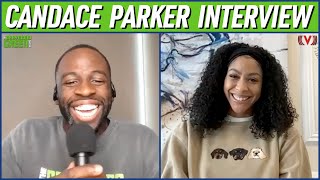
In this episode of The Draymond Green Show, host Draymond Green interviews WNBA legend Candace Parker, the first female guest on the show. The conversation covers Parker's upbringing in Chicago/Naperville during the Michael Jordan era, the influence of her basketball‑playing brothers, and her decision to attend the University of Tennessee under Pat Summitt. Parker discusses becoming a mother while still in her early career, the challenges of balancing elite competition with parenthood, and how motherhood reshaped her perspective on life and basketball. The bulk of the interview shifts to the state of the WNBA: Parker critiques the league’s business model, revenue‑sharing, marketing strategy, facility quality, player compensation, and the lack of personal lockers. She argues that the WNBA is positioned as a charity rather than a premium product, calls for better ownership investment, and suggests strategic marketing that targets genuine fans rather than “knuckle‑heads.” The dialogue also explores championship culture, the role of luck versus skill, the impact of player movement on legacy, and the differences between NBA and WNBA fan engagement, including the use of the word “support.” Parker shares her media experience, the value of TV work for personal branding, and her future plans, including stepping back to focus on family. Throughout, both guests exchange personal anecdotes, humor, and candid opinions about league structures, gendered language, and the future of women’s basketball.
Chapters
What's up everybody? It's Draymond Green. Make sure you subscribe to The Volumes YouTube channel below so you don't miss any more of this great content going forward. What's up everybody? Welcome back to The Draymond Green Show. This next guest, I am honored to have, is actually the first woman on The Draymond Green Show. And like initially when we first started, it was like, we were getting guests and I was very strategic about the guests. And then like the way they were lining up, it just became a thing of like the first woman that come on the show, like it has to be like, you know, like you gotta have a resume to come on the show anyway. But the first woman that come on the show, like the resume has to be like insanely stellar because like we all love first, like you're the first to do something. It's the most amazing thing. So I'm gonna go down this list and just bear with me. 2-time WNBA champion, 2-time MVP, a Finals MVP, 7-time All-Star, my favorite of the list, Defensive Player of the Year in 2020. Quite frankly, when everyone was trying to say like she was slowing down, Defensive Player of the Year, stop the talk. Rookie of the Year in 2008, which was 12 years before the Defensive Player of the Year. Insane. 7-time All-WNBA First Team, 3-time All-WNBA Second Team, 2-time NCAA Champion, 2-time AP Female Athlete of the Year, 2008 and 2021. So we going back and again, 2020, if the Defensive Player of the Year wasn't enough for y'all to stop saying she was slowing down, Imma just go AP Athlete of the Year, 2-time John Wooden Award winner, 2-time Olympic gold medalist, and we just gonna leave the high school accolades where they are. This next guest needs no further ado. CP3, Candace Parker, welcome to the show.
Thank you so much. I appreciate you having me, man. I'm excited to be a part of your show.
Thank you. I appreciate you coming on. Now with that being said, who's the GOAT? The greatest woman of all time? With this resume, 'cause see, they don't mention your name enough in that conversation for me and I have a problem with it. So I need to know who's yours. Like we gonna start this thing off hot. We getting right into it.
So to be honest with you, I was a big, I'm a big era, you know, person.
I love that. I love that.
And I can, I feel like the GOAT is who you aspire to be like, right? Like when you're in your driveway and you're trying to be like that person. And I watched a lot of, a lot of tape and my dad was big on Cheryl Miller. And so Cheryl Miller to me, I know a lot of people didn't get to see her play and her career was cut short and there was no WNBA for her to really prove what could have been. And so I think just somebody at 6'2" that could handle the ball, that was athletic. Like you didn't see that. She was way before her time. So I think Cheryl Miller to me is that.
I think that's absolutely amazing. You know, when like I knew about Cheryl Miller growing up as a kid, my aunt actually was a standout basketball player. So I knew of all of the women and Annette Babers. I knew of all the women like growing up back in the day and Cheryl Miller, Like I feel like the respect that everyone have for her, it just let you know like what she meant to women's basketball. And with Cheryl, it wasn't even about women's basketball, what she meant to basketball as a whole. Like I think that validates that statement. And so I appreciate you for that. I was expecting you to possibly go somewhere else. I feel like you took the media route on me, but honestly—
You took the media, you know I don't take the media route. Come on now. I'm all about it. Let's go.
All right, let's go. Let's get into it. You know what? I'm excited about this interview 'cause I know you talk a lot more junk than people may know you talk. And so I'm looking forward to getting some, if I can get some of that out of you, I hope so. But no, let's take it back to Chicago. Growing up in Chicago and especially the time that you, the era that you grew up in, you grew up during the Michael Jordan era, during the '90s Bulls era. What was that like growing up in Chicago, coming from a basketball family and being able to have that right there?
The expectation for winning from the get-go. Like, the Bulls won 6 championships. We moved to Naperville, Illinois when I was 3. So we got there in 1989, and that was right before the Bulls started winning. So my first memories were sitting down and watching WGN, watching Bulls games. And Grant Park where they would do the celebration. And I just remember loving the Bulls. Like, you grew up with the expectation of like, we're winning again this year. That's how it is. And I think it was— it's not ironic, I would say, that I kind of fell in love with basketball around their second three-peat and around when the WNBA started.
Mm-hmm.
And just watching Michael Jordan and— I was a big Ron Harper fan. So watching Ron Harper and BJ Armstrong and Luke Longley, like that was our team, that was our city's team. And I think it just set the expectation of winning like from the get-go, like from when I first picked up a ball, it was like you had to win championships.
So you're growing up watching that. And in the meantime, you have an older brother who's building a career and he eventually goes on Draymond Green to the NBA. What impact did he have on you and the pressure in being a sister and as good as you were with all the expectations that you had, but you have a brother that's an NBA player and then you have to live up, did you feel like you needed to live up to something due to that?
I was always in awe of my brothers. They are and were my heroes. And so everything that they did, I was trying to do. And I think for so long, I tried to play basketball kind of quietly. I really leaned on soccer and volleyball. Like, that's what I wanted my identity to be, just because I would go to school and, you know, kids would come with my brother's rookie card for me to sign when he got drafted and was playing in Philly.
Mm-hmm.
And so the pressure, I think, was there. And I kind of, for a while, was resistant to it. But then, like I said, I picked up the game and I loved it. I fell in love with it. And I started picking my brother's brain about stuff. And I remember him breaking down basketball footwork in and out the same as like with the soccer ball.
Mm-hmm.
And, you know, us kind of, he was that older brother, so we didn't have the competition, but there was just this huge shadow that I had to kind of try to recreate. And luckily I'm not a shooter. Like my brother is a shooter.
Yeah.
So I didn't really follow in his footsteps. I kind of had my own thing. And then my middle brother was just brilliant. Like, went to Johns Hopkins, went to Wash U for undergrad. And so to follow in his footsteps and to get to their school and hear their teachers talk about them, it made me wanna be great and it made me wanna live up to their legacy. And so I always say, you know, my biggest family memories is just going on a Saturday to the park and just us. And that's where we talk about jump. Jump.
Absolutely.
That's where I learned, you know, it was from my brother. So not only, you know, my fadeaway, but also like to be competitive. Mm-hmm.
And that takes me to, so I feel like when I grew up, around the same time you grew up, like in women's basketball, I've always been a women's basketball fan, especially women's college basketball growing up. Like Chamika Hogsclaw, Like I felt like you were either Tennessee or you were UConn. Like it was no in between. You didn't one year root for UConn. You didn't. And so I was a Tennessee guy. Shameka Holesclaw, Tamika Catchings, like go down the list. And then eventually I become a Candace Parker fan once you go to Tennessee. Why was it Tennessee for you and Coach Pat Summitt over UConn and Gina Auriemma? 'Cause I feel like if you're a blue chip, you were looking at those two?
Well, Pat was different. You know, I think my parents knew earlier than I did that that was the right place for me. And like I said earlier, my brother went to school to become a doctor. He went to the best school, right? And for me, I wanted to go to the best school to be— I wanted to play basketball. I wanted to play basketball professionally. But I also wanted to— I wanted to be a good human. I wanted to be a mom. I wanted to, you know, major in communications. I wanted to do all those things. And it just seemed like that place and that coach and that program would really prepare me for life. And I had a front row seat to what it takes to be a strong woman, for what it takes to demand respect, for what it takes to be able to walk into any room. Mm-hmm. And look people in the eye and know you deserve to be there. And I think it started at my home and then it carried to Tennessee. And so I guess it kind of came down to me telling myself reasons not to go there. Like telling myself reasons why I shouldn't go there. Like, I wanna play in front of people. And we sold out and we've led the nation in attendance my whole 3 years that I played at Tennessee.
Mm-hmm.
And so to have that following and to have that legacy, and I wanted to be a big fish in a big pond. I didn't wanna duck. Pressure, you know? I wanted to win a championship and be one of the best and one of the greatest to play for one of the greatest programs. And so I think that competitive element kind of came out in me.
Mm-hmm. No, like I said, I was happy you went to Tennessee. I always grew up a Tennessee fan and passed summer, so that was—
But Draymond, like, with you going to play for a coach like Tom Izzo that you knew was gonna prepare you, like, nothing you face today is a surprise because of what you experienced in college.
Absolutely.
Like the Izzo type of guy, you know?
No, 100%. Like the toughness that you had to have to play for Tom Izzo. Like the things that I'll go through in the NBA, I'm like, it's a piece of cake. Like I play for Izzo every day. You know, like when you speak of Pat, it speaks so much to me of my experience with Coach Izzo. Like I love that man to death. I've heard you speak about Pat and like I hear every opportunity you get now, to this day you keep her name alive. And I honor that because Coach Izzo, for me, like I'll give my right arm for Tom Izzo. Like the things that he's done for me in my life and teaching me, like I didn't know how to work hard. Like what's that? Like I thought what I was doing was working hard. Like teaching me how to work hard, to get in shape, like how to compete. Like one of my main skills in the NBA is competing. Like I don't think people understand that's a skill. Like Tom Izzo really taught me how to like compete at a high level. Now I think some of it's innate, right? Like you have to have some of it. But for me with Tom Izzo, like the reasons you're like, I was gonna go to Kentucky, Tubby Smith left. And I, but I always wanted to go to Michigan State and I didn't really have an offer. And then when I decommitted, I had the offer and I went right away because I loved what Izzo stood for. And I knew the man he would help me grow into. And I knew it was so much more than about basketball. And that's what I've watched y'all have.
Don't underestimate the value of life lessons in college. You know? Like, the ball eventually is gonna stop bouncing.
Absolutely.
It doesn't matter how great you are. It doesn't matter. The ball is gonna stop bouncing. And you need skills to be a good parent, to be a good partner, to be all of these things, to be able to work in an environment To learn how to have a motor and to work hard. I mean, you are constantly reinventing yourself. I mean, even watching you now, to be honest with you, I'm not blowing smoke. Like, you don't have to do this. You don't have to, but you're setting yourself up for the next. And I think a lot of athletes kind of ride this wave and they don't prepare for the next, which is good. You know, sometimes you focus on what you have, but The greatest advice I got was from Michael Strahan, who on Mondays after they'd play on Sundays would get in his car and drive and do a radio show after games. You know?
And so it's like that—
Absolutely. That mindset and that work ethic, it comes from people showing you, you know, how to do it and what it takes.
Nah, 100%. And I, like you said, in doing this, I think one of the best compliments I got about this show last year when I first started doing it was Colin Cowherd, owns the network. Like he was shocked at how hard I worked. He's like, yo, I don't understand. Like, why do you work this hard? But like, that's all I know. Like I wouldn't be who I am today. And so anything I do, I feel like that's just how you have to do it.
Like that's just the way it is. But there's a stereotype with athletes that it doesn't carry over into other things. And I hope that this generation breaks that stereotype because as athletes, we are given tools, we work for tools that helps us excel at other things.
Facts.
And I think just now the world is kind of starting to see that in that we are literally given the blueprint of what it is to work in a team, to work hard, to fight for an actual, like, goal that's actually a trophy. And, like, you know, you win something or whatever. And that's what you're working for in the workforce, whatever you're working towards your goals. So I just, you know, seeing you do that and to see you set yourself up for another amazing career, I mean, it is inspiring. So keep it up, man. Keep it up.
Thank you. I appreciate that. And I actually wanna get into that. But before I get into that, I wanna, so you leave college, you go to the NBA and you have your daughter, you had your daughter in college. No, no, no, I know.
So I left college.
Second year.
I left college in May and I had, I was pregnant with her. I got pregnant with her in August. So I had just left. Yep.
Were you scared shitless? Like, 'cause you just spoke about being a mother and like how you wanted to be a mother. Like the arguably the best player of a generation and you're about to have a kid. At the time, like nowadays it's accepted. Like at that time, not really accepted, more frowned upon than anything. And no one really voicing support. Like, were you terrified?
I feel as though— I always wanted to be a young mom. Always. Like, I always envisioned, like, having a kid. I don't know what it was. Like, I felt like it was just like I was put on Earth to be a mom. Like, I just always envisioned having the family and having, you know, having a little you and, you know, being able to look at that person and grow up and whatever. So when it happened, yes, I was— because it was not planned.
Mm-hmm.
But it was one of those things where I kind of just— I didn't see what everybody else saw. And I think that that's my gift and my curse is that when something happens, I look at it as an opportunity where, OK, when am I going to get back? How am I going to work towards it getting back? What day? So the day I found out I was pregnant with my daughter, I circled on the calendar when I wanted to come back, like what game I was going to play. And the schedule hadn't come out yet, but I had circled the day that I was going to play. And from that point on, you know, I would be on the elliptical and I would be on, you know, shooting. I couldn't jump, but I was shooting. I was getting back. And, you know, people are looking at me like, why are you doing all this? Yeah. So I think the biggest thing for me was the balance. Like, my mom was at everything. I had one line in a play, my mom was there. And so for me, I think it was more so not the pregnancy, the get back. Like, I just assumed my body is gonna be able to do what I wanted to do.
Mm-hmm.
But it was the, it was the balance of being an athlete and chasing after my goals and my dreams and having a child and where, where is the gray line of sacrificing for her where it's not fair versus sacrificing what you want to do and your goals and your life? And I will say, I might have been a better basketball player. I might be looked at in a different light had I not had her, right?
Yeah.
Or had I not been injured or whatever. But there is no amount of, anything that I would give up for that. Like, the fact that she's been able to be a part of my career, to see me— like, we've grown up together. We've lived in China and Russia and Turkey and gone all over the world. We're going to Japan in a couple weeks. And I just feel as though, like, that it was my purpose. And, you know, I think it It opened my eyes to the way that the world perceives mothers. And you know, I mean, it's interesting. And I will say the NBA has changed the stigma a bit. Like you walking in with your son for the tunnel, whether you know it or not, it makes a difference. Because guess what? In the media, they're asking me where my kids are when I'm on a road trip.
You know?
Yeah. They're not asking you, they're not asking Steph, they're not asking LeBron. Like, who's taking care of the kids while you're gone? So the stigma that dads don't have to have that responsibility has been there constantly. You know? And so I think just, you know, I know I kind of digressed a little bit, but I think having my daughter has completely set up who I am and what I'm about. And I have a life outside of basketball.
Absolutely.
I have passions outside of basketball. And I think for a while I was tunnel vision and I lived and died by it. And I think as a competitor it's good, but as a human it's not. And so my daughter gives me that. Like she loves me no matter if I score 25 points or if I score 3 points.
Absolutely.
Yeah, so I think, you know, it was a growing up moment for me for sure.
And y'all immediately go to Los Angeles of all cities to like have to deal with all of the stuff that come with that. Now how is that adjustment with a small baby and moving to Los Angeles expected to be great? Like, all right, you just had this kid and you still expected to be great. And I don't think, people may realize it now, but again, we have to remember this is years ago that the Los Angeles, like plans for the Los Angeles Sparks right after Lisa Leslie, That's a big thing. And so now you're expected to carry that with a little baby. What was that experience like?
I only know one way, you know, I'm gonna try to be the greatest basketball player I can and I'm gonna try to be the greatest mom I can. And sometimes I screwed up at both of 'em, you know? But I will say this, I think, I don't feel like I feel pressure from the outside because the expectations that I put on myself are way greater than what anybody could think or want or have of me. And so I didn't feel the pressure. I think more so I felt the frustration of not winning right away. I felt the anger of feeling like— Mm-hmm. You know, you're kind of in mud a little bit in terms of your talent level and what you're doing. And I mean, I had a baby and then I was injured and then there were these expectations to win. And sometimes maybe the team wasn't built in the way that I kind of saw, you know, what would be beneficial to us. We had a bunch of heartbreaks and last-second shots and— But, you know, all in all, I think I was just trying to focus on doing all I could to get that championship. And I didn't envision, like when I came in the league, it was like, how many rings do you wanna win? I was like, 6. Like, Mike, you know, I wanna win 6. And then as you go through it, you realize how fucking hard it is to win a championship.
It's crazy.
How hard it is. And people look at it like it's just so easy. And it's not. And so dealing with the pressures was nothing because I wanted to win. I didn't care. I just wanted to win. And so I think just that was what kept me up at night. It wasn't what people were saying about me or anything like that. It was just the fact that I wanted to win a championship.
I feel like guys, like the more that I've won,— and like you just said, how hard it is.
Yep.
I feel like I have a softer spot for guys that hasn't. For instance, Damian Lillard.
Yeah.
Like James Harden. You think of these guys who's had these incredible careers and haven't won a championship. And like I used to talk a lot, I used to always, and like I still will, like Charles Barkley, like never won a championship, Chuck. Like I still, I'm still gonna talk about him. But there's also another side of me that's like, like James Harden. Does James Harden win a championship if he don't run up against us every year in the conference finals?
Like, you, you said— I mean, would Karl Malone have won? Karl Malone would've won a championship.
Exactly.
Or John Stockton would've won a championship if MJ wasn't, or Dominique Wilkins when Atlanta—
Exactly.
Talk about all these guys. Yeah.
But then these guys end up being discredited, like for what they done in their careers because they didn't win a championship. But actually only you and I, and obviously other champ knows how hard it really is. And all of the things that has to go right in order for it to happen. You gotta be like, you have to be healthy at the right time. You gotta be clicking at the right time. You gotta get a little lucky. Like—
But people underestimate and undervalue the luck element.
Absolutely.
Because you know I'm a Golden State fan. Like, it's Laila's favorite team. No, I am. I've told you this.
Absolutely.
Like, if you look back on if everything would have gone perfect, right? Y'all could have 6 or 7 championships.
Absolutely.
Right? Now, if everything would've went wrong, y'all maybe only have one or two.
Yeah.
Like, we look at these plays as, and I've always said this, we allow individual plays to determine somebody's entire career.
Mm-hmm.
Like, really, if Houston Rockets wouldn't have missed 27 straight 3s, And it's, listen, y'all defense is great. What's going on? Things was wide open, like wide open.
Yeah. At least 10 of them were wide open.
Or what if Karl Malone would've put the ball up like this and Jordan would've come, wouldn't have come baseline and knocked it outta his hand? Like there's so many elements of stuff. So I believe that there's so, so much luck, but I also think you make your luck.
Yeah.
And like to watch y'all know, 'cause there's a champion's mentality of knowing when that play is. Like knowing when you have to make a play.
That's true.
You know? That is true. And you can only know that when you've won. You cannot, you can try to know it, you can try to feel it, but up until you win, you're guessing. You're guessing when it's time. Like, is it time now? Okay, no. Is it time now? You know what I mean? And so I feel like watching you guys and watching y'all last year, like it really was, you knew when it was time.
Mm-hmm.
So I think there's luck, but I also think, you know, there's that mentality and that winner.
So, so do you think, like, actually as of late, Dame has been really outspoken about it.
Yep.
Do you think the flack that guys catch, or not even necessarily the flack, but essentially how guys are dropped down the rankings because of not winning a championship. Do you think that's justified?
I think in the past NBA, yes. The modern NBA, probably not. Because I think, there's so much switching teams and going places that then you're gonna have to start not validating championships as well. Because do you remember when the Lakers did it? It was like, Karl Malone went to the Lakers and— Yep.
Gary Payton went to the Lakers.
Gary Payton. Yeah, and they went to the Lakers and it was just kind of like, like, if they win a championship this year, they haven't won one before. And I think this is what I'm facing now. Like, there's so many people that are calling me KD. And, you know, you just switching teams. And I'm like, listen, at me. I've won championships. Whatever— however you want it, I'll give it to you. We've won it the hard, hard, hard way. I've gone back home and won a championship. And now I'm deciding that, you know what? I don't want to play 40 minutes. I want to do everything. I don't want to— I don't— I don't want to play 40 minutes. I'm cool winning near my family, picking me off the court, playing for a dope organization in a dope practice facility with stuff that I've never had in my career. Call me what you want, but don't me with that. And so I think we have different ways of validating and not validating players. Do I think Charles Barkley is a freak? A freaking beast during his— yes, like Chuck could fall.
Absolutely.
And he played during an era that was playing against— I mean, so, but I think now it's a little bit because so many guys are changing teams. So it's like, what is Dame gonna do? Because you are kind of wasting a little bit of years. And I get it, like you wanna stay loyal and there's a lot of people that wanna start and finish in the same place. And I think that that's admirable, but you also have to look at the big scheme of things if you care about where you are on the list.
So, so, so are you saying KD coming to the Warriors and you going to the, to the Aces are two totally different things?
I think it's two totally different things. I've won two championships.
So I think it's— So you're saying, so you're saying, so you saying what you did is more LeBron? Than KD essentially. LeBron went back home, won championships.
I'll be honest, yes. I think LeBron moved to the Lakers for, yes, career-wise, but also business-wise.
Yeah, absolutely.
He's talking about wanting to be a billionaire. Well, guess what? I wanna be a female Magic Johnson. I wanna be a businesswoman and I wanna take females sports and female athletes and have them looked at differently in tech, in investment, in just business in general. And so for me, I think it was family, it was business, and it was basketball. And it's like, and I think that that was the main part. Draymond, I have not had a locker in my entire career. I've been in the WNBA for 16 years. And I have not had a locker where it has my name on it and I can leave my shit and then come back and know my shit gonna be there. I have not had that.
Really?
That's my own that you walk into and this is your own area. Nobody else. There's no old people walking through. There's no— and it's not to say this is a bad thing, but I'm saying, like, I fought so hard to, like, bring the WNBA along that I've never had a practice facility where I can just go get shots up at night. We've always shared a practice. Yes. And so my thing is, is I deserve that, right?
Absolutely.
I deserve that. I've worked my ass off and have been a part of growing the WNBA. And so for— I don't want to— I don't want to— I want my last couple years, my last— if this is it, I want this to be something that I look back on and I'm like, man, like, I had that, you know, like I've seen progress. This is where we started and this is where we're at right now.
So your now teammate Kelsey Plum recently went on a podcast and everyone's been outspoken about the flying private, which I wanna ask you about. But also she recently went on a podcast and she was discussing revenue sharing. And, or the revenue. And she said, I don't, I'm not asking for equal pay in the NBA. And I can appreciate this, Kelsey, because I actually said some things very similar to some things that I'm starting to hear these days a couple years ago. And I caught a lot of flack for saying what I was saying. And, and I was just like, wow, that's interesting. But I'm starting to hear more of those things. So I can appreciate what Kelsey said, which was, I'm not asking for equal pay as the NBA players. I'm asking for equal revenue sharing as the NBA players. What is your feeling on that as far as like getting the equal revenue share? You and your business acumen and what you know about business and numbers, what's your take on the revenue sharing situation?
Yeah, I'm on the Draymond Green podcast, so I can't hold back here.
Absolutely not.
So here's the thing, and I'm in agreement, and I heard what you said, and I'm in agreement with the fact that in a lot of areas, the WNBA tries to do things like the NBA, right? In their business plan, except bad. Let's just be honest, right? So I guess to me, I was big on, if I'm being 100%, I feel as though we should not have a cap. I don't think we should have a cap. And I also think maybe to get to that point, maybe we have to de-unionize. Maybe we can't have the same setup as the NBA. And I say that in— The NBA is made of stars, right?
Mm-hmm.
And this is no knock because I think if I'm an employer, if I'm a coach, or if I'm a trainer, I'm trying to go and do what's best for me and my family. And if somebody wants to pay me all this money to come do something, I'm going to do it. I'm going to try to work out ways to carve out things where I can be successful. What I, right? But what's happening now is as a league, a lot of times we're setting ourselves up to look like a charity. And I say that in a sense of we're paying our coaches more than our star players. We're paying our GMs more than our star players. And so then what does that say about the product? Right? Like they're not coming to see Steve Kerr call plays.
Mm-hmm.
They coming to see y'all. You know?
Absolutely.
Steve Kerr, great. He has an amazing blueprint, but you can't have him make more than your star player.
Mm-hmm.
And so I think from—
Draymond Green.
And there's no league, no successful league, that is, in the United States, even abroad, that pays their coaches more than they pay their star players. So I think we're already set up not in the best light. I also say this. You know, I think that the way you have the product on display says a lot about the product, right? So even the pricing of the app is like, you're telling me it's like $14.99 or $29.99, $29. What is that saying?
Like, our product.
So I just think that all in all, even the jerseys, right? I went to Chicago and it's like, Get to Chicago, everybody's excited about it. Can't find my jersey, can't get my jersey, can't buy my jersey. There's no production of my jersey, right? Won the championship, people still can't find my jersey in an entire season. So I just think sometimes we set ourselves up not to be successful.
Mm-hmm.
And you know, there's a lot of things that have grown in the WNBA, right? But there's also a lot of things that need to change from a business standpoint. And I think that, you know, we ourselves have to hold ourselves to a higher standard. And ownership does as well. You know, like you talk about in the NBA, can't have millionaires, you gotta have billionaires, right?
Absolutely.
Gotta properly invest in stuff to see where it's gonna really end up. And I think we're at a fork in the road right now. And I think people that choose the right way Women's sports is going to be here, whether it's people filling a quota, whether it's television, whether it's streaming. But I guarantee you, the visibility element— why did it take so long for the Women's National Championship game to be on ABC? Why are two of the hottest teams competing against each other on Super Bowl Sunday? Yes.
Like, we set our problems up. That's crazy. I couldn't believe that.
But Draymond, if we would have went Game 5 in our series in the WNBA playoffs, we would've went up against baseball, the playoffs for baseball. Do you know what I mean?
Yeah.
So there's certain things strategically that I understand you kind of have to take what you're given, but also there has to be a line in the sand at some point where, you know, we start having a better blueprint for what we're trying to accomplish, you know? And I could go on and on about marketing as well. 'Cause for so long when I came into the league, we were marketing to knuckleheads that were in their mom's basement talking about how women can't play basketball. Why are we talking to them?
Mm-hmm.
Like, let's love it and let's love and embrace our supporters and our crowd and the people that really like women's basketball. So I mean, last thing, 'cause I'm gonna go on this rant forever, but you know, I always suggest and I'm like, everybody, similar to how you all go overseas and play, right? Everybody should go play We could go sell out TBA if I'm playing a home game at Thompson-Boling Arena in Knoxville, Tennessee. Let's go play in Orlando, Florida when they have their big AAU event.
Mm-hmm.
You know, I just feel like let's go to Portland when they have their event and we're able to take a WNBA team who are future stars in the grassroots program. Let's play there. And then guess what? All those girls will go home with their parents and maybe buy season tickets where they're from. I just think that there's been so many ups and downs and we're still here and we're still here for a reason.
So yeah.
Absolutely.
I agree. And I think like the marketing, 'cause I'm a strong believer in that. When I went on my little rant, that's really one of the things I was talking about. It's like, how is it that, because, and I want to get into this, which I said in that rant, let's focus our argument to who we should be talking to. Who can tell these stories? Because the fact that like, people immediately say Candace Parker from Chicago. And if you ask Candace Parker, where's she from? Number one, you're gonna say Naperville. Now that story should be told. Like that would be the equivalent of saying, now a little different, but it'll be the equivalent of saying, LeBron's from Cleveland and not telling the story of him being from Akron. Let you tell, like, I'm from Naperville. Now that's Chicago, right? Like, you still Chicago through and through, got the pride, grew up in it, all of that. But you still gonna put on Naperville because that's going to get— it's going to do way more for Naperville than if you just say Chicago because Chicago is a made city, right? Okay. So Now, who's telling these stories? Who's telling that Diana Taurasi's from the IE, right? Like, why does no one know these things? Because there are people out here that are in positions to tell these stories that can help grow these games. I actually went— ironically, it's Women's Empowerment Month. I went on this rant during Women's Empowerment Month, but I feel like there needs to be more of that. And if we can do that, Now you start to grow the pot, which is now you start to grow. If you growing the revenue, you start to grow the dollars that goes to the athletes. I feel like we, like what needs to happen is need to go at those people. And that's just, that's just my opinion. I don't know how you feel about that, but.
Okay. I really feel like why the NBA is great is one, because you guys are the most talented in the entire world at your craft, right? So you have to be good, okay?
Mm-hmm.
To what you just said in terms of telling stories and people being able to own who they are and tell their version of things. And you're encouraged to be you. Now, there was an era in the NBA where it wasn't, where they were like, okay, you can't be this, you can't be that. We've had that in the WNBA, okay? Then you move into this era where they're like, social media, wow, people fall in love with these players. For different reasons and you're not wearing a mask and you're not wearing a hat and they're able to see you and you're able to have the tunnel fits and be who you are and walk in with your son and people fall in love with that, right? And I just feel like to some extent that we're in, we're back in the '70s and '80s when Dr. Buss took a chance on investing in a product that nobody wanted. And the players were pretty talented, right? Players could ball and it was cool, but it was bigger than the game. It was the experience. It was the Laker Girls. It was the club. It was feeling like you're a part of something.
Yeah.
It was getting stars to come and sit courtside and make it cool and be fashionable and all these things. And I think the WNBA needs to capitalize on that. Like, the WNBA needs to capitalize on that blueprint of being able to make it more than just the game of basketball. Because listen, y'all play— I watch— y'all play a hell of a lot of basketball. And guess what? There's some games where it's not the best.
Like, it's just not. Absolutely.
But it's still the experience of it all.
Mm-hmm.
And I think having Adam Silver, love him, hate him, whatever, I feel like he listens to both sides in the way that you all do the All-Star Game now, in the amount of time you have off after the All-Star, in not having a dress code, doing things like that. And that has grown the game. It doesn't have anything to do with rules. I mean, stupid take foul rule, I guess, was an adjustment this year.
Mm-hmm.
But it doesn't have anything to do with the game. It has to do with the stuff outside of the game. I would like the WNBA to do that, like capitalize on that.
No, I, and I think your example of Dr. Buss is incredible because if you look at it back during those times when he made that investment and took that chance, they were losing money at that time. And so I think everyone's argument is always gonna be, but you're losing money. But if you get an owner and, I've been outspoken about Mark Davis before with the Raiders, and I'll give credit where credit is due. I'm always just giving my opinion and tell the truth. It's not really biased. It is what it is. I think what Mark Davis has done and is doing with the Aces, like, I have the utmost respect for it because he's investing. He's investing into the product. And so, and I mean, let's face it, In any business that you start, you lose money to start it. That's any business.
It doesn't matter what you do. It doesn't matter.
Any business.
Yes.
You're going to lose money at the inception. There's no way around it. If you are someone out there that can start a business and not lose money at the start, contact me. I got some money for you to start a business. But you're going to lose money. And so everyone's argument is always, but you're losing money, so how can you ask for this? And what you're saying is be willing to invest the money and know that it will be a loss ultimately to grow the product where it can go. And so you may need new owners.
Yep, exactly.
Like, that may be an issue.
And that's a seamless transition into the elephant in the room. The hot topic of the latest offseason has been chartering. And you know what my question— my answer to that? Yes. Do I want a charter? Yeah. But similar to the person that has $5 in his pocket but has a Lamborghini that he gotta fill up and do all this stuff, I don't want the Lamborghini. I want more money. And so I think before that happens, players have to make more money.
Absolutely.
Because the product is going to be seen as better and more and exclusive the more money the players make. I mean, let's be honest. Like, somebody walks in, you can be nobody. If you— a billionaire walks in a party, he gonna get in. A billionaire gonna get into the party. So I just feel like, I think that that is— yes, I do want a charter. I think it would make the brand great, whatever. But let's talk about dollars and cents first. Yeah. You know?
Absolutely. And one thing that you just spoke of, and I wanna get your take on this, I feel you, you spoke on how the WNBA is aligned. Do you think, and I wanna specifically ask this question because it'll take me somewhere else and you'll get where I'm going in a second, but do you think aligning the WNBA right next to the NBA Is it ultimately beneficial? Because for instance, you know, wanting guys to come to the games and support, right? Like I understand the support thing, but is that actually what's going to help drive the product, which is a great product, but gets overshadowed?
Draymond, can I ask you, 'cause we talk about verbiage a lot and usage of races. Right? We always talk about the way people use to describe, even somebody that's Black and is a shooter, the verbiage people use to describe that person is way different. Or when you're comparing players. I was trying to find a comparison to Grady Dick, right? And I was immediately going race. And it's like, no. Let's compare him to who he plays like, not— race. Like, you know?
Absolutely.
And I think the verbiage that we use for women a lot is support. Like, when I go to your games, I'm not— I don't type in my caption, I'm supporting the Warriors, right? I don't say that. I say, yo, I just pulled up to the Warriors game. It's dope. Like, I brought my daughter. We're sitting courtside, whatever. And it's like constantly— The WNBA uses support in their caption. So I don't think aligning the WNBA with a league, one, that is the NBA, two, that has been in existence for 76 years, it's just not a good comparison to begin with. And so while we do lean on other ballers, it's other basketball players. I don't think we need to, like, have that because I think comparison, what they say, the comparison, comparison is the thief of all joy.
Absolutely.
'Cause it's like, you're not gonna get joy from this if we're constantly comparing our All-Star Game, our signature shoes, our brand of basketball, our brand of basketball and points. Everybody wants to talk about we are low scoring. Well, we play, we play 40 minutes, y'all play 48.
Mm-hmm.
You know, like, Okay, so let's get into this. And so then all of a sudden we're sitting there comparing like, okay, well, how many points do you think you scored? You played 48 minutes or how— It's not going to end up well for us.
Yes.
And so I think it would be better to just differentiate ourselves from the NBA. Yes, for a while we needed all of this, but I think it would be better. We have to some extent, there's not many as teams that are affiliated with the NBA, but those teams usually are doing better. So, you know what I mean? So it's just, I don't know, it's the chicken or the egg, man. You know, it's like, it's beneficial, but it's also hurtful.
100%. So I'll be 100% honest with you because why not? Like, I'm always gonna be honest and I am a big fan of women's basketball because I feel like I, who being someone that appreciates fundamentals, if you wanna see some fundamentals, you go watch women's basketball. And I don't say that in a negative way 'cause you not wanna see some fundamentals, go watch the NBA. Ain't no fundamentals involved. Like, I mean, the great teams, you got fundamentals, but A lot of these teams suck and they don't have fundamentals. And I always say, I like to, when I wanna watch good basketball, I'm gonna go watch me some women's basketball. 'Cause you gonna see good basketball. And for me, that's what I appreciate. That's how I play the game. I like to play the game the right way. I actually stopped watching the WNBA over this whole support thing because I felt like it took away from me the reason that I was watching it. I was watching it because I enjoyed the game. I was watching it because like there are certain players that I enjoy watching. Yourself, Chelsea, DT, Asia. Like there are certain players that I want to see play as a fan of basketball. Sue, like, and there's a list, Brianna, like I, there's some players, but once it became all about like, oh man, like you need to go support a WNBA game. I'm like, and when I, when I went, I'm just like, but this ain't really why I wanted to be here. Like I wanna be here because I wanna watch this game and it's a good game. And then also I have some friends in the WNBA and I will go support a friend because guess what? I'll go support a friend in a play. Yeah. So if I'm coming like, and I'm specifically coming to like, I'm coming to the game to support CP, I may not be interested in that basketball game, but I'm gonna come support a friend. That's a totally different thing than me sitting at the game on the NBA's Instagram, Draymond Green here to support the Las Vegas Aces, or Draymond Green here to support the WNBA game. I started pulling away because with the support Then I felt like also came backlash. And what I meant by backlash is this. I feel like when things happen, a lot of times WNBA players, we have been like the ones being attacked about it.
Okay. And I'm gonna fill in, sorry to interrupt, but I'm gonna fill in.
No, go ahead.
Absolutely. Because I immediately, I have a lot of NBA friends. I do. And I immediately heard when Ariel Powers went at— was it Andre?
Andre Iguodala.
Andre Iguodala when he signed on. And here's the thing. I think to some extent, people are so quick to react and be defensive. So I have two takes on that. One, I know the deal. 12, right? I know the deal. 23. Like, I know the deal of you call zero, man. That zero, like, y'all say that.
Y'all call each other— We say that all the time.
—by your number.
I don't call Steph, Steph. I call, hey, 30, what up?
Exactly. OK, right? So I get that part where people feel attacked because they don't know the lingo of what's being said. I also get the other side where— You are so tired of having to defend yourself against dudes that can't carry half of what you do every day. And say they have all this game and come in and they shot is—
Broke.
Had these people and you feel, you go through TSA and you got this dude that's 5'5" coming up to you talking crazy. So I see the defensive element. It was directed in the wrong direction. But I also get tired as a WNBA player of appreciating whatever we get. Right? There's a number of times where I'm sure you jumped on somebody where there's been a different perspective. Right?
For sure.
Where you feel attacked, and so you kind of lash out and, like, you know, go at them. So I see in women's basketball all the time, that occurring where you feel like, ho, ho, ho, ho, what was that supposed to be? You know?
Mm-hmm.
But also guys that are trying to do the right thing or are being steered in this support part of the game. And I couldn't agree more that I think for a long time we wasted time and dollars and marketing on trying to get the support from people that really didn't understand the game of basketball or didn't understand the WNBA at all. And so I mean, I value criticism in our game because I think there's, with more money, there's going to be more people that put time in to get better. Let's just be honest.
Yeah. Yep.
Like, you saw people in the '80s and '90s that were fat and out of shape come into training camp that did nothing but rebound and run down the court. Could they have made their free throws more or hit jump shots? Yeah, probably if they'd have worked on it. But guess what? It ain't life-changing money. What am I gonna still get in the gym for? I think we're gonna see better product with the women's game 'cause more people are gonna get in the gym. More people are gonna try to get better at their craft. It drives me nuts, people that take this shit for granted. It drives me nuts, people that don't put their effort and energy into it. It drives me absolutely nuts. And so I guess from two ways, like, I see what needs to be done. I see the element of support, but I also am competitive as hell. And, you know, so I know I digress again, but I just think women sometimes we feel like it's a lose-lose, you know? Mm-hmm.
Absolutely. So in saying that, I think one thing you're saying, which I totally agree with, is your fan isn't gonna be the fan who likes somebody high-flying. Like, no, your fan is going to be the fan that understands and appreciates basketball. Now, what I will say is this, We are starting to see, and you know, first girl dunking games and all of that, first woman dunking games, all of that. But like, we are starting to see women be more and more athletic. And I think that goes into like the training that we're all, that we're all getting now and all of those different things. But I said all that to say this. So when people say, and I, I know the answer to this, but these are for the listeners who don't know the answer. So when people say, Lord of Rim, Because if y'all was dunking more, then it'll be more entertaining and more people will come to the game and they'll come support and it'll be more exciting. So lower the rim.
We should just put on bikinis too then, huh? Some of us. Um, I disagree. And I'm actually, you know, people Call me on this too. I mean, it would be beneficial for me to play with the same size ball y'all have too. My hands suck at fitting on the small ball. Like, I'm a big believer in let's all play with the same ball. Now, we can have a different color and make it ours, but I'm a big believer in playing with the same ball. I mean, listen, Draymond, like, we gotta, at some point, you gotta kind of fight the battles you can fight.
Mm-hmm.
And it was, I think the '90s was the last time that somebody out— finally outlawed the half court. Like, for a long time, women were not even allowed to run full court because they were— they thought it was just too exhausting. We weren't running in marathons. We weren't allowed— I mean, we just got allowed to be athletes.
Mm-hmm.
And so I think it's just, like, one of those things where it's like, can we have time? Can we have time where we don't have to fight for stuff and we can do what we do and ball and— gain skill and all this stuff. And it's like, we're trying to change all these elements of stuff. There's different styles of basketball. Some people don't like overseas basketball, but guess what? There's a whole crowd of people that do. Some people don't like the NBA and they like college. I personally cannot watch college until the NCAA tournament. But there's some people that absolutely are fans of the NBA. That's me. There's some people that grow up and watch women's basketball and are fans of women's basketball. Like, Let's let our crowd be what it is. We don't have to go around changing everything. I think that's been the issue, has been we've tried to change so much. Like, you can't be gay. You can't be a mom. You can't be all these things. Like, we've been told you can't be all these things for so long. And so I think we were so far away from our identity as who we are and the communities. Like, some of the strong, powerful people that come from the NBA are a result of them being able to be themselves.
Absolutely. I am a product of that.
Exactly.
I've been myself this whole time.
Exactly. And there were players in the NBA that haven't always been able to do that, be that, or have fought those battles to be able to help players in the future be who they are. And that's why your league is successful. Like, we keep talking about the rules of the game. And it's like, Draymond, I go and I watch the NBA all the time. I work at NBA TV, NBA on TNT all the time. There are games that are painful to watch.
I agree.
Right?
100%.
Beautiful. Nobody's out there. Everybody's out there running around, whatever. Guess what? It's the swag. It's the tunnel walk. It's Draymond Green. It's all these things. So like, stop trying to change rules within the game. Like, let's really focus on what the product is and what it can be. I think it's coming. I think dunking is gonna become more prevalent. In the women's game, but it will never be the identity of the women's game ever.
Nor does it need to be.
I don't think so.
Nor does it need to be. By the way, dunking isn't the identity of the NBA today. 3-point shooting is.
3-point shooting is. Exactly.
And earlier on, we spoke about setting up things for after basketball and you are well into your next thing. Not only have you set it up, but you're well into it. You're thriving at it. Number one, congratulations. It's crazy that we're saying this in 2023, but to be the first woman on the All-Star broadcast, absolutely amazing. You know, as a basketball fan, what All-Star Weekend means to us. So I just wanna say congratulations to you on that, number one. Secondly, what's TV been for you? Like, I know for me, For me, if I'm being honest, doing TV and podcasts and stuff actually helped me recapture my love of basketball because it allowed me to get back to speaking about the game and its purity and to kind of get away from the business of it all and just speak about and just appreciate the game. What is going on TV? What has that been for you?
Well, first, it's a dream 'cause I think it's the second best job. I think playing is the best job ever. And I think talking about basketball, I do that anyway. I'm a basketball junkie. I go home, it's always on television. We can watch a whole game and I'm gonna watch the roundup of SportsCenter, of NBA Game Time, whatever comes next, I'm gonna watch it even though I just watched the whole game and probably gonna watch it again. Like, that's just, I am, I'm a junkie for NBA basketball. I'm a junkie for just sports in general, football, like, you go down the line. So I think television for me was that ability to stay connected to the game. And I feel like I've had the upbringing of being around a table with brothers and us arguing without Google. Like, we couldn't Google the stuff that we were arguing. Mm-hmm. We just argued. And we had points and things like that. So I think once I got on television, especially for Turner, where it's encouraged for you to have your point of view, for you to share your point of view, for you to debate, for you to argue, and I'm doing it with people that I've looked up to and grown up watching.
Mm-hmm.
And so I think it was just one of those surreal moments where I get to do this, you know?
Absolutely.
And I'm not telling myself that just to say it either. I'm not saying like, "Hey, I get to do this," and I'm telling myself to, you know, push through days. No, I get to be on television and have a platform and share my opinion and talk about a game that I love and get paid to do it. So I just think it's a unique position 'cause I'm able to play and still commentate on the game. And so I think it's made me a better basketball player.— but it's also made me a better commentator because I know the commentators I don't care for. You know what I mean? Like, I know the commentators that rub me the wrong way when you make it, like, extremely personal or you attack me or you, you know, degrade or demean what I've tried to accomplish or what I'm doing or my intention, or you don't know something and you try to act like you know the whole story. And so I think it's made me a better— Yeah. Person, like as a basketball player, but also as a commentator in the way that I'm able to critique individuals and stuff like that.
No, I can appreciate that. 'Cause I know in me doing this, one of my biggest fears was like to not be the guys that I hate hearing talk. And you can very easily fall into that if you're not careful because it's accepted. Like, and like—
It's a hot take.
Yeah. And it'll, in some cases it'll get you a boost, but I never wanted to be that guy. So I can appreciate that. But you know, we both have, we have the honor of being teammates, Turner Sports. Someone who recently just left, but Tara Auguste, who kind of gave me the opportunity to come in this and who I'm very appreciative of. Can you speak to me about Tara Auguste Quite frankly, you've had the opportunity to work with her more than I have, but can you speak to me about Tara?
Tara August is one of those people that is so talented, so personable, and we talk about how Ernie Johnson has set the culture at Turner from the talent standpoint of that everybody's going to come in, be respectful, have fun, uplift and empower others. Like you talk about that, and that's Tara on the business side. Like in terms of relationships and just caring, like there's nobody that cares more than she does. And it's the little things, you know? Like I think she has done so much in her career, but she still wants to empower and uplift others, you know? And— Even though she's not a part of Turner anymore, we still talk, obviously. And I know she's gonna, like, take over the world.
Absolutely.
Like, that's just how it is. And I always look at people because I think the way that you demand and command respect is directly related to the way that you give it. And I think that Tara gives respect. She— I mean, and she, she has a way of, like, not— Can I say this? She has a way of not— she's done so much. She has so many things that she's accomplished. She's so great at what she does, but she doesn't want people people to know that, you know? And she doesn't want to lead with that. And I also see eye to eye with her as well because she's always in a room full of men. Yes.
You know?
Absolutely. And I think she carries herself the same way regardless. And I really admire people like that. So Tara's dope. She's the best human.
She is. She's super dope. I'm very appreciative of her, like I said, and just giving me the opportunity and kind of— seeing like, yo, you should be doing this. And she's brutally honest, which I can always appreciate. 'Cause as you know, you get to a space of where you run into like the issue of like finding people that'll be honest with you. And I can always appreciate her for one, the opportunity, and two, like no matter what, she's gonna be brutally honest. And obviously great at what she does. Like, you know, when everyone will always see Ernie, Kenny, Chuck, Shaq, yourself, Jamal, Adam, myself at times, they see that. But they don't see Tara behind the scenes making all of that go.
All of that work.
The battles that she have to fight for that to be what it is.
And look what it's been because of that. That's what I'm saying. Like, because of her.
Absolutely.
Yeah, for sure.
So I can definitely appreciate her. And I've taken enough of your time, but before we get outta here, how much longer do I get to appreciate your game and what you're doing? See, I came in the league and I've been able to do what I do and Quite frankly, you did way more. And all of that, everybody talk about like the point forward position. You've been doing that since I can remember watching you play basketball. And like the brain, the smarts, rebound and blocking shots, like shooting the 3, leading the break, setting up the offense. Like you're someone that I watched and like— Draymond Green. How much longer do I get to enjoy you playing?
Well, here's the thing. I always said it's gonna be in the off-season that I know, you know? I think when I can't prepare and train the way that I know that I should, I'm not gonna cheat the game. And I've said that from the get-go. I will not cheat the game. I will not be one of those players where you like, "Canis?" Like, it's not gonna happen. So I will say it is coming to that point. I'm also not a big, like, go to half court and get every— I'm not going to do that.
Yeah.
But I'll know. And I will say there's way more basketball behind me than in front of me. And it's coming. But I'm learning to enjoy the process that much more. You know, I mean, I'm enjoying the daily grind that much more. So.
Is Layla ready for you to be done?
That's a really good question. She was all for this Vegas move because baby girl's followed me everywhere in the world, right? She starts high school next year. Pretty damn good volleyball player, to be honest. Don't tell her I said that.
Okay.
But she decided to do volleyball, she could do it. And it's time for me to choose her. If I'm still playing, it's still got to be about her now. You know, she's followed me around long enough. And so, like I said, um, I think it would be great to be able to be at home and be 100% present, uh, for her and my son, you know. And so I'm not going to be the one that's 40-something playing. It's just, it's not gonna work. And to be honest with you, Draymond, like, maybe I'll be 40-something playing, making 30 or $40 million, but I ain't gonna be 40-something playing making what we make.
Oh, I can dig that. So I'll tell you what, I only, I mean, obviously we are fortunate enough to make more, but I got 4 more left in me.
Yeah.
I've all, 15 has always been my magic number. And it's like the closer I get to 15, can agree with what you're saying. The more inspired I get to get to 15.
Yeah.
And like, I wanna get to 15 and God willing, I can get to 15. And after year 15, they like, "Yo, so about this next deal." And I can say, "Thank you, but no thank you." Right.
Like, 'cause—
There's power.
There's power in that.
My kids, you know, like my kids, like, I wanna go to Australia. I wanna go to Dubai. I can't go to Australia and Dubai because when it's the season to go there, we're in season. Like there are, and those are small examples, but like there's just so many things that I wanna do that a basketball schedule does not allow you to do.
Life.
And so I feel you.
Life.
I feel you. Life. CP, thank you so much. I appreciate you.
I appreciate it. I gotta cut you in bones at some point, some wine and some bones.
We can do that for sure. I'm always looking for somebody to beat up on, on the bones.
Man, that's not gonna happen. I'm just gonna tell you.
Oh, I cannot wait. Y'all heard it here first.
It's not gonna happen.
I'm telling you, before we get outta here, you're a Michael Jordan fan? Yeah. I'm him at Domino's, just so you know. So there's your warning. Him, Michael Jeffrey Jordan.
Oh, Jeffrey Jordan. Chicago.
No, Michael Jeffrey Jordan, Chicago Bulls, number 23.
Oh, okay, okay.
Him at Domino's, like him at basketball, I am him at Domino's. So that's your warning.
Are you him in the '80s? 'Cause you could be him in the '80s, you not gonna win. 2-3 piece.
I am him. There's your warning.
Okay.
Thank you so much, CPI. Appreciate it.
All right, man. Appreciate you.
What's up everybody? It's Draymond Green. Make sure you subscribe to the Volumes YouTube channel below so you don't miss any more of this great content going forward.
More from Draymond


Draymond Green on Brandin Podziemski Extension, Darius Acuff Interaction, & Weird Rudy Gobert Talk


"I Was Waiting for You All Game!" | Deni Avdija & Draymond Green Recall Iconic On-Court Moment

Deni Avdija on Becoming an NBA All-Star, Playing In NBA Playoffs & Hilarious Draymond Green Story


Draymond Green on Warriors Preseason, NBA Push-Off Rule, & LeBron's Fanatics Helicopter Deal


"Awful Representation" — Draymond Green Sounds Off on Dalton Knecht's Lakers Purgatory

Draymond Green Explains How Micah Nori Handled Damian Lillard & Ja Morant Lineup Controversy Wrong

Draymond Green Exposes How Contract Drama Destroys Locker Rooms After Jalen Duren Re-Signs