CJ McCollum on mentoring Zion, Lillard & Portland, and being NBPA President | Draymond Green Show
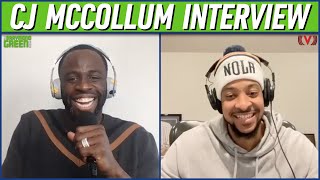
In this long‑form interview, Draymond Green sits down with NBA veteran CJ McCollum to trace his journey from a 5‑foot‑2 freshman in Canton, Ohio, through a late growth spurt, a standout career at Lehigh, and being selected 10th overall by the Portland Trail Blazers. McCollum discusses early injuries, the impact of his journalism degree, his evolution into a media personality, and his role as a mentor to younger stars such as Zion Williamson and Damian Lillard. The conversation moves to his partnership with Lillard, the dynamics that led to trade rumors, the eventual move to the New Orleans Pelicans, and his expectations as a point‑guard in a young roster. A substantial portion is devoted to his work as president of the National Basketball Players Association, covering collective‑bargaining, player‑ownership equity, and the broader business side of the league. McCollum also shares his philosophy on sports media—criticizing lazy analysis, emphasizing honest, fact‑based commentary, and describing how his playing experience informs his broadcasting. Throughout, he reflects on leadership, resilience after injuries, and the mental shifts required to succeed at each stage of his career.
Chapters
What's up everybody? It's Draymond Green. Make sure you subscribe to the Volumes YouTube channel below so you don't miss any more of this great content going forward. What's up everybody? Welcome back to the Draymond Green Show. Our next guest is a guy who I actually had the opportunity to play against in college before the majority of you were basketball smart enough to even know his name because the name on the front of the jersey didn't quite match the talent in the name on the back of the jersey. And so because you can't look and see talent, it needs to be at Duke, it needs to be at Kentucky, it needs to be at Michigan State. You'd miss out on a talent like this. However, like I said, I had the opportunity to play against him and I saw firsthand how good he was from Canton, Ohio. Just a guy who I've gotten to know. [FOREIGN LANGUAGE] Mr. President himself for Players Association, soon to be All-Star, CJ McCullum. Welcome to the show, my brother.
Appreciate you having me on the show, man. It's a pleasure.
Absolutely. I mean, let's get right into it. You know, coming from Canton, Ohio, your freshman year, you 5'2". But I know at that point you had to wiggle 'cause it's just in you. Like, that's how you play. That's how your older brother play, which a lot of people don't know. CJ's older brother, Eric McCullum, is, has played in EuroLeague for 10 years, bucket getter. So that's just in you. But at 5'2" going into your freshman year, were there, or your freshman year, were there any worries that your future in basketball wouldn't be quite what it shaped out to be just because you were small? Or did you think, "I'm gonna hit my growth spurt"?
There was times where I thought that my growth spurt might come too late. You know, once high school starts, you know, everybody's taller than you. Girls is taller than you. It's hard to create separation in the games. The finishing around the basket is nearly impossible. You gotta have a crazy floater just because of the way they close space. And I seen that my dad, my dad actually graduated high school at 5'8" and my dad is 6'3" now. And I thought to myself, like, I hope that it doesn't take that long, you know what I mean?
Mm-hmm.
For me to grow. 'Cause 5'8" might be too late my senior year. Like, it'll be hard for me to get scholarships. So that was the, The only concern was that my growth spurt would take too long, and I was worried about that because I started school early and I graduated high school at 17. So I knew my talent was there. I knew I had the skill set. I worked, you know, harder than most, and I just kind of refined my skills. But I was just hoping that I would get tall early so that I could get a scholarship and then kind of settle into the hype.
And at what point did you actually hit that growth spurt?
So I was 5'2" and I played 3/4 JV, 2/4 varsity, because that was when you could only play 5/4 in Ohio. And my brother you talked about, he was a starting point guard, so I wasn't better than him and I wasn't gonna play over him. So I kind of watched and played at the end of the game. My sophomore year I was 5'6", 108 pounds. And—
I can see.
Yeah, like 5'6", 108 pounds. And I was taller, so like that was cool, right? Like being a little bit taller, like I didn't have to create as much space, but that's when I was really worried. Like I was like, damn, I'm only 5'6". I ain't got no scholarship offer. Nobody's really recruiting me. I'm coming off the bench. On my varsity team, even though I probably should have been a starter. I'm coming off the bench, not really contributing, hitting threes every now and then. Like certified, like high school role player. Like think like I'm better than Skip Bayless, but like, but the point, but the points per game wasn't like where, where it should be, right? For my skillset. So like that's where I was at. And then my, my junior year I really dedicated myself to like shooting, right? 'Cause I could always shoot a little bit, but I was like, this is a, this is gonna be the separator for me is, You know, I'm a good passer, but I'm not a great passer, right? I could play defense, but I'm not a great defender. I got some athleticism, but it's not elite. So I was like, what can I do well to like get noticed? And it's like, I gotta be able to shoot and I gotta be able to dribble and I gotta be able to create shots off the bounce because that was my like superpower, so to speak, where it's like, I can do this better than everything else. So I really worked on that in the summer with my brother and I grew to 5'11". And when I got to 5'11", it was like the game was easy at 5'11". It was very easy 'cause I had been so small for so long.
Mm-hmm.
I got used to having to do everything harder. Creating space harder, you know, step back's gotta be harder, floaters gotta be more crisp. You only get so many shot attempts 'cause you're so short. And I got taller and that made the game better. And actually my first career start, I broke the school record. I hit 8 threes and I had 54 points and I got a letter from Lehigh the next day. And that's when I knew, I was like, okay, I'm good enough to go to school at this size, but hopefully I can get bigger.
And so you ended up getting a letter from Lehigh But why, like ultimately, did you have more offers? Why Lehigh in the end?
Yeah, I mean, I went through this. Bowling Green was the first Ohio school to offer me. They offered me first after I played that year out. So I go from averaging 6 points a game to 25. I was 25, like basically 5 and 5 as a junior at 5'11". And I go play for King James, shout out to Brian. I go play for his AAU team that year. And that was my first time like really on the scene because I sat the bench for all the high red, like, at 5'7", I didn't really play. Like, I was like the third string point guard. Well, you know, second string point guard don't really play in AAU because—
That's fair.
The starter play the whole game. So I would come in and pick up full court and run the offense and then go sit down. So I played like 7 to 10 minutes a night, like not really impacting the game. And that was my first year. And I started playing really well. I played against John Wall at a tournament at Boo Williams and I played well. I think he had 25 and 5, and obviously John was killing us, but everybody's watching 'cause it's John. And I started getting letters, started getting recruited, and I actually lied. You know how after the games you get interviewed, and I lied and said I had an offer from Boise State, and I didn't. They had just recruited me. And I got a few offers after that. I got a few offers after that. I said like the university department offered me at Boise State. And then I got like, I had like, at one point I had 11 offers. These all small schools, so. Eastern Michigan, Central Michigan, Bowling Green, Lehigh offered, University of Furman ended up offering, St. Francis, PA, a bunch of mid-majors. But I was getting recruited by like St. Louis, Michigan, Notre Dame, and Penn State. And it's funny because I really wanted to go to like, I call it like a bigger conference, but like a more academic-based school. To where like I'm playing against these good schools, but like I can still play and still get playing time, right? Like this is when Notre Dame wasn't that good. This is when Penn State, this is like Taylor Battle days. Like they was kind of becoming better, but they wasn't really like known for football, you know what I'm saying?
Absolutely.
So they ended up not offering me. I wanted to go to Akron University, right? 'Cause it was down the street from the crib. It was a small school. I'm like, bet I can play in the back 15 minutes from the crib. My cousin played football there. Shaka trained me since I was a kid. And this is when Shaka was on staff.
Mm-hmm.
And Dan Brown looked me in my face and said, "I don't have any more scholarship offers. Zeke Marshall was our only scholarship for your class. Zeke was a 7-foot blue-chip center." I said, "Look, man, if you can get me a scholarship, I'll come, but I can't redshirt. I won't make it through school. Like, I love basketball, and if I can't hoop, I won't be able to be as locked in and engaged, and I can't do a year without it." I gave 'em 2 days. They didn't offer me. Took a visit to Lehigh. And at that point, like, I started with 11 offers, guys start committing, you know how it go. I go from 11 offers to 8, to 6, to 5. I got 3 offers left. Like, guys is committing. I'm going into my senior season and Lehigh was the school that was with me from the beginning. They was authentic, they was genuine. They kind of told me what my role would be. I knew I was gonna be in the Patriot League, so it was a good education. It was a 6-hour drive from home and I ain't wanna be too close to home. So I was like, bet I can still drive home, but you gotta really wanna see me to come see me type of thing.
Absolutely.
And it ended up working out. And I always say that's the best decision I ever made in my life was going to Lehigh. I met my wife there. I got to play the game I love. I got a degree. I majored in journalism. I won a couple championships. And that kind of, that propelled me to learn how to carry a load differently, right? Like the academic load, the course load was crazy. To be able to work out, to have to lead a team, to go through like being a freshman to being a man and like what comes with that, what comes with empowering being a leader. How to lead by example, how to curse people out when I need to. Like, it gave me the perfect balance on like what I felt like I was gonna need when this game is over. So I'm thankful for it.
That's amazing. That's incredible. So you finish out at Lehigh, you win Patriot League Player of the Year twice.
Mm-hmm.
Then you go on to be the 10th overall pick by the Trail Blazers. At the time, the Trail Blazers had just drafted Dame with the 6th pick a year before. What was your mindset going in? Like, I'm sure you were hearing you were too small to be a 2 guard at that time because when we came in the league, the league was really big. Now the league is small today. League was really big. 2 centers essentially playing power forward in the center. You got power forwards playing the 3 spot. So I'm sure you were hearing you were too small to play the 2, but what was your mindset coming in knowing that they had just drafted Dame with the 6th pick and now they're drafting you with the 10th pick?
Yeah, my mindset was to just go be a hooper. Draymond and I had talked, we actually got connected by a mutual friend after I broke my foot my senior year. So we had just been talking, just, I was asking about his rehab, what's it like in the league? Like, you came from a small school, what should I be working on? Like, can I still play in the league after this broken foot? You know what I'm saying? This is the point in time where like you get hurt and you just start thinking like, damn, maybe this is it. Maybe I'm gonna have to go overseas. My brother was already over there, so I was just kind of coming to terms with, "Man, if I gotta go over to Europe, like I know what that look like, I can go do that." And Draymond was like, "You gonna be in the league, you gonna be a lottery pick." And I'm like, "Bro, I just broke my foot. Like my senior season is over. Like I'm not playing." And my body of work was there obviously. But you know, when we was coming out, it was like a crime to be in school that long. Like they wanted you to—
Absolutely.
They wanted you to get in and out. And they, even though I was younger than a lot of the sophomores and freshmen basically 'cause I was 21, It just felt like I stayed too long and I missed my window. And he was like, you're gonna be a lottery pick. And then fast forward, he's like, if you there, we gonna take you. And I'm like, okay. Like, this is the franchise saying that they gonna draft me if I'm there. And we, we got similar games, you know what I'm saying? Like, I played the 2 because Marquise Hall, you know, who works at Nike.
Absolutely.
He was the point guard, right? When I was there. So I just slid to the 2 'cause it made sense. And I played a lot of 1 and I was just like, look man, I don't, ball in my hands, ball not in my hands. Like, I just wanna hoop. I'll figure it out. I can beat a man. Playoff demand, like I'm not tripping. And I told, I said that in my interviews when I did the draft process and they liked my demeanor. They liked that Dame had solidified himself as a guy who went to school for a long time. Obviously you play alongside Steph, that mattered. And there was just a body of work from guys, Eric Maynard, guys who had been in the league for a while. George Hill, right? Who went to school for a long time. So they knew they were mentally ready for different roles. And I just thought to myself like, I gotta get to it. And then I'll never forget the league is crazy, dog. So I get drafted, my phone dies. And I don't get to talk for a while to like nobody 'cause my phone is dead. We fast forward to rookie orientation and I'm sitting there, I'm thinking to myself, I'm adding up the minutes in my head like, all right, let's say I, I don't start, I back up Wesley Matthews to 2. So that, that's 2, let's call it 12 to 15 minutes. And now back up Dame, let's call it another 12 minutes. I'm like, I'm gonna play about 22 to 27 minutes a night in 2 different positions, right? Because it's 48 minutes. Dame played 36, that's 12. If Wes plays 34, that's 14. Like I'll take those 26 minutes. I'm cool. We, we trade for Mo Williams while I'm in rookie transition.
Oh.
And I love Mo, but I was just like, damn, there go my minutes. Like, that's what I thought right away. Like, 26 minutes ain't gonna look the same. And then I end up breaking my foot the last day of training camp again. And the rest is kind of history. But it's a blessing the way that like kind of happened, right? The mental anguish that I went through, the injury that I got my senior year kind of shifted my mentality of what's important. How to work and how to do stuff outside of basketball. And that's kind of how I fell into the stuff that I do today is because I couldn't hoop during the most pivotal time in my life. And I had to, I started meditating, I started going to hot yoga, I started really becoming more in tune with myself, with nature and with my mental side of things because I was always focused and locked in, but I ain't really have a plan, like to keep it a buck, like it was hooping. I majored in journalism because I watched Stuart Scott and I was like, I wanna work on TV one day and wanna talk about sports. Mm-hmm. Then I started figuring out like, how do I use this degree? Like, how do I leverage this? And that injury really, it shifted my mentality.
So you've led me to speaking to you about media. And what I've tried to learn in these interviews is like, you allow the person that you're interviewing, you allow them to guide the interview. However, because you've done so much in media, I'm just going to acknowledge, for the listeners and for you who's an expert at this, been doing this way longer than I have. I'm going to acknowledge that I'm not gonna follow you right now because your media catalog is so deep that we gotta speak about that in depth. And I really want to get to your time with the Blazers and your NBA career. 'Cause I think it's been incredible. And quite frankly, the fact that you haven't been an All-Star is baffling to me. To like to average 20 points in this league year after year after year. And y'all team was having success. It wasn't like you were averaging 20 points and y'all were 11 seed, 12 seed, 13 seed. Y'all was in success. Y'all was having success. And quite frankly, probably the reason y'all didn't have more success just because y'all kept meeting us. Like I think we met y'all what, 2 or 3 times in the playoffs. Yes, sir.
Yeah, like 2 straight years, a year off, and then another year basically, yeah.
And so, like, I wanna continue to talk a little bit about you and Dame, but also go into that. But in saying all of that, that you said that that year was a blessing for you once you got hurt. And I'm assuming it was a blessing because Mo Williams ended up playing a lot that year. And then he ended up moving on. So there was, once you got healthy, there was a role for you to, to slide right into. Is that why you feel like it was a blessing?
I think it was a combination of things, like, right? Cuz that next year we traded for Aaron Affalo and we signed Steve Blake. So I played a little bit more, but not as much as I felt like I should have. I mean, watching my peers, you know, that watching my guy Michael Carter-Williams win Rookie of the Year, watching my friends get 25, 35 minutes a night, you had this envy and this jealousy. Jealousy in your heart, not at them, but at the fact that they got a role that you felt like you deserved on your own merit and you didn't have it. And I think it taught me to slow down. It taught me to be patient. It, I read more. I joke all the time. I said, I went to a school majoring in journalism and I read more now than I did when I was in college. And when I got hurt, I started reading. I started really slowing things down 'cause I couldn't, think about you hurt, you can't really move. Couldn't walk, right? I'm on crutches. Everything had to be slower and more methodical. And then my appreciation of life shifted more, not just sport, but life. Like the things I took for granted, I stopped taking 'em for granted right away. And it shifted that part of me. The game was my game, right? Like I got, like, when I could get back to it, I got to it. I tightened my diet up. I started meeting with nutritionists. I started figuring out like, all right, man, if you gonna do this, you gotta be all the way in. Like, your career is only this long. If you gonna get hurt, it's gonna be some stuff that you can't control. Everything else is gonna be how it's supposed to be. And I think that's what I did. But I was still pissed off because the next year I only played like 15 minutes a night. And I was behind Steve Blake. We ended up signing Aaron Affalo and then Aaron ends up— Wesley Matthews tears his Achilles, Aaron Affalo hurts his shoulder and they had to play me. They didn't have a choice. And then I always said, I'll be ready when I get a chance. You know what I'm saying? I won't blow a chance by not playing. I'll blow a chance by not being ready to play. So I just got ready. And when the opportunity came, I said, I'm never gonna look back.
And speaking of not looking back, you and Dame go on to have an incredible partnership, make the playoffs, y'all first playoff win. We had Dame on the show and he talked about that first playoff series win that y'all won versus the Clippers and how much that did for y'all partnership. What did you feel like in that moment that, or even looking back on it, that winning that series against the Clippers, what did that do for you and Dame's partnership in moving forward with the Blazers?
It did a lot for our partnership and I think it solidified the fact that we could play together as two small guards, right? Two guards who, are ball dominant, two guards who, you know, control a lot of the offense, control a lot of the usage, have similar, similar styles in terms of running pick and roll, can run the iso, can catch and shoot. We kind of, I don't wanna say we revolutionized the game. That's too big of an adjective. But I would say that we made it more popular and more common for two guards to be able to play together and be more accepted, I would say for sure because of the success. Because if you don't have team success, none of this matters, right? And I probably don't get an extension. I probably don't get to stay there. And so on and so forth. But I will say that Dame always seen the vision. I didn't always see it. There was times where he would be like, "We gonna be starting together one day." And I'm like, "Bro, I don't play at all." Like, I am watching. My game starts at 3 o'clock. Like, I work out before the game, I run the stairs, me and Will Barton play one-on-one, and I take a shower. And that's basically my day. Like, I come at 7 o'clock, like, I already showered. Like, I'm just watching, being a good teammate. And he's like, "We gonna play one day." I'm like, "Bro, I don't see it." I don't see it. And he always seen it. And sure enough, it ended up happening. And that series was just, you know, for me it was more about taking advantage of the opportunity, being the, like, I love big moments, I love big games. And I think it brings out the best in me because I went to a school where we didn't have a lot of fans at games, right? So when I got a chance to play outta Michigan State at Iowa State when Royce O'Neal was there, or not Royce O'Neal, what's his name?
Royce White.
Royce White. Royce White when he was there.
For sure.
Like, those was my moments where it was like, okay, people may never ever be able to see you play again. They're only gonna judge you on this one moment. And if I get a chance to play in front of 10,000, 20,000, whatever it was, I was like, this is what I was built for. This is what I trained for. And being in the playoffs is when everybody's watching your games, right? It's not like you get the late TNT slot or, you know, you got a random Wednesday night in Portland. Like, it's everybody that loves basketball is watching basketball. And I wanted to make sure, that I rose to the occasion. And, you know, after a slow start, I did.
For a couple years there, which you still being with the Blazers, your name, or not necessarily your name, but it kept coming up that like, they gotta break it up, they gotta break it up, they gotta break Dame and CJ up. It's not gonna work, it's not gonna work. And I think those maybe started 3 years before you eventually got traded.
Yeah.
When those things first start coming out that they needed to break it up and you get traded, was there ever a point in that, like before it was inevitable? Like I think that last year was inevitable where you like, yo, I think I may have spoke to you before and you like, yeah, I'm just waiting. Like I know it's happening. But was there ever a point like during those years where, hey, y'all were still playing well and competing, but everybody's saying it's not gonna work, they need to break it up. Was there ever a point for you during that where you felt like, this is the year I'm gonna get traded and it still didn't happen? Or did you always know that, no, it's not happening and that's just noise on the outside?
I was in trade rumors for about 6 straight years, I would say. Bill Simmons used to always, I joke about Bill all the time, he used to put me in trades all the time. He had me going to the Cavs, he had me going to Detroit, he had me going to Boston. He had some trades that I thought, like, you know how I'm a realist, I would look at it and I'd be like, That could work. Or like, that makes sense financially. Or if they trying to do this, like, that could work. And I don't really read into too much besides the fact that I think there's only a few players in league that are untradeable. The rest of us are just pawns in this game and we're just a number.
Absolutely.
And they gotta figure out how to make the numbers work. But I felt like it was good to be wanted by more than one team because at some point, you know, The only person left in my draft class is on the same team they was drafted by is Giannis. It was me and Giannis and now it's just Giannis. So like, that's the way it works. So I always looked and I thought to myself, first used to be mad. Like you mad at the fan base, you're angry. You're like, why don't they want me? And you kind of feel that way, right? When you're younger. As you get older, I went through that for about a week. Like, dang, that's messed up. Like I, I worked so hard for them. Like whatever, whatever. Then I thought about it and I was like, get realistic CJ. Like every team's goal is to win a championship, right? Fans are irrational at times. I'm an irrational Browns fan first of all, so I get it. Yeah. Like, that's just, I'm an irrational Browns fan. I feel like we supposed to compete for a championship even when we not. And I think our fans and the fans that were there at the time, they were like thinking about it. They were like, we're paying these guys too much money and we keep being honest. We kept running into the Warriors, right? We kept running into y'all. And it was like our team and our roster wasn't built to beat you guys, but we were built to compete, but we weren't built to beat you guys. And how else were we gonna be built to compete or beat you guys than to get get rid of the guy who makes the second most money on the team. So it was like financially, I started thinking about it and I was like, well, if they, if their, if their plan is to try to find more assets and they're not gonna trade Dame, then like it's obviously gonna be me. And I think for me it was just more so, all right, just keep working on your game, do things the right way, be a leader and set the example and understand that this is the way the cards may fall for you. And I think that's the approach that I kind of had going forward. And I just always told my agent, like, be honest with me, be transparent, let me know what's going on. And before Neil, Draymond Green was let go, I always had conversations with him, like, yo, just be honest with me. Like, that's all I ever want is honesty, man. I can take honesty. I don't wanna be lied to. I don't wanna be betrayed. And at the very least, I don't wanna find out things on Twitter. Like, just keep it a buck with me when I'm playing well, keep it a buck when I'm not, keep it a buck. And Neil was always like that. He was always very quite frank. Like, things weren't going well, he would tell me. If things were going well, he would tell me. And when Joe was in that position, I told Joe the same thing. Like, hey, keep it a buck with me. Like, I'm a professional. The whispers are louder than they've ever been before. I can feel the tension. I feel the vibe shifting. I feel it. Like, that's when I think I told you, I was like, "Yeah, this is inevitable. Like, it's about to happen. I just don't know where and I don't know when." And I kind of got my family ready. I got everything kind of lined up. And I told my agent, it's like, "It's time. Like, my time here is up. Like, start having, like, not just inquiring conversations, but productive conversations where, like, we not asking, we kind of telling. Like, this is what it's looking like for us." Mm-hmm. And thankfully, you know, Portland was great about the dialogue, the back and forths, and they handled everything first class. And I'm thankful that we were able to put something together where it was mutually beneficial, right? They get off my money, they're able to go pay Ant, they're able to go pay Nurk, pay some other guys, they get Josh Hart, they get some great, you know, assets. And then I think because of my trade, they're able to sign Grant, which was a huge pickup for them as well.
Yeah.
And I always say like, divorces don't always have to be messy, right? Like my parents got divorced and they get along better now than they did when they was married. Like divorces can end well. And cordial if you handle it properly. And I think we handled that divorce really well.
Nice. It's great. Did you have any say-so or know that it was gonna be New Orleans?
Yeah, yeah, I knew. I knew, I knew I was going to New Orleans. We had a lot of conversations about teams behind closed doors. I told my agent what I felt like was the best fit for me, my career, where I wanted to go. For my wife, for my son who had just been born. He was, I left after his 4-week appointment. And I just felt like with the young talent, obviously you gotta plant it in Zion. You got B.I., who's a mega star. You got great pieces, young players. You got Willie, who you know Willie really well. Great guy, good human, motivator.
Absolutely.
You got Griff, you got Draymond, you got Swin. So I'm talking and I'm having all these conversations and I'm like, this is perfect. We got a young up-and-coming team. They need a player like me who can play different roles. I can score, I can lead, I can get off the ball and chill and like watch you go to work. Like, I'm not, I'm not gonna force my way into stuff. Like, I know how to play whatever way we need to play. And most importantly, I got a winner's DNA to where like I won at every level. I ain't won a championship, but I won in high school, I won in college, and I've consistently gone to the playoffs 9 years in a row. This will be 10 straight. So it's like, I know what to do to kind of, to kind of figure it out and Thankfully, we pulled the trigger, and I'm thankful to be in New Orleans. I love it. I think we're changing the culture. Fan base is shifting. What we want to accomplish is shifting, and I'm a big part of that, and this team is a big part of that.
Well, when you went to New Orleans, did you expect to be full-time point guard? Because that's something different for you and your career than you had ever done those first, what, 9 years?
That was a part of the reason why I wanted to be there is because I wanted to to play a different role. I wanted to, to really tap into all my tools, all my resources, all my work. And I think it was like I was in training, right? You know, in Portland, right? I got to train alongside one of the greatest players ever, right? Top 75. He just had 60 the other night. Like a certified killer. I got to see what that was like, right? What is the mentality? What is the work ethic? What time is he working out? Like, how does he get ready for every game every night? Like I got to see, I got to work alongside and we work out together, vacation together.
Mm-hmm.
But still my homie to this day. And then I got to go play a certified scorer role. Like just score, go get buckets, catch and shoot, run the pick and roll. When he goes out the game, run the offense. And I, and like I got to see what that was like and I was like, okay, that was a really cool experience for me. It, it, it changed my, my outlook on basketball. It helped me grow. This is a role where some nights I gotta score, some nights I don't. Some nights I might take the shot at the end of the game. Some nights I might not. But I've been prepared for this role and nurtured for this role and capable of being a full-time point guard. I'm capable of being a full-time shooting guard. I'm capable of playing both. I think my skillset complements on the ball, off the ball, and the ability to shoot and have a basketball IQ makes the game so much easier when you play alongside guys who know how to space properly. And I think the game is just really easy.
Coming in as a leader of this team, When you're traded to the team, Zion, I think at that time was hurt, missing the entire season last year and struggling with weight. You know, the reports are coming out that he's struggling on weight. You know, they, somebody catch a picture every now and then, he looked a little heavier. And you know, he's having knee injuries, foot injuries, which I'm not necessarily gonna say being overweight at that time was what did it, but it definitely didn't help it. And, you know, coming in there and understanding that number one, this is number one pick. Number two, generational talent, but could possibly struggle with weight issues. Did you take on that challenge in coming in there to say, I have to do what I need to do to teach this second year guy who's a superstar making hundreds of millions of dollars already, but I need to teach him about diet. I need to teach him about taking care of his body. I need to teach him these things so that he can be available on the floor. Was that something that you had to take on in going to New Orleans with such a young team, especially with a young guy like Zion?
That was something that I was surely gonna take on, but I didn't force it, right? Like, I didn't wanna be the old head that preaches 'cause I know what that looks like, right? You know how it's like when every time you see somebody telling you about what it was like back in they day and it's like, I didn't wanna be that guy. I was more like show first, then I tell. So it was like, I ain't gonna say nothing. I'mma read the room. I don't really know these guys like that. I know 'em from afar. But I'm gonna just work how I work, do what I do, eat what I eat. I show up at the same time. I work out at these times. I get my body worked on at these times. And they gonna see what a real professional looks like. And then once they see that, like, okay, this is how CJ is. CJ's very blunt. CJ's very honest. CJ's— he's himself yesterday, today, and tomorrow. He see something he don't like, he speak on it. Sometimes he don't say nothing. Sometimes I say too much. It's like— Yeah. They was gonna be able to get, get to know me better. We was gonna go out to eat first. We did all that stuff before I started trying to preach. It's like, nah, I, I came here and I said it from day one. I said, look man, I've been in the playoffs 8 straight years. It's gonna be 9. And we not in no position to make the playoffs at this point. Right? Like I said, look, I work a certain type of way. I love this game. I'm gonna give everything I got to this game and then I'm gonna walk away from it. I want y'all to challenge me. I want y'all to coach me. I don't care if you start or if you the last guy on the bench. If you see I'm not doing something right, you tell me. If I'm not running the play right, 'cause I don't run none of the plays. You tell me, you help me. And that's kind of how I get down. I'm gonna challenge y'all and I want y'all to challenge me. And I sat down and I think that changed the perception of what they thought about me because I'm sure they had this idea what I was like as the president, all of that stuff. And then they was like, okay, like CJ, he's, first of all, he got real game. But second of all, like he talks when he needs to talk.
Real dude.
Yeah, he keep it 100 with me. He not gonna sugarcoat nothing. If I see something I don't like, I'm gonna tell him. I'm changing stuff within the organization that I may not like or may not think is, what we should have. And I'm saying stuff and then I'm delivering. It's not like I don't just make up stuff. Like Z's gone on record saying like, CJ got somebody for everything. Like I do.
Mm-hmm.
And I'm not, I don't just make it up. Like I, I really look out for people and make sure that they smooth. And in this case, our lockers right beside each other, sit beside each other on the bus. He comes back to the team, we start talking and I'm just getting to know him on like a, surface level, right? Like, I broke my foot 3 times.
Mm-hmm.
What surgeon did you use? Like, just general stuff. Like, how's your rehab going? What you doing? What phase you in now? Did you do this? Did you do that? It's like, I can relate. I've been there. I did it 3 times, dog. Like, I know what you're going through mentally. Do you got a therapist? Like, how's your day-to-day? Like, how you structuring your days now that you're not playing? Like, do you have a routine? So I'm just hitting him with just like general. So I'm not, I'm not, I'm not telling them what to do. I'm seeing what you're doing. And then as it progresses, then I get more comfortable. We get more comfortable. Now I'm like, this is what I think you should be doing. It's your life. Like I always tell 'em like, I don't need nothing from none of y'all. I'm not bragging.
Mm-hmm.
I done signed 3 deals. Like I make good money. I make good money off the court. Like I don't, I do this 'cause I want to, not 'cause I have to. I want to get the best outta you. I wanna get the best outta you. I want all y'all to make as much money as y'all supposed to. I'm maximizing what CJ McCollum is supposed to be in all phases of life. I want you to maximize what you're supposed to be. And your ceiling is a lot higher than a lot of ours. So I just want you to get there, is all I'm saying. And I don't need no bread from you. I don't need nothing. I just want you to be available. And I want to see you be able to say that when you— when you done, CJ kept it a buck with me. He gave me a lot of gems. I took them with me. And I took my talent and I ran with it. And I think now he's doing that. Obviously, he's got a little injury right now. But they all work. And that's what I love to see. Like, win or lose, whatever. Do you work? Do you care? Do you apply yourself? Are you maximizing your days? And this is one of the best organizations in terms of fun. Like, they make the game fun. And that's what I love to be around. The locker room is fun. The flights is fun. Like, you really, really get down with these guys. And we not really faking the funk. Like, we really mess with each other.
And speaking of Zion and y'all team with the Pelicans and your role, Guys got off to an incredible start. What, 3 weeks ago, 3, 4 weeks ago was number 1, number 2 in the West. And now currently in the midst of a losing streak. How is the mood around the team and what has to be done? Obviously health is important and you guys been dinged up. We kind of went through our— Yeah. Injury spot as well. And you guys been dinged up, finally got B.I. back after missing 33 games. But how is the mood around the team now with such a young team? You're riding that high, you're number 1, number 2 in the West, everybody's feeling good, and now you've lost 6 in a row. I think maybe 1 or 2 games above .500. What's the mood like now, especially with trying to push young guys who hasn't been there and get them to understand what it needs to be.
I think the mood definitely shifted when we start losing games because we not used to that, right? Like we was winning, things are going well, you know, we number 1, number 2 in the West, like we rolling. Then we start getting some injuries, we start dropping some close games. Guys that ain't normally used to playing 30 minutes is playing 30 minutes. Guys that ain't used to playing 20 is playing 20. And I think it changed the rotation and the body started to kind of feel the season, right? 40-something games in, 11-day road trip, come back, lose more games than you think you're supposed to, drop a game in Orlando. Like, it starts to domino. And I think it was mentally exhausting, but also physically exhausting from the season. But we had conversations and I think that the message is the same. Like, when everything is going well, I don't judge people on that. I judge them by how they act when everything's going wrong.
Mm-hmm.
Like, when everything is hitting the fan, That's true testimony. That's the true character. That's the true character traits of what you really made of. And I think this is great for us. I was like, when we was winning games, they was like, oh, this is, you know, championship contenders now. I was like, man, 6 months ago y'all said we barely gonna finish over .500. You know what I'm saying?
Mm-hmm.
So it's like, y'all are victims of the moment. I said, we can't be victims of the moment. This is a season. The season has ebbs and flows. Good days, bad days, losing streaks, winning streaks. Just as quick as we win 7, We can lose 7. So you gotta stay locked in on the goal, stay locked in on the task of each day, just getting better, stacking your good days. Some days you gotta rest, some days you gotta chill. Some days we gotta celebrate our victories, right? Privately.
Mm-hmm. Absolutely.
I think we at that stage now where we done dropped a couple games, but now we understand like, all right, BI's back, Najee's back, Z's getting closer. Like we just lost our Rook Dyson to an injury, but he'll be back soon. It's like we gonna be whole when we need to be whole. Right now we just stay afloat. Stay afloat, get a home seed, and we gonna figure it out. We healthy and we got, we got 1 out there, we got 14 out there, we got 3 out there. I like our chances, you know what I'm saying? So it's just like, let, let's just learn from this season, right? Everybody adjust to new roles, get used to playing outside your role, and then you get back used to playing your role. And when we come together collectively, we gonna be fine. But you gotta remember what this felt like because losing, losing can continue to seep in and you start to have a loser's mentality and we can't have that. Mm-hmm. Like it's hard to win an NBA. And when you start falling into wins, like you think it's normal, it's not. It's really hard. Like it's hard to close a team out. It's hard to be up for the entire game and close 'em out down the stretch. Like it takes real talent and execution and focus. And now I think we're getting to that point where it's all coming together. Even though we lost that game the other night against the Nuggets by one point, I think I missed the game winner. I missed the game winner against the Heat. And then we come back, you know, we're up against Minnesota. They go on like a 17-2 run in a quarter and we end up coming back and losing by 4 or 5. They get shown to us like, look, like that, that, that line of error is very thin. Like you got that margin of victory is very thin. You gotta lock in.
Nah, that's a fact. I think that's something that we've been figuring out this season as well. It's like, you know, every year it's a different team, man. You know, yes, we still have that first 5, 6 guys. That won a championship last year, that's won several championships, or 7 guys. But then we got a bunch of guys who haven't really played much, who we haven't really played much together. And also youth and the mistakes that you make as a young team. It takes a while to grow through those. And I feel like right now y'all are starting to see a little bit of that. Is that accurate?
Yeah, I think we're starting to see it for sure. And I wouldn't even compare it to the, we don't got the championship DNA, right? But we got a little taste of success. Not on that level, a small taste, turning the table, winning 2 playing games, taking the Suns to what I think should have been 7 games. We should have win 7 games and had to play a 7, 7-game series on their court. But we got a taste of success, right? And then we got to see like start the season off, we beat Brooklyn in Brooklyn by like 20, and we start playing well as a whole, and we looking like we could really play with some of the best teams in the league. Like, and you start to get a taste of like what success looks like, and then you get humble, and it's like, okay, like, we got a chance to be really good, but we got to do these things consistently. And like you said before, we can't have small mistakes linger, right? Like, if you're supposed to be low man, you got to be the low man with Anthony Edwards coming down the lane, because if you get there too late, you're getting punched on, right?
Absolutely.
And, and if you don't meet a good passing role man early, he gonna pick you apart. Like Joker, you gotta meet him early or he gonna hit the lob to Aaron Gordon or he gonna throw it right to the corner and it's a, it's a 3. Like, and if you get put in a series against these teams, the whole point of a series is to figure out the weakness and exploit it. And it's like, if you, if you are not gonna lock in the way you're supposed to lock in regular season where you just playing a team on a random Tuesday, then how I'm gonna trust you to lock in, you know, in a playoff series when Mm-hmm. You know, we might have to go back to Phoenix and we got nights off in Scottsdale. You know what I'm saying? So it's like, y'all gotta have this level of focus and be willing to sacrifice at a different level. And that doesn't just mean going out or not going out, 'cause that's not even what I'm talking about. You gotta be willing to sacrifice and say, today I'm not gonna work out because I'm playing more minutes than I ever played before in my career and I don't want my body to be hurting tomorrow. So I'm just gonna shoot free throws or I'm gonna really focus in on film and I'm gonna get better at film today. And I think that's the next step that we gotta take from a growth standpoint. And I think we're getting there. Absolutely.
I respect that. Speaking of basketball, you recently, well, last, what, year, year and a half now, you became the president of the Players Association. Number one, how has it been sitting in that role? And number two, how long do you plan on staying in that role?
That's a two-first. I don't know how long I plan on staying in this role. I'm unsure. Obviously, I'd like to mold whoever's gonna be next to kind of spend some time with them and allow them to kind of understand how it works, similar to how the NBA has done things with the deputy commissioner. I think that's important, that your change of hands should be smooth and they should be well equipped. I think I want to get to that point first before I do that. So I don't know what the timeline is on that. But the first part of your question is, it's been an honor to serve, you know, on behalf of the players. There's been some great moments and some not so great moments. Obviously, when you're in a position of power and have to make decisions, your decisions are for the betterment of the group, but the group isn't always gonna be happy, right?
Yeah.
And having to deal with COVID having to deal with a lot of different situations that we've had to deal with hasn't been ideal, but it's been a lot of tough learning moments that I've enjoyed going through. I've enjoyed the dialogue, the conversations that I have to have on behalf of the players and alongside the NBA. I think we're working on developing more of a partnership, more of a collaboration that's group decision-making. I think the dialogue has improved tremendously since my rookie year to now, 10 years ago. And I think obviously we're in CBA talks going through negotiations now, but we're in a much better state than I would say a lot of other major sports in terms of how we speak to each other in terms of relationships. A lot of players have with Adam, a lot of relationships the players have with Mark Tatum.
Mm-hmm.
I think we're in a much, much better space. And I think Tamika's done a, a fantastic job of organization and allowing us to continue to make strides on the great work that Michelle has done.
I think Michelle was incredible, by the way. I thought she did an amazing job. And, you know, in stepping in that role, like, I think CP did a really good job in the role of president for, I think, man, what was he the president for, like 8 years or something like that?
A long time. Yeah, he did it. He did 2 bids.
And I thought he did a really good job. But there's a topic that never comes up in discussions. And I quite frankly don't understand it. So I wanna ask you about it, which is players not being able to participate in ownership of these teams. Like you see the valuation is of these teams and you can look at the Warriors first. Take the Warriors for example, $7 billion valuation. When the ownership group bought this team in 2011, which was a year before I was drafted, Klay's first year, Steph's third year, it's a $500 million team. It's now $7 billion. Players aren't allowed to participate at all. Not say, not now, you can't structure something to be part owner after. Or anything. What do you make of that conversation and players not being able to participate in ownership and it also never really coming up?
Yeah, I will say that it's coming up. The conversations have been occurring. I was elected in this role in 2020, during COVID maybe August 2020 or 2021. We're in 2023, so I'm going on 2 years, I think. So these are things that I think about constantly as a person who believes in equity and empowerment and ownership and ways to create generational wealth. But also the fact that a lot of these teams are owned by funds, or a portion of it is owned by funds, I think where it's indirectly ownership. I think those are all discussions that we're currently having. I think it's more so like you talked about, how do you structure it? Like for instance, the Steph Curry situation, right? I don't think like the valuation of what it was compared to what it is now based on him being there and all that stuff is, is crazy. And I think, you know, you guys, your, your owner would argue that, you know, he's paid well and he is paid well. He's paid extremely well and he performs and he does his job. But a lot of that success off the court for the Warriors is, is due to him. Merchandise sales, those restaurants that y'all got around that arena. I think y'all have your own media now, if I'm not mistaken, where they're basically chronicling this season for y'all behind closed doors. I think Laker might be the owner of the media company. I was like, there's a lot of ways in which they're generating income that you guys aren't able to take part in and we're not able to take part in as a union. And I think for us, it's about strategically trying to figure out what that looks like. And we're not trying to take advantage of anybody. We're just trying to be able to figure out what's considered a fair share. Yes. And how does that share pay out in the event that Steph Curry does have enough money, right, to potentially partake in an ownership play? What does that look like for him? And can he do it? And like you talked about before, can you do it down the road? Like, what does that look like strategically if you structure it? And I think— I don't have the answer. Obviously, if I did, then it would be done already. But just the dialogue is what's important because you need to understand both sides' issues and why both sides feel like change is necessary. And I think for us as players, That's the next step for us. Like, Michael Jordan being the only player to own a team and arguably the greatest player of all time, if not the greatest, is kind of a problem because there's plenty of other athletes from other sports, plenty of other African Americans, minorities who have money, but they don't have the access. They don't have the power, mainly because many of these organizations and franchises are owned and they're passed down from generation to generation. So if we don't get one person of color in one of these positions, how do we get the next person of color? In the position, you know what I mean? I think not to just bring race into it in general, but for us as Black athletes, over 80% of the league, like, that's important. We make a lot of money and we wanna figure out ways to make money for our kids and the generations that come after us, especially if we're helping boost these franchises the way a Steph Curry is boosting a franchise.
Yeah, no, definitely. And like you said, I think Joe has, he's paid a lot of money. Like, as ownership group, they've paid. And so you respect that. But then I'll look at it and say, yes, they have paid, but they're also able to cover that. They're also able to cover those expenses from revenue. They're not covering those expenses by going to take a loan out against that $7 billion valuation as if it's subtract— no, that's still just sitting there and you're able to cover salaries and X, Y, and Z through revenue. And so there's still that long-term play that You're just not able to participate in it. And I'll take it even a step further. If an owner, if an owner is in an investment and, you know, they're either leading the investment or they're high up on the cap table, we can't invest in that same investment. And so that right there already essentially limits the, the great investments that you can take part in because they're going to get access to the best investments.
Why? Yeah.
Well, number one, a lot of 'em these days come from tech backgrounds, venture backgrounds, et cetera. But also number two, if I am a CEO of a company, and if I'm a CEO of a company and I wanna do something with the Warriors or I wanna some, I'm gonna make, I'm gonna open my round up to Joe Lacob. I'm gonna open my round up to Peter Googler. Why? For the relationship. And so then that limits what players can do as well. And so, uh, are we making any progress as far as that rule? Like, I think that's an old rule that was put in way back in the day. And it's like one of those things where, like, it's just lazy to leave it there because the times have changed. And players are making more money to where you can sit on those same cap tables that owners sit on. Is that something that we're making progress in? Because I think that's something that definitely needs to go.
Yeah, I'm definitely of the business mindset, as you can attest to that. I think it's important that we have the right exposure, right? You know, one of the things we've seen historically is that, you know, athletes and people who have money but not necessarily the right education behind it invest in the wrong things. And I think for us, it's not just about deal vetting, it's about making sure that you have the right deal flow. Constructive, productive deal flow. And by potentially being able to invest alongside owners, it gives you another layer of due diligence that we may not always have or may not always use. And I think that's important, an important part of the structure that we're working towards is it's not just about investing alongside your owner, it's about them explaining deals to you, why this is a good deal, why this is not a good deal, the stage of the deal, capital calls. What's a capital call? How often are they going to come back? What series is this? Is this— Is this a safe round? Do I get a discount? What's my discount? You know what I mean? I think being able to explain the lingo similar to how we would explain a play. One of the things I think is most fascinating about other sports is when I watch a football player break down a play. I played football, but I can't speak to football the way that a professional athlete can when they break down a play. I think that's so great, but I think we need to have that same mindset when it comes to finance and be able to speak the lingo with somebody else who can empower us and encourage us and teach us. And I think we're working towards a lot of stuff that I, I can't really speak to 'cause I'm president of the PA, but the conversation and dialogue is going strong. It's definitely business-focused. I knew about the Basketball Africa League when it was coming out and I tried to invest in it. Obviously, I wasn't allowed. And that's not even the NBA. And I couldn't invest in that and partake in the upside of that and the potential upside.
Mm-hmm.
So it's like, there's a lot of issues that I have personally as a player and personally on behalf of all the players that we're trying to resolve. And I think we will be able to resolve because like you said, As I said before, it just makes sense, right? It just makes sense for us to be able to partake in some of the upside, be able to invest in things that have a higher likelihood of being successful. Like, we should want our players to, and the owners obviously, and the governors, they definitely want their players to be a part of it. They're just trying to figure out structurally what that'll look like going forward.
Absolutely. And like I said, I think you're doing an incredible job as the president. —I appreciate that. So, you know, as a player, I thank you because it's a very unforgiving job.
It's a thankless job. And I tell CP all the time, this is a very thankless job. And I'm thankful for your 8 years of service because now I know what you went through. I didn't understand it before. Now I truly know. And on another note, who's your team rep?
Kevon Looney.
Make sure Kevon is at— Utah for at least, tell him just at least a day. I need him for a day.
Okay.
Yeah, we need a rep. We need a rep from the Warriors there. Please tell him to, flight, hotel, whatever he needs. Dinner on me if he wants it. Dinner in Park City, I don't care, but I need him there.
I'll definitely let him know. And like I said, a man who wear many hats. I'm gonna get you outta here. I know little man probably getting up in a minute and you gotta eat. You're on the Central time zone, so. Appreciate you coming on. But before you get outta here, I just wanted to ask you about media. Like, I remember when you first started doing media and you came to the NBA Finals, we actually had a conversation.
You remember the conversation?
Absolutely. And you were covering the NBA Finals and I was like, "Hey CJ, like, that's cool, that's dope, but it's a respect thing that you gotta give too. You sitting here talking to players about the Finals, you ain't—" you haven't quite gotten to the level that you need to get to to have those conversations. And you was like, "Ah, well, this is something I wanna do." And then you kind of stepped back a little bit, became CJ McCollum, respected around the league, who everybody respected, and then got back into it. What's been your mindset from there to where you are now in the media aspects of things?
Yeah, I think my understanding of media has definitely shifted, having been involved, like you said before, and, It's funny because, you know, I broke my foot my rookie year and I got pitched a lot of stuff and I had to decline a lot of it because I was becoming more known as a journalist than I was as an NBA player. And I thought like, it's like, that's a bad look. And the fact that I had to debate that is crazy, right? In society in which I'm doing things that better myself, I'm actually using my degree, I enjoy this craft, I get paid for it, and it gives fans a different side of me. And I had to question whether or not I should be doing it. Because I was hurt and I couldn't play my sport. And I thought the perception would be that I'm not taking my craft seriously, even though I take my craft more seriously than 99% of this league, as I do all these other things, right? So I took a step back, like you said before. And even when I was doing the Finals and stuff like that, I was only covering certain stuff that I felt like I wanted to be a part of from an exposure standpoint. But also, to be honest, I wanted to know what it was like to be in the Finals. Like, I had never played in it. I never watched it as a kid. And I wanted to see what it was like to, like, the vibe, the aura, like what goes into it. And obviously playing in— Mm-hmm. Being in and covering is different, but I mean, I've— it's a shame to say it, I've covered more finals than I've been in, right? Like I've been covering finals for years through ESPN and other different partnerships. But I think what I've learned most is that it's okay to, to not know everything about the sport that you play. And it's okay to have an opinion on things and to be quite frank in your judgment and your, and the way you assess the game. But what I've tried to do as a player is I never attack players, right? Like you'll see me go on First Take, like I stand up for whoever I'm standing up for, KD, I'm standing up for Ky, whatever, because I know them, know them personally. I know how they work. I know how they think about the game of basketball. I know what it means to them. And I could be, I could be critical, right? Of, let's say I'm gonna use Tatum for example, because I know Jason, right? Jason has some turnovers in the finals. I can say like, look, Jason had a lot of turnovers tonight, whatever, whatever. But I'm not gonna say he played poorly or that he wasn't ready to play because I know him. I know how he prepares. I know how much this means to him. And I think far too often, one of the things I don't like about sports is how players will play this game, they'll retire, and then they'll go talk about it. And they'll talk about it in a way that's demoralizing to the player. And I don't like to do that. I hate that. I hate to make it more than what it is. I like to be quite frank. Like, if he, if he can't shoot, he know he can't shoot, right? Like, we know who can shoot in league, who can't shoot. I'll talk about why the percentages are low, whatever, whatever. Like, I'll say it in a way that's like, that motherfucker can't shoot, right? But I'm not gonna go out and say that. But I think when you do it that way, you're handling it as a professional. These are my peers, right? I still gotta see these guys on a daily basis. I know what the game means to them. But we all know what our weaknesses are, right? Like, we all know what they are. And I think there's a way to criticize the game and critique a player in a way in which you're educating the fan, you're pointing out facts, but you're not bashing. You're talking about, facts of the matter. Like I said it on my podcast in the season, like I was shooting the ball very poorly, the worst I've shot the ball in my entire career. I didn't talk about how, you know, I had, you know, messed up my finger on my index finger and on my middle, my middle finger on my shooting hand. But I didn't make excuses. I just said, I'm shooting the ball the worst I've ever shot in my career. And if, and if somebody wanna talk about me on TV, they would be able to say that frankly, but it wouldn't be because I wasn't prepared and I wasn't working hard because shit just wasn't going in. You know what I'm saying? So I think that's one of the things I learned about the sport and one of the approaches I've tried to take. And I know there's no right answer for everything that I do. And some people might not be mad. Like, I had the Boston Celtics beating y'all and I know you personally, but what I wasn't gonna do was talk about you behind your back and not tell you to your face.
Mm-hmm.
So if I'm gonna go on TV and talk about how I think the Warriors gonna lose and why, I'm gonna tell you when I see you, like, I did say that. I think y'all gonna lose. And when you win, you're supposed to say like what you said to me. Like, that's what you're supposed to do.
Yeah.
Because as you know, I always keep it real and I love sports. I love talking about sports. I love the way it's played. I love the way guys prepare. I think it's art. And for me to be able to get compensated to do stuff I would do for free anyway, I think it's a blessing. And to be able to use my degree, right? To go to school, major in journalism, minor in mass comm, to cover Lehigh sports. Like, I cover field hockey, I cover tennis championships, I cover track and field, football, name a sport. That's not men's basketball, I covered it. To be able to do it now, it's like, it's a blessing, honor, and privilege. And I just want people to know, 'cause they don't understand. Like, they see me work for ESPN, they see me doing this stuff, and they like, "Oh, he just doing this 'cause he hoop." It's like, "No, I did this to get a degree." Like, I got my credited hours. I did an internship unpaid, just like a lot of these journalists. I just got to the top a little bit faster because I'm an expert and I play.
Mm-hmm.
But I think it's cool that I'm in this spot. And I think it's cool that other players like yourself are doing it because is fun, but I think the fan appreciates our knowledge of the game and the way we can kind of reiterate that to them.
No, I definitely agree with you, you know, in a sense, it's, you know, what you're saying, like how, like, it's baffling to me how former players get up there at times and talk about players. It's almost like, like, bro, you are one of us and you get up there and talk like you weren't that same player in the locker room that hated when someone was talking about you like that, that talked about those very people that were talking about you or us like that when you were sitting in the locker room and now you go on TV and do that same thing. Like, to me, it says a couple things when people analyze or lack thereof. One, you're just lazy. Like, you're taking the easy way out. And it's very easy to just go bash somebody. Like, 'cause you just say reckless shit and you get, you know, nowadays people are chasing clicks and, you know, they're chasing the online traffic. And so I think number one, it's just lazy. But number two, I don't think people are, like these people are very capable of analyzing the game of basketball. Like, you know, some of these guys that go up there and they were players, wasn't, you weren't a smart player. Like it wasn't like—
That's true.
You benefited off really knowing the game of basketball. And so you go up there and like do lazy, to me, lazy analyzing because you can't break down the X's and O's. You can't break down CJ's mindset or why CJ would, rather should bring this guy into the pick and roll and not that guy. Although in your mind, that guy's a better defender. No, but I like the way he guards this pick and roll, so I'm trying to get to this. You know, I don't think they're capable of doing that. And to me, I never wanna see anyone lose their job, like, or lose their livelihood. But a part, but one of my goals in this is to make that type of shit extinct. And if that means you lose your— if that means you gonna lose your job, well then you better get to learning how to analyze and studying and building relationships. Because I think, like, that stuff is getting tired in our game, man. Like, nobody wanna hear you just go bash somebody and you really can't even break down why.
Right.
And so I think that's important for us moving forward in this craft. And like I said, that's one of my motivations in this, is to make that style of reporting, analyzing, journalism is to make it extinct. Because there is a way, like you said, there's a way of being very critical and not bashing someone. Like, these people start— these people have started bashing, like, people as human beings. Like, because of how you play the game of basketball, that's insane to me. Like, it never used to be that way. Yeah. Or was it?
Right.
I don't think so.
I think now it's gotten worse because we see it everywhere. Like you got the Twitter, you got the Instagram, like you, it's instantly in our phones, right? It's instantly accessible. And now we see it more often. And it's just like the Russell Westbrook situation. That stuff used to piss me off because if you don't like Russ the way he plays, just say you don't like the way he plays. But to talk about him as a person is just disrespectful because I know Russ. Russ is a good dude. Russ, you could beat his team and he'll take a picture with your grandma after the game. And it's not a lot of guys that'll do that. Not a lot of guys that'll stop and take a picture after a loss or whatever the case may be. Like, take a picture of my little cousin. That's a good human being. Does things the right way off the court. Good father, good husband, all those things. So when people attack, like, the character, like, if you don't like the way he play, just say that. Just say that.
Mm-hmm.
You don't like the way they play and say why you don't like the way they play and throw some stats out there. But when they start challenging people's character and saying they're not a good teammate or whatever, it's like, how do you know what a good teammate looks like? Like if you not in that locker room, did you ask his teammates? Did his teammates say he wasn't a good teammate? Do you got a source that's like out there? That's the stuff that I didn't, I didn't like that I've seen historically. But outside of that, like I respect the craft and I think, you know, the same way I approach basketball, right? Like you gonna go on TV, like you need to be prepared. Like do your work.
Works.
Do your work and understand what you breaking down. And I think that's what was cool about covering the Finals is 'cause like I had played against Shaw. I guarded Steph. I'm chasing Klay. I'm getting hit by screens from you. Like, I know what it's like. So when they say like, I don't understand how he's getting open, it's like, no, these, these are some of the best players in the world. They're trying to stop this. It's just hard to because there's so many reads. There's so many ways in which the game flows. Hit this, hit the pitch post. And they're like, well, why is he, why is he on the top side? And it's like, well, maybe that's the coverage.
Mm-hmm.
Maybe he's supposed to be on the top side. Maybe you're supposed to force him down. Maybe you don't want Steph shooting threes and you would rather him finish around the basket. It's like, Why are they switching? It's like, well, you can sit in a drop if you want to.
They gonna eat that up. Good luck.
Oh, you gonna hard hedge with a 7-footer and think that they gonna not turn the corner? It's like, people don't really think the game. And it's like, that's why I was like, look, if I'm gonna do this, like, I'm gonna go on TV and talk about it, but I only wanna talk about the stuff that I know. And it's like, I don't wanna talk about rumors. I don't wanna talk about, like, I wanna break down the game and get outta there.
Absolutely. That's my approach, man. Before we get outta here, like I said, I know you gotta go. My teammate, your teammate, just named All-Star starters. Steph, it's an obvious one. Zion just named an All-Star starter. How does that make you feel? Like, how big is that for him? How big is that for New Orleans? How big is that for your organization?
It's really, really dope, man. I'm excited about it. I'm happy for him. I know the work that he put in to overcome what he went through last year. And I'm not just talking about the physical aspects of it. I'm talking about the mental aspects of it. The injury and the way people kind of critiqued him and scrutinized him. I'm happy for the progress our team is making in this city, and I think it'll be great for him. Hopefully he's healthy, you know, ASAP and back out here with us. But I'm happy he's going to be representing us in New Orleans for sure, man. It's a blessing to be his teammate. And this is a gamer, man. He's a gamer, shows up and he hoops. Gamer.
That's dope, man. CJ, my brother, I appreciate you for coming on. Mr. President himself.
Yes, sir.
Looking forward to coming back on your pod whenever we got time to do it, bro. But thank you so much for coming on the Draymond Green Show. Incredible interview. Your insight on the Players Association, being the president, your insight on media, and then also just sharing your story. Like for me, as an underdog, you an underdog, man. And for me as an underdog myself, I can always respect and appreciate hearing that journey. Thank you for coming on and sharing it with myself, with our listeners and subscribers. See you soon, bro. Thanks for everything, my dawg.
Yes, sir. I appreciate you having me on. I'll tap in about my pod too.
What's up everybody? It's Draymond Green. Make sure you subscribe to The Volume's YouTube channel below so you don't miss any more of this great content going forward.
More from Draymond


Draymond Green on Brandin Podziemski Extension, Darius Acuff Interaction, & Weird Rudy Gobert Talk


"I Was Waiting for You All Game!" | Deni Avdija & Draymond Green Recall Iconic On-Court Moment

Deni Avdija on Becoming an NBA All-Star, Playing In NBA Playoffs & Hilarious Draymond Green Story


Draymond Green on Warriors Preseason, NBA Push-Off Rule, & LeBron's Fanatics Helicopter Deal


"Awful Representation" — Draymond Green Sounds Off on Dalton Knecht's Lakers Purgatory

Draymond Green Explains How Micah Nori Handled Damian Lillard & Ja Morant Lineup Controversy Wrong

Draymond Green Exposes How Contract Drama Destroys Locker Rooms After Jalen Duren Re-Signs