Ernie Johnson on ICONIC LeBron moment, face of NBA debate, Inside the NBA stories | Draymond & Baron
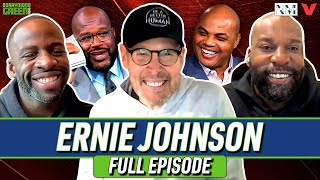
In this extended interview on the Draymond Green Show, hosts Draymond Green and Baron Davis sit down with legendary broadcaster Ernie Johnson, a six‑time Sports Emmy winner and 2023 Sports Broadcasting Hall of Fame inductee. The conversation weaves through Johnson’s eclectic side projects (narrating a Wu‑Tang Clan tour trailer, voicing NBA 2K), his deep family‑focused storytelling, and his 35‑year journey from a baseball‑rooted upbringing to becoming the point‑guard of TNT’s Inside the NBA. Johnson details his meticulous game‑day preparation, the collaborative yet free‑form dynamic of the show, and the evolution of the NBA media landscape, including the TNT‑ESPN rights transition and the future of Inside the NBA. The hosts also explore why current stars may resist being the "face of the league," reminisce about iconic LeBron moments, compare March Madness to the NBA playoffs, and share behind‑the‑scenes anecdotes from on‑set races, charity events, and memorable broadcasts. Throughout, Johnson emphasizes authenticity, responsibility, and the privilege of a "get‑to" job, while the hosts express gratitude for his mentorship and impact on their own media careers.
Chapters
What's up everybody? Welcome back to the Draymond Green Show with my brother BD. What's happening?
What's up, my bro? What's going on?
How you feel?
I feel great, brother. I feel great. I'll be honest with y'all. This next guest we have, I don't know how we pulled this off.
Wow.
Other than him being one of the best human beings to work in sports.
Wow.
The absolute best. He has had an impact on my career in media. He's had an impact on BD's career in media. And quite honestly, your favorite sports stars, and when I— sports media stars, he's had an impact on. And even if they haven't worked with him directly, he's had an impact on because he's shaped He's helped shape media being a part of the game the way it is in the NBA. And we are honored to have this next guest. He is a 6-time Sports Emmy Award winner. Mm-hmm. Host of 21 Sports Emmy winners. Inside the NBA, a National Sportscaster of the Year, 2023 Sports Broadcasting Hall of Fame inductee. And quite honestly, someone that I think is going to actually end up in the Naismith Hall of Fame because of the impact that he's had on the game. And I am honored.
I gotta just sprinkle some ism on top of that. You be talking about the maestro of media, the host with the most, the neato stat for brands, the orchestrator of Entertainment, where sports media entertainment connects. He is the godfather of knowing how to get it done, run the show, the man, the legend, Ernie Johnson.
Ernie Johnson.
Man, how can I possibly live it? I cannot possibly live up to that introduction, fellas. It is so good to be with y'all today. Thanks for, uh, thanks for asking.
Absolutely. Yeah. Oh, it's an honor. We appreciate you coming on the show. This has been one that I've been looking forward to for the longest. And I know as soon as Charles, our producer, mentioned your name, BD was like, "What? Ernie on the show? Let's go!" So we are excited. By the way, Ernie, I recently saw a video for The Final Chamber, the Wu-Tang Forever tour. The trailer. How did Wu-Tang recruit you and get you narrating that video? That is amazing.
That was totally out of the blue, Draymond Green. It was my agent Bobby Hite with the Career Sports and Entertainment, CSE, in Atlanta. He's the guy who comes to me with all requests, speaking engagements, et cetera, et cetera. So I get this email about 10 days ago and he lays this out. He said, "Wu-Tang Clan would like you to voice this announcement of their tour." And I'm like, "Is this really coming to me?" Is it? And I'm looking at this script And I was saying, let's see, can I picture myself saying old dirty bastard? And I'm like, sure, if this is what they want, I'll be happy to do it. And so it just happened. I went into the studio when we were— when we were there to work on a Thursday night. And so I just need to record something here and knocked it out, sent it on. And then about 3 days later, On my timeline, here it comes. It was pretty amazing. But I guess, you know, if Brizza calls and asks, then I'm gonna, you know, who am I to say no? So there you go. That's kind of how that all came about.
Doing those different things like that that you've had the opportunity to do, like what are some of the cooler ones? Like, you know, this Wu-Tang, but what are some of the cooler things that you've come across that's not necessarily Sports, but it's kind of sports adjacent because, and sports has kind of led you to these platforms and doing these different things. What's some of the neater ones that you've done?
Well, I mean, one of the things is, you know, I've been doing the NBA 2K for years and years with Kenny and Shaq, which after a while then you come to understand that that's how, like a lot of the younger viewers, that's how they know you. You know, it's not, it's not that they look at you and say, oh yeah, it's they hear my voice. And so like I can be in the, in the checkout line at the grocery store and say something back to the cashier and a kid behind me says, you're the 2K guy. I said, yeah, I'm one of the 2K guys. That's it. So it's been fun to do that and to see how that all works. It's kind of a drain on your brain by the end of the day, you know, because you've just been sitting there for hours and just a lot of times saying the same thing in different ways. And then when they put you in the mocap suit and it's, you know, the whole bit. So that's been a lot of fun to do because of my longevity in this.
Yeah.
Business. I mean, I've been at Turner for 35 years. I actually, the thing that I enjoy the most is telling my family's story. I mean, that's, I speak to corporations all the time about the things outside of basketball, the things in my life that matter, the things that I've learned by going through adversity. et cetera. And I really enjoyed that so much, um, just being able to, to share, to, to prove to folks, look, yeah, NBA on TNT, that's what I do, but it's not who I am. And so I, I relish the opportunities to, to be able to talk to folks about getting through cancer, adoption, special needs kids, you name it. Um, and then so I, I kind of weave a story that way with a series of photographs, and I love those mornings, those days where I can share that. So those are the things, aside from doing the NBA on TNT, those are the things to me that, those are the things that matter. Those are real life.
That resonates with you and definitely resonates with me and Dray, Ernie. Basketball is life, but our life is bigger than basketball, right? And who we are, this platform always gives us a great opportunity to do such, and you guys have done a great job.
Well, it brings a responsibility, BD. Yeah, yeah.
It does.
And if you pass that up, then you're not doing your job because just by virtue of what TNT and the NBA on TNT has meant in my career, that visibility tells a CEO somewhere Can we get that guy to talk to our group? And if you pass that up, then you're missing the boat. 1000%.
Man, it's sharing the platform, right? It's sharing the platform, being responsible. I mean, just in your journey in TNT, I would say as a viewer watching, you would think like, oh, it's free-flowing, they can do whatever they want. Just one, I want to know, you're a baseball guy, right?
How did you get into basketball?
That was enough.
I grew up from birth, that's for sure. Yeah, when you're— but continue. Yeah, I'm okay. So I grew up a baseball guy, but your point is?
Like, when did the transition, like what made you, like what was that jump?
Okay, so here's the deal. So my dad plays for the Milwaukee Braves back in the '50s. He's on those teams with Henry Aaron and Eddie Mathews and Warren Spahn and Lou Burdette. He's a relief pitcher. And he's, as he likes to put it, or liked to put it, was, you know, I was middle relief, not good enough to start, not good enough to finish. But, and he's, I was a middle relief. Flavor before they were cool. And so, you know, he got a World Series ring with Milwaukee when they beat the Yankees in '57. And, you know, I was only, you know, I was born in '56, so I don't remember. I've just seen videos of him pitching and that kind of thing. But his career then became, he became a broadcaster and was doing play-by-play for the Braves for 30 years when they moved to Atlanta. So that was in my blood. So that's what I wanted to be. I want to be a big league ballplayer like my dad. And that's all I play. You know, I played that growing up. I played a little bit of hoop, nothing above JV. I was on the bomb squad, up 30, down 30, I was in. And man, if you passed it to me, you weren't getting it back. I was just jacking. And at that point too, you know, I was the guy who led the layup line. 'cause I was the smallest guy on the team. So like, I'm 6'2" now. I mean, and people still, 'cause I stand next to Shaq, they think I'm like 5'2". But that was my basketball career. I was a baseball guy and I actually walked on at the University of Georgia. So walked on as a freshman and was told to walk off as a sophomore. I had one year.
One year.
One year wearing the red and black, man. But you know what? That freshman year, unforgettable. And look, I'm not going to get into a conversation like, oh, just, hey, it's just 3 players here talking. No, look, you guys have gone to the highest level. You know what all this is about. For folks who have never been part of that, I consider myself so blessed to have that one year of being a college ballplayer in the SEC and hanging out with teammates, guys who were older than I was, more mature than I was, who taught me a bunch, who kind of took me under their wing and were kind of like, we got this freshman who doesn't know anything. Let's kind of, you know, look after him and take care of him. And I wasn't a great player. I was a backup first baseman. You know, that one year I went 2 for 18. That's not funny. So I went 2 for 18.
My bad.
With one career RBI.
Fire.
One career RBI, which came at the University of Tennessee on a Thursday afternoon in April. Temperature was about 67 degrees. That's all I remember. No, took a fastball the other way, knocked in a run, looked like it was going to be the game-winning run in a game that would give us the division in the SEC, give us the SEC East. And so I go back to take my position out there at first and I'm saying, man, I'm going to be all over the Red and Black, the student newspaper, for knocking in the run that gave us the division title. And this was a team Tennessee had Rick Honeycutt, the longtime pitching coach.
Uh-huh.
Congridge Holloway, who was a great quarterback for Tennessee and had like a 9-million-game hitting streak. So this is a good Tennessee team, but I could just see it. I could just see the headline in the red and black. And then our shortstop made an error on what should have been a game-ending double play ball, and a couple hitters later, a guy hit a grand slam and beat us. So there it went. My, my heroic one career RBI went for nothing. And, but again, the experience, everything that baseball, everything that sports teaches, teaches you about being a good teammate. You learn all that stuff in one year there. I will never forget it. But so, so that's the long story on baseball. And, and then, you know, I'm at Georgia and got great journalism school. My dad being a broadcaster, I'd never really thought about doing it. And I just decided to give it a try one day. And then I discovered that, man, they're letting you into the games for free. You're getting to hang out and get to go to any game you want to go to. And, and so I started working at the campus radio station, then worked at a rock station in Athens. And then finally somebody hired me for TV a year after I graduated and I was doing the news in Macon, Georgia. Yeah. Which was an experience. And, but every step along the way, I don't care what profession you're in, every step along the way provides you with such a learning ground. And there were things that happened in Macon, Georgia that I'll never forget that still play into what I do now. And so it just, it goes that way. It's like, okay, so the baseball career's over, what are you gonna do? And so it was Macon, Georgia to Spartanburg, South Carolina to Atlanta, you know, as a news reporter. And the thing that's crazy, and this is what I tell kids all the time in journalism schools, things will happen that you don't see coming that will change the entire trajectory of your career. And for me, that was that, you know, I'm in Atlanta, I'm your general assignment news reporter. I'm the guy's like, On the night beat, Ernie Johnson, Channel 2 Action News. And we get a new news director one day whose first day on the job, I'm just filling in for a sports guy who's on vacation. I'm doing a live shot at Atlanta Stadium before a Braves game. And I come into work the next day and his secretary comes in and says, Raben would like to see you. Raben Matthews, the new news director. And I'm thinking, Jesus, guy's cleaning house. He ain't wasting any time. New boss, you're gonna come in and say, okay, you know, get a box and get your stuff. He said, have you ever thought about doing sports? And I said, I love sports, you know? And he said, I'm gonna make you the new weekend sports anchor. And that changed everything. Changed everything about my life and about my career. And so I do that for 7 years, weekends for 7 years at WSB in Atlanta. And then here comes—
Draymond Green.
Turner comes knocking in 1989.
Hey.
Wow.
We'd love to have you over here. And you know, I think geographically that helped because, you know, we're in Atlanta. Those guys are all watching the Atlanta stations all the time and they're like, hey, we got a guy right here in town who's, I think we could use. So 35 years later, I'm sitting here talking to y'all.
It's amazing.
Yeah, yeah. It's, you never know. You just never know what, what the next day is gonna bring.
That's incredible. That's an incredible story.
Wow.
To watch your career, you've been on TV since I can remember, and you saying you took the Turner job in 1989, I think I've told you this before, I was born in '90, so.
Thanks for that, Draymond Green. I'm constantly looking for reminders about how old I am. There's a very well-played one right there. I just thought I'd let you know, Ernie, we all know you sharp as a tack. Right.
90. So, you know, we had, my birthday was yesterday and a friend of mine bought a great bottle of wine to dinner last night and he's like, well, it's '89 though, it's not '90. And he's born in '89, so he got a bunch of '89 wines. He's like, it's '89, it's not '90, but '89 is a better year anyway. I was like, it's cool, Danny. I was confused at 89.
It's all right.
It's probably a really good bottle right there. Ask BD, he knows all about those wines.
Yeah, I'm feeling it right now too. Live from Napa Valley.
Live from Napa. Let's get into some NBA news. A major topic today facing the NBA, LeBron and Channing Frye discuss why players are reluctant to take the face of the league role. After 35 years of covering the NBA on TNT, what is your perspective of why players would resist being the face of the league?
Well, you know, we talked about this on the air the other night too about Can somebody dictate who the face of the league is, or is that something you grab, you want, and you seize it? Sometimes you can't help but be the face of the league. Sometimes that's all talent-driven, but I think it does go hand in hand with reputation, how you carry yourself. And these days, obviously nothing goes unchecked from one day to the next.
Yeah.
So you might, you might have the talent to be the face of the league or the guy that everybody thinks of when they think, oh, NBA, oh, I think LeBron James, or NBA, I think Michael, you know, back then, that kind of thing. But I think there is some validity to that, that that they would say, look, I don't want that pressure. I don't want every step I take to be scrutinized. And so, yeah, there's something to that. But I also think that for some, it'd be, I want that. I want to be that guy. I want, you know, I want to carry the flag for the league. And with that comes the responsibility to do right. Okay. Yeah. Don't be in the headlines for the wrong things. That all goes, that all goes with it because you anoint somebody as the face of the NBA, then what happens when they slip up and do X or Y?
Oh yeah.
Is he not the face anymore? Again, it's one of those nebulous things. And I think we're always in such a hurry these days to quantify everything, that everything has to be the best. This, that, he's gotta be the GOAT, she's gotta be the GOAT. How can he be the GOAT if she's the GOAT? You know, can we just not appreciate greatness? Can we all get along?
Yeah, yeah, yeah.
Can we all be a better human? Come on. You know, just there's just this rush. And I think part of that is, is, is in the media thing and whether it's sports talk or whether it's pods or whether whatever it is. But if on a sports talk show you got 4 hours to fill, Well, we're going to spend an hour talking about who's the— somebody just won a game last night with a, with a 3-pointer at the buzzer. Is he the greatest clutch shooter of all time? Well, how can he be? And then we want to argue for— come on, just appreciate the moment. Appreciate— please, if we can do that. But apparently that's, that's not the way things are done anymore.
That is indeed true. I think, um, You're spot on with everything you said. Do you see someone that you say, I think that's who it's gonna be? Because it's been this interesting landscape where like for, I feel like for the last 7 years everyone has been trying to move on from Bron. And you know, for the last 3 to 4 years, everybody's been trying to move on from Steph thinking like, oh, we got it now. Like, This young guy's coming, that young guy's coming. And it's like every year it's reverted right back to those, those guys, Draymond Green, Steph Curry, and everything they're doing. When you look around the landscape, is there someone that you see that it's like, no, I think it's going to be that person?
Yeah, I think, I mean, you look at the young guys in the league, you look at the teams that are doing well, you look at the opportunity for, what do you call it, PR or, or high list, more visibility.
Mm-hmm.
Then, then you say, well, Hey, how about Luka in LA for years? Yeah, could he become the face of the NBA? Hey, here's Shea Gildress-Alexander leading the league in scoring, um, with a team that has the best record. Could he be the guy? Um, could Victor Wembenyama, this freak, be the guy? You know, that we've never seen anybody that size do the things he does. Could he be that guy? Um, So there are a bunch of candidates out there, but the thing to remember is this isn't an election. All right? This is not like, okay, everybody have, you know, I've been a voter for years on these, on the regular season awards. Not like you're gonna add a category that says face of the league. Give us, no, you know, this is not that. This is who is going to, by their play and by their character and by their, leadership. By their persona and their— yeah, exactly, BD. Who's that guy? And it's not like you apply for it. It's just like, well, he's the face. You know it when you see it. And so, so that's, I think that's the way it, that's the way it is. But please, let's not, let's not put this up for a vote. No, you know, that's not the way that works.
Who's scoring big in the NBA this season? You are. All the new ways to get in on the action at DraftKings Sportsbook, an official sports betting partner of the NBA. NBA slams, dishing the ball, cleaning the glass. Get behind your favorite players. Prop bets you can make on DraftKings. It's fun. The home of NBA player props. If you're ready to place your first bet, make it really simple. Pick how many points your favorite player's gonna score. Go to DraftKings Sportsbook. They have an app, download it, make your pick. If you're a first timer, here's something special. New DraftKings customers, all you have to do is bet $5 to get $150 in bonus bets instantly. So Take it to the rack with DraftKings Sportsbook. Every point counts. Download their app, takes 90 seconds. Use the code COLIN, C-O-L-I-N, to get 150 bones in bonus bets betting just 5. Only on DraftKings. The crown is yours.
Man, last night, uh, Bron reached 50,000 points regular season and postseason. You obviously saw Bron come into the league from high school, uh, and obviously become one of the greatest players, if not greatest player we've ever seen play this game. Um, is there some moment with Bron that stands out with you more than others in watching his— man, what is it, 22 years now?
21? 22 years, 40 years old. That night in Detroit, or that night at the Palace of Auburn Hills, because that was a playoff night and we got the show on the road. He scored what, 25 straight and 29 out of 30?
30 straight.
Like that down the stretch. And the thing that, you know, and here's the great thing about the job that I have is being able to sit around and watch hoop with the guys I watch. I mean, you know, Kenny and Shaq and Chuck and, you know, Magic's been in there for a time before that. But when you watch a performance like that and then you glance over at these dudes, And they're all like—
Yeah.
Then you know you've seen something special. And so I think that was the night that I'll never forget. I mean, it's amazing. And again, those are one of those nights that defy description. And on another front, obviously, the fact that Space Jam: A New Legacy, in that film.
Yes.
LeBron, obviously.
Ernie, big time, man. And so, you know, and still, look, I'm still— I'm still, guys, disappointed that a Best Supporting Actor nomination—
For real.
—did not— You know, I'm figuring it's probably like when they had the NBA's 50 Greatest. And I was working with Reggie Theus at the time, and Reggie said I was number 51. So I feel like that year at the Oscars, I think there were probably 7 nominees for best supporting actor. I was 8. He was number 8.
Yeah.
He did an excellent job.
He did an excellent job. We need more of you on the big screen.
Hey, you know what?
The greatest thrill about doing that was we went to a theater to see it and took the grandkids and didn't really tell them what was going on. And then all of a sudden I pop up and they're like, "Poppy!" And so that was worth every second of it.
That's amazing.
Last calendar year, little before the season started, we obviously learned the fate of TNT Sports and the landscape of what the media landscape will be in the NBA. Absolutely thrilled that Inside the NBA won't be going away, as TNT Sports will continue to produce it independently. The new addition will be that ESPN will feature the show at high-profile NBA events next season, such as the NBA Finals, which is also a different thing for you guys. How excited are you to finally get a chance to cover the NBA Finals next season after all of these years.
That's, that's going to be a very cool part of this thing because there's always a feeling at the end of our playoff run. Um, and I've been fortunate, you know, I'm always part of that trophy presentation with, you know, to the Eastern or Western Conference champions. And it's, um, and then you, and then all of a sudden You go back and do the postgame show and then it's over and we've done all the Gone Fishing pictures and it's done. I mean, it's— Yeah, it's just— All flat done. And it's— and then you go back and you watch the Finals and, and you're like, oh, wow, it'd be great to be there for that. So to, to, to be part of that next year is really cool. You know, we look forward to that very much. But the, but the biggest thing about this whole change Look, it's not easy. You know, this NBA on TNT brand has been around since before you were born, Draymond Green. You know, and it was, you know, we've had games on TBS or TNT for better than 40 years. And so there have been these moments this year that give you cause for reflection. I mean, I remember being in Boston for opening night. And standing there and saying, wow, this is, this is really the last year of the NBA on TNT. And I felt the same thing at All-Star Weekend. That was our last All-Star Game. Our first was 2003 in Atlanta and looked like Michael in his last All-Star Game was the MVP. And, and there was foul late and Kobe hit free throws and Kevin Garnett was the MVP. And, and it's a blink. Yeah. All of a sudden we're sitting there in San Francisco and saying, this is the last one. It's the last one of these All-Star Games that we're going to do. So that part's been difficult, but I'm glad that we're able to salvage the show even though it's not going to be on TNT. And as many times as I've tried to explain to folks how this works, it's always like, huh, what? What are you talking about? You're going to keep doing the show, but it's not going to be on TNT? Well, where's it going to be? Well, when you tune into some of these nights on ABC or ESPN, The pregame show is going to be us. We're going to still be in Atlanta. We're just not going to be saying the NBA on TNT. I'll, you know, I'll see how many— I don't know what the over-under it will be for me on times that I speak. But, but yeah, to, to stay together with those guys, to stay together with our production crew, that's really important. Yeah. You know, it's the, I guess, the business of basketball. You know, these things—
Sure.
Sometimes it happens. You know, we've been— I've been part of You know, we had the NFL for a while, then we lost it. You know, I did the PGA Championship forever. And then we, you know, when the rights were up, we didn't get it. And, you know, the British Open, it happens and we've been through it. But I'm just glad that that core, not just the guys on the air, but that whole production crew was still, you know, we'll just do it. We'll just see it in a different place.
Funny story. I've had the opportunity, obviously, to work with Ernie on Inside the NBA. And my first time working with the group, I get this rundown of everything that's going on. And this is during a time where everything's on Zoom, you know, and so the production meetings, all these things are on Zoom. And so I log into the Zoom. I'm the new guy. I'm not gonna be late for a meeting. I log into the Zoom. I log in looking for Shaq, looking for Chuck, looking for Kenny. [LAUGHTER] Only person I see from the show is Ernie. Outside of the production crew is Ernie. And I'm like, I sit there, Ernie goes, "Draymond, what the hell you doing here?" The production meeting, like, I don't wanna miss the production meeting. "Get outta here." All right, I guess I'll log off. And I said all of that to say, Ernie, can you explain to people a day? We go live at, say,— and I say we when I'm on the show— say we start at 6:30, 6 o'clock. We will say we go live at 6 o'clock, 7 o'clock. Can you explain to people what your day is like when you arrive at Studio J on campus and then what you're doing preparing for a day? Because I don't think people really truly understand everything that you do. Like they see you obviously be the point guard and orchestrate, but they don't know everything you do. Can you explain a day to us of a 7 o'clock start time that's not ending until 1:30 in the morning? Can you explain a day of Ernie Johnson to myself and the fans who love the show?
Yeah, this, well, this answer may, may bore some folks. They may say, hey, you know, clip that piece of that Draymond and BD podcast where Ernie's talking about his preparation, 'cause I need that for like a sleep meditation tonight. But here's the deal. It's like, it's like on those game days, yeah, so say the pregame show's on at 7 o'clock. I'm in there, I'm in there between 10 and 11 in the morning 'cause I've also gotta do the Steam Room Podcast with Charles, which is available wherever you get your podcasts. And I think, In a way, I'm like you guys. I mean, you think about in the course of an NBA season or in the course of your basketball careers, you can become a creature of habit. You can become, look, this is my game day ritual. This is my game before, you know, day before, day off ritual. And I had the exact same thing. So there are certain things that I know I need to do. And the thing to remember about it is that my preparation for that night's show has been going on all week. I keep a daily log of every game played in the league.
Wow.
From beginning to end. So every game that's been played.
Wow.
I can, hey, here it is. Look, so this is, let's see, let's see. Now I'm just opening it up. So that's, so there's February, this is February. And it's all kind of in my own shorthand for what I can understand. So I mean, I can look at last night, I can look at last night's Golden State game because I go through the box scores every night. And so Buddy Hield had 20, it was 119. Well, the Charlotte game was 119-101, made Golden State 33-28. It was the Hornets' 7th straight loss. Buddy Hield had 22, Curry 21, and Tennessee 6 assists. Pachemski, 19. Draymond Green had 16, 12, and 7. Butler had 13. They never trailed and led by 19. 35 and 9 for Miles Bridges on the other side. But it's those details on every game that is played.
Mm-hmm.
Because then I can, anytime then when I see teams playing again, I can refer back to that day. Okay, here's what happened in that game. So that's one of the things I do. On a daily basis. And then keeping these files on every team. So here's tomorrow night because Golden State and Brooklyn are playing tomorrow night. That's one of 6 games on the schedule. Neither of them play tonight. So I can get through, I've got this as the—
Wow.
As the Golden State, Brooklyn breakdown. And I see, I update those team profiles every day. So with the Warriors. So yeah. So your last post was the '23 Western Conference semis, knocked out in the play-in in '24, '22 champs over Boston, 4-2. Your home— your record on the road is 17-15, 6-1 since the break, 9-1 with Jimmy Butler. You're 22-4 when you lead at the half. You're 7-1 when you allow under 100. You're 1-11 when you score under 100. And I don't know, and it's overkill, fellas, but— and you go into every show realizing 95% of the stuff you got never gonna make air. But on the off chance that there is something in here that's relevant, then you've got it. And you just feel like you're into the game and you know exactly what's going on. So that goes on all week. Yeah. And so really just the finishing touches are put on on a game day. You know, I'll read articles from around the league, you know, I'll look at the production format that Tim Keiley has put in. Okay, let's see what we need to do. And then really just doing facts and that kind of thing. And so that's it. So the preparation never ends. It's— look, doing the show's the easy part. The work is all the prep.
Yeah.
And so, and so that's why, like, I mean, last night, you know, I didn't work last night, but I worked here in my office at home because I'm flipping around from game to game. And from 9:30 until 1:30, I'm doing this stuff, but that's it. And so it's not like I show up on Thursday and say, hey, what happened in the league this week? You know, that's, it's like, it's just an ongoing process, but it's what makes me comfortable. It may— it's not for everybody. There are a million guys out here doing what I do, and they have their own ways of doing it. But for me, that's what makes me comfortable. And, and what I discovered long ago is when you're comfortable and when you're prepared, you don't get rattled, right? Somebody can break a backboard and throw it back to the studio for 20 minutes while they fix it and say, shoot, I can fill for 2 hours, what you need.
I love that. I love that, you know. The preparation, everything going into it. And then like you said, the show is easy, right? Once you get to the show, it's easy.
Yeah.
But like, I went, one, how fun is it? And how easy is it to keep those dudes on guardrails?
Kenny, Shaq, Chuck, you know. You both been in there with me. You know what it is. Every show is somewhere between a walk on the beach and a train wreck.
Yeah.
And half the time you don't know which it's gonna be until you hit the air. And you don't, because part of the deal is, look, we all have lives. We all have some days are good and some days are a little rocky. And so sometimes you may be bringing that to the chair when you sit down. You've had a bad day, Shaq had a bad day, and he doesn't feel like taking anything from Trump. And you can tell right from the start that that's gonna happen. So really it's just kind of a feeling out process and it's like, okay, how's this going to— is the energy good in here? Oh, geez, he's— Shaq's on fire tonight. This is going to be a long night. Or Chuck is subdued. I don't know. Auburn lost. You know, so, so you're constantly kind of reading the room and then kind of figuring out which direction you want to go. And it's like, it's like I'm— people call me so many different things in that role. Whether it's, hey, he's the ringmaster. Hey, he's the point guard. He's the traffic cop. I'm actually that traffic cop who's not very good at his job because instead of trying to wave people through the intersection with no fender benders, I'm like waving Kenny this way because I know Shaq is going to broadside. And so in that way, I'm a little a little bit of a rogue traffic cop. But that's, that's how it goes, man. And if folks at home are sitting there saying, I have no idea what is going to happen next on this show, join the club, man, because half the time I got no idea either. And again, you guys have both seen it. You know, the show can go a million different directions, and sometimes you just let it go. Mm-hmm. Yeah. And sometimes you need to try to rein the guys in and maybe, hey, okay, good. Because, you know, Chuck has a bad habit of repeating himself. You know, he'll make a point and then repeat it 3 more times before— like the other night he was doing— I said, look, man, you're just making laps on this thing. Can we stop and move on?
Okay.
And so sometimes I guess I just need to let him know. That, yeah, I know you've just said that 4 times, you know, I'm not going to let you say it 5 times. But yeah, that's, that's the way it goes. It's just, it's all feel. It's like— and, and Tim Kiley gets a lot of credit for that too, the producer, because, you know, we'll get in my ear sometimes to say, let's move on. Um, or he'll say, let it go, this is good, you know, like, like we can continue to— if it's a really good discussion. So, but yeah, it's all feel. It's like, okay, this is kind of run its course. Boom, let's change "Let's change direction and do something else." I've had so much fun on the show.
You know, it's unlike anything that I've ever done. And I'm not sure in media that you can ever do anything else that's like, you know, like it's— I'm not sure how you can recreate it. Like, I'm not sure. Like, I don't think it can be recreated. But it's so free-flowing, but yet it's still— It's not just like haywire though. It's not just like anything goes. Like, it's very much so like, "Hey, we wanna talk about these things." And then if it goes somewhere else, great. But for me to have the opportunity to be on that show with you guys and just watch and learn, and to watch you guys help me, you know, when I'm sitting there and can't really get a word in, and you like, "Draymond, what about this?" You know, or, you know, early when I first started,— you know, we're on the break and Chuck's asking me like, "Hey, so what are your thoughts on NIL?" And I tell him my thoughts on NIL. We come back from the break, start talking, and Chuck go, "You know, Draymond has some thoughts on NIL." And like, just throw me alive and I go on it. And just to like, have that experience in really my first experience in media and like really doing TV. I feel like it set me up so well for the future, just being able to work next to stars, to greats. And I just wanna say thank you for helping me move into that field, but just making it so easy for me to just go up there and speak and try to build my brand in that space. I just wanna say thank you because I couldn't ask for a better experience.
Dre, what's the first thing I said to you after your first show with us? I said, man, are you in a great spot? Because I don't know how much longer you're going to play, but when it's done, you can write your ticket because everybody's going to want you. It is. It's true, man. And there's— look, some guys have it, you know. I— we knew right away Kenny had it, you know. Kenny was, you know, you know, Kenny just had this way about him, this great, like, streetwise, you know, you can't throw me off my game in any way. You ask me anything, I'll— and he was great. And we said, oh man, when he's done, he's got to be part of the show. And that's always been the key to any, to any player who's tried to venture out and branch out. And a lot of times their agents are like, I'm going to try to get my guy on TV because I think, you know, this is the avenue. And there are some guys who you would see them interviewed postgame or see their personality on the floor and say, ooh, he might be really good on TV, but there's something about that red light going on. There's something—
Yeah.
There's something about that red light going on and suddenly the topic of conversation is this guy's, is this guy's buddy.
Mm-hmm.
Well, what am I gonna say? Am I gonna be honest or am I gonna say what my buddy wants me to say? Or to say about his team. And there can be that, oh, I don't know if I want to go there. To our guys' credit, they have never shied away despite what you— despite what players in the league might say. And BD, same way, you know, I, I say, I talk about this, you know, with when Draymond was on the show a few years ago for the first time. But it's the same way with you when you're on the air with us. We're like, this guy gets it. He's just being him. He's not like, oh, I got to be a TV guy now. You know, it's just like, no, this is what you got. Have me on the show and this is what I am.
Yeah.
And that's all you can ask for is somebody to be authentic and genuine and be themselves and not hold back. And for a guy like Chuck, who was the most quotable guy in the world on every topic when he was a player, who was always sought out for his opinion, he never shied away from that. And that's what made, and that's what makes it work. So, And it also goes back, when you talk about the free-flowing conversation, it goes back to the fact that these guys are not in the production meeting because we don't want the show laid out. So they're thinking about, well, what am I gonna say about that? What am I gonna say about the Bucks? What am I gonna say about the Clippers? What am I gonna say about Kawhi? It's gonna come up. And what do you think? Right there. Not with, not with a bunch of, of— oh, I'm trying to remember what I said— and not with a rehearsed kind of— but we've seen enough shows that are so over— that are so rehearsed that the opinions and the things that are happening are happening like boom, boom, boom.
Yeah.
Like, okay, now you're supposed to talk, now I'm supposed to talk, now I'm supposed— now we're supposed to get to commercial. With us, it's like, geez, who knows how it's going to go? How, you know, with all this stuff flying back and forth And that's why it resonates. I think that gives you more that feel like you're sitting in the living room with your fellas watching. Nobody's asking for permission to talk. You don't go to commercial break and say, "Hey, when we come back, you say this and then you say this and I'll laugh and you say this." No, we're just letting it fly. And then eventually we gotta get back to the game and then we'll pick it up when the game's over. So that's how it works.
Opinions sometimes can get heated. You know, you're talking about basketball, which all the guys on that stage love. You go through life, you start the show at 7 o'clock, it could be 12:15, you've been there for 4 and a half hours. But you've been there for 13 and a half hours. But everyone else has been there for like, call it 5, 5 and a half hours. You get a little groggy, you get a little tired, opinions start to clash. Have there ever been moments on a set where you felt like, "Man, this could really lean the other way and go somewhere we really don't want it to go amongst the guys"?
No. And a lot of times, the talk from people who watch, and they've asked me this thing, "Are you ever afraid that Shaq and Charles are really gonna throw hands some night?" And I said, "No, no." No, look, these guys are tight. Their moms were tight. Their families were tight. No. But they— but here's the deal. They realize that every— everybody on that show comes at the game from a different angle. And so they're going to be, you know, you know, Shaq is going to give you the big man, got to give you 30 and 15. You know, that's his— that's his solution to everything, you know.
Yeah.
And then Charles and Kenny will point out, look, you were Shaq. You were Shaq. Okay, you can do that. But not everybody is you.
Doesn't matter.
Yeah. And so I think because of that, you can have these differences of opinion. And a lot of times that comes down to like, you know, Shaq saying the coaching doesn't matter. You know, here's a guy who's played with some of the greatest coaches of all time, but he's saying, you know, and then you get a chuckle. Yeah, man, you must have been a joy to coach. And then they start— you're going to be some furniture moving. I mean, it happens all the time. But no, I don't think that that's ever been an issue of thinking, oh yeah, these guys are really mad at each other. I mean, look, there was one time in particular, the clip has gone viral about a billion times of the night that Charles took all of Shaq's time on a sponsored element.
Oh yeah.
You know, I finally get, finally, You know, they were 25 seconds. Okay, Shaq, you know, because Charles had answered and then I was about to throw it to Shaq and then Charles took it back because he had something else to add for the fourth time. And then when I get it back to Shaq, no, no, no, he wants to talk. He's gonna think all the time about it. Supposed to, you know, supposed to be 1 to 2 to 3, not 1 to 2 and back to 1.
Which—
which, that's when he, which when he said it was the funniest thing I'd ever heard in my life and I couldn't stop. And so, but what you didn't realize, he was, he was hot. He was so mad. Shaq was running hot.
He was so mad.
BD, BD, this was during the playoffs and BD, he came in, he came in the next night He was quiet. He wouldn't talk. The show starts and he's just sitting here like this, staring straight ahead. And I'm having to beg him to talk. You know, come on now. Hey, big fella, come on. This is a good matchup right here. You know, they don't want to fall down 3-1 in the series. No, they don't. No, he's still— he's still— And so really, that's one of the few times I've ever seen any kind of a carryover from one show to the next where somebody— Oh my God. Kinda got their feelings hurt a little bit and was not gonna take part in the next show the next night. And I remember that pregame show ended and Shaq immediately got up and went to the green room. And Kenny and— Chuck and I had looked at each other, uh-oh, somebody's gonna have to have a word with the big fella 'cause he's carrying this around.
Oh man, that seems like great, great fun. And then I wanted to, you know, share a moment in the career that you did something un-basketball related. I remember we made burritos, We did the Indy race where everybody kept calling me a getaway driver. And Charlotte, what are some of those moments that you enjoy, you know, from the show that you guys do, you know, off campus or activities? What are one of those moments?
That was one, the one in Charlotte was really fun 'cause we went to the drag, yeah, went to the drag strip up there and— Yeah. And got to have those. And I'm still ticked off because I had Candace Parker beat and then something happened to my car. But we had those, we had that big race at Georgia Tech. All of this based on Kenny running to the board all the time, you know. And by the way, he never challenges Draymond on that race to the board when Dray comes and visits us.
Yeah.
Because Dray gets to the board in about 2.5 steps. And, but so that led to this big, we're gonna have a 100-meter dash at Georgia Tech. And it's me and Weber, Chuck, Shaq, and Kenny. Again, this also probably available online somewhere, but it was, you know, everybody's woofing, everybody's saying why they're gonna win. And it was such a bogus start, not, Me, I'm the idiot who says, I'm just, I'm waiting on the gun. And I was the only guy waiting on the gun. Start that 100 meters. And so I immediately stand up and I say, false start, false start. Ain't nobody listening to me. They're going. And Chuck, I mean, I know I would've beaten Chuck because he hasn't finished yet. And Shaq pulls a hammy with about 20 yards to go. And he's actually winning. And is coasting to the finish line, and then Weber passes him right at the line and breaks the tape. And that was the whole, you got to run through the tape thing.
Yeah.
But it was, again, it was one of those things where it was like, who thinks this up? You know, who pulls it off? And because we were using— this is years ago before drones even became that big a thing. And we're looking around and these things are buzzing around. They're shooting this with drones. And it was tremendous. I just— those are the things that set us apart, I think. Those are the things that's like, we'll do anything. And some of it will be great. And some of it might not be funny at all and might not work. But man, we're going to shoot our shot and we'll see. So I think, yeah, I think that the historical—
That was a great moment.
100-meter dash, that was the— That was certainly one of them.
We've spoke about it. You've had a long career. Is there one thing out there, doesn't have to be in sports or anything, is there one thing out there that you look at and you say, I still, I haven't done that, but I want to do that thing before I'm done?
You know what? I have been able to condition myself, Draymond, to appreciate what I have been able to do and not what I haven't been able to do. So, No, I never give that a thought. I never say, "Boy, this has been great, but I really want to do this." I have what I call a get-to job, not a got-to job. We've all seen folks at the traffic light who are driving to got-to jobs. "I'm doing this 'cause I got to go to this." I got a get-to job. I get to go down there and hang out with these 4, or these 3 guys. And I've been able to do that for 35 years. So I've always been focused on what I get to do and never a regret and never a, boy, my career could be complete if I could just do this. Uh-uh. That's not the way it works for me.
You go from March Madness to the NBA playoffs. I would like to know which one is more intense Which one is more interesting for you?
The prep for March Madness is so much more than for the NBA. Look, I got this NBA thing down, you know, on a nightly basis doing the things that I have to do and I know to get ready. But every college basketball season, it's like, okay, how many teams might make the tournament? And that's kind of where I start. You know, it's like, I'll start really paying attention in December and just before they start getting into conference schedules and that kind of thing. And since we've been doing that for 13 years, 13, 14 years now, I have like this database on my computer where I've, you know, got profiles on probably 200-something teams.
Wow. So—
Right. Just because over, just because over the years, that's how many, you know, starting with that first year, it's like, geez, I got 100 teams here that might make the tournament, you know, depending on all these conference tournaments. And then it just increases. And then every year you're updating this. Okay, now it's this guy's 18th year as the head coach and their March Madness history is this, and here are their top guys. And now you, you add to that equation, okay, I got to take it to the next level. Where else has this guy been? Okay, so he transferred this year from here, but the previous 2 years he was here, and before that here, and now he's playing in his 8th year in college. So that's all— so that's all added to the preparation there. So that's where, again, the amount of preparation for the— compared to the length of the event, you're doing all this because in 2, 3 weeks it's all going to be over. It's, it's not like an 82-game season. Yeah. It's like, this thing is going to start in mid-March and be over in early April. Yeah. Why is this much work getting into it? So there's still something about that tournament, BD, to answer your question, that is something no other sport has that I've seen. There's just that whole, that whole vibe around the tournament, which, you know, you don't have to be a sports fan to have a bracket. Right. You just, you know, that's— it's one of the great uniting things in our country.
It is.
Is March Madness. It gets everybody together, gets people— I don't even know if there are water coolers anymore, but if you have a water cooler in your office, that's where you would gather to talk about, wow, you really think South Dakota State can beat so-and-so? You know, that's— and so it would bring people together even for a short time for some common ground. And again, the one-and-done nature of that, you know, leads to these, you know, these iconic buzzer-beating moments that live forever. And that's what— yeah. So that's what's really, really special about that. So, yeah. And the fact that I, you know, get to go to New York with Kenny and Chuck and Clark Kellogg up there again, that's— it's so much fun. And but those days, you guys have been in that NBA studio, you talk about, you know, getting in there and walking out 2 o'clock in the morning.
Yeah.
I mean, you're talking about games noon to 1, noon to 1. Oh, that's crazy. Those first 2 days are so crazy. You're sitting around and it's like, okay, I'm doing a CBS halftime show, then I'm gonna bring TNT on the air. Then we're doing a TruTV halftime. And all these are happening like boom, boom, boom. Okay, this TruTV halftime is which game? Good. Okay, I've seen 8 seconds of that, but luckily Clark has a good handle on it, so we'll go to him. So it's that kind of a thing. It's nonstop and the hours are long. But I, as I've always told Kenny and Chuck, when those days start getting long and we're kind of getting a little bit bleary-eyed, look, if your boss told you at your job, hey, all I want you to do for the next 4 days is watch the tournament, you'd probably sign up for that.
Yeah.
And that's what we're doing.
Yeah.— in a heartbeat. I watch, I love the tournament, so I get it. March Madness is different. Before we get outta here, we love to make a good list. Could you do your top 5 Inside the NBA moments that you've experienced in your 35 years?
Yeah, let's see. Some of 'em will be, this is tough to do, but some of 'em will be like, just clowning on the guys and that kind of thing. Probably the Champions Club ranks up there where we locked Charles out of the studio for halftime because he didn't have a ring. Only champions could get in. I think the Kenny against Charles diaper changing contest where we melted a little Butterfinger microwave and put it inside the diaper, and Charles nearly fainted. Um, let's see, retiring Kenny's jersey, retiring— That was so funny.
Rockets jersey.
That was so funny. On the clothesline. I would say he was so upset about that. Oh, he was hot. Oh, he was so hot. I've seen how this works. I'm getting out of here. I remember, yeah. I would think Shaq, whether he's falling or being pushed into Christmas trees or the night that he actually got his foot wrapped around the cable and pulled the monitor out of the set. That goes up there. But here's the deal, and I'll bring it back to, I'll be real. The show I'll never forget is the one we did in LA after Kobe died because they canceled the game. But we went out there and did the show midcourt, nobody in the arena, and just talked about him. And for like Shaq, it was the first time he had a chance to talk about Kobe.
Mm-hmm.
You know, we bring Jerry West on and he's balling. You know, it was the most powerful show I've ever been a part of. And it was just so real and so raw. And it was— and it just— I think it was just a demonstration of the fact that, yeah, we can have some really ridiculous times on our show and we can make you laugh and you can go to work the next day and talk about, "You see what those clowns did?" But also, They'll say, man, did you see, did you see that tribute to Kobe last night? And that was, you know, it was probably, that's, that's the thing. If I had to look at it right now and say the thing I will never forget about that show was that night.
That's incredible. I don't know how, I don't know how we can go past that. Such a great note to end on. I think, you know, when we look around the basketball landscape, obviously all of us are big Kobe fans, you know, and We all miss him. And so to end on that is incredible. But more importantly, Ernie, we can't thank you enough for coming on the show, um, sharing your stories, your backstory, going all the way back to childhood, but more importantly, just sharing your energy and your light on this show. Um, obviously we're all big fans of you. As we said earlier, for us, both of us to have the opportunity to work next to you and catch some of them assists you'd be throwing out. One of the highlights of my TV career.
Man, tell me about it.
So just want to say thank you for really coming on. Thank you, Ernie. It's been a complete honor. And just hearing these stories, it's been a special one for me.
I appreciate you, fellas. Thank you so much for having me on. And I, um, no, hey, it's a get-to job, man. I'm glad I could share some of it with you.
Yes, sir. Really appreciate you.
Thank you. Much love, EJ. Much love. We can't wait for the next book too, Unscripted. The first one, amazing.
I can't wait. I can't wait.
Can't wait for the next one.
Yeah, I got a few. I got a few of them up here, man.
I got one for us. A nursery rhyme book. Yeah, I know. Yeah, I got— you got bars. Ernie got bars, right? He was shooting them bars at the Legends brunch. That was— Oh man, the way he was doing the intros, that's cold. We need a whole children's book with Ernie bars.
BD, you and me, I would love to do that. You know it.
I would love, like, count me in. I'll get to working.
I got you. Love you, James.
I just want 2% agent fee. I feel like I brokered that. All right, Draymond Green, you already know.
You the boss.
He brought it up at All-Star Weekend, Jimmy. You're just a hair late, bro.
Draymond Green executive producer.
Yeah, there you go.
Yeah, yeah.
All right, fellas, thank you.
All right, Ernie, thank you so much. Thank you so much, Big Dog. Appreciate you.
Good luck down the stretch, man.
Thank you, really appreciate it.
I'll see you soon.
Yeah, you got it. And it's been, hey, great being your teammates, both of you.
Thank you.
Thank you for having me on. And that's been the great thing about that show, man, getting to meet folks like you. Appreciate you.
Oh man, likewise. Thank you. Highest honor to be a part of it. Right. Be good.
All right, Ernie.
More from Draymond


Draymond Green on Brandin Podziemski Extension, Darius Acuff Interaction, & Weird Rudy Gobert Talk


"I Was Waiting for You All Game!" | Deni Avdija & Draymond Green Recall Iconic On-Court Moment

Deni Avdija on Becoming an NBA All-Star, Playing In NBA Playoffs & Hilarious Draymond Green Story


Draymond Green on Warriors Preseason, NBA Push-Off Rule, & LeBron's Fanatics Helicopter Deal


"Awful Representation" — Draymond Green Sounds Off on Dalton Knecht's Lakers Purgatory

Draymond Green Explains How Micah Nori Handled Damian Lillard & Ja Morant Lineup Controversy Wrong

Draymond Green Exposes How Contract Drama Destroys Locker Rooms After Jalen Duren Re-Signs