Gilbert Arenas on secret NBA contracts, escaping the Jordan era & gun incident | Draymond Green Show
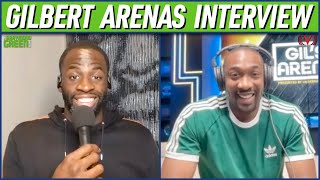
In this hour‑long interview on the Draymond Green Show, former NBA All‑Star Gilbert Arenas recounts his life and career, beginning with his childhood move from Tampa to Los Angeles and his accidental start in basketball after a football‑focused youth. He discusses his time at the University of Arizona under Lute Olsen, the challenges of being a "tween" guard, and why he fell to the second round of the 2001 draft (31st overall). Arenas explains the origin of his iconic number 0, the CBA provision later dubbed the "Gilbert Arenas rule" that altered contract options for second‑round picks, and the details of his early Warriors contract, the subsequent 6‑year, $64 million deal with Washington, and the financial maneuvering surrounding it. He describes his injury saga (microfracture surgery, meniscus tears) and the 2009 gun incident with Javaris Critton, reflecting on how a single mistake reshaped his legacy. Arenas shares his brief stint with the Shanghai Sharks, the physical toll it took, and why he ultimately retired. The conversation shifts to his rapid move into new media—NBA.com’s Player’s Diary, his own podcast "Gil’s Arena," and his philosophy that player‑to‑player media should focus on basketball performance, not personal character attacks. He also offers opinions on veteran leadership in the modern NBA, the diminishing presence of seasoned players, and the differing media treatment of European versus American stars. Throughout, Draymond Green interjects with personal anecdotes and prompts, creating a candid, conversational tone that blends storytelling with critique of league structures and media practices.
Chapters
What's up everybody? It's Draymond Green. Make sure you subscribe to the Volumes YouTube channel below so you don't miss any more of this great content going forward. What's up everybody? Welcome back to the Draymond Green Show. Our next guest I'm excited to have, 'cause you know, this guy obviously is a great basketball player, had a really good career. Actually, a lot of people who I've talked to has said it's the best player they've ever played with. Like most talented guy they've ever played with. Like several people. I'm talking Andre Iguodala, Richard Jefferson, like real NBA guys, like All-Stars have all said best player they've played with. No Chill Gil, Gilbert Arenas, my brother. Welcome to the show. I appreciate you coming through.
Oh man, thank you for having me. Thank you for having me.
Absolutely. You know, first off, you know, just getting into early life, you know, born in Tampa, Florida. At what age did you move to the Valley and, you know, out here in Los Angeles?
Yeah, so my dad decided to become an aspiring actor, you know, wanted to do the Hollywood life. So around 7 is when we took the journey from Tampa to Cali. Didn't work out so well, you know. Was homeless for a little bit, lived in the car for a little bit. And then because he didn't have his shit together, he shipped me back to Tampa until he got, you know, stable. He was working with Chuck Norris, Mike Tyson, bodyguarding for Mike Tyson, Jean-Claude Van Damme. And once he got situated, I came back at around 10. Okay.
What effect do you feel like it had on you moving out here? 'Cause like LA, as you know, is a hotbed for talent and the basketball out here is different. Florida is more of a football state. What effect did that have on your life in moving out here?
That's the funny part. I was a football player.
Really?
So I was, yes, I was a straight football player, baseball player. So nothing about basketball. And my dad was making ends meet. Coaching basketball. So he was coaching and refereeing, right? So I'll just be sitting there or playing outside at the park. So I never really paid attention to basketball. And then what ended up happening is one of my friends in school lived next to the park. So I used to go watch him play. He's like, I'm trying out. So I was like, should I go try out too? And then whatever he said, I just copied. Point guard, point guard, right? You know, it was one of those things. That's cool. You know, that's how I got started. Yeah, my boy Bobby Mitchell.
That's crazy.
Yeah.
Going back to, that's nuts. You go through, finish school here, go through high school, you go to University of Arizona, you know, play for the great Lou Olsen. What was that experience like as a freshman going into Arizona? I know those legendary coaches like that can be really tough on freshmen.
Now, you know what's funny? If it wasn't for Lou, I probably wouldn't have made it to the NBA. I probably would've been kicked outta school. You know, I was young, I was 17 going in, so I was real immature, right? I was like, it was, I was 12 going into college. You know what I mean?
As most of us are.
Yeah, so like, the kid side of me just wanted to do everything. Everything that I could possibly get. Paintball shooting, like I did everything. Fire alarm ringing, stealing the go-karts or the golf carts from security. So Lute Olsen didn't penalize me on the basketball court for the immature stuff I was doing outside of the court. And he's like, "You know what? If the school decides to penalize you, you won't be able to play this." So that's, if you mess up here, they gonna take it away from you. I don't need to do that. And then from there, it made me understand like what this can affect this. And then if I don't want this to affect this court, then I gotta really, you know, calm down on this side of the lines.
Absolutely. And your sophomore year, you go on, you win Pac-10 Player of the Year. You carry squad to the national championship game where y'all eventually, lose to Duke. But what was that year like? You know, you have a decent freshman year, good freshman year, and then really taking that jump that next year. What was like, what happened with you? Was it the confidence jump? Obviously you was working on your game, but what helped you take that next step, that next, your sophomore year?
You know, just like anything, you know, like our rookie season, you know, we don't know what to expect when we get there. Right. You know, we're watching on TV, it seems faster, seems slower, you know? So that first year it was like, I'm just playing just off field. You know, then once, you know, once I got into my second year, the game slowed down, I got smarter, I understood the rules more, understood players, understood concept and schemes. So, you know, when we all got into our second year, it was, We're going for the championship. You know, we thought our first, my rookie season, my freshman season, that we were good enough to win it, but we was no Cincinnati.
You know what I mean? Absolutely.
We was no Cincinnati.
Absolutely. And that's Kenyon Martin and those guys at the time, right?
Absolutely, yes, yes.
DeMar Johnson, Kenyon Martin.
Logan, Kenny Satterfield. So they was stacked. But they was rugged. They was a rugged group. We was, you know, we was all finesse and stuff. They was just, you know, they was rugged. You know, so going into, you know, the tournament that year, we was really like, really feeling ourselves. Hey, we blew y'all, we blew the Michigan State out.
Hey, relax, relax, relax. No need to go there. They can look up the history if they want to. We not doing no Michigan State slander here. However, I watched that. I watched that game.
You know, like, you know, us, you guys, Duke, Illinois that year was good. I think Frank Robinson, or Frank, some Frank was there. And Maryland was all right.
Yes.
You know, so it was 5 teams that could've won it all.
That year.
Okay.
And you know, then you decide to take that next step after your sophomore year, drafted the 31st overall pick by the Golden State Warriors. Number one, why do you think, or maybe you know, why did you go second round with the talent that you had, the year that you had, then you go in the second round? What was that about?
You know, back then, it was them tweeners.
Oh, tell me about that word.
Yeah, I was a tweening guard, so I wasn't, I wasn't big enough to be a shooting guard and wasn't a point guard, right? So I was stuck in the middle. So my comparison was like a smaller Cuttino Mobley.
Oh.
Yeah, so I was a smaller Cuttino Mobley. If you look in that draft, it said I'm the best one-on-one player in this draft. Me doing some things, Like, you know, through the draft, like, I didn't want to do the treadmill test. Me, it was more of an ego thing, right? I trained my ass off. Like, I really, like, really ran miles. And then you put this test and say 18 minutes, but nobody can win. That didn't sit well with me.
Yes.
There has to be a winner. We just can't just all go to 18 and then, you know, I'm like, nah, I want, you know, somebody sit on here 3 hours. I want that type of, you know what I mean? So I'm like, why do I need to prove that I'm in shape? And then what does this test gotta do with drafting? And what does this test gotta do with training camp? So whatever you see here is meaningless, to be honest, because me being in shape now doesn't have nothing to do with me being in shape when that season start. So like little things like that, I just seen flaws and I attacked the flaws.
No, that's interesting. That's interesting. And I agree and I understand. I worked out for the Boston Celtics. Oh, they missed you too. They were one of my 20 workouts when I was coming out. And I worked out for the Boston Celtics and they had us do like this Boston Celtics 3-minute run or something at the end of the workout.
Yeah.
And like I did the run, but like I'm not hauling ass. Like, and it was a good learning experience for me, but I did the run. And afterwards Danny Ainge asked me, who's the president GM at the time, Danny Ainge asked me, he's like, "Yeah, so you, I expected you to do better in that run. Why didn't you get more lines in the run?" And I was like, "Well, quite frankly, I feel like the run is kind of to say whether I'm in shape or not, but you just watched me work out for 2 hours and destroy everybody. So I'm not really sure like what the run is gonna show you." You know what I'm saying?
Exactly.
A, it's not basketball, just running from line to line. "And we just played a lot of basketball. We played ones, twos, threes, how to get out of a trap. I did everything well in this workout. So I'm just not sure like what I really needed to prove in this run." Like, that don't really work. So I 100% understand that.
Yeah, it's the draft process to me is so flawed. You let players dodge players. Like, if I'm a team, right, and I'm looking at a few guys, I want to put them together. Like, this player's dodging this player. If you're dodging this player, then why would I want you?
Yes.
You're not going to take— you're not taking the challenge. I want the guy that's willing to take the challenge. He's willing to say, I'm testing my skill against everybody. Because when in NBA, you can't sit games and be scared, you know? You know what I mean? So it's like— It was one of those things where when you go through it and it doesn't work the way it should have, you'd be like, this is flawed.
Yeah.
Like I did 17 workouts. Sacramento, I went like 23 for 25 from the 3. Their excuse was I couldn't shoot. 'Cause they said, oh, I had a set shot. You know, that's not realistic. It can get blocked, it's too slow. I was like, how am I gonna get blocked if I can pump fake? It's like, you just make excuses, right? You just make up excuses not to draft. Just say you didn't wanna draft me, bro.
That's all you gotta say. Facts. Facts. No, absolutely.
But it doesn't measure heart. It doesn't measure if you have heart, if you have a work ethic. And that's why a Hall of Famer like yourself can go in a second round.
I appreciate it.
And they not, And they not, they miss it because this doesn't measure, this system doesn't measure who has it, who wants it.
Fact.
You know, and that's the problem with it.
No, absolutely, I agree. You get drafted and you get the number zero. I've heard speculation of why you got the number zero. But I think what's also impressive is like, I feel like you were really the first person to really go that route, like zero. And kind of make that number a thing. You know what I'm saying? And I don't think people in sports or fans, I would say, really understand that. Like the impact that you had on the game to like, zero was a shit number. Like now zero is a very prominent number, you know?
Yeah.
But what was your reasoning for going with number zero once you was drafted?
Yeah, so actually it started in college. So I was 25 because I was a Penny Hardaway fan. So I'm, you know, I was Penny Memphis, Penny, I'm Penny Hardaway. So going into Arizona, you know, looking to get 25, but that was Steve Kerr's number.
Yep.
So they were saying they're gonna retire it so you can't play in it. So I'm like, uh, I don't have any other number. So they said, all right, these two numbers are being released this year. 1 and 0. The first thing I'm thought, "Oh, penny." But when that 0, when I seen the 0, it was like, man, that's how many minutes they said I will play in Arizona. They said I am not an Arizona type of player and I'm gonna play 0 minutes. So I was like, I wanna go with 0 so I can, like, no matter what I'm doing, I can always look at it and it, this is what they said you was gonna play, 0 minutes. So— Mm-hmm. So when I went to Golden State, drafted 31, mad. Oh, I was hot.
Pissed.
Threw my cubic zirconia out the window.
Get all out.
Threw it out. I don't want that. I don't know if they have the recording, but this is a recording that you should find. I was the cockiest person when I got drafted. Like, I was mad. Like, I don't care about this. Hey, by the middle of the season, I'm gonna be starting. I don't care who's in front of me. I'm gonna be starting. Click.
Sheesh. And you were. Yeah, it ended up happening.
Those first 40 games, it wasn't promising. Like me starting happened overnight.
It wasn't— I was just about to say, what was your break? Like, my break was David Lee got hurt. I started the season, we started like 16-1 or something. And then the rest was history. What was your break to kind of get you over that hump after those first 40 games?
It was, it was Mookie Baylock basically getting kicked off the team 'cause he wasn't being a veteran. Then Larry Hughes going down with an ankle sprain. So I was on IR. Like back then we didn't have G League, D League, we didn't have that. So I was on IR and I'm playing like, you know, 2 minutes, 1 minute, if there's a blowout or we're winning, you know, there was no me getting a load. There was none of that. So it was 0 to 100, like really fast. So Larry Hughes goes down and then they take me off IR. Bobby Sura didn't wanna start. So he's like, "I'm playing well at where I am right now." Yeah. So put him in for a couple minutes.
"Let me see how the game's going, then sub me in." That sounds like a true vet who knows, "I gotta go out here and deal with these starters. I'm gonna keep coming off the bench so I can play against these guys coming off the bench. You go deal with them starters, young fella." Yeah, and Dave Cowens got fired.
So Dave Cowens got fired. And Brian Winters ended up being the coach. And Brian Winters was like, "I'm gonna go with the guys." You know, who play hard, who work hard, who shows up every day for practice. You know, because I was coming in at 6 o'clock in the morning, you know, working on my game. Mark Jackson, like Mark Jackson saved my career. Wow.
Mine too, by the way.
Huh?
Mark, it's mine too, by the way.
Yeah, no, not that one. Philly Mark Jackson.
Ah, okay, okay.
Yeah, Philly Mark Jackson. He was, we were teammates and He used to wake me up at 6 o'clock and say, "Man, listen, don't worry about where you are." He said, "I made $25 million and I only played 25 games. The last 25 games, you know, I made $25 million." And he was like, "Just focus." And he was just teaching me, playing. 'Cause I was in a funk like, "Man, I don't, you know, I'm probably not good enough." And I was, you know, I was ready to quit.
I was ready to quit.
I was ready to quit. And then all of a sudden, you know, when he said my name, I was actually ready.
That's dope. I always tell people, your name is getting, your name, your number is getting called in the NBA. And if you not ready, it may never get called again.
Yep, you're right.
It's gonna get called once. And it is so important that you ready for that when they call your name. I tell these young guys like, man, I used to get called in with 20 seconds to go to go guard Kobe 'cause they got a game-winning shot coming up. That's how I got on the floor. So you have to be ready for that name getting called. But coming out, 31st pick, you signed a 2-year, $800 million con— excuse me, $800,000, $845,000 contract for 2 years. And something very interesting happens, happened with you. And you know, for those of you out there that don't quite understand the CBA, which is the collective bargaining agreement, you see all these contracts and different things. It is the agreement that is the rule book, the law book, or whatever you wanna call it for the NBA. It's what we have to go by. That's how, what the NBA functions on is the CBA. It is, they have something in there called the Gilbert Arenas rule. For those of you that don't understand the Gilbert Arenas rule, I'll let Gilbert Arenas explain the Gilbert Arenas rule to you. But you go on to sign a 6-year, $64 million contract after your second year in the NBA. Can you explain to us the Gilbert Arenas rule and what you went through during that period and your contract ending and signing that new deal as a restricted free agent?
Okay, so, you know, like they had the bird rights, meaning like after 4 years, you know, you get some type of rights, right? So with a second year player, No second-year player basically played over the mid-level exception, right? So, you know, the best second-rounder within 2 years, they're gonna sign mid-level. So what ended up happening is I played above that. So like, I think it was $49 million, right?
Mm-hmm.
That was the cap of Golden State.
Okay.
And midway through the season, I was already being like, I remember Kiki Vanderway from Denver was like, "We're offering him 51. Whatever they can't go, we're gonna go above that." So it was already being said that y'all not gonna be able to afford him. So during that season with Coach Musselman, that second season, they were trying to try to hold the contract down by, Putting me in 3 minutes, putting, you know, that was going on. Oh yeah, bullshit was going on. Yeah, that was going down.
Wow, that's crazy.
Yeah, because the first part of the season, I was averaging about 18, 6, and 6.
Wow.
You know, I became the second option at that point. I'm the last 5-minute guy. To who?
Huh? Second option to who?
Antawn Jamerson.
Okay, okay.
Yeah, so Antoine Jamerson. So he was being told to, "Hey, keep him down." You know, so they was trying to play me 3 minutes and then, you know, thank my man Earl Boykins. Earl Boykins and Coach Musselman had a great relationship. And Earl Boykins was like, "If you want him next year, you don't think he's gonna remember this?" Yeah. Right? "If you're losing games," You don't think he's gonna fire you? Play him. Play him, right? And then, you know, that's when Coach was like, "Yeah, my bad, I'm just—" And then so he put me out there and I ran with it. So when we went to free agency market, you know, the doors already opened up. I think I was either number 2 behind Lamar Odom.
Okay.
In the free agency market, so. Because of I only played 2 years, I didn't have my bird rights, meaning that Golden State can only offer me a certain amount, which was 49. It was basically 7 years, $49 million.
Oh, wow.
Yeah, so a 7-year, $49 million was the max that they could offer me. Denver already came out with 6 years, $51 million. I went to go, I went, listened to everyone, and Golden State was the last one. And I ain't gonna lie, they had a hell of a pitch. [LAUGHTER] They had a hell of a pitch, you know what I mean? We were all young, we were young. You know, they had like a Viper Ferrari, the Lambo downstairs, the Corvette, you know what I mean? So what we were trying to do is we were trying to sign under the table deal. You know, 1 year, $4.9 million. And then have the contract already signed, 7 years, $79 million.
Yes. OK.
So that was the deal that I was gonna sign now. And then we was both gonna hold it in a vote. And like, by the time I got to them, Golden State— Wizards already offered me the max that they could offer me. So the owner's like, "Whatever, whatever I have, you know, 58, 61, 65, 75, whatever I have, it's yours. Just come." So, you know, the number was— the number from Washington was coming around 60 to 64. It was somewhere around there. Okay. So when we did the calculations, You know, you take the $4.9 plus the $79, came up with about $83 million. By the time the money matched, I would have already been out of my Washington deal.
Yeah.
You have Jason Richardson, you have me, you have Troy Murphy, right?
Yep.
You have, uh, Yeri Wellston next year, you have Dunleavy. Someone was gonna get screwed. All of us wasn't gonna get our money. And, you know, it was basically like, the only one that can get screwed who don't have a name is you. And I had to really take that into consideration. Like if I got hurt that next year and didn't perform, you know what I mean? So I was like, you know what? As much as I wanna love to stay here, I need to go and branch off myself.
That's very interesting. Like I said, for those of you that don't understand, as a second round pick, I actually benefited off of the Gilbert Arenas rule. Because you're, if you're a second, so if you are a first round pick, for those of you out there, you have 2 years guaranteed, then you have 2 years of player option. And the team controls everything. I mean, it's not player option, I'm sorry. It's 2 years team option. So the team controls everything. As a second round pick, you can get back to the money faster. —but prior to Gilbert Arenas rule, you could only get the mid-level. And then that rule changed with you, which was huge. It changed a lot for myself. It changed— I think J. Crowder was able to take it. There's so many guys now.
So what happened was after me, who benefited first from it was Carlos Boozer. Yes.
With Utah, right? Yeah.
Yes. So, which, so what happened was they did the, they did "You can match it," then they added another year. So they, so, you know, back then it was 1-year deals. 1, 1, or the max 2. That was it for the second round. There was no option 3 and there was none of that.
Yes.
So after the rule, they added an option 3, right? Like, okay, just in case. So with Carlos Boozer, Boozer, after his second year, it's the team's option.
Yes.
So he already got a deal from Utah. He got a deal from Utah. So basically he went into the office and convinced them that, you know, let me out of the deal and I'll just sign right now for the $24 million. All right, I'll sign right now for the $24 million. This is where I wanna stay. You know, and they was dumb enough to do it. They was dumb enough to do it and he took off.
And he like, he left and went and signed where?
He went to Utah, like 80, it was like 80-something million.
Okay, so who was he with prior to Utah?
He was with Cleveland, he was with LeBron.
Oh, okay.
Yeah, so he was ballin'. So he was basically saying like, "Like, if you sign me this year, then I go to next year, I'm gonna be worth all of this. So right now, you know, $24 million, I'll sign a 24, 5-year, whatever." And they was like, "Oh shit, okay, we'll get him for the 24." So they let him out and he took off.
That's crazy.
Yeah. That's crazy.
Yeah, yeah, yeah. Hit him with the okie doke. I wonder who his agent was. I know Cleveland forever hate him. Yeah.
Yeah. Yeah, that was the bad one. Like, that's when you cheer like, "Yeah, all right, somebody got their agent." Absolutely.
It happens. They come few and far in between. So you gotta appreciate the ones that do happen. So you, but you leave Golden State and you go sign that deal with Washington. How was it adjusting? Number one, that's a whole life change moving from the West Coast to the East Coast after all of those years.
Facts, facts.
How was that adjustment? Different organizations. How was that adjustment for you moving to Washington?
You know, just, you know, I had the relationship with the owner, you know, Mr. A. Pollard, rest in peace. That was my backing, right? That's who I talked to. That's who me and him, you know, had the conversation that, you know, and his, all he asked for is get me out of the Jordan era. Everyone's killing me about Jordan. I need you to make them stop talking about Jordan. And you know what happened with us, and I'm indebted to you. And I said, "All right, I got you." And that was it. That's a tall task.
You know what I mean? That's a tall task.
Yeah, yeah, yeah.
Make people forget about Michael Jordan. That's a tall task.
Yeah, because you know, it's like, you know, think about it. It's MJ and he was supposed to be an owner, and you didn't hire him as an owner. 'cause he was getting killed in the media. You know, so he was like, you know, "Make them forget about this, you know, and focus on, you know, the team." And I was like, "All right, hey, I'm gonna go out there and do my best." And he was like, "As long as you're, you know, doing what you're doing, I'm gonna push for you." 'Cause, you know, he was one of the original 4 owners.
Ah, okay.
Yeah, so he has pull, pull.
Yeah.
Pull, pull.
For sure. Absolutely. Absolutely. Now that makes a ton of sense. Become a 3-time All-Star, which is huge. Career going great. Then you run into the unfortunate incident with Javaris Critton. How do you think, or do you think, that situation really changed the way Gilbert Arenas was treated in the NBA, the way Gilbert Arenas was looked at? Do you think that really ended up changing the outcome of your career?
No, see, before that, I had 3 knee surgeries in 14 months.
Yeah, you had microfractures, right?
Yeah, I had the microfractures that just ruined everyone's career.
Absolutely.
You know, so I was part of that experiment. So truth be told, I wasn't the same player. When I got into the trouble, I wasn't the same player. There's— my owner just passed. Them being loyal to me wasn't— it was more business at that point. You know, Mr. Abe Pollin signed his guys for max deals, you know what I mean?
Absolutely.
'Cause Mr.— and this was what happened. The year before, when I opted out of my contract, I'm hurt, only played 2 games. Mr. Pollack said, "I don't care what they say. You did your job. Whatever you want, I'm gonna sign it. Whatever you want. I don't care what you want. I'm gonna sign it. I don't care what the doctor said. I don't care what the general manager saying. So you're my guy. You lived up to yours. I'mma live up to mine and sign me to the 111." Right?
Mm-hmm.
So he didn't listen to the experts. He didn't listen to the general manager. He didn't listen to no doctor. He didn't care. So once he passed, I remember we're at the ceremony and Brendan Haywood was like, he looked at me and said, "Yeah, they gonna come. You better be on your best behavior. They gonna come after that contract." Man, I'm untouchable, man. They ain't doing nothing to me, right? No, he was right. I was wrong, right? So, you know, going through that situation with Javaris, it was real shocking. Because it's like, my whole thing was like, man, you can do 100 things right, you make one mistake, it erases your whole legacy.
Absolutely.
Your whole legacy. Like, my whole legacy is cleared out for one bad decision, one bad judgment. You know what I mean? And that's what didn't sit well with me. The Wizards part, you know, that's expected. You know, that's business. I get it. I understand that. I would have did the same thing. You know, especially now when you're older.
Yeah.
You know, it's business. It's just, you know, I gave them a chance to do it, you know, and they have to make their decisions. So, you know, but my thing was just worldwide over is like, you know, this one thing is what you're judging me off of now. And that's, you know, I couldn't sleep at night with that. Like, that's where I just lost the love. Like, it's like, I was batting 100%. I missed one shot, I'm the sorriest motherfucker on the planet. Like, I can't live with that, man. And then that's where, you know, I really kind of had lost the love at that moment. And then right there, I was just moving through the motions.
So you lose love for that. You're also battling the microfracture stuff and injuries from that. And I know towards the end of your career where the last year you end up playing, you went over to Shanghai and played with the Shanghai Sharks. Do you ever look back at your time in Shanghai or do you feel like you weren't just quite the player that you were anymore to do that? But do you ever look back at your time in Shanghai and wonder or wish you would've stayed over there longer after looking at the business that Stephon Marbury end up building and going over to China and kind of making a career out of it after the NBA?
Nah, see, so when I— so I was the— before I went to Shanghai, I was working out with the Clippers. So I was playing with the Clippers that summer. You know, they had open gym. Mellow was there, everybody was there. So I'm playing well. And then the Lakers opened up their practice facility 2 weeks before training camp start. So that's when like Steve Nash was there. That's when that team was coming in. So I'm playing well, like, you know, Eddie Jordan, my head coach, he's the assistant coach over there. Mike Brown came over. So I'm tearing their asses up, right? So I'm talking to Eddie and he's like, "What are you gonna do?" He said, "'Cause they really like you. So they're trying to see if you wanna go to the—" At the time, I think it still was the D-League. And you play on the D-League team, get all the understanding of the offense. I was like, what offense? The one I created? The Princeton? Like, I don't have to worry about that. I know that like the back of my head. And he was like, you know, that's what they're saying, just to stay in shape. 'Cause you know, they don't wanna— the season starts and you're just in limbo mode. So I was like, you know, I'm thinking about going to China.
Mm-hmm.
You know, I'm thinking about going to China. Get my little swag back over there, shoot the shit, you know, shoot every shot. You know, and I ain't thinking about passing the ball. It was like, that'd be a good thing. I didn't know Doc Rivers was inviting me to training camp for the Clippers.
Oh, wow.
But, you know, it was when I heard about it, I'm like, nah, because they just signed JJ Redick. They got Jamal Crawford, Chris Paul. So I'm like, I'm not gonna play. I mean, I'm not gonna put myself in a situation where I can get some time and show I still got it. So I end up going to, you know, I end up, you know, going to China, make the team. The coach there, I'm glad I don't even remember this motherfucker name, bro. I'm glad I don't remember his name. He made me train 10 days straight, 2-a-days. What? —right? Yeah, to see if I was in shape, to see if I had it, like, you know what I mean? And just whirl my body. So by the time we got to the first game, we're playing against Stephon Marbury. Came down, hit a 3 on him, came back down, pulled my groin.
Oh.
Pulled 3 muscles in my groin. Yeah. So pulled 3 muscles in my groin, and that's what kind of hurt my situation there. So I had to come back to the States. You know, I finished the season like, you know, hobbling here and there. Came back to the States, rehabbed all summer. And then I was playing with Boogie. I was playing with Boogie and me and Boogie was playing well. He said he was gonna get me an invite to play for SAC. So it was gonna go, you know, SAC or go back to China. And I played in the Drew League.
Mm-hmm. —And pulled the guard again.
Tore my meniscus.
Jesus.
Yeah, so it was one of those things like, "All right, I give it up." This is it. I get it, I get it. I understand. I give it up. So that was really how it kind of ended, that, you know, every time I put so much work in, a little knack let me know, "Let it go. Let it go." Yeah, yeah.
You quickly— start like moving into the podcast space and like different media opportunity. What made you branch into that space so fast? Because guys weren't doing that. Like I have a podcast now in the NBA, Patrick Bradley, but you started moving into that space really fast. What was it that took you into that space so fast? And obviously you got No Chill Gil now for those of you out there, Gil's Arena is premiering soon. You could tell us more about that, but what really took you into that space so fast?
Okay, so the NBA was doing this experiment called like Player's Diary, right?
Okay.
So they was looking for players that can be like the diary players. It was like me, Don Levy, and a bunch of non-other, you know, they didn't have no personalities, right?
Mm-hmm.
So what ended up happening is, you know, just like you, you put a mic "you know what to do when you put the bike in my mouth." Absolutely. So what happened was I blew up. Like, you know, my diary was the hottest thing moving on NBA.com, right? Like, it was, you know, like it really helped me sell my brand to, you know, to everyone. So when I was done playing,— and people started talking about podcasting. See, podcasting wasn't how we're doing it now.
Yeah.
It was just audio.
Mm-hmm.
Yeah. And I'm like, "I'm not no radio dude, man." Like, you know what I mean? So I was like, "Man, just record it video-wise, and then we'll go from there." So it was like— then it became video podcasting.
Yeah.
My first 3 episodes, I was like, "Oh, I ain't like it. It didn't sound right." And then they put it out anyway. And then everyone started liking it. And what I decided was like, this is like new media.
Yeah.
This is new media because players get to talk to players.
Mm-hmm.
We both understand each other. We both understand how to protect each other. You know what I mean? So—
Absolutely.
This is the lane. We're different from, the big media who has no— they don't care about the person themselves. You know what I mean? They don't have to interview none of us. They can just talk about us.
Yeah, absolutely.
But the podcast, we need each other. And if I say something about a player, it's not a grudge. I can say something bad about him today, I can say something good about him tomorrow. You know what I mean? This is not, you know, I don't hold no grudges against a player, you know? And when players see that, "Okay, okay, he gave me my credit here. Okay, cool." They don't take it personal. You know, with ESPN or them, they gonna, they hold it like you did something personally to them.
Well, I think with a lot of this media, man, you start, like these guys, they're no longer just dissecting basketball games.
Nope.
They're like taking shots at people's character. Character. You know, like I had an issue last week and I spoke about it on the podcast or a week, maybe 2 weeks ago now, whatever it was, when Russ got traded away from the Lakers. Now, like I said, I'm not in the Lakers locker room, so I can't speak on how Russ was, how anyone was towards Russ, what his attitude was. I can't speak on any of that, but The entitlement in media today is what really, like, I would speak, like you just said, the new media, like I speak on this new media thing. And initially when I started speaking on it, everyone think I'm talking about like, oh, athletes doing media. Like athletes been doing media. Like I'm not the first athlete to do media, I have a podcast. But when I first started speaking to new media, the new media to me was, was, or is, like going about media a certain way. You know, like there used to be a term, as you know, called a homer in media. That term is nonexistent anymore. Like you see people on TV actually cheering for a team that they're critiquing against another team as if you're not a human being. And you don't feel a way about this person.
Yeah.
Like that just doesn't come into play. Like you can just push all of those emotions. And so like the term homer, is no more, which I think is ridiculous because it doesn't allow you, it doesn't allow you to do unbiased journalism. Like you can't, you can't give an unbiased opinion. You're giving me your biased opinion, which like, all right, it's one thing if your biased opinion is on basketball, but now these biased opinions are turning into character, characterized opinions.
Yeah.
And I don't like that. And so Dave McMenamin, who I don't really know from a can of paint. He says Russell Westbrook was a vampire in the locker room. Now I'm sitting there listening to it and I'm like, okay, that's strong.
Mm-hmm.
And then he just stopped. Now I was like, if you're gonna say someone's a vampire in a locker room, A, that's something that someone has said to you. And I know how this business work. They probably said it in passing like, man, Like I could see it, like somebody like, man, that vampire outta here. And then you run on TV and you say they got rid of a vampire in the locker room. That's a character hit. That can affect his livelihood in his next job. So if you're gonna say something like that, you better have example A, B, C, D, and E to validate you calling that man a vampire in the locker room. Right? And so that's been my whole thing, like with media, like it's not what it used to be. It's not what it's intended to be. So I agree 100% on the conversations that you're saying about like players interviewing players, because that's my number one goal with this show. It's like, it's a safe space. If you say something in this interview and like people, you'll hear it now. But if you say something in this interview that's gonna get you in trouble, we taking that shit out.
Yes.
We're protecting each other. Like, I'm not about to put that out there just to get you, like, to get some clicks and get some people to, like, no, we taking that out. Like, protect the guy. Because I look at it like this. If you protect someone, they'll always come back. I don't need to get some clicks off somebody else.
Listen, and I think that's what, people started realizing too with me, like, you know, I'll have the TOs, you know, he's a personality, Nick Youngs, Fizdale, right? And they'll say some things and, you know, and then we get to really like gauge it. Like, would I want that clip to be out about me? Nah, he's, you know, he's trying to get a job, this and this. You know what? Hey, the last 20 minutes, cut it.
Right?
Yeah. You know, there was a point where, you know, my man T.O., that's my man. And as a friend, you know, just not an athlete, as a friend, like when Golden State was trying to get me back, I was on a private jet with T.O., right? So as a friend, you know, some of the comments he was making, I said, as a friend, I'm taking it out. You know, if you want to say it on your platform, okay. That's, you know what I mean? But I'm not gonna— I'm not gonna— it goes against our friendship if I allow this to go out just to go viral to get some clickbait. So that's going out. We keep our friendship. I come on your show, you come on my show. And that's what athletes are doing. And I think that's what the media, the old media is not really understanding. The athletes, we don't fuck with y'all like that.
Yeah.
Like, we rock with each other no matter what. We say, we know we can call each other and say, "Oh, my bad, you know, listen, I was just, I fucked up." You know what I mean?
We could do that. Absolutely.
Yeah, we could do that all day. Like sometimes I'll say something and I DM, "Hey, hey, I was just," you know what I mean? I'll DM.
Yeah.
You know what I mean?
And that's respected.
Yeah, I wanna say what I was thinking. It might've came out wrong, but this is what I was thinking. And you know, and that's the space that athletes are starting to move in where they can trust the podcast is knowing that I have editing control and whatever you don't like, hit me up, we'll remove it. Mm-hmm.
Yeah, I think it's incredible. I think that's dope. I think that's what's made this space, like for me, it's what's made the space one that I really wanna live in. Because, and someone just said something to me yesterday at practice, He's an assistant GM of ours. He said, yo, I appreciate the way you're going about doing media because you're creating a lane for guys. Because lane, like guys don't see it anymore and be like, oh, you have to sell out. Like you have to say things that you really don't wanna say. You have to attack guys. Like you don't want to, like, I know I can be very critical of Steph's game and not attack him. Yeah. Like I can be very critical of Anthony Edwards, the game Anthony Edwards have, or the week he's had. I can be very critical of that and not attack him.
Attack.
And that's what we see a lot in media today. And I just totally disagree with it. And so my goal is to change that. My goal is to make that style of journalism obsolete.
Out.
Because media is becoming more and more prevalent. It's as accessible as it's ever been, and that'll only continue to grow and become more and more accessible. And you just can't have people out here doing a lazy job, like, like just attacking people, man. That shit tired. Like, nobody want to hear that no more. Like, all the stuff we got going in the world, and you think I want to sit here and listen to you attack someone's character because they missed a jump shot? Like, like, we not doing that.
It was so funny is that's why with you know, with my new show, Gil's Arena, I signed with Underdog Fantasy, right? And my whole thing is I wanted ESPN style, right? Where it can be a bunch of us. We don't have to be in a suit. I don't have to tell you about the game wearing a suit and tie, OK? You know what I mean?
Absolutely.
And we can have the same format. So you can see I'm creating the same format, the same layout, talking sports, without attacking character.
Yeah.
Right? So even with Kyrie, I remember I was watching someone, and they were like, you know, I'm not gonna attack the character. We're talking about the basketball player. So I'm, you know, I tuned on.
Let me see if he can actually know the difference.
Right? I mean, I wanna see if he knows the difference. And then—
Absolutely.
The person he's talking about is the character. You're talking about the man. You didn't say nothing about— The basketball part of the player is how does he come to practice? Is he practicing hard? How does he get along with his teammates? When he gets on that court, is he performing, right? Like, you know, what's his practice habits? What's his— like, what is his eating habits? Like, that's the— if you're gonna say basketball, critique that part.
Yeah.
Like, when you start talking about, oh, he missed— you know, this because of, you know, COVID and that's personal. That's the man.
Yeah.
That's the man. I wanna know when he's between those lines, when you're talking about basketball, what is he doing? That's all I care about. I don't, the man part, that can figure itself out. I'm judging this man part right here. And right here, I'm cool with.
Yeah.
You know, the rest of the stuff, that's not my problem.
That's not my problem.
I wanna see when he gets on the court, how does he get along with his teammates? All right, he's at the end of the bench. Okay, he's shaking hands. Okay, he's cheering, I'm good.
Mm-hmm, yeah, absolutely.
We understand that whole element. We played, these guys haven't played.
That's right.
Right, so they don't really know the difference between the two.
Yes.
They say they do, but they just gonna attack the character himself.
Yes.
Attack the man, they're not gonna talk nothing about his skills or what he brings to the game itself.
Absolutely. Now, before we get outta here, I know I've taken a lot of your time and I appreciate you.
No problem.
You mentioned Nick Young, who I had as a teammate, won a championship with. I know y'all relationship, y'all super tight.
Mm-hmm.
I mean, swag fat as hell now, but, and initially, and initially getting out of the, like him being outta the league, you look at Dwight Howard now who's playing overseas. I think, and I just wanna get your take on this as someone who's done it at the highest level. Vets, the dying breed that is vets in the NBA, the effect that you yourself thinks has on the NBA. It's like, I'll give you my opinion after, but just do you think, the lack of vets in the NBA now is problematic for the league moving forward?
Yes, I really do think so because just like your vet, he was once young, right?
Mm-hmm.
So with this older guy, he's been there, he's understood, right? He's been a star. He had to sit the bench. He got booed in a arena. You know, he got fired. He's done— did every single thing where when a young player comes in, like when I had John Wall, you know, and I— and, you know, me and Washington wasn't seeing eye to eye.
Mm-hmm.
But that had nothing to do with me and John Wall relationship. You know, like John Wall, he'd come to the closet, give you $100,000 worth of stuff, Don't spend your money. You don't need to spend your money, right? Don't try to, you know, match player for player on clothes and stuff like that, right? Right before I was leaving, you know, I'm telling them how to, you know, take the bus early, you know, go to sleep early. You know, if you gonna party, you know, you gonna have to do this, this, this. You know, get into a routine. You know, practice is practice, but get yourself an in-season routine. Learn how to be a pro and do not accept winning. Winning is not something you accept, accept, right? You let it affect you. Like when you lose, like if you start accepting it, you become a loser, right?
Yeah, absolutely.
What ends up happening if you don't have a veteran telling the young stars how to be stars, then what ends up happening, they're learning on the same, they're learning the same thing I learned. When if you have a veteran, he takes away some of those pitfalls.
Absolutely.
They take away some of them pitfalls. So without that leadership to help the new generation, you just have the same cycle of things going on.
Mm-hmm. No, I agree. I agree 100%. I think, you know, when I look back like on my career, the value of vets that I had, Jared Jack— Draymond Green, Carl Anthony, Richard Jefferson, your ex-teammate.
Yeah, yeah.
Like David Lee, like them my vets. David West.
Yeah, oh, damn, damn. Yeah, yeah, you had some good ones.
Them my first few years in the league, them my vets. Those are the guys that taught me. Zaza Pachulia, my 5th year, 4th, 4th year. Yeah. Like those are the guys that taught me How to take care of your body.
Body.
How to act, what time you should be showing up. Fight this battle, don't fight that battle. And like at the end of the day, I'm a grown man. I'm gonna still pick and choose my own battles. But to have that guidance, like you look around some of these teams now, like Houston don't have a vet.
Nope.
But they got all this promising young talent with no veteran leadership. Or you look at OKC, they don't have a vet.
Who?
Charles.
No one to teach him. No one to teach him. So they're all learning. They're all learning. And that's the problem. They're all learning on the fly. Learning bad habits, you know, losing, laughing, thinking it's going— like, that's, you know, a veteran, you know, like somebody like UD, right?
Mm-hmm, yeah, absolutely.
You know, UD has been there so long that, you know, when he speaks, when he does speak, you're gonna listen.
Absolutely.
Right? You're gonna listen no matter what. So, you know, I think like having, you know, two vets on your team, even on a bench, like it seemed like, you know, there's 52 people on benches now.
You know what I mean? They got as many assistant coaches as they got players.
You know, start bringing some of these stars back.
Yeah.
Because you gotta remember, I think somehow, they think a star player hasn't grown up. So if I take Allen Iverson and I put him around my young guy, he's still gonna be the 20-year-old Allen Iverson. Like, no, he's learned, he's seen where his career— what happened to his career. He's gonna guide this man. Like, hey, no, no, no, no, no, no, we're not gonna do— that's what I was like, you know what I mean? You have those guys that— Yes. They had pitfalls, let them teach these guys where not to have that pitfall at. You know what I mean? And you know, like, you know, I can talk to a Draymond Green and be like, "Hey man, you know, to move up in this world, we have to pick our friends wisely." Right? We can't take everybody to the picnic. Absolutely.
You know what I mean? You can't.
So you pick the guys that can handle themselves in this picture, in these rooms. You know what I mean? There's friends you hang out with at home. There's friends you hang out with in the rooms. Pick 'em accordingly. You know what I mean? Like, because your company, you show me your company, I can show you where you're gonna end up at.
Facts.
You know what I mean?
Facts.
'Cause there's some point you don't wanna be getting your name rang because of something one of your friends did. So, you know what I mean? You know, you still gotta be young, but still be mindful of, you know, the things. They have to be as professional as you. They have to protect your brand also. They're gonna hang with you. They need to pretend they're you and protect the brand also.
They need to protect your brand almost more than you protect it.
Yes.
'Cause they also have to protect you from yourself.
Yeah, from you, exactly.
Good friends in this position.
Good friends, good friends, yeah. The good friends are like, you trying to go to the club? And they gonna be like, nah, man, you not, no, not tonight, man. Like, let's get on outta here.
You know what I mean? You know what I mean?
Absolutely. I'm trying to drive, take my keys. They don't care about ruffling your feathers.
Yes.
You know, then that's just gonna be yes men.
Yep. Absolutely. Man, before we get outta here, I know you watch a bunch of NBA basketball. Who you got taking home the MVP this year? Who you got winning the championship?
You know, I got, you know, right now I think Jokic is leading because they're number one, playing, having that triple-double season. You know, Embiid is doing what Embiid does. I mean, he's most likely gonna be runner-up if Jason Tatum's not runner-up. Greek the Freak is always somewhere in the mix. Absolutely.
And I mean, he's always somewhere in there.
You know, I think Jokic, if they finished off strong and he continues to, you know, have this triple-double year, is gonna be a great, great storyline, you know. Absolutely.
For the NBA. Absolutely. Absolutely.
When it comes to the championship, it's no different than how you guys came into the playoffs, right?
Mm-hmm.
Whoever clicks the best when time comes. I don't know if anyone has put themselves in a situation yet where they're dominant. Denver's good, no one's afraid of them.
No.
No one is like, "Oh shit, Denver first round." No one's, you know, so right now there's no real team that says, "All right, that is a for sure, you know, dark horse take home." Yeah. You know, KD changes things over in Suns. It's like when he came to you guys.
Yeah.
You guys already had the infrastructure. You're just adding another piece.
Yeah.
Versus, you know, what Brooklyn happened, all 3 new pieces trying to figure out how they're gonna do it. So I wanna see how that the first week of, you know, him and the Suns look. But for the most part, it don't seem like there's a real dominance. So it's basically whoever clicks at the right time. Time, you know, coming into the playoffs is, you know, it's all seeding too.
Yep, yep.
It's all seeding, you know what I mean? It's, you know, that team that when they get into the playoffs and everybody's healthy, everybody's clicking, you're looking at a 6th seed that was the champions last year. That's like, hey, we back.
Whoa.
We back, you know what I mean? So it's, It's, you always gotta be mindful, look at the, like, you just watch it. You know what I mean? I just watch and see, all right, who matches up? All right, okay. Like, hey, okay, if this is their role, this might be, you know, you start watching like that. So it's like, we still have about 2 weeks before we can start seeing what's playing out.
Absolutely. Oh man, one more question, I'm sorry.
No, no problem.
Why, why does European players not get the same flack for winning championships or not than US American-born guys. For instance, I saw a list today Stephen A put out and like, it was like the players with under the most pressure to win a championship. I think James Harden was 1, CP was 2, Jayson Tatum was 3, Joker was 4. Joker has 2 MVPs. Jesus. Joker has 2 MVPs, more than likely about to be a 3rd MVP. And he's older than JT.
Mm-hmm.
Why is it that he's 4th, but JT's 3rd? And, and Luka wasn't even on the list, right? Like, now you obviously, Luka's a little younger than JT, but I feel like over the years, European players has not had the same, caught the same flak of winning a championship as US players. And I don't understand that. And I wanted to know if you feel the same way about that.
It's really a knock, to be honest.
Hmm.
Do they think that they're even capable of winning it by themselves?
Mm-hmm.
Do they hold them to the greatness of what they hold American players to? Right? So when you have a Luka, when you have a Jokic, at the end of the day, it's like, yeah, they're good European players, they're coming over, they're dominating, but do we hold them to the same standard? So it's like they get a free— they get a free easy pass, right? They get a free easy pass versus, you know, someone— you know, you know me. You know what I'm about. It's the— might be the color of the skin a little bit. You know what I mean? You know, the Ameri— gotta remember, the American white boy is gone.
Mm-hmm.
They adapted. The Black side of the game, right? They adopted the athletic part of the game. So they don't have the same fundamentals that they used to have.
Yeah.
You know what I mean? So when you name, when I see, oh, the white players, and then you put Luka in there, I'm like, that's European. Stop. Don't try that. I'm on to you.
That's a good start though, you know what I mean?
You can't say, you know, he's competing with Larry Bird. No, no, no, no, no.
Yeah.
That's Hayward, that's Kuru. So, you know, that's that group, right?
Absolutely.
You know, so I think, you know, they're trying to find a way to ease the Europeans in to make it a broader game. And I don't think they wanna really give 'em that oomph yet. But we're mentally built for it right now. You know, the jury is still out on the Europeans. You know, I mean, you know, we see Luka, Amazing. Dirk, amazing. Peja, amazing. The ones that came over have been amazing, right? But they need to start understanding that there's a lot from everywhere. There's a lot now. I mean, you can really put an All-Star Game together, the overseas versus the American.
Yeah, absolutely.
You can really do that now, you know what I mean? It's true. You'd be surprised who's from— who's not American.
Absolutely.
Like, so, like, Shea is not American.
Yeah.
Yeah, you know what I mean? So you can really have an All-Star Game where it's so, you know what I mean, you need to play it down the middle now, you know, give the same respect to them as you do us, which means you have to put the same type of responsibility on them, just like— there's no way JT's supposed to be in this, in this conversation right now.
Yeah.
No, that wah-wah.
Yeah.
You know, he's 24, 25 years old.
Absolutely.
It's like Jaylen Brown is older than him, but you put more of like, shut up. But that's, you know, that, but that's what media does, right?
Yeah.
You know, they try to set you up so you can fail.
No, 100%. 100%. And I, like I said, I can agree with you 100%. Like these Europeans today, Luka, Joker, Giannis, although Giannis accomplished the feat. Joel, like, and Joel's African, but just, you know, from another continent. Like these guys, they real guys. And they like, these guys are top 10 guys in our league. Like majority of them top 5, but they top 10 guys in our league. And I think, I didn't even think about it from the perspective of you saying like, it's a knock. Like I didn't even think about that. But what I will say is whoever is knocking them, at some point you gotta stop. Like these guys are as good as anyone in the league, if not better. And if the thing is, oh, it's a knock and we don't hold them to that standard, that gotta go.
That gotta go.
Because, and by the way, I think Luka wants to be held to that standard. I think— Draymond Green wants to be. We know Giannis wants to be held to. So I think these guys want to be held to that standard. And I also think, again, talking about it from a journalism standpoint, honesty, we need that back in this business. Not a narrative. Not a narrative. Not a narrative of we don't, no, we not gonna put, no, no, no. We need honesty. We need the truth back in this business. Because that is what ultimately helps grow this game. And that helps you, it helps myself, it helps everybody involved and who is touched by the game of basketball. So that's something that I hope to see. I appreciate your perspective on that. 'Cause it definitely gave me a different, a totally different perspective that I haven't thought about. But man—
Man, like—
Go ahead.
As a player, like, Like, you're more controlled in your media space as a player. People don't realize that with someone who has their own— I would have— oh, I would have been fined my ass. I would have went live. I would have went live playing. Just like, you know, like NBA Mike Book. Absolutely. I'm miking myself up.
Absolutely.
I'm miking myself up, and I'm doing it, you know, myself. Like, I would've tried that, you know what I mean? I would've tried it. I would've tried some goofy shit like that. You know what I mean? 'Cause at the end of the day, I don't need to play the footage now. Yeah. That's true. I can hold it. I can hold it. I can hold it. You know what I mean? It's my footage. I could be in the game doing my thang and hold that footage, right? So I would've tried that. So, you know, watching you, like, you know, you're responsible.
I appreciate that. Thank you.
You know, you're responsible. And you know me with, hey, Underdog Fantasy, we talk about it. [LAUGHTER] Draymond Green, man, like, you know what I mean? Like, he's an active player that he has real-time information. He has real access right now. So he has a better, you gotta remember, we're dealing with secondary information.
Absolutely.
He has, A1 information right now, real time, can tell you the game, to tell you how he's feeling. That's more important. So I've already tried to send him your way. I've already sent him your way, 'cause I'm like, it's— when he's done, they're gonna buy the podcast, they're gonna do whatever. Someone's coming because he's just too good at what he does.
I appreciate that.
You know what I mean?
Absolutely. I appreciate you, man. I've been, obviously I've been a big fan since, you know, watching you play the game at Arizona, then to the Golden State Warriors with Jay Rich, you know, Jay Rich from Saginaw. So I was always watching the Warriors and just followed your career. And then also you in the media space, I think very admirable how you speak your mind and from a very intelligent place. Like, you know, people can say what they want to feel, what they want about what you have to say, but they can't call you dumb. And that's the first thing people try to do when you speak your mind, you know, is try to discredit your knowledge, discredit how smart you are. And so I have a huge appreciation for who you are, for what you've done. Like I said, how you went right into that space and showed other guys how to navigate that. I appreciate it. I thank you for coming on the show.
Thank you.
Much love, bro. And if nobody else ain't giving you your flowers, like I said at the very beginning, I watched you play, but also just hearing from several people that I respect, their basketball mind, like one of the best players they ever seen, bro.
Thank you, man. Appreciate it. Hey man, when you free in the summer and you ain't got shit to do, come on down.
I'll come chop it up for sure, for sure.
You see the Golden State colors.
Absolutely. I'm coming to chop it up for sure.
Ah, thank you, man. I appreciate it.
Absolutely. Thank you, bro. What's up everybody? It's Draymond Green. Make sure you subscribe to the Volumes YouTube channel below so you don't miss any more of this great content going forward.
More from Draymond


Draymond Green on Brandin Podziemski Extension, Darius Acuff Interaction, & Weird Rudy Gobert Talk


"I Was Waiting for You All Game!" | Deni Avdija & Draymond Green Recall Iconic On-Court Moment

Deni Avdija on Becoming an NBA All-Star, Playing In NBA Playoffs & Hilarious Draymond Green Story


Draymond Green on Warriors Preseason, NBA Push-Off Rule, & LeBron's Fanatics Helicopter Deal


"Awful Representation" — Draymond Green Sounds Off on Dalton Knecht's Lakers Purgatory

Draymond Green Explains How Micah Nori Handled Damian Lillard & Ja Morant Lineup Controversy Wrong

Draymond Green Exposes How Contract Drama Destroys Locker Rooms After Jalen Duren Re-Signs