Isiah Thomas on The Last Dance, Michael Jordan "lying," Steph Curry GOAT PG? | Draymond Green Show
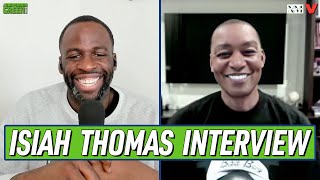
Isiah Thomas discusses his 40-year NBA journey with Draymond Green, including his omission from the Dream Team, Michael Jordan's role in it, and whether Steph Curry is the greatest point guard ever. Thomas reflects on the Pistons, Jerry Krause's portrayal in The Last Dance, and how rule changes like hand-checking transformed the game.
Chapters
What's up everybody? Welcome to the Draymond Green Show YouTube channel. Make sure you hit that subscribe button. Make sure you like the post that you love, but you can get everything the Draymond Green Show right on our YouTube channel. So make sure you subscribe, check that out. Thank you. What's up everybody? Welcome back to the Draymond Green Show. It's an honor. It's always honor to have a guest, but when, when you have a Hall of Famer, NBA champion, one of the GOATs, you can't help but be thankful and be honored. And today I have the honor of being joined by 2-time NBA champion, NBA Finals MVP in 1990, the year I was born. Such a great year. Incredible year, 1990, baby. Uh, 12-time NBA All-Star, 3-time All-NBA First Team, 2-time All-NBA Second Team, and his number 11. is retired by my hometown, my home state, I should say, Detroit Pistons. Isaiah Thomas, the Isaiah Thomas, Zeke the GOAT. Welcome to the Draymond Green Show, my friend.
Thank you, and it is an honor to be here. I wore this shirt just to represent, you know, us and what we represent for the state of Michigan. And appreciate you and thank you for inviting me on your show and proud to, to be here with you, all your, your talent, your executives, and mom who stepped in in the background earlier. Right on. New media.
The thrill and excitement of March Mania is here, and DraftKings Sportsbook, one of America's top-rated sportsbook apps, is giving new customers a shot to turn $5 into $150 instantly in bonus bets with any college basketball bet. Currently, UConn is the favorite on DraftKings at +500 to win the title. My favorite team here in Tucson, Arizona, the Arizona Wildcats, are currently +1,200. Download the DraftKings Sportsbook app and use code HOOPS. That's H-O-O-P-S. New customers can bet $5 to get $150 instantly in bonus bets. Only at DraftKings Sportsbook with code HOOPS. Again, that's H-O-O-P-S. The crown is yours.
Get Yes, sir. New Media, baby. By the way, for those of y'all out there listening to this interview, my mom just stepped and hopped on here for a second before we started. Zeke is my mom's favorite player. Obviously growing up in Saginaw, Michigan, her team's the Detroit Pistons growing up. Zeke comes and brings us hope. Him, Joe Dumars, the Bad Boys, they come, they bring two championships to the state. And my mom, ever since I can remember, you know, everybody grow up talking about who their favorite player is. Ever since I could remember, my mom talk about Isaiah Thomas. So this, this is huge. This is, this is big for me. But before, just getting into it, man, how long have you been working in the NBA? Because you've obviously been a player.
Yeah.
You have obviously done TV as you're doing now. You've been front office, you've been a coach. How long has it been that you've been working in the NBA?
Wow, that's a great question. You know, I was 19 when I came in, and actually I played my first game when I was 20, so 40, like maybe 43 years, you know.
Unbelievable.
On basketball, you know, rather playing, front office, owning, managing, TV. I've been a part of the NBA. I'm on my third commissioner now. I started with Larry O'Brien, and you're familiar with the Larry O'Brien Trophy.
Mm-hmm.
Then I went to David Stern, now Adam Silver. So I've seen a lot, and being a former president of the union, so I've been around a long time. And not only have I been around a long time, but I've seen the growth and the changes that have occurred. And I would encourage you and all of the young fellas who are coming out, you know, basketball, this career, it can last a long time. It doesn't end when you stop playing. Now your second career starts and you're on a, you know, you're doing that now. You know, you'll be in basketball 40, 50 years. And that's the goal, you know, that's the goal for all of us, you know, not to play and then leave, but play, stay, and extend and give the knowledge on to the next generation.
Being that you've seen, and number one, I thank you for that advice. You know, like you said, obviously I wanna set up my path so that I can be a part of this league for a long time. You know, the NBA has done such an incredible job, I think, of creating these different avenues that we as players who, obviously do our part in growing this game. And I think it's a beautiful thing when you have these different avenues that we can continue in when we're done playing. Because the reality is, you know, for a lot of us, all you know initially is the NBA. You know, you come outta college, you come into the NBA and that's all you know. And when you get outta that, so many guys struggle because you don't know anything else. You don't know— Yeah. And I say air quotes, "You don't know the real world." You know, I always say like, we do like real work and we have real responsibilities, but the NBA always says a fantasy land. Like you get to play basketball every day. You get to hang around great people. It's not always that way. I've been fortunate enough to be on one NBA team, but the, you know, the travel, the hotels, all of these different things, they are great. And so I always say like, it's a fantasy land for us. So.
Yeah.
Just to your point of staying in this, I think that's an incredible thing.
Yeah, absolutely. And I got some good advice at a very young age, and it actually came from Kareem Abdul-Jabbar. It was our first All-Star Game, and he was sitting there reading a book, and nobody was coming up speaking to him or anything. And you know me, I mean, you know me, right? I'm like, hey, how you doing?
Right.
So I walked up to him and I just, you know, trying to gain some knowledge, you know, I said, if you can give me any advice, you know, coming into this, you know, NBA, you know, career that I'm getting ready to start, what advice would you give me? And I still hold onto it today. He said, as best you can, try to stay normal. Wash your own clothes, iron your clothes, still do the dishes, still take out trash, you know, do the things that normal, regular people in society do. Because as you just explained, Draymond, it's a fantasy world and it's a fantasy land in NBA. And when you come out, right, you ain't gonna be on a private plane all the time. You may have to go to the airport, you know, you may have to stand in line, you gonna have to get your bags out of baggage claim and everything. Everything that regular people do, right? That's what you should keep trying to do. And the second thing I would say along that journey, what I figured out, you know, and I think the reason why, you know, your mom would say I'm her favorite player, not because of what I did on the basketball court, but what I did off the court. Just by showing up in the neighborhood, just by talking to people, just by being regular, right?
Mm-hmm.
You know, being a normal person. That carries a lot of weight. And the thing that you can do, you know, I would say for yourself and for others who are listening, former players, current players, hey man, just try to stay amongst the people, not above the people. Always be one who are amongst the people and never above.
Ah man, that's wonderful. Coming from the West Side of Chicago, and then getting drafted to the Detroit Pistons, do you think that kind of helped your transition in the sense of Detroit being a similar type of city as Chicago and the people being similar, just kind of having that feel of being at home when you got to the city of Detroit?
100%. You know, I'm like you in a lot of ways. We were raised very similar. You know, we didn't travel outside of our state. We didn't have no money to afford it. So, you know, when I first got to Detroit, I knew nobody. And, but my mom, just like your mom, had made some phone calls and was like, "Hey, take care of my son when he gets there." And one of the people that she called that I had no idea that she even had this type of clout, right? She called Mayor Coleman Young and said, "When my son gets there, I want you to look out for him." So when I get to Detroit, I get a welcome mat from the mayor, you know, from Coleman. And then, you know, he introduced, you know, Aretha and everyone. So I always felt, and I still feel like this today, that I feel like in Michigan, I'm everybody's cousin, brother, little brother. I feel like I'm a family member of everybody, like, and everybody treats me that way. I go back home to Michigan and, you know, it's like, hey, I try to check out of the hotel, they say, "Hey, you don't have to pay." I try to buy some food in the restaurant, the manager come out, say, "Nah, that's on me." So it's being from the West Side of Chicago, But then coming to Detroit and feeling the love and being embraced by everybody in Detroit, and still today, it is no place on earth that I get treated better than when I'm in Detroit.
Man, that's so incredible. That's so incredible. You, a lot like myself, I've had the, so far, had the pleasure and honor of being with one team like yourself. And obviously I'm still playing, but you know, our ownership group has been absolutely amazing. Like I couldn't have asked to play for a team with a better ownership group. And since you've been a Detroit Piston, that's changed.
Yeah.
How have you, how is the reception and like, treated, how you're treated by franchises. Is that the same? Is it different from, you know, the owner being, who was the owner when you were playing there? Bill Davidson. And now the owner being Tom Gores. Like, is that same olive branch still extended to you the way it was when the previous owner was there?
So the olive branch is extended as a guest. You're always welcome as the guest. But I'm not, I'm not inside the organization. Right? And that's okay, because they, they have work, they have managers, and they have to do their thing. But from, from a knowledge standpoint, what I, what I think a lot of organizations miss, which, now that I'm in corporate America, they never miss, they never let knowledge and brains walk out of the door, right? They have advisors, consultants, board members, everything else. That historical institutional knowledge never gets to walk out of the door. What happens in the NBA for former players, that knowledge base, it gets to walk out of the door and it goes someplace else. And, uh, That's the one thing that I think like owners do miss in this space. They don't recognize the institutional knowledge that has been built up over years and they let it walk out of the door. Now, case in point, Joe Dumars leaves the floor. I left the floor and I was the first owner, part owner of a team, the Toronto Raptors, that started in Toronto. First international team. So I left the floor, transitioned right into management, right into ownership of an expansion team. Joe Dumars leaves the floor with that same Detroit Pistons institutional knowledge, and he goes into the front office. And they win a championship, you know, with Ben Wallace, Chauncey, Rip, you know, Rasheed, that group.
Mm-hmm.
And so they kept— Mr. D kept that institutional knowledge inside. New owners, they come in and everybody wants to make a splash and they want some, you know, input, imprint their own name on the team. So they always bring in new people. Well, when you bring in new people, it takes, you know, you lose 20, 30 years of institutional knowledge that walks out of the door. Most corporations, Don't do that. Mm-hmm, mm-hmm.
That's interesting. I didn't even think about it from that perspective, but I think that's a great perspective. 'Cause you're right. Like when I look at some company, it's like, okay, this guy was the CEO, now he's the chairman. You know, so, you know, Phil Knight, for instance, we'll go Phil Knight, right? Like Phil Knight, founder of Nike, was the CEO for so many years. Then he became the chairman of Nike. And so you're still sitting in the board meetings. Maybe you're not making the final call, although if you're still sitting there, you have some say in the final call and you're not trying to replace all those things. And I think that's a brilliant thing that more NBA teams need to, need to start taking into account, especially with this younger generation of guys that's coming in because they come in You know, a lot of these young guys, they come in not being fans of the NBA. You know, like when we came up, and I sound like I'm way older than I am, but you know, when we were coming, like we were huge fans of the NBA. You know, like huge fans of this player. You knew who that player was. You know, we have some of these young guys now, don't know who World B Free is. Say World B Free, they like, "Who?" We had a young guy a few weeks ago and Chris Paul was talking about World B Free and he like, "World B what? What is that?" And CP started telling him about World B Free and he comes back like, "Yo, he averaged this amount of points. Like, this is crazy." But they don't know that these days. And I think that that's obviously just a small part of it, right?
That's a small part of it, but that's a huge part of it. And now I'm a— I'll take you back to the union, right? Because as a former president of a union and now a past president, what we always try to ensure is that, you know, the next man up had institutional knowledge. And then your generation changed that a little bit, right? But when you look over across the aisle at the NBA, I mentioned Larry O'Brien. Underneath him was David Stern, who took over. And then underneath David Stern was who?
Adam Silver.
Adam Silver, who took over. So they never let that knowledge walk out of the door. Whereas in the union, we always let this guy come out. We get a search committee to find it. Has the NBA ever had, has the owners ever had a search committee?
No, sir.
Excuse me for laughing. I'm sorry. But, but it's like, we, we constantly let it walk out of the door. And, you know, there's an old African proverb that says, each one teach one. And we don't teach, we don't, we don't pass on the knowledge to each other. As a matter of fact, we get separated. And the, the— okay, I'm gonna call you new media. But old media, right, was, was, was a lot about pitting us against each other, making us fight, making us not like each other, making us not communicate, because then it was best for the audience that they were serving. But new media coming along, insiders who have like yourself, you know, who like, you know, Matt Barnes and that crew. I mean, y'all making everybody now communicate and talk. And because we're communicating and talking, guess what we're doing? We're teaching and we're spreading knowledge. And that young fellow who just found out about World B-Free, right?
Mm-hmm.
That's not nobody else's fault except ours. Because we're not talking to each other, they make us, you know, don't like each other for some other reason. For their entertainment.
I agree. Facts. I agree 100%. I remember when I first came into the league, maybe like my second year in the league, I wanna say, could have possibly been my, no, I'd say my second year, at least the summer going into my second year, we were going through the search committee. We were about to replace at the time Billy Hunter, as the NBA PA executive, what is it? Executive president?
Executive—
Executive. Executive director. And I remember you were in the room and you were in a sense trying to go for the job. And if my brain, if I can jog my brain correctly, it wasn't taken very seriously at all. It was almost like guys were fighting against it, if I remember correctly. Did you kind of get that sense when you were trying to do that? And was that the reasoning behind it, is what you're speaking to now, is about that knowledge and being able to pass that knowledge down, being through 3 commissioners and kind of understanding the lay of the land?
Yeah, you've kind of righted the ship now because you got Andre, running your union. So now you got a chance to course correct. So that day you're talking about, if you remember, myself, Spencer Haywood, and I'm not sure if Oscar Robertson came that day, but we were all trying to meet with y'all just to say, hey, here's a history lesson. That you need to be aware of before you, before you, you know, go down this track. Let us tell you where we've been so you can make the correct decision, or at least involve us in decision-making. And I never forget David West in that meeting. Love what he— Do you remember him?
Group economics. Group economics.
Economics.
Group economics, absolutely.
Yes.
So much so, about 15 minutes into it, he kept saying that they were ignoring him. D. West got up and walked out.
Yes. And what happened that day, did I get upset? No, I didn't get upset because I understand the game that they play with y'all. And my goal and my job has always been is to inform and give you the knowledge, right? And people on the outside, they get mad at me, and they spread a lot of rumors or stories about me, and they don't want y'all talking to me, because they like, well, he gonna tell you this, he gonna tell you that, da da, don't believe this, don't believe that. And before you know it, you've got disconnected from the information. And because you get disconnected from the information, they can take advantage of some of you. Not all of you, but as you know, we got some players who are still getting taken advantage of. And my goal as a former president was to always spread the knowledge and to give information. And you should ask the guy who represents you how he got into the business.
I know y'all got that connection. Andre's from Springfield. Chicago, I definitely know there's a relationship. Oh, Rich Paul.
Ask him one day to tell you the story of how he got into the business.
Okay, all right. I'm gonna have to come back to y'all, Draymond Green Show listeners with this one. I have to come back to y'all with this one. But speaking of—
one of Rich's mentors to get him started. Okay.
I respect that. Well, I'll tell you this, I appreciate you because he's been incredible for me. The knowledge that he's been sharing with me, the business, he's helped me sign some great contracts. And when I say great contracts, I don't mean just the money because it's not all about the money. The devil is in the details. And the details in my contracts, I am so pleased with because it ends up being worth more than just the money, the dollar amount that you see when you start adding in kickers and payment schedule and all of these different things. It ends up being worth more than just that dollar you see that flash across the ticker. I'm gonna say this for you right here. I appreciate you because that man has helped me a ton.
Yeah.
But speaking in terms of pitting players together, in 2020, and I know you've heard this a lot, in 2020, we all sitting at home watching "The Last Dance" with nothing else to do. And I was just wondering, number one, did you watch that? And if you did watch it, what was your experience like watching that being that you were such a huge part of The Last Dance, or just the Bulls becoming who they became as a whole, did you watch that? And if you did, what was your experience like in watching it?
Yeah, I watched it, and I watched it with, you know, it was during COVID so, you know, the family, we gather around, and you know, this is going to be great because for me, and you understand this when I say this, being a champion, right? Right? This was the first time I really got a chance to peek behind the opponent's curtain. Right? And no one else could understand that, right? But you would understand.
Absolutely.
It's like, okay, now we getting ready to see like what's behind the curtain. And I must say that I was, I was disappointed at what I saw. And here's why I was disappointed. You have Bob Myers there as your president and GM. The Chicago Bulls had Jerry Krause as their president. Mm-hmm. The way they treated Jerry Krause and the disrespect that they showed for him I was blown away, totally blown away. Now, can you imagine Bob Myers getting on y'all championship bus and y'all dogging him and calling him out his name and everything else? You can't even fathom that.
No, no chance.
We were thinking, you know, in our era, These were the dudes, Jerry West, Red Auerbach, Jack McCloskey, Wayne Embry, Jerry Krause.
Jerry Krause.
Those were the dudes. And to watch how they treated him and the disrespect and lack of respect that they gave him as a person and as a man, it was cringeworthy watching that. I cringed for him and his family. And then the man, you know, he was dead, right? So they just going off on him in the doc. Now, in terms of Jordan and I, as I said, my little nephew lived with Jordan, lived with him for like, you know, 5 years and then was a ball boy for the Chicago Bulls. And so my whole family was like, you know, we were all interacting and everything else. The All-Star Game, Michael Jordan's last All-Star Game, I coached his last All-Star Game. Vince Carter.
Wow.
Yeah. Vince Carter had won the starting spot. It's Michael Jordan's last All-Star Game. I took Vince Carter aside. And I convinced him to give his spot to Michael Jordan. He said, "Why?" I said, "Because I gave mine to Dr. J when Dr. J wasn't voted on." That's how it goes, right? Vince Carter gave up his spot. Michael Jordan, you know, we interacted, everything else. I never knew this dude felt the way he felt. Until the last dance.
Wow, really?
I'm like, all these years you've been standing behind a tree throwing stones and letting somebody else take the fall for it. I never knew he had dislike and anger for me. Had I known, okay, you know, I'm a grown man, I ain't got no problem. I'm, you know, we come from the same place. You know, at one point in time in my life, I used to fight really, really good. And I enjoyed it. I can't do that as well as I used to now. But we wouldn't throw hands or anything. But I'm just saying, had I known you felt that way, I definitely would have treated you differently. But I was very gracious to him. Yeah. Not only in Chicago, but everywhere we went. I never thought there was any type of, you know, he, Ahmad, and I, when I stopped playing, we went out to dinner several times. So I never knew, like, until The Last Dance, like, this dude really felt this way about me. Now, some people will say, "Oh, Isaiah, you should have known. How could you not know?" Hey, I only know how people— are with me when they treat me. Like when you and I talk, it's like, it's love, right? Now if you walk away and you like dogging me, I don't know that. I only know how we interact. And when you and I interacted, it was always good. So now some people will say, well, why didn't you shake his hand? Let me give you all a history lesson, okay? The champions, and I went to every NBA Finals, Boston Celtics, the LA Lakers, Philadelphia, when they were all competing, at the end of the game, they always left the court and they would let the other team celebrate. And then they would come into your locker room after the game and shake your hand and say congratulations. Larry Bird and Magic Johnson, y'all find me the tape and the video that show them shake hands at the end of their championship wins or losses. Show me the tape, show me the video where they all like shaking hands, where Larry Bird and Magic Johnson shaking hands. I want to see that. Now, In the locker room, you walk out, then you come back and you shake hands and you congratulate everybody in the locker room. So when the Boston Celtics walked off the floor on us, we understood the program.
Mm-hmm.
You would see afterwards, Casey Jones, Jimmy Rogers, couple of the players, they came into our locker room and they congratulated us. Okay, that's how it goes. Chicago, they're the only champion that still cries about somebody not shaking their hand.
Interesting. So I ask you this question. I, I appreciate those facts. I got a couple questions for you. Um, number one, Do you regret, like the way that that all played out, with it almost being like, I mean, you were essentially, for lack of a better term, demonized for that. It was like, "Oh, that was Isaiah. Isaiah ducked." It was all Isaiah didn't wanna shake their hands because he got a thing against MJ. Do you regret that now in seeing how it all played out? No.
Of course, the way it all played out, right? Had we known that this would be the impact, of course we all stop and shake, "Yo, I do shake your hand." But nobody was thinking like that back then. It wasn't like that. It really wasn't a thing until they made it a thing.
Yeah.
And we sitting here, What is it, almost 30 years later? And they still making it a thing.
Shoot, almost 40 years later now. No, listen, I get it. But I have also a question. When you didn't make the Dream Team, as I all think, I think we all would agree, you should have been on the Dream Team. Did you not think in a, like that that possibly came from MJ? Like that MJ would have that type of power so that you don't make that team? Did you feel like that then or at any point?
When I didn't make the team, my first reaction was, why didn't I make it? Right? And that was the first time I had never made the team. You know, you—
Yes.
When you try out for a team, remember they used to write your name up on the wall, you made it, right? My name was always on the wall. I always made the team, right? And so that was the first time I didn't make a team. And so of course I was hurt, but at the same time, it never dawned on me that I didn't make the team because Michael Jordan didn't like me. That thought never crossed my mind. I went to the selection committee, and John Stockton is a personal friend of mine and has been a personal friend of mine for a long time. Jeff Hornacek, you know, his dad coached me in high school, right?
Wow.
So when you look at my relationships, you know, with Hornacek, Stockton, you know, we've known each other for years. So when I never thought like, okay, I wasn't gonna make the team. But when I looked at the, you know, who they picked, you know, it's like, okay, well, they picked this guy, they picked John, they picked this. And now, and then I started thinking, okay, well, and you know, you always wanna make the team. Okay, I'm like, okay, Well, Larry hurt, Magic ain't even in the league no more, right? You know, Stockton injured. Okay, I got a chance. It never crossed my mind that I wasn't on a team because Michael Jordan didn't want me on the team. And by the way, at that time, you not thinking like somebody would have that much power. Because that was their first championship. Now, I had won 2, should've won 3. Magic and Bird, I think had 5. Magic had 5, Bird had 3, I had 2. We had won the most championships in that era.
So I didn't—
Absolutely. I wasn't thinking like, it just wasn't crossing my mind. Now, some people will say, "Oh, Isaiah, you—" You should have known that it— but that ain't how I operate. That ain't how I think. I wasn't like going to, you know, oh, this guy didn't want me on the team, that's why I'm not on the team. And then it started coming out weeks later, well, Jordan don't like Isiah. He didn't want him on the team. And then Michael Jordan did an interview, or he did a— made a quote, and he said, hey, I had nothing to do with Isiah not being on the team. So why wouldn't I take him at his word? That's what he said. Last Dance said, oh, this dude been lying for a long time. You know, that's when— Now you see me like, wait a minute. Okay, because now I'm like, okay, I'm pushing back now. But it really wasn't nothing to push back on at that time. Because I didn't make the team, Rodman didn't make the team. Rodman was 3-time Defensive Player of the Year. Joe Dumars didn't make the team. Joe Dumars was, you know, '89 NBA Finals MVP. I was '90 Finals MVP. We're the only backcourt that's ever been back-to-back NBA Finals MVPs. Wow. So Joe wasn't on the team, Robin wasn't on the team, I wasn't on the team. So now we like, "Oh, well, the league hate us." We never said Jordan hate us. Right. It's like, "Oh, the league hate us. David Stern—" 'Cause we was fighting with David Stern in the NBA ever since I got into the NBA. That's been our fight.
Mm-hmm.
Right? Right? So, but I never went to— Jordan, but now I am.
I respect that. Where is y'all relationship at today? And is that salvageable?
Dude, no.
Not salvageable?
No, we, the only way this is salvageable, this dude got on national television, international television, and call me an asshole, somebody who's been really good to him. And until he apologizes on international television, we ain't no conversation. You can't apologize and have a private dinner when you done embarrassed me publicly. If you didn't mean it, say it publicly. Mm-hmm. Now, if you meant it, let it stand. I'm good with that.
Mm-hmm, I respect that. And switching gears, you know, we always talk about the drastic styles of play and, or drastic changes, I should say, to the style of play from when you guys played even to the early years of say LeBron and Kobe, you know, and those guys, the early 2000s, Shaq, Um, Duncan, and to, you know, 2010s and to where the game is today, uh, it's totally different. It's officiated differently. Rules, some rules are different, but I think we all know and see the changes to the offense. And there's been some recent reports, uh, coming out that the NBA is looking about, uh, looking at shifting back to some of the rules that you guys play with, possibly being able to hand check again, uh, being able to play a lot more physical on the offensive end as you have been able to in recent years. It's kind of tilted a bit, so it seems, to favor the offense. Um, what are your thoughts on that? Do you think that's good for the game? Do you think that's needed? Or like, do the offense get way too, too much freedom of movement and all of those things nowadays? What are your— what is your sense on that?
I, I think that, well, yes, it definitely has changed and it has shifted. And I would say skill-wise, skill, you have more skilled players on the roster and on the team than we had back then. Now, what do I mean by skill? Everybody can shoot.
Yeah.
Everybody can shoot 3. I mean, you can't leave nobody open. I mean, Everybody can shoot. And then the 3-point line in the distance in terms of where guys are shooting from is mind-blowing. It's remarkable. Now, in terms of the defense swinging back to where it was, I think we have to be careful because we can all have these thoughts of how it should be. But it's really gonna come down to the officials.
Mm-hmm.
Now, back then, all officials knew, like, okay, hand-checking, you know, being physical with— you know, they could have called a foul on every single play, but they were selective in terms of what plays they would call on, and we knew as players, you know, kind of how the game was gonna go. They would set the table early, in terms of, okay, these are the rules, this is how this game's gonna be played. Now, tomorrow night's game may be different, right? Like, we knew, like, Magic Johnson has a— and by the way, I watched all the Olympics, and I rooted for the US. But there's a scene in there where Magic and Larry are taking a picture with Michael Jordan, and Magic goes, "Oh, you can't get too close. You know they gonna call a foul." Right. You remember that line? Absolutely. Yeah, so you just know, like, I don't know if these officials today can really control a game the way those officials back then were able to do. So when you're talking about changing the rules and everything else, you know, you have to take into account the temperament and the personality of the officials who are going to be officiating the game. And that, I, okay, so I'm watching some players like, okay, you take a look at, okay, let's use Kevin Durant and Steph Curry, right? Now, ever since they've been talking about, you know, we gonna, we gonna, let you hold and hand check a little bit. I'm watching Steph, I'm watching Kevin, and these guys are getting held now away from the ball. And I'm sure you watching too. I mean, they having to wrestle and they getting beat up. I don't know if that's really good for this generation. Now, for our generation, we were used to it, right? So we were used to, you know, you pulling on our shirt, you're hacking us, you're hitting upside the head. But if you just go drastically into it now, you know, some of your best players are really gonna get hurt by it.
And speaking of Steph, how do you look at the all-time great point guard conversation? Like obviously you're right up there, obviously Steph's right up there, Obviously Magic's right up there, but how do you look at that debate? Or do you even think like those should be debates?
They should be debates because they're good for basketball and it's good for, you know, we always want the general public to be interested in what we are doing, good or bad.
Absolutely. Absolutely.
So when you define the position of point guard, You know, this is an era where they say we are positionless. But then you want to say, okay, well, he's a point guard, he's not a point guard. So let me just tell you what— the way I think about point guards. On the Golden State Warriors, you are the point guard.
You—
You— You have more assists than Steph. You bring the ball up, you initiate the offense, you set the defense, you run the show. Steph comes off screens, he catches, and he shoots. And he's one of the greatest shooters ever. And what he's been able to do for this generation of play and the way he's won with it, key word, the way he's won with it has been different than anybody else has ever tried to do it. I won a different way. As a point guard, I led my team, and I may be the only one who's done this as a point guard, where I've led my team in scoring and assists to back-to-back championships. I don't think Magic led his team in scoring and assists in back-to-back championships. He may have led them in assists. He may have led them in scoring. I'm the only one that's done it in both categories. Now, what Steph— when I look at Steph, I look at Steph, when he talks about the people that he's emulated, he talks about Reggie Miller. He talks about Ray Allen. He talks about, you know, guys coming off catching and shooting. And he by far has taken it to another level. But when you talk about the point guard position, the way I was taught and the way I think of it, not today's point guard, but I would say that the Michigan State point guards, right? So Eric Snow had Allen Iverson, right? Mm-hmm. Allen Iverson was not the point guard. Eric Snow was the point guard. They never want to give Eric Snow the credit for being the point guard, but that's who ran the team.
Mm-hmm.
For the Golden State Warriors, you're the point guard, and that's okay. Now, what Steph is, Steph is, Steph has been able to do something at his size that no other player has ever been able to do. So he really does have his kind of own category. Just like I think I have my category. But if you wanna say who's the best point guards between us, it all depends on what era you wanna put us in.
Mm-hmm.
Now, I think Magic Johnson, Oscar Robertson, because of their size, they always have an advantage over me and Steph in a real basketball game, right? And Magic could score, he could run the show, and he, to me, he's the best to ever do it. Second best is Oscar Robertson. And I would say, in terms of the way I had to do it in my era, the little guys, don't nobody compete with me.
Mm-hmm.
But I would also say with Steph Curry, the way he has done it, Nobody could compete with him. Allen Iverson was the closest small guy to come to doing it the way Steph is doing it, you know, but he, he by far is in a different category. So point guard, shooting guard, whatever you want to call him, you know, the, the assist number for the point guard is always what we were like, okay, can you do this? Right? That's what really what you were judged on. We weren't judged on how many points we scored. We were judged on how can you help your teammates score?
I can appreciate that answer 'cause I was gonna sit here and argue with you about my point guard. But then you said he's in a whole different category and how he goes about things. So I can accept that. But I also do think, Like when we were playing for Mark Jackson, Steph had the ball more, he led the team in assists and all of that. Once Steve came in, it's not quite the offense. You know, like the offense is all, you know, swing the basketball, move the ball to the next guy. Ultimately, I remember when Steve first was implementing his offense, we like, man, like you keep telling us to swing the ball. You keep telling Steph to pass the ball, then pin down. Like Steph's supposed to get these shots, man. And I remember Steve telling us like, you guys are looking at me like I'm crazy because I keep telling this guy to swing it and Klay to swing it and they should be pinning in too. He said, but I'll tell y'all, the shots are going to find the guys that they're supposed to find. I can promise you that. You just gotta trust it. If you trust it, I promise you the shots will find the guys that they supposed to find. And so I do think, You know, like the way our offense run and me having the ball a lot and initiating some of the offense, I do think, you know, that is also kind of a product of our system as well. You know, where Steph isn't gonna dominate the ball. You know, he's not gonna have the ball all the time, making play after play after play. 'Cause it's just not like, if Steph did do that, Steve will lose his mind. Like Steve will go, go ape shit if Steph just sat there and like was trying to make every play. Like he just had a, we were playing the Knicks the other day and I was trying to wave Moses through to get Steph coming off the pin down. He pulled me to the side. He's like, yo, just swing it to Moses. Like, like stop trying to get the ball to Steph. Like it'll find Steph. You gotta swing that ball to Moses. And I'm like, all right, cool, I got you. But like, I think Steve will lose his mind if Steph was trying to— Yeah. Lead, you know, if he was putting himself in a position to lead the team in assists or do it that way. I don't think it would necessarily work for the way Steve wants us to play either, you know?
Yeah, so let, now I'm gonna give you a history lesson, okay? The offense that you run, I played for the guy who invented it. His name was Bob Knight.
Absolutely.
And when, Yes. I won championships at Indiana University as a student under Bob Knight. When I got into the NBA, I had never ran a pick and roll in my life. I had never ran a pick and roll in my life. I played passing game in high school. I played passing game in college. When I got to the NBA, they gave me a playbook and told me I had to remember the plays. I'm like, what? Play 72, play 32 down, 52 up, 7 out. What the hell is this? Mm-hmm. So what you're describing in terms of your style of play and Steve Kerr's basketball philosophy, that passing game, read and react, move the basketball, set screens, that comes from Coach Knight's philosophy on how offensive basketball should be played. And by the way, your team is very successful with it and have been successful with it. And that's what makes Steph Curry such an anomaly because he— you guys don't really have a point guard. You don't have traditional— 1, 2, 3, 4, 5, man. You don't post up, you know, and put it in the boat. You move, read, react, back cut, dribble, hand off. You force the defense to play every single action.
Mm-hmm, absolutely.
And if that defense isn't on a string, it only takes one man to break, right? And if that defense isn't on a string, and they don't understand how to defend down screens, cross screens, flare screens, dribble handoff, you know, split cuts. If they don't understand how, and they not tight enough to defend all that, then guess what? You gonna get a layup.
Mm-hmm.
I'm gonna go one step further, right? You know that I've gotten to know Kevin Durant extremely well now. He's one of my favorite dudes now.
Right.
Now I understand why Kevin Durant left OKC to come to Golden State. It had nothing to do with, you know, I don't like this guy. Kevin Durant being a savant, as smart as he is, you, Steph, Klay, moving, reading, reacting, playing, that, That's the way he wants to play. That's the way we all want to play. Steve Kerr, brilliant enough, and he trusts y'all enough, and keyword that I'm getting ready to say, he trusts his teaching enough that he gives you the freedom, the freedom to play. So therefore, You never know if Steph gonna start in the corner, if he gonna start on the wing, if he gonna start on the box, you know, you never know. So the perfect randomness of play that Bob Knight invented, that I came up in, that I won championships at Indiana, that's the way you play and that's makes it so difficult. So— Yeah. Yeah, it's a beautiful thing to watch.
I appreciate that history lesson. And I'll be honest with you, I can go, well, speaking of Kevin Durant, I'm happy to hear you say that because I've known this all along, right? Like he wanted to come here, he loved the style of play. He would always say like, yo, I just wanna play basketball the right way. Like I haven't played the game of basketball the right way. And I don't know how long, and I just wanna play the right way when he was coming here. And there was this whole, you know, uproar, Draymond was recruited and this, that, and he— no, dude wanted to play the game the right way. And so, in saying that, probably didn't make the right decision in leaving because not many teams play like that. It's gonna be hard to find that. Although I think with Book, you know, Book likes to play the game the right way. And so I think they're finding some of that in Phoenix, but it's never quite gonna be this because I think we do play a different brand of basketball. But before we get outta here—
Wait, wait, before you come in, wait, let me make a bold statement here.
Yes, sir.
And I hope this don't upset you, but it—
It won't upset me at all.
I'm giving y'all a compliment. Before Kevin Durant arrived in Golden State, y'all were on the verge of pshh and being remembered as the team that went 73-9 and lost to a Cleveland Cavaliers team in the finals 3-1. You up 3-1.— and probably one of the biggest collapse in NBA Finals history from a '73 and '9 historical team. Kevin Durant comes that summer and really saves y'all basketball legacy. And you win 2 championships after that. And now you're the Golden State Warriors dynasty that you're gonna go into the Hall of Fame on and everything else. It is cemented because if Durant don't come that summer and you guys are remembered as the '73 and '9 team that lost 3 to 1 in the NBA Finals, all of your legacies are different. So all of you with Kevin Durant, y'all are, you know, Pshh! Right? And that was a powerful moment in sport that he should be rewarded for, but also your team should be rewarded for accepting a juggernaut like that and being able to incorporate it. And what y'all did was beautiful, man. It was beautiful. So I hope that didn't hurt you in any way, but I did want to acknowledge— No. Him and y'all for that beautiful moment?
Yeah, no, it didn't hurt me at all. I've actually gone public and said before like, yo, K coming here opened up a totally different thing. Like, you know, we were destroying everybody. The most feared action in the NBA was a Steph Curry, Draymond Green pick and roll. 2015, 2016, it was the most, devastating action you can get to in the NBA during that time. Teams started figuring out how to guard it. When teams started figuring out how to guard that, you know what we did? Kevin Durant came in and was like, "Oh, you figured that out? All right, well, let's go see you figure this out now. We gonna get a ball to this dude, he gonna go score, and if you dare send a double team, you're only gonna double off me. You're never leaving Steph, you're never leaving Klay. So if you send a double team," Yeah. You're only helping off me. Well, now we gotta counter to that too. You go double off of me, I'mma catch. And if I'm not shooting, I'm handing off to one of these guys and they shooting your eyeball off. And so we came up with counters to all of that. And I think, you know, I am never one that's gonna be like, yo, K got championships because he came here. Like, no, he helped us get championships. Now what I will say is he never gets the championship if he doesn't come here. Because I just don't foresee that happening anywhere else, or else we would've saw it again happen somewhere else. But it was a match made in heaven. You had us and the way we played our brand of basketball and him wanting to play that style of basketball. You have a face of a franchise in Steph Curry, who's so secure in himself that he's not worried about another juggernaut coming over and what that does to him or his legacy or how that, you know, makes him— where his standing is in the franchise. And so all of those things coming together, I agree with you. Like it was absolutely insane. Now what I will say is definitely Blue 3-1 lead. No one likes to talk about me getting suspended game 5 where them boys was about to get a gentleman's sweep. No one likes to talk about that. And it's okay. I'm cool with that. I don't mind. It's totally fine. But I am not one of those people who's on the bandwagon of like, Kevin didn't do nothing. Kevin doesn't deserve them rings. Like you don't win 2 Finals MVPs if you don't deserve rings. Just kind of a dumb thing to say.
Yeah, so I'm with you. I'm gonna hit you with this, right? Because they always talk about the Lakers and when they repeated, but they never mentioned they got their Phantom foul. So that, gentlemen. Absolutely. So the Detroit Pistons and Isiah Thomas, we should have been the first one to three-peat in our era. The other thing I do wanna give Steve Kerr some credit, you know, because the brilliant mind and the way he molded and got all of you to trust and believe that this was a great way to play. So all the things that you said, I do wanna add Steve Kerr on top of that because coaching really does matter. And he was the perfect coach for all of you.
100%, Steve was great. One more question before we get outta here, 'cause I could talk to you all day. I'm sitting here, I'm learning, and this is great. Just one last question is this guy was born in Saginaw, Michigan. Pops is from Saginaw, Michigan. Obviously he didn't grow up in Saginaw, but, He got that Saginaw water somewhere in his veins. And so he is the way he is, I would like to think, because he got that Saginaw blood in him. But Kenyon Martin Sr. once took Karl Malone out of a game and said he did that, elbowed him, because he cost you 14 stitches. Have y'all ever talked about that moment? And so how did that make you feel?
I called him up and said, "Thank you." And actually he gave me, you know, I'm one of them supposedly hard guys, so I took 42 stitches in the head, not 14.
Ooh.
Right.
Ooh.
But the, and this is what I wanna say to you, right? You never know who you touching and you never know who that little kid is gonna grow up to be. I had no idea that I had impacted Kenyon Martin, you know, NBA player, final, you know, in the NBA Finals. I had no idea that I had impacted his life from Saginaw that way. I had never met him, didn't know it. And when I heard the story, right, you know, it's like, Right on. Of course I'm happy for that. But the fact that we in Michigan to this day, I don't care young or old, if it's a fight or a get back, I'm down, right? I'm down. We coming. And it's like when you got in your little dust up, I call Rich, I don't know if he said, the first call I was like, "Hey man, tell Draymond I'm here." Absolutely. You know, leave them up, I'm here. I mean, that's the community in the state that, and the bond of basketball that's been formed there. And you know, it made me feel good that, you know, he got him back 'cause I wanted to get him back, but you know, I wasn't big enough to get him back. So I'm glad he got him back.
Shout out to Kmart, man. Kmart had some great years in this league and was a dog. Shout out to him. Hey, but OG Zeke, I appreciate you, man. Thank you. You're always welcome here. You wanna talk about something, you wanna drop some more knowledge, the Draymond Green Show listeners and obviously myself can't thank you enough. We would love to have you anytime you wanna come. But also I just thank you for what you've been to the state of Michigan and the presence that you and Joe D and y'all guys brought to the state of Michigan as far as basketball goes. Like, I don't take that for granted being a kid that grew up watching that, you know? And for all that you've done for the game of basketball, being the legend that you are, the gems you share as far as business, like people don't, we didn't even get a chance to talk about all the things that you're doing in the business world. It's absolutely amazing. So from myself, but also other players, like we thank you for being who you are, what you've meant to this league and what you continue to mean.
Well, we love you and we're very proud of you. And you know, you keep doing your thing, brother, because you changing the world and you inspiring a little kid somewhere that's never met you, but one day will tell a story about how Draymond Green, inspired him. So keep doing your thing.
Yes, sir, will do. Thank you so much. I really appreciate you.
More from Draymond


Draymond Green on Brandin Podziemski Extension, Darius Acuff Interaction, & Weird Rudy Gobert Talk


"I Was Waiting for You All Game!" | Deni Avdija & Draymond Green Recall Iconic On-Court Moment

Deni Avdija on Becoming an NBA All-Star, Playing In NBA Playoffs & Hilarious Draymond Green Story


Draymond Green on Warriors Preseason, NBA Push-Off Rule, & LeBron's Fanatics Helicopter Deal


"Awful Representation" — Draymond Green Sounds Off on Dalton Knecht's Lakers Purgatory

Draymond Green Explains How Micah Nori Handled Damian Lillard & Ja Morant Lineup Controversy Wrong

Draymond Green Exposes How Contract Drama Destroys Locker Rooms After Jalen Duren Re-Signs