Javale McGee on Shaq feud, why Warriors are special & bubble Lakers stories | Draymond Green Show
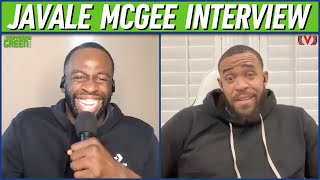
JaVale McGee, a three-time NBA champion from Flint, Michigan, talks about his 15-year journey from the 18th pick in 2008 through trades and injuries, how the Warriors' culture changed his mindset, and his Grammy nomination for work on a Justin Bieber album.
Chapters
What's up everybody? It's Draymond Green. Make sure you subscribe to the Volumes YouTube channel below so you don't miss any more of this great content going forward. What's up everybody? Welcome back to the Draymond Green Show. In life, there's just certain things and those things are like just what they are. Like some people say it's Bible, some people say it's facts. Whatever you call it, the fact of the matter is one of those things in life is that Flint and Saginaw, Flint, Michigan and Saginaw, Michigan is connected. It's intertwined. It's like one in the same. Both produces great basketball players. Both produces stars. Both produces great people. Blue collar cities. And when you come from those places, You carry a certain thing with you. I'm honored to have a guy from Flint, Michigan as the guest today. But not only is this guy from Flint, Michigan, and we have that connection, we actually have one of the best connections that you can have. And when you play basketball, it don't get no better than that connection. It's my brother, JaVale McGee, 3-time NBA champ, 2-time NBA champ, here with us, the Golden State Warriors. My brother, welcome to the show.
How you doing, bro? I'm chilling, man. I'm chilling. Appreciate you having me, bro.
Absolutely, man. I am excited. I am excited as hell for this episode. Not only, you know, because it goes so much deeper than basketball. Like this is, for those of y'all that don't know, this is a guy that I still have an incredible relationship with. That's my brother beyond any basketball stuff. To the point, that last year I was doing this podcast, or actually I tweeted, and I tweeted something about this guy right here. And I was laughing and I was joking. And he hit me up like, yo, what's that about? Like, why would you tweet that? Like, that's bullshit. And I'm like, yo, I didn't take the tweet that way. But if that's what you think, like if that's the way you took the tweet, then I apologize to you. And I was wrong and I'll make that right. Like that's the relationship here. So I'm excited as hell to have this conversation.
Facts, facts. No fake internet love. Just hit you right away. Straight to the numbers.
Absolutely. But I mean, let's get into it, man. 16th overall pick in the NBA draft.
18th.
18th pick. 18th pick in the NBA draft in the 2008 draft. It's crazy to think you've been in the league, what's this, your 16th year?
This is my 15th.
15th year, that's crazy to think. You know, for a guy who they never really gave a chance to make it. What's just, talk to me about that 15-year journey and what's it been like for you making it the way you have, becoming a 3-time NBA champion and all of that good stuff.
I mean, it's been a long journey for sure. And it's been a lot of ups, a lot of downs. And just consistency on believing in myself. That's really the only thing that I've been consistent on through everything is believing in myself. Believing in my lows, I still can do it. Believing in my highs, I gotta continue to do it. So just self-confidence, if anything, that— And the structure of being from a town that they don't think you gonna go to college.
Absolutely.
Let alone be a part of the 1%. And if people don't understand, 1% is like the net worth of $500,000. That's 1%. That's a fact. Net worth of $5 million is 0.01%. So just $500,000 net worth is crazy from where I'm from. So just being able to make it this far is just amazing.
I think it's absolutely incredible. And your career, it got off to a rocky start. Like it wasn't all peach and cream. Like you grew into a guy that, and we'll get into this as we go on, but you grew into a guy that became the missing piece of championship teams.
Mm-hmm.
And like I said, we'll get into that, but it didn't start off that way. Like just walk me through starting off with the Washington Wizards and how that was.
Starting off, 18th pick. So if you know anything about basketball, if you're not lottery, which is I think top 13, they don't really care about you. You're just a, they, they, you gonna go through the process. So I came in, you know, 1 through 13, they automatically, okay, we giving the ball to you. We gonna see what you can do. Let's go.
Absolutely.
For 18, I came to a team with, with Brendan Haywood, Caron Butler, Antoine Jamison, Gilbert Arenas, and I brought I believe it was after the year they had just went far in the playoffs. So it was more of a winning mindset when I got there. So it was like, "JaVale, you're probably not gonna play." And then I think we were going to, we were going to play in Germany and one other city overseas for like, you know how in the beginning of the season, some teams do preseason games in different countries. And Brendan Haywood broke his hand. So I don't, at the time we had Eddie Jordan as the coach and Brendan Haywood broke his hand. I don't think, and we had Etan Thomas also. So he was ahead of me also, but I don't think Eddie Jordan and Etan Thomas were seeing eye to eye at the time. So that for my career propelled me straight to the starting lineup for the first 10 games of the season. So we go 0-10 the first 10 games of the season. They fire Eddie Jordan, boom, he's gone. So, so at that point, and Gilbert Arenas is hurt this year also. So we don't really have that team, that same team. Gilbert Arenas is hurt this year. So they fire Eddie Jordan and they bring in the player development guy, I believe that's what it is. His role was Eddie Tapscott.
Not sure who that guy is. Exactly.
He's still over there too. I seen him, I think last year. He's still over there. I see some role. And Eddie Tapscott, he didn't rock with rookies. So from just that point, I had a whole 360 turnaround. I'm like, "No, uh-uh, you not getting this starting role. What do you think this is?" And it was over from there. I was sent to the bench and to that rookie role. That humbling rookie role. So my rookie year was extremely humbling at that point. I believe the next year they hired, Eddie Tasker was the interim coach until the end of that year. The next year, I believe they hired Flip Saunders.
Mm-hmm.
And me and Flip Saunders never really, rest in peace, me and Flip Saunders never really saw eye to eye. But it was in part of him being a tenured coach that knows a lot. And me being a young, young player that understands how to communicate with coaches, but doesn't realize once I get to the NBA, these aren't your bosses, these are your coworkers.
Absolutely.
And you guys' relationship should be a coworker vibe. It's not like college where you look at your head coach, it's like, oh, whatever he say goes, like, you know what I'm saying? So it's different. Absolutely. And that's also a maturity thing. Like, I wish at rookie transition program they'd teach you about that. Like, your coach is your coworker. He's not your boss.
Absolutely.
And you go into it, yeah, you go into it with that mindset sometimes. And I feel like I went into that mindset and some things I couldn't take. Like, I'm from Flint. Like, somebody talk to you crazy or talk to you a certain way, you don't, respond the way you should sometimes. And I was extremely short-fused back then. So we didn't really get along. I believe I sat maybe like 42 games, DNPs, my sophomore year from just not getting along with the coach, if anything. I don't know if it was play or what it was, but just not being on the same page. I believe the next year he got fired Or yeah, I believe he got fired. And then it was, I can't remember his name, but he was the coach. And then we got another coach. I forgot his name though. I always forget. But that's 4 coaches.
Mm-hmm.
In my first 2, 3 seasons on my first team.
That's crazy.
So, which is crazy. I'm there with some other young guys, Nick Young, Andre Blatche, Dominique McGuire, and we all just trying to figure it out, but we're all extremely immature. Gil Arenas wasn't healthy, so we didn't get to see the example of the Gil everyone knows in the gym at 3:00 AM, coming back late 3, 4 times a week. We had the, "I'm injured, so I got a bag. I'm having fun, Gil." And it rubbed off a little bit on all of us, for sure.
Yeah.
So we picked up a little bit of bad habits early on in my career. I get traded my third year, I believe. I go to Denver and I think about, which I traded for Nene.
Yeah.
I went to Denver and it's a whole different coaching staff. I got Coach Karl. Now me and Coach Karl, we didn't get along in a certain sense, but my aspect of me not getting along with Coach Karl was more, you got Kosta Koufos starting ahead of me right now. That was, no offense to Costa, that's my guy. But even Costa said to me like, "You should be starting." Like, so when the guy ahead of you was telling you that, it's just like, what's really going on? Why are we doing this? But that was before I realized the politics that goes in with basketball, the relationships you have to have with GMs on these teams.
Absolutely.
Like, it's just so much I learned actually after going to the Warriors. So—
So I have a question for you. So check this. Do you think, because early on in my career I felt like it's what I noticed just from the outside looking in. Obviously I'm not in Denver, but I think, or I thought, and I still think due to the contract extension that you signed with the Denver Nuggets, that George Karl was punishing you for that contract that the Denver Nuggets signed you to.
For sure.
Because that's what it looked like to me.
It felt like he didn't, he didn't like the fact that, that I got that extension. Even though that, that playoff series before, I was a major part of that playoff series playing against Kobe and the Lakers. Me and Kenneth Farrie, we, I don't know if it was that year or the year after, we had 57 wins the year after, after that, I believe. So we had a good team and we were playing well. I don't wanna say I was the best pro in the world, But I was also a young guy who had a hell of a motor and who wanted to play basketball. Like, I love playing basketball. If I'm doing anything, it's playing basketball. I want to play. So I definitely felt, I don't wanna say envy or anything, but more of a, this guy doesn't deserve this, so I'm gonna punish him for it type of energy.
Mm-hmm.
And that's how I felt about that situation. And then he left, I don't know if he left or got fired, and then Brian Shaw came in.
Brian Shaw came in.
So that's 6 coaches in my first 6 years, I believe. So Brian Shaw came in, Brian Shaw came in and me and Brian got along pretty well. But I had the year before Brian Shaw came in, I got injured and I had a stress fracture in my shin.
That's that rod in your shin, right?
Yep, yep, I got a rod in my shin right now and I'm having it for life. But yeah, I had a stress fracture in my shin. So I only got to play, I believe, 10, maybe 5 games starting under Brian Shaw until I had to go out and just rest my shin. So I never actually got to play for Brian Shaw. And then I believe they bought, no, no, they traded me to Philly after that.
Yeah.
So that's 7 coaches. And then I got waived, or they bought me out, they bought me out after that. So in my mind, I'm at a moment where, oh shit, like I got bought out. I understood the buyout process, but of course I have the 100% belief in myself to where I'm gonna get healthy and I'm gonna be straight. But at a certain point in my recovery from my shin, you start getting doubt, you start doubting yourself and doubting like, is this gonna last? Like, is it over for me? Like, this is an injury that some people just don't come back from. And am I one of those people? So after that summer, I had got bought out. I went to, I signed a 2-year team option to Dallas.
Dallas.
If I'm right, that's 8 coaches or 7 coaches?
That's 8.
8 coaches. And with Rick Carlisle. I'm still feeling the pain in my shin, but the doctor tells me, well, the best news is you can't break it again. So you could just fight through the pain. So in my mind, I'm like, well, forget it. I could fight through the pain as long as it don't break. That's all I'm worried about. But if you really think about that, that's a crazy thing to say.
That's crazy. Like you supposed to live in pain every day? Like every time you take the court, you supposed to feel pain? That's nuts.
That's crazy.
That'll make you hate basketball.
You see what I'm saying? And it's a crazy aspect of myself being able to put myself in that mental mindset of fuck it. I'm grinding. This is what I'm here to do. I'm gonna do it. I'm gonna fight through this pain. Rather than just being like, you know what, just no, it still hurts, sit out. But I took that advice and I took it to heart. And I said, you're right. It made sense to me. It's not gonna break. So I might as well play through it. So I played through it that year. I didn't play a lot that year. It was hard for me to condition that year just because I was still in pain.
Mm-hmm.
So I gained a couple of pounds. I was about 270. 270. I thought I was buff, but I didn't realize I was fat.
What is your— so to put into perspective, what is your comfortable playing weight?
My comfortable playing weight, 255.
Okay. That 15 pounds, you feel every single one of them.
Every— I'm not jumping as high. I feel every time I jump. Like, but in my mind I'm like, and this is coming off of the Dwight Howard era of him dominating every center. You having, oh yeah, Dwight's next. Let me do some push-ups and some extra bench presses before this game, 'cause Dwight is a beast. So I'm like, okay, maybe I need to be bigger. Maybe this is fine, and trying to play through that. And that year, so that year went through, I didn't play a lot. It was nothing, nothing really to talk about. And they decided not to pick up the team option the next year. So now I'm at a point in my career where I'm like, okay, I don't know. I have no idea what's gonna happen now. There's not a guaranteed year coming somewhere else. There's not, no one's calling the phone, anything. And I'm injured, low-key. Not injured, but I'm in pain. You say that. I'm still in pain. So I'm trying to figure things out, but I never doubted myself to where I knew in my mind, if I get healthy, it's over for everybody. But I just gotta figure out how to get healthy to the—
Mm-hmm. When the doctor tell you, you won't break it, it's fine, you just gotta deal with the pain, is that like a doctor you're going to see or is that a team doctor?
It's a team doctor and it's also the doctor that did my surgery.
Okay.
I chose not to go to the, but this is a funny thing too, I don't like the fact that doctors have no, empathy at all. I hate non-empathetic doctors. Like, I understand you, you see people that are gonna die every day, but have some empathy. Because when I was going to get the rod in my shin, I talked to the doctor before, the doctor in Denver. He was like, oh yeah, it's gonna be easy. We gonna, uh, open up your knee, we gonna knock the rod in there, put some nails in your ankle, nails in your knee, and you'll be good. 3 to 6 months. And I was just looking at him in the face like, bro, you know what you just told me, bro?
What?
Open up my knee, throw a rod in the middle of my bone, and put screws on my ankle and my knee. So I was like, nah. And they were saying it's a possibility you could just rest and heal it for 6 months. So I was like, well, I'm gonna try to heal it for 6 months then.
I don't wanna get surgery.
Absolutely. So I do the healing for 6 months and they're like, nah, it's still there. You gotta get the surgery. So just the way the doctor was talking to me Yeah, just be a— go put a rod in. I was like, I'm not going to you. I'm going to somebody else. I get a second opinion. I find a guy in Florida who— in Miami who decides he can put the rod in, but he doesn't have to put the screws in. And I was like, that sounds way better. You just put the rod in the middle and you don't have to screw in my ankle, screw in the top of my knee. That's why I was surprised. That sounds crazy. Like, that didn't make sense to me. So I went with the guy in Miami and put a rod in my shin. And yeah, that's how that went. So this is after I got waived from, or they didn't pick up my option the second year in Dallas. I get a call from you guys, Golden State Warriors. But the caveat about this is it's not guaranteed. We got a spot for you. Not guaranteed. Won't be guaranteed until January. So, you want it or not? In my mind, I'm like, do I wanna go to the damn near champion? I believe it's the year y'all lost 3-1.
We lost, yep.
Or y'all lost it, but I'm like, do I wanna go to a championship team? Yeah, for sure. I definitely, I'm definitely going. So I go and that whole experience, it changed my mindset on how basketball's supposed to be played in a team aspect. It changed my mindset on how it's a players' league and players communicate with their coaches, with their GM, and full transparency. And also just that, you know, that he's the coach, like that college mindset, rather than, no, this is my peer, this is my, my, my coworker.
Mm-hmm.
It changed my mindset on that aspect. And it really just showed me what championship basketball is about.
And it changed your career.
By far, by far changed my career. Changed the perspective of, I had always had that perspective, that chip on my shoulder of, oh, this is the guy from Shaq and the Fool. This the guy who made funny plays and this and that. He's not that smart. And definitely going to Golden State changed the whole 360. It changed 180 really.
Let's talk about that. So Shaq and the Fool, Because this is actually something I really wanna talk about. When we just got on this call, obviously no one will see this, but Jackson, our producer, asked JaVale, are you on a laptop? JaVale said, no, are you on a computer? JaVale said, I'm on a laptop. And I said to Jackson, he was like, okay, cool. And JaVale said, yeah, I'm a big tech guy. And I said to Jackson, one of the smartest guys when it comes to any computer or anything with a computer, but really in life, one of the smartest guys I know when it comes to these computers. And I said all of that to say, you had this reputation of, like you said, almost like a clown, like Shaq the fool, uh, he makes these dumb plays. This, that, and the other. Now, quite frankly, as a part of the media now, although I don't operate like most media operate, everything's narrative driven, right?
Right.
Like you get these narratives, they take on a life of their own. And quite frankly, in the day and age we live in where social media dominates everything and everything's a constant 24-hour news cycle, those narratives become reality.
Facts. And this was the rise of social media also. This is when Twitter, when people started, when the NBA started Twitter, when NBA started Instagram and started putting content out and figuring out how content works.
Absolutely. So during that time, you're on "Shaqton Da Fool" every week, every chance they get you're on "Shaqton Da Fool." And for a while I felt like before you got here, you would say something back and forth with Shaq. Then once you got here, A, you're playing great basketball. I mean, incredible basketball. And the minutes that you're playing, whatever minutes that is, whether it was 21 minutes one night, whether it was 9 minutes the next night, it was 24 minutes, whatever minutes you play, you play great basketball. Then something happened between you and Shaq. And like, what happened to where all of a sudden now you're not on Shaqton the Fool? I mean, it felt like 3 times a week.
Word. It was like a last straw. I seen the episode, I'm watching the episode, you know, people tag you, everything. I'm like, all right, what I do now? So I watched the episode. I think I went coast to coast and I missed the layup. I was just like, did they just put me on Shaq and Draymond Green for missing a layup? Not airball on layup, not nothing crazy. Just went coast to coast. I might have did a move and I just missed the layup. I'm just like, all right, bro, this is it, bro. I'm not going for this shit no more, bro. Like, come on, bro. You already have your, first of all, you're perennial Hall of Famer. You know what I'm saying? Like, your reach is global. Yeah. Like kids in villages in China know who Shaq is. So the fact that you keep putting this narrative out there about me, first of all, my first question is why? Do I know somebody you know that you feel a certain type of way about something? Or is there a reason that this is happening? Like, and then the second part is why would you do this to another Black man?
Mm-hmm.
That's what really like, 'cause I don't see you the white athletes in the league. I don't see you hitting them every time. So I believe I had a moment where they, when I was on Denver and they interviewed me about it and I was just like, I don't like checking the coon. That's just not my thing. I don't like that. And they thought it was funny, aha, and it was skipped over. But then they look at it now and they're like, oh shit, okay. He was on to something. He understands what's really going on. So at that point, I just, I just didn't understand why I need to be the butt of his jokes. What did I do to him to where I need to be the butt of his jokes? And I went on Twitter. I went on Twitter because I knew it would get the same reaction as he's getting on mine. And I said what I need to say. I told him to get off my— I believe I put peanut emojis on the— what you call it— so I wouldn't get fined. Thinking, thinking, of course, I'm like, I'm gonna lose my money now. So I said, get off my peanut emojis. And then we had a nice back and forth. And yeah, that's what that was.
No, and I think, and by the way, for those of you who's gonna watch this show, I used the word coon last year and it was a big deal. I respected that and I spoke on it. What you have to understand is when JaVale called, when he said, Watch Shaq in the corner or something, whatever the statement was. A, this was 2013, 2014. So what you have to understand is the time period that that was said, it wouldn't be like if you said it today, like the climate on those things are totally different. And so it wasn't looked at as like a racially sensitive thing. So I want everybody, all our listeners, subscribers to understand that because under no circumstance is the Draymond Green show trying to get anyone fined or in trouble or having to apologize. So we're gonna address that right now. But in saying that, you came out and you said, and now I'm fast forwarding back to when you were with the Golden State Warriors. You said, yo, this is affecting my career. Like this is, people are thinking about me just by these plays, I go somewhere, it's really affecting my career. And I felt like when you said that, to Shaq's credit, he said, I am not gonna put Draymond Green on Shaq Than a Fool anymore. And to his credit, to my knowledge, he hasn't. Do you feel like things changed for you once that started happening in a positive light?
By far, by far. I mean, also winning 2 championships back to back didn't hurt at all.
Absolutely.
But after that, it was taking up, okay, JaVale's a pro, he's serious about the game, he's locked in, he was a major part of a championship run, 2 of them back to back. And then after that, I got the starting spot with the Lakers after I left you guys. And in my mind I'm like, starting center, how do you go from being waived 3 years ago from a team to being a starting center on the Lakers? And I actually had my best year that year with LeBron. I think I averaged 12 and 8, which isn't crazy numbers, but for me that was the highest numbers I had had. And I was 30.
It's also, you were averaging 19 minutes a game, 20 minutes a game. So the per 36, which a lot of people judge off of, per 36, those averages are probably like 20 and 14 or something.
Yeah, per 36, they were all-star numbers.
Absolutely.
For sure. So after that year, I re-signed with the Lakers. And I'm also the starting center. AD comes to the team and we win the NBA championship.
Absolutely.
My third.
Big time. Don't flex on me now, champ.
I know it's the third.
Don't flex on me, big dog.
Sorry, big dog.
After your first year here, which I felt like at that time, DeAndre Jordan's still very prominent in the league. Arguably at that time, not really arguably, the best lob threat in the league at that time. You solidify yourself as arguably the best lob threat in the league. To this day, I always tell people, best lob threat I ever played with. You leave your body, you just throw it up anywhere. And see, one thing that I don't think people understand is when I say best lob threat, it's actually you and Andre Iguodala. Yeah. But when I say best lob threat, it was that I could throw it up there and if you can't dunk it, see most guys you throw a lob to and if they can't dunk it, they miss it, the ball go out of bounds. If you can't dunk it, you just grab the ball and come back down.
Mm-hmm.
And so you solidify yourself as arguably the best lob threat in the league. After year 1 with the Warriors, you had offers to go elsewhere. For a little more money.
Yeah.
What made you say, nah, I'm not taking that. I'm gonna come back to the Warriors for a second year and take a minimum again?
Tasting that championship, man. Seeing what it took, game 1 to game 82, to every game in the playoffs of what it took. The brotherhood that I felt, the energy, the way the Warriors organization treats their players. I had been to 3, 4 teams and the Warriors by far still to this day treat their players the best out of anybody. Just one aspect of the way that the Warriors does dinners on the road.
Yep.
I still haven't seen that and I've been on 4 teams after that, I believe.
We appreciate you, Joe, Peter. Appreciate those dinners.
For sure. Just the aspect of that, being able to congregate with your teammates not only your teammates, but your teammates' friends and family, and not worrying about the bill. Just order whatever you want. We're all just gonna congregate and fellowship and, and really enjoy. And that, that was one aspect. And I'm like, oh, I gotta do this again. Like, a million more ain't gonna do it for me. I need to do this again. And it worked out.
You finished with the Warriors, win two championships. You didn't leave, go to the Lakers. Second year you win a second championship. But while in LA, more things happen for you. Number one, I feel like you and that Lakers team were the first guys to really learn how to like monetize social media from an NBA perspective. Like pregame, walking in, lifts. Mm-hmm. You name it. It's like all of a sudden you guys were producing content.
For sure, for sure.
What was driving that? Who was driving that? How did you guys kind of fall into that? Like what was the driving force in that?
I've always had an eye for, I wanted to go to film school when I came outta college. I mean, when I came outta high school, I wanted to go to USC, but I couldn't go to USC 'cause they wanted to redshirt me. I wanted to go there for film school, but I understood I'm here for basketball. So I was like, I gotta go somewhere where I can play right away. So I went to Nevada. So when I went to the Lakers, that's Hollywood. You know what I'm saying? Like, it's Hollywood. The opportunities you get playing, just playing for the Lakers, I don't care if you're on the bench, just the opportunity of playing for the Lakers at a good season or a bad season are amazing. And then I started this thing where— Mm-hmm. Uh, I had, uh, who did I have? Had Gunnar Peterson as my weightlifting coach, um, the first year. Uh, the thing about Gunnar is Gunnar is a celebrity trainer.
Yes, he is.
So content is Gunnar's thing. Gunnar loves content, like he loves it. Uh, so I would, I would film every lift that I would do, and I was lifting every day, so I had content every day of 365 days of lifting on my, on my page. So you would see a workout every day, every day, every day. And in the, in the process of filming those things, I actually had to do those workouts.
Mm-hmm.
So I'm, I'm, I'm performing at a, at an elite level also, and I'm getting that work in, but I'm also getting the content aspect of it. And at the same time, other GMs are seeing these workouts too. They're going to my Instagram seeing this. Other team, other teams are seeing this, coaches are seeing this and really seeing how locked then I really am and have been. I just never really put it out to the public. So, uh, when I got to LA, I made sure I got a, uh, I got a, uh, uh, what is it called, content team. Um, I had a content team and I made sure that I was putting out gems as much as possible.
I, I, like, I was watching it at the time and I'm like, man, like, Draymond Green, you, Bron, Kuz, like you name it, guys were literally producing content. And like, you see a lot of that now in the NBA, but I don't think people realize how, like how much of a difference 3, 4 years can make. You know what I'm saying? Like, yeah, you see a lot of it now, 3, 4 years later, but 4 years ago—
It wasn't like that, no.
And also kind of frowned upon.
You had to, that was what I was just about to say, you had to, post stuff and be like, did we win this game? Like, you had to really think about that. And it was even worse back, like my rookie year, I used to post stuff on YouTube, but it was before YouTube was actually YouTube. I don't even think you could monetize YouTube back then. I just liked content. And coaches, not coaches, but GMs and, and upper, upper staff would tell me like, you need to focus on basketball. There's other things you don't need to be worrying about that. Content stuff and Twitter and all that stuff before my time, by far. And my— the second year, I got the opportunity of going to the bubble, um, when we won the championship, and I was the vlogger. I vlogged every moment in the bubble, and people loved it. They loved every moment of me and, uh, Matisse Thybulle were the two guys who were vlogging.
Yeah.
But they got knocked outta the playoffs. I vlogged all the way to the championship.
Another flex, don't miss it.
Don't miss the flex. Something like, something like, nothing too crazy. I vlogged all the way to the championship, to us winning, to the in locker room celebration. I'm giving you content you will never see. You won't see that until the 30 for 30 comes out or—
In 30 years.
You see what I'm saying? So, and you can go back and watch that now. And that's, just think about that. 30 years from now, you'll be able to go back and watch that and understand what mindsets Bron was in, AD was in, I was in. You could see the different relationships. It's a crazy concept. And I figured that out early. The funny part is it was right before I was packing. I had packed all my stuff up. I called my content guy. I'm like, should I bring my, should I bring my vlog camera with me? He was like, "Might as well just film the process." I was like, "All right, cool, I'm gonna do that." And I filmed from me getting out the car, kissing my girl and my daughter goodbye, getting on the plane and going into the bubble. And I filmed from that day until the championship. And it was epic, it was epic.
That's incredible, man. By the way, you should definitely do like, like use that, put you something together, man. It ain't gotta be now.
Right.
'Cause as you know, you keep that content forever. But that's gold. Like, because like right now, you know, people forget it's been 3, 4 years. People forget. But in 10 years, people gonna be like, "Oh, you remember when this happened and that happened and it led to this." And you got some gold on your hands.
But— For sure.
And speaking of LA, you go to LA, Also, some other things started to take place for you. You have been into music, you've been into music for years, making beats, making songs. You go to LA, you win a Grammy.
I'm Grammy nominated.
Okay, you get nominated for a Grammy.
Yeah.
Like, talk about that. Active basketball player, and I say active, active in the highest way, like winning championships.
Yeah.
And yet being nominated for Grammys. Like, talk about that experience. Tell us the song, like how it came about. And then how you originally got into making beats and doing different things with the music.
Yeah, so originally I got into music, like Draymond said, I'm a tech guy. Like you said, I'm a big tech guy. So once I figured out, I seen online or something that you can make music through your computer, I was like, wait, wait, you don't need a whole mix board and all this crazy machine that you see, you know, them old videos on YouTube of Kanye making beats and he go runs over here and makes makes another beat. I'm just like, I can't afford to get all that stuff. Like, I don't know. But as soon as I found out, I think it was college, actually, I bought, I bought maybe a $600 laptop. I downloaded FL Studio, and I made some beats. And then me and my roommate, we made like an album. I hope that never comes out. I hope that no one ever finds that. We had a MySpace with our album cover on it and 6 songs on it. It was crazy. But I was just making beats and it was just something I was interested in. It was just another passion of mine. So then when I got to the NBA, I had a little bread on me. I went and got me an iMac. First thing I downloaded on the iMac is Logic Pro, which is a beat-making program. So I download that. So I'm working on that. I had been working on it for at least 10 years making beats, but nothing crazy. I just, I didn't have a feel for it yet just because I didn't really know the ins and outs of how it really works. I used to think you just use a stock beat beats. I didn't realize you have to meet other producers and other producers to give you drums, different sounds to really enhance your producing. Once I got to Golden State, actually, I was— I believe I was playing 8 minutes a game. So I had a little bit more time than guys like you who were playing 25, 30 minutes a game and like that. So I was like, okay, I'm gonna get this basketball done, but I got a lot of free time. Let me think of different aspects of how I can generate my passion and what I'm really into. So then I started working with guys around the Oakland area, just making music. I'm in the studio with I Am Sue. I met Marky Basie, a lot of, a lot of people in the Bay that I'm locked in with. And, and the energy, it was just amazing. I'm making songs, I'm producing songs, and it was just that vibe. Yeah. I carried that over, that same energy over into LA. So when I got to LA, I was in studios, I was meeting A&Rs, I was meeting everybody, trying to meet as many people as possible while I was in LA to take advantage of that aspect of playing for the Los Angeles Lakers. And in the process, I met this amazing songwriter named Pooh Bear. Mm-hmm. And he's Justin Bieber's main songwriter. I met— I had met Pooh Bear probably 4 summers before. And I had met him in the summer because I would stay in LA in the summer. And I paid him $13,000 to write 2 songs for me. Never used neither one of those songs. Never used neither one of them. But I kept the relationship. And we were still cool, blah, blah, blah. So when I got to LA, He's like, pull up to the studio. I'm like, all right, here I come. I come to the studio, we get in the studio. I'm playing him some samples, playing him some of my beats. He hears one of my beats and he tells me, take the drums off, let me just hear that melody. And I'm playing that melody and he's like, all right, load this up. So we load it into Pro Tools and he just starts writing the song. Like we collab, he like, should I say this? Should I say that? Like, yeah, say that, say that. And we damn near write, we write the verse. The chorus, and the second verse. And that's it. That's all I heard of it. Wasn't no drums on it, wasn't anything on it. And at the time, it wasn't like, "Hey, come to the studio so you can make a song for Justin Bieber." Nah, it was just come to the studio. So we came to the studio. So I came and I did that. We made that. We made one song. It's the only song we made. And it was over. It was like, "All right, cool. Appreciate it, bro. Cool vibe, cool session." And that's usually how producing works. People don't understand. People think producing is just, "Hey, give a beat to an artist, he uses it, and now you're platinum." Mm-hmm. Nah, being a producer is hard work. You have to be in the studio when these artists wanna be in the studio.
Yeah.
And you have to have the type of beats that that artist wants to listen or rap or sing to when they feel like it. So it's 3 in the morning, like, "All right, I don't feel like doing trap anymore. I wanna do an R&B record. Got any?" "Ah, lemme pull up this laptop." "All right, here goes some beats." And it's not, "Oh, I got one beat, here you go." It's, "You got 20 of 'em I can listen to?" Like you want me to give you 20 so you can pick one? Like it's hard work. It is not easy. People think it's just, oh, you a star or whatever, they just let you. Nah, it's not like that. So after that, I get the, what part am I on right now?
You are on, y'all had, y'all wrote the, and y'all wrote the song. Okay, okay, cool. You sent the melody. We wrote the song.
Is that the hook again? It was just the melody. We wrote the song and it was great. So about 2, I don't know, maybe 2, 3, 4 months later, my house had got broken into. And then Pooh Bear's house had got broken into too. So he called me, he calls me, he's like, "Hey, I heard your house got broken into. Can you give me some details? Like I'm trying to figure out who robbed my house also." So we just talking about that. And then at the end of the convo, he's like, "Man, I'm sorry to hear that, blah, blah, blah." He's like, "Oh yeah, you made the album." I'm just like, what, like, what are you talking about? What album? We didn't talk about any albums or anything. He's like, you made the Justin Bieber album. I was like, well, that's a great way to end this conversation. Like, damn, like, that's fire. Like, amazing. I made a Justin Bieber album. Like, and, and the song on the album is, uh, it's on his Changes album, which got nominated for a Grammy. And the way that Grammy nominations work is if an album is nominated for a Grammy, the producers on that album are nominated for a Grammy, the writers on that album are nominated for a Grammy, and the singers on that album are nominated for a Grammy. So that's in turn how I was nominated for a Grammy for being a producer on a Justin Bieber album.
That's insane.
Yeah.
That's like, that's nuts to be on a Justin Bieber album. That's crazy. So now, like, what's going on with the music now? Like, what can we expect? Like, are you diving more into the music now? Are you taking a break? Like, where are you with it now?
I'm locked in, I'm locked in. I have, I probably got like 20 finished songs right now. Yeah, and I got some, I got like 5 with major artists, but unfortunately some of the major artists are like, in legal trouble right now. So that's the thing about rap artists, like, you're like, you never know, like, might be legal trouble, might be this or that. But yeah, I got a lot of tracks that's just sitting on the shelf right now that I need to put out. I definitely need to lock in and just put them out and just see what the world thinks of them. But I'm still locked in the music. I got my little studio set up over here. Like, everywhere I go, I put a studio in my house. Mm-hmm.
And before we get outta here, obviously we're touching on the music, but just wanna really get back to basketball before we go. Our time is almost up, but you with the Dallas Mavericks this year.
Mm-hmm.
Signed a very nice lucrative contract in the off-season and the year hasn't quite gone how you would expect it once you signed the contract. Just what's your, What's your mindset been like? You know, sometimes you play, sometimes you don't. Kind of like back dealing with some of the stuff that you were dealing with early on in your career. What's your mindset been like just going through this season?
Going through it again is at this age and at this, at my tenure on what I've done in the league, the person I am, the man I've grown into, how I've matured. It's a lot easier. It's a lot easier to dive into it and to weave my way through and figure out what I need to do to stay a professional, to make sure I'm still here for my team, to make sure that when I do get the opportunity to go in there and do what I do, that I do it to the highest ability. I stay in shape. I'm not a— unfortunately, some people when they get demoted, I guess you can say, because I definitely who came in here to be the starting center. When they get demoted, they tend to become a cancer to a team. And that's never been my M.O., that's never been my character. My character is I'm gonna do whatever it takes to win. And personally, of course, I feel like if we wanna win, we need me. But at the same time, I respect the coaches, I respect what they have going on and how they want to run the team knowing I came into their system. You know what I'm saying? So I respect everybody's decisions. I don't agree with everybody's decisions, and you don't have to. You live a life to disagree. You live in a free country. You can feel how you want to feel.
Absolutely.
But yeah, I'm just here being a pro. When they need me, they'll use me, and I will be efficient in what I do. And that's how I feel about the situation. That's really all I can say about the situation. But of course I wanna play in the end of it.
You don't become who you are and what you've gone through not wanting to play.
At all.
So I definitely respect that. And honestly, as you know, in this league, your opportunity gonna come again, whether it's there or sometime in the future, whether it's somewhere else, your opportunity gonna come again. Like I said, before we get outta here, man, what can we expect from JaVale McGee? How much longer you playing basketball? And then soon as you wrap that up, should we expect you full force, full-fledged into the music business? Like, do you want to have your own record label? What can we expect moving forward?
So I wanna play, I wanna play to the 20th. I wanna play to my 20th year.
Jesus Christ. You better than me, my brother. Oh, you a better man than me.
I love the game, man. I love the game. It's so fun, man. It's so fun. It's still as fun as it was when I was a kid. Just basketball is such an amazing game. It's just the camaraderie, just going in there and banding together with your brothers to fight another band of brothers. It's just something I was born to do, and I love it. Right now I'm signed into my 17th year. So hopefully I can extend somewhere for another 3 years and just keep the train rolling. And on the music aspect, man, I got so many things I want to do with music when I actually have time. Like I said, it's a real job. It's not something you can dabble in, put a toe in. And I have the utmost respect for artists. So much respect. I want to do— I want to test my hand at the A&R, at the—
Yeah.
At the more— yeah, because I have a beautiful ear for music. I know how to pick an artist. There's a lot of artists that are popular now that I was listening to before they were popular and before they had those platinum hits. And I was just like, "Dang, if I was A&R somewhere, I could have signed that artist." I could have, that type of energy. So that's my ultimate goal when it comes to the music game. Of course, to keep producing music, but definitely A&R is something that I'm extremely passionate about.
That's great, my brother. I appreciate you coming on the show just to hear your journey What I just learned about the music industry. You know, as you know, I have friends in the music industry. And for me, it's just always a business that I'm continuing to learn.
It's a hell of a business.
As a fan of music, like to learn and understand the business side of it more and more, I feel like it's done something for my ear. I feel like it's done something for my appreciation. I feel like it's done something for my respect for producers, for artists. I always say that about basketball, like basketball fans, like if you actually understood the business, like if you took the time to actually learn the business, your outlook on it would be totally different. You know, like you'll see certain things going on.
For sure.
You'll better understand them. Like you'll better understand guys' rotations. All of a sudden this guy isn't playing because he's on a contract year and the team wanna lower his number. They can get away with it. Like just all the different things. And I just had the opportunity to learn some of that, especially on the music side in this interview. I can't thank you enough, brother. I wish you the best. I wish you the best this year as well. I know like you said, they wanna win, you gotta play. And so—
For sure.
I know as it come down to it, you'll play. And I appreciate you, man. Draymond Green Show, brother. Can't thank you enough.
You already know, man. Congrats. All love, bro.
What's up everybody? It's Draymond Green. Make sure you subscribe to The Volume's YouTube channel below so you don't miss any more of this great content going forward.
More from Draymond


Draymond Green on Brandin Podziemski Extension, Darius Acuff Interaction, & Weird Rudy Gobert Talk


"I Was Waiting for You All Game!" | Deni Avdija & Draymond Green Recall Iconic On-Court Moment

Deni Avdija on Becoming an NBA All-Star, Playing In NBA Playoffs & Hilarious Draymond Green Story


Draymond Green on Warriors Preseason, NBA Push-Off Rule, & LeBron's Fanatics Helicopter Deal


"Awful Representation" — Draymond Green Sounds Off on Dalton Knecht's Lakers Purgatory

Draymond Green Explains How Micah Nori Handled Damian Lillard & Ja Morant Lineup Controversy Wrong

Draymond Green Exposes How Contract Drama Destroys Locker Rooms After Jalen Duren Re-Signs