Metta World Peace on NBA regrets, the best defenders ever & mental health | The Draymond Green Show
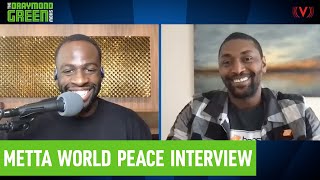
Metta World Peace talks with Draymond Green about his defensive legacy, leaving Indiana, the Malice at the Palace, and his mental health advocacy. He raffled his championship ring to fund mental health initiatives and reconciled with Ben Wallace after years apart.
Chapters
I am honored today to have a guest who I have the utmost respect for. A guy who I had the opportunity to play against, thank God, for only 2 years. Being one of the strongest guys, if not the strongest guy that I ever played against. One of the better, the best defender that I have ever played against. One of the toughest guys to come through the league. A guy who I had the honor of growing up watching play and had tremendous respect for. Hailing from Queensbridge by way of St. John's, onto the league, caused havoc. One of the toughest guys, as I said. Metta World Peace, man, thank you Metta for coming onto the show. It's an honor to have you on, brother.
Hey, same here, man. It's an honor to be here. I remember seeing you win the Finals in Cleveland and had a chance to sit down and just like, watch you speak after the championship. I remember that. I wanted to kind of soak that in just as a fan, and I'm just so impressed with what you bring to the table, man. It's incredible.
Thank you. Thank you. No, so I mean, in kicking this off, man, obviously, you know, I've said publicly I'm the greatest defender ever. And you know, when I said that, it caused a lot of commotion, and more so amongst other defenders. And you know, I enjoy the commotion it caused because obviously in order to be a great defender, you have to have that intensity. You have to have that mindset. And so once it came out like that, I'm like, hell yeah, I wanted it to come off like that. But as a guy who I respect as a defender and everyone you played with respect as a defender, what was the key for you in defending and guarding the way that you did?
I mean, the thing was like when I grew up, when I was growing up, I wasn't a scorer, you know? So the only way I could win was on defense. And I used to hate losing. So I learned how to make the game ugly since I was a kid. Like even when we lost to the Pistons in Game 6, the score was 71 to 67. You know, every playoffs that I've ever lost, like the score is always low. Even when we lost to the Lakers in Game 7, the score was 89 to 70. Like, you know, like, I always like to make it ugly, deflections. You know, I always knew like deflections, I always like to lead my team with deflections and different things. But then the other thing was just being competitive. And since a kid I've been, you know, I won everywhere, you know, in New York City, everywhere I played. But one of the things I did was lock people up. And I always thought like that was the best. I always thought I was the best player on the floor even without scoring, you know? And with that being said, I just wanted to try to shut my opponent down just to be the best player on the floor. Even though you might have a really good offensive game, but I just wanted to shut you down.
No, for sure. And I think for us, the most respect you can get as a player is from your peers. When your peers respect you, that goes way beyond what this newscaster may say, what this analyst may say. When your peers respect you. And one of the guys that we know that we all respect obviously is Kobe. And he always said that you were as tough as challenge. And part of the reason why was because you were always switching your stance up. Can you walk me through that?
Yeah, yeah. I mean, it's a lot of people that I learned a lot from, but you know, with that being said, defense is always a constant adjustment. And with that being said, you never wanna, you know, your job is never done on defense. So what I always like to do is the angles. I always like to keep, is my center of gravity, like kind of in front, you know, of your midsection. And then also, you know, in between, you know, your legs. And I was always just moving with the angle, you know? And I just, I was what, 260, 265 when I played. So I couldn't really stay in front of these small guys. You know what I'm saying? So I always had to use the angles, you know, to my advantage.
That's crazy. The fact that you were 260, 265, moving the way that you did. I think the one thing that when I first came into the league, I was a 3. For those that don't know, I wasn't playing the 4 really. And I never played the 5 when I first came into the league. 'Cause at that time it was like Z-Bo and Marc Gasol, Tim Duncan and Tiago Splitter, Paul Gasol, Andrew Bynum. Like you had Dwight Howard, you had real bigs playing the 4 with 7-foot guys playing the 4 spot. And one thing that I noticed when you guarded me a couple times at the 3, you were just rooted into the ground. Like couldn't be moved. Like I said, one of the strongest guys. And when I came out, it was only you and Stack Jack that was like that. Like nobody else was moving like that. And to think that at one point you two guys were on the same team and you guys had a po— you could have possibly won a championship. And then— Yeah. Things happen. Do you have any regrets in leaving Indiana when you left? Because I personally think that team could have won a championship.
Yeah, big regrets. You know, I was young and dumb. I always tell people, don't request trades. I always tell people it's not always greener on the other side. You know, as a basketball player, you know, it goes in phases and we all are entitled players at times. And I was a very like entitled player. So when I don't get my way, I request trades. I wish I would've saw it through. You know, I wish I would've had the ability and the strength to understand that, you know, things get better. You know, if you just have a little patience. But as a 23-year-old, I wasn't looking at it like that. And I definitely regret it. I tried to get back to Indiana actually, right before I got to the Lakers. I was trying to get back to Indiana. Mm-hmm. But you know, so much happened, they didn't wanna take it back.
That's interesting. And obviously that leads to what sparked that was the Malice at the Palace. I actually had the opportunity of playing with Jermaine O'Neal my second year in the league, one of my OGs. And he told us a story. We obviously were all asking about the Malice at the Palace. As a kid growing up in Saginaw, Michigan, I remember that like it was yesterday. I'm watching the guy, I knew guys on the floor and all type of stuff. So I'm like, yo, what's going on? But I was talking to Draymond and he said, man, one thing I loved about our team was we was really a bunch of crazy motherfuckers. Like that's how Jermaine explained it to me. Like we were a bunch of crazy motherfuckers. He said, we had Stack Jack and we had Ron. He said after the brawl, We walk into the locker room and Ron come in and say, "Yo, y'all think we gonna get suspended?" He said, "Y'all think we gonna get—" Do you remember that? Is that true?
I remember that.
I remember that.
'Cause you know, I'm used to like, if somebody, you know, you get in a fight, it's like over. 'Cause you know, especially if you didn't start the fight. You know, I did everything in my power. I remember that day trying to do everything in my power to not get in any trouble. Even 3 years into the league, I was getting ejections, suspensions, and I'm like, I just wanna have a good season. I just wanna like, you know, continue this legacy. And so I didn't expect to get in that brawl that day. I expected to come outta there clean, you know? And then when I get to the locker room, I'm just like, is this really happening? Like, I just could not believe it. You know, I go to the scorer's table, I lay down, you know, I binge thrown his headbands. I'm like just sitting there and I'm just, what's gonna end in boom? This guy throws a cup of beer and then I just snap, right? And then it's like, what just happened within like what, 5, 10 minutes? Like maybe 8 minutes. Yeah.
It's just crazy. That's interesting. It's funny because I had a situation, man, about 5, 6 years ago now, back in East Lansing. And I was telling some friends of mine, I said, yo, I've been in a lot of situations and whatever happened in the situation, I probably caused it a little bit with my attitude. I said, but this was the one time I actually held it together this time. Like I held it together. I didn't do anything. I retreated, went back the next day, same guy come at me again. Like I did everything in my power. And that's the one day that it actually goes wrong is the day that I try to hold it together. So it's funny to hear that, but—
Yeah.
So that transpires. You get suspended for the rest of the season and then everything happens with Draymond gets his suspension, Stack gets his suspension. We never get to see the true potential of that team realize. You move on a couple stops and then you end up with the Lakers. And I think that's where, if you tell me, but I feel like that's where your career really took a turn where you were respected, all-star, all of those things. But then you get to the Lakers playing with Kobe. Explain that journey to me and how everything changed for you, especially perception-wise of Ron Artest, Metal World Peace, once you went to the Lakers.
Well, you know, it actually started out with Sacramento. So when I got to Sac after Indiana and I was gonna retire actually that year, I put in my papers. So then I get to Sacramento and I go to Coach Adelman and I'm like, yo, coach, I'm 273 pounds right now. I'm really not interested in playing. I was like, I don't wanna make a big deal outta this, but if you could somehow, you know, keep me on the bench and, you know, I'll be there, but I'm trying to ease my way outta this thing, right? So he was like, he said, Ron, I'll try to ease my way out, right? So he was like, he said, Ron, we gonna go as far as you take us. You playing, we gonna go as far as you take us. That's what Coach Adelman tells me. So we in the last place in the West. So I go home that night, And I started to think about it, put it in perspective. I come back next day and I say, you know what, we going to the playoffs. And like media laughed or whatever. We go to the playoffs, almost beat the Spurs in the playoffs. And then, but that right there really, you know, got the love back. And then just being around Coach Adelman, he's like a father figure. So being around Coach Adelman, you know, I was able to just like kind of get the love and kind of respect the game more. And then I went to play for him again in Houston. You know, I kind of played pretty well there and my game was coming back because, I had a couple years where I wasn't even, I got suspended. Then the next year I got suspended again by the team. Nobody really realized that. I got suspended again for 3 months.
Really?
Yeah, but I was suspended for the first 3 months of the season the next year.
Wow. So. Wow.
Then I didn't play no more for the Pacers. Then I went to Sacramento. So that's like 2 years of like, you know, I was in shape right before the brawl, you know, I was like. So, you know, it was when I got to Houston, then I was like prime, you know, I was averaging 25 in the playoffs against the Lakers. I was back to myself. Then I go to the Lakers the next year in my prime, I was 29, but I'm playing with the greatest and I'm playing with Pal, right? So with that being said, my average go from, dropped to like 6. And then that was it. Like that was all she wrote, you know?
Yeah.
But the thing I, what I really love about that moment was I was able to, take away the entitled run on test and sacrifice for the team. And I just did everything I had to do. I was spotted up, you know, plenty of time, just not touching the ball. But I tried to do everything the right way. And that was the most proud I was of my career because, you know, I accepted, you know, something I'm not used to, which I started everywhere I went. You know, I was like go-to guy, all this stuff. And then I had to accept the role. And I was like, okay, now I'm mature. And I realized right then and there that I that I was maturing.
That's beautiful. It's important too. I think people don't realize in order to have a championship team, like guys are gonna have to sacrifice because the reality is if you don't have guys that has to sacrifice something on a championship team, you don't have good enough players and you won't win anyway. I think we, you know, we had a similar thing with Andre Iguodala, who's obviously back, thank God. But where he's in the prime of his career and Steve Kerr asked him to come off the bench, a lot like yourself, he goes on to win Finals MVP in that Finals. But a lot like yourself, you take a back seat and then the person who has to hit the big shot in game 7 is you. And if you don't take on that role, those moments never happen. Lakers never win a championship. So it's interesting.— to see the maturity.
Yeah. Absolutely, man. That was one of my proudest moments, like the maturity side. I got a chance to actually see, you know, what it is to be a role player. I never been a role player in my life, but I got a chance to experience it. And now when I coach to this day, I kind of understand like, you know, a go-to guy, a role player. I coach girls also. And just having that perspective on it, you know, on the game, I understand like if you're really good, but hey, "We need you to sacrifice. And you know what? It's gonna be better for you in the long run." And I had a chance to win a title, you know, which is like really, really big if you can do it. So I'm just so grateful for the Lakers.
No, it's definitely life-changing. And it also, like I spoke on the previous before, it also changes the way your peers look at you when you win those NBA Finals.
Yeah, it's a little different.
For sure. But speaking of Game 7, you then had that moment, you had a huge moment. I'm a fan growing up. So as growing up, I always would cheer for the Lakers because I loved Kobe and Shaq. Then obviously they split up and I'm like, man, I still love Kobe. I love that dog. And then you go have that moment in game 7. And one of the biggest moments I personally think from that moment was afterwards, you said you wanted to shout out your therapist. And that was a big moment because number one, we had never heard a guy come out and speak on his therapist, let alone one of the toughest— no disrespect— one of the most insane guys we've seen in our league, and you come out and speak on your therapist. What gave you the confidence or made you want to speak on that?
That's actually true, man, the confidence, because at that time your most vulnerable states, one would take that for weakness and things like that. And I just felt like the strength was in, you know, improving yourself. The strength was in being vulnerable. And that's what's gonna help other people, you know, that's going through things and don't really know quite how to get through it. You know, when you're trying to improve yourself, that's big. And I just wanted to give credit where credit was due. That day in Game 7, you know, we playing against the Celtics. Me and Paul got a long history. Yeah. And my whole thing was stay in the game, don't get a tech, do not get ejected. Stay in the game, right? So the night before that, I called my therapist. She lives in Houston.
Okay.
And meanwhile, I've been ejected from like 4 playoff series against the Spurs, against the Lakers with the Rockets, against the Celtics in Indiana, against the Pistons, a game to go to the finals. I get a flagrant foul They hit, they, they, they, game is tied. They go up 4, free throws score and win by 4, go to the finals and win, right? So this is like, I'm like, how can I gain control over this? So I call her up and I say, hey, I need you to come in the morning 'cause I just don't feel right. And she comes that morning, I go to shoot around, I come back home, we have a quick session and we just talk about it. Like be ready for anything and enjoy the game and stay in the moment. Mm-hmm. And then we win the championship, you know, which is like crazy to me. I never thought I'd be in a situation to win a title after like my career. And now I got this championship. I was just like, you know what? Let me just take my psychologist. I said psychiatrist, I ain't even know the difference. I said, let me take my psychiatrist. And she called me up and she was like, hey, hey Ron, I'm not a psychiatrist, I'm your psychologist. I said, oh, okay, cool.
Sorry about that. Well, for those of us that, that don't know the difference, can you explain that?
Yeah, the difference between psychology and psychiatry, a psychiatrist or psychiatry, they normally provide, you know, medication, right? A psychologist is more therapy, talk it over and talk it through. So I was doing, at that point in time, I was doing psychology, which is therapy, which later went to like sports therapy. 'Cause for me, the game was everything to me. And how can you be effective on the court if you're not focused? So that's like sports therapy, you know? And I think sports therapy for a professional athlete's like huge.
And like I said, it wasn't, no one spoke about it before you did that. And I think you kind of, you pulled the lid off some things when you did that. Do you, did you see a change in the way the league started attacking mental health after you did that? Or do you think it still took a while for the league to kind of catch up?
You know, I think it took a while for them to catch up. You know, in terms of making it public that we gonna help our players. And in terms of the players, like, I'm actually gonna help myself and I'm gonna help others, you know, by just saying I'm doing therapy. Just by saying you doing therapy or whatever, I'm not saying force it on yourself. I'm saying if you doing it and, you know, it's really expensive, right, to get therapy. And also it's a stigma attached. So it's just so many different things. And it's so many cool things about people coming out and saying, you know, yeah, I see a therapist, that's okay. You know, you're actually helping someone indirectly and maybe they never have to see a therapist because like I said, that's $150 an hour, $100 an hour. Everybody don't got $100 an hour, you know, to see a therapist.
No, that's interesting. It's also very interesting that it's so expensive And yet I think for most people, like we all go through trauma, right? In life. Like no matter who you are, you go through some sort of trauma. Most of the times it being unrealized or undealt with trauma. And you kind of just learn how to compartmentalize it and continue to carry on. A friend of mine has this art piece and I'm gonna butcher the saying a little bit, but it's right along the same lines. And it says something about, why is a funeral so expensive? A broke man ain't got no business dying. And it's along the same lines of therapy. It's like, it's so expensive, yet we go through all of this, all the things that we go through in life. And the reality is, you go through those things and you go through those traumas. A lot of people, especially in the urban community, we deal with these traumas and you don't have the financial resources —to get that therapy. On top of the stigma that comes along with the therapy, you don't have the financial resources. And now it's really a thing that you never see. You never had an opportunity to speak with a therapist, to correct those faults, or to learn from those things, to learn how to deal with those things. And then you're just stuck living that life.
Right, right, right. You stuck living that life, and you probably seen it. We've seen it, you know, with the people we have living in our neighborhoods, right? Just can't get out of that rut. You know, and you walking out your house, mean mugging, you know, once you wake up in the morning, something's bothering you, right? Like how can we, you know, change that and give you a different perspective on life where you can go on with your life? You know, whether you get educated, whether you taking a trade, whether you wanna build a family, you know, different things like that versus having, you know, this blockage, you know, which is kind of mental health issues or mental health, you know, illnesses, whatever the case may be, that's blocking you from, moving on with your life and your career, you know, and different things like that and your family. So I think, you know, I just think it was very important that I came out, you know, and definitely gave some exposure and released the stigma.
And speaking of the financial side of it, in the 2011-2012 season, you did something special. Being in the position that you were in financially, you did something special. Could you let everybody know what it is that you did and why did you feel the need to do that?
Yeah, man. So I won the championship ring and I raffled it off, you know? And I wanted to— I could have probably raised more money, but we raised a total of $671,000 with the ring. Then I gave all the money away to mental health institutions. One in Arkansas, one in Cleveland, two in New York, LA, Indiana, Nashville. And just wanted to bring awareness to it and let people know like, Release the stigma, improve yourself. And you have support, like we understand what you go through. You're not out there alone.
No, that's, it's a beautiful thing. And I wanna say thank you for having the bravery that you had to come out and speak on that. Now I think we have 3 mental health professionals now on staff. They're in, at least one of 'em's in at least once or twice a week. And I think it's a beautiful thing because you hear so many people in our league go through it.
Yeah.
And so many people suppress it, but I don't think people really realize the mental strain that it takes to go through an NBA season. Like I always tell people, you, a guy will say, "Oh yeah, I'll do this to you in the league." Or, "I'll do that, I'm better than you." And I tell people, you can't even deal with the stress of just a game day. Like just knowing, waking up at 9:00 AM knowing I have to get to shootaround, then after shootaround I have film, then after film I'm doing some treatment, I'm doing this. All the things that lead up to going into a game, the stress alone of just a game day, you couldn't deal with.
Yeah. Whether you hop in the cold tub or not hop in the cold tub, gotta play injured or not play injured, and you gotta put in that work. And you know, when you tired, are you gonna keep pushing it? You working out in the summertime? You know, yeah, it is a lot that goes into it that makes a complete player. It's true, people don't really understand.
No, definitely no. So like I said, I just wanna thank you for that. But, and switching gears a little bit, going back to your playing career, which like I said, I have the utmost respect for, especially as a defender. Where do you rank yourself at as far as wing defenders go? Like I know some great ones. Obviously I mentioned Stack Jack, who you two strong as hell. Tony Allen, where you rank yourself among those wing defenders?
Well, it's like, so when I was doing my prime, I definitely thought I was the best. You know, I mean, I won a Defensive Player of the Year and I probably would've won more, I guess, you know, I can't argue about the one when I got suspended. I don't know what would've happened that year. The next year I got left in the end. I don't know what happened that year. But you know, with that being said, it's something I'm really happy about. I really love talking about it. You know what I'm saying?
Absolutely.
It's something only a few people could talk about. But as I look back at it and I was doing a lot of research, especially when you came out with your comments, I actually looked at a lot of different wing defenders. And I think Dennis Rodman's probably the best wing defender that we've seen. You gotta go watch his tape. And I was looking at it and I'm only familiar with him from the power forward position, but the way he guarded Jordan and Pippen, I was just like, "Oh wow, this guy might be a better wing defender than me." I've never thought he was a better wing defender than me. You know? But I gotta say, I mean, Reggie Miller thought I was probably the best. Besides myself saying I was the best, you know, a lot of media probably never gave me the credit 'cause, you know, they just wanna keep my name out their mouth. They don't wanna give credit where credit's due. Like for example—
Absolutely.
It was crazy. Like once, I mean, it's just so many times people left me off. I'm like, "Come on now." I'm not even gonna argue with that, but— With that being said, you know, I did hold people to zero a couple times in their prime, you know, which is really difficult to do. You know, I got a lot of DMPs, people not showing up to play. So I mean, I gotta put that all in, you know, I gotta put that in my bank. But with that being said, I would say top 7, maybe something like that, top 10, top 7. There's a lot of people out there that's really good. And with Joe, when you came out with your comment, I mean, what was interesting, it happened quick, right? So it was a shock.
No.
But when you came outta it, I mean, you are so versatile. You should put yourself up there because if I did what you did, I for sure would've said I'm number one. I mean, you played the 5, you played the 3, you got championships to back it up. You know what I'm saying? Many people can say they're good, but you got championships and it's not like you was averaging 30, right?
Facts.
And you did have 35 in game 7 against the Cavs. So, you know, you can score. Yes, sir.
Right? That was a hell of a game. I appreciate it.
I remember that game. I was like, this boy, this guy can score too. So, you know, I mean, you should definitely put yourself up there. Obviously you got Rodman, you got Bill Russell. It's difficult to say you're number one, but you have got championships. So, you know, I think when it's all said and done, we should do something on ourselves. So many times the offensive player is getting the pub. And as a defensive player, I want some pub.
No, 100%.
How do you feel about that? You know what I mean? I want some pub. So I feel we should do something on that. We should be talking about that. Like, who are the best wing defenders? Who are the best defenders? And really do something on it to bring light. Like, I spent all months of my career, before when I would practice, before I would pick up a ball, the first 45 minutes was running. By myself, nobody in the gym. That's what I was, I was in the gym sliding, doing my defensive slides, like putting in that work. I wasn't just a good defender, I actually had to train for it. And with that being said, I take pride in that. You know what I'm saying? And I was happy when you came out with that. I was like, yes, like somebody's talking about defense.
For sure.
You know, finally. So I was like, I think I tweeted, I don't know if you saw it, but I was like really appreciative of you coming out.
For sure.
So yeah.
Absolutely. No, I, A part of the reason I did say that was I think people think I talk a lot, which I have my times where I talk, but I'm very calculated. And so when I say something, I've already played out how the response is gonna be, who's gonna say what. Obviously you don't know exactly what someone's gonna say, but like it's gonna cause this uproar. Like I'm already aware of that. And when I said it, do I really think I'm the best defender to ever play the game of basketball? Of course not. We all get in situations that may not be good for us as far as your weakness. Like— What about your era?
What do you feel about your era? Do you feel you—
I definitely feel like I'm the best defender in my era. Who compares to you? Who would you put close to you? Like a guy who I have a ton of respect for is Kawhi Leonard, right? Like I think Kawhi is an incredible defender, but Kawhi also doesn't guard the post. You know, like Kawhi is on the, he's on the perimeter, he's chasing guys around. You move the ball in front of him, one other way, utmost respect for Kawhi Leonard. Rudy Gobert is a good defender, but like for me, Rudy Gobert, he protects the rim. You know, like he's not guarding a wing on, you know, he's not switching onto a point guard. He's not switching onto a wing. If a point guard is getting off, his coach doesn't come to him and say, "Hey, you take Dame Lillard." You know, or, "Hey, you take Chris Paul, you starting the game on Chris Paul." And so, you know, those are definitely some guys that I respect, But you know, I respect Avery Bradley, who's a ball hawk, you know, like never got the credit he deserves. A ball hawk, impossible to screen. Like for myself as a screener, he's impossible to screen. And like, I respect that. And so I think it's something that, you know, when I speak up on defense and I continue to speak about it, because I, like you said, we deserve credit too. Like, all right, so you may, you may not be scoring the ball as much as Steph Curry, Right, but we all have an impact on the game, and I always speak on people don't talk about defense because you actually have to understand the game of basketball to speak on defense.
Yeah, for sure.
You know what I'm saying? Like, I can look at a guy and say, oh man, he was guarding such and such. When he was on him, he ripped him, or, um, you know, he was pressuring the ball. But I can also put that guy on the back action and watch him miss every tag that he's supposed to get on that big roll and down the lane. And then you can run and say, oh, he's a great defender because he was on the ball. No, he's not.
Right, right.
Because I can put him in a position that he mess up y'all entire defense.
Right, right.
And so when I said that, I was more so saying it from the standpoint, A, to spark a conversation. Let's get talking about these great defenders. 'Cause now when I say I'm the best defender, now we talking about Metta, now we talking about Ron Artest, now we talking about Scottie Pippen defense. Now we talking about Dennis Rodman. And let's make sure these flowers are being given to who they should be given to and not just someone who scored a basketball. And so that's how I always take it on the defensive end. And I speak on it because I don't think enough is said about it. And you, as you and I both know, if you don't have a defense, you can score as many points as you want. We watched it with the Warriors for years where they be right up there at the top of the scoring in the league. And would be bottom 5 in the West because they didn't have a defense. And so I always try to speak on that, number one, to start the conversation, but it's also to pay respect and get these names pumping of these guys who I respect on the defensive end that should be spoke about, yourself being one of them.
I agree. And then team defense is also important. You know, those concepts and, you know, tagging and doing everything the right way, you know? Not coming out the corner when the coach told you for the 100th time, you know, don't help off the corner and feeling and sinking on time. And I mean, it's beautiful. You know, I really, I truly enjoy it, you know? And it is something that I try to, you know, teach to this day. I respect that.
For sure. No, I appreciate it, man. And I don't wanna take up too much of your time. Appreciate you coming on. But before I let you go, I wanted to ask you about X vs. X, which is a sport platform that you're involved in. Can you explain that to us and what it can bring to the game for players?
Yeah, for sure. You know, so when I retired, I didn't really wanna retire. I still wanted to play. So I said, "I'm gonna build the app for myself so I could travel the world and play basketball." 'Cause I always wanted to travel the world and play basketball. So then what I was gonna do was rather than give people my number and say, "Hey," let's meet at this gym or whatever. You know, just sign up to this app, you play basketball, I never have to see you again. You know what I'm saying? So as I was building this app, you know, traveling the world to play basketball, I was like, oh wow, there's a bigger opportunity here. And there's also opportunity to help people get exposure that, you know, will not have the opportunity to get exposure. 'Cause when you think of basketball, 10 to 2 is like our basketball hours. We gonna go to work, we gonna, in the summertime, we gonna play ball, we gonna lift. But not everybody had those hours. Some people gotta work. 9 to 5. So how can you give someone working at Target or Starbucks an opportunity to still play, you know, and to still get exposure? So that's what X vs. X is. You know, it gives basketball players opportunity to connect with other basketball players, you know, play basketball on their time and build, you know, a local community and a local audience, you know, and show that you can play the game, you know, on many different levels. And we got a lot of great stories. Some people's going overseas. Mm-hmm. Couple of our players in the G League, you know, and it's very empowering. So it keeps me around the game. You know, I'm coaching a lot, you know, I'm running some games, I'm coaching some games, practicing with some of the players. You know, we probably have, we're in beta right now. So we got about 10,000 people in beta. And when we come outta beta, we'll probably be one of the biggest basketball organizations in the world. You know, with that being said, it's just like, keeps me around the game. I love the game of basketball and I'm so grateful that I'm able to find something to do that keeps me around the game. So I'm like really excited about it.
That's beautiful. And when, as a basketball head and huge basketball fan, when can we expect for this to be readily available to myself and everyone else that's not a part of the beta?
Yeah, absolutely. Yeah, so right now we're in a live beta because You can't go into a basketball company and then have, you know, your CTO test the game. Like you gotta get that information from basketball players.
Yeah.
So it's live right now. We're in a live beta, which is risky 'cause people could take your ideas, but this is the type of company that you have to be in a live beta. And yeah, you could download the app, upload basketball content, you know, create your own games. And we're gonna try to, you know, really what we're doing is empowering. Digitizing competition and turning athletes into digital assets using all the new innovations that's out there for an athlete to not only get exposure but to also monetize, you know, your own brand and your own skills. So that's what we're doing. Uh, we're really excited about it. And, um, we got a lot of nice little— nice, uh, tech people involved, you know, from LA Times invested in our company, you know, to, uh, CEO Boost Mobile also involved. And we're trying to actually create a platform that's very, very empowering you know, just in case, you know, you're not a part of the politics, you can't get into a college you wanna get into, you can't get into that team in the NBA you wanna get into, you know? So you come to Expert Sex and we kind of help you and you kind of work through that. But I'm just really grateful for it.
That's beautiful, man. Congratulations.
Thank you.
And good luck with the platform. I'm looking forward to testing it out. Now, one more question. I lied. I know I said I'll let you go. I'd be remiss if I didn't ask this question. As a fan of yours and also as a fan of Ben Wallace, who's also like a big brother to me, a little while back, a photo came out of you guys, of you and Ben. And I thought it was a huge moment because I can relate. And the reason I can relate is not quite the same situation. Obviously there was a brawl there, but I had something that happened public as well, publicly as well. Mm-hmm. With myself and KD. And you know, you go through these public moments and number one, you may wanna talk to someone, you may wanna have a relationship with someone. And the pressure that you're getting from the public about this moment doesn't really allow for that to take place. Right? And so, whereas you and Ben, I don't know how long y'all had gone without speaking, but— 3 years. Then this picture comes out and it sparks this whole conversation. I thought that was a huge moment because for us, especially for us as young African American men, and you know, it goes back to Queensbridge. Like it goes back to Saginaw, Michigan. It goes back to Red Dirt Road, Alabama for Ben Wallace, where we grow up, we beef with the guy around the corner or the guy around the way. Mm-hmm. And we never settle that beef. And the only way it ever really gets settled is by killing, by fighting, guys fighting over and over again. And all of a sudden some guys goes to prison or something, and that's how the beef settles. But you never really see the beef settle. You never see a photo coming out where two guys are standing there and you like, "Man, that's beautiful to see." Or a conversation, um, with myself and Kevin, where everybody can see Like, man, those two guys are in a room talking it out. Like, man, I think that's a great picture for our young, especially for our young Black men to see.
Yeah, definitely. You know, and that picture happened by accident. I actually spoke to Ben through direct messaging. I was trying to actually do a podcast with him right before he became a Hall of Famer. But, you know, but with that being said, I thought it was big. I never had a problem with Ben, you know, Ben, I fouled him, he got upset, he pushed me. That's basketball, that happens, man. The only issue me and Ben had, we was like the best two defenders in the league for— Absolutely. 5 years. That was like, and if you're Ben Wallace, you want that award. If you me, you know, I want that award too. And he got 4 of them, I got 1. So I have a huge issue with that. But, right? That's like the only issue. Other than that, I mean, I love Ben. Like he's an amazing defender. You know, he's right up my alley. That's like, you know what I'm saying? What's there not to love about Ben? He's never been in like trouble. He's a great teammate. You know, there's nothing that— I love Ben personally. With the exception of he got 4 Defensive Player of the Year awards and I got 1.
Which I understand as someone who also has 1. I understand how hard it is to get that award. So I get the frustration. It's happened to me a couple times. Like I feel like Kawhi Leonard got one of my awards. Sitting on his mantle at home. I feel like Rudy Gobert got one of my awards sitting on his mantle at home. So I definitely understand. Hey, but no matter, again, man, I just wanna say thank you for coming onto this podcast, for sharing your light. You know, I think you're a beautiful, you're a beautiful person. You are an incredible basketball player. And most importantly, you're a leader. And the way you've led, for guys like myself coming behind you, raising awareness that you raise, putting your money where your mouth is. And not only starting that awareness, because I think so many times people will start to raise awareness on something and then they don't know how to carry the message through. Like once you've raised awareness, now it's time to put the action to the awareness and carry the message through. And you've done that. Thank you. Like I said, from my— I say this for myself and for other guys that's in the league today. Thank you for leading the way the way you have. We are truly appreciative of you. And you've really set a path in this NBA for guys to attack the things that they need to attack. And we appreciate you.
Nah, thanks a lot, man. I really appreciate being on with you. It was an honor. And you know, just from— I just wanna say like, I'm really proud of what you guys been doing over there. Just from a basketball perspective, You know, I don't know a lot of you guys off the court. I watch the games and very, very impressive, very mature. And I mean, y'all changed the way the game should be played. You changed the way people thinking about the game, you know? And so kudos to you guys over there. Don't know how it happened, but you guys are just like incredible and still back. So, you know, much, much, much luck to you guys and success to you, your families and everything.
Thank you. Thank you, brother. And again, good luck with X vs. X. I'm looking forward to getting on the platform.
Appreciate you. Thank you.
Yes, sir.
My guy.
More from Draymond


Draymond Green on Brandin Podziemski Extension, Darius Acuff Interaction, & Weird Rudy Gobert Talk


"I Was Waiting for You All Game!" | Deni Avdija & Draymond Green Recall Iconic On-Court Moment

Deni Avdija on Becoming an NBA All-Star, Playing In NBA Playoffs & Hilarious Draymond Green Story


Draymond Green on Warriors Preseason, NBA Push-Off Rule, & LeBron's Fanatics Helicopter Deal


"Awful Representation" — Draymond Green Sounds Off on Dalton Knecht's Lakers Purgatory

Draymond Green Explains How Micah Nori Handled Damian Lillard & Ja Morant Lineup Controversy Wrong

Draymond Green Exposes How Contract Drama Destroys Locker Rooms After Jalen Duren Re-Signs