Shane Battier on guarding Kobe, LeBron's greatness, T-Mac's secret talent | Draymond Green Show
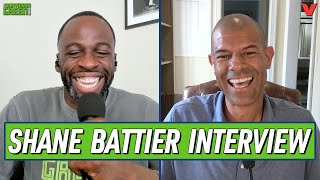
In this episode of the Draymond Green Show, former NBA forward Shane Battier joins host Draymond Green for an in‑depth conversation about his basketball journey and insights into the modern game. Battier reflects on growing up in Michigan, the influence of local heroes, and his decision to attend Duke over Michigan State. He discusses the evolution of defensive roles and small‑ball tactics, sharing technical details of his approach to guarding elite scorers. The dialogue moves through memorable moments, including guarding Kobe Bryant, playing alongside Yao Ming and Tracy McGrady, and his perspective on LeBron James’s greatness. Battier also talks about his stint with the Miami Heat, the cultural impact of his China endorsements, and how race and upbringing shaped his identity in the NBA. A surprising reveal about Tim McGrady’s hidden talent adds a light‑hearted note. The episode concludes with Draymond’s heartfelt tribute to Battier as a Michigan native and a nod to Coach Juwan Howard’s successor, Coach Scheyer, and the future of Michigan basketball.
Chapters
What's up everybody? Welcome to the Draymond Green Show YouTube channel. Make sure you hit that subscribe button. Make sure you like the post that you love, but you can get everything the Draymond Green Show right on our YouTube channel. So make sure you subscribe, check that out. Thank you. What's up everybody? Welcome back to the Draymond Green Show. This next guest, I am extremely honored to have on the show. I played AAU growing up with the family and we would practice Well, before I played with the family, I played with the Michigan Mustangs, but then I played with the family and we would practice at Detroit Country Day. And this guy right here is one of, one of two guys who I'll say built Detroit Country Day's gym. That's Chris Webber is the other guy. And this next guest that we have on, Shane Battier, who's an NCAA champion, two-time NBA champion, the 6th pick in the NBA draft. 2-time All-NBA Defensive Second Team, NCAA Final Four Most Outstanding Player, Shane Battier. Welcome to the show, my friend.
Hey, my brother, I appreciate you. Thanks for having me on. You know, the resume, you know, I tell my kids now I used to be somebody. So when I hear my resume, it makes me feel good 'cause my kids don't believe I used to be pretty good.
Get in on the action with the DraftKings Sportsbook, an official sports betting partner of the NBA. New customers who deposit $5 or more can get a no sweat bet up to $1,000 back in bonus bets. How cool of a deal is that? All you have to do is download the DraftKings Sportsbook app now, takes 90 seconds, and use the code COLIN, C-O-L-I-N. This is the best deal you're gonna find. New customers, it's a no sweat bet up to $1,000 if your first bet loses. How cool is that? Only at DraftKings Sportsbook. Code is Colin. The crown is yours.
You know what's funny? Oddly enough, I have a 7-year-old son and he likes to race me. He tell me like, "You're old, you're slow, Daddy, you're slow." And I'm like, "Dude, I'm still out there running up and down the court, so I can only imagine what you have to deal with." Oh my gosh.
You know, I coach high school basketball. My son's a sophomore, he's 15 years old, and, You know, I had to, you know, grab these kids by the collar a couple times this year and say, just trust me. If it worked against Kobe, it's gonna work for you, all right? Just trust me. Just trust me on this.
Absolutely. That's hilarious. That's hilarious. But I mean, just going back to high school, obviously just mentioned Detroit Country Day. What was that experience like for you going to Country Day? I know I read some stuff in the book, which we'll get into, but just like share that experience with me. I have actually, One of my best friends in the world, Benny Fowler, went to Detroit Country Day. Yeah. Grew up going over to Dumar's house and, you know, they all went to Country Day. Just share that experience with me for starters.
Yeah, well, it was funny, you know, I grew up in Birmingham, suburb of Detroit, and I had never heard of Chris Webber when I was growing up. You know, even though he went to school 15 minutes away. And I love, you know, I love basketball obviously. And it wasn't until he went to Michigan And I was in 7th grade, my first year at Country Day, that I knew about Chris Webber, which is kind of weird. And the only reason I went to Country Day, it was a great academic school, obviously. My mom said, "No, hey, you wanna go to Country Day?" And I didn't know what Country Day was. I was just, I was a kid who liked playing sports. And she's like, "It's that school that has a really good football stadium right there on 13 Mile Road." I'm like, "Oh, really?" Yeah. You know, that's back when I played football. So that's why I went to Country Day. But it was, you know, it was a great place for me because, Even though I was from Birmingham, I cut my teeth on Detroit Police Athletic League. My childhood, whether it's growing up with my little brother or Birmingham Little League, it was all based on competition. And what Country Day for me was, whether it was in the classroom or on the court, is people wanted to win.
Mm-hmm.
Right? And so we had a lot of success. So we won 3 state championships, only lost about, I don't know, 7 or 8 times. We had, you know, 7, 8 guys who played in college, guys who played in the NFL. And everywhere that you look, you had someone who wanted to do big things. And so like for me, like people always thought Country Day was, you know, preppy kids from the suburbs of Detroit, but like there people just wanted, were competitive and wanted to do big things. And so for me, like that was the most important thing. You know, I got to play with both Chris Webber's little brothers, Jason and David, and you know, two of my favorite people, teammates. They were unbelievable. And you know, those battles we had at Country Day, I mean, they were some of the toughest practice. Greatest I ever had throughout my entire basketball career.
Absolutely. That's incredible. So tell me this, I'd be remiss if I didn't ask this question because my heart bleeds green. Why Duke? By the way, at a time where Mateen Cleaves is at Michigan State, Morris Peterson's at Michigan State, Charlie Bell's at Michigan State, why Duke over Michigan State? I can guess the academics, but I'm sure it runs deeper than that.
True. No, true story. And I love Izz, and I tell Izz this, I tell him, I tell him to his face, he messed up. You know, I've been recruited by everybody and Izz had just gotten the job at Michigan State and I liked Izz, you know, I'm like, man, this guy's, he's legit, he's got it. But Izz messed up. One day he came to me, he said, Shane, and you know this, he said, we had the best weight staff in the Big 10. Okay, we're gonna put 40 pounds of muscle on you and you're gonna be the baddest power forward in the Big 10. And then I got Dean Smith and Coach K say, no man, like you're a small forward, man, you gotta shoot threes. I'm like, I'm with those guys. So that was the reason why. That was like the main, I didn't wanna be a power forward. I didn't wanna, you know, put 40 pounds and bang guys. I wanted to be a small forward and shoot threes. So that's why I went South. That's a true story. True story.
That is so interesting to me because I came into college as a power forward, right? And now I'm looking at all of these things like, wait, this guy's too small to be a power forward. He needs to be a small forward. So ironically, I start at the small forward position and where do we play? We're playing at Cameron Indoor. We're playing against Kyrie Irving. That's one of the 6 games Kyrie Irving had and he had 31 points. And I caught myself going out there playing the 3 that year, my junior year. And I told Coach Izzo after that game, I said, "Hey coach, you know, I think I'm gonna just move back to the 4, man. This 3 spot ain't working for me. You gotta chase these little guards off screens, off pin-downs." I'm not, I'm gonna just go back to the 4. So I was actually the total opposite, but I thought I wanted to be a 3.
That's funny. Well, it's funny. I mean, obviously like, I think you and I are two originators of the, of small ball 4.
I mean.
Absolutely. I mean, it's absolutely, whether you came first or I came second, well, whatever. We were the first like small forwards became power forwards and now the game is obviously so changed and it's positionless. But like the ability to guard a 4, and no matter how small you are, that, that, that's the skeleton key, man. I mean, you're obviously, you're one of the greatest defenders of, in NBA history. And, and you could guard, you guarded 1 through 5. Literally they say like 1 through 5, but you could guard 1 through 5. But like what your special skill was, was you're able to get up and use leverage, you know, against 7-footers who are outweighing you by 40 pounds. Absolutely. And it's not about strength, it's just about like knowing how to use your body, Knowing about angles, knowing leverage and like, and so like, you know, I don't, I look back at my high school days, I was a back to the basket 5, but I learned how to do that. And so when I transitioned to be a small forward in the league and a 2 guard for majority of my career, I never lost that. And like that was, that's the skill that unlocks everything. So for these like young guys, you know, they wanna step out and shoot 3s and, and turn a face, but it's like, yo, if you wanna play and like be super valuable to your team, like learn to guard the post, learn to guard pick and roll. Yeah. 'Cause like you'll always play, you'll always play. And that's like, no one ever talks about that. And so I'm glad I'm here talking to you. You're like the one guy in the entire history of the NBA who gets what I'm saying. Am I right?
At 1000%. It's crazy because you'll see young guys now, and to your point, they don't have a clue of how to guard the post. And here's, to take it even a step further, people stopped teaching post defense because guys stopped posting up. Well, now the game is changing back and you're starting to get guys posting up again and no one knows how to play post defense anymore. And especially when you get guys coming from college, you know, the first thing these guys come from college, they do, they put their chest out and I'm like, yo, you cannot guard the post with your chest in the NBA.
It's over.
Guys hitting your chest, they're spinning off you. You just can't guard that way.
Yeah.
And so it's interesting that you say that because I think the key actually to my career. And to your point, the key to my career was that my whole life I was the biggest guy in Saginaw. So my uncle had me dribbling the basketball. Coach Speedy told me like, "Man, you can't just be a 5." But my whole life I would play the 5. Now I played a point guard offensively and post up some and bring the ball up the court, make plays. But I played the 5. And so— Yeah. Once the NBA turned to small ball, you'd see teams like, "Oh, that guy is 6'6", "6'7" too, we'll put him at the 5. But my whole life I learned how to anchor a defense.
Yep.
Because I played the 5, you know? And so to your point, I think that's a great thing for young guys to learn.
Yeah.
How to guard the post and how to guard pick and rolls.
Yeah, I mean, we played for two of the best, you know, college coaches of all time and Coach Izzo and Coach K too, that didn't hurt. But you know, the ability to guard, you know, pick and roll, be able to switch off on pick and roll, you know, to do every single coverage, you know, like you just don't see guys who are that defensively just, you know, versatile and have the IQ to be able to do all that thing in every situation. It's, it's a huge, huge, huge advantage for these young guys if they get that, that teaching and that coaching.
Man, you don't know how surreal this is for me right now. And growing up and just listen, hearing your name and knowing you was from Michigan and to be doing this interview right now is blowing my mind. Mind. So thank you. Um, before we move away from, from your early days, um, something in, in Michael Lewis wrote in 2009 article, uh, that the inner city kids who, who you play AAU with treated you like a suburban kid with a white game. And the suburban kids who you play with during the regular season treated you like a visitor from the planet where they kept Black people. How was that navigating for you? You the only child at a school with a Black father and a white mother. Like, how was that at, like, we're now 20 years removed from that. Stuff has moved far ways in 20 years though. How was that for you then having to deal with that?
You know, Draymond, it was the hardest thing I ever had to deal with as a kid. But it was the best thing that ever happened to me. Right? I never belonged anywhere ever, ever. You know, I grew up in Birmingham, but we were poor. I mean, you know, I still remember what a government cheese sandwich tastes like. Like, I never had people, you know, from my school to my house because we had like holes in the roof when it rained. You know, I was putting pots underneath the holes. And like, and so like, Sports was the one place, and basketball especially, that like I, I belonged. And I realized at a young age, like, look, when I win and I help my teammates and my friends win, like, they don't care that I'm, you know, half Black. They don't, they don't care I'm, uh, where I'm from. They just know, hey, you can play. And that's, that's the beauty of sports. And so, so I became like obsessed with just winning. And it wasn't even about like what I did. I was like, what do I need to do to help my team, my, my friends win? And so that was my entire game from my, literally from my kindergarten all the way to my last day in the NBA. It was just like, man, I gotta, it's gotta win. I just gotta win. And so, you know, I had no one to talk to, you know, this is before the days of, you know, mental health was even invented, right? So no one's talking about like the anxiety or depression back in the '80s. You know, you just kind of sucked it up. And my parents couldn't understand, my friends couldn't understand. I just felt like alone and isolated.
Mm-hmm.
But the one place I made people respect me was on the basketball court. And so that was the most important lesson. I learned this lesson when I was like in first, second grade that I carried with me throughout my career. And it was always, it's always about winning, man. That's all that matters. If you win, doesn't matter who you are. And so that was the hallmark of my entire career. So it was the hardest thing I ever had to deal with as a kid, but it was, it was what made me who I am today still. Yeah.
Winning cures all.
It does.
I wanna get into an early part of your career. I know everyone talks about the Miami Heat days and rightfully so, that's where you won a championship. And that's always gonna be the most respected and we'll get into that. But I wanna talk about something in your career that I thought had a huge impact on your career and I just wanna know your take on it. Playing with Yao Ming in Houston, you end up with 7 or 8 signature shoes with a Chinese shoe company. One of the first guys to sign over with the Chinese shoe company. How was that playing with Yao and what impact did it have on you outside of the game of basketball? Because his brand was so big and reached so far.
Yeah, man. First of all, Yao was one of the best teammates of all time. And, you know, you talk about a guy who worked, who cared, who brought it every single day, never made excuses. I mean, he was a superstar. I mean, he's every teammate's dream, every coach's dream. You know, you saw how much stress he put on himself to carry really like, you know, 2 billion hopes and dreams of his countrymen in China on his shoulders. And he did it with amazing grace. And even though he could never really stay healthy enough to sustain a long career, I mean, man, he was, he was, he was so good as a teammate, you know, like Yao could never really train in the summer. So he was always kind of like outta shape when he showed up to camp.
Mm-hmm.
But by, by Christmas he finally got in shape and for like 2 months, man, like I'm telling you, like prime Shaq, like Dwight Howard, young Dwight, they could, they couldn't do anything with him. I mean, he was like the best player on the planet. And then he got tired after about that 2-month run and it was fatigued and wasn't as good. But like for that 2 months, like no one could do anything with him. So first of all, he was an amazing teammate, amazing human being. I love him. Secondly, I, he brought me to a place in the world that I never thought I would, I'd be, you know, every kid dreams about having their own shoe. And when I signed with Houston, Pete came to me and said, hey, we want you to be their, your, our international spokesperson. I never heard of Pete. All right. Mm-hmm. So I'm like, all right. Like they're paying American dollars. This is the time when like Nike, Adidas, they weren't paying anything. So I'm like, all right. Yeah, cool. So for 10 years I went to China every year. And tour the country and I've seen every part of China and really learned to, you know, love, love just the people of China. 'Cause they just, they love hoops, man. They love hoops. They're knowledgeable. They love family, love education. All things that, that, you know, I was about. And so, you know, I've done everything and like, I'm way more famous in China to this day than I am in America. Not even close. Like I hosted the, The, the, the Chinese version of Saturday Night Live. And I don't speak Chinese at all.
Wow.
Yeah. I hosted it like something like 150 million people every weekend watch the show. I hosted it. I was on Chinese Oprah. Uh, I have my own commercials. I have like 100-foot billboards. There's a statue somewhere of me in Beijing. I, I couldn't even tell you where it is. And so like the things I saw in China, it was, it was nuts. But, uh, it was, it was a great experience. 10 years. And I, I have Yotta to thank for that.
Do you ever go back there now and, and do some things there now or have you not been back?
I haven't been back since COVID But when I go back, you know, it's, when you go to China, everyone has a nickname. And at the time, you know, President Obama was the president. And because the way I talk and I'm light-skinned, my nickname was Mr. President. And so every city I go to have a press conference and people would be like, Mr. President, Mr. President, you know, how do you find Shanghai? And I'd always say, you know, it has the best beer and the best looking women.
You know, then I go to Qingdao, Mr. President, "Mr.
President, how do you find Qingdao?" You know, it's got the best beer and, you know, the best looking women. And so I laugh. So I still walk down the street sometimes and someone from China will say, "Hey, Mr. President, I'm fans of you." So I look forward to going back someday.
That's incredible. And speaking to Yao, you also, obviously T-Mac was a part of those teams as well. We had T-Mac actually on the show last year. And we spoke about winning and health and the different things. What was that like during those years of where you guys couldn't quite get over the hump of getting outta the first round and the beating that you were watching T-Mac take due to that? But all of you guys had to deal with that. What was that like?
Yeah, that was the hardest part. That was probably the worst part of my NBA career. Just not being able to have a real, you know, NBA championship run. We had the talent, you know, it just never seemed like we had the right health. But my first year in Houston, you know, I'll never forget losing Game 7 at home. It's hard, you know, I, I'd never been to that situation where I thought we were gonna win and we're up, you know, 4 or 5 points with 2 minutes to go and lose the game to Utah. That was a really good Utah team with, with Booz and, and, and D-Will and, and O'Kerr. Woo! But they're, they're, but to lose Game 7 at home, man, that, that really stung. And like, you always like, assumed they're like, oh man, we're, we're gonna get back. And we just never did. We just, we never did. And one year T-Mac was hurt and we actually beat Portland. Um, and then lost in the second round. But, um, you know, it was tough. T-Mac was unbelievable, man. I mean, he, he was so talented and again, he, he had some injuries, so he wasn't as explosive as he was earlier in his career. But I'll tell you what about T-Mac. He, he's the best passer ever played with. I mean, really? Yeah. Like, people don't give him credit for his passing. He was an amazing scorer and he was explosive and all that. But man, he was like, he always put it, you know, on time, on target. You know, I used to yell at LeBron and D-Wade and I'm like, dude, like, you want assists? Hit me in the chest. And they'd be throwing it at my ankles or my— T-Mac never missed the pass. Never. And so, yeah, that's the one part of T-Mac that I always say, like, you have to give him his flowers. He's the best, one of the best passers of our generation.
Wow, that's interesting to play with LeBron James. I would have never guessed that. I would have never guessed that.
LeBron used to throw the ball to my ankles and, you know, take me off my shot. Like, LeBron, you want triple doubles? Hit me in the chest, I'll make the shot. I can't promise you if you hit me over here. So he got better. He got better. But D-Wade and LeBron, that's like, that's the thing that drove me crazy about them, as great as they were.
That's hilarious. That's hilarious. That leads us into our next topic. You joined the Heat. The Heat, LeBron's second year there, which they were coming off a Finals loss. What was the energy like going in there with, you know, the Heatles team who was expected to be everything and now they just lost in the Finals to a Dallas Mavericks team who they were way more talented than, expected to kind of run through, run the first 2 games and then lose 4 in a row. What was the energy like with you going in there after that?
Well, first of all, Dray, like, I was like everybody else when the Big Three came together. I was rolling my eyes being like, "Oh, come on, man. Like really, really?" You know? And so like, I was playing at Houston then I got traded to Memphis and I was like, "Come on, man. Just like, just calm down." Like, you know? So I was like everybody else. But as soon as they lost to Dallas, I was my first time I was ever a free agent in my career. And I'm like, "Huh, I have never won a championship." they're gonna win a championship. I should go to Miami. And that was my thinking. And so when I got there, and I, I was always like, I'm, I'm not a Miami guy. Like, that's not who I am. I'm from, you know, Midwest. I'm from Detroit. Like, and, you know, the thing that struck me about that team was I think they learned a lot and they, and they really got humbled by Dallas.
Mm-hmm.
And the edge that, that team had going back the next year, I've never seen a team like that. I'll never forget ring night. It was after the lockout. So first game, Christmas night in Dallas, ring night. And like, those guys didn't want to see Dallas get the rings. We're back in the tunnel back there in Dallas and you could just see them, everyone just so angry. And like the edge you could feel just like, oh man. I look around, I'm like, oh man, we winning this.
Yeah.
We are winning this. And we came out and we beat Dallas. I was pretty good. And, and, uh, you know, that night, you know, I got the plane, I'm like, oh, we're winning, we're winning. But like, that, that team was so talented. They learned the lesson. Like, you know, I mean, to be a champion, you have to go through the fires and you got to get, you know, kicked in the face. You got to get up and you got to learn, understand, okay, to be a champion, like, this is what it takes. It ain't just about talent, it's about, it's about here. And so, um, I like to think I was additive to that, uh, but that team was so talented. But the, but the hunger and the edge that team had was, uh, something I I had never experienced.
We've all had a frustrating experience buying tickets, even me. You all know I love to go to concerts, shows, and it can be hard to find last-minute tickets. You shouldn't have to worry when you buy tickets to your next big event. Gametime is the fast and easy way to buy tickets to all the sports, music, comedy, and theater shows near you. I'm looking through the Gametime app right now, and it's really easy to find tickets at different price points. I know it isn't cheap, to see the Dubs play anymore, but we got some fun matchups coming up versus the Lakers, the Mavericks, and more. GameTime is the only ticketing app that gives you complete peace of mind with your purchase. They have all-in pricing, so you know exactly how much you're going to pay. Plus, the GameTime guarantee means you'll always get the best price. Take the guesswork out of buying tickets with GameTime. Download the GameTime app, create an account, and use the code word "GREEN" for $20 off your first purchase. Terms apply. Create an account and use the code word green, G-R-E-E-N, for $20 off. Download Gametime today. Last minute tickets, lowest price guaranteed. One thing that I thought was big and what it looked like, and Harris, my question would be to you is, it seemed like one thing that really got that team over the hump and allowed that team to take off was it seemed as if D-Wade kind of took a backseat. Like, Bron, listen, it's your show, you go. I'll second fiddle in a sense. Not, you know, people use it negatively. And if you wanna win championship, your second option is just as important as your first option.
Yeah.
But it seemed like D-Wade kind of took a backseat and let Bron go. Was that something that y'all discussed? Was it just like, did it just kind of come about?
About, you know, I think if you, if you saw that team the year before and they lost to Dallas, there wasn't good flow. And it was almost like they were afraid to step on each other's toes. Right. So it was like D-Wade's turn and then it was LeBron's turn and it was CB's turn. Like, and so like from a basketball standpoint, it just seemed like they were always like fighting against each other. Right. So I think they came back the next year and like D-Wade is like, he's one of the most, you know, he's so cool, man. Like, he's got all the confidence in the world where like, he knows like what everyone's saying on the outside, but he had the confidence to say, you know, dude, I'm, I'm a Hall of Fame player. I'm, you know, a top 3 or 4 shooting guard of all time. Like, I'm gonna get mine, I'm gonna be fine. Right. And so I don't think he stepped back, but I don't think he was concerned about like whose team was it.
Yes.
And that's the hard, that's the hardest thing. I mean, you know, playing with, with Klay and with Steph and, and, and Hall of Famers, like, At that level, I mean, you know, you guys are all Hall of Famers. Ain't about like one guy, right?
Absolutely.
And it's just like, yeah, like, I'm a dude. And at the end of the day, I'm gonna do what I'm gonna do. And so that was what D-Wade and what CBM and what Bron did. And just, I think that confidence in losing to Dallas allowed them to be the best versions of themselves. Let me tell you, like, you know, those guys were motherfuckers, you know, at different times in the year. Motherfuckers. And their greatness was unleashed because they just say, you know what, I'm a dude, I'm not gonna worry about anything else. Right? I mean, is that what your experience was?
100%. It's funny because I actually use this analogy. Like one of the keys, one of the main keys to our championship is this. And Maverick will use this example, Maverick Carter. Maverick will say, I'm really tight with Mav, and Mav will say, man, I have a lot of respect for Klay. And this is when we're going through the runs. He said, I have a lot of respect for Klay. I'm like, man, tough as nails, right? Like he shoot the lights out the ball. And Mav's like, yeah, but no, the reason I have a ton of respect for Klay is he said, because every night, Every night, two guys walk into the bar. It is Steph, it's Klay Thompson. And every night Steph say, "All right, there you see them two girls? I'm taking the pretty girl and you gotta take the ugly girl." He said, "And every night Klay say, 'All right, I'll take the ugly girl, let's go,' and take one for the team." He's like, because as great a shooter as Klay is, he go and guard the best player. And yet he's never gonna get the credit that Steph was. Not one time did he ever complain about it. Not one time did he ever feel like, "Ah man, I need to be this," or "I need to do that." Always confident in himself, always comfortable in his own skin. Didn't care what anybody else had to say. And to me, that set a tone for the team. Because you're the second best player on the team, you're the second option, and you take that approach every single night, how can anyone else take a different approach? Yeah. You know? And I think that was, to your point, that was huge for us. Like, just Klay's demeanor and willing to, like, talked about it with Chris Paul. Klay going to guard Chris Paul and Klay going to guard Kyrie Irving and like all these guards. He could be like, "No, I don't wanna guard those guys. That's Steph's." No, every single night he did that and it made such a difference in our team. It was for the better.
I tell young guys all the time, I say, look, No one has ever asked me, how many points, you know, did you score in your career? Couldn't tell you. Like, you know, how many points you have in, in the Finals Game 7, Shane? You know, no, no one's ever asked me that. No one ever. I get 2 questions about my career. They say, where do you keep your rings? And how do you decide which one, which one you wanna wear that day? Right? And so like, when you win, they don't care about your stats. They just care that you were part of that team and they care that you were, you're a champion and that's forever. Like, like what you did in that moment, you may have hit a big shot, but like no one cares about your stats. And so you wanna be remembered, win and be a part of it and, and be on the floor. And, and legacy, that's legacy. Legacy takes care of itself. It ain't about the stats or the numbers you put up.
100%. Was, have you played with a player as good or against a player as good as LeBron was? Like that 20, really that 2011, 2012, 2012, 2013 season where he was really out of this world.
He was, lemme tell you what, man, for as good as you think he was, he was that much better. Look, you know, and I'm biased, I'm biased, I know this, but people will say LeBron or MJ. I said, you know what? LeBron did something twice that I don't think Michael Jordan could ever do once. He won 2 NBA titles with Shane Battier as his starting power forward. All right. So that's it. That, that, that, that's, you know, I'm biased, but I don't think, you know, I, I love Mike, you know, one of the greatest of all time. But LeBron did it twice with me as his bum-ass power forward and dragged me across the finish line. That, that, that speaks to how great LeBron is. But you know, look, the, the force, the intelligence, You know, he didn't have a weakness when he was in his prime. He's still playing amazing now, but I mean, just— there's no answer. There was no answer for him. And he was like a queen on the chessboard and just do everything. And so, made my job certainly easier. But, you know, I loved playing with him. He was a, you know, as great of a player he was, even better teammate. And he cared about his teammates. You know, we always got the newest Beats by Dray and— And whatever LeBron got, we got, you know? So like, he always took care of us. He always came to my charity functions, you know, South Beach Badioki for Badiote Church Foundation. He always grabbed the mic, he always sang, you know, stuff like that matters to a teammate. And so I will always, you know, I'll always stand for, for Bron. That's my guy.
There was a, there was a young guy in the 2012, 2013 season that hit his first game winner. Oh, you guys walk off in Miami. Yep. Felt really good about that.
I remember that. I messed up that coverage, but it still haunts me. Like, I always prided myself on always thinking and doing the right thing. And it was a switch. I was guarding you actually. And Steph was coming off a screen and I prematurely switched off and I shouldn't have. I stayed home and you slipped and finished. And D-Wade just looking at me like, what are you doing? And I was, oh, I was so mad. I was so hot. I'll never forget that as long as I live. That's the only time I think I messed up at the end of the game when it mattered defensively in my entire career. And it still haunts me to this day.
Ironically enough though, ironically enough, I don't think I would've gotten open on the slip if anyone else was guarding me.
Oh.
Because you're so ahead of the play, right? You're like, oh, I know Steph is coming off. And the reality is it should just be a simple red.
I know.
Someone else would've messed the red up and Steph would've came off open. And you were so ahead of the play. So it actually worked to my benefit that you were on me.
I still remember that. Still remember that.
That was a highlight for me, by the way. When I hit the layup, I was telling myself like, "Ooh, I'm about to walk off, man." I ran with my hands up. Such a great moment for me. Too soon. But you know, and just speaking on playing with LeBron, and you were called a Kobe stopper, and you've talked about being stuck on Kobe Island before.
Don't start that, man. I don't need that on my Instagram feed, man. Don't start that talk.
But what do you think, What do you think differentiated Kobe from everyone else? Like there were obviously other tough covers. Paul Pierce was a tough cover.
Yeah, yeah.
You played, before you played with D-Wade, D-Wade was a tough cover. Before you played with Bron, Bron was a tough. What made Kobe so much tougher to cover than all those other guys?
You know, and I did not like Kobe. We were frenemies. We had this like weird passive aggressive like relationship. I never spoke to him. Outside of the gym, but there was no one I respected more for his, for his mind. Look, this guy was relentless, relentless, you know? And I, you know, people ask me like, what do you miss about playing? And I said, you know, getting in the bus and having those butterflies in my stomach going to Staples Center, being like, man, this guy's, this guy's gonna try to score 60 on me tonight. He's gonna try, he's gonna try to embarrass me. He's gonna try to embarrass me tonight. You know? And so like, I always had to be my best, always. And if he scored 20, he wanted 30. If he scored 30, he wanted 40. He scored 40, he wanted 50. He wanted 50, he wanted 60. I mean, like, he was relentless. And so there was never a player that I ever took a play off, you know? And I got, like, I wasn't fast, but like, you know, I knew how to play everybody and I knew when I could sort of like slough off and take shortcuts. I, I, you couldn't do that against Kobe cuz he was so relentless. And so we had this really weird, um, game that we played. Like some days he'd come out and be all buddy buddy. Hey Shane, how you doing, man? What's going on? The next day he wouldn't even like, wouldn't even look at me.
Mm-hmm.
Right? And then the next time he'd be like, oh man, what's going on? And so like, he was always like ice and fire with me, just trying to throw me off. And I had the same mentality. I never looked him in the eye. I, you know, I just was just, I never said, I mean, I can't guard Kobe. He's so much better than me. And so in Mamba Mentality, he wrote about this and I didn't read about this till after his passing. And his passing really affected me. 'Cause I always thought I'd have this time to have this conversation with him. So when he passed, it really, really affected me. And I read his page in Mamba Mentality where he said, you know, talking about guys who were Kobe stoppers. And he said, you know, Shane, you know, Shane never talked trash to me because he knew that it'd fire me up. And he never admitted that, like, he could guard me. He's like, but I saw that as false humility and I attacked him because of it. But, but I still respected Shane. I'm like, he's right. He's, he's 100% right. So like, he knew me without really even knowing me. And that's what was special about our relationship. And, you know, we never spoke outside. The basketball court. I didn't know him, he didn't know me, but like we knew each other and had this weird like dynamic on the court. And so for me, he was the pinnacle of competition, the pinnacle of excellence, and he always brought the best outta me. And that's why I love him.
Absolutely. Which brings me to my next question. I'll be remiss if I didn't ask this because it's something that really gets under my skin. And you just mentioned it. Everyone nowadays, people have a good game and they're like, "Yeah, I channeled the Mamba mentality." And I'm just like, "Yo, stop it." Like, don't do that. Like, that's not okay. And by the way, if Kobe was still alive, I don't think y'all would be saying that because Kobe will call you out and tell you that's actually not it. Yeah. But like, what do you make of all of these people going on TV like, "Yeah, I got the Mamba mentality, I'm doing this." What do you make of that?
Well, look, you know, Kobe inspired a generation. So all these young guys that came up, they grew up on watching Kobe, you know, him hitting those jumpers and making big shots. And so to them, like, that's their dream. Like, you know, you and I watched, you know, the Pistons and Isaiah and Jody and, you know, all these guys, the Bad Boys. That's what inspired us. All these guys are inspired by Kobe. And so, You know, in this Instagram world, you know, you think you know somebody just by watching them and, "Oh yeah, I'm gonna be that guy." But like, there's only one Kobe, you know? And there's only one person that puts in the work and understands the sacrifice, understands the discipline, understands, you know, every single night what it takes, right? And to me, that's what Mamba Mentality is. It's a relentless pursuit of excellence. And it's not about like, you know, having a big game. It's about like, this is, this is who I am every single time I step out on the court. And that's the hardest thing. It's the hardest thing in life, hardest thing in basketball to be that dude every single time you lace 'em up. Right. And so, you know, it's, I think it's cute that these guys are, are paying homage to Kobe, but man, do it for as long as he did it at that level, for as long as he did it. And then maybe we could talk.
See, and you said that better than I could ever say it. 'Cause you know what I say? I fucking hate that shit. I hate when people say that. But you said, you put that better than I've ever heard it put. It's about that pursuit of excellence.
Yeah.
Every single night. Because people don't understand that. Like when you gotta do it night in and night out, these young guys come in the league and they like, I want his spot. I want that thing. I want this money, that contract. And when you have to do that every single night on a soft Monday, and you know, who got the worst record? Detroit got the worst record in the league right now. On a soft Monday, soft Tuesday, you rolling into Detroit, it's 2 below outside and you gotta go do that. You know, like.
Yep.
Then where's that Mamba mentality then? So I definitely can appreciate that. Throughout your career in guarding Kobe, you guarded, and I think we all can agree there were different versions of Kobe, right? Like you had 24, you had 8, you had Kobe that, you know, people never really talk about it, but you did have Kobe that sometimes would come out and like, I'm getting my teammates involved and make a concerted effort to like get everybody involved and get double digits assists. And you got Kobe that's come out to your point and it's like, no, I'm going for 60 tonight. What were the different versions of Kobe? What was the toughest one for you to guard?
Well, look, you know, I, I came in the league when Lakers, you know, were, were doing it and that's when they had their dynasty and it was a different game. All right. And dude, like, people know how dominant Shaq was, but like when Shaq was in prime Shaq, there was no one who could stop him in like in the entire world, right? Circa 2002, 2003.
Right.
And so every game plan the Lakers had, it was like, how do you stop Shaq? You know? And like, You like, we're doing XYZ traps. Like no one even knows what that is anymore. Right? We're going on the catch, we're going on the dribble or we're full rotating. Right? Like they've, no one does that anymore. But that was the late game plan against Shaq. And so like for Kobe, it was just like, hey man, we gotta worry about Shaq. Like you're on your own with Kobe. So Kobe was like this dude who just like ran around and didn't, didn't get any help because the entire game plan was, was there to stop Shaq. And, and so You know, when Shaq leaves, goes to Miami, you know, that was kind of Kobe's turn, time to say, look, like, this is my team and I'm gonna show everybody that, you know, I made this go, not Shaq. Right? Absolutely. And so like when he, so when he had Powell, you know, and Bynum and, and those guys and LO and those guys, man, he was a handful because not only was he like, you know, had that much more knowledge and he was in his physical peak, But like he had an edge that he's gonna show everybody that like, this is about the Lakers are my franchise, not Shaq's. Right? And so he just was a monster. Just was a monster. And that was the toughest Kobe to guard 'cause he was so hungry and he was playing for greatness, not just to win championship. And at the end, you know, obviously, you know, he was still doing it, you know, and he was a handful. He didn't have the talent around him as much. Yeah. So that was my favorite Kobe.
Kobe Bryant.
He was a little easier to guard, but was still a monster, still a monster.
Absolutely. I saw that you said when you played against him, it was like the ultimate chess match. And for me, who like to view myself a lot in your lane, you know, where I can think the game and I have to use my brain to get one step ahead. I may not be as fast as this guy or may I may not jump as high as this guy, but I'm gonna play harder than you and I'm gonna outthink you. And you speak about that being the ultimate chess game. Would you say Kobe was the guy throughout your career that that was like the one, there was no one else that you had to play chess with? Because for most people, I'm sure a lot like myself, you can out chess them, no problem.
Yeah, yeah.
But then Kobe was that one like, The toughest?
Yeah. Yeah. I mean, look, I would put in terms of just mental guys who mentally that were just a monster to guard, you know, I put Manu in that category, right? He was a monster just mentally. Dirk was a monster. You know, Paul Pierce was, you know, you said it earlier, I mean, he was a really tough cover for me, man. I struggled guarding Paul, 'cause Paul was super crafty, strong, had it all. Golly, I chased around AI, you know, AI was like a monster when I, when I was a rookie, I, I played 2 guard. I had to chase him around and he was like so smart. Cause he was small, but like so fast and, you know, so there was a select few guys that you just knew every night. They're like, man, you gotta like, you gotta be here.
Mm-hmm.
You gotta be here.
Yeah.
It's hard work, but you gotta be here every single play. And that, that was the fun part, you know, with Kobe, like, you know, as analytics came in the game and like, I, I got to learn, you know, the weakness and strength of every single player. I would never say like, I stopped these guys, but I understood like what really got me beat and what didn't. Right. And that was the difference as, as you get older and understand the math behind basketball. And so like, like I was willing, if Kobe wanted to hit, you know, 10, you know, 3-throw line jumpers against me, that was the best case scenario for me. And if you hit him, hey, tip your cap and move on. But if I put him at the line 15 times or if I let him get to the hole and, and, and make plays, like that's on me. That's on me. So like you, you just learn with certain guys like, okay, look, I'm taking my medicine. If he hits jumpers, nothing, nothing you can do. He's, he's that good. And once you do that enough and over the course of a season, over the course of a career, you know, that's, that's how you stay away from like the huge, huge games. Game after game. These guys are gonna bang you on the head every now and then, but at least you get a fighting chance to help your team and keep those guys under control.
100%. It was almost like, you know, I know you said you try to make 'em take the tough long twos. You was on the analytics before it was a real thing. And now, you know, in transition into life after playing basketball, you've kind of gone in that direction. How would you say you were using that in a sense then, but didn't quite know, or were you already aware of it and was using it then?
No, like I learned that in Houston, you know, from Sam Hinkie, Darryl Morey. And you know, the way that they talked about analytics to me, which made sense. I like playing blackjack and they're like, you gotta think about basketball like blackjack, right? When you get dealt pocket aces, what do you do? You always split 'em, right? 10 times outta 10.
Why?
Absolutely. Because that gives you the best chance to win that hand. Now, does that guarantee you you're gonna win that hand?
No.
You know, get bad cards, dealer hits 20, whatever. But like, it gives you the best chance, right? And so like, there's everything in basketball is the same way. You just gotta give yourself and put yourself in a position to give yourself a chance of having success. Whether you have success or not, it doesn't matter. You did what's right. You split the aces, right? You make, made 'em take long jumpers. And so, you know, I became so focused on process, so focused on what should have happened and not, I didn't care about what did happen actually. And that's like opposite of, of how we're taught to play sports, right? We're, we're so judge, we're judging the result. And for me it was judging the process. And did I get my, did I split the aces? Mm-hmm. Or did I hit on, you know, a soft 17, whatever.
Yeah.
And so when you are so focused on process, it sets you free. It sets you free. 'Cause you know you did the right thing. And if you do the right thing enough, good things happen to you. And so that's how I was able to stay in the league as long as I didn't have success, even though I was slow, couldn't jump, I couldn't move.
So, and now knowing what analytics are today and your career that you had, were you born 10 years too early? Because if you were born 10 years later.
Yes.
I can raise my hand. Analytics could have taken you to an even further place. 'Cause it's helped me a ton. Like, because every night is not gonna be the 20 points for me, right? Every night it's not gonna be 15 assists. But analytics actually allows you to see a different story. So I'm gonna say thank you for that.
Yeah, you're welcome. You know, I'm always happy my brothers gets paid. All right. I have no, I'm not one of those bitter old guys that say, oh man, you know, these guys are overpaid. Hey, it's a wonderful thing. It's a wonderful thing. But yes, I do wish sometimes I played about 10 years later. You know, I probably would be a much bigger jerk now. I gotta be a nice guy. I gotta be a nice guy.
Absolutely. You're the former VP of analytics and basketball development for the Heat. How do you feel the team changed? You know, the Heat is an old culture. It's Pat Riley leading the charge and Eric Spolstra, who's understudy for Pat Riley, dating back probably 30+ years now. How do you think the team changed under your watch and the analytical view that you brought to that team and working with that front office staff?
Look, I like the Heat, you know, because they've had 30 years of success, right? And what Pat's done, what Spo's done, you just can't teach, right? And so when I was hired to run analytics, I didn't go in there saying, "Oh, like, you gotta listen to my numbers and, you know, you're doing it the wrong way." No, no, no. Like, I think that when you have data, it can always help kind of the eyeball test and add to the process. And so that's what I just try to do. I try to build a platform and a team that could just sort of support Pat Riley and Erik Spoelstra and just give them one more, you know, one more tool to assess talent, put together a roster, play the game of basketball. And that's what analytics is like. The best teams, they have the human element, they have the math element, and they combine the two. All right? It's not all analytics, it's not all eye test. Just, you see this in business now, the companies that can marry data and people, that's who wins. And that's just the era that we live in.
Absolutely. Is your ultimate goal, you wanna be a GM one day?
No.
Coach, GM?
No? No. But you know, I coach high school basketball this year and, I coach my son, he's a pretty good ball player. And so we're actually transferring, we're moving to Charlotte and—
Nice.
I'm gonna retire from coaching and just be a dad. And so right now I'm an advisor for the Miami Heat and that's probably the closest I'll ever get to the GM seat. You know, I like watching it from afar. I'm doing a lot of consulting now. I'm in business, I run a foundation, I sit on some boards. So I've enjoyed transitioning to more of a business mindset and dealing with different problems. So I'll leave the, the basketball problems to my best friend, Mike Dunleavy.
By the way, Mike has been incredible, man. He has been absolutely amazing. I'm happy we have him.
He's been incredible. He's the best. I've known him for many, many years and in my wedding and we have weekly calls to, you know, to break it all down. So he's gonna win a championship as a GM sooner than later.
Absolutely. Did you come to that conclusion or, yeah, I mean, did you come to, when you were the VP of analytics, that you didn't wanna be a GM? Or initially did you think you would wanna do that?
I didn't know. I think in the back of my mind, I thought I could do the job and, you know, I obviously know the game and, you know, when I got in there, There's just so much in the world. I mean, you're a successful investor and you meet so many different people in all walks of life. And so when you sort of get out of the game, you get exposed to so many things and so many really interesting people. And so I think that's what happened to me, just whether it's investing in a company or sitting on a board and being able to help people and help use the lessons I learned from basketball and business. That was more exciting to me than trying to draft players. You know, that's just me. And so, you know, utilizing your brain in a different way, thinking about different problems, you know, that you never thought of before, helping people in ways you never thought possible. Like, that's, that's what excites me now. And I still love basketball. I'm still connected to it. But it's just fun to challenge yourself in a different way and grow in a different way and, and try to be a champion in a different way.
Mm-hmm. Absolutely. What do you think, knowing what you know about this game, you've obviously had an up-close picture of it, outta Miami Heat, they go to the NBA Finals, what, 2 of the last 3 years. What do you think that team needs to do to really get over the hump? Because I felt like last couple years they've been there, everybody's just like, all right, you know they don't have a chance to win and then they don't win. You know, like what do you think the Heat team needs to do to ultimately get over the hump in the Finals?
Just gotta make shots, man. I hate to say it. Like, you know, I was talking to a GM last year and they said, you know, the Heat had a great strategy last year. Miss all the 3-pointers they took in the first half, but make 'em all in the second half. You know, that makes a big difference. You know, look, it's a make-miss league. We, we know the Heat, they're, they're gonna be, you know, well coached. They're gonna play their ass off. They're gonna play great defense, right? They got tough players, they got all-star players, they got Hall of Fame players on their roster, right? So much of this league is do you make shots? You know, and especially, you know, 3-point shots. And we, we haven't had the, the best shooting year this far. But if you get hot the right time, like they have last couple years in the playoffs, man, they're, they're as, they're as good as anybody. So, you know, people ask me that question all the time. What, what do you have to do to win? Just gotta make shots, man.
Yeah, absolutely. Absolutely. A couple more before we get outta here. I'd be remiss if I didn't ask you, and you mentioned them earlier, about the legendary Coach K. Obviously had the chance to play against him. I also had the chance to play for Coach K for Team USA. We won Olympic gold medal in 2016 in Rio. Obviously that's a whole, I'm sure, an entirely different Coach K than the Coach K that coached you. [LAUGHTER] Who's out front, very quiet, not, you know, calm. But from what I've heard from guys that play for Duke, you get behind them closed doors and Coach K is, he'll rip you a new one. Can you talk to me about Coach K's style?
You tell me your experience, you know, like your perception of, I played for him. So what was your perception going into Rio and the Olympic cycle versus what you think of him or how you know him now?
So my perception going into Rio was that like he was gonna be super tough. Like kind of all in your face. And he wasn't that, like he was kind of more philosophical in a sense. Now what I did love about Coach K and what stood out to me more than anything was the pride he had for the shield, the USA shield, the pride that he took in that. Everything we did was about the USA shield. You were playing offense for that shield. You're playing defense for that shield. The way you carry yourself is for that, about that shield. And so just the man he was for me stood out more than anything. But I, like I said, I don't think he coached us as hard as I've seen him coach Duke guys.
Well, by that point I played in his first international team, 2006 World Championships. And that was the only time he lost. We lost to Greece in the semifinals. And he learned a lot. He learned a lot. So I think, you know, mellow's the wrong word, but he learned how to deal with, with, you know, Hall of Fame players much better than maybe he did back in 2006. But, you know, what made Coach K, you know, in my mind, the greatest coach of all time is, um, it was never about wins and losses. Like, you didn't talk about we have to win this game or we have to win this, this quarter. It was always about standards, right? And this, this is the standards of Duke basketball, and this is what we'll— this is the only thing that we'll accept. You know, this is the standard of USA basketball. We're not going to accept anything less than this. And as long as we play to those standards, like, wins takes care of themselves. And that was, you know, we won 131 games and lost 15 in my 4 years. And we didn't talk about, hey, we have to win this game once. It was about we had to play to the standard of Duke basketball. And every person that came through the doors as a freshman, they learned, okay, this is what we expect to be. You know, I'm sure it's no different than Coach Izzo. Yeah. You know, walking in the Breslin Center like, "This is who we are and this is what we do, this is how we act, this is how we train, this is how we think, this is how we talk to each other." And, you know, when you do that over the course of multiple recruiting classes or years, that's the culture. And after a while, it's work to maintain that culture, but expectations, that's the most important thing. And so that's what I learned about Coach K and it's always having a high standard for yourself, expecting the most outta yourself and being part of something larger than yourself is much more important than any individual contribution that you can give.
And after, I think 40 years, couple years ago Coach K stepped down and another one of your Duke brothers takes over, John Shire, who's the head coach. What, after, and I'll let you get outta here after this, but after Coming behind a legendary coach like Coach K, arguably the greatest of all time, but at least one of, what is success for Jon Shire at Duke? Like, can, does he, is he expected to live up to what Coach K did? Is success one championship? Is it getting to Final Fours? What is success for Duke after following a legendary coach that you all played for?
Yeah, look, John has done an amazing job. All right, first of all, the, you know, we talk about the Brotherhood Shield, you know, we're proud of our school. And because it's about the standard of playing for something larger than yourself. And that, you know, yeah, we'd love to go to Final Fours and win championships, absolutely. But if, again, if the process is right, if it's not shortchanged and you do the right things and you gotta be a little bit lucky. If you do all these things, success follows. And it's not about doing it the right way or whatever. It's about doing it the hard way. It's about doing it consistently. And that is expectation as an alumnus and everybody who's come through that program that we expect John to do and what John has done to this point. So we're behind Coach Shire. It's hard, man. It's hard to win with all these young guys and you're trying to—
Yeah.
Teach life lessons for kids who were there for a cup of coffee. And that's just the nature of college basketball now. But, you know, John's, you know, Coach Scheyer's gonna win. We're behind him.
I respect that. Man, Shane, like I said before, this is an honor for me. Growing up in the state of Michigan, always hearing your name, always being able to turn on the television and be like, man, that guy comes from here. He made it, we can make it. One of the heroes for me. And so I can't thank you enough for coming on the show. We'll have you back anytime, but just thank you. This has been a complete honor, a pleasure. I learned a ton. Thank you so much for coming on the show. I really appreciate it.
I appreciate you, Draymond. Thanks for representing state of Michigan. And you know, one of the, Like I said, one of the all-time greats in the NBA, man. You make us proud.
Thank you. I appreciate that. Thank you.
More from Draymond


Draymond Green on Brandin Podziemski Extension, Darius Acuff Interaction, & Weird Rudy Gobert Talk


"I Was Waiting for You All Game!" | Deni Avdija & Draymond Green Recall Iconic On-Court Moment

Deni Avdija on Becoming an NBA All-Star, Playing In NBA Playoffs & Hilarious Draymond Green Story


Draymond Green on Warriors Preseason, NBA Push-Off Rule, & LeBron's Fanatics Helicopter Deal


"Awful Representation" — Draymond Green Sounds Off on Dalton Knecht's Lakers Purgatory

Draymond Green Explains How Micah Nori Handled Damian Lillard & Ja Morant Lineup Controversy Wrong

Draymond Green Exposes How Contract Drama Destroys Locker Rooms After Jalen Duren Re-Signs