Tom Izzo on Dray's Michigan State legacy, retirement rumors, & NIL adjustments | Draymond Green Show
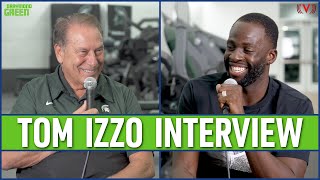
In this episode of the Draymond Green Show, Draymond Green sits down with Michigan State head coach Tom Izzo to reflect on their long‑standing personal and professional relationship and the evolution of the Michigan State basketball program. Izzo recounts his unconventional path from graduate assistant to head coach, the importance of in‑state recruiting, and the cultural impact of his "home‑grown" philosophy. The conversation moves through Izzo’s early challenges, his mentorship of players like Draymond, and the program’s rise to national prominence, including the 2000 national championship and multiple Big Ten titles. They discuss Izzo’s recent rejuvenation after a period of doubt, his thoughts on retirement, and how the recent NIL era and transfer portal have altered college basketball dynamics. Both express concern for student‑athletes navigating money, free‑agency, and academic continuity, while emphasizing the need for mentorship, leadership, and preserving the integrity of the sport. The interview ends with mutual gratitude, a reaffirmation of their bond, and a shared commitment to continue building Michigan State’s legacy.
Chapters
What's up everybody? It's Draymond Green. Make sure you subscribe to the Volumes YouTube channel below so you don't miss any more of this great content going forward. What's up everybody? Welcome back to the Draymond Green Show. As you can see, I'm in the same place that I was in last week. This is part 2 of our Michigan State series. What brought me back here to Michigan State was obviously the Hall of Fame, but whether the Hall of Fame happened or not, I was coming back anyway. Last year, Travis Walton and Austin Thornton started an incredible thing here at Michigan State. And it's our Michigan State Grind Week. And what that is, is, you know, we come in for a few days, we bring all the pros back, we bring everybody back. It's a basketball reunion for not only the pros, but guys who played in this program, for men and women that worked in this program. It's an opportunity for all of us to come back. And so I would be here anyway. Nonetheless, the Hall of Fame did happen and it's something that I'm so thankful for. It's such an incredible honor, but I'm excited as hell about this next interview because without this guy, there is no Hall of Fame. Without this guy, there is no podcast that you care about because I would never have the platform that I have. Yeah. And been afforded with if it wasn't for this man sitting to my right, Hall of Famer. And if you, he was a Hall of Famer in my book before he became a Hall of Famer. Nonetheless, he is national champion guy who's led so many kids, young guys, young men like myself to live out their dream. And it's one thing that will stick with me forever. And he would always say to me, I'm living my dream. My only thing that I want for you— I've been successful enough, I've been lucky enough to live my dream. I just want to see you live your dream. And that's such a rare thing because people get ahead and they don't really look out for those behind them. They don't really care to see you grow. They always want to see you grow, but never bigger than them. Yeah. And it's so, it's such the opposite with this guy to my right. He's my coach, but more than the coach, he's a father figure to me. He's a friend to me. And you know, I think that's one thing that stuck with me. As soon as I finished playing, he said, "Hey man, I'm no longer your coach. I can now really, really be your friend." And he stood by that. Times that I would go through, my shit with my team, I'll get in trouble. First person that Bob called, first person that Steve called is this man to my right. I'm honored and it's a pleasure. Coach Izzo, thank you for coming on the show.
Well, Draymond, that is about as well said as you could say it. But it's kind of interesting. I wouldn't be in the Hall of Fame without you. You know, it was you guys, it was Mateen, Players— coaches get credit, coaches get blame, but players play the game, you know? And I've said it a million times. I'm so happy that you remember a couple of those things because it is important to me that you, you get to live your dream because you're going to find out with your own kids, you found out with your own team, you found out with the players you followed here and helped us recruit that sometimes it's almost more fun to watch other people follow in your footsteps and do get to live their dream. And I've said it, you quoted it, I believe it, I think you believe it. Now that you have kids and all the things, you're gonna even see it even more.
Mm-hmm. No doubt. So take, let's go back a little bit. Take me on this journey. You come to Michigan State as a graduate assistant. You work what, 2 or 3 years as a graduate assistant. You leave for Tulsa. That was short-lived. Take me on that journey.
Well, I was, first of all, I came here as a grad assistant at 26, but you're supposed to do that at 22. But I was up in the UP, a little different up there, and I couldn't get out of there. So I kept begging Judd and I said, I'll come as a GA. He said, you're overqualified. I said, I just want a chance. And so I was a 3-year GA. As you know, they're 2-year GAs, so it took me a little longer. That's why I believe in process. But I did, and I was about to get out of it. I was going to take a job at Michigan Tech University, Division II school up in the UP. I was out of money, didn't make any money as a GA, and I got a chance to get a job at the University of Tulsa. I went there for 6 weeks. 6 weeks. And Mike Dean left here, the number one guy, and Judd hired me back. And that's where my journey really started, I guess. You know, I was 30 years old. I had the break of a lifetime, then had another break when Judd retired. And the rest is history.
History it is. History it is. For you, when you took over the program, Judd had had success. Judd had Magic, obviously you were a part of that. And then the success kind of tell spike, it went down a little bit. Then Smitty came in and Smitty brought the program back to relevance.
Yes.
But lost in the Elite Eight. And then you take over the program where it's not in the best space. What was it for you that helped you turn that corner and ultimately build what we know Michigan State is today?
Well, you know, it's funny 'cause when I came back from Tulsa, I went down to Detroit. They didn't recruit the state very much. And here I'm from the UP, you know, and not a very diverse area. And yet basketball, as we know, is a higher percentage of African American players and kids from the inner city. So I went down there to look at a kid named Eric Wilson who ended up a 7-footer, went to Minnesota. And I saw this skinny little guy over there and it was Steve Smith. I came back, I told Jud, I said, hey, there's a guy down there, man. He's 6'4", 5". He's skinny, but he's got great skills. And Jud went down there, he fell in love with Steve. And we recruited Steve. And that was in 1986, right after we lost Scott Skiles, Sam Vincent, Kevin Wills. Really good players, all pros, but we didn't have great teams. And back when, you know, listening to you and Mateen talk, leadership is a big key, you know? And you don't have leadership, you don't have anything. You know, likership doesn't make it. It's leadership that makes it. It's not what everybody likes you. And that's why it's been so much fun to watch your career. Battle with a few teammates, battle with a few coaches. Me and you had some incredible timeouts. And yet, man, I always knew the same thing you guys talked about. Winning was important to you. And so when I took the job over, got Steve Smith when I was an assistant, and it just made me realize how important the state is. And then the Fab Five came a little while after that at Michigan. And I just said, when I get this job, I'm gonna win with, with heart. In-state players. You got to put a fence around your area, you know, and our area was that I could get kids up as freshmen and sophomores. I could get them to football games, you know, I could get to see them more often. So I thought being within this 3, 4-hour radius was very important. And believe it or not, 90% of my career, that's what I've done. And then, you know, when I went to Flint to look at Morris Peterson, he wasn't ranked in the top 200. Mm-hmm. Antonio Smith. He had brothers that played football. He wasn't really ranked, but I thought I had to get my feet in. And those guys, especially Antonio, brought toughness. Plus, I knew his best friend was Mateen. So I was recruiting for the future, not the present. And then when we landed him, you know, it really started to take off. And then Flint, and then Saginaw, you know, as your guy Jay Rich and yourself, and we had other guys and— We missed in on a few guys, but it was special. And you know what I mean? Think about Mo's mother. She was insane. Your mom, she was insane, you know? But they were like all in. I got a saying around here. There's no such thing as being half pregnant.
Yeah.
Okay. Well, I love guys that are all in, and you guys were, your families were. It didn't mean that we didn't have problems. And that's what I've— I listen to you guys talk about me, but I listen to you guys too. And I don't think anybody realizes that I wouldn't be half as good. I fought with Mateen morning, noon, and night. So it was easier dealing with you because I fought with him morning, noon, and night. And yet I did promise him we'd win a championship. And we stood on that floor and we said we did it. And he's right. Nobody believed it. Then you came along. You think about leaders. You had Magic Johnson in the late '70s, then you had Steve Smith in the late '80s. Okay? And then you had the, you know, really the Cleaves in the late '90s. And then you in the late, you know, Travis Walton and you. We always had a running mate, guys did. It was you and Trav in the 2009, '10, '11s, you know? And then Denzel did a pretty good job for us.
He did.
So, you know, you look at it, but— It's scary 'cause of all those years, I can only name 4 or 5 guys. That's how special you guys are and how few there are of you that are good enough to be respected but strong enough to use your platform.
No doubt. No doubt. I appreciate that. For you, by the way, Coach keeps saying the UP. For you non-Michiganders, that's the Upper Peninsula of Michigan.
Yeah.
For you, a Hooper, to become who you've become and be like, there's Coach K, there's Roy Williams, there's Dean Smith, there's legends and there's you with those legends. How does that feel? Like I haven't reached the pinnacle of what I do, So few people get to really reach the pinnacle, the top, the very top of what they do. And you've done that, Mr. March, all the magic that you've created in March. How does that feel like to just be one of them guys?
Well, it feels humbling and it feels, I appreciate that It wouldn't have been done without you guys. You know, I am not stupid. I mean, you last in this 'cause you're not dumb. And better players make you a better coach. So I know Steve Kerr thinks that because we've had many talks about you. And better players doesn't always mean the greatest player. It means the greatest winner. You know, when they came calling about you, "Oh, he's too small. Oh, he's too this. Oh, he doesn't shoot it well enough." Oh, he don't— I— You know what? I hate to tell you this. I said, "You're right." You're right. You're right. No, he's not great. You're right. Not a great defender on, uh, with, with quickness. You're right. Well then what does he do? Why should I draft him? He wins. I said, as a freshman, he didn't play a ton. And by the end, he was leading us to a Final Four because in winning time, he played. And in winning time, he played. I'll never forget one of my favorite games with you. We went to Gonzaga, and Judd Heathcote lived there. And he said, why are you playing in the kennel? Why don't you play downtown? Nobody wins in the kennel. And you remember, it was crazy.
Absolutely.
And I think you had 36. You hit about 5 threes. You did so many things. And we won by a couple. And you have always done what it takes to win. We make tapes of this guy. On setting screens, on getting rebounds, on playing offside defense. Does all the little things, you know, not Steph Curry shooting 100 threes, not Klay Thompson, not Kevin Durant, not LeBron James doing what they do. It's called the dirty work. But dirty work, if you're a coach, are the guys that win for you. And that's why so many great players haven't won 4, NBA championships, you know, and, and if a ref would have made a good call, you would have won a national championship. That is a fact. I got the— I, I got the fucking tape, and I don't say that much on TV, so sorry, but whatever. But I do. And, uh, you know, he hits you in the arm with 6 seconds left. We're down 1. We lose the game, and we would have beat Duke that year.
For sure.
In the championship game, and you would have had your national championship there. You would've had your one at the Warriors, you would've had the one in the Olympics. But yours is gonna be complete when you get in the Hall of Fame, not Michigan State's, but the national one. That's around the corner after a few more championships.
Yes, sir. Yes, sir. No, I appreciate it. And obviously that's the goal that I am chasing. Number one, you look, you look,— as great as I've seen you look in 10 years. Like you just look like you're not stressed anymore. You look like you're rejuvenated. You look happy, which makes me happy. 'Cause I worry about you sometimes. I know how much shit you take on. And there was a period 4 or 5 years ago where they also tried to leave you for dead.
Yep.
And they tried to write you off and lump you into something that had absolutely nothing to do with you. And one of the things that I love and respect about you is no matter what, whether it's your shit, whether it's my shit, whether it's someone else's shit that they just try to throw on you because you are the big name, because you Tom Izzo, you stand 10 toes down and you stood 10 toes down. And you still here and you made it through that. But what did going through that do for you coming out on the other side? I know it was hell going through it for you, but coming out on the other side of it, what did going through what you went through do for you and got you in the place that you're in today?
Well, it's something I very seldom talk about, but with you, I'm talking about it. It was one of the hardest things I ever went through, and it was hard for some of the people that went through some of the things they had to go through. But never been in that position before. And I did what you guys— I hear you guys talking about. I believed in myself. I knew what I had. I knew there were very few. Thank God for some of you that— some of my best friends, some of my best friends in the media. I mean, they throw me to the wolves, and I resented that. It's why I have a greater appreciation for what you guys do every day. But I hung in there and I believed in what I thought was right, and I did the best I could. And it wasn't easy. There was no blueprint for it. But I did hang in there and went through even a tough time. We won 3 Big Ten championships, went to a Final Four. But even when you had your jersey retired, you remember your whole team came back, your coaches, your owner. And we embarrassed ourselves against Duke. And you came into my office. At about 11:30 that night after my meeting and sat down and said, you know, you told me some things you didn't think I was doing right. And, you know, people will never appreciate that because I'm the old man, you're the young kid, and we're supposed to be able to tell you what you do wrong. But I think— I'm not your coach no more. Definitely. I am your friend. You treat me like a friend. I hope I treat you like a friend. If I think you're doing something that's going to hurt you, I think I got the courage to tell you that night in one of my toughest losses at home in the history of my program, I mean, you went at me a little bit. And one of the things, you know, we got to get younger, we got to do this, we got to do that. And as you noticed, I listened and I feel comfortable about that. And I listened and I, you know, learned to listen. Listen to learn is what we use around here. And I think I did listen to learn, and I appreciate it. And that's why I know that the Youse, the Cleaveses, the Smiths, there's certain guys, not a million of them, a lot of good guys that I love, not a million guys will tell me what I don't want to hear. I don't think there's a million guys anymore that tell players what they don't want to hear. And, uh, but when you do it, That's real love. That is real love.
Absolutely. When I speak of rejuvenation, I think it's showing on your face, but where it's definitely showing is in the recruiting classes that you started to pull in again. And I think, to me, I think that's because you're just all, you're back all in. Like you've teetered with retirement Mm-hmm. For a few years.
Mm-hmm.
Now I don't hear you talk about it at all anymore.
Mm-hmm.
Do you think that's been the key into you getting back on the recruiting trail and bringing in the classes now that we're bringing in? Like we're starting to bring in top 10 classes again.
Mm-hmm.
Do you contribute some of that to your rejuvenation and just feeling like, no, I'm in this thing. Like I don't even ask you anymore, Coach, how much longer you gonna do it?
Right.
Because I feel like at this point now you're just gonna do it till you die. Don't you die on us. I need you. So like how has that really had—
did that play a part? I think it was the '18 season when we had Draymond and Miles and we really had a good team. I mean, we were 30, 31 and 4 or 5. I mean, we had a good team and we were playing the first round in Detroit, but it was also the time of my darkest moments when I was going through those things that our whole university and everybody was going through. And that game ended. We got beat by Syracuse by 1, and the game ended. I thought that team was good enough to win a national championship. And I kind of felt relieved. I didn't have to go to another press conference. I didn't have to answer things. And I lived with that for a while. Then I thought, "What a wimp, you know? Like, what am I doing?" You know? And that started the process, you know? And then, you know, A lot of nights we had talks, and, you know, Mattina and I had talks, and you just kind of realize— and I love what you guys were talking about when I heard you— is that only certain kind of people are built for certain kind of things.
Absolutely.
And I do think I'm one of those guys that want to take on problems and help out and make others better. You know, he said, "Great players make other players better." I don't think great players do. I think those are the elite players. Great players play great, but elite players make other guys that aren't that good better. That's what I watch you do. You know, everybody, you know, how many times you score over 10 points? But the consistency and the way you, you know, I always joke with people and I told Steph this at your wedding that, um, You know, the linemen, the great running backs, they always buy the linemen a Rolex or something when they have a 1,000-yard season, you know. Those guys better buy you something. But a number of screens and a number of passes you set that lead to their baskets, they better buy you a house 'cause they make more money than those running backs.
They do. A lot more money than the running backs. So now that I did say that, how much longer do you want to coach?
You know, I know one thing I'm not gonna do. I've watched some guys stay a year or two too long, you know? I'm not into anything but the day that I feel like I don't want to take red eyes, I don't want to go out recruiting, I don't want to have meetings in my office like some of the ones we had, I'm gone. I mean, I— And if I'm not, I know you'll tell me. I know Mo will tell me. I know Steve. You know, I got some guys that'll tell me, "It's time." You know, but you are right. I am rejuvenated. I, you know, right now the campus, it's electric right now. You know, Mel has done an excellent job. We're putting $70 million into football. We just put a bunch into hockey. We got cranes in the sky again. We got students walking, you know, 2 years of COVID 2 and a half years, we had nobody walking around. I got an office with windows in it so I can, watch people walking. There was nobody walking. So I'm like energized by that, you know. I love the students, I love the, the place, and we have 650,000 living alums. And yet we have guys like you that bring pride, you know. Heard Mo talk about Matt, you know, and Matt calls, he says, I'm going to get all the guys from the championship team, we're going to go watch Draymond Green. You know, I came out, my wife and I, for the first two games and had fun out there. And then we went to Boston and you know, the Boston Garden, my first time there, all the things you hear about it. And I watched my guy win a championship on their floor.
Absolutely.
That was special. And then he spent time with us after the next morning, you know, and we were with all of our guys. It was all your Michigan State guys, all my Michigan State guys. And that like revives you. I mean, that energizes you. You can keep winning championships. Time for us to win another one. Spend a little bit of that next contract money when you get it and fly out to that game that night. And that would be utopia for me.
Absolutely. And before we get outta here, 'cause we have a weekend to get back to, There's been a big change in college sports. Athletes are now being paid for their likeness. I, being someone who was really pushing for that, I still don't think it's what it should be. Like, okay, we're allowing people to make money off their likeness now. I think it's still time to pay the athletes. You're providing a service, you're bringing millions of dollars into these places. And then the NCAA, they just grab it. And I wanna know how have you had to adjust as a coach? Like these guys are making real money now. Like I was talking to Travis yesterday, I walked in and I was just standing there looking at AJ. I said, Trav, this dude got money now.
Yeah.
Like I saw AJ took a vacation to Jamaica. That's incredible. Like how have you had to change some of the, some of the ways that you coach now, because when you add into money, that's a different thing.
Yeah.
When you give someone money, it changes things. How have you seen things change in the profession?
Well, first of all, let me say this. I do agree with you. I wish they would've come up with some kind of stipend, some kind of better thing. I'm all in favor of the name, image, and likeness. So if you're worth something that you can do, to pay a player without contracts, without, you know, the ability that— I mean, you can't be a free agent every year.
Absolutely not.
These guys are free agents every semester.
Mm-hmm.
And so that creates some problems. So what I call it is this, and someday me and you are gonna sit down off the air, and then we'll go back on the air, but— and just talk about it, you know, what— are the unintended consequences of these things. This year there were over 450 college basketball players that put their name in the portal and don't have a place to go. 400 of those are probably African American kids now who are not gonna get an education. So there are more things to this whole thing. Can we do a better job taking care of the players? 100%. Can we figure out ways that— Yes. Like my thing, a coach leaves, okay, this and that. But, but to be a free agent every year, if they were paying them, then there should be contracts.
Mm-hmm.
And contracts mean you don't get to leave every year.
Absolutely.
So there's gotta be some work done on this, Dray. And maybe guys like you have a platform, but I think if you saw both sides, I just worry about, are we really helping educate these kids? 4 years we've had guys go to 4 different schools now. They're not graduating. You can't do that. I mean, you know, when you transfer from one school to the other, a lot of credits don't transfer.
Curriculum changes.
Changes. And then I'm going to hit you with this one because I really believe it. You have the most unique team in basketball, and I think you're a big reason. I remember the Kevin Durant thing. I remember you almost recruiting him. I know what you did. But Steph, Klay, Draymond, Iggy, even Looney now, Steve, Bob, you're talking 7, 8 to 10, 12 years. Where does that happen?
It doesn't. It doesn't.
Well, think about college and this reunion you're at this weekend. Where would most of those kids go? I brought back Corey Lucious, who left after 2 years. You helped me during his troubled times and he didn't listen to us. And he'd be the first to tell you, but he's back because I brought him back. How many coaches are going to be there long enough? So where are these guys going to go when they leave and have 3 different schools? There's unintended consequences. And I think me and you would be great to sit down and talk, and you'd be great to talk to the NCAA. There's so many things we got to do a better job with.
Mm-hmm.
But let's make sure that we understand that these kids are losing out too.
Absolutely.
You know, you, after your freshman year, now you might have said goodbye. Gone for sure. And you turned out okay.
Absolutely.
And you did a lot for this university, and this university does some things for you, but you did a lot for this place. And you gotta admit, giving makes you feel good.
100%.
That's why I do. So I just worry about where it's headed. And that's something that maybe, maybe that'd be you and I, that'd be a good thing for you and I to, 'cause I'm got enough power in the, not that we have any power as coaches, you have as a player, maybe we can get the two sides together and really do what you and Mo talked about, helping other kids get to where they want to go. Yeah. The right way.
100%. I love and appreciate that answer because I think when speaking of the transfer program, I worry about that and I don't worry about it because I do think, I do think, you know, there are situations where kids should be able to transfer. You have the hardship thing that you just have. If a coach leaves, I think kids should be able to transfer.
I'm for that too.
But the portal thing is a little tricky because like you said, when you can throw your name in there every year. I talked about it in my press conference yesterday before the Hall of Fame ceremony. We won a game at Ohio State my freshman year. It's a big deal. They were really good. We were going on a roll. We were destroying everybody that year. We won the most games in the road games in the Big Ten. We won the Big Ten by the largest margin in Big Ten history that year. I'm not sure if that still stands, but it was at that time. And I got on a bus after that game. I didn't play. I'm pissed off at you about that 'cause I just heard something last night that said I'm tied for the most games played. And if you played me that game, I'd be ahead. So, but I didn't play. I love it. I didn't play that game. And I called my mom crying. And I said, "Ma, I gotta get the fuck outta here." I didn't say that because my mom would slap me. I said, "Ma, I gotta get outta here." And she told me, "Yeah, what's going on?" It's like, I didn't play. Like, what do you mean what's going on? We just had a game, I didn't play. She's like, "Oh, okay. So how you feel?" "Ma, I didn't play." Like, "Okay." I need to get outta here. She said, "Well, you made your bed, you gotta lay in it." Click. Whoa.
Yeah, but that doesn't happen anymore, Draymond.
And that, but I, when I think about that, I think about how different my life would be if I did leave right then. Like all the things that's happened for me in my life, how great you've been in my life, how great this university has been in my life. I still think this is, the best decision I ever made in my life was to come here because it set me up for the rest of my life. I met my wife here and I think about if I had transferred, how that would have turned out for me. It wouldn't have turned out the same. So I do worry about that portal a little bit for sure.
Yeah. And then the portal turns into they just, free agent it and look for the best deals. And you know what? When you're 18, 19, the best deals, I mean, you gotta get nurtured yet. You're a grown man now. You've made decisions. You can make decisions. At 18, I made bad decisions. You made bad decisions. I mean, we all made bad decisions.
Absolutely.
And that's why you either gotta have great parents or parents hand their kids off to the coach.— if you've had 3 or 4 different coaches, and I agree with you, by the way, 100%, if the coach leaves, the players should be able to leave and be eligible immediately. But I think of how many guys weren't happy as freshmen. Hell, I was a Division II player, was unhappy as a freshman. Because you all scored a bunch of points. That's why you got recruited by schools. And almost nobody does that in college. You ain't going to average 22 points a game in college.
Absolutely not.
Nobody does that. So, they're all unhappy. And now you got more people pecking on them to leave, and this and that. It's really hard on the kids. I think Mel told me— I think there's like 800 football players don't have a home. And that doesn't include the people, Dray, that put their name in the portal. They don't even have to talk to the coach anymore. And then they end up going to a school that's less than the one they thought they'd go to, 'cause nobody was really recruiting them, you know?
Mm-hmm.
Or they go to a school And then don't play hardly at all. And they were playing 35 minutes a game at the other. You know, I just worry about it. I mean, I'm gonna stick with this. I'm gonna try to stay out of the portal. It's gonna probably get me. 'Cause I'm gonna believe in the guys that I recruit.
Absolutely.
And I'm gonna be homegrown. I'm gonna stick with them. And you know what? You weren't a star when you got to the Warriors.
Nope.
Some people stuck with you and They're damn happy they did. And whenever you have one of your bad times and they call, it always ends up with, "Yeah, but boy, we wouldn't win without him." [LAUGHTER] I mean, it always ends up with that. So I'm giving it away to those guys that call me because you are special. And I don't say that— you have toughness, you have leadership, you're not afraid of your voice. And maybe the most important thing and anything you do in your life, winning is important to you. When you're transferring around, when you're looking at just money, and you're— especially you're 18, winning is not the most important thing. You're making decisions because, "I get a little more NIL money there. I'm making a decision because somebody promised me something there." It's not the same, man. I worry about— I said this, I'm gonna survive.
Mm-hmm.
I worry about the guys. And some people have said, you know, you really do. I really do. And I can say that honestly. So I don't like everything about it. I think we've got to make some adjustments. But I think it's going to take people like you and me, a player that maybe doesn't see it exactly like I do, to talk about it instead of these people at the NCAA and people that aren't involved in the baseball stuff that are making the decisions. That's what I struggle with. Government. Whether it be administrators, come on down to the basement with me and then make the same decision, I don't think they'd make it.
Absolutely. I agree 100%. Coach, I can sit here and ask you a million questions. I can sit here and talk to you for hours as we do often. But the reality is we got a program to continue to get better. So we're gonna get back out here with our recruits, with our family, enjoy this weekend. But I wanna thank you and not for sitting down and doing this. I wanna thank you for everything that you've done in my life, for taking an 18-year-old kid from Saginaw that thought I had the answers and showing me how to become a man. And then once I thought I was a man, still continuing to show me, hey man, just because you're 22 years old now and you're making a little money, you're still not a man. And continuing to guide me. Mm-hmm. In my life. Being a father figure to myself, so many other guys, being a close friend that I can call when everything is going wrong and I feel like my life is erupting and everything is just chaos. Being the guy I can call for getting on a flight to come see me 6 hours away for 4 hours and coming back. That stuff doesn't go unnoticed. I appreciate it. Thank you. I turn around and I look at this like none of this happens for me without you. And I'm so thankful to have you in my life. It's one of my biggest bragging points in the NBA. Your coach ain't fucking like my coach. Your coach will never be like my coach. I love telling guys that. But the reason I love saying it is because I know I can say it and I can make every argument, every valid point. Mm-hmm. To show a guy that it's true. And the reality is most guys don't argue because there aren't many guys like you. You're so different. I thank you. I love you. I would do anything for you. I'll give my right arm for you.
Well, let me close this part for me by not just saying ditto, but it's not a love fest. It's not like we've had more arguments than love fest. Respect and appreciation. And, uh, I know I wouldn't be here without some of you guys. There's 4 or 5 of you, and let's face it, Smitty started some of it for me, and then Mo, and then you, and Trav, and, you know, and the beat goes on, and a lot of other great players. But, you know, as coaches, we look for difference makers. You're a difference maker. You're a difference maker in the league. You're a difference maker when you argue with Charles and what you do there. And I call him and I laugh, and it always ends up the same, whether I talk to Steve or Bob or Charles or somebody else. Everybody can have one opinion, and at the end of the comment, it is, "God, you gotta love that kid, huh? God, that guy's done so much for you, right?" I said, "So I'm in my 60s and you were in your 20s." Or you're in your 30s now, but I still learn from you. I want to learn more from you. I do want to talk to you about how we can make college basketball better. I do want to talk to you about what we can do around here to make it better. We got some years left, both of us.
Absolutely.
So I love you. I love your family. I appreciate you. And even your mom. Remember now, she said that freshman year or sophomore year, she was mad at me all the time. And— I came in and told you, you gotta get your mom off Twitter, man. She's killing me. And yet on senior night, she gave me a plaque that I keep in my office in my house. That was the most endearing plaque. And I love your mom. You know, I mean, it just, it's a family affair and I appreciate you, brother. And I, I wouldn't still be here if it wasn't for you. I mean that. Mo's done a lot for me, but you kind of carry this torch, and you carry it because how you are in the NBA— everybody laughs that I want to coach guys that are tough, and it's a football team on hardwood, they used to call my teams. You're still doing it, man. You're in your 30s, you're still doing it, and you're winning championships.
Yes, sir.
And you got some more to win.
Absolutely.
But I got another one to win.
That's good.
So let's do it together.
No doubt. I love you, coach.
Thanks, man.
Appreciate you. That's a wrap. Michigan State, this Draymond Green show. Up. Peace.
More from Draymond


Draymond Green on Brandin Podziemski Extension, Darius Acuff Interaction, & Weird Rudy Gobert Talk


"I Was Waiting for You All Game!" | Deni Avdija & Draymond Green Recall Iconic On-Court Moment

Deni Avdija on Becoming an NBA All-Star, Playing In NBA Playoffs & Hilarious Draymond Green Story


Draymond Green on Warriors Preseason, NBA Push-Off Rule, & LeBron's Fanatics Helicopter Deal


"Awful Representation" — Draymond Green Sounds Off on Dalton Knecht's Lakers Purgatory

Draymond Green Explains How Micah Nori Handled Damian Lillard & Ja Morant Lineup Controversy Wrong

Draymond Green Exposes How Contract Drama Destroys Locker Rooms After Jalen Duren Re-Signs