Moses Moody on What He's Learned From Steph Curry, Draymond Green, and Klay Thompson
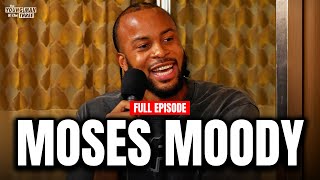
Moses Moody talks about learning from Curry, Green, and Thompson on the Warriors, his path from Little Rock to the NBA in one college year, and what he's picked up about footwork, defense, and why professionalism matters.
What was your first step?
Experience. Gotta be one of them practices. Like, he do the thing that he be doing in the game when he just take over and go crazy. Well, imagine it like in practice when, like, he just. He just do it all the time. But one of my first times, I ripped him. And, you know, I'm a rookie. I'm just coming in, so I'm feeling good about it. And it's like, in that, like, I just felt everybody in the room kind of like, oh, like, he don't know.
Welcome to the Vegas edition of the Young man, the three. As always, presented by our friends at wondering media and 342productions, this one has been a long time coming. Moses Moody. What's up, dude?
What's going on? Glad to be here.
How you doing, man?
All good.
How's the. How's the trip been so far?
Cool. I just got in yesterday, so. Saw a little basketball. Saw my man Ryan Nemhardt go and go off yesterday. It's been good.
I have to say, based off the. The playoff run his brother had, I don't think people were like. The fact that he did that in game one, I don't think people were that surprised. I feel like people were a little bit like, how did this dude get to this place where he was not picked?
Yeah, because it's similar to his brother's story. Like, you know, he could have won. She should have been in the mix a lot more than he was early on, and it worked out for him. But I went to. Ryan was on that team in my bird with me.
Yeah.
So I've been seeing him for years.
Was he the. Were you guys. Same year, or was he young?
He was. He was younger than me.
How big was. Because I don't know. I know Drew. I don't know. Ryan, how big was he at that point?
He was smaller than he is now, so I'm not sure exactly how tall.
He is, but, yeah, he's like 5' 11. Like, 5' 10. 511 now.
Yeah.
One thing I wanted to hit early because we all been talking about this. Couldn't you let the sort of audience know a little bit about your. About poetry, spoken word, your interest in this medium? Because I watched a clip. I watched a clip of you at an open mic in sf that was super dope. I'm not gonna. You can describe it. Like, I'm not gonna describe it, but it feels like this is something that you've been interested in a while.
In.
In for a while. And so I'm just kind of curious, like how it even became a thing for you.
Yeah, so I learned about poetry like everybody else when you in school and talking about Shakespeare and all of that. And I. I wouldn't. That didn't really get my attention. So I even say now like I really don't like poetry like that. But my dad does these speeches and with talk to like at risk youth, grown ups in the penitentiary, all of that. So he's doing one of his talks and he puts up a video about. It was a. It was a poem called I can't read. And it was a dude saying like I can dribble the ball, I can shoot a three pointer, but I can't read. But she just keep on passing me. But it. So it was a different. It was different than I've ever seen before. It wasn't rap, it was more. But it was still more urban. It was cool to look at the. The flow was different. So after that I just started watching all of the Deaf Poetry jam videos. So that's why I saw like my man Black Ice and everybody that go on there. And then I just like to watch it. And then I had an assignment for school where we. They gave us like you could write a paper, you could do something, something, something or you can make a poem. I said I try. I like watching them anyways. And I did it. Everybody loved it. And I never did it again until I had another assignment my senior year. And that was my senior speech that a lot of people have seen. And then, then another opportunity came last year. So.
So are you. Are you in your spare time? Are you writing? Are you thinking about it? Or is it one of those things where it's kind of like it just comes to you every once in a while and you just hit it and then it's like not a part of your life.
Yeah, whenever I got a reason to write, I'll do it. I like to do it then and then other than that, like I'll hear something, I see something to be like. And that sounds smooth. Like that could go somewhere and I jot it down in my notes. Or I might be on a plane. You know, we fly a lot. So I might just sit there and make. Put something together while I'm in the free time. But I won't finish it until I have a reason to. So I got a bunch of partially finished.
Who are your. Who. Who is the best pen? If you were to like a ranking. But like not. It could be artists, it could be poets, it could be whatever in terms of Just like, pure pensmanship.
Okay, we're gonna start with Gil Scott Aaron.
It's a good way. That's a good one to start.
Yeah, that's the. The first. The first poet, spoken word. I'm. I like. I like Buddy Guy a lot now. He's a blues singer. That's. So if you saw the movie Centers. Oh, yeah, the movie. Yeah. And that was my first time hearing about him since then. So I've just got in the blues and all that. But I've been on him heavy, and I just like what he's talking about.
So you did. You didn't know. You didn't know Buddy Guy before Sinners?
No, I didn't.
What was your. I feel like everybody loved the movie, but what was your takeaway when you. When you first saw it? What was your sort of, like, initial thought after watching?
I loved it. So I actually went to the premiere with Ryan Coogler in Oakland.
Oh, it's amazing.
Yeah. So I was that cool experience. He's a cool dude. It was. But I like that, for one, I'm from Arkansas, and it was done in Mississippi, and the girl was from Arkansas and all of that. So it was cool. Close to home. But I really like that it was a movie placed in that time period with all of the. Like, they were like. There was on a plantation and all of that. All of that going on. But it wasn't about that.
Yeah.
Like, it wasn't about racism. It wasn't about. So it was cool just watching a movie in that timeline, that's not sad. It's not, like, hard to watch. So that was the reality.
It's not a tearjerker.
Right.
It's. There's action happening.
It's cool. It's. I mean, it's kind of happy, but, you know, it's funny stuff going on. They playing the music.
The music is crazy.
Yeah, it was.
Music is, like, across the board, like, every different. And he. I think that Ryan. All his movies are like that in different ways. Like. Like, even thinking about, like, Creed. Like, Creed. The whole soundtrack is total. It's a totally different sound from Sinners, but it's also so well thought out.
Yeah.
And I feel, like, that energy. That's interesting, though. That's a good way. I wonder how many people got into Buddy because of that.
Yeah. Yeah, it got me because I've been listening to that one song that they had on there. I didn't. I didn't tell you the truth because the truth hurts. So I lied to you. Like, when you Say that part. I've been listening to that song ever since.
Do you think you'll go like on the road? You'll go to any like. Like blues clubs or anything like that now?
Yeah, I definitely would. I actually went to a jazz concert in the Bay and it was a tribute to Gil Scott Aaron.
Oh, that's cool.
So they played all. He like recreated all the music and stuff. It was cool.
That's cool. I feel like that's at New Orleans. If you guys have time in New Orleans. That's the thing.
Yeah. Yeah.
This is interesting because it's. The whole city has that vibe. So it's literally just like, you don't need to go to the club. You just like people are just playing it outside their house.
That's real. And even like in the. In. In the arena, they got all type of history on the. On the pictures and stuff. And everybody around. It just seemed like they singing you a blues song when they talk to you just in their voice, in their culture.
So when you were growing up, you were in the. Were you in the city in Little Rock or were you outside?
Yeah, in the Little. Yeah.
What was the. The basketball scene like?
So, like, I was the dude. I was always playing. So I'm going to Canis park playing outside. It's Hoopers everywhere, though. Like, especially then. Cause I wasn't even the best player in the city. Like, I wasn't like. It wasn't obvious that I was going to the NBA when I was younger. Yeah. So I was just always hoping, always playing. It's good though. It's a lot of Hoopers there.
There's four guys in the league now. Well, I know Isaiah. I just saw Isaiah. We just saw him in okc.
Yeah. So they from Arkansas, but they're not from Little Rock.
Okay. So Isaiah's not from Little Rock.
Isaiah's from Fort Smith. Jalen Williams from Fort Smith. Yeah. And then like Malik Monk, Austin Reeves, all those guys.
Is there like in state rivalry with the different places or like, what's the. Because I have no sense of like how, like even. Just how big it is in terms of. If it's like. Like, did you. Did you see the guys from different towns growing up? Did you play with them or was it like.
Yeah, so I've been playing against Jay Will, even though he's from Support Smith, like two, three hours away.
Yeah.
From the Rock. So it's not like we right here playing each other all the time. But I just randomly played against Jay Will team, like since I was in like, fourth grade. And I didn't know that I was him. Once we got older, I didn't realize I was the dude I used to play against all the time because he got a lot bigger and all that. And then Isaiah Joe played on the team with my big brother. So, like, I was seeing Nigel Joe every weekend, even though they from three hours away. But so, no, it's not. I don't feel like robbery against those who back home. It's really like, man, it's cool. Like, I knew you when we was kids. Nick Smith, he from. He from close to Little Rock, North Little Rock, Silver Hills, and that's right across the water. Khalil Ware, all of those guys.
I feel like everyone also from the state has their own type of swagger, even though they're, like, different. Like. Like Austin is. Austin's very different from, you know, you or from Isaiah or whoever. But it's like he has a. He still has, like, to him.
Yeah.
Like, he's a guy that is, like, he's just kind of. He has that confidence, and I feel like that just comes with the state.
Yeah. I mean, he. He play like he played outside. Like, it's like, dudes that ain't that we. Ain't we not from la. We don't got the lights, the camera. From a young age to where you just hooping. Nobody's watching you. Not. You're not ever going to see this footage ever again. Anybody recording it. So I think it's something that just comes with that. That's just, like, cool about it for you guys. Do.
Did you guys do au or was it like. So. Because I was. I was talking to Isaiah about it because he goes back. He said he goes back there during the summers to work out and everything like that. And he was sort of saying the same thing of, like, he thought one of his advantages was, like, he wasn't in the mix so much. Like, he felt like he got to, like, find his, like, find his game down there where nobody was. Like, you didn't have all the politics that comes with, like, you're in L. A. You're in, you know, whatever city that, like, there's a lot of. There's a lot of stuff going on.
Yeah. Yeah. Especially for him. His city is smaller than Little Rock, and so it's. So. It's crazy. Oh, you was asking about the rivals, and so it's a minute ago, but I will say my. I beat. I beat Jalen and. Jalen and Isaiah both in the state championship. When I was in 10th grade. So we was both in the seven day championship and we beat him. So it ain't no rivalry. But I'm gonna go, I'm point that out. Yeah, you make sure.
Don't forget to mention that.
Yeah, yeah, but, yeah, so. But now those my guys.
How'd you, how'd you end up at Mount Verde?
So after that year we won a championship. I was the MVP of the state championship and all of that. And then it's kind of like when I, when I say this too, I'm not advocating that everybody should go play, go to go to prep school because it's not for most people. But at that point it was really like, what? It's not much left in the city for me. Just keep trying to win the state championship, keep trying to win MVP again, like. And then outside of basketball, last two years, like it ain't much to do. Like we got, we got everything. We got the movie theaters, the skating rink and all of that type of stuff, but it ain't much to do. So when you around 11, 12th grade, a bunch of teenagers with nothing to do. Bad stuff happened. Yeah. So I think it was good that I left around that time and kind of got exposed to the world.
You started to have that sense of like, okay, there's a future in this, in this sport for me and I need to, I need to make sure that I'm not either around bad influences. But then also like when you look at the guys on that team that you go to play, you go, Cade was already there. He come at the same time. Yeah, we went to Scotty.
Scotty came my senior year. But me and Kay came together.
Day Ron, like you're playing. I mean, that's the NBA. It's an NBA roster.
Yeah.
So it's like that's the, that's the other part of it which is like, you can't get that most places.
Yeah. And that's practice and Coach Boyle. Crazy. So we was playing full court one on one on game day.
Why do you think I actually. I don't know. We talked about this this much on the show. I was thinking this at the draft because I saw him briefly at the draft because he was with all those guys, like Cooper and all them. Why is he. What makes him so good? Because when you look at his. If you like, people talk about Coach Cal all the time, but if you look at Bo's, at the people that played there, and I met him when Kyrie, Kyrie played in Jersey with him. That's when I first Met him and like, he. His roster is like a NBA hall of Fame. It's not even like. It's like, oh, there's a couple hits. It's like, you just go down the list, and it's like, Cooper's the latest one. But there's so many of them.
I mean, like I said, Boyle crazy. So. And he. He love. He love what he doing. And, like, you can't go have a conversation with him without it being about basketball. And if you try to, he's gonna bring it back to basketball in some way. So where for somebody that love what they do and thinking about it that much, they got no choice but to be good. He gonna. Like. If I see him in the cafeteria at the school, nothing to do with basketball, he gonna have like, no. Like, we had to draft in the lobby. He, my mama there, my grandma, everybody there. He got my mama and my grandma like, on the corner and saying like, okay, so if you go right here, and then you come off a curl right here, then the player work like this. But it's just. That's how his mind work. Everywhere you go, you gonna turn into a cone in a drill or something. So. And then two, he don't wanna do nothing else. Like, he not doing this to get to college, get to the NBA. Like, no, he's doing exactly what he wanna do. So it's cool to see somebody that found what they love, and then you got no choice but to be good at it. When you.
I think that is a really. Because he probably has had a million chances to go coach wherever, and he's never been. He's never. He's never done it. Like, he just is like, this is in. It's so interesting to just kind of make that choice and just stick with it and then just be the question. I would like if, like, if he came on the show, I'd be like, at a certain point, talk about winning everything. Like, you just. There's not much else to like. And. But that gets back to your point about. That's just love of the game. That's just being like, I don't. It doesn't matter whether we win the national championship or not.
It's like, no, he want to win the championship. He got no. No if, ands or buts about it.
Was Arkansas always the spot for. For college?
No, it wasn't. And, like, when I got. When I was younger, like, everybody used to always say, like, oh, he's going to Arkansas for sure. No question. That kind of made me be like, nah, I'M maybe not going to Arkansas. I don't know. And then Muscleman got the job my senior year of high school, so. So it was a new coach. It was a lot of uncertainty. And I like Juwan Howard in Michigan a lot. I liked Ohio State, they call it. And my man EJ was there. So it was a lot of uncertainty going into it.
There's always the gift and the curse of being around, like, family, all your people. When you're focusing on a level like that. Obviously you guys had a lot of success, you know, going to lead eight and everything like that. But was the experience overall something that you like? Looking back on it, you're glad you went?
Yeah, yeah, for sure. Okay. So if you think about it, like, everybody that went to Montver pretty much went back to the school closer to home.
Interesting. They were like, that's my college and I'm gonna go back home.
That's kind of what it was like, we leaving at 15, 16 years old and, like, you just. You not around your people every day. So that was a big part of what made me want to go back home.
Yeah.
And I'm glad I did it the way I did. Because, like, you look back now with, like, guys in the NBA. Cause when you in that time, it's like, oh, I gotta. I wanna go to the best school that offered me. But when the best school is not really offering you as much now you can really think about it and like, okay, where will I be the best at? Where will I play the best at? And a lot of the guys that try to go to the best school that offer them realize that they ain't really need you like that, and they ain't really care that much about you. But when you go home. For me, going home was that to where it's like. It's like being from Little Rock, where you figuring it out and the cameras ain't there. It ain't all of the lights and all that to where you get to really be your best self at a young age. And I think that's important.
At what point were you. Was. Was leaving after year one? The thought, like, when did you start to think about it?
I didn't know that I was going to do that until, like, going, like, halfway through the year going into the tournament, because I wasn't. I didn't know for sure going into. Going into college that I was going to know.
Like, were there people telling you you should go? Like, what was the process behind when you actually decided to leave?
Once I realized I could and it was pretty decided.
It was like a realistic thing.
Yeah.
What was. What was draft night like?
It was cool. So all my people was here. I got a big family, so everybody didn't come, but a lot of. A lot of people share.
My friends in the city or were you at home?
We was in New York. New York. Yeah. So everybody was during COVID so. But it was the year after when they actually had to draft. And it was everything, you know, everything I could have imagined. You see the draft every year, so being able to be there with my. Just the people sitting there at the table, my family, and getting up, walking across the stage, it was everything.
What do you think when you're. When you're here now, you know, and you're. And you're talking to you at the games, you're just hanging with sort of the. The guys who were in that position. What do you wish that you knew at that point that you sort of, like, tell them now in terms of just like, mental and physical preparation for.
What they're getting into going into the NBA?
Yeah.
I think when you first get drafted, like, for marketing purposes, and like, everybody tell you, like, okay, what do you like? You like, this, this, and this is what we need to promote, or I need to give you this, this advice on this and that. But, like, these kids is 18, 19 years old, and they don't know what they, like, they don't know who they want to be around. They don't know who their friends is. They don't know none of that. So I think putting more emphasis on, like, slowing down and figuring yourself out is really important, because you don't know where you're going if you don't know what you. What you don't know yourself. You don't know who you are. So I think that's a big thing. And then on the basketball side, I would say, like, the details matter.
Yeah.
Like I said, when you playing, when you're growing up on them outside courts, ain't nobody recording, ain't nobody watching, so you ain't playing defense. Your team might get mad, but that's it. Yeah, but like, when you get to the NBA, everybody watching every single thing that you doing, so paying attention and making sure, like, the details.
When you get to the Bay on the details point, because it's a super interesting point. I feel like that's been a thing, you know, you have. You have to fill so many different roles for this particular team. And so for you to do that, especially with, like, a good team of, you know, A championship level team and a deep team with a bunch of players. Like, for you to be on the court, details have to matter. When did you first figure that, like, were there. Was that some of that just watching Dre, watching Steph, watching some of the older guys? Or was that a specific coach? Or like, how did you sort of come to that realization?
A lot of it was just like sitting on that bench. Like, hey, that's therapeutic. Sitting over there. Just like, you gotta, why am I not in the game? Like, and then I realized that it would be a lot of stuff that. Did nobody say when I did it? Like, I messed up, I didn't get over. I didn't come over on defense or whatever it was. And then nobody say nothing. So I'm thinking, ain't nobody noticed. Yeah, but no, everybody noticed. They just said like, okay, we're not gonna put him in right there. He can't. He can't. He's not good at that spot or that rotation. But. But I'm like, well, if y' all would have told me, somebody would. Told me, then I would have done it better. But. So that's me thinking. I'm thinking I'm slick getting away with stuff that I'm not. So I think that that realization was like, okay, I need to figure everything out.
It isn't interesting. And, you know, you can only speak to your experience, but like the, the experience of a, of a rookie or a second year guy coming into a team like this team versus when you go to a team with a bunch of other young players, where you get the chance, you get the leash to figure everything out versus here. Like, you know, there's the. The expectation is to win a championship. And so they. And they're coming off of, you know, they're coming off one of the great runs ever in sports. And so you have that sense of like, you know, you have to. You have to figure it out for yourself. Like, we're not going to hold your hand through it. But that does become like a little bit of a personal. It's like a personal realization to get to that point.
Yeah, I think whatever situation you come into is a good situation first off, because if you don't, if you're not. If you're not in a good team and y' all, and you playing well, you playing. So you get to go figure it out on the court. You get like those reps, that experience and all of that. If you're not playing well, you don't got to go figure it out in front of Everybody. You get to figure it out in practice and all that. So when you get the opportunity to play, you're more prepared. So just like anything in life, like, whatever your situation is, it's your situation. So. So going to figure it out is the fun part.
What was your first step experience? Like? Like, not saying. Not him saying hi. Like, your first. Like, oh, yeah, this is Steph.
Yeah. First one. Well, my first time meeting him, he came to my workout and, like, before I was even on the team, and I just seen him over there, and it was like, man, that's. That's crazy. Like, I'm really. I'm in. I'm here. Like, this. This is NBA now, but gotta be one of them practices. Like, he do the thing that he be doing in the game when he just take over and go crazy. Well, imagine it like in practice when, like, he just. He just do it all the time. But one of my first times, I ripped him. And, you know, I'm a rookie. I'm just coming in, so I'm feeling good about it. And it's like, in that, like, I just. I just felt everybody in the room kind of like, oh, like. Like. Like he don't know. And then, like, then step. Do what step do and go. Go crazy and all that. And I'm like, okay. That feeling was right. I knew what I felt. Everybody knew what was better.
He doesn't. Like, he's not talking. He just does it.
Like, is he not. He talked too, though. He don't. He not loud. He don't talk crazy. But.
Yeah, but he'll let you know.
Yeah, but he. But he, like, he's so good that, like, when he's talking, it's like he helping you almost. Like, he just playing. Like, he not. He don't talk a lot. It's not in a conniving type of way. It's genuine. It's like. But yeah, he's like, wishing the best.
For you future endeavors.
Yeah. Yeah.
What about Dre? Because I think that he's a such a unique force in NBA history. Obviously, you know, one of the smartest players ever and one of the most, like, just kind of instinctually gifted players ever. Being around him that first year, like, what'd you learn from him?
Yeah, my first time talking to Jay Dre was in a summertime before I got drafted. I was at Rich House and was in. Was just in his man cave, and I was just chilling with Rich, and Draymond randomly walked in the door. So that was cool to just sit up and Have a conversation with him then. And I got drafted, and he was the first one to hit me after I got drafted. But I used to go, especially my rookie year, I used to go to Dre room on the hotel, was in the. On the road all the time and just sit there and talk to him and ask questions. Just because he's so smart, so observant, and he'd been here for a while. So he's just. So he's able to. He's really good with words.
Yeah.
So he's able to put thoughts into words and explain them to you in a way that you understand really well. So I learned. I still go and hang out with him and learn all type of stuff.
It is amazing with him. I mean, he def. He definitely talks. So, like, there's no question about that. But when he decides it's why I'll be so good at TV stuff, whenever he does, or I guess he's doing it now a little bit, but like, whenever he does it for real is. He's so technical and how he can break stuff down and it's just natural. Like, he doesn't need to be. He doesn't need to study it for two hours. Like, he'll just watch a clip and.
He'Ll just go, yeah, yeah. And it's a lot of stuff that I think go into it, but one is the confidence to do it. You know, a lot of people understand it, but then don't nobody. A lot of people don't feel the comfortability to do it. And the next one is a lot of people understand it, but can't put it in words. He's able to do that, and then he's got the resume to have the confidence and everything too. So it just worked out for him.
When you look at your. When you look at sort of your journey so far, it's like you've had to mention, like, a. Playing a lot of different roles, but even, you know, the NBA is a positionless league, but you've had to, like, fill a lot of positions on the offensively and defensively on this particular team. It's obviously a thing he's had to do his own version of as well. What do you feel like you personally. Like, what are your. Your kind of like, your. Your standing? Like, no matter where I'm at on the court, like, I'm doing this. Like, what's the thing you sort of think about in terms of like, this is my. This is my mental prep, no matter what role I'm being asked to fill.
Yeah, I'm always shooting, so that's the reason I always stay on the floor. So I'm always going to do that. And then defense has been, like, especially this last year, I really figured some stuff out to where I can affect the ball. So those are two simplified versions. But other than that, I can get into the weeds, which is about, like, footwork and bringing the ball up and protecting the ball and making plays and all of that.
Is there something. Is there something in the weeds that you feel like you've cracked in the last year, that you feel like you're. That you can say that you feel like you're particularly proud of?
Yeah, I forgot. Y' all get on the weed. Get in the weeds here. Okay. Okay. So footwork. And that's, like, when I. Talking about ball handling is part of it, but just really the importance of footwork and, like, not even thinking about the ball as much. So if we squared up right here, and I want to go right. Well, my left foot stepping past your back foot, there's nothing you can do once I. Once I. Once I get there. And if I can't get there, then that means that you jumped all the way over there, so I'll go the other way. But it's, like, just simplifying. And at first, I was thinking I got to cross you over and I got to shift you this way so I can get that way. But when thinking about it, it steps completely changed stuff for me.
Was that a film realization? Was that an end game? Where did you come to this?
So last year, working with Dash Athletics, he was sitting there. He was trying to, like, get me to understand that for a while through the workouts, but I was recording every workout, so I had my man. Like, when I was. As I was working out, like, every drill, everything I was doing, he was recording it. And then after the fact, I would go home and watch all of my drills and stuff, and some. Some reps felt better than others, and I didn't know why. And it didn't really crack to me until me and Dash started watching some Kobe footage, and Kobe was doing exactly what he was talking about. And then I went back and watched my footage, and I realized that thing, that simplicity of that one step without those steps and being purposeful with my feet, and that. That opened it up.
Do you remember which.
What.
What stage? Kobe. It was like, where. Where he was in his career at that point.
It was old. It was probably, like. It was probably. It was after Shaq, so.
Yeah.
Yeah. It was like, during that stretch when it was him, Powers or Derek Fisher.
I had a deep A defense question because I read this thing, I read this thing about you earlier. I gotta find. Basically, like when you were in sixth grade, your AU coach would give you a dollar if you took a charge.
Yeah, yeah, yeah.
So does that happen?
Yeah. Coach Marlin. Yeah. He would do the whole team, whoever take a charge or get a dollar. So once I heard that. I'm trying to get a charge every play. Yeah. I need, I'm trying to get some, some skittles in the machine after the game.
How'd you, how many did you end up with, you remember?
A lot. A lot. He. He might even stop doing it because I was racking around enough. Yeah. And then when I got to high school, my trainer Jimmy, he did it with the high school team and said like, whoever got the most charges, which he'll take him out to dinner, like a steak dinner and stuff after the season. And I won that too. So if I got a reason, I'll do it.
I mean, the other person I wanted to. To ask you about from like a, A veteran standpoint who, you know, just got there, but it's another know really smart dude is Jimmy. You guys have different games in a lot of ways, but like, he's somebody that like, is so precise and clearly knows as knows how to maximize every part of his footwork, every part of his body in every way. Are there things you've picked up from him even in this short amount of time?
Yeah, yeah. And I think it's similar to that footwork thing that I was just explaining. Like, he does it to a T. Steph does it to a T too. But like, Steph dribbles more so you can't because he takes more steps because he got the ball in his hand. But Jimmy would sit there and hold the ball and everybody played like one on one with like, you got three dribbles.
Yeah.
Or whatever. Well, I'm not saying that he does it, but Jimmy play acts like he's playing one on one. He only got three steps. So like the precision with those steps and where you putting your foot is like how he thinks about how he, how he plays. Like watching him. And he's aggressive because I'm not taking two steps to going around you. One step can get you. Get me through you. So like that was the big thing for him. And it's easy to watch. It's harder to watch it with stealth because he's dribbling more and he doing more. Jimmy is like, no, he's looking at your feet and he's stepping past you.
Well, it's interesting. And he's. He's a big guy, and he knows how to use his body. But it does feel like in all these playoff runs that he's had over the years, it's like the game just slows down to him.
Yeah.
Like, I think about that the. A couple years ago when they made the finals run in that Boston series, before he really messed up his. Before he really messed up his ankle, he was doing exactly what you're saying of, like, they knew what he was. They knew where he was going. They knew exactly what he was going to do. And he basically just like, precisely got to a spot every time, and it was basically just like midi layup or foul, and they couldn't do anything about it. It was like the Milwaukee series and the Boston series were kind of both like that. And I feel like that. I mean, my question, I guess, would be like. Like, you. I mean, you're shooting more. You know, you're not gonna. You're not necessarily gonna, like, emulate all parts of this, but, like, when you're building up that confidence yourself, is that just reps? Is that a thing where you're being like, oh, I'm with this guy on the court, I can. I feel like it is. It's allowing me to, you know, kind of emulate that more. Like, how are you. How do you bring that to. To yourself, besides just kind of repping it out?
I think reps is part of it, because once you understand it, you gotta figure it out and put it in your own blueprint. But once you realize what the guys are doing now, I can see that Steph does the same thing that Jimmy does. Then I see that Shay does the same thing that Steph does. Now I see the D book does the same thing. And it's like, okay, I'm onto something. I know I'm right. Now that I see today, everybody, because it's all from Kobe, and then Jordan did it, too, and it's like. But once you see it now, you just gotta get comfortable with it, I think. And that's kind of where I'm at.
Did you have an opponent? Everyone does the welcome to the NBA thing, so it doesn't have to be like your first year, but, like, did you have an opponent where they did something where it was like. Like this, and you were. You kind of were just like, I want to steal this, because you were just blown away by it.
So I say Kyrie. Like, he didn't do, like one specific thing. But, I mean, every time we play, it's just like, for one, like, I ain't gonna act hard. Like, it's Kyrie. Like, I've been watching Kyrie for the longest.
Yeah.
But then just the way that he play, it's like the same stuff that I'm talking about this Steph and Jimmy and all them. The guys do. He's doing it, but he just make it look good, like when he. When he do it. So as you sit there and play, it's just. It's just cool to watch.
It's. It's funny this to control. It's like the.
Cause I thought. I thought, I thought you see Kyrie do all of the crazy moves and everything. So you think he dribbles a lot more than he does. But no, that dude is good at moving. He's. He's good at movement. He's not. It's not even about the ball handling.
It's like him and Shay. Shay, the other one you mentioned. But it's also like Shay also just his pace. And just as if you cannot knock him off, no matter what you do, you could be way bigger than him. You're not knocking off stride regardless, because.
Because he's not playing like, he can put the ball down and do the same stuff that he's doing. Like, it's about where he's. You. I can watch him do it. He's stepping where he wants to go. Cut him off. He'll bump you and shoot it.
When you're thinking about shooting in particular, you know, you obviously been blessed to. To play with Steph, to play with Clay. Are there other guys around the league currently right now? From a. Just a pure. A shooting standpoint that you look at and you're like, these are the people that I. You know, I wanted. I want to figure out how to pull things from.
So a big thing that I learned about shooting from being with Stephen Clay is that there's only so much you can learn about being like. Learn from somebody else. Like, I sat there and watched Clay do workouts after practice every day. And then I had a different. I stopped and I started watching Steph, and it's like that mess up my shot sometimes when I go and start trying to make my form look like his, look like his. But there's something about. I've taken something from Clay, I've taken something from Steph and then implemented towards my game. So that's a bit. That was a big thing. That's the big thing. That I learned about. Learning about shooting. But other guys that I like. I like Dame because I worked out with his trainer, and I like a lot of the stuff that he was talking about for shot preparation. I like, what was the shot.
What was the shot preparation stuff? The. His base.
Yeah. So part of it is like stepping into the shot, and you don't have to step into the shot when you're off the line, but just that whole what you're doing before the ball touches your hand matters and getting your momentum going forward, slash up. I don't like to say forward because you're not jumping forward. You're jumping straight up and down. But sometimes you go a little bit forward.
Yeah.
And so working out with my guy Lane from the warriors before the season really helped me understand, like, when you're moving, coming off the screens, like, being able to stop and go up and down is like, can completely changes you as a shooter and find that rhythm. And that made me watch Steph and Clay from a different realm, like, seeing what they be doing, because they be doing that, but I didn't know that they was doing that. And, yeah, it's cool.
We're gonna wrap in a second. But I kind of wanted to close. Getting back to sort of what we were talking about before, about the. Just, like, the advice to the younger guys and everything like that. I'm always curious with guys in your position now that you've. You know, you've been through some of the wars. Not all the wars, but you've been through some of the wars when your advice about just being a good professional, you've been blessed to have teammates like that, like we've talked about. But are there. Are there particular things that you're sort of, like, finding for yourself in real time that you, you know, almost like, if you were to do, like, this is my manual. Like, temples of, like, what you pass on are there. Are there particularly consistencies that you feel like all good pros have in common?
I think, like, simplicity is important. So, like, you should know. You should not know why you're doing something. And that goes from the step stuff that we're talking about, like, with feet in basketball, like, each step is being purposeful. Well, that same thing goes for big stuff. And so I think understanding why you're doing everything that you're doing is, well, probably the. One of the biggest things that I would say from a professionalism standpoint, because then, too, you're not doing a bunch of stuff for no reason. So now you got energy to put into the right stuff, you're not wasting it. And that's not just basketball. That's outside of this. Like why am I going to going to this meeting with somebody that has nothing to do with anything that I'm trying to do? Like maybe you can learn something and that might be the purpose. But other than that, why am I going to hang out with somebody I don't really even like that person that much? So just thinking about stuff and knowing why you're doing everything you're doing.
Can we talk for a second about Moses Moody weekend? Can you explain backstory of it, how it came to be, what it means to you?
Yeah. So really it's my foundation, Motivate one foundation. And I'm really figuring it out. So I've been meeting with people in the city that kind of just give me advice. But where it really started was like, I'm from Little Rock. I did everything there growing up. I was a kid. We don't got an NBA team. So whenever you see a professional athlete, it's same thing as seeing Michael Jordan for real. So like now that that's a platform, kids is gonna listen. What can I tell them? How can I help them? And first off, I just wanted to have some fun with it. So that's why I do the camps and bring other players back home and let them see em, just giving them that access and exposure. But as I do those camps, I realized like for one, I can only get like 150 kids to 200 kids in there. So that's all the kids that get the experience. And then I can't really break down and teach you that much about basketball. Cause there's too many people. So what are we really doing here? And that was cool. It's still cool. It's an experience. They want to hang around, they want to come play basketball with me and whoever I bring. So that's still enough worth it to do it. But I really want to have an impact. So the next thing I figured out to do was this youth summit and we partnered with a group called Trades for Life. So we got the kids out there learning how to lay brick, change tires, cut hair. Just different trades just to have in your pocket so you useful in the world in some way. You got something. And then we also bring people like that do jobs that are close to basketball. So many people like stop playing basketball whenever they got to stop and now they got to go figure out life completely different. But it's so many things. It's one pivot away from being on the court, if it's an agent, if it's working for an agency, if it's a photographer, if it's a chef, it's a stylist. There's so many different things that you can do.
So, Moses Moody, thank you for the time. See you soon. Stay cool.
Enjoy.
More from Moses
Moses Moody on funny Steph Curry stories, playing defense with Draymond Green & Warriors Finals run