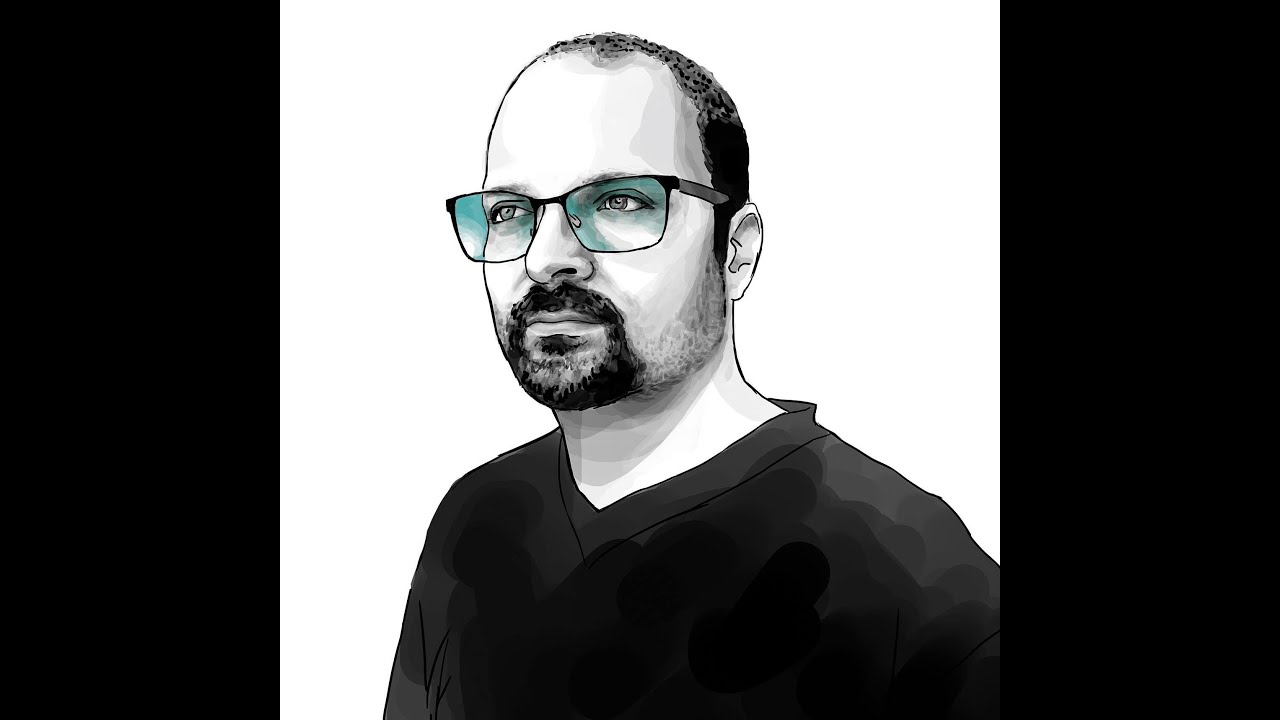
In this interview, Bret Warshawsky discusses his lived experience with bipolar disorder, which he frames as an "archetypal experience" rather than a disease. He explains how a pivotal encounter with Vishen Lakhiani’s Mindvalley teachings in 2010 sparked a shift toward building a relationship with his own DNA and essential self. Bret recounts his ambitious creative‑philanthropic project—a screenplay and a festival concept that would merge Hollywood‑scale filmmaking with regenerative city building—to channel his bipolar energy into purposeful action. A later meeting with motivational speaker Lisa Nichols inspired him to write a chapter for her book, prompting a brief foray into mental‑health entrepreneurship that he later abandoned as misaligned with his artistic self. He critiques the psychiatric practice of labeling and pathologizing mental illness, arguing that such categorization reduces nuanced experiences to limiting boxes. Central to his current stability is a disciplined practice of self‑inquiry and meditation, drawing on Ramana Maharshi’s teachings, which he describes as the key to “curing” bipolar by integrating the positive aspects of depression (reflection) and psychosis (inspiration). Bret positions himself not as a traditional healer but as a creative innovator who shares his story to inspire others, emphasizing that witnessing his journey can offer hope and a model for living with bipolar as a cultivated relationship rather than a condition to be eradicated.
Chapters
Yeah, okay. So you talked about your bipolar disease or state or whatever.
Experience, I call it.
Experience, exactly. Is this something that you healed or that can be healed, or do you build a relationship to it so that you deal with it more consciously, or how do you treat it? How are you today? How are you dealing with this?
I think you just cracked the code for me by the way you asked the question, so thank you.
Okay.
Well, you— I think you put it in a word that I, I've been trying to say, which is quite simple but I've never said, which I think the answer to your question is building a relationship with my archetype, with my DNA, with my, with my essential self. Um, so, um, I had a tagline called trans— I called it I had a turnaround in 2011. I saw a guy speaking on a video from a company called Mindvalley. Do you know the digital publishing company called Mindvalley by any chance? Online?
No.
There's this young guy named Vishen Lakhiani. He was a Malaysian guy who went to school in America and he started a company for digital publishing, like self-growth and things like that, to keep it simple. And I saw him speak on a video in 2010, and he was talking about something he called the 6 Steps to Awesomeness. I should be able to rattle them off, but I'll come back to you with them. And then he was talking about that idea of the 5 closest people to you sort of define who you are, or are a reflection of who you are, that old adage or whatever.
Mm-hmm.
And at that point, I was coming out of a little bit of a funk when I saw that. I was probably, I guess, 35 at the time or so, 37. And when I heard him say the 5 friends thing, I was like, wait a second. Like, my mom, my dad, my sister, and my 2 childhood best friends who don't even really talk to me anymore anyway. Like, those are the 5 closest people to me, really. Which is not negative or positive per se, but that's my reflection. And this guy was talking about something he was going to do. He was putting on a festival called Awesomeness Fest for changemakers and things like that. And I basically— so I went to Costa Rica to this event. And I actually created these USB business cards. You know, you can get like business cards that have a USB stick in them, and you can make a fancy graphic. So I'd been writing a screenplay for 2 years, from 2008 to 2010, and coming up with this idea about kind of like philanthropy meets a Hollywood production-level movie meets Live Aid. And the awareness and the resources that you generate from that thing goes to like a whole systems philanthropic use of the resources instead of just trying to fix cancer by creating more chemotherapy, you know, or, you know, fix climate change by doing stupid stuff. Like, we're not fixing the issues, we're fixing the symptoms.
Right.
So like that, this money raised and the resources, and we build regenerative cities as film sets. Instead of spending $500 million for X-Men on all that stuff, you could spend the $500 million on building and investing in free energy devices and aquaponics to build the set that you're going to use, and then you leave behind that.
Wow!
Technically, with the right people and that much resources, you can still make a kick-ass, entertaining movie, like with X-Men and everything. It's just, but how are we using our resources?
Yeah.
Now we can become like really deliberate and really mindful and creative and like ingenious about weaving all these things together. I don't need to lose the entertainment, but I'm like, but the $500 million, the only thing left behind from X-Men is a DVD, video games, t-shirts, you know, game characters, and a great movie. I'm not going to say that. And you know, that's— but that's not enough for me. Now there are some movies like Star Wars, Forrest Gump, Schindler's List that actually to me were worth $500 million because of what they actually left behind. Their DNA is so important or, or myth, myth-level making that that is a good investment. But most, you know, 99.999% of films that's— that have a budget of $200 million or more are not leaving behind that kind of legacy.
Yeah.
And that's, that's not cool from a conscious co-creation perspective. So I was working on a screenplay those 2 years after I had finally gone back to school after many years in this up-and-down thing. And so I went to this conference and I put my screenplay on this business card and I was just going to hand them out and see if I— which was a big risk for me. And my screenplay was crazy. It was about the Middle East and a guy who calls himself the Messiah and puts on a 7-day music festival. So I've been trying to manifest this from the imaginal realm since like 2008 of what I'm really—
That's amazing.
heading for. So the first thing I did to make it real was write a screenplay about a fake character who's got billions of dollars and puts on a concert and claims he's the leader of the new movement or whatever. So I went to this festival, and the moral of the story is no one responded to the screenplay thing. That was a complete whatever, non sequitur. But when I was there, I met a woman named Lisa Nichols, who's a famous like Chicken Soup for the Soul, like Jack Canfield, you know, like that crowd. This is who Vishen usually runs with, like these monetize your passion people. Like, I'm not really into them now. Like, I've seen them for who they are in a way that's good, but then there's too much stuff I don't resonate with. But at the time, Lisa Nichols is like an inspired speaker and writer, you know, empowerment. But when she spoke, when she spoke at that festival, I actually felt like It was something I had never experienced in person. Like, I'd read books about people that I appreciated or make me want to go do something. And I've been to concerts where like the, the artists and the musicians uplift me and I'm like, yeah, like this is like, it affects me. But this was the first person time I heard like a single kind of motivational speaker. And I was like, I need to change. Like, I want to change. I want to do something, you know?
Mm-hmm.
And she was putting together You know, they put together those co-authored books where you actually pay to be in it. So it's like a marketing tool for you to kind of create, to leverage into like a business kind of thing. So she was putting together a book called Unbreakable Spirit about people who overcome something. So I started thinking, wow, my story of this bipolar history thing is really important. Just the story, like for me and for other people, but mostly, you know, for me. So I wrote this little chapter in her book, and I thought I was going to kind of become like this entrepreneurial, social entrepreneurial kind of guy with mental health and try to go speak in schools and write books and get interviewed, et cetera, et cetera. And number one, I realized that wasn't my path as far as monetizing my passion. It was too focused on marketing, and I had to have a team of people. And I was basically trying to create a business rather than expressing myself, like what I wanted to do. I would have needed a team because it wasn't my role to create a business and do all the bootstrapping of that. Then I wasn't being my artist self. But more importantly, I wasn't ready. I had called it Transforming Mental Illness into a Blessing. So that's why I'm bringing it all back to your question. When I set out with that in 2011, my chapter was called Transforming Mental Illness into a Blessing, with the subtitle Passion Is the Gateway Drug, to play on marijuana. In the US, they always say marijuana is the gateway drug. So I made it Passion Is the Gateway Drug. But I wasn't healed or healing enough at that time to be of service really to anybody. It was really, looking back, the start of my hero's journey with that whole thing because there was so much to process from the 10 years previously. It was more of a recognition point than a final point. And at the moment, I probably thought it was more of a final point, like, yay. So the last 7 years is more to answer your question about, is it curable? Is it building a relationship? So the last 7 years, at some point, I changed it, first of all, to transforming perceived mental illness into a blessing, not just mental illness. labeling things mental illness is a pathological thing to do. It's not necessary. It's not accurate. It's not helpful. It's not empowering. There's no need to pathologize someone because they have a diverse set of experiences, even if it's like other people's. Classifying things is great because you want to know how you can help people. So it's important to know, like, this person locks the door 150 times before they leave the house. This person's depressed. And this person is like has racing thoughts. Like, it's great to categorize things to know how to help them, but obviously in mainstream society, the map becomes a territory and then we're all fucked because then it's just this lazy use of language and we start collapsing all of the nuances into just words. And then you get put into there in that box and then you get medicated and then you're sick for life and that's the end of the story. So at this moment, I believe I've built a relationship with myself. In that sense, bipolar— the bipolar experience can be cured. I do see it as, like I said, an archetypal— it's kind of like an archetypal thing to me. It's like that's kind of your— it's in your nature. So it's important for me to honor and acknowledge, like, my experience in the past has been up and down. That's really the essence of bipolar, what they call the mental illness, that you're cycling between lows and highs, etc. And then there's many symptoms that come along with the lows and highs. But anyway, that was long-winded. Thank you for listening. We can talk more now or later about it, but it's about building a relationship, accepting yourself, self-love, self-acceptance for me.
Yeah.
And then building a lifestyle around that archetype, really, and creating a culture around yourself and through yourself. And then, yes, by far, way less of this, way less of the spectrum, of the super high or super low. It's been more condensed.
Yeah.
And then the beauty is that I can access the positive qualities of what people call psychosis or suicidal depression. And the positive is depression is integration. Depression is reflection. Depression— I mean, that's it. It's integration, reflection. Keep it simple. And psychosis is inspiration, expansiveness, access to the spectrum of consciousness, etc. And if you can detach yourself from being in the opera and the drama of that and observe it— that's why Some form of meditation, self-inquiry is the key to curing bipolar, I would say. So I would say that the cure to bipolar is— I've always said I've been a professional self-inquirer because I got sick when I was 19 and I dropped out.
Mm-hmm.
Rather than spiritual, even though I identify with spirituality, I like that old-fashioned philosophical know thyself or self-inquiry. You know, like Ramana Maharshi was my hero. Like, when I started asking, who am I, obsessively, that was my yoga. Like, I latched on to that question, like, at some early stage in my 20s, and I've basically been working with that ever since, other than a couple years ago it shifted a little bit. I finally got an answer for myself, which was another question, but that was really important. So now I have a different relationship with that inquiry itself.
Wow.
And I'm working to stabilize more in that witness sort of non-dual, whatever, neutral, like to just be more stabilized in that. I think that's what helps me be more here. But as a performer and artist, like, it's like I can access— I still have some of the same thoughts go by and feelings I did when I was, you know, considered psychotic or depressed. It's just that now it's like I can choose if I want to follow that for some reason, or I want to explore it for some reason, or I want to use it. As like a creative impulse or something like that. So yeah, thanks for asking that. The way you put it really just helped me figure out, kind of have a new little bit of a different framework. And I am approaching much more clear now to being able to help people in some way. I don't think I'm a traditional healer, like I'm gonna sit with the one-on-one. It's something else. It's more about creativity and innovation.
Yeah.
And just walking the path is something that can heal people. If they see what you're doing, then they hear your story, and then they're like, oh, it's possible.
Mm-hmm.
Most people— you won't meet many people like me that were in the psychiatric ward against their will 7 times and medicated and then come back from that to be able to speak about it. It's quite a weird thing. I mean, it's a niche thing to sort of be an expert in psychosis. And mental illness. But yeah, that was my path. And, and 6 months before it all happened, I said to my friend, how will I know genius if I don't know insanity? So I called that, I called that shit in. And apparently I was going to do a PhD in it. I didn't want to just do it once or twice. I was very interested in understanding this thing.
Amazing. Wow. Really beautifully said and explained. So clear. And I mean, as long as you find your way back into the present, you're safe.