1.9.23 Made For Mondays
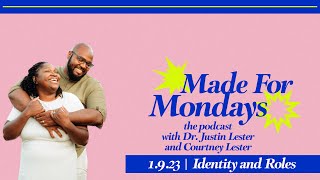
Justin R. Lester and his wife Courtney discuss whether identity comes from your relationship with Christ or the roles you play. They explore generational patterns, share parenting stories, and argue that core identity stays constant even as life circumstances change.
Chapters
Welcome to Made for Mondays. My name is Justin Lester. You're tuned into our podcast. I just want to take some time.
Just to talk about life living, what.
It means to pursue all who we are. I'm a person who's lived life, successes and failures, good things, bad things, whatever that is in between. I'm a dad, I'm a husband, I'm a pastor, I'm a writer, I'm a.
Teacher, I'm a professor.
All those things in between. All I want to do on here is give you suggestions and tips on living. You'll eventually meet my wife on here as well. You'll meet my son on here as well. You'll meet other people and friends and colleagues that I have with all one goal.
We have a story.
God is writing it. Let's do it together. The reason this is called Made for Mondays is I want you to be made for the beginning of your work week. Your workplaces are places of worship. Not to be worshiped, but places of worship. Whatever it is that you're worshiping, whether you're saved or not saved, Christian or non Christian, on this podcast, I want you to see your workplaces as sacred spaces.
The goal of this podcast is to.
Ensure that you are Made for Monday. Mondays. Don't make me, I make that I Mondays, do not deny me of the future. I tell Mondays the future is going to come to me. That's what this podcast is all about. So grab a notepad or don't sit back in your car. Turn it up, turn it down, make us faster, make us slower. Something today is going to be said.
To make you better.
Are you ready?
Get Made for Mondays.
Well, hey, Made for Mondays listeners. Justin here I'm on here to give a shameless plug about.
Well, my book.
I wrote a book called Necessary Endings. This book is simply a book detailing. It's called Some Things need to Die.
For your To Live.
It details four different funerals that I believe you need to have to go on a journey of mental well being and mental success. I pray that you take a moment to go ahead and grab it. You can grab it on my website@jrlester.com or on Amazon. A book that addresses mental health, faith journeys, relationships, friendships, everything in between. Prayerfully, it'll help you be all that you need to be everything God's called you to be. So go ahead, take a copy of Necessary Endings. Some Things need to die for you to live. Available on Amazon or jr lester.com thank you.
And so I wanted to change up the second week of Our. Our time together and actually bring a special guest in to have more conversation, more than we normally do when it's just me talking. But this time, this time around, this year, Courtney, my wife, will be a part of our Made for Mondays crew. So help me welcome Courtney to Made for Mondays again. So today, Courtney's gonna lead the conversation really about. We should be able to explain, and we'll jump into our time together for Made for Mondays.
Well, hey, everybody in the maid for Monday's land. It's an honor to be here. Super excited. So Justin and I have been talking about doing a podcast together for a long time, but it just never kind of got off. That's 100 my fault. He's always willing and ready, but so I thought, I'll come in. We have two different styles because we're. We're a lot alike, but a lot different.
Different.
A lot different.
A lot different. And so we have two different styles. He's very structured, as you know. He's very organized. I can be organized sometimes with things that I really want, but 99% of the time, I'm not. And I really just love having conversation and having hot topics and talking about. I'm really into pop culture. I'm really into really deep thinking and deep thought, especially around Jesus and just, like, our relationship and what does that look like today? So I'm excited to bring you more of a relaxed version of Made for Mondays that's more conversational.
So what was the topic you wanted.
To go over to? So I thought it was interesting to talk about identity. And the reason why this really sparked the interest to me this week is because we both play a lot of roles in life, right? Like, just from work to being parents to being husband and wives. But to the true core, who are we as people, like, individually, like, to the core and to our heart of us, who do God call us to be? Who are we? Who do we are created to be? And what is that true? True essence? And is our identity the roles that we all play, does that make up our identity? Or do we have a tridentity that is, into each of these roles, there's. I don't know. How do you look at it?
I think the root of identity first starts with your relationship with Christ, right? So I think it relationship with Christ speaks to your relationship with yourself. So if we're saying identity first, there's a work I finished reading called the Courage to Be Happy, and it talked about how identity really kind of comes down to love. So what is it? Who is it that you're choosing to love. Right. And identity then is the conscious decision to love. Because I know myself, I'm then loving from who I am and loving into who that other person is. I don't think we actually ever get to a point where we know who we are. Right. We're constantly evolving. At the moment I think we're all like onions. The moment you get to one layer, you're pulling back another layer, you're pulling back a leather layer. But if you're self reliant on the essence of like what God has told you to be. So I think that's the root of identity. Identity is first rooted in who God is, what God, who what God has created, and then you trusting what God has created and over the course of your life evolving into the fullness of what God has created. But if I don't trust God, then I'll never really truly know who I am.
That's powerful. So you're saying like our first foundation of identity is that relationship with Christ, you know, who we are in Christ, you know, like our true identity and.
What we're, what we're doing. And that even goes for the unsafe. Like if you don't know your creator, that goes to anything. Right? So if I don't, if I don't know who made my car, like so if I take my Ford to a Toyota dealership, they can work on it, but they don't, they don't know the car. Right, but they know cars. Yeah, but they don't know my car.
Right.
I think the same thing goes, even.
If you're, they can't tell you, like there's a recall.
Yeah. Like atheists are agnostic. It's like, yeah, you can go and to a life space or be happy or whatever that is, but you'll never truly know who you are until you know the Creator. And the Creator is the one who can give you the answers. And, and I think that it is in knowing and understanding the Creator you can dive into who you are as the creation. Right.
Do you think getting to know our identity is like ever evolving or is it like a destination that like, oh, I know who I am and it's like, you know, this is the promised land of who I am. I know without a doubt. Or is it ever evolving? Right? Like are we evolving?
That's a great question. So I've been reading the story of Moses and Elijah a lot more and those are the two individuals in scripture who died while they were still living. Right. Like they're the Two individuals in scripture. That's what I'm saying. So God took them back to heaven without them actually experiencing death.
Oh yeah, right.
So Elijah and Moses.
There was one more in the Jesus, Enoch.
Enoch as well. So in any Methuselah's father, by the way, read the book of Enoch. A lot of the things we talk about when it comes to Jesus and prophecies are actually book Enoch and Apocrypha. But Moses and Elijah were still alive and they died. Like God showed them the promised land. He showed them the end goal and God took him on home. Right. And I think it speaks a lot to identity. Like when life gets too big for the body, that's when death occurs.
So Moses didn't die?
No, Moses did not die. Moses saw the promised land, God took him on the glory.
He passed.
Only tells Joshua that he passed, but he's. He was Enoch, Moses and Elijah were still alive and they went on the glory. Oh yeah, that's the thing. That's what makes it so interesting. And that's why when it came to the m. Transfiguration, who was there? Right. Moses, Elijah. So anyway, I don't think we ever actually find like it's an ever evolving process. The moment we do find it, God's a great come home.
Right?
And that's the thing about like God that like even I've been wrestling with personally is like the moment we find our essence, when we find ourselves, when we fulfill purpose. Like even look at Jesus. He fulfilled purpose and then the Father brought him home, right? Peter fulfilled purpose, he died. Paul feared purpose, then he died. His goal was to get to the nations, he got to the nation. So I think God is a very peculiar way of the moment we fulfill purpose. It's a moment like death really occurs. And so I don't know if we ever truly find ourselves. I think we're constantly in this quest, the journey of life. And then when we do find it, that's when people can get us confused with God and God brings us home. So I think it's possible to find it, but then death is going to come shortly after. That sounds very morbid, but it's very true.
Once we find our true identity, death.
Because that's when we get confused with Jesus.
That's hope everybody. Your true identity does shortcome, but that's.
When, that's when we get confused with Jesus.
Very true. I think when we get too full of our identity, I think that is when, like you say all the time between funerals, when life gets too big for the body. That's when God tends to take you home.
That's it.
Yeah.
Crazy.
Identity to me is something that I've been thinking about and reflecting. We have a five year old son and Camden, and he's, he's awesome. He's. He's pretty amazing. But as I like in this role as a parent, as a mother and just like even in my job, I really like to look at identity of who I am. Like, like a brand, you know, like how companies like they have their brand and they have like a, a style or like this is just, you can just tell, like even if like it's colors, you just kind of know based on the font, the color, like their brand is like this is what they put out and it kind of doesn't fall from, from there. Like, I remember Chick Fil A, they started doing burgers and some markets and it's like, that's outside of your. Like, you like literally spent your entire career or whatever life of your brand on chicken and then picking out burgers.
Was just like weird.
But so I look at it like that. And so I asked myself, like in tough parenting moments or in tough life moments, like, is this on brand for me? Like, what do I stand for? Like, what, what's my style? What my relentless thing? Who am I to the core, right? Like, who am I as a person, as an individual and then in each role in my life, like, how is that on brand? So like my parenting style. Pretty easygoing person, right? I hate yelling, disciplining, and that's on brand for me. When I like go and I parent, I'm very like, easy. I hate it. I must rather just like, like, come on, like, please don't make me do this to you. Please don't let me take toys away. Please don't. That's like kind of how I am as a person. Just like, come on. Like, I just love seeing like the, the, the rainbow in the clouds. And yeah, I always ask myself, like, whatever I'm doing, is that on brand for me, that kind of keeps me true to who I am and my identity. But again, what you're saying, I really think it is a. Ever evolving because we grow as people, right? And allowing ourselves to grow because who you were in elementary school or even high school or somebody that you're not in your 30s, like you, you should be completely different, right? Like, you know, you might still like the color purple, but there might be tons of different changes and allowing ourselves to do that sometimes though. And what are your thoughts? I don't think we give ourselves permission to grow or grow, but we don't kind of tell the world that we have grown.
No, I. I get that. I think. I get what you're saying. I think the. The difficulty is when the people we desire to celebrate our growth don't see it, right? So I think that's a difference. So it's like there's certain individuals that we see as markers of our growth or success, right? Whether it's parents, friends, loved ones, whatever it is. And if they don't see it, then we don't think, right? So if our parents don't see that you blossomed into whomever you become, then you haven't actually matured. Like, I remember when I went home one time for Christmas, and it was after we just met, and I was studying scripture for fun in the kitchen, 15 minutes when I woke up, 15 minutes after, before I went to bed, and my mom, my sister, like, what are you doing? Right? And it was like, I'm studying scripture. Well, why are you doing that? And it was like, you think it'd be celebrated that you're studying scripture, but especially in a home full of, like, two preachers, right? It's like, oh, he's like, you're starting to be, like, a good thing. And it wasn't right. It was like, why are you doing that? That's. That's foolish. That's crazy. And it was like, I felt. I felt dumb.
I felt down.
I was like, well, now I'm lame. I'm over here studying scripture, and we're here diving into the word of God for fun. And they thought it was. They thought it was lame. But I think it's really the issue with a lot of our growth is the people that we desire to celebrate the growth don't celebrate it. And then now I don't feel that I've grown. I'm down on myself or I'm growing now as a response or as resistance to people because I want them to see it. And so therefore, my growth and all that, so that I'm growing to please my mother, growing to please my father, going to please my friends, going to please those who went to high school with me, instead of actually growing into the person God's called me be, I.
Think that becomes the.
The difficulty, right?
So I think that.
That that's the place. And so then you can't honestly grow because then you're. You're growing as a means to please others instead of growing as a means to. To grab a hold of who you Are And I think that's where a lot of us get not dejected, we get distracted and deterred into different lanes of growth. Because I'm not, I don't know this work. Courage to be happy. He talked about the ending. He said there's a difference between self control and self reliance. So self control looks at like children, right? So when a child throws a temper tantrum, they're controlling their emotions to get something from their parents.
Right.
When a child is a good child, they're controlling their emotions to get something from their parents. That all of our lives is suggested in the book. All of our lives are lived to get something out of our parents. Yeah.
Like all of our lives, right. So like even if you're attention, you.
Are controlling your parents by your emotions.
And then it goes on to college.
It goes on the like with what age you get married, what age by a car, clothes, which type of clothes you wear. Everything is lived to please our parents. And then when our parents die, when our parents move on, our parents don't care anymore. Our parents get into a different relationship, parents focus or when another child is born, now we don't know what to do because our whole lives were lived please our parents. And so that's where they said like we live our lives, majority of our lives is self control. Like we're controlling everything around us. We're constantly our emotions become control. And so then that's why like college becomes just a hellfire because everybody goes to college and like the most, the most attractive people are the ones that control everybody with their emotions. The people who have the most money are controlling people with their money and people with the most athletic prowess are controlling people with their athletic prowess. People with, with the most academic, skilled. And so everything's about control.
Yeah.
And he said the growth comes when you stop being so controlling, designed to control others. Because our whole lives have been taught to control our parents with our emotions we become self reliant. This is who I am and I'm reliant on what my skills are, what God has blessed me to be. To actually fulfill what I know is possible cross compared to using who I am to control others. And without it that's where people get into like nepotism, Right. People get into positions of authority but all they know how to do is control people. Right. And so happiness comes when I'm self reliant and I meet another self reliant person. And together we're relying on the essence of our best selves. And we love that person's Best self. And then you're reliant upon and together. They said that marriage is. Adler said that marriage is like a dance where you're dancing together and you're not finding someone to bring you to destiny, you're dancing together in destiny. And so move from control to reliance to dancing, which, like, growth is that very thing, Right?
Yeah. I like what you said there, too. It's almost sounding like. And what I hear you saying that, like, as we grow in life, that it's never. We really don't know the true essence of who we are. We, like, kind of conform to fit other people's views to get what we want out of life. Right. Like, were conforming, you know, to our. What our parents wanted to do that. I also. With that, though, I'm curious to hear your thoughts. And also I have my own personal thoughts on thinking that that's generational too, right? That's really generational. I actually think, like, the boomers, they were really like, rah, rah, rah, we're about to do their thing. Like, they went outside the mode. I really do. Then that silent generation, which is the next gen actors, which they did, like, I feel like they're more conforming, Right. They don't make too much of a resistance or rah, rah, rah. But as you see and as we go through generations, I think this newer generation, and even Gen Z and Gen Alpha, they are saying like, no, no, like, I'm not conforming. And I think as society, we have a big problem with that because not only is it okay, we learn to conform, to manipulate our parents to get what we want, but we put that and we impose that on other people. Right. Like we manipulate other people. Right. Like somebody said, like, parenting is one big manipulation, right. When they're leaving your child to do what you need them and want them to do. And we, like, impose that on people. And I think it's both. But as we look generationally. And I would love to hear your thoughts on that. Like, I think this newer generation coming up, and I think it's. It started with millennials and just increases more and more of this generation of saying what you say to us is not gonna go just because you said it or just because it's the status quo or just because it makes you feel comfortable like they are standing up. And so what are your thoughts on that?
Yeah, I think Gen Z is actually extremely performing.
If you look at.
Wow. Really?
Yeah. So you look at boomers, builders. So look at the generation for them, right? They were Just like it skips a generation. They're very stale. They got the basic home suburbs. White generations got suburbs. Boomers came along, everybody should get a civil rights movement, women's rights, all of that type of stuff. That's boomers. They start moving, they start marching, they're resistant. Gen X comes along, you got just like the hippie phase, but that's really it. They really kind of chill. You say whatever and then you come along. With Millennials, we're going to like resistant hip hop culture. Well we're not just in 90s, but like we're coming along with the big.com boom. All these dreams, all the here come Gen Z. Gen Z just has the stuff to show off but they're extremely conforming. They do exactly what they, they all do the same thing. It's the same dances, it's the same clothing, it's the same culture.
Everybody is, it's one big mosh bosh.
It's the same. Gen Alpha is the one that's coming a little different. They're like, no, we're going to think this, this non gender identity, this all of like this constant like differences and funniness, all that. Like they're different but it skips a generation. Gen Z is extremely conforming. Everybody dances, thinks the same. Like it was like go against the norm. Everybody in Gen Z went against the norm.
Black lives matter.
Everybody in Gen Z is a black. Asian lives matter. Everybody Gen Z now Jewelizer, Everybody says.
Jewel as like every time you look.
Around, Gen Z is just like, what's.
One place to go?
We're all doing this. We're all reds popular, we're all popular about this. Like our generation was like, no Bush versus Obama, right? Or I forgot who else he was running against. But then here it's like, no, we're all for Biden or we're all for this, we're all for Trump. So Gen Z is very conforming. And you think about all the dances, all the social media. So the moment we got into Kovagency, got on Tick Tock, everybody went on Tick Tock, everybody left Facebook, that's Gen Z. They're very, very conforming. They want, they are told. And this, I mean this is from the research as well. They not just that, but when we talk about if we're getting to the church and I feel the largest group leaving the church is the nuns. The same group.
Explain what that is.
So the nuns are the people who are saying like we have no identity, no faith identity, right? So the largest group leaving is the nuns. 80 something percent of them are Gen Z. One person leaves the church, we're all leaving the church. One person goes back to church, we're all going back to church. We like this preacher. Everybody likes this preacher. We like this person. We don't like this one. They're canceled immediately. And then we need to cancel people. We don't. But when it's like, oh, they said cancel it. Gen Z canceled. So is very conforming. Millennials aren't. We aren't. But Gen Z goes with the flow. Very much so. Right. So Jesus is popular. Jesus is popular now. So Jesus is cool again. You know, Jesus is cool. It was cool to go to traditional churches. Now it's not cool to go to traditional churches. And it's cool again, like, whatever. Gen Z. Gen Z is conforming. Just like boomers and just like.
Sorry.
Just like Gen X and just like builders and just like the generation after, it copies in essence. Because what's happening, if you notice it, our parents are boomers. We copy our parents. Right. We copy your parents. So, like, you copy your parents, not your mentors, but your parents. And so every generation skips because they're just copying our parents, more likely, which two generations back. Wow. And so we're just emulating what our parents did. Their love, their care. They're consistently how they did. So Cam is being raised under millennial parents.
Yeah.
You know, I got on Twitter early. You got on social media early. We got on things where we were innovators, not laggards. So Cam is going to do the very same thing. He's going to be on the phone early. He's going to be engaging with things early. It skips a generation. And so that's very powerful.
I really thought about it like that. No, that's. That's powerful of like being performing and, and doing that and how we manipulate. Well, do you want to have a little fun?
Sure. What's up?
So, you know, I love my games. I love, like my Icebreakers, my little games. I thought to get to the true, like, root of who we are, we could play a little game of this or that.
Okay.
Like game show music. Well, first, I love to ask. This is my absolute favorite question. But if you were. It's not my favorite question. My second favorite question. But if you were a fruit, what.
Fruit would you be? A great question. I only know a couple of fruit.
What just is just. His fruit tasting is very limited. Do you know, like, he just. He ate a strawberry for the first time of us knowing together, like like who. Like who just eats the strawberry in the last 10 years?
Let's see. Are grapes apart. Are fruits of fruit?
Yes, grapes are fruit.
I'll say grapes just because John 15, He removes that which does produce you prudence, and they produce more fruit. You're clean because of the word was already in you. So remain in me, and I remain in you. I don't know.
I think.
I think. I think more of a grape. I don't know. Probably seedless. No, I won't say seedless, because you got to produce something. So a seeded grape on a vine. So I guess I'm more of a vine than a grape.
I said a fruit, not.
I guess if we were going to get into it, probably more of a. Fine.
You're grapes.
I'm. I'm a bunch of grapes. Bunch of seed grapes. Seeded grapes. Table grapes. Well, I don't know now because I don't know if it's a wine grape or a.
Just what type of fruit and why a wine grape?
Well, I don't know if it's a wine grape, cuz like. Or if. But then that's seasonal or regular table grape. That's too easily findable. I'm probably like a Burgundy cabernet grape. Bordeaux great. You know, just like red seated, terrible Cabernet grape.
Okay.
Because it's rare.
If Justin was a fruit, he would be a red seated Cabernet grape from Burgundy in France in the 70s.
That was a good year. It's a good weather here.
I think that. I think the answer to that question really classified true to your identity.
What about you?
You are. If I were to say who I.
Am.
I would say a banana. What is it? A banana. Just regular. Like a. A right. But not too. Right. Like, not the brown. Be brown, because, you know, black does matter, but like. Like a regular banana that you eat. And I said that because I think the bananas, they're so. They're sweet and really sweet, I feel. I try to be. But they're like substance. Right? Like, you can just eat a banana on the go and, like, be okay. Like, you know, it'll keep you for a little bit. It sticks with you. It's. It kind of holds its weight. Yeah, it also is. It's vibrant, but also I was like, it comes with its own case, too. Like, it's like traveling case. It comes very resourceful because it was on, like, a coat jacket. But it's also very protected, too.
Which.
I find very interesting and great. Like, once you just, like, peel back the layers of it. There's, like, so much more there. So I. I would say like a banana from. I don't have a loci. Are you a sweet or salty person?
Salty. I hate sweets.
Yeah, I don't see how. I am definitely getting free from the demon of sugar this year. I shouldn't say that. I should. Next month.
Okay.
I'll start next month.
When's the busiest day of the year?
Tomorrow.
That's the busiest of one day. One day. I'm gonna do it one day.
One day I'm gonna be freed from sweets. But I'm absolutely a sweet person. Are you more. And I think we can answer this question together of who you are, but are you more go with the flow low, or are you more high Structured?
Yeah, it's got to be structured. I'm not. I'm not a. No, it has to be do lists and time frames. I get antsy when meetings get past 57 minutes. I can't do it. Like, if it can't be on the 57 minutes. It didn't even have anything.
So you were on a meeting today, and I could just feel the tension in your body. We were, like, in two separate rooms, but I just heard you. I was on a call myself, but I was like, I don't know how he's going to end it, because whoever was talking was, like, really in the midst of it, like, really talking. And it wasn't sounding like it was going to be over anytime soon. And I could just feel the tension of you being ready to go.
No, 57 minutes is my limit on meetings. After salutations. Salutations and all of that. You have 57 minutes.
That's a long time, though.
It's a long time. And that should have been an email, more than likely, but 57 minutes. And then once you hit 57 for me, I'm ready to conclude this thing, because meetings don't need to be going longer than that. Then we just get into foolishness.
Believe it or not, I'm highly structured, too. Yes, I am. Yes, I am, Jess. Yes, I am.
Since we.
I'm very highly structured.
Since we.
People don't know that. People really don't. So that's the thing. Like, that's why I banana. Like, everybody around me. Like, everybody. My mom, you people I work with, anybody that I come. People I went to college with. Probably. Probably. Like, I remember I was in. I was in this, like, honors course in college. Right. I've just never been the type of person where you're gonna, like, see me in the Library. You're never gonna just like, see me work.
I.
Nobody will ever see see me work, but I always, like, get it done. I'm very organized, very quietly, but then to the masses, I put, I put out. Like, I'm going with the flow, but I'm very like, under. Under it all. I run off of a very tight schedule. But I'm. But I have a go with the flow personality. But I guess I should say, like, this things that I really care about, I'm very highly structured because I want them to go well. So like trips, because I've been on things that didn't have a structure and it just, it's just a waste of time. Went on a vacation once, we were friends and we had no agenda and that was a bad idea. So I've just learned to be really structured in the things that I care about and go. I want everybody to have fun. I don't like to come across. I don't. I think that's very, like when people are like, you have to follow by this. Like, I would never impose mine, but for me, like, deep down, I would never, like, show you a schedule. You'll never see my to do list. But it's there.
I get it. I get it.
That's funny.
That's funny.
I was gonna ask you red or white wine, but I have follow up question after this one.
Oh, red wine.
Okay.
100%.
What do you think mine is?
Huh?
What do you think mine? It is like. Yeah, I don't think. I like Ros.
Really.
I try to. Oh, yeah, no, maybe sparkling.
You don't need to be drinking.
I'm into prco.
Cheap Prosecco. That is so unfortunate.
I'm just playing.
No.
What is your favorite wine of.
All time that I've had or haven't had?
How can you say it's your favorite?
No, there's something I really want to try.
Okay, well, you can get the. That you've had and something that you want to try.
So there. Well, my favorite wine of all time would definitely be a 2015 Austin Hope Cabernet that I've had. It's probably the best wine I've ever had.
The one I got you. Yeah, that was 2016 I bought. So it was the year I had 20.
I had a 2015. So the 2015 is the best year they ever made. I had one of those probably at a tasting room. So 2015 Austin Hope Cabernet Sauvignon with a blue label from Austin Hope Impossible Rubles is easily the best wine I'VE ever had to see one. I really want to try. There's some. There's a grand crew from the castle. I can't remember the last part of it. In Burgundy from 26, that goes for, like, $2,000 a bottle that I hear is, like, life changing. And I just really want to try it. If I ever get it. If ever get to Burgundy and I can get into this castle, like, I can see it. I was on a show I watched, then I read up on it. But there's this Burgundy, like, I just want to. I want to get a Grand Cru Burgundy, the region. But, yeah, that's probably the one wine I really want to try. But. But, yeah, no, Austin Hope. I tried to, like, I tried more expensive wines and all that. Nothing compares to that. And secondly would easily be the 2018 Petite Syrah from Theopolis Vineyards. Cory thought it was like, syrup.
It was, like, called syrup, but it was good. Shout out. She's a black wine maker and owner, and it's a really good wine. The other one that I tried from there was good.
Theopolis. Yeah, it's great wine. You can't get to a taste. That thing. She's like barbecues and stuff. But. But, yeah, that's probably bad. And thirdly, I'm trying to think, like, third, I can't think of, like, ones that I've had since then. Austin Hope, Annapolis. Yeah, that's really it. Yeah. Those main. Two other ones I've tried, but nothing has really ever gotten up to that level. That Austin Hope is just a. It might be. Like, a lot of times winemakers say, like, it's not necessarily, like, that's your favorite. It's just the first. First one that kind of opened your eyes to the mind of wine, right? So, like, that's. So it may not be, like, your favorite wine, but it just opened your eyes. So you can never get it again, because that bottle, once it's empty, it's all you got in it. But you just. You can't. That's your first one that was like, wow. Like, you really opened your palette to something. And then Austin Hope did that. That theorem I had. I want to get another taste of that theorem was phenomenal that my mom gave me. That tasting room is like 250 per person to get into, like, it's a great place, beautiful area. But, yeah, that theorem from 2019 was pretty good, too, that they're 100 cabernet grapes. They just started doing white wine. But I wanna. I want to get in their taste in room which is way too necessity expensive.
That's wild.
Yeah.
So, yeah.
Cool.
Well, thank you, Court. Yeah, thank you for having me.
So we'll do this every second week.
Where Courtney will join us in the podcast and I think it'd be fun to have a switcheroo for Made for Monday. So thank you guys for joining today. You get some ads on your way out and we'll see you guys on next week.
Are you a pastor tuned into this podcast? Are you a church leader tuned into this podcast? Are you a gamer? Tune into this podcast. Well, if you are, you're just like me. And that's what I decided to do is take my time writing my doctorate throughout some work on gamification in a local church. After I wrote it, I said let's make it a book for the lay leader. And it's a book called let's Play Church. Let's Play Church is an intentional look at gamifying theology, really saying how can we gamify church Revitalization and Practical Theology Gamifying Church Revitalization for Sustainable Success I've been pastoring now for almost seven years and in my pastoring time frame has been pastoring in black churches and on staff at other churches. I've noticed that we have different paradigms and models that people have constantly given to grow past 200 members. And in this time frame I decided to take a look at church a little differently and that is looking at church like I look at Madden. And in so doing I began to see the gamification I believe is a sustainable way to sustain and grow churches. So take a look and take a.
Read of our book let's Play Church.
Gamifying Church for Sustainable Success. You can get your copy today@jrlester.com or online at Amazon. Simply search let's Play Play Church. I look forward to hearing from you and engaging with you about the work we did on let's Play Church.
Have a great day.
Well, thank you for joining us for Made for Mondays, Justin, and I'm so.
Grateful that you guys did so today.
If you want to get in contact with me, please feel free to go to my website www.jr Lester.com. you can find me on Facebook at.
Justinr Lester and our public page and.
Simply like or message us on there. And also on our website, JR Lester.com.
You can see a copy of the.
Books that we've written, the notes that we've given out as well, and the work that we're doing and the videos we've recorded and places we've spoken. I hope that something you say or do helps you be all that God has called you to be. That's all I'm here for. I want you to live and I want you to thrive. I want you to be all that.
God's called you to be.
Listen, would you say our mantra with us, with me today? Simply repeat after me. Say, I am me. I can be me.
And no one will stop me from being me.
Have an amazing day.
You are amazing.
More from Justin





AI gives you hours back every week. Most people's first move is to fill those hours with more work.



Most people stall out on AI at the exact same step. They don't know where to start.

Thank you for the follow-ups, the messages, the emails, all of it since the New York Times piece. Gr

The New York Times spent a weekend with me. Digital twins, AI, the local church, all of it.
