4.29.24 | Working From Home Podcast
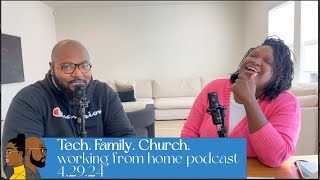
Justin R. Lester and Courtney explain how large language models like Copilot and Claude work, then argue that church and business leaders need to reskill now. They see automation as a tool to streamline operations, not a threat, and point to a May 16 webinar and Lester's book The Church of AI for next steps.
Questions this video answers
May 16, 2024.
$149.
Over 280 guests in six months.
79 new members.
Chapters
Why would you give that over to the Enemy?
It doesn't make any sense to me.
Why would you. Why would you say that? That's like how much we reverence the enemy over God, how much we give power, how much we think the devil, which was the fallen angel that got banned from heaven, has more power than go.
Hey, everybody, it's Justin and Courtney and we welcome you to Working from Home. So it is almost May.
I know we have a busy May coming up.
We do have a busy May coming up. And we got. It's almost May. And so April. April was interesting. We had a lot of things at the church. I just got back from Nashville.
Yeah.
Preaching for terrence and his 12 year anniversary.
That's amazing.
Yeah, it was 1212 years. It's crazy. I remember when he got the church and he was called to it and so happy for them. Had a chance to see Ellie and Tim down in Nashville.
Nice.
And so that was cool. So we got May coming up.
We were 2412 years ago.
Isn't that crazy? That's why it's a long time ago. But here we are now and it's the month of May 2024. And let's see what song you're buying.
Well, maybe you could tell them all the stuff that you've been doing. So you have a couple of like. So Justin is an AI guru. If you don't follow him, you should follow him a couple of places. The first one at Mr. J.
Yes.
Underscore. Lesser.
Underscore J. Lester. And at that tech pastor.
That's the big one at tech pastor. At that. The tech pastor. That tech pastor.
You know, there is a. The tech pastor on Instagram and he doesn't post anything. Nothing to do with church. He has three posts out there that are. And I wanted to like buy it, but like, I don't know how to like buy someone's Instagram or like what the process is, but like you just.
Offer it to them, give them the login.
So. But no, I've been building that tech pastor. So if you want to follow AI and tech and talk robots and everything on there, it's cool. I've been passionate about this stuff for years, you know, really since. Well, off again for me back in 2008 when I was in college, right. I was just interested in like the future. And then now I'm interested in this stuff. And you know, that's one thing about. I was reading this book, Uncommon Greatness by Mark Miller, and he talked about how you have to be reinventing constantly, right? You have to reinvent constantly as a leader. And so one of the things AI has done is it's allowed us to reinvent. And I wrote this one particularly for churches. I try not to make it too generic, but this book I just wrote, well, it's coming up on your screen. This book I wrote called the Church of AI and it talks about artificial intelligence, ethics, policies, how to use it, what it is that. My ebook online actually, like, gives you some of my favorite AI tools. And I gotta make. I'm gonna put it into a Google Drive. By the time you guys get this podcast, it'd be a Google Drive. All my favorite apps because there's just so many out there, right? There's new ones. Like, you know, it was funny. So I did this. I did this class in. In January, right. At the time, Gemini was the best large language model. Right.
Okay, you. So you have to break that down. What is large language model? Model of what? AI? What's an open. Like.
Got it. So artificial intelligence is taking human intelligence and then making it, like, accessible, if you will, based upon predictive models. You use AI, like, what is it? But in the first seven minutes of your day, 17 times. Right. Whether that's from the. It's. All it is is just think about, like, how robots as well and nothing more than like, A tells B what to do on automation. Like, predictive stuff. So, like, you walk into a room, the light comes on. Predictive minds, artificial intelligence.
Right.
You didn't turn it on. Something did.
It's like when you get in the car and like the seat moves, your seat moves. Or like, even when you. It automatically is like, do you want directions to work or to church or.
Wherever you go, Your weather, top news stories, all the data, all your cookies, all of the. All that stuff is just predictive model. Sometimes it's right, sometimes it's wrong. So you feel like, ooh, someone's in my. My notebook or my journal. It's just predictive models and it sometimes works.
Predictable people.
Very right. And so it's just all like, if you go to Google and search your profile, you see how they have a whole profile on you. You know, it's just like they're probably age. This. This many children. They make this amount of money because of the things you like. And the income go like, the average income at Walmart is different. The average income at Target. The average income at Target is different than average income at Whole Foods. But based upon your search preferences, they then think that, like, oh, this is probably what you like to do the cars, you look up the place like. So I look up like places to get my car, oil change. And I look up like pet boys. So they're like, oh, you more than likely have a used car, not a new car, right? And so because of that, then it's like the type of, let's look up a diesel. So it's like, oh, you probably drive a truck. So then it's like, are you a semi truck driver, a pickup and just all those little things. All predictive models. So anyway, so then what been accessible for us is these large language models. These large language models are ChatGPT, Llama, Anthropic. So OpenAI, Anthropic, Google and Meta are the four major ones right now. Anthropics, where Claude comes from, OpenAI is where ChatGPT comes from. Meta is where you get the Meta stuff. Facebook, Instagram and then Gemini, where's Google? Right? So anyway, so a couple months ago, Gemini was the sauce. And it was crazy because it was like, I was like, oh, everybody getting to Gemini, everybody. I taught this class. Speaking of, I have an AI webinar, if anybody wants to come and learn more about this stuff. My website, shop.jr Lester.com webinar and the.
Webinar tells you about, like the basic concepts you're doing. And this is to help you in your business area, in your life, right?
So yeah, I. Gemini was like the sauce, right? And I love Gemini. It was doing really good. And then chat GPT4 came out. So it's like, oh, go to chat GPT4, whatever. That's the most, like, personable whatever. Then Claude 3 came out. And so I taught this class earlier this month, so April, and It was about Cloud 3. And then, so what's funny is now Meta just released an open source llama 3 and it is 10 times better than Claude. And then Sam Altman came out over the weekend and was like, open ChatGPT 5 is going to be better than ChatGPT 4. And then ChatGPT 6 about to do ChatGPT 5. And then it's just this stuff is moving, so eventually it's gonna be a hitting point. So right now we're at this point where, so human intelligence can only go this far. Artificial intelligence is like that crux where, like, it's starting to supersede human intelligence, but there's only so much intelligence out there that eventually human intelligence is going to pass it again. And that's because. So OpenAI is trying to buy Penguin publishers to get All. Every book that penguins ever published. Because it's like, if we can get the books, then we can get more intelligent because AI only loses fast humans. But yeah. So all of that. And so it's been really kind of cool to go around and talk about this. And so, like, you know, I've been to some conferences on it, took some online courses on it, and it's a lot of fun to engage this stuff. And it's different. So I'm laughing because I remember when I was. Maybe this is something for everyone who's on here. Like, and I remember when I was in Nashville and I was talking about, like, you should livestream. Churches should live.
Yeah.
And people would eviscerate.
Even before the live streaming. You would say, before, like, church websites were a thing. Like churches having a website. Yeah, you should have a website.
You have a website.
Oh, we don't need a website.
People just don't know God.
People don't know. And God's gonna lead them. We do, like, different ads in the community things, but that's it. We don't. Or not even that. Like, we don't need a website. We don't need that.
We got postcards.
Every church needs to have a website. So you were just like, almost like John the Baptist trying to lead the way. Like, you need websites. You need websites. And then you were trying to do the difference between having a social media page versus a website. You should at least have. Be on Facebook. You should be on all the platforms. No, we don't need that. We don't need a Facebook. We don't need social media. I mean, kids, like kids out of conferences for doing a selfie.
That's it. I. Jesus. I was in Rhode island and we had a church service, right? And I took a selfie. Let me really clear. I took a selfie and they voted me out. Yeah. Of the conference. Because I took a. And they call them. Was like, you can defend yourself. I was like, don't ever call me again. Like, I got put out of a conference.
Right.
For taking a selfie.
And then when live stream comes. And so then, because you. And you. You say this years before, it's actually needed. Like, you say it years before. Get ready. Because this is coming and your church will be left behind if you don't implement these things because it's coming. So way before COVID happened, way before live streaming was like a mandatory thing for every churches to at least offer, you were saying, and paving the way, going to pastors, going to teachers, going to leaders and Saying, hey, you need to be sure. When Covid happened, the amount of calls.
Oh my God, I should have charged, man. I didn't.
The amount of car calls. Taki said something about a live stream. How do we get that set up? What equipment?
My church gonna fall apart because your bills.
What about our social media? What about this? What about that? How do I get people that Now's the time. So, so now, like, honestly, when Justin says something, it's gonna happen for all the passers out there. You need to listen. So if AI is imprinted on Justin's heart, AI is going to be less. Like this optional like thing that you're going to use. AI is going to be a requirement coming in the church, in the local church.
And the thing about it is it's automation. Right. And I think it goes from churches to also our businesses. Yeah. Like, it's just automating your processes, streamlining your process. So for example, there's this new thing coming out that is business all at 1300 stores across country called Presto. Presto has done is it's built in chatgpt into ordering food. This is in the Wall Street Journal and ordering food. And so you go up to Hardee's, you say they literally talk to you. Right. Because with the cost of. So like, you know, we're making all these movements and this. We're seeing the ramifications of COVID in a previous president. Right. That the whatchamacallit, the hourly salary, hourly rate right. Of pay has gone up drastically. Good for people working part time jobs. But it's gone up. Meaning there's businesses are not increasing their budgets. Right. Like we're still only buying certain amount of food from Hardee's. Right. So we can increase minimum wage all we want to. So we increase it from $10 to $17, $22, whatever. Great. People are only buying like two Hardee's burgers a day, you know, I mean, so it's like there's only still so much money Hardee's is bringing in.
Right.
So it's like we'll cut the CEO salary. They're not cutting their salary for that. Right. So what they're doing is they're just cutting people and they're automating the process. Right. And so Presto, for example, has a recent release by building in the interface of ChatGPT and only learning on their menus, like it's only learned the menus of these businesses. So nothing else, you can't ask anything else can talk it literally. And you can order food and mean you. They did the test where they had cars honking, babies crying, dogs barking, different languages, thick accents, and they were able to order and got all the orders perfect. And then whenever they didn't understand something, they brought a team member. But the managers were saying, like, we've eliminated so many people to automate the.
Process that makes their food perfectly.
Perfectly. That's why it's simple coffee.
Yeah, it's like that margin of error which costs a lot of.
And so the opportunity is to learn coding, which you can do in chat. GPT, right. Is to learn what this stuff is. There's a point of the book, but the issue to me is like, so I said this to my church. I said like, you know, we want people to work, but we don't. We want to teach them to do like basic replaceable jobs. Like, we don't teach them irreplaceable jobs.
Right.
So it's go like we're not making plumbers anymore. Right. We're not teaching people trades because we've downed them so bad. We're not making gardeners, we're not making home builders, we're not teaching architects all the stuff that needs math. Math. Organization, follow through, inconsistency.
Yeah, we're not teaching.
Yeah, yeah. So other people are taking advantage of that. The same thing when it comes to coding and robotics. So like I've been arguing trying to get some coding people. We reached out to Nvidia and they're welcome to come out. We're going to do it. My fear is like, are people going to show up? But it's like, you don't want to show up now, but in five years when it's because I think about even for like our church, right? So I'm looking like we were talking about doing some things in our building and it's like the opportunity to automate. So I already have a lot of processes that are automated. Like our guest process is automated, our new members process is automated. Like a lot of things are automated. So you don't need to hire anyone.
Right.
So I can take those resources and put it into other areas. The same thing goes for our businesses. So like if you're in a coffee shop and you're sitting there making all the coffee, automate it. Because people automate it with their K cups. That's it. Like, it's like you have a K cup machine. My mom had one where it was a carafe and you had K cups. You tell that on your phone which one you want and they Made it. And it's just the same thing with your food. And so I think, you know, we're in a place now. It's automation is the way to go. And we're going to see it in our churches and we're going to see it right now. So we can try to be all like, you know, like. But the cross. Like, I saw somebody put something up on Facebook yesterday that said something about AI being the mark of the beast. And I said, shut up.
Like, we always demonize something we don't understand as a church. And so one of the things that I have found helpful, even in my journey through AI, I've never, like, had a mindset of, like, oh, AI is demonic, or anything, but start small. That's just. This is just with everything, right? So I use Chat GBT for, like, little things like, hey, either Chat GBT or Gemini or one of these open AI models where I'm just like, can you create an itinerary today for a family of three in the Bay Area? And you would be surprised all the stuff that it comes up with. And it's like, starting there. We're trying to, like, ask it these, like, you know, why do bad things happen to good people? No, like, start small. Like, make your life easier.
Start with. So I would suggest starting with Copilot. So Copilot or Meta's new open version. Just imagine that meta.com, no matter that AI. Sorry. And start with one of those that has, like, everything built into it, right? This other one, Easy Peasy, that AI and I would start there. Easy Peasy has, like, the top four large language models built in, but I would start with Meta or Copilot or Easy Peasy. And like, Courtney said that, right? Or simple things like, like, I use it to help write. Me write emails. So, like, instead of me writing, like, so people get emails from me, are gonna get this now, but instead of me actually sitting down and, like, crafting the perfect email, I just outline everything that needs to go into it. Tell it the tone, tell it the audience, tell it the age range.
And if it asks, doing that, it's gonna replace people who are doing that. And, like, it's 2024. There should be no misspellings and words. No, like, miss typos or anything like that. Because of these tools and these technologies. Just, like, we, like, fear them or thinking it's like, no, use it to your advantage. Like you were saying, like, co pilot. Like, no, like, I'm thinking for, like, even for birthday parties, you're. You're Planning, like, your child's birthday party. Put in, like, hey, I need a seventh birthday theme, and create the invitation for me. And it's like, it does it all for you.
Well, the thing about Copilot is, like, not only will it create the invitation, okay, create that, it'll help you create the website, right? It'll help you create the itinerary for the birthday party. It'll give you the colors, it'll give you the top things to do, give you trending topics, give you video ideas. It'll then make the invitation, send the invitation like it does all of it for you. And all you did was put in a prompt, check it, and then you go from there. So now. But I think one of the issues Court is that we do. We like working so much that we don't know how to lead, right? So this is literally now you having an employee at your fingertips and don't know how to lead. And we've been working so much that we don't know how to, like, let something work for us, right? And so we got to be in control and all of that. And so AI is taking away that control. You know, I had a conversation with someone when I was in Tennessee, and I don't know why I'm bringing this up, but it was relationship driven. And we were talking about. We were talking about that lack of control, like, even, like, in a relationships right now. We were talking through the importance of, like, communication and knowing when to step up, when to step back. And I talked about this concept of, like, arguing. Well, right? Like, you need to argue, but realizing you're on the same team. And I think it, to me, when I keep thinking AI and thinking through that conversation is like the same thing. Like, I'm putting the data in, I'm getting something out of it. The same thing in, like, a marriage. Like, we're having a conversation because you need to. And it's uncomfortable because it's like, not just because, like, you spent money, but it's like evaluating our financial habits. Or you went here, or you didn't tell me this, or you didn't do this, or you cleaned this, or you like all these little things. And it's not always. Not negative, but it's. It's either like, I was listening to this podcast too, while I was traveling, and it was called Trauma Informed Leadership. And he said that trauma needs to be really defined. Well. And he said that trauma is just when too much happens too fast, we wear it on our bodies. And he said that some people that's where daydreams come. Right. So, like, you just kind of zone out for a second because your body is trying to heal from the too much.
Right.
And so a lot of arguments, a lot of conflict is our response where we're trying to navigate through the too much.
Right?
So, like, even as I'm. And I'm bringing, like, three things in, but, like, even as I've been teaching on AI to people, I'm realizing it's very traumatic because it's like, the thought process is not. Like, I've already gone through the whole, like, is my job replaceable? Is this. Is that. I've looked at the theories. I know the theories of job replacement. I know the job. I do. I know who I am. I know what type of person I am. I know that, like, the moment I think robots are going to replace me, I'm going to build them. The moment I think that whatever, like, there's flying cars. I'm going to figure, I can't wait to the one that can hold 300 pounds, because, like, they only hold 250, but the moment they can hold 300, I'm going to figure out a way to get one. Like, I. There's Meta's Ray Ban glasses that I want to get the next time I get glasses that are $300, that are more accessible now, they have AI built in. Like, that's just who I am. So I won't, I won't. I won't let anything. Even if, like, robots do begin to replace pastors, that I will have done something else.
Yeah.
But it's just, I think because it's, it's, it's a. It's a disruptive. I think we've checked use the word. In my opinion, we've used the word disruptive to replace it with traumatic. Right. Like it is too much, too fast.
Yeah.
And I don't know how to respond to it.
I love that because it kind of takes trauma, I feel like. But I love that definition. But there's a difference between disruption and all disruption is not bad. Disruption. No, actually being a disruptor in the marketplace is actually a high skill. I think it was that Covey who said that, like, about disruption is a top skill. Right. And a top trait, that leadership. Stephen Covey and I know, right. Wow. Can't believe I'm about to see both of you on your podcast anyway. But it's, it's weird disruptors and not everything is for bad. And then also saying there are some traumatic things that have. Are terrible. Absolutely right. But it by, like, separating that, like, this was a disruption in my life or this was a traumatic event. I think it's so important in how we're doing that. What I think is happening and getting back to even, like, AI and conflict and all these things in our lives is that AI has come and it's disrupted our workflow.
Yeah, right, Absolutely.
It's completely changed the job market. It's changed even relationships, people putting text messages in, like, how do I respond to this? You know, how do I do things? It's disrupted us, people who don't know how to pivot successfully or pivot fast. That could be a challenge.
Absolutely.
You know, and I think that's what's happening in our country. And historically, I think black churches, period, we have a hard time pivoting to disruption.
I told someone this weekend, Minister Pearson, if you're listening, he and his wife are listeners of the podcast.
Hey.
We were talking on the way to church, and we were talking about church and disruption. And I told him, I said, you know, churches, I believe, are frozen in a particular set of time. Right. So I said, whether it's the slave church and it's. We're frozen in slave church. Church. Right. We're just a bunch of Negroes who are oppressed, and we don't know how to live our lives, and we're just frozen.
Yeah.
And we're still stuck in the 1800s. I think there's some denominations that are so stuck when they were founded, and we're trying to preserve our founders.
Right.
Then you have some churches that are stuck in the 60s. We still. We still the black peoples that needs to be free. Right. And we're just stuck.
Right.
In needing to be free.
Right.
And then you have the black folks who, like, feel like they were free in that. Right. And then you got the black. You got the churches that were, you know, you got the mega church movement that hit in the 80s, and they're stuck. And you saw. We sent you the video of the church in Akron that fell apart, you know, after the pastor died. And you have that. And then you have churches stuck. And then, like, you know, your churches now, where some of the ones that are mega are stuck in 2006. Yeah, they're just stuck. I mean, they're just like Fred Hammond and James Fortune and Hillsong in it up, and we're still singing In Christ Alone, like. And it's just like, they're stuck. And then you got the ones that are starting up now that in 20 years are going to be stuck in 2024 we started post Covid and look how innovative we were because we were a movement built on tech. Like I look at Ty Tribbett, no offense to Ty Tribut Church Live Orlando, and he's gonna be stuck in being so forward in the park and virtual. Only you can be stuck, right? And so it's like you have to be. I think this goes not just for churches, but organizations like for example, like whatchamacallit I look at like in n out is maximized a moment in time, but has evolved, right? Whereas like some of these other companies have closed, right? You have, you have to be an ever evolving organization because without being an ever evolving orientation, same thing for like marriages and children. Like you have to be ever evolving. Because if not, I wonder.
And it's almost like this really has my wheels turning because now I'm thinking of like, why is that? Right? And while you were talking and I'm like, you know, there's, there's a couple of things I'm thinking as a theory in my head is that first being almost like the conflict propelling, right? So it's like in the 60s, there's so much conflict with this just civil rights. I'll just show you this. Michael Shea, stand up. It's hilarious.
Like, Michael Che is funny.
He, he, he was actually funny and he was talking about like, did we seriously have an argument about black lives mattering? It was like mattering.
It's like, no, that is funny.
Just battering. He's like, what's lower than battering? Like what we just said and people. And he's like, people are so like.
All lives.
All lives. He's like, what? Okay, anyway, it was funny. I'll show you later. But it like the conflict, like almost how conflict was absolutely necessary, like getting back to what you were saying to propel a lot of these churches, right? So the church we came from, we you pastor there for six years, they were a 200 year old church, right? And pretty much emancipation happened. And they're just like, fine, build yourself a church, here's some money to build yourself. And so they built it, but it was like because we fought so hard because we have endured our lives in slavery because of this is what built this like innovative monument at the time, right? This black independent church, right? Like this black church. And then like, like you're saying like each like civil rights, all that, like it was because of the conflict. We can have a big church too, as a black body or like each year because of COVID or Because of the resistance against traditional black church spaces. Then we have these modern, like tech cool spaces, all these things. It's because of that, that tension, right. That conflict which led to that. But somewhere along the way in the generations, I don't know what it is. And this is kind of sometimes what I go back and forth with to as a parent and as a child. Because, you know, we're fighting the fight, trying to like provide our child with like, we don't want you to have to go through this, right? We, we're talking about like Good Friday. We don't want you to have to sit through multiple three hour services. Right. But then in the same way, you would never understand what it feels like to do three hour services. So when you do grow up or when you come to knowledge of your own faith, you won't kind of understand because you've never had to be through the struggle. And I think that's what's happening in a lot. So you see, even like these older generations, their parents fought, their parents built this building, their parents did that so that they didn't have to understand. And so now. But then that just puts like the next generation in this. Like, well, I just have to protect it because my parents, you know, fought really hard because of the conflict. But I mean, I don't have the conflict and it works for me. So what's the disruption instead of us being like, let's just constantly evolve. And I think you and I are both alike within that in terms of constantly evolving.
I used to be a big proponent of unlearn, relearn and learn something new.
Yeah.
Even as of like January.
Yeah.
And so in researching for my work, Church of AI, Right. There's this new concept called. Well, it's not new, it's old, but it's new to me. I think it's actually something from Singay, but.
Wow.
Yeah. Fifth discipline. But they talked about reskilling and upskilling. Right. And so I was so big on like, unlearn, learn, learn something new. Right? Unlearn, relearn, learn something new. But then they suggested this concept of reskilling and upskilling. So like cementing your skill sets and then being willing to upskill those skill sets and then letting whatever does not fit in the upskilling to just fit in, fall off. So instead of like, it's, some things don't need to be maintained. Right. And I think, I think what you're getting to is like, you know, so even when it comes to like relationships, like we're Trying to have the relationship our parents did or didn't have. We're trying to be the parents that we think we did or didn't get. We're trying to be the leaders that we did or didn't know. Like, I've done that even for me personally. Like, I'm trying to be the best parts of my favorite leaders and eliminate the worst parts of my least favorite favorite leaders. Right. And what you realize is you never become a leader. You just become a conglomerate of best practices or worst practices. Right. It's the same thing in, like, marriage. So, like, it's like, oh, I'm trying not to be my parents, but I'm trying to be what I see on tv. And in the meantime, you never become what your spouse needs. You're trying to be. Not true. So then, like, so then when Bill Cosby falls, we don't know how to be dads or. Or husbands because we were trying to be huxtable. Right. When old boy from the Family Matters dies, we all know what to do because he died. We don't know what to do because it's like dad died and now we're losing our minds. No. Because we don't know who we are. And I think all of this gets to do AI, like all these new technologies are to assist us into being who we are, is to accelerate it and cemented the same thing with the local church.
Yeah.
Local church is to assist you into being who you are. Yeah. And one of the issues, I believe, is that we do a really good job of trying to be who we aren't. Don't want to be. So we're trying. We're trying to be the church member because, like, we're trying to be the church member that our mother won't complain about.
Yeah.
We're trying to be the church member that our mother loved.
Right.
Instead of actually just being the church member that God is calling. Called me to be the Christian, not the church member, the Christian. God's going to be realizing that sometimes being the Christian God's called you to be is no longer at the church you're at. Right. And it's just all those different types of things that play in it. And. And so I think it's just we're in this really interesting space where. Yes. So to get to your point. Absolutely. We fight everything because we have. We have. We. Because we feel. I believe that everything is worth losing. And so we're comfortable losing. That's why 50. It used to be 50%. Like, did you okay the Most recent statistic I read on marriages court, it was 48%. It's 56%. Like, we're getting close to 60% of marriages. Is that ending in divorce? Just in general. Like, black marriages. I don't know where that is right now, but we're getting close to 60. Like, it's going up. Covid didn't help, but we're going up. Yeah, but it's like, because we're not trying to be the spouse or the.
Leader, and we're not trying to disrupt.
And then. So when AI is misused because I don't know who I am, then I'm going to cut you off. But, like, now you got virtual dating. You got humanist humanoid robots that you can shut on and shut off. You're telling people what you want from them. So now you're just using people, and now you're using robots. So now I don't need to use people. I can just use a robot. You know what I mean? You got these. Everybody's got it. Well, we got a podcast, but everybody's got a podcast. Did you hear? Yeah, everybody's got a podcast and everybody's opinions out there.
Did I hear about.
Right. Did you hear about Joe Rogan? Right? Joe Rogan said so one, you got Mark Driscoll calling women penis homes.
Oh, God.
And then you have Joe Rogan coming out. And what did he say? He. I read it this morning that pastor. No, Joe Rogan's so. Joe. No, sorry. Andrew Tate. Andrew Tate. He is this. I saw it on Threads. He is this podcaster that young boys listen to. I'm trying to keep, like, Canada from ever seeing this guy, but teenage boys listen to this guy, and college boys now listen to him. And he's like, I don't think he's conservative or progressive. He's just. He's just a chauvinist. Insert really bad word here, right? So he said, why would you. He said, men. Men who have sex are gay no matter what. Like, no matter what. He said, why do you want to feel good? He said, so just freeze your sperm and just inseminate it in someone. Because any. So now boys are going around like, oh, cool, I'm not abstinent. I'm just so afraid of being gay. Because having sex, according to Andrew Tate, is good. And it's like, nothing has proven this. Nothing has shown this, nothing is given. But now we're taking that as data and we're living our lives off of some random dude's opinion. It's the same thing with A guy who was eating, he was like, I eat raw liver every day. Come to find out that dude never ate the liver raw.
But all the people who probably took.
After his advice and got sick and died. You see what I'm saying? So it's like, but every. Because we're taking.
But that's what the enemy does, right?
Absolutely.
He destroyed. Distract us. He distracts us with this tool. And I. I like to say this, like, there is nothing that is surprised to God at all. And I think so many times we think. And. And that's the arrogance of ourselves. We think that we're ahead of God in some way, that AI is a memory to God, right? He's seeing. He's like, huh, I just got the artificial intelligence. Listen, like, okay, cool, Keep up. Let's go. Like, okay, what's next? What's next? What's next? Because God is so far in the future and so many times we think that, no, we're ahead of ourselves as people. Nothing is a surprise to God. Do you think God is like, well, my gospel can't go first because, you know, AI now. And the devil reigns through AI? No.
The mark of the beast.
Why do we give the enemy that much credit? Why on earth. Why on earth would you take something so powerful and give that to the enemy? Why would you do that? I say that all the time about Beyonce. Like, her work ethic is wild. The way she has the ability. She literally impacts entire cities when she travels. She is the number one employer sometimes when she travels to the city, the number one employer in major city. Why would you give that over to the enemy?
It doesn't make any sense to me.
Why would you. Why would you say that? That's like, how much we reverence the enemy over God, how much we give power, how much we think the devil, which was the fallen angel that got banned from heaven, has more power than God. All the great things that in our. Oh, it has to be the devil. It has to be. And he has to be wicked. It has to be this, it has to be that. Because no, you don't understand it. If you don't understand it, that should be. Case in point right there. That is probably from God because you don't understand it. And I think.
And his ways are not always.
His ways are not our ways. And so I guess our takeaway is like, be disrupted, right? Having a skill. And I work because I work with people all the time looking for careers, looking for jobs. You might be asking yourself, what is my value add? How can I Value people who are able to be disruptive in the marketplace and be a disruptor will always be more valuable than people who cannot and pivot and adjust quickly.
I think it's also naming, like you said earlier, you have to name the difference between trauma and disruption.
Right.
I think we. I think we have grown adults with childlike minds.
Yeah.
Because we haven't named the trauma. You can't blame everything on your mother. You can't. Like, you can't blame everything on your father.
Right.
Can't blame everything on high school. Like, I joke all the time. But then eventually I had to get over, like, I wasn't the president of key clubs. I didn't like this one person. So I'm never going to run for something. And it's like, you gotta not stuff. I'm saying get over it. But, like, what happened, what went on? You lived through it. What did you learn from it?
Yeah.
Okay. That's painful. It is what it is for you at that moment. It was horrible.
Yeah.
You can sit here with 20 years later and continue to. So it was traumatic. There was too much too fast. At one moment, name the trauma. But then, as you said, differentiate that from disruption.
Differentiate that from this rub. Yeah. Healing trauma. In some trauma, it requires healing. Right. Like this. Like, some injuries result in a broken leg or a broken limb, and some injuries, you just get up and be like, that kind of hurt, but I'm okay, you know? And I think kind of knowing that difference what. What needs healing and what is just pivoting and being disruptive. And so I think that's the number one takeaway. And I think in a lot of places that we've come to know, you and I are alike in this a lot. We're both disruptors. We're both disruptors. So everywhere we go, we're probably going to disrupt your system. Not in a bad way. Not in a way, but as a.
Way to see, like, the goal is sustainability.
Sustainability.
I want the hardest to get to.
Places we've never been before.
The hardest thing for me that I still wrestle with it sometimes are the ministries or places we left that the things we started didn't sustain. That pains me. And so I've worked really hard to get to a place now where it's like you have to tear it apart for it not to work. Like, if I'm not here. You got it. You got to be intentional to tear it apart for it not to work.
Yeah.
And I've seen that. Right. Where it's like you like, okay, we Were dismantling this aggressively because we didn't. Like, like, you got to be intentional. Because, like, I've seen it where it's like, man, that's some amazing stuff. And it just, it's the goal of disruption is sustainability. Like, and that's even like, with Jesus, like, Jesus was like, I'm not staying here. Bye.
This was the master disruptor. Disruptor. He didn't come to, like, disruption does not mean destroyer. No, disruption means wow, I'm taking a system that was and I'm disrupting it so that we can get to better, so that we can get to sustainable. Jesus says, I have come so that I can give you life. Not just regular life, but life more abundantly. And that is like the ultimate goal. How Jesus, like, disrupt the system. That's why you see in all the miracles, it's. It's a conflict and it looks a old system directly in the face and say, why? Why? Why can't I heal on Sunday or on Sabbath, whatever sab Sabbath day was. Why can't I heal in the temple? Why can't I do this? Why are you doing. Why are you taking up. Why are you exchanging money? Why are you robbing people in the temple marketplace? What is happening? Like, this disruption? Why can't I touch women? Why can't I touch a woman that's bleeding? Why? Like, why?
It gets to our world today where it's just like, why can't we combine? Why can't we buy in flight and hotels?
Yeah.
Kayak. Multi billion dollar company. Why can't you share what you're doing with your friends? Meta. Multi billion dollar company.
Right.
Why can't you give regular status updates, threads, Twitter. Multi billion dollar company.
And why.
Why can't we have a bookstore online? Amazon. Yeah. People were weird with Amazon at first. Now it's a multi. Now we're making money on Amazon. Multi billion dollar IT. Just ask the why question, the why.
Question and asking yourself and even like giving it back to the greater point, which is why I think you should keep the book up right here. The church of AI. Why can't you use AI?
Yeah, why can't you?
Why can't you use it as a part of your business? And if you aren't, I'm telling you, I'm telling you right now, AI does not replace jobs. But like you say all the time, AI replaces the people who are using AI. And you have to always understand what is your unique value add and what are you adding to wherever that you are, whether you're an Entrepreneur, Whether you act. What is the why question? Why can't we do what exactly? What is that crazy thing in your head that's just like. Well, we just don't normally do it like that. And why can't we Exactly. Because we ask ourselves that every day. Why can't we do church like this? Why you can't wear this at church, why you can't talk about this in church? How come we can't sit there? Why they can't sit there, how come they can't park there, how come they can't do that? Always asking those questions. And you realize that it's never rooted in anything. It's always rooted in our fear. And. And so I hope that today this is a really good one. This is a lot. So please, please, please. You have a webinar coming up. When is the webinar?
May 16th is our webinar. So I have an AI webinar. The link is in the show notes if you want to sign up for it. It's 15. It'll be a time where I get a chance for an hour or so to talk directly to you about background artificial intelligence and then what it is. And give you about 7 apps to go through to help your business. We're going to go through apps from logo making, website building, which I'm going to call it, writing emails, writing books, all of that type of stuff. Beyond there, I also offer online a masterclass, which is $150, $149. Sorry. And the masterclass actually takes you through everything that I talk about. And so the masterclass is about six hours worth of content. You get about ten different worksheets in the masterclass. They also get one session with me. So if you're a business owner or pastor lead or whatever, you get a chance to actually. I'll sit down, actually look at what you have and look at ways we can automate it and streamline a lot of the things you do. And then if you just want to read it, if you like a good read, and I'm currently working on the audiobook, I gotta finish that. But the. If you want a good read, The Church of AI is just shop jr Lester.com and it'll take you to my bookstore or Amazon search church AI. And if you have Kindle Unlimited, you can just download it for nothing on Kindle Unlimited, part of your library on Kindle, and you can read it there as well. So please take a look, please listen and engage with it. Love to get your feedback on it. And if you do it on Amazon, please leave a review on Amazon. That helps get the word out. So if you do purchase on Amazon, please leave a review on Amazon as well. So it's just, to me, this stuff is fun and it's engaging and my whole thing is, you know, I, we're going to share it now and honestly I, I laugh because I feel like what's going to happen, like happened before is I'm going to talk about this stuff. It's going to be like, oh whatever, whatever, it's going to pop and then I'll get help about this.
There's going to be some type of shift in art, you know, and we're.
Going to be on to building robots.
And so don't be behind the eight ball. Do not be behind. Get it ahead, think ahead, be sustainable. If you don't think it it, I'm guaranteeing you you're gonna learn a lot from it and you're gonna get a lot from it. That's gonna help everything. We. And just to tell you so these are just hardcore facts. How many? Because of our automation through the power.
Of AI, we're at over 280 guests in six months.
280 guests. And from March 1st we had 79 new members.
Well, I don't know what it is now.
I haven't seen the most from like one month.
For a month we had 79 new.
79 new members. Just because we have automated Facebook ads, don't give it all. Go to the master class. So automation, the power of AI, use it for the advantage and for the glory of God. Guarantee Jesus is already there in it.
So he's not surprised by it.
Thank you for joining us today. I don't know, I guess for Mondays. I like Mondays now. It's just the necessary reprieve. After the weekend me and Cam Cam just hung out. He's such a good kid but just like non stop. So he's in such a. He's in a good production. The Willy Wonka Jr. At his school, they were actually at the theater at Napa Valley College and it was just so cute just to see them and to just how they've practiced and they created the whole set themselves as a part of their arts curriculum. And I think arts are so important. So just for Mondays, I think is my unpaid advertisement.
My unpaid advertisement is for paper. I've been reading books but there's something. I have the, I have the. Yeah people persons paper people. I had, I had my iPad on plane. I was like, I'm read these two books I downloaded and I was going to read them and I couldn't do it. But then I had my paper book and I was zooming through this book.
Right? Something about a paper.
Yeah. Just so you know, you can find it someplace. Probably in a store someplace. Something about paper.
It's so funny. In my book club, I have a book club and I brought the paper book from the library to the there, and they're like, a paper book. Was that you actually read it? You read the book? And I was like, yes, I read the book for the book club. And they're like, you get like Kindle or anything? I was like, no, they're like, you know, audible. I have. Reading is still right? Reading is still holy.
There's something about getting a book, underlining it and getting to that last page. And I'll say this last thing. Richie Norton, in his book Anti Time Manager, I'll never forget this quote, he said, don't read this entire book and not apply what you read. The worst thing you can do to me as an author is to have read what I gave you and not do something with it. So hopefully you guys didn't get to always do the podcast and don't do something what we tell you. So go disrupt, go have some fun and check out the AI webinar. Check out the book, and we'll see you guys in a week. Bless you.
More from Justin





AI gives you hours back every week. Most people's first move is to fill those hours with more work.



Most people stall out on AI at the exact same step. They don't know where to start.

Thank you for the follow-ups, the messages, the emails, all of it since the New York Times piece. Gr

The New York Times spent a weekend with me. Digital twins, AI, the local church, all of it.
