Build an App in Seconds with ZERO Coding Skills! 🙌
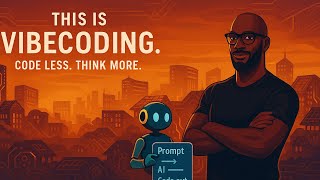
Justin R. Lester shows how to build apps using plain-language prompts instead of code. He builds Mood Match, a mood journal that generates quotes and music suggestions, across three tools and compares how fast each one works.
Chapters
Hey, everybody. Is that tech pastor and thank you guys for tuning into my channel. You're probably wondering, why in the world am I taping this? You see Lego pieces and stuff like that. You know why? Because I'm a dad and I have a son who loves building Legos. Let me show you what he's building so far. Look at what he's building. I'm so proud of him. He's gonna be an amazing LEGO designer and he's gonna do amazing work. So I wanted you to see that. As we talk about building and making stuff, sometimes you got some messy things around you that do some amazing things. So I'm super happy as you guys jump into this place. Be sure you like and subscribe for more. Today we're talking about vibe coding. Vibe coding. Now, Vibe coding is not this. Somebody's watching me, it's my anxiety and you're vibing with it. What vibe coding is this? Vibe coding is the ability to not have to worry about semicolons and brackets, but the ability for you to take an idea and use just regular, basic English, English language or whatever language you're in. Use a large language model to help you build out a code and build out an app. That's what we're going to do. Over the course of this space, I have a code, I have a prompt I built out in ChatGPT and we're going to take this and while we're here together, we're going to build out in three, three different places so we can see what it looks like in Lovable, in Replit and in Firebase. Firebase was recently released in Google. All of these are the free versions. What we're going to do now, if you have a Google account, I highly suggest going to firebase.google.com and playing with theirs. But we're going to go through these three tools and see which one looks the best, which one works the best for us and have some fun vibe coding as we jump into it. Be sure you like and subscribe for more. And let's jump into this time together today. Before we jump into it today, I have some books that I've written on this. I have a book I wrote called what the Heck Is AI? What the Heck Is AI Is a book about literally what the heck AI is. And the goal of that book is to help anybody who is new to tech, new to this world, learn what the heck AI is. And so if you're looking for a book that's just really basic and to the point, that gives you terminology and technologies about this to give you definitions. That's what the heck is AI. It also, if you're looking for another book for your kids, just AI to Z for kids and it's a robot that's walking through what AI is from A to Z and it gives you definition and use cases on what AI is written for children. Now, what I've learned and heard from many of you is that that book has been better for you as a, as a senior, for you as a Gen Xer or, or a millennial even to learn what this stuff is. So it's not just A to Z for kids. I'm realizing it's AI to Z for anybody who's trying to learn AI. So my website, jrlesser.com or they're on Amazon as well. Go get your pick. Go purchase one. Grab a hold of it. Now let's jump into the video. All right, so we're going to Vibe code today. What I did was in ChatGPT, I went to ChatGPT and in ChatGPT I was able to build out some stuff that I was thinking about. And so I said, you know, let's make a app that's simple, soulful and smart. And we came up with an app called Mood Match. It's a daily Vibe journal, an AI powered music quote and color palette matcher where it's going to give us a motivational quote that matches our mood, a Spotify playlist or song suggestion, a color palette and a mood card, all based upon one word, based upon how you feel with one word and slider. What I did is then I said, great, now take that and give me the code. Give me a prompt for each one of these tools we're going to use for Lovable, for Firebase as well as for Replit. And so this is the first one you guys see me here clicking. So we're going to click here, the one for Lovable. We're going to go over to Lovable and if you haven't used lovable.dev lovable.dev is great. It takes an idea into app in seconds. You can see on their screen here. And what we're going to do literally is just paste this tool in here and see what it does. So we're going to build a friendly mobile app on Mood Match, helps users log their daily mood, receive personalized content based upon what they should feel. Here's what the app should do. All of this and this complete prompt is in the comment section. If you want to copy and paste it for yourself. We're going to make it pub, we're going to share it and we're going to see what they do. Now speed up some of this so that we don't have to follow along everything, but we're going to see what Lovable makes. So as you can see here gave me a response. It said this, listen for the first version of these features gives me design elements and all of that. And so you can see here, it's working. So this is really. We talk about agentic work. This is an agent. So now I put that in. Don't have to keep telling it everything. I could jump in if I wanted to, but I'm not going to jump in. I'm just going to let it make it for us. While that's working, let's go to Replit. We're going to go back to ChatGPT and we're going to go here to ChatGPT. We're going to get the replit. So I had a replit prompt for backend on a Mood Match app. We're going to copy it. You can see here what it did too. So we're going to copy. Actually, I'm going to do. I'm going to go back to the ba, the basic one, and we're going to do the lovable. The same prompt we use here. We're going to take the same prompt, we're going to go to replit and we're going to put the same prompt in the replit. So we're going to put here Control V. This is the free version of Replit. So you go to replit.com and you can start building. Here you go. And then we're going to do the same thing in Firebase. And this is Firebase Studio, firebase.google.com We're going to do the same thing in Firebase and prototype with AI. So each one is different. So you can see Firebase. We're going back here. I mean, sorry, rep. Sorry. Replit is thinking and it's tell me what's going to build. It's going to analyze it and give me a plan, which is awesome. We're going to go back to Firebase. This was the quickest. Oh, my God, that was quick. Prototype this app. Let's see what it does. So you can see each one came up with different colors. So Firebase came. So the quickest one is Firebase. So we went to repl.it and we said we want Repplit to build out integration, Spotify API daily Mood Reminders and enhanced mood analytics with more detailed insights. And you can see that it's visually previewing it for us as it builds. Firebase is just mean that thing is working. And then Lovable had an error. So one of the cool things about when there's an error in any of these tools, you just tell it to fix itself so you don't have to worry about coding anything. If you ever encounter an error, tell it to fix itself. We feel like we're doing a race here to the finish. And I feel like. I feel like Firebase is going to win.
Nope. Yeah.
This is.
This is replay. Five. Red is still working. And this is the level one. I like this level one. So describe your mood. I am Peace. At peace. Peace. How strong is the ceiling? I'm at a seven. So let's match my mood Match. And Right place. Not done. And Firebase is done. I want to be really clear. I did not speed up this video. We. This is all live.
So, yeah. All right. So let's go take a look at these apps. I think Lovable is done. All right. So this is a good app. So this is Lovable's app. You. You can tell we took the same prompt. Mood match. Describe your mood in one word. Boom. How strong is this feeling? So let's say we're at peace. And I'll say my feelings are at a 7 and match my mood. Wow. I'm feeling peace. So for your color, it's going to track your mood. The palette on this card, designed to compliment how you're feeling right now, track your mood. Let's go back. So let's say I'm happy and I'm at a seven. Oh. Oh, cool. So you can. For your colors, your mood history, you can share this and download it. It's a very simple app, but the fact is we built an App in about 10 seconds. This is Replit. It's still working. Okay. And now we just got to figure out where to preview. So we're going to preview our Firebase app. So let's say we're feeling happy. The intensity is at a seven. Match my mood. Cool. I like it. So what we did here, let's say I'm feeling. So that was Firebase. So the Firebase app, that's what that is. With ability to share. The Lovable app, that's how that looks. With the ability to share. And then the Lovable app, it's still working. So we'll come back to Lovable when Lovable. Sorry, Replit is. Replit is done. This is amazing to me. And I did this. I know this video seems like very all over the place. I wanted you guys to see live how this looks. I did in three different spaces on Lovable Replit and Firebase to see what it'd be like to take a prompt when ChatGPT to throw it into all three of these vibe coders. But now the cool thing about Vibe coding, to be very clear about the cool thing about Vibe coding is that we could then take some time and actually have conversations with it. So we could say, hey, listen, update this or change this. I'm not going to do that right now, but this is what you could do. So if I was like, hey, be sure you add in different, like, you know, words. Or like, I could go take a chatgpt and say, hey, give me a list of 10 words for like, you know, my community and put those in there. And so the couple things I will say is, every time you have an issue, be sure you always just put the issue back into the code and make it fix it itself. But it's pretty cool to see how these work. Now, as you can see, REPL is still going. And frankly put, if I were to deploy an app, the one I probably would deploy is this Replit one. It seems the most comprehensive, the better UI to me is the one from Lovable Firebase. I mean, while it's. It works, I'm not in love with it, but I. I'm really loving the ui. I think the most comprehensive app is this one, especially creating a profile. I love the UI here. And the cool thing is you can publish it directly through all of these sites, so it's pretty cool to do so. So I highly recommend. Let's go back to it. So Mood Match. We got a Mood Match here. Pretty cool. Repl it. I like the way that it looks. And then lastly, Firebase, Firebases, this is the way it looks as well. So go experiment, go have some fun. We did Replit Firebase and Lovable. If I were to rank them, I'd say number one would be Replit, number two would be Lovable, number three would be Firebase. They're all free. All you have to do is Integrate your GitHub and you'll be able to publish these. If you wanted to integrate the Spotify place, you can integrate Spotify's API and get that in there too. So it'd be really cool things to do. Have some fun. Enjoy this. Enjoy this season of Vibe coding. Enjoy this season of having some fun. Go do it. And enjoy it. All right. Of course. I'm that tech pastor giving you the business for your business. Don't forget to like and subscribe. Made it to the end of the video. Don't forget to like and subscribe. And follow for more as we continue to just download and engage with this work and have some fun and see what we're able to deploy for the good of our people. All right. It's been amazing day. I'll talk to you soon. Bye.
More from Justin





AI gives you hours back every week. Most people's first move is to fill those hours with more work.



Most people stall out on AI at the exact same step. They don't know where to start.

Thank you for the follow-ups, the messages, the emails, all of it since the New York Times piece. Gr

The New York Times spent a weekend with me. Digital twins, AI, the local church, all of it.
