God, Does My Worship Even Matter? Malachi 1:6-14
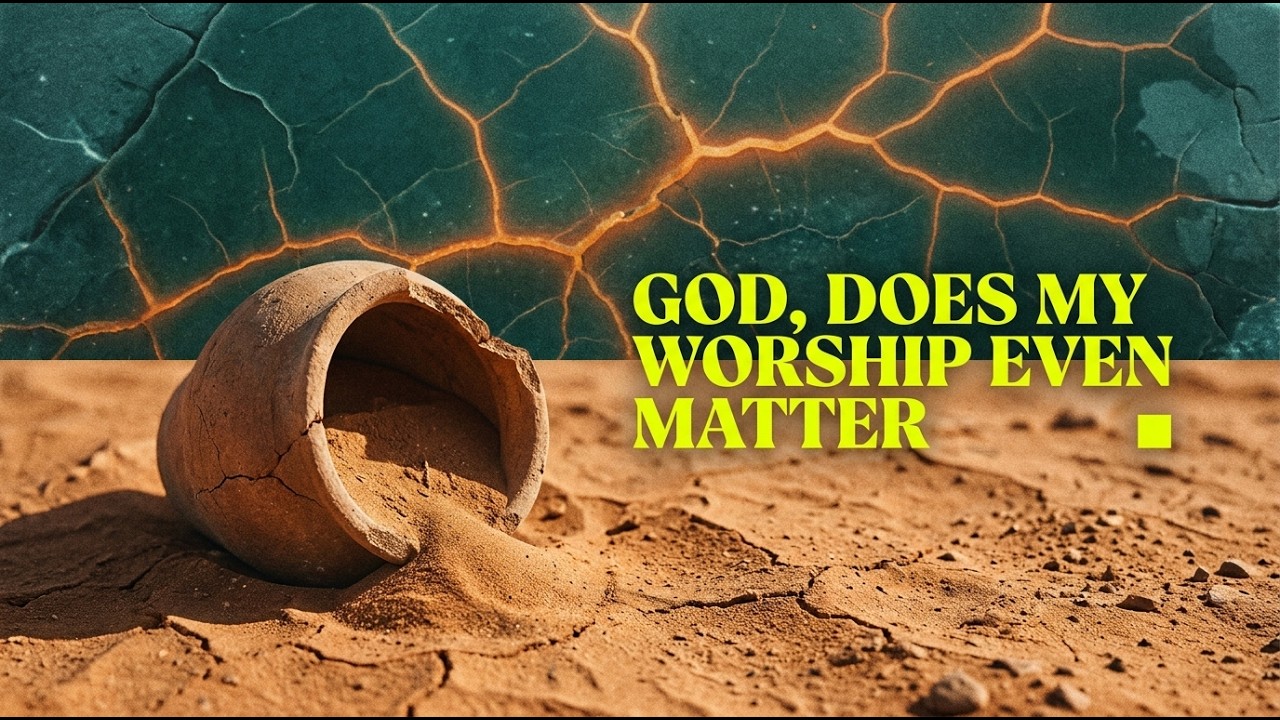
In this 2026 YouTube sermon, Justin R. Lester examines Malachi 1:6‑14 to ask whether contemporary worship truly matters to God. He begins by reading the passage, which condemns priests who bring blemished animals to the altar, describing their worship as contemptuous and defiling God’s name. Lester breaks the text into three movements: the problem (verses 6‑10), the reason for change (verse 11), and the required change (verses 12‑14). He explains that offering “defiled” worship—whether through half‑hearted rituals, legalistic traditions, or trendy worship styles—fails to honor God and provokes divine rejection, echoing similar warnings in Amos, Isaiah, and Hosea. He then contextualizes the ancient critique for modern believers, describing the current “worship wars” between traditional, new‑age, and legalistic churches, and argues that most people attend church for ritual comfort rather than genuine honor of God. Lester offers a personal “audit” that asks listeners to examine where they actually worship: their time, money, attention, and heart. He highlights the bait‑and‑switch warning of Malachi 14, urging believers to keep their word to God and give Him the best they have. The sermon concludes with a practical invitation: an open altar where worship is active, not a spectator sport, and a call to align daily life with the pure worship God demands.
Chapters
later this year after you read that book. I think you'll be blessed by it. You ready for the Word of God this morning? Yes. Stand with me. Grab your Bibles. Y'all do not sound ready. I don't know how to do it. You ready for the Word of God today? I pray so. Ooh, that sounded so depressing. Okay, so Malachi chapter 1 beginning at verse number 6. Malachi chapter 1 beginning at verse number 6. Here's the Word of God today. A son honors his father and a slave his master. If I'm a father, where's the honor due me? If I'm a master, where's the respect due me? says the Lord Almighty. It is you priests who show contempt for my name. But you ask, how have we shown contempt for your name? By offering defiled food on my altar. But you ask, how have we defiled you? By saying the Lord's table is contemptible. When you offer blind animals for sacrifice, is that not wrong? When you sacrifice lame or diseased animals, is that not wrong? Go give them to your governor. Would he be pleased with you? Would he accept you? says the Lord Almighty. Now plead with God to be gracious to us. With such offerings from your hands, will he accept you? says the Lord Almighty. Oh, that one of you would shut the temple doors so that you would not light useless fires on my altar! I am not pleased with you, says the Lord Almighty, and I will not accept an offering from your hands. My name will be great among the nations, from where the sun rises to where it sets. In every place incense and pure offering is brought to me because my name will be great among the nations, says the Lord Almighty. But you profane it by saying the Lord's table is defiled and its food is contemptible. You say, what a burden, and you sniff at it contemptuously, says the Lord Almighty, when you bring injured, lame, or diseased animals and offer them as sacrifices. Should I accept them from you, says the Lord? No. Cursed is the cheat who has an acceptable male in his flock, vows to give it, and sacrifices a blemished animal to the Lord. For I am a great king, says the Lord Almighty, and my name is to be feared among the nations. Amen. Let's pray together. God, your word is true. May it be true to us. So open our eyes that we might see you, our ears that we might hear you, and our hearts— break our hearts as we learn to love you. It's in Jesus' name we pray. Everybody said— Amen. You can take your seats. I told you each week is a different question. This week's question is, God, does my worship even matter? God, does my worship even matter? God's having an interesting conversation. What we believe is happening here— remember, the book of Malachi is written to the priests. The priests are coming into the Holy of Holies and having a conversation about God because while they've been popular in front of the people, They get to the Holy of Holies and they have the animal that's needed to be sacrificed. And they decide in the Holy of Holies to have a conversation about God that they thought God did not hear. And they begin to tell God, this is pointless, this worship is a burden. And they end up taking a blind, lame, and diseased animal and switch it with the animal the people brought and sacrificed. That while they were popular in front of the people, They got into the Holy of Holies with God and did not care about what they gave God. Wow. For many, for them, they're saying, God, that you see in the text, this doesn't matter. Worship doesn't matter. Coming to the Holy of Holies doesn't matter. So what— here's how much God matters to me. I'll give God a foul-smelling stench of worship instead of giving him what he asks for. But here's where I'll give the acceptable male. Here's where I'll give the good animal. I'll give that good animal to the governor because I'd rather be popular with Rome than to be popular with God. Because I think they're raising a question that I feel many of us probably raise on a regular basis. You're in church, I'm grateful you're here, but it raises a question like, does worship like matter? I mean, we're in this era now of worship wars. Everybody's fighting on how to worship, what to praise God with, how to praise God with, whose denomination is better, what to— I mean, all this type of stuff. And I feel that a lot of us in the room are saying the same same thing, because if I'm talking to you today, I want to be very clear with this word. It's probably going to hit a lot of us in the chest, because I'm not coming for you, but if it feels like I am, the text is going to do what the text does. I want you to get ready for it, because I see this in every single generation. We see this in traditional generations as well as new school generations. I've, I've been a Baptist preacher my whole life. I know what First Sundays are supposed to look like. I have. I grew up in a church where I wore white robes every first Sunday, we had to march in, the choir marched in, we ate afterwards, the deacons lined up, and the deacons that had 4 different families lined up to give you clean hands of communion, 'cause that's right. But if I do it the way that I do it, it's wrong. I was a youth pastor in the 2000s. We wore t-shirts on Youth Sunday. There was a woman who protested outside the church wearing t-shirts 'cause the new youth pastor was going to send the church to hell. Ooh. I get it. I grew up in church. You know the songs you're supposed to sing, how you're supposed to sing it, all that type of stuff. I'm not saying it's wrong. I also ain't saying it's right because it's just a ritual of switching offerings in the presence of God. The same thing with young people today. To every person in the room who's my age, I'm 37, and right now you're mad at me because I ain't cool enough because I ain't wearing Jordans. Supposed to be wearing Jordans. Are you supposed to wear skinny jeans? Nope, wear oversized clothes because that's what the cool kids are doing. Wear all black, don't hoop. No, you need to hoop more. You better teach. Don't teach enough. You better tell stories. I need intellectual sermons. You better not get too loud, but you better get louder. If you do this, Pastor, I brought a friend to church. Don't do all that stuff, but just do it next week. If you hoop, it's good. If you don't hoop, it's not good. We need praise breaks. No praise breaks. We need loud music. We need no loud music. And here— or now it's the big legalistic movement where it's a bunch of rules and boundaries because everybody's wrong because you read a book. Yeah. Because you're a know-it-all. But let me tell you something very clearly. Traditional church is wrong. New Age church is wrong. Legalism is wrong. Because worship of God ain't any of that. Amen. And I wanna kill all of that, 'cause a lot of us, the reason we're coming to worship is to honor God. But a vast majority of you in this room did not come here to honor God. And that's why you sat during praise and worship. You came to find a ritual that fits you. And that's why you're always looking to leave a church. That's why every church you go to doesn't fit you after 3 weeks, because you're looking for something to fit you. That's why you look down the street and it's insert action verb here church popping up, because we're going to tell you how we can live, love, serve better. That's why insert city name church is popping up down the street, because we can show you how we can serve the community better. And all we are are a bunch of Southern Baptist churches cloaked up in non-denominationalism. So we come to church not to honor God, but for rituals. And that's why we get to the presence of God and switch our offering. That's what the priest did. I want to show you in the text, it's a very hard text, but I want to walk us through it because if we don't see the hard things and hope to be held accountable to it, a lot of us will go on our worship. Look at the text. There's 3 movements of this text, verses 6 through 14. Verses 6 through 10 gives us the problem of the people. Verse number 11 gives us why we should change, and verses 12 through 14 gives us who— what needs to change. Amen. Let's walk through it. Look at the problem of the text, verse 6 through 10. Look at verse 6. A son honors his father, a servant his master. If I'm the father, where's my honor? If I'm a master, where's my respect? God opens with the 2 relationships they understood. Sons honor their father, servants honor their master. These are the assumed structures of the house. So God brings them out and says, you— honor is expected, the expected response to somebody who's greater than you. It's kavod. We've heard about this in other sermons we preach in the Old Testament. This is the weight of honor given to somebody who has greater standing than you. God says, so you honor your father, you honor your master, but when you come to my presence, you don't honor me. And, and they fire back at God. Look what the text— they do, they fire back at God and they say, God, how have we done this to you? I mean, You're so serious. How have we despised you? And scholars are very clear, they were defending themselves because they knew what they've been doing. They're just mad they got caught. Look at verse number 7. So how do you do it? God says, fine. He's very clear. Look what he says, verse 7: You give me defiled food on my altar, and then you ask, how have we defiled you? By saying my table is contemptible. Here's what they're doing. God says, here's what's worse than a lack of honor. It's not only that you don't honor me in my space. God says you have then profaned my name. Literally, the Hebrew word there is so interesting, Stephanie. The Hebrew word there is that you have murdered and polluted my name. It's the same word we see in, in court for murder. The priest whose entire life was to guard the holiness of the altar have murdered it because you forgot. It's interesting, they, they offered food, but they intentionally premeditated and executed a decision to know the difference between what is Holy before God and what is polluted before God, and made a concrete decision to go into God's presence and pollute the altar. How did they do that? Look at verse number eight. When you give me blind animals of sacrifice, God says, "Is that not wrong?" When you sacrifice lame or diseased animals, is that not wrong? Go give them to the governor. I want you to see here: the governor is the one who overruled oversaw Yehud under Persian rule. The same priests were the ones who produced. who produced tribute for the entire nation in taxation season. They knew what acceptable offering looked like in Rome. Because God is saying, you would not go give a diseased animal to the governor, 'cause you wouldn't want him to get sick. Why are you giving me a diseased animal on my altar? Wow. Because you have the capacity to do well in my presence. and you choose not to. You have the resources, but here's the issue: you got comfortable with foul-smelling worship. Oh my God. So we get to verse number 10. So he says, here's what I want you to do: close the church, close some doors. That you would— why would you light useless fires on my altar? God says, I'm not pleased with you. This is the worst place to be. The hardest place for many of us to be is that when you consistently get comfortable with the altar of God, God says, I am more comfortable taking my hands off you than smelling your offering. Yes. God would rather have an empty temple than a polluted one. We see this in Amos. Amos 5 says the same thing. I hate— God told the people, I hate your religious festivals. God says, I despise your assemblies. Isaiah chapter 1, he says he called their sacrifices an abomination. Hosea says, I desire I desire your love, not your sacrifice. Malachi is doing the same thing. Here's the principle: empty rituals to God offends him. You might as well not have shown up. So this is the problem of the text. So why should we change? Look at verse number 11. I want to give you hope. Why should we change if that's the problem? Why should we want to change? Well, God says, look at this: my name will be great among the nations, where the sun rises, where it sets, in every place where incense and pure offerings brought to me. My name will be great, says the Lord. I want you to see this. We read this text like it's comfort, but it's not comfort. God is great, hallelujah. But what God is saying here is, if you don't worship me with pure worship, someone else will. Yes. And here's where they'll worship me: from where the sun rises to where the sun sets. My name is going to be great. So you can either be in my story or against my story. God says, I love you so much, I'm giving you an option. Yes, God. 'Cause God does not need you. All right. Let me be really clear. The text is clear. God says, if you don't want to worship me with pure worship, I'll call the rocks to do it. Yes, God. Okay. The reason that we ought to want to change in the presence of God is because you are not the center of the world, but God chooses to use you to talk about him. And we don't shout enough about this, that God loves you so much that he says, I will use you as a vessel to make my name great, but if you don't want to do it, I'll find somebody else. The question is, will you be in the room where miracles happen, or will you see it online? So what needs to change? Look at verses 12 through 14. I just want to give you the text. What needs to change if we're going to do this? What's the practical steps to take? God says, you profane it by saying the Lord's table is defiled and the food is contemptible. The priests are talking what they believe. They went into the Holy of Holies. They're away from the people. They got to the Holy of Holies, and in the conversations with God, they thought God was not hearing what they were saying in the Holy of Holies. Amen. And the whole priesthood has now developed a posture of contempt towards God they were called to protect. So what did they do? What needs to change? God says, you gotta undo verse 13. When you got to my altar, you said one thing and you did one thing that needs to change. You said what a burden this is, and you turned your nose up at the altar. Okay, the word burden there is the same burden we see back in verse number 1 of the book of Malachi, where the burden of the God— the book of Malachi, we don't believe Malachi was a person, he was an amalgamation of prophets. We believe this book is written by Ezra because people were afraid to put their name on this book Because this book is heavy. They are saying, God, worship isn't fun; it's a burden. That's what they say to God. And then not just that; they said they sniffed at it contemptuously. This here is a look of disdain. This is literally when some when you see dung and you don't want to smell it. God says, when you come to my presence, you treat me like cow dung. Your body language. is communicating, God, I'm here, you better be happy, because if you move in my life, I'm treating you like cow dung. Mercy. Because you are an obligation and a burden I resent, and I don't want to carry this anymore. And so God says that needs to change. Why should that change? Look at verse number 14. 'Cause cursed is the cheat who has an acceptable person— male in his flock, vows to give it but then switches it at the altar. God says, you have the thing that would honor me, and you choose to switch it for something that dishonors me. This is the clearest problem in the whole text in one verse. You have it, but you switched it. Right. You have the gift, but you switched it. You have the time, but you switched it. You promised something to God, but you switched it. And God says here, verse 14 closes with his sovereignty, because I'm great, and a great king does not accept bait-and-switch hearts. You do not promise God one thing and then swap it and call it worship. Right. Yes, Lord. Listen. You do not promise God your time and then swap it and call it worship. You do not promise God your voice and then swap it and call it worship. Because the same way that God saw you when you failed and picked you up, God sees you when you switch your hands at the altar. So what? This sermon's about people who know to give their best and decide to give God something less. Amen. People who have an acceptable animal in the flock and you intentionally find the blemished one. People who have time, but you intentionally tell God you're not worth it. People who will worship a government and bring negligence to God, because you have the capacity to give God the best you have and you choose not to. Verse 14 says, my name will be feared. This is— wait, God says, when you recognize what I gave you, when you recognize what I want from you, when you recognize that I want you, that I love you, you won't come and dishonor me. Yes, Lord. Imagine somebody coming to your house with dirt on their shoes, walking all around your house and telling you, you better deal with it, 'cause that's what we used to do at my mama's house. But we come to worship and do the same thing to God here. Worship better look the way I want it. That's why sitting down during praise and worship, you don't just insult the people who volunteer their time. You're saying, I'm not going to honor, I'm gonna put dirt on worship in God's house. When you come to church and don't give, that's a lack of honor of God. Yes. I don't care. You ain't gotta clap for me. I don't need no pity claps. I'll be here next week. When you insult the leadership of the church, that's a lack of honor. Oh, I'm— I ain't scared of none of y'all. When you put your mouth on the name of God's house in the name of concern, that's a lack of honor to God. The priests lack honor 'cause they didn't respect the honor to God. And when the hand of God stops falling on you, you'll start talking more about the worldly practices of God's house because you dishonor his presence. And that's why, that's why some of you don't feel it in worship anymore. I want to be clear, it's not because of the music, it's because God took his hand off you. When you care more about money and you care more about numbers than you do about the presence of God in church, God has removed his hand. And I want that to hit you in the chest, because the priest said, I worship Rome more than I worship God. And that's why the name of Rome was more exalted than God. And God says, I would rather you close the church if you want to come to my house and tell me about Trump more than you want to tell me about the gospel. Because your— what you fear tells me what you worship. I ain't scared of none of y'all. What you fear— if you fear God, you'll worship him. But if you fear money, you won't give. I ain't scared of none of y'all. If you fear— if you thought— more of you don't worship in church because you are more worried about your reputation and a business decision you'll make because somebody will see you cry than worshiping God. That's your real altar. What did you come to church to worship? Thank you. So does worship matter? It does to you. God says, my name will be feared among the nations. What are you doing in response to my name? I want to ask you some questions, and I'm in my seat because I want to audit some things. I want to audit where you worship. The first place that God is calling you to worship is inside of his church. Here's my first audit, because it's easy to lie that I'm here, I sat down, you should be happy I'm here. Well, let's ask some questions. What does your body do when worship starts? Are you singing or are you watching people sing? Are you praying or are you rehearsing the conversation you got to have after Are you in the room, or are you on the other side of town telling us you better be happy you're here? Did you check your phone how many times during worship? How many times did you tell us you were looking at scripture but you were on Facebook on your phone? Did you notice you were doing it, or did you realize that your phone's become more of a reflex for you than your Bible? When you gave an offering, what was the number you gave? Was it based upon what God deserves, or based upon everything left over after you gave it elsewhere. You showed up to the building, but did you come to worship? What are you doing outside of church? Monday tells the truth that Sunday doesn't tell. Does your first thought on Monday go to God or to your phone or your money or your relationship? What does your budget tell us about what you worship? Because if you really want to know what you care about, where do you spend your money? Yes. Mm-hmm. Yes. We have 2 altars. Worship gets your best without that question. Wherever you are giving the best parts of yourself is where you're worshiping. Yes. Wherever you are giving the best parts of yourself without a fight is what you worship. And for many of you, it's a fight to worship God, and I need to call that out. So what do we do? Worship honors God. Do you allow worship to affect you? God loves you. God cares for you. Are you responding to that? Because if not, for many of you, you come to church like the priests in verse 13. You sniff contemptuously like God is cow dung until God does something for you and you no longer recognize that he's holy in front of you. 'Cause what contemptuous mindsets do is it deforms the worshiper. You become what you repeatedly practice. Yes. A person who knows how to give their best to God and gradually loses the capacity to give God anything. Yes. And I don't care how old you are, I don't care how long you've been in church, how short you've been in church, it's very easy to fall into this trap of contemptuous worship. Yes. And the reverse is true. Here's the hope. The person who consistently brings their best to the presence of God, the person who gives God their full attention, the person who's genuinely engaged, the person who gives God the first of their time and energy, the person— that person is being crafted crafted into something different. Their lives are being ordered by God, that they recognize that reverencing God takes time and they want to give God time. Because you become what you repeatedly practice. Yes. So here's my one principle, and we're going to finish here. I want you to become somebody who keeps their word. Here's my one principle, verse 14: become someone who keeps their word. I was— we were— I worked at Vanderbilt Divinity School. I went to Vanderbilt Divinity School, and I worked for the women's team at Vanderbilt. I'll never forget, there was this young lady we recruited. Oh, she was such a good player. And we recruited this young girl, and she gave us a verbal commitment. So we— she was a guard, so we stopped recruiting other guards, and our coach was like, I just feel good about her. She's gonna come to our school. She gave us a verbal yes, and we were cool. And so here came signing day, and we were super excited. We had a whole party at the school. We were ready to sign. She was like a top 10 recruit. She was gonna be the best recruit Vanderbilt ever got. And as we're walking into the room, the head coach comes in, heads down. We're like, what's wrong, Coach So-and-so? She said, we can exit. Go ahead, go get your— go back to your meeting. And we're sitting here like, no, we're about to land this girl. I had social media posts ready. We had all these things ready for Facebook and Instagram, all this stuff ready. She said she gave us her word, but signed a letter to go elsewhere. Oh, wow. That on signing day, when we pulled our name, we pulled our time and energy from other players to make sure she had room, make sure she had all the NIL she wanted, We get to the signing day, she gave us her word, but signed with somebody else. Right. We were deceived, mad, because we put all our energy into this young lady that would be a game changer for the program. But the same way it hurt us is the same way many of us— she made a vow to God, God, I'm gonna follow you, I'm gonna serve you, I'm gonna do what you told me to do. But then you get to the offering time, you get to the worship time, you get to the time in worship, and you substitute. You, you gave God a yes, but you signed on to your job more. You gave God a yes, but then you signed on to your relationship more because God was only as good as you getting a relationship. And as soon as the relationship doesn't go well, you leave the church y'all met in. My God. You gave God a yes, but then I don't like that song, so now I don't like God. Verse 14 is very specific about the deceiver. You are just as bad as the worst sinners because you came into God's presence with good things but had premeditated murder to pollute his altar. That's the person who has what it is to give. And I want to encourage you, you have what God wants. Here's where I know you have what God wants. God gave it to you in the first place. Yeah. And he's saying, do you love me enough to give me a portion of what I gave you? Your time, your body, your energy. You call yourself Christian, but you swap out your worship. You call yourself a worshiper, but you swap out your worship. You call yourself a leader, but you swap out your giving. What have you vowed to God but swapped out? I'm sorry. It's on the record. What are you gonna do differently? So here's how I wanna close today. I simply wanted to— my prayer for every person in the room is simple, wherever. this hits you is, God, I need to do better. Yes. I was studying this text and this thing hit me in the gut when I began to consider my own ways. I began to consider last year, for example. I would— I remember sitting there, I would wake up at 6 o'clock in the morning to hit on the, on the Nike app to get some shoes. Oh, I was waking up and I made sure I was planned. These Jordan 4s are coming out on this date and I had it my calendar. I had it on everything. I told Courtney I was sharing it on Instagram. I was sharing it on everything because I know I'm going to hit. I woke up at 6 to watch my alarm clock, had 3 phones out because if it didn't hit it on this one, I was gonna hit it on my phone or hit it on my wife's phone or hit it on my son's phone. I mean, I had everything laid out because if I didn't hit it here, I was going to get those shoes. And I hit that, and it convicted me because I didn't do that in my study time. Now, God was not getting me waking up excited, sharing it, making sure everything was going, organizing my time making sure my family was ready, and getting ready and prepared, waking up early to make sure I had a ritual to hit a pair of shoes with somebody else's name on it. It sounds silly when I say that, but for many of you right now, you came to church and you did not give God the energy you gave your sorority or fraternity. Hmm. Yeah. You came to church, but you didn't give church the energy that you gave the Masons. You came to church, but you didn't give your church the energy you gave your alumni reunion. God, I need to do better. Yes. Where's that for you? Maybe it's your study time. Maybe it's your worship. And so what we're adding here at Friendship, Stephen Green has been talking about it, and I wanted to implement it on a Sunday like today, is we're gonna allow you during praise and worship to actually come to the altar and worship. If you need to kneel, if you need to sit, sit if you need to engage, because worship is not a spectator sport. Yes, that's right. Worship is not a spectator sport. I don't know what you came here seeking God for when you came to his house. The cool thing is my house today, I made brisket, I made ribs. I can't wait to eat. If you come to my house, I know what's on the table because I made it. God says you got dressed and came to my house Yeah. There's full spread on the table. Do you want it? We're gonna sing, we're gonna worship. I invite you to the altar if that's you. If your prayer is, God, I need to do better, then I invite you to the altar. And I'm gonna give our space to worship. If you need to kneel, if you need to sit— God, I need to do better because I refuse to leave out of your the same way I came in. If that's you, the altar is open. We're simply going to worship. I'm going to give you a space to worship God the way that you want to worship God. The altar is open for you. If your prayer today is, God, I need to do better, the altar is open. You are worthy.
More from Justin





AI gives you hours back every week. Most people's first move is to fill those hours with more work.



Most people stall out on AI at the exact same step. They don't know where to start.

Thank you for the follow-ups, the messages, the emails, all of it since the New York Times piece. Gr

The New York Times spent a weekend with me. Digital twins, AI, the local church, all of it.
