Rev. Justin Lester 9.29.2017
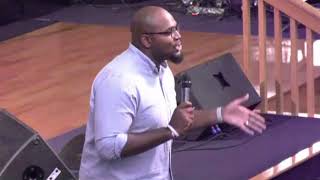
A preached sermon by Rev. Justin R. Lester (YouTube upload, 9/29/2017) centered on Luke 7:36–50 (the Pharisee Simon and the woman with the alabaster jar). Lester opens with a personal anecdote about being a new father (his four-month-old son, Camden Nehemiah Lester), then reads and expounds Luke 7, contrasting the Pharisee’s judgment with the woman’s grateful devotion. Major pastoral points: “Give yourself some credit” (recognize God’s help despite personal failures); your finish line can be God’s starting point; Jesus removes comfortable “security blankets” to cover people in new ways; not every off-ramp is your off-ramp (stay the course); and that Jesus stands in the gap for sinners and the struggling. The sermon includes candid pastoral application (addiction, pornography, anger, shame), congregational interaction (calls to testimony/praise), and an altar call/prayer closing.
Questions this video answers
Luke 7:36–50
Rev. Justin Lester 9.29.2017 (September 29, 2017)
Camden Nehemiah Lester — four months old
Chapters
So the introduction video mentioned this. And I'm gonna tell you right now because it's the biggest thing going on in my life right now. I'm a dad. I'm a dad. I love. I love everything about being a dad, right? And so I'm a new dad. My son is four months old. His name is Camden Nehemiah lester Nehemiah. Chapter 2, verse 8 says, the hand of the Lord is good upon me. My wife and I prayed over what he would be able to tell the story of his middle name. And his middle name story is the hand of the Lord is good upon me. So Camden Nehemiah Lester, my ace boom co. And so I love my little boy. And so, you know, international pastor off day is Monday, right? So don't call your pastor on Monday. That's my international pastor's off day. So pastor's off day on Mondays are now Justin and Cam day. I do everything that my wife does Thursday through Saturday on Monday, right? And so a couple weeks ago, in one of my days, I went grocery shopping, took them to the doctor, I cleaned the house. My hands felt like bleach. And so I did what every mom does when they go shopping. And that is you go to Target, right? And so I went to Target and I walked Jay through Target. You know, I'm chilling on the scene in my preacher lane, right? Whoop, whoop. And I'm jaywalking through Target. As I'm walking through Target, a group of sisters saw me and they said, oh, it's good to see one of these brothers do this. And I looked at them like, girl, I smell like bleach. I got spit up on my shirt. I had a dad shirt on too. I just have a shirt. I had a shirt that said dad on it. So I got spit up on my dad's shirt. My hands smell like bleach. In a grocery cart and a stroller full of groceries, pushing this baby who doesn't want to sit in this grocery cart and you're going to tell me I'm doing. So she started going off and telling me everything that I'm doing, doing wrong. And I wanted to say some four letter words that weren't Mark, Luke or John. And she told me something. She said, you'll figure it out eventually, baby. I've been at this thing for four months. So regardless, I go back home, got to my wife, I was upset. When I got home, my wife said, justin, what's going on? I said, you have no clue. My hands smell like bleach. I got Spit up on my shirt. I've been carrying this baby, put in a stroller and pushing a cart, got groceries, cleaning up the house, and said, and this girl gonna tell me eventually I'll figure out what it means to be a father. My wife told me something I'm going to never forget, and I want to give it unto you. And that's what we'll see in this text tonight. My wife said something. She said, justin, don't let them get all up under your skin. Give yourself some credit, she said, you're getting so caught up on one person's opinion, don't take offense because of their opinion. Give yourself some credit. God would not have given you this child if we didn't think we could handle the child. So rejoice over the fact that you had spit up on your shirt. But he didn't throw up. Rejoice over the fact you were carrying a baby with groceries in the cart, a stroller, at the same time, and the child is still alive when you got home. She said, give yourself some credit. And that's the word I want to give to somebody tonight that goes to every dad in this room, every student in this room, every brother in this room, every deacon in this room, every preacher in this room. Give yourself some credit. I know what you did yesterday, but God still sits in today pushing you into tomorrow. So give yourself some credit. You are the first person to deal with this. You're not the first person to go through it, but God has given you enough inside of you to give yourself some credit. And if you don't believe that it's real. There was one day, Jesus was invited to a dinner party at this Pharisee's house. In Luke chapter seven, if you have your Bibles, he was invited to a Pharisee's house. And as he got to the Pharisee's house, we know all the things that happen in this story. And we see what happens when Jesus looks at us and says, and reminds us with everything we have on our minds, with everything we're worried about, we're still worth something. So give yourself some credit. If you have your Bibles. We see this story in Luke chapter 7, beginning at verse number 36, Luke chapter 7, beginning at verse Number 36. You've heard this story. There's a song about another story that's similar to this story. But I want to walk through this text and show you how Jesus looks at us and says, give yourself some credit. It says this. One of the Pharisees invited him to eat with him. He entered the Pharisee's house and and reclined at the table. And a woman in the town who was a sinner found out that Jesus was reclining at the table in the Pharisee's house. She brought an alabaster jar of fragrant oil and stood behind him at his feet, weeping, and began to wash his feet with her tears. She wiped his feet with her hair of her head, kissing them and anointing them with the fragrant oil. When the Pharisee who had invited him saw this, he said to himself, this man, if he were a prophet, would know who and what kind of woman this is touching him. She's a sinner. Jesus said to him, simon, I got something to say to you. Teacher. He said, say it. The creditor had two debtors. One owed 500 in ARI, the other 50. Since they could not pay it back, he graciously forgave them both. So which of them will love him more? Simon answered, I suppose the one who forgave more. You have judged correctly, he said. Turning to the woman, he said, simon, do you see this woman? I entered your house. You gave me no water for my feet, but she, with her tears has washed my feet and wiped them with their hair. You gave me no kiss, but she hasn't stopped kissing my feet since I came in. You didn't anoint my hand with olive oil, but she's anointed my feet with fragrant oil. Therefore, I tell you, her many sins have been forgiven. That's why she loves so much. The one who's forgiven little loves little. That he said to her, your sins are forgiven. I want to concentrate on verses 39 and 40. When the Pharisee who had invited him saw this, he said to himself, this man, if he were a prophet, would know who and what kind of woman this is touching him. She's a sinner. Jesus replied to him, simon, I got something to say to you. Teacher. He said, say it. The Word of God for the people of God. You may be seated in God's presence. If I had to put a title on this, it would be Give yourself some credit. Give yourself some credit. The Luke and narrator gives us the story some 40 to 50 years following the resurrection of Jesus Christ. See, Luke's primary purpose was to share with us the salvific history and possibility that through Jesus Christ that everything that Jesus did in his public ministry was to share with us that salvation is possible and occurs through the love of Jesus Christ. That's why whenever we read through the Gospel of Luke, we hold to and grab ahold to the least, the lost, the left out, the left behind, and the looked over. Because Luke was teaching us that the gospel reaches everybody no matter where they are, where they're from or what they've done. And that's a word to every brother in this room this morning, that you are never so far from God. His love cannot chase you down and grab you where you are with what you've done in the worst place you've been. And I know we want to sit here and act like we're all perfect tonight, but somebody in the building can testify the only reason you're here tonight is because the gospel of Jesus Christ found you where you are. I wish y' all with what you were doing in the places you were in where you didn't think the gospel could reach. And you can testify, oh, what a wonderful change in my life has been wrought since Jesus came into my life. See what I believe. What happens, Pastor, is that in our study of Luke we've gotten so caught up in talking about those who are so far away from God and always talking about those who have sickness and addiction that we say the gospel isn't for you unless you've been in prison, drunk or high as a kite. But when you read Luke's gospel, the least and the lost were not always the poor people. Sometimes it was these rich and affluent people were as rich as they were. They were disconnected from God. And Luke says, no matter where you are, salvation is still important. I wish Shaw and that anything that Jesus can do to share with you the importance of salvation, Jesus will fight through your man made walls to get to you, to show you that I can still take you higher no matter how high you think you already are. So Jesus shows, I'll fight through anything. I'll make sure you're connected and committed to me. That's why Jesus never confirmed his messianic identity with worldly status. He never confirmed his messianic identity with earthly service. For when Jesus shows us is when what we do speaks louder than who we are. We finally are what God desired us to be. And that's what Luke deals with in Luke chapter seven. Y' all allow me. I came all the way from Providence. I want to work this text tonight. Jesus. Jesus has just finished sharing so many parables with the people in various cities and towns. In chapter seven, the transition we get is Jesus has entered this town called Capernaum. Capernaum, for Jesus was right outside of his normal ministry base. So as Jesus Travels from there. He then goes to Nain, some 10 miles outside of his hometown of Nazareth. And in the midst of all this travel, he's constantly bombarded with people who are competing for his attention and competing for his love. See, Jesus shows us something amazing In Luke chapter seven, he deals with people from the top of the totem pole all the way down to the bottom of the totem pole. He deals with people who are in prison, who are sick, and even someone who died. And in the midst of all of this, Jesus has healed. He shared the truth of the gospel. He's rebuilt a community. And after all of this has happened, the Bible says, and then a Pharisee who saw him said, hey man, come over to my house. Come hang out. Let's get something to eat tonight. And that's where we get the story of the woman with the alabaster box. Let me just throw this out the way, because we're not going to talk about her. There was a song made a couple years ago that really made me upset because it made it seem as if all four gospels talk about the same story. Let me tell you this. Luke is the only one who doesn't give us her name. All the other gospels tells us it was Mary. Let me make this clear. They're different stories. The Gospel of Luke, for our consideration, was at the beginning of Jesus ministry, where Mary was in the days leading up to his death. Death, Mary was a big deal because of the ointment she poured. The woman was a big deal because she was a sinner. Long story short, Luke ain't. Luke's story ain't Mary. And Luke is not emphasizing the alabaster jar. Luke is emphasizing that Jesus engaged with a sinner. So the main character from this perspective of this text, from a literary perspective, was not the woman with the alabaster box. It was the Pharisee. And I'll prove it to you. How do we know that? Verse 30 says. Verse 30 says, but the Pharisees rejected the plan of God for themselves. Who's the first person we see that Jesus invited Jesus to his house after he's gone through Capernaum and Nain. A Pharisee. Who has the biggest problem with a sinner? A Pharisee. What does Luke emphasize? The radical nature of the salvific power of Jesus the Christ. What makes this a big deal? So you remember, Pharisees put themselves up on a pedestal. They were the important people who judged the faith of other people. They would do their best to trap Jesus and to trap others. So they can wiggle out of something to make themselves look better. So before you in the room, say justin, but so fine, I don't have to listen to you anymore. Because, Justin, you don't understand. I'm the sinner. I'm the woman with the alabaster box. Let me tell you something. Ain't none of us in this room the woman with the alabaster box. I can prove it to you. In the text, the woman with the alabaster box was known by her sin and not her name. All of y' all just told the brother next to you what your name was. You exempted yourself from this text. The woman with the alabaster box, Pastor gave Jesus everything she had. A whole lot of y' all got mad. Your pastor asked you to tithe last week. Don't even tell me you're giving Jesus everything. I ain't scared of none of y' all gave Jesus everything that you had. The woman with the alabaster box was kicked out by everybody but Jesus. A lot of y', all, if you could, would try to kick somebody out your own church. So don't tell me you're the woman with the alabaster box. We are not the one with the alabaster box. We're not giving God everything. We're not giving Jesus all we have because we want to personify the woman with the alabaster box. But I want to suggest tonight we're just like the Pharisees. We're the Pharisee. We're the ones who invite Jesus into our homes and pick and choose what scriptures will live by today. We're the Pharisee. We're the ones who invite Jesus over only to brag, he came to my house and didn't go to your house. We're the ones who invite Jesus over and invite other sinners to the house so we can talk about how bad their sin is without talking about our own sin in our own house. We're not the woman with the alabaster box. We're the Pharisee. The Pharisee ain't just a deacon. You don't like an usher who's mean on the door. The preacher you don't like. The Pharisee is all of us. We all have some questions for Jesus that we're too scared to ask him. We all have some questions for Jesus. We put struggles in other people that we don't want to deal with ourselves. We blame the church for our spiritual growth and then never show up to small groups. We blame the world for not not being better than us. But we sit there and we want to talk about how we're just a person in progress. But you still show up at the strip club on Saturdays for two for this one. And before you think I'm talking about you, baby, that's called conviction. I'm just explaining this scripture. But here's the good news, Dr. Curtis. In the midst of my Pharisee life, in the midst of my Pharisee tendencies, in the midst of the times I want to trick Jesus, in the midst of my ulterior motives, here's what shouts me in this text. In the midst of all of the things I do wrong, Jesus still comes to my house. I wish y' all grabbed me in this text. In spite of all of the times I've tried to trick Jesus, Jesus still came to my house. And I wish I had some real brothers in this building this evening who can testify it's part of the times I didn't go to Sunday school, He still came to my house. The times I didn't give God 10%, he still came to my house. In spite of the times I did look at that girl too long after she turned around, he still came. Am I talking to anybody who could be real in this room tonight and can thank God? In spite of all the sin I've committed, all the trickery I've done, all.
The times I tricked Jesus, all the times I didn't give to him, I thank God.
Am I talking to anybody in this.
Building who can thank God Jesus still showed up at my house?
So give yourself some credit. As insecure as you are, as prideful as you are, as arrogant as you are, as addicted to yourself as you are, as much as you don't forgive others, as much as you don't give to God, Jesus will still show up at your house. I'm talking to folk in this room tonight. As strong as you are, as good looking as you are, you spend a whole lot of your week beating yourself up for things that you refuse to share with other people. And so think about it. You say these things under your breath to yourself. You say it there. Oh, well, you know, I'm not a bad person. They just misunderstand me. My daddy never cared about me, my mama never cared about me. And so that passive aggressive mindset drives your activity, your life, your love and your care. So, pastor, if I 168 hours a week, if I beat myself up 166 hours, when I come to church for two hours, no wonder the first thing I do when I walk in church is to try to beat somebody else up. Because all week I've taught myself how to beat myself up. No wonder when you go to work on Monday or go back to work on Tuesday, you're gonna beat other folk up because all weekend long you've been beating yourself up. So you put on others the things you don't want to deal with. And so you talk about what their addiction is. You know the reason you know what addiction looks like because you've been addicted before. I wish y' all you can sit here, talk to back to me if you want to. The reason you know what a $20 bag of weed looks like? It's because you know what I wish y' all 20 bag of weed looks like. The reason you know what lack of forgiveness verbs and words sound like is because you're still dealing with lack of forgiveness yourself. The reason you know what insecurity looks like, the reason you know what pride looks like is because you know what it looks like in your own life. But the text shows me Jesus loves me too much and wants the best for me too bad that he'll come to my safe place in home and deal with things at home because he knows the ministry on the other side is more powerful than the closeted storms I put myself through. Here's what I'm trying to prove to you tonight. Your ministry is bigger than your self inflicted misery. So give yourself some credit. What am I trying to prove to you? Two things, very quickly. I'll be back in my seat. Number one. The text shows us, number one, that your finish line is God's starting point. Did you hear me? I said your finish line is God's starting point. Okay, So I was, you can see I'm kind of big. So I was a track person. I ran track in high school, but I was a shot put. I was on the fat boys in high school. Don't judge me because I was 300 solid. Solid right? Tore my ACL so college didn't look at me, but I was solid. And so I was a shot put and discus thrower in high school. So at the end of the track race, all my shot put discus throwers remember this. We had the fat man relay. And it was the best time because she showed all them skinny boys that fat boys know how to run too. And so I never forget. So we had the fat man relay. So it was a chance for us to prove to all the in shape folk. The out of shape folk can still run too. And so we did a four by one. We did a four by one. So I remember they never let me be the last leg because I told them I was in shape. But nobody let me ever close the race. That was the leg nobody wanted to be. I was the second leg. I didn't care, though, because I was still in the game. Don't judge me because I'm still gonna get the trophy on the other side. And so I'm sitting there. I was the second leg. So I remember as we trained for this, we trained for like five minutes as we trained for this, they showed me that all we're going to do is that as a second leg, my job was to take the baton from the first leg and hand it to the third leg. So my only job was to let this person finish. I get started and hand off. Now, we are still going to finish the race, but when they finish and I get started when they finish, I got started. When I finish, somebody else got started and we're still gonna get to the end of the race. Don't miss me here. When they finish, I got started. When I finish, they got started and we're still gonna be a team and get to the end of the race. And one of the things that God has shown me here is don't despise when God makes you finish some things in your life, because when you finish, God gets started. I wish y', all, because so often we're trying to run the race to by ourselves, but sometimes God will let you make you finish some things to show you that I can be the one who can finish this race. And I'm talking to some brothers in this room who are control addicts and control freaks. And what God is telling you, you stop worrying about it and let me finish it. You stop trying to fix it and let God fix it. That's why the writer said, be still and let God fight your battle. So, Pastor Lee, I've gotten to a point where I love God so much, every once in a while, I just sit down and watch God work his magic. I sit back, watch God make a way out of no way. I sit back and watch God open doors. Am I talking to anybody in the building?
This is the season.
I'm not going to force God. I'm going to sit back and watch God because God can still open doors. God can still make a way. God can still provide for you. But God says there are times where you've got to stop trying to fix it and let God finish it in your life. I'm in the text, the Pharisee invites Jesus to his house. Jesus comes to the house, and the text says, jesus is reclining at the table. Now, everybody didn't recline at the table. He only reclined at the table. If you were comfortable in the house, it was normal custom for those traveling rabbis to stop at somebody's house and teach. So here Jesus is, after he finishes eating, and Jesus reclines at the table. And it showed me something. Because there's something powerful about a comfortable Jesus. There's something powerful about when Jesus gets comfortable at your house. Because when Jesus gets comfortable at your house, Dr. Cur is he sees the places where you hide the liquor that you didn't want the pastor to see. When Jesus gets comfortable at your house, he saw what time you got in last night. I wish y'. All. When Jesus is comfortable at your house, he saw when your phone lit up and that wasn't your wife's picture. I wish y'. All. There's something powerful about a comfortable Jesus at your house. Not at church, but when Jesus is comfortable at your house, because at your house, they know you. At your house, they understand you. At your house. Your house, you take your shoes off. Because it's harder to do ministry at home than it is to do ministry at the church. But here's the tension. Not the sin, not the invitation. What's most frustrating here is Jesus got comfortable in the spaces where I enjoy sin. And so the woman comes, she does her thing. Verse 39 happens. And the Pharisee, the Bible says, had internal dialogue. And Jesus, we know, calls him Simon. Now, if Jesus, he said, if Jesus was a prophet, he wouldn't let this sinner touch him. Now, what makes this powerful, makes this powerful. Pastor Justin, we see something from a literary perspective that's really unusual in ancient literature. Luke uses internal dialogue. It's rarely used in ancient literature. Why? Because of the oral and oral nature of Scripture. That means this story for some 30, 40, or 50 years had to be passed down. And every person that told the story said, and as Jesus showed up, this. This man had an internal question. This story had to be passed down. So every time it was clear, this man had an internal dialogue. What does that mean? Internal dialogue means this man was in a personal crisis. And for this text, it cries out. This crisis Simon was dealing with was, is he a prophet or is she a sinner? I can't understand, because prophets aren't supposed to talk to sinners, because that's what Pharisees do. But am I a Pharisee? Am I prophet? Is he a prophet? Is she a sinner? Is she really what everybody said that she was? He may not understand that this woman he. He may have invited this woman he knew could not possibly be a prophet. Because what happened was Simon put on a prophet what Pharisees do. But I love Jesus because Jesus forced him to say what he was thinking. Because some things happen when you hear what you're thinking about. This man was a Pharisee. He knew religion, he knew structure, but he didn't understand and like salvation. Because I've learned that some things are a lot cuter in concept until commitment is required. Okay, okay, okay, I got you. Some of you like the idea of marriage because you ain't ever had to clean up married problems. I wish y' all you watched a whole lot of rom coms and a whole lot of black romantic Christmas movies, and you got so caught up in what Taye Diggs was doing, and you realize when you got real and she take them shoes off, take her bra. I wish y' all take her bra off. Put them rollers in. You realize marriage and what you saw on the movies. I wish y' all some pastors like the idea of a growing church until you realize 200 people problems is not the same as 50 people problems. I wish you some things are a lot cuter in concept until commitment is required. And so many of us are asking God for destiny without any idea of difficulty. So the Pharisee was finished there. Is he a prophet? Is she a sinner? That was the Pharisee stopping point. And Jesus said, I'm moving you from the concept of salvation to committing to salvation. He's a prophet and she's a sinner. And prophets and sinners will work together to be saved. See, the man was finished. His finishing point was the place where Jesus got started. Because every time things get hard, I'm talking to brothers in the room. Every time things get hard for you, every time you get to a place where you're wrestling with the truth of your life, you end up end it with anger, you end it with pride, you end it with fake tears, you end it with manipulation, you end it with a drink, you end it with the strip club. You ended with texting the wrong person. We end up with sleeping with somebody else. And you use your intelligence and your manipulation to have an internal dialogue like this Pharisee. And you try to exempt yourself from changing anything. So you get secure in your anger. I'm right here with you. You get secure in your pride, you get Secure in not forgiving that brother, you get secure in not forgiving that sister. And that's where you finish the conversation. Because every time things get strange, every time things get difficult, you run to getting angry, you run to crying, you run to manipulation. You talk about your past, everybody runs away. But Jesus says, you can't play those games with me. I like Jesus because Jesus says, I'm snatching away your security blanket and I'm talking to some brothers in this room this weekend. God says, I'm snatching your security blanket. I'm not letting you stay in a place where you get comfortable with your anger, with your pride, with your closeted sins. Jesus says, I'm snatching your security blanket. See, this man was trying to trap Jesus. But Jesus says, I'm not going to let this See, I like this because Jesus shows us. I'm going to challenge your immediate reactions and to remove your security blanket. Brothers, how do you respond when Jesus snatches your security blanket at home? I mean, how do you respond when your child walks on the room where you were watching the porn the other night and you're watching porn? Your child happens to walk by and click the history and they see a whole lot of websites. I wish y' all talk to me, there's 74% of y' all in this room. If I check the history on your phone, statistics say that 74% of y' all in this room had some porn on your pornography in the last seven days. What do you do when your child tapping to check your history and sees a website that should have gone to. What do you do when your phone is on the other side of the bed and your spouse happens to see that female that goes to church with you that sings in the choir, her picture pops up on your phone, just asks you hello at 2 o' clock in the morning. What do you do when your child walks into you and your wife arguing and you're sitting there now your child walks in? Or you promise never to argue in front of your children? What do you do at the family reunion when the argument doesn't stop? What do you do when somebody finds the knife that you tried cutting yourself two weeks ago and sees the dried up blood on your knife? What do you do when your friend walks into the room and they see you wanting to jump out of a building and drinking when you said you stopped drinking? How do you respond when Jesus snatches away your security blanket in your comfortable places? Am I talking to anybody in this building? But here's the good news of this text. Here's the good news of this text. Jesus only removes your security blanket so he can cover you in a brand new way. I'm Jesus only removes your comfortable stuff. Am I talking to anybody? What would your life look like if you didn't run to anger but you started adoring the Savior? What would your life look like if you didn't run to pornography and you started praising God? What would your life look like if you stopped texting her and started praising God? Am I talking to anybody in this building?
God, remove the stuff I'm comfortable with.
And show me how you love me in a brand new way. And I'm looking for some brothers in this building tonight. God, this is the last night I run to pornography.
This is the last night I let.
My anger hold me.
This is the.
I wish I had somebody.
The last night I text that girl again. This is the last night I drink myself to sleep. Again I cry.
Am I talking to anybody? God, remove my security blanket and show me that's what my grandmama said. Oh, to be kept by Jesus. Is there anybody in this building who can say, God, I want you to move some stuff from me and cover me in a brand new way? Jesus says, text shows me finish line. It's God's starting point. But last thing, finally, every off ramp is not your off ramp. Every off ramp is not your offering. There's always an off ramp on the road to destiny. There's always more off ramps whenever you get closer to a bigger city in rural areas, and not a whole lot of off ramps, but as you get closer to the the city, there's more off ramps. The challenge is taking the right off ramp. When you see so many off ramps, it's easy to quit when things get difficult. But I love the text because when the Pharisee wanted to get on his off ramp, Jesus said, stay on course. And I'm talking to somebody in this building. What God is simply telling you is stay on course. Stay at that school, stay on that job, stay in that marriage, stay in that home, call the counselor, stay in that apartment, don't buy that house yet because that's. That's not your off ramp. How did Jesus show me it's not my off ramp? Verse 40 shows us this. Number one, I'm worth hard conversations. I'm worth hard conversations. Text says, jesus said to Simon, simon, I have something to tell you. Simon says, well, tell me. Jesus gives him a parable that deals with how far to stretch to forgive someone. So without going into intense detail, in the situation, here's the principle. God lets me wrestle. That's it. God lets me wrestle. Jesus allowed Simon to engage in a hard conversation. And he wrestled with Simon because in the wrestling I developed new skills. In the wrestling I learned new things. And I'm talking to people in the room, frustrated with God because God seems to have restricted some things on your life, have altered some trajectory on your future. What if you tell God and God is trying to show you. I just want to have a different type of conversation. Don't be upset with God, but rejoice because God is showing you your worth. Difficult conversations. God's stretching you to teach you how he thinks. God's stretching you to teach you how he sees things. To show you what new scripture and to show you how more things make sense. To reveal himself in a new way. Because once I understand how God thinks, I can access what God says. Every conversation with God is not about addiction, addition. A lot of it's about becoming. Somebody asked when you talk to God, does it resolve revolve around stuff or substance? Are you more focused on what you can accumulate or you can become? Because when you have stuff, it's only a matter of time before stuff runs out and you have no substance. But if you have substance, you can keep that stuff. I gauging hard conversations and I'm finished. Then Jesus I'm finished. We Jesus does is every off ramp is not my off ramp. Number one. I have our conversations. But secondly and finally Jesus stands in the gap. He stands in the gap. I'm done. Give yourself some credit because your finish line is your start. Got your finish line is God's starting point. Give yourself credit because every off ramp is not your off ramp. Why? Because you're worth hard conversations. And because Jesus will stand in the gap. Watch the text. Simon. The Pharisee did not want to forgive this woman. Let me make that clear. The text says, and the woman is still in the room. So Jesus and Simon are having this conversation and the woman still in the room. And Jesus tells Simon the story. He explains forgiveness in a way that makes sense to him. And Jesus forgave the woman. I love this because we never see the man forgive her or seek for forgiveness for how he treated her. But what we do see is that in the middle of the Pharisee figuring out all the reasons why he shouldn't do it, Jesus stretched for the Pharisee and stood in the gap. Because in the times when you don't want want to do it, Jesus ministers to who you're becoming God. And so Jesus will stand in the gap of the issues and the places of your life when you don't feel like stretching. See, God doesn't just make a way. He'll stand in the gap. And I'm not just talking about paying your bills and seeing you through. He stands in the gap when you don't feel like forgiving and he'll forgive for you. See, I talking to folk in this building who can testify. Jesus doesn't just stand in the gap on your easy issues. He stands at the gap on your hard issues. I mean, when you didn't want to forgive your mama for how she treated you 25 years ago, God stood in the gap and rebuilt that relationship. I wish y', all, when you didn't want to overcome the addiction you started, God stood in the gap of your private sin. When you didn't want to lay down your pride and arrogance, he stood in the gap gap and built that relationship. And I'm looking for some honest brothers in the building that can testify with all the pride that you have, all the arrogance that you have, all the lack of forgiveness that you have, all the addiction you fall entrapped to. Aren't you glad you serve a God who stood. I wish y' all in the gap. See, that's why your family didn't fall apart. Because God stood in the gap. That's why your home didn't fall apart because. Because God stood in the gap.
That's why you still got a job.
Because God, I wish y' all stood in the gap. That's why you haven't lost your mind. Because I wish y' all talked to me.
Because God stood in the gap.
That's why you're still alive this morning. Because God stood in the gap.
Because when I didn't want to forgive.
He stood in the gap for me. When I was still full of my pride, he stood in the gap for me. When I didn't want to live anymore, he stood in the gap for me. And some of you saying, justin, when.
Did he stand in the gap?
My Bible says 2000 years ago, I.
Was shot on a hill called Calvary. My God stood in the gap. He stayed on Calvary's cross and hung for me. Is there anybody in the building that.
Can help me close this sermon?
Stand on your feet and begin to thank God. He stood in the gap. I'm sorry, y'.
All. I got four degrees. I'm intellectual my way out of here.
But when my soul looks back in wonders, all the times I did the Wrong thing. I've got to praise God that he stood in the gap.
Have I got a witness?
I dare you to grab somebody, look them in the face and say the reason I'm standing here. Cause he stood in the gap for me. Didn't he do it for you? Didn't he make a wait for you? If you know the Lord stood in the gap for you, open up your mouth, lift up your hands and give God your best praise. Give him your best holler. Give him your best dream. Tell them thank you for not letting my family find out about my addiction. Thank you for forgiving me. Didn't he make a way for you? Toss your head back, open up your mouth, close your eyes and tell them thank you, thank you, thank you.
Yes, Praising him.
I dare some brothers to open up your mouth. Give God a shout for standing in the gap for you. Come on, open up your mouth. Thank you, God, for not letting them.
Find out about my pain.
Thank you, God, for covering me in the divorce. Thank you, God, for covering me in my addiction. But every brother, open up your mouth, God. Thank you, God. Thank you, God. Thank you, thank you.
You know, I remember. I believe when you tell your story, Pastor, you can own your story. I was in divinity school. I'm finished. Everybody standing, because I want to pray for us. I was in divinity school a couple years ago, and there was a night, it was two months of my life, where I was dealing with severe depression to a point where I never forget. I was sitting in my bathroom tub and I had cut myself so deeply. So deeply. I said, man, I can't come back from this. I texted my girlfriend at the time, now my wife. I said, I'm just not gonna come back for this. I had cut myself so bad. I text my pastor. I just loved him. And for some reason, I woke up the next morning and I was so mad. God, why did you make me wake up? God knew I had to come to Sam Fairfield a couple years later. But, God, why did you make me wake up? God knew I had to pastor a church in Providence, Rhode Island. God, why did you wake up? Because God knew I had a son that he had created in heaven that needed me inside of him. And what God is sharing with some brothers in this room today. God says the reason I didn't let all of that stuff stop you is because I'm standing in the gap for you. Standing in the gap for you. So give yourself some credit. It brothers. I know what the world says you can't do, and you want to give up and fall into anger and into addiction and pits of pride. And that's why this weekend so powerful, because you're going to deal with pornography addiction, you're going to deal with dating issues. But what God is saying is, listen, stretch as far as you can. And God says, the further you stretch. He says, I already stretched for you anyway. And I'll stand in the gap. Anybody glad about that? Tonight, I want to pray for you. Every head is bowed, every eyes closed. And I want you to think about that thing in your life where you're saying, God, you can't fix that for the Pharisee was who was forgiving sinners. What is that thing you're saying, God, you can't. You. You. You're strong, but you can't. You can't do that. What is that thing? I want you to lay that on the altar. Maybe it's your marriage, maybe it's that issue you have, that addiction, that job. What is that big thing you're saying, God, you can't do it. God says, lay it at my feet. God, hear the prayers of my friends tonight. Hear the prayers of our friends tonight. God, you know the closeted issues, you know, the things, God, they only deal with at home. But today, God, you're saying you're going to give them a very public praise for some private sin, sins that you're standing in the gap for. God, I'm so grateful tonight for every one of these things that are laid at the altar. God, I pray right now in the name of Jesus. When you pick it up, we don't try to grab it back from you. God, stand in the gap on our addictions, our forgiveness, our pride, our pain. Thank you, God, for doing it years ago. God. And God, when we want to run away, we want to fall back into those traps. God, I pray right now in the name of Jesus, you keep us from ourselves, engage with us in those hard conversations. And, God, remind us how you stood for us a long time ago. We don't need to do it on our own. So, God, I pray for every one of these brothers in the room tonight that when they leave from this conference this weekend, they're going to be different men. Men, God, who have taken the mask off to show your love. And God, when we take the mask off, we'll see some scars. God, we take the mask off, we'll see some aging. But, God, I thank you that it's nothing wrong more than a part of our story that we can tell you, God, that the bruises we had, God, or God, things that you. You taught us something new about your word. The cuts we had in our bodies. You taught us something new about your word, God. Because you have something still for us on the other side. So, God, thank you for this time and we can adore you. And thank you. Thank you for reminding us of your glory, of your peace and of your love. God, we lay these at your feet. Take it from us so we can worship you in this space. It's in Jesus name we pray. Amen. Come on. If you love the Lord, know the Lord loves you. Give him praise. Speak to my heart.
More from Justin





AI gives you hours back every week. Most people's first move is to fill those hours with more work.



Most people stall out on AI at the exact same step. They don't know where to start.

Thank you for the follow-ups, the messages, the emails, all of it since the New York Times piece. Gr

The New York Times spent a weekend with me. Digital twins, AI, the local church, all of it.
