Social Justice & Maternal Health - LunaYou
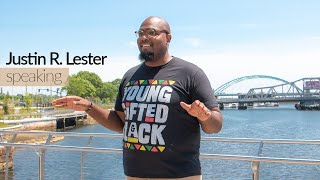
This is a Luna U YouTube conversation (Feb 26, 2021) between Court and Pastor Justin R. Lester about social justice, maternal health disparities, and mental/spiritual wellbeing during the COVID era. Lester frames the current moment as collective grieving (not yet a coherent movement), highlights how racism and misogyny contribute to worse maternal outcomes for Black and brown women, and offers pastoral guidance—self-awareness, home leadership, sleep/language habits, and resting practices—to sustain wellbeing. The video closes with a Luna U recruitment call-to-action for expecting people.
Chapters
Well, hello everybody and welcome back to our Luna U Check ins. Super excited that you guys are here today. Happy belated breastfeeding week. Last week we talked about breastfeeding and we welcomed back Danica Nguyen who is a lactation coach as well as a midwife. And she is is just a source of knowledge for particularly our women in Lunie U to ask questions about breastfeeding and lactation. So super excited to have her last week. But today I thought it would be great to introduce a special friend of mine, my husband, Pastor Justin Lester. And we are gonna be talking about social justice and maternal health and seeing that in the lens of mental health and spiritual spirituality, I thought would be a really good topic for this week. If you are watching this and you're wondering what is Luna U? Luna U is a maternal well being program that is designed to help to walk alongside of you and to help to empower you, provide you a well being dashboard that looks at seven key factors of health and well being as well as helping you through find power from the inside out. And so we're super excited. We are still in our recruitment stage. So if you are currently expecting or know someone that would be expecting a child anytime, please send us their name. If you have any questions for us or want to know more information, you can visit our website@www.lunau.com. but without further ado, I really am excited about this topic. I think this topic is timely especially because because of our world and the things that are happening in our world and how we're helping to make sense. So I thought the best person to come and talk about this and how to navigate through it all would be Pastor Justin from Cottage Street. Hey, Pastor Justin.
Hey. Thanks for allowing me to be here. Glad to be here with you guys.
Yay. So tell us a little bit about you and what.
Yeah, no, this is awesome. I'm married to Court. We have one child together, Camden. And what else? A pastor church. I teach at Providence College, things like that. And just really praying to be a person, to leave a mark in the world. I think everything needs to be done for the betterment of people. And so I think the avenues that we're working in are to encourage and enhance for the betterment of people.
And tell us a little bit more about what class do you particularly teach at?
Provided. So I teach a class adjunct there. I teach a class called Black Family Faith and Community Spirituality where what we do is it's an immersive course that goes into the community to really kind of pick out and pick in what are different ways that blackness and brownness are being expressed in their faith, in their families, and how we see that culture is really the driving force for black theology. And so if culture is a driving force, you have to understand it. And so our course does that. And so we take a look at books and their own personal stories and journeys, because I think once we're able to understand our story, then we're then able to listen to other people's stories. I think one of the reasons we can't listen to other folks stories is that we don't know our own and don't want to admit our own. Right? And so the course is built around case studies and spiritual stories and avenues and journeys and interviews. And that gives us light to really grab a hold of our narrative where our narrative fits our biases, our assumptions, because it's amazing what we won't listen to because we refuse to listen to it, but won't admit that we're refusing. Right. And so I think bias and assumption are one of the major, major things that recuse us from the opportunity to see actual change. Because we don't want to admit that I'm biased. I don't want to admit that I have assumptions that I don't want to admit that that's guiding my decision making. And so this course unearths those and names it. And it's a lot of fun. It's ugly course. There's ugly sessions, there's beautiful sessions. But it's funny because I joke about there are certain things I can talk about in that class and I won't bring to the pulpit, which in and of itself is a whole conversation of grief. But I think it's a really immersive space where we're actually able to holistically look at people and holistically do studies on communities, faith, spirituality, confront things in it, then see the beauty behind really, the story of Jesus holistically.
Yeah. Wow, that sounds interesting. And I think it's a perfect segue into today's conversation. As we talk about it seems like just black people as it relates to health and justice and everything are at the spotlight, right? And one of the things that we say, we actually have a sticker about it is like, listening saves lives. It's one of our newest stickers that we've created. And so we love to say that listening saves lives. So whether you're in the position of being an ally to the fight or currently in the fight, whatever it is, that we all are in a position to Listen, right? We're all in a position to sit down and to listen to each other. But first, before we even talk about listening, how would you kind of define what is going on in today's climate as it pertains to, like, social justice?
That's a lot. It's a loaded question. I think spiritually. So I think spiritually, we're in the midst of the next Great Awakening. I really do. I really believe we're on the verge of the next Great Awakening, and that is that we're actually unveiling another piece of the divine and experiencing the divine. I think that's where church is, black churches and all of that. In terms of blackness, I think we're at this. I'm not gonna say tipping point. I'm not gonna say it's on the civil rights movement. I'm not going to say it's the Black Lives Matter movement. I think we're just at this, like, you know, you're in a relationship and it's, like, abusive, and you just don't want to say anything because, like, you're in it, right? And it's just like you're happy to be in kind of in a relationship, but you're not happy at all. And then eventually get to a place where you just refuse to take it any longer and you stand up for yourself. I feel like we're all just at that place right now and that we're just. We're not going to take the. I think it's just all a lot of grieving. The loss of parents, grandparents, children, lives, narratives, the rejection letters from schools, the rejection letters that our parents receive, the microaggressions, the macroaggressions. I think all of it is just ahead. And I think we're in a collective grieving space where we're all kind of grieving. The loss of things, the loss of bodies, the loss of people, this unnecessary. This unnecessary fraternity that black parents have been put into because their children have died at the hands of the state. I think that's. We're all grieving that. And I don't think it's a movement yet. I think right now we're just collectively grieving. And what didn't help is that we're collectively grieving and Covid hit. So now we have no place, no outlet to push that. And so movements and movements are different starting. They have a starting point that has a list of demands, connections, possibilities, locations, and not political partnerships for presidents. But. So I think this is more of a. I think this, like, you Know, like at a funeral, you have the funeral and then like the reception. I think we're in the middle of that funeral and reception right now, where it's like at the reception now, the family can come together. The family can discuss what's going to be next. The family can then go read the will. The family can think about insurance policies. And I think we're not. Not at the reception yet. We're also out of the funeral. Like this happened and there's nothing we can do about it. But we're in this middle phase where, like, what to do next in the.
Gap, if I hear you right, between, like, grief and healing and taking care of business. Almost like that.
Yeah, exactly. And so we're in this, like, visiting the tomb phase, and it's a weird place. So it's not a movement. I don't think we're at a movement part yet. Because if we're at a movement, you have demands, you have clarity, you have leaders, you have locations, you have timelines that just not met. This is what's going to happen. But then that also means some leverage. So I don't think we're there yet. I think we're in this middling ground. We're trying to figure out what should we do, what shall we do so that our children don't suffer and have the same. Like, we have the same narrative as our parents now. While it may not have been Jim Crow, it's the new Jim Crow. I'm fearful of what is next and that I think we're in this middling ground where we don't want what our parents had or our grandparents had, but we don't know what to ask for and don't know what to do. And half of us ain't registered to vote. So I think that's the weird place that we're in right now where we're in between the death and in between the healing and the death and. And that means you have a lot of wounds and they suck and they itch and. And I think. But what Covid hasn't allowed us to do, what social media hasn't given us a chance to do, is put the band aid on, right? So we're walking around bleeding, and I think that's what makes it so difficult. And that bleeds over and reveals all the wounds we have. So I think even getting to this today, you have the wounds of health care and a lack of health care reform. You're the wound educational pain. You have the wounds of societal things, the wounds of sexual things. Social justice, sexual justice, gender justice. I mean, you have all of these things that have been revealed. Affirmative act, I mean, all these things revealed. And now we're in this place where we don't know what steps to take. Because those of us in education want to fight for education. Those of us in help want to fight for help. Those of us in, in communities want to fight for the community. And those of us that wanted to fund the. I mean, there's just 10 different narratives. And that's then how those in power win. Because, you know, if instead of one person coming in and fighting one battle, where we got 10 people coming in to try to fight a battle, and now no one's getting a meeting, and that's how you lose. So I think it's just a weird space that can be beautiful if handled correctly.
I love that there was a lot of things that you said in there, but one of the things that stuck out, because that's the true work of being empowered and self empowerment is one of those competencies that we work on that really aid and pour into your well being. Right. Well being as a mother, maternal well being specifically. And so in that is like, you know, doing the work for empowerment. And that can be ugly sometimes. Like you mentioned, that can be hard. It can be advocating for yourself, but advocating sometimes doesn't look like how everyone thinks it should look. It can be hurtful, it can be freeing. But it's necessary to kind of aid in your well being, to advocate for yourself and to be empowered by yourself through yourself. And so I love that. And you talked a lot about just like, you know, we're losing and we're grieving. I know by you being married to me you already know like the bleak statistics of like maternal health that black and Latino women suffer the most as it comes to child and that it was easier 30 years ago to give birth than it is like today. And that's, that's crazy that we're still having these conversations like you're mentioning over and over that all things that boil down to it is just race, right? That a person or a woman may not successfully give birth only because of her race and she may not be listened to. And time out for like all of that. And I think as a country and as a whole exactly what you're saying. We're like in the gap right now of grieving that and trying to figure out what's the best course of action to say, like, hey, how am I heard? How can I do that? And of course, even as an Expecting woman that's expecting a child to have to grieve the process because we're currently in a pandemic now, right. So it doesn't even look the same as maybe their previous pregnancies looked or how their friends pregnancies looked earlier pre Covid and kind of navigating through that space. And so I did want to like shift too because it's a lot seeing the news every day. We're coming up on a big election time and all of that. How as a pastor, do you think we can navigate through it all.
And.
Help and aid in our well being?
I think two things there, One, going back to what you mentioned about black and brown women and all this, I think what we have to confront also. Yes, it's, it's, it's boiled down to race and gender, right? So misogyny is really, really like, there's a, it's a problem to me when you look at a lot of these corporations and boards and they care about engendering and eradicating racism. But it's all white male boards, right? All white male leadership. That to me is not going to then engender anything. So we can't look at our hospitals who are saying, yes, we care about black women coming in, brown women coming in. We care about dual language individuals. To me, America was built, it was built on the backs of, of black women, like period, point blank. And I think the reason we're so unstable is we've rejected our backbone, right? And so like we rejected the very thing that built the country, took care of children, built things. And so now we're sitting here and these issues that we're having. So that's not even respecting the black women doctors to assist the black women. Not because the black women don't respect the black women doctors, but it's the peers that won't even make them aware of the situation and won't listen to them when they confront their bias in staff meetings. So there's so many different things that we see happen or making fun of their name or we've heard the stories recently of how doctors will go by different names or different pronunciations. We saw a TV show last week about how the brother wanted to change the way his name was pronounced so that he could get more clients and people would respect him because if they heard the way his name was really pronounced, they wouldn't respect him. So I think that's part of it. So the misogyny has to be put into that as well, that it's this misogynist egotistical thinking that is allowing death to happen. And we don't want to call it that when a college is error. No, it's misogyny and racism is killing children. And so if we're going to be so pro life that we got to confront our racism and misogyny as well. Right. It's not just we have to. Another part in terms of pastoring through all of this, you know, I'm. Personally, I think where I differ a little bit than some other pastors in this response is that I'm honest with the fact that I don't know what in the world I'm doing. And I'm yearning to figure it out. Right. And I think that's what we have to give ourselves. It took me like a month and a half to get to a place where I could admit that. I think one of the places, the first place of leadership in our lives is parenting. Right. As a parent, you are not an effective leader in the world if you're not an effective leader at home. And so that goes from mothers and fathers, single parent households, all of that. If you are not an effective leader as a parent, you will never be an effective leader in the world. And so what do we do in this one? But the first thing it starts is at home, how are you leading and communicating with your children? Like, how did you tell your children about Chadwick Boseman's death? Right? Like, how did you lead them through understanding and grieving loss? How are we communicating? You know, Cam. And so Cam was watching Daniel Tiger and they were communicating Covid the best way they could. And how are we communicating to our children about what's going on in the world? And then what we say to other people is really reflective of how we say things and think about things ourselves, Right? So that then reveals to you. So if you're saying Covid's gonna pass over, just get through it. Wear a mask. It's stupid. Oh, my God. I keep forgetting it. That then reveals to the world how you really see this situation. And that is, I don't respect it. I don't see it as real. Right. The same thing with pregnancy, that if it's. I'm just gonna. We're gonna going to fight through all this. That means you're going to see your children as something to get through and to fight. So I want to confront your language, right? What is the language you're using? But also, like, what are you doing in your. Your free time? Like your dreams? We sleep almost. I mean, a third of the day. And so how are you coding? Like, what is the framework you're giving your dreams, Right? And not just your dreams. Extensively. Like, I'm dreaming about a car. This. Like, what is the framework you're giving yourself before you go to bed, right? Like, are you. Are you reading certain narratives? Are you. Like, if you're watching, like, for me, one of the things I'm trying to get out of, I'm not there yet. You know this. I'm not all the way there, but I'm trying to get away from watching TV before I go to bed because I'm noticing that the TV shows I watch coat how I dream, right? And therefore, that language is going to then encourage what I then do the next day or the next week. So if I'm watching something about greed, if I'm watching something about war and famine and fear, then that fear, worry and famine is going to then coat what I dream about, which then that's a third of my day. Like, think about that. If somebody was speaking to you about greed, worry, and famine for. So what are you listening to? It's amazing that we have babies listening to calming music to go to bed, but then we're listening to rap music. It's amazing we have babies, turn the TVs off and go out blackout. But then we're over here watching televisions about dysfunctional relationships and greed and death. It doesn't make any sense. And then we wonder why we wake up in the morning, we go to work, or we see our children, and we wake up angry about death, angry about fear, angry about worry, it'll make up an imposture piece. And then also, how are you going to sleep? What's coating your mind? And then how are you taking care of yourself during the day? Where is a reprieve for you? If the reprieve is nothing but the bathroom with the door closed, if the reprieve is waking up 30 minutes earlier, if the reprieve is taking a lunch break and walking, or not walking and just finding a bench to get outside of your place of work, getting outside your home, communicating that. I think that is what's going to assist us in. Because Ulysses Grant, that the leader, he did something powerful. And he said that he would always. Before he made any decisions, he would always peel back for at least an hour in silence before big decisions because he wanted to make sure he didn't lead. Difference. Difference is just. Differences are like, we have different ideas, Division happens. We have different behaviors. And so now he would peel back to make sure. He wasn't leading to make something divisive with his behavior. It wasn't leading with something, with ideas because it's just a tactical move, but making sure that what we're going to do, if I'm going to make a decision, I stand on it. I think there are moments where we have to peel back, pull back, check what we're dreaming about, check our relationships, check what we're doing throughout the day, day. And that will then lead us to be able to make sure we're dreaming and thinking in ways that may have never been dreamt and thought of before. And I think that's what can bring out, you know, actual, actual peace and not faux peace because it was a good status. I think that's what could be a. That's. I'm trying to navigate this space personally and then lead the spaces I lead to do the very same thing.
Yeah. Wow, those are amazing. I think that's, that's doing all that, you know, changing our language. What are we like, you know, what are we doing in our free time and how, what are we, you know, watching or engaging in before we sleep, which is one third of our thing and our sleep patterns, those are one of the seven indicators that we see that research tells us go into well being. And sleep is very important with how we perceive our world, perceive ourselves and kind of walk in that well being. And then lastly, it's like, how am I taking care of myself? I love that. And all this is found in Luna U. Thank you so much, Pastor Justin, just for your time, for being here, for helping us learn a little bit about social justice and knowing like how we can navigate through, even for the ladies in one of you, how they can navigate through. And just for those who aren't, these are just great tips of well being, especially in this time. That's unprecedented.
Totally.
Do you have any last words for us or anything?
Not really. I think the main thing to me is don't try to make sense. Quit trying to make sense of the season and just live in the season. Right. So quit, don't quit. I think we're spending too much time whether it's social, whether it's having a child, whether it's building your family, trying to make sense of it, trying to put language to it. Let the season bring the language. The first time you see weeds, the first time you see grass, it wasn't like, oh yes, grass is going to come in exactly like this. It was, we don't know what's growing, but we have to make Sense of this dew wasn't called dew until we see it later being named dew. So let the season bring the name. And so if you're having a child, walk through the season, don't try to make sense of it. And when you do that, for all of you listening, when you do that, you're then able to rejoice when you go to doctor's offices, you're able to rejoice when you go to places. And then you can call out anything that's stopping your plant from growing in that season.
Right?
So you're not listening to me, you're not engaging with me. You are not allowing me to grow. So I need to switch, I need to move. I need someone to advocate for me. I need someone to push. I need something that'll. And I'm going to push the system because. And so when we stop trying to make sense of it, and that's where comparison comes in. So I'm comparing my marriage, my pregnancy, my children, someone else. Don't make sense of the season. Just let the season make sense for you and then it'll change your entire outlook because now your pregnancy is your pregnancy, with every complication being a beautiful opportunity to unveil something new about you. Every good moment has a beautiful opportunity for you to unveil something about you. And in the end, you're then birthing something into the world. And now you don't make sense. It doesn't make sense. Like this season makes absolutely no sense. I don't know. By the time we get off this call today, by the time we end this stream today, I'm sure something else would happen. Lord knows what. And some bill would have got passed or some meeting wouldn't have happened. Don't make sense of it. Just let the season happen. And we let that happen where we're able to just walk with. Walk with wisdom. And that's what scripture says. And that's the last thing I'll say. Scripture says, what is it? You burnt out? You weren't you burnt out or you worn out? Walk with me and work with me and just watch how I do it and learn the unforced rhythms of grace. And when we see that grace is not forced, we can stop forcing. We see peace isn't forced, we stop forcing and just don't make sense of it. Just live. And life is amazing because life will encounter you instead of you trying to encounter life.
Those words are freeing. I think I will. That will resonate. Let the season bring the name and that's. That's so powerful. Thank you so much, Pastor Justin. Every week we like to say that you are magic. You are magical. So you, Pastor Justin, are magical. Thank you for being here today. A part of us and those that are listening, you indeed are magic. A lot is going on in our world. A lot is happening. But you are grace for this time. And it's important that you take all these tips to help and to aid in your well being because your body is doing a lot of work and you are doing a lot of work in holding and keeping a baby. And so we are proud of you and we encourage you to keep going. So if you do know anybody that is currently pregnant or looking for to get into a maternal wellbeing program, visit our website at www.looneyview.com. thanks again.
More from Justin





AI gives you hours back every week. Most people's first move is to fill those hours with more work.



Most people stall out on AI at the exact same step. They don't know where to start.

Thank you for the follow-ups, the messages, the emails, all of it since the New York Times piece. Gr

The New York Times spent a weekend with me. Digital twins, AI, the local church, all of it.
