Speaking at the Black Religious Scholars Group
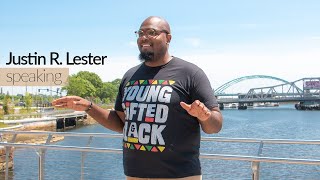
Justin R. Lester (pastor, millennial Black male) speaks about pastoring during the COVID-19 pandemic and the era of Black Lives Matter, reflecting on how the pandemic revealed needs in Black congregations (community, mental health, domestic violence, digital ministry), accelerated debates over social justice (race, gender/sexual justice, environmental justice), and forced churches to reconsider what ministry is "essential." He narrates local examples (drive-in worship; a praise leader who marched downtown with ~12,000 people), offers four intersecting lenses for ministry (age, technology, gender, finance), describes pastoral shifts (ownership, naming frailty, leaving maintenance mode), and answers a question about patriarchy in Black churches by advocating concrete steps to elevate women in leadership and dismantle male-dominated power structures.
Questions this video answers
1819.
February 15, 2021.
About 12,000 people.
Generation Alpha: 0–12; Generation Z: 12–22; millennials: 23–40.
He referenced ~40% of churches experiencing decline, ~3% experiencing growth, and "hundreds" of churches closed or stopping worship (phrasing from the talk).
Chapters
Hey, everyone. Thank you to everyone for this invitation to Dr. Crowley and to Dr. Floyd Thomas and to all my fellow panelists, it's an honor to be a part of this. And like I said, my name is Justin Lester. I'm privileged to serve Congress Street Baptist Church up on the hill in College Hill in Providence, Rhode Island. We are the first and oldest black church in the state of Rhode island, founded in 1819. So it's been a journey and engagement. And so I'm happy to be a part of this tonight. My time is spent talking about pastoring during a pandemic during the era of Black Lives Matter. Let me first establish our aims. I'm a millennial black male. I'm speaking of five years of pastoring and the stuff that comes with pastoring. Now speaking in a pandemic as well. And when I talk about Black Lives Matter, I also want to acknowledge that I mean all black lives as well. I will also speak a little bit more to that later for the benefit of my conversation. I believe that what pandemics, what pandemics do and these moments do is they reveal everything. They reveal real needs. And I believe that we're in the third phase, if you will, of black churches. I think we had the Negro church, from slavery to civil rights, the black church with civil rights to Obama's leadership. And now I think we're, and allow me to use the hashtag church, not as a fun term, but really as a way to utilize the word hashtag, as a way to search for trends, to be trend setting, to facilitate smaller conversations in a large fluid space is what's their use on social media. And to that end, I believe churches signify marker where the church is navigating various social issues. We're reshaping theological frameworks where we're determining the lanes we'll run in. And I believe this era has forced us to accelerate all of that. In some ways that's been fun. In some ways it hasn't been so much fun because it speaks to multiculturalism, it speaks to Afrofuturism, it speaks to Black Lives Matter, it speaks to gender and sexual justice, speaks to environmental justice, it speaks to Afro pessimism. It's a social, cultural definition more than it is a theological loci for the church. And I believe it's characterized by post Obama politics as well as Black Lives Matter. And so for that, allow me to frame my time around this. We had a drive in services for our congregation once the COVID 19 pandemic hit and we had drive in services for our church. And there was one Sunday where my praise and worship leader came to church and we all have different t shirts. Church, church that's at the revolution will be intersectional. I am somebody, our church's logo, all that type of stuff. My praise and worship leader, God I've led worship, did an amazing job leading worship. And as soon as he finished worship, him and about five other people went to my md. They said something and he said something to me before church. He said, pastor, I have to go do something downtown. I said, cool. And the gang, do what you have to do. So he finished leading worship, he got into a car with a couple of our other people and they went downtown. We had worship, had our cars out there, did all the stuff you do for church, yell, scream, hoop, holler and all of that. As soon as church was over, I got on social media and saw that my praise and worship Leader had led 12,000 people, 12,000 millennials, Gen Z and Generation Alpha people down to the statehouse to march on a Sunday morning. And I looked at my wife in my car and I said, I wasted a Sunday today. I wasted a Sunday. I said, because if I'm going to be a pastor who preaches on justice, I'm a person who preaches on liberation. I said, I'm sitting here getting up and preaching, hollering and screaming, Jesus. But yet my praise and worship leader had to delay a movement for the community behind the name of Jesus as well. Because I'm over here saying, we have to go and sing hymns and high five each other. On the way out. I said to myself, I'm missing church. And I had to reframe what church is. And I want to use that because I believe pandemics have a way of revealing real needs. Protests are markers for tools that we know people are growing. That you start protesting something, especially in college, that is a marker that you're growing. And pandemics also have a way of focusing our energies and what we consider essential and non essential. I think we've heard that language a lot this year. And that language for me plays directly into the ways that black bodies have been seen throughout history. And for the first time, I think we've had a look at our churches and our ministries. Are we doing essential ministry or non essential ministry? Are we becoming the churches that we complain about? And so for me, in this era, pandemics revealed everything. It revealed in our churches. There's a desire for community and a lack of intimacy. I think as pastors, it revealed that we're more interested in bottom lines of our churches than we really like to admit. And unfortunately, our members are not as concerned about the bottom line as we want them to be. It also revealed that as one person as a pastor is not capable to be the CEO, the cfo, the state mo, the COO and the board of directors chairman. Social justice framework in our churches has been deemed liberal and not unity. It's not been seen as environmental, it's not been seen as gender as well. Our members don't really know as much as we thought and realizing that they were equipped to have conversations at work by our sermons and are we really equipping them with the conversations they need to have and then also the action that's needed to be taken after the conversations? Our members don't listen to some of our sermons and many of our black churches are so afraid of being black. I think the pandemic also revealed that mental health and domestic violence are real plagues in our communities. And if we don't address address them in our churches, we'll continue to see them continue to continue to grow in our communities. Disparities and silence on health care cannot continue to be overlooked. And pastors are extremely stretched. Pandemics reveal so much for me. And whether it's the 40% of our churches who experienced decline, the 3% of our churches who experienced growth, or the hundreds of churches that were closed or acquired by other churches, or the hundreds of churches that just stopped having worship altog together and stop creating community and stop being the refuge that Dale Andrews talked about for me, it forced me as a pastor to see if I'm going to be the shepherd. I had to stop trying to push the sheep so hard. And for a moment during this pandemic, I had to stop and turn around and look at my sheep. Are you eating the grass I'm leading you to? Are you afraid? Is there trauma behind this grass? What are the real wolves that are really attacking our sheep? And do I have wolf tendencies? Was I bleeding after battle on my sheep? Was I? Was I trying to get my sheep to fight something that I never taught them to fight? Am I equipping my sheep? Am I leading them? It caused me as a pastor to really see what it really means to be a shepherd. I can't just lead them someplace without making sure that I'm talk looking back at the sheep and seeing exactly what our sheep are doing. And I was encouraged by many colleagues who transitioned online to innovative ministry, and most of them are on here as well. I was encouraged by But I was also enraged and discouraged by the amount of communities and black pastors who refused to explicitly get up and say that black lives matter. Black pastors going to parade around themselves like minstrels and white congregations singing Kumbaya. I was discouraged by the churches where our black brothers and sisters marched out and took checks to preach or sing songs that simply say, we love everybody and make us one, protected by the fragility of the people you're performing front of. We just got up to dance. Or as one local clergy person in Providence told me, a black clergy person, he said, pastor Justin, listen, we don't need to do anything but pray about sin because racism is sin and all people do is sin. So pastor, stop talking about racism and just talk about sin. Because if one more person misquotes chronicles to me, I'm going to lose my God forgiven mind. I say all this to establish that pastoring in the era of pandemic and black lives matter made me try to answer this question. Am I going to lead an essential ministry or non essential ministry? Are we going to establish a ministry that our social, theological and cultural location is sound? Will be, or will I be the same faithless church I complained about and got away from? Or will I be a prophetic institution hell bent on creating and crafting long term religious spaces that will not only see attendance but engagement? I believe the local church is the strongest institution that doesn't realize its own strength. It's wrought with leaders and visionaries and dreamers and agents of change whom for years have been cast out for lack of adhering to tradition, their social location, economic status and gender. And it's a sad indictment that this institution that contributes powerfully to the psychosocial and theological health of our people also contributes to their death. And to piggyback on this, I want to merge four things together. My praise and worship leader, another one of my leaders, the day they went down to march downtown, she had a T shirt on that said the revolution will be intersectional. And I love the shirt. I spoke volumes. And it was amazing to me as well because it raised so many questions and conversations in our own church about what does it really mean to have an intersectional revolution. And so we talked about what that meant in our context. But I want to use that and really use four things. I think that if we're going to talk about pastoring in this era, what's necessary, I think we're going to have to look at these intersect. We're going to look at age, technology, gender and Finance Pastor Gavin mentioned earlier about Generation Z. We have to consider Generation Alpha, Generation Z and millennials. Generation Alpha 0 to 12 Generation Z 12 to 22 and millennials 23 to 40 Generation Alpha by the age of three Statistics show that most of them are going to have a cel Generation Z. Most of them are already online and that they're the ones that are guiding TikTok, the number one fastest growing social media site. Millennials were guiding Instagram and starting to have multimillion dollar earning potential simply because we're doing things like GameStop and AMC. These three generations are the most post Christian generations and the generations that lack biblical guidance. Yet these are the generations that are guiding and carrying Black Lives Matter and our understanding desire to have age and skin that must serve as an eye opening place for us to relocate. Also have to consider that the reason why we're being so radical in these generations is to go against the things that we see in Generation X and Baby Boomer generations. So we have to consider age and we also have to consider technology. 20 years ago Amazon, Google, Facebook and Apple weren't really big big companies, but they were fighting with companies like Circuit City, Home Depot and Kmart. Technology's ever evolving and so we must consider technology like AI, ar, VR and gaming and gamification culture. Gender is so unbelievably important and we can't say black lives matter unless all black lives matter. The fact that this is still an issue, it positions us in the face of own arrogance and conservatism and then lastly finances, black educated, middle class and upper classes and the lack of access needs to be addressed and not just a forced to tithe. So that raises the questions for me about our churches. Do we really care about black lives? Do we really care about gender and sexual justice? Are we really aware of what plagues our communities and our ears really to the ground to know the pulse of our people? I think what this has done and the last things I'll say is it's done three things for me and I'm curious to hear more from you all as well. It's given a sense of ownership. It's changed our practices for the better. As much as there's so many pastors who are still trying to teeter on the line of being something I believe it's shown. I'm proud of the pastors that made decisions to take stands for who they are. Where do you really stand to name and own it? And are you willing to lose colleagues because friends that you're going to Lose because you take a stand and weren't friends in the first place. Number two, I think it's forced us to name our own frailty. As a pastor, I'm proud to say I have a therapist. I love going to my therapist. And it's refocused our hearts on what we're unable to do and the need for moments like this of collaboration for churches and communities. And then lastly, I think it's really going to force our churches to get out of maintenance mode. We have to get past this get to next week to pay the bills mentality, and we have to get to a get to next year to build our community mentality. When we get over trying to pay the bills and we get to the place where we want to build the kingdom and build the community, it changes our whole mentality. Because long term says, I'll keep my church close. I care about the health of our members. Next week says, I'll open it up because I think that the only way people will give is if they walk around and put money in an offering basket. All in all, I think pastoring in this era cultivated real profits. Prophetic work is not easy work. It's bloody, nasty, grimy, isolating work. It's jungle work. It's desert work. And every once in a while, you get a palace invite to name the handwriting on the wall. The pastoring of the pandemic and black lives matter, I think, made the real black prophets stand up and it made ministry essential. And to me, I think that's where real revolutions can start.
Thank you, Pastor. Thank you. Thank you so much. And often we hear it said over and over again that the dismantling of white supremacy and racism in this country has to be done at a large part by our white counterparts, that we as persons of color cannot dismantle this system on our own. So in that same vein, you spoke about patriarchy in the African American church. I had originally decided had your name beside this question. But I'm actually going to throw this to one of the male pastors on this panel. Pastor Lester, my dear friend, how does the traditionally patriarchal culture within many mainstream black congregations hinder their ability to be effective advocates for gender equality? And how do the elements of self preservation, power and economics bear on the issue of gender equality in black churches? And how are you working in your local congregation to dismantle sexism?
Yeah, it's a great question. I really appreciate Dr. Willey and Pastor Gabby's responses. I said to my churches a couple months ago, I said, America was built on the backs of black women. And I think the reason we're failing so hard right now is we haven't gone back and really listened to our backbone. Until we acknowledge our spine, we're going to continue to be weak. And I think the same goes in our churches. Our church was built on the backs of black women, but we don't see them for anything more than sexual organs. And that pains me. And so for me, I was moved by the book Jezebel Unhinged by Tamara Lomax last year. Her book just changed my perspective and helped me as a human and as a pastor. And when she moved, challenged us on this language of theological healing and wholeness away from trifleness and wholeness. Right. Because I urgently wonder how we can address all this. And we have a large Mandingo culture in our pulpit, and our politics of respectability are informed by white patriarchal politics. And we're dancing down with white conservatism in our pews, calling it a black church. That, to me, is where I'm at. So I know we can't continue to baptize our BS and use scripture out of context, using Jesus to cover our lack of study. And I still acknowledge, as a male preacher that there's privileges that I've received as a male preacher. I can't take that away. But I also acknowledge that the way that things have shifted for me, I grew up with a female pastor. My mother was the pastor of my church as I grew up. And I knew that my mother was the leader, she was the finance leader, she was everything our church needed. But she was not given the space to do the work and to get the credit that she was due. I remember seeing her checks were smaller when she went out to preach. She was given time limits. She was told how to dress. And here I was as a youth preacher at 15, 16, 17 years old, and I'm not told what to wear. I'm not given time limits, and I'm getting extra offerings after I preach. And so for me, as I grew personally, I made conscious decisions to say, I want to learn more. But then I also don't just want to. I think where we've fallen in trap this last year or so is that we've done a lot of these conversations and had these courageous conversations, and there was no action after the conversation. So for me, the steps I took were to ensure that if we're going to create these places where we acknowledge patriarchy, where we acknowledge these systems that really are just coating our own insecurities, and lack of really dealing with trauma. And black men not acknowledging their own lack of understanding. And black men not acknowledging the places where we push people down in the name of Jesus. And that's where we can see the money that we want to get, the power that we want to have, the ways that we want to be honored on pastoral appreciation days. Because to me, nanny Helen Burrows talked about this in early 1900s. She yelled and screamed at the National Baptist Convention about this way in the early 1900s. And we still have the big old red chairs doing the same old, same old foolishness today that we did back when she got up. And the only thing that they received was Women's Day. And so the ways that personally we're advocating for it in our church today is that we have our church when we have a number of different events throughout the course of the year. Like we have Black girl magic events, Afrofuturist events, we acknowledge the real issues that are going on in our community. But then also we give space to. We give space to people who of all of sexual and gender backgrounds as well. Like, it is so important to me that I believe our board has to represent the church. And you cannot tell me that your church cares about black lives and it's all black men. You can't tell me that your board of deacons represents your church and it's all black men. I think it's so important that if we're going to grow our churches, to grow our communities, we have to then really dismantle the power structures that are, as Gabby said, starts with our pastors, and then also comes down to our board of directors. Because if we were to look at the people who are really generous to our churches, more than likely it's going to be the black women that are carrying it that we throw on the Usher board or throw on our praise and worship team. If we're going to look at the people who are really carrying our ministries, it's going to be the black women in our churches. And so I think it becomes very, very imperative for us to not just say we're going to open our space up, but to actually dismantle our own thinking. Because our black women cannot just be good enough to watch on the Busted Challenge and the Silhouette Challenge. But they also need to be people who can holistically engage in the teaching of the gospel, the leading of boards making critical financial decisions, opening and closing buildings, and every single church endeavor. And so I think the last thing I'll say, by 20, 30, 60% of the world's wealth will be on women. I want that to sink in. By 20, 30, 60% of the world's wealth, the future is female. And the church will kill itself trying to keep it male. Because the future of our resources, our finances, our thinking, our doing, and our CEOs are going to be women. And so it's going to be so important for us right now to take the necessary steps to get over ourselves as men, to really holistically engage in our community, because that's the future of our community, the future of the church, and also the future of what we're doing.
More from Justin





AI gives you hours back every week. Most people's first move is to fill those hours with more work.



Most people stall out on AI at the exact same step. They don't know where to start.

Thank you for the follow-ups, the messages, the emails, all of it since the New York Times piece. Gr

The New York Times spent a weekend with me. Digital twins, AI, the local church, all of it.
