The Art of Lifelong Learning | Working From Home Podcast
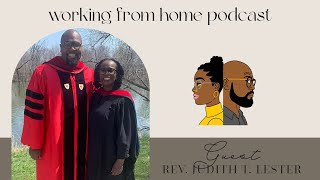
A January 8, 2024 episode of the Working From Home podcast in which host Justin R. Lester interviews his mother, Reverend Judith T. Lester. The conversation covers lifelong learning and longevity in ministry, trends in spiritual development (notably the COVID-driven shift to online worship, livestreams and virtual Bible study), practical teaching techniques to make scripture relevant across generations (role play, critical thinking, collaboration), and a personal daily-practice acronym (S.O.M.E.) for spiritual growth. The episode also includes contact and publication details for Reverend Lester's book "A Gospel Generation."
Questions this video answers
January 8, 2024.
January 7 (host notes it was her birthday yesterday, Jan 7).
July 2022.
A Gospel Generation: Bible Studies for Youth Around the Globe (referred to as "A Gospel Generation").
revjLestercloud.com (spoken as 'my email@revj Lestercloud.com').
Chapters
Morning everyone. Welcome to Working from Home, the podcast with Justin and Courtney. Today, you don't see Courtney in here. Today is January 8, 2024 and it's me. And actually today, yesterday, January 7th is my mother, Reverend Judith T. Lester, her birthday and she passed away in July of 2022. And about two years ago during COVID I had on my podcast I had an opportunity to have an interview with my mom who did so much work with publishing board for our Sunday school and so much work in terms of leadership, curriculum development and finding your passion. One of the things about her is that while she was in full time ministry, her passion was writing and telling people about the story of Jesus. And so we had a podcast where I had an interview with her about how to engage with the gospel, engage with you engage with yourself as you get older in life and what to do with the work that God has called you to do no matter how old you are. And so that was a conversation I had my mom in terms of reimagining and re engaging your life as you get older. So I think you'll, those of you who have never met her, I think you'll like to meet my mother. And those of you who have, I think you'll be refreshed to have a chance to engage with her. So happy birthday to my mom. Today would have been her, Yesterday would have been her 63rd birthday. And so we pray that she rest in peace in heaven. But you get a chance to meet Reverend Judith Taylor Lester. She at the time was the second vice president of Wisconsin Baptist State Convention and a writer for the Sunday's National Sunday School Publishing Board. So is an old podcast, I think you'll like it anyway, so enjoy.
I'm privileged to have a very special guest, someone I've known literally all my life and I think she's known me before I was here. That's my mom. And so welcome to the podcast. My mom for the first time to made for Mondays. And so explaining to her, telling a little about who, who we were and everything. And that's just like really, really amazing community of leaders and innovators. And so as we go through this series of innovation, I thought one of the great places to go into would be Christian spiritual development as we speak to how we develop our cores in a world that's never going to be the same. And so I think she is an amazing voice that speaks to leadership in those spaces, innovation in those spaces and how we can apply those to how we continue to grow in grace. And also whatever organization you're a part of as well, how you can take some of these principles to grow in your organization, too. So made for Mondays, happily. Welcome to the podcast today. Reverend Judith Lester, my mom from Milwaukee, Wisconsin.
Hi, how are you?
Oh, good. Happy to have you here, Rob. So if you would, before we jump into the info, can you tell us a little bit just about you, how you. How you've gotten to where you are and really kind of what cements you as an expert in this space?
Okay. And once again, welcome and thank you for allowing me to share with you on your podcast and with your viewers. I'd like to say that Maybe close to 20 years ago, I started writing for the Sunday School Publishing board of our National Baptist Convention USA Incorporated. And now that I've been writing for them so long, the last 10 years, I've been writing their curriculum. I've been writing for adults, young adults and youth. And to this day, I continue writing those Sunday school materials. I also serve as a lecturer for the Sunday School Publishing Board and as I mentioned, writer. But I'm also author of a book, a Gospel Generation, Bible Studies for youth and Young adults Across the World. And it covers topics such as spiritual growth, prayer, stewardship, and so forth. And it's a robust Bible study lessons. And I prepared myself several years ago, I got a master's in practical theology. I'm pursuing my doctorate also in theology. And so because I write, I lecture, and I prepare myself in religious studies, I believe I can speak on this topic today.
Yeah, no, thank you. And I think it's absolutely wonderful to speak to just the infusion of education and experience. I guess the other question I have, before we even jump into that, I guess with that, can you speak to longevity? Like, why is it important to continue to hone a skill? Because research is showing, especially my generation, we stop at like three to five years. Right. Why is it important, you mentioned 20 years to hone a skill for 20 years?
Because I believe that the more you do it, the more you learn and the better you get at it. If I had stopped 10 years, 15 years ago, I wouldn't have kept up with the changes in technology. I wouldn't kept up with the new ways of teaching. And so that we can, you know, make our way, our teaching transferable so that students can see our teaching as relevant in today's society. If I had stopped that 10 or 15 years ago, I would be outdated by now. Yeah.
And that's interesting. I think a very awesome piece because I think it speaks to. Because you've seen it when, like, when. Even when, like, paper is a norm. And now even the transition to apps, and you've been. Not just seen it, but you've been a part of it. I think it speaks a lot to just, just excellence long term, because that, that shows that excellence then is not just something that is, you know, showcased in one arena, but that excellence is. There's a different level of excellence to it, which I'm really happy to have.
So it's my model. And if you don't mind, Justin, I'm gonna call you Justin. It is my model that we are forever learners. We never stop learning. And so therefore, that's why I believe in longevity. And I believe the longer a person has done, they become an expert, just like a doctor, long as they've been doing surgery on whatever, then they become the expert in that field. And I believe that I've. I made it to that point and I can. Thank you for having me.
Yeah. Honestly, I've never thought about it like that, but I think that's a great way to see. I've never thought about how. You're right. Heart surgery is heart surgery. Right. And brain surgery is brain surgery. And while the tools may change if we don't know how to operate on a heart, operate on a brain. So, yeah, thank you for that. And so that's what I want to get to in terms of innovation and so how we're in this pandemic and, you know, we'll be out of this soon or not. And whenever we do, spiritual growth and development is never going to be the same. And seeing that, just the work that you're doing nationally, I guess what are some things that, some trends or things that you see that we need to be aware of as we, as we see the future for spiritual growth and development?
Right. And thank you for asking that because that's a good question. And. And some spiritual development trends. Religious leaders, teachers and thinkers across the world have discovered that we must rethink methods of teaching so that we are translating the ancient spiritual wisdom into contemporary language so we can resonate with today's audience. And so that translation means learning relevant, making learning relevant so Bible students can connect their studies to the world. And to make that happen, we must transform the way we teach. And we must incorporate techniques such as critical thinking, opportunities to communicate and collaborate. And thank goodness to our technology. It has made it happen, especially in today's day. Today's spiritual development trends have shifted to the point where Christians are focusing their religious energies on how the Bible speaks to them on an individual level. And often they ask themselves, number one, how is the Bible relevant to my life? Especially in times like these, they're asking, how can I find spiritual significance and meaning in my life? They've given up looking to the world for meaning in life, Justin. And they look into the word of God. And in other words, they're asking, what benefits does my faith bring to my life? What's the purpose? What's the sense of community? Does it bring a sense of belonging? And how is my faith significant is a very important question. So in times like this, while we in social isolation, physically and socially quarantined in our homes. So the question is, how does one implement spiritual development trends so they can continue growing spiritually? Well, I want to just say, and I'm going to put it out there, the center of gravity has shifted towards online, has become a trend with appealing momentum. Yeah, that's a lot. The center of gravity has shifted and we have to take notice of that. And a popular icon idiom says that drastic times call for drastic measures. And that came to mind as Corona shut down public in person worship services. So when Corona hit, it became necessary to adjust our routine and become comfortable with the new norm. It has become evident that we must adjust. And technology has, like I said, has made it easier to assess spiritual resources, but it has also given us choices today. Right. So let me just say this at one point, and I would say that in most churches and digital tools were seen as a distraction, especially in worship services. But now they have been forced to rely on digitized tools for faith related engagement. Today's believer can grow, can still the development trends and spiritual, spiritual development can still happen when we're isolated. And that's with livestream worship services. We can still do podcasts and listen to them, engage in them. There's virtual Bible studies for spiritual instruction and then there's we can subscribe to online daily or weekly devotionals. Ten years ago it was just hitting the horizon. Now it's almost a necessity. And the fact of the matter is, even after Corona is under control, these spiritual developmental trends will continue to attract today's believers.
So I guess for me that question that's powerful because I wonder, you mentioned the word relevant, but you took it in a different direction. Because I've heard, when I've heard the word relevant, right, it's been like, you know, relevant means rap songs and hip hop and all that type of stuff. And when I heard you say was relevant speaks to more collaborative, adaptive, intentional teaching. Right. So what would your definition then? I guess to. Because on here would be leaders and pastors. What would your definition of what it means to be relevant then be? If we're going to mend these, you know, made up gaps or divides we have. But really relevance is not language only. Relevance is in collaboration and adaptability.
Exactly. And in my, in my teaching and in my writings with the Sunday School Publishing board, one thing I do is talk about transformative teaching and being relevant. We have to understand that we are dealing with a new generation, we're dealing with young people, we're dealing with adults, we're dealing with millennials and you know, who have a different mindset than my parents and my grandparents did. So therefore, in order to be relevant, we connect the word of God to their everyday living. So even in my writings I make sure that, you know, especially my contemporary stories, I make that connection so that when they leave that study, when they leave that, that Bible study or that or their writing, they can look at and say, aha. Have that aha moment. That really spoke to me. Now I can understand why that Bible, the Bible is relevant, why I need to read it, why, why is not outdated, old fashioned, that it still speaks to us today. And to make that relevant, we must engage in collaborative activities. We must allow students to discuss, we must engage in, I mean, as funny as it may seem, role playing. And that's for adults and that's for youth and children. Role playing helps us to put ourselves in the situation. And we can now kind of, you know, deal with it and discuss it on our level. And now we can make that applicability and make that application to our own lives. And that's what's very important with that. And also believe in critical thinking. I believe that, you know, when, because now we have the question of why bad things happen to good people, why there's so much suffering in the world, you know, and when you can, we can address that with some critical thinking tools, perhaps a case study that's making it relevant because now not just looking at it as, you know, okay, why is this happening? But they can now look at and say, okay, it's happening because. And then you put it with the word of God and now they have a better understanding why they're suffering. We don't know why we're suffering, but we do know got a solve. And everything is under the mighty hand of God. And when God's ready to work it out, when he's ready to get rid of it, God will. And making it relevant through collaboration, critical thinking, role playing, games and activities. Because you can learn a lot even through games. That's how today's Bible reader can stay engaged with the word of God.
Yeah, I've been reading a little bit on the theology of play and the, and the importance of thinking because I think what happens so often we come to church, we turn our minds off. Right. And from what I hear here is that relevance really is critical. Yeah, that's. That is. I guess I know I'm gonna get to the second question, but I guess my mind is running. I have another question for you. Just on that is like, so what would. Then. What would you say then to baby boomers as well as millennials inside of the same church that let's say we're studying a particular set of scripture or Sunday school lesson on the importance of cohesion and working together in terms of. Then in terms of getting past ourselves so that we can think critically and have fun together. So that it's not like Bible study is an old person thing, small groups, a young person thing, but it's just a scripture thing. How can we break that barrier to get to the core, like you're saying, with critical thinking and really a theology play in critical and spiritual development.
And it all boils down to the teaching. Because when you pull a Bible study class together and if it is multi generational, then we got to make sure then that the teaching then is reaching all generations. And when teaching is reaching all generations, then everyone in the room will be engaged. You know, a lot of times, you know, we hear people saying, in my day, in my day, that then loses the younger people because they don't know what happened in your day. So we got to make sure that even our language while we're teaching, we keeping abreast on what we're saying so that we can keep everyone engaged and everybody understands and everybody's on the same page. But that's like you said, that's what makes it relevant when we're not, you know, talking about the good old days, we're talking about today and what we're going through today. And even. And I love teaching adults because adults like that, like teaching that they can listen to it and it can be transferable. They can say, you know what? You know, because they learned a lot, they've been through a lot, they have a lot of experience. And so then when teaching helps them to connect the teaching to what they have experienced, you got them engaged. Young people, the millennials, when they're sitting in Bible study and you Teaching in practical ways and tangible ways and giving ways today that they can deal with conflict on the job, conflict at home. Now they're engaged. But once again, it goes back. The burden falls on the shoulders of the teacher to make sure that the teacher understands the generational gap and tries to bridge that with effective and relevant teaching.
Wow, this is really good. I think it's.
I could have.
We could have a whole podcast just on the necessity of teaching teachers and, and teachers that are teaching, I think is just. That's what it sounds like. I didn't. I never thought about that. Thank you. I guess with that and to build upon that then. So people preparing to come to class, people that are seeking to grow. What are some suggested ways as we're not in church. Right. And it seems like, I know some states are trying to bring folk back together, but at the end of the day, some of us are not going to feel comfortable being face to face in large public gatherings for another year. You know, especially people who have, you know, autoimmune systems that are low, all of that. So what are ways that you would suggest that we can read and study when. While we're not together?
Right. Well, what I suggest is that because what Corona has done is brought us face to face with our own spiritual growth and the fact that we cannot wait till Sunday morning or our Wednesday night Bible study before we can start learning about the Word of God. So during this time and even after Corona is over, even after church doors open, we can continue to use social media platform to video conference for small group Bible study. I strongly advocate for small group Bible study and you can continue to do that using your social media platforms even after it is safe to gather again. I encourage pair groups because a lot of times we have prayer partners and therefore we can meet weekly on FaceTime to study a verse, a chapter, discuss a topical Bible study, or we can even come together in prayer groups to even study our Sunday school lesson together during the week and not wait till Sunday. And then we can even have, and I encourage to have prayer sessions where prayer groups or small Bible study groups share their prayer concerns and requests and take turns praying for each other. I think when we continue doing that, and I'm not giving you specific ways so you can do it, I just asked. I was telling you when to do it. But I'm asking that even after it is safe to gather again, develop a system during the week where you are engaged in Bible study and then stick to it. And once again you can have your circle friends, your Small group. Study your pair groups and definitely get together for prayer. I just believe that until times get better, and even after they get better, using social media, a new spiritual development trend will be our new norm, not the exception, but it's going to be the rule.
I was reading before this happened, I think it was 30% of churches livestreamed as of the first. The second or third week of coronavirus, 77% of churches livestreamed, 3% of churches closed. And then there were still some churches that refused to do it. And now I'm starting to read as of this week, I think it was like 0.8% of churches are starting to close down because they just refuse to meet together. I think that's so vital and important to utilize these in ways because it's amazing. The church is shifting, right? And everything is shifting, like you said. And I think these are amazing. That's intentional community without creating community. That's powerful. I guess question I have for you then. So with that. So in the midst of this and even planning for the future, is there a challenge you would give people who actually want to grow to growers? What would you challenge them to do? As someone who's challenging teachers, challenging students, challenging pastors, what would you challenge them to do?
Yes. And can I say this? When you mentioned about the fact that at the beginning, you had the 30% of churches, you know, begin life. 30%. I guess it's going to all boil down to, are we willing to make that move to the next level? Are we ready to make that move to the next, you know, and accept, embrace a new norm? If we're not willing to accept and embrace a new norm, we will outdate ourselves and we will be forced to close. We must make the shift. The world's not gonna wait for us. You know, thank goodness we have technology already in place. Some churches would have never considered using technology, but now they have embraced it. And if we're gonna, you know, survive after this corona, and we should, you know, God's people must shift their thinking and embrace this new norm. So. But the question is about a spiritual growth challenge. And. And I'm glad you asked that, because back in October 2019, I began to challenge myself because it goes back to the first question you asked me about continually growing. I realized I'll never. I don't care how old I get or how much I prepare myself and how much I study, I will never get to the point where I have reached perfection. And we all need to challenge ourselves to spiritually grow and I believe regardless of a Christian's age, everyone should be challenging themselves to grow spiritually. Apostle Peter challenges us to grow in grace and in the knowledge of our Lord and Savior, Jesus Christ. So if I had to give you. And I'm really, you know, good when it comes to putting words together and making them click, I. I want to give you this thought. We need to grow to know God. We. We must grow to know God. If we're not growing, we're not gonna grow. And we're not gonna. We're not gonna know God if we don't grow in God. All right, so I put together an acronym, and it's making me excited because this is acronym I have been using since October and I will continue to use until God gets something different. And what it is, is S O M E some I have challenged myself to spend some time with God every day. And then I broke that down into how I'm going to be spending time with God for s I want to spend silent time with God on my knees. I do this daily on my knees in the presence of God. Psalm 46 and 10 tells me I have to. I use that time to be still with God, clear my head of any distraction so I can focus on God. And the more I focus on God, the more God speaks to me. The O and some S O M e is before I open my Bible, I open my mouth in prayer, praise.
Wow.
I don't even open. I be still. First, get myself prepared to meet God. Then I open my mouth in prayer and praise, thanking God, you know, and praising God and praying to God before I even open up the Bible. And then when I open up the Bible and either it might go to certain scriptures that may be speaking to me, or I may go to the Psalms. But there's so many places that we can read and the person allow God to lead them there. But the M in psalm, in Psalm is to meditate. After I read what God has laid on my heart. Then, as the psalmist says, I meditate in his law and day and night. So I sit there and meditate on what I've read while I listen for God to speak to me. And even as I'm sitting there, I'm also memorizing what I've learned and what I read. And also that it's so that when I need, it is there for me, I can recall, I can regurgitate it. And so I'm sitting there in meditation. It allows God's word to speak directly to my heart, to correct, to rebuke to confirm, to encourage whatever God needs to do with me at that time. And then the E in Psalm S O M E my E I'm going to end my time, God in prayer before I get off my knees. I then thank God and praise God for listening. And if I ask God for anything, then I thank God for working to bring about an answer to my prayer. That has helped me, Justin. Giving God some time every day has helped me. I began to hear God more clearly and I grown to love and trust and know God more dearly.
Yeah.
And then as, as I direct and as all of us direct ourselves towards God and meeting God in His word, we will grow in our walk with God and our hearts should be open to God. And then I want to suggest to your listening audience, don't wait for in person worship services to resume to spend some time with God. Spend time with God every day. You can develop your own acronym to keep you on tune, to make sure that you're on track and you're following all your steps. But develop a habit that will build your faith and we will all bear more fruit for the kingdom. And then, because it's all about discipleship, I want to encourage your readers that as they spend some time with God every day, that I want to encourage them to share what they've learned in their time with God, in their small group Bible study or in their prayer with their prayer partner so they know what God is able and capable to do if they have a little talk with Jesus.
Yeah, that's powerful. That's really powerful. I guess I've been in this personal season of habit shifting. And so I think to me this speaks powerfully because I was in this place where I was intentional about time limits. So it was like 15 minutes, 30 minutes. But then I began to notice it was like you get to 25 minutes, you know, begin to sense time limits. And I think this takes, for me personally, this takes time limits off of it. I think it's a great habit and practice to develop. Well, this is really great. I guess one last question I had because I know one of the major groups that always listen and watch a lot of this are young preachers. What would you say to, I guess, like myself even like, I don't know, six years ago to young preachers who are either on staff at a church or getting into their first church in the first one or two years. In terms of now I have a bunch of friends like this who are just getting into a church, a church full of multiple generations, probably Grandkids and grandmas. Right. And they're now the leader and they're coming in after this. It's a crisis and it's a call for leadership. What would be something you would really tell them to do in terms of. Because the core of the church has to be spiritual growth and development. So what would be something you would challenge them to do to ensure they're not worried about bottom line? Kind of like, you know, like I've told you before about our church has been immensely blessed. And so we're not sitting here stressed about next week. Right. So how. What would. That's because we have very strong core prayer, fasting, engagement. What would you challenge young preachers to do and young pastors, male or female, about leading through this and after this? Because the community, like you said before, is needed and we can't wait to church happens to have church, really.
Right. Or the building opens, have church. I think the most important thing is, and I always default to this is the Word of God. You keep the Word of God front and center the preacher. The leaders must be on their knees in prayer. They must spend time in prayer so that God can direct them and lead them on their spiritual journey and how to lead the people of God. They must also listen to every generation, be in tune with your generation, know what they're struggling with, and then address that in Bible studies and sermons, and that will at least get them listening. And even if you have a, you know, a cantankerous member who just won't listen to anything, the Word of God should continue to be front and center. Not our feelings, not how we feel about them, about their family. But the Word of God must be centered. And we put the Word of God the center of it all. Everything else will fall in place. We must teach. We must teach the different generations. We must understand who the different generations are, how they think. Young people ask questions. We can't get upset when they have a question or they ask that, why are we doing this? We can go back and when God has led us to do a certain thing, then God will give us the answer when the questions are raised. Not to put them on a, you know, back pew because they had a question, but to utilize them because you need questions in order to even challenge the leader, you know, to make sure that the leader is doing what, you know, what the. Says the Lord and following what God has given them and not what they want to do. But yeah, for young preachers and young teachers, we're going to have challenges no matter what day it is, but we just keep God from the center. I just believe that people will come. The, you know, the finance will be taken care of because God promises that he will take care of us. And I believe through this, even through this. And we just be still and know that he's God. We know that God had. Had a purpose. God knows what he was doing. He had a. He has a purpose for the young church, that young preacher. He has a purpose. But through it all, through all of this, let's keep our eyes on God. Let's keep our focus on God. And the God of heaven will see us through this. He will not only prosper, but he will bring fruit out of your church. If you just trust in him and keep a hold of God's hands, regardless of the situation, regardless of the circumstances, God will see you through this.
Thank you for this. Yeah. Thank you for this. Yes. Everybody, if you guys would help me give some clapping head emojis in the comments. We're grateful for this. Now, if we wanted to get in contact with you, what is the best way? If there's a. Like, I know that with the publishing board, you travel with them as well, but if there's a way we can contact you, if we can follow you, if there's resources that we can have with yours that we can have or apply ways that we can get some of this information and apply it to our churches would be the best way to get in contact with you.
Sure. You can always contact me in my email@revj Lestercloud.com and so you can feel free to post that. That's my email address. And you can feel free to email that and email me if you have any questions or if you do want me to come and speak. I do write through the Sunday School, the National Baptist Sunday School Publishing Board and there are any National Baptist churches who are interested in our product or interested in my book or interested in getting hold of me, they can always contact me through the National Baptist Sunday School Publishing Board as well. So, yeah, but certainly feel free to publish my email address.
Okay, cool. And then what is the book? Because actually we're using it in our teen ministry. If you can. If you want to plug the book that you have, that could be Utilize and apply detergent, because we use it personally. Our teams go through it every time.
Okay. As a matter of fact, yeah, I was going to check to see if I had it on my bookshelf here, but I don't have it handy. But it is the gospel generation and that can be you can, you can get that book through the National Baptist Sunday School publishing board@sspbnbc.com search for the book A Gospel Generation. And if you cannot find it, but you should be able to find it, or if it's out of stock, you can also contact the Sunday School Publishing Board through their website or call them and there's a number that shall be posted on the Sunday School Publishing Board. But sure, it's called Bible Studies for Youth around the Globe. And it's, it's a great book. You, I encourage you to get it because I wrote it because I think it's a great book.
Yeah, no, they're immensely blessed by it and we will. I'll make sure it's linked in the show notes and in the comments as well so people can purchase it. So no, thank you for your time and really appreciate it. And I really believe this will be a blessing to everyone listening. Please everyone be sure to connect with, as we connect with just amazing leaders from around the country. She's an amazing leader, especially when it comes to spiritual growth and development and just necessary. If not it's a necessary thing. That is not. And I hope you all grab this day. It's not age driven, it's studying scripture. And I think it's something that we can't succumb dumb down to Wednesday night or Sunday morning. But it's an everyday practice that becomes celebrated when we get in community. And I think this is just a wonderful, wonderful way to take these practices, apply it to our churches and apply it to our personal lives. And I guarantee you all scripture tells us if our people, God's people, called by God's name, humble ourselves and pray and see God's face in turn, he will hear from heaven and heal the land. And so we're believing that the word of God is still the number one thing that does all the great work. So Reverend Lester, thank you mom. Thank you for this time and pray you guys have a great rest of the day. I'm going to end the recording. Hold on a second. You guys have a great rest of.
You guys were blessed by our podcast today. Don't forget to tune in each and every week for a podcast where working from home. If you have any suggestions on topics, please please do us a favor and comment those below or send us a message on whatever network you watch this on. Thank you. For those of you who engage with us on Spotify, on itunes and on YouTube, we found out we have some of you on Spotify. We are top five podcasts for you and for one of you, I think we're our number one podcast. So please let us know who you are. We want to thank you and shout you out as well. And all of you engage us on YouTube. Thank you so very much to all the our new followers. Thank you too. Please be sure to follow us on all of our social medias. But especially if you're looking for coaching, please go over to Capacity today where we not only offer book publishing consulting, we offer organizational consulting as well as individual coaching as well. We have a free 15 minute consultation from there. We have paid sessions and three months. We believe in three month sections for those sessions as well. So head over to capacity today to increase your capacity today. Outside of that, please. We know this. The light in me honors the light in you. Our unpaid advertisement today is, well love, as you guys saw, we had a podcast on mother who's deceased and make memories before you become one. And so for all of you who have a deceased loved one, all of you who have a living loved one, text your mom today, text your dad today. And there's nothing so serious between the two of you that can't be fulfilled over a glass of wine and a hug. So have a great day. God be with you. The light in me honors the light in you. See you next week.
More from Justin





AI gives you hours back every week. Most people's first move is to fill those hours with more work.



Most people stall out on AI at the exact same step. They don't know where to start.

Thank you for the follow-ups, the messages, the emails, all of it since the New York Times piece. Gr

The New York Times spent a weekend with me. Digital twins, AI, the local church, all of it.
