The Innovative Power of Black Creativity | Redefining Technology for Black Communities
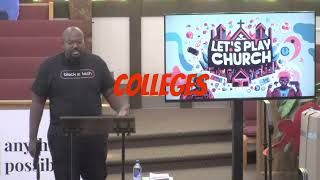
Justin R. Lester argues that Black people possess a distinct creative capacity that has produced major innovations framed as "emancipatory technologies"—practices and systems (e.g., the Underground Railroad, Black Wall Street, HBCUs, the Montgomery Bus Boycott, and contemporary movements like Black Lives Matter) that enabled survival, communication, protest, and community sustainability. He calls to redefine technology so it benefits Black and brown communities rather than enabling cultural appropriation and external monetization.
Chapters
More from Justin





AI gives you hours back every week. Most people's first move is to fill those hours with more work.



Most people stall out on AI at the exact same step. They don't know where to start.

Thank you for the follow-ups, the messages, the emails, all of it since the New York Times piece. Gr

The New York Times spent a weekend with me. Digital twins, AI, the local church, all of it.
