Your Disorder Doesn't Disqualify You: Guest Vincent Windrow | Working From Home Podcast
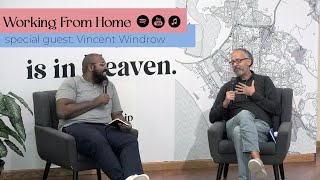
A podcast interview (Working From Home) in which host Justin R. Lester speaks with Reverend Dr. Vincent L. Windrow. Windrow shares personal background (second of seven children, long marriage, pastor of Olive Branch Church), discloses living with bipolar disorder/hypomania, describes seeking treatment (25 days in a mental-health facility), and emphasizes that a disorder does not disqualify someone from thriving. He discusses destigmatizing mental illness in church and workplaces, men's mental health, the meaning of work (quoting Khalil Gibran: “work is love made visible”), and parenting reflections (the idea of “18 summers” with a child and providing a stable home).
Chapters
Good.
Okay. Well, hey everybody, it's Justin here and welcome to Working from Home. So glad you guys are tuned in with us on our podcast, whether you're on YouTube or on Spotify itunes, I'm so glad you're here. Be sure if you're on YouTube to like and subscribe. If you're on Spotify, please use a Q and A on the bottom so that we can continue to evolve with the topics that we cover today. I'm privileged with a very special guest. Yes, my pastor is here and his name is the Reverend Dr. Vincent L. Windrow, the pastor of Olive Branch Church in Murfreesboro, Nashville, and a whole bunch of other stuff in between. And so help me welcome to the podcast, Pastor Vinnie.
Thank you very much. Thank you, thank you. I'm delighted to be here. Thank you for having me. I would not have left my ice filled streets in Nashville, Tennessee for nobody but you, Justin. But I'm honored, man. I'm always honored to be asked and so thank you. Yeah, man, of course.
Tell us a little about you. So who is Vincent Windrow?
Thanks for springing this question on me. I don't know, it's probably complex and at the same time kind of simple. Got it. And we were just discussing kind of my background growing up, second of seven kids, never knowing my dad. And all of those experiences have helped to shape me and help shape my being a parent, helped shape my being a spouse. I believe helped shape my being a pastor in my secular professions. So I don't know, man. And because I'm still evolving now, I'm 57, I'll be 58 next month, but I feel like, feel like I am still evolving. I have not arrived. But the journey has been super cool, man. It has been really cool.
Awesome.
Yeah, awesome. So what, so what if.
What are like if there are, I guess, two nuggets to tell someone Because a lot of people that listen to this, they're around my age, they're getting into like that mid to late 30s, first kid, second kid. What would you tell them to in terms of not giving up on that journey? What would be something you would tell yourself? I guess if you go back to your 35, 36 year old self to continue on the journey.
Sure. That, that. Can I, Can I change the question?
Yeah, sure, sure.
One of the things I've learned recently that I think I could have applied earlier on in my life was that my disorder does not disqualify me, that I have something called I'm bipolar too. I don't have hallucinations, and I don't have delusions, but I do have this mental disorder. But. But that disorder does not disqualify me. And I've had a bunch of dysfunction in my life that I've toted around like baggage, like luggage, right? And I brought it into career, I brought it into relationships. And so. But I've learned that, yeah, my disorder or that dysfunction doesn't disqualify me, and I can make my way through it. I can live with it. I can learn more about it, and I can not only just survive, I can thrive. Right. And in finding out about hypomania, I found out about myself and why I act a certain way or think a certain way. And. And that has been liberating. It has lightened my load, and it's given me. I don't know, it's given me a different kind of confidence. You mean to tell me that I've had this stuff going on in my head and I'm still where I am and I've still made it through some stuff? You know what I mean? And so it has blessed me. So whatever it is. Yeah. Don't feel like you are disqualified because you have a disorder or you've experienced dysfunction in your life. You can make it.
There's a book I read last year called the Anxious Achiever, and one of the best books I've read in terms of leadership with anxiety or any mental health as your superpower.
Ah.
And she talked through so many different facets of finding and discerning your superpower and reframing it. So recently, for me personally, I have this only brother person that knows this right now, but I'm comfortable sharing in this moment. I recently was diagnosed with schizoaffective.
Okay.
Right. And so it's been. You said that I'm trying.
Like, it.
It took something in me because it hit me where it was like, I don't have the delusions or hallucinations either, but they. They saw that for me, that schizoaffective part. And I'm sitting here, and I remember as soon as I found out, I called Cory, and I was like, I'm not crazy. Like, I'm not. I'm not. I promise you, I'm not. Like, I'm not. But there's something that I literally. And then she started just naming. Like, no, but these are the books you wrote, and these are the success you have, and your son loves you and honors you, and I guess I never hearing that. Your disorder is not disqualified. It's just like, man, I literally can't control. Like, I can't. I'm trying, you know, but it's amazing to hear that. But to hear that.
Yes.
It's the truth. That those moments are really your superpower and how to utilize that and navigate holistically.
Yes, yes.
Yourself and others.
Yes.
And teaching people how to treat you and how to engage with you, but then also teaching yourself first.
Yes.
How to treat yourself.
Absolutely.
From those. I guess I'm curious then, so as a leader in a religious space, how have you navigated growing your faith or sustaining your faith with that recognition and realization?
So one of the things is, I recognize how poorly the church has prepared us to navigate the mental illness space.
Yeah.
There's a tendency. You never know how people are going to respond to your truth.
Yeah. That's so real.
And so some would call it a character flaw. Some would say it's all just in your mind. Some would dismiss it, discount it. Some embraced me even more. So I've been open about it because it's part of my journey. And I knew that I wasn't the only one couldn't be.
That's real. That's real.
But I also knew that everyone was not afforded or didn't take the opportunity to go get help and to learn more about it. And so I did. I spent 25 days in a mental health facility away from home, away from the comfort and the convenience of home. I have a particular lifestyle, and God has blessed me to have established that lifestyle. He's given me the strength to create wealth, to create the lifestyle. Right. And so I knew that people needed to hear that you can go get help, and there's nothing wrong with needing help, but there is something wrong with your knowing you need help, and you don't go get the help you need.
That's so real.
That's. That there's something wrong with that. And so what I've tried to do, I've tried to destigmatize it.
Yeah.
I've tried to say, hey, y', all, y' all know me. I'm Pastor Vinnie. Right. I'm your boy.
Yeah.
And I have this. Have this disorder, and this is how I'm dealing with it. And I'm telling you, Pastor Lester, every time I mention it, people come up to me and. And say, either they've been inspired to go get some help or they're going to help somebody go get some help. I felt the same way as you felt. I need to do something. And now I'm looking at going across the state of Tennessee, at least to talk about men's mental health in the workplace.
That's awesome.
Because as men, we're taught to be dudes.
Yeah, man.
You don't have feelings. Get up, get up. Go on somewhere, man. Yeah, man. Provide, protect, produce. You ain't got no feelings. Ain't no crying. Go on, boy. So. So and so we've been taught, unfortunately and erroneously, that we don't have feelings and we have to suppress them. And sometimes because of that bad teaching, we implode.
That's so real.
And so. So. But it's. Stories connect, man. Stories connect more than anything else. Stories connect with people, man, and with people's struggles and even with their dreams and high aspirations. And so. Just telling my story, man.
Yeah.
Yeah. And it's. It's still weird when I tell it because I hear. I hear the words coming out of my mouth. I hear that.
I get it.
And it's so surreal, man. It's like that happened to me.
Yeah.
I've been tall, dark, handsome, and brilliant all of my life. And. And I'm telling you, man, I almost allowed my successes to fail me.
Wow.
Because I've always. As I approached the next opportunity, I've always said, I can do this because I did that.
Got it.
I know I can do this because I came through that. But I couldn't apply the same approach to my mental health. But because I had gained so much confidence in previous trials, I was like, I couldn't. I couldn't, man. I couldn't. My wife intervened, and she pushed me and prodded me to go get some help.
So I did praise the Lord for that, man. I remember when you shared that with me, and I appreciate it, too. I don't think I publicly. Well, privately or publicly said to you was, I did not realize. Cause I was. My mom had just passed away. I did not realize what had just transpired in Nashville. When I called, and I was so out of it. And then it wasn't until I came to, I was like, wait a minute. So I appreciate you for being present with me in the midst of. Cause if I would have known, I would have. Oh, my gosh. I would have flown down immediately. Oh, my God. It wasn't even a question. I would have, like, wait, what? Like, I would have been there the next day, man. And I just. I honestly. I was unaware until after I was like, oh, my gosh, man. So I appreciate your sensitivity, because that was. That was a hard holy crap season. But then once I heard everything and literally, I remember texting smells like, Listen, tell you something I told you earlier. I'm an unpaid part timer. And I was like, doggone it, Chris. I'm still an unpaid part timer, period. So just call me. So I applaud that pastor. You know, I had. There was a question. I was at a conference earlier this week, and they asked this question about.
Why do you work?
And I thought about, as you're going out to talk to people in the workplace for their mental well being, I guess that's, I guess my final question. Because this went a different direction. I'm grateful it did. As you go to those places, even think about you right now, you retired right in one area.
Why do you work?
Like, still, you talked about acquiring wealth and being the person you are now. Why do you work?
Khalil Gibran wrote one of my favorite books. It's called the Prophet. And the main character, the protagonist of the book is Al Mustafa. Al Mustafa has been in exile for seven years on this island. And on the island there was this hill, and he was up in the hill and he saw the ship, literally his ship, coming in to take him back home. And so as he descended the hill and was going to the harbor where the ship was coming in, not only did the townspeople see him coming down, but they also saw that it was his ship that was finally coming in. And so they dropped everything that they were doing. I'm talking about everything they dropped. And they ran to him and they began asking him questions like, teach us about children. Teach us about love. Teach us about justice. Teach us about houses, Teach us about government. Teach us about all of these things. Teach us about giving. And then someone came to me and said, teach us about work. And Khalil Gibran wrote in that Prophet, out of Al Mustafa's mouth came these words. Work is love made visible. And if you, if you can't work with joy, but only with distaste, it's better for you to go sit and beg at the gate and allow us who work with love and joy to do the work. What I love is expressed in my work. What inspires me is expressed in what I do.
Wow.
And I don't do it. I don't do anything with distaste or begrudgingly. I do it with joy. And I think that that expressed joy helps the outcome. That's so real because he said, if you, if you bake a cake with bitterness, then how would the cake taste?
Wow.
To the one who eats it. Wow. So again, work is love made Visible.
Wow. Well, I have to read that book, right?
Oh, it's great to read that book. It's wonderful.
I never thought. Because it's amazing, the conversation. Because for me, we start talking about providing and all this stuff. And my response was like, I work so I can travel. Right. And I said, I work so I can enjoy my life outside of work. Right. And then, you know, people around start getting all deep. Right. And then it became like, you know, I'm doing for the children. I'm doing for them.
Right, right, right, right, right.
And then, you know, then became a competition because it was a room full of, like, activists. We were all organizing. It became a competition. And then it became a privileged conversation because I was like, I was the only black person of color in a room full of people who are just non people of color. So then I'm like, y' all are privileged. And it became a whole thing. We never answered the question right, because it just became something. Became a competition of how much we love the world and how much we want to provide for our families that I never actually. We never actually got to the core of. That's a great way to put work. Like, love made visible.
Yeah, man. It's how I. It's how I. It's. I think it's how we express our. Ourselves, how we present ourselves to the world. And we work because we keep up with the seasons of life. Yeah. You know what I mean? It prevents us from falling behind.
Yeah. So when seasons change, how have you evolved yourself as the world has evolved around you?
Oh, that's a doozy of a question. I wish you would have asked me that question so I could have been prepared to and ready to answer. I'm learning, man. I am a lifelong learner. I am, man. I am a lifelong learner, and I've learned to embrace the complexities of myself. I am not just a pastor. I am not just a husband. I am not just a father. I'm not just a sibling. I'm a whole bunch of stuff, man. And during these. During the changing of the seasons, perhaps one or two of those are heightened or highlighted. Right. One of the most profound yet simple things that I learned from you and this was four years ago. How old is your son?
He is six now.
So maybe like, five years ago, you said that he requires something of you and out of you. And but for him, that stuff would have remained potential or latent. You know what I mean? And so when I heard that, I was like, I like that because it does, man. Children pull things out of you. That one you didn't know you had. But it's a requirement for you. You know what I mean? Having a child presents an opportunity, man, that, I don't know. I think it's different than any other opportunity, 100%. So it's that, man. So when the seasons change, man, they require something out of you. And out of all of those things that I am, certain seasons require certain things to be. To come up, to be heightened.
Yeah. That's so real. That's so real. You told me this. You have 18 summers. I'll never forget. I'll never forget that. I remember that moment as you said, you have 18, and that when I'd say it reframed how I treat my summers. And, like, this sabbatical I'm gonna take in July, it reframed everything because. And I'm not gonna lie, every baby show I've been to, you have 18 summers. And it's the truth. And now we're at summer, summer number seven. Like, he turned seven in May, and I'm like, we're at summer number seven, and it's just crazy to think through that. Eventually there's going to be a time and frame. I'm gonna marry him off, you know, and. Well, you're close to that. Like, I was in Tennessee. Oh, my gosh, Lorenzo. I was looking up. I said, hold on. I am tall. What in the world? I got a job working downtown, man. I remember when I was here.
It's a trip, man. It's a trip. You talk about going to college.
You talk about, I got this. I lived. I was like, man, so kudos to you, man. As a parent, just seeing both your children and seeing their successes, like, it's amazing, man.
It's amazing. And to. To conclude that somehow we didn't do such a bad job. It's so rewarding and it's so heartwarming. And, man, you know, when. When Lorenzo became, like, a dude, you know, as. As he, you know, he got older, more experienced. He was probably 21. He said, Papa. That's what he calls me. He said, papa, you and Mama are just older than me and Jewel. Y' all don't have any special powers. Y' all were just born before us and had us, but y' all don't have any superpowers. Y' all were just trying some things out. I said, yeah, man, but, but, but, but we. We tried them out and experimented and did what we did out of love.
That's funny.
Out of love. No, no, we not super. Wise. We're not, man. We. We. We did what we thought was right in that moment.
That's so real.
But it was funny that he said that, though. That is so real, because children can have this. This idea, this Persona of who. Of who their parents are. Yeah, man. You know, it's a trip. And that made me think of how grateful I am that it has turned out like it has.
Man, that's awesome, man. Like I said, seeing them when I was down in Nashville was just awesome to see. And just not just remember them as children, but to see them as adults and to see how they've grown and matured and how it always. It stems from the parents, but also to see them now stepping out on their own.
Yes.
And, like, that's just awesome. And. Yeah.
So somebody came to Al Mustafa and said, teach us about. Tell us. Give us your wisdom about children. And he said, children don't come from us, they come through us. And he said, and just like God loves the arrow that flies straight, he also loves the stable bow.
Wow.
But for the stable bow, the arrow doesn't fly straight.
Wow.
One of the things that Stacy and I, my wife of 28 years, if we've done anything well, is to provide a stable home.
Yeah.
For them.
Yeah.
And we protected them against the recession. We protected them against this and that so that they had stability. We sacrificed so that they would have stability so that they could fly straight. Because if the bow is doing like this, so will the arrow.
That's so real. So we're doing a. At the church, we're doing a relationship conference later this year, and that's one of the things that we want to spend some time on in terms of relationships, in terms of the whole super mom, super dad motif. Like, you don't have to be super husbands. Be super wife. You need to be who your spouse needs in this season of their life and also communicate so they know how to be.
Hello.
Listen, man. So it's a reciprocated thing because, you know, we make. I made the illusion in one of our lessons where it was just like. Because if I don't find it here, I'm going to find something that's going to help me get through this. So somewhere. And whatever.
That's.
Whatever that somewhere is. And. And I don't. I kept saying, I don't want to counsel marriages that are falling apart as much as we're counseling those that want to stay together. And I think that stability is so wise, so real. Pastor, thank you for your time. This was excellent. Everyone please be sure to like and subscribe. And are you on socials?
Not really.
So I do follow you on LinkedIn.
Okay.
So all of you, I learned this past Instagra is for show. LinkedIn is for dough. Oh, that's the way to put it. So all of you on LinkedIn, please be sure to like, subscribe LinkedIn and follow a LinkedIn. Be some amazing stuff about, like, higher education.
Yeah. Yeah. I'm still very much involved in student success and higher education and mental health awareness. And so I. I like that. Yeah. Yeah.
Awesome. Thank you guys so very much. We'll see you next Monday for working from home. God bless you. Thanks, Steve.
Thanks, Steve.
More from Justin





AI gives you hours back every week. Most people's first move is to fill those hours with more work.



Most people stall out on AI at the exact same step. They don't know where to start.

Thank you for the follow-ups, the messages, the emails, all of it since the New York Times piece. Gr

The New York Times spent a weekend with me. Digital twins, AI, the local church, all of it.
