F$CK IT! I Am A Woman | The Raw Conversations We Were Never Allowed To Have | Episode 0

In the debut episode of the "F$CK IT! I Am a Woman" podcast, co‑hosts Katrina Van Appelsen and Elizabeth Munoz introduce the show’s mission: to break the silence around women’s lived experiences and dismantle the gendered conditioning that labels women as "too emotional" or "bitchy" when they assert themselves. They share personal backstories—Katrina’s journey from cold‑email outreach to building a tech‑focused business, and Elizabeth’s 17‑year corporate career in male‑dominated sales and technology, which led to burnout and a later‑life diagnosis of ADHD. Both discuss how societal expectations forced them to over‑perform, suppress compassion, and ignore their own cycles. The conversation pivots to the concrete tools they’ve created for women: Elizabeth’s "Rise of the Radiant CEO" program, the upcoming "Radiance Reclamation OS," and the "CreateHer Planner" that integrates hormonal cycle‑syncing with productivity. They emphasize the importance of cycle‑aligned work, rest, and the power of intentional space. The hosts also commit to reclaiming taboo language (periods, vaginas, the word "pussy"), openly discussing sexual curiosity, and fostering a community where women uplift each other through compliments and shared vulnerability. The episode ends with a call to action for listeners to subscribe, share, and engage with the resources mentioned, positioning the podcast as a safe, candid space for women’s raw conversations.
Chapters
Oh, welcome to Fuck It, I Am a Woman, right? We are gonna have some fun. I am Katrina Van Appelsen. I am one of your co-hosts, and I'm bringing on with me and my other amazing co-host,
Elizabeth Munoz. So happy to be here.
So why are we doing this, Elizabeth? Why are we creating Fuck It, I'm a Woman podcast for all of our women out there? Why did we say we need to come together and make this happen?
Well, I mean, I know this is something that we've talked about pretty deeply here, but there are just so many things throughout our lives that we've been conditioned to believe or not believe. Stay in our lane. Don't talk about this. Don't talk about that. It's not appropriate. And this whole just paradox that exists around being a woman, it's like you're either too emotional or you're too, you know, you're too angry. And yet, especially when I was in corporate, we talked about this, right? Like, if a man's assertive, you know, that's great. He's assertive. But if a woman's assertive, she's bitchy, right? Like, that's just what it is. And so After realizing all these things that we've been kind of banned and forbidden to speak about and shamed about, we just decided that, you know, this is something that needed to be out there. And when we come together, conversations flow. So—
They really flow. And you guys are gonna— ladies are gonna be in for a treat for this entire series that we're putting together. Because honestly, when we first met, Elizabeth and I, I think our conversation was around like the vagina. We talked about being a woman. We talked about Anything and everything. And we're like, you know what, we really need to be recording this because there are so many women out there that have no idea how amazing their body is, how amazing their mind is. We've been given so much misinformation, myth information, um, and we're just like, we gotta stop. Like, we gotta stop having these conversations in the dark and start bringing them out into the forefront. So I think that was one of the big things that really was like Let's fuck it. I'm a woman because I hate the question out there, what is a woman? I don't remember if you guys have been listening, but over the last few years the questions come as like, well, what is a woman? Uh, fuck it, I am a woman. And Elizabeth and I, we're gonna have some amazing conversations, bring on some freaking amazing women, and we're gonna be talking about literally everything that pertains to being a woman, right?
Yeah. And this whole idea that, you know, we are very cyclical and we're very— we are very different even in like our daily lives, right? There's like knowing— I know one of the things that I talked about on my group calls with women was around, you know, show up no matter how you are, like in that moment, whatever you're feeling, bring it all because we're here for it. And we can only rise when we elevate each other, right? And so I think that was one of the biggest things that If you want to give maybe a quick on how you and I got introduced, and then I want to give a little story around that, which really, I think, kind of made this take off.
Yeah. So I was actually doing a cold call, cold email outreach, trying to find women that were interested in being on our podcast. I have another podcast out there called Did She Really Say That? And this podcast, I really wanted to bring women that were in businesses that were doing things differently. And so I was on a cold outreach. I had my team reaching out to women, and I met Elizabeth. We jumped on a call, and it was so it was so interesting. We got on a call, and Elizabeth's like, "Yeah, I do this, this, this, this, this, this," and it's blah blah blah blah. And I work with women, and I was like, "Whoa!" I'm like, "I was that once." It's like I just felt like I got sandblasted over here. And so we started talking about like language and the verbiage you were using, and some of the things that you had been talking about. And I was like, if you're going to talk to women, you got to soften your language. Like, you sound like— sorry, Elizabeth, but you sounded like a guy. Um, but in a way that I was like, I related to so much of what you were talking about. And I was like, man, like, if, if we can both— you and I can take this back and really get back to the essence and stripping down to what it is to be a woman, I think that, that was the essence of it. And then we just kind of gelled from there. We just had so much great conversation. And so now I'm curious, you know, What was your take on all of that?
Well, and, and, and to your point, right, I came out of corporate. I was in corporate for 17+ years, very, very successful in a very male-driven, you know, I would say they say the proper term is saturated. I still say dominant world, right? And, and I managed to succeed because I grew up in a very patriarchal household, right? And so there was no compassion, there was no emotion. It was just like being on hyperdrive and performing and proving myself is how I showed my dad that I was worthy of love. And so that's how I knew to receive love was always being on, always performing to the point where I would constantly make myself crash. And I had these constant cycles. And so I was very successful in that masculine world in sales and technology sales because I was one of the guys. It was either you were one of the guys or you weren't. And so I think at one point, there was me and then 20 guys on a sales team. And I was like the second or third top performer. And so when you look at that and the dynamic, There, and it's like you had to be one of the guys. And so those that that that conditioning is still something every single day that I'm working through. And I think I told you about this. Like I have three boys and then a girl, and it wasn't until my daughter who's seven, but she was like six months old when I really sat there and thought like, wow, I I have been raising my boys without any compassion. Like I don't even know what it is to be compassionate. And so that is the feminine, right? And so returning home to that has been one of the journeys that I've been on. And so. To that point, you said something like you said you shouldn't be saying charge. You should be saying receive. What is it that you want to receive? And I said, you know, it's interesting in all my writing and everything that I talk about, it says receive, receive, receive. But then when I'm here talking about it, I'm saying charge, right? And so and the power that holds. And when I through that evolution, what I realized in that moment was when we first met because I have the whole program around the too much not enough dissolving that paradox that women feel and. That we are not here to compete. Right? And yet we find ourselves in these constant situations when we're not aware where we are competing without even realizing it because of our conditioning, which is another big reason we wanted to do this. But you made a comment about peacocking.
Yes.
And I thought peacocking was so— it was so good. I'm like, I'm going to steal that term because it really— you said something like, I thought you were peacocking at first. And I was like waiting for the feathers to drop or something like
that. The feathers to come down. Like, you're like, this is me. And I'm like, Come down. Like, who are you really? Like, you're peacocking. Like, and that's the first impression. Like, you want to just nail that first impression. And I was over here just waiting for you to just be Elizabeth. Like, I was like, okay, like, we'll let her go through this. Like, it's, you know, this is what we've been trained. Like, because I— it was like watching a mirror, Elizabeth. Like, listening to you was like holding up a mirror to like what I'd had to experience in the world of digital marketing, how we're building businesses, everything else. And I'm sitting there going, man, this is exactly what I look like. I was like looking in a mirror and I was like, holy bleep, right? Well, holy fuck, whatever. Um, and so I was like, yeah. And it's like, that's why you kind of keep asking questions. And then you settled and you really just got real. And I was like, this is the Elizabeth I want to meet. Like, this is the authentic woman who's a badass that's building incredible businesses. And it was just so grounding when you got Um, it took probably about 15 minutes or so because we're just trying to figure out, you know, who are we talking to, what is this going to resonate to, how is this going to show up on a podcast, you know, how do I position myself for the sale and the branding awareness, like all of that. But that's naturally who you are. Like, for those that are watching, right, have you seen Elizabeth? Like, look at the hair, look at the makeup, look at the background. Like, there is this like, uh, glow Behind her. Like, there is this absolute presence of who she is. And I was just like waiting for that to really rise up. And when it did, Elizabeth, it was like, fuck yeah, I really want to work with her. Like, we're going to figure out how to go collaborate and do stuff together. And that's really how this podcast kind of just started to evolve. We're like, okay, we need to get on another call. We don't have enough time. Okay, we need to get on another call. We don't have enough time. And oh my God, how many calls have we had?
And it's funny because every single conversation, even before we hit record on this, the conversation we were having, we're like, oh my God, we should be recording this.
We should. We've got so much value to add to the freaking world.
Yes. And I think the key thing there for me and takeaway, ladies, is that when we're willing to just put it out there and be vulnerable and have the conversation and be like, hey, this was my first impression, this is what like I thought, this is what was coming to mind, and not get defensive about it and just like push through it and continue. like, that's where brilliance comes from. That's where we help each other rise. Like, I mean, you know, I signed up for your, your, your retreat, and I host my own. I'm like, it's so— it's one of those things where it's like, this is where we help each other to rise. Yeah. And so when we can start to have awareness around these little things and how they come up for us and how they're mirrors and reflections, we can stop trying to compare and compete and see ourselves in other women. And how can we help them rise? How do we take this and turn this into a collective rising instead of this conditioning that there can only be a spotlight on one, one woman spotlight. No, it's a sunrise. The entire sunrise can be illuminated.
I love that. I want to steal sunrise from you now. That's— I'm taking sunrise. Yes. But it's like, even I know, like, you're going to be launching at the time that we're, we're launching this, there's going to be a high-ticket coaching offer to work with you. There are different things that are coming into your— so I just like for the audience, because this is kind of like a get-to-know-us. So I want them to know a little bit about you, what it is you're bringing to the table individually, because we're still two running two different businesses. Like, we are— we're coming together to have this conversation because we know how critical this conversation is. Yet at the same time, we're supporting each other developing and building out our businesses. Why? Because that is the next step. Like, that's the critical element of collaboration, is really bringing us together. So share a little bit about what you're building and what you're working with women. So we're both Specifically working with women. That is our absolute love and passion, is that we only work with female entrepreneurs. So step 1, that is our alignment.
Yes. So for me, being in corporate for so long, experiencing burnout, a lot of the clients and sisters that I've worked with, seeing the cycle, right? It's been this, you know, in male-saturated careers, whether it be medical, whether it be law, corporate, and realizing that, you know, We, we burn out. Women who care burn out. Women who are high achievers burn out. So this whole myth that women burn out because they're weak or they're not capable is total BS. Like, and I call it like, I burned out because I cared so much that I put everything into performing and always being on. And when other people would shut down, I wouldn't. I don't even remember taking a real vacation. Even when I was going in between, like getting recruited from one company to another, I would work to make sure everything was done. Where most people would take like a vacation, take that time off, I would literally work and then go into the next job and just hit the ground running. And so what I ultimately have seen is this cycle is just, it repeats itself everywhere. And until we can really understand it, then we can't really change it. And so what my work has done essentially is evolved. And I really, my passion is working with purpose-driven, heart-led women. Like, I want to work with women who want to make a change in the world, who realize that there is a paradox of too much, not enough, and who want to do things different and who know deep down inside that we can have— and I will tell you, we can have financial abundance and live purpose-driven lives. Like, the two can coexist. We have been told that they can't, but they can. And so, what I do is my program has evolved to working with soul-led women who are neurodivergent, diagnosed leader online. So, basically ADHD, But you didn't find out until way later in life, right? So you had to develop all these different coping mechanisms and then nervous system regulation. And I had, you know, all the science-backed certifications and, and all the woo, right, that they call it meditation and shamanic practices. And I just integrated and created a program that truly encompasses the entire woman because we are so multidimensional. And so it's really about understanding alignment with your nervous system, your values, deeper purpose. And it's really just Specializing in nervous system regulation through radiance hacking, conscious leadership, and so really helping them find clarity, embodiment, and soul line strategy. And the biggest piece is that through me building my own business for the last 7 years and listening, really listening to what women are struggling with, a lot of the women that I knew that burned out ended up back in the careers that burned them out in the first place because They struggled to, to create the business sustainably because when we have a purpose and a calling and we're creatives and we have gifts to share with the world, like we're, especially if we're neurodivergent, we have ADHD, like we're not also systems people and, and, and, you know, all of that other stuff that comes into it.
The techie stuff.
Yeah, the techie stuff, which I thankfully somehow for some reason was able to pick that up when I was in corporate and that has transferred over. And so I've done all the dirty work. I have tested all the platforms. We were just talking about this before we got on this call.
Oh my God. Elizabeth has like tested, I think, everything. I'm like, wow, I thought I was bad. Apparently you have like literally tested out so much technology and I'm super impressed with that because I know that what you're bringing to your clients is only the best and you know it works and it's no, you're gonna get 'em, they're gonna get results with it, right? Exactly. So like lead generation, income improvement, systems and processes, like that is the holistic piece of this.
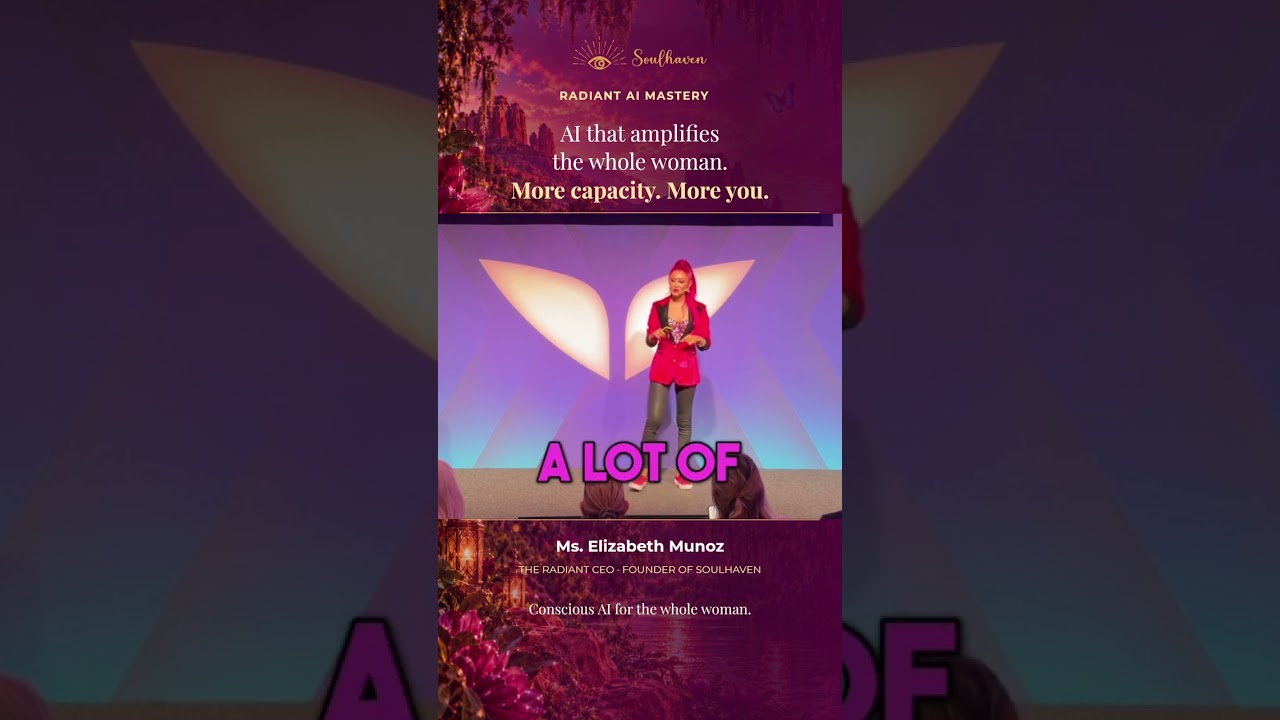
Yeah. So basically, the program I came up with at 3 o'clock in the morning during a meditation was the Rise of the Radiant CEO. And so it's how do we transition ourselves? It's truly an embodiment of an archetype. It's not becoming a CEO. It is the Radiant CEO. How do you embody? How do you step into that archetype? And that is where I want to help you shine your brilliance with the world. And so I have a done-for-you creative agency where we do funnels, we do videos, we do all of it. And while you're working on you, your vision, your offer, getting everything in alignment. We are building your business. And so when you get through this program, you truly are able to just show up and do what you do best and magnetize. And that's what it's about. And so I'm super, super excited. I also have an OS that I created that is like pretty amazing that's going to be launching soon, and it's called the Radiance Reclamation OS. And oh, when that comes out, Katrina, let me tell you, I'm going to give you a trial, but it is incredible.
I love it. Yeah, and I think this is where I saw a lot of our overlap and how we can support each other, because I've done a lot in the tech part. Like, I've been done with a lot of technology, built with a lot of different tools over the last 13 years for myself. Um, and I was like, kind of like, I, I work with it, I can use it for myself. I'm not really big on building it out, um, for everybody. I'm very selective on who I build out technology for because I want to make sure it's the right fit. Um, in this process. But what I thought was really interesting is like, as your women are building their business, what I love teaching is that productivity and time management around this, right? Yeah. And so you talk about that cycle. And so really what I started falling in love with over the last several years— so having been in digital marketing, having designed funnels, having designed all the, the creatives and everything for email marketing, all of that What I recognize at the root that I love working with women around specifically is getting into their cycle syncing. How do you design your business within your natural ebb and flow of your hormonal cycle, your energy cycle, right? And that for me was kind of like the handshake we have between us because it's like even we were talking earlier, you're like, okay, I'm a— I just finished my, my, uh, my period. I'm going into this. What am I doing creative? Like even you're asking me And I love that because I'm starting to recognize as women that it's evolving, right? Understanding how our energy works and flows really became— and that's where the CreateHer Planner came into place. That's where the CreateHer Reset came into place, is because as women, we do intentionally need to set time aside to actually rest. We don't do it because, as you mentioned earlier, Elizabeth, we were like, keep going, keep pushing, keep, keep that, that, that the pedal to the metal, right? Even if you ran the gas full throttle on your car, at some point your car is going to die.
Yeah,
it's going to crash and burn, right? So you can't keep the metal to the, the floor all the time. You've got to be able to know when to let off. You've got to take that break. Um, and even in books like Think and Grow Rich and everything else, they talk about taking that time. I've read a lot of books over the years, and the top, top guys out there that are in business will tell you that when things get stressful They go on vacation.
Yeah, they
get out
in nature,
they turn off all technology, they get back into Mother Nature, they surrender whatever is the stress they have, and they go play, right? And as women, we naturally have that built into our bodies every single freaking month.
Yeah.
And we're not taking advantage of that downtime to really rest, to reset. To be able to elevate, because when we start resting and resetting, we bring the men with us.
Yes, and women, your periods are your superpower, not something to be ashamed of. So let's give me one. I'm gonna, I'm gonna grab something because it's our podcast and we can.
Oh, we got stuff we got going on. But yes, what did you get? This
is the planner she's talking about, ladies, and I will tell you that I signed up and I am going through it with her and the group. Of sisters, and it is amazing. I'm learning so much from it. And this is the first time I've actually— hello, being neurodivergent myself— have ever actually followed a physical planner. And I, I'm loving it because it's not demanding. It's made for us.
Yeah.
And so I love that. And so definitely get a copy if, you know, if you're curious, because I'll let you, you know, continue.
Yeah, and I'm glad you brought that up because I really did have to create space. That was the one thing I started looking at a lot of planners, Elizabeth, and everything is crammed full of to-do lists, productivity lists, day-to-day lists. And I started looking at this, I'm like, okay, where can we add space? And I actually created space in this planner. Yeah, you did, to breathe in here. Like, okay, go color. I've actually— we created— we put coloring images in there, right? And we actually have it set up for you to play and Use colors to track your energy and have a celebration every month and look back on everything you've accomplished, um, and be proud of yourself. I think so many times, Elizabeth, we don't recognize how freaking awesome we are,
right? Right.
Like, come on, like, we are freaking amazing human beings. And you've raised— you're raising your kids, they're still, you know, taken care of. Every morning they wake up, they go— 4 of them, right? They've— that you fed them. They're, you know, they're human beings in the world. They're doing things. You've got an, you know, amazing husband. I mean, like, who you are to them— I think when you— when we as women stop and we take care of ourselves first, we know what our body's doing. That to me was like the critical, because I did it all. I did everything. Like Elizabeth, both of I— I've been in the male-dominant marketing space. I have been in digital marketing since 2008. I have seen the rise Of it all.
Yeah.
Okay. And I've seen every guy burn out, and I watched a lot of really successful 7 and 8 figure women burn out because they couldn't sustain the level of what we were being taught in productivity and time management. It wasn't ours. It's not our body system. And to maintain that level was literally killing us or making us sicker. Yeah.
Yeah. I mean, it's huge. And And there's there's something there. It's it's again like I go back to that constant paradox because I I can remember specifically one of the guys on sales team saying to me, "Oh, you're so lucky. You have it so easy because you're a hot woman. So you know you don't have to actually know anything." And it was like, yeah. And I sat there and I looked at him and I said, "Oh no, dear. El contrario. Because because I'm a." Hot woman. And thank you. I'll take that as a compliment. Like, exactly. I'm like, oh, you think I'm hot? Like, I'm like, no, I have to work 10 times as hard to prove myself. Because when people see me, when these CEOs, these CFOs, these CTOs, they are sitting there and they're looking at me and they're like, does she really know what she's talking about?
And so I don't understand why we get that shit still today.
Yes. And we do. We do. So, yeah, I mean, there's just so much.
Because you're a beautiful woman, you've gotta be an idiot.
Yeah, pretty much. I mean, some of the other—
like, that is such an— that is such an oxymoron because I know so many beautiful women that are super intelligent, and we sit there and we criticize. Like, a beautiful smart woman is the most criticized woman out there.
Yeah,
yeah, it's crazy. Like, I, I love going through— I actually try to make it every time I go out, I always try to compliment a woman. You would be shocked If you've ever done it, I'm talking to all the listeners out there for this. Go out and compliment each other. Say beautiful shoes. Talk about the hair. Talk about whatever. I mean, every time I see something looking good on a woman, I'm like, damn, you make that look good. Right? Because I want us to appreciate each other. If we don't start appreciating each other, then we are always going to be at war with each other. And women, we have nothing to war over. The guys war over crap. That's their job. Their job is territorial and possessiveness. Ours is community, love, and leadership. Like, come on, come back into your core. That's where we're at. Seriously.
That is where we're at. Yep. It's interesting. I actually just had this conversation yesterday and I was saying, you know, you never know how much a compliment can impact someone. Like, you can literally stop someone from committing suicide with a compliment.
Yes.
Because we don't know what somebody else is going through. And I actually had, true story, somebody tell me a year later, they found me on Instagram and said, I ran into you and you gave a compliment to my granddaughter. And that compliment literally changed her life. She had ended up saying that she was suicidal. And because of the conversation she had with you, she was no longer suicidal. And it's like, we don't know, like, how far our reach and impact goes. And one person can change the world. So don't, don't buy into this, that you're not powerful. I mean, for God's sakes, we are literally the only creatures on this planet in this universe that I know of that can literally create life. We are a catalyst for another soul to enter this planet. Like, that is the kind of energy that we hold in our bodies.
I got, like, a chakra over here.
Just sit with that. Like, that is powerful.
Yeah. We have the ability to transform through the creation. I mean, we go through the creative process every single freaking month. Like, that is, like, an energy and a superpower that is a blessing. Yes. I actually was talking with a, a gentleman, and he was like, He's like, I mean, fuck no, I never want to be a woman. He's like, that period thing and all the stuff you go through. And I'm like, I am so blessed that I have this experience. Like, this is that I get to have this. It's like, I'm now— I wish, Elizabeth, I think we both do, that we had learned this probably in like in our teens. I really like— what would life be like if we knew what we knew now back as women? And I think that's one of the other things that I'm excited about this podcast is I want our younger audience To listen to this and really get a sense of what it is, um, to embody that empowerment of being a female and all that whole cyclical nature, that whole seasonal nature that we get to experience that no other— no male will ever have any idea of what that's like for us.
Yeah, and if really, if there's anything what I'm most, most, most passionate about is that it's like cyclical here. So women our age They have the ability to really embody their highest feminine divine matriarch self and, and with that, transmute that into, into light that you can then spread and share. And there's a ripple effect because if we can then help the next generation, which are our 18 to 22, 24-year-old girls, step into their power, then when they're in leadership and they're balanced and they're, they're not burned out and They can actually lead a different world. And that creates a ripple effect for when my now 7-year-old daughter will then be that age, right? And so she'll have a world of leaders that are balanced, right? And, and, and with that balance comes male allyship, right? Not— it's not about leaving men behind. It's how do we—
They want us.
Yes, exactly.
They want partnership. They don't want competition. And they'll even say it like, I'm In the world of dating space, and it's like I don't need to date a female that's a male. Like it's a total turn-off to them. It really is. It's like I'm dating another guy, but she just happens to be in a female body, right? Like they do want that softer essence, and I think we take softness as a weakness. But there is something beautiful about that that strength against that softness. There is a reason for that, right? There is reason for the yin and the yang. There is a reason for the masculine and the feminine. And instead of fighting and competing against each other, really leaning into each other is the beauty of what we get to create. Honestly,
it is.
I love it.
It is. And I'm actually really excited to talk about periods whenever we get there because there's just so much around that. I have stories for days. I'm sure you do too.
Yeah. Well, not even that. There's, like, the blood that you bleed. Actually, the color of your blood has an impact on your overall health. You can actually tell how healthy and what's going on in your body by the color of the blood. You can talk about how much blood you're actually losing every month. Like, there's so much beauty around that that, yeah, I— when we get to this, so we're gonna be talking about periods, we're gonna be talking about hormones, we're gonna be talking about vaginas, boobs, like, why is one bigger than the other? I'm sure we're gonna have a great conversation around that. Seriously. Um, you know, what happens in the womb?
Just, uh, we might as well throw it out there to make everyone uncomfortable if it does, just so you know what you're gonna be coming, um, in store for, I suppose. Um, Our first or second conversation, we actually talked about having innies and outies. And if you don't know what that is, well, you're gonna find out when we talk about it.
Yeah. So again, like, yeah, that was interesting to learn. Yeah, you're gonna hear about innies and outies, and we're not talking belly buttons.
Nope.
That's gonna be the fun conversation. Um, yeah, we're gonna— there's nothing off the table. And even like, as we bring on guests, there is nothing off the table. Like, we know that we're gonna offend. I'm so excited to offend. Um, we're gonna use inappropriate language, which it's not inappropriate, it's just language. Um, Elizabeth and I are going to reclaim words that have been used and abused against us, words like pussy. And we're gonna have a really great conversation around the word pussy, um, because we both have been in conversation about that. But it's been weaponized against us, and we'll talk about how that happened too. Uh, you're gonna hear us talk about— good God, I, I— it's only gonna get bigger and better from here. But yeah, you're gonna hear a lot.
Somebody reminds me of kindergarten cop, like, boys have a penis, girls have a vagina.
We're gonna actually use the right language. We're not gonna call everything like a coochie or whatchamacallit or thingamajigger. Yeah.
Oh my gosh. Yeah. I think I would say this is my mothering coaching, you know, just loving hat that comes on here is if you're going through our podcast and something does trigger for you, I would invite you to sit with it, breathe into it, feel it in your body, and try to understand why you're feeling the way that you're feeling. So don't try to push the feeling aside. You know, even if you think like, oh, these women are crazy, or that, you know, I can't believe this, whatever is coming up for you, all of it is welcome. And know that that's okay. So just sit with it and realize what is it about that thing that was said that triggered you? Because oftentimes it's what we really need to hear the most and what that triggers us the most and what we need to sit with the most. And so I would just invite you to be open and come back, be consistent, you know, like If you get through an episode and you're like, oh my God, this is too much, like, just take some time and then try to come back to it and figure out why it was too much.
Yeah, I love that you bring that up because that is true. A lot of times the words you hear, there is an inner trigger that you've been trained and conditioned to believe. And when you start pulling that thread, like, I've been— we'll have some really interesting conversations around sexual curiosity. And especially preteen sexual curiosity. We're going to have some conversations around that too. But I will tell you, once you start pulling the thread and you start really unraveling what is truth versus what is perceived or given to us in language, you might have an entire paradigm shift with us. But yeah, please sit with anything we're saying, um, and just know that we're saying it because we're not saying it enough. To be honest, this podcast, in terms of Fuck It, I'm a Woman, is really having that candid conversation that keeps happening behind closed doors but really needs to be happening out in the open.
Yeah. Yeah. My mom had a story when she was a little girl. You know, my mom's 73, and she's an amazing woman. Gets, like, dolled up every single day. Like, totally aspire to her. Like, she still works out, you know? And that's after the loss of my dad, after all these things, her husband for, God, almost 50 years. And he wasn't the nicest. And so seeing her just flourish. But she told me that when she was a little girl, she wasn't told about periods and they were ashamed around it. And so she was climbing a tree and her mother had told her not to climb that tree or she was going to get hurt. And little girls didn't climb trees. And so then she was climbing a tree, she fell, and she started bleeding. Well, she started bleeding because she started her period. She hid that because she thought she was going to get in trouble because she was climbing a tree and little girls weren't supposed to climb trees. And you imagine, like, the shame that she had around that, that was unnecessary just because of conditioning, societal conditioning that went back so far. And so these are the kind of things that our conversations may seem heavy or they may seem kind of like We're touching on things, but it's because we need to start having these conversations so that we can shift the narrative. We need to. We have to. Things have to change.
And I hear this a bit. I was actually— again, I'm talking with a gentleman and he's like, don't mothers teach daughters about their period? I said, you have no idea how much of a taboo our own bodies are as women talking to each other about what we're actually going through. We don't talk about it. We are ashamed. We don't talk. It's like we don't talk about boobs. We don't talk about our period. I remember As a kid, I was handed a box of tampons and pads, and I had to— I literally sat there on the toilet reading the directions.
Yeah, trying to figure out what to do with it.
Figure out what to do with it, right? Was it putting it in right? Was it not? No one was correcting me. I didn't feel comfortable asking my own mother because it wasn't a com— like, and it's not because she wasn't available, but she wasn't raised to have that conversation. Exactly. And her mother wasn't raised to have that conversation. So you're going back generations where nobody was having conversations, and now we're sitting here going, thanks to the birth of the internet and everything, we're now— we're like, well, what's actually going on? And so I think the beauty of this is that you and I, Elizabeth, are actually having conversations that we're, we're going to be talking to each other, we're going to be talking to women, we're going to be talking to— setting a tone that this isn't a taboo subject. This is Just what we deal with.
Exactly, because fuck it, I'm a woman.
And with that, I'm calling this episode a wrap. And so continue to listen, subscribe, uh, follow us along here on our channels, um, check our notes down in the description, learn more about Elizabeth, uh, click on her links and buttons, click on the find out about us, follow us. All of that's gonna be down there in the show notes because you know what? If you found value of this one, share it with another woman. Help us put this message out there. So continue to share, continue to let other women know that we're here and we're having a conversation that is truly all about being a woman. So with that, Elizabeth, anything to sign off?
Nope. I love you all.