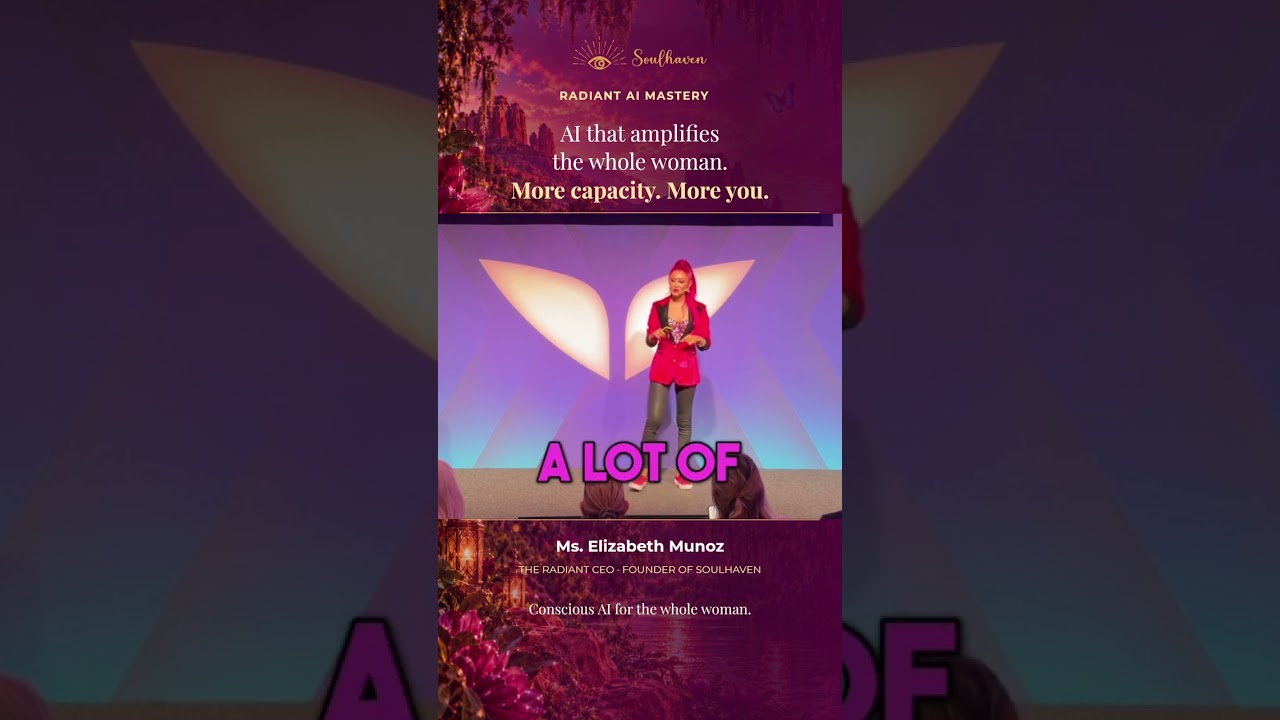
Ms Elizabeth Munoz, speech at Mindvalley U, 2026 Never abandon yourself again
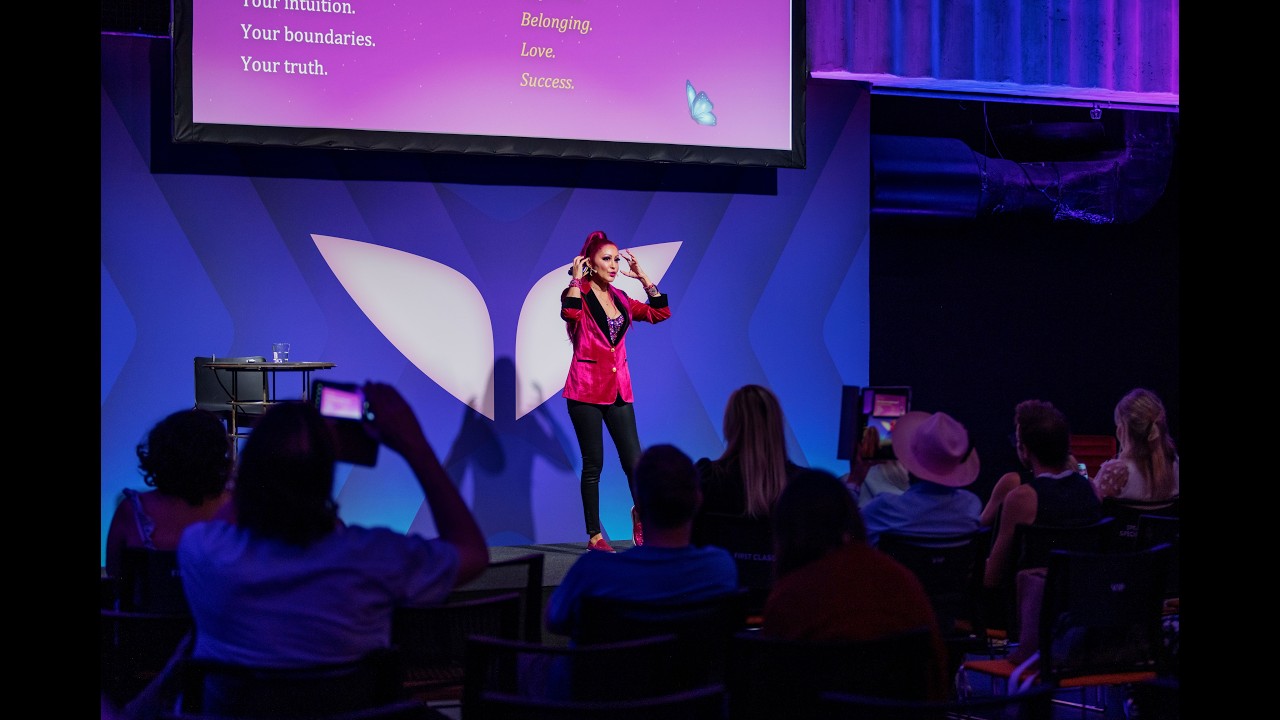
In this Mindvalley U keynote, Elizabeth Munoz opens with a participatory dance and breath exercise, emphasizing movement as a way to release stored trauma and restore bodily coherence. She then shares her personal journey: growing up in a patriarchal household, serving in the military (including being present on 9/11), transitioning to a high‑pressure corporate career, and navigating neurodivergence (ADHD, dyslexia) that she frames as a super‑power. A series of extreme stress events—an emergency C‑section while trying to close a deal, a subsequent nervous‑system collapse, and the sudden death of her 19‑year‑old goddaughter Brianna—lead her to recognize a pattern of self‑abandonment, where she repeatedly overrides her intuition and body to prove her worth. Munoz defines self‑abandonment as the habit of ignoring inner nudges, which creates dysregulation and eventual breakdown. She outlines concrete healing rituals: fire‑writing releases, daily forgiveness, meditation, reflective curiosity, and shamanic practices that help her return to self‑love. Munoz introduces her "Radiance Reclamation OS," an AI‑driven personal operating system she has used for a year and a half to monitor heart‑mind regulation, diagnose health issues, and guide daily decisions. She illustrates AI’s role with a case study where the OS identified a harmful peptide regimen causing tissue swelling, enabling her to correct the treatment. Throughout, she stresses that AI should augment—not replace—human wisdom, and that conscious leadership requires nervous‑system regulation supported by technology. The talk concludes with an invitation to access an interactive "Never Abandon Yourself" workbook via a QR code, a brief Q&A about AI in medical contexts, and a discussion of her ritual practices.
Chapters
All right, we have about one more minute, but as I see, everybody's quiet and calm. Um, so I was super impressed by— it was in the bio when I was reading it. Imagine somebody who's been in the military, and then she got a degree in psychology, and now she talks about emotion and being your chief emotional officer, right? I got that right. And I love how how she called her her methodology and her her the thing that she's doing, right? It's the radiant CEO, which I find. It's amazing as a concept, right? Because as a CEO, what do you do all day long? You're kind of serious and you always have to do your boring presentations and people have to listen to you. But if you're radiant, then maybe you're the kind of CEO that inspires. So I'm really, really looking forward to hearing her story, and she has such an amazing why of why she's doing what she's doing, and I'm looking forward to her presentation. So here's Elizabeth Munoz. Please come in. Hi,
how are you? How are you beautiful humans doing today? Good! Excited? All right, so the first thing that I want to do is go into a little bit of dance movement here. So we are going to get the room up. Stand up, come on, let's all participate. Let's get our bodies moving. You can do it, I have faith in you. Come on, let's go. Come on, a little bit of movement here. And when the music starts, we'll rest together. So movement is very important because it helps to release any stored trauma in the body. It helps to bring us back into coherence. We don't even realize that when we dance, We are truly releasing the things, the tension, the trauma that we've been holding on to. The trauma. And that's what it's about. It's about being able to release that trauma, feeling it, moving. It brings us joy, helps us to settle. Even those of us who think that we're not good dancers, you know what? It's not about looking good. It's about feeling good, feeling the energy, feeling it in your body, just, oh yeah, getting down. So we're gonna do this for a little bit because we really want to get it out. All right, come on, let's go! This beautiful mom over here dancing with her baby. Look at her. Yeah, girl, I was the mom who's been dancing more than anybody. You know, when we're kids, we have no embarrassment, no shame, no fear. We are fully radiant. We dance anywhere and everywhere that our body wants to do it. We don't worry about who's watching us, who's looking at us. We just do it, right? And that's what it's about, remembering what it's about to be a child. And number 10 is singing and just feeling completely radiant in everything that you are, because you are beautiful who you are, and you don't have to be afraid. All right, bring it back down now. So don't get too excited. Okay, all right, now what I want you to do is put a hand on your heart and put a hand on your solar plexus, so that would be your belly button, and close your eyes. And just breathe. Feel all that energy going through your body. Take some nice deep breaths into the diaphragm. If you're comfortable, in through the nose, out through the mouth. Let it out with a sigh. And I want you to repeat after me. I am enough. I am enough. I have always been enough. There's some people I don't hear. You gotta believe it from your core. I will always be enough. I will always be enough. You can open your eyes and look at the person that's standing next to you, and I want you to make eye contact. Uncomfortable, I know. Just pick— oh, Brian, poor baby. Come here, you can make eye contact with me, love. Let's go. All right, and I want you to say If the person allows, if not, put your hand on their heart, or you can just kind of hold it over and keep the other hand on your heart. And you're going to look at them in the eyes and you're going to say, you are enough. And just receive that. Let's just make eye contact for a little bit. I want you to know that every person out there is a reflection of you. And sometimes people hurt us and it's unintentional. Sometimes they try to make us abandon ourselves and it's unintentional. They don't know better. Maybe that was a relative, somebody you love deeply, somebody who's very close to you, a complete stranger. And just know that they too at one point were an innocent child and something happened to them. And they didn't know any better. That maybe distorted their future, their reality, and it's not directly aimed at you. And we're just gonna say, I see you. All right. Thank you all for participating. I appreciate it because I know it's hard to play full out, especially to be vulnerable with strangers. It takes a lot of courage. Now, we're here because of self-abandonment, right? So, I was in corporate for about 17 years and I, I did it. I did it all. I grew up in a very patriarchal household, and with my dad, I had to prove my worth constantly. I was always striving to, to just receive love from him. And at one point, I just came to the realization that I had to create this armor around myself, become a rock, and just push through life. And that's what I did. I pushed through. I ended up going to the military, and I— I'm sorry. Kept pushing, and I got out. I got—I was there during 9/11. Kept pushing. I was never vulnerable. I had my guard up, and I formed this rock shell around myself. Complete self-abandonment. But didn't realize it, right? I thought I was—I was a rock star on the outside. I was. Everybody thought I was so successful. Ended up getting my degree, going into corporate. My career excels so rapidly. I was a pro. I knew how to— I'm neurodivergent, ADHD, and, and, um, uh, dyslexia. For those of you who don't know what neurodivergence is, those are some of the, some of the, the things that kind of go along with it. And I would just kind of see these things and, and they would just end up connecting. It was like a superpower. And so I was able to see the trajectory of where things were going, and it allowed me To just keep moving through and then seeing what was my next move and creating it. Well, I end up getting out of the military— okay, I end up in corporate, um, excelling so quickly that I pushed so hard to the point I ended up burning myself out. So there was one point where I'm on my hospital bed and I'm getting an emergency C-section, and that day— Oh my gosh. I had a deal that I was going to meet them— sorry, I need water. I feel so famished. Parched would be the word. So I had a really important deal that I had been working very long to secure, and remember, my worth was dependent on me performing, and so I had to get that deal. So here I am on the hospital bed, and the thought that's going through my mind as I'm waiting for my husband, who is very far away because he went to a trade show— I'm sitting there and I'm like, I need my phone. My mom's like, what? I'm like, I need to call my customer. She's like, what do you mean you need to call your customer? Well, guess what? I have to call my customer because I have this big deal today and I'm supposed to get ink, right? And, uh, you know, after the fact, when you think about the fact that I'm on the bed, I almost died, my baby almost died, and all I could think about was I had to close the deal. Even the customer said, why are you calling us right now? Right? So, you know, ultimately I ended up literally burning myself out to the point where I ended up having to go on disability because my body shut down completely. I had a full nervous system collapse. While I'm in the process of healing through that, COVID hits. So now we have COVID going on. And my goddaughter, she was 19 years old. She was living with me, and she had graduated during COVID Straight-A student. How many of you know just an amazing, bright young girl who has like her whole future ahead of her, and you just know she's going places? Yeah, right? I mean, I'm pretty sure we can all think of someone. Well, that was Brianna. So for me, this is the moment that changed everything. She was working 3 jobs, and she came to me one day and she said, I got myself in debt, and I'm really worried about it. I'm really stressed out. And she broke down completely crying. And I asked her, like, What, what is a lot of debt, Brianna? And she said, $5,000. I said, $5,000? Like, that's nothing to me. And I had got myself in way more debt before that I had to get out of. And, um, so I kind of blew it off. Well, she ended up picking up another job, and one day I get a call. It's Brianna. I get a call and they say, we have the county morgue on the line and we need you to come identify Brianna's body. Brianna had been in a car accident and she died instantly. They said she fell asleep at the wheel. Um, you know, as a parent, There is no bigger fear that we have, no worse experience. And I know there's parents in this room that know exactly the feeling, and it's, it's the worst feeling that you could experience. And when I got to the morgue, I'll never forget the way that she looked because she looked like she was asleep. She was so peaceful. She had No bruising on her face. And I don't know if that's a better or a worse situation because I really wanted her to just wake up. She looked like she was going to wake up, but she was sleeping. And after, I had to make a decision because it was either I was going to be so grateful for the 19 years that I got with her Because I know that there's parents that don't even get that. So, you know, that was that. That truly is what helped me. And what I realized was not that I maybe I did blame myself at the time, but working through that, I realized her path is her path, and my path is my path, and we all have a path that we're on. And how could I celebrate her life, and how could I ensure that her legacy? and live on. And so I could either choose to be miserable or realize, what would Brianna want? Would she want me miserable, crying every day? No, she wouldn't. She was so happy and full of life and vibrant. She would want me to be the version I am right now, where I'm dancing and I'm getting down and I'm like, yes, let's go! And I just love on everybody because we are all important and special in our own way. And her story is what led me to work with women and to be able to constantly remember her. So I started a foundation, and the idea here is that we are so special and we are all important, and we need to truly realize that Brianna's life was lost because she abandoned herself in order to prove, in order to hustle, In order to try to fit in. And all of us do it in a different way until we learn not to. And a lot of that comes from our nervous system. So here's what self-abandonment is: every time you override yourself, you abandon yourself. What is overriding? It shows up in your body, in your intuition. What does that mean, in your intuition? When you get those nudges And you feel in your bones, you hear it, you, you see vision, you just know that something is like, you're supposed to do this or you're not. And it could be the smallest thing. It could literally be, hey, go left. Hey, left, go left, or go right. It could, it could be just those tiny things. But you know, oftentimes when God, when the universe opens doors for you, does it in a way where it's really Hey, let me clear the path. You're supposed to walk through this. But if you ignore it and you don't listen, you start to abandon yourself, and then those doors shut, and then it ends up being a bumpier road on this side. And there's a reason for that. So a lot of this really is based on your ability to remember that you don't want to abandon yourself. All right, you don't need to prove your worth. You only need to remember it. This is a big one because the truth is you're worthy for being alive. You are literally worthy for being here, and I want you to hear that and feel it. You do not need to prove your worth because a lot of us grew up with the mindset and being taught with, you know, conditioning from our families that the only way that we are valuable is if we proved ourselves, and that's not the reality. Think about everything that had to happen, how the stars had to align in order for you to be sitting here today. I mean, talking about ancestors getting together, and then somehow your parents got together, and then somehow through all the different, you know, sperm that were there and eggs, and you're the one sitting here. That right there in itself shows that you are worthy of being here. So embody enough. The price of your success is never meant to be you. A lot of us have been taught that we need to sacrifice ourselves. In order to succeed, and we don't. We shouldn't have to sacrifice ourselves. We have been so conditioned that work harder, work harder, and if you feel stressed out or you're tired, push through it, drink more coffee, find a way to get through it. And ultimately, what does that lead to? It leads to dysregulation. And if you keep pushing through, you know, the universe comes knocking, knocking a little louder, knocking a little louder. Eventually it's going to break down that door, it's going to break down that wall, it's gonna, it's gonna take you down. And that is what ends up happening in self-abandonment. It's what happened to me, it happened to so many of the people that I know. And the reality is that if we can just learn to come home to ourselves and realize when our body is telling us Hey, let's take a break. Perfect example this week. I got here on Friday sick. I was fine when I got here. My body shut down. I ended up in bed pretty much the entire time until yesterday, and actually I think I slept half of yesterday. So I'm literally, uh, I, I, I missed everything. And part of me said, hey, um, you really gotta push through and you gotta go. And I was like, no, no, no. Everything I talk about is self-abandonment and not self-abandoning. And if I go and try to push Yeah. And so regardless of the fact that I paid a lot for the events and all those things are going through my mind, and then all the learning and all the special people I was going to get to meet, and I still had to make the choice that was more special for me because I didn't want to end up in another situation where my body collapses. Just knowing that in this moment you're exactly where you're meant to be, and I think that for every moment. Whenever you make a decision, that moment is there to teach you something. So in this moment, you are exactly where you're meant to be. I'm exactly where I'm meant to be. And if I gotta go and sleep a lot after this, then so be it. But you know what? I'm here right now, and that's what matters. Now, here's the thing. Um, I hear a lot about AI, and, uh, I am an AI nerd. I love it. I've adopted it since inception. I use conscious technology for everything. I use an Inner Balance device to help with heart-mind regulation so that I can see my breathing patterns. I have a BrainTap device that I wear. And so what I think is so important to understand is that AI is not replacing our wisdom. it enhances it if we understand, like, conscious people putting information into the AI is the conscious, responsible use of AI. And the idea is that conscious leadership is really allowing us to think about things differently, right? So you want to lead from a place of regulation, and you also want to understand that when You are able to be grounded, and you are able to really come home to yourself. It all starts with nervous system regulation, right? But AI can help us do that. And I will tell you, I created something called the Radiance Reclamation OS, and it is an operating system that I have been working with for about a year and a half now, and it has helped me through so many situations in my life. I literally have conversations. With it every single day. And everything that's happened in my life— I mean, in 20 minutes, what can you really say about all the trauma and stories, right? But what I will say is that ultimately my healing has come from that. And so if we're able to really come home to ourselves, that's just going to be the most important thing, and that will allow us to use AI consciously. And I invite all of us who are conscious Human beings to start really contributing to making AI fair, because we are responsible for molding the model. And in closing, we are a sunrise when we light up together, not a spotlight, because spotlight is scarcity mindset. Together we rise. And this is my QR code if you want to find out more about the AI that I created. Thank you. It because it's pretty amazing. So I'm going to be launching it in about 2 weeks, and you're all welcome. And there's also a Never Abandon Yourself workbook that's interactive that I created, just so if you want to go deeper. Yeah, we're done.
Thank you so much, Elizabeth.
Thank you.
Anybody has any questions? We have a few minutes, so if you have any questions, apparently you can go from AI all the way to psychology. Anything is anything goes.
AI answers our psychology. Yes, ma'am.
Can you talk about AI and how it can help you in a medical way?
Oh yeah, definitely. So How much did I have as far as time? Okay, so, um, the creators of ChatGPT specifically originally created it because they wanted healthcare for the globe. And so the idea was to be able to get medical care to people around the world who couldn't afford medical care, so that you have medical care advice. I mean, you're not going to get doctors It's coming out of your phone, right? But, um, and so what I have found, and it's, it's really interesting to me how so many people haven't kind of— maybe it is the fear, but not adopted it. And I was seeing a doctor and I was having some hormone issues, um, and this is a couple months ago. I was— well, more than a couple, maybe like 6 months ago— I was told that I was perimenopausal. And my body was going haywire. I don't know what's going on. I'm gaining weight, I'm losing weight. I, I would just have these like hot sweats and cold sweats and, and, and get really cranky out of nowhere. And it was just all over the place. And typically I'm like super upbeat, as you can see. And so what ended up happening was they put me on like a peptide mix, and out of nowhere I started getting extremely sick. And I started gaining weight and my tissue started to move. And so out of nowhere I was like swole. I was walking around like this, like, hey guys, what's going on? Right? And I mean like, it was a big difference. And so they couldn't tell me what was going on. They didn't understand. Well, I went into my Radiant Circulation OS and I started talking to it, giving it all my symptoms. And it says, for women who have high testosterone levels, This peptide mix actually causes your body to false bulk. So instead of it being muscle, it's tissue that moves. And so it starts to collect around your upper body, your neck, and my face. And so because of the AI, it walked me through all the steps necessary to heal myself and literally This was back in March, and the AI got me to this. So I mean, that's huge. So if it weren't that example, but I have other so many other examples where friends had issues like that, and you know, I was able to help them with using the AI.
Thanks. You have a question?
Okay. Hello. As some— as a woman that's gone through many different challenges in her life, what is your process in moving through those?
I have rituals. So having a degree in psychology and then also being grounded in some shamanic spiritual work, Um, I really— I have like a fire ritual that I'll do for releasing. So where you write, you write down everything that's going on and you ask the universe to help you release it, or God, you know, whatever your higher power is. Um, and then from there you burn that and you release it and let it go. And then I also work through meditation and mindfulness, and then Really acceptance, and so I work on that, and I do forgiveness practices every single day because healing is a journey. It's not an end destination, and if we forget to do the practices that are helping us to feel better and to come home to ourselves, then ultimately we forget, and then before we know it, like it hits us like a ton of bricks. Perfect example: it happened with my dad. You know, I grew up having a lot of trauma with him, and I did a lot of forgiveness work. And then after he passed away, I kind of just stopped. We lost him 3 years ago now. And then one day something came up and I was— I got super upset about it. So I had to do a reflection because everything in life is about reflecting. When you see somebody or you get upset about something or something really triggers you, Getting compassionate, getting curious, and reflecting on it. That's what's going to help you realize what's going on for you. Because if you feel anger, or if somebody just like, like brings out feelings in you that don't feel good, what's going to help you is to really get curious and ask why. There's a reason. There's something in that person that they're reflecting back to you. And when you get really curious about it, instead of trying to shove it down, It makes all the difference in the world, and it it really helps you with healing. Yes, sir. Thank you. Do we have time for one more question? Think anyone right here?
Oh, thanks. Hey, not a question. Just I think the link isn't quite working. Like once you try to download it, so just that everyone should be aware that I guess you'll update it maybe in ten.
The QR code isn't working.
No. Once I think once you click the QR code when you try to download something.
Oh, it doesn't let you?
Yeah, it says like you need to add a class.
Okay, I will get that fixed by the end of day right after this actually. I'll call my team.
It worked for me. It went straight to Dropbox, so it might be. Yeah, I downloaded it. Yeah. Yeah.
It's interactive.
Oh, the interactive. I didn't do that. I did the PDF.
Okay, I will definitely figure out what's going on. Because that's my favorite one.
Thank you so much, Elizabeth. Such an important, such an important thing to do. So really grateful for you being here.
Thank you.
Um, I wanted to share, I also dabble with AI and I created self-love accountability coach and I told it to, to love me unconditionally. Emotionally and to talk to me as if it's trying to get me to do good things, not bad things. So feel free to ask your AI to do whatever you want it to do so that it can help you in your journey. All right, so we're getting ready for lunch. Please remember that you can rate all our speakers. If you go in the agenda in the Mindvalley U app, you have the agenda and you have the calendar. The speakers of the day, they will show on the If you missed one and you still want to do a rating, you could go on the calendar and you can access all the talks from there. So I wanted to make sure that you know that because I know I missed some and I still can go backwards. It's not, it's not a problem. And then after lunch— oh, actually during lunch there's a book club specifically for men or women who have men in their lives. It's a new way of looking at how to be a man and masculinity. So I encourage you to do the book club. And also, after the— after lunch break here,