EP10: Building Relationships to Get your First Real Estate Deal
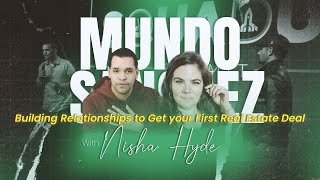
Mundo Sanchez talks with real estate investor Nisha Hyde about how she got her first deal through relationships and creative financing. She's now wholesaling and planning to relocate to Puerto Rico for new investment opportunities.
Welcome to the Mundo Show. My name is Mundo, I am your host and I am one of Pace Morbi's business partners where we own a 181 unit apartment complex together. I'm a two time CFO of the year. I own multiple companies. I have been featured in Forbes and I've spoken on the same stages with some of the best such as Grant Cardone, Cody Sanchez and Pace Morby. I am your host where we talk all things related to real estate and business. So let's go ahead and dive right in and talk to today's guest.
All right, welcome back to another episode. We are here today with Nisha Hyde, a fellow investor of mine. Excited to have you on the show and talk about some of your journey and what you're up to. So thanks for coming.
Thank you for having me.
All right, so I got to ask, tell me about your background and how you started getting into real estate and I think that's a good starting point.
Okay. Yep. Yeah, that might take a minute, but I'll tell you. So I had a construction business for years. Bought my first house on seller finance when, when I was 23. So that's been a while. 24 years. Yep. Yeah, it was my mom's friend, she was a retired realtor and she had a bunch of properties around town and basically I bought it on an agreement for deed at her kitchen table. Yeah, I gave her 5,000 and we signed a contract and. Yeah. And so a couple years later her husband passed away and I had a friend that did title work and that's when he was like, you know, you really need to have a warranty deed and a deed of trust, an agreement at the table, you know, wasn't gonna work. And so I had talked to Ms. Dottie about it and we did, we fixed it. Good thing because Hurricane Katrina hit like a year after I got the paperwork done the right way and. Yeah. And I wouldn't have been eligible for any of the grants.
Right.
So we spent four years rehab in that house while we lived in it and we had a construction business. And then we basically the storm hit. We had moved out and rented that house out three months prior to the storm and we were gonna buy his parents house. So we rehabbed the guest house and moved in there, rented our house out. And then the storm hit and so his parents house was gone. It was a block from the beach in Waveland, Mississippi. And my house got 32 foot of water.
And where was, where was your house at?
Was that St. Louis, Mississippi? Yeah.
Okay.
Yeah. Yeah, so, yeah, a couple. So we had a construction business right through all that. And so. And then, you know, most of our family and friends either flooded or lost their home, but I guess it was about two years after the storm we found out I was getting a grant, right. Insurance didn't pay off. I was getting a grant. And so we bulldozed that house and we built a new one there. And yeah, so that was interesting, right? Picking plans and building a brand new house there. I didn't really want to rebuild on the water, but, you know, Brian convinced me that that's what we should do. Plus, we wouldn't have been eligible for all the grants, so. So I thought, well, we can borrow against this one and do some others right down the line. Which that didn't really happen. And so I guess, you know, I had a little experience before I got into real estate this way.
Right.
And so.
And that made you want to buy more real estate?
Yeah. Really, huh? Yeah. Yeah, I definitely did. So, and then I guess let's say it was 2019, I made a deal on my house with an investor from Mississippi. He did a novation with me. Of course, I didn't realize that at the time, but he was going to come in, you know, let's see. So when I built it and it was finished, it was 2013. And then fast forward 2019, we were going to do some renovations and updating and he would, you know, put it back on the market and get paid a flat fee. And then after we sold it, I'd get whatever was left. Well, he was having a real estate event on the coast, and part of the deal was tickets to that three day event with Steve Trang and Brent Daniels. Real Estate Roundup Live. That's what it was. And I'm sorry, back up. So I saw a Fortune Builders thing go through my new newsfeed and we went to an hour seminar and that's where they showed you, you know, wholesaling, where you put it under contract, sell the contract. And so a week before, I had actually contacted Adam about my house. I put the little camp down the road under contract. So that was the deal. He would do the novation with me on my house. He would help me with a little camp down the road, and I get tickets to that event. And that's how this all started.
Wow, that's so how going from there because obviously you joins up too. You found pace. How did you get to discover pace through that?
Yeah. So Adam's dad, Leon Johnson, he's a old school White haired investor from, from the 70s.
Right.
And him and Pace, we're gonna have a creative finance meetup in New Orleans. And that was right about the time Covet started and they canceled it. And so, you know, it was Covid. We were on lockdown, it was 2020. And so I saw Pace's 14 Hour Live, his 24 Hour Live. And so by October, you know, of course I resonated with him more than anybody because he was creative.
Right.
And. And so it was October 15th of 2020, I joined sub Tip. Yep.
Wow. So you've been. You've been in a while. That's awesome. So I'm actually, I actually went to college in Mississippi at Alcorn State University. I don't know if you heard of it, it's kind of in the middle of nowhere, but yeah, Division 1 school. So I'm pretty familiar with that area. We used to go to New Orleans quite a bit in, in the college days, of course.
Yeah, I can imagine.
Yeah. No, that's, that's awesome. So you, you've been in the community a few years. Tell me about your journey since joining. What have you been able to do? What have you focused on? What kind of stuff?
Yeah, so right before I joined, I had put. That year I had put Bandit signs out. You know, the ones that say we buy houses, right. And that got the phone ringing. And then my first actual wholesale deal ended up being a mobile home park that came in on the Bandit sign. And so, yeah, it was different, right. And I didn't know how to analyze it, so I basically put it under contract, got them down a little bit, and still didn't know whether or not that price worked. And I think the next day or that day, my friend that runs the RIA meetings in Louisiana, she called one of the Bandit signs to network. And we realized, you know, it was her and it was me. And so we started talking and I told her about that, right? And she was like, you know, we might be interested in buying it, and if not, we have buyers and we'll help you, you know, build the buyer's package and all that. And so I signed a JV agreement with her. It had 22 really old trailers. Only five of them were. Well, four of them were rented out and somebody that was supposed to be managing it was living in one, and there was three houses around there, and that was in Gulfport, Mississippi. And. And so we went through, you know, all the stuff, rent rolls, profit and loss statements, and I had. He wanted 275, I think I put it under contract for 225. And then when it was all said and done, you know, I went back to him and I was like, because of X, Y and Z, it was a non conforming park. Two of the trailers were over the property lines, they couldn't be replaced. We were going to try to show expansion on. There was two lots that were vacant but it wasn't gonna, it wasn't gonna fly. So I had to. The new offer was 168, 000 cash or 200000 on terms. And he slept on it. And the next morning he gave me a crazy number like 174,258do78cents. And. And so that was the first deal and that was kind of creative too because Courtney had decided she didn't want it. And then after we went through all that, she decided she did. So we needed to negotiate. You know, it was. The dynamics changed a little bit. Instead of us going to find a buyer and split it, now we needed to negotiate a fee.
Right.
And that ended up being creative. Pretty creative too. I still have the email. So it wasn't really a wholesale because I removed, I ended up removing myself and letting them enter into contract together. And, and it, it wasn't crazy, but I made 12, 500amastermind dinner and a roll of construction material. They had that rubber stuff you repair the roofs of campers up. Yeah, I had seen it and I was like, oh, I need that. But yeah, anyway, so that's, that's awesome.
So it sounds like you understood pretty quickly the role that relationships play. Right? Getting in the community and building relationships with other people. It sounds like the, the network of buyers that your partner had definitely helped as well. Do you think, you know, if you had to go back and do it again, it sounds like, I mean it's a no brainer to partner up with people. I know a lot of people that try to get in it and they've never really worked on a team before and they've always been solo and they try to do it themselves and then end up, you know, failing for a couple years. What would you, would you recommend doing that path as well? Building relationships with people?
Absolutely. You know, I guess they don't understand.
Right.
What it takes. You want to believe, you want to shift your mindset to believe that you can do it and you can go through it, but you're really making it harder on yourself.
Right.
Because I did do a lot of them by myself. I did two seller finance wraps, one in West Virginia and one in Pennsylvania by myself.
Right.
From my desk in Mississippi. And, you know, a few cash ones. I was gonna say that. And there was one other deal I actually JV'd on with somebody that needed help with a sub two deal.
Wow.
Yeah. Yeah. So. But actually another guy from our community, Alex, the one that I did that sub two deal with, he's in sub two with us. He. We're working right now on his CRM and Facebook ads. He's got Facebook ads going and we're cleaning it up. Yeah.
So are you. Are you mostly doing wholesale stuff right now or do you have a portfolio of your own?
Yeah, mostly wholesale. And. And so that's part of the whole thing too.
Right.
So it just, you know, all the single family and small multi family, really, I want.
Right.
I wanted to do the tree houses on the river and glamping parks and. And after the last few months of, you know, we decided we were moving to Puerto Rico. Well, I decided the girls aren't happy about it. My daughters, but anyway, they'll figure it out. It'd be good. But. Yeah. So I worked with someone else that's there and was able to look at properties and work on a few things there and kind of get a good feel of it without being there. And recently after. Well, once I. The book and I put out just the COVID on my Facebook page, I really didn't even tell anybody that there's a book yet. I need to upload it and do all the things.
Right.
But I put that picture and that had a couple of potential private money lenders reach out, a couple of guys from Puerto Rico that are in, I think California or whatever. They're in the United.
They were like Facebook friends, or did you put that in the subtitute?
Yeah, they were. They were Facebook friends. Yeah. Yeah. It's crazy. I. I never tried to grow my Facebook. Really. It happened real organically. And now I'm at the point where I have too many friend requests to go through any more of them. Like, you have to send a message with it or I'll never see it. And I can only, like accept 200 more people. So I really need to go clean it out because I don't want to switch it over to the other thing. I wanted to keep it, you know, I wanted to. That 5,000 people to be people that I actually spoke with, met with, or there's a potential for doing business with in the future and just have a. A better quality. 5,000, right.
Yeah. Yeah. Those are good problems to have Right. It's all. It sounds like it's all about relationships. And you've definitely figured out a way to do that.
Yeah, it is. It is. Speaking of, I recently, I'd say, I guess about a month ago, I called an agent on another piece of property for sale in Puerto Rico with a river through it. Beautiful, right? Perfect for an eco retreat or whatever. And that realtor, you know, we had a great conversation, and he asked me, you know, kind of what I would want to do there. And then he brought me back to the owner. Well, that's what you said. He said, well, the. The seller didn't really want to sell, but he was in Colombia for the next year or so, and he couldn't be there. And the people that he was paying to do take care of the bees, he has bee boxes and cattle, chickens, stuff like that. And so the people that he was paying, you know, none of it's happening. And basically had a similar vision of the agricultural aspect of it, segregating some of it to do an eco development. And then there's another parcel. He already has a beautiful house on that. They Airbnb, but they haven't been doing that since. He hasn't been there or had anyone to run it. So anyway, he arranged a meeting with all of us because he was open to a potential partnership instead of selling. And so I don't know where that's going right now. But speaking of relationships.
Right.
So I made a relationship with the agent that turned into meeting with the owner, that turned into three more meetings. And so we're basically talking about what that partnership would look like, me relocating to the property, segregating the 16 acres, getting the agricultural part of it up and going so we can raise the value of the land. And so we'll see. So it's a potential partnership opportunity. Yeah.
Okay. All right. So you. You probably spent a lot of time talking to agents, right? Are you direct to agent or more direct.
Both. Yeah, whoever.
Right.
Like, I'm fine with agents or sellers or whatever.
So I imagine you hear the word no quite a bit, right?
Yeah, pretty much. I mean, you know. Yeah, because I was gonna say, like, with. I worked the no equities or I did for the last year, and, yeah, I definitely hear no a lot. But I started. I'm there to provide options and solutions to the people that need it. I'm not there to convince anybody to do something they don't want to do.
Right.
So if they don't need me and it's a no, then they need to go do whatever it is they need to do.
Right?
Yeah. I don't want to. I. I don't want to go the path of resistance.
Right.
I want to go the path of they need somebody. They don't know what options are there.
Right.
What about, what about some of the calls that you have with, like, agents? Let's say they tell you no. Like, how do you typically handle those type of interactions?
It depends, right? Like, the most no's I have are, no, the seller doesn't want to do anything creative and they need to sell this straight out.
Right.
Well, you know, at what point, of course, they want to sell traditionally.
Right.
But I might have a great backup plan, right. Or plan B, and their motivation may change.
Right.
So I try to keep my foot in the door, right. And build that relationship and say, well, this one might not work out, but this is what I do. This is what I'm looking for. This is what I can help with. And then I've had, you know, the same agent bring me several deals.
Yeah. That is something that's recently changed in my mindset. Recently. You know, I. When I first got started, I definitely took the attitude of, like, when I heard no, I was like, okay, thanks, hang up and move on to the next deal. But then, you know, I really started focusing on building relationships with the agent or the seller. Mainly the agents is where I kind of felt like I was just like, okay, click. Even. Especially when I was met with resistance. Right. But now I've kind of really shifted everything to start to build relationship like. Like what you said and say, okay, well, maybe this isn't a great deal. I could be a great backup offer for you. But tell me about your other listings. Maybe there's some other listings. Like, I'm really surprised sometimes when I talk to agents that when I get on the phone with them, like, they're very, like, specific to the deal in front of them. The deal you're talking about. Right. They don't really. Sometimes they don't think about, hey, this offer doesn't work for this seller, But I have three other sellers where this would work. And sometimes you have to ask the question of, like, hey, what, Tell me about what else you got going on. Is this a good fit for. For your other clients? And they're like, oh, yeah, actually I got, you know, property on 1, 23 Main Street. They might be open to this. So instead of just saying no, you know, really focus on building the relationships. And it sounds like you've done that and even leads to future Deals, right. Maybe they don't have anything today, but in three months they might remember that, hey, I talked to this investor that is specializing in sub 2 transactions or creative transactions. Let me hit them up. And then like it just kind of snowballs after that.
And you know, it's funny because, right. If you don't, if you don't mention it, they're not going to think of it. And if you do have a great quality conversation and it's an agent that might not have anything right now, you really have to follow up with them too, Right. Because they might not think of you the next time. Not until you really start. When they have a problem and you happen to follow up and they have that problem, right. Then it can lead into them contacting you. And then again, you never know. I've had them, I submitted an offer or an loi, you know, and it wasn't enough money for the seller. They didn't really want to do it. And then 30 days later they reach back up. But if you touch with them, you know, that'll be less lost, right. So I say keep track of them somehow. CRM free CRM. If you don't use. You know, as I say, I wrote things down for a long time. I still do, but you know, it's. Yeah, it doesn't always work because things slip through the cracks. And if you're only working on what you're working on at the moment, you're not going to think of other things. And when you do start, you're not looking at when you do start actually getting a lot of leads or possibilities.
Right.
I guess the more you can do with those leads, the more they're leads, right?
Yeah, yeah, exactly.
As far as networking goes, I started and I didn't really use it like I should have, but I had started basically a workspace to network and connect, right. To keep track of the people I was meeting with. So I wouldn't forget them if they were in sub 2 with me, if they were in Gator, you know, whatever, whatever they were. Buyer, cash, buyer, creative, you know, I keep track of them and I label it.
Right.
Potential private money lender, potential partner, whatever it is.
When you say work, is that like in your CRM?
Yeah, yeah. So I had one in podio. I was using podio for a while and I had made one in there. And then actually I made one in Trello just for Puerto Rico and. And so I started it again, you know, putting contacts and all those things I just mentioned in there for Puerto Rico.
Right.
And uh, yeah. So labeling them, setting the follow up so you don't forget who you need to connect with and who you had a good conversation with. I mean, a lot. You know, when PACE encourages everybody to have meetings and then, you know, if you're having three meetings a week or more just because you want to get a zoom link, you're not really building that connection.
Right.
And you forget who you talk to, you forget what you talked about, or you don't follow up again. And then down the line, you know, in a year or so. Oh, yeah, you know, I know you. But if, if you nurture some of those, there's no telling what it could turn into.
Yeah, no, that's, that's really smart. I've had that happen to me too. Right. You know, I just go crazy in a week and, you know, have 20 calls with people and then, then I'm like, it. Two weeks later, I'm like, wait, who did I talk to? When did I talk to them? What did they talk about? Am I talking to John or Chris or, you know, and getting, getting relationships confused. So, like writing down, taking down notes, that's. That's awesome. So you mentioned Puerto Rico several times. Tell me about, like, what do you have going on in Puerto Rico? You're relocating out there.
Yeah. Yeah. So, you know, way back when this all started in 2020, when Jerry Norton was going, I. We started watching stuff and watching his journey, and I started looking at properties at that point and wanted to get, you know, maybe five to seven units that I could convert. Being a contractor, right. Like, that's where my head always goes, is turning something into something. But anyway, you know, there was years of everything else in between. And then I guess about seven or eight months ago, I was like, I don't have. I sold my house, right, in 2020, and I didn't buy another primary home. So I'm really open to do something different. And I thought, you know, if I don't do it now, I don't know when I would. So I made a decision that we would move there. And I have a help. My good friend who's also worked for me for years, he's going with us. So we're not going alone, Right. It's me and a 12 and 13 year old and a helper and friend.
Right.
And so anyway, I think. And then I started looking at different stuff, right? Multi units, cabins on the lake, land that could be developed and connecting. So I put a post and stuff too, talking about connecting and networking. And I was like, who's doing what in Puerto Rico and who wants to. And then that got a really good response and I wrote down and started connecting with everybody in the comments and arranging meetings. That's how I met the one guy that I worked with for a few months who was on the southeast side of the island. So I really got to see a lot down there and, you know, walking through properties and sending photo reports and all that. But yeah, just connecting with everybody through that.
Right.
That one post became something amazing.
Wow. So did you, before joining, did the community. Did you always feel comfortable posting in, like, social media?
No.
And are you doing anything, like, actively right now on social media?
Not like I should.
Right.
I'm supposed to start all new pages for the Puerto Rico thing for building a credibility package and raising capital. And that's what that book's for, is to put the link and start an email campaign and start a debt fund.
Right.
That's. That's the main thing. Start a fund so that I have the capital to do what I need and I don't necessarily have to have the project identified, but at least what I'm going to do.
Right.
To get other people on board and have them passionate and show them what I'm doing. So if I partner into this big project, you know, I would start by documenting the journey of moving over there and all that. So I'm supposed to get it all set up and start working on that more.
Awesome. Awesome. So when are you planning on doing that relocating?
Yeah, I was gonna be there for the new year, but that's not happening now. So if he, if we do partner on this one, he wanted to know how soon I could get there. So it could be 30 to 60 days. I don't know. We're gonna have another meeting this week and, and see. So even if this doesn't work out, it's been a great experience just discussing the potential opportunity because I had to write up plans.
Right.
Of what I would do, which I'm going to do regardless whether I do this project or another. And so it's been a great experience no matter which way we go. But if we, if we do partner on that one, great. If it's another one, I'll document, take pictures, share, write more books on the tax collection codes and what, you know, incentives and what can really be done down there. But I think it'll be better for me to get my feet on the ground so I can really set myself as an authority so I can build credibility to raise more capital.
Yeah, yeah, no, that's awesome. And so do you, do you work full time or is. Are you full time wholesaling, full time real estate? That's awesome. Yeah, yeah, no, I, I like the idea of documenting your journey. I think that's really impactful for all the reasons you mentioned on the credibility piece. You know, being able to establish yourself as an authority. I mean, that's, that's pretty big. That's definitely what, what I'm planning to do this year as far as getting into more content. Talking about the journey, the good, the bad, the ugly, I was actually just at a rental property and there was. So it was a property I had to evict a tenant. And they left food and just like, just a huge mess. Like, there was syrup all over the place. Like it was just disgusting. And then so now there's rats there. And so just before our podcast, I had to, don't worry, I washed my hands. I had to clean out a bunch of dead rats in there. So that was not the, not the funnest times being a landlord. But, you know, documenting that, you know, journey just, you know, the good, the bad, the ugly is. Is what I recommend.
Yeah, I love that. Yeah. I think we need to share more. I. I hate to say it, but people want to celebrate the wins, right? And they don't want to talk about any of the negative things, but. And you don't want to put too much negative in front of them because they're trying to, right, start on this journey or keep on moving forward. And so they're trying to stay positive. And so one thing lately, I'm like, okay, I'm gonna tell you the bad stuff first, and then I'm gonna switch around, switch it around and bring you into the good. So, like, even if I'm talking to a friend, I thought, because I saw something, I don't even know what it was, but they were talking about. When you start talking about something negative and what it does to their brain and how, you know, then they associate that feeling with you. So if you're gonna tell them about something that happened and be real with them and tell them the negative, try to switch into whatever was positive about it or what you learned from it that was positive. So you can leave on a better note. Right, and get them back on that negative right away.
Yeah, no, I, I tried to, like, specifically in my example, which is interesting, is before doing content and stuff like that, I would have been really just pissed off being there, like, just cleaning out all this, like, dirty stuff and rats and this huge mess And I have to spend a bunch of money. And, you know, I was. They sent me back probably like 7,500 bucks non payment of rent, damages, all this stuff.
Right.
And normally I'd be like, I'd be pissed. But because I was like filming this content, I was actually excited. I was like, this is great content, you know, this is sharing the journey of real estate. And I kind of flip that around of like sharing the journey of real estate in the sense that I'm an operator, right. And I can show an investor like, hey, real estate, you can make a lot of money. You can build wealth. Right. It's one of the greatest ways to build wealth and create millionaires. But there's an ugly side to it. Let me worry about cleaning up, you know, this mess and the dirty stuff. And you could just be a passive investor. Right. So I kind of reframed that whole situation in what I was going through. And that kept me in a great mindset versus, you know, going on the other side, just being pissed off at how much money I lost and, you know, all this mess that I got clean up.
Yeah. And you can think about it. It could be worse too, right? Like, you might not have the money to clean up that property when it happens.
Yep, yep.
Yeah.
All right, so any. Any parting thoughts for anyone that's watching as far as, like, if people want to follow your journey or follow your footsteps, like, what would you recommend for people to do that are just getting started in real estate?
Keep track of who you meet. Take notes on how they might. Because if you, if you don't ask the questions you don't know, they don't assume they're going to know what questions to ask either. They might be newer and you don't know how that relationship could involve. Could evolve.
Right.
You don't know where they're going in their journey. They're beginning to. Or maybe they're in their journey. You don't even know how they fit into yours if you're new yet, do you? But keep track of them and maybe instead of 20 meetings, do a couple a week.
Right.
And work on building better relationships, deeper quality rather than a bunch of shallow meetings.
Right.
And keep track of them.
Yeah, no, that's great advice. That's great advice. So it sounds like you mentioned about sharing about your journey. So if people want to follow along your journey, how can they find you?
Oh, God, I don't know because I. I don't do much on Instagram and I have my Facebook. I guess once, you know, I start doing YouTube and I open up everything for Puerto Rico. They'll be able to always find my name. Right on. Yeah.
Yeah. No. Well, that's awesome. I hope you do it because it's. I think there's a lot of value in sharing your experience. Well, I appreciate the time you took today to kind of talk about your journey. Super awesome to hear about, you know, some of the stuff you're working on. And, you know, I'm jealous you get to move to Puerto Rico, so that's awesome.
Yeah. I'm telling you, huh? Yeah. One last thing. I do have a guy that's helping me with the branding and social media.
Okay.
The website and all that good stuff. So that's gonna help when it's time.
Awesome. So stay tuned to see more of that.
Yeah. Thank you.
All right, well, thanks again for coming on the show, and I appreciate it.
Same. Thank you. Talk soon.
All right. See you.
Thanks for watching. Subscribe for more.










