EP5: Raising Capital and Building Credibility with Fractional
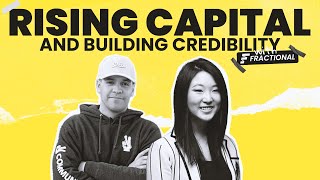
Stella, CEO of Fractional, talks about building a platform for real estate investment partnerships. She discusses raising capital, creating investor communities, and the operational details that let people pool money into properties together.
All right, my name is Mundo. Welcome back to another episode. And today we are talking with Stella, who is the CEO and co founder of Fractional. So welcome to the show, Stella.
Thank you. Excited to be here. Thanks for having me.
Yeah, I'm really excited about today's episode to talk about a lot of things that hit home for me in terms of raising capital and building credibility. And just recently ran across Fractional. And it's something that Pace Morbi had brought up and really has been a game changer for me as far as being able to share content. But before we jump into what Fractional is, maybe tell us a little bit about your background and how you got to start Fractional.
Yeah, sure, we'd love to. So I actually live in the San Francisco Bay area. I'm a real estate investor as well. And really my journey into real estate investing, it was not all rainbows and flowers. It was actually really deep in the trenches starting out. One, it takes a million dollars to buy a shack where I live and that was not something that I could afford. And around five, six years ago, everybody was talking so much about out of state investing. I felt like, oh, maybe that's my opportunity, but really didn't know any other place to invest. And that was really, really dark times for me where I felt really overwhelmed. I was really confused and just really didn't know how to start. And I ended up doing my very first deal in real estate by partnering and joint venturing with some other experienced investors. And that was a huge game changer for me because one, I didn't have to put all my life savings into the down payment of just buying one house and kind of crossing my fingers and hoping that this isn't going to be a shit show. So splitting the capital where I could start out with ten grand, it really meant a lot for me just from a risk premise perspective. And you know, two, it's, it's really about working with experienced people where I feel like I can kind of, you know, learn the ropes as I invest and have people who have my back. So that's really how I went from zero to one. It was with joint venturing with other people. And that was like such a huge kind of mindset shift in my, in my head where I was like, wow, you know, it's such a no brainer to partner with people, like more people should do this. And now I've been really lucky to have grown my personal portfolio to a little bit over 150 units.
That's incredible.
Yeah. And it's like, the way to do this is really having a team. Because even with more experience now, it's like, I don't have endless capital, right? Like, nobody is made of money. Like, you do get tapped out. If you want to scale, you need other people's money, right? Like, you need to find partners. And, you know, I want to streamline this whole way and pretty much like combining all my personal experiences. That's what landed at the idea of creating fractional as a company and a product is like, you know, if we can really create a way for people to, you know, build communities of investors who want to work together and partner with each other and then really bring technology to create a lot of the systems that make, you know, creating a legal framework easier, make, you know, back office and compliance work easier, then now all of a sudden you have this totally great form of ownership that more and more people can really take advantage of. So that's pretty much the light bulb moment for me to create fractional as a company.
So you have an idea and a lot of people have ideas, right? But very few people take action. So what was kind of like your first steps in getting fractional started? Obviously it's a software product, right? So you had to develop it. Is that something that you had the capability to do or did you hire out? Did you raise money? Tell me about how that went.
Yeah, that's a great question. So I'm a software engineer by trade, so building products. I worked in tech. My co founder and I, we actually worked on the same team together at this company called Affirm. It's a buy now, pay later startup. While we were working there, both of us, we love real estate. We were like investing on the side. We started partnering together on deals and. And we kind of just looked at each other. We're like, what are we doing here? Clearly there's something here. We're doing a lot of things manually ourselves. We both are techies. Let's build something. Let's really create a product that can streamline things for people. And initially we really wanted more validation on is this just us or is this actually something that more people want? We created this landing page basically like a website, not with all the functionality, but just kind of explaining what we wanted to do, what our vision is, and then launch that with this app called Blind. It's kind of like an anonymous forum for a lot of busy professionals just to see who would be interested in investing in real estate with other really experienced and brilliant people. And just from that, we ended up having around 2,000 people go into our website and join this wait list. So that was like, a huge signal for us where it's like, okay, it's not just us. Like, people actually want this thing. Let's actually take action and, you know, change it from an idea into an actual product and create something that people want.
Wow, that's amazing. Yeah. Quick side note, I actually have my master's in software development, too.
Nice.
A little bit of a software background, and I built the product that one of our companies runs off of. So I have some admiration for what you guys do.
I love that. I feel like a lot of just people from the software world, like, we're all doers. Like, we want to build things. We want to take our destiny in our own hands. So I definitely know relate to you there, where it's like, okay, we see something, like, we got to get our hands deep into it.
And just like, so you guys. So you got two, essentially two developers starting fractional. And then you probably realized you needed to raise it, you know, have a team, right? Team in place. If you wanted to scale it and you had the wait list, you started building it. At what point did you realize, okay, this is gonna really turn into something big and we need more money?
Yeah, that's a great question. So when we just started out building the company, we were really lucky to get into this accelerator incubator called Y Combinator. It basically was like, oh, just, you.
Know, just a little. This little thing that no one's heard of.
We made it. And that definitely was like, such a huge catalyst to growth. You know, one, it's really like this kind of pressure cooker that, you know, makes a lot of great things happen. It's like we're under this, like, time crunch. We got three months to really build kind of like an initial viable product. You know, try to get as much traction and proof that this is really something. And then, you know, at the end of the three months, Y accommodator does this thing called demo day, where, you know, you're basically in a room full of venture capitalists, right? And you get a pitch, what you build. You know, if you have any kind of initial customers, what's your traction so far? And really try to make a case that, you know, this is going to be the next big thing. So Carlos is my co founder, and I, we. We were in this, like, you know, pressure cooker trying to make things happen. We were, you know, working so hard, trying to get our initial customers working on our first kind of iteration of the product and everything. So that worked really well for us where I think by the end of the three months, we had our first 10 paying customers who had bought properties together as a partnership through the.
Wow. So we're, we're doing this now in the Y Combinator, the demo day, was that like your first, like, real big presentation or have you given presentations before that? Because it's a skill within itself. I saw you present, you know, in Phoenix when we were at the raising capital seminar together. You did really well. I mean, you look like you clearly knew what you were doing.
Yeah, I mean, I think that was like the most formal, probably presentation like, up until that point. But I, I do think, like, you know, storytelling and presentation, it is, it is something that you kind of just build up over time. Like, I honestly feel like I'm still practicing the art of, like, storytelling and yeah, I feel like it just builds, like every chance you have to, like, talk to a potential customer, talk to, like, someone else that's in the industry is like, trying to understand who they are as your audience and, like, what's relevant to them and how do you spend something where, you know, they get drawn to it. Right. Like, I mean, I'm sure you get it as a, as a content creator. Right? It's like, how do you, like, understand your audience? How do you create something that's valuable to them and how do you get them hooked on the story? It's definitely still a work in progress for me, but I think it's, you know, every opportunity is kind of like another build up to get better at it. And that was definitely, you know, the start of doing something really seriously and getting this in front of a lot of people all at once.
Yes. I mean, when, when we were at that seminar together in Phoenix, did you have any idea that. Well, you obviously came prepared because you had your pitch deck with you and, and pace just like, immediately threw you up in front of, you know, 80 people or whatever that was sitting there. That was, that was pretty cool to watch because you did that, like, right on the spot. And, you know, I feel like I would have been like, oh, man, I'm a little nervous to do this today. But that was, that was pretty awesome. So you did great.
Thank you. Thank you. Appreciate that. Definitely still have the nerves. I feel like, you know, it's, it's never. I feel like it's. It's hard to be, like, never nervous or, like, never anxious. Like, there's definitely a little bit of that at every opportunity, but I think in itself like that feeling, it's actually really exciting too where it's like, oh my gosh, like we're getting this opportunity now. Like what's going to happen? Like, let's, let's just see. And yeah, I think it really creates like those little kind of like sparks of joy and the uncertainty is, is really, really exciting on itself.
Yeah. So what did you end up raising as far as after that demo day? Like, how did it go?
Yeah, it went really well. So that's when we raised our seed round and that basically gave us, you know, enough capital to start building a team. I mean in the startup scene it's all about like fast execution. So that was really important to us. It's like, okay, well you know, because we are venture back now, like, we gotta really prove our point and you know, start building market share as quickly as possible and you know, really need a brilliant team of, you know, developers of product people, salespeople, business development people, right. Like pretty much the whole package to build that dream team to really take this to the next level. We're really lucky to have that. Then with that, started building more features, more functionality, really building out a lot of this community aspect of the platform. That was a huge thing we wanted to conquer after raising the seed round and then from there been getting more and more momentum. We've been having more communities, launch more partnerships that pretty much led to the Series A, which is the most recent round that we raised where we raised $15 million to continue growing the company. So yeah, a lot of baby stuffs that really kind of stack on top of each other. That really allows us to kind of take a really massive win and kind of reach a really big milestone for us. So still now we're back on the grind. We want to build more, we want to create more useful and impactful experiences for our users. So that's what we're doing every day.
That's awesome. So tell me, who is your user base?
Yeah, great question. So the way that we look at it is there are kind of two separate groups of users. The first group is what we call our community leaders. So people like Pace, like yourself, Muna, right? Like you guys have a vision, you guys have experience, you guys are doing deals, you guys are educating people, right? These are the leaders who are building communities on our platform. They're doing deals and then involving what I call the second half of our user base, which is the individual investor. And those folks, they may not have a lot of capital, they might not have a lot of experience, but they really want to up level themselves. They want to pursue a life where they're making passive income, where they're, you know, taking strides towards building, you know, financial wealth and financial freedom and they need help. Right. It's kind of similar to how I started out where I didn't have a lot of money, I had no idea what I was doing. And I, and I was in a. But I was ambitious, right? Like, I wanted to do something, and if people were just willing to help me and partner with me along the road, that is a huge game changer. Right. So that's kind of how we look at our customer base is like we have the leaders and, and then we have, you know, the really motivated people that want to get to the next level. And that is just the perfect synergy because these two groups of people, when they work together, it's really unlocking so much as, as a collective force. So that's, you know, the connections that we want to help build on the fractional platform.
So you cater to people that are what I would consider more passive and maybe that they want to be active, but for the time being they have capital, right? They have capital, they want to invest into deals, whether that's truly being passive or they want to become, you know, more active and be an operator one day, whatnot. And then you have other users that are what I would call operators, people that are bringing deals to the table, that are looking to scale and they need funding. Right. And that's who's building these communities. And it gives people a chance to learn and be connected with the user base. If I am an operator, what are some good reasons? Maybe three, four or five reasons as why I really have to be on fractional.
I love that. So I think a few things. One, it's really that community aspect, and from my personal experiences raising capital, it is very hard to maintain relationships with people who have expressed interest in investing with you. Like, I would go to like so many meetups, I would go to conferences and like, people would just tell me that they're excited to check out my deals. They are super interested in investing with me. And then I'm like, oh, let me get your Facebook profile, let me get your Instagram, let me follow you. And then it's like, what happens next? Like, you just don't know. Like, you kind of just lose track of all of that. And you know, next time when I have the deal and I'm trying to raise capital, all of a sudden I'm like, wait, who said they were interested in my Deals like, where are these people? How do I reach out to them? It's so chaotic, right? So the first part of what we feel is really a community where it becomes like the centralized place where you can host and communicate with, with all the investors who have, you know, expressed interest in wanting to do deals with you, right? And it's not just a CRM. It's actually a way where you can build relationships with people, right? Like, think about, you know, a Facebook group, right? Like, it works because we're all in there, we're all invested, we can keep each other posted on what we're doing. We can share updates. It's engaging, right? Like, that is relationship building to the core. So that's the social part about fractional that I think is really important is, like, it's actually, I think, one of the best ways to convert leads into real investing relationships that you can leverage for your deals. So that's the first part. And then two, say you have a deal, you've got people interested in it, you're moving forward. What comes next? Right now it's like, okay, great, we gotta set up an llc, we gotta have all the legal docs. We got to get all these people to, like, wire or send their money. Are these people real? Are they actually going to give me their money? How is all that going to happen? Like, that is also very chaotic as well. And like, running that process, it distracts me from actually looking at great deals and underwriting them and finding my next opportunity, right? So that is, you know, that kind of layer of complexity with the legal setup, making sure everybody has the funds and they're locked in and, you know, making sure everybody is who they say they are and doing identity verification. All of that is something that fractional just covers, you know, through the platform as well, and it's integrated into the community. So now everything is just still centralized in one place on. On the fractional platform, which I think is just really, really magical. And then the last part is like, okay, now, you know, we. We've closed the deal with this partnership with this joint venture. That's not the end, right? That's not the finish line. It's like, now you're actually making money together and you gotta, like, asset manage. Well, how are you gonna communicate to your investors who are in this deal with you, who is doing the bookkeeping, who's doing the tax filings, who's doing the profit distributions, right? Like, all that still needs to happen, Are you gonna do it yourself? Are you gonna hire a bookkeeper? Are you gonna hire a cpa, Right? Like all of that is again, just like more administrative tasks for you as the operator that is distracting you from focusing on investing. So that's another layer that we're taking care of. So really it's like a one stop shop for you to manage your relationships, keep nurturing them, and then run all of your partnerships together.
Yeah, that's awesome. I think it's important to know is if you're raising capital from someone, your very first conversation shouldn't be asking them for money. Right. And you're building a community and you're inviting people into your community, whether it be consciously or subconsciously, they're consuming your content and they're building a relationship with you over time, even if they're not directly talking to you. Right. So you can be, you know, that's the beauty of creating content. You can be building a relationship with people without even, you know, directly doing it for months and months and months. And you know, I think using platform like fractional to share not only your wins, but also your losses, which, you know, Pace mentioned, but I had never thought about doing that until then when he said like, you need to be sharing your losses because those are just as powerful, if not more than your wins. Because it says you're not saying yes to every deal. And if you're saying no to 10 deals and you say yes to one, it's like, oh, this guy's serious. He said no to all these deals and he's gonna say yes to this one. I should probably invest. Right? So I love that ability to bring someone in and kind of foster that relationship over time. And that's, that's just one of my most favorite parts about that. And then kind of like the back end, it's like you're telling me all I have to do is bring a deal and your platform is gonna pitch it to everybody, raise money, and then I don't even have to worry about bookkeeping. So like, that's crazy.
Yeah, I mean, we want the operators to focus on what they're good at and what they should be focusing on, which is like finding more deals, underwriting them, educating, engaging, and doing more of that. Right. Instead of like, oh my gosh, now I gotta send like 50 ACH transactions. Oh, how much money did we make? Like calculating all of that, it is just, it's brutal. Like, it's not something that's fun to work on, but you know, still needs to be done. So we, we just want to, you know, take care of that. So you Know you all can focus on what's more important.
Yeah, so I have a, I have a pretty strong finance background. So I have to ask a question. As far as the bookkeeping goes, is that something that is done behind the scenes with you guys in something like QuickBooks and, and you guys are just posting P and L and balance sheets at the end of the month or do you have like a. I don't think you would have a financial integration as far as like profit loss, P and L cash flow statements in house. Right. You're probably doing that offline and then uploading statements at the end of the month.
So it's a mix of both right now. So what's really nice is because where fractional is like an administrative manager of the llc, we basically help create the LLC bank account that is being ran on our platform and that basically gives all the investors access, like view access to the ledger of the LLC business. And at the same time that also gives us access to all the profits and losses and the transactions coming in and out of the LLC bank account. So then with that data it's actually pretty straightforward for us to generate, you know, what these P and LS look like. Right. Because we have all the raw transactions. And then just for more clarity, for more greater visual ways to deliver this, we also do have third party accountants that are looking at this information, kind of cross checking things and then working with our in house CPA to then turn that into what we're doing for the tax filings and you know, sending to Uncle Sam and generating the K1s that we deliver to all the investors in the LLC.
Okay, so you're getting, at the end of the day you're still getting a full set of books, P and L balance sheet, all that good stuff.
Yeah.
How is there like an expense reporting process for the operator where, you know, because accountants are good. Right. But they can't just magically, you know, assign transactions to say there's a Home Depot charge. It's like, okay, well what was that for? Was that for H vac? Was that for a plumbing repair? Is there some sort of dialogue between the operator where they go in and tag a transaction to a certain category or how does that work?
Yeah, exactly. So in, in the bank ledger, you, you know, if, if we can't tell like what something is, then we will, you know, ask the, the project leader or the operator if, you know, they can basically categorize their expenses and then that helps us create the reporting.
Gotcha. Gotcha. And how would, is there like A bank card that comes with that, because you're saying it's a fractional bank account, essentially. So do you guys issue bank cards?
So that is something, you know, we would love to build next. Like right now we have, you know, like, virtual routing and account numbers. You know, we would love to be able to deliver like a virtual credit card. Right. For, for the LLC bank accounts that are being ran. So that, that would definitely be a great product feature to have right now. You know, if you did need something like that. What we, what we have is basically, you know, allowing like the operator to use their, their personal or their other kind of business, you know, credit card, debit card, whatever it is, and then they can then file for an, for reimbursement from the LLC bank account that's ran on fractional.
Gotcha. Okay.
Yeah.
Okay. And then does every partner. Well, tell, I guess before that, tell me a little bit about the unique way you guys allow for multiple partners to be in a project. Because I think, if I'm not mistaken, you guys can allow up to a hundred. Is that correct?
Yeah, that is, that is the legal maximum is, is a hundred people per partnership. So that's another really beautiful part about the platform is the community and the joint venture allows there to be a lot of flexibility. What happens is each community that's ran on a platform that is essentially an investment club of investors who are interested in looking at that particular strategy, investing with that particular leader, looking at deals together within their investment club club, right? So that's what the community is effectively serving as. And then, you know, a subset of those people in the investment club, they might see a deal that they really like from, you know, an underwriting session that you hosted as an operator. Right. And then they'll be like, great, you know, why don't the six or 20 or 30 of us join Venture together, we'll form an LLC and we're going to, you know, buy that property together or, you know, lend the money, whatever is the actual business here. Right. And then as a joint venture, they can actually vote and be active in how this joint venture of business is ran, which is what really keeps this thing active. And a joint venture rather than a syndication or a fund. Right? Like that, that is really where you kind of draw the line in the sand is like, this is still active participation. At the end of the day, even if you're not getting your hands super dirty and like flipping the house yourself, you're still actively having a voice in how things are going to go. Right? So say for example, maybe these 30 people, they decided to pull their capital and form a joint venture on buying, let's say fix and flips in within 20 miles of Atlanta city proper. That hits a, I don't know, 20% returns. Right. Just hypothetically, then you as an operator, you might find a deal that fits that buy box, share it with this joint venture group and then they get a vote on like yes. You know, this is, you know, what we talked about in the beginning, it fits this buy box. Like everybody votes yes. Then boom, Right now the capital that's been kind of pulled together, it can be deployed for this deal versus if you found something in, I don't know, Jacksonville, Florida. Right. Like that clearly is not what people align on beforehand. So they're going to vote no. That's their way of showing that they are actively involved in participating in the direction of the business. So that's really how we've created this experience where it goes from investment club in the community to active joint ventures for the subset of people working together.
And that only becomes like a voting role whenever they're invested and they've funded a specific project. Right. That's not like everyone in your community can then vote. It's only the people that funded it. Is that correct?
Yeah, exactly.
Okay, so what if, like me, for example, I'm working on a deal, it's a five property portfolio deal, I don't, I don't need funding. I, I got that. I just want people to sit back and enjoy the ride. Right. I just want to share with how it's going, you know, start to finish. So if anyone wants to do that type of transaction, they can kind of follow along. Is that something where I would create a project for even though I don't need funding, or that would only be for something I do need funding on?
Yeah, great question. So within a project we have different tasks. So when you do need funding, you basically go into the project and then you activate the deposit task, which is the task where people have to pay 10% of their investment amount to essentially like claim their spot. Right. So you could, if you're just sharing, you could just create a project and then not have a deposit task that's open or not have the sign and close task. It effectively just becomes a document where you are sharing about what you've done that works. Alternatively, you could also just write a post, include a video, and just post that in your community as well.
Yeah. If I use the project at that point and don't get it funded, would I be Just doing my normal. My own bookkeeping on my own. Or would you be using the fractional team at that point on a project?
Yeah. So in that case, it is likely you're. You're probably just doing your own bookkeeping. Like, we are focused on helping people run partnerships, so we really only get involved in the deal if people are actually, like, joint venturing together.
Gotcha. Okay, so would it be a smart idea for. For me to go in and create projects for deals? Because I kind of view that as like in your face tab, where it's like, oh, I've seen this guy did this deal and this deal and this deal, and maybe they hadn't gotten it funded yet on fractional, but it still kind of speaks to their experience versus getting kind of lost in the feed of just all the other activity going on.
Yeah, that could be a great way to do it. I mean, I love the idea because showing your track record and your successes or even, you know, like, we talked about losses and failures. Right? Like, even showing stuff that, you know, maybe didn't work as you expected, but, you know, you've learned a lot from it or you've recovered from it. Like, I think that shows a lot about who someone is as an operator. And like, for me, I would definitely love to hear about, you know, all the past things that, you know, an operator has been involved in because that gives me confidence for the active deal that they're running.
Yeah, exactly.
I think that's a great idea.
So what, what other features are you guys working on if you. I mean, some of them might be top secret, but what, what can you share about what's in the pipeline?
Yeah, I mean, Pace had that really amazing idea where he wanted to, you know, give, you know, people in the, the creative real estate and in the sub 2 community different badges. Right. Like, I think that is super, super cool where, you know, different members, they can get recognition for extra knowledge that they have or a certain course they've taken or how qualified they are around something. I think that only just builds more trust for the individual investors on the platform because obviously there's risk to investing. People want to work with other legit people. So that is something where we're working on where hopefully we can just make the trust and the relationship building even more straightforward and for everybody in these communities. So that's something that I'm really excited about. And then some other kind of feedback we've gotten is like, oh, it would be great if we can maybe even leave reviews or leave comments about community Leaders and operators on the platform. I think that keeps people accountable. You can't say you're going to communicate and just disappear, know, for the investment. Right. Like that. That just sucks for everybody involved. So, you know, we, we definitely want to, you know, create more guardrails and more, you know, product features where it's like, everybody has skin in the game. Everybody is here to deliver value, and we hold people accountable to that on the platform.
Yeah. So I, I would think on. In that scenario of someone ghosting, you guys probably can give investors a little bit more security because in a roundabout way, fractional is to some extent controlling the funds. Right. So I can't just as an operator come in and say, oh, we raised $40,000. I'm going to take $40,000 and it's mine. Right. Like, there would be a question from your team of like, where are the funds going? Right.
Yeah, exactly. And that's another part about, like, refinancing a property or selling a property. Right. You can't just call the shots on your own and just, you know, make everybody deal with the impact of your actions. Like, those things need to be discussed with the partners and have a formal vote to move forward. Right. So that is another way where not only are we, you know, ensuring active participation, but it really ensures alignment. And, and I think that's, you know, something that I would love to, like, encourage more people to think about is like, it's okay to make mistakes, like, as long as you were transparent about, you know, how you thought about things and, you know, what's your process. I think people are willing to be more understanding when there is transparency rather than, like, you know, you kind of just hide. When something doesn't go as well as you expect, then that's really where people get really antsy and they're, you know, confused and they start getting angry because they don't know what's happening. Right. Like, you're keeping them in this black box in the dark. So that's honestly, like, something I've learned as an operator myself is like, when you're in a partnership, like, people are here with you. Like, as long as, you know, you're with them every step of the way and you show them, like, hey, this is happening. Like, I'm thinking about doing X. Like, what do you all think? And, you know, we, we stick with our decision and we, you know, deal with whatever is, is the impact that comes with it.
So do you guys have, like, kind of. Because this is a pretty unique type of structure in this, like, Larger JV partnership. Do you have like operating agreements that are being like really overwhelmed? Like I've never had this many partners before. Like what do I even put? Like, I've never done any voting. Do you guys kind of handle some of that?
Yeah, we do. So we actually create the operating agreement for all the JVs that are being formed on the platform. And we start out with this operating agreement guide that has some kind of like standard examples of structure for, you know, what are the voting scenarios that will likely come up for a long term rental, for example. Right. So that's like all in the guide and that's really the starting point of these conversations. Like for example, we say like we tier voting where it's like stuff that's important but you know, not mission critical. It could be like buy insurance or setting reserve, you know, especially when there's a lot of people involved. You also don't want too many cooks in the kitchen where it's going to hold up your decision making. So we have this concept of like tiered voting where things that aren't that important, it could be like, hey, you know, as long as 50% of ownership or 60% of ownership sign off on it, then you know, that decision is tight, good to go. But if, you know, you're selling the whole house or you're doing a really large refinance where, you know, the property is like collateral, things like that. Right. Maybe you need 70% of ownership, maybe you need 90% of ownership to agree. Right. So we kind of start out with a framework with, you know, all these scenarios that can happen. We put them in different categories and then people can adjust and customize from there based off of whatever they think makes sense, designs for their partnership in business.
Nice, nice. That's, that's really interesting. Huh? No, I, I just love everything about fractional. I mean it's, it's awesome. I mean, everything about it. And I'm really excited to see where the, the future goes with fractional, especially as more and more people hear about it. I'm excited to kind of be on the front end of at least within the Creative Finance group to kind of step in and start creating content and helping educate people. And every single time I'm going to be at a meetup, like that's like my leading thing is like, oh, here, check out my fractional. I mean it just makes all the sense in the world to do that.
Exactly. Yeah. I love what Pace said where he's like, you know, put this in your blank. Right. Or you know, this as your blink instead. Right. It's like it's really that centralized place. And I honestly appreciate you being a trailblazer in the creative community on building your fractional community, because that's how we're all going to get better. Right? There are so many more exciting things we can build that's going to make impact to the community leaders like yourself and the people that want to invest with really great leaders like you. So, yeah, keep trailblazing. Tell us what's needed, what's wanted, and we're going to make it happen. Happen.
Awesome. Awesome. Well, as we wrap up, is there anything else you want to share about Fractional or how can people find you? How can they sign up? We can put all that links below and provide all that information for people.
Yeah, definitely. Well, we are at Fractional app, so definitely check us out there. I've got my profile on there. I'm always on fractional, so anyone can connect with me on Fractional. Send me a DM on Fractional. I'm also on traditional social media like Instagram and Facebook. My handle is Hella Stella. So excited to see. I love it and do more business together.
That's awesome. Well, thank you again for joining and look forward to the future and seeing what you guys come up with.
Thanks, Muno. To the moon together.
Yeah, absolutely.










