EP7: The Thrive Movement w/ Teresa Villaruz
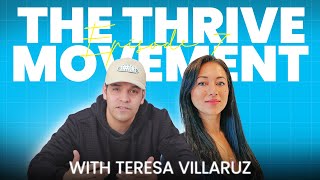
Mundo Sanchez talks with Teresa Villaruz about her path through cancer, real estate investing, and the Thrive Movement, which uses infinite banking and real estate to help people reach financial freedom.
So tell me about your Mount Everest. What are you looking to achieve over.
The next five years?
My Mount Everest is getting into RV parks, saying about setting the date.
Provide safe and affordable housing for 1250 people transitioning out of rehab centers.
Welcome to the Discovery Mount Everest podcast. I'm your host, Andro Sanchez, two time CFO of the year and Forbes Featured Entrepreneur. Every week I sit down with powerful voices from owners club to uncover their personal Mount Everest and the bold visions they're chasing over the next five years. This podcast gives you a rare front row seat into the mindset of elite entrepreneurs and investors. What drives them, what challenges they're navigating, and how you might play a role in their ascent. So whether you're scaling your own peak or seeking to support others in their journey, you're in the right place. Let's begin the climb.
All right, welcome to episode seven. Today we have a special guest, another owner's club member to share discovering Mount Everest with Teresa. So thank you for joining the show. Excited to have you.
Thank you for having me, Mundo.
Awesome. Awesome. So let's just dive right in. Just take us all the way back to the beginning and share with us how you got started in real estate and walk us through where you are today.
Yeah, got into real estate with my husband back in 2011. So at the very bottom of that market crash right there, right. The both of us were kind of scared to jump in, especially because we didn't know how low that market was going to crash, and but then just decided to take that leap of faith anyway and bought our first primary residence, which was a fixer upper. And our strategy then was live and flip, got our first condo. The. The pricing of the homes were still plummeting. And I was like, how should, like, did we do that the wrong thing? And we're like, no, we'll just keep moving forward. Because one of my mentors back in the day was a realtor and he had a portfolio of rentals. And he told me, like, don't be scared about this, because if you look at his look at real estate, historically, yes, there are times where it crashes and it picks back up. And the trend line, really, if you keep the property for five to 10 years, the value of your home's going to increase. So decided that, okay, let's do that. And did live and Flip for. Until the pandemic happened, right? Because at that time, when the pandemic happened, we were like on our way to purchase another property, another project, but we didn't know when things are going to go back to normal. Right. One month went by, still nothing. Two months went by nothing. We're like, okay, we can't do this. We should, we, we need to pivot. Right. And so we decided to buy and hold instead. At that time, my husband and I were still both W2 employees and we needed a way to offset our W2 income. And a CPA told us the best way to do this if you're not a full time real estate professional is to go the short term rental route. Right. And bought a short term rental in Coachella. And that did well during the pandemic because everyone was working remotely. Right. So it did well. However, when, when things went back to normal and corporations started requiring people to go back to work at least three days a week, that's when we found, that's when we saw a decline in reservations. And so now we're pivoting again. We're trying to see if co living for that property makes sense. On top of that, we also have midterm rentals focused in Las Vegas right now. And midterm rental seems to be doing really well for us, especially since it's not as effort intensive as short term rentals. But in the midterm rentals, you know, because, you know, people stay for three months to six months or longer there, they require less tlc, I would say, and they only look for places to sleep anyway. And because they're going to work in the daytime, come back home, sleep, and then do that process over and over again. And so I think that is the sweet spot for us midterm rentals moving forward. Yeah.
Nice. And so you mentioned that that was back when you were with your W2. So tell me, how did you make that transition to eventually leaving that? So it sounds like you're doing real estate full time now.
Doing real estate, among other things. So yes, it was actually a blessing in disguise. So in 2021, I was diagnosed with cancer. Thank God. Praise God that I am cancer free now. But at that time it really made. I'm sorry.
Yes, it's amazing.
Thank you. But at that time, you know, when you're diagnosed with an illness and you don't know whether you're going to have more time on this earth or if it's. If God's going to call you home anytime soon, you really have you really put things into perspective. Because at that time, as I'm in my quiet time, I thought about what have I done in my, my life? Have I spent enough quality time with my family and If I have, was it, Was I really present or was I half there because my mind is somewhere else? And another thing, the question that popped in my head was, did I live the life for the purpose that God has put me on this earth for? And it was no. It was a resounding no. I. All I did prior to that was try to move up the corporate ladder and as fast as I can and really ignore the people that really mattered to me. And so at that time, I. The only thing I could do, really was pray to God and said, if you give me a second chance, I will do whatever it takes for me to fulfill the purpose that you have given me. That is my second chance. And now I am cancer free. And the calling that God has put in my heart is that I need to protect as many people as I can and help them thrive the way that he has given that opportunity for me. And so right now, one of my businesses is actually, I have a financial agency and I'm focused on helping people with infinite banking. For those people that don't know what infinite banking is, it's essentially leveraging the right type of cash value life insurance policy so that you can essentially be an investor or thrive. Leveraging that policy. Right. So it has two folds. One is life insurance. So if anything happens to you, at least your family is protected financially. Which I was able to do when I was diagnosed with cancer because at that time, the cost of my treatments, my doctor visits, surgeries, everything was north of $275,000.
Wow.
I still get a pit in my stomach every time I mention that number. Because at that point my husband and I were thinking, like, should we liquidate everything that we own in order for me to just have a fighting chance to beat this disease? Wow. Yeah. And so while we were debating whether to sell even our primary home, right, rentals and primary home and everything that we own, my life insurance agent called me because she heard through the grapevines about my diagnosis. And she told me that the life insurance that I purchased from her or she forced us to buy when my daughter was born, thank God that she did. But that policy has a thing called illness riders, which essentially allows me, because I was diagnosed with a qualifying illness, I was able to accelerate the death benefit, which is the money that my family would have inherited in case God calls me home. That money I was able to accelerate while I'm alive and use that for, you know, to pay for my medical bills and any, any loss of income because I couldn't work. And so now Because I've had that experience. I know the power of this, these types of policies, knowing that 78% of Americans are living paycheck to paycheck, and if they get diagnosed with a debilitating illness such as that, they have a fighting chance of beating that illness if they don't have to worry about the finances that comes with that illness. And so I felt that that was my calling, to educate as many people as I can about these types of policies. Just so you know, if anything happens to them, they have a fighting chance because they have the financial backing to do so.
Wow. Amazing. I know you probably already touched on it a little bit, but maybe tell me maybe a little formally or tell us a little formally about your Mount Everest. I'm sure it's a very impactful one given your experience and new. Essentially a second chance on life.
Yeah, absolutely. So my Mount Everest is something I call the Thrive movement. And the thrive movement is because I see that there's so many Americans that struggling, right. Either living paycheck to paycheck or barely, barely saving enough for their family's future. And so my Mount Everest is to help 5,000 people in five years get out of this hamster wheel that they're in of just working to survive and get them into real estate investing and so that they and their families could thrive and doing that without using any of their money. Yeah. So thank you. And the second bonus there too is that not only are we trying to help these people thrive and their families thrive, but the money that they use to invest in these. The third part of my the movement is what I call the Thrive impact projects. Essentially, the money that we, that they invest into these projects will not only help them and their families thrive, but also because these projects are purpose driven projects, meaning that, you know, they have to have more purpose than just the revenue. So this could be projects that are helping the community or society, including funding co living projects to help, you know, kids aging out of the foster care system find a home that's safe and with coaching that will help them transition from being a foster child into adulthood. Because one of my great friends, James Chavez, has this project called Rising Root and he mentioned to me that 63 kids age out of the foster care system every single day. 63 today, 63 tomorrow, 63 the next day. That's a lot of kids, right? And according to stats, I believe 50% of them will be homeless in 18 months because they don't have the proper blowchain to, to get into adulthood. So not only Is his project helping with children aging out of the system and, and preparing them for adulthood. But it's also, if you look at, if you think about it, in the long run, he's also helping with this homelessness epidemic that we're seeing in this country. So those are the types of projects that we as a. In the thrive movement would want to fund because not only is it helping the funders themselves, but. But it's also helping the, you know, the community.
Amazing.
Thank you.
How are you? I guess where are you at currently in that journey is if you think about like numerically, are you on the front end of it or even the thick of it?
I am somewhat in the front of it and trying to get into the thick of it now. So what I'm looking for right now are people who are. Want to get their families out of the hamster wheel, right. People that I can help build their policies and get them to build equity in their policies so then they can jump into real estate investing safely and without using any of their money. And I talk about that in my webinars. So I could share that link with you later and you could share in your show notes. But what I really need, because 5,000 people in five years, even if you unpack bank, that's a thousand people in one year. And I can't do that alone, right. I'm going to need help. Mount Everest this big. No one can do that alone. There has to be a team behind it. So what I'm looking for right now is especially if you have, you're in either in Gator or sub 2 or even an OC. What I'm looking for are connectors. Connectors who are able to just spread. Help me spread the word and then actually have a connector program that I've built. And I'll share that link with you as well. Essentially it's like an affiliate marketing program. So I'll share that with you as well. And on top of that, if there are any licensed agents who are listening to this call who can help build these policies for people, I need their help as well.
Nice. You mentioned that so many people are living paycheck to paycheck. How would someone like that who has pretty much no excess funds, right. How would they even be able to leverage their current situation into a infinite banking policy? Because my previous understanding of infinite banking is you got to have some capital to get started to roll that into a policy and be able to snowball that forward. It starts with having something and so what is your thoughts on Taking someone who has pretty much nothing to give.
Yeah. So we'll take a look at where their money is flowing currently. Right. It might be that they're putting money in things that's not serving them properly and we can then reallocate that into something that would actually drive, drive progress for them. For example, one could be, let's take a look at your income tax. Are you getting any income tax return or are you paying? Why is that? How can we adjust? I'm not a cpa, so this is not a tax advice or anything, but these are things that we can work on and see, like where's the leak in your money flow and how can we either plug that or readjust it or give you a brand new bucket so there's no leaks. So we will definitely take a look at how your money flows and if it makes sense to move it into an infinite banking policy, because this asset or something that you're putting your money in isn't serving you, then that's what we can do.
Nice. And so it sounds like you're looking to work with clients nationwide or you focus focused on like your specific market currently right now?
Yeah, nationwide.
Nice. And so what kind of deals are you looking at right now? Or is that your sole focus? Are you still actively buying real estate?
I am still actively buying real estate. My husband and I are trying to build our portfolio right now. Our buy box. We're still, we'll sit, we're still fine tuning it, but at least the markets are here in Monterey and the San Francisco Bay area. Just because we're here locally and we could, you know, be project managers for that. Another area would be the Las Vegas in the greater area because I have boots on the ground there. My sister is a gc, so she's going to be managing the projects there for me. And then Fayetteville, North Carolina and that greater area because also we have boots on the ground there. I have a cousin who's also a GC there. So yeah, those are markets and we're trying to expand our midterm rental portfolio.
Nice. So it sounds like you're managing some properties remotely already. Tell me a little bit about how that has been going for you and maybe how it differs from like having properties that are like right in your backyard.
Yeah, I would say that, you know, I, we got in, like I said earlier, right. We got into the buy and holds because of the pandemic and we saw a really good opportunity with short term rentals there. And as much as all these, all these Courses or gurus are telling you that short term rentals could be a really good passive asset. It was not. I hired a property manager, a marketing manager and everything. And I would still get calls or emails or texts like almost every other day, or at least every time a guest checks in and checks out. And I thought, you know, this is not passive enough for me. I'm still putting it sweat equity in it, right? And then we had the midterm rentals in Vegas and that one actually was the sweet spot because we had long term rentals before, but with long term. My experience with the long term rentals renters is that they still come to me. Actually, one of the renters called me one time complaining about the neighbor upstairs because their footsteps were very loud. I'm like, how do you want me to deal with it? You know, and just all the TLC that short term rental renters or guests and long term rentals require, I personally can't handle just because I have multiple businesses that I'm running and I can't even if I have a property manager. I'm still getting bothered by that. So to me, for me, the midterm rental route is the sweet spot. Because my guest, for midterm rentals, all they really want is like a safe place, space to sleep at night because they're there. My guests are usually traveling nurses and construction workers. So they come to use my property just to sleep. They don't complain about the salt shaker not having any salt or things like that. And so that is my sweet spot. Midterm rentals.
I did a short term for a little bit and I had. I don't know if you ever had this, but for some reason I want to say it was like 60% of the guests were stealing my toilet paper. And I'm just like, why do you keep stealing the toilet paper? What is going on? It's just short term for a little bit. And I had. I don't know if you ever had this, but for some reason I want to say it was like 60% of the guests were stealing my toilet paper. And I'm just like, why do you keep stealing the toilet paper? What is going on? It's just stuff like that. It's just, yeah, not very passive. In real estate, I haven't found anything that's passive. Unless you're truly a lender and someone is dealing with. At the end of the day, someone is dealing with it. It's not passive. Especially even if you hire someone as a property manager, sometimes they're they don't, they're not trained well enough. They don't know what level in which they can make decisions. Or maybe they don't have the ability to make decisions mentally or physically or whatever. And it's just like you're managing the manager. Right. So then it's what's the point of me paying for property management if at the end of the day I'm still answering all the questions.
Exactly.
But unless you're just lending, it's. There's really not a whole lot of passiveness in real estate whatsoever. Even in ltr, I still get my phone blows up all the time with everything you just mentioned. And it's because I have a handful of properties and every day something's going on every day. But.
And a lot of them are things that are out of your control as a landlord anyway. Right. It could be like the neighbor's dog is barking too much or something like that. It's. I don't know.
Oh, yeah, no, I could literally go on and on about that. But tell me about, tell me about those businesses that you started, because that sounded like that helped you escape your W2. Obviously what you went through was part of your reset. And then it sounds like you started a couple businesses or bought a couple businesses.
I am the knucklehead that wants to start businesses from scratch versus buying. Buying existing businesses. So. Yeah. So one business is the financial agency that I'm building with the infinite banking. Right. Second business is also, I'm a funder as well. So that's. And a capital raiser. So that's, that's the second business. The third business is my husband and I are opening up a Boba Cafe here in Monterey, hopefully opening up end of June or early next month. Yeah. And that one, we're, we're building it from the ground up.
That's awesome.
Thank you. Yeah. And that's.
Right. Did you go like the SBA route or did you self fund it or how did you like go through that, like, build up process?
Yeah, I wish, I wish I've met the people that I know now in oc because then I would probably have went the SBA route earlier on. But I've talked to my friend Jasdev Kayleigh. He's also an oc. He's an SBA consultant and business underwriter. But if I've met him sooner than when I did, I probably would have consulted with him in terms of sba. But when we met and I talked to him about my Boba Cafe, it was a little Bit too late already because we're already in that phase of getting that business up and running, or not up and running, but like the build out. And he said, if you need money right now, right now, SB if you apply for an SBA loan, it's probably going to take like, you know, a few months. Right. Because they're going to do this and do that, doing the underwriting. And I needed the money sooner. And so what I did then is capital raised. So I raised capital for the startup cost and six months of operating cost for the business. And what I wasn't able to raise, I leveraged my infinite banking policy. So everything's creative right now, nothing out of pocket. And all of that is because of the things that I've learned in Gator, things that I've learned from people in the OC and, and also leveraging my infinite banking policy because what I know the, like how that works as well.
Yeah, no, that's amazing. Are you putting out any. Because you mentioned you had a podcast before the call we started. Are you putting out any other like content on Infinite Banking, stuff like that that people can watch?
I will be. So I have a lot of content. I just need to get my editors to edit it so that it's a lot more consumable. Just because, you know how people nowadays, you know, they want to make sure that your content is easy to digest. So that's what we're editing right now. And we'll have that on my podcast as well. But right now I do have content. It's mostly interviewing people, business owners, real estate investors, funders, and really talking about their journey and how are they, how did they get to where they are at? So that people who might be interested in being at work at their level kind of have the blueprint.
Nice. Nice. Yeah. Creating content's hard. It's people's attention span is like half a second. And until you built brands that has established that trust like, then people watch like long form content. No one's going to watch a three minute video when they don't know who you are. You got three seconds exactly.
The importance of brand building, for sure.
Yeah. So how can people contribute to your Mount Everest?
Yeah. So two things right now, maybe three things. The first thing is if you're a connector, someone who likes to network and also interested in affiliate marketing, generating income through affiliate marketing, that is one way to work with me being a connector. Second is if you're a life insurance agent and have portfolio of clients who might be interested in jumping into real Estate, but don't know where or how to start. Then being part of this Thrive Thrive capital that I'm building out, which is essentially a investment club, they can, they can lead their clients into that, into that club. The third thing is I do have a list of operators right now whose projects I would definitely love to fund because they are purpose driven. But if you have any projects that's purpose driven, it's not just about the income, but it's more of like, how can you help society, how you can help the community. I would love to hear about your projects and hopefully we'll be able to fund those projects as well.
Yeah. Could you give me a few examples that like would be purpose driven? So you have sober living. Is co living fit within that or is that kind of just more of an ex general exit strategy?
No, cold living. Cold living is also a purpose driven because it's helping with the, with the affordable housing crisis that we're. We're experiencing here in America. Right. So that is, that is also one that we could fund. But what I like is that I don't want to just fund one project. Right. I want to fund multiple projects from the same operators. So I would like to get to know the operator first. What is your. Why. Why are you doing this? Getting a better understanding. Is it just for profit or is it because it's really truly something in your heart that you want to make a difference in the community? Yeah. Co living, even if it's not a specific, like whether it's over living or helping out with, with children aging out of the foster care system. If it's co living just to help with the, you know, the affordable housing crisis that we're facing, that's fine too. I just want to get to know the operator first to see where his or her heart is in.
Nice. Very cool. Okay. How can people get in touch with you? Is this the best way to reach out via Instagram or email?
Yeah. So Instagram is the best. That's where I'm very active and you can see it right here. My Instagram handle is Build wealth with Trey. And I don't want to put too many ways to get a hold of me because it's just going to confuse people. So hit me up on Instagram.
I like it. Easy enough. Perfect. If you have any other parting thoughts, maybe some last piece of advice, maybe people looking to get started besides obviously connect with you, what would you say is maybe one or two things that people need to hear?
Yeah, I would say that yes, money is currency. But it's also a tool that will help you get out of your hamster wheel that you're trying to get out of. Right? You just have to really have that mindset that money grows when money flows. So you can't just have it just sitting in your Savings account earning 0.25%. Right. That's not even beating inflation if you really think about that. With inflation at 3.78%, I believe right now your the value of your money is actually losing if you have it in a savings account just sitting there. So I would say look at financial tools that will help you at least beat inflation. And that could be one could be a properly structured cash value life insurance policy. And if that's something that you'd like to learn more about, hit me up. Buildwealth with Train Instagram.
Love it. Love it. I appreciate your time today and thank you for coming on the podcast and I'm excited to hear what what the next five years looks like for you.
Sounds good. Well, thank you so much, Mundo. This has been so much fun.
All right, we will see you next time, everyone. Thank you for watch.










