Episode Rachel: Affordable Housing for Veterans w/ Rachel Davis
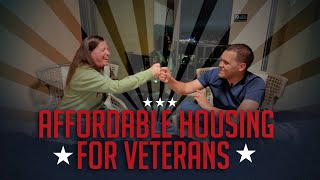
Podcast episode (Discovering Mount Everest) hosted by Mundo Sanchez featuring Rachel Davis, an Army veteran and Charlotte, NC–based real estate investor focused on affordable co-living housing for veterans. Rachel recounts her military background, early real estate experience using VA loans, nonprofit work at Veterans Bridge Home (identifying affordable housing as a top need), and current efforts to acquire co-living properties in Charlotte via PadSplit and local agent networks. Near-term plan: acquire five properties in the next 12 months. Long-term target: 500 doors in five years to prioritize housing for veterans while partnering with social-service providers for wraparound care. Rachel also shares a personal Everest Base Camp journey with her father that shaped her mindset and inspired her book, "Creating an Everest Mindset." Key asks: capital partners, deal-structuring expertise, operators/systems, and mentors experienced in co-living capital structures.
Questions this video answers
Charlotte, North Carolina
500 doors in five years (prioritizing veterans)
Acquire five properties in the next 12 months
Creating an Everest Mindset
February 27 (year referenced in conversation)
I need someone who wants to help a veteran, who wants to help other veterans in affordable housing. That's what I need.
Tell me about your Mount Everest. What are you looking to achieve over.
The next five years?
My Mount Everest is getting into RV parks, saying about setting the date.
Provide safe and affordable housing for 1250 people transitioning out of rehab centers.
Welcome to the Discovering Mount Everest Podcast. I am your host, Mundo Sanchez, two time CFO of the year and Forbes featured on Entrepreneur. Every week I sit down with powerful voices from Owners Club to uncover their personal Mount Everest and the bold visions they're chasing over the next five years. This podcast gives you a rare front row seat into the mindset of elite entrepreneurs and investors. What drives them, what challenges they're navigating, and how you might play a role in their ascent. So whether you're scanning your own pete or seeking to support others and theirs, you're in the right place. Let's begin to climb.
Welcome back to another episode. This is episode Rachel. That is the title of this episode. So I have Owners Club member Rachel here and I'm excited to dive into all the things that you're working on, learn a little bit more about you, where maybe we'll start with where you started.
Yeah.
And then talk about where you are now.
Perfect.
And that'll lead into your Mount Everest and all that good stuff.
Perfect. So just so everyone knows, I've set an alarm for 30 minutes because we're gonna keep, we're gonna keep on time with our stage today since that's what we're being taught in our keynote series. So my name's Rachel Davis. I live in Charlotte, North Carolina and I got into real estate kind of on accident being in the military. My husband and I have used our VA loan to purchase homes. We would PCs or do a permanent change of station to our next assignment and then we would just kind of flip flop and then rent the previous apart or previous home. I started doing PML back in real quick.
How do you do, like, what's the permanent change if you're, if you're constantly moving?
Oh, it's just the term that they use.
It's not really permanent if you keep moving, right?
No, they call it, there's certain entitlements that you get based off of zip codes. Again, like, that was what was told to us when we were in the military. And I've just kind of adapted it from being a military brat or daughter of a service member and then being in the army, being married to another service member. There's a lot of knowledge up there. But we started doing PML before we joined this community, which I'm so glad I now have this community and I've gotten very lucky. But I did some really stupid stuff when I first started. I think like a lot of us so did some pml. And now I'm looking to acquire my first co living residence in Charlotte. Michael and I really want to focus on the veteran population. I worked at a veteran nonprofit in Charlotte called Veterans Bridge Home. Our number one requested service was affordable housing and we had a really hard time delivering on it. So I now see myself as an investor being able to bridge the gap between investors, social services that provide wraparound care for veterans, as well as local government. So that is my Everest for my husband and I.
Nice. Do you have like a number in mind?
So like anything, it's a moving target. But at this point, with knowing what I know from working at Veterans Bridge Home, my number is 500 doors in five years. That is to have a veteran in. We will not exclusively tell people like, no, you can't live here if they need that type of resource. But we always want to prioritize those services to those who served.
Yeah. Nice. Amazing.
Yeah.
So how like, where are you at? Is that. Are you on like the front end of just starting?
We are on the front end. I've developed a partnership with our reps from PadSplit, so I have Dominique there. I'm actually going through two different homes, one in Kannapolis and one just outside of bank of America city stadium on the 14th of July, which I'm really excited about. And I've started through Pad split, linking up with other unicorn real estate agents to be able to find those people who know the zip codes that I'm looking for and candidly look at talking to for, you know, PML or potentially like being capital partners.
Oh, the agents themselves, some of them.
Have that, some of them have that ability.
So.
Yeah.
Yeah. I've only, I mean, I've talked to a lot of agents. I've only had one agent that was like, yeah, I want to lend money on your deal. Usually it's not a thought that comes up, right?
Yep. Nope, it's not. But not typically. But I've been fortunate to talk to at least one person who's had that conversation with me. But again, it's very new. And because I learned the hard way, I'm do much more or I put much more emphasis on due diligence in the relationship on the front end. So that's still very, to me, a little bit longer term.
Yeah. So. And you're in sub two, right?
Yeah, so I'm in sub two and I've been in the community officially since December. So the fact that since December. Yes, the fact that since December I have been able to close. Actually I closed my first creative deal at everspace Camp. I did not have running water in Gorichshep, but I had wi fi.
Wait till it was. It was remote notary then.
Yep. Well, my husband was taking care of things on the back end and sending me text messages. And so I'd be able to get on the wifi network and see that a text message had come through that we had in fact secured the funds. It's pretty crazy.
How did you find out if like there's ever been a closing on the mountain?
It was pretty cool. I did find out Andrea Cannon actually closed her first deal on a hike. So just through networking. That was a pretty cool, like connective tissue thing with another OC member. Yeah.
That's awesome. Yeah, that's awesome. So tell me about that journey that you took.
Oh my God, it was incredible.
Like, why, like, where did this all start?
I'll tease you with this. Buy my book. It's on. No, the premise of it is my father and I are both army veterans and we didn't always have a really easy relationship, despite the fact that we wore the same uniform. And so about three years ago, my dad climbed to Machu Picchu with a former platoon leader when he was a company commander. And he came back and was just talking about Everspace Camp. Talking about everspace Camp. And he went to people he served with in the army and he went to the old platoon leader and he went to like family members and no one wanted to do it with him. And he came to me and he said, I think I'm going to do it alone. And that night I looked at my husband because I married a saint. And I was like, michael, I cannot let my 67 year old father go halfway around the world to 17,600ft and have no one be there. Like, that's not okay. And we knew it was going to be like three weeks to a month that I would just be gone. And we have kids and I was asking a lot of him and he just looked at me and was like, you have to go. And that is very much how Michael and I run our business. There is very little daylight between us and he's just like the most supportive partner that I could ever ask for. It's hard to find other business partner when you. You, like, trust your partner. But. So my father and I trained and planned for a year, and in February, like I said, February 27th, we took off, and it was probably the most incredible adventure I've ever had.
Well, real quick, going back to your husband, I mean, I could just tell, like, how supportive he was because he was like, hey, go do this podcast. Like, go do it right now. That's amazing.
I mean, I left the army to marry my husband, so my husband was a sergeant first class when I was a major. That's a big no. No.
Okay.
And I decided I never was in charge of him, but I left the unit, and I immediately processed paperwork to chapter out of the army. And nine years later, it is still rocking and rolling. So I think it was probably the. Aside from joining owner's club and sub two, of course, like, one of the best decisions I've ever made.
That's awesome. That's awesome. And so through that journey, without giving away everything, what are some, like, really key points or revelations that you got from that journey that you took?
Yep. I think one of the biggest ones is knowing what my father and I went through during 9 11, us both being deployed together at one period of time. He was in Iraq. I was in Afghanistan. Everyone's had a difficult relationship with a family member and had to overcome something if they want to mend that relationship. And I had a path where I could have chosen to not. And I chose to say, my father is not doing this intentionally. He's doing the best he can, no differently than I am. No one gave me a playbook, and I'm going to do what I can to mend that relationship. And had I not made that decision, that trip would have never happened. So I think a lot of it is just really doing a gut check on yourself on how important are your relationships and how involved are you in rectifying some of those maybe broken bonds. But on that trip, I started learning that my dad, who used to tell me I have no emotional needs, was like a mindset guru.
He was like, yeah, every morning I.
Wake up and I write my intention for the day, and I write what I'm grateful for. And I'm like, I'm sorry. Like, who is this person? And to be, like, in some of what feels like the most spiritual land in the world, you know, you're just standing among these huge peaks. And hearing my father do this, I just. I kept going back to how happy I was to shift how I looked at that Relationship. And if I was going to say a third thing, it would be the reliance on team. I would have never have gotten to Everest basecamp without the company I used and the porter and guide. They were just the Nepalese people are incredible. And I just feel really honored that now I have three men who call me. They call me DD Rachel, which means big sister Rachel. And they're constantly on my stories on Instagram and supporting everything. It's just.
They literally just do that for a living.
Yeah. That's all they do. All they do.
That's crazy.
Yeah. So when we talk about Sherpas with pace, I'm like, I've literally walked among them and they're incredible people. Like, I. Incredible.
Wow. And so is that something you see yourself doing again?
So funny you say that. One of the things I've said to Michael is how do I make a business of teaching people that going to everspace camp is 90% mindset so that I can create a business where I'm taking other people in this community and, like, taking them on the trip that they never thought possible. That would be so cool if I could do that, but I don't know if I can.
I'm just gonna say we're tying fate into this because this podcast name is called Discovering your Mount Everest. It's a little bit, you know, comes from owners club.
Yeah, absolutely.
You're tying it all together. Podcast owners club. You know that obviously Mount Everest is a huge focus. And then the literal Mount Everest, what you're talking about. Yeah, yeah. I mean, I think that's a good point. You know, there's so many. I heard an amazing story over dinner. He doesn't really want me to share it, unfortunately, but it's just he basically put it all on the line for his business and he was desperate at ends meet, like, had no other option. And he just pumped like $30,000 into this marketing of his business, and then it just took off like he was on the verge of losing it.
Wow.
And just to see, like, people that just, like, have that, like, all in mentality don't quit, like, always get up through adversity. Like, I just love seeing that. And those are the people that win. It's not like the smartest, most intelligent person. It's just the people that just don't give up and they just keep fighting.
You see that a lot in the veteran community mundo. Like, most people run away from pain, and there's a lot of pain in real estate. And the thing that I've noticed about the Veterans in this community is. I'm like, oh, we've just been conditioned to run toward it. So of course we're going to be good at this because this is all we know.
And so how does. How did, like, the military kind of shape? I kind of know the answer, but for people that don't. My parents are the military. I was born in Tacoma, Washington, in.
A military hospital joint. Now it's, oh, gosh, jblm.
I can't remember.
Fort Lewis is the name of the base, but they've changed it. I feel terrible. Of course I'm being recorded, so I can't remember it.
But yeah, I was born in a military hospital.
Pretty cool.
My parents had that background and upbringing, at least for me.
I'm gonna have some questions after this podcast to make sure that your parents are taken care of with their VA disability and that you know where their DD214 is.
But how has that experience kind of shaped what you're doing today?
It's everything. It's literally everything. Like I and the daughter, I mean, I have a black powder rifle in my home that belonged to a family member in the Civil War. Like the way that families raise doctors, like, or lawyers or, you know, whatever profession. My family raises soldiers, like, and it's a little odd being a woman sometimes. And it is what is a very masculine profession. But it's given me a lot of insights that have shaped how I have acted as a military leader. That's, I think, been helpful for like that type of pull culture. Right. But I mean, all I ever want to do is take care of the soldiers that serve to my left and right. It's what I wanted to do when I wore in uniform. And it's all I wanted. It's all I've done really, since. And it's what I'll do until the day I die. You never stop serving, ever. Yeah.
And so do you see as you start, like working your way towards this Mount Everest, do you see yourself more as kind of like the visionary putting it together, or do you want to be more hands on as an operator?
Yeah, it's funny you asked that, Mundo. It's one of those where I talk about my husband and there's very little daylight between us. I think it's gonna shift. My husband is very much almost a 50, 50 split on a visionary and integrator. Honestly, I probably operate more like an operator. I like being in things. I like working with people and seeing the light go off when I'm explaining it to them. And I spent so much time in the federal government when I left active duty on strategic level staffs that I like when I start something at the end of the day it's done. Like either the contract is signed or the problem is solved. Like it, it brings me a lot of relief.
Love it. So as you kind of think about. Because the retreat hasn't really started yet.
Right.
What are some of like the key relationships or resources or things, things that are like missing that you want to fill in the gaps for like this week if you had to just bring out your magic, you know, genie.
If I had a magic wand. If I had a magic wand. Capital and capital structure is a big one. Co living is not an easy task to undertake from a capital perspective. And I really want to talk to folks who know how to structure deals appropriately. It's. I've. Because my husband works at a top 10 bank, I have to be very concerned with how capital is handled in our, our house because I don't need him to be competing with his employer. That and systems. So we have a five year plan. I can hand it to someone but if they don't have the time and the bandwidth to mentor that like really and truly, at the end of the day I need someone who wants to help a veteran, who wants to help other veterans in affordable housing. That's what I need. Because at the end of the day, Michael and I come with 28 years of military experience, four of which were spent in Afghanistan and we've both spent time in Ukraine. If you want to help people like that start a business. That's the people I'm looking for.
Wow.
I know that's a little heavy.
I mean I feel like there's a lot of people in the community that are focused on that demographic. Have you connected with any of those people?
Not yet. I've made a hit list of folks in the military. We call it an OML or an order of merit list. So I have an order of merit list of folks here that have that as either a part of their Everest or a part of their wants.
I know Michael Natsukani, he's a veteran.
Yep. He is. Yeah.
This is on co Living.
Yep.
And I think he's got a veterans focus. Right.
He has a company, Vets coast to coast. Yeah, yeah. So yeah, I have not had the opportunity to speak to him here, but I am in his pod.
Okay. So yeah, yeah, I'm sure you'll get a chance to run into him.
Well, I'm going to make sure it happens.
So it's Connecting with other like fellow like operators or people that kind of have the same vision.
Yeah, I think a lot of it, like I said, has to do with. I've never started a business, neither has my husband before. But we hear a lot of people say, I want to help veterans, I want to help veterans start businesses. So I'm like, okay, well here, here we are. And Michael and I didn't do the same year over and over. We're both in our 40s and we have a very clear five year plan on what we want to do. And if someone wants to look at it and present or ask us questions, those are the people where I'm like, if you, if that's what you want to focus on, please speak to us because.
Yeah, well, we're ready. Where are we on the timer? What questions do I have?
Let's see. You have. Oh, no. According to this, you have 12 more minutes, my friend.
Wow.
We did punching through. Well, I'm a veteran. We are efficient.
I love it. I love it. So what does that. So you're looking for other people with business experience?
I am, quite frankly. That's what I need.
Yeah.
Yeah.
Okay. So I shared a little bit of background about myself beforehand. So, like what, you know, if you were kind of pitching that five year plan, what does that look like?
Yeah. So the goal was to acquire five properties in the next 12 months and to be able to partner with capital partners and individual. We do have a person who could potentially operate if the person we partner with doesn't want to use padsplit. But like I said, I'm starting to develop that relationship. Quite frankly, the best person to really dive into that is my husband Michael, because that's his focus. I am one where I have a background in sales, so I am very execution forward. So I would. That part, like I said, I think would be better served with Michael to really delve into.
And does he have enough, like, bandwidth? Because he's working, doing.
He is, he is. So what typically works best with Michael and I is he will have an initial conversation. It's so funny. It's like a true marriage partnership. Like in business, he'll have an initial conversation. Michael knows how to break down executional tasks so that I understand. And so when he's at work, I go and take care of what needs to be done. That's been the way it's been for the last, I don't know, seven, eight months.
Nice. So what, I guess if you had like three questions that you wanted to ask, like as far as scaling, what would they be as far as your business goal?
Yeah. So I know the ultimate goal is for us to do very similarly to what Tracy Koa and Dustin Groski are doing with one to one ratio. Doing new construction build to give people dignity. Like one bed, one bath, 100% like, look like you can, you can tout four one works, but I've lived in really rough environments on deployment. I did AmeriCorps in Montana as like a recent college grad. Like, I've lived where it's that kind of experience. And I have to picture myself, if I'm in my 30s, 40s, 50s, what do I want to live in? Ultimate goal for me and Michael is to have one to one ratio in new construction. So knowing I need to prove a model where I probably need to purchase a previous pad split, I need to figure out how to do that and then get to the point where I can do a commercial build like that. So I know I can do it. It's been done. I see it in the community. It's just connecting with those people to see how they did it.
Yeah. I have a co living property. It's a five bed, two bath. And before I did it, you know, I always heard like, the ratio of like four, three beds to one bath would like, that's max makes it work. So I was like, okay, three bed, one bath, two bed, one bath. Golden boy, was I wrong. The that is the number one reason why I lose prospective tenants. Like all the higher quality tenants that come in, they're just all fixated on the private bathroom. Like, they all want the private bathroom. And I lose so many people, it's hard to fill the property because it's a five bed, two bath. And like, I didn't get it until I got in it. And I'm like, yeah, this sucks.
Yeah.
Yeah, it's a challenge.
Yeah. And I mean it's one that you as an investor have to straddle too. Right on. Like, okay, what makes sense is it's just going to be like a higher turnover. But at the end of the day, I just go back to the smaller of a ratio you can get. As this industry or this vertical of co living, like continues to scale, you're going to want to have nicer properties to compete with ones that, you know, maintain a 4 to 1. So I'm always trying to think ahead in that respect.
And this is like a really beautiful neighborhood. Like, it's a beautiful property. It's just that ratio. It's just people can't get over it.
Yeah. I mean, have you shared a bathroom.
As an adult in college? You know, rest, dorm room stalls? I mean, I guess that's not really shared.
It's not sharing a bathroom because you each had an individual shower stall. So that's why I'm asking. Like, I've shared a bathroom with someone who was. I've shared a bathroom with someone who wasn't as clean as me. And the reality is whoever's the most clean person loses every time. So I just think to myself, why not try to get to a point where it is more one to one? Like, how do you make that work in a way that's beneficial for the person as well as for the investor? Tell you what, you did take more time. Do you want to get your time back and have me find you two more people, Mundo?
Oh, I would love that if you have, let's say, how can people find you, first of all?
Yeah, of course.
And like, what can they send you? Like, are you looking for more deals? Like, who are you part? Are you sourcing the leads or do you need wholesalers to bring those to you?
Yep. So at this point, the best way to get a hold of me is usually is on not usually is on Instagram. At the Rachel Davis Real Estate, I'm setting up our system so that there's an actual website and landing page now. But we're going a thousand miles an hour. All brace, all break. Oh, all gas, no brakes. But what I'm looking for right now are co living properties and very specific zip codes of Charlotte. So if someone wants to reach out to me to know what those zip codes are because the last thing I'm going to do is ask someone to bird dog or a wholesaler to come to me knowing it's not in my. Not in my buy box at all. So. And that has a lot to do with just zoning in Charlotte and it's a, it's a tight market, so. So that's what I'm looking for.
And you also have a book.
I do, I do.
That's a link that you'll have like tomorrow. It comes out tomorrow.
No, it's out now.
Oh, it's out now.
I started my soft launch on Friday. I'm currently, when we came upstairs, 312 on outdoor adventure on Amazon, but my publisher will have it go live and it's already active, but live tomorrow. And so that's when I anticipate a lot more traction with it just because he's pushing it to those markets. But the book is called the Creating an Everest mindset, which is great for the podcast. Love it. And again, it's about just my mindset and travel to Everest Base Camp with my father back in March.
That's amazing. Yeah, it's amazing. What. Any last parting thoughts for people that I think besides check out the book?
No, I mean, of course I want everyone to check out the book, but I think the biggest thing is mindset's this huge industry. Right. And for a long time, I didn't believe I deserved to be in the room because I allowed the opinions of people who had not done the things that I wanted to do drive my decisions. And so if I could talk to a younger version of myself, aside from telling her to buy a quadplex with the VA loan, I would tell her to stop listening to the people who have not done the things that you want to do. That would be my parting shot.
Amazing. There you have it on Episode Rachel, which I think is episode 11. I'm not entirely sure, but we're calling it Episode Rachel.
Love it.
Well, thank you again for coming on the show. It was a pleasure.
It was great. Thank you, Mundo.
Looking forward to checking out your book.
Thank you.
Reading about it. I don't anticipate I will be climbing Mount Everest, so that's probably the closest I'm gonna get.
Well, we could do an O.C. trip. Come on, man.
I try to avoid near death situations.
Oh, my gosh.
Definitely won't be doing that anytime soon.
Oh, my gosh.
But I, you know, I definitely admire the courage that it takes to do something like that. That's amazing. I mean, that would be. That would. That would be pretty cool to do.
It was mental fortune.
Did you do, like, a bunch of training for that?
I mean, I never trained above 1500ft. Really, at the end of the day, I mean, I said it earlier, like, getting to base camp is so much. I mean, you have to be in decent shape. But the reality is, if you believe you can, you can, and if you believe you can't, you will not.
Yeah.
And if there's actually a point in my book where I talk about, I had a moment where I was like, am I going to be able to do this? And I could have backed out, and I chose not to. So, again, if you believe you can, you can.
Yep. Everything you've ever want is on the other side of taking action and saying yes. Pushing through the things 100% right when you're about to quit. That's, you know, when you push forward is usually when the magic happens.
Absolutely.
Right.
Absolutely.
So same thing. It translates whether at Mount Everest or business, I mean, it's all. It's all the same.
Awesome.
So I know you're going to be successful just from the mind, you know, like you said, just from the mindset.
Thank you.
So I'm excited to see what that looks like for you.
Awesome. Mundo, thank you so much for just letting me come up here and even talk about what we're doing. I appreciate it. This has been fun.
Enjoyed it. Enjoyed it.
And check you out. Hold on. Three minutes. You did it, Money.
We did it. We did it. All right, see you next time, everyone.










