Good Deal vs. Bad Deal Walkthroughs and Free Leads
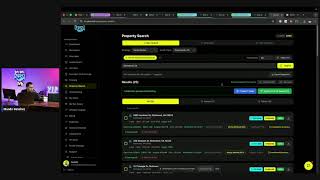
Mundo Sanchez walks through his Buy Box Club software, showing how it screens single-family homes and turns bad deals into good ones using seller financing, LTV adjustments, and balloon loans. He generates free leads for viewers and explains how the platform flags deals that meet custom criteria across markets like Columbus, Fort Worth, and Atlanta.
Chapters
What is going on? Give me a second, I'm gonna go live here on Instagram. I gotta do that manually. All right, cool, should be ready to rock and roll. All right, so I'm gonna be walking through some deals today, some good deals, some bad deals. Generating some free leads. So if you want some free leads, go ahead and send me a DM on Instagram and let me know as I'm kind of working through today, what are the leads that you want me to send to you? And what I'll do is I'll actually send you an investment breakdown of the underwriting and just help you understand the underwriting a little more. So If that's something you want, as I'm showing these leads, again, just go ahead and DM me on Instagram and I'll send you any lead that you want with a full breakdown of the investment summary, full underwriting. I'll record a video just for you. All you gotta do is just DM me and ask for it. So let me share my screen and we will get into it. All right. If my browser crashes, it's probably because I got too much going on, and I'll be back. So just forewarning. All right, so let me figure out which screen am I doing. All right, let's do it. Okay, so, uh, I'm gonna be looking at some Morbi Method leads today. Uh, let's see what market. If you got a market you want me to look at, feel free to let me know. Tell me in the chat what market you want me to run. I'm gonna— let me see what, what some markets I can do. Let's do Columbus, Ohio. I haven't really done anything in Columbus, Ohio. And I'm just going to run like 50 of them. Okay, so I'm looking at on-market opportunities that fit the parameters of what I'm looking for as far as single-family homes, LTR. So whether your investment strategy is co-living or whatever else you're doing, I always like to underwrite as LTR. So if it borderline passes as LTR, it's probably going to work really, really well for co-living. If it passes really well as LTR, then, you know, obviously LTR is an option for you. So what it's doing is it's underwriting those 25 deals that we're looking at. So you can see 13 passed and 12 of them failed. So these are the ones that passed. And I'm gonna go ahead and create these deals. And I'm actually kind of testing— this is a newer feature that I'm testing. I haven't really deployed a lot of this stuff yet. So we're gonna open that up and we're gonna start taking a look at some of these deals. So is today the 27th? Yeah, so these are all the ones from, from today that we just generated. So if we open this up and just kind of taking a look at the underwriting from my Buy Box in particular, this actually looks like a pretty good deal. Okay, I got a couple comments here. So damn, I wish I could see my TV, it's very far. Is that Grapevine, Texas, I think, and Schoenberg, Illinois? Schaumburg? We always got to pick states or cities that make me look stupid because I can't read. Uh, I'll try to grab that here in a second. Uh, so if we kind of just run through these— Columbus, Ohio, real quick, just kind of looking at it. Um, this is a newer feature that I came out with, basically an investment summary breakdown, and it kind of demystifies a lot of the technical nitty-gritty when you get into the details of underwriting. This is kind of just gives you a super high-level summary of what's going on overall. Like, not, not a great winner on cash flow, um, based upon how my buy box is structured. I'm looking at, you know, over-leverage and how much I'm getting paid on day one. So there's a lot of emphasis on that. So if I'm getting paid enough to absorb the cash flow losses, which, you know, again, I would probably look at doing co-living on this type of deal because I really— I'm at the point where like I don't want to be taking on any negative cash flow losses. So I should probably adjust my buy box honestly now. Um, and that's the cool thing about your buy box, right? Like it changes every day, or it can change every day, you know, things become more and more important. So what I would do is I would go into my buy box and change the weighting of what's important to me, because now I'm of the opinion it's just like, man, I'm just so tired of getting my butt handed to me on, um, repairs and breakdowns. So if you go into it, you know, thinking, hey, you know, it's fine if I'm breaking even, if I gotta pay for stuff here, there, stuff happens, man. It's, uh, a lot of stuff comes up. I had a property yesterday, or yesterday spanning over the past week Between a week, the water heater, the dryer, and the water softener all broke down at the same property. Like, it almost made me think that there was something else. Like, it was just wild how all that happened within a couple of days. And, uh, carpet was soaked and had to get all that cleaned. And now I got to replace 3 different appliances, and, uh, that sucks, right? So if you don't have that in your underwriting, even like this, like, you can't absorb that. Like you just really can't. Even if you're getting paid, even if you park this $27K in a, in a bank account, it's really difficult to absorb that. But anyways, here's the kind of summary breakdown of, um, seller financing. You know, this is really important if you have a capital partner involved, because what they want to know is like, hey, how much money do you need from me to fund this deal, right? Um, looking at those kind of things. And then 10-year pro forma, So I'm gonna get rid of all these Columbus, Ohio deals, and I'm going to start looking at some of the markets that I saw a couple of questions in the chat. Um, let's see, Lucy's got a question. You're looking for a 3/4 in Fort Worth, Texas. Okay. And also Abilene, Texas. All right, I can, I can pronounce Fort Worth, Texas. I can get them on board with that. I've been to Abilene Uh, probably 15 times, so I can pronounce that too. Luckily, uh, the Sch— Schamburg, Illinois. I'm giving up on trying to say that one though. So let me take all of these recent ones that I ran from today, and I'm gonna post these. So for people that are on the platform, I am gonna post these leads that I've underwritten on my Buy Box. To the available leads pool. And so these are leads that people can go and claim that are on the platform. Um, you know, they get, they get club credits every month as part of their subscription, and they can use those club credits to claim these leads that I've underwritten. So people are more welcome to do that. That's where I'm posting them. And if you're not on the platform, like, no problem. Like, just send me a DM of if you see a property you like, I I will, um, send you the breakdown and I'll record a video for you and kind of just show you like, hey, here's, here's the underwriting on this deal and kind of help you out that way too. So you don't have to be on the platform if you just want some of these leads today. All right. Oh, I think we ran a— let's see, how many did I run from There's actually— okay, I'm just gonna pull the ones from today, or the ones I was playing around with some other stuff earlier. So I'm just gonna pick these— whoops— I'm just gonna pick these Columbus ones that I just did now since I know those are like— and again, they passed my underwriting standards. That doesn't necessarily mean like they're good deals that I would buy, like You can set it based on how you like it. I have my pass threshold as pretty low. And what I mean by that is if you get really tight with your underwriting restrictions on your first pass, very, very little is going to make it through. I kind of have mine pretty flexible because what I use the platform to do is I use the platform and the automation to do a first pass underwriting. Well, I want that first pass underwriting to be a little loose, at least right now currently. I don't have it to where it's smart enough to go and tweak values without really getting into the nitty-gritty of the deal. Because I can go in and take a, for example, here, I'll actually show you exactly what I mean. Let me get out of this for a second. Let's take this one, for example. Net cash flow is $48. The over-leverage is $21,000. What I would get paid at closing is $14,000. It's a 70%, so it's borderline. It doesn't necessarily pass. As far as if I were to lock this up right now, It's not a great deal, right? But the reason why I set my underwriting threshold so low is I want to capture things that could be a deal, right? If I get into this and I, I send out LOI and I get a favorable response back, then I will start tweaking the terms of the deal because there's lots of ways that you can turn this into a better deal. It all depends on what's most important to you. So if I'm gonna change bank LTV to 65%, I've just created a cash-flowing property from $49 to $130 a month right here just by changing the LTV. Why? That's because I'm taking out less leverage. Okay, so depending on what's important to you, you can make a borderline bad deal into a good deal. And you can see based on my buy box, it was a 60%, now it's a 68%. But the downside is when I'm, when I'm decreasing leverage on the front end— hold on one second, let me read this question. So yeah, Nick, this is a software, so you can use this. It's at, um, I'm, I'm on my localhost version right now, but it's by— it's called Buy Box Club. Buyboxclub.io is the software. But if you want to reach out to me, you're more than welcome to join the underwriting call that I have later this afternoon. It's at 2 o'clock where I kind of go through and answer any questions people have and help people out. And it's kind of like my office hours time, but feel free to, you know, come and I can show you more there, uh, or you can just check it out for yourself too, buyboxclub.io. But looking at this one in particular, if cash flow is more important, then I'm not going to get paid as much upfront like it was originally. If we look at this, I'm going to get paid almost $15,000 at 75% LTV, but I'm basically breaking even. If I want to increase my cash flow, again, you can go pretty, pretty low Right? Like if I want to drive that cash flow number up, just decrease your LTV. That's all you have to do. However, the downside is you're going to have to put money into the deal. You know, most people are doing Morbius Methods because they want to get paid at closing. Um, so you have to balance that. Like there's very, very rarely unicorn properties where it's like the stars align with cash flow, with surplus, and, um, you're not overleveraged, all that kind of stuff. So you just have to keep that in mind. Obviously, if I find one of those, I would want to get them under contract, right? Um, so you can play around, like, also you can also play around with the cash to seller. So it's not a one-way street on the, the bank LTV. It's really all about the separation between what you're giving the seller in cash, or however you want to look at it, what the seller is carrying in seller financing in relation to your bank loan LTV. So the wider the difference between those two numbers, the— depending on which way or the other, the more cash flow or the more over-leverage you're going to be taking. Um, so those are kind of some of the things I'm looking at. And that's why once I do that first level pass, then, and I get a favorable response, because I can send out the LOI to the agent from here. Um, so if I look at this, here's the LOI. So this is an example of the LOI that I would send, uh, to the agent. And if they responded and said, hey, yeah, like, the seller's interested, what are the terms? That's when I start sharpening the pencil on this thing, and I start, you know, playing around with the numbers, um, and going through and looking at, you know, okay, what am I doing here? And, um, am I going to do a 10-year balloon, 8-year balloon, 5-year balloon, that kind of stuff? And I'll look at this pro norma and kind of model out where are my, you know, points of concern, right, based on the numbers and what everything's telling me and where I want to land at when it's all said and done. So, um, that's what I was referring to, is like, I— that's why I have my underwriting standards pretty loose, so that way I can go in and tweak the numbers. If I just have, hey, anything below 80%, I don't want to see it, I'm going to miss a lot of things that might be a good opportunity for me. And again, it's providing an estimate of rent. That doesn't mean it's like the end-all be-all. Like once you feel like you have seen enough to maybe turn this into a potential deal, or again, you're getting some inbound interest in that, I would even sharpen the pencil on the underwriting of the rent. You may go and do your own comps and find that, okay, the system is saying rent's at, you know, $1,163, but I think there's an opportunity to make it, you know, $1,300, and then that just increases cash flow, right? You could also underwrite this as co-living, and that would increase the cash flow. So you can see I just flipped this over to co-living, and it already calculates in here what the rent would be based upon, you know, my buy box parameters for co-living if I wanted to turn this into co-living. So you could easily swap this out and go into the co-living mode. Obviously, you can see the, um, rent would be a lot higher, cash flow would be a lot higher. The reason why it's not scoring super high is because I personally want to get paid at closing. So I would have to either lower the cash to seller or increase the, uh, bank loan LTV to make that a little bit more of a favorable deal. So I would probably do, since I have more room to play with, um, something more like that. So those are some of the things that you can play with in the underwriting. So let me go ahead and post those, um, those Columbus ones. I just want to do the ones from today, um, so I'm going to add that to the leads. So I got 321 leads there that anyone, you know, can claim if they want, um, that are— again, they're decently underwritten leads. They're not just pure trash because I do get pure trash. Like, if we pull up my original search, like, there was pure trash in there. Um, these are ones that are just, you know, somewhat decent. All right, so let's take a look at Is that even— I can't really see what— okay, cool. Um, let me change. I may have to— okay, so you're looking at 3-bet. In my search, I'm not really looking at the, the 3-bets. I've actually haven't tested this, so it would be good for me to test this because I don't even know if this works. So let's let's test this because I don't really— although I can see why, I mean, it makes sense. So you're looking for 3 to 4 bedrooms, so I'm going to do minimum 3 bed, um, 2 bath. So let's see if that gets picked up there. It may not. I may have this like defaulted in this search. I don't know, we'll see. So I'm just going to run like 50 of these. I mean, it seems like it picked it up. We got a lot of 3 beds, 2 baths, so that's— I mean, that's promising, right? So I'm just focused on the ones that passed. Um, I actually think it's better— I need to create, you know, one thing I'm thinking out loud is I need to create a button that just like creates all deals out of this because I think it would be good to still create the deals on the ones that failed. So that way when this, you know, runs again in the future and you're doing future search, you're not just like looking at the same shitty deals over and over again. Um, so it might be good to somehow flag those as deals that have already been underwritten so that you don't have to like continuously underwrite them over and over again. I think that would be beneficial. So I'm going to create these 11 deals for Dallas or the Fort Worth area, and then let's go check out some of these. And again, I need to— like, as I'm looking at this, I just don't like the fact that I'm seeing negative cash flow, right? So I need I need to go back and put more emphasis and weight on my, um, on my buy box for the cash flow. Now when I do that, these ones that are coming back as lower cash flow, they're probably going to fail, right? So a lot of these are going to start failing. This one's probably so high just because the amount of cash that I'm getting here at closing. And if we look at, if we look at like at least how I'm structuring these on the front end for underwriting I am doing this as a 50% cash to seller, seller financing. So on the front end, it's kind of doing 50%, and then I'm underwriting it with the 75% LTV on the bank loan. And that recipe, that's enough to— you will get paid at closing. As you can see, you'll get paid at closing. The downside is you are overleveraged, right? So you have to balance that. Between 10 years. And when I usually send out my LOIs, I'm starting at 10 years because then that puts me in a better position. You could see the score ranking here. I'm not overleveraged at all in 10 years, and I get paid $32K at closing. The only downside to this deal, which, which holds it from, you know, being pushed back into the 90s, is that, um, it's basically a break-even on cash flow. Right? So that's, that's what that one— so let me drop all these in and let me know how you want me to break down some of this stuff. I can, you know, I can go in the weeds and cover a lot of stuff, or I can just literally sit here and just dump free leads to you if you want. Again, if you want free leads, send me a DM and I will send you the investment summary breakdown. I'll show you what that looks like here in a second. Let me add some of those. So I just added, you know, we got 329 there. Tell me if you're seeing like a particular address, you're like, bro, I want that address. Just like, just tell me. Um, so I'll send you this breakdown if you DM me, and I'll send you some properties, and then I will also like do an analysis and kind of give you an overview of like what some of this stuff means and how all that makes sense and, you know, that kind of stuff. So it has a full pro forma, all that, all that jazz in there. I think I— okay, I got a couple Fort Worth properties in here. Okay, cool. Okay, let me— what was the other ones that I needed to do? I'm gonna need the, the powers that be to help me spell this. Does anyone even live here? I'm just kidding, it's probably a big town. It's probably bigger than my town. I, I don't know. No, I must have not been able to spell this right. Let me move on to Grapevine. I wish these help— this 1Password crap would get out of my way. I can't even select it. Okay, um, am I spelling that right? I feel like it's probably this. No, that's not it. Grapevine, Texas. Okay, cool. I don't— that's a pretty like rural area. I don't know if a lot of that— like, yeah, I'm not getting any results to hit that, the filter parameters that I have here. Um, and maybe I need to adjust my search parameters. Is Newark a pretty big area or no? I don't know if that's— I got to figure out how to get rid of this thing on my No, Newark, Ohio. Can you guys send me some stuff that like has people living there? Because I'm not— oh wait, I feel like it— I gotta get— how do I get rid of this thing? Can I like— I don't know, I don't want to mess up my computer. It's— it won't let me select anything behind this 1Password thing, which is not the app, it's my computer. Um, there we go. See if I can get past that. Let's see, why am I not getting anything? Well, I mean, I know that works. I don't know how to disable it. It's, it's really annoying though. All right, so we're gonna run this on Tampa, Florida. All right, so I'm going to create these 10 deals. Let's go check some of this stuff out. I am out of, uh, Indianapolis, Indiana. Anything in Austin, Texas? Okay, haven't hit Austin, Texas up, so we'll, we'll check that out. Let me go hit some— wow, we got a lot of requests in here. I love it. Um, let me just add some of these. Let me check. Uh, yeah, let me, let me see. I'm not sure. Let me copy it. So let me go ahead and add that. All right, so let me type this in. So we got 18 08 West College Street, Sherman, Texas. All right, so you can see just, um, just straight from underwriting there, it already underwrote it based upon all the available options that I have for my Buy Box, which is, you know, Morbius Method, seller finance, traditional, sub-to. It doesn't look like— this doesn't necessarily mean it's true. So a lot of the, um, a lot of the data comes from like the recorder's office, right? And a lot of times, like, I've found from like all different data providers, like, no one can get it 100% right. So I would still verify if there's a mortgage or not. Maybe there's not, you know. I— it's kind of hit or miss, you know, 60-70% accuracy, I would say, on the data. Like, just like anyone else, honestly, everyone's all getting from the assessor's office. And when, when that stuff is junk, at least what they make available to you, um, everyone's kind of on the same playing field with that. So based on this, without like changing any other parameters or anything, this is kind of like the breakdown of, of what it's showing. It looks like a pretty much a break-even, um, the way I have it based on my buy box. I would get paid $31K at closing, but I'd be overleveraged, you know, by $40K unless I, you know, started playing with these numbers and massaging it a little bit, adjusting cash to seller. So if I wanted to increase my cash flow again, I would lower my bank loan LTV, but I would lower, you know, obviously that would lower how much I would get at closing. This is probably some terms that I would transact at right here. You know, I'd be okay with a little bit of positive cash flow I don't need to make a crazy amount of money at closing, and I'm not really marginally overleveraged. My, my property appreciation rates are pretty conservative, so if I'm pretty close, I'm not too concerned. But if I'm like $30,000 off, you know, if it says it's going to be $30,000 overleveraged, then I, you know, I am a little concerned at that point. Um, so this is actually, you know, right here pretty decent terms that I would lock up. Now, again, I would send out the LOI and I would talk with the seller or the agent. And after this first pass underwriting, it's just enough to give me an indication of like, is this worth my time? If it is, cool, I'll start doing a deeper dive. I mean, it's pretty much like 98% underwritten already, just playing around with the assumptions. The stuff I would do once I am taking a deal serious is I would sharpen the pencil on this. I would make sure the comp rates are pretty comparable. I'm sorry, the rent rates are pretty comparable to what I think it would be. I would go and start looking at different data sources. So this would be one data source or one data point that I would use for my comping. I would go look at Zillow. I would go look at Rentometer. I would go look at Rencast. I would look at all those different, you know, rent-generating comp platforms and try to get a sense for the market. If I'm getting closer to getting it under contract, I may even go and look at active listings on like Apartments.com or Zillow and look at, okay, based on, you know, based on this property, what are the listings in the market looking like? So those are kind of some of the things that I would do after I get to this point. But this is enough for me to, you know, pick up the phone or send an LOI and kind of get the thing, um, get the ball rolling on that. Okay, so St. Louis is another market. Okay, cool. I think I have a bunch of leads here still, um, so let me go ahead and post those. And again, I, I see a lot of comment— I mean, I'll try to go back afterwards and, and send you guys some of these things that are asking in the comments. But, uh, if you like really want a specific property underwritten or whatever, send me, send me a DM with that information. And I can— yeah, I mean, if there is a specific deal you're working on, um, feel free to send it to me and I can underwrite it for you. And I mean, I'm not gonna steal your deal. All I'm doing right now is building software at the moment. I'm not even looking for deals for myself. And if I am, I'm mainly probably looking at Indianapolis. I wish I could see that comment. Hold on, let me bring it to my screen. That's, that's a better way of me being able to see it. Where do I find pulled leads? Um, so that would be here under Club Leads. If you go to Club Leads, that's where that would be. Um, and those are where you can claim the leads. Check out the comments. All right, let me test out, um, I don't know what this is. Okay, cool. I have a hard time believing that one. Like, I feel like there's step— oh, you know what, I didn't— what an idiot, I didn't select anything. I should probably— well, it is actually not coming back as any results, which is really weird. Hmm, I wonder if there's something going on with this search here. I would have a hard time believing that nothing would be showing up in, like, I mean, obviously Atlanta, Georgia is a huge market. Hmm, I need to dig into that. Why are some of these smaller areas not pulling in? I wonder if my search parameters are too tight. You would think there would be something. So I'm gonna have to dig into that to figure out what, what's going on. Let me create these because it's clearly working but not on some of these smaller markets. Okay, cool. All right, so I created some Atlanta, Georgia ones. Go ahead and dump those over. Remove city in St. Louis. Uh, what do you mean by that? That's Michigan. Huh, well, that one worked. I wonder what I did last time that I didn't do this time. Oh, I typed in St. Louis City, Missouri. Yeah, I need to get rid of this freaking 1Password thing, or maybe I just need to learn how to read. Okay, cool. So I got 11 deals that passed, so I'm going to create those 11 deals, go check out some of those. Alright, so just kind of give you a breakdown of the pro forma, how that works. If I'm going to exit in 8 years, it will build an 8-year pro forma if I'm going to exit in 10. I just kind of leave it at 10 by default. Whoops. Um, if I wanted it at 5, obviously, or whatever you want to put in there, 15 or whatever, um, then it'll build, it'll build that out. 5-year pro forma, 10-year pro forma, whatever, whatever your desired exit will be, it'll build that out. And if I just look at what that looks like over time, you have the things that I'm looking at in particular. Actually, let's, let's change this a little bit. Um, we'll just do a 15 here. So here's my bank loan payments, you know, seller finance payments, all that kind of stuff, right? So I'm going to pay attention to more of the bank loan balances. So if I go to my refinance, I'm going to refinance in 8 years. And so what that means is the way I model this out is it's at the end of 8 years. So in the beginning of year 9 is essentially when I'm modeling out the refinance. So you can see the bank loan and the paydown of that bank loan over that 8-year period, and then it goes down to zero in year 9, and I'll explain that in a second. And if you look at the seller finance, you can see the paydown of the seller finance note based upon the terms that you have, and that's going down to zero in year 9. And why is that going down to zero? That's going down to zero because you're re— you're essentially refinancing into a new loan, which is wiping out the, um, your original loan, and it's wiping out the seller finance balance because that's, that's how you're exiting. That's how most people are exiting, is that whenever that balloon is due, there's enough equity in the property for you to refinance into a new loan and pay off all the original debt. So that's what this is modeling out, which is very difficult to do, and it's something that I didn't, uh, really do in my Excel version of the underwriting. It's just because it's, it's just really hard to model out. And so I have that ability where it's showing you what that looks like. And what I would say is the, um, this I know is for sure overleveraged, um, and that's what this is telling you because you can visually, obviously visually see the— you don't have enough equity in it to to refinance. And if you look at this, for example, in terms of the— let's see, the available— let's see, one second. So we got cash flow. Here. Yeah, so the underlying debt's been paid off in year 9. Now we have a new loan, and then you can see the impact of that, what that looks like on your cash flow, um, because you're going to have a new debt service, right? You're going to have a higher debt service payment. And you can see this actually, you know, was a win because it went up slightly than, than what it was before with the underlying seller finance payments. So it really didn't go up that much, honestly. But that's a much longer period down the road. So I look at that a lot, you know, especially whenever— and I'm not looking at this on the front end, I'm looking at it when I'm like taking the deal serious, right? Um, so that's for that one. Uh, I think I've already— let's see, I'm going to drop these, drop these. Cool, cool. All right, I think I have more St. Louis ones that I didn't look at. Let's see, I actually had a lot more. I don't think I ran— yeah, these are all the ones that I did. Okay, cool. All right, what other markets am I looking at? Uh, let me check some of the comments here. Uh, I feel like there were some other markets that I didn't get to. What else should I search? I think I couldn't get any hits on this Grapevine, Texas one. Yeah, still not getting any hits on that one. What other markets you guys want me to hit? Do you want me to break down some additional— let's see, um, this one is heavily overleveraged. I don't even— even if I move this one up to— actually, that actually— wow, kind of surprised that moving that up to 12 years actually made that go down that much. From 8 to 12, that actually turned it into a decent deal because it is breakeven cash flow. I can actually turn this into a winner, honestly, if I lowered the bank loan LTV. This right here actually would— I would consider that a deal I would do, actually. Pretty surprising. I was actually able to just change a few variables right there and make that into a decent deal. Also, some other things, everyone's different as far as how they run their operation, but I pay the property management fee to myself. So I mean, that is per se additional cash flow for myself. I can't see your comment, Ellis, so I'm going to highlight it so I can read it. Uh, I don't know, Ella, that's a great question. I'm thinking about doing something for the people that attended the workshop, which obviously would be you. Um, I haven't decided how I'm gonna package that up and deliver it, but I am, I am thinking about that. Um, for the people that attended the workshop, it would be, you know, absolutely free. Like, you wouldn't even— you wouldn't pay anything for that. Let's see what other questions. All right, let's go look at some other deals here. Oh, I actually have an RV park to underwrite. I don't have RV park. I should probably take the time to do that because I keep saying I'm gonna do it and if I just don't do it now, like, it's just not, uh, it's just not going to happen. So let me, let me pull up, let me see if I can underwrite this RV park. Now, I don't have RV park underwriting model in here, but I do have multifamily. I'm going to repurpose it for the, for the sake of doing this underwriting. Um, let me pull up this— holy cow, this is a lot of information. Oh my goodness, I don't know what I signed up for here. Um, let me download all these files. Hold on one second. I'm in window jail. I can't move this. Take me out of window jail. All right, hold on one sec. I need to stop sharing because this is, uh, not letting me do my thing here. All right, so let me pull this up so I can talk freely here. All right, so profit and loss. Looking at this mobile home park, it's doing about $476,000 in— let's see— annual income. So this was last year. Okay, cool. Do you want me to do it live on the screen, Michelle, or do you want me to send it to you privately? You just let me know. Okay, so actually total revenue is $491,000. NOI— let me make sure this is actually NOI. Yeah, that's NOI. Actually, hold on. 201,000. Okay, so let's start underwriting this based on, based on the information that I have. Bear with me one second. All right, so I'm going to open up the multifamily version. I think I want to probably get this mobile home park— or I guess it would be more so RV park— underwriting done here in the next week or two, so that way I can have that as an additional offering here. But let me, let me share my— go back to share my screen. Okay, cool. So we're going to do— I'm just going to start off with seller financing. Um, this stuff doesn't matter. I don't have the address in here, so it's not going to pull in all my buy box assumptions. I'm just going to kind of start from scratch. On this deal because I'm not putting the address in here. I actually don't even know the address right now. Um, so I'm gonna go in here and just start filling in this income. And I'm working— what I'm also working on is I'm working on like a much simpler, um, multifamily section. Like, I want like one screen where I can just put in this super basic information and then have it spit out essentially everything that, um, that I need to know for this first pass underwriting, and then I can just dive deeper into it. So I'm going to jump over here. I'm going to put the NOI, which is $201,515. I have a feeling this is going to be pretty difficult to pencil out, um, just because the NOI isn't super high. I mean, $201,000 sounds great, but then, you know, you have to service the debt, right? That's not even taking into consideration the mortgage payments. I don't even know right now at this moment what the, um, what the price is. I'm back in jail already, in window jail. Hold on one second. Problem is I got 3 screens going. 1, 2, 3. Okay, cool. All right, let's see if I can find the purchase price because it's not even clear to me. Okay, looking at the OM right now, uh, I don't see an asking price. Actually don't think I can underwrite this very quick. There's a lot of information here that I need to go through. Um, let's just play around with it for a second. Okay, so without even really knowing what the purchase price is, or the asking price per se, we can just look at what that looks like. I'm gonna put $2 million. Let's put $2.2. I'm gonna guess they're probably gonna want something like $2.5. That puts it at an 8% cap rate based on that. And so let me see if I can dig in here. I'm still not seeing— and so if I'm doing like back of the napkin math underwriting I want to know obviously what the asking price is and their NOI is so I can figure out, okay, like, what, what's the cap rate of the asking cap rate? And then I can make a determination of like, are we 3 yards off or are we 80 yards off? Like, how close are we? Are we pretty close or are we not even in the same realistic ballpark conversation? Um, man, I would love to do like a full breakdown of this, but I can't share a lot of this information, unfortunately. And if you got any markets in the side chat, um, let me know. Send, drop a comment. Let me know the markets so I can run through them and I'll generate some more leads for you while I'm kind of taking a look at this. I probably won't spend a couple, uh, more than a few more minutes on this one just because I know I'm gonna have to dig a little bit deeper into what I can do on this live. Uh, so if I just put in— okay, so I have my rent and I put in the expenses. I want to look through the expenses here on their P&L and get to— I'm just going to zero that out for the moment, and I'm just going to plug it in. 287,991. What would we do in terms of if we were going to do seller financing on this? How can I turn this into a deal, right, without even me really understanding the underwriting too much? I don't think they're going to take that. I don't even know what the asking price is. I'm just kind of making this theoretical situation up in my head. I'd be curious to figure out how close I'd be. Um, I would say they're probably gonna want more, something like 20% down with 80% seller financing. That would be pretty good. I assume they're gonna start off maybe looking at, um, you know, a 5% interest rate, something like that. So as we start to build this out, you can see the pro forma start to kind of take shape. Of, you know, what the deal is going to look like or potentially look like, right? And you start to see this and we can start to see, okay, what does our NOI look like as far as, you know, breaking out all that stuff and putting everything in here? So yeah, I think, I think that's one I'm going to do probably sometime soon this week. I may even do that later today. I want to have a super simple, like the overview that we did just now, a super simple income, expenses, NOI, what does that look like? And then dive into the underwriting of the full-blown underwriting so you can get a feel for what that looks like. And because when you're doing multifamily, I mean, it definitely takes a long time to do underwriting. It is not a copy-paste, click, button kind of thing like you can do with single family. Um, speaking of that, let's see what time it is. Uh, I do have to go in a few minutes, so if anyone's got any like markets they want me to hit, I'll keep generating some leads. I think I've already done probably over 100 so far. Uh, and again, if anyone wants the leads that I've generated today in a particular market, just DM me and let me know. Or if there's a particular address you want me to look up, let me know and I can send you the breakdown of what that looks like. Um, if I don't got any other questions, I might call— hold on, let me check the chat here. Okay, Richmond, Virginia. Let me test that out. And again, I'm only filtering on like my set criteria here. Richmond County, Virginia, or is there something else? The St. Louis ones? Okay, yeah, sure. I don't know if Richmond County is, is the right one or not. Probably not. Or is it just Richmond, Virginia? Okay, cool. It must have been just Richmond, Virginia. All right, so it's underwriting. I just did 25, so it's underwriting, underwriting and classifying, you know, what's passed, what's failed based on my buy box. See, I didn't even do anything. I was looking at my phone while I was underwriting. How great is that? Uh, okay, cool. So I will throw all these into deals, and if I wanted to, I can send out LOIs to all these deals right now, but I'm not going to do that. Throw all those in. Cool. They are in there. So, uh, okay. So I think I got a few DMs of stuff I'll go through. So what I'll do is I'll go through later today, I'll go through some of those questions and DMs that I have, and I will shoot over some of those, uh, breakdowns for you. I'll do kind of like a one-on-one breakdown for you and kind of just give you an overview of what that report means and that kind of stuff. So hopefully that helps you out. If you are sending me a DM on a particular property, maybe give me an indication of like what specifically you're looking for, right? So if you're looking for co-living or I'm sorry, if you're looking for sub-2 and I'm sending you a Morbius Method, you probably don't care, right? So give me a little bit more direction. And then also give me an indication of what your experience level is because that will change how I do the breakdown for you. So if you want me to do like super basic introductory level type of explanation, I can. Or if you're pretty advanced, you're just like, dude, shut up, just give me the report, then I, you know, if you don't want me to do a breakdown, I'll just shut up and give you the report. Like, I'm happy to do that too. Um, but I gotta go. Appreciate you. And again, hit me up, send me any questions, and I'll try to get back to you later today as I kind of work through some stuff. So see you guys, appreciate it.










