Asking for Help with Beata Seweryn-Reid EYV77
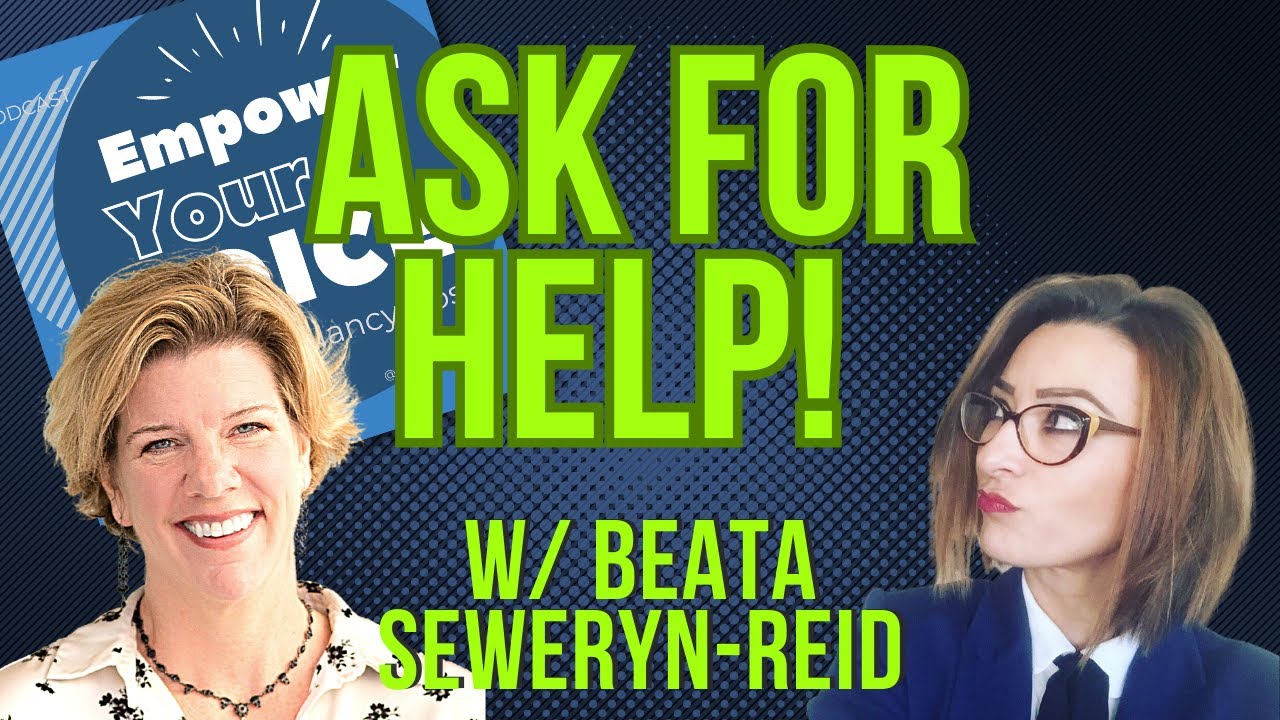
Beata Seweryn-Reid survived a brain injury and grew up behind the Iron Curtain with a voice silenced by anxiety and self-doubt. She developed the 3 C's framework—Clarity, Confidence, Courage—to break free from the story that trapped her, and now coaches others through her HOPE mission: Help One Person a Day.
Chapters
I am your host, Nancy Bos. Today I'm talking with Beata Severin Reed. Beata is this amazing woman who grew up behind the Iron Curtain in Poland. That and other parts of her life that were negative set her up to have serious anxiety about sharing her message and helping to change other people's lives, both as a coach and as a speaker. So Beata had to purposefully and deliberately overcome her anxiety to share her voice. In this episode, we get to hear her personal story of what it was like to start with what the process was that Beata went through to get onto the other side of anxiety and what she brings the world now that nobody else can do like Beata does. You see, she is the only woman in the history of the world who's come from Poland to Colorado Springs with the skill set she has and the stories that she has and the background that she has, and she has a message that empowers and reaches people to transform their lives, to change their stories and change their lives. I hope that you connect with her after the podcast, maybe even bring her in as your coach. Here's Beata. Hello, Beata. It is so nice to meet you and to have you here on the podcast.
Thank you for having me here. I'm really honored and I love your podcast. I hope everyone knows that where to go to, to listen to it. I listened recently for like 5 or 7, one after another episode. So people come here and, and hear the voices that she's sharing, but Nancy is sharing with you. And, uh, well, I'm sure that the audience already noticed that I do have accent. So no, I'm not from here. And my story begins on the other side of the ocean, actually. You see, I was born behind the Iron Curtain in a small village in southern Poland. I was the youngest of 4, and I wanted more than the communism was offering. And I was in this little child, there was always that dream that I can go outside of this invisible walls because we were not allowed to leave. The country. So I always was, "Mom, why we cannot go and visit other countries, see what is there?" And she'll say, "Well, we have these walls." And I said, "I can't see the walls." And she's like, "You can't see them, but they are there. And for now we cannot go anywhere." So they were separating me from the world that I was dreaming about. And this life unfortunately also, I mean, unfortunately then, but now I know that it was actually a blessing, also blessed me with accident. So when I was 7, I got into a car accident and I suffered a serious brain injury. The doctor's prognosis was very limited in terms of my potential to live a normal life. So basically I woke up to the conversation between the doctors and my mom and they said, Mom, your child will never be normal. So the doctors, family, my friends, nobody believed that I will succeed in life. And for a child, even I didn't understand the words. What does it even mean to be normal? Like today I ask myself, what does it even really mean to be normal? But then I, for me, it means that I won't be like the other people. I won't achieve what the other people have. And it followed me, that voice, which was not even mine, followed me for years. And every time when I had some challenge and didn't succeed, it was saying, hey, you are not normal, you are not like everybody else. So I was very tough on myself and tried to quiet that voice. And it would cause anxiety. Anxiety keeps you really small, keeps you The tension is frustration. And I always go and call this anxiety my trap with four walls. And when I was sitting in these four walls, I called them fear, insecurity, lack of self-esteem, and self-sabotage because I was self-sabotaging myself when I listened to this voice that was telling me, "You're not good enough." Basically, it's all what the voice was telling me, "You're not good enough." you had this brain injury, you cannot think like other people, you are not normal. So that was really my voice. You are not normal, you are not good enough for anything. But eventually I, yeah, I left the walls. I moved to the United States and it was my hope. Okay, I'm not there, I don't have to deal with it. It's funny because we often try to run away from something that we cannot face or we are not ready to face. So I was like, ah, the walls are there and I hope I will never ever have to live between any walls. But walls, the invisible, in my case were very solid, came with me. So my anxiety just changed from not being enough, good enough for whatever I was doing in Poland, changed just to I was not good enough for United States. I was— so yeah, so go ahead.
Poland, Poland, um, baggage or walls about Poland came with you to the United States, not just the normal thing.
Yeah, and I love that you said baggage because I always, when I share with audience, I was allowed to come to US with one suitcase, but the baggage actually that I dragged with me on my shoulders was bigger than the entire, probably, plane. So with this not enoughness, but going back to this anxiety, it just started showing up in different areas of my life. Like I hated my accent. I felt that nobody would work with me. Nobody would listen to me. That broken English, broken dreams. Like just, you know, the story I was telling myself, the story that was not even true, but I so believe that it is because I was told so. But really I was told, others, so it's what I learned later in life. Other people's opinions are none of your business. And when I started, yeah, when I started living that way, it's like, oh my gosh, who really decides about normal. It's just me. So I had to take lead and ownership of my own life and start. And it was just one day at a time because there's no other way. One day at a time, one step at a time, one thought at the time, because it's all in here. For me, at least, it was all in my head. So I was stretching, I was stretching and trying what else I can do. If I succeed here, where else I can succeed? But anxiety was still there, but I was able to manage it.
Can you tell us how that anxiety showed up for you? It shows up in different ways for different people. And so I'd love to go into like, what was the physical result of that anxiety? How did it embody itself for you?
It actually shut my voice. I was, yes, I was not only trying, but I really, was separating myself from life, from people especially, because then when I didn't have to talk, they didn't hear my voice. They didn't tell me that, oh, you have accent, where does it come from? And it would bring that anxiety story. You are not normal, you are not here, you don't belong. And so physically there was such a tension that basically it was paralyzing me from doing anything. And my dream was speaking on the stages. So when you don't have voice, you cannot go on the stage really. And so what eventually I had to face that, that, okay, I have to do something with it or it is where I'm always gonna be. And where I was was not enough and was very uncomfortable. And I had to make decision to do something with it.
So when people asked you where you were from, trying to identify your accent, then you would spin that to a negative, right? Is that what I'm hearing?
Yes, it was the biggest barrier that I put myself, that the box into, because I work in hospitality. So I was representing people. Yeah, I was a supervisor, I was manager. So I was talking to people and representing the brand every single day. And then, and of course it's, I always also in my, uh, when I talk to my audience, I say sometimes it's the hardest part is accept something about yourself that is obvious. And my accent is obvious. Like, yeah, like, come on, people gonna ask me that where I am from. So sometimes it was basically because they were really interested and sometimes they were not nice, but my mind, my heart, and that, you know, the trigger was going to the wrong story. So sometimes they ask me where I am from because they were really interested and they were happy. Oh, my grandparent was from Poland. And also we had the story to share. And other people, where are you from, were saying, well, maybe there is someone who really speaks English because they were not satisfied with whatever service they received. So they, you know, people are just humans and they try to put on you their own frustration. But then it was on me to deal with it. And for a very long time, I didn't know how to deal with it. So I was frustrated and anxious that here we go again. They already know that I'm not normal. I don't belong. I'm not good enough. So it was my story for a very long time. And it was very heavy mentally, but also physically. I just, my body was tired all the time. The tension, yeah, tension was, you know, that squeezing your insides. It was a really, yeah, yeah. We basically, I'm sure you, you talk about that, then you know, we might attract disease because of how hard we are on ourselves with the stories that we tell ourselves, the negative stories.
Absolutely. Our thoughts impact our physical health.
Absolutely.
What actions did you take then to overcome that story? I mean, you've already said that you realized that I've got to work through this or I'm not going to realize my dreams, I think is what you were indicating. So what did you do?
Absolutely. So first I was trying to help myself because, you know, I'm high achiever, I can do it by myself, I don't need help. I hope that someone that resonate with story, I just can do it. I'm me, you know, the leader. But then I realized whatever I do is not enough. I'm still trapped in this story that is not moving me forward. And it was, you know, I realized that when we are somewhere where we don't belong anymore, the desire to move on is so strong that eventually you have to do something. Otherwise, I felt like I'm going to die, not physically, but my soul, like I will insight. So I reach out to mentors and coaches, and they helped me to reveal the story and release the story that was stopping me and my voice that I so much wanted to share with the world. So it was my first step.
It's one of, it's one of the points that I make in my TEDx talk is that it's so much easier to do with this this transformation with the help of somebody else who can just be a mirror or see things from a different perspective and show you different options for what you might think.
Absolutely. And if I can add, because during that— you mentioned transformation— it was a really transformational journey working with my mentors. They told me, and I love to share that quote, it's sometimes it's very hard to see from the inside of the box. And yeah, it's sometimes really hard to see what is really— what part of the story is the strongest and don't want to let you go. But during that process, I created 3-step guide for myself, and I shared it with my clients. I don't know if you'd be interested to hear it, what helps me to move on. So I call it 3 C's: clarity, confidence, and courage.
Okay.
So first I had to get to know where I am in my life, where did I came from and where I'm going, because if you don't know where you're going, any path can take you there, right? So I think the most powerful part of that step is that there is journaling I did journaling exercise that there's two questions that I would like to share with your audience. The first question is, what do you really, really want? And why two really? Because very often we are hung up on stuff that other people want from us, our parents, our bosses, coworkers, yet the world want us from us something, but we forgot What we need, the ata, me, Nancy. Yes. Right. What, what I really want. And yeah, we say yes instead of no when we really scream for no. So this is the first question. Just write everything tangible, not tangible, because, you know, I notice sometimes what we really want is a little bit more of free time with family and our career is not allowing us to do it, but there is There is a promotion hanging and like, oh, I know it will be more job, but I want that promotion. Do you really? Or you want your time with your family? And the second question is, what is stopping you from not having it by now? And here, just also don't think, just write, write, write, like, you know, like trash, just dump everything what comes. And just a small tip, somewhere between that sentences or words, you're gonna find your limiting stories and limiting beliefs. And one more last question is, how can I move from here? What resources do I need? Can I do it on my own or do I need to ask someone for help? Because we forgot to ask for help.
Yeah.
And then So that was clarity, then confidence. Confidence, I noticed that people are believing that you are born with it. Maybe we are, but I lost it very early. So the good news is that you can gain it back or learn. It's a skill. It's nothing else than believing in yourself and that you're gonna figure out anything that comes, yeah, in your way, got in your way. Like I did, you did, just believe that you can. And the third is courage to act. And I, in my life, courage for me is just about not being satisfied with where I am today and going for something better. Because if you are not satisfied with where you are, it means that you won't go farther. So we've also the courage to act. Act because there is nothing happening without action. So you have to move your butt, if I can say that word, and go actually and work for what you want.
Yeah, and it's a feeling of risk, of putting yourself out there every time.
Absolutely.
I want to dig a little bit more into that confidence because boy, oh boy, that is a tricky one. A story, we may realize it's there. We may do everything that we can to deal with that story from our past. You, you figured out that, okay, maybe I'm not normal, but what's wrong with that? And maybe I am more normal than anybody could have ever realized. They had no right to tell you that you would perhaps never be normal, or to tell your mom that, and then that stigma over your whole life. You may have been a very confident kid until that moment. And you know that now consciously, you're, you're very aware of this, but does that make it go away? Does that make that confidence just, okay, I got this now, I'm fine. I'm never going to lack confidence again. I don't think that's the way.
Absolutely not. It's awful. It's a lifetime job. You have to work on it every single day. And again, we can be more confident in different areas of our lives. And in the other less confident. So there is always area where you have to work on it. And the only way to be confident is by taking action and doing like— for me, I was not confident getting on the stage, right? And sharing my voice with my accent, being aware of all the limits that I have. Did I gonna say the words right? But then I learned that, well, it's me. It's what is normal for me. This is my norm. It's who I am. So I had to really get to know who I am and what I want to do in life. And then I started joking even about my accent. I always say to my audience, just bear with me. Sometimes I'm going to say stuff backwards or, you know, I'm going to misinterpret words, but just bear with me. There is a point in my story where it's going to really touch you. So yeah, you have to The Four Agreements, don't take it personally. Don't take this life personally. Life is beautiful when we smile and we are not so serious.
Absolutely.
So I still work on my confidence every single day. And just to add to that, even if you were very confident in something long time ago, but then you stop doing it, you lose it. You have to go back and train yourself again, right? With your voice. You, if you sing every single day, you just know how to do it. Then you stop for 10 years. You have to go and relearn some parts of that.
That's right. That's a good point. I've, I've joked with my sister sometimes. You, well, Beate, you and I both have a, a purpose, a meaning that we found that we don't want to go to our graves having not accomplished this mission, right? But sometimes I just want to go be a barista, you know, just show up to work and make people smile, a simpler life. What we're choosing is not simple. I think about my friends who are opera performers. This is not simple. You're putting yourself on the line over and over. My friends who are speakers who are putting their hearts and souls on the stage over and over again. It's not an easy choice. And so that courage— can you talk to us a little bit about, about about your mission? What drives you to want to face this passionately every day?
Well, I think that the biggest drive that I have for sharing my story and my, my voice and the messages I have for people is— I don't know if you know that acronym for HOPE, Help One Person a Day. So my mission is just to help one person a day. If there is, like, we are talking right now and someone is going to listen and say, oh my God, if this Polish girl with broken English could make her dream come true, what is stopping me? So if there is only one person that will be uplifted today because of our conversation, or when I am different stages because of my story, or they will find themselves in my story and will start following their dreams because I believe in that butterfly effect. When we start working on ourselves, everything else around us becomes better. People start smiling without no reason because they just feel your energy. So my, my drive is to, to help people just to get a little bit better every day and follow their true dreams.
Just like people help us, you and I.
Absolutely.
We join masterminds occasionally. We have coaches and opportunities to network with other powerful people who are following their dreams. And, and so I love that we work together in community, small or large.
Oh, absolutely. And I, I'm always in some mastermind or with some coach because I believe you can grow only even with my awareness.
Yes.
I know, and I think this awareness is the key. That's why I know that eventually I'm gonna hit the ceiling. There is always some kind of ceiling, some kind of story that is gonna say, okay, you cannot go further. It's not true. Just find someone who was there and is a little like 2, 3 steps ahead of you and is gonna, okay, just borrow my belief. Give me a hand, I will show you the way, but you have to do the work, right?
Yes. So what is your life like now, your professional and passionate life after you've overcome this anxiety? What things have you been able to do? I know you're on a lot of podcasts. People love to hear you talk.
I— yes, it's my passion. I love to share my story with people, inspire them, transform their beliefs, But I think one of the biggest success that I achieved, it was, and I think I shared it with you before, it was sharing the same stage with one of my mentors, Les Brown, which is the legend in, yes, the speaking industry. So that, that I would, oh my gosh, if you would tell me years ago that you're gonna share stage with Les Brown, I was like, oh sure, yes. Yeah, probably if I put my picture next to him on my— yeah, like, no. But then, yes, yeah, I joined his program and I was one— choose as one of 20 best speakers and we shared the stage with him. And I love his— just how he talks about life. And he talks about don't die with a— actually, it's Wayne Dyer, but he always uses that— Les uses that quote, "Don't die with the song." Yeah. Within you. Yeah. Don't die when the song is still singing in you. Something like that. I don't know exactly, but he always talks about that and his view of life, that there is always someone there. You have a story. There's always someone who needs to hear it today so they can start working on improving their own life. And it's, it's what I do and I coach and I'm in leadership. I moved from life into leadership coaching because the other mission that I have, I believe that we are all leaders. It's not title, it's not position, it's you. If you are looking in the mirror every single day, who do you see? Who is leading you every single day? So if we start taking ownership for becoming leaders, in our home communities, we're gonna have very healthy leaders in corporations as well.
Awesome. Fantastic. So how can my listeners and my viewers on the Everything Podcast learn more about you and your work, maybe even work with you as their coach? Where would they go?
Absolutely. Thank you. Thank you for that opportunity. So first of all, LinkedIn. I'm on LinkedIn, Facebook, and Instagram. Also, you can go to my website. I have the Atas beata.lifecoaching.com. The leadership page is coming.
Great. And all those links will be in the show notes. So if you're on YouTube, just look down below, and on your podcast, just swipe and you'll see the links to Beata's information.
Yeah, and you can join me on YouTube as well. I would love to— for you to hear my stories out there and partially where, where I— what stages I was in.
Awesome, awesome, fantastic. Well, thank you for sharing your story, your journey through this process. I really appreciate it.
Thank you, Nancy. You're awesome.
That was a powerful testimony from Beata on how a person can find the courage and the confidence to recreate their stories into ones that work for them. And if you know me and you've been listening to this podcast, you know that finding those stories, those personal narratives and dealing with them is the biggest part of my message around voice. Because the voice, the fifth chakra, the voice that is the gateway between our brain and our heart and our guts, this small channel in between that carries all the tension, where we can put on the brakes, where we can hold ourselves back— releasing and freeing this voice by allowing for our personal stories to be dealt with and presented in a positive way, reframing our narratives. That is the core of the work I do. Now, I gave a TEDx talk this summer. If you go to NancyBos.me and you'll see it right there on my home page, or Google Nancy Bos TEDx and you'll find this TEDx. It's 8 minutes that it might just change your life. In those 8 minutes, I go through my journey with performance anxiety, how I began to overcome it, and how you can do the same. Because of that TED Talk, I have had such demand now that I have started a 5-week program where I work with people in small groups live for 5 weeks that can change their lives. If that's something you're interested in, or if you're not sure, you just want more, I do have webinars where we spend an hour really taking a deep dive on what I just covered in 8 minutes in the TEDx. It's a free hour. It's an opportunity for to think, okay, I'm going to try this out. I'm going to see if this is what's making the difference. And can I see the light where I can share my voice, my message, and my passion with confidence like Beate has done? So please go to NancyBos.me and look for that webinar. Look for the resources that I have available there. And as you just heard from Beate, she has amazing resources available for you as well. I can't even imagine how phenomenal a coach she would be. I would just love for you to spend more time with Beata's material. Go out and be powerful. Find the strength that you were given at birth to present to this world the way that you were intended to. Follow your passion, follow your heart. Make sure it's your dream and your passion that you're following, not one that's been given to you by society or your parents or organizations.
It's yours.
You have one life. Go out and do it.










