Dr Candace Magner on Barbara Strozzi ES011
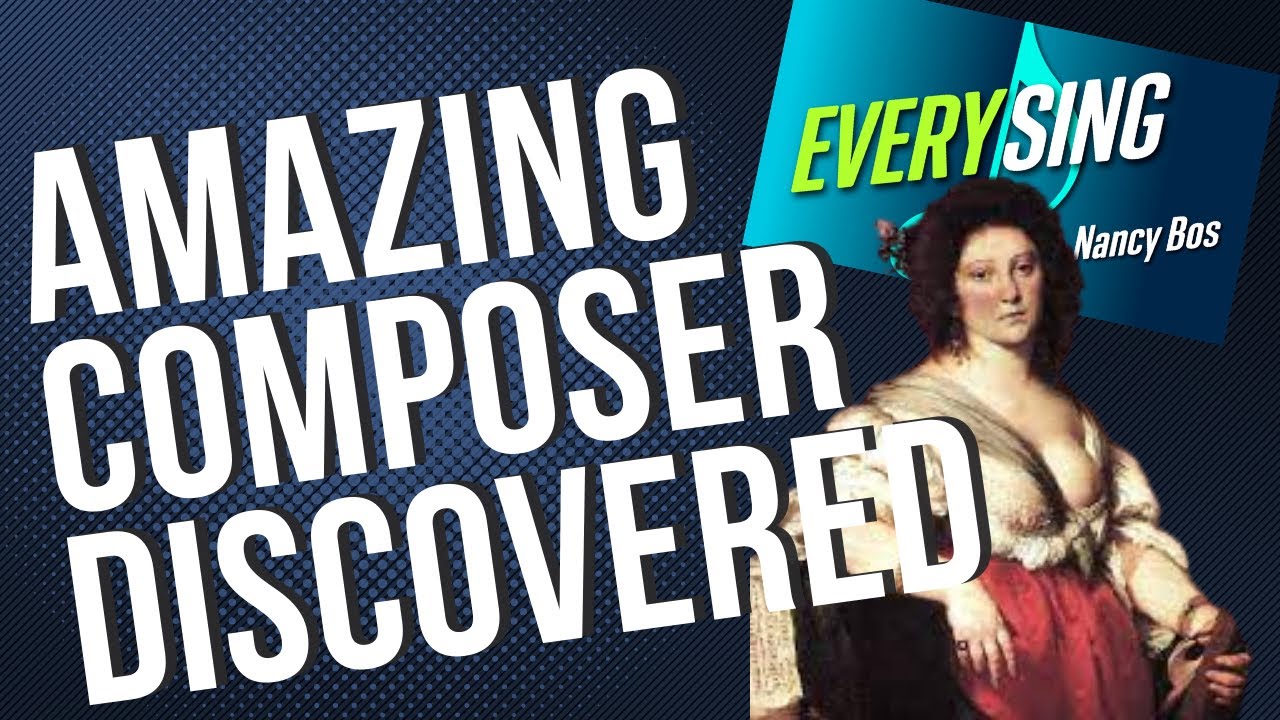
Dr. Candace Magner, a singer and musicologist, spent decades reconstructing Barbara Strozzi's complete works, hunting through archives in Venice, Florence, and London to piece together the 17th-century composer's fragmented manuscripts. She founded Cor Donato Editions to publish all eight opus collections and now performs Strozzi's music on continuo guitar.
Chapters
Hello and welcome to EverySing. My name is Nancy Bos. I'm your host. Our guest today is Dr. Candice Magner, and she'll be speaking about her work with Barbara Strozzi's music, a composer from Venice in the 1600s. Now, perhaps Baroque music is exactly what you love, but even if it isn't, give this episode a good chance because Candice's stories are fascinating, things you would never realize were going on, and she really brings 1600s Venice to life through Barbara Strozzi. It's a really special gift, and I'm so glad it's recorded to share with all of you. So a little bit about Candice. Candice holds a special place in my heart. She is my mentor, my voice teacher who taught me how to be a voice teacher. Now, she's also a singer herself and a voice pedagogue. She has a strong interest in early music. She's written several books on diction and also materials on Cécile Charminade. So we're going to continue now with Candice introducing a Barbara Strozzi song that she was performing live in concert. The song is called Costume dei Grandi. You can find the names of all of the musicians as well as links to Candice's websites on Barbara Strozzi at nancybos.net/podcast or by simply clicking on the show notes option on your podcast player. On the iPhone, that means the three little dots and then click on "View Full Description." Here's Candace.
These two songs, the first is "The Customs of the Great." Love them and leave them, these are the customs of the great. He who lies hopes for more praise, he cheats and enjoys. The second is revenge, la vendetta. Revenge is a sweet thing. One ill turn deserves another. And getting back is a great delight. It's turned into my sort of my second, my third career, my I don't know what, as a singer still some, but also playing continuo. And this has been like so eye-opening to me and learning this whole other thing. This is the full story of me and Barbara Strozzi. Back when I was in graduate school, an interest in women composers was just kind of ramping up. There were some articles being written. There were people searching for bits of music like Alma Mahler and Clara Schumann and some of these people that we knew we had their music, but nothing much had been done with it. Along in there was a mention of Barbara Strozzi. In fact, the first time I saw a reference, I had to stop and say, Is that one of those names like Andrea that in Italian shows up both ways? Well, obviously not. And so I was fascinated because she had never shown up before. I let that ride a little bit, but I was still interested. I collected a lot of what publications there were of women composers. And then the amazing thing happened, the epiphany. I went to Italy with a friend. It was my first time there, and she's Italian. Here's where it gets weird. I got off the train at the station in Venice, and I said to myself— truly, I did say this— I went, "Wow, I'm so glad to be back." Oh, wow. Wait a minute. I haven't ever been here. Oh my goodness. What is that feeling? I had never had that before. It was like relief that I was home. It's so crazy to talk about. But however we take that, my next thought was, I need a project.
Hang on, don't leave that thought yet. So I totally get that because when I went to Amsterdam the first time, I had that exact same feeling. And I can't get enough of the Netherlands. But my family roots are Dutch. And so it's understandable. Are you Italian?
No, not a bit of it. No, I am so, you know what I look like? I'm big-boned, blonde, blue-eyed, Scandinavian type.
Scandinavian type.
Yep. Very Northern European. In fact, I even had my DNA done. There's no Italian.
Like, please let there be some Italian in here. Wow. So what do you credit that to? I mean, go ahead and get weird on me. What do you think was going on?
I kind of think that within all of us there are these kind of archetypal human things and that we don't really understand how it works at all, nor can we probably study it in any kind of way besides sort of metaphysically. But There are some places that just resonate with us. Let's put it that way. You know, it was a feeling of comfort and familiarity, even though I had never studied Venice before or even seen very many pictures. I couldn't imagine what it was. But when I got there, I said, ah, yes. That was the start of my thinking, wow, I need a project. What could I do that could potentially bring me back here and let me explore?
Yeah, I remember you telling me that. I need to spend more time in Venice. Now, what can I do to do that? I love that cart before the horse kind of—
yes. Yeah, it totally was. And interestingly, was it before or after? Anyway, with my friend in Italy, we were in Florence because her sister lives there. Now, Florence is the seat of the Strozzi family in the big sense. And so there's the Palazzo Strozzi, and there's lots of Strozzi things that are in Florence. So when I saw those things, I went, "Oh, Barbara Strozzi. It must be part of the same family." I hadn't really started studying it in that depth yet. But I knew there was that little bit of connection, and my next step was to see what had been done and what music there was.
Barbara Strozzi was from Venice. You said Florence is her family. How did that work?
Okay. She was born in Venice, and she lived her whole life in Venice. As far as we know, she rarely left there, although she died in Padova, which is very close. But her father moved to Venice. I don't remember the date now, late 1500s, I'm saying. But was part of the family in Florence. Let's call him a bastard branch of the Strozzi family. But his cousins and uncle, that was part of the main family. And the Strozzis were sort of second to the Medici in terms of wealth and power and all the stuff that they did there. Julio was kind of a bad boy. That's her father.
Okay.
And a poet and writer. And he had been in Rome, some to various places, would set up these intellectual academies where they would discuss music and writing and the arts. And these started turning into what became the academies from which our modern opera, words and music, developed through Rome and through Florence in particular, and then in Venice. But the first operas were in Venice. And Giulio was a big part of that. He wrote librettos, the words for several operas, including Monteverdi. That's lost now, but there's several things that we can track his activities with these group of intellectuals. So that's how he was in Venice and very firmly established there. Now, where do we want to go from here? Barbara was his at least adopted daughter, probably his natural daughter.
Yeah.
In order for there to be sort of legal rights and so on of passing your property.
Right.
He had to acknowledge her. And so there are documents. Her baptismal document just mentions her mother and father uncertain.
Oh, okay.
These things were done. Now keep in mind that nobody cared at that time.
Nobody cared.
Marriage was more, yeah, for financial reasons. Yeah, just dynastic.
Okay.
So the fact that whether he was her natural father or not doesn't really matter, except that her mother was part of his household, we know, when census was taken. And so we know that that's a longstanding relationship. So Giulio acknowledges her in his first will. And that's how we have her name, the daughter of Isabella and in his household.
So you referred to Giulio as a bad boy. Is that what you meant?
Yeah, it is what I meant. Not in that sense that, oh, he had a daughter out of wedlock. No one in the world cared about that. But that he was, I'll say, sort of politically and artistically sort of a bad boy. He was part of literary groups that certainly by the time he's in Venice are referred to as the libertines, the libertine poets and writers. They wrote about things that were considered by genteel society as maybe suggestive or out of the norm. Or that sort of thing. You know, of course, this is by a different standard, but still talking about love and beauty and expression and—
Oh, I see, just taboo topics that the Catholic Church probably wouldn't smile on.
Certainly not happily part of the church. So I guess I'd say it just like that, you know, not church-sanctioned ideas, right? A little bit off the mainstream. Some of the writers— now this isn't Giulio himself, but some of the writers as part of this group wrote basically sort of early pornography, let's say.
Huh. Well, it doesn't sound like it's the birth of the— I can't think of a better word than the highfalutin genre of that opera is now. It sounds pretty low.
Right. Now, the writings that were surrounding all this were very philosophical, and the birth of opera, you might say, comes from this desire to emulate the combination of words and music and theatrical spectacle that they thought maybe the ancient Greeks found, but we didn't really, certainly not at the time that Giulio was writing, we didn't have much knowledge about that. But there was this ideal, let's say, of what it was or could have been, might have been, and can we reconstruct this now in the modern era? I'm talking 1600s.
Yeah. Love it.
To do something with it. And then taking this a little further later on in history, but not much later on, still with Giulio, making it into a business. And so, now, you have to keep in mind too that Venice at this time gets very interested in its celebrations, and all the things that fit in between the celebrations of the church year. And you might also keep in mind that this is a lovely thing to me. Oh, I shouldn't say that. That Venice was, you know, had lots of churches and it was just the thing that you did. It was part of the culture. However, they were never really controlled by Rome. Rome even excommunicated the entire city-state of Venice. And we're not just talking about the little island that we know about, but the whole region which reached into Dalmatia and Croatia.
Huh, that's a big area.
Yeah, it's like Greater Greece or something like that. It had its own territories. All right, so we're not here to talk about Venetian history, maybe, but that gives a context of how these libertine writers or these creative entrepreneurs for spectacle treated the arts vis-à-vis the church year. And so we had Carnival. Which what we see now is so minor compared to what— Wow. Yes. So the carnival season lasted essentially from Epiphany or Three Kings Day, you know, after Christmas until Lent. So it wasn't like, oh, let's have a week or 'Let's do the pre-Easter performance.' Right. It went months. And then it started up again. So there were a few other celebrations that went out. Well, the opera season definitely went from Epiphany to Ash Wednesday. And so months. And there was, you know, what are we going to do in there? Were there other celebrations? Not really.
I just can't quite picture this.
Yeah. So, no, I'm not saying that everybody was dancing around in costumes and stuff, although there is a lot of that. And that— ooh, we can go so far afield here. It's really fun. The way that the aristocracy could mix with the classes that were under them, the merchant classes, the literary classes, let's say. And I'm not just talking about the workers who, you know, cooked bread or something like that, but the merchant class that would have been what Giulio was. He had some pedigree from the family in Florence, even if he was, you know, sort of the outsider of the family. He was an intellectual and trained and educated. So he wasn't just a worker bee, he was like a layer under the aristocracy. And then there was everybody else. Okay, then what do you do with all these sons in an aristocratic family who can't marry because then the family fortunes would be diluted? You could have the eldest son who gained the property of the family. And then there would be another son who would be, for example, part of the military, and a son who would be part of the priesthood. But you had a lot of young men with no outlet for their sexual freedom or for coupling with someone else. So in order to have some activity, there was a lot of sanctioned prostitution in Venice. And then there was also sort of this, okay, anybody can more or less do anything, except that you couldn't do anything that would hurt the family. So if you were the son of an aristocrat, but not the one who was going to be inheriting, you could have a lady friend, or you could visit the salons and homes where there was poetry. Think sort of Japanese geisha or something like that. You know, there was culture, there was art, there was beauty, there were intelligent intellectual women who could talk about art and literature and poetry, even the poets themselves, poetesse, let's say. And some of— there was a registration for prostitutes in Venice during, you know, these couple of centuries. There's this one wondering whether Barbara Strozzi, for example, was a courtesan, a prostitute. I personally don't think so. But there was a roast of her in one of these intellectual gatherings that her father sort of sponsored at his house that made it sound like—
Oh, exaggerations of her.
Yeah.
Yes.
Well, if you're going to distribute flowers to all the attendees, you know, distribute the flowers before or after the fruit. You get the idea. So I think those are more in the way of satires. In fact, some of them are actually called satires in the original writing. That it's a roast, a send-up, you know.
Wow. And then they have it documented that they still— Things you wish your parents would destroy.
Right. But she acted, by the time she was in her late teens, let's say, acted as sort of a, I'll say, a mascot to her father's intellectual academies with these men, some of whom had been writing treatises, some about politics, some about art. People who were involved with the musical life. Monteverdi might even have been part of one of these academies, and certainly some other composers. There was a composer, Niccolò Fontey, who dedicated 3 sets of works to her and wrote some prefatory poetry, or— what's the word I want— praise of her in these. So she was known in this circle. She was obviously also a singer.
Yeah.
We know that because they refer to her that way. And I'm going to say probably played some instruments for herself as well, although we don't have any documentation about that. So that's how Barbara got to be part of these intellectual academies. It was through her father and through his connections and the people that she worked with. She studied with Francesco Cavalli, who wrote many of these early operas. And so she studied with him. We know that because she refers to him that way. Monteverdi was living during the same time period and was the music master at San Marco, which was the main silica, right?
Yeah, I've sung in there. It's a marvelous place.
Yeah. And Cavalli also was the music master, choir master there. I even tracked a little bit of information that says that one of the famous instrument builders in Venice, and there were many during this time, might have been connected indirectly with her through the man who was the father of her children. He was a merchant, and there's lots of legal documents of the things that he's shipping from one place to another. And some of them are parts of these guitars that were made by Selvas. Wow. Yeah, isn't that interesting?
What an interesting start to her life. So she stepped out on her own at some point, or did she just stay in the family home and compose from there?
You know, as far as anything we can tell, and Beth Glickson is one who's found most of these documents. So it kind of looks like she lived with her parents in her parents' basement, writing music.
With having 4 kids of her own.
Yeah, yeah, they don't have basement space in Venice anyway.
That was a joke. Ba-dum-boom. Got it. Living in her parents' attic then.
Yeah, probably. Well, and interestingly too, as she invested her money and loaned money, we have some documents to that. So she was pretty savvy. And the main thing is that her music was published in print in her lifetime. Each one of these pieces was dedicated to a different person. And so we hope for some kind of financial remuneration. And these pieces were not individual song, but a collection. So an entire opus number, which could have up to 27 individual pieces in it, anywhere from I think 11 to 27 pieces. Also, some of her pieces were contemporaneously published in other collections, something that she herself wasn't publishing, not just her things, but along with Monteverdi, Rossi, Cavalli, and not just in Venice. But somebody knew about her stuff. It was important enough to include these pieces in a compilation of, you know, great songs.
Yeah. So have you found that the quality of— you've looked at all this music of hers now. Have you found that the quality of it warrants the attention?
Absolutely.
Nice.
There's only one set of songs, and interestingly, it's later. We have a theory about this, but there's only one set of songs that are kind of like, oh, I don't know if I really want to sing that one. There's so much other great stuff that she wrote.
Oh, got it. Okay, cool. So did her music kind of disappear in the 1700s and then get rediscovered by Dr. Candace Magner?
Not rediscovered by me, but, well, Some of it was. We'll come back to that. Thank you. So later in the 1600s, after her death even, there were still some people who knew her music, remembered it from something, took it somewhere else. It's combined into, as I said, other books. One composer, itinerant musician, ends up in the court of Queen Christina of Sweden, in Rome. And he takes— he has a, what I'll call a suitcase book. Have you ever heard that term?
No, I don't know what that is.
It's like taking your folder of your favorite Broadway songs that you always love to sing when anybody says, "Hey, can you do a little program over here for—" So you pull out your notebook and you've got your favorite pieces. Well, he had his favorite pieces in a book that was handwritten and that he took with him. And he messed around with a piece by Strozzi several times to try to make an accompaniment that he liked. Now, keep in mind that people would have heard the music and maybe written down what they saw in a printed piece, but not had a copy of it like we would have, or a printed Oh, they'll scribble it down for themselves.
Wow, I never would have thought of that. Of course.
Did you ever do that when you were a kid? It's like, oh man, I love the theme to Dr. Zhivago. I wonder if I can write it down and then I can remember how to play it.
I did that with Feed the Birds from Mary Poppins. Oh, lovely. That's adorable.
So yeah, just that. So this guy went eventually to England and he wrote some pieces that are still kind of around, nothing too exciting. But there is a manuscript of this thing, his suitcase book, that has bits by Strazi in there that he's messed around with and tried to accompany himself while singing it.
Interesting. I'd like you to tell me a little bit about the Opus 2, No. 23, Ibachi.
This is a lovely duet in this early Opus number, and so she was still kind of learning her stuff, but boy, she had this idea down of how to put a couple of voices together to have a little individuality, to swirl together in this most beautiful, elegant, lovely way and be supported by the basso continuo, which I think in the case of the recording that you have is simply harpsichord and a bowed bass.
And this is Opus 2, No. 23. How many songs are there?
Altogether? Yeah. Oh man, you're going to put me on the spot like that.
Well, ballpark it. It's about 125. Oh my goodness, that's a lot of music.
This is very cool. I need to write this up in some highfalutin journal. There are pieces now I've discovered, these aren't cataloged as being by her, But they are hers. Oh. And, you know, we can go into how do you find something like that. But it turns out that some pieces of hers are collected in other people's greatest hits books that they had in their collection, which are now in different libraries. But it's not cataloged as her. You wouldn't know unless you knew. Yeah, okay.
So it's because you know her music so intimately that you recognize her signature?
They are pieces that actually show up somewhere else, were printed somewhere else.
Oh, of course, because people were doing variations on what they'd heard.
Yes, exactly. So just like this guy's suitcase book, but he did say it was Barbara Streisand. There are other pieces that don't have any notation of who it's by, but it's definitely the piece. There's nothing different about it. We know the pieces because they were in print. Then they show up in these manuscript books in a couple of different places. It's really kind of unusual. All right. Cool. So, and because I know them and because I search for things in bizarre ways, online. I can get into the libraries and I was looking for other references to it, some texts, and tracked it through the texts.
What has your work been like aside from deciding, okay, I need a project? Where did you begin?
I really began back here at the computer and working in the same way that I did with the Shamanon Project.
We should tell people, back here is a small town in northern New Mexico, United States, called Los Alamos, right? That's right. White Rock. Even smaller. White Rock is a suburb of Los Alamos.
Come out in the middle of nowhere. So, hey, I can go anywhere in my mind and on my feet. There are no walls. So '96 was when I was in Venice. And when I came back and started looking what there was, the seminal work on Strazi was done by Ellen Rosand. She's a professor of music history, musicology at Yale, and she had found what the works were. So she had found out about the printed works and then made some very in-depth articles about what information there was in the archives that was sort of the first level of what was found. And so things about her father, things about her father's wills, her being mentioned in his wills and things like that. And where the books were. Wow, very good.
That's very useful. The originals.
And there's not very many. There's surprisingly few. There are basically only one or two, maybe in one case there's three extant copies of the originals. And Dr. Ozanne noted where those were. And at the time that I started doing work in this, she had already published in a couple of series, some of these. One of them was the Opus 5, which is the sacred pieces, and that was republished by an early Dover edition, not paperback, but, you know, kind of a library edition. So you can find those sometimes in libraries. It's not in print anymore, but it was a facsimile. —Okay. —Opus 5. So that was one thing. Then she also edited a part of a series called the Cantata in the 17th century. In that, she put all of the cantata works out of these 8 extant opus numbers. However, that left out all the madrigals, all the duos and trios and quartets. Right. The sacred music, which was something else. A number of other things. So it was basically just the solo song and the cantatas. Okay. So my job at the time, I was just redoing what she had already done, essentially, but trying to find copies of those other pieces. Because I didn't have access when I started to the original copies. There's one at the British Museum. There's several in Florence. There's one in Poland. There's one in Germany. You know, they're all kind of spread around. So then that was the next layer of what I did was kind of reconstruct the best I could the order within the books and see what I was missing. And then the next trip that I took, or a big study trip that I took, went to as many libraries as I could to see the originals and to make some notes about that. At that time, just around that same time then, a company, a publisher in Germany started doing facsimile editions of lots of stuff from the 17th century. And among it, their catalog was doing facsimiles of the Strazi. Little by little, I started having at least a full facsimile that I could keep and study and use. Fascinating.
So it's gotten you back to Venice every once in a while too. Yeah, yeah, yeah.
Well, it got me back to Venice, but here's the interesting thing that I discovered very early on. It's a little disappointing, but that there was almost none of her music was in Venice. Ah, the copies of these books were somewhere else. Darn it. So that didn't stop me. There's still the archives and so on. However, so on this big trip that I went around to Florence and got my hands on those books in Bologna, where there were some of them. And then one thing that was in Venice, and it was kept by the Correr Museum. Not only that, to make it more complicated, but it was housed over the conservatory. Okay. So you had to catch the conservatory when the library was open, which wasn't all that often. So What we knew about it was that it was in a collection of these, you know, like a suitcase book, like I said, with other composers. And it said in the cataloging, "Missing the end of the piece." No! Well, how interestingly weird is that? I wonder what happened to it. The last day I was on this trip, the last day, I finally managed to get the timing right to get into the conservatory library. And they got out this manuscript for me. And I started looking at it. And sure enough, it was missing the end of the piece. There was no question about it. Ended in the middle of some phrase, and there was no closing bracket at the end of it. And the next thing, and there was another piece. Okay. Well, that's disappointing. But I wonder what else is in this book. So I was going through and looking at it. And there's lots of good composers, Luigi Rossi, and some Cavalli, and lots of wonderful stuff. And so I'm flipping through the book, and also interestingly, the pieces don't have a composer's name on every single one of them. It might say at the top, it'll say, "By the same." Oh, haha. Yeah, by the same author, in Italian there.
So if they get out of order, you're in trouble.
Uh-huh. So I guess you can see where we're going with this. It was in there somewhere. Yeah, it was in there somewhere. I got into the back half of the book and I went, well, here it is. Beautiful. And I knew that because of the things I know about publishing and how books are put together. The pages had been numbered in pencil by the library at some point in its life after it had been put in this order. Aha, yeah. So what does that mean? It means the book fell apart at some point and it was put back together in the best way, but not all that carefully, and stitched back up. And then at some point people numbered the pages and stitched back up.
So permanent. Yeah. Oh my gosh.
Okay. So they put one of these bundles in the wrong place and I almost jumped out of my seat and screamed. But I thought that was a bad idea in the library. So I just sat there, you know, with my feet tapping on the floor and going, "How do I get a copy of this?" Well, now it's marked in their catalogs as the end of the piece finishes over here.
Oh, they didn't move it, of course, but they told you what page number it was. Got it.
So in the catalogs now you can see that. So, and this was just her one piece out of this book of otherwise actually really interesting things. But at least here's something really unusual. And I'll take this home and I think I can make an edition of this so that it's all put back together. Meaning, you know, type it out in music manuscript and put things— well, so here's the next step. I started doing that. And there were a lot of things in the music that were not like modern music printing. Hey, I'm a singer. What do I know about figures? And I'm sure that, you know, we talked about these things in music theory classes and history, but not to that degree. That's subtle for —geeky early music people. It's historic.
Yeah, it's early music. Exactly. It doesn't apply to most music that we look at.
After I found that piece of music that I couldn't edit, I said, "Holy smokes, I need to get some training. I've been in college for"—what was it then?—13 years, but I still need some training on this. And so I went to the Oberlin Baroque Performance Institute, a summer program, 2 weeks. That just focuses on Baroque music. And you can start that with any level of knowledge or none at all. Wow. And so I went as a singer. Yeah. And I thought it would be interesting to maybe take up lute or something like that, that she might have potentially played. The teacher there, Lucas Harris, he said, "You know, have you played guitar?" I said, "Yeah." He said, "You know, it'd be great. I think a lot of these pieces," She probably played guitar and accompanied herself. This would be a great thing for you to do. Wow. And you can learn it in your lifetime. More importantly. That's a big plus. Yeah. And so I started to play baroque guitar as a continuo instrument so that I could interpret the music as it's written on the page with hardly any figures and no accompaniment. And now I do that a lot. I'll be playing some Strazi this fall up in Colorado. I think I'll be going up to Toronto in December and playing continuo up there for a program called Christmas at San Marco. So we'll be doing Monteverdi and Cavalli and those guys. And it's turned into my sort of my second, my third career, my I don't know what. As a singer still, some, but also playing continuo. And this has been like so eye-opening to me and learning this whole other thing that still applies to this music that is so beautiful. Oh, fantastic. So that was another interesting part of my self-education.
That's it. You didn't expect to need to learn how to do all of that.
No, and it was frustrating and interesting at the same time. And this piece of music was kind of weird. Now, at the time that I started doing this, there were a couple of recordings, not very many, maybe 5 that had some stuff of hers. And so I was able to hear some things and I was able to learn a little bit more as I had access to the originals or the facsimiles. But this one kind of outweirded everything. Okay. I didn't know what that meant, you know. Then little by little, studying it more and more in depth and through the history of her works, there are 8 opus numbers, right? A few extra pieces as we talked about. You know, I could see that this fit in with the later stuff pretty well, but a little experimental. Okay. And so maybe that's why it didn't get put into one of the other things. But it is a cantata. It's a long piece. And it's really quite stunning. So it took a while to get that put together. We can talk about these opus numbers, too. There's one that's completely missing. Really? Yeah. It's, you know, there's Opus 1. Okay. It's all there. That's all madrigals. 2, which is mostly shorter pieces.
Oh, I see it's Opus 4 that you've got a spot there.
Opus 3 is a lot of other nice stuff. Opus 4, it's not there.
Nothing. I'm looking at barbra strozzi.com. The existence or whereabouts of this opus is unknown. It has been conjectured to be lost or possibly misnumbered. The truth is out there.
And even more than that, there's some documents that Beth Glickson has been uncovering in her archival studies, seem to point to the idea that she had maybe dedicated this to the Duke of Mantova, and that it was sent to him, and that he either got it or he didn't get it. He was in transit to France, and it either missed him, or it didn't come back with him.
Yeah, there's so many things that could have happened to it.
You know, we just don't know. And it could be sitting somewhere with nobody's name on it, nothing that we know.
Yes, that's what it is.
I know that's what it is. And so, so it's out there. I feel certain it's out there. But it could well have undoubtedly still in manuscript at the time.
Yeah. And the only copy.
Yep. Right. Yeah. So it didn't get its way into print. And the Opus 5 is all sacred. It's the only set of books that has sacred music in it. The rest is secular. And a lot of it is written on love poems and things like that. A few that are written on historical events and sort of, I'll say, epic-type poetry explaining the events around these historical things. A few were written individually for a particular patron, let's say, Almost everything is written for soprano or high voice and basso continuo, so just the bass line. Okay. It is eminently singable. She obviously was a soprano and sang this stuff, and it's just beautifully put together, including how the words are set. And then there are also nice pieces, some nice duets in these madrigals.
And it looks like you've transposed some of them for other voice types.
I did do that. There's some great pieces that were actually written for alto or mezzo-soprano. And then little by little, I'm doing some transpositions of some of the best— best, they're all good— most popular, let's say, of things written for soprano. I'm publishing the complete works of Barbara Strozzi along with Dr. Richard Kolb. And so right now you can get those through the website Cor Donato Editions, C-O-R-D-O-N-A-T-O Editions. And it's named after one of the pieces in Opus 3. It means a given heart, a heart that is given.
Cor Donato Editions, a heart that is given editions. That makes a lot of sense because Your heart is poured into this, and Strozzi's heart is poured into this.
And the logo, in fact, for the publishing house— and this is my publishing house, and I'm doing all this myself— the logo for it is the Strozzi family crest, let's say, encircling a heart.
Yeah, there's a heart right smack dab in the middle of their family crest.
Yeah, and I put the heart But the rest of it is the Strozzi crest. Oh, got it. Yeah. So Cordo Noto Editions is dedicated to the complete works of Barbara Strozzi. And then each one of the pieces is available also as a digital download that is personalized, secure. So you're looking for a particular piece, you say, oh man, I really want to sing that next week. And you can just look at it directly. Every one of those pieces that we've done so far, including some of Opus One, the book's not done, but some of the pieces are done. And the piece that we talked about, which is called "Presso un ruscello argente", "By a Rushing Stream". It's lovely. And that's available individually too. That's the main part of it. Her history, you can read through Rosanne's works, and through Beth Glickson's citations, I would go to the Grove Music description. There's, you know, I haven't read back into the wiki for a while. There may or may not be everything absolutely perfectly right, but I think that's the point of a wiki is eventually it all gets down to what's right. We fix it eventually.
Is there any particular song or opus that you would recommend that a person just exposing themselves for the first time to this, what's the most approachable, get your teeth into kind of music in here?
I think that Opus 2 is very approachable. Okay. For several reasons. There are slightly shorter pieces. There are some that are humorous. There are some that are very serious. There's a couple of duets in Opus 2. And there are some spectacularly beautiful longer pieces built on a ground like a passacaglia. Ah. So it's not all that difficult to play, even if somebody doesn't quite understand everything about realizing figured bass. I should say that these editions are like the originals. They do not have chords thrown into them randomly. It's just what Barbara wrote. And so what do you do with that? Well, these couple of pieces built primarily on a 4-note descending scale or a lament. Pasakaya would be like, "Do, do, do, do." And then what do you do over the top of that? Well, she is brilliant at that. And one of the most beautiful is called L'amante segreto, the secret love. It's primarily built on that pattern and it's exquisite. Ah, really lovely. And some other very fun shorter pieces. So Opus 2, if you were going to buy one book of music to get you going, I would say that would be a good one. Fantastic.
So this— you have done so much work. If you had known this elephant was going to be this big, would you have ever tackled this?
Yeah, yeah, I would, because I really, really loved the music. I started that website just to straighten out my own thinking, what there was, where it was, and then adding CDs as they came out and adding additions as I saw them. And then doing my own, and with the help of Dr. Kolb, because this was his passion around the same time as mine, to edit these beautiful pieces. He's a theorist, and so he— I'm the singer, he's the theorist. We don't even live anywhere near each other. We just love this music. And we met through the Lute Society of America. And I was performing some of his stuff, and he said, "I really want to redo that." And I said, well, I'm already publishing some of it, you know. And he said, yeah, I've seen that. Do you want to do this together?
Oh yeah, yeah, fantastic.
Wow, we've been doing this long distance now for several years. We're starting to get to the end of the, the entire set of complete works.
Oh yeah, so this journey isn't even wrapped up, you're still going.
Yeah, it's always going on. And now I get to— I've sung a lot of it, and now I get to play a lot of it. I'm not done yet. There are some things I need answers to, like editions that look like they should be the same but they're not. Oh, original, original prints, but they're not identical.
Wow. So what is with the— what, what is it about you that this just is your thing?
That is such a good question. And I'm afraid that the answer might be a little bit of that woo-woo thing we talked about earlier.
I respect that completely.
Yeah, like, you know, she talks to me in my sleep. I know that goes to Barbra Streisand. Two, I am a collector. A hoarder of Barbara Strozzi. If you look at my studio here, there's not only all— every edition that anybody has made, whether good or bad, every recording that somebody has recorded her pieces. That's just how I am. I'm a collector. And I like to know why things are. I'm a curious person. And Venice has become a second home to me. So that grew on itself.
Oh, fantastic. And I feel like maybe Barbara is now one of your best friends.
She is. I love it. I love that. Yeah. I've led tours around to the places where we know that she lived or where she was where the people in her circle of intellectuals or so on lived or held their salons. And I took, with one young man who was studying Venetian opera, we went around to all of the now disappeared opera houses, the places where they were. Yeah, it's just fascinating. It never ends. I can't imagine not being interested in this.
All right, well, thank you so much, Candice.
This is great. Thank you, Nancy. This is fun, and it's so nice to get together with you to chat about the things that we love. Yes, absolutely love.
So that was the fabulous Dr. Candice Magner. To follow up, the website where you want to find the music is barbara strozzi.com. Strozzi is spelled S-T-R-O-Z-Z-I. The publications are at cordonatoeditions.com. C-O-R-D-O-N-A-T-O-E-D-I-T-I-O-N-S.com. If you'd like to email Candice, you can reach her at editor@cordonatoeditions.com. Thank you so much for joining me here on Every Sing Podcast. If you liked this podcast episode, you might like some of the others too, so check them out on Every Sing on your podcast player. Here is La Vendetta performed by Dr. Candice Magner.










