Unlocking the Midlife Hormonal Shifts: Beyond Fertility, Sex Drive, and Weight Loss
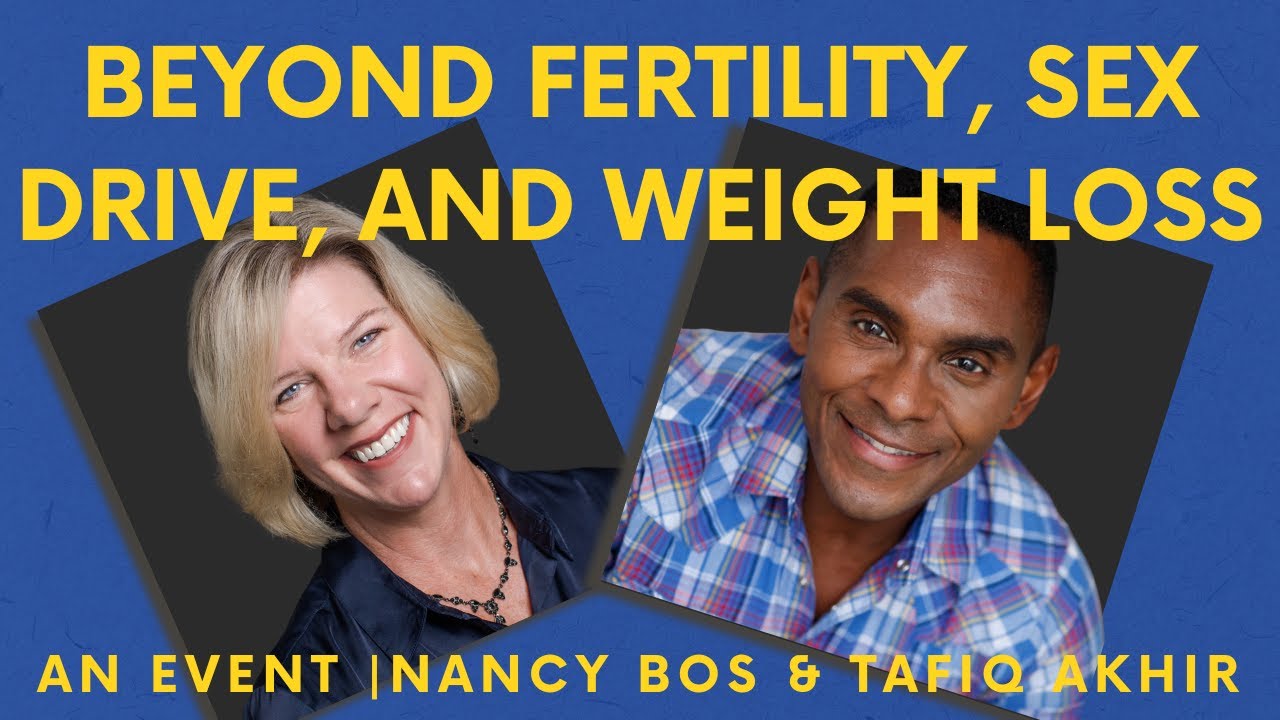
In this extended conversational interview, Nancy Bos and Tawfiq Akir, both specialists in midlife hormonal health, discuss the often‑overlooked transitions of menopause (women) and its male counterpart, andropause. They begin by emphasizing the need for inclusive dialogue that covers the entire population, noting that 100 % of people experience hormonal shifts in midlife. The conversation defines andropause, outlining four stages (pre‑, early, middle, late) with typical age ranges, symptom patterns, and testosterone replacement therapy (TRT) protocols, including personal lab values (e.g., 171 ng/dL). Menopause is similarly broken down into perimenopause, menopause, and post‑menopause, with emphasis on fluctuating estrogen/progesterone, symptom variability, and hormone replacement therapy (HRT). A major focus is the substantial symptom overlap—hot flashes, mood changes, sleep disturbances, fatigue, weight gain, joint pain, cognitive changes, etc.—highlighting that many men and women share the same experiences. The hosts explore under‑recognized symptoms (voice changes, flooding, hormonal rage, fainting, tinnitus, skin issues) and discuss how hormonal receptors in every cell create a wide symptom spectrum. Racial disparities are examined, noting higher rates of medically‑induced menopause among African‑American women due to hysterectomies and earlier onset of symptoms. Trans and non‑binary experiences are addressed, especially voice changes from hormone manipulation. Professional insights from voice coaching illustrate how declining testosterone affects singers and performers. The dialogue critiques medical education gaps, licensing barriers for non‑physician menopause specialists, and the stigma that frames menopause as a negative, aging issue rather than a “second spring.” Lifestyle factors—diet, exercise, ego‑driven choices—are presented as essential complements to hormone therapy, with cautionary anecdotes about therapy side‑effects (e.g., thickened blood). Resources such as Rock My Menopause, Dr. Louise Newson’s work, and the Balance platform are recommended. Throughout, personal stories (e.g., Nancy’s abrupt voice loss, Tawfiq’s stroke, a teacher’s hidden symptoms) illustrate the real‑world impact of ignorance and the importance of education, empathy, and open conversation for individuals, couples, families, and broader society.
Chapters
My name is Nancy Bos, and I am here with Tawfiq Akir, and we are both people whose lives have ended up specializing in menopause and andropause in Tawfiq's case. And what we realize is that people aren't talking about it. The conversations have to happen because if we aren't talking about it, then we're just going into it blind. And between menopause and andropause, we're talking about 100% of the population. And there's so much knowledge that we have. We know so much in science and medicine, and it isn't getting out to the public. So that's what we're here for today, is to inform and learn from you as well.
Yes, absolutely. Yes. And one of the big things that I think is important in bringing this andropause conversation is, is because, um, as a man who works in menopause as well, a lot of the things I hear is that, you know, men wouldn't understand, men wouldn't, wouldn't know what it's like to go through menopause. But knowing that men do experience menopause, I think it's important for women to learn that as well so that they know that there are very similar symptoms that occur and that there is actually more common than there is not common when it comes to that hormonal shift that happens midlife. And I think that the more that we include everyone in the conversation, the faster we'll get to solutions rather than constantly just repeating the same things, which we hear a lot on all these different talk shows and and they're just repeating a lot of the same things and the ball isn't really moving. And I think that once we just open this conversation more and make it more inclusive, that we can get that ball moving in a direction that actually makes menopause a mainstream issue. Because I always say that menopause is more than a women's health issue. It's a woman's life issue because it impacts her mentally, physically, and emotionally. Therefore, it impacts her work, her relationships, her family. So of course, that means it impacts the world. So it needs to be discussed more openly. So I'm happy to be part of this conversation today.
Yeah, absolutely. And I will say, I've gotten to speak because of the book Singing Through Change: Women's Voices in Midlife, Menopause, and Beyond. I've gotten to speak in front of international audiences— Vienna, South Africa, Canada, South America, United States— and at almost every talk where I'm speaking, there is a man who raises his hand for the Q&A part that says, and what about andropause? And the reaction of a lot of women in the room is, oh, your andropause could be nothing compared to what we go through. You know, there's— because it's been ignored. And we know that there's a history of women in the medical science research area not having the same parity, you know, with men as far as research goes. So their, their frustration and irritation and anger is somewhat warranted, but also we need to have the full conversation like you're saying. So thank you for that. Where would you like to start, Tafiq?
Um, you know what, since we're talking about, uh, about andropause a little bit, let you— we can start with andropause. I think, um, I think this will give a better context of what we were saying earlier about the fact that there's more in common than, uh, not in common. Um, I, I know firsthand, uh, what andropause is because I myself am in andropause. A lot of people don't realize that over 40% of men over 45 experience andropause. A lot of the symptoms are very similar. Like for myself, I had always been told, "Oh, you'll never know what a hot flash feels like," and all this. And for me, I somewhat know what a hot flash feels like because when I have a hot flash, 'cause I've been in andropause for 4 years now, when I have a hot flash, what also happens is I also acquired something that causes me to break out into hives when my body temperature elevates. So every time I get hot, whether it's through a hot flash workout or something like that, my body breaks out into hives. So for me, the hives were— are much more prevalent and much more of an irritant than the hot flashes. So I never really focused on the hot flash. I just knew when my body temperature went up, I was going to start itching, and it was going to take me a while to recover from that. I do have clients that have said they've had similar things, but theirs was more like crawling skin or itchy skin, whereas mine I was full of welts everywhere, red splotches, and just itching profusely. And for me, it could last 20 minutes, far beyond when the hot flashes were done. So now I have to take medication for my menopause, my male menopause, which is actually for men, it's called TRT. For women, it's HRT. For men, it's TRT, meaning testosterone replacement therapy. And so it impacts, again, like I was saying, it impacts us in a very similar way, but just like menopause is different for every woman, andropause is going to be different for every man. It's going to have a different, you know, type of response in a man's body than a woman's body, because you also have to think about the fact that men, we're only dealing with one hormone that's changing, right? Women are dealing with multiple hormones that are changing. So of course that impact is going to be different. Some women actually have decreased testosterone during this time, while others actually have an increase in testosterone during menopause as well. So again, And this is why there's such a varying in symptoms for both women and men as they go through this transition as well.
Wow. Fantastic. So just continuing to compare andropause and menopause, we should probably start with definitions. Aside from the, the testosterone for men is decreasing and for women, progesterone and estrogen, estrogen, excuse me, are decreasing over time. What is the time, you know, the age range? I mean, I know these, but go for it. Tell me the age range for the men and for the women. Is it similar?
It's similar in the, in the, in the context that it happens about in our 40s, right? So for men, when men start getting andropause, this typically, typically starts over 45. But as just like when women have the menopause, there's 3 stages of menopause. For men and andropause, there's actually 4 stages. And I actually have a slide that I'm going to share just so that you can get a little idea of what we're looking at.
While you pull up that slide, for women, it's perimenopause, the moment of menopause, and then postmenopause.
Right. So there's 3. Can everyone see the slide OK?
Yes, we can.
OK, great. So the 4 stages for men, there's pre-andropause, which actually happens between 30s and 40s. And this is when testosterone— starts to decline gradually. There's not really a lot of noticeable symptoms. Again, very similar to how when women start the perimenopause at the very beginning, there's, uh, the symptoms that do occur would be like subtle mood changes, maybe a little bit of lower energy and some libido changes. And then the second stage would be early andropause, which is 40s to 50s, and this is when testosterone declines more prevalently. And of course, that means that symptoms are going to become more apparent. These are things like fatigue, fatigue, poor mood, body fat, muscle decreation, and libido is lower. Very similar to what happens with women during, you know, their perimenopause phase as well. Then for men, there's middle andropause, which happens between 50s and 60s. Again, testosterone decreases further, symptoms again more pronounced, and this is when erectile dysfunction begins, bone density loss, memory loss, sleep disturbances. And of course, the final stage, which is late andropause, which I guess would be similar to post-menopause is with 60s and beyond. And again, for men, testosterone levels get low, but for men during this later stage, that lower point actually stabilizes. So it never really goes to a point where it's completely gone, but it gets to a low, low level that is stabilized. But symptoms may still persist: fatigue, depression, irritability, and of course, low libido as well. And for me, like I was saying, my— when I started my transition into menopause, I was in my late 40s, but my symptoms were that of what a middle andropause person would be from 50s to 60s. Because my, um, if you know anything about, you know, the numbers for men, we actually do get tested to find out if our testosterone is low. That's how we find out if we have andropause. I know for some women they don't go through that, they just talk about the symptoms and they say, oh, you're in menopause. Um, for, for men, they do have to get the test because we have to see where the numbers of testosterone are. And so for men, there's this scale called nanograms. And so you shouldn't be below 300 nanograms. I was at 171. So I was at the lowest you could ever get. And for my age, that was just really out of character. I had a bunch of health issues happening at the same time, which we didn't realize were andropause related because again, no one's talking about andropause. And so we didn't really understand that. But me working in menopause, I was able to find the information, get the research, and then talk to people and of course refer to my doctor. And he then decided to really listen and understand once he realized that I am educated and have a background. And so then we looked into the testosterone therapy for myself. And very similar to women with HRT is there's a progression. Like, you have to find what works for you. I started with the gels, I've done the patches, and now I'm on a regimen where I actually have to give myself a shot every 2 weeks. But again, the levels are always changing. I've been on my TRT for 4 years now, and just recently I've had I had to change my dose again because they're telling me that my red blood is actually getting too thick. And so that can cause problems like stroke, heart disease, and issues like that. So now I've had to decrease. So, um, which I think is really important too for women to know when it comes to HRT. Um, one of the big things that, that, um, I don't know if any of you saw the Oprah Winfrey talk when they did the menopause talk. And one thing that meant that, that Oprah kept saying is, ladies, when you get that first click, you're gonna feel great. Well, that's not true for everyone. For some women, it takes years before they find that right combination. So again, I think it's so important to have more of these conversations and give the right information out there. Because while it's great to have celebrities talking about this and making it more mainstream, we have to realize they're not experts. They haven't gone through the training. They can only speak from their personal experience. So we need to have more people like myself and Nancy coming forward and more in the forefront, giving the information so that people like yourselves and even your husbands, if they're going through andropause can get the support and the solutions that they need to feel better.
Thank you. Professionally speaking, as a voice coach with singers on Broadway, I have had singers on Broadway who are coming to me in their 50s and 60s, men, saying that their voices aren't as strong as they used to be, that their pitch is getting higher. And that's the impact of these decreased testosterone hormones on these men's physical performances on the stage on Broadway. I've also had transgender students, drag queens, and in this particular case I'm thinking of, um, who are finding that supplementing or messing with their hormone levels in order to present in a certain way is impacting their voice. And of course, transgender men who are taking testosterone are also dealing with these voice changes because because of hormone changes that they are controlling due to their dosage. So, um, that's fascinating to me to know that for men there is a specific measure. There are so many body sizes, there are so many chemical hormone makeup things. I mean, I guess like cholesterol, they can say this is, this is a line you should not cross.
Yeah.
Hmm. Yeah.
And it's interesting to me that, that, well, you know, that they haven't been able to figure that out for, for women. I mean, I know that there are tests that, that can be done, but again, most doctors As we know, most doctors in the US are not really highly educated in menopause. It's an elective that they have to do after they're done with school that most don't want to do. That time they spend all their time and money, so they don't want to go. And actually, there was a study that said that 84% of doctors that do get some education still aren't comfortable sharing with their clients because it wasn't extensive enough. So, um, so yeah, so it's again about getting the education and knowledge out there. And you had mentioned about the trans and non-gender, and that's a— that's an area that I have been working with as well, because I have the trans men. And for those that don't know, that's when the women transition into becoming men. They go into something that's very similar to what African American women go through, which is medically induced menopause. And let me just say, that's not just African American women, that's a lot of different women. But there is a medically induced menopause, which can be caused by removing the ovaries or even chemotherapy or radiation therapy that can actually impact the ovaries. And there's also medications that can actually cause medically induced menopause as well. That can actually happen as early as 30. I think I just recently saw there was a girl that was 17 that went through a surgery and went into medically induced menopause at that. Yeah. So it can happen at, you know, even though it naturally happens over 50, it can happen at any age.
You know, before we take the deep dive into the stages of menopause, you brought up women of color for a really good reason. Can you go into that a little bit more? I know you've been working on this.
So, yeah, I mean, I actually have a show called the Mr. Menopause Show, and every week I do some information or I interview someone, and I interviewed someone recently and we were talking about just the racial disparities. And, you know, menopause is already an issue that does not get enough medical attention that it needs. And one of the most significant factors is the racial disparities as it relates to menopause health because of unequal access to healthcare, differences in the quality of care that's given. Also, as I stated earlier, women of color are more likely to be put into medically induced menopause, mostly because of fibroids that lead to hysterectomies. And African American women are the highest number that gets hysterectomies. And full hysterectomies are typically when the ovaries are removed, and that's when the menopause happens. It's believed that if you don't do the full, that it's just a partial, that it won't happen. But again, it happens sometimes. I spoke with a woman recently that was told by her doctor that it would not happen to her. And immediately after the surgery, it happened. She was not on a plan for the HRT, so she had to wait longer to go through the process. So again, every woman's experience is gonna be different. So I'd like to say that sometimes we hear these stories and we have to think of them in context of how our lifestyles are, how your lifestyle is, what you're doing, because your health also has an impact. Impact as well. And that is another reason why there's racial issues, because health factors in, you know, women of color are different. There's actually a study by the Study of Women's Health Across the Nation. If you want to look that up, it's called SWAN. And they found that Black, Asian, and Latina women on average tend to enter menopause and perimenopause also at earlier ages than their white counterparts. And for— it could be anywhere from 8 months to 2 years sooner. And they also have longer transition periods. Periods as well as experience more intense symptoms. Black and Latina women also report experiencing hot flashes and night sweats more often than even Latino women. Latino women have lesser hot flashes and night sweats than women, than African American and even— I'm sorry, I said Black and Latina, I meant Black and Asian for the first. And then Latina women have less than Black and Asian, but Latina women also have a higher rate of vaginal issues and urinary tract issues that are a result of the menopause changes that happen. So really understanding that, that, that context of that, again, everyone's going to experience this in a different way. And having resources and things available is really important. And again, having discussions like this, some people can be more understanding, more empathetic, more supportive, and be able to just access things that people need. I don't think that people realize how important that extra support is. I know my own personal clients, they've actually felt better just by being able to openly discuss it more. You know what I mean? That helps to take away some of the anxiety and the depression, which are actually symptoms of menopause, but it helps to minimize some of the effects of those when that happens.
You bet. When it's bottled up inside, it's trouble. So you shared a little bit of your story, so I'd like to share a little bit of mine., and then maybe we can do some, some of the foundational information of menopause for those people who are just tuning in to find out what, what is this anyhow. So my story is I'm currently 55, and I went in, I hit that, that moment of menopause at age 52. When I was in my 40s, uh, my ego-driven self felt that it was very important that people would perceive me as being younger than my actual age. So when I was 45, I really thought, and I believe— a lot of people thought I was 35. I was not interested in becoming middle-aged and everything that comes after that. So I also then was not looking at myself for menopausal symptoms. On top of that, my mom had a full hysterectomy, so there was no information to gather from her. She had nothing, no knowledge she could share. My older sister hit menopause at 56, and so at age 45, when I was actually having a tremendous amount of perimenopausal symptoms that I didn't realize was anything. I thought there was just something seriously wrong with me, but I am too busy to find out what it is. And I thought, it is 10 years until I'm that old lady who hits menopause, and that's when things go wrong, right? Is when you hit that menopause moment. So little did I realize in my mid-40s that this is what was going on. And there is a thing in the world of singing that there's shared knowledge just through talking about it that women's voices might go away or change too much in the menopausal transition so that they'll never sing again. And certainly they're not gonna be sexy anymore. And so you're not gonna see a rock star who's 55 years old. Now, this is not true anymore, right? So not true anymore. But it was true that by a certain age, women need to quit the men can keep going, but the women need to quit singing, whether that's opera or rock or anything else. So knowing that was coming, I got together with my two co-authors, both women are, are about a decade older than me, so that I could make sure that I didn't lose my singing voice when I hit menopause. Thankfully, I was writing the book when I did hit what is called a, a menopausal cliff, which is when my personal hormones must have dropped rapidly and aggressively. And I can show you a graphic later of what that looks like. There are many different ways to go through menopause, but there's 4 basic trends. And I went through the one that would be the most abrupt with a 6-year lead-up of perimenopausal symptoms. And because of that transition being abrupt, my voice was abruptly impacted. And all of a sudden I could not sing at a professional level anymore. I got through the concerts that I was booked with for the next couple of months. With, um, you know, putting an engineer, a sympathetic sound engineer on the job who made sure that my voice was amplified in the right way. But as soon as that concert season was over, then I went on hormone therapy, and my voice, my voice was back to my best after about 30 days. It was very fast for me. Um, so I would not have gone on hormone therapy for the hot flashes, which included crawling skin. And I would not have gone on the hormone therapy for sleep problems because again, I was in the blaming myself mode where there must be something wrong with me and I don't have time to deal with this. But when it came to me making my living as a singer and as a singing teacher, I needed to find out what was going on. So that's why I ended up going to a doctor and solving it. Solving it. But in the meantime, now new research is showing the incredible benefits for aging if you're on hormone therapy. So now I'm a big advocate for it, and I try to make sure that women who are experiencing menopause, perimenopausal symptoms, realize that this is something that they really want to learn about. So that's my story.
Yep, yep, absolutely. And you know what's important too is I think that some people think that once they go into, uh, HRT, that's the end-all. You still have to combine that with healthy lifestyle choices because— and this goes into, like you were talking about perimenopause and menopause, because there are stages of menopause and the latter stage, which is after menopause, which you're going to go into more detail, is when most of those health issues actually come into play. So you want to make sure that during perimenopause and menopause that you're actually making sure that you're living a healthy lifestyle so that when you transition past that, that you're not acquiring those illnesses like heart disease and osteoporosis that are so known to happen after menopause.
Right. Do you want to go into defining those stages of menopause like you did for andropause? Sure.
So there's, there's perimenopause, menopause, and postmenopause. I know that in our talk, that in our, in our title, we say perimenopause, menopause, and andropause. Menopause, but there are 3 stages. Perimenopause, of course, is the first stage, and that's when progesterone and estrogen start to decrease. And typically, like Nancy was saying, this is when a lot of these symptoms begin. We actually had almost a little bit of a debate yesterday when we were talking about how to explain this. Typically, when I talk about menopause, I talk about all 3 stages as one thing. And one of the reasons, and I couldn't explain it yesterday, but the way that I thought about it is one of the reasons I think of it this way is because when people talk about symptoms, they don't say perimenopause symptoms, they just say menopause symptoms. And so menopause symptoms happen during perimenopause. So it's important not to get that confused. So if you hear someone say, I'm in perimenopause, and then you hear someone else say, I have menopause symptoms, symptoms, it could be crossing. So I think that's why I think there should be— that I combine them all. And so perimenopause, again, is that first stage. And then we move into menopause, which is when you've gone for 12 months without your period, right? And that's when menopause is like— I think Nancy said yesterday, it's a day, right?
It's a day. It's one day in your life, right?
And then from there, you move into postmenopause. And as I just stated before, So we didn't really include postmenopause on the sheet, but postmenopause also comes with a number of symptoms. You could still have hot flashes, still vaginal dryness, sleep disturbances, mood swings, osteoporosis, cardiovascular, weight gain, genital urinary tract issues, joint pain, skin problems. So all that stuff can still happen in postmenopause, which is why I was just saying it's really important to make sure that you're on your your healthy lifestyle P's and Q's, per se, when you're going through the perimenopause-menopause phase, because it is possible to age healthily. You know what I mean? And even going through the process of menopause, a big part of what I've done for the past 18 years through my hormone coaching is all about starting with healthy aging first and then focusing on the other things. Because without that foundation of living a healthy lifestyle, you can take all the pills, you can take all the hormone therapy you want, want to, but if your body is breaking down, none of that stuff is gonna take hold.
Yeah, this would be, uh, I, I'm gonna give an example of a woman that we interviewed for the book. She was an elementary school teacher and, um, in her forties, she was only getting about 3.5 to 4 hours of sleep at night. She did not realize that was a perimenopausal or menopausal symptom, the sleep disturbance. She was getting a divorce from her soon-to-be ex-husband who was $30,000 in debt. She had 2 kids of her own that she was raising, and then she got diagnosed with an autoimmune disorder. And all of this chaos around her, you know, working as a teacher is, is a demanding physical job, and it didn't allow her time for self-care or research. She had no idea what she was going through. And so she feels lucky now on the other side to be able to look back and say, oh, I wasn't sick and I wasn't crazy, and it's all ironed itself out. But if only she had had other people people to talk to who could have said, you know what, you can. And so when you're talking about lifestyle, that midlife age for men and for women can be the most stressful because our kids might be entering their most stressful years for us. Our parents are aging, and we are suddenly looking at that retirement account and realizing there isn't enough money in there and working harder and harder. And boy oh boy, it's just a tough time. That's why I think I didn't actually go to the doctor for my symptoms, because I didn't have time to take care of myself.
Yeah, well, you know, and then there's also the, the aspect of if we think about, um, aging in general and how, how we live our lives at every stage of life, there's a natural progression that we follow, right? Baby to toddler, toddler to teen, teen to young adult, where we make lifestyle choices, the foods we eat, the environment that we're around, we naturally change. But when we go from young adult to middle age, what does everyone to do. They want to fight the change. They want to do what they did when they were younger. They want to do everything else. They don't make that transition into doing what your body needs. It's based on ego rather than health. And when you fight things, what happens is you're breaking your body down. When your body needs you to do one thing and you're like, oh, but I want to do those box jumps that the boy is doing over there, but you're 60. What are you doing box jumps for, right? So it's one of those things. Do what's best for your body and not what's best for your ego, especially as you're going through the aging process because your body tells you what you need. You just have to listen to your body.
I gotta say, another piece of not being informed is making bad choices that maybe treat the moment, but they do harm in the long run. And for me, of course, that's sugar and alcohol, right? I'm exhausted. I think I'll have a donut for breakfast. At least I'll feel better for a half hour. But if I do that more than once a month, I'm gonna pay a price for that behavior. Drinking more. Absolutely. That is, that is a trope that middle-aged women drink themselves to sleep at night. And yeah, it's, it's just not a smart choice. And so again, just knowing that this is what you're going through, reaching women in their 30s and 40s is my biggest goal, to let them know this is a thing.
Yeah, absolutely. And you had, you had mentioned about, about symptoms and some people not realizing what their symptoms are. And I, we both know that this is highly, highly because A lot of people, when they think of menopause, they think hot flashes, mood swings, fatigue. But there are so many different symptoms of menopause. And maybe you could go over some of the little-known symptoms of menopause that people may not even realize are related to menopause.
Yeah, I'd love to. There's a website called rockmymenopause.com that made a great list, and yet this list still doesn't include voice. So let me just say, as the voice expert in the room, The cells of the cervix are exactly the same as the cells of the vocal folds. The mucous glands of the vagina are pretty much the same as the mucous glands of the throat. So if a woman is talking about dry vaginal area or urination problems, if she is a singer, she's also going to have noticed extremely dry throat and changes with how she makes sound. So that isn't on the lists yet, but I'm working on it. Planet. So I'm going to rattle these off. I don't know if you figured that out by now, but I am a professional voiceover artist, so this is going to sound like a disclaimer. The 35 symptoms that, um, that are listed here, like you said: hot flushes, night sweats, fatigue, dizziness, loss of libido, mood swings, irritability, hair loss, weight gain, palpitations, heart palpitations. You're afraid you're going to die. It turns out it's just perimenopause. But going on from There, bloating, headaches, tinnitus or tinnitus, bladder weakness, memory lapses, irregular periods, itchy skin, nausea, joint pain, anxiety, brittle fingernails, digestive problems, incontinence, low mood. I think that means depression. Um, cystitis. I don't know what cystitis is. Vaginal dryness, difficulty concentrating. Uh, let's see, where are we? Osteoporosis. Wow. Um, that's postmenopausal, right? Emotional.
It can happen earlier as well, again, depending on health Yeah, emotional changes.
I do want to talk about that in more depth. Depression, insomnia, aching muscles, tender breasts, heavy periods, skin changes, panic attacks. Before I leave the word heavy periods, I want to say there's this thing called flooding. And flooding is when a woman can lose— what, during a menstrual period, your worst hour of your menstrual period, that can go on for hours if you're having a flooding incident. So you may think that, oh, I've got some spotting this morning, and then an hour later, you have to go home and change clothes and just practically sit on the toilet for the rest of the day. That's flooding. Some women have 1 or 2 or 3 flooding incidences during perimenopause. Some women, it's a frequent occurrence and they have to start wearing diapers or something else that'll take care of the flooding. Um, IUDs, Mirena, progesterone— they may try to fix with that, and it might actually exacerbate the problem. So just wanted to mention that one little-known symptom that is completely devastating. For me, my one and only flooding was on an airplane, and ruined that airplane seat, and I will never ever feel okay about that. So, but going back one more before I hand it back to you for those top 10, the mood things. There's hormonal rage is what I've heard it called. And I have women that we interviewed for the book, 4 women in the book talked about how they observed themselves losing emotional control and being filled with rage. In one case, it was toward her teenage daughter, and in one case, it was toward her boss. She knew better, her conscious brain knew better, and yet there was rage. And the one that it was for her boss, she almost lost her job. And the one for the teenage daughter, they literally had to go to therapy after that in order to heal that damage. So again, I want people to know this isn't necessarily a neurological disorder that you need to treat with mental health drugs. It might be a hormone issue.
Yeah, absolutely. I actually had a lady on my, on my show, Nancy Rabinowitz, who had spoke about one of those moments. She said it, and it, where something happened in, in the kitchen, she just flew off the handle. And I think she said she took a knife and stabbed like a, a stool or something in front of her entire family. She's like, it scared them, it scared me. And like she knew then she had to, you know, seek out some assistance for menopause because she didn't know how to. And she was actually able to go on the HRT, and that actually helped her without having to go, like you said, on psych meds. So she was able to get through that. Yeah.
Yeah. Fantastic. Did you want to go into a little more depth on those top 10 symptoms? Yeah.
And also too, right before, um, I think you said the list there was 35.
Yeah.
Yeah. And I wish I had known. I've known, I would have pulled up the thing. So I've seen a thing where there's been other up to 60 symptoms.
Awesome.
My own practice, I've seen up to 45.
Well, you know, saying that there is estrogen receptors in every cell of the body, there's probably hundreds of symptoms.
Oh yeah.
Absolutely.
Right?
Because every cell of your body is impacted. And going back real quick to the perimenopause stage, it's not just a decrease. During perimenopause, it's extreme fluctuations, perhaps on a day-to-day basis. A weightlifter might feel strong one day and weak the next. When they're in their years of fertility, when they they have a— if, if they have a consistent pattern, they're going to know that 3 or 4 days before they get their period, they better not compete on those days because they're going to have swelling and lethargy. The smooth muscles are starting to relax, and so they're not going to be as strong on those days right before your period. When you're in perimenopause, that might be tomorrow, and then the day after that you might be fine. And for a singer, that means you may be able to fill the hall with your sound one day and not the next. And So that perimenopausal extreme fluctuations with estrogen and progesterone is, I think, why it really catches us by surprise. For me and for most of the women we talked to, that was the worst part, and then things got better post-menopause. Some women post-menopause, it doesn't, it doesn't chill out, but most it does.
Yeah. And you know, another, um, uh, little-known symptom is fainting. Fainting. Some women faint.
I did not know that.
I've had 3 women say that they fainted at work, and, and when they looked into it, they found out that it was one of those rare symptoms that some women have. And again, like you said, it makes sense because, you know, estrogen is part of all the, you know, neurotransmitters that even, even things in our brain, so that affect, uh, cognitive function. And that's why there's the mood swings, the depression, and all that stuff because it's how the estrogen is no longer there to assist in those areas. I had a lady that actually came to me. She was diagnosed with hyperthyroidism, but she was also starting that phase of going through menopause. And like you're saying, all this stuff happening. She was an empty nester. Her kids were— so she was thinking it was that she didn't want to get out of bed. She didn't realize that she was having the menopause. She thought it was just because she was sad that her her girls were gone. And so she was having all these things, and one of her worst symptoms was the hot flashes. She was having them every 30 minutes, every 30 minutes of the day, like all through the day. And so what I saw throughout her symptoms— because I look at symptoms, I don't really look at the numbers that the doctors give you— so I looked at her symptoms, and her symptoms showed me that she didn't have hyperthyroidism, that it was hypothyroidism. Hypothyroidism, right? And one of the things that we know is that one of the big symptoms of hypothyroidism is actually hot flashes. So I go back to her doctor, I said, have them check your thyroid numbers. Checked her thyroid numbers. And another thing people don't realize is that hyperthyroid— is medication— it actually flipped your thyroid to hypothyroid. And that's exactly what happened. So she was having hot flashes as a result of the medication issue at the same time she having menopause. So once they fixed her medication, her hot flashes went away. So it was triggered by the menopause, but it wasn't caused by the menopause, if that makes sense. The cause was the thyroid issue, but it was triggered because she went into menopause at the same time. So that's what we mean when we say things are so connected and why every woman is going to experience it differently, because other women who have hot flashes have nothing to do with their thyroid, right? So it's going to— right. Different.
So, Tawfiq, let me share that screen real quick with the, um, 4 different stages or 4 different ways that are generally charted for going through menopause. And this is from the American Heart Association. Are you guys seeing that graph on there right now?
Yes.
Great. And so we can see the blue line is the most aggressive hormonal cliff, um, where you have an early rise in estradiol and estrogen in the body, and then you have a sudden drop. I probably experienced the purple one myself if I were to use my voice as a measure of my hormone levels, because I did have a rise and my voice actually got better, and then it dropped off pretty abruptly over 6 months. And then, uh, the, the bottom line, the red line, is the woman who's going to perhaps go through things so gradually that she might say, which half the women do, that they didn't experience any menopausal symptoms at at all. And so that's just a nice, gradual enough change in the body that the chaos of perimenopause and menopausal symptoms isn't a problem. All right.
Yeah. And, you know, I'm glad that you shared that last little piece because I do think that it's also important for, for women who have not reached menopause to know that, you know, you may not have all these, you know, things happen like we're same. There are these different stages. So, uh, and also menopause doesn't have to be, um, like I always say, menopause doesn't have to be an end. I think that here in the States, because we don't talk about it, it has such been an issue and even taboo and stigma that we see it as a negative thing. Like, men are like, oh, I don't want to hear about what's going on down there with the women. It's like, well, it has nothing to do with that. And women are like, you know, they feel ashamed, they don't want to talk about it around other people. And I saw this thing where in some Asian countries, they actually look at menopause as a woman's second spring. And I'm like, how would that be if we could get that sensibility that menopause is a woman's— because it's an opportunity for her to transition into another stage of life without this feeling of that something is wrong or that my life is over or that I'm less than a woman or anything like like that. But I always think about that second spring thing. I'm like, that's part of my— like, my mission is to make menopause a second spring for women in the US. That's my goal.
Fantastic. I've— that's certainly what I've experienced. And I'm going to rant for just a minute. Puberty for girls and that moment of menopause are defined by fertility. Can the woman reproduce yet? And is the woman done reproducing now? And that is, from a female perspective, so frustrating because, frankly, Actually, that mattered twice in my life. I've got two kids. And for the rest, it's a spectrum. It's all from the, from the moment you're born until the moment you die, you're on a hormonal spectrum. It isn't moments that should be nailed down like that. With boys, puberty is more recognized in general with a voice change, but it's, it's thought of as for boys as a spectrum. For girls, it's the moment they get their menstrual period. Oh, she's gone from prepubescent to pubescent right there. And that is a problem with the previously male-dominated medical system, which didn't know how to address this one with women and other than fertility. And so of course the same thing happens with the other end of the spectrum when we're no longer menstruating. Who cares? Frankly, my periods were the least of my concerns as far as symptoms of the hormones go. So there, I'll get off my soapbox, but it's like, oh, it's a spectrum.
Yeah, exactly. And, you know, and I think we've been pretty much saying that throughout, you know what I mean? That, that it's important to understand that, again, everyone's going to experience it differently. Uh, I'm not sure if we had mentioned the fact that some women will experience perimenopause for less than 3 years. Some women may experience it for as long as 15 years. I know that you had said 10, but I've had people on my show that 15 years. So again, there's different, you know, spectrums. And if you think about that, think about the fact that you are struggling with something for 15 years, what that does to your emotions, your, you know, your confidence, your self-confidence. Yeah, all of that. And so again, which is why I always go back to, which is why we need to have more of the conversation. And I know people get tired of me saying this, but this is why I also say it's so important for men to be in this conversation, not only because, like you're saying, because men like run the medical things and like that. But again, it also impacts all of us, right? You have a woman in your life that's between 40 and 60, she is going to experience menopause on some level, right? So, or even younger, or, you know, give or take 5 years, right? So every woman will experience it to some degree. And so if we, if we understand what that is. I think AARP came up with a thing that 65% of divorces that happen in the middle age are by women going in their menopausal years. I don't think that's coincidental, right? And we think about because of the changes and think about— I don't know if you had issues with your husband when you were talking, but a lot of the people that I've interviewed, they're like, you know, I thought my wife didn't love me anymore. I, you know, she didn't want me to touch her. And that's because he didn't bother to learn, right? You know what I mean? If he had understood and learned what menopause was, what she was experiencing, he would've understood and been more empathetic. And then countering that with the fact that he would've had a better understanding because he could say, "Oh, I'm going through a situation right now where my libido is low. I'm having erectile dysfunction. I'm having these issues that are happening during this stage of life as well. So hey, maybe we might have more in common that we should be talking about and supporting each other through rather than both of us not talking to each other. And you know we're not talking to our friends, just like women aren't talking to each other. Do you think men are sitting at baseball games in between innings saying, "Hey, my testosterone levels are low"? No, they're not. So nobody's talking, nobody's sharing, so nobody's getting the support and help that they need. So again, which is why I say everyone needs to be part of the conversation. And I think I talked to you yesterday, even I think like teenage kids, like one of my clients told me that her daughter made fun of one of the times she was having a menopausal moment. And again, when you're going through menopause, you have these emotions and things going on. She was really hurt by that. And again, if her daughter had information or understood like, this is no different than when you went through puberty and you were upset with what were happening to you. This is a the different stages happening to your mom. You wouldn't have wanted anyone making fun of you during that stage. So think about what this is doing to your mom during that stage. It's kind of like a— like you said, like a full circle thing, because, you know, you think of menopause and, you know, that transition when girls become women per se, uh, through the menstruation.
You know, you just opened my eyes to a new thought, and that is you gave the perspective of, of the man in a, in a male-female marriage thinking that she doesn't love me anymore. He doesn't seem to be interested in having sex with me anymore. Where's the man that I'm married? I don't think he'd even fight for me anymore. Those three things are all indicators of lowered testosterone, just as much as they might be a psychological issue.
So yeah, I think that that's very important for us all to just be aware —And the guy that actually had told me that story, I don't know if I told you this yesterday, but him and his wife were going through hot flashes at the same time. Right? Isn't that crazy?
There's one more thing, though, that I was thinking about before we go to Q&A, and that is the dates of perimenopause, menopause, andropause. Women can go through early menopause naturally, and very early menopause is in their late 30s. Ages. We interviewed one woman who went through very early menopause at age 37, and we interviewed another woman who went through very late menopause at age 62. She had her periods all the way till she was 62. And so I think it's super important with menopause to decouple it from aging. It's not an aging issue like I thought it was 10 years ago. It's like, when I am in menopause, I will be old. They, they don't belong together. You be getting cancer treatment, or like you said, have a full hysterectomy and be 23 years old and be in menopause. You can go through natural menopause in your late 30s. And you've just indicated that can happen with andropause as well, that you can go through early andropause.
Oh, absolutely, P, because I definitely— first of all, it wasn't even anywhere on my radar. And again, I've been working in menopause health for women for 18 years, but the thought of it something with men I hadn't even thought about. Like, I had heard andropause, but, you know, again, it's so not talked about that it was the last thing I thought would be happening to me, you know. And I'm super healthy, athletic, all that stuff. And for me, I was having health issues that were unexplained. I was pre-diabetic. I'm like, how am I pre-diabetic? I'm a nutrition coach. Like, that doesn't happen. I had a minor stroke. Everyone's like, how do you, the healthiest person I know, have a stroke? But it was because all my hormones in my body were changing and that connection between testosterone and everything was fluctuating. I was getting belly fat and man boobs, which are also another indication of a man— like some of you guys with your husband with the dad bods, they might be going through menopause, right? So all that stuff. And I always say when, when this has been a long-standing thing with men, like men go through a midlife crisis, I totally believe that midlife crisis is andropause. Because if you think about it, testosterone levels are dropping. And why do men go through midlife crisis? Because they feel like they're losing their manhood, right? They're doing things to make them feel like more men. They want a faster car, they want to work out more, they want a prettier young girl— all these things to make them feel better. But they probably just don't know that it's that their testosterone levels have dropped and that they need to make these switches in their lifestyle and get the assistance that they need. That's what I think about that.
I love that. And I went through a midlife crisis and I drove a hot little convertible for about 6 years, and it made me feel better when I was in the convertible.
Yeah, you know, and let me just quickly— I wanted to quickly share the, um, again, because I like to always talk about the commonalities, I want to share, uh, the top 10 symptoms of menopause along with the top 10 symptoms of andropause, just to give us a little, um, fantastic view at how similar they are, right? So can everyone see that Yes, we can. So as you see, the top 10 most common symptoms that— and I'm going— this list is based on my clients. I know that there's different realms of different top 10s, but from what I've heard, these are the top 10 that most of my clients have gone through. Would be the hot flashes, mood changes, sleep disturbances, fatigue, weight gain, joint pain, cognitive changes, night sweats, irregular periods, and vaginal dryness. Now, of those top 10, andropause has 7 of the same symptoms. So when you think about, again, the fact that I always say there's so much things that we have in common. So rather than thinking that we wouldn't understand, and that's from both the men and the women, we need to say we could understand if we just paid attention, listened, and focused on what was happening in both the person, the women that we love, love's bodies as well as our own bodies, we will be able to see that commonality. But because there's this thing of, oh, I don't want to talk about it. Oh, that's, you know, that's my wife's territory. That's about her. Or like you were saying, there's this connection to the menstruation part of it that I think that people get so focused on that. And that's one little part of menopause, right? Because they're, like we said, there's up to 60 symptoms that overpower that one little element. And it's the part that most people don't even talk about anyways, right? You know what I mean? So we need to, so the thing is we need to talk about the symptom relief, the, you know, what symptoms are, the type of support that can be provided, the resources that they're out there. Because there are places that you can go, like you found that place, Rock My Menopause. I've actually followed them for a few years. They're one of the people I looked at when I was searching for licensing. And I work with a group because I think Rock My Menopause is in the UK, correct? I believe it is.
The UK is doing so— they're, they're leading the world in this. They're so far ahead of us.
That's actually where I got my license from, was there, because I couldn't get licensed here. That's another thing, because as a menopause specialist in the U.S., you can't get licensed unless you're a doctor. So they don't allow you to go through the exam process here unless you're a doctor. And we see that doctors don't even want to bother with it. So I believe I think they should open that up to more health and wellness professionals who actually, you know, want to learn that. Because it's all about education and taking an exam. It shouldn't be, you know, relegated to just doctors. Of course, unless of course it's about, you know, giving medication or HRT. But for most of us as hormone and menopause specialists, that's not what our goal is. Our goal is to help women find solutions. Or even just to educate them on the variety of solutions that there are out there for them. It's not just about, you know, telling you do this or do that. It's these are the options. This is what can help you with this. This is good for this. This is good for that. And you can choose what's going to be best for you. And again, it's all going to be trial and error. Don't give up if the first thing doesn't work, just move on to the next thing.
I just put in the chat, rockmymenopause.com, and I put in there My favorite resource, um, is Dr. Louise Newson, also from the UK. Her books are excellent, they're easy to read. She's got a ton of interviews out there, and her facts are so cutting edge. She's one of the first people that I heard tell that in the 2001-2002, um, nurses' study, which pretty much ground hormone therapy to a halt in the world, they they told us that if we took hormone therapy, we would get breast cancer. And she's one of the first people who has totally getting the word out there that taking hormone therapy at the right ages decreases your chance of breast cancer. It's exactly the opposite advice. So I highly recommend looking up her stuff if you want more information.
And actually, I just put in the chat a link to actually her— she has another site called Balance where you can actually go in and there's actually free trainings where any woman here can go in and they can be trained on different— learn different areas about menopause. There's— it's all free access. There's videos, there's audios, there's podcasts, there's articles. There's anything you want to learn about menopause is on that site. And it's also headed by Dr. Louise Newsom. She's the one who created that website as well.
Thank you so much for joining us here. We really appreciate that we could do this conversation with other people in the room. Room, and that this is helping to spread the word. I know you'll tell other people, and together, one by one, we're going to make a difference.
Yes, absolutely, absolutely. And, and like I said earlier, menopause is so much more than just a women's health issue. It impacts your life mentally, physically, and emotionally. So it's going to impact every aspect of your life. So, um, really, really happy to be part of this conversation today. Today and being able to share my point of view from a male perspective who's also experiencing a male form of menopause, but also to share my expertise in menopause itself. Yes. All right.
Thank you, everyone.










