Breaking Barriers: Empowering Women in Startups and VC w/ Naseem Sayani of Emmeline Ventures
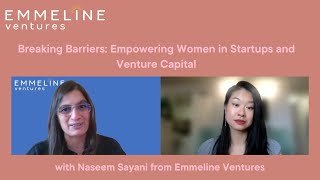
In this episode of Unlocking Venture Capital, host [SPEAKER A] interviews Naseem Sayani, founder and GP of Emmeline Ventures. Emmeline is a women‑ and people‑of‑color‑led fund that invests in technology‑driven companies across women’s health, financial services, and sustainability, with a strict requirement that portfolio companies have female CEOs. The conversation traces Emmeline’s evolution from a micro‑angel fund to a full‑scale venture capital firm, highlighting early catalyst moments such as a Zoom factory tour of a women‑run textile business in India and the realization that a larger fund could wield systemic influence. The hosts discuss the importance of community‑building—cheering founders at events, creating safe spaces for women to discuss money, and fostering generational wealth through education of first‑time limited partners (LPs). Naseem explains how the fund demystifies venture jargon (capital calls, LP roles) and combats the scarcity mindset that often holds women back from investing. They also address the stark industry statistic that only about 2 % of VC capital goes to female founders, noting that many male‑dominated circles are unaware of this gap, and argue that awareness can shift behavior. Portfolio examples are shared: Luna Joy, a tele‑health mental‑health clinic tailored to women’s life stages, and a fintech startup that pairs AI with culturally competent financial planners to serve under‑served households. The interview surfaces gender‑based differences in founder behavior—perfectionism among women versus aggressive, off‑thesis submissions by men—and how Emmeline encourages women to submit broadly. Finally, Naseem outlines future goals: increasing the share of women and people of color among LPs, scaling community education, and continuing to invest in companies that empower women’s health, wealth, and sustainability.
Chapters
Welcome back to another episode of Unlocking Venture Capital. I'm here with Nassim. She is the founder of Emmeline Ventures, and I'm so excited to have you on as a guest today. How are you?
I'm good. I'm so excited to be here. Thank you so much for having us.
Awesome. So tell us a little bit about your fund and where you guys are at. And so excited to, to dive into these questions with you.
Yeah, absolutely. So we're called Emmeline Ventures. It's myself, Lakeisha, and Azeem are the 3 GPs. All women, all people of color. So that for us is game change territory already. Uh, and we've been operating for about 4 years. We invest across women's health, financial services, and sustainability. We're specifically looking for tech and innovation that's helping women live and thrive. So first order benefactor of anything we write a check to has to skew female. Very happy for everyone to win over time, of course, but we need women to win first. Uh, and so as a byproduct of that, our entire portfolio is female CEOs. Mm-hmm. Yeah.
I mean, in my, in my view, it's like a catch-up scenario, right?
Yes. Oh, absolutely. So we're, we're here to put more capital behind female founders. We're expanding that 2% in whatever way we can. Uh, and we're funding ideas and businesses and solutions that are actually after how women spend their money. And so there's a lot of power in that. So that is what we're after.
Yeah, absolutely. I mean, like when I was a founder, I wish that there were more investors like yourself who I would have loved to have in my court and would love to, to have, you know, cheering me on. I remember when Nassim and I met, we were, we were actually watching one of her founders and she was cheering her on at the Ritz-Carlton for New York Tech Week. And it was just so exciting. It's so wonderful to get to look out into the audience and see one of your investors who backed you and believes in you, they're, you know, cheering you on, being your biggest supporter. That must have been such a great experience for the two of you.
It was fun. I love events like that because we, one, just given the pandemic, we're not always in the same room all the time in person. And so when we get the opportunity to really physically show up and be in the room, and I told, I told McCall, that founder, I said, I'm going to be hooting and hollering in the back of the room. So as soon as you're going to know it's me.
Yeah.
He was like, no, that's awesome. It's why we want our investors here, is so that you create the momentum, right, for the rest of the room.
Absolutely. And you guys do such a great job of being the biggest kind of supporters for your community. And you've built such an incredible community as it is. I was very lucky to get to participate and see firsthand the love and the joy that you guys really bring to the ecosystem, which is fantastic. I want to talk a little bit about how your journey was from, you know, having and managing a microfund into what Emily Ventures is today as a full-fledged, you know, venture capital fund. So what were some of the challenges and learnings that you might have gone through that you'd like to share?
Yeah, no, it's been, it's been a fun journey overall, right? It's always hard, and there's moments where you go, forget it, I'm out, but then you come back again because there's reasons why you're doing it. And one of the big things that happened early on when the three of us met was we were already meeting founders. We had met through a group called Pipeline Angels, we knew we wanted to get into venture. And there was one founder in particular that we had dug into diligence with her and we were going to bring a check and we had rounded up other women to join this check with us. And we did a video call with her team in India. It was 8 PM in LA and we got on a Zoom call and they literally walked the phone around the entire factory where, where it was a textiles business and the entire women, the entire business was run by and, and filled by women. And so they walked the phone around the whole room and we just saw the look on their faces when they saw these investors from America who cared about what they were doing. And it was one of those moments where you go, there, this doesn't happen very often.
No, right?
You typically, it's men on the other side. Typically it's maybe people who don't even understand the layers of impact that are being created by a business that has good financials and is growing but you're helping these women sustain their lives. You're helping them bring home food and money for their kids. And we saw all of that like in a 30-minute call. And we got off the phone and I remember, I think we got on a debrief and Lakeisha, she goes, we have to do more of that. And we were like, and it was, it was that feeling. Uh, and so that is kind of what kickstarted the whole thing was we have to go from a microfund and writing, you know, semi-large angel checks. To actually putting big capital to work.
Yeah.
And now we had created some space. People knew what we were doing. There was a little bit of buzz happening. And then we were doing calls with founders in women's health as an example. And they come into a Zoom room with the 3 of us and you can visibly see their shoulders relax because, oh my God, like, I don't have to teach biology for 25 minutes.
Yeah.
The 3 of you get it, right? And it was little things like that where you go, there is so much we can bring to this ecosystem.
Absolutely.
And it goes well beyond the check, right? Like, of course we are all here to make money, but if you can actually make the ecosystem work for a whole different set of people that has felt like they've been outside for so long, that is something we can do. And that, that was the big reason we had to grow up into a full fund, was that there's just— we can have influence, and so let's go have some influence.
Yeah, no, that's amazing. And, um, and what an incredible story and great example to, to draw from. And you're right, what you're observing is not just the impact that you're kind of providing to each individual person, but it's creating such generational wealth that came from almost nothing, you know, and being able to provide that on the other side of the world is like a whole other— Yeah, that's amazing. It was great.
It was really, really tremendous. And then as we dug into further, right, there's one thing is putting money behind female founders.
Yeah.
The other is helping ensuring they grow their businesses at the speed they want to grow them at. Yeah. So that when they exit, they have money they can then put back into the ecosystem as well. Yeah. Because that, that's how the whole system works right now. And we don't have enough women raising enough capital to grow their business to then exit, to then affect the flywheel. So let, my God, let's go do that too. Like, how do we, how do we just shift? How the whole system works.
Yeah, absolutely. And so, you know, one of the, one of the big reasons why I just like had this eye-opening moment and wanted to have you on the podcast was, you know, back more in my founder days than it is like right now when I was thinking about the times when I walked away from the table because the terms that were given to me as a solo founder were so not well done.
Yeah.
So, and that was the situation and environment during those times too. This was a long time ago, And so having different opportunities, having to feel like people are on your side is such a game changer, such a game changer for any founder's journey. Yeah.
Well, the stories that we hear, right, from female founders on behavior, on predatory terms, on side hustles, on term sheets, and just things that you go, God. And this was the other reason we also spend so much time in ecosystem is, is Founders need to talk to each other, right? It's the best possible information you're going to get.
Yeah.
Is tell everyone, you get a term sheet, you send it to 4 other founders and get a reaction.
Absolutely.
You're not gonna know what predatory looks like until it happens to you. And so, but somebody else has seen it. So it's incredible the kinds of things that go down without supervision. So it's—
Absolutely. And I, you know, you brought up a great point about talking about, you know, making sure that they actually have a strong enough exit to be able to sustain themselves, you go on to their next project, things like that. Because I think a lot of people don't realize that exits don't always mean the same things. And a lot of the way that you're being approached as a founder from investors or from PE firms or whoever, you know, having great investors on your side means everything because it could change so much of what you are actually exiting to. You know, and I think that's something that a lot of people don't think about because of all the headlines, all the media, all the other things that sound like something, but you have no other information about what the rest of that story sounds like.
Right. Oh, it's all very opaque, right? It's so opaque and there's language and things get thrown around and even, even the things that hit the news are usually the big IPOs.
Yes.
And it's such a small percentage of the exits, like 80 to 90% are M&A, not IPOs. And so it just, it sets the wrong standard and the wrong expectation in so many ways.
Absolutely. And you know what, like talking about wealth generation and providing opportunities to people, one thing that I found that I really, really loved was your unique approach to first-time LPs. And so having these kinds of opportunities for limited partners, just in my personal observation, seeing a lot of especially young people and people of color and, you know, people, new people kind of coming in and wanting to take control and independence of their wealth. And a great way of doing it is to be an LP. And so, you know, how were your experiences with onboarding these first-time LPs? What were your experiences like working with them? Do you have any funny stories to share?
There's always funny stories. Yeah. So we were very deliberate early on, to your point, about making sure we brought more women and people of color into the fund. And so it's just, it's this huge wealth generation opportunity that most of us just haven't known enough about. And a lot of the barrier, a lot of the barrier has just, I mean, it's been semantics, it's been language, it's been words that we don't use every day. And so we've spent a lot of our time educating. It's been simple things like, this is what a capital call is. This is what limited partner means. This is, you know, this is how you get involved with the fund. And that those things have gone such a long way to empower people and make folks feel comfortable that they know what they're doing. And this is— it is so much more severe with women than it is with men because we get— we're raised in scarcity. We're told that we're bad with math. Like, the media makes us out to be spendthrifts all the time. And so we don't feel empowered to do anything with our capital because we think about it like money. Not like capital. And we think about accounts and not about portfolios, right? And it's, it's a complete language difference on, on both sides of the gender. And so we've just been teaching people and educating and making it easy, not easy so much as, but, but taking the jargon out of it or defining the jargon so that it doesn't feel like a barrier, right? You should, it's okay. We can all talk about capital and capital calls and these things are, It's actually not that complicated. And, you know, and so we can all get it done. And that's been a big game changer for us because it just creates a way to, to speak the language. The second thing has been for women, again, community is a massive superpower and it's one of those things that we don't harness enough. But when you put 10 women in a room to talk about money, all of a sudden those 10 women have a completely different outlook. On the world when they leave the room. And we've done in-person sessions and we've done virtual sessions that are these really beautiful, safe spaces for women to just talk about money and capital and what they're doing with it and how they want to or do coordinate with their partners and what they want to do differently. And they, they start to share information in, in a mindset of abundance and not one of scarcity.
Yeah.
And everything changes once you do that, right? You start to have completely different experiences. And then every now and then you get these insane stories of, you know, women who are at the top of their game, SVP of blah, blah, blah, private wealth, but they can't make a decision without their husband on the call, which is fine. Do that. It's a partnership. But every now and then we will see really funny interactions between husband and wife on that call. And at least a few times we've seen wife like be like, look, It's women's health. You're not going to understand, but we are going to do this. And you go, yes, good, we got it. You know, and you start to see a level of confidence that, that maybe they didn't feel before. And for us is really great. It's really incredible to see women take hold of their finances in a way that, that can be truly differentiating.
That is so great. And it's also so funny that you get to kind of like feel like you're in their living room. And have these conversations with them.
Yeah, yeah. And then we've seen— we've had women bring their, their sons and daughters along sometimes.
Okay.
Because they want them to also hear the conversation and also see their mom having different conversations. So you just start to see the generational change like happen in front of you, even in small ways. You go, my God, what's the ripple effect of that? If we all took our kids to these living room conversations, it'd be pretty incredible.
Yeah, that's very true. That's very true. And so then, like, you know, in 2025, um, what do you guys see as, you know, a more streamlined version or a more kind of robust version of trying to onboard these first-time LPs? What have you learned this year that's going to help you in the next year?
Yeah, that's a good question. So I think there's maybe 2 or 3 things. The first is that a lot of our first-time investors fingers crossed, will come back to the next fund, right? Two, that they are going to be educating their friends. So now they're the expert in the room, which is fantastic. And so they can bring people along and also be doing the educating. And then the third is once you write that first check, it gets a lot easier to write the next one and the next one. And so, right, so hopefully what we see is just an even bigger crowd of people ready to get involved in the spaces that we're in because they've done it before. Right. And if we can get more and more people in that mindset that one, it's not that hard. Yes, it's risky, but it's okay. Buying a house is risky.
Stock market is risky.
These things are all risky, right? But you can feel comfortable doing it and bringing your friends. Then we're going to hopefully 2025, we're going to see even more of a shift in the percentage of LPs that are women and people of color and, you know, the intersections of those. And that, that should just grow. I'm expecting to see it grow.
Yeah, I mean, I certainly hope so too, because these are the biggest ways to change, you know, anything that is systemic, right? Is it kind of from the top down? And how else will you be able to take control of things in your own hands if you are not able to kind of do that? And so having these opportunities is something that is so unique because it hasn't always been available. For sure. You've not always been invited. You haven't always been in those, you know, golf clubs or wherever you have these discussions, these closed-door discussions. And so for the first time really in forever, because this industry is fairly new, you know, funds like yours providing opportunities to other people to be able to do these things, learn all of these things and show their kids that it's possible is a whole new thing. And so I think it's— community.
Yeah, no, absolutely. The other thing on the learning front, uh, is that we spend a lot of time in, in rooms of women, right?
Because that's— this is the—
right, whether it's female founders or female investors, we spend a lot of time. But in those instances where we're in rooms of men, or whatever background they might be, the big thing that I've learned is that a lot of, a lot of the stats that we live in the 2%, the lack of funding, the under-researched, all of these things are actually data points that those male-dominated rooms don't even know. They don't even know these stats. They don't. I've been on more than one panel. Yeah. Spoken at more than one conference where I've talked about the 2% of capital that goes to female founders, and I've talked about the severe underfunding of women's health, and they literally come up to me afterwards. They're like, I had no idea. I didn't know. And so the big, the big learning is like, we, we can, we can of course stay over here in the world of all these horrible stats, but we actually have to reframe it into opportunity for these other rooms that don't know. And so it's, you know, it might be, there are moments of course where people are being exclusionary. Those things exist.
Yeah.
But I found on average, it's a total lack of awareness.
That's right.
And so if we could otherwise educate these rooms and put it in front of them, they might actually change their behavior all on their own.
Yeah.
They just don't know. Right. They're like, holy shit, 2%. I had no idea. You go, well, yeah, it's that bad.
So, oh my gosh. Yeah. That's insane. That's insane that, that, that's like still not a known thing.
Also true.
Yeah. Yeah. Right. 'Cause it's like, well, who voted for all of the other investments in the past?
Right. And they go, you go, well, how many? They go, okay, well, female founders, that's great. But, you know, so the whole portfolio? I was like, yeah, the whole portfolio.
And they're like, oh, how did you find them?
How did you find them? I was like, well, there's no— I have a line out the door, my friend. There's no lack of female founders. And then you ask them, you go, how many women are in your portfolio? And they go, oh, I've never actually thought about it. And then they go down the list like, oh shoot, it is really all white men. And I'm like, yeah, it's It's so unconscious. They aren't even thinking about it.
Yeah.
And now that they're thinking about it, they're like, oh my goodness, I'm gonna have to ask people. Yeah, you should go for it.
I had this experience. So I was the chief marketing officer for a startup. This was when we, I was still working out of this WeWork. So I was creating a marketing event for WeWork on behalf of the startup, right? I wanted to have a female on like a specialist on the panel. It was about AI. And when I posted it on my LinkedIn, I posted on my LinkedIn, only men applied. Only men?
Yeah.
Only men applied. And they were all like male founders of, you know, different kinds of products and things like that. Some of them, you know, didn't have anything launched yet, but they're like, we really want to talk about this. I'm like, cool. And there were, it was so actually difficult for someone who looked like me to find an expert, even one out of the three, because I already had the two filled up. To actually find, you know, a woman, somebody of any kind of diverse background wanting to be a little bit different than the last month because the people who were applying to me happened to be all white men. And that was like a really interesting shock that I was experiencing. And I was like, why is this happening to me? So are you getting a lot of male founders apply to your fund?
Yeah, you know, it's 100%.
Yes.
Perfect. Perfect. Same reaction.
It's the same, but it's, it's, And it's two things, right?
It's a perfection problem on the part of the women because they don't want to submit until everything is completely perfect. Whereas the men will submit everywhere, right? They're like, and, and the funniest thing is I will get email after email after email that says, dear Nassim, want to introduce my company. We're a perfect fit for Emily Ventures. Perfect. And it's nowhere near thesis. Like it is so far away from thesis, but they submit it anyway. And so it's like the learning, the learning for the women, right? Is that like one perfection is not required. And two, submit it everywhere because you know what, your male counterparts are doing that. It doesn't matter that I'm saying sorry, not in thesis to all of them and delete, delete, delete. Nonetheless, they have zero shame sharing everywhere. So like we have to do the same thing, right? Zero shame, share it everywhere. Perfection is taking too long. Don't do that. Uh, but for every two female founders that apply, we get at least three or four male founders.
Wow, that's such a big percentage.
Yeah, it's insane.
Oh my goodness.
And they're not reading anything. They don't. Very few have actually read the website. They're just sending.
Yes, absolutely. And for, you know, about speaking about the perfectionist thing, you know, when I finally was recommended to this woman who has a PhD in this specific topic that I needed to organize an event for, I was on the phone with her. And going through, you know, the event, how it's going to run, all of this information. She had so many questions, right? She's like, are you sure that I'm right for this? I was like, goodness, you want to know who else is on this panel?
Come on, you are more than perfect for this panel, please.
My goodness. Yes. And so that was like a moment that I've always carried with me in my career as an investor, just trying to be really conscious about, you know, how is the other side, you know, taking this? How does it come across? And those kinds of things too. Still working on it, but this still shocks me to hear about your story today.
It's still out there. It's incredible. Just the difference in what we see come in the door. And I'm like, my God, they're not even reading the website. They're just sending it. And it's a cycling company or something that's like nowhere, nowhere near a thesis.
Yes, absolutely. Um, I want to ask about, you know, your vision about, you know, Managing health, building wealth, you know, clean living, safe living. And I just wanted to see if you had a startup in mind or a couple to share that really embodies those values that you mentioned.
Yeah, no, absolutely. So we have a, uh, I'll give you a healthcare one and a fintech. So healthcare company, we have one in our portfolio called Luna Joy. It is a telehealth clinic for women's mental health. And the big gap they saw in the market was that they're both clinicians by trade. And as they were working with the women that they were supporting, they noticed that these women were coming to them 1 or 2 years later than they should have, right? They're like, I should have seen you 2 years ago. Wow. And then your mental state wouldn't be where it is right now. Like, we could have helped you sooner.
Okay.
But the right services, the right kind of tailored support wasn't getting to them soon enough because most mental health services are, are non-gender. It's very one-size-fits-all. It's not really tailored around the life experiences that women go through, whether it's adolescence or fertility or childbearing or not, or whatever the things are. And so they said, well, we can actually stand something up that does that better for women. And so that's what they've done. They've launched it. They've been operating for about 3 years, maybe 4, almost 4. And it is a telehealth clinic that plugs in and outta your primary care from adolescence through womanhood, through menopause and beyond. So that you can get the services you need in the moments that you need it, and that those services understand the life stage that you're in. And so completely transforming women's mental health from beginning to end, right? So her ability to manage her health and be more proactive about when she needs certain types of care is completely empowered by the kind of solution that they've built. And they're, and they're doing great. We, they're fantastic. The founders are lovely. The other one I'll tell you about is McCall's business, who you met in New York, right? So she's a fintech founder.
Yeah.
And grew up 25 years in big box financial services. She was, you know, at Chase for a long time.
Mm-hmm.
And over and over again was seeing the bank put incredible services, solutions, wealth generation opportunities in front of all their highest net worth customers. And she kept bringing up in meetings that she's like, well, can't we just tune it this way and then take it to everybody else? Right? Sub-$1 million in assets. And they were like, oh no, they don't want it, they don't need it, they'll never pay for it. And she's like, that, I just, it's not true. She's like, I've, you know, done my very, you know, non-scientific poll of my 10 neighbors and like every single person wants that access. Everybody wants to generate wealth. Who doesn't want to generate wealth? Like it's a completely, it's a false statement. So she finally jumped out, she took all that knowledge, she paired it with tech and AI. And she's bringing on culturally competent financial planners to actually bring this type of insight to households that are just coming up on their wealth generation potential so that they can do the same thing the wealthy households are already doing. And she's powering it with tech, empowering it with AI and cultural competency. Because the other problem is trust, right? A lot of the audiences, like my family, potentially your family, you don't trust the advice of the existing wealth managers because it's, it's like old white guys and you, they just, They don't understand what you're after. So she's like, we have young, culturally competent, you know, Black, Brown cultural planner, financial planners. And so they know where these people are coming from and they can help them actually make better decisions. So from a building her wealth perspective, and most of those families, actually money sits in women's hands anyway in their families, sometimes even more so in more deeply cultural families. Even if there's a patriarch situation, it's still women.
It's inside of my mom's hands. We have no idea where anything is.
Yeah. Yeah. And they, they do it right with their families and across the community. So let, let's put some tech in it. So she's after it. Like, it's been really interesting to watch her build what she's building and do it in a really thoughtful, well-informed way because she knows how the banks work and she knows how the wiring is built when it comes to financial services. So she can navigate it like better than anyone.
That is also just such an interesting point to bring up as well, that you do have to be not only wanting to solve the problem in such a deep, passionate way, but also just have that expertise, have those relationships, really have that backbone to be, you know, fundable as a, as a founder and be able to have this kind of trust and expertise behind you is so, so important to have such a wealth of knowledge that she has. And she was just fantastic presenter.
She did so well. She killed it.
Oh, wow. She did so well. I was just like, floored. Um, so I was really glad that you were— you got to be there to see it. Um, yeah, that was really great. And, and yeah, so those— I just really want to thank you again for coming on to another episode of Unlocking Venture Capital. Thank you so much, Naseem.
Absolutely, this was so fun. It was good to see you. This was great.
More from Naseem
“People kept handing me airplane parts. But I was building a rocket ship.” #femalefounders
“What you don’t ask for, you don’t get.” #femalefounders #magicalthinking #venturecapital

“Everything you’ve heard about fundraising is true.” #startupfunding #femalefounders #podcast
How's That for Masculine Energy with Jenni Ogden #femalefounders #venturecapital #podcast
Bias Isn't Personal #femalefounders #podcast #venturecapital #startupfunding #thecapitalflex
How many times can you hear “no” before you start questioning your worth? #femalefounders #podcast

Trust the Expert, Not the Pattern with Dr. Maria Ulokoof VULVAi #femalefounders #podcast
Misaligned Capital Is Still a No with Lisa Hillyard #femalefounders #podcast #founderenergy