Coaching a TikTok Star to Build Sustainable Income (Live)
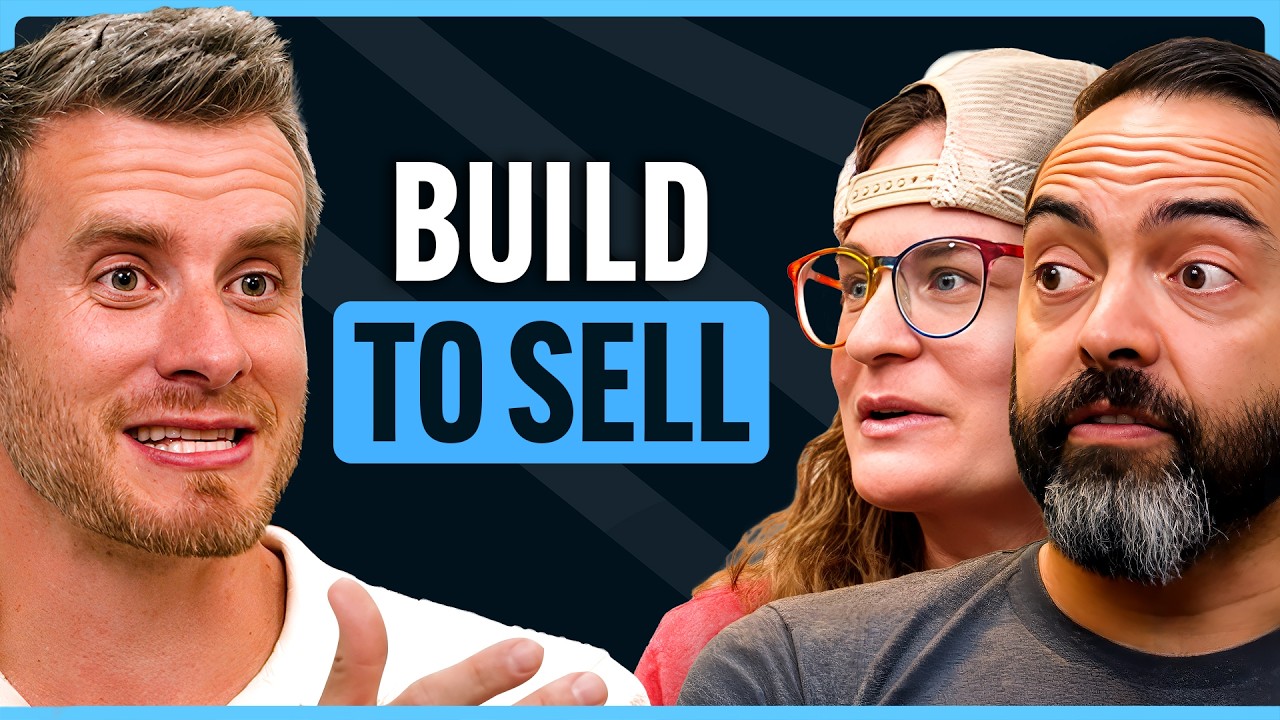
Nathan Barry coaches Khalil, a Yale grad and history creator with a large TikTok following, on moving beyond brand deals toward sustainable income. They map out courses, books, an agency model, and hiring strategies to scale revenue while staying true to his mission-driven content.
Chapters
What's the business side of what you're doing?
For a long time, the name of the game was chasing brand deals. First time I ever got paid was around $10,000 to do one Instagram post. However, I don't think that that's an enterprise that I can sustain on.
I've seen behind the scenes of hundreds of creator businesses. The thing that I see over and over again, we've got to get to that product or service that you can sell. The money and income is what allows you to do it sustainably. You prioritizing your own earnings as a creator is going to help you reach a much bigger audience and and make sure that you're doing this 10 years from now. Like, my goal for you is 5 years from now, $10 million a year in revenue or more.
I like that though.
And I think there's a pretty clear path to it. 5 to 10 year roadmap planned in the next 40 minutes. No problem.
Easy, easy.
The podcast Billion Dollar Creator is really about helping creators build a sustainable business. Like, take the audience they have and build a sustainable business. And then really looking long-term, I believe that as a creator, you capture one of the most valuable currencies in the world, which is attention. And a lot of creators channel it to something relatively simple. You know, they might channel it, that attention into advertising or into selling digital products, maybe even promoting a small business. But we often spend a lot of time on the podcast studying creators who channel that attention into building massive brands and instead of doing it, spending all their money on advertising to grow that brand in the traditional way, they use the attention that they have to grow that brand effectively for free. And you see it in the celebrity space. If you think like Ryan Reynolds with Aviation Gin, right? He built that off of his brand effectively as a creator. And we're seeing it all over the place. And so I wanna get into that and we'll talk a lot about diving into your business and opportunities ahead. But before we do that, why don't you kind of go back? Graduation was a couple years ago. Yeah. Why don't you catch us up on the last couple of years since graduation?
Right before I graduated from Yale University, I made the decision to not take a full-time consulting offer that I had. While I was at Yale, I was very much indoctrinated in the professional path that most alumni and most upperclassmen were telling me I had to go down, which was basically finding a job in financial services or consulting by the time I was a senior, preferably before that by getting an internship and getting a full-time offer. But towards the end of my time at Yale, I realized that I had so many more passions than just making PowerPoints and Excel spreadsheets, which they do more than that, I guess. But that was mainly what I was doing during the summer. So because of that, because of my time as student body president, which I got after my internship, and being in a role where I was a public figure, where I was doing advocacy I was student body president both during the pandemic and after the death or the murder of George Floyd. So there was a huge moment for me to be a voice for young people and a voice of my generation with the platform that I had. I wrote op-eds in the Washington Post, in the Yale Daily News. I was regularly making videos, not even on TikTok, but on YouTube about the issues that were happening to my people. And I couldn't let that go. I couldn't just go from having this impact to sitting in a cubicle farm trying to help out the next implementation or whatever, right, consulting. So I made that decision, and ever since, so for the past 2 years, I've been a full-time content creator, mainly focused on creating content about what I call hidden history, which are the stories about our society and our country that we never learned about in school, but that shape our society. So for example, one of my earliest videos was why do we even do the Pledge of Allegiance? Another video was about how Martin Luther King Jr. was an enemy of the state and was targeted by the FBI when he was an activist, but over time his policies and his vision became whitewashed to be more palatable for the mainstream. And these stories really captured the attention of so many people, as you mentioned, but at the same time I've been doing it as a passion project and not as a business, and it's been hard to sustain.
Yeah, there's so much in there, and I think as people follow creators as an industry, they really have two different perspectives. And one is, wait, how can that be anything more than a passion project? And then the other side is the world that I come from, where I'm like, that is a phenomenal business. And I could see someone saying like, oh, I'd go into consulting or investment banking or all that. But I want to build like a real income. And so I'm going to go be a creator. 'Cause I know from where I sit of running a software company, we power the businesses of over 50,000 creators. And so I have this behind-the-scenes look. I know that that is one of the most phenomenal career choices you could make, not just for the impact, but even if you were only doing it for the monetization aspect, which I know is fairly low on your list of reasons that you're doing it, but it's still important, right? You gotta earn a living. But this creator world, because attention is so valuable, this creator world is a phenomenal place to earn a living. And so I've seen people in your shoes build businesses to, you know, $500,000 a year in revenue, $1 million, $5 million. You're just 3 years into the creator world, and really only 2 doing it full-time outside of school. So what does it look like today? What's, what's the business side of what you're doing?
So my first brand deal or business deal as a creator came from a nonprofit organization. I believe it's nonprofit, it's called Vocal Media, and they pay creators to do advocacy work for the sake— I believe they're an agency and they work with nonprofits and they'll pay a creator. I think the first time I ever got paid by them was around $2,000 for one post that was cross-listed to both my TikTok and Instagram feed. It was my first foray into getting paid, into seeing some sort of view for the long term where I could be a creator and sustain that sort of financial backing that I needed. So after Vocal, there were a few other brand deals that I did, and those were successful. I want to say that my first for-profit, like, real company didn't come until maybe a year after that, and that was only after I got an agent. So shortly after I became a content creator full-time, I was appearing in some newspaper articles, some magazine articles, and the New York Times did a profile on my work. And then after that, a Hollywood agent from WME reached out, and that really turbocharged my direction. And after that, I was getting deals that were $5,000 to do one Instagram and TikTok post and upwards of $10,000 within that first 2 years of me being a creator. So for a long time, the name of the game was chasing brand deals until very recently people in mainstream media started to see the value of creators. And then I was reached out to, to do a book. I was also reached out to be on the TV show. So I'm on a TV show called Nickelodeon News where I'm a correspondent and I travel the country to share stories. So it really is this landscape of chasing brand deals, which will never really ever go away, I think, for any creator. But at the same time trying to get into mainstream media. But I, I really love what you do because as someone who's a leader of working with creators to turn their platforms into real businesses, you are able to move creators away from this reliance on others and other businesses reaching out to them and giving them opportunities to being more sustained and self-fulfilling in terms of how they can make money.
And that's something that I want to learn, especially like in this Okay, so we've got a little bit of time together and what would be a big win for you that we could figure out and like riff on in this time, you know, that could like serve you in your business or help you understand with the, like that, the background and knowledge that I can bring from the creator world.
Of course. So to give one more layout of where I am, I'm at a space where I've done content creation for 2 years. I've been very successful. Mainly monetized through brand deals, sometimes speaking, sometimes other endeavors and projects like TV and books.
The book's coming soon.
Book's coming soon. So that's, that's amazing. However, I don't think that that's an enterprise that I can sustain on because it's so heavily reliant on others. And at the same time, it's not something that I can sustain because it's so heavily reliant on me having to be everywhere. It's based on my brand, it's based on my work, it's based on my ideas, it's based on how I make videos. And I really want to externalize all of those skills to a team, grow that team, and come up with maybe a 5 to 10 year roadmap on how I can make what I'm doing as a personal brand into a business with all of the considerations around ethics and morality and the political opinions that I infuse into my work. And also just like the general issues of finding people that can do the job, you know.
Yeah, so just a 5 to 10 year roadmap planned in the next 40 minutes, no problem.
Exactly.
We should— we'll take care of it.
Easy, easy.
So yeah, talking about the business today, you're— you've got it where it's a full-time living for you.
Yes.
You've got a good, good track record coming up, but you're also starting to notice— it sounds like some of what you're doing to today doesn't feel sustainable in the way that you're doing it. You know you can keep scaling the audience, you know how to do that. You know the brand deals will keep getting bigger, like more and more opportunities will come to you. But some of the content creation doesn't feel quite as sustainable, right? So that's why you're looking to build out a team?
I would say the content creation doesn't feel sustainable. I'm accepting a lot of projects, but they're not the projects that I necessarily want. There's like, for example, the Paris Olympics is happening, and there's a new sport, breakdancing, for the first time at the Olympics. And it's something that's very, like I'm passionate about. My dad's from Harlem, my mom's from Brooklyn. They grew up with this culture. It's a part of Black American culture. It's at the Olympics, and that's something I would love to cover. But who do I reach out to? Right. And I can answer that question, but I need brainpower to answer that question. Right. I don't have that brainpower when I'm on an Amtrak going from event to event, having to create content, trying to make a YouTube video and all of that.
Yeah, well, there's some good clarity in there of like first mapping out an and, you know, being really grateful like you are for the level of progress that you've made, but then also just having a very clear picture of, okay, but here's where I want to go.
Exactly.
So give us a couple other ideas of the types of content that you want to make or what that future state looks like.
Yeah, so in terms of where I want to be, like, I don't know if everyone knows, uh, Crash Course, um, but that's like one of my favorite YouTube channels. They're educational sort of Bill Nye, but for like history and social studies. That's one inspiration for me. There's also like a dash of like CNN and like political opinion, not CNN specifically, but like some political opinion in there. And then like a History Channel edge to it. So I want to have a digital media company where I'm churning out really interesting history videos that also add context to some of the issues faced by our society. So when there's a big issue of discrimination, I want to be able to give a video about the root of that discrimination that explains it in American history. For example, right now there's of course a rise in Islamophobia and anti-Semitism, and I want to explain what are the tropes that people are sharing with one another, what do we need to stay vigilant about, and where do these forms of discrimination even come from. And that's really where I want to be, someone that can use education and history to solve the issues that people are facing.
Yeah, I love it. One of the things I think is gonna be really important for your business is to have other revenue streams to really augment the brand deals, because there's going to be content that you want to create that you're going to have a much harder time getting a brand deal tied to. Yeah. And so if you have a really sustainable income from a range of digital products, from, you know, other things that you're doing, then you're going to have like a lot of, you know, safety and security. And you know, because something's going to come, right, where an opportunity has a bunch of money tied to it, and you're like, look, I'm going to turn that down because of my values. But say later when we scale the team and you've got payroll to make for 8 or 10 people, then that's going to be even harder. So if we can build it that you have multiple revenue streams where you're like absolutely, I'm turning that down, that's not a fit. And I can do it from a position of strength. I think that's gonna be really important.
And that's exactly where I want to be because I think there's the business model of like an investigative journalist or an independent journalist or an independent filmmaker even. You're able to tell the stories that you want because you're able to make the money and self-fund. I think that that's a really important space to be in because the more that there's this sort of external hand in the work that I do, I think the more it taints it, the more it dilutes the message that I wanna share.
[Speaker] Right, and that's actually interesting because in the creator world, and then especially as you're creating content that has more of an activism or a message behind it, people are saying like, shouldn't you just be doing this for the greater good? Why are you trying to make money off of it? And the thing that I'm always trying to hammer home is the money and income is what allows you to do it sustainably so that you can reach a much bigger audience. So like, you prioritizing your own earnings as a creator is going to help you reach a much bigger audience and make sure that you're doing this 10 years from now instead of doing what a lot of creators end up doing where they, if they don't prioritize a sustainable business, then they end up burning out and their whole creative journey might be 3 or 4 years and they don't reach anywhere near the impact that they could. That they could.
And I think that's important because I feel like especially when it comes to young people today, there's more of an urge to just start something, especially when it has a social impact angle for completely for free. And there's a sort of like, I think everyone has, I've heard other interviews you have with creators who are completely in different spaces, but they feel weird about monetizing. But I feel like it's especially in the case of like social impact oriented work, which I find is something that I had to really overcome. Because I know a lot of my friends who have started nonprofits who are also creators, and they say the same thing, that they're spending all of their time trying to cater their message to whatever rich person is benevolent enough to fund their project. But they still face the same dilemma that they have to be beholden to someone else's viewpoints, to grants, and to shape their message for those, and they can't tell the stories that they want or do what they wanna do. and that's not a constraint that I want to have. And I also find it very valid that there's like ways of making the bottom line of whatever endeavor I do, not just the profit, but like, I guess it's called a public benefit corporation. So like having some sort of investments built in to the business model that helps society, but that don't make me once again, tied to someone else's agenda. Yeah.
So you have, of your revenue streams right now, brand deals and speaking are the biggest. And then you also have this community aspect with Patreon and like direct donations. And so, you know, one side is tied to the brand relationships, the other is tied directly to your audience, and both will scale in line with your audience.
Do you have any other ideas for like, other than courses, other ways that creators just like scale or—
Yeah, I mean, when you have this attention harnessed, like you can direct it at pretty much anything. And so when I went and studied all of these creators who had built massive businesses, you know, if you think of like Kim Kardashian with Skims, right? Or take like a George Clooney, most of his money comes from Casamigos Tequila, even though he made, I mean, he made $10 million just off of ER. And I think most people have forgotten about that. You know, that was so long ago.
Right?
So he's made tons off of movies, but it's the products that he's sold. And so as I've gone through the creator businesses, I really came to 3 laws that I noticed that were the patterns that fit within all of them. And the first is that all of them built more than a personal brand. So the creators who it was entirely their name and they were 100% the face of it, they usually didn't scale as far. But the ones that built more than a personal brand, and it could be, it could still have their name attached to it. Like if you take Kylie Cosmetics, it's still her name, but it's much more than a personal brand. That's the first thing. The second thing is that they sell products rather than attention. So if we think the brand deals, things like that, we're selling attention. And that's really good for a period of time, and there's nothing wrong with doing that even through your whole course of your creator journey. And those deals will get bigger and bigger. But really, if you want to reach this other level of not just scale, but sustainability, you have to sell products. And then the third thing is that when they sell products, pretty much all of them sell products that have either recurring revenue or repeat purchase. So an example of this is there's a food blogger called Mark Sisson. And he started a blog called Mark's Daily Apple in like, oh, maybe 2008 or 2009. And he built that to a meaningful scale. I think he was making $1 to $2 million a year as a creator in 2013, 2014, which is a huge amount of money, especially was then. But then what he did next, I think was really interesting. He talked a lot about like the paleo diet. And so he would share these recipes of here's how to make paleo-friendly mayonnaise and salad dressing. And people would just say like, "Mark, thanks for the recipe, but like, can I just buy it?" And so he ended up starting a company called Primal Kitchen that made an avocado oil, mayonnaise, and products on from there. And he promoted it heavily to his audience. And then he was able to sell that company 2 years later to Kraft Foods for $200 million. And so he basically, if you think about what's the, how do you monetize an audience? He had hundreds of thousands of followers, and he was turning that into $1 to $2 million a year in revenue, and that's phenomenal. But when he, you know, really built more than a personal brand and sold products rather than attention, and then, you know, sold something with a recurring or repeat purchase, right? If you love the salad dressing that he sells, like, you're gonna go back to Whole Foods and buy it again. So when he did that, you know, he had literally a 100x increase in his earnings. And so that's what I'm thinking about for you, are, as we think, you know, a couple years down the road, what are the things that we could put in place where, like, especially on what could you sell? And I say products rather than attention, but it could be services as well.
Yeah, because I can't cook, so I don't think any avocado oils, but I definitely wanna figure out like what are those products? I guess like courses was one, books another.
Yeah, but we're gonna have, like courses is still, courses is going to be really good for an intermediate time period. Okay. But let's say if we set really big goals for you, like my goal for you is that this company that you're starting 5 years from now or 6 years from now is making $10 million a year in revenue or more.
That would be nice.
Yeah, and I think there's a pretty clear path to it. Like I've seen behind the scenes of literally hundreds of creator businesses where they're doing exactly this. But I think we've gotta get to that product or service that you can sell. So is there something that you've had that you're thinking about that could fit into either a product or a service?
Yeah, I mean, I think about products, it's always hard, 'cause like, once again, I talk about very heavy topics, so I can't just go from talking about the civil rights movement— And then you're like, buy my merch!
Exactly.
It's not gonna quite, it would just be very awkward and stilted, disrespectful in some ways. So I think that's kind of out of the picture. However, in terms of services, there's an idea that I've had of not just working as a media company that produces entertaining content, but also working as a sort of creative agency and working with companies and brands to create commercials, advertisements, campaigns that really inject the ideas of history, storytelling, and social impact into their work. Because as I mentioned at the beginning of this presentation, Gen Z buys with our values. But I think that there's been so many misfires in that regard. I think we all might remember the Pepsi Kendall Jenner commercial where there was police on one side, protesters on another. And the way that she solved the divide between the two was by giving them both Pepsi cans. And then everyone happily ever after, right? But I think that's a huge misfire. And I think that there are ways of really interestingly incorporating history and social impact into campaigns. For most of the brand deals that I've done so far, I've done that in one way or another. For example, with Adobe Photoshop very recently, I worked with them to tell the story of graffiti and how it started with incarcerated youth in Philadelphia and how he was able to create this amazing art style that you can literally see anywhere in the world. And inspire people to use Photoshop to express their creativity while at the same time investing in young artists and seeing the potential that many people have across this, across society. So if I could turn that into a service, that sort of media component, and make repeat customers who really value the advertisements that we create, that would be my dream, I'd say.
There's a bunch of things that are interesting to me about that. First, I used to think that like when someone talked about starting an agency, I had in mind like the web design agency that I had right out of college, you know, or I kept thinking about something small. And then over the last, you know, many years, but particularly the last 2 years, I keep coming across all of these agencies that are absolutely massive, right? And it's everything from people I've had on as podcast guests before, like Sahil Bloom, who has created a whole bunch of agencies serving creators with things like video production and ghostwriting and newsletter services. To someone else I've had on, Nick Huber, who really has some great services, businesses that he can promote from his, from his audience to serve business owners. And they've built these multimillion-dollar agencies really quite quickly off of their audiences. And then if you think about it, I know it might be a bit of a dirty word in this conversation. But like McKinsey is basically just a giant agency. Yeah, right. They're providing that service at scale to companies that have a huge amount of money. And so what I like about where you're headed with this agency is that you're attaching yourself to a transaction that has a lot of money tied to it. In the course world or the education world, something that I talk about is if you're going to make money teaching, it's important to teach a skill that makes money to people who have money, because then you're going to get someone paying you know, for corporate development training or, you know, learning design, or one of my early creator ventures was creating courses teaching Photoshop back in 2013. That's how I got my start. So I know that world well. But what you're doing is in working with big brands and being the one, not just as the creator, like being the talent on camera or something like that, or them paying for access to your social channels, You're really, you could be designing the brand campaign and making the creative that they're then going to spend millions of dollars in advertising to run on TV.
Yeah.
And so now instead of being like, okay, should we pay Khalil $10,000 for this brand deal? And we'll see what reach he gets. They're saying, oh, absolutely. We should pay him $100,000 to produce this for us because we're going to then go spend, you know, a million or $5 million. Of our advertising budget that is absolutely massive. And then you can scale it out, right? You don't have to be the only face of that. You can work with all kinds of creators and talent, and then you can build the team behind the scenes. So I think that can be a very, very successful business.
Yeah, I like that idea, especially because it kind of transitions my role from talent, like on-camera talent, to being more of like the producer-director like the strategist behind things. But that brings me to the second point that I think is just really important, and that's building a team. And the fact that I don't necessarily know how to do that. I've hired like one scriptwriter and one assistant in the entire duration that I've been a full-time content creator. And I would love to hire more, but I find challenges, let's say specifically with the roles of the creative, the creative roles. Right. Where I have a certain style of creating videos that's been very successful. So how do I offload that onto someone else? And then also finding people on the business side that share those same ethics and values. So they're not just a constant tension on whether or not we take a company or don't, but then also have the ability to like scale things up in a really satisfactory way.
Yeah. Scaling a team is hard. And I think that if people come in and they think, oh, just hire someone else and they'll take off all this work off my plate and then next. They'll realize pretty quickly that it doesn't work that way. A few things that help that I found is one, having an audience as a creator is a huge asset. 'Cause one thing that attention gets you is people who want to work with you. And when they're trying to choose, hey, should I take this job with a company that I don't know at all, or with this creator that I followed everything they've put out for the last 12 months, the salary's the same, which one should I take? I really can't tell. Right, it's going to, they're gonna be like, maybe the one that I like care deeply about. So it's gonna be a great recruiting tool for you. But then as you build the team, a mistake that I made early on is I trained the individual that I hired, and you should not do that.
Really?
And that sounds a little bit crazy, but what you should be doing in the process of— let's say that you hire me onto your team.
Yeah.
The tendency would be like, you and I sit next to each other, we're mapping everything out, and you're like, hey, here's how to— here's my voice and all that. I'm like, got it. After a couple weeks, I figured it out, and now you're a scriptwriter and I'm going through it.
Yeah, that's what I've been doing, by the way. Is that wrong?
Well, so there's a small difference in that. You thought about training me to your team. You needed to be thinking about training me and the next 10 people to your team. And so you needed to, like, if you were to go join McKenzie, they would have taken you through some pretty formal onboarding for all of that because they're onboarding lots of employees. So the difference there is you needed to record all of that training as you were creating it.
Got it.
And then really get to things and edit it down. Not like the fancy editing that you do for, you know, a client project or something, but really condense it down to like, here's how you talk in my voice and all that. So then when the next person comes on, you will sit down with them and spend one-on-one time, but you'll say, watch this first. Yeah. Right? We created leverage in recording that media.
Like creating a course?
Yes. Yeah, exactly. It's an internal course on how to be Khalil. Right?
It's a weird way of putting it. I like that though.
But it's—
how to be Khalil.
Right, so we're trying to create leverage in every opportunity because this company is going to require you to hire, you know, a lot of people. First it's going to be 2 or 3 or 5, but at some point, you know, a services business requires a big team. And they need to understand the values and the methodology and everything else, right? You're going to have to scale this to 50 employees or more. And so if you have that mindset from the beginning of documenting everything that you're doing and teaching everything you know and recording it, then you're going to free up so much time. And especially because, you know, day one, let's say in the first 2 weeks, I'm just getting all this information about how you think and everything you've done. I'm probably retaining 10% of it, 25%, you know? And a year later I'm gonna be like, I know he taught me this and I don't wanna ask him, but instead I know exactly where to go in the Google Drive to watch that same recording again. And I'm like, there we go. And I'll, I might write a script for one of your next YouTube videos and then say like, I think this is good.
Yeah.
And then I'll go watch the video of you describing, here's how I write, here's how I do it. And I'll go through it and I'll catch 3 things. And fix them, and then be like, here's the script that I wrote, and you're like, wow, here's a couple things to improve. And I would encourage you to say, when you, like that feedback session that we would go through that piece of work, you need to record that too. Because the single best thing is the pattern matching that happens over time, is here's a body of work, here's what should change about it, got it. Okay, and we keep doing that, And now as another team member coming in, if I can watch that, that's so, so valuable.
It saves me time too.
Oh yeah. One thing that I did, I was just recruiting a VP of product for my company. And I hired a recruiting firm to help. You know, they brought in a lot of great people. You know, way better people than I could reach with my own network. But one thing that I did is I recorded a 15-minute video, like basically walking them through, here's what the job is about, here are the biggest problems that we're facing, all of that. and I sent it to, there's probably 15 candidates that I talked to after the recruiting firm had screened them. And I sent that Loom out to every single one. And basically every conversation felt like it started 20 minutes in because they were saying like, wow, thank you for that. I watched that video while I was like doing the dishes or whatever else, or, or on a walk. And then it gave me multiple days to think about it. And now I'm ready to jump in. And I know like, here's why I'm excited about the role. And all that. And I recorded that video once. And, you know, so it saved me, you know, literally 7, 8 hours of time and saved them a huge amount of time. And then it really helped us find an amazing candidate.
Nice. So let's— I record the next time I onboard someone and I have a great team. From there, what do I do to make those passion projects come to life, whether it be traveling to the Olympics or touring the world and just covering history stories, or working with the biggest brands that I love to create social impact campaigns for them. What's like, how do you manage that outreach in that sales funnel of it all?
Yeah, so there's some of it, like the one with the Olympics that I'm thinking about is I would try to be your own sponsor in some way. So obviously try to pitch everyone, like try to get someone else to pay for it. But if no one else can pay for it and you're like, this is content that should exist, and I know it will elevate my career, then you're like, all right, well, I'm going to take some book advance money and I'm going to sponsor myself to do this content, which is the beauty of having a business that you can— exactly, you can reallocate resources like that. Something that we did with this podcast is when we launched it, I was thinking about the type of show that I wanted to make over time and, um, wanting to have something where we could do live events and do it in front of an audience where we could take questions and discuss and see the interactions and everything. And so I had it on the list of like, this is the kind of thing that maybe we'd do after 3 years or 5 years. And it was really just a fun moment of realizing like, wait a second, we have an audience, we have connections, we can do this right now. And so we did a 5-city podcast tour where we did New York and LA and New Orleans and Nashville and Austin. And it was this idea of basically like just choosing yourself. Don't wait for someone else to choose you. And so the first thing is have that clear vision of where you want to go, which you have, and then say, okay, I'm going to try to get these other sponsors in, or, you know, try to make it part of a bigger thing. But if not, I'm going to pull the trigger on it myself.
Okay. I really love that because there was this project I'm trying to do. I'm trying to get sponsored to go to Disney World, um, because there is a new Tiana, Princess Tiana ride. Princess Tiana was the first black Disney princess. And the ride incorporates a lot of Louisiana culture and history, especially the history of jazz and the musicians there. And I've been like pitching and like sending all my LinkedIn emails, absolutely nothing in response. Fingers crossed I can get sponsored. If not, I guess I'll just fund my own trip to Disney World. Not a bad thing at all.
There are worse things to come.
There are definitely worse things.
I think there's also something where a lot of pitches in life that people do are like, hey, if you say yes, then this will happen. And there's a different posture that you can have where you're like, here's this epic thing, it's happening. Do you want to be a part of it? And like all of a sudden, like the relationship shifted. It's not, hey, will you please help me do this thing that I really want to do? It's like, I'm auditioning, which of you brands are going to— and like, it will be very subtle ways that you show up differently as you're writing your pitches, you know, because you're not gonna sit back and just wait for it to come to you. Like, you have to do exactly the hustle that you're talking about, but you're going to have to get out there. And I guess when you get out there, if you have that slightly different posture, then the weird thing is, you know, the less you need them, the more they want you.
Oh, that's so true.
It's like dating, I guess.
Exactly. Yeah.
Okay, so as we go to building the agency, What kind of things come to mind of going from individual brand deals, right? That, 'cause you're effectively running that, that very small agency right now. Mm-hmm. You know, you have, uh, an audience, you, you have one audience, yours that you're working with and there's one talent.
Mm-hmm.
In it, which is also you, right? You're not casting other people in it. What would it look like to take some early steps in like scaling that agency to the next level?
Yeah. I mean, in my mind, I think the first step is just building a portfolio. So working with what I have to, meet brands and create great content that I can just put into a deck and have something to share. I think that that proof of concept is always just great to have in the back pocket. After that, like you said, and kind of concurrently is scaling my team. So hiring creatives that I train through courses that I've created because I train 10 people instead of 1. So that's going to be another part of it. And I think the last thing is just also bettering my own quality. So I'm gonna train people to be where I'm at right now, but during this entire time I want to just elevate where I'm going, the quality of my camera, the subtitles, the editing, and all of that. So I'm also consistently growing in case there's other people who are doing the same thing as me. Like, I want to always try to be innovating in one way or another.
Yeah, what that makes me think of is on some of these brand deals that you're getting, let's say it has a $10,000 budget and yeah, and that, that's really solid. And in what you're able to do for that, like normally it would look like this, but the, the project, the brief just has this extra thing where like, oh, this could be the perfect portfolio piece.
Yeah.
Um, and if you want to take it much further, you know, but you're like, ah, the budget doesn't justify like the full crew to make all of this.
Yeah.
You might have some of those pieces that you go and decided not to take any profit on that one deal, and you're like, okay, you know, 'cause you're asking the brand like, hey, let's scale it up from a $10,000 project to a $30,000 so we can do all of this and make it the perfect thing. They're like, look, I'm sorry, we just can't justify it. And you're like, you might take that full $10,000 and be like, all right, I'm gonna pull together my freelance video creator friend and someone else, I'm gonna pay that money to them to make like the dream portfolio piece.
Oh, I really, I think that's been the trade-off that I've been considering is like, not earning the money myself, but still putting the best product forward. I think I've always leaned, at least of the past year, always try to lean towards the best product over just like a deal that goes through. Yeah.
And there's that relationship that you'll see between reinvesting profits, like taking profits and reinvesting them for the quality. And so I would just watch for the ones that are the perfect portfolio piece and say like, okay, this is one where I'm going to reinvest all the profits, whereas this is the other one that's going to pay my rent.
Yeah.
Now, if we go out a couple of years, you know, we're talking about scaling this up, then I think that that, that agency is really an idea that can, can take you for a long time. Like I built with my friend Sahil Bloom, a newsletter growth agency over the last— I guess we're about to hit our 1-year birthday of it. Thank you. And we scaled it. We hired a CEO for it. Right, because he and I are both running our other businesses. But in the last year, we've scaled it to about $75,000 a month in recurring revenue. So it's about, you know, $83,000 would be $1 million a year in recurring revenue. So it's right about to hit that stage. And I see a clear path, like deliberate methodical growth. You know, I bet in the next year, we'll hit $2 million a year in revenue and up from there. The agency, I think, could absolutely scale you to that. Call it $5 million a year in revenue, your own audience is going to be scaling significantly in that time. The amazing thing about books is they're going to create just a whole new world of opportunities. Something that happens early in your creative career, or your, you know, audience-building career, is early on you're like seeking out all these opportunities, and then later on the opportunities are coming to you and you're having to curate and say no. So it's just interesting as that flips. But then, so, I mean, the book's gonna scale up significantly, your brand deals will scale up, and I think there's a pretty clear path to getting you to at least that $5 million a year in revenue, if not more. Are there any people that you think about, could be specific names or like archetypes of people, that have done what you're trying to do, you know, or like built creative agencies like that, that you should be building relationships with now to start to learn from and you're like, hey, I've now picked you as my new mentor.
Oh yeah, I have like a shrine of creators I look up to. I think Johnny Harris is probably the biggest one and I'm lucky he's in the DC area, so I'm going to meet up with him soon. Ali Abdaal is actually a really big one. The way that he's monetized teaching people how to grow as a YouTuber.
And he's earning $5 to $6 million a year off of his audience.
Exactly. So he's definitely a big inspiration. As I mentioned, I think John Green, and Hank Green, John Green, the Crash Course company. I think those are probably the big 3 for me. And honestly, it's a really weird one, but like some of the far-right political commentators, they're not inspirations. But I think the way that they have a stronghold on political media, especially political media in terms of like getting people to see things one way, I think it's toxic for our democracy, but I think it's really effective in what they've built. And I haven't found that same thing like on the progressive side of like progressive media organizations. Maybe like Vox is like the closest one I could think of. But I want to be an influencer in that way and like influencing people to understand and see the world with a more like progressive lens.
I think it's really important when you touch on of being able to study these business models and really like you don't have to take everything from someone. You can say like, oh, I'm going to like the way that they did this is really great and I'm going to to apply that through my lens. So, all right, let's take some questions. I'm curious what you all are wondering about building a creator business and all that. We got one right here.
Hi, thank you for the amazing conversation. My name is Eric, I'm an undergrad here. I have an education business which is very tied to my personal IP. I'm a bit of an influencer in the field back in China. I've done live streaming, I've written, I've been published. But I was just wondering, what do you think about sort of this foreign influence transfer? Because I feel like the platforms are very different, right? So like, I don't have anything on TikTok, not really on Instagram. Like, do you, in your agency, do you have people that sort of come in as people who are of influence in other countries? And then how does that process of transferring that influence into the United States work?
Work.
Thanks.
I think that's fascinating. Do you have any thoughts off the board?
I think back in the day of like the heyday of YouTube when like content houses were a thing, there were sometimes creators from different countries who would gain an American audience by doing this sort of transactional collaborations where they would show up in a lot of the videos of popular American influencers and then the American influencers would gain their audience and then they would gain the American audience by like sort of Collaboration, collaboration, osmosis of the audiences. There's a Mexican creator, I think his name is Juanpa Zurita. He's very popular in Mexico, has like millions and millions and millions of followers, but not necessarily having an American audience. And so he started really collaborating with— I don't know if he gained his audience this way, but I know it grew when he started collaborating with Lele Pons, who was a really famous creator in Miami. And they have this like shared hold over a huge Latin American audience both in Latin America as well as in the United States because they've kind of cross-pollinated their audiences.
Yeah, and I think, like you're saying, collaboration is absolutely huge. The other thing that you have that, you know, you might have a small audience in the US, but everyone else with a similar audience doesn't have is like the experience of building an audience. And many of the principles, you know, what worked to build the audience outside the US is going to be very, very similar to what works here. And I think we underestimate that of like knowing how to show up on camera, how to write, how to be consistent. Like that's actually probably the hardest skill of a creator is to show up consistently day after day for years. Even if you're rebuilding the audience from scratch, it's gonna happen much, much faster because of that. And then you also have the credibility from having built an audience before as you're pitching collaborations that I think you're just gonna get a lot of momentum. Hi Nathan, do you have any customers of which you know who are using a newsletter to build demand for a conference where the conference is a profit center rather than a break-even marketing tool? Yeah, I mean conferences can be very profitable businesses. If they're run correctly. And newsletters are very good marketing tools for that, right? We have a conference called Crafts and Commerce where we bring 300 creators to Boise, Idaho, where I live, every year. And we've had, you know, everyone from Seth Godin and Casey Neistat and many others keynote it. And we rely on email very heavily to promote that because we can get that, that perfect message right into the inbox. We can target people based on location and all of that. Quick side note, June 5th to 8th in Boise if you want to come. Another example of a conference that does very well, Sam Parr ran a conference called HustleCon, and he built that off of the back— or I guess he built it in parallel to his newsletter, The Hustle, which he ended up selling to HubSpot for, I think, about $25 to $30 million. But that was, you know, they built a massive audience and the conference was, was huge for that. And they went hand in hand. So I'd look to people like that. I'd study Sam in the, you know, in those early days, maybe for like 2015 to 2019 was kind of the heyday of that. I'd study his work. He talks about it on his podcast. Hi, I'm a big consumer of social media, but I've never gotten the bravery to turn the camera on myself, and I think a lot of people are in this same space. So for a person who's interested in content generation, how do you decide to get started? What do you talk about? How do you choose?
I can give my story. I think it comes down to you have to feel a burning passion for what you're discussing, and you'll often find that passion when you're scrolling through social media and you're thinking to yourself, I wish I saw a video about this. This. And that's the video you have to create. So I made my first one on Martin Luther King Jr. Day, because one of my professors had actually been the one that uncovered a lot of the FBI scandals and conspiracies. And I knew that between like the conspiracy theory side of TikTok and just like the racial justice side of TikTok and the politics side of TikTok, that there was an appetite for something like this, but nobody was covering it. People just didn't know about it. So I thought to myself, like, I want to see this show up on my feed. I want to swipe my finger and see this video show up, but it doesn't exist. So I'm gonna be the one to do it.
I think that's amazing advice for how to choose the topic. Like, it has to be something that you're passionate about, because at a minimum, if you're going to embark on a creator business, you have to show up every day for 2 years. Like, that's the minimum where you're allowed to decide, is this working? So many people are like, oh, I tried to start a newsletter or grow a social audience, and I'm like, wait, You know, they say, but it didn't work out. Oh, what did you do? Well, I, I worked on it every weekend for like a couple weekends, and then I lost that, you know. And it's like, huh, all right, well, I'm pretty sure that's why it didn't work. So you pick a topic that you could talk about for a long time. What's the thing that your friends are like, okay, here she goes again talking about this, like, yep. And they can start to finish your sentences on it because it's something that you're so passionate about. But to talk about the other side of flipping the camera around right, and going from being the one scrolling through social to the one actually creating the content, what I would do is pick the channel that's most natural for you. Like, if you love consuming on, uh, you know, short-form video on TikTok or Instagram, go there. If you love longer-form video, you know, YouTube's for that. Uh, written content, then look to LinkedIn or X. Um, I would pick one content format and say, I'm gonna create content every day for 10 days and don't post it, right? Like, make it easier on yourself because you're like, you know, record what's going to be the Instagram reel and know no one's going to see this, no one's ever going to see this. And so you do that once and you're like, that was awful and I'm glad no one's going to see it. But then like day 5, day 10, you're gonna find that you start to hit a groove. And you might get to one day 10 that you're like, maybe I'd be okay posting this because I don't have any followers. And like, that's how you start to build that habit. You post that and it's like, good thing no one will see it 'cause I don't have followers yet. And then if you keep going, then you've overcome that hurdle of turning the camera around on yourself and, you know, started to build that consistency habit. 'Cause the only way to get past it, besides maybe really a lot of therapy, is, to just practice and get the repetition in. So I was a mentor here during, you know, the conference, and in mentoring students with startups, one of the things I noticed for some, not all, but for some, was fear that their idea will not scale, okay, or that they're thinking about this big thing or getting this big client You've told us your story. I know Nathan Barry, I follow you, your story. Can you talk to that, how they can be more confident in and be okay with what they know and know that starting small is okay and also that it's good to only grow from there, that that is how you grow, you have to start small. So I think a couple things. First, you have to overcome the fear of rejection. And really the only way to overcome the fear of rejection is to get rejected a lot. And so you have to take those chances. So there's a creator named Jia Jiang, and he did an experiment that he called 100 Days of Rejection. And his requirement was that he just had to get rejected every day. Like the day wasn't complete until he got rejected. And so he would ask for all kinds of random things. He'd knock on a door and say, hey, can I play soccer in your backyard? And he'd be like, no. And he's like, okay, no problem. And that checked the rejection box. Or other times he'd ask and someone would be like, sure. And he'd play soccer in the backyard and record himself doing that. And that was his thing. And he was actually a little disappointed because he's like, now I gotta go get rejected for something else. So he ended up doing all these crazy things like Southwest Airlines, you know, on a fluke let him do the like passenger safety briefing, right? And he just practiced and got really comfortable with getting rejected. The other thing I would say when it comes to sales is there's what you can control and what you can't control. You can't control how many deals you close, right? There's too many variables outside of that. But you can control how many people you reach out to and how many conversations you have. So if you think about lead measures and lag measures, you can't control the lag measures, but the lead measures of how many cold emails, how many phone calls you make, you can absolutely control. So a friend of mine named Trent, when he was building his first business, it was a services business, and he knew, like, he grew it through cold calls. And so what he did is he had 2 bowls on his desk, and he had 50 paperclips in one bowl, and the other had nothing in it. And every time he made a cold call, he moved a paperclip. And his job early on, when he didn't have clients and all that, was to move 50 paperclips from one bowl to the other. And that was a lead measure. He couldn't control how many sales he got, but he knew that if he did that, if he moved those 50 paperclips, then his chance of getting lucky and getting a client was much, much higher. So I would focus on those two things. Yeah.
Interesting friends though. 100 rejections, the paperclips. I agree. There's phases for your worries, and I think you have to properly compartmentalize like what you're worrying about in each phase. I think in the beginning it's about getting that first deal, like getting that first person to pay you, and then after that it can be getting like 10 people to pay you, or it can be a specific amount of money that you're earning. But I think that you're just throwing yourself completely out of whack and you're doing yourself a disservice when you're worrying about issues that are 10 years down the line issues as opposed to the issues in the beginning.
I want to end on just a couple of things. Do you have anything that you want to wrap up with?
Yeah, I mean, I just want to say that I've never looked back after I made the decision not to go into corporate America. So for any undergrads or grad students or anyone anywhere in life right now, even if you're in corporate America, like, I would just say definitely take that leap of faith. Start creating. You don't have to leave your job to do it or completely, like, unravel all of your plans for life and your career. But I think just starting small, creating something you're passionate about, is a great way to dip your toes into this industry. It's an industry that's growing by the billions every year in terms of size and market audience. So use me as a resource, as an example, as inspiration if I can be that. And definitely chase your dreams if you want to do what I do.
I love it. Along those lines, like creator as a, as a job and a career that you could pursue is still relatively new. And I remember back in, I guess probably 2017, 2018, we were having a lot of conversations and at the time people were like, you can't make money from this. And we're like, no, no, no, you can. I promise. And it's like, I'll believe it when I see it. And so what we ended up doing is kicking off a project then we call I Am a Creator, which is telling stories of all of these amazing creators and how they're earning a living and in all of these different industries from school teachers to food bloggers to, you know, everything else. And so if you are either unsure of how you would do it as a creator and you need lots of examples, or you know what you're going to do and you've got your parents or your friends or grandma or whoever who's like, But I thought you were going to get a job in investment banking. Like, what are you doing? Then I'd encourage you to check out— we have the I Am a Creator book. We brought a bunch of copies to give away. And take that home, read it. You know, give that to someone else in your life who you need them to understand this world and to know that like, as a creator and in this industry, you can build a successful career. So that's there, and I hope you take it. And then the last thing is just know that anything worth doing is going to take a very, very long time. You're gonna follow some people who had success really early on and, you know, they went viral or something else. But from watching literally tens of thousands of creators build sustainable audiences and businesses, the thing that I see over and over again is they show up consistently every single day, for longer than most other people think is reasonable. Most people would give up and they kept showing up consistently and they created every day. So just keep that in mind, have a long time horizon and you can build something pretty amazing. So thank you so much for having us. Thank you. If you enjoyed this episode, go to the YouTube channel, just search Billion Dollar Creator and go ahead and subscribe. Make sure to like the video and drop a comment. I'd love to hear what some of your favorite parts of the video were and also who else we should have on the show.