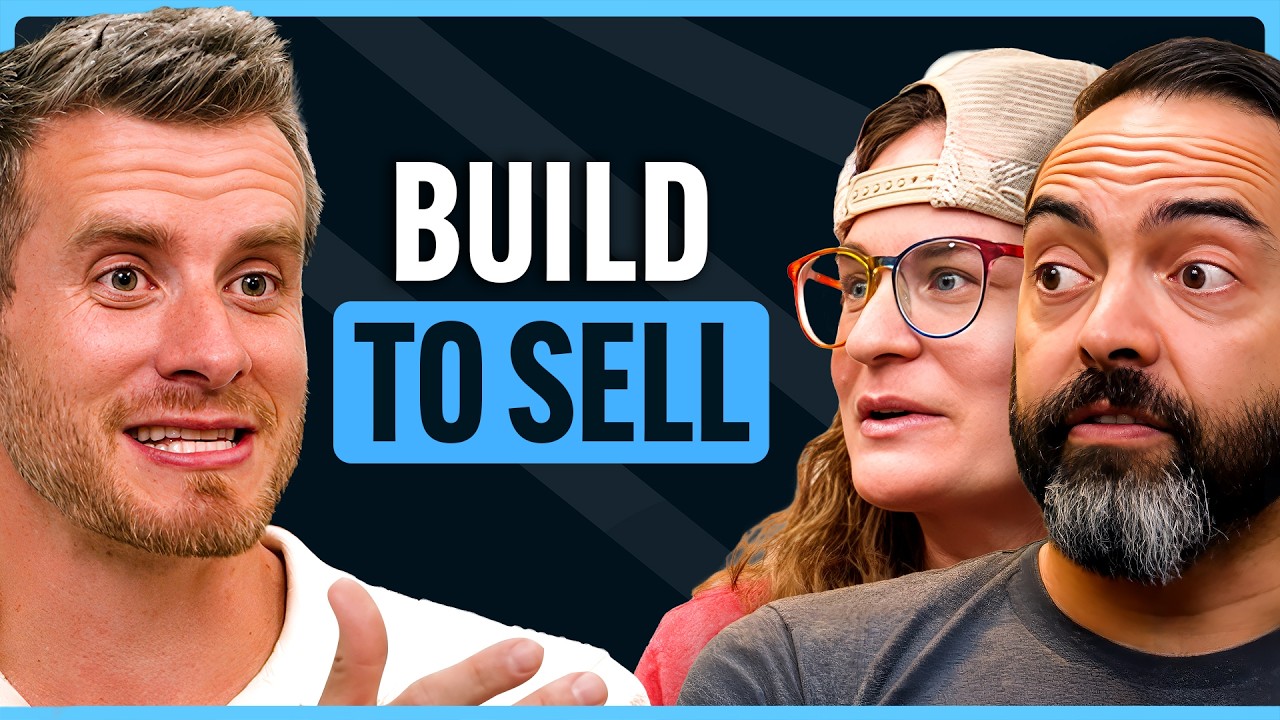
How I Went From $0 To 6 figures on Instagram (67-Minute Masterclass)

Gannon Meyer breaks down a three-step Instagram funnel: free lead magnet, segmentation through open-ended questions, and personalized upsells. He uses ManyChat and Claude to automate responses and recommends placing calls to action in 70-80% of posts, plus the PSA story framework (problem, solution, result) which consistently delivers 4x results.
Chapters
We are infatuated with the views and the likes on a post and the follower count. I know people who have hundreds of thousands of followers who make no money.
How do you make money from Instagram? You already have the attention, people watch your reels and reply to your stories, but almost none of that turns into actual revenue.
70 to 80% of the time you should have a CTA. I have figured it out on my own because I've made 4,000 videos.
He's done videos for clients that have done hundreds of thousands of views, $50,000 bootcamp launches, and every weekly newsletter he sends Generate sales on autopilot. If you have an audience on Instagram but you're not making money, you're probably making this mistake.
You're probably not using the PSA story framework. Every time I do it, it has 4x outlier.
He breaks down his selling system into a simple 3-step framework and he walks through his funnel piece by piece.
If you go on your Instagram analytics, your insights for a post, their most recent update lists the engagement in order of how important it is for being recommended to a new audience. Comments are still ranked pretty high.
By the end, you'll have a funnel you can set up this week, no matter the size of your audience. Your revenue per view ratio on that is probably very good.
It's more than a dollar a view.
This is incredible. So Gannon, we've got a big topic today, how to make money from Instagram.
Yes, sir.
There's a lot of people that build big followings and don't make any money.
Yeah.
What do you say to that?
You know, they usually chase brand deals as the next best step, and then that turns into an unreliable marketing stream income streams, so I help them sell their products. And people who do sell products, they're just like, I know I sell them, I just don't know how I sell them. And I'm like, well, we have to figure that out. So that's why they hire me.
So you turn the attention from Instagram into actual revenue and sales.
Yeah. And also being able to like visualize what it looks like and how to do more of what's working because people just don't know.
I think a lot of people even who make that leap to products are then like, I don't know, I just kind of mentioned it in a story or something else and it made some money and so it doesn't feel sustainable or reliable. Like how do you approach it?
I mean, most people, I mean, I hate to say it, like just, they just get lucky. Yeah. And they just continue like riding that luck wave. And then when things run out, they just like, well, this doesn't work anymore. Let me go for more brand deals. You know, the way that we approach it is just like, how do we make everything personal? Eyes at scale, right? So like if I know somebody has a specific problem, I need to get that out of them, have them tell me, and then recommend a solution. Because the way that I kind of explain it is if this is a menu at a diner, you have 40,000 different, a New Jersey diner, for example, or a New York diner, you have 40,000 different combinations of things. I use the example of being on a road trip. You're on an 8-hour road trip from Florida to upstate New York. You stop in New York City or somewhere in New Jersey and it's like, I'm starving and I don't know what I want. And the fact that this has 40,000 things on it is not making my taste any better. And I give the analogy of a waiter or a waitress coming over and asking, what can I get you? You not knowing what you want. And then the waiter asking, well, what do you like? What are you in the mood for? So instead of the waiter recommending right off the bat, the specials on the menu, It's taking into consideration what this person likes. Because if they're like, you should get this salmon and you don't like seafood, it's just gonna make you even more mad. So that's kind of the logic we're taking to this. Like even if you have 1 or 2 products, you still have a menu and you need to get that menu item in front of the right person to help them make that decision. Because they don't know what to buy. They just need help. Yeah. And that's where you come in.
I'm excited to dive into that. Before we do that, what are some examples of clients that you've had? Maybe let's do 2 things. Talk about clients that you've had, like, right? And who you've served. And then maybe separately from that, you can give some examples of the types of income that you've seen creators achieve, you know, like following to income levels.
It's crazy. And just like being able to see this behind the scenes and just seeing how, like, just how these businesses operate is just so like eye-opening for me.
Yeah.
Yeah, how they typically work, a lot of the clients that we work with are info, educational-based, so course cohort, membership community. They're typically doing quarter million to half million in sales a year. A lot of that's brand deals or they want to launch a product and they see, oh, this person made $1.2 million or $1.5 million and I want to do the same thing. And it's just like, we can try to get you there, but you have to understand that when you're launching something or releasing something to your audience, the fundamental thing that you're trying to achieve is how do I get this person not to pay me money, but to trust me enough that I'm the right person to help them solve this problem? And people are just not good at that because they take this shotgun approach where it's like, I have 800,000 people in my audience. Let me just pitch the same thing to everybody and see who buys. Right. Shout out to Brendan Dunn, by the way. Thank you, Brendan.
He's great at personalization and all of that. Yeah. Fun fact about Brendan is when I was I was early on starting Kit. He was my developer friend who was in the GitHub repository checking to see if the freelance developers that I hired were doing good commits.
Wow.
Yeah.
Well, that's before everybody was on GitHub and now you have Cloud Code and just pushing absolute nonsense, which is, I'm guilty of this. Which is what you're doing.
So going, what I'm trying to get a sense of is if I have 10,000 followers and a targeted offer and that's the thing, like, Is this something where it's like, hey, you could be making $5,000 a month?
Yeah.
Or $50,000? Like what's the scale that you're seeing? Yeah, it works.
I mean, like what we do with selling, so we use ManyChat, which we'll get into, is like you have a really good opportunity, number one, to get somebody to buy into a lower ticket product right off the bat. Like if you're thinking about selling a $2,500 course or a $10,000 service in the DMs, it's just not gonna happen. Yeah. Right? Like no one's gonna take out their credit card. It's like that, What was it? Kayak maybe? They did a commercial where it's like, I'm too scared to make this decision. It's like 3 like millennial Gen Z people are like trying to make a big decision to purchase on a phone and they just won't do it. So like anything really over like maybe a few hundred dollars in our case, like we work really well with like $47 offers. It works really well in the DMs, but anything above that, like you just have to get them over to email and then email is what sells them.
Okay, so what we're focused on initially is getting that attention on Instagram and then translating it.
Into. Yeah, and all the clients we work with, they're really good at getting attention. Yeah. But like we don't solve the attention problem, but I have kind of figured it out on my own because I've made 4,000 videos, you know? So it's kind of like something has to work after you make 4,000 videos.
I wanna dive into that a bit later, but let's, for now, let's focus on this conversion process.
Yeah, yeah.
So what, we've got the board up here. Yeah, yeah. What should we be drawing today?
So draw 3 boxes, right? So draw a box up here, one down here, and just like rectangles. Okay, we're gonna go right to this.
Big or small?
Yeah, yeah, yeah, go wide and we can just like. Brainstorm these as time goes on. I couldn't have done it better myself. Look at this.
Yeah. Professional right here.
That's right.
I'm just trying to, just trying to get on your level.
Yeah. So this represents, it's like a funnel essentially. So you have 3 steps of like what we do and what I recommend people do is your top of funnel is just like all of your free stuff. So, okay. So just write free, right? So this is your lead magnet. This is your newsletter. Anything that you give away for free of value. Okay. Second is segment. Okay. So just write segment in that one. It turns into an acronym that people think, oh, does that mean what I think it means? And it's like, no, it means free segment. And that upsell is the last one. Okay. So FSU, it's not, it's definitely not, you know, not what you think. It's not what you think. It's definitely not what you think. That's not an attention play either. Yeah. So like it goes from free segment to upsell. So everything you give away for free turns into an opportunity to ask questions to your audience, right?
Okay.
So free is when somebody's on a road trip, they come into your restaurant and they're like, I know you have food, I know you can help me not starve on this road trip. And then the segment question is when the waiter or waitress comes over and asks, what do you like? What do you enjoy? Right? So there's good ways to ask questions and then there's bad ways to ask questions. We can talk more about that too.
Do you wanna dive into that now or get, we'll come back to it.
Yeah, we'll come back to it. So like upsell is just, giving somebody an offer. And I say upsell, but like upsell's usually just like a recommendation. So you can do FSR if you're not salesy, people don't like to be salesy. So upsell's technically not like, hey, you bought this for 100, buy this for 200. It's just, you got this for free, check this out as a next step, right? So segment, when we're thinking about segmenting questions, we love open-ended questions. Okay. So we want to get, the most accurate data from our audience for a few different reasons. And we'll talk more about ManyChat and like how this plays in. But ManyChat gives you the opportunity. And for those who like are watching this and you're like, I don't know what ManyChat is, it's just if you've ever seen somebody tell you to comment on a post.
Comment this word.
And you get this resource. They're like, how you do that? It's just ManyChat basically. Most cases, ManyChat.
You can do it through Facebook Business Manager as well. And basically—
Yeah, you can do it for ads. You can do it for, it works on Facebook, it works on Instagram. TikTok kind of. Okay. And then, yeah.
And then I think people do it manually on LinkedIn.
People do it manually on LinkedIn. Yeah.
Which tells you that it's valuable enough of a thing to do that people believe it's worth doing.
I just think that these companies don't want to expose their API data for whatever reason. But I think, you know, for people who want to run businesses, it's just a no-brainer. It's absolutely insane.
Okay, so we've got open-ended questions.
Yeah, so the reason why open-ended questions are great is because You know, if you ask somebody a multiple choice question, which is like what we do typically in a Typeform, you're only gonna get 4 different responses.
So you're a designer, a developer, or whatever.
But it's like, those are like radio dial questions that you can ask. But you can also ask questions like, what do you need help with the most? And if you keep that open-ended, what you can do in ManyChat is you can actually look at all of the responses that people gave you, export it as a CSV file, send it over to like your copywriter and be like, this is all the responses that we have from our team or from people who went through it. And we need to update the copy in our sales page, our content. But it also, if you give somebody the opportunity to tell you their life story, they will tell you their life story. So, but the more data we get, the better we can go into the upsell. So essentially like what's happening here is like, you know, I can draw this too. Yeah, go for it. But with ManyChat you have, oh, this is a nice marker, I love this.
We love a good marker of fishing.
This is very small. But you have an I/input bucket, then you have an O/output bucket. So typically what happens when you create these automations in ManyChat is you have these input and output fields. So if I ask you what your biggest struggle is, if you say anything to do with revenue, you're gonna get put into the revenue bucket, right? Okay. So when you ask these questions, like as soon as you ask the question, this input jar opens up. And it stays open until whatever duration you set for. Usually it's 30 minutes. You can do 12 hours, but whatever you say gets put into that jar and then it gets sent over to Claude and then Claude categorizes them in that output. And then you can send a conditional message based off that. So it's a little abstract. We'll have to dive more.
So in this, um, because I think most people are used to segmentation where they're just like, are you A, B, and C or, or that sort of thing. This is a lot more advanced. You're saying, Actually for 30 minutes. Is that what you recommend is the, a 30-minute window?
So I mean the, it defaults to 30 minutes. But the issue with that is like if you, so I think of it like a train station, right? So like the 30-minute window in ManyChat says if this person does not respond within 30 minutes, the train leaves the station. It's not listening for their response anymore. The jar closes. So Meta has a 24-hour rule where if they respond after 24 hours, it's not actually part of the automation. So they can't, beyond 24 hours engaged in an automation anymore, which is—
Which prevents you from doing mass marketing or—
Yeah.
Like Meta's worried about people using it for spam or something else.
Yeah, yeah, exactly. So I usually, like we default this to 12 hours, but if people respond before that, it just pushes them along on the automation.
Okay, so it's just looking for a response.
It's just listening. Yeah, basically until the timer goes up. But yeah, whatever they say goes into the output and then Claude interprets that input. Yeah. And then classifies them into an output. Yep. So we can dive more on that 'cause I know it's a little complicated.
So basically, yeah, what's happening is—
It's like a sorting hat in Harry Potter.
This is going in and then we're just gonna have that circle for Claude.
Yeah.
And then that's gonna go into whatever the output is. Yeah.
That's going from there.
And the output is the response back to—
Yeah, so like you already kind of know like what your outputs are, right? You know, like if you're gonna create this as a multiple choice question, you have radio dials of like A, revenue, B, growth, client acquisition, whatever it is., but you give those radio responses to Claude and then you have Claude just categorize it for them. Yeah. But the benefit of doing it this way is that you'll get more accurate responses and then you can use the actual language that your customers are using.
Right.
And then use it for other things.
Because you can use this exactly as you're saying, one-off. Yeah. To help segment that one subscriber.
Yeah.
But then you can zoom out a level and go up to that abstract level and be like, okay. Yeah. 500 people went through this. What are they talking about?
I mean, we can talk about like what we did for Adrian and the camera example, right? So like this is like, it's camera, like cinematographer stuff.
So for anyone who doesn't know, what's Adrian's content?
Adrian is a content creator who teaches other content creators how to like make cinematic videos. So he's shooting on like a $5,000 camera, but now he's shooting on his phone. So he's just helping people make things cinematic. He was a music video director, very deep in that scene. So, He had this LUT pack, which is basically a filter that you put on a video to make it look nice and cinematic. And those LUTs were for different cameras. So he had one for a Sony camera, he had one for a, like the handheld Pocket 3, and he kept making videos about the Pocket 3. And when we—
Probably 'cause he thought that, oh, this is what most, like the everyman creator is probably using.
Yeah, yeah, yeah. 'Cause price point-wise it's more accessible to that audience. But we went through, we asked the question, so we had like, the free, well, he would post content about it and then he would drive to a sales page. Okay. But what we did was we asked them what camera they were using and then we sent them to a sales page for that offer.
For that camera.
So instead of going to like the menu again, right? Like 40 different things on the menu, you just go to the particular thing you want based off of what we know about you. So he kept making videos about the Pocket 3 and we realized that only 8% of his audience was using the Pocket 3. So I'm like, dude, make more videos about the Sony. There's 43% of your audience right now who's using a Sony camera. The other like half is using an iPhone. So if you wanna sell more Sony LUTs, just make more Sony videos. And he did and it crushed. Right. Okay. So it's not just like now we, we tag this person in Kit that they use a Sony camera. It's we know that 43% of our audience uses a Sony camera, so now we can make better content decisions. So it's like macro and it's micro or macro.
Yeah. So that would be an example of an open-ended question is like what kind of camera do you use?
Yeah.
And so I can just pull it out and I could type in, whatever else.
And yeah. And the typing like of the experience of that is much better than just clicking like A, B, C, or D. Yeah. It just makes it seem more human. But people just aren't familiar with like—
Okay. Because ManyChat will happily let you choose A, B, C, or D. And you're saying don't do that.
Yeah. I mean, it's easier to set it up that way, but we use cloud because we wanna make it seem conversational. Like people don't know they're talking to an automation. It's really interesting.
Is that the same like across all of your clients? Yeah.
We don't use multiple choice questions.
Okay. Yeah. Hmm. Okay. So we said like good versus bad. Yeah. Is that good versus bad questions or like open-ended? Like can we make a list of like do this, not that?
Yeah. So when, well, there's things that are good about open-ended questions and then there's things about that are bad about open-ended questions, but there's also good ways to ask an open-ended question and the bad way to open it, ask an open-ended question. Okay. Yeah.
Let's dive in on that part of it. Yeah.
All right. So yeah. So you like, whenever we're asking somebody a question, we're trying to figure out like where are they trying to go? Right? So if—
Yeah, what should I write down?
Yeah, so like what are your goals in the next like 6 to 12 months? Goals and timeline?
Yep.
There you go. I mean, it's like, that's pretty much like what we're doing. Like as the main segmenting question, right? We can ask other—
So what's an example—
Accessory questions.
Would you say as generically as like, what's the, if Adrian were to use a goals and timeline question, what would it be?
It would be like, why do you wanna make cinematic videos? Like, is it for audience growth? Do you wanna look more professional because you wanna attract more clients?
So would a lot of these questions start with why? Yeah, it's usually a why.
Why question. Yep. Yeah. Yeah. Why is more open-ended than like what, right? Like what do you use versus why do you use it?
Yep. Or why do you recommend it? Okay, so I'm gonna go.
They're like not necessarily bad, but it's not gonna help somebody make a decision. Right. Ultimately. Yep.
That makes sense.
At least for like a higher ticket offer, right? Like if you're selling a $39 LUT, like what camera do you use? Of course it's gonna help me make a decision, but it's like.
Okay, so you might, you. Would you ever use both, like in this case?
Well, yeah. I mean, we do this for like applications for what we do. So I run automations for applications in my DMs and I'm always like, you know, what platforms do you use? What's your current revenue? But like, why are you trying to figure out ManyChat right now?
So then do we, we're gonna have a flow then that starts with what camera do you use or, you know, why are you trying to?
Yeah.
Do that and then later on it's gonna ask other questions?
Yeah. So you're basically like, for lower ticket, I think it's fine to ask just like what types of questions. But if you're going for, you sell a service or you sell a course where someone's gonna have to spend more than $100, you want to get them talking.
Right.
And then it's like a sales call, right? Like you're not gonna just be like, what do you use? What do you use? What do you use? Like, all right, cool, I can recommend you this. It's just, no, it's like, Why are you here? Why are you here? Like, there's something that caused you to trigger this automation. What was it? Tell me what it was. And then as soon as we know that information, we then pitch everything else based off that.
Yeah, that makes sense. Okay, so then, well, let's go to the free side for a minute.
Yeah, we're talking about content.
Yeah. What's the free content that gets people to actually engage and to start this funnel?
Yeah, it's, I mean, I have this like, PSA-style story that I use all the time where it's like, PSA, if you have this problem, you're probably making this mistake. I used to make this mistake and I got this result by changing it.
Okay.
But I'm not telling somebody how I changed it. In order to learn how I changed it, they have to get the free thing.
Comment this word.
Reply with this word, comment this word. And it goes from there.
Oh, 'cause you, you said reply, 'cause it's also, it could be—
It's a story. Yeah, it could be an Instagram story. It could be like a DM. It could be, comment on a post. And yeah, that's, it's simply PSA, but like there's one, if there's like one framework that I try to teach, it's like in order to get somebody to go through this automation, like you have to tell them to do it. It sounds stupid, but people don't do it. It's like, I just have this automation and then they bury it. Like in journalism it's called burying the lead, right? So like your call to action is your lead in your caption. So it should be the first thing people see.
And as a marketer, I used the correct lead there, right?
Yeah, that's right. That's a journalism lead, not an eligibility.
That's a journalism lead, not a marketer's lead.
Yeah, so like you wanna have the call to action in the first sentence of the video. And like typically what most people do, like if you draw a retention chart, I don't know, you probably can on this side, right? So like just draw like an X and Y axis.
Yeah, perfect. Something like that.
Yeah, yeah, yeah, it's good. So like as time goes on in the video, like somebody might, they start watching here. So like just say that this is duration of the video.
Yep.
And then as time goes on, there's less and less people that are still on the video.
Right.
So what people do is they're like, let me just put the call to action at the end 'cause I don't wanna seem salesy, but I still want people to go through it. It's just like, well now you have 5% of your audience seeing it.
So like. Right.
Yeah. So what you can do is kind of like flip this. So it's, this is the hook right here, right? And then you can say, by the way, if you wanna learn more about this, just comment the word X at any point in the video and I'll send you more information. And then you just continue with that tutorial.
So we're gonna get the CTA early. You said in the first sentence.
Yeah, I mean, I usually go like hook, transition with like a short CTA, and then the rest of the video.
Okay, so you said hook. Transition. Then we're going to have a smaller CTA.
Basically, yeah. And CTA.
Then we're going to do a CTA.
And then you just write meat of the content or just write meat? Just the bulk of the content.
And then another— And then a full CTA. And this is going to be a bigger CTA. Yeah. Okay. Give me a script of a video. What's one that you've done? What would the hook be?
Yeah, I mean, I do breakdowns of creators and how they run their business. So it's like, I spent the last I spent 36 hours of my life reverse engineering how Nathan Barry runs his social media profile. And I learned that if you do the same thing that Nathan does, pay attention because this is what I would do, right? So it's like you kind of set stakes and you tell people what they're going to learn. And if they know who you're talking about, they're gonna be like, oh, okay, so he runs a similar type of business that I do. Let me pay attention. And then you can say, by the way, at any point, if you're like, I want to learn this exact breakdown because I only have 3 minutes to teach it, I have a full YouTube video. Comment the word tube and I'll send it over to you. And then you go through the full thing. Then you're like, again, if you want the full tutorial, I have 3 minutes. I can't do this in 3 minutes, but comment the word tube and I'll send it over to you. Yeah. Okay.
So that's that light touch on the CTA and then a deeper touch on from there. What about from the storytelling side of things? What makes a difference in actually retaining people through the stories that you're telling or the narrative there?
Yeah, I mean, I'm actually, I'm in the process of writing one right now for the keynote that I'm giving. Okay. So I have a partnership with a company who just released a new presentation remote. And I'm like, how do I tell the story of this being my first keynote and being nervous because I've never talked in front of this many people, but also the features of this remote, how it's going to help me prepare for this keynote. So I'm thinking about, you have to set the stakes of what's actually the problem here that we're trying to solve and how are we going to solve it? And it's before, during, and after. But it's more than just what people do is they'll tell the story and be like, this happened and this happened and this happened and then this happened and then this happened. So it's like, oh, I have a presentation and then I got this remote and then I presented because the remote was cool and I did a good job and that's it. It's like, well, no, it has to be deeper than that.
You need tension in it.
There's something Something in the story that you have to talk about that will get somebody to continue wanting to watch to see what happens. So like an example of that is like, I have my first keynote. Cool. Oh, I am anxious about this and I've never did a keynote in front of 500 people before and I don't know what I'm gonna do. So it's like, I have a keynote, but I have this problem.
Mm-hmm.
And then I wanna solve this and you're gonna come with me to solve this problem. So it's, this happened, but this is going on and we have to get somewhere else.
So how do we do that? So who would map, if we were to map it out, 'cause I think a lot of people are gonna fall into the and, and, and storytelling. Yeah, of course. So if we were to contrast these two.
For tutorial-based, it's definitely gonna be and, and, and, but you know, you wanna somehow set the stakes of these.
So it's like, we're like this and this and this. So what you're saying is that we're gonna say like, This happened, but this, therefore, the end, the end. Yeah.
So like an example of this and like what I've tried to get good at is doing this tutorial-based.
Oh, okay.
Right? So like how do I teach a tutorial but also set stakes for why somebody should watch?
Okay.
So an example of that is like how I structure almost all of my videos where I do breakdowns. It's like, I spent 96 hours doing this and researching how they run their business, and I think there is something they can fix. And then you explain what they're currently doing well, and then you go into like what they could fix. So like the but is the transition there, right?
Let's use an example of this because 2 days ago we got to hang out in the mountains of Idaho and you came flying with me.
That's right. I flew the plane.
You flew the plane.
I definitely flew the plane.
To be clear, we have video evidence of you flying the plane.
That's right.
So you made an Instagram video about this. Most people would say, I was going to Boise and I really like airplanes.
Yeah.
And so I thought maybe I'd reach out to Nathan and then it worked out and I got to go flying.
Yeah, that's it. It's like, okay, well thanks for sharing. You could have kept that to yourself.
Yeah, exactly.
It's cool.
But like, it's like, I'm happy for you. Or the response you get is is like, that's cool.
Yeah.
Good job.
I think— Your video does not follow that formula. No. So like, I actually think I could have done a better job with the video. The reason why I like the word "but" is because I think like, this might sound woo-woo, but it's an opportunity to like express who you are and like what you've gone through, right? So like for the presentation, the keynote, it's like, I'm about to give a keynote, but I have anxiety.
Right.
Like I'm not comfortable on stage. We're gonna see what happens. And then it's like for the video that we did on the plane, it's like, I'm about to go to Idaho, but I don't want to just go to Idaho.
Right.
I have an opportunity to do something with the CEO of a company who owns a plane. Yeah. So let's see if we can get on the plane. Yeah. And like, that's kind of setting the stakes, but it's also like—
And then you built up to like, is it going to work? You know, like you're like, oh, he, he liked my post. He followed me.
He liked my post. He followed me. His team reached out and then like he picked me up at the hotel and he started wheeling the plane out. I'm like, oh. Okay, this is happening. This is not fake. No, this is real. But yeah, like when you use but, it's just an opportunity to like share with people like what's happening and how you're thinking. And yeah, like there's ways to do it that are like not as like deep and personal that you don't have to go crazy with like, you know, telling people about your personal life. But it's just an example of like showing how you think, right? So the tutorial example is like, I studied this person's funnel. But based on my work with clients, I think it could actually be a little bit better. So let me show you what's working and show you what I would change and why I would change it. And then you just do that.
Something that stood out to me in your video is the way that you made it like so much of a personal story. And it wasn't just one but, it was like, 'cause the payoff was, oh, you're actually going flying.
Yeah.
But then you had the later of like, but it's actually bumpy. We're flying over.
It's bumpy. I'm flying the plane. Yeah, exactly. So I'm like, I love the line where you're like, My man.
I said I want to fly in your plane.
Are you sure?
I'll fly your plane. You did great. Everyone's wondering, who's watching, Ian is a great pilot.
I'm way back here, you know, it was a little bit better, but yeah, we did all right.
You're weaving that all the way through.
Yeah.
If we take that video, that video is exactly 60 seconds long.
Yeah.
Why is it 60 seconds long?
I don't think it needs more than that. I think it's like, you know, what is, what is the way that I want to come across with my audience and like, what do I want to share? And I think the video is more about how I'm willing to just put myself out there to do side quests than it is of just like, hey, let me message the CEO and get on a plane.
Right.
It's like, no, this is what happens when you just put things out in the universe and just see what happens. So it's more about that than it is about like, Gannon was on a plane in the middle of Idaho.
Right.
It's like, We don't know. Yeah, so like 60 seconds, the way that I kind of like think about videos is like if I write this and I read it in my head like 15 times, it's always what can I remove? What can I remove? What can I remove? And if the video still makes sense, I remove it. But if I'm like, I can remove this sentence and the video's still good, it's gone. But if it's there and I'm like, this doesn't really contribute to like whatever plot is in my head, like if I was telling this at a dinner table, like somebody would be like, yeah, you probably don't need to like mention that.
Right.
They would never say that, It's like, what contributes to the emotion and what's happening in this video? And if it doesn't contribute to anything, then just get rid of it. Yeah, it's like giving yourself a rubric. But if you do it 4,000 times, it's gonna make sense eventually. But that's just how my brain works at this point.
So then how do you know when a video is done or a script is done?
Yeah, it's when there's nothing else. This is like a quote. I wish I put this in my senior year of high school quote, but it's like, Something is done not when there's nothing else left to add, but when there's nothing else left to remove. Yeah. Right? I forget, that's an artist quote. I forget who it was.
Antoine de Saint-Exupéry.
Probably.
Yeah, yeah. However you say his name. Sure thing.
I'll give him credit.
Yeah, but, and that's such an important thing. Yeah. Because when I make Instagram content, this is why yours works and mine doesn't, is I just like rattle something off. I'm like, ah, that's pretty good, post it.
Yeah.
You know?
I mean, it works for some people. But I think like it's the people who have done like the actual scripting so many times or they just consume so much where they just know kind of like what's the format that I need to follow here. And I feel like I can pick up a camera and just yap, like, which is like the most popular format of videos right now. But I'll still have to cut things out, right? So like I'm not trying to fulfill a 60-second video, I'm just trying to cut things down to where it makes sense. And it just so happens that it is 60 seconds.
Right. Yeah, that makes sense. Okay, so what else, if we're talking about the free side or attention or all of that, is there anything else that we haven't covered that's important?
Yeah, I mean, it's really like, I think the big thing on the free side is that your stories are gonna get the most engaged people. Okay. So like if you think about—
You don't mean storytelling, you mean—
No, just your actual Instagram stories.
The future.
Yeah, yeah. Yeah, so like if there's anything that somebody's gonna do today, it's take a selfie, Delete all of your Instagram stories right now or archive them. Post that selfie, put PSA, if you have this problem, you're probably making this mistake. If you wanna solve it, I solved it this way. And if you wanna know how to do it, we'll go through that.
We're diving into this.
What marker am I using?
So we're doing an Instagram story.
Yeah.
This vertical box.
And you can draw like a self-portrait here. It's like a, it's a Nathan selfie. There we go. There it is. Oh, look at that.
Uh, you got style. And so we're just going PSA.
Yeah, big PSA on top. And then— It's like, if you have X problem, if you're currently dealing with this, you're probably making this mistake. So it's like, if you're not making money on Instagram or you're not making money through your Instagram story, you're probably not following the PSA format. And people are like, what's the PSA format? Right?
And are you saying?
No, it's just the video. So like, or it's a picture. So it's just like, this sentence would go here. So like if you're making this mistake or if you have this problem making this mistake, and then the next sentence, which if you wanna write out, you can, would be, I got this result by following a new format. Like this would be like, I solved it by doing this.
And so then we're going, so we're just like—
I would say credibility too. Like I solved this problem by doing, by changing this. Yeah. And result and credibility plus what was the method behind doing it? But without also— Yeah, vague. Very vague.
Method. There we go. And we're going vague. The result said in a way that gives you credibility. The method said in a way that's vague.
Yeah. And then reply? Yeah. Just so it's like call to action. It's like, I solved it by doing this. If you want to learn how to do it, And then that is about the same size as the PSA. So you're just like, CTA right here. I usually do like a different color, like yellow background, black text, whatever it needs to be.
And the CTA is just, if you wanna learn how to do it, reply.
Reply tube if you want the full tutorial. If somebody who has like, I mean, it's gonna be different for everybody, but this typically for me reaches like 15 to 20% of my followers. Or it'll get 50, well, it might not all be my followers 'cause some people will send it to other people, but it'll be like roughly a 20% margin of like what my follower count is. So this will be like 30,000 views on this.
If you have an audience on Instagram, but you're not making money, you're probably making this mistake.
Yeah, you're probably not using the PSA story framework. Yep.
I used it to make X result.
It got 30,000 views and made me "$1,500 in 24 hours. If you wanna learn what I'm talking about, just reply with this and I'll send it over to you." That's a lead magnet. And then you collect name and email, you send them to whatever page you have the tutorial on. It could be like a Loom video, tele video, whatever it is. And then you follow up 20 minutes later.
The free side, this could be Reels, this could be Stories.
Carousel posts as well.
Carousel posts. Yeah. How many times, like in all of your content, how many times would you weave in one of these things? A lot. Okay.
I can say it, I can do it often, I think because people just have come to know me for being like that automation ManyChat guy. So like it's not gonna like turn anybody off. If I had to give somebody a number, probably like 70 to 80% of the time, I think you should have a CTA in all of your content. Obviously some of my videos are like more personal, so I'm not gonna be like, hey, I just proposed to my girlfriend, you know, comment wedding if you wanna like see how we're planning our wedding. Like we just don't do that.
So something else I wanna talk about is the, there's this idea on a lot of platforms that if you send traffic off platform or if you do something that is like selfish to benefit you, yeah, then the platform will penalize you. Yeah. But if I look at anyone's profile and let's say, I don't know, there's a nice little, their face up here and then, uh, I don't know, they've got 10K subs.
Yep.
Or followers, right? If we have a grid of posts, And one of them, you know, I'm scrolling through it and you know, it's like 2,000, 3,000, 2,000, whatever. And then this one right here has 50,000 views. Yeah. There's like a 90% chance that this has a comment to DM automation.
100%. Yeah. Like, it's actually 100%. They do. Yeah. So like if you go on your Instagram, like analytics, your insights for a post, it'll actually, I think their most recent update lists the, engagement in order of like how important it is for being recommended to a new audience.
Okay.
So it'll show like saves, sends, comments, likes, and I don't know, I think that might be it. I think there's like 4 or 5 of them. But like comments are still ranked pretty high. So like when you have a ManyChat automation turned on, it counts as a comment. And then when you reply back to their comment with a ManyChat automation, it doubles the amount of comments on the post.
Wild that that works.
So like, people have said like it doesn't really have any effect on the content, but like why is it that every time I do it, it has like a 4x outlier? Like the data just tells me that whoever is saying that that doesn't make sense is just incorrect.
Yeah. And I mean, like I am an amateur, a student from a distance, and I'm like, this stands out ridiculously. Yeah. Okay. So if we were to like pull up my content right now, what you can see is I, instead of 70 to 80% of content having a CTA, I'm probably 3 to 5%.
3 to 5%.
And so you probably think I'm insane, right?
Like what would your CTA be? I mean, we can do like a masterclass, like roast of Nathan's content right now.
I mean, there's a bunch of things that I could do.
I don't have a lot of lead magnets and that kind of thing. So like for your book, like what are you—
Yeah, do a CTA for the book. So the book is The Ladders of Wealth comes out December 8th. Ooh. Pre-order. Uh, okay, so we could do a sample chapter. Yeah. I have a free email course on, um, like how to grow your audience.
Cool.
That I'm working on putting together. Um, any content I do about flywheels, I have like a library of 10 flywheels. Yeah. Um, those are kind of things that exist today.
So the goal is to eventually get somebody to pre-order or buy the book. When it comes out, right?
Yeah, that'd be great.
So who in your audience, like what are the groups of people in your audience who are best served from this book? Like entrepreneurs or like early career entrepreneurs?
Yeah, any entrepreneur that could be early, probably early or mid-stage. Late stage, they're gonna be like, honestly, the late stage love, they love frameworks. They love all of that. So entrepreneurs are the best.
You can also like just poll your audience with your newsletter and just be like, where are you at in your career? Or like, you know, for me it's like, I want to understand how you built Kit and like maybe some of your past mistakes with your previous companies and like how I cannot make those mistakes moving forward. But it's helpful for you to know like, why am I interested in this book, right? So if you talk about it in your content and you're like, hey, I'm releasing it on December 8th, if you want a free chapter of it, because now they have context of what the book's about. Now you know, how am I gonna eventually get this person to preorder it? What is the information that I need from this person in order to pitch it properly? And it might just be like, what are your career goals? Do you want to be an entrepreneur? Do you want to like—
But you could even go fully open-ended. You could just say, what are your money-related goals? Why do you want to start a business? And someone's like, I don't. It's like, okay, fine.
And then you could just liquid code and be like, you mentioned that you didn't want to start a business, but you're here for my book. So like, what?
What's up, man?
Like, how you doing? But that's basically what we do. So like, you know, even if your pre-order link is not open yet, you can still start building like that pre-order waitlist. And then just get whatever information you need from your audience of like maybe it's that why question. And then you put that into a custom field in Kit and then you just start every email off with that same line. So like if this, if subscriber customer field equals or is like, you know, entrepreneur or aspiring entrepreneur, whatever it would be. It's how do we start the email off with that and then pitch them in the rest of the email the same way that everybody else gets that same email, right? So I think it's just about, like, you have to understand that people have more context than you realize after watching a video and they've taken the action to request even more information. So people tend to overexplain. In their ManyChat automations. They're like, I can't wait for you to see my tutorial. I'm gonna cover XYZ. I'm like, they know that. Like you don't have to say it again. So they just want the thing. Right. And you can just send it to them. They can register. So what I would do if I were you is I would add them to like a form in Kit.
Mm-hmm.
And then 5 minutes later, ask them like what they're looking forward to most about the book. Like what are they trying to solve in their life right now that they think the book will help with? And then you take that information add them to what I call a phantom form. So it's a form that doesn't exist anywhere on a website. Publicly. Yeah, yeah, yeah. So we just use that to transfer data over and update their contact. Okay. So yeah.
So let's go with another example. Let's say, 'cause my other world besides writing books is I run Kit.
That's right.
And I would like to get lots of creators to set up their email lists on Kit. You've done a lot of content about Kit. You work with a lot of Kit customers. You bring us lots of customers. That's right. Thank you. I try. What, you know, if I was putting out content directly to promote Kit, you know, and that's the sale that we're trying to make is to get a creator to sign up either for a free or paid, paid account.
Yeah.
What's the flow that you would put together? Like type of like things we would emphasize on the free and then kind of the segmenting that we would do.
I mean, I think, I think you're in a unique position because like you have the power to leverage the CEO thing. Mm-hmm. But you also don't wanna step on like other people's toes and be like, why is the CEO of a company like telling me that what I'm doing is wrong? So you have to be—
There's a line to walk.
Careful with that. I would do more like case studies, I think, but also kind of show like your way of thinking. Like if you were brought in to like consult with this creator on how they should run a kit, show them how they would do it. And what's gonna happen is like people like that creator who might follow them, like you're kind of leveraging their audience.
Right.
But they, might have people in their audience who are interested in what they do and might have a similar business and be like, oh shit, Kit might be the thing that I want to try. That's what works for me. I think it's less about, I feel like the game you're playing on the content side right now is more documenting and trying to connect more with the audience, which is good. But I don't know if it's going to create incentivize people to start like maybe signing up for Kit.
Right. There's one thing that we care about is, and that's making money.
That's right.
From Instagram. And so that's something they would change. So what I hear you saying is you're noticing my content is about connection, about relevance, like all of those things.
And you're like, great. Yeah.
Happy for you. Glad it's working.
Yeah.
But if you want leads and you want revenue—
Why do people use Kit? Because for me it's like, I think it's the best UI/UX experience. It's simple. It does exactly what I needed to do and it has an integration with ManyChat and it does, it checks all the boxes for like what I need. But somebody else might be like, well, it has the creator network and that's where I wanna get those recommendations from. Or it allows me to sell products. It has liquid code, which is one of my checkboxes too.
Yeah.
Right. So like there's a balance between what do I do in my content that's gonna help me connect with my audience. So like for me it's like I was on your plane, like that's nothing to do with ManyChat.
That was very much a connection post.
I don't care how much, how many likes it gets. Like if it makes somebody like, I can post things on the internet and it'll eventually get me to a point where like you realize you can just do things.
Shout out to Jay Yang. Yeah, Jay Yang. That's exactly what I was thinking of. He comments, he's like, turns out you can just do things.
I tagged him in the caption. But like for me it's like 20% of that is connecting with an audience. And then 80% is like, what do I have to do in order to actually get people to pull the trigger? And the 80%, like if I had like, you know, if these were all small boxes on this, like maybe there's like, I don't know, 3,000 boxes on here. Like 2,400 of them are like, this is sales content. Like I want people to hire me. And the rest is like, how can I get people to understand that I'm a human being? Like what's my first pinned post on my Instagram profile?
What is it? What do you mean?
Maybe you don't study my Instagram content.
I haven't studied it.
It's the Start Here one, right? So like they understand who I am. As a person. So like, it's not just like, hey, I have this service, you should buy it. It's like, I built this thing and here's why I built it. Because I have this background experience with like coming from small neighborhood, low income, you know, parents got foreclosed on. It's like, I started this business because all of that happened.
I mean, I should probably make one of those posts.
100%, right? It's part of your book.
Right.
It's part of Sleep Party book. So it's that. And then the second pinned post is me proposing to my girlfriend. And then I don't have a third pinned post 'cause I'm like, those things are more important than the business, I feel like, obviously. But I can't tell you how many people have like just saved the Start Here post and even like the picture of my fiancée. I'm like, this is weird. Why are there so many people saving it?
But I think it's because— Because they're actually probably trying to remember you as a person.
Yeah. And like there's so many comments in the Start Here and it's, that was not my intention with doing it, but it has just like helped people connect with me at a deeper level because it's like at any point 50 new people can pop up in like this automation space, but why would somebody come to me? Right. Right. So that's the message I'm trying to get across. And you can do that with a 70/30, 80/20 split.
Now you have 190,000 followers. So if we look at this—
That number's kind of crazy to say.
If we look at this grid, you know, that was your profile and we underline the follower count, right? There's a lot.
Yeah.
But you don't care about followers. That is not a metric that truly matters.
I talked about this. My friend Tom Noske posted about it and then I saw Jay post about it. He was like—
Jay Cross.
Yeah, Jay Cross. So he's like, more and more creators are becoming unpaid spokespeople for AI tools. And I'm like, why? Because the content just absolutely crushes. And then I made a series, which I'm still doing because I think it's just fun to make, But I made a series for Claude called Claude Automations, just like what can I automate with Claude in terms of marketing? I mean, those videos do like at least 100,000 views every single one. I had one post get me like 20,000 new followers after just months of stagnation on my page. And I'm like, I want to do more of this. Like, this is exhilarating. Like, I wake up and I'm like, oh my God, I have 5,000 new followers from last night. And I'm just like, I'm paying somebody to edit these videos. Those videos are not making me money right now. They might in the future. I've had businesses reach out and companies reach out being like, hey, can we do a sponsorship for our new integration with Claude or something? We have a new MCP. And I'm like, sure. But yeah, I mean, you've done it. That's not what moves the needle for the business, right? It's attracting the wrong people. And then Tom made a post about it. He's like, my business, my content right now has never been worse, performing worse. He's got like 460,000 followers or something and he gets like, you know, a good chunk of like maybe like 10K views a video. But compared to his old stuff, he's just not living up to like the content that he was posting. But he's like, my business has never been doing better. And I'm like, we are infatuated with the views and the likes on a post and the follower count. And I know people who have hundreds of thousands of followers who make no money.
So we don't want to be like that. We have this idea, right, that views— now I'm like, how do you spell views?
V-I-E-W?
Yeah, V-I-E. Did I just get that wrong? Views equals revenue.
Yeah.
Revenue. I can't spell anymore. And so what you're saying, like what you're noticing over and over again is like—
It's not even close.
It's not.
Not even close.
And so we, you know, we see people where views are way up and revenue is down. And we see the inverse where views are way down and revenue is way up.
I feel like You know, for most people, when they have high views and they go broad, that's when the brand deals start getting big.
Yeah.
And I think they feel like they maybe deserve bigger brand deals because they have a bigger audience. You've talked to Justin. That's just not the case. Like, that's not how this works. It's what can you deliver for the brand. Yeah, exactly.
Or you might get the first one, but if the follow-ups.
But like, for me, it's like I'm willing to go deeper with an audience than I am to go cast a wide net and just see who out of these people is potentially a good fit. Especially when we charge so much money for our setups. It's like the person, somebody wanting to learn how to set up a Claude skill is not gonna spend 10 grand with me to build their ManyChat automations. But somebody who is like, oh, there's a new ManyChat pricing update and this person knows what they're talking about, or they did this for this other creator, and that video might have 8,000 views, but it's made me like 30 grand.
Right.
Right. So it's like there's a trade-off here and I think everybody's chasing views and they think by chasing views it leads to revenue and it's, it's never the case.
So what's, what leads to revenue? Is it relevance? Like what is the thing that has the most direct tie to revenue?
I think it's just like how deep you go on a topic and how you share, how you think about solving problems. Like if you can prove that you have solved a problem that somebody has and you tell them exactly how you did it, I'd say at least in the service-based business, like those people don't want to pay to learn. They want to pay for somebody to do it for them. So that's what works for us. Like we, I'll make a video about like, this is what I would do if I were this person who's running Moneychat. And then that video might like, it might, you know, you see 180,000 views, 500,000 views, 5 million views on a video. Like, oh, those videos probably crushed. He's probably living lavish right now. I'm like, I made no money from those.
Right.
Then it's the video with 3,000 views where it's like, you know, that paid for my wedding. Mm-hmm. So it's like, you know, I'm trying to go deeper, share how I solve problems and show up in front of the right audience. And then hopefully, and typically what happens is like that person will message me or interact with the post or somebody like that person will will interact with the most.
Okay, so this is the example of being very, very upfront about what you offer, the value you provide. I feel like a lot of creators, they don't want to be salesy. There's so secret in social. And so I'm going to hide the value that I provide to the world and all of this.
I like that you bring this up because what's happening here, it's all in private. Samir calls this your private marketing world for your audience. So what Khan and Samir do with creator support, Everything happens privately. So you don't know that they actually sell anything until you see it in a creator support video or you go through a lead magnet and you're like, oh wow, there's like so many different things that I can do here. But they're never like, hey, you should buy, you know, it's this $799 Brand Deal Blueprint.
Right.
Because it's just like, you know, they don't wanna come off as salesy, but I actually think it's smart because nobody's just gonna buy that from like, you know.
Right.
Maybe they have polls, so like they probably will get people to buy it.
Well, as a random aside, I had met up with Samir when I was in Dubai. We were talking about him switching over to Kit and all of that. And he is like, yeah, I'd love to do that, which is awesome. And then he's like, let me connect with the team to make that happen. He connects the team and it's you. It's just me.
I'm the team. And I was like, oh, I get it. They have an awesome team. Cheyenne, who runs a lot of the, basically the full funnel. She's brilliant. She's awesome. I take very little credit for what they do. All the email stuff.
Yeah. But it's fun to see, you're behind the scenes for a lot of these creators. And so what you're doing is you're putting out a video where you're saying, here is how I would break down, like, I studied this in detail, right? We've got the stakes, we've got, but here's what I noticed they should do better. I'm watching that video and then either I'm like, oh, I'm like Akon and Samir or someone else, or I am them.
Yeah.
And so that results directly in clients. Is that right?
Yeah. They've been a client since I posted that video. The video has like 7,000 views. It's crazy.
That's a lot of revenue on a— Your revenue per view ratio on that is probably very good.
It's more than a dollar a view by a large sum. Yeah, it's probably like $3 a view. Yeah, it's anything. Yeah. So I mean, for me, I don't know if this is helpful for people, but when I'm up in front of a whiteboard just by myself breaking these things down, just like my alter ego, it's like I turn into a different person. From what I'm outside. Like, and I can't do it in front of anybody else. Like even my fiancée, I'm like, if you're gonna be home when I'm recording a video, you need to be outside on the balcony listening to your book. 'Cause I don't want you to hear this. But the thing about those videos, it's like it all starts the same way. Like I started the Alex Hormozy video with like, you know, Alex Hormozy just texted me and it's an automated message from like his book launch. But I realized he has 3 million followers and doesn't use ManyChat. Therefore, I'm gonna spend the next 96 hours of my life building him a strategy.
Right.
And that's it. It's like Colin and Samir are some of the biggest creators in the creator economy, but they're not running ManyChat. Here's what I would do if I were running their ManyChat automations. And then I just break down like what products they sell, how they sell it, and then like how ManyChat plugs into it. And those videos do really well. One of 'em got like 800,000 views.
So I mean, that's the thing, right? We're, we're talking about these videos. Have a very small number of views and result in a lot of revenue for your agency. But then also sometimes they do a ton of views and get you a bunch of followers as well.
It's like the amount of, like the people who I've like met on calls from just videos that I posted, like Nir who wrote Beyond Belief.
Yeah.
He was a guest on Buy Guys. He saw me from like the video that I did for this woman, Emily on the Brain. He's like, you know, I'm releasing this book and it's not woo woo. Like, I feel like you can help me, you know, with this waitlist and like promote the book launch. I'm like, I've been reading your content for years. Why am I on a call with you right now? This is so weird. Who else? Like Nick DiGiovanni's team. Yeah.
Nick's a Kit customer as well.
I was just like, dude, like what is happening? I'm just like posting these videos, like 3 minutes of me talking in front of a whiteboard. And it's just like—
As a quick aside, I feel like Kit has gotten a lot of very impressive customers over the years. My kids are like, yeah, whatever, whatever. Wait, you have Chef Nick as a customer? And that's the one that gets me street cred.
Yeah, he's doing the FIFA FIFA World Cup stuff right now. It's awesome. Oh yeah.
This is incredible. I'm gonna change a bunch of things about what I'm doing and I love seeing all the behind the scenes and everything else. So thank you for the masterclass.
Yeah, of course.
There's one more thing I wanna ask you. Sure. But it's probably a conversation we should sit, sit down for.
Sure. Sounds good.
You have completely transformed your life in the last 12 months and I wanna know first contrast, what was life like before? What is it like now? And then let's let dive into like, what did you do? Yeah.
I mean, I've been, I've been full-time as a creator since January of 2024.
Okay.
And I like did the whole hustle thing where I'm like, if I can create and teach something, I'm gonna turn it into a product and just sell it and see who buys it. And like that did okay. It got to a point where I was like, I'm proposing to my girlfriend. We live with her mom. We've been here for 7 years. I am full-time working for myself. She's a nurse. At some point we gotta get the ball rolling, you know, and move out and figure out how we're gonna start our lives. And that required me to like really think seriously about how this is not just like every month we start from zero. How do we create like a recurring revenue stream? Yeah. And I had this idea of creating like an Instagram, like community/coaching membership.
That's a pretty typical creator product.
Of course, of course. So I text my friend Nana, who is hosting an event in New York. This is August of last year. And her husband is on Instagram, his name's Mark Brazil. He has the Open Residency podcast. And he started a company, like, you know, Gary Vee invested in it. So I'm like, super smart business guy. I'm like, I need to ask this guy questions of like what I should do. So I text Nana, I'm like, hey, I see you're hosting this event and Mark is going, can I go to the event? And she's like, well, it's a female-only event. So I'm like, I can't "Go?" She's like, "No, I'd love to have you here so you can ask questions to Mark at the roundtable." And I'm like, "Perfect. I get to finally meet Mark after knowing you for years." And I'm like, "I'm going to just put together this idea of what I have." So I'm like, "Mark, here's the context. I am just engaged. I need to figure out how to make recurring revenue. Here's 14 paragraphs of ideas." And I went last at the roundtable. I didn't make it 4 sentences in. And I mentioned like, I wanna start this Instagram membership. I know how I'm gonna price it. I know how I'm gonna, you know, where to host it. And he's like, you're an idiot. Like, you're so dumb. I'm like, what do you mean? Like, I thought this was a good idea. So the context of that is that 5 or 6 months prior to that, I had a conversation with Nana Friday night on Zoom, 2 hours, you know? And when your wife is on Zoom with somebody for 2 hours on a Friday night, of course you're gonna know what's going on. So he's, he had, he knew what I built for, for Nana. Tiana. So she was running automations on ManyChat and wanted to grow her kit newsletter. So we built out this like spider web of automations and it crushed. And he obviously knew that because he's like, why are you talking to this guy on Zoom? It's not a product. Yeah. And he's like, you know, you should just do that. And I had no idea what that meant. 'Cause I had never charged anybody for that. And I didn't know how to make like automations in ManyChat, like quote unquote sexy. It's like up to that point I had been like storytelling and the videos were crushed and I was doing all right with brand deals. I had grown my account up to that point to like 120,000 followers. And I'm like, there has to be somewhere I can like make this work. Like I don't know if I'm gonna talk about Punisher. And I left that event and I was like, well, I guess I'm gonna be at my mother-in-law's house for the next 7 years. And this idea popped in my head and I'm like, wait a second, what if I just, and talked about what I would do if I ran somebody's ManyChat. This is what I did for Nana for 2 hours on Zoom. But I'm like, I have to condense this to 3 minutes. And my fiancée is at a My Chemical Romance concert at MetLife Stadium. I'm driving home on the New Jersey Turnpike at 11:30 at night and I text her. I'm like, I have this idea for a video. I'm not going to sleep until the video's on Instagram. I get home at 12. The video is Alex Hormozi texts me and—
Which is a great hook. It's a great hook. And then it's an even better pick 'cause it has credibility to it. And then it has the but that you were talking about. Yeah. Where it's me like, but he didn't.
Yeah.
Right? And so you're like, wait, who's— you're cool enough, you came across my feed, you're cool enough that Alex Hormozi is texting you. Yeah. Oh, he's not texting you.
Yeah. You know, like, but you wanna stick around to be like, what is this guy talking about? Yeah. Why is he in front of a giant white board? The digital whiteboard talking about like this funnel. So that video was 3 minutes on the dot and it was like 5 before I cut it. And I'm like, what do I cut to get this out to 3 minutes? And it's 12:30 when I posted it. So I didn't do any edits besides just like throwing captions on and making it.
Okay, wow.
It's also very hard to put a horizontal screen in a vertical layout. And I posted that video at 12:30. My fiancée got home and I actually beat her to bed, which is good 'cause that never happens when I'm recording videos. You did beat her pretty good. Yeah, it was very quick. And I woke up the next morning, the video had 34,000 views. And I was like, this is like, maybe Mark was right. Maybe I am an idiot. Maybe I should just continue talking about this. And then I posted a video for Ali Abdaal that did 35,000, 36,000 views. I did Caleb Ralston, who was on Alex Hormozi's team. That video did like 160,000 views. I did M on the Brain that got like 800,000 views. I did Colin and Samir that did like 8,000 views, but they commented on the post. I was like, all right, wait, something's going on here. And I realized that the way that I kind of talk about this is like the first question that I was asked when I applied for my first big boy job at this digital marketing company was like the everyday engineer question, like how many ping pong balls can fit in a bus? How many golf balls are there in Florida? And I'm like, I actually, why are you asking me this question? Right. Right. Like, why, what do you mean? I was fortunate enough to have somebody who worked at the company ask me that question as a test interview. And I was like, she asked me how many slices of pizza are consumed in the US every year. And I'm like, what do you mean? I'm like, I'm not, I don't know. What were they trying to get at? I'm just a boy. I don't know, actually. But I got to an answer like in 30 seconds.
And they just wanted to see how you think.
They wanted to see how you think, right? But I actually think it's a little bit deeper than that. It's like how, for what I do now, right? The answer to that question is there's no right or wrong answer unless it's like the ping pong. You could do math to get to that answer. But for how many slices of pizza are you? Nobody knows. So why are we asking these questions? And I realize that those companies want to see how you think. But if you take it a step further, it's they wanna see how willing you are to be wrong in public. Oh, okay. Because there's no right answer to that question. And I realized that's what I was doing with the videos that I was making.
Mm-hmm.
I was like, oh, people can see how I think. There's no right or wrong answer. You can get to the answer a million different ways, but people wanna learn more about your experience and like how you think about solving these problems and watch you do it live. And show people how, I guess, courageous you are to actually be willing to be wrong in public. And the more I did that, the more I realized this is why people get hired for big jobs. They arrive at wrong answers very quickly, or they're not scared to show that they could potentially be wrong. And when you do videos like that, there's a good chance you're gonna be wrong sometimes. You don't have the full context of somebody's business. But you can put it in a sequence that makes sense for other people watching. And in the event that you're right for the person you made the video about, they're a client. Like they're a client. So like there's very little downside. But what's changed my life significantly in the past 12 months is just doing that over and over again. Like answering questions that have no right answer and just showing people how I think about solving problems. But doing it publicly. And it's kind of like when you see something that you want or you have this thing, for you it might be a new plane, right? You have this idea for a new plane that you want. You might go to an airport and you're looking out for that plane model that you want. It's like you start seeing it everywhere. It's like, I haven't seen this. Why am I now seeing it everywhere? It's because you started doing it yourself or you started thinking about it. And as I started posting more and more of those videos, I saw other people doing it. When I tell people this story, they're like, of course you have 192,000 followers. Like, of course it works for you. Right? And I'm like, Mark called me an idiot. I'm gonna call you an idiot because I can give you 5 people right now who have less than 10,000 followers who are doing unbelievable things because they did the same thing.
So, because they're willing to be wrong in public.
Willing to be wrong in public. Yes. Like this, this one, um, woman, uh, Sesi, She made a carousel of what she would do for if Chess.com hired her for a merch drop.
That's not getting the attention of a random creator who's definitely on Instagram. That's like a big brand.
Post-it Notes commented, Lego commented, Chess.com commented. She had less than 10,000 followers. And I'm like, this is amazing. I followed her, I DM'd her, and I was like, can I put this in a keynote? Because I saw them comment. She's like, yeah, of course. And then a few weeks later she messages me. She's like, by the way, I wanted to follow up. I'm doing the thing with chess.com.
I'm like, because they said yes, please. We'll take that.
And then I had somebody, I was teaching a ManyChat bootcamp maybe 8 months ago and I was at the beginning of stages of launching this agency and I made an aside comment to my students and I was like, I hate running an agency. I just hate doing this work and also trying to manage this side of my life. And also trying to move out and just getting engaged and trying to manage all this. And one of the students who was probably week 5 of 6, who was far ahead of in his homework, absolutely crushing it, he's like, "Hey, you made this comment 3 weeks ago. I spent the last 3 weeks trying to put together what I would do if I ran this agency for you." He's been a partner at the company ever since he posted the video.
Because he steps up and says—
Right? Yeah. He's like, some of the things that I might not necessarily agree with in his proposal, but he was willing to do that publicly or not. He was willing to be wrong. And those people, the types of people who think they're going to be able to change their life by doing this are the ones who just secretly DM you telling you that they can solve your problems, but they never do. It just goes to spam. So if there's one thing I encourage anybody to do, is just be willing to put yourself out there. It's how I ended up on your plane.
Right?
Right?
I mean, who posts bucket list things?
It's very strange. And that'll take you to places where you never would've imagined. It's true for me and it's true for people who don't have, you know, I have a small following compared to everybody else. You can spend all day comparing yourself to other people, but It's not because I have 192,000 followers. It's because I just went out and did the thing. And most people don't. And, you know, you compare my life to where it was 12 months ago, it's very different.
So, yeah. Yeah. That's amazing. What a note to end on.
That's right.
Thank you for sharing your story.
Thank you for teaching me. Of course.
The masterclass. If people wanna go follow you on the internet, where should they go?
Yeah, it's my first name dot last name, gannon.meyer. On Instagram. It's my first name, last name, no period on YouTube. And then LinkedIn, you probably don't know many Gannons, so just search my name and you'll find me somewhere. It's just a black and white photo.
So I like it. Thanks so much for coming.
Appreciate it, man.
Thank you. If you enjoyed this episode, you'll definitely want to check out my episode with Nicole Burke, where she shares how she turned Instagram into a $6 million business. She breaks down a really effective short-form content strategy that you won't want to miss. Like the video if you enjoyed it.
It, hit subscribe on YouTube or wherever you're listening, and I'll see you next week.