How To Actually Grow Past $1M As A Creator
Barrett Brooks and Nathan Barry identify five traps that block creators from reaching $1M: betting on outdated models, switching strategies hoping it fixes things, avoiding risk, abandoning what works because it's boring, and hiring without becoming a real CEO. Most creator problems are emotional, not tactical.
Chapters
How business models got built 10 years ago is starting to break. The biggest place we see changing right now is search traffic.
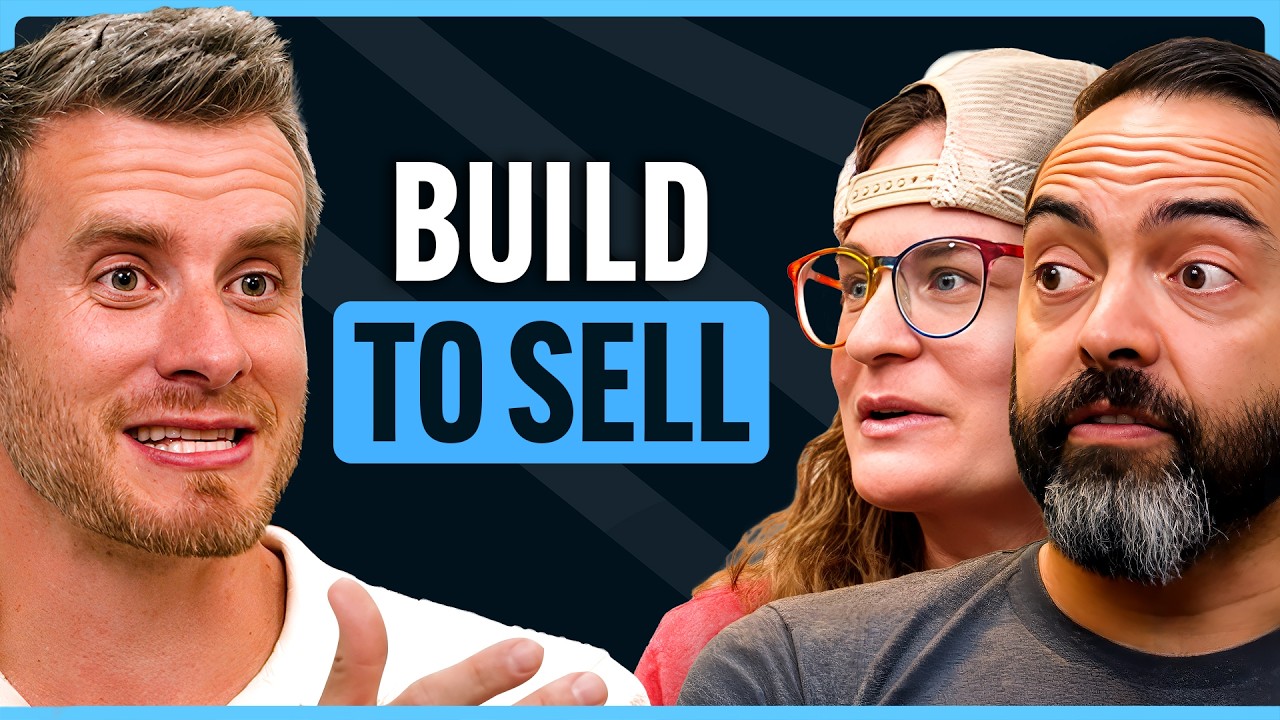
Barrett Brooks is back on the podcast today. He's a coach to many well-known creators. We're breaking down the 5 traps that keep creators stuck below 1 million and how to avoid falling into each one of them.
Mistake number 1 is betting your business on what used to work. Launches are changing, search is changing, algorithms are changing. Right now, obviously, AI is changing everything. You have to be willing to change with it. What endures is That's good. Let's say you're making six figures. Maybe you're even approaching $1 million in revenue, but you're kind of stuck. I would bet that there's some kind of risk that you've had a hunch you might need to take that you've been avoiding. You have to hear yourself say the worst version out loud so you can hear like your logical brain turn on and say, ah, that's not very likely, is it? If you've got a plan or a goal that you're working towards, this amount of revenue, $1 million is what we're talking about here. The thing you should solve for is I love that.
There's so many creators that we talk to that absolutely have the potential to build a 7-figure business and beyond. Our ask is to just like dive into these things and address them head on.
I think people are gonna love it. I'm so excited.
Barrett, welcome back to the show.
What's up?
All right, so we did an episode, was it 2 years ago now?
It's been a while.
It's been a little bit, uh, where it was one of the most popular episodes we've done.
I think people love both of our shows.
Yeah. Did very, very well. I think people love the dynamic that we have and—
I know, we're cute.
Exactly. We've obviously done a little bit of work together, spent, oh man, we met 13+ years ago.
Yeah.
Something like that. So, uh, you have an interesting seat in the creator economy where you've both helped build Kit to the level that it is now and had that hands-on seat to watch, you know, really the biggest creators build their audiences. And then now as a coach for all of these creators, so many of whom are friends of ours or like all of these different big names in the industry, like you're the coach behind the scenes. And so I thought it'd be fun for us to do an episode together where we can say like, all right, we're both in the creator economy, but a little bit removed from it. And so we get to have this like different altitude commentary on some of the, the biggest traps. So how's that sound? Sounds great.
I think people are going to love it.
And if they don't, they can, you know, don't tell us.
Exactly.
Only tell us if you—
My ego is fragile ego.
Yeah, exactly. What would it be like to have a coach with a fragile ego? That would play out in some interesting ways. Before we fully dive in to what we're talking about, I'd just love to hear some of what you help creators with and kind of the angle that you take to coaching, because it's different than I think when most people are saying, oh, I'm going to hire a business coach.
Yes, yes, that's definitely true. The thing that most people think of when they think of a coach, because that word's used so widely, is tell me what to do. And the number one thing I tell people in any intake call that I'm doing with them is I am going to tell you very little of what to do. I'm going to ask you lots of good questions. I'm going to bring everything I know about the creator economy to bear on the challenges that you're facing, but I'm not going to be your consultant. That's a different type of thing. So this gets to your question, right? Which is like, well, what do I do? And what I've noticed is that most problems that creators have, most problems that entrepreneurs have, maybe humans in general, are primarily emotional at their root, and then they have operational outputs that come from them. And usually when someone presents with a, my team isn't any good at what they do, can you help me with that problem? It's actually an emotional aversion to conflict, for example. And if we fix that, then the team stuff starts to resolve itself. So I always say that I help entrepreneurs work through the psychological and emotional blockers to sustain success. And some people want that and some people don't, but I think everyone needs it.
Yeah, I love that. Well, in the path to a million in revenue, which you and I have a ton of friends and clients and all of that who have done a million in revenue as a creator, we've identified—
Have you ever done that?
A million in revenue as a creator? Not in a year.
You've done tens of millions as a software company though.
Yes. There's a whole aside in that. But, there's the same things that we see over and over again. So we did a little brainstorm beforehand. We wrote them up on the board. We're trying, you know, we'll keep your attention hooked on there.
There's mystery.
There's mystery. Exactly. That we're creating. So what we want to dive into is these 5 things that we see people get stuck on over and over again. So I guess I'll pull off the first one and if you want to read it off.
I'm so excited. It's like a game show. You're very good at this, Vanna. All right. So mistake number 1 is betting your business on what used to work.
Yeah, this is a big one because you and I have been in this industry for a long time. And so we, we know a lot of people who actually have very durable businesses as creators. They're not like flash in the pan, one-hit wonder, whatever catchphrase you want to say. They're like, no, I've been earning a living as a creator for 5 years, 10 years. They're the kind of people who, when someone says like, oh yeah, when the creator economy started in the pandemic and they're like, I mean, I'm sorry, what?
Excuse me.
I've been here. I was doing this a decade before. Exactly. But they run into a problem where this market is shifting. The algorithms are shifting. I mean, even one of the biggest things is just we've gone from every social platform being follower-based to being intent or interest-based. And that totally changes the game. And honestly, it favors newer creators over legacy creators. And so, but at the same time, to get to scale, you've got to be doing this for a while. And so there's a lot of things here. What are some examples that you're seeing of betting the business on what you—
Yes, so many. And it's funny because like we heard this refrain forever that email is dead, you know, long live email, basically. And so that, that it has been durable actually over time, which I just find fascinating. So I'll give that little plug that email is constantly declared dead and it has not yet died yet. And I don't think it's going to.
What's crazy is it's having its biggest moment.
Yes.
Like it used to be us nerdy business folks who were like, no, but really, if you build an email list, And now we have quite literally the biggest celebrities in the world who are obsessed with their newsletters, right? You know, like Tom Brady and Matthew McConaughey are two names that come to mind right now. Yeah, exactly.
Some small name creators on the Kit platform.
Yeah, but they're like, they're actually obsessed with their newsletters and honing the craft of it. That's actually been a fun thing to watch. We need to get back to the traps, but like Tom Brady's newsletter, I think was pretty good when he started, mostly because he was putting effort in and the voice of who it's coming from. Average writing or decent writing on such an interesting topic or the perspective he had was worth listening to. But you can see the level, the attention to detail, and now he's having news articles coming out on a regular basis about his topic of his newsletter from the last week. And even our team is like passing around like leadership lessons from Tom Brady, which, and they're like, like the least sports fan people in the company are like, never thought I'd type this as often as I do, but Tom Brady's newsletter was so good this week. And it's just that dedication to the craft. And to your point, broadly, like email has been durable for a very long period of time. Yeah. Okay.
So let's come back to what endures, cause that's some of the antidote to this trap, right? So this trap of betting your business on what's always worked. The biggest place we see changing right now is search traffic. And forever the whole industry was built on search traffic. It was like, how much content can you put out and how high in the rankings can you get? And that drives all of your income potential.
And a lot of the collaborations that you were building back then were around backlinks.
Exactly. That's right. Partner, get your stuff linked back to— and I know we're going to sound like ancient dinosaurs when we talk about that. We're not that old, but that's what it was like when we got started. You know, YouTube obviously started to change that. It's the second biggest, uh, search engine in the world. But right now, obviously, AI is changing everything. And we're going from an age of information scarcity, which was what a lot of bloggers solved, was here is stuff that you need to know that I can teach you, to information overload where you can get whatever you want from AI at any time. And you can tell it to act like Nathan Barry. You can tell it to act like Barrett or act like whoever. And it does a pretty good job. ChatGPT is like one of my best friends. I love it. Um, and it knows more about me probably than it should at this point.
I was thinking about, like, I was screen sharing something in ChatGPT and I caught this just before I did it, but like hiding your sidebar.
Yes.
Because the things that, you know, I'm like asking questions about what to cook for dinner, parenting lessons, maybe, you know, uh, how to handle conflict with a team member.
And it's all like neatly summarized and you're like, it's like revealing your search history. Yeah.
But, but like 3 levels more personal. Exactly.
Right. Right. So This is the biggest thing is search is changing. And I think that's emblematic of a lot of other things changing right now where how business models got built 10 years ago is starting to break. Part of that is technology. Part of that is people getting wise to that's how things work. And so they're more aware of how it works now. Like you can't run the same launch models that you ran 10 years ago because so many people have been through so many of those launch models. They know before you do when you're going to sell them, right?
People get on webinars, email for where you're going to do this type of thing, right?
Yeah. That's not true across the board, right? But just many more people have been exposed to these models now because they've been around a long time. And so I think launches are changing, search is changing, changing, algorithms are changing. And just because you have half a million followers on Instagram, for example, that does not mean that that audience is going to continue producing the same business results anymore going forward. And I see a lot of fear based on all of this because it's like, well, what if my business gets taken away from me? I've been making such good money for so long. What would I do? And that is an interesting response, but I don't think it's the right response here. So you might ask, what might be the right response, right? And I think the right response is to know that of course everything's changing and it always has been. And the thing that happens when you get big is you just get used to the way that you've been doing things. And so what you have to adapt to is you have to be willing to change with it. And so this gets back to the enduring thing. What I was going to say before, but I realize it fits better here, is that what endures is story, especially in the face of information being able to be fed to you whenever you want. What's left for us as humans? Well, what's left is stories. And we've always been a story-driven learning culture as human beings. That goes back to like biblical times. That's how the Bible got written originally. And many different other cultural, cultural things. And so newsletters from people like Tom Brady are relevant because Tom's got stories for days, right? Because he's been in how many huddles and key moments, or how many team environments with personalities that were unique, like Antonio Brown or whoever. And every one of those has a story attached to it. And so if you can remember and stay centered on that piece, all right, I've always got my stories and I just have to figure out How do I get them to people in this new world and how things are changing? You don't have to be freaked out by the fact that things are changing along the way. Yeah.
And also realizing that if you've been doing this for 10 years or so, somewhere in that 10 to 15 year window, which a lot of creators have been, you were catching a wave very early. Yep. Right. Instagram is 14 years old, right? Something like that. Like it's still not that old. I have a kid that's 14. I don't know why that just hit, you know, like I guess he turns 14 in a few weeks.
Golly.
But these things are so new, or if they've been around for that long, that means that you caught it super early and it was brand new then. You just happened to catch it so early. And so expecting these cycles to change. And so focusing on what doesn't change of storytelling, the quality and the craft, perpetual learning, saying, okay, I won early on because I was learning what worked and I was testing, experimenting, and all of that. So let me keep doing that now. And then I think it's going to be that consistent execution for a long period of time. And you have to approach that from a place of curiosity and excitement and not fear. And I don't know what else goes into it.
Dread. Dread. Yeah. I mean, honestly, a lot of people dread it. And the way this ties in, number one, I can't believe your kid's 14. We met and I could have held him in my arms like this. But the way this ties into you making that comment is that this is true of aging as well. If you look at how most people age over time, we age away from what's new and we want to be comforted by the things that we were used to when we were younger, when we were kids. And if you look at the antithesis of that, well, who are people who are in their kind of elder years, elder as a respectful term, and are still with technology? They're keeping up with things. Like, How has Oprah stayed relevant for so long? Who are the folks who are older who have kept up with the flow of technology over time and not been repulsed by it or not been scared of it, but they leaned into it? And I think that's the moment that we're in right now. Like, massive winners are going to get made right now on the wave of new technology or new algorithm changes. And what you just have to be willing to do is lean into that and experiment with it rather than leaning back and just hoping it doesn't take your cheese along the way.
Or really trying— I see people frantically grasping for the last— something like search traffic is dying out and there's still insane amounts of search traffic. So there's lots of money to be made there. But they're grasping and trying to hold on to the last bit of that instead of just saying, oh wow, that was a huge blessing for the 3 years, 10 years, or whatever that I had that. And now what's the next wave? Because the attention is still going somewhere. Instead of saying, okay, I'm going to learn, you know, um, like the Instagram algorithm or YouTube or whatever other thing, you gotta go get that new attention.
In AI, so I had the first person call me that wanted to have a conversation about coaching that told me they found me through a conversation with AI. And I was one of 5 coaches that AI told them they should look up. And I thought, huh, I haven't heard that before. I wonder why that is. And I find a lot of joy and excitement at that. It's like, well, how can I amplify that effect? How can I get as many people as possible? To get ChatGPT to say, you should call Barrett. That would be a huge competitive advantage. And so what was working that led to that? I actually didn't even know that I ranked as high as I do for executive coach for creators. I'm like number 2 or something for that. I had no idea before that. But my thesis on the ChatGPT thing is that I'm such a heavy user, which means I'm feeding it all of this information about me. And I know they say they don't use that. To feed anything else, but the model knows, and I'm giving it way more information than the public has about me as a coach and how I work and the types of things I'm taking away from my work. And I, I'm personally betting— no offense, Sam— but I'm betting that that is having some positive follow-on effect to why it then recommends me to people who want to coach and are creators. I don't think it's chance.
Yeah. Yeah, I think it's that. And I also think the search rankings, like there's a lot of evidence that— so in even the thing that's killing the search rankings is using—
it compounds your advantage still. So that's a good thing. I think that's big.
So if we're talking about the anecdotes to this, I think we covered it well, but it's really focus on story.
Yeah.
Really be curious.
Yeah.
Keep learning and know that the things that, you know, those traits that got you to this level of success, if you lean into those traits instead of the fear around it, then, uh, you're going to find the next thing.
Yes. And the last thing I would just say is there, there is a large and growing audience for basically everything. There's more attention online than there has ever been and probably less than there will ever be. And so this world of being a creator is still massive and growing rapidly. And so there's huge opportunity. You just have to go to where the audience is right now.
You know, the crazy thing is when we met, the biggest names in content creation were all at World Domination Summit. And I remember like Leo Babauta, Chris Guillebeau, Corbett Barr, right? Like people like this, they were making like $100,000 a year.
And that was the dream.
Those were the biggest names. And now, you know, and they had maybe as many as 10,000 people reading their stuff. And now, you know, people are building audiences of millions, of millions. And so they're earning— like, it's all— so there's so much more potential than there was before.
I think the combined audience reach— I'll just go with like top platform for each of my clients. The combined reach from the top platforms of my clients is in the— it might be close to 50 million range. So the people— think about how much leverage that is. This is one of the reasons I've fallen— I was so judgmental about coaching as a career when I got into it. It was my own hangup about it. But now I think about how much leverage it is to be working with leaders and entrepreneurs who can reach 50 million people, right? There is literally not— I don't think there's another job I could do that would allow me to reach, reach, you know, I'm not like reaching them, but through the way that I work with my clients, impacting that many people for sure. That's pretty cool. And that's going to grow over time. Like, that's the opportunity here. So that's the antidote, I think, is realizing that the opportunity is smaller than it will ever be. As long as you're willing to adapt. I love that.
All right, let's go to number 2.
Let's do it. Okay. Number 2. This is one of my favorites. Believing a different business model will be easier, better, more successful. It'll make all of your dreams come true and all of your problems go away overnight if you just change your business model.
Yeah, that's just hanging out and going like, oh, Barrett, my dear neighbor, your grass, it's so green, so luscious. If only I could have a lawn that looked like yours.
That's right.
Yep.
Little do you know how much fertilizer I'm putting on that lawn. Um, so the way I see this pop up is, and I was joking with you earlier, although it wasn't a joke, we were joking about it, but it wasn't a joke. I have had multiple days in my coaching practice. So I've been coaching full-time for about 2 and a half years now. And I've done somewhere between 500 and 700 hours of coaching during that time, which is like in the grand scheme, not that many, but in that amount of time, it's a lot. I've had at least 4 or 5 days where on the same day I had 2 people in my client list talk about not the other person, but the other person's business model is the thing they wish they had. So I'll have a, maybe a course creator who does a launch-based model say, I really wish I had a membership. And then that afternoon I'll have someone with a membership say, churn's really killing me. I wish I still had my launch model. And it's like, whew, you two should talk. And I find this fascinating and it's rampant in the creator world where people think, if I could just have thing, business model is a very common one, all of my problems would be solved. This is not true. No. This would be like you saying, if I could just not run a software company, finally I could make some money around here.
You know, it's actually funny because there's something going on right now in the Twittersphere. Where this whole crew of people who make apps just switched to launching courses and everyone is like mocking them for it and being like, oh, these guys are a sham. And part of it is like they did the whole like Ferraris and whatever else for, you know, they're very much selling the dream. Uh, and so they lost some respect in that, but then people are going back and forth of like, if you were making this much money from software, why would you make apps? And then someone else is breaking it down and being like, well, on the App Store, you're paying 30% to Apple and then this and then that. And then they break down the expenses and they're like, well, actually the course. So it was funny watching this play out like in real time on social media of just this grass is always greener. And the flip side is I feel like I have these same conversations that you're talking about where someone, everyone doing a launch model is like, oh man, but that recurring revenue. And I just always say like, let's talk churn. Let's go ask 5 of your friends who run membership models. In the like sub $100 a month price point. And let's ask what their churn is.
Let's ask them what their number one problem is first. And I guarantee it will be churn.
Yes. And then we'll say, what's your churn? And everyone's assuming like when they're making their models, they're like, oh, and we're going to have 7% monthly churn in our membership because it's going to be higher than SaaS. But you know, all of this is like, no, it's probably going to be 15%. Yeah.
And the other thing that happens is when you launch, you get maximum excitement, right? And sometimes people are just excited to pay you for a thing, period, because they want to express their gratitude and they don't actually buy based on their need. And you know what happens a year after that? All of those people renew. Because if you do a year, a lot of people do a year the first time you launch something, right, to lock in the revenue. All those people renew. And you know when your highest churn is? That month when all those first-time buyers renew. And I bet you didn't model that. I bet you didn't model it. 40% of the people who bought in year one, don't buy again in year two. And that's not to say there's anything inherently wrong with a membership model. The mistake here is actually assuming that there's some universally best model, right? There's a set number of ways you can earn a living as a creator, really in any business. And I'm not going to remember all of them, but like, there's digital products, there's physical products, there's software, there's services, there's events, community, um, maybe there's a couple more. Yeah, those are the options. And I have news for you, Nathan Barry. Are you ready for this?
I'm so ready.
Every one of them sucks in very specific ways. Yeah. And every time I hear a creator say, if I just did this version of my business, it would be better, I also then ask them to say, and in what ways would it be worse? Because every business sucks in some way. And the job is actually to fall in love with the problems that you're choosing. Choose your hard and allow yourself to embrace that every version is hard and is the version of hard that this business model is going to be. Can you live with that? Because it has all the benefits too, but none of them have zero hard. They all have lots of hard, lots of pains in the butt, and you got to figure out, can you deal with that in the business that you've chosen?
Yeah, there's so much to that. And I just hear this over and over again. I think part of the reason that it's especially a problem in the creator world is if you were to, like, if you switch with me to a totally different industry, let's say that, um, you and I ran a lawn care landscaping company.
Yep.
We probably hear about other landscaping companies doing things slightly different, or, hey, did you hear this new, everyone's using Jobber now to send invoices. It's way better, right? Or whatever it is, right? Um, I've hired some landscapers recently. Um, but you're not hearing about totally different business models all the time. Whereas in the creator world, we have just such an insane amount of information that we're constantly inundated. And, you know, podcasts like mine and yours and others, right, contribute to this problem where you can just hear about, hey, this is the thing that's working, right? Oh, selling through DMs, that's the thing. Uh, I don't, you know, I don't know what else, like going all in on social, forget social now, it's just, uh, all these other things, right? And so you can, hear a huge number of ideas and it makes it incredibly hard to just stay in your lane and execute.
Yeah. And I think the other thing that's true here is so much advice is centered around one business model. Choose one. And I agree with this. For most people, you should start with one. Just like if you're going to produce content, you should start with one content channel. But if you look at every mature business in all the world, Very few have one product they sell. Apple, how many products does Apple sell?
That's quite a few.
A lot, right? They have one core business.
AirPods alone is bigger than most companies.
They have one core story that they're selling, but it's across a lot of different products. Tesla, many different products. Um, services business, every Big Four accounting firm, many different services that they offer. And so it's not that you can never have more than one business model. It's just that that adds complexity to your business in a way that you then need to embrace the downside of as well. And so this either-or thinking, I think, is really trying to solve for problems that are painful. And if you just got clear on what's painful about what you're doing right now and solve for that, then you don't even have to go through this whole, I got to transform my whole business model thing. Like, this is the creator version of a big Fortune 500 company doing a reorg. And think it's going to solve all the problems.
And they do it all the time. Every, every 18 months. You know what we need? We need a reorg.
Exactly. So if you have ever been part of a Fortune 500 company that did a reorg and the leaders said that to you, this is going to solve our problems. And you thought, yeah, okay, whatever. This is your version of that, right? Don't go saying this business model will fix all my problems because it's probably not true.
So I guess as to what to do instead is I think what I would say is feel free to explore the other business model.
Yeah, of course.
It's totally fine to write the Notion documents and the pros and cons. And interview your friends, be like, all right, that recurring membership model or that launch model or whatever it is, software, right? Yeah. You know, oh, you launch software, you're doing great with it. Like, what are the pros and cons of all that? Let me learn that and probably just set that aside. Yep. I'd be really careful of hype and, you know, hearing the podcast episode and then going, oh, I'm going to do that and I'm going to implement it and have it live next week.
Yeah.
Like I would brain dump all of the thoughts, interview other people, but let it sit and, you know, and I don't know, marinate for a little bit. And then take that same level of attention to detail to your own business. Like, what is great about my lawn? You know?
Exactly, right.
What is, what would, you know, my neighbor, you can even ask them like, hey, you know, to a peer, if we're both peers running in a similar space, but very different business models, Like, what are you jealous of about my business? And you'll go through, well, you know, like your social presence, you know, whatever those things are, listing them out. And that's going to help you go, oh, yeah, maybe I only saw the problems. Maybe I shouldn't throw this away, throw away 8 good things because of these 2 problems and get that outside perspective.
Exactly. To really mow the hell out of this metaphor, it's like, go pick some clover out of your lawn before you say, let me replace the lawn. You know, just spend a couple hours thinking about what are my problems right now.
I'm pretty proud of that one. That was pretty good. I think on that note, we should get to number 3 before this is totally derailed.
This is what people love. Are you not entertained? All right.
All right.
Number 3, letting risk aversion kill your momentum. So we've kind of been dancing around this one, actually. Um, but I see this one especially in established creators. I mean, we see it in all entrepreneurs, right? I think everyone looking over the edge of entrepreneurship saying, should I start it? Should I start it? Should I start it? Is dealing with a version of this same problem, which is, can you embrace the risk because of the upside that it might give you if you take it? But people who are established, so let's say you're making six figures, maybe you're even approaching a million dollars in revenue, but you're kind of stuck. You don't know why revenue has been flat for 4 or 5 years. I would bet that there's some kind of risk that you've had a hunch you might need to take that you've been avoiding. And the bigger you get, the more income you make, the more your team grows, the more your audience grows, the more it feels like there's something at stake. Yeah. And so when you're getting started, like we were talking about earlier, when all of our friends were getting started, you just try stuff because you have nothing to lose. You have everything to gain, which is not having to work at that crappy job that you had and you might have freedom. Well, now you have freedom and you're scared you might lose that. That's a much bigger deal to think, I'm going to go take this calculated risk over here. And this plays out if you're choosing a different business model you want to layer in. For example, if you are— let's just use MrBeast as an example. So MrBeast had a massive YouTube audience and he decided he was going to go into physical products, right? That was a risk. He probably put a lot of money up for that. Now he was making a ton of money too, but I guarantee you that did not feel like a no-brainer to him. I bet it felt risky. Mm-hmm. And the thing that we think when we look at someone like MrBeast is like, yeah, but look at all the things he's got going for him. He's got a bajillion followers and a big team, and he's got reps at CAA or wherever he is represented by, and he'll be fine. And it's like, yeah, well, let me show you a beginner creator who thinks you're gonna be fine if you take the little risk that you're thinking about. Right. And this is where people get stuck, is it's the same psychology around risk. No matter how big you are, it's just the bigger you get, the more you have to lose. And so it adds weight to the decision. And ironically, having the resource where you could sustain a failed risk is the very thing that makes you more scared to take that risk to begin with.
Yeah, it's this— it's a huge problem. And I lived through that a lot of like—
Same.
You know, there's things where like, oh, you know, if I had— if I had nothing to lose, here's what I'd do.
Right.
There's a few of these phrases that I've had friends or coaches or others like kind of gently give back to me that now pop up into my head. You know, it's things like, yeah, if I had nothing to lose, I would do this. And you're like, okay, interesting. Let's dive into that one. If I was in charge, this is what I would do. You know, a few of these things where you're like, okay, yeah. And so if you're not in charge, who is?
What would have to be true to whatever?
Yep.
If you knew it was going to work.
Yes.
What would you do? It's another good one for risk assessment. Um, and then the other one, uh, Tim Ferriss had a coach named Matt Machari on his podcast at one point, and it was basically like a reverse interview or something. It was basically a coaching session where Tim got coached by Matt, and Tim was talking about, I think it was the fear of dating was what he was sharing with Matt. And Matt did this exercise, which was ironically, I think, something that Tim talked about in The 4-Hour Workweek, which was like fear setting, I think he called it.
Yeah.
And it was— I love that Matt's like, so there's this book that I read, but it's a very effective exercise where you say, let's just play out the full worst-case version. You start dating someone, they're a fraud, they steal your identity, they take all of your money, and they leave you destitute and sad and broken in a way that you never want to date anyone again. Is that the worst version? And I don't remember if that's what he said the worst version was, but it was something in that kind of flavor. Every entrepreneur has a story that they're telling about, if I take this risk, this bad thing might happen. And it, as my mentor Seth Godin says, all of these end up in, and then I have to live in a box, you know? And it's like, when we say it like that, it's funny, but when you're feeling it, it's like your chest is tight, your neck is scrunched, and you're freaked out by the thing. And you have to hear yourself say the worst version out loud so that number one, you can let it go and release it. And number 2, so you can hear like your logical brain turn on and say, ah, that's not very likely, is it? From where I stand, taking this risk is highly unlikely to lead to me living in a box. But some version of me, usually it's some younger version of us inside, is saying, but what if we end up poor again? Or what if this breaks this relationship I care a lot about, which I saw happen to me when I was younger? Not me, but like theoretically. And so we play these stories out over and over and we attach them to risks that we think we might have to take. And that stuff just isn't true anymore. And so we're living out these stories that are no longer reflective of where we truly are. One of my favorite questions to ask clients when we're talking about risk is, how much money is in the bank? And we have absolute confidentiality between us, so I'm never going to share it, and I don't even care. I want them to say it out loud. Approximately half the time, they don't know.
Really?
It's like they are so afraid of ending up poor that some— something about knowing how much money they already have, it confronts that in a way that makes them uncomfortable. And sometimes that's the homework. It's like, go look at all your assets and come back and tell me what you're worth. And usually what I find is people are like, it's a lot of money. Yeah, whatever. A lot of, you know, because as you progress, it's more money than you thought you were going to have, no matter how big you've gotten. And when you acknowledge what is true, it takes your body and like, I would call it your soul, time to catch up to what your brain may know. But you have to at least start with your brain knowing it. And so that's a big antidote here is like, hey, what's actually true about how safe you are right now?
Right?
And as a percentage of your net worth, how big of a risk is it that you're taking? So I'll, I'll reveal— I won't reveal a lot of details, but for a real-life example, for me right now is I'm looking at buying a business and acquiring it, and there's a dollar amount attached to that. And in the abstract, it's like a big dollar amount, especially for a young version of me. I'd look at that and be like, whoa, that's a lot of money. But if I look at it against my assets, if I spent all the money directly and it failed completely, it went to zero, which is highly unlikely, I would still not go bankrupt. And so in the grand scheme of things, the risk I'm taking is scary and it would be painful to lose all of that money, but it will not lead to me losing my house, to me going bankrupt, to me losing my family. None of that will happen.
You will not have to live in a box.
Exactly. I will not have to live in a box. And so what am I actually scared of there? Well, what I'm actually scared of is I think this might be what I'm made to do. I think I might have found the thing that is going to allow me to expand my mission in a way that I never could coaching people one-on-one. It's going to give me an even bigger multiplier on the impact I can have. That's really exciting. I think this might build, you know, people love generational wealth as a term. I'm not always that drawn to it, but like that is a factor here. I think this could be a thing that could lead to that for me. That's pretty cool. And having that opportunity and then having it fail, I'm scared of that. Right. Because that would be really sad. I would have found a thing that I was really excited about that had all this upside and something didn't work and now I will have lost it. That would be painful. I would be bummed about that.
But if you dive into that and you can actually play it forward and realize like, oh, that's what I'm afraid of. Yes. I'm afraid of squandering this potential and this opportunity.
Yes.
Not the downside from where I am now.
Exactly. And we convince ourselves that there's something inherently dangerous about the things that we think we should do or that might lead us to where we say we want to go. And that keeps us safe in a way because we don't have to find out that maybe our ideas aren't as good as we think they are, or maybe that business model isn't as good as I hoped it would be, or maybe that person I want to hire isn't as great 6 months in as they were on day -5 or whatever when I was interviewing them. Yeah, but that's the risk of entrepreneurship.
Yeah. And you got to get comfortable with that risk.
That's right.
I think two other things that I think about as a creator, especially because you know that you're going to be finding things that worked and then at some point they're going to stop working like that's true in every business. I just think it's a tighter cycle.
Yeah.
In, in this creator world as things are changing faster is think about the things that you can lock in and to an extent you can lock in attention through email. Yeah, we've talked about that. But then you can also lock in earnings.
I was just, I was just laughing at the subtle bit. Slide that one in there.
Got that one there. I may have dedicated like my entire career around that one fact. And then the other one is, I like how you weren't going to laugh, but I like, I caught on to the fact that you were at a smirk and you're like, I got to explain this.
Once I felt like I threw your flow off and I had to explain.
Yeah. All right.
Keep going.
But the second one is taking the cash flow that you generate and doing something crazy and wild and putting it in the S&P 500, like a total market fund security, you know, you know, and just saying like, okay, I'm going to keep locking this away because a lot of these creators that I talk to who are very risk-averse, or if we go back to number one, right, they still have their business bet on something that's not working and they're really worried about that because their cash flow is at risk. But then I'll talk to them and they already have like You know, when, you know, usually years earlier they dabbled in like the retire early movement and they were like, if I could get to $1 million or $2 million or something like that, then I could live off of it forever. And you'll get to like, well, if they've been investing in a smart way and just steadily putting away, you know, 10% of every launch or 20, you know, like investing all of that money, then they're at millions of dollars invested.
And they're like, oh, actually I have a huge safety net.
If you play it forward 25 years, it's like, hey, you're going to be okay.
You've got a little room to play here. And that's why I look like looking at the numbers with people because it brings— logic is not the solution to most of these problems, but turning your logical brain back on when you're caught in the emotion of the thing is part of the solution. And that's what looking at the numbers does is it says, hey, if you got $1 million in the bank and you play it forward 25 years, if you're at the age of 40 to a normal retirement age, which is not to say it's when you want to retire, that's not what I'm saying, but just if you play it forward, that's going to be millions of dollars. That's going to be fine. You don't have to worry about that part anymore. Congratulations, you won the game. So now what game do you want to play now that you won the one you were already playing? Yeah, I think that's what the risk thing is asking is what do you care enough about that you want to take another swing at it?
That's where I think the book has some issues with it, but I really like the book Die with Zero because it talks about how you— there's like 3 currencies in life. I'm probably going to get this wrong, but basically talking about you've got time, you have money, and you have health. In a typically lived life, you never have all three at the same time because early on you have time and health but no money. Later on you've got health and money but no time because you're, you know, you've got the kids and the career and all of this. And later in life you've got money and time, but all you could want, but you don't have health anymore. And so thinking about Like, okay, what am I really worried about? You know, all of those things and realizing like, oh no, I have those 3 main currencies right now and I'm going to enjoy that. I'm going to take some swings knowing that, hey, look, there's $500,000 or $1 million in my retirement account and that will, you know, I am now, I'm set for life if I don't put another dollar in. So long as between now and 65, I don't put a dollar in or take a dollar out of the retirement account.
It's like, we're good.
And so it just gives this level of freedom to play around with the risks and say like, okay, I don't have to play scared. I can play from a place of confidence.
So the question that I would ask for someone dealing with this one is, what's really at stake here?
Oh, that's good.
And really getting clear on that. And that's usually helpful to say, this is the box that I'm creating, and within this box I'm willing to take a risk. And if you're not comfortable with that, that's okay, but define it. And then ask, is there a version you could get comfortable with? Reduce the size of the box to the point that you're comfortable and make a bet on that and put some parameters around it. I'm going to try, you know, I keep going back to this physical product thing because I see so many creators making that transition. I'm going to try making a physical product and we're going to invest this amount of money over this number of time to get to a prototype. And if at that point we can pre-sell X number, I will continue with this experiment. Great. Now you know exactly what your risk is, how much time, how much money, and what the success factors are. Now you can go give it a shot and you know you're not going to end up destitute in the process.
Yeah, I love that. All right, let's go to number 4.
It was such a good idea at first. All right, so this one is in some ways the inverse of the first one, right? Which is moving on too fast from what is working, right? And we have some painful experiences with this ourselves.
We might have done this once or twice, a few times.
And the way this plays out is let's say that you find a strategy on LinkedIn that's— or Instagram or whatever your platform is, YouTube— that's really working. And you know that if you repeat that over and over and over, it's going to continue to yield results because you've seen it play out that way and you have no signs that it's not working anymore. So you're not hanging on to something that's dying. You're actually seeing it work. But you have one little problem. You don't like doing it.
Yes.
So the business says we should do this infinitely, right? Because it will continue to yield business results. And your heart or your soul or you're just like Personality says, I hate this with a burning passion.
I'm somewhere between irritated, bored, any of those things. Like, I am ready to move on because oftentimes I found a lot of success from doing new shiny things, taking risks, whatever else. And so it's time to do that. It's not time to do boring, consistent thing that's working.
Exactly. And so there's actually a term for that, which is idea productivity. So many— this is a metric you can measure in the brain. I use an assessment for it, but it's a natural ability of brains and it's a spectrum of how high is your idea productivity. And there tends to be high overlap between people who are entrepreneurial and people who have high idea productivity.
Mm-hmm.
There's nothing wrong with that. You just have to recognize that just because you had 10 ideas yesterday, number one, it doesn't mean you should share them all with your team. We've also had to learn that one. Um, and number two, it doesn't mean that they're all good ideas that you should pursue. They might be good ideas in the abstract, but they might also be distractions from the thing that you say that you want. And so learning to deal with that is one of the big solutions here is what do I do with all of my ideas? And the second thing is if you find a thing that works to get you what you say you want. So if you've got a strategic plan that says I want this for my creator business, which I recognize most creators don't have strategic plans, but whatever, you have a goal.
We're talking to the established creators. Yeah.
And you've got—
everyone else will pick up on like, ooh, Oh, maybe I should have a strategic plan. Okay. Yeah, I totally have that. Yeah.
I should teach a workshop on that. If you've got a plan or a goal that you're working towards, this amount of revenue, $1 million is what we're talking about here, and you have a thing that's working, the thing you should solve for is not how do I stop doing this because I don't like it? It's how do I keep doing it without me having to be in the middle of it? And so this is like with me, I was saying to you earlier, I don't want to be on Instagram all day. I don't even have social media on my main phone. I have a separate device that from 9 to 4 gives me access to 2 platforms because I don't want to be there. I know it takes me out of my life that I want to live, but I do want to be there. I just don't want to physically be there.
Right.
So what do I do? I have a team. I work with an agency. Um, shout out to Ampersand. And they, I feed them ideas and content. I do lots of voice notes and Marco Polos and stuff like that. They might ask me questions. I feed them ideas. They turn that into reels, carousels, and everything else that needs to go on Instagram. They feed me back the reel kind of outline. I record once every 2 weeks, and now I'm on Instagram every other day at a minimum. I don't want to be there all day, but I am there for the audience that wants me to be there. And this is one of the big solutions is realizing that if something works, and you don't want to do it, you should probably be hiring for that thing.
Right.
And creators— we'll get into this in a little bit, the things that creators struggle with around hiring. But so many creators have this story in their head, and it's based on very real lived experience, that if I build a team, it's going to make my life miserable. I'm going to have to do work I don't want to do. I'm going to be working more than I want. I'm going to be dealing with all of this childish stuff that I don't want to do. And usually that's rooted in— well, I'll ask you as a listener. So if you're listening to this, what is the story that you tell yourself about building a team and what past experience of being in a team is that related to? Because almost always, not always, but almost always, those things are tied. If it's not tied to a team environment, it's probably tied to the family you grew up in and the way that you see relationships play out. You joked about this on one of your podcast episodes that you saw a tweet one time, and I think we shared it with each other. That entrepreneurship is a trauma response. And I do think that for some people it is because it allows you to create a bubble that's this big, but opportunity that's this big, and you don't have to rely on anyone. And so if you have relational challenges where you don't trust people or you have a fear of abandonment or you don't like conflict, you know, the easiest way to avoid all of that? Don't rely on anyone. Do it all yourself.
Yeah.
And eventually that breaks. And when you're finding the edge of your capacity, that's usually a sign that you need to hire. And that's one of the ways that this plays out is you keep finding stuff that works, but your fear of hiring or bringing someone else into the picture is the reason that you can't do all these things that work. It's not that you can only ever be on one platform. It's that you might not be able to do every piece of every platform that you're on. So that's the big anecdote here. Yeah.
I'm just thinking about the, you know, the example from a previous job and actually one that has played out a lot in our relationship was at the company I worked at before starting Kit was there was probably 80 or 90 of us in the company. I joined when we were 14. We'd scaled all the way up and our CEO was very people first. His name was Michael and he, we had just because of how we'd expanded offices, we had two separate offices separated by a parking lot. So it was sort of like product and engineering in one and sales and marketing and execs in the other.
Overhead.
Exactly. And, uh, so he came over from, you know, across the parking lot to the product engineering side. And as he's walking through the office, he loved giving office tours to like potential investors or all this stuff. And one of the designers who was on my team, Uh, the CEO walks up to him and goes, hey, I'm Michael. Do you work here? And I had this moment of like, Michael, that like the presentation, like the all-team you gave like 3 days ago, Andy did like all that product design work. And like, you don't even know who works at your own company. And it wasn't through a lack of effort. It was like, it was a 90-person company. I internalized that as like, if someone works for me, I have to know who they are. I have to know things about them. Like I have to be able to care for them, take care of them, all of that. And that played out in, so I have to have a very small team. Right. Which was entirely the wrong response, came from a bit of trauma, like hopefully, or kind of a healthy reaction to that. Like, oh, I'm going to go this other way. But I just see that all the time of people playing out in the opposite way or ending up with some limiting belief based on it.
Yeah, it's a really common response to something, a negative If you just think about how we get conditioned, why our brains work this way, it's like the caveman version is you watch— I watch my friend Nathan eat a berry on that bush. Nathan died about 4 hours ago.
Poor Nathan Barry.
I am never going to eat a berry again. That's a good decision. The reason our brains function that way is to protect us from stuff that could harm us, right? And so, so much of the modern world is combating the way our brains are wired because we don't exist in those circumstances. Nathan Barry eating a berry is not likely to kill you these days, right? Yeah. So what we have to adapt to is getting our brain, body, and heart aligned so that we are adapting to the real circumstances in front of us. And it is true that you witnessed the CEO not know a person that had done really hard work that benefited that CEO at the time. And you internalize that as, I'm going to build a team where I know everyone, we build great culture, I take care of everyone. And, and that had a beautiful run. And then you were bumping up against the limits of that, right? And you realized, well, shoot, I've got to make a choice. Do I keep building my company towards this big mission and vision that I have, which means I might break this covenant that I've been holding with myself? Or do I stay small and know everyone and take care of them in the way that I envisioned? And what you found is a middle path where you can kind of blend both. And there might come a day where you walk up to someone and say, I'm Nathan, what's your name? And that'll probably be a hard moment for you afterwards. Right. But it won't break you and it won't break that person.
Right.
And you will have built a really impressive and wonderful company in the process. And that might be the cost of it. Right.
Yeah.
And there's a version of that that we're all living out.
Yep. That's good. One of the things I want to talk about on moving on from what's actually working, because this is something that I've done a lot, is basically I would think of my job as to build, like start a new thing, get it to the point that it's working. Early, that's a company or a product. Later on, it's a channel or a conversion method, you know, and then get other people to run it, right? So I've done these other steps quickly or correctly, and then I move on and I build the next thing. And we repeat that over and over again. What I imagine happening, like if you were to look for a visual, uh, I love the Lord of the Rings movies. And so if you think of like the Eye of Sauron and it like shines on a particular thing, Usually whatever that is—
in the eye of Nathan Barry.
We're not going to brand it. I regret the analogy already. But usually whatever that attention is on goes well.
Yep.
And whatever that attention is not on gradually starts to decline. And so we had an example of this play out. What is the joke that's in your head right now?
I'm imagining the kit team listening to this and now they're just going to— there's going to be a little emoji reaction Slack and there's going to be an I have Nathan thing going on. It's going to be great.
You're welcome. Yeah, we told them to listen to the podcast, then it went terribly. So an example of this from when we were both running the company was everything we were doing with affiliate webinars. Yes, we figured out something that worked.
We did the successful thing we had ever done up to that point.
Oh yeah. And just resulted in a huge amount of scale. And there were amazing people like Darryl and Alexis and Isa and others who played a huge role in that. But what ended up happening is as we built that up, it was growing really well. Yeah, we moved on to other things.
Yep.
And then the people working on it got tired because it's a huge amount of work.
It's hard work.
It's very, very hard.
There's like a shelf life to how long someone can run webinars 3 days a week, right? You know, it's like 2 years or something and then you get a little burnt out on it.
Yeah. And so we helped them craft other roles. There's a bunch of things that happened, but we let that taper off and it had peaks and valleys. We'd bring in another webinar producer. We'd, you know, transition people in and out of roles and all of that. But we ended up letting that die off for a long time. Yeah.
And there was no inherent business reason.
Right.
I think that's the key point here is we could— there were probably an infinite— not truly infinite, but in terms of how much we could execute, an infinite number of audiences that would benefit from the message we were sending in those webinars and that were in overlap with the customer base we were going after. We probably could have hired 10 webinar teachers if we could book enough of those things, or duos or something, a webinar teacher and then a producer who goes out and books them or whatever. And instead we let it lapse. Like, that's how big the opportunity was. But because of the people challenge, which was you do it enough and you get tired of it, it was like, this is hard. Let's not do it anymore.
But it wasn't even conscious. It wasn't even conscious. It just gradually dropped off. So there's two things that I think help with this. One is having some framework for how you move ideas through the process. Right? So if you said like, first we have ideas and then we have an experiment that we're going to make. If that experiment goes well, then we're going to make a bet on it. We're going to put some more resources behind it. And if that bet goes well, we're going to make it a system.
Yes. Or a flywheel.
Yep. And so then that system or flywheel, when that is running, then it has to have a measurement step and how you check in. That was the mistake. We got to a system or a flywheel, but we didn't track it in the right ways. And so as it declined, we should have noticed right when it peaked and started to level off and be like, oh, hold on, what's up with that? Let's figure it out. Let's triage this right away. This is a serious issue. you know, uh, multiple weeks or a month of, of time in a row of it declining or flatlining, like we should have been all over that and fixed it. But we didn't notice for like 3 to 6 months because there wasn't a system for checking in on those metrics. And so you have to be able to take something that's working, hire a team, let them scale it, but you have to have that step of measuring and making sure it's continuing to work. And coming back to it on weekly, monthly, whatever the cadence is so that there's accountability and all of that. And then as you do new things, you're saying, hey, I'm allowed to do one, maybe I'm allowed to have one thing in each bucket at a time. I can have endless ideas. Those are free. I actually have a Notion database called the Idea Bin. It has a trashcan emoji as the, that's where they go. And I put any, like, Ideas are fair game and it's open to the team. They're welcome to dive in and read them. But I will make sure that things have sat in there for a while before I, and I've added to it or whatever else, before I like drop it on somebody. So you can have as many ideas as you want. Maybe you're allowed 2 experiments that are running at a time, 1 bet, and then you can have as many systems as you want.
As long as you resource it properly.
As long as you resource it properly and you measure it properly.
So this is one of the key CEO competencies where you go from just just a solo creator to being a CEO of a team, even if it's just a small team, the mindset of a CEO is you measure things to see if they work, but that measurement should get pushed to you. You shouldn't have to go get it.
Yes.
So all of the reporting should get pushed to you. If you imagine yourself as a CEO sitting down on Monday morning with a big corporation under you, your executive assistant or chief of staff or someone is going to walk in and say, here are the numbers from last week. That's the way I want you to think about it as a creator is And the way to do it is whoever's in charge of the thing should be measuring it and reporting it to you. You shouldn't be going in Google Analytics or KID or whatever to go figure out what's happening. Your team should be saying, this is what's happening. Right. And then if you see discrepancies, okay, dive in with them, but the numbers should be getting pushed to you.
Yep. I love that. Okay.
Let's do number 5.
Let's do it.
Yes. So I, I teed us up perfectly. It was subliminal. Hiring a team without stepping into leadership. And to me, like, if I had to frame all of the work that I do, it's about helping creators grow into CEOs. And it doesn't matter how big your organization gets. It matters that you have the mindset of a leader and the way that you are building your company. And I think I— not I think, I see a lot of people make hires without making the mental shift to you are now a leader of an organization. The first person you hire, you now lead an organization. And that means you need to have that mindset in everything that you're going about. And if you can make that transition, what's beautiful is on the other side, Tim Grohl, who was on the show before, both of our shows before, he talks about having this existential dread about building a team at one point. And then over time, he realized, oh, this is my greatest competitive advantage. And it's like, yeah, that's what teams are. They should be leverage.
They're amazing.
They shouldn't make your life miserable. They should give you the ability to do things you could never do on your own at a quality higher than you could do them on your own. But that requires making this shift of stepping into leadership. And so many people end up in this wash cycle of hire a teammate, that person washes out, hire a new teammate to replace them, that person washes out. And then creators are like, what is wrong with these people?
The common denominator might be you. I think, yeah, stepping into leadership to me, if I could put it down to one trait, or the one trait that I see that's most missing is the feedback in the direct conversations and leaning into conflict. Basically, I see over and over again, it's like, yeah, this person I hired to manage this, like, they're pretty good, but they do this, it's frustrating. Okay, yeah, have you talked to them about that? Well, you know, I kind of mentioned it. If I sat down with them and I asked them, how was the conversation about this trait that you do that is not helping the business or the relationship? What would they say? Well, they might not have any idea what you're talking about.
Exactly.
And that's such a hard thing. I mean, like, I was so, so conflict averse as a leader. And going back to a lot of what you do, is saying like, all right, well, let's peel back some layers and be like, where did this come from? For me, it was that there was tons of conflict in my family growing up. And so conflict is scary. Conflict—
probably wasn't safe conflict, right?
Yeah, it should be avoided at all costs.
Right? Same experience.
Because it involves people yelling at each other. And so then in that, you just end up saying like, okay, if I avoid conflict, I will be safe. I will feel safe. And like, could not be further from the truth.
Yeah. You will be comfortable.
Yeah.
Right. And so, you know, when we think about what we need from parents when we're little, we need them to model healthy conflict for us so that we understand that it's safe to express our needs and for others to express needs and for those things to be at odds and to be able to come to some resolution. Right. And the same is true in leadership. You know, leaders are not parents, obviously, of teams, but they are the authority figure in a team by nature of the role that they are in. And so as leaders, when we are in charge of a team and leading a team, it's our job to become that model for healthy conflict for our teams so that they know they can step into that as well. And if we aren't willing to model healthy conflict, then we can bet a lot of money that our teams are probably not going to either. And if we don't model it, they're probably actually suffering from the fact that we're not willing to lean into it. And this has so many different ways that it plays out. You know, we obviously led a big organization together. It's even bigger now. But in a creator team, it's usually a pretty familiar environment. People are usually pretty close. It's a small team. It's a beautiful thing in many ways. But it does start to mimic a family environment. And the thing about family is you start dropping into whatever your natural conflict patterns are. And they're usually not healthy because most of us don't get it modeled very well when we're growing up. You know, through no fault of anyone. It's not like our parents didn't have Instagram to get, you know, 60-second advice on how to do conflict well at home. Um, but now we do have that, and so we can model it. And a big part of that is getting more comfortable with it. The two best resources here, um, this is actually funny, I gave a workshop on this to a client's clients a couple years ago, and there was another coach in the audience and the feedback they gave was that it sounded like I had read a lot of books. And I thought that was pretty funny.
I was like, I have. Is that a compliment? Is that an insult? Like, what do I do with this?
Also, I have practiced it and it works.
So that's why I'm talking about it.
So anyways, the two books are Radical Candor by Kim Scott and Nonviolent Communication. And I always forget the author with apologies, but you'll be able to find it. And they both give just very simple models that you can adapt to your own. You don't need to follow them exactly, but they give you a little bit of a playbook so that the first time you sit down and what you're gonna be feeling is probably tension in your chest, butterflies in your stomach, whatever your natural reactions are to conflict, that's what you'll be feeling one-sided when I come to have what I view as conflict with you. You don't know that yet.
Right?
Right. I have a thing I need to raise with you. I'm scared of it going the way that I experienced growing up. So my version is I'm scared you're going to yell at me. Now, the number of times you've yelled at me in my life is zero. And we've been through some stuff, Nathan.
So I've wanted to yell at you more than zero times. That's true. That's true.
I believe that. I believe that. So it's never played out that way. We've had tense conflict and we've had to work through that, but it's never played out the way that my brain and body were scared of. And so— and but the thing is, even if it had, As an adult, I'm capable of handling that in a way that I wasn't when I was a little kid. And that's the thing you actually need to know, is that it's not that it's never going to play out the way you're scared of, right? But that if it does, you're capable of handling it, right? So Radical Candor says be kind and be direct. That's the summary of the book. Kim gives a bunch of tools throughout the book that allows you to do that effectively. Nonviolent Communication says to communicate in a structured way when you're in a high-conflict or potential high-conflict situation. Number 1, the facts. What happened? Not debatable things. You and I sat down for a podcast at 3:00 PM Mountain Time, and we talked for an hour. Those are facts. You were a goofball and a jerk in the middle of it. Those are my opinions.
The truth is coming out.
You were neither. And so you can just see it's really easy to slip into stories about the facts. So really sticking to facts first. Second is your feelings about them. When that thing happened, I felt scared, alone, abandoned, whatever. Like you weren't listening to me. That's not a feeling. That's a good example of what not to do. I felt unimportant. And why that is, is the story I told myself about that is You don't care enough about me to listen to what I have to say. And it's like, well, that may or may not be true. That's just the story you're telling. And you end, you always end this process. The third step isn't, I'm not nailing it right now, but the fourth one is definitely making a request for what you would like to change. The next time that I have a presentation about an idea that I have that I think we should execute on, I would really appreciate it if you would let me get through the whole thing before interrupting me and taking us on a tangent. As an example. Yep. And then the person can respond. They might say no, but you've made it clear what happened, what you felt about it, and what you need to happen next time. And it can be a little stilted at first, but if you're in a team where conflict is scary, using it and sharing it with the team, we're going to start using this process a little bit. It gives you something to rely on so that you all can step back from the direct relational thing. You have this thing in the middle, which is a framework. And from there, as you get good at it and you practice it, it'll become much more natural. You won't have to like look at a list of stuff that you're trying to communicate. And it just gets you over the hump to where conflict is no longer dangerous is the point. And this is true for feedback. It's true for things that matter to you that you're not communicating. And the 3 questions that we love from our friends at Reboot, which I think came from Jerry's therapist, he like shared.
Yeah. So We use this all the time in conflict. There's 3 and there's a bonus question. There's always a bonus. Number 1 is, what am I saying that's not being heard? That's easy to start with because you're like, oh, well, Barrett's not hearing me say any of this. That's— get things going right away. And then the harder one, what's being said that I'm not hearing? You're like, okay, well, here's a long list. I guess maybe this one thing, you know, but you like brainstorm and get to that. And the third one I especially love of what's not being said that needs to be said.
And this is what this one is often about, this avoidance of conflict thing.
Yeah. And what's so important in that is I think in leadership, you, you get what you tolerate, or maybe said differently, like you deserve what you tolerate because there's all kinds of times where it's like, well, you didn't quite give that design feedback to the level that you should because you're like, ah, it's good enough.
Yeah, you know, I don't want to hurt any feelings or any of that.
You know, you just never built the relationship.
Or to build on that, the common way I see this play out is you hire someone, think they're going to be great, they make a few mistakes, and rather than leaning in, you say, you know what, I'll just do that myself.
Yeah.
And as soon as you start slipping into I'll do it myself territory, I guarantee there's feedback that you're not getting right.
Yep. And all of that then gets into the last question, the bonus question. Which is, how am I complicit in creating the circumstances I say I don't want? And so you're saying, okay, there's, you know, here's how I want my business to run and all of that. And I just can't hire a good enough team to do it. And so then I had to take away from it. I had to micromanage them over there and all of this. When you ask that question, like, how am I complicit in creating the circumstances I say I don't want? Then you realize like, oh, this is all my fault. Like I am Through death by a million cuts, I am creating this, and that's because I'm not showing up as a leader. And if you can change that, it will make a huge difference.
Huge difference. Um, Jerry shared one more in my podcast as well, so we'll make it a round 5. And it was, what's not being said that I'm hearing?
Oh, interesting.
And so these are these like invisible, in-between-the-lines messages that we interpret Yeah, from things that aren't actually being said. And these are usually tied to old stories we have about ourselves or about other people. And that can be a powerful one too. And so all of these, these 5 questions we just shared can help you get more clear on things that need to get said, or get more clear on how you all need to create alignment between you when you're missing each other in a team environment. And all of this, all of this is in service of becoming a stronger leader so that you get the massive benefits and leverage of a team. Yeah, because it's not enough to just say, I'm going to hire, which is one of these risky things we talked about. It's not enough to just onboard them and say, this is what we're about. This is what I want you to do. It's not enough to hand someone SOPs. This is what gets taught, right? You are in a long-term relationship with someone where there's going to be ongoing cycles of each of you giving one another feedback. Leaning into disagreements and helping each other. I always framed it as how can we help each other reach our fullest potential through our work? That was the way I always framed it, is I'm never trying to break you down. I'm trying to build you up. And if you can do that in a team environment, it's a beautiful thing.
I love it. We could talk for a long time. Uh, these are so good. We've seen behind the scenes into what so many creators get stuck on. There's so many creators that we talk to that absolutely have the potential to build a 7-figure business and beyond. And, uh, our ask is to just like dive into these things and address them head on and have this really like introspective approach to your business and all of that. So Barrett, thanks so much for coming on.
Thanks for having me.
Uh, you have an excellent podcast.
I do.
That people should check out. Where should they go? What should they search for?
Good Work with Barrett Brooks on any platform. Um, and goodworkshow.com. We're about to come out with a slate of new episodes that are brand new, new branding for the show and everything, and that should be out right about the time this episode's out.
Sounds good. Well, thanks for coming on.
Thanks for having me.
If you enjoyed this episode, you'll love episode 55 on how Mark Manson built his $2.5 million creator business. We break down the team systems and what changes when you stop doing everything yourself. Be sure to like this video, definitely subscribe to the channel. And I'll see you next week.