#78 - Nick Hutchison: Defying Society's Norms, Writing "RISE OF THE READER" & WHY You Should Travel!
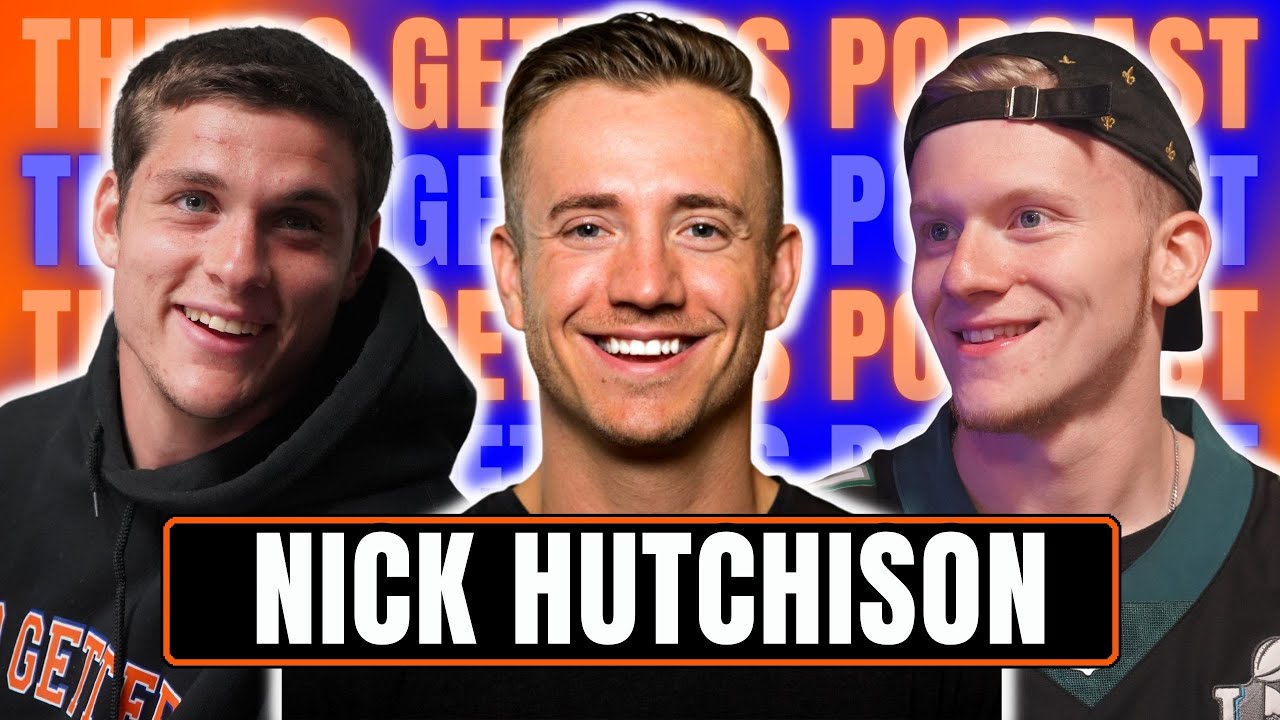
In this Go Getters Podcast episode, Nick Hutchison shares his personal journey from a teenage artist and house‑painting entrepreneur to a software sales director and founder of the Book Thinkers agency, which helps authors market their books. He explains the philosophy behind his upcoming book Rise of the Reader, emphasizing that reading alone isn’t enough – readers must set clear intentions, use SMART goals, and apply multisensory, implementation‑focused strategies to turn knowledge into action. Hutchison discusses the concept “reality is negotiable,” drawing on Tim Ferriss’s lifestyle‑design ideas, and reflects on how personal‑development books (e.g., The 4‑Hour Workweek, Rich Dad Poor Dad, Ego Is the Enemy, The Millionaire Fastlane) reshaped his mindset, reduced anxiety, and boosted his business performance. He also talks about his memory‑training coach Kevin Horsley, the role of travel in expanding perspective, and offers personalized book‑recommendations to listeners. Throughout, he stresses community impact, the importance of measurable outcomes, and the belief that anyone can design a fulfilling life.
Chapters
Be grateful and live my best.
Yo, I'm out here on the road. You can hear it in the voice. Still get this shit off, bro. Look.
Boom! Go Getters Podcast. Oh yeah, Nick Hutchinson. This is round 2 for the OGs that used to watch us all the way back in the day. I think over a year ago was when we ran this the first time, and that was episode— yeah, 24. So when this airs, this will be episode 78. Uh, Nick, it's great to have you back on, man. How you doing today?
I am doing well. Listen, I'm happy to host the two of you and your team, and this is a fun experience. Yeah, I'm being interviewed in my own home, which is a lot of fun. And so it's, uh, yeah, home field for me, and I feel good. Thank you guys for coming.
Absolutely, man. It's a beautiful place you have here. I don't think I said it as we were coming up, but that, like, uh, map— I think that people can see it behind me— that map that you have back there, I need something exactly like that in my house. I, uh, Recently bought this like big mural. It's like kind of just like that, but those are all like little wooden pieces. I'm doing the same thing. I'm like thumbtacking all the locations that I've been to. So I've been wanting to do that for a long time.
Yeah, well, I will, uh, I will hook you up with the company that sent it to me. I've actually gotten a couple of free maps from them. They're called Enjoy the Wood. Wow. But yeah, pretty cool. Enjoy the Wood.
We need something like that for the studio. That'd be awesome.
And for the viewers too, we're in Massachusetts, so we took a 5-hour road trip to come see you, come hang out with you, and Dude, your place is amazing. It's an amazing laboratory you got up here. You got a gym back here that people can't see, but it's an awesome setup you got here. It's hard not to be productive in a place like this. Yeah, this place is amazing. Yeah.
Well, listen, years and years ago, I read The 4-Hour Workweek by Tim Ferriss, and there's a concept in that book called lifestyle design. And it essentially says that you can design a life that's uniquely fulfilling to you. And so when I thought about where do I want to work every day, number one, I didn't want to commute, so I wanted to work from home. But then number 2, I wanted a space that made me feel happy and comfortable and productive. And so I have the gym here and like we talked about, I have the cold plunge and the saunas and I have the books and everything in between. So yeah, it makes me happy.
Yeah. It's an amazing place. So again, thanks for having us. And I really like that concept that you talk about too, lifestyle design. I think in your book, I think it's the 2nd chapter, it says something along the lines of reality is negotiable. So I think that's interesting because Yeah, reality is negotiable.
Oh, that's sick.
So what do you mean by that? Like, how do you perceive that saying?
Well, we were sort of joking around before, uh, escape the matrix. Yeah, I think reality is negotiable. Society has this preconceived notion of what life should look like, especially today. And, uh, you know what that looks like. It's a 4-year degree, you go into a bunch of debt, you work the traditional 9 to 5, you continue to go into more debt buying a big house. Yeah, fancy cars. And, you know, you never start enjoying your life until you're late 60s, and then by then you realize it's too late to enjoy it anyway.
Yeah.
And so, we're a slave to this idea. And so, for me, reality is negotiable is the idea that we can negotiate a life that is uniquely fulfilling to us. And it takes a little bit of contrarian thinking, like you have to be a little bit of a rebel to sort of escape the matrix, again, to use that language. And so, for me, I have this tattooed on my wrist because Society is persistent, right?
For sure.
Like, these ideas are perpetuated by almost everybody that you're going to interact with on a day-to-day basis. So I like to look at this as a constant reminder of the battle that I'm fighting. And so every single day I'm seeing it and I'm reinforcing the idea that, oh, you know what? I can escape and I can design whatever I want.
Yeah. It's really interesting too, because a lot of times that pressure comes from loved ones too. And like people we really care about. Kevin and I have an interesting story of one time him and I were working this event that we got asked to do. And we talked to a guy who asked us what we do with our lives.
Yeah.
And we told him that we're into doing YouTube videos and making a podcast. And he said, so you didn't go to college? And we both answered, no, we actually dropped out. And his reply to that was, the world needs ditch diggers. And there's plenty of stories like that too, where I had a police officer tell me that I was wasting my life by starting a business and that I I'm more suited to do something like going to college and getting a job.
Yeah.
I thought that was really interesting because that's exactly it. Those are exactly the pressures coming from society to funnel you into that traditional system, right? Yeah.
And you know what's funny is, I mean, I had a lot of moments like that too. And I think when I was in my young 20s, I would react emotionally and I would say, no, I'm on the right path. You're wrong. But today, you know what I feel? I feel empathy for those people because they never had the chance to escape. They don't see what life could look like, and they're trying to perpetuate that feeling onto you because you're changing and it makes them uncomfortable.
Yeah.
And so that's how I think about it now. I've transitioned from a negative emotional reaction to almost like I feel bad for people that, that look down on entrepreneurship and podcasting and YouTube.
What was your relationship with like the entrepreneurial spirit like as like a young man? Like when did you get into this like path that you're kind of taking now?
It's a good question. I, when I was really young, my parents had a second home, like a little beach cottage at Hampton Beach, New Hampshire, and friends and family would come and I would— there was an arcade down the street, so I would draw pictures like with crayon on computer paper and I would try to sell it to my friends and family for 25 cents apiece per picture.
An artist.
Yeah, I was an artist, right? But I was more of an entrepreneur because the end game was using those quarters to go to the arcade, right? So That's what I cared about. And I was always a little entrepreneurial. I mean, I was rebellious in school. You couldn't pay me to do my homework. And that kind of thinking of being penalized for not thinking the same way that your teachers think, I always hated that. So although I never started a business until I was in college, which we could talk about why I don't think we should go to college too, just like you guys. But yeah, I was always a little bit rebellious. And I think that's why I would say I was also entrepreneurial.
Did you end up finishing college?
I did.
Where'd you go?
Yeah, I went to the University of New Hampshire.
Okay.
Yeah, so about 2 hours north of here. And listen, I had a great college experience from a social perspective. Yeah, I grew up a lot, but I worked my entire college experience. I ran a house painting business for 2 years, then I took a full-time internship, and yeah, I was also an RA on campus, so I'd manage the dorms for people. And so I worked the whole time.
Yeah.
So your business, you started house painting in college, and that was a business you started by yourself. What was the idea behind that?
Well, I was walking through a building called the Memorial Union Building at UNH, and there was a flyer that said something along the lines of, run your own business and make a bunch of money. I'm like, I'm a freshman, and I'm thinking, okay, my business professors are saying you've gotta go get some real-world experience. So I said, okay, like, let me apply to this thing. And I met with this guy named Kurt And Kurt said, hey, when I was at UNH, I ran my own business. And I made $10,000 or $15,000 every summer. And it was a ton of fun. And you could do the same thing. And you just have to build this business. And I'll kind of coach you through it.
Yeah.
I said, OK, let's try it out. So there were probably 10 students at UNH that went through this program my first year. We all ran independent businesses. I think I was the only one in Massachusetts, actually, that did this. And I was the lowest achiever. out of all 10 of us the first summer. But I made over $10,000 myself after all was said and done that summer. And I went back to school and I had all this money and I had all this freedom to like buy food or go out and do whatever I wanted. I was like, well, that's pretty cool. And so yeah, it was a lot of fun. Second summer, again, there were probably 15 kids that second summer. I was the lowest performer again. But still, even though I was the lowest performer, I was growing 1,000 times faster than everybody that didn't choose to participate in that kind of program.
Yeah.
What made you inevitably put that down?
Well, because I was the lowest performer, I'd sort of hit a bottleneck. My ability to sell and communicate was pretty poor back then. And so I said, I want to work for somebody else's company. I want to get experience in somebody else's company and see how that feels to sort of weigh it against running my own business. I never wanted to pick up a paintbrush again in my life. And I never wanted to have to do that final walkthrough looking at somebody's house with the business owner. I jumped into that, I think, little bit too fast. And so there were some very overwhelming experiences. So then I took an internship going into my senior year of college at a local software company. And I told you guys a story before, that's where a boss introduced me to Rich Dad Poor Dad and sort of my love for personal development stemmed from. But yeah, I think I just wanted a different experience.
At that point in your life when you had your own business and you were still going through college, what were your goals then? What did you think you wanted from life at that point?
Yeah, I wasn't quite sure. I was definitely confused. I mean, when I was younger, I wanted to be an athlete. I played football. I was captain of the wrestling team. I mean, that was my life when I was younger. I had a couple of injuries, and also I think I realized I wasn't good enough to play at a D1 level. So I sort of transitioned to business because business is an area that you can be really competitive in.
It's a sport, man.
It is a sport. Absolutely. It's a game. And so My mom, she was in retail management at sort of a big level. And then my dad was in footwear and apparel sales. And so they both worked in business. And so I said, yeah, let me go to school and get a degree in business. Now, when I first went to school, I wanted to work for somebody else, like go get a big job with a big business card. But then I sort of realized, I don't think I'll ever be a fit in somebody else's business.
Yeah.
What do you think about that? Turned you off? What didn't you like about it? Was it the, I have to come here when you tell me to come here, or was it the, I have to take off when you allow me to take off? What was it particularly that you had a distaste for?
Yeah, lack of control, definitely a big piece of it for me. But I was able to become— so that software internship that I took, I took a full-time job with them after school before Book Thinkers really took off. And I worked with them for a number of years and I became a very high performer within that business. So I started as a sales intern, then I became sort of a regional sales director, then I became the sales director. And as that company went through 2 acquisitions, I stuck around and I started to make a lot of money, but it would take forever to get approval on decisions. And it really bugged me that I couldn't make my own decisions.
Yeah.
Yeah. I mean, showing up on calls scheduled by other people that weren't at convenient times for me. I mean, I definitely didn't like that. And also, even in a sales position, there's still a limit to how much you can make because you're within somebody else's business. Here's the fact of the matter. If you're making money, somebody else is making money on you. Otherwise, you wouldn't be around, right?
Sure.
And I didn't like that.
Yeah.
Yeah.
I think an interesting perspective to have though in that setting of your life is like, I read this, I'm reading Rich Dad Poor Dad right now. It's actually crazy because it took me so long to read it. It was one of those books I was actually intimidated to read because of how famous and popular it is. But the chapter that I'm currently on is a chapter called Work to Learn and Not Earn. And you made a point earlier about you not having developed sales skills, and those are arguably the most important skills to have as an entrepreneur. So I'm sure you were learning a lot of that during your time with that software company.
Oh yeah. I mean, when you fail to execute in your own business, your bank account gets hit.
For sure.
When you fail to execute in somebody else's business, there's a safety buffer there a little bit. Was flown all around the country making sales presentations. I was on the phone every day and I got to practice within somebody else's business. And so I saw a Gary Vee video way back in the day and he said something along the lines of, don't jump into a side hustle full-time, go to work for somebody else, but make sure that there's a skills transfer. Like make sure that you're developing a skillset that can be transferred into your own business. And for me, that was sales.
Yeah. Yeah.
Well, what a skill to get from that job though, man.
And I'm sure that's paying dividends for you now. So I think I think we should get into like what you're doing now and how you got into creating this empire that currently exists in Book Thinkers. Like, I hope you guys can see all these books. I wish you guys could see the rest of this place because Jesus Christ.
And we'll try to take a video after as well. But if you guys can't see behind me, this is part of a big 500-book giveaway that you're doing for pre-ordering of the book, which we'll get into later. We're gonna be talking about that. But yeah, all these books behind me too, for you guys that may or may not be able to see, he's given all of those away as well.
So You got a job. So how'd that story go? So you got a job with, was it the software company where the boss introduced you to podcasts and then you found Rich Dad Poor Dad from there? Yep.
So I took a full-time job with them after school. And as I continued to develop in that role, I continued to realize that in my free time, I was reading and implementing personal development books and it was becoming a part of my personality. And as I started to post about them on social media to connect with like-minded people, that audience started to grow. Now, without getting into it too much, I tried to build a mobile application that failed. So, I was left with this audience that I was going to sell the app to.
Yeah.
And I really didn't know what direction to go, right? I knew that I wasn't going to continue down that app and tech route, but I had this audience. And then right around that same time, authors started to reach out to me and they'd say, hey, Nick, I love your book reviews. Can I pay you to review my book? Right? And I'm sitting here thinking, I can get paid to read? Like, that's pretty cool. And so again, it's something I was doing for free on the side, right?
Yeah.
Now I'm getting paid to read. And as I'm starting to understand more about the pains that authors go through trying to sell and promote their books, I'm getting involved in their businesses. I'm following up. Hey, thank you so much for paying me to review your book. I really enjoyed it. Can we jump on another call and can I learn a little bit more about your business? Is this book a business card for coaching, consulting, speaking?
Interesting.
And how can I help you get the message out there more efficiently? Because think about it from the author's perspective. You spend decades learning something, then you spend years writing about it, and then nobody buys it. That's a painful experience.
Yes.
And so I can help you solve that.
Yeah.
Like, I had a degree in marketing. I was working this full-time sales job. I know how to build a community on social media. Let me get behind your book and do the same for you. So fast forward until today, My agency, Book Thinkers, has 10 people on our team. We support about 200 authors a year, so it's grown quite a bit. And we have the podcast. We do all sorts of things for authors behind the scenes. We do short-form video content, we do podcast booking, we do book reviews, social media management, some strategy and consulting. And so it's a real business now, which is a lot of fun.
It's legitimate. I mean, I learned about a lot of the books that I've read from your page. And so your page has Without me getting into the business aspect of it, just the value that you've provided, it helped me a ton. Like finding these books and then finding all of these strategies that I can implement into my life so that I could improve myself. So it's incredibly valuable to people and I think it's really, really fascinating. And it's cool because you segued what you do in your business into then writing your own book, which is coming out November 1st, right?
Yeah.
Rise of the Reader.
Yep.
Absolutely.
So what were your thoughts behind writing that book and what was the process like?
Well, over, over the years of building my community, Book Thinkers, on Instagram and some of these other platforms, I've received thousands of very similar questions. Hey, Nick, how do I choose the right book? How do I take good notes? How do I implement what I'm reading? And that last piece is the biggest issue that people have. It's taking action.
Yeah.
We read these books, we get excited, we're motivated, and then we fail to change our behavior. And so, from my perspective, The books are more like entertainment than actual education when you fail to take action. And so I was answering everybody, right? I am of service to my community. I care a lot about impact. So I'd respond to people. I'd send a voice note. I'd type out an email. I'd type out a DM. I'd jump on a quick Zoom call. I'd be on a podcast. But there are 2 issues with that, actually 3 issues with that. Number one was that I couldn't communicate everything that I wanted to communicate, right? On a voice note on IG, you can't talk for half an hour.
Yeah.
I think issue number 2 was that I had never actually taken the time to study myself and articulate what I was actually doing, like, write down the process for implementing books and then hand it to somebody else. That, that process of writing it down and simplifying it, it's a big process.
Sure.
And then number 3, there's no leverage to answering people individually. So MJ DeMarco, somebody that— he's written a number of books including The Millionaire Fastlane. He'd, he'd be driving around in his Lamborghini and somebody would come up at a restaurant parking lot and say, hey, hey, like, how'd you get the Lamborghini? What do you do for work? And he'd hand them The Millionaire Fastlane. Yeah, he'd say, read this book, this is how I did it. And so I started to visualize myself having that same moment when somebody goes, how do I choose the right book? I go, Rise of the Reader.
Read it.
Interesting. You know?
Yeah.
So that was my Lamborghini moment.
In a lot of ways, it's, it's your tool to helping a mass number of people instead of Kind of selling yourself and others in your community short by just telling them one-on-one and, and not being able to fully articulate what it is or how to do what that book is teaching people how to do.
Yeah. Because I believe the right book at the right time can change your life. And just like we started with today, there is an opportunity for young people like us to escape the matrix and to design lives that are uniquely fulfilling to us. And I think the best way to make that happen Is by reading and implementing personal development books. And we could talk about why books, but think about the fact that, like we talked about with the author's issues, these books condense decades of somebody else's lived experience into days.
Yeah.
So, Robert Kiyosaki spent 40 years learning how to make money, and now you can read his book in 5 hours. You're learning from a rich person who's done it.
It's crazy.
Yeah, it is crazy. And for $20 and a few hours of your time, you could solve almost any problem in your life.
For sure.
How digestible were the books for you initially? Because that was a problem I experienced with reading. Like, I'm nowhere near as much of a reader as he is. I'm like more of a podcast listener. But that's always been my problem, is like, I, I wouldn't say necessarily implementing this stuff, but really being able to like stick to the, the program of reading every day at a specific time and like trying to download the knowledge without feeling like I'm forcing it. That's always been my problem.
Well, I think, I think I have a lot of thoughts on this. Uh, first, 80% of the inputs to our brain— yeah, 80% are visual. And so by default, if you're only listening to information, yeah, that's only a small piece of the puzzle.
It's a good argument because I always try to argue people with that, like, why don't I just listen to them? It saves me much time and I can read and I can multitask.
Well, now you know.
Yeah, now I know, right?
All of the other senses only make up that 20%. So by default, if you're only listening to something, you're at a disadvantage. Also, check this out. When you're reading a physical paper book, you're monotasking. You're focused on one thing.
Yes. Nothing else.
Yeah.
When you're listening to your books or podcasts, you're probably driving, doing chores, at the gym. You're multitasking. It's not even the primary focus.
So, I guess I should probably correct that by saying what I used to do, and let me know what you think about this, is I would follow along on the book as I was listening to an audiobook. That's what I attempted with the last book I was reading, Think and Grow Rich.
So, what do you think about that idea?
Yeah. great. It's multi-sensory.
Yeah.
And you're, uh, you know, you're leveraging more than the 80%. Yeah. So I think that's fantastic.
I'm just like an energy freak. Like, I, I can't like sit down for too long without just getting like too antsy. Like, that's my specific problem with reading. And that's why I think the idea that you were talking about earlier about like listening on the go, I feel like that does just work better for me. But I don't think that that should be the way for everybody.
You know what I'd ask you? I'd say this, if I paid you $10,000 to read a physical book by the end of the month.
Oh, yeah.
You only have 10 days. Do you think you could do it?
Easy.
Right? So it's not a question of whether or not you can.
Yeah.
It's a question of whether or not you value them enough to prioritize it.
Interesting.
Because if you knew you were making $10,000 by reading the book, you'd find a way to make it happen.
Yeah.
I think reading is just like any other skill. I mean, I've never golfed before. So if I went out with my friends at golf every weekend, they would beat me.
Yeah.
Right. I think reading is a skill that we have to develop. And when I first started reading, because that was your original question, like, I had no idea what I was doing. Yeah, I just— I knew that all the successful people that I wanted to be like were reading.
Yes.
And so I just like forced myself.
Yes, that's exactly what it is for me. That's exactly what it is.
But I will say, the more you do it, the easier it will become over time. I'm also high energy.
Yeah.
So I have to really think about Like how important it is to force myself to sit down and read.
Yeah, I really like your shirt too, the 75 Day Hard. Did you complete that?
Yeah, a couple of times.
I was gonna say, that was like in my adult life the first time I ever actually sat down to like read a book multiple times a day was when I was attempting the 75 Day Hard for the first time.
Did you do it?
I did the 75 Day Hard.
Cool.
Um, and I only did it once, I think. Did we attempt it a second time or did we end up not— we were gonna do it for a Go-Getters thing, you remember that? But we never ended up doing it, which would still be really cool. Let us know if you guys would want to do that the future, a 75-day Go-Getters Challenge?
I'm going to do 75 Hard every, uh, every January.
Really?
Yeah.
Why January? Just start of the new year?
Yeah, starting start of the new year. Uh, you know, it's, it's good to take a break from the alcohol. It's good to sort of clean your body out with a good diet. It's good to have the 2 exercises a day. And it's a good— I mean, growing up or living in New England, it's also good to get outside for 45 minutes a day even when it's freezing cold. And that sort of forces me to do that.
Yeah.
So to emphasize the impact of books, what are some of the biggest revelations that you've had through reading books? I know, I think in your, in your description of the book or in your bio on your website, it says something along the lines of overcoming anxiety and insecurities. So what are some things related to that that you can say you can attribute like books in your life to?
Yeah, well, when I was in my late teens, early 20s, I had a lot of ego on one side of the spectrum that would represent itself at the expense of other people. I was competitive, and I was in a college environment where I could get a lot of attention, going to parties and having fun. And, and I wasn't a lot of fun to be around as a result of that. And then on the other side of the spectrum, I did have a lot of social anxiety. I had anxiety around my ability to communicate, present in front of other people. Yeah, I had a lot of insecurities, like what people thought of me, what I looked like. Like, I was way too focused on what other people were thinking, and I would, I would just make up stories like, I can't eat in the cafeteria by myself because like somebody's gonna make fun of me. Like, I was really thinking about that stuff all the time.
Yeah.
And so, as I started to read and implement these books, both of those issues, all 3 of those issues really started to go away. So, a book like Ego Is the Enemy by Ryan Holiday, you can read and reflect and implement the lessons in that book and start to remove some of your ego, start to think less about yourself as like this amazing human being and start to realize that, you know what? Like, we're all going to die in a couple hundred years from now. Nobody's going to remember us anyway. So stop thinking about yourself so highly and start to focus on other people instead. You know, with the insecurities and anxieties, same types of thing. I mean, I've read so many books on those subjects, and nowadays I don't feel any anxiety really ever.
Wow.
And, uh, I'm just, you know, I meditate and I journal and I focus on breathwork and I do all the things that mitigate anxiety. I don't feel it anymore, ever, literally ever.
That's amazing. That's a crazy, uh, like place to come to in your life. That's awesome.
And it's only been 10 years. It's been less than 10 years since I started reading and implementing these books.
Yeah.
And so I do think that life doesn't have to be so hard. Like, you can live a pretty good life where you don't experience stress or depression or anxiety, and you just experience joy and gratitude and fulfillment. Like, That literally is what I live right now.
That's awesome, dude. And so what would you say is the best way to implement what you're reading in a lot of these books that are teaching these skills?
Yeah, I'll say that in the book Rise of the Reader, there are dozens of strategies, but I'm happy to give you guys some examples. So when somebody walked in and saw Alex Hormozi's book, $100 Million Leads, somebody mentioned it. So we'll use his book as an example. I think when you're choosing to read a personal development book, you need to set a strong intention at the beginning. of the process. And so a lot of people are just reading that book hoping that it's going to change their life.
Yes.
I say let's set a SMART goal.
Interesting.
So SMART is an acronym. Some of us are familiar with it maybe, but it stands for specific, measurable, attainable, relevant, and time-bound. So let's look at that book, $100 Million Leads. Instead of reading it again and just hoping that it's gonna create a lead generation tool in your business or something, set a SMART goal. So how about Find and implement at least 2 lead generation strategies into my business, Book Thinkers, by the end of November. So that is specific. Specificity wins.
Yeah.
It's measurable. Find and implement at least 2 things. I know whether or not the book achieved its goal. Attainable. That means realistic. I didn't say make $100 million by the end of November. Just find and implement 2 things. Action is our focus. relevant. You need to be emotionally connected to the book. Otherwise, it'll fizzle out and you'll have a hard time finishing it.
Yes.
So, for me, I know that lead generation is a big area for improvement. And the more money my business makes, the more people I can help and the more comfortable I am.
Yeah.
And time-bound, I said by the end of November. So, I'm giving myself a deadline to read the book and implement those 2 things.
Yeah.
And so, right from the very beginning, I'm setting an actionable intention, right? There's action built into find and implement at least 2 things by the end of November. And so, there are There are a ton of other strategies that we can chat about throughout the next whatever minutes, but that's where I think people need to start.
That's awesome, man. And it's crazy because you did a podcast with Alex Hormozi. What's it like working with guys like that? He's like top of the world right now.
Yeah. You know what? Alex is amazing. There are a number of things that I disagree with him about in a fun way.
Like eating out every day. It's cheaper to eat out every day.
Is that what he said?
He's like, I eat Chipotle twice a day because it's cheaper and I don't want to cook, clean, and meal prep all of my meals. Yeah.
I don't like that he advocates eating dessert every night. I don't I don't think there's a single scientific study on the planet that says 200 milligrams or 200 grams of sugar every night is good for you.
That's like the Ochocinco theory. I was going to say he'd beg to differ too.
Yeah. Sometimes there are athletic freaks like Ochocinco or Alex Hormozi. People forget too that Alex spent 10 years in the gym every single day.
Yeah. He's jacked.
He has enough muscle on his body to burn enough resting calories for that not to make an impact, but not everybody in his audience can do that.
What do you think that is? Because I would imagine he doesn't believe that that's So why would he say it? Or do you— like, I've never heard him say it, so I don't know like what he sounds like when he's talking about this stuff, but that just seems crazy.
Yeah, my, my guess is that his— because I've heard him say it a thousand times, I don't know where he's justified it before, but, but if I had to defend it, I would say something like the stress of worrying about your diet is worse than the extra couple of pounds you might gain.
Yeah.
From a longevity perspective. Yeah.
We were just talking about that the other day.
Yeah.
That's pretty interesting. That is pretty interesting.
It's probably what he would say.
I don't know.
Yeah. I don't know.
That's so weird.
He's killing it right now. I love his content too. His content seems like it's absolutely perfect too.
So check this out. I read his book for the first time last year. I implemented it. $100 Million Offers. Oh, Offers.
Offers. Yeah.
Offers.
And, uh, cuz Leads just came out. Offers came out a year or 2 years ago. And, uh, I added an additional 6 figures of revenue to my business within a couple of months.
You think it's due to that book?
Oh yeah, absolutely.
Wow.
So the, the call to action in that book is something around he'll 5x your average deal size.
Yeah.
And so I went into it and my goal was I want to 5x my average deal size.
Yeah.
And I found a new service in one of his exercises that actually led to a 10x in my average deal size. Wow. So an additional 6 figures within a few months of reading his book. When you think about $10,000 to read a book by the end of the month. That could actually happen. That's what's so cool about this space.
That is fascinating. And so what are your opinions on how to choose the right book? At what time to choose the right book?
It's a good point.
I think when we're first starting out, because I would imagine a lot of your listeners are early 20s. So when you're first starting out, I would say it's more important to just read everything you can get your hands on. There's no wrong answer. Read as much as you can. quantity matters more than quality because you need to sort of build this foundation of understanding. You need to understand what's out there and how it might be able to apply to your life before you can really start applying.
Yeah.
Maybe. But then I think as you age a little bit and your business starts to become more mature and there are very specific things that you need to solve for, then start to read with more specificity. Then start to go, okay, quality matters more than quantity. And that transition could take a month, it could take 6 months, it could take 5 years.
Yeah.
So today I read to solve problems or I read to develop skills, maybe sometimes to satisfy curiosity.
Yeah.
But like, that's it. And so here's the thing, it's like, check out the— this math, this blows my mind. I heard Jordan Peterson say this: if you're dealing with a problem on a daily basis and it just won't go away, yeah, over the next 30 years you're going to deal with that problem 11,000 times, right? 365 times 30. So why not identify the problem, read a book about how somebody else solved it, implement the solution, and not have to experience it 10,950 more times? That's how I think. So books solve problems and they develop skill sets.
Wow, that's incredible. I mean, that's, that's just such an interesting way to look at it. It's so logical. Like, it just seems like such a easy way to look at it. Like, it makes so much sense when you see things that way.
Life doesn't have to be so hard. Yeah, 100 billion people have lived before us. Yeah, millions of them have written books, and thousands of those books detail how they overcame the same problem that you're dealing with every single day. Do you think there's not a subject out there that people haven't written about?
That's so crazy.
Do you believe that you have a bandwidth for your knowledge? Because like, the way I'm trying to like measure it now is like, I'm looking behind you and I'm seeing all these books that you've read at some point. Obviously, like the couple shelves that you said you didn't get to, but But I'm imagining you taking like a little puzzle piece from every single one of these books and applying it to your life. And at what point, like, do you believe you run out of bandwidth, or do you ever? No, that's something that interests me.
You don't ever run out of bandwidth. I work every single week with a coach. It's, uh, I don't know who's winning in this because it's a free relationship. I'm blessed with this. His name's Kevin Horsley. He wrote a book called Unlimited Memory. Let's see, I think I have it. It's pink. So yeah, here we go.
I'm just noticing too, they're all color-coded. That's awesome.
This is so cool.
So is he a chess grandmaster?
Uh, not chess, but he is a grandmaster of memory. So check this out. Kevin grew up with some learning disabilities, couldn't read a book, couldn't retain anything, couldn't store any information, and thought when he was younger he had a fixed mindset around it. He's like, I just can't learn efficiently. Yeah, but then he became obsessed with it. And he said, I'm going to figure out how to maximize the potential of my brain. Now here's the kind of home run hitter. He entered a competition called the Everest of Memory where you have to memorize the first 10,000 digits of pi.
Oh my God.
Oh, that's interesting.
And then they would call out a random number, digit number 7,221, dude, and you'd have to know it and the next 5 numbers. And he won it.
Wow.
So Kevin Horsley can memorize 10,000 digits of pi with learning disabilities. Why can't we, right, read and implement information? So in this book, he actually talks about the potential of our brains too, because you could learn something every single day for the next 5,000 years and you're still not out of space. Yeah, it's just a question of organization, right? And so he teaches a bunch of memory techniques in here, but yeah, our brains are literally limitless.
That's cool. Like, that's a book I would love to check out.
Yeah, well, I think you should. Let's see, I've already read this copy, otherwise I'd give it to you, but it has all my notes.
Oh good, don't worry about it, man. We'll figure it out. Incredible. I mean, to sit and think what we're truly capable of is, is crazy because in a lot of ways we do limit ourselves. Yeah, we do put caps on what we think we're capable of and what we can do.
Have you guys read Can't Hurt Me? David Goggins?
He has. Is that the one I got you?
No, you got me, um, what's the second book called? It's called, um, Never Finished. Yeah.
Yeah.
So I read that. Every time I read a Goggins book, I do some wild shit.
Yeah. He turns into a demon. Like, he just gets crazy after reading a Goggins book.
Yeah. After that, I ran a marathon and then I ran a Spartan Ultra. So it was 31 miles in North Carolina just after reading that book.
That's awesome.
Well, in that book, Can't Hurt Me, Goggins talks about the 40% rule, which is something like our brains stop us at only 40% of our potential physically most of the time because we are wired to conserve energy and choose the path of least resistance. And our bodies shut down. Our brain tells our bodies to shut down, but you can blow past those preconceived limitations with the right information. And so once you go, oh, we can't tap out our brains, like there's literally— we could read a new book every day for 5,000 years and there's still room. Okay, now I realize I can continue to read more.
Yeah.
So you just— sometimes you need somebody else's permission. Like, you just need to understand your potential. When Goggins says your brain stops you at 40%, next time your brain goes to stop you, you're Like, oh, I'm only at 40%.
I'm only at fucking 40, dude. I got 60 left in the tank. Yeah, it's crazy to think about, man. Yeah, insane.
No, I was gonna say, to sidebar, one thing I was extremely curious about with you is what was your process with, um, writing your book? And, um, I, I would imagine that— that— how long did it take you?
3 years.
Oh my God.
Yeah, we were— yeah, because we did a podcast with Nick. He was telling us he was in the process of writing.
Yeah, actually, yeah, doing something. Because yeah, I remember asking you that the first time, and now it's like really cool that it's a reality for you That's awesome. Congratulations.
Less than a month, dude.
Yeah, I have, um, I only had— you know what's so funny? I ordered 120-something early copies of the book.
Yeah.
And I only have 2 left, so you guys can each have a copy.
Oh, wow. Thank you, man. That's awesome.
So yeah, 3 years. Once I decided to write this book, it took me about 3 years.
Yeah.
And I, I have a lot of respect for the authors that I work with now because I thought, given my discipline and lifestyle and flexibility and desire to write the book, that I'd be able to get it done.
Yeah.
Yeah, not the case. So much harder than I thought. I learned that I am not a writer. So the first hurdle was I had never taken the time to define my own implementation strategy. So I literally had to sit there from a third-party perspective.
Yeah.
And like watch myself implement books and try to detail what was happening. Really confusing. I thought it would be so much easier than it was. And then simplify information so that other people can implement it. It's a whole nother level of language, writing. And also the business was growing a lot and I'm traveling. Like, I got married this year, we've traveled all over the world. So it's like, I just— yeah, it took a lot.
Yeah.
When you were, when you were sitting down at that blank page though, like, what was that like? And did you have any idea of what you wanted, I guess, the theme of your book to be about at the time? Like, what was that process like, getting like the initial building blocks of it, sitting down at that blank page?
Yeah. Thankfully, I had hundreds or thousands of people asking me the same questions.
Yeah.
And so, I was just answering those questions.
Yeah.
Those were the questions I wanted to answer. And so, when I first decided to write this book, I wanted to write a fictional story. I wanted to write a parable about this young guy, Nick, who takes an internship, gets introduced to podcasts, and meets all these book mentors along the way. And here are the lessons that he learns. But I was coached away from doing that because parables, like fictional stories that teach nonfiction lessons, they don't sell well. Like one in a bazillion actually take off. You can name the couple that sell really well. And so they said, write a traditional nonfiction book. And that was a lot harder for me.
Really?
Um, so I just started answering those questions and then I built it into a roadmap. And then I said, you know what? I just need to take people through the entire process. Everything from how to approach the industry and choose the right book through How do you implement it effectively in every step along that way?
Did you— go for it.
I'm sorry. So did you experience this idea where when you teach something, you begin to understand it a lot better?
Oh yeah.
So when you were writing down your ideas on implementing books, did it settle in your mind with a new understanding?
Yes, absolutely. I mean, I have defined frameworks that I can teach people now, like that set a SMART goal for each book that you read. I had never— I was doing that, Right? I was doing that, but I, I couldn't teach it to anybody else because I wasn't even really that aware of it. And so, carrying that example forward a little bit, what I do with that intention is I write it on the inside cover of each book that I read.
Interesting.
So, I'm, I'm sharing my goal with the book.
Interesting.
And then I'm telling my brain what to filter for because we have this reticular activating system. It's like our brain's filter. So, find and implement at least 2 lead generation strategies by the end of November, whatever it was. was sharing it with the book. And now as I'm reading those lead generation strategies, they pop out of the page.
That's so fascinating. I never even thought about it that way because honestly, I got to tell you the truth, I would— I pick up books and I hope that they'll do something for me. But really, if you set an intention for reading a book, it can be much more impactful for you. And then you write it on the page so you kind of have a connection with you and the book. It's like, yeah.
Well, don't you write things about your books as you're going through them though?
I journal. Yeah, I journal like some things that I'm reading, but I think in terms of, um, implementation, that seems like a much more effective strategy.
Yeah.
You know, that's something I'm definitely gonna start doing going forward for sure.
So what was it like when you were finished? Like, what does that feel like? You said you were working on it for 3 years. Like, that has to be pretty surreal. And then the fact that it's literally coming out in fucking— how many days do we have here? You said November 1st. So it's like 12 days away.
Uh, I wish I could say I had this moment of relief and I cried and everything like that, but it hasn't happened yet. Yeah. I have realized building such a big community, I mean, we do a million impressions a month on Instagram. Impact is felt through feedback. And so that's what I care about. I care about positively impacting the people that read this book and I help them take better action. And so for me, the moment wasn't finishing the book. That isn't the meaningful part of it for me. It's not meaningful until people read it, they implement it, Yeah. And then you go, hey, you know what? I decided to restart Rich Dad Poor Dad. I wrote my intention to find and implement at least 2 financial literacy mindset changes by the end of November. I implemented them and I'm a wildly different person. Thank you.
Yeah.
That's what I want. And so, it's not the book, like finishing it is a vanity metric.
Yeah.
Who cares?
Yeah.
It only matters if it helps people. Can I tell you guys a quick story? Absolutely. Rachel and I were traveling in Croatia, and but this story to preface it is why I care so much about this. So Rachel and I were in Croatia, of all places, a few months ago, and we were outside of Dubrovnik, Croatia. So Dubrovnik is a tiny little city, 30,000 people, and we're outside of it like 30 minutes or something. So we're in this tiny little oceanside area, and from our hotel we see a bar across this waterway, and we had to walk around. It took like a half an hour. We go to this bar and On the way to the bar, she sees a cool restaurant on the ocean and she says, hey, on the walk back, let's make a reservation for tomorrow night.
Yeah. Cool.
We go to the bar, we have a few drinks, we stay a little bit longer than we thought we were going to. We have a good time. On the walk back, it's closing up like there's nobody there. The doors are shut.
Yeah.
And she says, ah, bummer. Like, I really wanted to make a reservation. I said, well, I'll just—
we're here.
I'll just go inside and see if I can find somebody. Yeah, there's probably somebody cleaning up. I open the door, I go inside, I find somebody who's cleaning and I say, hey, I'd like to make a reservation for tomorrow night. And this guy looks up and he goes, yeah, of course. By the way, huge fan. I'm like, huge fan of what? You know, thinking like he has no idea who I am. Yeah, dude, Book Thinkers. Now I'm getting chills thinking about it. You guys can see the chills.
That's so cool though.
He went on to tell me about all the books he's read and implemented.
Wow.
From the page, all of these little details from things I've only shared on stories or in podcast interviews. Like, he was a legitimate Wow. And used the books to create a much better place. He told us some of the story, which I won't share, but we went back the next night, we had dinner, we got to chat with him more. He paid for our dinner, which was super nice and unexpected.
Wow, dude.
And, uh, but that moment, the impact that he shared with me that I've had, I'll carry that forever.
That's awesome. Oh my God.
That's exactly why I'm doing this, right? So when you ask the question, that's what my brain went to, but I knew I kind of had to like walk my way to that story.
Yeah.
Yeah, I care about the impact.
Well, that's awesome, man. That's my favorite part about doing what we do too. Like, he and I talk about that frequently. Just hearing like anybody's story of like even something they thought was cool about what you did is my favorite part about doing this for sure. The reason I asked though mainly is because I think it's really cool. Like, one of my favorite things in life is creating something, and I'm very similar to you in like the success part of it. But just the fact that like you're sitting there holding a book that took you 3 years to create with like all of Yeah, check that out. Thumbnail. Bing. With all the stuff that you went through though, man, I just think like that's that's extremely cool. But I'm like you in the sense that I really only feel the fulfillment if it does as well as I want it to. Not necessarily just well, but it impacts how I want it to. So I agree with you in that way too.
Yeah. Yeah. But ever hear Patrick McDavid say that? I think there's a it's a Jewish proverb that says every man should do three things before he dies, and it's. Write a book, plant a tree, and have a son. And so that thing will live far past his existence, and you got one out of the way.
It's pretty cool.
Yes.
Yeah. And it was sort of a goal to make sure that I got it done before I turned 30.
So there you go.
I'm 30.
Um, do you find any connection between reading and traveling?
Yeah, yeah, definitely. So Rachel and I have visited 25 different countries over the last 5 or 6 years, sometimes for up to a few months at a time. So outside of books, travel is my other thing.
Yeah.
And I think that outside of reading a personal development book. I think that international travel, especially to a country where you don't speak the primary language, is the other place that I've grown the most. So I, I mean, I have so many fun stories, but yeah, I'm constantly uncomfortable, especially around other languages, trying new foods, sitting in restaurants, going on excursions. Like, the whole travel experience, taxis, like, everything can be so uncomfortable.
Yep.
And then through that discomfort You grow. And also it gives you a lot of different perspectives. So you can read a book about 2 different perspectives, or you could travel to another country where people think completely differently than you do here. And that's been great too.
Well, that's our experience coming up. I'm sure that people are so tired of hearing it, but yeah, in December for mine and your birthday, we'll be in Colombia. So that's where we'll be.
Where in Colombia are you going?
So this is our plan. So So we have a friend named Matt. We call him Uncle Matt. Matt's a savage, by the way.
Literal savage.
Shout out, Matt.
I love you, dog.
And, um, so we're gonna go to Bogotá for 2 days, and he's gonna go to the Panama Canal for that time. And so we're gonna stay in Bogotá for 2 days. He's gonna meet us there, and then we have to, without a plan, find our way to Medellín. And then we're flying from Medellín, I think a week later, something like that, back to Baltimore on Christmas Eve.
Yeah, I want to introduce you guys to some people. So I spent 3 months in Medellín Oh, really? Uh, yeah, I have some friends.
What do you think about it?
Oh dude, it's one of my favorite cities on the planet. Really?
Yeah. That's good because as like Americans, we always— like everybody, you'd be so surprised, is completely steering us in the other direction. Like, oh my God, don't go to Colombia.
Like, it's a literal tech hub.
Really?
Yeah.
The city looks beautiful.
Listen, it's been 20-something years since Pablo Escobar did his thing.
Yeah.
You know, it's a clean city. It's green, the food's amazing, it's dirt cheap.
Yeah.
And you guys will find a ton of American expat digital nomads. Yeah, it's like there's a great culture.
Interesting. Yeah, we plan on just living the hostel lifestyle, grabbing a backpack, and then just finding our way that way.
Yeah, good, go for it.
It's safe.
It is safe.
What was your experience like? You say you're there, you lived there 3 months?
Yeah, 3 months.
That's crazy. We'll be there 2 weeks. Oh my God, was it just you two?
Yeah, so I went for 3 months with her And then prior to that, I had been there with a couple of my guy friends. And then while I was there with Rachel, a few of my friends flew down and visited us, like four or five different people.
That's awesome.
Yeah, no, I love it.
Yeah, I'm so excited.
Beautiful city. While you guys are in Medellín, so what's interesting is Medellín is sort of like the American pronunciation. Yeah, Medellín, like with a j, is how Colombia young Colombians will say it. And so just a little fun tip for you guys. I have a friend who's an author. He actually lives in Canada now, but he's also from that country and grew up during the Pablo Escobar times and everything. But yeah, beautiful city. While you're there, if you can find your way to El Peñol, which is this massive— let's see, I actually think that I have— so that's the rock right there on top of Emotional Intelligence 2.0. Yeah, it's this massive rock that sticks out of the earth. And you can hike to the top of it. It's like an hour from Medellín, and there's a little town outside of it called Guatapé, and there's like a great chocolate restaurant there.
It's awesome.
And coffee and all sorts of things. It's like a very colorful, beautiful little area. What'd you say that spot was called? El Peñol.
Peñol.
And then Guatapé. It's, it's— they're like connected to each other. El Peñol. P-E-N-O-L, but the N has an ñ, so P-E- All right, sounds good.
Yeah, we're— I'm gonna look into that right now.
Yeah, you guys will absolutely love it. It's one of my favorite cities on the planet.
That's good, because like he was saying, we're kind of just going down there right now with no game plan. So it's cool to have stuff like that. And like I was saying, you're like the first person that ever gave us like—
everybody's spooking us out.
Yeah, the safe grace. When I told my family we were doing this, they're like, oh my God, like, what are you doing?
What?
Yeah, like, it was crazy.
But now, like, I would like to bring my parents to Colombia.
Yeah.
So I've also traveled to plenty of other areas in Colombia, But Medellín is my favorite. I have not been to— actually, I've been to Bogotá, but only on a layover.
Yeah.
But yeah, Cartagena. And we went to an island called San Andrés and we went to the Rosario Islands. And Colombia is a beautiful and safe place to be.
That's awesome. What's your favorite country that you've ever been to? If you had to say.
We've been to Greece a few times and the Greek islands are just the most magical place on the planet.
Yeah.
I really enjoy it. But South America, I love South America and Panama City too. Like, Rachel and I did a full month in Panama City.
Really?
Yeah, we loved that. And been to a ton of other countries down there.
What's your next stop?
My brother is getting married in the Azores. The Azores are a group of Portuguese islands. So that's like midway through next year. We'll definitely travel before then, but I'm not really sure where yet.
I don't know if I asked you on the first episode, but do you think you'll ever hit all— what is there, 195 countries? Do you think you'll hit all Yeah, I mean it's manageable.
Think about it like this: if you go to five new countries a year, so let's see, let's just do the math real quick. Five times ten is fifty. So it would only take you forty years at five countries a year to hit a single country.
Pretty old by the time you're traveling, huh?
How do you get yourself in North Korea?
Well, I think think about it like this: twenty years ago you couldn't go to Colombia, and now it's a travel destination.
Yes.
So who knows if North Korea or Afghanistan twenty or thirty years from now will be like Like hopping travel spots. Yeah, you never know.
Maybe.
Well, Nick, I know— I'm sure you probably got to get going at some point. It is 5:45 now, so we don't want to hold you up too long. Uh, this was, in my opinion, a really good episode. It was a lot better for me the first time we did this. I don't know what was going on, but I was just in a weird spot. So the first episode, I was telling him it wasn't the greatest for me personally, just with my performance. So I'm really happy we did it again. Um, make sure to let the people know where they can find you, where they can find your book. This will be dropping November 1st, like you said.
Yes.
And, uh, if you are gonna give us 2 copies, maybe we could do something with the book we ordered and we can give it away to one of you guys that watch this episode. So that'd be cool to do.
Yeah, I'll say this, for anybody that wants a custom book recommendation from me, it's one of my favorite things to do. So I love to play book matchmaker. So if anybody in the audience wants to DM me @bookthinkers on Instagram, tell me about a problem that you're facing that you just can't get rid of, or tell me about a skill that you want to develop, or somebody that you want to learn more about, and I'll provide a custom book recommendation.
So can I do one of those really quick?
Yeah.
So my problem is that I want to escape the rat race matrix system and I want to be more financially independent. What's a good book for that?
Well, if only Andrew Tate would write a book. Yeah, uh, I mentioned the book before, The Millionaire Fastlane by MJ DeMarco. Yeah, I would highly recommend the book.
Okay, sounds good. Well, Nick, your energy is amazing. Every time I do a podcast like this, I, I reflect a whole lot and it really adds to what I think I can do with my life. So I really appreciate your, your hospitality and your, your intelligence. I think you're an amazing guest and this was an amazing episode, one of my favorites to date. So thank you. Thank you very much.
I'll say this, everybody's capable of designing the life that they want. And most people, I'll say our age because we're all in our 20s, most people are asleep at the So Goggins says it's not enough to just be uncommon because the average person's sort of asleep at the wheel anyway. You got to be uncommon amongst the uncommon. That's where the differentiation happens. So just, yeah, small steps in the right direction every single day. You guys are already doing it. You're hosting a podcast. You're traveling. You're taking advantage of this. You're going to Colombia.
Yes, sir.
I'll intro you to some people that live there and you guys will have a blast.
Nice, man.
That's awesome, man.
Dude, thank you so much for having us at your spot. a lot, uh, joining us on our podcast for your book, your hospitality, your energy. You're an amazing human being. Go get the podcast, Rising Reader. It comes out November 1st. Go pick it up. Let's grow together. Let's freaking blow this thing up. Love you guys.
Yes, like, subscribe, share, and subscribe.
Go follow Book Thinkers. Peace.
Peace. The money speaking for itself, I call it fortune tell. Fire top from a bitch that work in corporate sales. Chinchilla, you shanka, we skiing out Breaking news, they tried to kill him, but the boy prevails. I leave for tour and my niggas fucking go to jail. Preaching to the dogs about wanting more for themselves. It's weighing heavy on my moral scale.
More from Nick

Napoleon Hill’s “Think and Grow Rich” is a timeless classic #selfhelp #personaldevelopment

4 Books to Help You Get Better at Decision Making #selfhelpbooks #bookrecs #nonfictionbooks


Have you read this book yet? 📖: The 5AM Club by Robin Sharma #selfhelpbooks #robinsharma

Dan Sullivan on Listening to Your Customers Instead of Watching Your Competitors

5 Books That Will Boost Your Financial Intelligence #financialfreedom #nonfictionbooks

The People That Preach the Loudest About Virtue are Usually the Most Power Hungry



Books are the greatest mentors you can find #selfhelpbooks #businessbooks #successmindset

Let’s fight this toxic instant gratification culture together 📖 #selfhelpbooks #jimkwik