97. Stacey Hall: Author of Selling From Your Comfort Zone
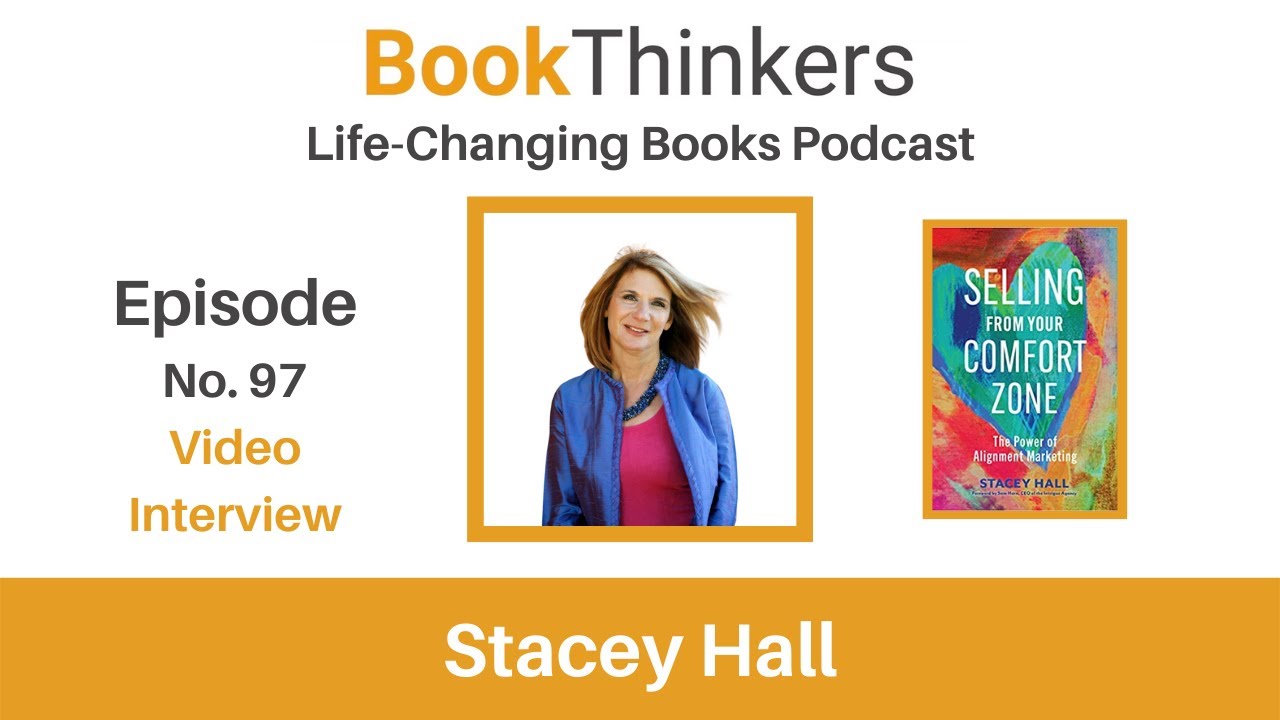
In this episode of the Book Thinkers Life‑Changing Books Podcast, host Nick Hutchison (joined by co‑host Luke) interviews Stacey Hall, author of Selling From Your Comfort Zone and creator of the “Go for Yes” program. Stacey shares her personal journey—from observing her father’s stressful sales career as a child to building a sales philosophy centered on empathy, listening, and relationship‑based selling. She explains the core concepts of her book, including the Alignment Marketing Formula (the new ABCs), the rubber‑band metaphor for expanding one’s comfort zone, and practical tactics for emotional intelligence, consistency, and delegating without overwhelm. The conversation also covers core‑value alignment, purpose, fear, and how the same principles apply to personal relationships and entrepreneurship. Stacey discusses her past publications, future projects (the “Living From Your Comfort Zone” program), and provides contact details for listeners. Throughout the interview, the tone is conversational, supportive, and enthusiastic, with both hosts and Stacey emphasizing authenticity, collaboration, and the power of asking for help.
Chapters
Stacy, welcome to the Book Thinkers Life-Changing Books Podcast. We've been spending the afternoon together and I know we have so much to talk about. Welcome. How are you feeling?
I'm feeling great and I'm very honored to be in your studio, Nick. Thank you.
Yeah, you're very welcome and I'm honored as well. You've taught us so much today. I can't wait for you to teach the Book Thinkers family a little bit more. But for those in the audience that are not familiar with you, Or your books. I'd love to have you introduce yourself to everybody.
Well, I'm Stacy Hall, and I'm well known as the Go for Yes Gal because I created a program that thousands of people have followed on how to have your audience want to say yes to you, how to go for the yes as opposed to the no. But primarily, my audience are entrepreneurs who are frustrated because they have this message and the service they want to give, and they haven't connected with their audience yet. And they really want to leave a legacy that lives on long after they're gone, and that's what I love to help them do.
Sounds a lot like the Book Thinkers audience. Is that who your ideal reader is for your book Selling from Your Comfort Zone?
It absolutely is. The person who is tired of being pushy and spammy, who knows that it's very detrimental and debilitating to listen to nos all day long, and the person who wants to have a very simple process of how to get from meeting somebody who could be a prospect, identifying that they are a prospect, and then having them want to say yes to you and then keep the relationship going for a long time.
Yeah, well, as somebody who's worked in sales for a very long time, I can tell you that I don't enjoy the word no, right? So let's back it up a little bit. When did you realize that sales didn't have to be so pushy? When did you realize that you didn't have to be a salesperson who's all stressed out all the time?
If I told you I was 8 years old, would you believe me?
After today, yes, I would.
Okay, well, I grew up with a father who was in sales who also did not believe it had to be pushy and spammy. However, no one would listen to him, meaning his uppers, right? So he had to go out there and do what they told him to do and learn the scripts and listen to the tapes, and it really did not work for him. That's not to say he wasn't successful. My father made a lot of money as a salesperson. He just wasn't satisfied. And it took a toll on his mindset, on his self-worth. I know it did, and I watched it happen. And when he became a substitute teacher later in life and he came alive, that confirmed it for me. So when I went into business, I said, you know what, because I'm kind of perverse, I'm not going to do it that way. And I'm going to show them we can do it The way that feels good to me and to my prospects. And I started by taking the word target out of the vocabulary. And I know we're going to talk more about that, but I want to say the first way that was reversed is I will not call somebody a target.
No, it's very true. You're going for yes by building relationships. We'll totally dive more into that in just a couple of minutes, but let's talk about the early days of figuring out this message, selling from your comfort zone. So, Right now you're an author, you're teaching people all about this, but what did life look like before you became an author, when you got into sales for the first time?
Well, I was gonna say that I, I went into sales— any company that I worked for, I already had this idea. And I found jobs where I did not have to learn scripts, that I was given free rein. As long as I produced sales, that's all they cared about. And so those jobs were few And far between. I'm very grateful that I had those opportunities, and they were with large companies, so they are available if you look. And what it was like was listening. That's what it was like— listening more than I talked, which for me, I'm going to be honest, it's a little hard. But I knew that if I was able to hear what their problems were, It's a little— I think it's a little bit like a jigsaw puzzle. I haven't really told this to anybody. See, you have that effect on me.
Good, you heard it here first.
Yeah, it's like for me a jigsaw puzzle where I am listening for where do the pieces fit, and once I know I have all the pieces, I can very clearly see how I can help. And then it's just a matter of saying, so this is what I'm understanding, this is what you want help with, This is what I'm suggesting you might want to do. How does that feel to you? It's like 100% of the time they go, it feels really good. That's the— that's what I'm listening for, is it feels really good. And that's what I teach people to do in the book.
Well, as somebody who is self-identified as a sales professional essentially since I was in my maybe early 20s, I've always felt a little weird about the word sales because when you hear sales, you think of, okay, pushy car salesmen or snake oil salesmen, right? But you have the word selling in the title of your book and it's not your message at all, right?
Well, it is because my audience wants to know how to sell. That's what they've been told they want to know. But what my audience really wants to know is how do you get to the sale? And you get to the sale not by asking for the sale. Like, that's the other thing, it's like you always have to be closing, right? ABC. Well, I came up with the new ABCs, Alignment Marketing Formula, and it is about positioning your message in a way that your audience really wants to hear it because that's what they've been looking for. Nobody needs another product, Nick, you know that. We have Amazon for that, right? Google for that. What they need are people who completely care about the struggle. And are willing to listen. Again, there's that word, it's going to come up a lot. So that when they talk, we're not ready to overcome their objections, we're ready to offer solutions. So I could have said offering solutions from your comfort zone, but I decided to let the audience choose the title, and that was one of the titles. And truly, my audience said, no, let's call it selling from your comfort zone because that's what we've been waiting for.
Yeah, no, I like that saying that God gave us all 2 ears and 1 mouth and we should use them in that ratio, right?
I love it, love it, love it, yes.
Yeah, so when I was reading your book, one of my favorite takeaways was around the idea of listening, using empathy a little bit more than logic during the sales process. But I've also realized that I should be applying that in my personal relationships, like with my fiancée Rachel. I shouldn't be sitting there listening to what she's saying ready just to provide a solution. and try to sell her on the way that I view the situation. I should at first kind of like apply empathy, try to sit in her shoes a little bit. And has anybody else given you that feedback that it's not just about like a sales position but it's also about interpersonal relationships?
It has. I hear this a lot. And I'm going to say don't shit on yourself. All of us love to be able to be heard, to be acknowledged. And you said a little bit more empathy than logic. I'm going to say, yeah, we want to have common sense. Common sense says let's have empathy for people rather than being ready to pounce, right? And if selling is happening between 2 human beings, then we want to utilize what psychologists and behavior therapists have long known that is sitting right there for anybody to recognize, and that is—
Emotions.
People want to be heard. Even if you don't agree with them, let them get their point of view out, then offer yours. They're going to be more likely to hear it. But if you can find, if I can find, if any of us can find a point of connection, something to agree with, and do it authentically, not like as a methodology, not as a script, a replacement script, but Truly, I hear what you're saying and I understand what you're saying. This is the way I perceive it. Is there any chance we might be able to see the world somewhat the same way? People really want to be able to collaborate. Most people, I'm going to say, there might be some that want it all for themselves. But most people would really love to be able to collaborate, have friendships that last for a long time. So, however we would treat people any other way, let's treat them that way when we're there because we actually have a product or service that we want to offer to them.
I'm curious if you have any actionable recommendations for improving emotional intelligence because I think for me, for me, there was a period in my life where no matter how many times I was told, you need to have more empathy. You need to listen to what the other person is saying. I would just immediately react. And so there wasn't a lot of space between the input to my brain and my reaction. Is there anything that you can recommend to kind of slow things down for people?
Yes. I'll share the same with me because I have a— I've been told I have a quick mind, so I can be there as well as you just said. I don't think we can teach emotional intelligence. But I do believe that we can step into— and this is an old adage— treating people the way we want to be treated. I hate to be interrupted. I do. It's like even when I'm supposed to be collaborating and, you know, having fun dialogue with somebody, I hate it. So that's what helped me. Keep my mouth shut when someone else is talking. There's one other way, and I'm gonna say that I, I notice not a lot of people do this, so I'm gonna offer it, and that is when the other person's talking, look in their eyes, because there's so much energy coming through that isn't what's in the words as well, that to be able to take in all of it requires focused concentration. So looking in their eyes is a way to slow down.
And for those of you that are listening only, Stacy and I are looking in each other's eyes.
Hello.
Well, I've been trying to improve this skill even as a podcast host because oftentimes you're thinking, what's the next question? What's the next— especially me, I'm like, what's the next piece of value that I can tee you up to talk about in the middle of our show? But it's also important for me, and some of the world's best podcasters do this so seamlessly, to follow up and ask a follow-up question as opposed to just a hard transition to a new subject.
So yeah, and, and how could we do that if we're not really listening, right? So it's the same in a sales conversation, exactly the same. I, I know what my products or my services can solve. What I want to hear is— and I'm going to pretend like you're a prospect, right? And here we are, maybe we're on a Zoom together, or maybe we actually are sitting over coffee and chatting, and I'm going to say to you, so tell me what's going on in your world, not what's going on with this particular thing that relates to my product, but Nick, what's going on in your world? What are some of the things that you're excited about?
Okay, so in real time, I'm excited about Book Thinkers, the growth of this business. I'm excited about the house that I just purchased with Rachel, my fiancée, and the content studio that we're building. And I'm also excited about my upcoming wedding, which is going to be about halfway through next year.
So you're telling me that you, you've got engaged, you have a brand new home, and you're building a studio in it, and you're planning a wedding, and you're growing a business all at the same time? It is a lot, yeah. Okay, so now I'm going to ask you, and I would do this sincerely with a prospect, I'd say, so of all those things, what's your true I'm going to say priority, and I know Rachel could be listening, but in terms of have you structured it in terms of priorities, what has to happen first so that the other things could occur?
Yeah, I think, I think that the business needs to grow and continue to succeed so that these other things are possible and comfortable and, and don't stress me out.
Okay, and are there any concerns that you have about growing the business? If you— I'm curious, I'd love to know.
Yeah, no, there are a lot of concerns. I've never been a great manager. I've never been great at delegating to other people. And so as the team gets bigger, as we talked about, there's now 4 full-time members of the Book Thinkers team. When it's just me and I have control over everything, then life is good. Once other people start to get their hands in the pot and they're helping grow the business and I'm helping them fulfill their core values and stuff too within the umbrella of the business, But yeah, it's tough.
Now, what's— what part's tough for you?
Well, not doing everything myself. I can be a little bit of a perfectionist. So, learning to delegate. I know the adage that the man that can do the work of 5 people is not as great as the man that can get 5 other people to do the work for him, right? So, I'm working on that and not having to be the face of the business anymore. You know, I'm used to being at every client interaction, handling every email, making sure it all looks great. And yeah, just handing those things off, it creates a little bit of uncertainty. I'm getting used to it though.
Right.
So, is— do you have anybody helping you be able to manage those thought processes as they come through? Clearly, you're aware of what has to get done. And I was there myself. I'm also offloading and I'm having the time of my life with it right now to be able to just have more and more time for myself and do the things that I really love in my business and not so much the things that I'm either not the best at or take me the most time or cause me the most stress to have found people. And I can also tell you that through that process of learning, I've been helping other business strategists be able to calm those nerves. So if you had somebody that could help you with that, where would you want to start with that?
Well, thankfully I do have one person in particular. I have a business coach and mentor. His name is Kevin Horsley. He's an author as well, and we've been meeting for a couple of years now. So these, these things that I'm dealing with are new, and so they're newer subjects that we're talking about a little bit. But listen, I know that professional athletes and A-list personalities, they all have a dozen coaches, people that help them with everything in their lives. And so as Book Thinkers continues to grow, I'm open to more coaching, and as long as I can afford it, you know, I think the business would benefit from it.
All right. Well, I'm going to say to you that I have really loved getting to know BookThinkers, being supported by BookThinkers myself. I mentioned to you earlier— this is for the audience— I actually mentioned to Nick some areas that I saw where I might be able to come in and help expand. And we're going to explore that more. And when it's time and when it's perfect, I bet we can find out The best way to make it work in your budget and for both of us so that you can expand the business faster and I get to work with an ideal client.
Yeah, no, absolutely. And I know we did talk about it a little bit earlier. For everybody listening, Stacy has some cool ideas for how we can help the authors that we're working with get better prepared for filming and book launch stuff and podcasts.
So, yeah.
I thank you for going with that role play. That was all— he had no idea we were going to do this. But you can hear, I didn't even say to him, here's what I can do for you. It's like, oh, that— this is how other people would necessarily do it. Oh, I hear that's a lot on your plate. I don't know if you've ever thought about this, but I could coach you to be able to manage it. I'm like, he's nodding like crazy.
I'm like, yeah, yeah.
You've heard it, right? That's jumping in before you know where the person's really at. He told me he has a coach. I'm like, cool, that's great. If I ever can add anything, I'm here. In the meantime, I'm going to keep watching Nick, his— all of his reviews. I mean, we're following each other on social media. I'm going to give him shoutouts. I'm going to share his stories, and I'm going to show him that I'm really interested in him because he is really an ideal person, not just an ideal prospect.
Yeah, it's like that saying, you don't ask somebody to marry you on the first date. You get to know them over time, and you learn about them, and then it becomes a stronger That's exactly it.
And somebody might call that follow-up. I don't. I call that staying in relationship. To me, follow-up is, are you ready to go yet, Nick? How are things? You still working with your coach? Are you ready to sign on with me? That to me is follow-up. Being in relationship with somebody you like, that's just friendship.
I like that. So scratch the word target out of your vocabulary and then also scratch out follow-up.
Exactly. I say lead up, lead up, lead— like if I come across something, knowing that you're expanding the podcast, knowing that you're expanding what you're going to be doing in terms of videotaping, if I come across information for myself that I think you would enjoy, you know I'm going to send it over to you and vice versa. That's leading the way. Listen, Nick, I don't know if you saw this, but you might. That's not follow-up. That's like leading you to information that you might want to have. So I definitely have gotten rid of the words follow up.
With good reason. So another subject that I wanted to talk a little bit about today was core values.
Yeah.
We had quite a bit of discussion about them earlier. I'm happy to share mine in just a moment, but why is it important to align your core values with the product or service that you're representing?
I'm going to share with you a survey I did. It was an informal survey, but Pretty telling. In a large group of entrepreneurs, I asked the question, "Do you believe you need to get out of your comfort zone to be successful?" Not only was almost 100% of the answers yes, I also got cursed at. Only time I have ever been. I mean, I must not be doing anything because they say the more you get cursed at, the better you are on social media. But it was the only time I've been cursed at so far. That I would even suggest the idea that you wouldn't have to get out of your comfort zone. So I'm going to answer your question right now. I went back to the same group and I said, so would you ever consider getting out of alignment with your core values? I didn't get cursed at, but almost the same number of people and the same percentage was absolutely not. Of course I wouldn't get out of my core values. That was the day that I went Huh. So I went back again and I said, do you believe your core values live in your comfort zone? Again, 100%. This time it was 100% yes. Well, if our core values are what we stand on to be in alignment, then I believe our core values are where we believe in ourselves, where we've got great sense of ourselves, where we draw our confidence, where we draw our courage, where we draw our power. And we can use that to live from our comfort zone or sell from our comfort zone or do anything we want in our comfort zone knowing that we know what to do and not having to go ask someone else who may not have our core values what we should do.
Now earlier today you said you didn't want to share your core values because you didn't want to influence anybody but If people are confused about theirs, can they use your book as a resource to find them?
There's a whole list, and it's not an exhaustive list. Yeah, I, again, I would love people to be able to tap into themselves. Everybody knows what your values are, and whether you call them your values or your morals or your belief system, you know what you stand on. In the book, there is quite a list— things like steadfastness, loyalty, integrity, faith, even environmentalism. These are the things that we mean by core values, in case anybody was a little bit confused. But we all know what we stand for and what we stand on.
I think sometimes people get a little stressed out about the terms core values or purpose or passion, things like that. And so, do you mind if I share some of my core values with everybody?
I would really love if you did.
Okay, perfect. So, these have come from a few different books that I've read over time, and I've done some exercises like the one in your book, and I found my top 5. And I try to feed these on a daily or weekly basis, both within my personal life and the business. And so number 1 is progress. I care a lot about helping other people make progress in their health, their wealth, their happiness, and by connecting them to books that can change their life. Number 2 is impact. I care a lot about positively impacting other people and being of service. When I am and somebody thanks me for that, It creates a sense of fulfillment that is hard to get elsewhere. Number 3 for me is gratitude. I wrote 3 things that I was grateful for every single day for years, and it just changed my mindset from a place of, I don't know, jealousy and envy sometimes, to a place of gratitude. And I love this quote: it's not happy people that are grateful, but it's grateful people that are happy. If you deliberately practice gratitude, you'll be happier. Number 4 for me is family. I care a lot about family. My family is everything. I have a tattoo that says family first. I even call the Book Thinkers audience the Book Thinkers family because that's how much it means to me. And the Book Thinkers team internally behind the scenes is also the Book Thinkers family, as well as my real family. And then the last one for me is discovery. I'm fueled by discovering new things, learning new things, and that doesn't just come in the form of books. I'm the world's biggest fan of international travel. I love traveling. Sometimes I travel half of the year and working from other countries, learning new languages, learning new cultures. So discovery is a really big thing for me as well. And I just know that if the business is aligned with those core values, then I'm in the right place, and your book definitely validates that for me.
And I love that you use the exercises, not that you didn't know them ahead of time, but that the exercises revalidated for you. And that's why they're in the book, is to be able to help people know, okay, so I've got my values, now what do I do with them? You walk through steps and you'll know what to do with them. You'll know how to choose companies that you want to work with or for. I knew what Nick's values are, he knows mine. And again, you know, sometimes when the author puts them out, then people think those are the right ones to have. And I'm careful not to put mine out in public. If you want to know, you can ask me, send me a DM, and I'll tell you what my values are. And I'll ask you what yours are too first.
No, I love it. And I think it's important for people to know the same thing for me. My core values don't have to be yours. They might sound fun. I practice them a lot. I pay a lot of attention to them. But the point here with the book is that if you're aligned with your core values in every area of your life, You'll be more successful doing that. So Stacy, I know something else that the Book Thinkers audience would love to hear about is consistency. It's something that a lot of people struggle with in my community, and I'm sure you have some good tips for everybody.
I believe that most people struggle with consistency, and it's because of the O word— overwhelm. Overwhelm creeps into just about everything. And gets in the way of what we say we want to be able to do, but then all these other things come along. And first, I'm going to ask people to just relax, give themselves credit for what they are able to accomplish. And now let's talk about consistency. So to be consistent requires knowing what to do, when to do it, How to do it. Would you agree with that, Nick?
Yes.
Yeah, so if for any reason you want to do something and those 3 elements are not in place, you're not going to be able to do it. So I'm going to suggest that everybody write this down. You have to know what to do, when to do it, and how to do it. Otherwise, people become procrastinators. But they're not really procrastinators, and they're not perfectionists either, which is the other— that's the nicer word for procrastination. They're just people who don't know what to do. So the first action would be to do some research. Schedule time to do research. Identify whether you really want to do it. Once you have all the information, decide, do you really want to do it? Maybe you do, Want it done, but you don't want to be the one to do it. That's when you delegate, right, Nick? In order for you to get to a bigger business, it meant delegating. For me to get to a bigger business, delegating. And so we delegate the things that we don't want to stay consistent at. We want it done, we just don't want to be the ones to do it. All right, so let's say that you decided you are going to be the one who's going to do it yourself, but you don't know how. That's when reaching out to somebody who does know how to do it is important, not sitting and stewing. And Nick, this might be the hardest part of consistency because I know there's many people who say to me they have a hard time asking for help. And it goes back to childhood and when we did ask for help and it wasn't given to us. And I'm not making light of that, I know that.
Mm-hmm.
But we're adults. And there's a lot of people who are very willing to share their knowledge and their wisdom. They're not our parents. I mean, our parents were willing to share their knowledge and their wisdom, just not always when we wanted them to, right? And I know that's important to you as a family, but I'm saying there's— it just is what it is. But adults, equal adults, there's so many folks that if you just ask a few people, you'll wind up getting more information than you ever imagine. Nick has been so tremendously valuable to me in that way and so generous. And, but that's what I found in many cases. Even my father, before he died, he had a stroke 5 years before, and he was paralyzed on one side. And so it made getting in and out of a car very difficult because he was a big guy. I never worried about it. If he wanted to go somewhere, I would ask a neighbor to help me get him into the car. When we got to wherever we were going, I would just wait until someone walked by and I'd say, could you help me get him into the wheelchair? I don't think one person ever said no to me. It's what we expect. If we expect that people will be helpful, isn't it amazing? They actually show up as helpful. And so that's going to be my advice, are these 3 things.
Thank you.
Figure out if you want to do it, then find out how to do it, when to do it, and exactly what to do. And then add to it belief in yourself and belief in others that you'll be able to do it.
The idea that you would just show up somewhere and somebody would always be willing to help your father get out of the car reminded me of you should always be willing to ask for help, even through social media as well. There have been so many times that I was originally hesitant to reach out to somebody and ask them a question, but I, I always love to tell people that everybody's more accessible than you think, especially subject matter experts. If you're asking them a genuine question, maybe it's not something that you could just find right on their Instagram feed, but something that's well thought out and you've done a little bit of research and you want their help, you'll always get an answer.
I absolutely— and when I'm saying you help, asking for help is not, would you buy this product? Not for the first time. As you said, do you want to marry me on the first date? No, not, thank you very much. Help would be, I see that you've got a really popular podcast. Could I ask you a few questions about how you got that started and maybe some equipment? Anything, would you be willing to share some tips with me? People will do that. It's amazing how many people will do that. I see that you have a very large— I said this to Nick earlier. I said, I'm really amazed at how large your Instagram audience is, and I'm getting there, but it's not going as fast as necessarily, you know, I would love it to. Could I pick your brain about what you're doing? And he said, yes, of course you could. That's what Nick is talking about, is if you think, if you take a look at what they've posted, what they're doing, and you ask them about them and what they're doing and give them a compliment. People love to know that people are watching what they're doing. They've invested a lot of energy in making it happen. They're more likely to respond as opposed to, and I'm just gonna tell you, this is one of my pet peeves, especially on LinkedIn, it still happens, Facebook not so much anymore, which is cool, which is strange, but it doesn't happen that much. LinkedIn still does. I'll get a connection request, and my LinkedIn profile is completely filled out, completely. You want to know anything about me other than my personal, personal stuff? It's there. Tell me more about what you do. All right, here comes the connection request. Hi, I'd like to be connected. Tell me more about what you do. Really? Yeah, couldn't take 2 minutes and go take a look at my profile and ask me a question about Something I do? Really? You want me to repeat my entire profile for you? I think not. So that's an automatic no.
Yeah, no, I think I get a lot of those messages too on the Book Thinkers community, so I totally get it. You know what's funny? I was sitting here thinking as you were talking that I completely skipped over one of my favorite parts of the book in the beginning, and I think it's a really important metaphor for us to talk about. You say people ask you about it all the time, but I think it's because it's a really cool metaphor. So tell us about the elastic band.
Okay, rubber band. Yes, and there's one of— I have case studies in the book, and one of the people that allowed me to interview them about their business is Koriyani Baptiste. And Koriyani, she uses the metaphor of the sweatpants, you know, where it gives a little. A rubber band has give to it. It's not made out of cement. A rubber band has a particular circumference. You look at it, you know how much it can hold, and then you know it can hold a bit more if you're gentle with it, expand it. Well, that's our comfort zone. Our comfort zone are the things that are our core values, our skills, our talents, our, our other kinds of gifts. That's where everything lives inside there. And And to expand the comfort zone means to just do more of what we already love to do or more of what we want to learn how to do. And it gives just like a rubber band or the elastic in sweatpants.
When you were mentioning that earlier, I was thinking about my journey from really insecure and my lack of ability to communicate to where I am today, which is a lot more confident in my spoken word and in my stage presence. And it didn't happen by taking that insecure version of myself and putting them on a big TED stage or something like that, right?
Exactly.
It happened through slow little stretches. I was expanding from my comfort zone with my core values, not just trying to immediately jump into being a completely different person. And so for me, that looked like door-to-door sales for 2 summers. Thousands of little interactions, gaining confidence over time. It looked like taking public speaking classes in college, volunteering to present on behalf of the class for sales presentations and things like that, phone sales, in-person sales, getting behind the camera, creating content for social media, and then eventually speaking at a couple small events. And so it didn't happen overnight. It was a slower process of expansion. Not just like a complete change, because otherwise I would have snapped and maybe I wouldn't be here today.
That snapping is exactly why I chose the rubber band, because that's it. You go expand it too fast, too quick, too strong, it snaps. And people can feel when they're getting close to the breaking point. I mean, that's actually what we say, right? I feel like I'm about to snap. I feel like I'm at the breaking point. But it takes us a bit. If we go slow as you did, it takes us a bit before we ever get there. And what we learn along the way is growth. And so I can match you on that one. People don't believe it now, but I'm actually an introvert. I don't give any indication of that, but I am. It goes back to my teens. That's where I started growing my ability to talk with people. And truly, I was afraid of my own shadow. I was taught to sit there, be quiet, don't open your mouth. So I chose a job, my first, I wanted to be in public relations, which meant asking a lot of questions. And I went and asked somebody who was good at it, how did you get good at it? And she said, don't talk about yourself. She said, you don't really feel good about yourself. Don't talk about yourself. Nobody wants to really know about you anyway. Just accept that. Start by asking people questions about them. And I became the best darn question asker right from the get-go because that was— I was always interested in people. Like, I would sit and I would just listen to conversations. And I'm like, okay, I'm going to start by asking questions. And then, you know, after a certain amount of time, people start asking you you questions back. And so I would start to get more comfortable. It was in a one-to-one situation. And then we don't have the years to go through, but little by little by little, and I did actually get on a TEDx stage, and I have spoken before hundreds of people all at the same time. And now you can't really get me to shut up. But I'm still deep in there. I'm still an introvert.
Well, I'm here with Stacy Hall, and we've been interviewing on our interviewing her on our podcast today. And Nick started this conversation out, but I think I'm going to be finishing it up. So I'm really excited to be here with you today.
I'm thrilled to be able to answer questions and ask you questions too.
All right, well, it's going to go both ways today. That gets me a little scared, but I'm ready.
I'm ready. I'm going to say face the fear, but stop, play, explore, discover. Don't do it anyway. Are we good?
We're good. Okay, we're good. Here we go. All right, well, the first question I wanted to ask you, something that comes to my mind a lot, which is around success. So what I wanted to ask was, I guess it's maybe 2 parts. The first part is, do you feel like you've achieved all that you set out to achieve in your life?
Absolutely not. I can tell you I've achieved more than I ever could have dreamed of when I first set out. I'm— what, even this right now is more than I thought even 6 months ago I'd be doing. It's just, I'm guided, I will say, by my calling, my purpose, which is to help entrepreneurs be able to leave their legacy to the world, to be able to get their message out. And that one got developed after I got my message out with my first 2 books. After that, it was like, well, I could die now. I mean, truly, I know it sounds funny, but I like, well, I did that, now what for the rest of my life? And what came to me was, well, you know how to do it. You took those books to number one, you got on podcasts, you did this, you did that. Why not help other people do that? So that's become my mission for the rest of my life. This— meeting Nick, meeting you, having this experience— wasn't anything I could have planned for. It was there and I went for it because it was something I thought would be fun to play, explore, and discover. So I have more success than I ever dreamed of, and it's not what I especially dreamed of to begin with. It just evolved.
That's crazy.
I think a lot of times it's Exactly that way. Well, I was going to go into the second part of my question, but I think before I do that, I'm going to ask about purpose. Now, in your book, you talk a lot about purpose, and I'm always curious, do you, do you think that we are born with innate purpose? Is it something we find? And if so, how do we find it?
My goodness, you ask great questions. Okay, I'm going to take a moment to think about this. Do I think it's innate? I think within all human beings, there's some sort of calling. I think that's why it's called a calling. We're called to do something. For me, I had a very specific experience that let me know what my purpose was going to be. And it was very strange. My parents went on vacation. They didn't want to take me with them. So they had a family friend watch me for 2 weeks. And I was 12 years old at the time. And she was head of public relations for a large electronics company, which doesn't exist anymore. It was really big at one time. And so I would go to work with her every day. And I'd stuff envelopes or whatever. And I was just amazed by her job because she got to write, she got to take company money and do Good things with it and then write about it. And to me, that just seemed like, oh my Lord, I was born for that, right? So I was lucky. I don't think everybody gets the chance to know what they were born to do, but I do feel that everybody can discover their purpose and their calling. And I have a process for doing that, which actually isn't in the book. I ask certain questions in the book, but if you'd like, I can tell you that.
Yeah, please do.
Okay.
It's—
this one is for people who feel that they really don't have a purpose. And usually those are the folks who have gone through a lot of trauma, a lot of difficulty, which is why I didn't necessarily put it in the book. It's its own book, if you will. But those people are still alive, right? Somehow they triumphed over that tragedy or that trauma. If they're willing to identify how they did that— how did you get through that? And I say that is your calling and your purpose. Somehow you did that when other people couldn't have. And the amount of value and service and help you can give to others is priceless. And maybe that is the reason that you made it through.
Wow, I love that. I'm actually sitting here getting a little teary-eyed. That was really great. I know over the years I have struggled with that feeling of purpose and meaning and what does all this mean, you know? We all ask those questions. Something that really helped me, and this is actually something that just recently, I guess, got a little bit more clarified within me, which was great. We went to a conference recently and one of the speakers asked the question, or told us basically, he's like, who should you serve? And that's your younger self.
Yes.
And I don't know why that hasn't clicked in the same way it did just last week. But it really clicked then, and I was like, wow, I just— that's something that someone that I need to serve, my younger self. And it's really crazy, it's the first time I'm actually saying this, but last night I was inspired so much by it that I went and I wrote an outline for a book which I might be writing here now.
That is so cool! That's it. It's either your younger self or the self that you were before you know what you know now, which fits exactly with what I was saying. If somebody really doesn't think so because they've been shut down, figure out how it is that you made it through anyway, because what you have to share will help somebody who's in that position right now and will be again in the future, because humans are humans and we are pretty much the same. We go through a lot of the same experiences with each other. I am so thrilled to hear you're going to be an author.
Yeah, we'll see, we'll see. It's, um, something that I've been thinking about for a long time. And I haven't really been really clear on what I've wanted, what message I wanted to get out there and what I wanted to write about. And it feels like there's so many things I could write about, and it's like, well, what do I write about? So yeah, literally last night I just, I don't know what it was, inspiration, clarity thing, the stars aligning. I just got clarity on what that is, and I think I'm going to set a goal for it pretty soon. I'm a little scared to do it, but I'll do it.
Okay, well, And again, we're coming back to scared and fear. It sounds like it's very much in your comfort zone, and it's very much connected to your belief system. And you were telling me before that you've got 3 little ones, and if you wrote— if you were going to write this book for them, would you still be scared?
Not as scared, no. You know, that's a great, great way to frame it. No, I think that would actually give me all the courage I needed to. I would need.
Yeah, because your family, you said to me, they're very important to you. You want to be able to be an example for them. This book is that. It's just when they're old enough to read it, what do you want them to know?
Yeah, well, there's a lot, so we'll see. Well, I didn't want to make this all about me. It just kind of organically came up.
And I love it that it did.
But, you know, I would love to actually, if you could expand upon fear a little bit. I know you talked a little bit about that with Nick, but So many people, you know, we're talking about staying in your— actually, it's like staying in your comfort zone. And so many people are so afraid to get outside of their comfort zone that they don't know where to start. They don't know how to go about even getting there.
Right.
So it seems like you've talked about before the overwhelm. It seems like that's something that comes up very often because we think that we need to go so far outside of our comfort zone that it's It seems impossible. So what would you say to somebody that is sitting at home listening to this or watching this? What would you say to somebody that just has a lot of fear about stepping outside just a little bit of their comfort zone?
Okay, well, first off, stay in it. Stay in it fully. Okay, I am not saying there's ever a time to get out of it. I'll give you the example of why. When I say to people Do you know what your core values are? They may not have them in order, but— and I said, or morals or beliefs, they can give me something. Everybody can. Do you know what your strengths are? Do you know what your skills are? Do you know what you're good at? And if they're like, eh, say, okay, what would your best friend say you're good at? Oh, all of a sudden the list comes, right? This is what we know to be true, and we can stand on it and in it. So that's what I'm talking about, the comfort zone. When I say to somebody, all right, you're gonna get out, you choose to get out of your comfort zone, good. Where are you going? Where is that? Where is that? And they might say to me, well, I've always wanted to skydive, let's say, because it sounds scary and adventurous, right? But they just told me they always wanted to skydive. You're back in your comfort zone. That's something you want to do.
Mm-hmm.
That's back in your comfort zone. No, tell me, where are you going to go outside that's outside your comfort zone? What are you going to do that's outside your comfort zone? All of a sudden people are like, I don't know. Right, you don't know, but the person who told you you needed to get out wants you to follow them. That's where you go. You go follow that person's dream, that person's goal, that person's way of doing it. And if they're not around, it's scary because we don't know what to do next. Does this make sense? Am I, am I going too far?
I think it makes, it makes perfect sense. It makes perfect sense. And, you know, I know you had talked about before, uh, when you were 8 years old, that was like as early as you figured out that I didn't want to do what my dad was doing, which was being super stressed out all the time. So what do you, what do you think that was in you that, that made you see that thing? Like, is there, is there something super special about you? Do you think anybody can see it? What's—
Yeah, no, there wasn't anything super special. Maybe super special about my dad, that he wasn't trying to— he was trying to do his best. He wasn't trying to hide how he felt. My dad was a good— I mean, wherever he is, he's a good man. And he's passed on. I just wanted to make sure in case anybody missed that. It's not like I don't know where my father is. He's just passed on. Very good man, loved people. And I think even children more so than adults really pay attention to— I mean, we're trying to figure out our lives, right, when we were children, and what feels safe and what doesn't feel safe. So I think intuitively, we don't even need people to say the words. We can just tell when there's friction and tension around. And so I can tell you that it's not like I made the decision when I was 8 years old, when I grow up, I'm gonna go into sales and I'm gonna make sure— it just kind of happened along the way. When I was in sales, I would balk as soon as I started hearing those tapes. I get it. These tapes have been around a long time. And even if you think there's a new sales trainer out, they're probably telling you something that another trainer has been long telling them because it just kind of rolls. And that's why I do want to give a shout out to the people who I chose to highlight in the book. People like Jim Packard and George Campbell, Jim Britt, who actually helped Tony Robbins get Along with Jim Rohn, Russ Devan, and then all the people that I did case studies with, Carolina Billings and Terri Alexander, Carla Archer, Stephanie Oden, Corey-Anne Baptiste, Elisa Martigan. These are all people who have been teaching. But you know, when you teach people to stay comfortable, it's not very controversial. Although I'm choosing to make it controversial.
Well, I think in today's climate, selling climate, I think it's been like this for a while. It is actually very controversial to sit there and say stay in your comfort zone because everyone is telling you to push yourself outside of it. I mean, constantly you open up Instagram and there's this guru and that guru telling you to get outside your comfort zone, get outside your comfort zone. And when I came across your book, honestly, like, it was super relieving to me because I was reading through this, I'm like, oh wow, you mean I don't have to be super stressed out and full of anxiety every single day of my life? That's beautiful.
All right, so let's think about this. And I actually, I wrote an article and the publication said I needed to take this out of the article, but I'm going to put it back in here. It's— psychologists will tell you if you're super stressed, full of anxiety, You are in fight-or-flight mode. Okay, there are some people who will charge ahead into fear. God love them. They're few and far between, but they will do it. Okay, and those are the ones who say you've got to get out of your comfort zone. I don't take that away from them. That's how they live. That's how they want it. Good for them. It's the people who— they don't know how to do it. So then they become followers of those folks. Psychologists say that these are the things that happen to us when we're in fight or flight, which comes from anxiety and stress. One of them is loss of bowel movement, believe it or not. See, I had to take that out of the article, and I'm going to put it in there because we don't talk about that, but there's a lot of people— I mean, you know the phrase— oh God, I don't think I'm going to say it, but there are many phrases.
Right?
That they— people lost it. We'll just go there. Or you don't sleep well at night, or you're snappy, or you wind up starting to not believe that you can be successful. All those things come from being in constant stress and anxiety, which is the result of being outside of a place where you feel comfortable. It's common sense to me that we don't want to go there.
Yeah, and you know, that makes me think about what you talk a lot about through this book. And what— we've had an awesome day with you talking about all kinds of great stuff. And I think that one of the biggest things that I'm thinking about right now is being yourself. And I think in today's climate, we have a really hard time doing that, right? Maybe we've always had a hard time doing that, just stepping into who we are and what we're good at. And we see all these other people selling things and doing things and Accomplishing greatness, and we're like, oh, we need to be that person. But I would, I would love to, to hear your take on, on being yourself. And like, what do you— do you think, is there ever an opportunity that we need, um, to be somebody else or chase after being somebody else or being like somebody else? Or do you think we can just continue to try to be more ourselves?
I believe that we were that humanity is meant to collaborate with each other.
Mm-hmm.
I do believe that. I don't believe humanity is meant to copy each other. And I— if that was the case, then everybody would have the same core values, right? But we don't. We can appreciate all the values, all the morals, but each of us, through our own life experiences, through our own DNA— because that's the other thing, I mean, none of us share the same DNA. Even identical twins don't have the exact same proportion of whatever that is in the genes. You know, they have— they're unique. And our DNA does inform the rest of our body, and then the experiences we've had along the way, the good ones, the not so good ones. So how could I possibly ever be just like someone else? someone else. I can admire qualities that someone else has, and if I want to bring out more of that within me, I can, but it's still me bringing that quality out, okay? And I think we all know the stories of people who have attempted to copy someone else, and they are just carbon copies without life, without much to offer, and You know, I'm not pointing fingers at anybody, but I'm saying let's not be carbon copies. Let's be the full human being that we can be and be that contribution into the collaboration.
Yeah, I tell you what, I love that. Well, for sake of time, I think I will ask 2 more questions, and the one will be, what's next for you? What do you— are you— is there going to be another book? I've been hearing, hearing you talk about, oh, there's another book there, there's another book there. So maybe, maybe we have another book from you come out.
I have— when I wrote the first one 20 years ago, I went, I'm good, I'm good. I actually, um, was in business partnership with someone. She had this idea for multiple books. I'm like, no, I'm good, just one. And then I wound up in bed for 2 years and 3 months with extreme adrenal fatigue that I did not expect.
Okay.
And on my way of coming out of it, because I actually had to find my own way out, doctors couldn't help me, and I was either going to leave this earth or I was going to stay, and I made the choice to stay and figure out how to, you know, just what I said, not being overwhelmed by it, but how, what, when, where, who to get better with and how, right? All of that. People asked me to write a book. Actually, a publisher came to me and said they'd heard about me and asked me to write another book. All right, why not? If I can help somebody, I'll write that one. Then I wound up producing 2 books for the network marketing industry just during COVID What else was I going to do during COVID right?
But I had—
I got this inspiration that there's— the books written for network marketers were written primarily by men. And the industry is 97% women. There was a little, little something off with that percentage for me. And I wanted books that gave voice to many of the network marketers. So both my books have men in them, but to a smaller percentage than the women. And so I produced 2 called the Power of Yes series. And then this book came about because it was coming up on the 20th anniversary of the first book. And all I wanted to do— all I wanted to do, I thought it was going to be easy. I just went to the publisher and I said, you know, you're still selling the book, it still sells, but there's nothing about social media in it.
Hmm.
And he said, okay, well, what else do you want to write about? I said, I just want to add the social media part to it. He's like, no. No, I'm sure after 20 years you've got something more to say. Sit down, figure it out, tell me. And I put it on the back burner. And here we go. It was on the back burner. I created my Go for Yes class. I was teaching my courses and doing private coaching. I'm having a happy, bountiful life. I'm in the bath. Don't anybody try to picture this. All of a sudden, I get— I'm not kidding you— a complete table of contents appeared before my very eyes. I know that sounds woo-woo and mystical. I wish I could tell you it happened some other way.
It made sense.
Exactly, that's what you were saying last night. It's just all of a sudden you just know somebody wants me to do this. Well, thank you for making it that easy because I wouldn't have done it any other way. I sat down, I wrote out the table, I literally wrapped the towel around me, went to my office, got on the computer, everything was still there for me to just write it all down, sent it over to him expecting him to say, nope, that's not it yet, and that would have been fine. And he literally wrote me back in 2 minutes and said, that's it, how did you know? Let's go. I guess I'm ready to know. So long-winded answer to, I don't say never. I don't have another book within me, but I do have a project called Living from Your Comfort Zone where we go beyond just these principles in selling and we start action. And Nick is nodding, you're nodding. Yeah, I know it came. So, um, and I'm not doing it on my own. I have some collaborators and we're start— just starting the conversation of what would that look like to bring living from your comfort zone into the world.
I love it. Well, I think more people need to live from their comfort zone, be themselves, and read your book because I'll tell you what, it was a very fun read and like for me, it was just— it was really just relieving and it was nice to sit there and finally read a book that wasn't about like the hustle And going and going and going and going until you're burnt out. It was great to read a book that was like, stay within your core values, stay with what you're good at, and just expand upon that. So that's great. So did you have something else you wanted to say?
I just wanted to say thank you.
Oh, you're welcome. Well, the last question, I just want to give our readers and our listeners a chance to find you. So where can they go? What can they do? How can they find you?
Well, let's start with Instagram.
There we go.
So on Instagram, I'm Success with Stacey Hall, not my success, Success with Stacey Hall. And you can find me there, and you'll be able to, I'm sure, find this podcast and a lot of reels that I've done with Book Thinkers there. If you want to find me on Facebook, I'm Stacey Hall 1, the number. There's so many Stacey Halls, and it's S-T-A-C-E-Y. Gotta put the In there, Hall H-A-L-L the number one, and it's the same on LinkedIn. Stacy Hall One. I am on Twitter, and my website is stacyannhall.com/home H-O-M-E because of the platform I built it on. You got to put that forward slash home at the end.
Very good. Well, we thank you so much for your time today. This has been an amazing day, an amazing conversation with you. We have learned. I learned a lot, and I know we're going to have a lot more to learn from you.
Well, Luke and Nick, I really appreciate the questions you asked. You brought things out of me I haven't shared before, and that's always fun for me. And to everyone, I do hope that if you would like to know more about Selling From Your Comfort Zone, I do offer excerpts from it. So on any of those platforms, just ask me and I'll send you over an excerpt to see if, if it works for you too.
I love it. I think it will work for everyone, for sure. Thank you.
Thank you.
More from Nick

Napoleon Hill’s “Think and Grow Rich” is a timeless classic #selfhelp #personaldevelopment

4 Books to Help You Get Better at Decision Making #selfhelpbooks #bookrecs #nonfictionbooks


Have you read this book yet? 📖: The 5AM Club by Robin Sharma #selfhelpbooks #robinsharma

Dan Sullivan on Listening to Your Customers Instead of Watching Your Competitors

5 Books That Will Boost Your Financial Intelligence #financialfreedom #nonfictionbooks

The People That Preach the Loudest About Virtue are Usually the Most Power Hungry



Books are the greatest mentors you can find #selfhelpbooks #businessbooks #successmindset

Let’s fight this toxic instant gratification culture together 📖 #selfhelpbooks #jimkwik