Achievement is MEANINGLESS unless you understand this | Kevin Howard
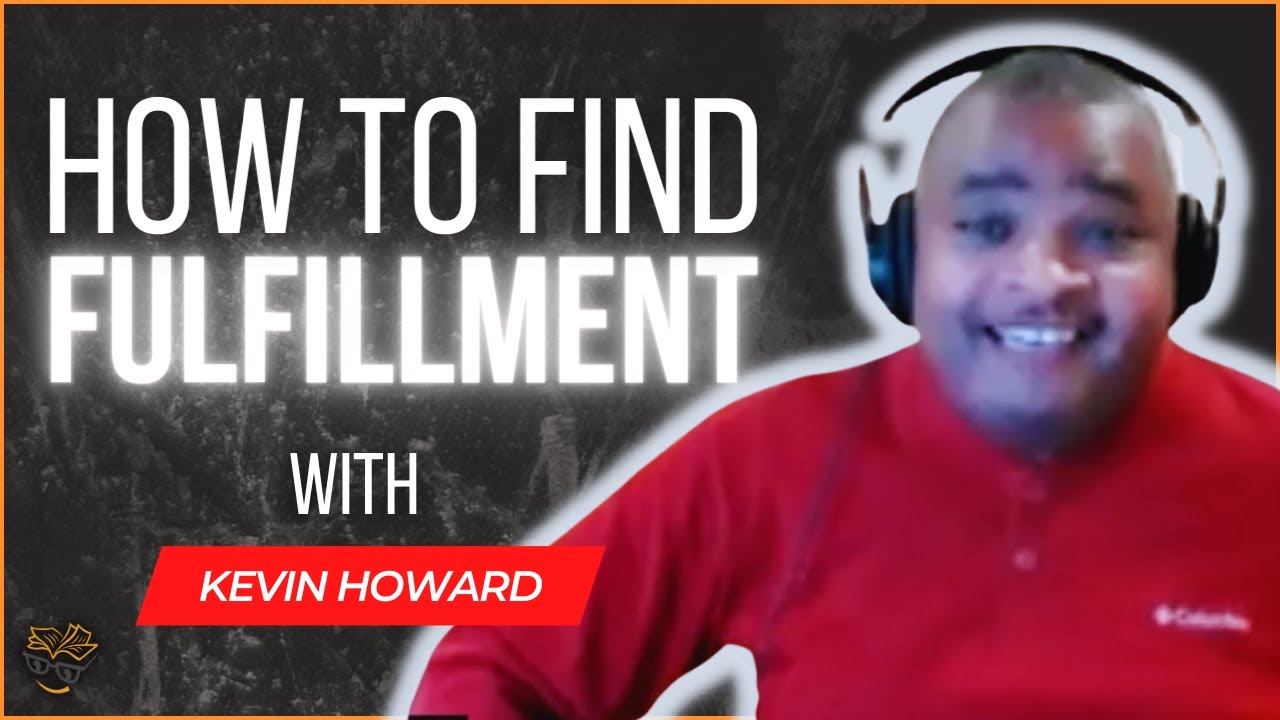
Kevin Howard, author of Onward at Last, left banking when success felt hollow. He argues that American values like competition and self-interest breed toxicity, and that recognizing our interdependence with others and ecosystems is key to finding authentic purpose and fulfillment.
Chapters
Kevin, welcome to The Book Thinkers Life-Changing Books Podcast. How are you feeling today?
I am feeling great. So happy that you've invited me to have this conversation, Nick and Luke. Looking forward to it.
Yeah. Well, after starting your book Onward at Last, I thought I have to have Kevin on the show to talk a little bit about some of these subjects. So, before we dive into some of our favorite takeaways and tee up some questions that we have, I'd love to have you introduce yourself to everybody that might not be familiar with you or your book.
Okay. Well, my name is Kevin Howard, and I am a banker by trade, commercial banker for most of my career. Over the last few years, I've shifted my focus in my career to climate risk mitigation and adaptation work, since that seems to be the most pressing issue coming up in the future that I'd like to turn my attention to. I wrote the book basically, it reflects, you know, kind of my career arc in that, you know, you go through your life, you have plans, and you actually start achieving your goals. And sometimes you wind up in a— now you've achieved your goals and you find it's completely hollow and empty. I mean, what happened? You know, the whole notion of, you know, be careful what you ask for in case you get it.
Yeah.
Then what's next if the very thing you set your life up to achieve proved to be unfulfilling. So what then? And so the book was really about, you know, what— when I had that what then moment, you know, what I learned in introspection thereafter. And I wanted to share it. And the target is to the person who's just building their life, just like I was doing, and not looking to, you know, you know, we don't have enough time to sit on a mountaintop, you know, in Zen. You know, so it's, it's pragmatic, though it goes in some deep places.
Yeah. And as I've heard Jordan Peterson say, you can only sip so many mimosas on the beach or piña coladas before that gets bored, right? And so many of us are working in that direction only to find that it's not fulfilling. So that introduction was perfect because I think it highlights our core audience here. About 80% of our audience fits between the ages of 18 and 34. I like to say that they are young professionals, people who are They recognize they have room for improvement and they're working towards that improvement, but maybe we're steering people in the wrong direction. And so that's what our conversation will focus on today. Before you kick off Volume 1, which is the first group of essays on our universal oneness, you have a proposition that you kick off the book with. Could you highlight a little bit about what that is and why you decided to start the book that way?
Yeah, that's, you know, That's interesting. And so the proposition is about what if some of the core virtues that define what it is to be an American— freedom, independence, self-interest, and competition— what if those virtues are actually at the heart of what is producing the toxicity that's making it so difficult for people to achieve their American dreams in the current context. And so that, that's the proposition on the table, because that was a part of what I discovered. There's nothing inherently wrong with freedom, with independence, with self-interest, or with competition. What can be wrong is if they are misapplied in our lives, right? And unfortunately, the way they have progressively become practiced Is what I discovered is totally counter to what leads to our fulfillment.
Yeah, there's— I agree 1,000%. You know, it's interesting to think about the barrier to our happiness is our core values. And they're baked into society and have been for such a long time in the West as Americans. that we don't even question them. You know, we, we work with that base system as a framework, and we don't think to go back farther than that and question them. So you kick off the book in volume 1 with, uh, with what you call the Universal Oneness Manifesto. So I'd like to read it to the audience today, and then, then Luke and I'll kind of go back and forth with questions for the rest of the podcast. So here it is. We all came from the same place, and we will all go to the same place. The only distortion of our reality is our wide acceptance of our independence, our individuality, and our inherent separateness. From this mythology, all inhumanity is born. So my question for you, Kevin, that's a pretty powerful manifesto to kick off the book. What do you mean by inhumanity? All inhumanity is born.
I mean, to treat people intentionally in a way that you would not have yourself be treated, right? Our capacity to be cruel, to exploit perpetually, right, comes from the notion that the harm I'm causing to the people I'm exploiting are hurting doesn't affect me. So you have to emotionally detach from what— from the harm you're doing, otherwise you wouldn't do it. In other words, we don't treat the people we love in an exploitative way. We don't treat the people we love in an inhumane way. But there's a lot of inhumanity in the world. So how is that possible? It's because we've— it starts with the idea that we are— that what we are essentially separate from each other. And that actually creates the space. If I'm separate from you, if whatever happens to Luke is not going to affect Kevin Howard, then if it's convenient for Kevin Howard and it happens to crush Luke, oops. And this is, this is what's happening all over the place.
Yeah.
I mean, I'll give you one example. In COVID, you know, because I'd like to use our shared experiences to prove the point. In COVID, one of the lessons we got from COVID once we all had to shelter in place in April and May of 2020, that the essential workers of our society, what we learned is that the essential workers of our society in the competition for goods and services to take care of ourselves and our families, we're defeating them. Okay. We're defeating the people who are making it harder for the people that we absolutely have to have to make sure the electricity comes to the house, to make sure the security is, you know, we have security so that it's not Wild Wild West, right? We're making it harder for them to do the very things we absolutely need because the context in which we access resources is through competition. Okay, fine. So, you know, I mean, it's— so this is my point there about the inhumanity, is that this is only possible because we— the competition encourages us to detach from each other. If you're competing against someone and the outcome is win or lose, you can't consider their benefit while you're competing. After the game is over, we can hug and stuff like that. But if in the game the loser is going to die, well, oops, there we go. And we apply this competition to everything. We apply it to everything. So the point there is to start from ground zero with the notion of of the first part of the external narrative that hides us from who we are is we're taught from birth that we are independent. We get it. It's embedded in so much marketing, you know, the notion of freedom, to be free from, you know. And so, okay, So if we are, then when I advance my own interests, I don't need to consider the very hands that I need to support me. I could actually advance my own interests, hurt the hands that support me, and ultimately hurt myself and don't even know I'm doing it. And this is what we have going on in America today, around the world today, quite frankly.
You have a very— for lack of a better way to say it, but I feel like you have a very enlightened view of humanity and the world. And I'm so curious, like, how did you get there? Was it mentors and coaches? Or is it just because you reached this level of success and achievement that you kind of took a step back and just started questioning yourself and looking for answers? Like, what, what was the thought process behind all of that to get to this point of view?
Luke, the great question. We are creatures of necessity. And I am— I was just like most everyone else. I was totally baked into the system and built a life based on what I— what the American notion of success. And when I found it to be hollow, empty, and when I found that I was unhealthy— in other words, I was stressed out because of it, that was affecting my health to the point where I probably would have had a stroke if I kept on going— that became, okay, if everything I thought I was— I should be doing led me to that spot. Clearly, I don't even know what I'm doing. I don't know who I am. And it forced me to then stop. Okay, I still got to keep the lights on. So I still functioned. I decided not to make any decisions about career, marriage, whatever. But I needed to get in touch with who I am. And so I— so how do you start that journey? To me, I started rock bottom on the most basic things. How do I survive today? How am I going to survive today? And so if you go through the process of starting that just on the most— and anyone can answer this question, you don't need education or experience— how am I going to eat today? Well, I don't produce the food that I'm going to eat today. I didn't produce these clothes that I'm wearing in this conversation. None of us produced this technology. We get through each day based on the productivity of people, most of which we'll never know.
Hmm.
Right? And when I realized just the most basic, how do I survive? Right? I realized that I contribute. I have choices to make. But those choices, no matter what I do, if the person who happened to make that hamburger that I'm eating, you know, ditched it on the floor, rubbed it on their butt, whatever they did to it, and then I ate it, that's where I got the food poisoning, wound up in the hospital. Okay. In other words, we are interconnected. That's how I learned. I mean, and then I started to realize again, just staying with the pure physical, this body is not designed to be self-sufficient.
Hmm.
We don't produce the air we breathe. We don't produce the water we drink. You know, we need atmospheric pressure in order for the pressure that circulates the blood in our body not to balloon us to twice the size and kill us in the process. You know, so we are entirely a function of this interdependent symbiotic relationship with the rest of humanity and the ecology that sustains us. Sunlight goes out, game over, right? You know, so we need the ecology and we need each other. And, you know, this is how humanity survived the dinosaurs, how humanity— we're not the fastest predator, the strongest predator, smarter. You know, we're probably the smartest, but we do have an ability to cooperate. to specialize and then cooperate against a more powerful predator. And that's, that's our success. But in the modern context, we've gotten away from it. And so this all started with just saying, I don't know what I'm doing, but I know that everything I told myself up to this moment has proven to be hollow and untrue. Because I'm here, I'm in the big house, I got the beautiful wife, I got the kids, I got the toys, I got the money in the bank, and I'm about to keel over. You know, and so out of that place of necessity, I said, okay, starting from ground zero. And it— and that's how I learned. And then a pattern formed. I started noticing, as I started to understand who I am, that most of the truth I was coming to understand was coming out of our— my lived experience. And it was contrary to the story that society had told me, you know, over and over and over again. And so, and the problem was I was living the story society had told me. And that's where, you know, so that's how I got there. And that's it, you know, it wasn't no smarter than the next person. I specifically write the book talking about, I'm not speaking out of authority. I'm not talking down to anyone. I'm not saying, hey, I figured, you know, no, I went through a process and was just at rock. bottom. And I said, how do I— how did I get here? And I got here by deferring my truth to all the stories we're told. You know, Jeff Bezos is not independent. He just gets to buy what everyone else produces. And just like you and me, if he buys something that someone didn't produce well, there you go. You know, so yeah. Hopefully that answers your question.
Yeah, no, it definitely does. And I was just thinking of the Jeff Bezos things. He even understands the interconnectedness because he says, you know, you have to be hyper-focused on the customer because without the customer, he doesn't have the business he has. So, man, I love this. I love this line of thinking. And I'm also just— I'm curious as to what you defined as success before versus what you define as success now.
Yeah, before, my understanding of the American dream, you know, success was, you know, as a middle-class person, was to put myself in position to reclaim enough of my time that I could spend it doing the things I really wanted to do that was off the grind, you know. And so, you know, you get a nice house, you like to go on the water, you have a boat, whatever, you know, you could spend time with your kids, with your spouse, with your friends. I mean, this is what makes life good. And so that was success and I had it. And again, it does sound good, but most of the things I was doing to put myself in that position did not serve me at all. They really weren't what I wanted to do, you know? So it became like Sisyphus pushing the boulder up the hill, you know? You're there, but you never arrive. It rolls back down and you just gotta push it. You go again. So yeah.
There were a few things that you mentioned, Kevin, that I wanted to unpack.
I—
when I did my, my second post on the Book Thinkers channel, it was all about this subject of independence. And, and I said, based on your reading, independence is an illusion, because like you alluded to, we don't produce the food that we consume, we don't build the houses that we live in, we don't construct the cars that we drive around or the toys that we play with. And so much of this independence is totally an illusion. So my question for you Is once you realize that independence is an illusion, what's the next step? Is it to express more love to everybody around you? Um, you know, what's the system that can replace this desire to separate from each other?
Well, okay, so let's go through the path, the progress, because that's a great question. Okay, so, so once I realized that the way I survived was not through independence, not through my choices alone, but that it was actually a symbiotic relationship.
Mm-hmm.
So I breathe oxygen, I exhale carbon dioxide. The trees take the carbon dioxide, they use it in photosynthesis to make sugar that feeds all the critters that are in the tree, but they return clean oxygen in the air so I can breathe again. They need my carbon, I need the air. You know, we have a symbiotic relationship, right? So how does— once you realize that that's actually how you survive every moment, how are you to feel about all those and all that that allows you to survive, that gives you what you need to survive? Well, the most natural thing is gratefulness.
Hmm.
Your heart just opens up. I mean, how do you— it's, you know, for anyone who has your back, you know, we think that's a narrow amount. No, it's a lot of people have your back, right? You know what to do. It's total love. Our pets, our dogs, right? Our, you know, they have complete love for us. Why? Because they have clarity between who is taking care of me, who really is providing for me. And so once I realized that I survive based on all these other people, along with the choices that I make, along with the natural environment that sustains me, The next step was the open-heartedness, the idea that I'm connected to something bigger than just me. And because I'm receiving all these things in order for me to do anything that I can do, I find that my purpose aligns with, well, how then can I serve? How then can I give it back? The very nature of a symbiotic relationship is, is that The more I breathe, the more I exhale, the more the tree gets carbon, the more photosynthesis, the more oxygen is clean in the air, the more I can breathe again. So it becomes about how can I serve? How can I serve for all that I receive? Because for every breath that I take, a lot of people, a lot of things had to do the right thing in order for me to do it. And it's just a natural progression. And so that's where in an authentic way, no airs, authentically, you become extremely grateful for the fact that you have the opportunity to take the next breath. Everything you are able to do with it then becomes, how can I then contribute? So many things, so many people before me, you know, have contributed to allow me— the very language we speak, we did not create. You know, these frame our ideas. This is generations of humanity. who we are benefiting from, right? And so that's the next step. You, in any symbiotic relationship, you realize that, that then, okay, I need to give back, I need to serve. And we already do it because look how we function in the economy. We hone whatever skills that we can hone to make the money that we can make to exchange it for everything else we can't produce for ourselves, right? You know, there's a symbiotic nature to that. Right? You know, now, so, so that's, that's, that is the next step. The next step is, is, is it leads you to a sense of purpose. Because you understand that you didn't do it on your own. And, and, and yeah, and I trust that most people will find the same thing. They will find the same thing if they realize they didn't do it on their own.
Yeah, no, I love it. I actually have a tattoo on my wrist here. It says agradecido, which is Gratitude in Spanish.
Yes.
And I have a tattoo on this side of my wrist with the numbers 1, 2, and 3. And every day I think of 3 things that I'm grateful for. And so gratitude has become a big theme in my life over the last couple of years because of books like yours and books that focus on the oneness and the interconnectedness, interdependence of all of us. And so what— do you have any practices around gratitude that you participate in on a daily basis? Do you journal? Do you try to express attitude to the people around you? What does that look like? How has it manifested for you after this realization?
Yeah, it is. So my practice is, there's a power in staying present. You know, modernity has convinced us that multitasking is the thing. The problem with multitasking is, is that you don't pay— you don't have full attention in anything that you're doing, right? So the depth of your presence in that moment is limited because you got, you know, I'm thinking about what I'm about to do, I think of what just happened, I got all this other stuff going on, and you barely— okay. So by staying present in the moment and seeing and fully realizing, you know, what is making this moment possible, you know, and that gives me all the authentic reasons for gratitude. See, the problem The secret sauce to gratitude is not that it's a should. We should on ourselves all the time. That's what society encourages us to do. But there's no juice in that. It needs to come from you. If you accept the fact that you're eating today because hundreds of people, maybe thousands of people you don't even know, participated in that action, the next stranger you meet, that person could be one of them, right? That's where your gratitude and your openness comes from.
Wow.
We've been convinced to hate the stranger, not hate the stranger, but don't talk to 'em, don't trust a stranger. They could be the ax murderer. No, more than likely they're not the ax murderer. More than likely they fixed the brakes in your car. More than likely they checked your x-ray, you know? And so, and that's just, if you can, whatever your method is, if you can lock into how can I authentically realize the reasons I have to be grateful in this moment, And then just do what comes natural. That's it. That, you know, but it has to be authentic. It can't be a habit, an external habit that you're now imposing on yourself. Because just like the diets, you know, that goes away.
Dude, you're awesome. All right, Luke, I know you've got a question. You're up next. I have so many follow-up things.
I know, me too. But I just wanted to share this, actually, just a really like quick story. Well, number one, I always say I was relating to your should, what you said about you can't should. I always say should does no good. So I appreciate you sharing that. But the other thing that I was thinking about, I used to own a coffee shop, and still to this day, coffee means a lot to me. And something that early on in the journey, I, I had this huge realization when I'm ordering coffee, like how many hands touch the coffee before it actually gets to your cup. And sometimes it is upwards of 1,000 hands touching your coffee before that coffee reaches your mug. And that always, that framework always gave me so much gratitude for the people in other countries that are working hard for sometimes cents a day, which is crazy to me, but cents a day to give me that cup of coffee that just elevates me, elevates my personal experience. So, I love that we have this focus on gratitude when you think about those things because We do. We forget about it so often. We just think we're just running through life all by ourselves. And the reality is, like you said, all the way down to the shirt and everything around us, other hands touched this, other hands made this happen. The house we're living in, the lights that we have on, the technology— like, so many people were involved in making this conversation happen. So I love the way that, um, you frame gratitude around that because it's so true. You can just sit here in it and really feel that. I really like— I just feel that. So thank you for sharing that. And that's the story I wanted to share. I also wanted to ask a question just about—
Sure.
around purpose. Like, how do you— I guess the best way to say it is, how do you define purpose? Like, what does that mean to you? And then how do you think we should, as just as people, define purpose in our own lives?
Well, and the answer to this question, my answer to this question ties back into this whole discussion on independence and stuff like that. So it's not that we have no identity, right? You know, you know, You know, we're like the fingers on the hand. They can move on their, you know, on their own. They just, you can't, they just can't survive if you separate them, right? Okay. So as it relates to purpose, it has a— so this is about Luke now, right? This is about Nick now or Kevin now. So based on your personal priorities, your personal values, drowning out the noise of everyone else. What gets you excited about the day and stuff like that, that you could then hone your skills to do that as best you can, right? When you find that thing, it, you know, and that is your purpose, right? I mean, it's no longer work. I mean, you're still busting it. You still have to perfect it, right? But it's 2 o'clock in the morning. You, oh, it's 2 o'clock in the morning, right? Okay. So I do have an analogy about what I mean by purpose. So I have a commentary, As Above, So Below, and I take you on a journey from your body to, you know, and to the universe. And basically, so our bodies are made up of about 200 different types of cells. And the way our bodies actually function is those 200 different types of cells do their unique function so that in coordination with each other, so that the body can work. And my— so my understanding of purpose is to find out, are you a red blood cell? Because if you're a red blood cell, what you do is you carry oxygen throughout the body, right?
Right.
So what are you? So because each of us are empowered with unique experiences, unique skills or whatever that we can offer to the rest of humanity and society as a whole and ecology and everything, a unique talent. And when you find it, that's how you serve your purpose, is to offer that, because that's how the body survives, is that each of us do what we can do, you know, which is why in As Above, So Below, I downshift. Once we get past the point of identifying what I think purpose is, I downshift into what we're doing with how we're investing in our people. in education. I mean, if you— just the randomness of birth is deciding whether someone is going to have access to the basic resources to find out what kind of— are they a red blood cell or white blood cell? I mean, how many Elon Musks are pushing a cart somewhere in Appalachia somewhere, because— but they have no access to the kind of resources they need? The loss to human potential when you have 4 billion people on the planet living 100 years behind us, when we have the resource to be able to give them the information they need to discover their skills and to actually contribute to the world, right? But we're not doing it. You know why? Because we're competing. We're competing. They're losing. Oops. You just happen to be born in the wrong place. Sorry. Maybe next life, right? You know, no. Who's that hurting? You know, it's, it, you know, so. I will stop there. That's how I answer purpose. It really is each individual. It's defined by you. This is why the direction of the book is to set aside the noise, look sober in the mirror, find out who that person is. Because when I didn't know anything— because again, I came to that point where I didn't know anything— the first thing I just— who is that person? What is—
what—
Because clearly that person doesn't value all this big house I got right here. This is not It's not the truth, you know. So hopefully that answers your question, Luke.
Yeah, absolutely. And, uh, that just gave me, gave me chills when you were talking about that because I've thought about that often too. I'm like, man, how much would it, how much would it suck if there was a, there was a kid born that was meant to cure cancer and the only reason that they didn't is because they didn't have the access to the resources that we have? And that, you know, that's all— oh yeah, for sure. So that thought definitely, um, scares me sometimes, but I'll kick it over to Nick because I feel like I've been hogging the spotlight here.
No, I think about these subjects a lot as well. I think growing up in a pretty affluent neighborhood as a straight white male in 2000— 1993 is when I was born, and I was just given so much opportunity. And not everybody is born at the same starting line. You say in the book, Kevin, that you're born in Bronx, New York, but What would've happened if you were born as an indigenous person on the other side of the planet?
Exactly. No, that's right. And so that's why it's incumbent on us who do have the opportunity to do what we can. Because that's the thing, it is the randomness of birth. The competition is not even right. It's not even fair. It just, you know, none of us chose our parents, you know, so we could have just, you know, and so exactly right. You know, that's, You know, I'm just, again, I'm grateful for where I was born, that I was born in America, even though the book, I get very critical about some of the things we do. But just like your sibling, you know, you're supposed to be, you hold them to account. You know, what standard, you know, do you hold your own country to, right? And so therefore you go there.
Yeah, I've heard the example sometimes when talking about division and divisiveness, which are subjects that you discuss Kevin, sort of at length. So maybe we can transition to some of those subjects now. But I've heard people say, listen, if you were born to a Nazi family in Nazi Germany, yeah, you probably would be a Nazi.
Surely, surely.
And that's a tough pill, I think, for a lot of people to swallow. But at the same time, today, if I was born to a family that worked in an Apple manufacturing facility in China, China, I would probably work at that factory too. And there'd be people who ignore the fact that that's happening over on the other side of the world using these devices, because again, you have to ignore it, otherwise you do something about it, right?
But see, see, Nick, the problem is all these labels. And I— because I'm going to go right into the labels. And why I say that is, is whether— as you, you've already— you've put all your— like, not even all your life, just a few of your labels, you'll be in white and come half of the neighborhood. I mean, you're a Boston guy, you know, that kind of stuff, right? Okay. But all these labels, you know, Black, from the Bronx, whatever. Going back to the universal oneness manifesting, the reason why these labels matter, because these are tools for distinguishing me from you.
Hmm.
This is— these are tools that allow someone to make me your other, or you my other. Right? Okay. And unless we can acknowledge our mutual sovereignty, our mutual capacity, the right for us to exercise our own discretion, which we do both recognize, right?
Right.
You know, those are the common things that we can come together on. Not all these labels that are pushed forward. And so I have a commentary called The Tribe Is Gathering. And it says, you know, it's really speaking to next steps. Once you realize that you are interdependent, interdependent, not codependent, and because there's a mutual symbiotic benefit here, right, on the rest of humanity and the ecology that sustains you, right? You don't need to distinguish the Chevy driver from the Ford driver, the Arab from, you know, from the German, right? You could just look at our common interest and build and craft a society, right, that serves all of us. All these tools have helped create a society where we have a very vivid idea who the enemy is. So this week's enemy is Putin over there. But guess what about Putin over there, right? Russia is our number one ally in nuclear nonproliferation. Go back to the Iran nuclear deal that the Obama administration negotiated. Okay, so Iran, who has every right to advance their own national security interests, wants a nuclear bomb because their perceived enemies all have them. Israel, United States, right? They all have them. So what are they supposed to do? I mean, this is what India did when Pakistan got one, right? Okay. So they want to develop their own nuclear program. We're trying to convince them not to. So the deal that we cut, that they accepted, was to give their uranium, to have it enriched by Russia so that it could be enriched so that it can only be used for nuclear energy and not for a nuclear bomb. It takes the person who you would trust, you know, who both Iran trusts and the United States trusts to do that. Okay, this is the same Russia, right? So what are we doing right now? I mean, it is, you know, these labels are what allow people in power to get us to hate each other so that we're focused in on those things while they do what they do. And the evidence is clear what they do. They're just getting richer and richer and richer. And I'm talking about way over the richness of any generation of richness. I mean, you know, this is way past what the Rockefellers and the Mellons and all that stuff were able to accumulate during the Gilded Age or the Roaring '20s or anything like that. You know, I mean, You know, Bezos is— I mean, just, he has the kind of wealth that takes the entire wealth class of the 1800s, you know, by himself. How is that happening? Because we're busy fighting Black Lives Matter, you know, Proud Boys over here, this, that. We're busy fighting each other, right? And all the money is just siphoning that way, you know. So my contention is we gotta Drop these— once you recognize who you are, that you survive every day, that you live every day based on this symbiotic relationship, stop seeing people for what they're not. The least thing I am is a Black man. I'm so much more than that. I mean, there's nothing wrong with me being a Black man, but the idea that that's all I am, all you are, is white gentlemen in different areas of the country? No, there's so much deeper, so much— I mean, most of what you will contribute will come from other areas than just that factor. And yet these become the basis by which we kill each other, by which we put the knee on the throat. I mean, yeah, so that's my point about, you know, as it responds to the labels, we need to really— and this is not new, People talk about, yeah, there's a no-labels political party, right? So, but we need— but it needs to come from an authentic place. And it comes— and an authentic place is understanding that we are actually designed to be interconnected. And so therefore, how do you want to treat your thumb or your pinky? So, you know, I don't like my pinky. No, because what is it going to do, right? That's how we need to be responding to each other. All of us could be the ones who cure the disease that would otherwise kill us.
I have so many questions. So, and I agree, labels, labels define almost meaningless parts of us sometimes. Yet we focus on them. I heard somebody recently say that Democrats and Republicans have more in common with each other than the leaders they support. Right? So if I was a Democrat, I have more in common with a Republican than my Democratic leaders, right? Because at the top of the food chain, you're focused on money, you're focused on advancing self-interest and personal agenda, whereas 99% of Americans— as an example, Americans is another label— but 99% of people living in the United States of America want the same thing, synonymous interests. Um, my, my question for you though is, do you think it takes lived experience to truly feel the way that you feel about oneness and some of the next steps that you talk about? Because I'm in my late 20s, so is Luke. I understand from reading your, your commentaries and your book, um, these concepts, but some of them I just— I get it, I get why it's the right answer, but it's so hard to undo it because I haven't lived it yet. You know, I haven't achieved everything I want to achieve. And so there's something that's deeply rooted in there that says, no, when you get there, you'll, you'll like it. But it's— ah, man, do you get what I'm kind of asking? Yeah, I do.
And I would say, and in a pushback way, the— I use the lived experiences so that because we live at a time of such toxicity, that, that if you don't have to trust me and my credentials and, oh, he's a smart guy, right? If you don't have to do that, if you could actually look at your experience and say, does this resonate? Does this make sense? I mean, I didn't think of it this way before, but now that this person's mentioning it, I actually went through this, right? I actually don't produce my own food, right? Okay. You know, okay. Then that is the driver. And so the reference This is my great authority. We have shared experiences that teach us lessons that we're not— that society is saying, oh, don't believe your lying eyes, you know, but your lived experiences are telling you this. And I don't think you need— I mean, from the time you start living, you're starting to gain these experiences. I mean, a baby, it's hard, you know, but the idea is the baby understands. How does the baby eat? You know, you know, and then people come and feed, but So that's right. So if the baby could articulate their little experiences, this is how I eat. I don't, I don't, I'm not independent, you know, or whatever, you know? And so that would be my pushback, Nick. I don't think there's a threshold. 'Cause again, I'm not defining what your values are. I'm not defining—
Yeah.
What your sense of purpose is. That's a part of your journey. See, we are sovereign. We each have something to contribute. That sovereignty is we have choices that we can make, right? We just need to recognize that the idea that we are empowered to make those choices come from the fact of what we do for each other. That to exercise those choices in a way that would cut off the finger is actually what we're doing. We are using competition and destroying the ecology that sustains human life. I mean, that's what— that's what the climate change problem is. And again, and to give you an idea of how serious that is, I converted my whole career as a commercial banker to go into climate risk because that's how serious that thing is. So what I'm saying here is, is that you're still empowered to make your choices. Your age is not what's going to determine whether you could get some value out of this book. It's how you then discern, well, what are my experiences? How did— to what extent does that resonate with something that I said, right? And it's— and it may be true that at this point it doesn't resonate. That's fine. It's just like the book you go back to that, that you've read 5 years later, and it means some different things because you've experienced some different things. So that's true, but I don't think there's a threshold to where you say, I can't really benefit because I, you know, I'm just getting started, you know. You know, this old guy over here, I get it, you know, and that should— I mean, you know, the only advantage of being old is that you should be able to have some wisdom from your experience. But, you know, each of us don't have to reinvent wheels.
Yeah, and age is just another label, right?
Age is just another label. And, and so, yeah, so I absolutely think anyone could read the book.
I will be—
I would admit with the publisher, My target, my basic target audience was the 30 to 60, which is on the upper end of your range here. But I reached out to you for a particular reason. But, and the reason for that is, is that group were steeped in terms of how they were raised in America when the American dream was accessible to the working class, you know? And so by the time they came into their adulthood, they had to learn that the access had greatly changed. And it has disillusioned a lot of people. So I'll give you an example of what I mean. There is a woman named Anne Case and her husband, an economist— I'm not going to remember his name— they produced a book out of Princeton University called— and it's an annual book or periodic book— called The Mortality and Morbidity Report for the United States. And it just measures, you know, how often we get sick and, you know, it has demographics and how— and our death rates and stuff like that. And they produced a report in, I believe, 2015 or 2016 that showed for the first time in recorded history, in modern recorded history, outside of a world war, or the Spanish flu pandemic of, you know, 1816— I mean, 1916 to 1918, whatever. Outside of those cases, the first time there was a demographic that had life expectancy decrease 3 years in a row. And that demographic was only in the United States. And it was white men, non-college educated, between the ages of 40 and 54.
Hmm.
And it sent the sociologists off the chart. What is going on? I mean, the crack epidemic did not bend the life expectancy of Black men in America, but the opioid epidemic, along with a number of other things— because the report shows that that group were committing— they were killing themselves by violent means. 10 times more than any other demographic in the United States. So there was a number of things going on there. And so they went on and wrote a book called Deaths of Despair, right? Because these are people who came into their adulthood expecting to be able, just like their fathers did, be able to get the job either at the factory or whatever. And they can, they can access the American dream. They can, they can be Archie Bunker. Archie Bunker owned a house in Queens, New York, sent his daughter to college on his salary alone. By the time they came in in the '90s and in the early 2000s, we industry— we deindustrialized the country, sent most of those manufacturing jobs elsewhere, and they wound up working at Walmart or this and that and other. Can't afford a house, can't afford to take care of themselves and their families the way their fathers took care of them. And then no one has sympathy for them. You know, you know, you know, you know, Democrats are doing identity politics and talking about, well, you're privileged, and they can't even take care of themselves and their family. And what do they do? They commit suicide. They drink. They get, you know, they're dying in all the ways that show that they're deeply unhappy. Deep, you know, why? You know, and so that's my point, you know. We are at that place. where people can't access in the same way. And so it's an entry point for us to reconsider that. It does give us an entry point for us to reconsider, you know, just like I did, you know. So I did kind of digress there.
No, listen, this— I wish we had a little bit more time. We might have to have you back in a couple of months. Because there are so many subjects that we haven't covered yet that you've caused me to think about in this book. And And I've also hogged a lot of the questioning, so Luke hasn't been able to ask too many questions. But I've got one final question, and then I'll kick it over to Luke. So talking about next steps, you propose sort of this— this, you say some people might call it a utopia, a society where there is no greed and we're not focused on cultivating as many resources as possible and keeping them at arm's length from everybody else. You talk about an alternative to money. You talk about an American dream that's healthy again. Like, what does that look like for you? What are some of the components that make that up? Could you share some of your philosophies with everybody?
Yeah. And again, I try to keep it at the first steps towards that ultimate goal, because first order of magnitude, utopia is always just the society that exists the next generation. I mean, what we live today is a utopia to the forefathers of America.
Yes.
I mean, this— okay, so, so, so within that context, if we set aside the things that divide us by recognizing that MAGA is supporting the lives of the, the Justice Democrats, in other words, we, we support each other and need each other to survive, to thrive, right? If we accept that reality and then do what then comes natural, which is, okay, so then we do all matter. So therefore we need to craft solutions that support all of us, right? Then it— that it's those kinds of values. When those kinds of values hit critical mass, right? You then start crafting a society that serves all of us. one of the things that will fall away is having an economics that's exploitative, right? And the thing is, this is how change has always happened. You know, when Thomas Jefferson wrote in the Declaration of Independence, we all, you know, we hold these truths to be self-evident, that all men are created equal. There was no country in the world that was organized on that principle. But a critical mass finally got hit And that— and, and today it's like a no-brainer. Well, that's the same thing here. Yeah.
Oh no, keep going. Sorry. Yeah, I, I was just reflecting in real time. I'm like, yeah, it's so very true.
Yeah. So all I'm saying is, is it first starts right here. It first starts with the person in the mirror, right? If you get right on who you are and how you plug in with all of us, You're— how you look at the issue of the day, how you deal with every person you interact with, is going to be driven by that instead of these other virtues which are not serving you. Like you're independent, like you could advance your interests against the interests of the person who serves you. See what I'm saying?
Mm-hmm.
So, so it starts with understanding that and then just take the next step. Just take the next step that, that comes naturally to you. And Luke, you're going to express it in your way, and Nick, you're going to express it in your way, and I'm expressing it in my way. So this is not all about control, central planning, or anything like that. You know, if people do accept the fact that they thrive and survive every day based on the actions of so many people they will never know, we will start building a society that will feel like utopia today.
And well, Kevin, I've appreciated your time, and I love your mind. Tell you what, me too. The way you think and the way you articulate everything has been, has been amazing. And like Nick said, we just barely touched the surface of, uh, everything that we wanted to talk about. And it's a shame that we're a little short on time, so maybe we'll have you on again, like he said, in a couple of months. But I'd like to wrap it up with, um, one more question that I like to ask guests, and that is, if everything that you've written down, all of your knowledge, all of it has to go away, And it's forgotten, but you could leave one short piece of advice to the world, what would it be?
The one takeaway that I'd like to say to readers of Onward at Last is to really spend the time to get you to know yourself, to get to know what your values are, to get to understand your personal priorities. On this basis, you can reorganize your life. And this is how you will unearth your sense of purpose, which will lead to the fulfillment that you so sorely deserve.
Oh, it's amazing. Yeah, where, where can people go to find this book and to learn more about you? Where are you posting these commentaries? Where can people get more of Kevin Howard?
Thank you, Nick. Yeah, first and foremost, The— it's, it's— the book is distributed in hardcover through— and it's through Ingram, so all your bookstores, you know, have— you know, you can get it on their line. You can get it on Target's website, let alone Amazon or whatever. But it comes in the form of the hardcover and the ebook, and is also an audiobook version, but the narrator is a wonderful actress out of Los Angeles named Carolyn Janney. And she did such an amazing job. And that's available on iTunes and on Audible. And, and so the book has a website, www.onwardatlast.com. And on that website is the blog, there's a blog tab where the commentary is also available.
All right, thank you. We'll put all that in the show notes.
Indeed.
Thank you, guys.
This was great. Thank you so much.
More from Nick

Napoleon Hill’s “Think and Grow Rich” is a timeless classic #selfhelp #personaldevelopment

4 Books to Help You Get Better at Decision Making #selfhelpbooks #bookrecs #nonfictionbooks


Have you read this book yet? 📖: The 5AM Club by Robin Sharma #selfhelpbooks #robinsharma

Dan Sullivan on Listening to Your Customers Instead of Watching Your Competitors

5 Books That Will Boost Your Financial Intelligence #financialfreedom #nonfictionbooks

The People That Preach the Loudest About Virtue are Usually the Most Power Hungry



Books are the greatest mentors you can find #selfhelpbooks #businessbooks #successmindset

Let’s fight this toxic instant gratification culture together 📖 #selfhelpbooks #jimkwik