ART is the PATH to CHANGING your story | IN-Q (Adam Schmalholz)
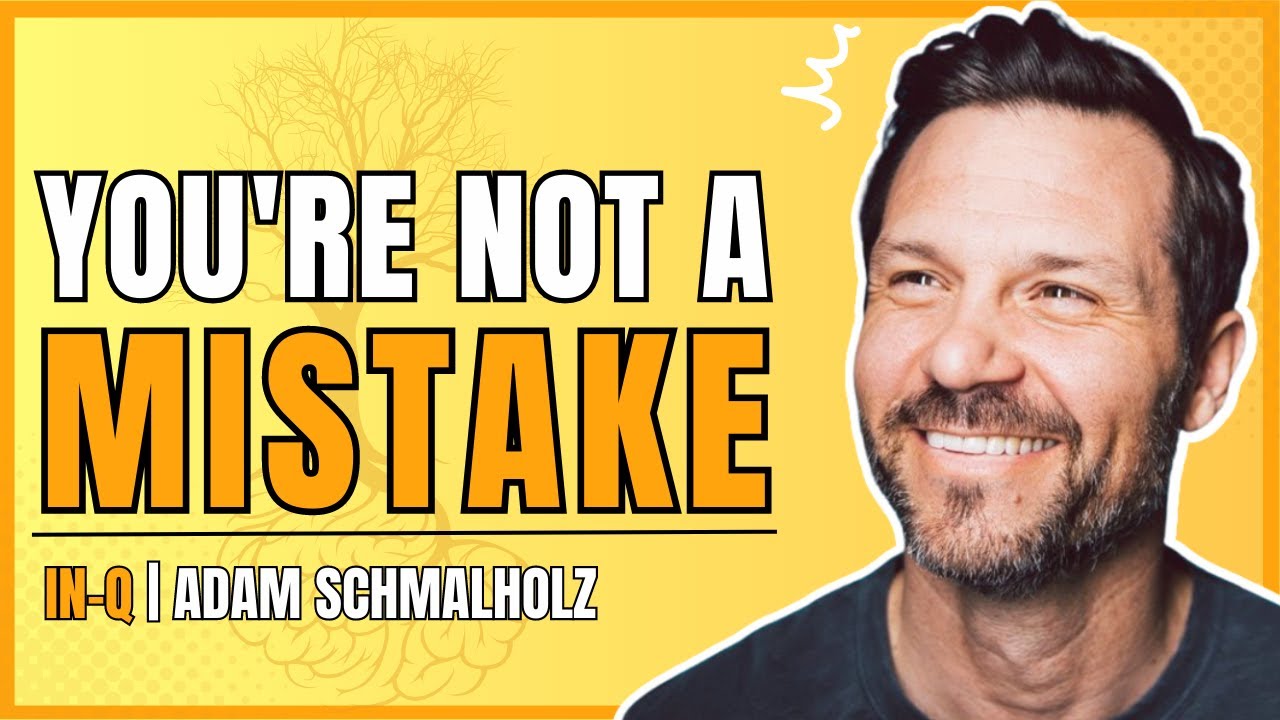
In this Book Thinkers podcast episode, spoken‑word poet and author Adam Schmalholz (known as In‑Q) shares a deeply personal performance of his poem “Father Time,” reflecting on an absent father, anger, gratitude, and the transformative power of art. The conversation then explores his artistic journey—from early freestyling and slam poetry to publishing the book Inquire Within—and his creative process, including memorization techniques and continual revision of his work. In‑Q discusses the philosophy that poetry is meant to be experienced rather than understood, his approach to monetizing art by separating creativity from commerce, and the various ways he generates income through songwriting, corporate workshops, retreats, and live shows. He explains his branding, the significance of his moniker, and his belief that everyone is a storyteller who can use art for self‑exploration. The episode also includes a live workshop moment where host Luke attempts a poem, illustrating In‑Q’s teaching style. Throughout, themes of vulnerability, gratitude, the rarity of life, and the importance of living in the present are emphasized.
Chapters
Well, Ian Q, welcome to the Book Thinkers Life-Changing Books Podcast, man. How are you feeling today?
Very good, thank you so much for having me.
Yeah, we're—
I think we're gonna kick it off with a poem, right? If you're okay with that, we'd love to hear it.
So this is a poem from Inquire Within, and it's called Father Time. I'm staring at the number wondering if I I can hear the tick-tock from the clock on the wall as it meshes with the thump-thump beat of my heart. Sometimes getting something started is the hardest part. I didn't meet my dad until I was 15. I'd seen his photograph, but his image was sickening. A coward with a dick but no balls to back it up. See, when he left me as a kid, I had cause for acting up. The funny thing about hate is the person you hate doesn't feel that hate. You feel that hate. But wait, the weight can be too much for a person to take. And personally, I was hurt, so I just locked it away. I was angry all the time, and I didn't know why. I couldn't handle my rage, so I would hide it inside. Pretending everything was fine became a daily pastime. Time passed, and I started to believe in my own lies. I took it out on my mom because she raised me alone. The rage that I couldn't own had left me totally numb. It was like landmines in my mind that I didn't understand. So when the boy inside cried, the young man outside yelled. I think I learned about my masculinity from TV. The people weren't real, so I knew they couldn't leave me. I would sit there for hours Right in front of the tube, the images that I saw were my depiction of truth. It was manhood in a box, and I bought into it. The censorship of anything inside of me that's sensitive. The sentence is, a lifetime of tears suppressed in a stone face, an overblown ego they've distracted through a paper chase. Back when I was 9, I imagined in my mind that my father was a spy working for the FBI, and that's why he couldn't stop by, write a drop, a line, He was off saving our lives from the bad guys, but that was just a lie that I used to get by so that you wouldn't see the tears welling up in my eyes. When you're rejected by the person that you're created by, you secretly feel like you don't have a right to your life. I thought if I confronted him, it would make it all right. But since I couldn't forgive him, it just recycled my spite. I remember meeting him for the first time. Every time a person passed by, I would ask, Mom, is that him? I look a little like him, right?
No?
Oh.
What about that guy? And that was what it was like to meet the man that gave me my life. To shake his hand and look into his eyes. We talked till he apologized, then said our goodbyes. I walked away on my own, and I began I began to cry. Now, for years after that, I acted like it was all resolved. I told them what I thought, so I figured my problems were solved, but they just re-evolved. My insecurities were eating at my mental health. I took it out on the world because I hated myself. That's when I finally decided I needed some help. I opened up. I started writing and sharing about my past. I got more honest with myself. And I started chipping at my mask. I looked into the mirror and confronted what I saw, accepting the reflection by embracing every flaw, then directing the connection into breaking down the walls by reflecting the perfection of the God inside us all. I stopped focusing on everything that I had been hateful for, and I started focusing on everything I could be grateful for.
And personally, there is a lot I can be grateful for.
What do you have to be thankful for if pain is dragging you down? Just cut the ankle cord. That's when the weight lifted and I really started living. It's when my hate shifted and I really started giving. It's when my fate twisted. It was like an ego exorcism. Your mind state can be the most powerful of prisons. My father never played catch with me or gave advice, but if nothing else, that man gave He gave me life, and that's enough for me. If that is all he can ever give, because I'm appreciative for every day I get to live. And even though I don't need my dad to validate me, I thought that I should write this poem to thank him for creating me. Because every moment that we are alive is like a gift. And if that's not enough to forgive, then what is?
Thank you.
I'm staring at the number wondering if I should call. I can hear the tick-tock from the clock on the wall as it meshes with the thump-thump beat of my heart. Sometimes getting something started is the hardest part. I pick the phone up. The dial tone begins to sing. I punch his number into it and it begins to ring.
Ring.
Hello, Mike?
Hey man, it's uh, it's Adam.
Yeah, your son.
Luke, you're crying.
I've got goosebumps and everything. Wow, man. I might need a minute here.
So you are clearly incredible at what you do. I think the Book Thinkers family can recognize that you are a poet. You are a poet-author. And I'd like to start off the show by going back in time a little bit, and I'd like to learn a little bit more about how you discovered this desire to write poetry and what that was like for you.
Yeah, I'm happy to answer that. Can I just ask how you're feeling?
Yeah.
What's going on with you? Because I feel like it would be disingenuous.
No, it's, it's all right. It's just, it's that whole, I don't know, the feeling of that whole poem is just so relatable. Like, I had my dad around. I didn't necessarily have a great relationship with him, but I just could relate to those words so much. And like, you want your dad's validation, wow.
Yeah. I appreciate you being so open and honest and vulnerable.
I was honestly not expecting this at all, so— Yeah.
It's okay.
Why didn't I tell you I was gonna ask him to do that?
Oh, man.
I make people cry wherever I go.
That's great. Hey, listen, I understand. Yeah, it's just, you know, you want that validation so badly, and I love how you just turned that into gratitude for just the life because you have— I mean, I'm just speaking from my own experience, but you have anger inside of you and you're like, you want something more from your parents.
And you want—
I like— maybe it's just that validation that you want. But, um, man, just like reframing it into gratitude for thanking them for your life, and if that's all they give.
Yeah.
In order for all of us to be alive, we were in a race against like, I guess on the low end it's 40 million and on the high end it's 350 million sperm. And we all won.
Yeah.
But we have the nerve to walk around like we're mistakes.
Yeah.
And we're all miracles. And the reason I even write poetry in the first place is to remind myself of that when I forget. Because it's not like I can say, well, I landed on gratitude and now I'm always in gratitude. No, it's a constant struggle. But when I put it into my art form, which is poetry, and then I share it with other people, it's a mirror for other people. But it's also a mirror for me, and I get to re-speak it into existence and remind myself that I won the race, you know?
Yeah, well, as I gather myself here, gratitude is such an important part of my life, and it's like even recently, it's— I've been trying to frame it differently in that like, it's like, oh, I'm grateful I'm grateful for this, I'm grateful for that, I'm grateful for that. It just becomes almost like this rote thing that you're not, you don't actually feel, you don't actually really care about. So when you sit there like through that poem and you put it in that perspective and you just tell it like, hey, you're one in 350,000 million, whatever it was, sperm racing, like it's crazy. And then that really puts you in that state of gratitude.
That's powerful.
So thank you for that.
Of course.
Thank you.
I'm happy to answer your question.
No, let's go a little deeper on this subject. We saw somebody on stage recently say that if you go back 400 years, there are 4,000 family members that had to be in the right place at the right time and meet their partners and have sex at the right time in order to produce you. And so, the odds are infinitely small.
Yeah.
That any of us could be here. Mortality has been a subject that we've talked with a lot of guests about recently because I think when you realize that life is finite and there's an endpoint for For all of us, it sort of shoves you back into that direction of gratitude.
Yeah.
Look, life is hard. There's no doubt about it. Even in the best circumstances, life is hard. But it's also unfathomably beautiful. And since we don't know what comes before or after experientially, at least that we remember, this is really all we have. And I acknowledge that life is hard. I acknowledge that life is beautiful. And I acknowledge that I wouldn't want to be anywhere else than right here, right now. And that keeps me paying attention to the moment rather than getting caught up in the past or the future.
You made a comment that writing poetry reminds you to be grateful. It reminds you to experience the present moment and find beauty in everything around you. Has it always been that way, or do you only see that now in hindsight? Did you start for a different reason?
I mean, I started rapping when I was like 13 years old, and for me at that point it was much more about freestyling than anything else. And freestyling was about being in the present moment and having the freedom to express yourself in any way There were no rules, and there was something really special about that for me. And then when you added the battling in, which was really fun, it brought the competition of sport into that area of freedom and creativity. And that was kind of how I started, you know, with rhythm and rhyme. And then I wound up at an open mic for poets called the Poetry Lounge here in Los Angeles when I was 19. I started doing my rapping a cappella, and And, you know, ended up being on HBO's Def Poetry Jam, and we won the National Poetry Slam Championship. And then I very consciously moved into poetry. Because really at that time, I was just trying to get signed still as a rapper. And I thought that that was going to happen for me in a big way. And it ended up being a real gift that it didn't, because I kind of like found my true calling in spoken word. When I first started doing spoken word, Conceptually, I was all over the map. I mean, I would talk about all sorts of things. And over my maturity as an artist, I started to hone my voice more and more. And I realized there's a difference between expressing something that needs to be expressed and perpetuating something. You know, like, you should definitely express how you feel if it's negative. I'm into expression, not suppression. But I'm into celebrating whatever it is that you're expressing and then moving on from it if it's negative, because otherwise you're just creating more. And at a very specific point, I remember like going, okay, I'm not going to write about specifically the things that are wrong in my life because I'm just creating more of those things. If there's something I need to express, whether it's positive or negative, I'll get it out. But there's a difference between expressing and perpetuating.
I've just got so many questions. When you were so— you said at 19 years old you found poetry. I mean, you found rap. And then you just went into it. You said you had a very conscious— you made conscious decisions to go into poetry. Like, how did you at such a young age know that, oh, this is This is what I want to do with my life. Because so many people, I mean, I know me at 19 years old, 18, I had no clue. Like no clue. Even to this day, there's still doubt and struggles in my mind, right? So do you have those doubts and struggles today? Is that like something that's perpetuated? But like, I guess we can start with how did you know that?
Well, you know, everybody's always like, oh, the grass is always greener on the other side.
Yeah.
You know, and it's like, and then they're like, no, the grass is not greener on the other side. And it's like, either way, it's grass. You know, any decision you make in your life, there's rewards and there's consequences.
Right.
So like in my particular situation, I knew what I wanted to do very young. There are rewards from that. There's also consequences. My rewards at this stage in my life, I'm not on anybody else's time. I'm an independent contractor. I don't have a fucking boss. Nobody can tell me anything. I decide who I want to work with, How I want to work with them and when I want to work with them. I could leave something in the middle of it. Everyone has their freedom to do that even if they're in a job, but as long as they're attached to that job, you know, they're on somebody else's time. You know, the thing that they're doing represents who they are in some form or fashion, right? For me, I just kind of explore who I am and that's what I get to focus on. in my creativity. But there's also like other consequences to that, which is like I don't have security in the same way that other people do. And like I was broke for so long. I mean, I didn't make any money until I was past both of your guys' age. And even when I did, I started making money in songwriting as a lyricist. I didn't really know how to make money as a poet. I remember doing so many poetry shows that were just absolute disasters, you know, for $50. You know, I remember I did a poetry show one time for $50 at a club, at a nightclub, and in the middle of my performance, the fucking DJ just put the music back on.
Oh man.
There's like 1,000 people there, you know, and then the dude didn't pay me, so I drove to his house because I needed the $50, like, you know what I mean?
Yeah.
But I didn't feel like I had a choice. I didn't like choose poetry, it chose me. Every time I tried I tried to quit and do something else. I didn't have an avenue in a way that felt right. I hadn't gone to college, you know, there was nothing else that sparked my interest other than, you know, different forms of art. And eventually I just kind of like settled into that. And there's a saying, if you follow the path, the path will lead the way. And so, you know, I did. Eventually it led the way.
I'm curious, I'm curious just for my own context. You're 13 years old, you get into this rap space, you're freestyling, I'm assuming at school.
Yeah.
And you get into rap battles.
My only—
I mean, my mind goes to like 8 Mile or something. So what was that like for you? Where did you find this type of engagement? And were you insecure in front of everybody that you were freestyling in front of and the people that you're battling? Or—
Yeah, no, it was actually the only place that I felt secure.
Interesting.
Yeah, it was like the way that I felt empowered.
Empowered in my life, because I felt pretty disempowered in general. And, you know, the thing about hip-hop is it has no rules, and whatever your truth is that you're bringing to the table, and however you express it, it's yours. You know, people can try to tell you things about that, but really they can't, you know. And the other thing about the time period in which this was all taking place, in like early '90s, you You know, like hip-hop was not the biggest music in the world yet, you know. So even though it was still huge, everyone that really truly loved hip-hop felt like they knew a secret or were a part of this movement because it was still creating itself in real time. So even though you might not have looked at me and been like, oh, he's a hip-hop head, I mean, I I was, and a lot of my friends were, and it was just like, you know, something, you know, we just all kind of did. Yeah.
It's interesting that that's the place that you found security. You know, it was the place that allowed you to express yourself and you felt confidence. But you write about subjects like self-doubt, and you write about subjects like ego, and all of these things that you're battling in real time. We heard a quote recently, what disqualifies you actually qualifies you.
What does that mean to you?
The things that you're insecure about and that are unique and maybe you shelter from other people at a younger age, once you open up and you become vulnerable and you start to talk about them, they're what allows other people to relate to you. Yeah, it's actually what qualifies you. And so you started off today's podcast with the Father Time poem and you shared some pretty personal stuff, but that's what allows us as listeners and readers of your poems to connect with you, like connected with Luke so emotionally.
Yeah.
So what disqualified you, you didn't have that presence, actually qualifies you because you're able to relate to other people by sharing it.
Yeah, that's true. I agree. Yeah.
I wondered, so do you have every single poem in that memorized? That's just like a curiosity thing.
Yeah, I mean, for For the most part, or I'm one or two reads away from reacclimating myself to the piece. They've all been memorized at one point or another and performed on stage countless times.
I'm just super curious, what is your process for that? Is it easy for you once you write them down to memorize them because they came out of you, or is it a difficult thing?
I mean, not at this point because I memorize basically as I write, and I've done it for so long. I mean, I'm 44, so 13 to 44, and I took it seriously pretty much from the beginning. And that's, I don't know, that's like triple outlier hours. I don't even know how many hours I've put into rhythm and rhyme over the years. So memorization was just a muscle that I built up. And now often what happens is by the time I've finished writing something, I've gone over it so many times that it's already 3/4 of the way memorized, and I just kind of have to get off book. And then once I'm off book, then I start to kind of like do it while I'm doing other things, like if I'm working out or if I'm like—
That's cool.
Yeah, driving. Because what happens is when you're doing other things and you're actualizing the thing that you want to memorize, it almost becomes cellular because your body's doing something different. You're doing 2 things at the same time, and so it helps anchor it in your body. And then, then I start to do it just like to a few people, and then I get it up on stage, and at that point it kind of has wings.
Who are the few people that you'll test something in front of?
I test things in front of anybody. Yeah, all the time actually.
I like doing it.
Just like open mics or?
No, I mean, I don't really go to open mics anymore. People are my open mics. Yeah, I'll ask, you know, if they'll like lend me their ear on something, but I'm not really I'm not really looking for their opinion often. There's occasionally I am specifically asking Sophia's opinion about something or a project that we're doing, or one of my friends, but mostly once the piece is completed, I'm researching it by seeing how it feels while I'm doing it out loud. So like, I was at a dinner the other night and my friend started playing a song and then he asked if I would do a poem, so I decided to do a brand new poem. And in doing the poem, which they all loved, by the way, I realized it's not done. And then the next day I spent like 2 hours working on it. And I added some other stuff. And I think it's done now. But it might not be done.
Are there any poems inside of this book that you've modified since you published it?
I edit them all the time.
All the time?
Yeah. In fact, if I was to go back in there, I would tear it apart again. But I also think that it deserves to live in the book the way that it It does. Like, we gave life to it in Inquire Within, and that life is beyond my reach, and I like it that way. I like that it has life for other people.
Sure.
And some of the things that I would cut because of lessons that I've learned, or, you know, a different perspective I have now, or whatever, is going to be very important for somebody else to read. So what the fuck is it my business to take something out that belongs there?
I was going to make an observation. We've interviewed over 100 I've worked with over 100 bestselling authors, brilliant people, but there's not a single one of them that can recite a page of any of their books from memory. And so it's a very different thing that you're working in. You know, you're refining every page, I think, more than most of the authors we're working with. And so that's why I think your process is going to be interesting to people. Like, how long does it take you to write the average poem?
You know, I would say I'd say anywhere between like 4 and 8 hours is like about the amount of time, but sometimes it comes out in an hour and then sometimes it comes out in 6 months.
Do you ever feel that your poetry comes from an external source like a muse and you're a vessel that it flows through, or do you feel like it's all unique to you and it's coming directly from somewhere inside?
Both. So the first one, yes, I definitely feel that way, but I don't feel that way from a, like, overly spiritual or even corny to some people, you know, way. It's actually very practical for me. It's like, I think that everything is energy, and I think that inspiration Inspiration floats around, basically. And if you pay attention to when it is that you're specifically inspired as a human being, the thing that catches your eye, you can take it and use that energy to create something that is unique to you in whatever genre you decide to use. But if you don't, it'll It'll float off to somebody else because I think actually the idea or the energy just wants to come into the world in some way.
Yeah, I think so too. And so what's your hope for people that pick up this book and decide to read your poetry? Do you hope that they can take some of that energy and apply it to their own life? Are you looking for people to reflect Or see things from a new perspective?
What's—
do you have a goal?
Not really.
I don't really have much of a goal. I think the goal is creating, and if I create something that's true to me, then it will be true to some people. Not everyone, and not all at once, but some people at certain Yeah. And sometimes even people will get something from it and misinterpret what I meant, and it's still perfect for them because that's what art is. It's not really meant to be understood, it's meant to be experienced. These are just like ideas and lessons that I put into My craft that I've spent so many years honing. But people can be motivated by them, or they could be entertained by them, or they can be repulsed by them, or they can ignore them. And all of them are perfectly okay. So I don't like to overly confine people to what I want them to walk away with, because then I don't allow them the freedom to be creative with my creativity. They should walk away with whatever it is that they want to or nothing. That's really bad for branding, by the way. You know, I mean, I think I would be so— like, Lewis is a brilliant brander. He knows how to take the perfect thing out of very complicated and present it so that you can put it in your pocket for later. I do the same thing but through my art, and then I just kind of let it live. You know, that's why he actually is always on me about branding, you know. But the reality is, it's like, Inquire Within is about the person reading it inquiring within themselves. It's not about me telling Who the fuck am I to tell anyone anything about who they are, what their experience is? If I had sat here and done the Father Time poem and I needed you to react in a certain way, you wouldn't have had the space to react the way that you did. And the way you reacted was beautiful and perfect. And, you know, so, and I I'm grateful for it, but I wouldn't have expected it, right?
So you said your art isn't meant to be understood, it's meant to be experienced. And I think that's the difference between this book of poetry and most of the authors that we're working with. Most of the authors that we're working with are writing books that are meant to be practically implemented in a specific way. They're meant to be Understood. And you've written something that's meant to be experienced, so I get why you would say that it's bad for branding. But again, I think what is unique about you, like what disqualifies you from that normal conversation, also qualifies you for this conversation. It's different, it's unique, it's fun. We're kind of exploring like what that means for our listeners. It's definitely different.
Yeah, look, a lot of motivational authors are like, I have the secret.
Yeah.
And I'm like, you have the secret. That's harder to sell that, you know. I mean, we do well, but it is still harder to sell. You're gonna do the work instead. Right.
Yeah, exactly. Yeah, that's fascinating. Just going on branding, just a very little, little bit. I'm curious how you came up with the name. I'm sure, you know, people listening too would be curious about this. How did you come up with the name InQ? And what does it mean to you?
So InQ is actually short for Inquiry, and it was just given to me when I was 15. My buddy Jay was like, I'm gonna start calling you Inquiry because you ask so many questions. And then he started calling me Inquiry, and then people started calling me InQ. They just shortened it, and then people started calling me Q. You know, that, that was a long time ago.
People, people still do. What percentage of people in your life go by your first name, Adam, and what percentage of people go by Enki or Q?
I would say the vast majority of people call me Enki or Q.
Oh, cool.
Because, you know, in those seasons of my life, that's how they knew me. Like, all of my friends from high school, they all kind of knew me Mm-hmm. As NQ. And then, you know, afterwards all of the Poetry Lounge crew knew me as NQ. And then when I moved into this thing that we created called the Acting Lounge, where actors would come and put up scenes and stuff like that, kind of the LA underground acting space, they all knew me as NQ. And then, you know, I was doing shows since I was a kid as NQ. And then And then when I moved into Rock Mafia, which is where I started doing a lot of my music writing, they knew me as EnQ. When I moved into all of these different communities that I'm a part of. Now I'm a grown-ass man, so if I go to a party, it's weird to fucking introduce myself as EnQ. You know, it's a little bit weird. So I usually call myself Adam now, but I would say the majority of people collectively in my life call me EnQ.
So we've got a lot of listeners That are between the ages of 18 and 34. They're young professionals. They're people that might be working a full-time corporate job, but they have this side hustle passion that they're exploring.
Yeah.
And so I think a lot of people will be curious about the business of poetry. How do you make money? You wrote a book that forces people to do their own work, yet it sells. And you show up and you speak not to be understood, but to have people experience your poetry. So it's different, and I think a lot of people probably struggle with how do I monetize my passion? How do I create a livelihood and design my life around this thing?
Yeah, I mean, I think people have to ask the question, what's more important, monetization or self-expression?
How do you do both though? Because you're doing both.
Yeah, I mean, I think I think, but if you were to ask me what's more important, at the kernel, I would say self-expression.
Yeah.
It's just, that's my answer. It's always been my answer. And when I sit down to write, I don't think, what do other people want to hear? I just connect to what is interesting to me. What pisses me off. What moves me. sparks me, and then I follow that breadcrumb trail to the end of the poem. So I separate my creativity from my monetization. A lot of people don't. A lot of people are like, what's gonna work?
Yeah.
And I respect that. I even admire that, but I do not know how to do it. I can do it for other people. Brands come to me and ask me to help them brand a campaign, to come up with a poetic content piece around something that they're selling. And if I can connect to something that is interesting to me, I can create that piece for them or help them find what the message is for them. But for myself, I'm a mystery and I I kind of like it that way. I don't know what I'm gonna do next because I don't know what I'm gonna be next. That said, if I compartmentalize the creativity from the monetization, once I have a piece of art, I think about how I can get this out to the most people. And, you know, I've done that Through songwriting. I've done that through Inquire Within. I've done that through the Amazon stand-up special that we have in Q Live at the Ace Theatre. We do that through corporate workshops where I show up at companies or corporations or communities and I help them find their voice through poetry and explore who they are, who creativity is individuals and as a group. And that is an incredible, unique experience that always leaves people feeling like they have a new sense of themselves and a new sense of who they work with.
Who's a good fit for that?
Anyone and everyone. And I actually mean that. I mean, I've done hundreds of these workshops over the years with with different types of genres, you know, and it doesn't really matter what people do because people are people. And how they collaborate with each other is much more about knowing and respecting who it is that they're collaborating with than it is about what they're collaborating on. So I just Provide an experience for people to connect like the way we did at the beginning in a safe space. And then once I know you more, I actually like relate to you more. And once I relate to you, I empathize with you. And if I empathize with you, it's going to change how I communicate with you. And if it changes how I communicate, it changes how we create. That's kind of like The idea, and I think why companies and corporations bring me in, especially now we're living in a very disconnected world. And so part of what I provide is connection.
One thing that I'd like to explore, I know Luke's got a couple of thoughts here to finish up this thought. There are a lot of people who are wondering how long is it going to take. We spoke with somebody this morning, Steven, Pressfield, it took him 30 years before his first published novel was picked up and he was paid for it. 30 years. We've got 3 29-year-olds and a 28-year-old in the room. We live in this world of instant gratification. We grew up with social media. What we see on our Instagram feeds is what we want tomorrow, but you have to work for it. And so I'm just curious, how long did it take you before you became more So you were comfortable, you weren't working for $50 a show and having to chase down money anymore. How long did it take you to figure it out as a frame of reference?
Well, I started to make money when I got into songwriting, and then I had to decide, was I only going to pursue songwriting or was I going to pursue poetry simultaneously? And I decided I wanted to get back into poetry. And that has branched out in so many different ways. So the answer to your question is an annoying answer because it takes as long as it takes. And anything that I say is just words.
You could always be 3 feet from gold.
Higher. Yeah, exactly. You know, like, so I think people need to ask themselves, Why it is that they want to pursue these things and how important it is to them and what the risk and reward is and what they're willing to sacrifice or compromise in order to achieve that. And then also ask themselves if it's more important to have the journey or the destination. Because like for me, you know, I had all of these ideas about where I would wind up, and I'm not where I thought I would wind up. I'm somewhere completely different, but I'm definitely where I'm supposed to be.
Mm-hmm.
And if I had confined my own life to my ideas of my life, it would have been super boring, man, because I've had so many incredible experiences along the way. So for me, The journey is more important than the destination. And because of that, I'm so excited for the journey, like where I'm gonna wind up next, you know.
I'm sure along the way you had plenty of, plenty of failures, and because we all do, I'm just curious, like, what was your motivation to continue on? Like, you're doing shows for $50 and you have different failures throughout your career. Like, what just kept you coming back to poetry? Why did you keep going?
By the way, $50 was a good show. Man, I think probably depression, obsession, you know, none of like the sexy answers. But also, I was always— there was always something else that I realized I wanted to say, you know. It was like stumbling on something and being like, I gotta pick that up.
Do you think poetry as an act of self-exploration Do you believe that narration and expression is something that everybody should participate in and try out for themselves?
Yes. I believe that we're all storytellers, and the stories that we tell ourselves and other people become our lives. Art is a path to changing your story. Poetry is my path. People think, I'm not a poet, I don't want to dabble in that, I'm scared of that, I'm not interested in that. People think, I'm not a poet, I don't want to do something I'm not great at. People do that in all sorts of different art forms. When they're kids, they play, they fail, they mess up, but they're expressing themselves. When they're adults, they calcify. They become rigid. They don't play. They don't do things that don't feel good unless they have to for survival. But art is about playing. Music is about playing. Acting is playing. When you go to the theater, you go to a play. Somebody gets on stage, they're like, I'm playing tonight at 9 o'clock, you know. So I wish that people looked at poetry through the eyes of play, because then they could have surprising self-discoveries through this particular art form. And that's one of the things that I love to do when I do these, these workshops.
Is poetry like a unique Is it a unique art form in that it's one that can bring out things that are deep within our subconscious minds?
Dude, tell them about your palms.
You got palms?
They're embarrassing compared to what you have.
No, no, no, that's the problem. You're the problem and the solution. You're the problem and the solution because Because you created, which is the thing. Don't let perfect be the enemy of good. But now you're judging the thing you created against mine.
Can I give you some context?
Yeah.
We went to Lewis's Summit of Greatness.
Yeah.
You performed. At Book Thinkers, we have these daily huddles every morning at 10 AM where the team huddles. We discuss our priorities for the day. Out of nowhere, Luke starts showing up with poems that he's written and he performs them for our group. And so you probably didn't want me to bring this up, but this is exactly what we need to bring up.
Do you want to perform one?
I don't have it. I don't have the— I asked about the memorizing thing because I don't have any of mine memorized.
Do you have them on your phone?
I do have some on my phone, but it was a wild thing because like I have never considered myself a poet. I've never written any poetry whatsoever. Whatsoever. And I don't even know, I forget what the first one was, but it was just like, I don't even remember where I was. I was just in my house and I was just on my phone and I just was taking some notes and then all of a sudden it was just like this cadence of thought was coming out and it was really wild. So I wrote one and then I was like, oh, that's interesting. So then I read it to my wife and I was like, oh, that's pretty good. I was like, yeah, I don't even what this is because I've never written this or done anything. I mean, I have written— I've read your book before, I've listened to you perform, but outside of that, like, I've never really immersed myself in poetry in any way. So it was a really wild thing. I can see if I have one that—
yes, that isn't—
let's, let's see, let's, let's pull up a note, see if there's one.
Well, that's why I asked about his poetry for everybody. I, I remember you mentioned to me you do some workshops You do workshops where somebody like me can come and spend time in a group and explore. You put us through exercises. How does it work? While he's pulling that up.
So the company and the corporate or the public workshops that I do, I perform, I set the stage, and then I create a prompt that I feel best represents what this specific group wants to focus on. And then I do an example of the prompt in my own work, give people time to think about what subject they want to explore, give them the rules of poetry. And the rules of poetry are— there are no rules of poetry. You just have to choose something that's moving and meaningful to you and intend it to be a poem. Then I give them time to write, and then we bring everybody back and I get people on stage to get up And share their poem, and it's a rock star experience. So everybody in the audience is going crazy no matter what they share, just supporting them for getting up and being vulnerable from a place of strength. And then I pair everybody off so everyone gets a chance to read their poem and to be witnessed, and then we do a closing dream manifestation and some context. And then I release everybody, but I say, poetry is yours now. And it's always here for you. You just have to pay attention and then create time and space. Wow.
All right, well, I have one here. I think the shortest one I have, so that's good. I'm like sitting here shaking, super nervous.
Hey, all right, we all gotta give it up.
We'll get through it, we'll get through it. Got this, dude.
Oh man.
All right, all right.
Shake it out.
It's a catastrophe waking up feeling atrophy because you haven't worked out since PE in high school until you let it go. You left behind your dreams to settle down in complacency. You lost all agency over what you call life. But is it life when your life is full of strife? The only thing to look forward to is death, not a future full of excitement and adventure? I'd venture to say that you didn't want to end up this way, so why do you sit drinking the Kool-Aid of social media and the latest band-aid on your problems, hiding behind a screen, wanting to jump up and scream, but you remain docile like a fossil waiting for someone to discover you? But let's be real, you need to discover you, not others. They're too busy in their own minds, so leave the thought of that behind you. Get up today and conquer your fears. fears. Walk to the gym and sweat out some tears. Don't be a fool like you've been since school ended. Be more right now. Go out and plow a path to your future. Not the future that just happens, but the one you create. So be the master of your life. I'm crying way too much today.
You got it, bro. You got it.
There's more to There's more to this life than mindless consumption. If that's your assumption, get up and do something about it. Your desire for more isn't a chore. Just get up and do it. Fight through the soreness. Harness your power. This is the hour. Do it now or never. It's time to take life by the reins and make it rain. Stop making excuses. It only reduces your potential for more. If you want to do more, then do it right now. Do it.
Hey!
That was awesome.
Nice job, dude.
Dude, it was about confronting that fear. Let's go.
Felt good.
Did you purposely choose something that was on the subject matter of what this whole podcast is about?
I literally just chose the one that was the shortest.
It's interesting because it was very aligned to everything we've been talking about from kind of the beginning. Yeah, it was really the perfect subject matter. In fact, if you had written this after Yeah. The podcast, it would have made perfect sense. So it tells me that this is on your mind and heart. That flew very easily for you. Like, I could tell that it wasn't like challenging for you to write that because it's present for you. It wants to come up and out, which means your internal compass is pointing in a direction. And I like the fact that you were giving yourself a roadmap. And I think that the more that you speak it out loud, the more that you solidify it into the world rather than keeping it inside in the kind of like hall of mirrors that we all have in our minds.
Yeah.
Well, good It's so interesting because I literally have about 100 of those that I've just written. And it's really wild because for me, I just, I don't know, at this point I just have a thought and I just go with it and I just start writing. Something comes out and don't— that's all. There's no process or anything. It's just like, oh, I'm thinking of something. And now I write it as some kind of poetry, I guess, which is just wild. Because I just like, again, I never— that just— poetry has never ever crossed my mind in my entire life, which is just like so wild.
It doesn't cross most people's minds, really. Yeah, that's why I was saying at the beginning, like, if I'm at a party and people are like, what do you do? You know, if I say I'm a poet, it's a whole conversation after that. So sometimes I just deflect.
Hey, that's better than saying you're a bookstagrammer. Nobody knows what that is.
Bookstagram. Instagram meets books.
Instagram meets books. Podcaster.
I like it. Well, podcaster is something people can wrap their minds around, right? But if I say I'm a writer, I can easily kind of skate through the conversation. But if If I say I'm a poet, it's like, you know, it's like saying you're a race car driver or like a lamplighter or like— You're like, what? So it's interesting though, because we were talking about the workshops. One of the other things that we do is retreats. So we try to give people like an extended period of time to explore their own creative voice through poetry. And we do these workshops/adventure retreats. So we did one in Marrakesh, Morocco at the end of last year, and our next one we're about to announce is in May in Mexico, and we're doing whale shark diving.
Okay.
With manta rays, we're gonna do that, sea lions.
Do you know the dates?
We do know the dates. Are we allowed to talk about the dates? Yeah, what are they?
We can wait until—
No, sure, let's talk about the dates. It's gonna be from May 7th until the 12th.
May 7th until the 12th. And it's gonna be like an oceanic safari, basically. But then we're also gonna have yoga, breathwork, And some adventure sports around where we're staying. And then we're going to have these poetry workshops and also a show by me and this other incredible poet named Ali Michel. So it's going to be really awesome. And if you're feeling inspired and you want to come flex your muscles some more—
Where can, where can people book that? Like, where can they do it?
Yeah, it's gonna be a week.
Okay. Yeah, we will.
Yeah, yeah, but we'll, we'll give you all the information as well. It'll definitely be on the website.
My wedding is May 13th in Aruba, so you're most of the way there if you go to Mexico first.
That's dope. You excited?
Oh yeah, super excited.
What's Aruba? I've never been to Aruba.
Yeah, Aruba's 15 miles off the coast It's off the coast of Venezuela.
Okay.
And it's at the very bottom of the Caribbean.
Is there a reason that you— do you have— is that a special place in your guys' relationship?
It is. It was the first place that we traveled to together internationally, and both of our families have history with Aruba. So on my mom's side, my grandparents had a timeshare for 25 years, and on her side, her family had been a ton of times. So it's a safe It's a safe island. There are a lot of direct flights from Boston, and we said we love traveling so much that this will represent us. We love the beach, we love palm trees, we love travel. And some friends had to get passports in order to attend the wedding. That's exactly what we wanted people to experience.
That's awesome. There are not a lot of Americans have passports.
I know.
And we gotta, you know, we gotta gently push people to see the Was it you telling me that the other day?
Who was telling me that? Somebody told me it was like such a low— I was like shocked by the percentage, like such a low percentage. I feel like it's under 40% of Americans. Yeah.
Crazy. Yeah, we had an author fly in from Germany to work with us recently, and when you're in Europe, you have to be in other countries, otherwise they're like states. It's like never leaving Massachusetts. You have to leave Massachusetts.
Yeah.
Yeah, Americans don't leave very often, 30%.
Americans think America is the only place in the world, but they miss out. They miss out. The world is a big, bold, beautiful place. Yeah.
Is there a reason that you, you host these retreats and workshops internationally?
I just want to I don't want to use it as an excuse to travel. I only have so much time and I'm really busy, and so I want to choose adventures that I want to go on. I also, once again, I look at it from the standpoint of we're in this together, not from the standpoint of teaching you something or showing you something. I mean, I am facilitating, but We go through the experience together. So like in the last one that we did in Marrakesh, I mean, these incredible group of people, they're like best friends now. And lots of really cool things have kind of come from that experience. And in fact, a lot of the people, I would say like 1/3 of the people came from the Summit of Greatness.
Oh wow.
And I barely mentioned it on stage.
So, you know, big shout out to Yeah, well, when you're feeling inspired, you're willing to take more action, and I think that's a good thing. I think people go to those events because it puts them into a space where they have the confidence briefly to push their agendas a little bit, and so it's a great place to make a decision like that. Some people say it's impulsive. I say you're going to those events because you want to be pushed a little bit.
Yeah, get out of your comfort zone.
Absolutely.
Do you want to cover anything else related to your poetry. And seriously, do you want to explore anything else before we wrap up? Because we're kind of hitting our time limits here.
Yeah, I mean, I think we can, we can wrap this up. This has been, this has been amazing. Dude, it's been amazing for me, I tell you what.
Thank you for sharing your work. I really liked your poem.
I appreciate it.
I thought it was really, really beautiful. I also liked that line, sweat out your tears. I thought that was really a great line.
Yeah, what's really wild is, um, I actually used to be really, really heavy. And, um, like, I mean, I was super overweight, like 300-something pounds. And, um, even to this day, there's times I go to the gym, and I work out very regularly now, but there's times I go to the gym and literally I'm just like lifting a heavy weight and there's like— I'm crying about it.
I'm like, what am I doing here?
Like, oh man, this is painful.
Yeah.
Um, so I don't even— like, that line came out of me, but it is— it's very—
it's like so true.
True to who I am, like sweating out your tears. And that can mean something else to you.
Well, the reason why I liked it is because emotion is energy in motion. So you just want to move the energy. Yeah. And you move the energy through your body, move the energy through, you know, getting it out this way or whatever, getting it out that way. But It's about movement is expression.
And the way that I interpret it as a standalone sentence is so different. We interviewed an author yesterday, Alex Hormozi, who said that he's never meditated once in his life but he finds peace in the gym. And I think a lot of men, talking about the subject of masculinity, they do sweat out tears in the gym. It's the only place that they can let it out.
Yeah.
I can feel all the feels, and the energy gets transferred through a lot of like masculine movement, which is unfortunate on one side of the spectrum, but it's also fortunate on the other.
I don't think it's unfortunate. I really actually, you know, the only thing I'll say that might be unfortunate is that they don't always connect the dots. But like Anything that puts you in the moment and you're expressing yourself, I think is a very, very good thing. Yeah, me too. You know, so one thing I would say is, is like sometimes when I do things that are physical, I'll specifically attach them to something that I'm working on.
Interesting.
Okay. And then even if I forget about that thing while I'm doing it, it gave me a direction mentally and emotionally for my physical movement. And it's almost like a trigger. To that thing, you know, and it's either something I want to create more of or something I want to release.
So yeah.
Wow, no, I'm happy that you added that.
Well, Adam, this has been awesome. I love your view of the world. It's so unique and different. I'm glad that you've had the courage throughout your life to do poetry And continue to do poetry.
It's amazing. Thank you, man.
I appreciate it.
Thank you.
Do you want to wrap it up with one more poem? Do you have anything that's coming to mind?
Yeah, sure. I actually don't know— this is the one that I did the other night that I then changed, so I'll do it again and then I'll see whether or not I like it.
Let's see how it is.
I don't need to know you to be proud of you. I'm proud of you. I'm proud of you for all you've done and all you do, because you're trying to become a better version of you, and I'm fucking proud of you. I hope this poem will empower you. I hope that you'll remember it the next time someone's doubting. I hope that you'll remember it the next time them is you and you're doubting yourself because you have nothing else to do. Pull Hold the voice inside aside. You're on their side. Look them in the eyes and say, who are you to talk to you that way? You wouldn't let another person talk to you that way, so what makes you think just because it's you, it's okay? You'd probably never talk to another person that way. You'd either walk away or defend yourself if you stayed. But since you're the other person in this particular case and you can't leave yourself, you have to learn to hold the space alone. So say, I'm fucking proud of you, even if it feels like it's pretend. Try talking to yourself like you're your own best friend. Try talking to yourself like the relationship could end. And the words you choose have consequence. Don't take yourself for granted just because you're always there. Celebrate yourself for always being there, always being here. Compliment the mirror. Let's be clear. Self-help is self-care. Are you aware that your awareness and your ego are completely different things? Are you scared of the dichotomy constructing everything? Are you prepared to share the inner space without defining things? Are you attached to the illusion and the lullaby it sings? Are you distracted by the story even if it isn't true? Because if you are, you're not alone. It happens to me too, and still I'm fucking Proud of you. Yeah, you. The infinite you. The nonspecific you. The specifically terrific you. The universal you. The perfectly imperfect you. Look at you, you eternal you. You raced against at least 100 million sperm before becoming you and you and you. The one and only life will make. You have some nerve to walk around like you're some sort of You deserve to walk around like you're designed to take up space, like you're aligned from the core inside the Earth to outer space. You're a fucking miracle without a molecule to waste. You're a physical expression of fate, and I relate. You're a mystical expression of fate, and I relate. You're a musical, magical, beautiful, powerful individual. That's why I'm fucking proud of you, even when you get sick. I'm sorry, Nick.
Cynical.
Remember that when times are tough. Close your eyes and hear my voice. You're a million times enough. Close your eyes and hear my voice until it's something that you trust. You're a million times enough. You're a million times enough. You're a million times enough. You're a million times enough. You are the sum of all of your experiences. You are the sum of none of your experiences. You're only you because they doubted you. You're alive, and I'm proud of you.
Mic drop.
More from Nick

Napoleon Hill’s “Think and Grow Rich” is a timeless classic #selfhelp #personaldevelopment

4 Books to Help You Get Better at Decision Making #selfhelpbooks #bookrecs #nonfictionbooks


Have you read this book yet? 📖: The 5AM Club by Robin Sharma #selfhelpbooks #robinsharma

Dan Sullivan on Listening to Your Customers Instead of Watching Your Competitors

5 Books That Will Boost Your Financial Intelligence #financialfreedom #nonfictionbooks

The People That Preach the Loudest About Virtue are Usually the Most Power Hungry



Books are the greatest mentors you can find #selfhelpbooks #businessbooks #successmindset

Let’s fight this toxic instant gratification culture together 📖 #selfhelpbooks #jimkwik