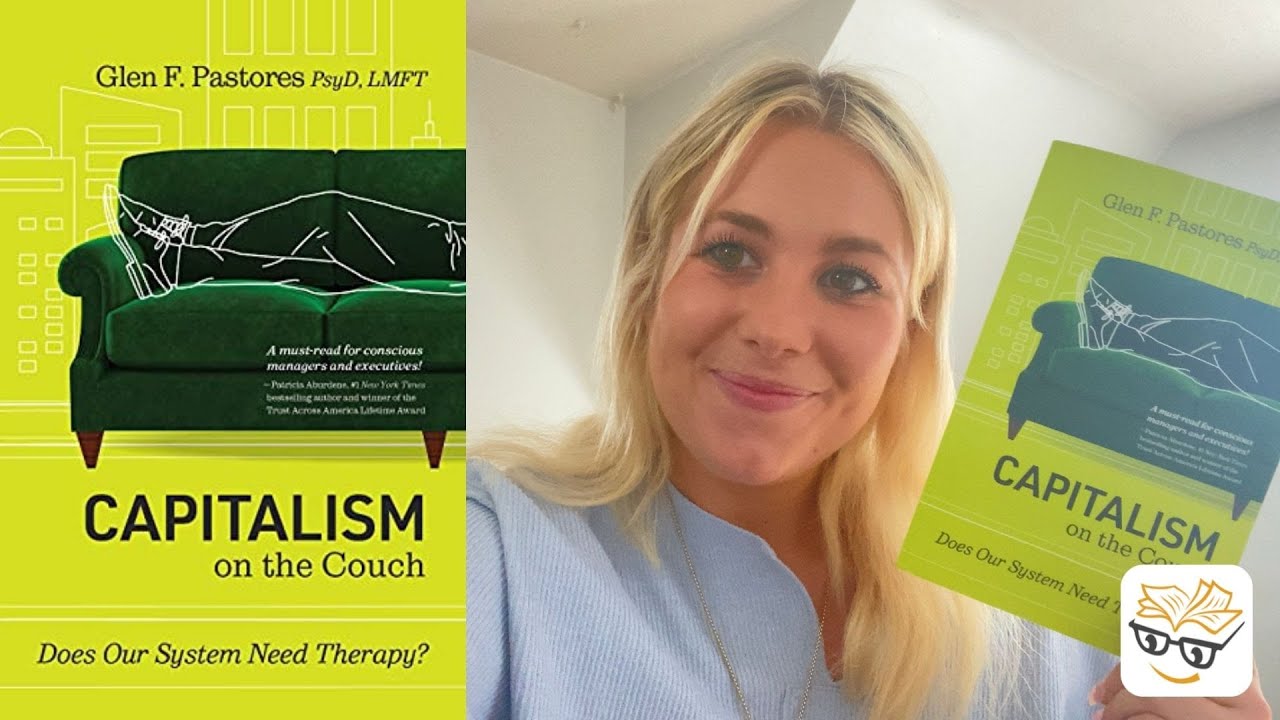
In this solo YouTube review, Kennedy Layton discusses Glenn Pastore’s book Capitalism on the Couch, which frames capitalism as a patient in a fictional therapy session. Layton highlights Pastore’s background as an organizational psychologist and therapist, noting the blend of fictional narrative with research‑based examples. She describes how the opening scene— a frantic business executive seeking help— draws the reader into a cinematic experience while unpacking capitalism’s influence on personal life, career, family, health, and society. The reviewer emphasizes the book’s accessibility: Pastore writes for a general audience, aiming to educate readers about the complex, interconnected systems that capitalism touches. Key themes include capitalism’s presence on college campuses, its role in marketing and consumerism, the historical evolution of the system, and the idea that capitalism is a flexible, value‑driven social structure. Layton praises a memorable quote about the interdependence of life’s systems and argues that the book encourages readers to take responsibility for their relationship with capitalism, offering a reflective “toolkit” for change. She recommends the book for marketing students and anyone interested in understanding how economic systems shape everyday life.
Chapters
Hi, Book Thinkers family! I'm Kennedy Layton, and I had the pleasure of reading and now reviewing Capitalism on the Couch by Glenn Pastore. Glenn is an organizational psychologist, licensed marriage and family therapist, professor of psychology, and an incredible writer. And he decided to put capitalism on the couch and have a little therapy session. His book does contain some fictional elements, but he also includes examples and experiences from years of his research. I have to say that I was genuinely surprised by how infatuated I became with this book. Immediately I was hooked as I read the prologue. To be honest, this book is sort of out of ordinary for my normal reading genre that I prefer, but I decided to read it because his unique writing idea he had of the fictional therapy session with capitalism. It was so unique and I just got hooked right away. Um, he states in the author's note that he wanted to write this book in a way that anybody could pick it up and read it, but he also wanted to educate on the complexities of capitalism in terms of our personal lives, career, families, and health. And he did more than that. Um, it was exceptional. I loved the way he even started the book. It starts with a frantic new patient running into this therapist's office demanding for help, and you kind of gather from the scene that this set— that during this session that this patient was once successful and respected in the business world, but recently had been feeling out of sorts and like people no longer trusted him. Pistorius described the situation in such a way that I literally felt like I was in this therapy session, and that writing style kind of continues on throughout the book. You feel as if you're kind of watching a movie and seeing the story unfold, but also learning so much about capitalism and the way it affects our lives. The best part was after this beginning scene with the therapy session, he goes to leave the therapist's office and the therapist goes, what's your name? And he turns and he goes, my name is Capitalism. And it was just a great way to get the reader intrigued. This book uncovered so many issues, ideas, and thought processes that I had never really thought of before. And I'm currently finishing up my marketing degree, and I have taken an incredible amount of business classes over the past few years. And I firmly believe that this book should be in the hands of every student, if not everybody. Even in chapter 1, he talks about the character capitalism likes to go to college campuses because young people see him as full of potential and possibility. Just like young people are. And he talks about capitalism, how it's about people, psychology, relationships, and thinking. And he examines this capitalism within the university realm, within marketing tactics, consumerism, etc. And it's all just so enlightening and taught me ideas I had never really considered. This book also examines the history of capitalism. One of my favorite quotes that I've read from this goes, the collection of systems in your life are not isolated from one another. Each system is impacting others. While some systems have more bearing than others, it's important to acknowledge the interconnectedness of our complex daily life— daily lives. This just totally struck a chord with me because one of my biggest beliefs in life is that our enemies, friends, family, neighbors, and strangers all exist in patterns of mutuality, interconnectedness, and obviously unity. We're all in this together and our decisions affect one another. And we understand that relational, familial, organizational systems are interconnected and we want those to be in balance and healthy and successful. But capitalism is just as important and it affects all of those other systems and our personal lives so significantly. He also talks about the fears people may have, the bad things about capitalism from greed and an outdated system, but he teaches that Capitalism is a flexible and responsible social system that evolves with our collective values and societal needs. As we change, it adjusts. His personal research and surveys have proved how consciousness and perception of companies have changed over time because we've changed over time. Capitalism is more than numbers. It's the way we create our economy and the way we form our relationships in our lives. Everything goes hand in hand and it's all interconnected. Capitalism can make the world a better place. And overall, I just really enjoyed reading this book and have learned so much more than I thought I would. It's intriguing, it's informative, it is powerful, and the conclusion even gives the reader an opportunity to reflect with their new little toolkit and learn about some support systems and the way Ways to Get Capitalism Off the Couch. It's clear that we have a role to play in improving our relationship with capitalism and kind of teaches you to cut the blame game. And this book overall just really taught me to take responsibility for my circumstances and consciously make the right decisions for myself because we're all interconnected. Go check this book out. I really enjoyed reading it, and thank you for listening.