Connect with Your Kids via Text with Tammy J. Cohen
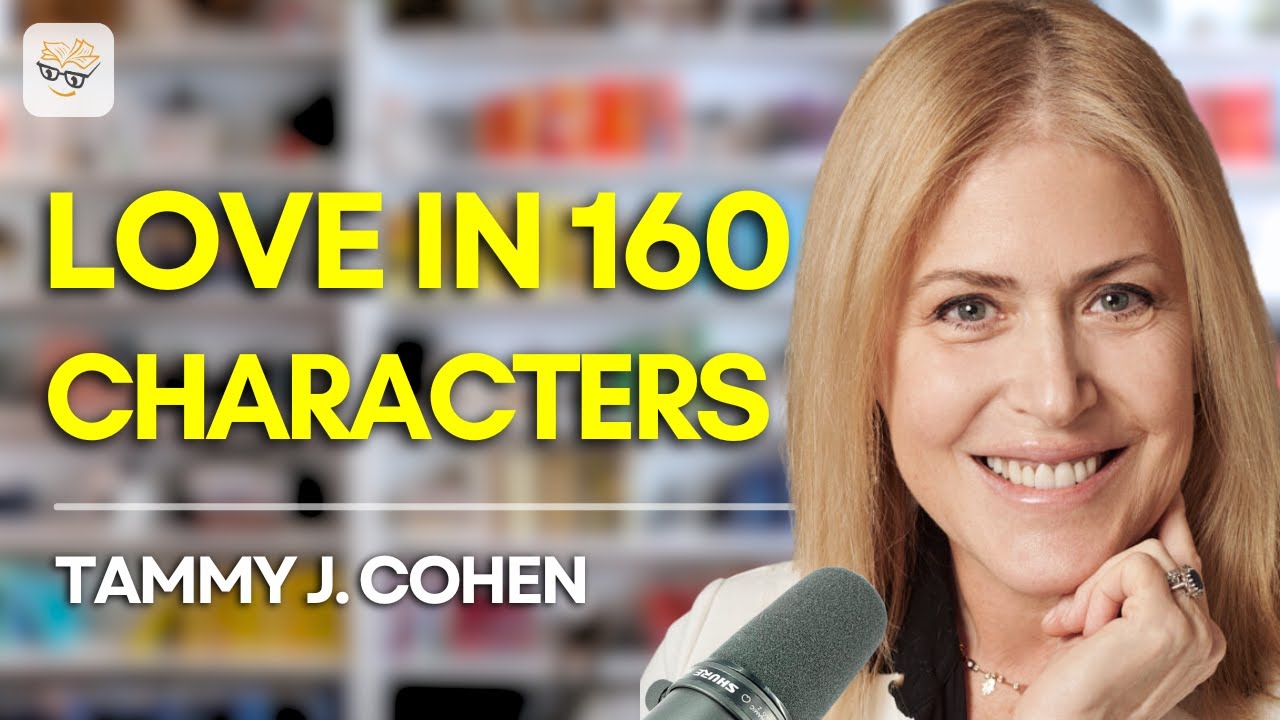
Tammy J. Cohen started texting her three adult sons daily during the pandemic with unconditional messages of support. She expanded the practice to other family and friends as a way to build resilience and counter social media's pull. Her breast cancer diagnosis deepened the impact of these small, consistent acts of love.
Chapters
Look at life as your best friend. Okay, your best friend doesn't ever want to hurt you. Best friend wants to give you gifts. So everything life gives you, see it as a gift. Because if you do see it as a gift, not only will you learn from it, you'll pivot and you'll get stronger. Okay, but if you want to look at life that it's here to harm you, what is it doing to you? To you, right? You're going to see life as something that's being sucked out of you because it will be sucked out of you. So always look at life as your friend that's given you a gift and respond accordingly.
Tammy, welcome to the Book Thinkers Life-Changing Books Podcast. I'm excited to chat with you about your book, Text Messages to My Sons: A Guide to Using Mobile Devices. to connect and communicate with your kids. Before we dive into the book, I have a question for you about books. When did you become such a bookworm?
Oh, wow. Okay. When did I become a bookworm? Well, when I was growing up in the dark ages, we didn't have distractions. We didn't have mobile devices. We didn't have anything. We had like 3 channels on the TV. And one of them was 13. There was nothing to do except read books. But my whole— I was reading books all the time. That was my escape. That was my fantasy. I loved— I grew up reading constantly. I loved reading. I loved writing. And it's really funny. I never, you know, thought about writing. It was a natural thing for me. And reading, and in school, like, I gravitated— I was really great in English and social studies. And, you know, math, no. Science was like, whatever. But really, it started at a very young age. And I haven't stopped reading, of course. And I read a lot of, of course, electronic books because I have, you know, I have a Nook, I have a Kindle. But there's nothing like getting my hands on a book and looking at it. And every book I'm reading now is actually a print copy. And I haven't been reading so much on my readers as I thought I would. And I raised my kids, my sons also, they were book readers. I used to read to them all the time. And now they're more into audiobooks, right? Times have changed. But I— it was always something. We were always readers. I always felt like reading is important because it makes you think differently. And it helps you with so many skill sets, you know, that you build in your brain. Your brain is making a lot of connections when you're reading. Your imagination's working.
Mm-hmm.
I always preferred the book to the movie. Like, I'd watch a movie and I'd say it's not as good as the book, you know, because I read the book first. So yeah, that's me in a nutshell.
Well, I can tell that you love reading. Now, when you were younger, were you reading mostly fiction or were you into some of the books that you reference in here, which is like a lot of nonfiction, personal development, self-help kind of stuff?
Okay, so I was a big audiobook— autobiographical, like reading biographies. And, and, and people's audiobios— biographies. And I loved history, so I love reading historical books too. But as I got older, I started getting into the whole paranormal thing, which was a whole other ballgame. And I never was a romance reader or any of that stuff. I always thought it was a waste of time. So it's funny, like, your tastes do change. And, um, I was open to reading just about anything. I didn't get into business Or really thought leadership stuff until I got older. And for the whole thought leadership, which is most of the but what most of the things I'm quoting are health and wellness thought leaders. There's business like Napoleon Hill and Stephen Covey and all that stuff, which is thought leadership as well. I got more into as I got older, and during the pandemic is when I really started getting into this stuff because you know everybody was sitting. closed in and closed up, and you couldn't travel and work. It was really tough. So I started getting into that space, and I love it.
Me too, and so does the audience, which is why I wanted to ask about it. Now tell us, why are you reading physical paper books even though you bought a Kindle or a Nook?
Well, you know what's really interesting is that I like the touch of it, and you know you can go back. It's really easy to flip, you know, Flip a few pages back to reread something, and I really like to underline. Like especially if I'm reading a thought leadership book or a special book or or something business-wise, sometimes you have to read it a couple of times, and I like to underline things of interest and go back and read what I've underlined, and I even will take that and start writing notes. It's really hard on an audiobook, and it's really hard on on a Kindle. to go back and to take notes on something or to reread it. You have to know exactly where to— it's more complicated. Whereas a book, you see exactly where you marked off. You can flip the page down, you could put bookmarks in, you can go— you put little Post-its in, you can go back to it. And sometimes, you know, you have to repeat things a couple of times until you absorb it. So that's what I like about it. I just find it very comforting to hold a book.
You know what I do that drives my audience crazy sometimes is I actually tear pages out of books. If I find something that truly floors me and I want to read it over and over and over again, I'll tear the page out and I'll keep it with me. I'll put it in my pocket, and every time I reach for my phone or something, it'll fall out and I'll pick it up and I'll read it because repetition leads to retention. Just like you, I love going back and rereading the, the stuff that truly matters to me.
Right. And you, and you meet— you like immediately, like, I'll read a book with a pen next to me because I'll be like, I have to— I'll take— I'll write notes inside the book, all over the book. I have a journal. And when you just said about ripping out the pages, I've done that. I've ripped out a page and I put it in my journal because I want to write about that page in my journal, and then I want to go back and read what I wrote. It's insane. And you know what's crazy is when you go back at different times, like, I'll reread books I'm not embarrassed to say it. I'll reread a book.
Oh, me too. Yeah.
More times. I don't care, especially if I was into it. And I always read something and, Nick, it's like I understand it completely differently than I did when I first read it, or I finally understand. It just clicks because it depends on where you are also. And when, when you, you're going through, we all go through different stages and different things in our lives. And that's what always been— it's, it's amazing to me. Like, you'll go back and you'll see something completely different in the same lines that you just understood one way. You'll see it a different way, and it's amazing.
Yeah, I think so too. I mean, you referenced some kind of Eastern philosophy, Buddhism and things like that in here. And one of those principles that I like is the idea that you can never step in the same river twice. And the idea is that the river has changed, right? It has flowed by and you're stepping in different water, but you've also changed. And so, I think about the same thing when I'm reading books. It's like, I've probably read the book Rich Dad Poor Dad by Robert Kiyosaki 10 times.
Yeah.
And I've been 10 different people, and therefore, the book has been 10 different things to me. And a lot of people don't think about it that way, but I would encourage anybody listening, if you haven't reread a book in a while, go back to some of your favorites Give it another look and you'll probably find drastically different takeaways.
Well, you know, we, we're always evolving. I mean, I, one thing I've always said to my kids, like, you have to learn, you have to continually learn. The minute you think you know everything, you're done. Yes, done. And every time you learn something new, it opens up a different pathway in your brain. You know, your brain is an amazing instrument and we don't use as much of our brain as we probably should, but you can always Create new, new pathways in your brain. And your brain is very much a living thing, and you can rewire. And every time you learn something new, you're rewiring yourself a little bit differently. And then you go back and you, you look at something and you see it in a completely different dimension that you weren't able to before. Because your brain wasn't wired that way, and you didn't have that experience, or you didn't go through that, or you didn't learn something else. That could help you to see things in a different way. So it's really, it's really important, I think. And and I know with your audience especially, you know, you go with the age group of your audience. It's really important to like let yourself keep developing. Let yourself keep going. It's never too late to learn something. I'm in my sixties. Okay, if I can tell you, it's never too late to try something. or to think about doing something differently. We're not set in stone. We're not at all. Okay, so you can always create and make whatever you want. You just have to be willing to let yourself try new things and learn new things.
It's a beautiful reminder, Tammy. Thank you for sharing that. And, and I obviously agree 1,000%. I mean, so many of the amazing books behind me— I also read a lot of biographies, autobiographies, and A lot of those iconic entrepreneurs or social activists or whoever they are, world changers, they didn't start their mission until later in life. And so just like you said, never stop learning. Unfortunately, and I don't have the stats in front of me, but most people will never pick up a book again after they graduate high school or college. And that's sad.
Yeah.
You know, we— you started to talk a little bit about, oh, you know, I, I made sure that reading was important for my sons. So let's transition over to the book a little bit. While I think my audience could probably catch me saying that phones are destructive many times in the past on this podcast, and I advocate for physical paper books, my perspective started to change a little bit when I read your book. I think that you found a way to use these mobile devices in a very constructive and positive way. So when did this entire journey start? Let's take, take us back to when you decided to first text your sons a positive message.
That's a great question, and I do get asked that question a lot, especially when I'm speaking to audiences. Uh, how did it start? What made you decide to do this? Like, why, why text, you know? And here's the thing, um, when the pandemic happened, the first pandemic— because I recently went through a personal pandemic— but when the first pandemic Came about, and you know I know it was a very challenging time, but it was also a time of wow! Stop. I think I feel it was like God was like stop. Take a look at your life. Take a look at where you are. This is your opportunity. You're you're you can't go anywhere. You can do a lot of things in this time. So what I did was I said to myself, okay, I'm not happy. I have some issues. I'm going to address them because I have to. I'm not— I haven't been happy for a long time, and I've been so busy. You know, we get busy. We're doing a lot of things. We're working. We're— I was traveling a lot for work. I said, you know, I can't do that right now, and I've got to— I can't run away, can't do something else and not address whatever's going on with me. So at that moment, I went balls to the wall, full in. I was like, Tony Robbins, Unleash Power Within, like everything. I was in every course. Joe Dispenza, Robin Sharma, I was reading and going crazy. And I remember something very interesting that Tony Robbins had said. And he said, hey, everybody, there's so much out there that you can do, that you can learn from. You don't need to spend hundreds of millions of dollars to get there. There's books. There's books that are written by brilliant people who lived hundreds of years ago. Who lived 50 years, read a book. What took them 30 years to figure out, they put in a book. You can read it in what, a week? Like, this is knowledge. Um, you know, do these things. Get a mentor. Talk to people. Like, pick their brains. Ask for help. You know, you— these are things you can do. So I was like, wow, oh my gosh. So I was, you know, out there. I was doing courses. I was in Mindvalley. I was like everywhere. And I said, I'm learning so much. I'm reading all these incredible books. And what I started first doing was I'd read a book I'd love, like, you know, Think and Grow Rich, right? There's amazing books, Robin Sharma books, James Clear, Atomic Habits. I was like, oh my gosh, I have to send these books to my sons. These are amazing books. I didn't— we didn't know about this stuff when I was growing up. And then I started thinking, hey, all these things I'm learning about limiting beliefs, about worthiness, about gratitude, they don't teach it in school. They don't teach kids any of this stuff. And look at us, most of us are functioning, walking around with all these saboteurs and all these limiting beliefs that we pick up as young people, not because our parents are bad, it's just because it's generational discord. They picked it up from their parents. It comes, starts in the womb. I mean, we're just carrying all the stuff. Our souls are carrying a lot of stuff. And I said, I want to share what I'm learning with my kids. Like, everything I'm learning. So I started messaging them. This is the pandemic. And one of my sons was living downtown. Everybody was in their lives. And I said, let me just share what I'm learning. But you know what happened, Nick? I would share wisdom. I would share something with them. And all of a sudden, I felt like my heart was opening up. And I just wanted to tell them how much I love them.
Mm.
How grateful I am that they're in my life. How worthy they are, how extraordinary they are. Like all this stuff started coming out naturally, and I said, "I need to do this every day. I need to build this habit. They need to know somebody loves and cares about them, and I don't care if they answer me." That's the whole thing. You can't go into anything expecting a response or expecting anything. That's not what it's about. I wanted to be unconditional. I wanted to do this. And I wanted to get it to them. And it wasn't really until after October 7th as a Jew, and we're Jews, and everything was going on, and I started really learning more about how algorithms work and how social media works and how misinformation and indoctrination work. And I said, wow, so many people are getting trapped in these algorithms that are there to engage them 24/7. steal their focus. Johann Hari, Stolen Focus, unbelievable book. I recommend it. It really was opening my eyes as to what everybody's facing with— you look at a train wreck, you're gonna get more and you're gonna get more of it. It's just gonna inundate you. They learn your preferences really quickly. So a lot of our kids, you know, a lot of people get sucked into this stuff and they just get more of it. So I don't care who you are, Everybody, doesn't matter what age you are, you want to know your parent loved you and your parent thought you were worthy. You want to, you want to, you want to know that. So you— I feel that that person who sends the messages, whether it's to their best friend who needs help, whether it's to a niece or nephew, whether it's to your kids, whether it's to your partner, whether it's to anybody you want to do this with, you feel you can do this with, you become that pillar. To that person, you become the voice, the consistent voice every day that can override that negativity and that hate that they might be facing from from the same device. That energy that you're sending out of love and gratitude and inspiration is such a high frequency energy. We're all energy. This whole world is energy. You can actually silence that negative hate energy that's really low frequency vibration. I mean, just think about it in in that way. When you send the message, you release that beauty. beautiful energy, when they read it, they release it. And that's what I started realizing. But you know what, Nick, like what started happening for me was that I was messaging my sons because that's who— that was who I wanted to start with. That's what I wanted to do. But I didn't realize like how it was going to change everything around me when I did it. Because I was really messaging myself at the same time. And I didn't know it. Hmm.
There are so many things that I'd like to unpack there. I think you just shared a ton of wisdom. A couple of things that come to mind quickly. One is that in your book you say the average person checks their phone every 12 minutes, roughly 80 to 100 times per day. And so you met your sons where they were at— they were using their mobile devices. You decided to share this wisdom to their mobile devices, the same device that could be trapping them in a negative social media algorithm. You're disrupting that negative spiral. You're lifting them up with positive energy, which is helping you and it's helping them. And I think that That's beautiful. And although the book is titled Text Messages to My Sons, I think if you're a young person listening to this podcast, you could call this Text Messages to My Parents or Text Messages to My Family or Text Messages to My Friends. I think sometimes as somebody who gets into personal development, you feel like you're fighting an uphill battle against the negative drama and the gossip that most friend groups and families participate in unknowingly. They're not aware of it, and you are.
Yeah.
And so there's a, there's a Don Miguel Ruiz book that I like to reference where he says when you first get into personal development, it's like you're the only sober one at a party of drunk people swinging from one end of the emotional spectrum to the other. And you try to disrupt them and have an adult conversation, but they just get sucked right back into the drunk chaos. And, and I think that what you're saying is, you know, another part I wanted to highlight is that it doesn't matter if they respond or not. That's a very, very mature take because so many of us, we share looking for the validation back that it was received and that, oh wow, super cool insight, Tammy. You're amazing. Thank you for sharing it. But it's like, no, it's just you're getting it out there. You're disrupting the negative energy and it doesn't matter if people respond or not.
You know, it's so funny that you said that because like my sons are grown men. I mean, my oldest son is turning 32, my middle son is 30, and my youngest is 25. They're not sending me back, I love you, Mommy, you're the best mommy in the world. Oh boy, what a mommy. You know, it's not like that. It's—
Do they just double tap and like it most of the time?
Yes. I listen, I don't get responses. I'm doing this for years. Sometimes I get, you know, one, one of my— you, you know, like each kid is different. One kid is always like, I love you and this is great. And the other one's like, I don't hear from them. And then there's one who says like, heart, love you. You know, like Sometimes they don't. It's okay. But they wrote the foreword to the book. And in the foreword, it's very simple. They, they just say, like, knowing that there's one person out there that loves me enough, loves us enough to do this every day is everything because it makes us bulletproof. Now, the day can go sideways, and it does. Challenges happen, like life throws a lot of gifts at you, right? But you still have that pillar. You know that somebody loves you. And what is depression? Like, there's a big epidemic of depression out there, especially like 18 to 30-year-olds. There's a lot— there's a whole lot of research on this about depression, addiction, suicide, all kinds of things that are going on. And a lot of times depression is the lack of connection. You just don't feel any connection to anything. There's no— you feel lack of purpose. So my attitude is, is like, if you take this on, you have a purpose, right? Yeah. And you're making connection. And you— and all persons— Simon Sinek speaks about this, about the 8 minutes. Like, if somebody's going through a really bad time, they really only need 8 minutes of your time. To help them get through that bad time. What's eight minutes? What's ten minutes to put together a text message? What is it? It doesn't mean much, but you're there and you're doing it. And once you get into it, I say to people there's 960 minutes between Monday and Friday that you're awake. If you can't find ten minutes, there's something wrong with your time management in a lot of ways because you can do this and you can build something and you can create a. A relationship. Now, your audience, it might be, hey, you know, I wanted to send this to my family chat. I wanted— I want to do this with my parents. I want to do this with the best friend. I want to do it wherever I want. I have kids who said to me, you know, I'm going to buy this for my mother. I'm going to buy this for my father. I have a lot of dads who reach out to me and say, I love my children. I, I, we're not having conversations. I'm like, you're right. Nobody's having conversations. I own a restaurant. People are sitting and looking at their phones at the table. It's just not— if I wanted to do this and I wanted to do it the way I grew up and I demanded my kids have conversations with me, guess what? We wouldn't be doing anything because nobody's having conversations. And that's okay. I say to dads, it's okay. You have the phone. Just message them. What about a father who's going through divorce? They can't see the child. There's things going on there. It's not amicable. Not everything is conscious and compliant. You know, it's— there's some really tough situations for people who— parents who are in, or family members who are in with each other. You know, you, you're not talking to this family member, you're not doing that, but you can do it with the text. You can start talking again. And that's what's important. Never think it's too late and never think you can't do it. Everybody has a phone, okay? We all have a phone. You carry it in your pocket, it's in your hand. If you're a woman, sometimes it's in your handbag. It's right there. It's not hard. It's free, pretty much. You just pay a phone plan. You don't need 1,000 years of therapy to do this. It's very simple. And what I always say to people, they go, how do I start? I'm like, well, there's a book. Here it is, with 215 pages of messages, and it's all written in text format. It's so easy to read, and you can pick— it's all in categories. You can pick the message you want, but You're going to tweak it to make it your own, but really you're not going to need my messages after a while because it's going to come from your heart. You're going to be more present and you're going to start noticing things around you that you want to talk about because you're going to become more present and see things that you didn't see before, and it's going to be very positive and good. And I'll tell you, Nick, when I go into my next life, my sons are going to miss the messages. They're not going to miss or think about what I bought them. Or what I, you know, maybe they'll think about a great vacation we went on, but they're going to miss the daily message.
I think so too.
Wow.
You are giving all of us, I think, a lot to think about. I wanted to share just a couple of reflections and restate some of the points that you've made. We had an author on recently, Derek Coburn. He wrote a book called Let's Retire Retirement, and he was saying that The best part of his week is the hour that he gets to spend in the gym with his son. And he said something that really struck me, which is that he said 55 out of the 60 minutes, his son won't talk to him while they're in the gym. He has his headphones on, he's looking at Reels or TikToks. But he said he's in there patient, knowing that maybe for 5 minutes his son will talk to him. And he said that's the best 5 minutes of the week. So that reminds me of what, what you talked about here. Another thing, way back in the day, I interviewed this author, Brian Kurtz, who wrote a book called Overdeliver, Tammy. And he said, yeah, you want relationships to be 50/50 or maybe 60/40, he said, but not many of us look for relationships that are 100/0. But he said sometimes that's still a healthy relationship because you have the time to read these books, digest the takeaways, and share them with other people. Meanwhile, your sons are probably running around 1,000 miles an hour dealing with all of this other drama, their work and dating and this and that. And there's a lot going on. And so they can't feed positive messages back to you all of the time, but that doesn't matter. You know, it's okay to, to be the one that has the space to build the message and send it out. So I love that takeaway too. One final thing that I wanted to share, is, you know me, I love reading and I think a lot about how to retain and implement more from the books that we're reading. And one thing that I teach people is when you take a note, when you take one of your favorite takeaways from a book and you rewrite it, whether it's on your phone or on paper, it doesn't matter. That helps strengthen your connection with the information. So by sharing it, Tammy, simplifying the message, which is its own version of of rewriting it. And then actually rewriting it and sharing it with somebody else helps you personally strengthen your connection to that information, which means that you'll retain it longer and you have a better chance of implementing it, building that new pathway in your brain. So it's kind of a hack to share it with, with somebody in your network.
You know, it's true. What's really interesting to me is this year, you know, was a very challenging year. I, I was diagnosed with breast cancer and I had to tell my kids, and that was the hardest thing I ever had to do. And you know what, um, and, and remember now, I've been messaging them for all these years, right? I, I speak a lot about— I message about resilience, you know, pivoting and learning from things, and there's no failure. And even when life's giving you gifts, you know, a challenge is a gift because you're going to learn from it, you're going to pivot. And if you don't want to look at life that way, if you want to look at it as just hitting you on the head, you're going to have the life sucked out of you. Like, these are the kind of messages that are interspersed with accountability and all kinds of other messages. And you know what they did when I told them? You know, they were shocked, of course, but then they said— they started messaging me back.
Yeah.
They started messaging me. They said, we've got this. We're the Cohens. You're strong. You're amazing. You can do this. Like really what I said. Then the messages became like, "What can I do for you? What do you need?" And they were doing everything. They were doing all the errands. They were doing food shopping. They would come from work and help me because I was not in the shape to do it. And I realized, like I'm not saying they they aren't great kids and they wouldn't have maybe done it anyway, but I have a feeling. That all these messages gave them that resilience, like, and they were there to give it back to me when I needed it. And it just, it just was something that was kind of amazing for me. And I feel like over time, if you commit to something, you can make a difference. One person can make a difference in shifting energy. One person can make a difference in doing a lot of things. We can't— we don't have to look at it like, oh, I can't do that. You can do that. You have It's very easy to do it. So, um, and it's never too late. I didn't start this with my kids till they were in their 20s. It's not that long. Um, so it's never too late to deepen a connection. It doesn't matter with who you decide you want to do it. And it's never too late to help somebody, you know, to connect them. So, um, yeah, that's my— that's what I learned from all of this.
Yeah, beautiful takeaways. And, yeah, you know, it makes me think about when I first started Book Thinkers, this business, it started because I was reading books that were changing my life and I was sharing takeaways with my family and my friends, but they weren't really reciprocating. So I started sharing on Instagram.
Yeah.
And I think that I got a little bit more validation that what I was doing was useful on Instagram, which at, you know, probably wasn't healthy at the time, but I think helped me build a business where books like yours can reach a lot of people. But it's like, you know, I think what you're helping me realize as I'm talking about it out loud is just that I should be sharing more of these messages into my family group chat. And it doesn't matter if people respond, you know, that's, that's a really big takeaway and breakthrough. I think that I wasn't aware of that was holding me back before, but I think you're helping me No, and I read the book, but now I'm realizing and talking to you more than ever, like, that's okay. That's okay.
It's okay. Yeah, it's not— it's not— you don't need the validation of anybody. Right? You know, you said it, you said it yourself. You don't really need that. You just need to know you're doing this and you're releasing this beautiful energy and you're doing like— I call it a mitzvah. You're doing something good for somebody else, whether they appreciate it or not, or whether they answer you or not. It's irrelevant. You keep doing it because They matter, and you matter. And I we I was talking with my publisher about like a Thanksgiving idea. You know, like everybody prepare like a three sentence message, and then they get to the table, and each person reads their message in the to the family because you know Thanksgiving becomes I have to be with my family. You know, I have to cook. I have to do this. Like oh, you know, like it's an obligation, but you can make it into. a way to connect even more with your family and not look at it that way. It's, you know, instead of I have to, I want to. And I want to read a message to somebody at the table, or I want to read a message and just for all of you. And, and each person does it. Before you know it, you're talking about the messages and you're talking about gratitude and you're talking about love and you're talking about things you weren't going to talk to. And maybe you can spend an extra minute with another person at the table who you hadn't connected to that well before, you know?
Yeah, I love it. My, my mom, I wanted her to join this podcast. She's on a flight right now, uh, but we started reading things that we were grateful for or, or stating things that we were grateful for at Thanksgiving around the table a couple of years ago. And there's been moments my mom will smirk. My dad probably won't listen to this, but there's been moments where my dad will actually start to tear up a little bit, which is something that we had never seen Throughout our entire childhood, um, as he's sharing what he's grateful for now that like my wife and I have a young baby and my brother just had his first kid and like all of a sudden there's this next generation that's starting to enter the scene and it's, uh, it's getting him really emotional. Now my wife and her family, uh, they're Jewish and so you said it's a mitzvah, is a— is the term?
It's a gift? Good deed.
It's a good deed. So it'll be much harder to break this message into their family, but I'm going to try. I'll send a couple of positive messages into their family group chat and just— I know there won't be many responses, if any, but, uh, you know what, you're helping me, like I said, realize that it doesn't matter if everybody thinks I'm funny for it. I just need to live my truth and, and inject that positivity because it's contagious, especially over time.
Even if they think it's— they make a joke about it, inside they're going to say that is Really nice.
Yeah.
There's, you know, I'm gonna like, like leave you with this, and this is something that happened years ago. There was, um, a Rabbison who used to call me once a week, and I liked her. She was very sweet. And I— but she'd call, and I didn't want to be on the phone. This is before— this is years ago. Like, why am I— I don't want to be on the phone. It's going to be a conversation. It's long. That's what's another thing that's great about text. It's not a conversation. It's not long. And you know what? Like I would take, I would take the call because you know, of course, and we would talk. And you know what happened? I started looking forward to that call because she all she wanted to know was how I was. That's all she was asking. This woman had ten children. She was busy. Okay. She had a lot going on, and she was taking the time. I didn't even realize it because I'd be like, oh God! I have to be on the phone call now for thirty minutes. She just would say, it would be like, how are you? How are you doing? And I would, I realized like, this is not annoying. This is a really good person just trying to see how I am. And I would talk and then, you know, and I, I started looking forward to it. And anybody who like, you know, thinks it's annoying or what are they doing or whatever, at the end of the day, it's like, you know what? That's caring. And, and I can— and I want to— and you know what, I appreciate that. And then you have gratitude that that person is in your life, in your family, or what have you. You know, that's what happens.
Yeah, I admire you for living that truth and encouraging others to do the same. So you're inspiring change in me, and I'm sure that will inspire change in other people too. Uh, so thank you so much for the conversation today. For those that want to buy a copy of your book or maybe hire you to speak or engage in some other way, where can people go? What should they do?
Thank you so much for that. And they can go to— well, there's a couple of different places. So my website is tammiejcohen.com. So it's T-A-M-M-Y, J as in Jack, Cohen, C-O-H-E-N.com. My Instagram, my LinkedIn are Tammiej Cohen. It's pretty consistent. The book is available on Amazon. Uh, and, um, yeah, and my, my email is— guess what? Guess what my email is? connect@tammyjcohen.com. So it's really easy, just need the name Tammy J. Cohen. That's what the book's on, that's my author name, Tammy J. Cohen, as well. So you can find me, and I always answer.
I'm jealous. I couldn't get any domains related to my name that made any sense, so I'm happy that you found yours. And all the Insta, you know, all the social media handles I love Last Thinkers.
I think it's a great domain.
Yeah, thank you. Last question for you. If this book was deleted, gone, zip, gone from everybody's bookshelves, but you could leave the world with just one simple message from this book, what would that message be?
Okay, look at life as your best friend. Okay, your best friend doesn't ever want to hurt you. Best friend once gives you gifts. So everything life gives you, see it as a gift. Because if you do see it as a gift, not only will you learn from it, you'll pivot and you'll get stronger. Okay? But if you want to look at life that it's here to harm you, what is it doing to you? To you, right? You're going to see life as something that's being sucked out of you because it will be sucked out of you. So always look at life as your friend that's given you a gift and respond accordingly.
Beautiful way to wrap up today. Thank you, Tammy.
More from Nick

Napoleon Hill’s “Think and Grow Rich” is a timeless classic #selfhelp #personaldevelopment

4 Books to Help You Get Better at Decision Making #selfhelpbooks #bookrecs #nonfictionbooks


Have you read this book yet? 📖: The 5AM Club by Robin Sharma #selfhelpbooks #robinsharma

Dan Sullivan on Listening to Your Customers Instead of Watching Your Competitors

5 Books That Will Boost Your Financial Intelligence #financialfreedom #nonfictionbooks

The People That Preach the Loudest About Virtue are Usually the Most Power Hungry



Books are the greatest mentors you can find #selfhelpbooks #businessbooks #successmindset

Let’s fight this toxic instant gratification culture together 📖 #selfhelpbooks #jimkwik