Create Financial FREEDOM from Your COUCH | Jen&Stacy Conkey
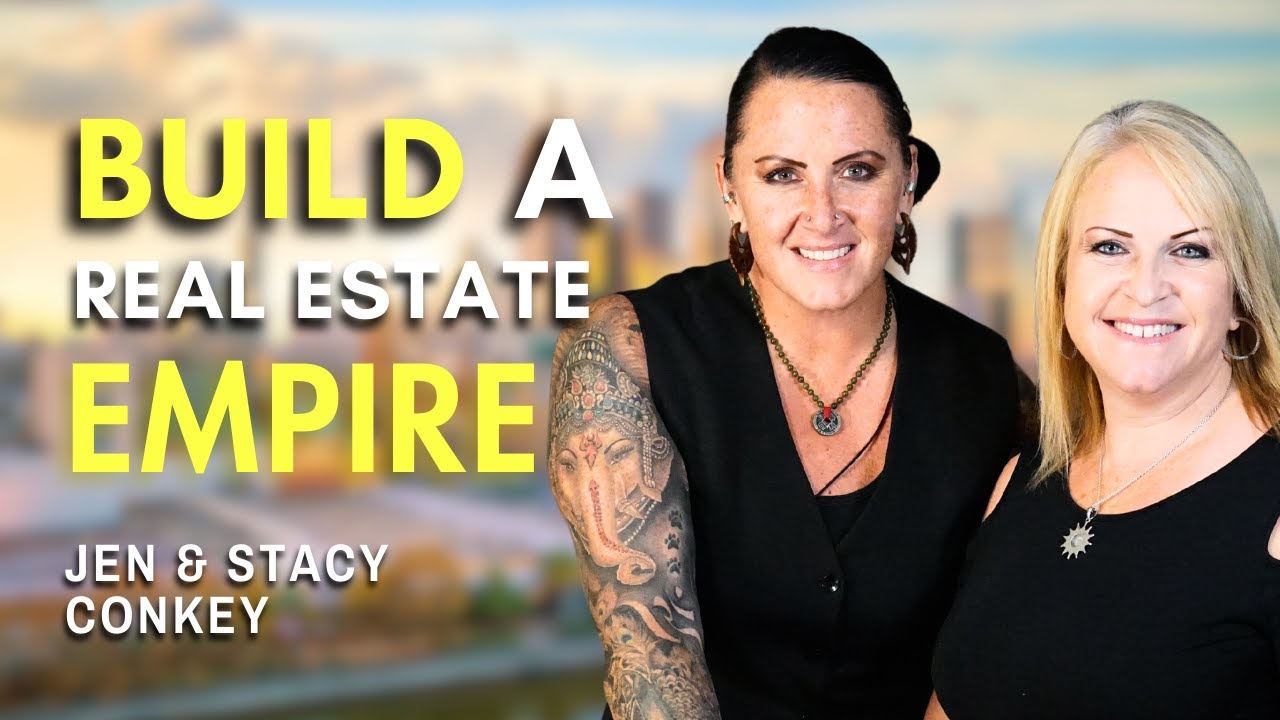
Jen and Stacy Conkey went from corporate jobs to building a multifamily real-estate empire across 17 markets after meeting on a dating app and attending a Tony Robbins seminar. They say mindset is 80% of success and now run a 27k-member Facebook group teaching others to invest remotely from anywhere.
Chapters
Helping people improve their life. Like, how can I impact more people's lives? And the one thing that we realized is we have a— even though we've grown a big Facebook group and we're on social media a lot, we could probably make a much bigger impact if we were— if our stuff was available in different modalities. And so we just decided, like, let's go ahead and just put our heads down and knock this out so that more people can learn.
We should write the book is because, you know, we've read so many books, we know this field so well, but the one thing that's always been missing is mindset piece. And, you know, it's 80% of any business, let alone this business. So that's why the first 6 chapters in the book are focused on getting your mind right so that you are primed mentally to show up in a peak performance flow state while you're doing this journey. And to put both worlds together in one book, I thought was just— it was going to be epic. And turns out it is.
And it just— it's a game changer. And if you'll take that first, just that first deal and then stair-step into that, like what you can accomplish in even 3 years, even 2 years. It will blow people's minds, all of these things.
And as adversity upon adversity just keeps stacking, at what point do you break or give up, or do you lean more?
Jen and Stacy, welcome to the Book Thinkers Life-Changing Books Podcast. We are so excited to get to know more about both of you and your book, Multifamily Freedom Hacking. Jen, you went to school, you got your master's and thought your future was set working for Target, General Mills, and eventually Home Depot. Stacy, you went to college, became a CPA, and loved debits and credits. But for both of you, something eventually would change. So I'd love to hear what happened in both of your lives that made you want to leave the traditional path behind and get into real estate investing. And either of you can start.
Okay.
So for me, I was just working on climbing the corporate ladder. I was happy with my job, happy with my career. I started getting my master's degree and joined Toastmasters because I was terrified of speaking. And the CEO of the company I worked for just was observing me working on improving myself. And he invited me. He had an extra ticket to go to Tony Robbins UPW. And I was like, I don't know about that. That sounds lame. But ultimately, he just was like, I really think so. I caved to the pressure and thank God because that was That UPW I went to 20 years ago literally shifted the entire trajectory of my entire life. And that's— it was going to that that started it and eventually ended up moving into investing within a few months. But what I got out of that one is that I just was on the absolute wrong path for my life. I didn't know what was the right path yet, but I knew that that wasn't it, which was kind of disturbing since I had put 10 years into my career at that point. But that was That's where my journey started.
For me, it started in 2002. My brother came over and he asked me to go to the store with him. And 6 hours later, we had been driving around looking at what he called distressed properties. And I was like, I don't know what we're even doing here, bro. What's going on? And he was like, no, trust me, there's this thing and it's called flipping and you can flip for profits. And the way he explained it to me, I was instantly hooked. And so that's what I did. But I stayed at my job in corporate America for God, it had been 22 years by the time I finally left because I liked my job and I was comfortable there and I was really good at what I did. So I started as a side hustle and it just, it like, it became a business. And then eventually I was able to leave corporate America in 2015.
So around that time it was what, 2003? And I'd love to know how you got, how your paths crossed at first.
I'll tell the clean version of this.
Wow.
You can tell the non-clean version if you want.
So we met on an online dating app. You know, we had both just gone through divorces and things like that and met on an online dating app and didn't really share a lot of background, if you follow. Like, it was, can I get this person to swipe the right way type of situation? We both swiped and then we met and then we, you know, we hit it off right away. And when I found out that she also did real estate, The one thing that she did differently than I did was, well, first she hired a freaking mentor, which I never did. I always did DIY, and it was like, you know, fire, ready, aim strategies that I don't do anymore, but I did then. And so I learned a lot from that, that she had a path and a guide, but she also did remote investing. So I had been investing in California and bumping my head on the wall, not making much profit, having to put a lot of capital up for very little return. And she, because she hired somebody mentor her through it, figured out how to do remote investing. So, I was like, I've got to date this broad more. And then, so we did. And then, we eventually just— I had this corporate America background where, as an executive, I used to have 12 buildings across the country. So, I had this whole system for figuring out how to get the reports from them, how were they performing, how to analyze that, and how to meet with them virtually. Like, this was way before Zoom was cool. This was 2004, and it was like a conference call. So back then, when I'm doing all of these things, I realized in her remote world of investing, we could probably synchronize strategies and come up with something that was really killer. And that's how it happened.
So I have sort of a question from left field here. This is a topic that I've been talking about with my wife a little bit over the last few months, working with a partner, especially on the road, traveling around with your kids. So You've been working together for 20 years now. Do you have any tips for working with a partner? And is it a good fit for everybody? Because you hear sort of like the divorce rate for spouses that choose to work together is pretty high because of the stress of the job and you don't have anything new and novel to talk about. So how do you guys deal with that?
Well, we haven't been together for 20 years. We've been together for 8 and in business together the whole time. I will tell you that if in my previous relationships I would have tried this, it would have crashed and burnt. But in our particular situation, here's why it works. It's, it's really what I'm not good at, she is fantastic at, and what she's not good at, I am fantastic at. So it's like this perfect mix where, you know, I'm visionary strategist, she's implementer, inspirational, get shit done. And We can work together because of that, and there's always something new. So I'll let you give your spin on, on what you think about us working together. But I think it's awesome.
I think it's totally awesome. I don't, I don't think it's awesome for everyone. I think the fact that we have opposite skill sets is, you know, definitely helps. But even with that, I can see, I feel like you have to really like your person, like a lot. And like, I always want to spend, I always want to be around Jen. Like, there's no time that I'm like, oh my God, I just need a break. I always want to be around her and with her. And so for me, that's— I think that's even bigger than the skill sets.
Yeah.
Is just enjoying— we also kind of operate at a very similar frequency.
Oh, yes.
When we go hard, we both are like balls to the wall, like we're going for it. And so it's not like one of us is like, oh my God, you're working again. And, you know, I've had that before and I'm like, man, like, Don't we want to improve our life? Like, come on. And Jen and I are very aligned in mission and work ethic. And yeah, I don't know, it just works. I know it doesn't work for everyone, but yeah.
But if you were thinking about it, just literally sit down and have that conversation of what would an extraordinary life look like for us and what are we willing to do to go for it and what are we not willing to do to go for it? And if you have all the right answers and you're both on the same page, then cool. What are my strengths? What are your strengths? What am I not so good at? What are you not so good at? How can this work? Devise a plan before you decide to go all in on it. But when you do decide to go all in, you gotta go all in. It, it can't just be, you know, wishy-washy. It's gotta be 100%.
Yeah. So I think, like, making sure there's alignment and energy before you choose to work together is a great idea. And we started having this conversation because we were recently at a mastermind together. where there were a lot of couples that worked together professionally, and it was inspiring to see that. And it wasn't something that we've really thought that much about before, but I think as BookThinkers continues to grow, maybe there's an opportunity. And I wanted to share with the two of you, so I've been in multifamily real estate investing sort of passively now for a number of years, and I wanted just to add that context. I probably told the two of you previously, but For our audience because we don't— we really don't get a chance to talk about it very much. So that's why your book, I think, hits home for me because I think it is a great place to spend money and invest for the future. And so, yeah, I'm excited to dive into some of these subjects today.
Oh, awesome.
Yeah, absolutely. So why did you decide to write this book? I mean, what does it mean to the two of you? Why do you think it's valuable for somebody to read?
It really, it really comes down to impact and reach. We have a very big vision for what we want to do in the world. And I know that, you know, for a lot of people it's recycling or creating water and things like, and things like that. And Jen very much has a vision about like feeding hungry kids. For me, my big driver, and I know it's a big part of Jen's too, is helping people improve their life. Like, how can I impact more people's lives? And the one thing that we realized is We have a— even though we've grown a big Facebook group and we're on social media a lot, we could probably make a much bigger impact if we were— if our stuff was available in different modalities. And so we just decided, like, let's go ahead and just put our heads down and knock this out so that more people can learn. You know, a lot of people don't even know what's available or what's possible for them. And a lot of people think that multifamily is really complex and out of reach. For them, and my speaking style, writing style is very much just to break down a complex topic into very easy to understand steps. That's just that's my superpower. And so we just decided let's do that because it might help demystify multifamily investing for a lot of people and let them realize look if you're terrified it's okay to start with a duplex. There's nothing wrong with that. You know if you don't want to start small, you want to go right into something big. Pick something that's between like ten and twenty units. Like learn. the business first before you go jumping into something that's 100 units, you know, where you, if you make an error, you lose $300,000. Like, you want to take baby steps so that you learn along the way. And that way you're maximizing your profit, you're taking care of your investors, and you're just building upon your own wisdom. So that was really a big push is getting that message out. Like, just get started. And if you want to start small, that's okay, start small. But if you're gonna, if you want to start big, Start smaller on the big so that you can learn because just the learning curve is crazy in the very beginning for your first deal.
For me, the reason why I thought we should write the book is because we've read so many books, we know this field so well, but the one thing that's always been missing is the mindset piece. And it's 80% of any business, let alone this business. So that's why the first 6 chapters in the book are focused on getting your mind right so that you are primed mentally to show up in a peak performance flow state while you're doing this journey. And to put both worlds together in one book, I thought was just, it was going to be epic. And turns out it is.
I love that. It's something that, you know, a lot of people are super scared of, but it's like that thing that they kind of think they should do or want to do. It's like, oh yeah, investing in real estate. I get it. Like, I should do that. So what is your, like, for people that are listening to this and they're just kind of at that stage where they're they want to do it, but they're scared. You said start with mindset, but what are your tips for people that just want to get their toes in it, get their feet wet, and just figure it out?
I think that the first thing you need to do is ask why. Before you start anything new, the very first step that you need to do is sit back and ask, well, why would I want to do that? Why is that calling to me? And a lot of times you'll find out that, well, if I know that real estate is the way to make wealth, I mean, literally 90% of millionaires made their wealth in real estate. So, If I know that that's true, which we all know that's to be true, then what does that look like for me and why would I want to pursue that? And when you come up and you ask yourself that question 5 times, you really get down to the nature of what is going to drive you. Because if you don't have those compelling reasons to do it, once you get into the game and it starts to get hard, most people will fall back to their comfort zone instead of sharpening their skills to develop into the person that they need to be in order to hit the goals they want. So if you start with why you even want to have that type of life, to have passive income coming in, to do that, why would you want that? Who are you doing it for? How much of it's for you? How much of it is to prove yourself? Or how much is— how much is it for your kids, your family, your legacy? But you got to get clear because it's different for everybody. Because as soon as it gets hard, you can go back to that why and be like, that's right. That's why I started this. Oh my God, I got to keep going. And then you stay there. It's your compelling reason, that compelling force. That's the first step for me from mindset. I don't know if you have anything that you want to add from that.
Yeah.
I mean, besides from setting mindset aside, because I do agree it's most everything, the biggest thing, like when we're talking to our students and they have fear, because most people have fear, what we've found is that most people in real estate investing, I almost want to say all people, but probably most people in real estate investing have The overachiever's curse, right? We generally are just overachievers. We want more. We're going for more. We're the, the crazy ones that are willing to take risks and start businesses and go for it. And when you are that type of personality and you've been in the working world for any amount of time, you're probably really good at what you do, and you know everything about it. So you're really accustomed to being the expert. So to step into something new where you're not the expert And the longer you've been an expert, the harder this is. It feels horrific. It feels terrible because you're like, oh my, I'm not used to not knowing things. And when you're used to being like a total boss at what you do and all of a sudden now you're like, oh, I don't know what to do. It definitely messes with your mind. So the biggest thing I tell our students and anyone who's starting new is, look, they say you'll overestimate what you could do in a year, but underestimate what you could do in 5 years. Give yourself some grace. Give yourself the opportunity to take a little bit of time to actually learn it and implement it. Don't be hard on yourself and just take the next step. Even if you know generally what the whole process is, don't worry about all of that. What is the one thing that is the next step that's in front of you? Because for a lot of people, whatever it is is terrifying. And so but that's just just focus on the one. And once you do it, you're like, oh, okay, I survived that. That wasn't so bad. And then do it again. It's still scary, but it's not as scary. And then you start taking the reps and then you can't even remember. what on earth you were afraid of. And then it's just, then what is the next one step? And if you just take one step at a time and go, you eventually go through the whole thing. And once you close that first deal, whether it's a small multifamily or an apartment building, it's incredible what happens to your confidence because everything went from theory, because you can learn about real estate investing. It's just theory until you go to do it and you're like, oh, that's what that means. Got it. So when you go through an entire transaction start to finish, your confidence level just skyrockets. And not only that, everything gets easier. People say the first deal is the hardest. It's absolutely true. But part of the reason is once you've done and closed a deal, everybody else that's out there, you now have credibility where you didn't before, which is part of why it's hard in the beginning because everyone's like, you know, they don't believe you or they're skeptical and It's just, it's rough, right? And you don't even believe yourself and you're skeptical about yourself. Like, you haven't proven it to yourself yet. So once that first deal closes and you see, you know, the lenders, you have credibility with the lenders, you have credibility with the realtors and brokers, you have credibility with potential JV partners and potential limited partners if people are going to passively invest with you. And it just, it's a game changer. And if you'll take that first, just that first deal and then stair-step into that, like what you can accomplish in even 3 years, even 2 years, it will blow people's minds. You just gotta get through that first one, which means do the scary thing over and over and over. And the fear never goes away because you keep— most people, at least that we met, and us, we keep raising our level. So every time we go to do something new, I'm afraid and I'm like, okay, well, this is familiar. I'm afraid and I'm gonna do it anyway because my goal, my why is beyond this fear. And I know if I just push through it, I'll know it and I won't be afraid of it anymore. That's my take.
Yeah. Stacy, you mentioned, you know, going to Toastmasters, but I think it would be really cool to maybe tell that story a little bit more in depth because I heard you on another podcast. You talked about how, how afraid, how afraid you were because I think like that is so relatable to so many people. So I would love to hear like just how bad that fear was because, you know, you had 10 years sunk into a different career and everything. So it'd be really cool to hear about that, that experience in a little bit more depth.
Okay. So, uh, I was the controller for a public company. And, uh, so as a controller, I would always put together all of the financials for like the investor relations and all the calls and stuff. But I wasn't the one interfacing with, with the investors. The CFO was. Well, the day before the earnings call, the CFO was fired. And so the CEO is like, well, I mean, you're the one who prepares all the information anyway. So why don't you go ahead and do that call? So first of all, I wanted to absolutely die. I was talking about fear. That was, that was like next level fear. So I go into, I walk into this giant boardroom and I'm looking around. There's nothing in there except a telephone. So literally there's just a little conference phone in there. And I look at that thing and I'm just like, oh my God. And the reality is there wasn't even anybody live. on the other end of it. It was just a recording. And you would have thought like, what is the big deal? I could have just read what I wrote. I was trembling. All the blood had rushed out of my face. I thought I was going to throw up. And I was just like, oh my God, I was so scared. And at that point, shortly thereafter, I was like, I'm never going to become a CFO if this is holding me back. I can't allow this to hold me back. So what can I do? to get over this, because even if I do one more, I'm going to have a heart attack at 28 years old. I was so terrified. So that's what made me— and I knew of Toastmasters, but I never wanted to go do it. But that's what drove me to go join, was just to learn how to face that fear and get past it. And then when I went to Tony Robbins, the thing that was very interesting is I didn't know what path I was supposed to be on. I only knew I was on the wrong path. But I could look— I could look at Tony Robbins and be like, I know I'm supposed to do something like that, but I don't, I don't know what. And frankly, how could that be possible? Because I would die of fear standing on any stage. So it didn't make any sense to me at the time. But that was the only vision is I'm supposed to do that, whatever that is. And just, you know, over the years, I just, you know, slowly but surely attacking fear, attacking fear. Now it's my favorite thing to do. I love speaking publicly.
You can't get her off the stage.
It's not true. I just, I do love it. I love impacting people and helping them change their lives. It fuels my soul. And that— but it started off with sheer terror and just being willing to go engage in the thing that would help me move forward, to get educated, to get mentored, to move myself forward through that pain. And eventually, it was not painful. It was like, I'm elated when I get the chance to do it. So, it was a pretty big change.
Well, I appreciate you sharing that story. Thank you so much because I just think that that is just such a relatable thing because So many people see where you are now, right? They see this finished product and it's like, oh, she's talking so eloquently. She's perfect. She's always been this way. So I think it's so cool when people actually see the reality of being a human. And that is so— so thank you so, so much. Jen, do you have any similar stories at the beginning of your journey that you had these fears that you had to overcome?
Yeah, I do. It wasn't about public speaking, though. I was always a class clown, a big ham, love all the attention. I have a problem, right? It was always on my report cards. Jen talks too much in class. You know, I think that my biggest fear was— it actually, it started off when I was 10 years old. I found out something about myself. I was walking home from school and, you know, I hadn't finished all of my lunch. I still had a bag of Doritos in my backpack and I was walking. So I grabbed them and I started to open it. And as I did, these high school kids on the corner said, hey, how much for them Doritos, little girl? And I was like, you know, partially like, oh my God, what? So I looked at them and looked at my bag and I realized that they were smoking weed. And I knew that that meant munchies. So I was like, $5. Now this is 1984, $5. You may as well have sold that bag for $20, right? And they handed it to me and it wasn't the big bag of Doritos, it was the snack size. So as I handed him the chips and he handed me the money, I was like, bing, I got more of these at home. I'm gonna come back tomorrow with more. Will you guys be here?
Right?
So I, I'm sitting here and I'm stealing my mom's chips and taking them and selling them and trying to figure out how the hell I'm gonna go to the store and buy new chips to replace them. And figuring out that I was actually an entrepreneur at heart. But then when I was 10, I ended up moving in with my dad. And my dad is all about, you know, he was military. You got to have certainty. You've got to have structure. You got to have a job. There's this 9 to 5. Go to school, get your college educated. Don't do that entrepreneurial stuff. It's too scary. So I listened to him because I had 2 examples where I saw people in my life that went for it and failed miserably. And I was scared. One of them was my grandfather, my mom's mom, or my mom's dad. And then one of them was my uncle. So I saw 2 entrepreneurs go for it and crash and fail. One of them crashed and failed twice. So I was like, ah. So I was afraid to just go for it, which is why when I was doing multifamily and real estate investing in corporate America, it was always on the side and I never went all the way in and never played full out. And it did it for 12 years by myself. And it wasn't until I met Stacy that I said, I really need to just go for it and really just come clean with who I am. And yeah, I have my MBA and yeah, it's not going to serve me. But I got to go do this. But for 12 years, I was in my own way.
So what does your portfolio look like today? Just to give everybody some context from the shy and insecure public speaking situation and the, oh, hey, maybe entrepreneurship could be for me, but not yet. Like, I have some issues I've got to work through as far as that's concerned to like what you have today. What does that look like?
Yeah, our portfolio is very diverse. I will tell you that. It's very diverse. In the entire portfolio, we only have 2 single-family homes that we still have in our portfolio to this day. But we've got single-family homes, we've got duplexes, triplexes, quads. We have apartment buildings that range from 5 to 35 to 96. We have a motel even. We're definitely not afraid anymore. When we're doing it, we go and we're playing hard. But we're also in 17 different markets across the country. So I think that the whole remote investing for people is a little scary to not go there. Right. So, but we just proved that model over and over again that you don't really have to go there as long as you have the skills to build the team and have the processes and systems to check in with that team. It's not really about trusting that they're going to do it. Like, you're still going to verify. So our portfolio, that's what it looks like. It's a mix of everything. We treat it like a stock portfolio. You have different asset classes. One of them, I want to eventually get into self-storage, but that's a conversation for another time. I mean, yeah, there's 13 and the oil and gas. Oh, yes. So our very— we're under contract on a 13-unit right now that has 20 storage units. And that's cool because I want to get, you know, a storage facility, not just on the property, but we are not opposed to trying new things and diversifying that portfolio and getting different asset classes. And year over year, we're always trying new things. You know, when I approached Stacy with, let's get this motel with our business partner, she was like, no. And I was like, come on, we've never done it before. Let's try. It's the only thing we'll do this year. And it truly was because we couldn't have the bandwidth to do anything else because it was a 1-year rehab. And then we turned and found out that it's actually just a business. It's not really a scalable rental model that we're used to. So it's probably the last motel that we'll do. But our portfolio is very diverse, and I like it that way. And it's even diverse in terms of if it's a B-class, C-class, like everything about it is diverse.
So something that's unique about real estate and entrepreneurship in general, any type of business, but mostly real estate, is that You could have this portfolio for the rest of time. Your kids can have this portfolio. It can continue to grow and change. And I play basketball on Thursday nights with a local real estate guy, and he was talking about that subject with me recently. His kids have gotten involved in the business, and he said, listen, I mean, we'll own these properties for the rest of time, and it will continue to pass down generation to generation. So what are some of your goals? Where does this grow? How does it grow? What are some of the things that you're focused on? Is it a number of doors? Is it a number of dollars under management? Like, how do you think about it?
The way I look at it is, you know, we're not going to have all of them until we retire. We have certain assets that we'll hold for a long period of time, like the motel. That's a 30-year hold at least. We had a lot of, a lot of fun at the motel. We went there this summer during that road trip. Kids got to work at the motel fixing dryers, doing laundry, changing sheets, sweeping stuff. Like, it was fun, right? That part was fun. And I feel like that's an asset that we will probably hold for a very long time. Everything else, though, I— there's a certain cycle in real estate, like the 2 single-family homes that we have. In 5 years' time, I'd like to look at, let's sell them, take that equity, put it into something bigger. So we're always looking at our portfolio and assessing it every year on what assets have the most equity. What do we need to do? What are the plays that we need to make? And during the time when interest rates were really low, it was like, what do we need to refinance? How can we do these things? And what else can happen? And right now, we're not going to refinance anything. Right now, our strategy is very much how can we find cheaper money and possibly seller financing. But for us, I think that the assets that we're holding for a 5, 10-year period, the goal is to sell them, take that equity, and go bigger for economies of scale. That's, that's at least where I see it going. I think the motel is probably the only thing that we would keep beyond 30 years. I don't know.
Agreed. That's perfect.
Perfect. I love that. That's so great. You mentioned your kids working in the motel, and I just love that idea. What are some of the main lessons that you're teaching your kids about entrepreneurship, about life? Are you trying to encourage them to go to college? What are you teaching them as they grow up?
I love you. This is amazing. I think that this is such a good question. We just became best friends, Luke. I feel like college education is probably one of the best marketing campaigns in the country. So if they want to go, I'll support that. I'm not forcing it down their throat. You know, I think that there's certain things that they are very good at. You know, like our oldest son is— he could sell a condom to a monk. He's just good. He's really good at convincing people. He's very influential. Our youngest son is really like thoughtful, methodical, but he's very compassionate and he wants to be Tony Robbins when he grows up. And then, you know, our youngest daughter is All about cooking, and she wants to start her own Chef Boyardee or whatever.
She—
I don't know what she called it. Oh, inappropriatecakes.com. That's what she wants to make. And then our, our oldest daughter is all about animals, wants to save the earth, wants to do things that she can't decide if she wants to do marine biology or if she wants to go help, you know, create all these shelters for dogs. They all have a thing that they're good at and they're passionate about. So what we try to teach our kids is figure out what makes you happy. And then we will figure out how to teach you to monetize it. If that means you're going to school, go to school. That's awesome. But in our house, we don't pay them to do their chores. That's like, we're Gen X. You just guess what?
You get to live here.
All right?
Right.
If you do the dishes, you get to live here. If you, if you clean your room, you get to live here.
Awesome.
But I will pay them to read books. I will pay them to feed their mind. We pay them to do training courses. Our youngest son did the Tony Robbins Unleash the Power Within training. We're literally, we're literally paying them right now to read Alex Hormozi's book series and watch Ed Mylett videos. And so they feed their mind, they're homeschooled. So they learn things about that you learn about in school, but then we teach them about real life on the side. So that's how we view it. And we support whatever they want to do that they're good at, they love, they're passionate about, and we will teach them how to monetize that. And if they want to go to college, cool. If they don't, cool. I just want them to be happy. That's, that's my biggest thing. And effective human beings.
More people need to hear this message, Luke. So thank you for asking that because this is such a fun subject.
Oh, it's my favorite one.
Same. I have 3 kids of my own and not, don't want to make this podcast about me, but I have 3 kids of my own. We're doing a similar thing where we're, we keep telling people we're unschooling our kids, which people look at us like we're nuts, but it's very similar. Like just follow your, letting them follow their interests and what they're good at. Yeah. Teach them the foundations, math, science, you know, English and everything, but let them do what they're interested in. So I just, I love that message so much. And I, I, I can't, like, I'm, I know you said we're best friends and like, I'm listening to you talk and I'm like, yes, yes, yes, yes. This is exactly what I do. I pay my kids to read books and learn. And outside of, outside of this, I don't know, the, the chores and everything else, it's like, yeah, this, that's just part of life. That's what you have to do anyway. Like to survive, you gotta. You gotta wash dishes, you gotta wash your clothes, you gotta fold your clothes, you gotta be neat, organized, and all that stuff. But all this other, the, like reading books, you don't have to do that. So I want you to, I want you to, to know these things. And we're going through the Alex Hormozi stuff too. So, so cool. So cool.
That's awesome. I love that.
Yeah, we just had Hormozi on this podcast not too long ago, maybe about 6 months ago. And that was a fun moment for Luke because I think Alex is your favorite author, right, Luke?
Probably still up there. He's up there. He's up there for sure.
I'm a big Alex fan myself. That's awesome.
That must have been incredible.
It was. It was a cool moment. I was a little too starstruck during the interview, but I don't care. I was like, I love this guy. He's awesome. So anyway, shifting back to your book and everything else, for our listeners that we talked a little bit about getting your feet wet into multifamily freedom hacking, multifamily stuff, What is, you know, you guys are, you guys are doing it remote, which I think is very, very powerful. Um, you guys said you started that kind of back in, well, I guess you did, Stacy, back in 2003. You were already doing this remote stuff. Like, it's got to be a lot easier with technology today. So that gives a lot of people hope. What are some tips for getting over those fears of trusting people and everything else when you're doing this kind of this remote work from from far off? Like maybe you're doing deals in Tennessee and you're in California. Like what are some tips around that?
I think one of the main things is if you can, I almost want to like break off the idea that remote is any different than how you would do it at home. So here's an example. We're sitting here on the podcast, all of a sudden you start getting a drip on your hat and you're like, what in the world? Oh dang it, my roof is leaking. So naturally you go out to the front door, you stand on your porch step and you say, But you can't do that remote. So thank God you're at home and you could do it there. But of course, that's not what you're going to do, right? You're going to go to your laptop, open it up, and you're going to search for roofers. And they're going to say, where? And you're going to put in your zip code. It's completely identical to what we do with remote investing. And I think sometimes people think that being there, you do anything different, but You don't, not because you don't go out and go driving around on the street looking for a roofer or anyone else. You literally go to the internet, you pull them up and you start calling and you start interviewing, and all of a sudden you hit one. You're like, oh my God, that's like, that is the one. I can just, I can feel it. You don't need to meet them in person to know. You hire them over the phone, then they come to your house. You've already hired them most of the time. So I think that's one of the things is people think that it's different because you're You're there, but you do the exact same things. And I think that until you engage in just doing it and trying it, it feels like, well, how am I going to really know unless I'm, I'm there and I meet them in person? But if you think about it, you are rarely meeting people in person, even where you live. And I think people underestimate how much you can connect with people on the phone or on Zoom. It doesn't even need to be Zoom because for many years there wasn't Zoom. It was just phone calls. And you can absolutely get a feel for someone. They're a total jerk, or they're gonna— they're totally flaky, or they're amazing. You can absolutely get that over the phone. Being in person, it's just— it's a comfort zone. And I think the reason is because we all grew up with, you know, our parents will go— if they're gonna go buy a house, we all jump into the realtor's car and they drive us around. We go look at the houses. And since for most people that's their only model of real estate, That's what they assume is the model of real estate for real estate investing. But the challenge with that and the problem with that is that you also then introduce an emotional element. Real estate investing should have zero emotion. It should absolutely be just about the numbers. But when you see it in person, I mean, we're human beings. It's really almost impossible to not have emotion about it. So doing it remotely is, in my opinion, easier than doing in person. It takes a lot less time because you're not driving all over the place and you're not going to be tempted to go drive and pick up supplies at Home Depot and all that's extremely time-consuming.
And I could tell you just because that's how I did it when I started, this is infinitely easier and there's so many controls. So yeah, I agree with you. It's, it's easier than it was before.
Yeah.
Yeah, I love that. So remote is actually easier. So it's sort of the inverse than what people typically expect. So I love that feedback. As we're getting close to wrapping up here, I have a 2-part question. So part number one, for people that are interested in getting to know the 2 of you a little bit more, what other resources are available for them outside of just this book?
I think the best place is we have a Facebook group that has north of 27,000 people in it. And it's the Facebook group, if you just search for Apartment Investing with Jen and Stacey, it'll lead you right there. That's probably the best place because we do weekly trainings there. We drop a lot of content. There's even training guides within that Facebook group that you can just go watch that are just always there. They're sort of evergreen for you. That's probably the best place for people to find us. And then from there, we'll show you everywhere else to go. All right.
Fantastic. And part number 2, what book or books have the 2 of you gifted the most to other people over the last couple of years?
Oh, that's a—
I would— it would be you. Yeah, I'm a massive book freak. Um, you know, oh God, Robert Greene is one of my favorite authors. He did The 48 Laws of Power, The 33 Strategies of War. Um, those are probably my 2 favorite books, and there's just so much to learn from, from those 2 books. So those— that would probably be high on the list, but There's, there's one book that recently within the last year or so I've been just on fire about, and it's Coming Alive by Phil Stoltz. That one's really good. And his first book, The Tools, I've actually, I just recently gifted that one to a few people and it comes with a journal. Mine are mostly all mindset, but when it comes to business, before I, before any of this, I always gave out the EOS book Traction. If anybody is an entrepreneur out there, Traction is probably the best book. And I had to implement that stuff at Target for like 8, 10 years. So I'm really good at it and it works. It works really well. So that's probably the one I gifted the most when I was in corporate America. And I think that one will probably apply the most for your audience.
Okay. Yeah, we're— Luke and I have both read Traction a couple of times and we're a fan of the EOS systems. That middle recommendation, can you say it one more time? Because I wasn't familiar with that author. Did you say Phil Stoltz?
Phil Stoltz. It's Coming Alive.
Okay, I'll take a look at that.
There's actually a— there's a Netflix special with him and Jonah. Jonah Hill, I think is his name.
Oh, I've seen him.
Yeah.
Yeah.
Okay.
Yeah.
Coming Alive. It's a really great book.
Really great book.
All right. That's great. And yeah, Robert Greene's been a guest on this show before as well. So I'm a big fan of of his. And, uh, Jen, it sounds like you should start a book podcast too because you're just like us. You're, you're totally nerded out on it. I love it. All right, I'll kick it over to Luke for the, the final questions or whatever you've got left.
I have at least 2. Sorry to keep you so long, but I, um, you know, I'm so curious because, Jen, you're talking about this mindset stuff, and I know that like this is something that I really care about deeply. I struggled with depression and anxiety and Still fight with it from time to time. But what are some, you know, you've done a lot of reading about this. What are some general tips that you have for people that are dealing with maybe imposter syndrome a little bit when they're trying to build something big? Like, what are your general tips around that? That'd be amazing to hear.
I really want to go above and beyond on this too. And so I have my own mindset course. It's a warrior mindset course, and I want to be able to give it to you guys so that you can give it to your audience if you'd like. But The entire course, it deals with exactly that. And there's something that I have in there that I call your resilience factor. You can go in and assess yourself on, on how you are currently showing up and what your resiliency looks like and like your perceived ability to influence others, your accountability to your results and what's happening in the circumstances around you. There's all these things. And then how often do you let that seep into other areas of your life? Are you able to contain it or is it like if one thing happens in work, then the whole day is ruined? Like, You know who you are and you know how you show up. And then how long can you actually go through all of these things? And as adversity upon adversity just keeps stacking, at what point do you break or give up? Or do you? Or do you lean more in? So in that course, you get— you do the assessment and then it scores you, tells you a little bit about yourself. And then I walk you through activities, how to shore up that gap. And I think you'll probably get the most out of that if I just give you that and gift you that.
I would love that. I would love that so much. I'll do it this weekend.
Yeah, I'll get you guys that information and then I'll just— you guys can share it with your audience. Anyone that's watching, it'll just be free access. We usually sell it, but I'll give it to you guys as a thank you.
That is so, so kind. I appreciate that so much. I'm looking forward to that. Yeah, that's amazing. Thank you. All right, so this is the last question that I love to ask, and this will be for both of you. Jen, you can go first. Stacy, maybe you can go second, which is this. You pass away and all the information that you've put out, the courses, the books, and everything else disappears, but you can leave the world with a single piece of advice. What would that be?
You get the life you focus on. And whatever you're focused on is going to show up. Right. So if you're focused on the bad, more bad is gonna come. But that would be the one thing you get the life you focus on.
For me, the message would be don't be afraid of failure. You know, the stigma of, oh, I've failed. We've come to learn as entrepreneurs and business owners, there just, there is no failure. Even if something bad happens, you've learned something. And now you have wisdom, and now you build upon that. But that, that's the biggest thing. Like, don't be afraid of failure. And if you do, quote unquote, fail, get back up and, and know that you know things that you didn't know before, and that's okay. And it's okay to try things. You're actually awesome if you do. That would be the main thing that I would want to leave.
Wow. Thank you guys so much. That, that was amazing. Like, I love both of that. Those 2 pieces of advice are amazing. Actually, I don't have any tattoos yet, but Recently I read a book called Burn the Boats by Matt Higgins, and I literally, I have such an, I focus on the negative a lot. So the tattoo, the first tattoo I want to get, and I've finally decided after like 10 years of debating this, is focus on the wins because like, I just, it's so easy for me to focus on the negative and I just need to remind myself that every single day just to focus on those small wins. So I appreciate that. And yeah, you're right. It's not like go after the failure, you know, it's not failure, it's just learning. So appreciate both of your wisdom, both of your time. This has been Such an amazing podcast. I'm so excited to share this with our, with our audience. It's going to be, it's going to be life-changing.
Thanks for having us.
More from Nick

Napoleon Hill’s “Think and Grow Rich” is a timeless classic #selfhelp #personaldevelopment

4 Books to Help You Get Better at Decision Making #selfhelpbooks #bookrecs #nonfictionbooks


Have you read this book yet? 📖: The 5AM Club by Robin Sharma #selfhelpbooks #robinsharma

Dan Sullivan on Listening to Your Customers Instead of Watching Your Competitors

5 Books That Will Boost Your Financial Intelligence #financialfreedom #nonfictionbooks

The People That Preach the Loudest About Virtue are Usually the Most Power Hungry



Books are the greatest mentors you can find #selfhelpbooks #businessbooks #successmindset

Let’s fight this toxic instant gratification culture together 📖 #selfhelpbooks #jimkwik